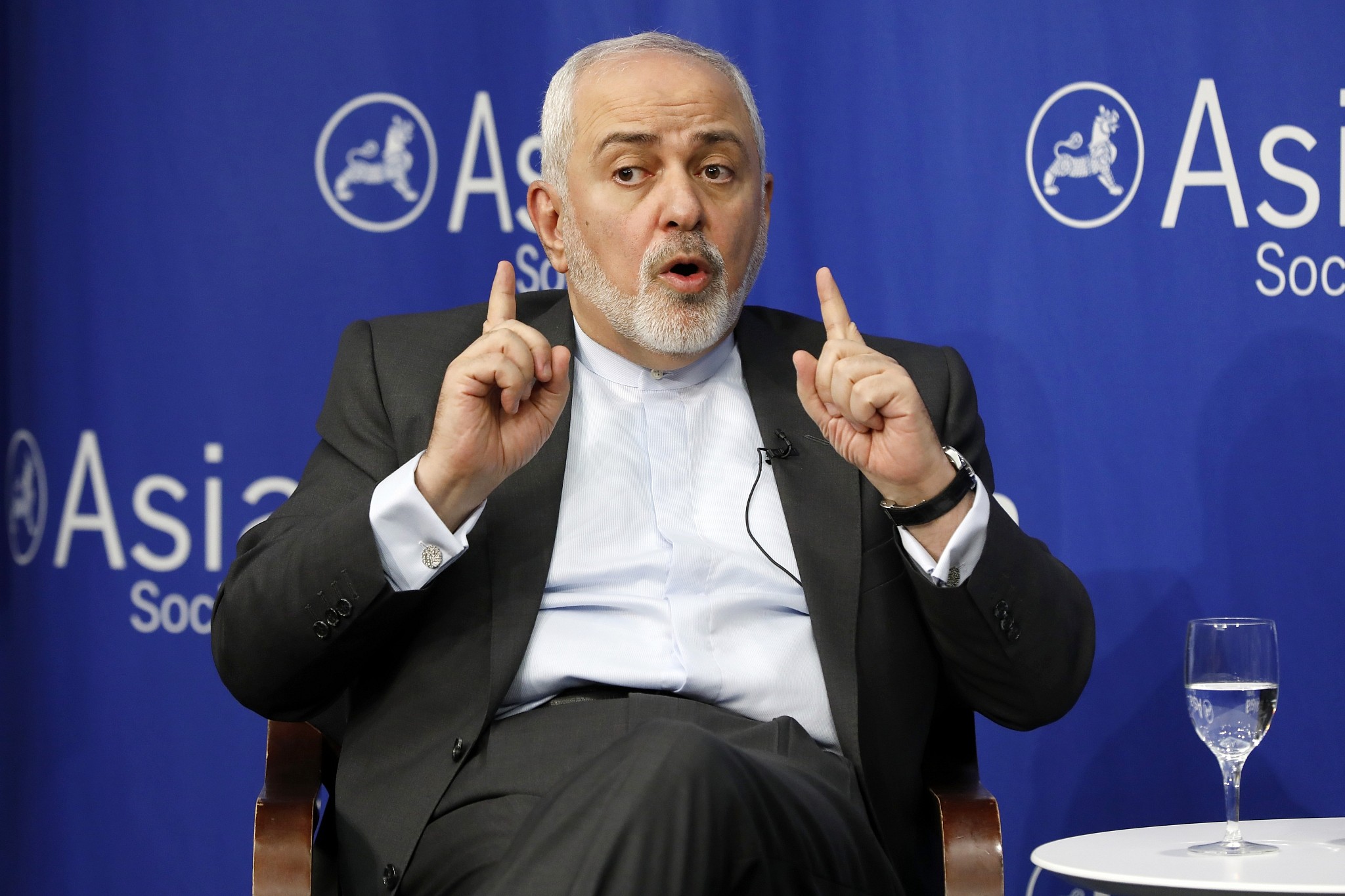
Iran’s Foreign Minister Mohammad Javad Zarif speaks at the Asia Society in New York, April 24, 2019. (AP Photo/Richard Drew)
Iranian Foreign Minister Mohammad Javad Zarif on Wednesday warned the United States of “consequences” if it prevents Tehran from selling oil, after Washington ended sanction exemptions over the Islamic Republic’s energy exports.
“We believe that Iran will continue to sell its oil,” Zarif said at an event at the Asia Society in New York, according to the Reuters news agency. “We will continue to find buyers for our oil and we will continue to use the Strait of Hormuz as a safe transit passage for the sale of our oil.
“If the United States takes the crazy measure of trying to prevent us from doing that then it should be prepared for the consequences,” he added. “[US President Donald Trump] thinks through further pressure on Iran — the so-called ‘maximum pressure policy’ — he can bring us to our knees. He’s mistaken.”
On Monday the US announced that, in a bid to reduce Iran’s oil exports to zero, it would from May 2 end waivers that eight countries including India, China, South Korea and Turkey currently have on buying Iranian crude — waivers it had granted when it reimposed sanctions on Iran in November. They expire May 2.
The move targets the Islamic Republic’s main economic earner and adds to sanctions pressure that has built up under Trump, who has pulled his country out of a 2015 international deal aimed at curbing Iran’s nuclear program. It will choke off more than $50 billion of annual Iranian income, which the US says the country uses to fund destabilizing activity in the Middle East and beyond.
Earlier Wednesday, Iranian President Hassan Rouhani said the Islamic Republic would be willing to negotiate with the US if it reverses economic sanctions and apologizes for its “illegal” actions.
“We have always been supporters of negotiation and diplomacy, the same way that we have always been a people of war and defense,” Rouhani was quoted as saying in state media.
He said that reports that Iran had rebuffed American offers to negotiate were untrue.
TEL AVIV – The Arab League on Sunday pledged $100 million per month to the Palestinian Authority to cover the funds suspended by Israel in taxes and tariffs owed to the PA over the latter’s so-called “pay-for-slay” scheme paying salaries to terrorists and their families.
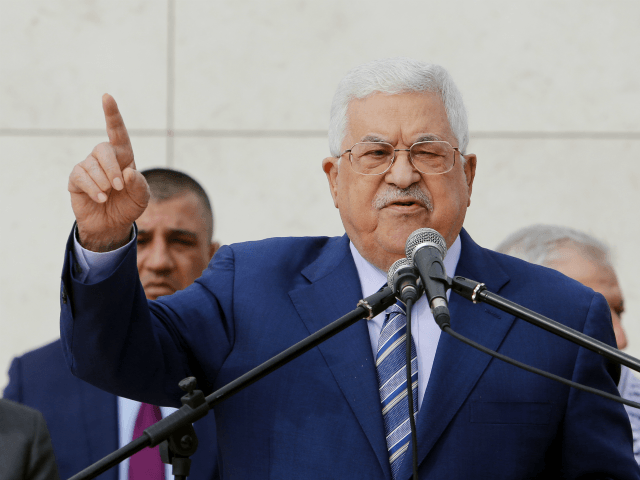
Earlier in the day, PA President Mahmoud Abbas appealed to the Arab League in Cairo to support him in rejecting the Trump administration’s as-yet unveiled peace plan.
“The Arabs need to be engaging actively at this critical time,” Abbas said.
He noted that the U.S. could offer nothing to the Palestinians in light of the moves it has taken against them, including recognizing Jerusalem as Israel’s capital and the subsequent transfer of the US Embassy there, as well as cutting aid.
“What’s left to offer us? Is there anything left to offer us that would make us happy? They took Jerusalem and the occupied territories, canceled the [rights of the] refugees and legitimized settlements. They want to fool us. They have nothing to offer us. Even if they want to offer something, it will be worse than anything else.”
“We can’t hear that the holy city of Jerusalem has been annexed to Israel,” he said. “After this crime, what can we expect?”
He also addressed President Donald Trump’s recent decision to recognize Israeli sovereignty over the Golan Heights.
“We don’t accept the annexation of the Golan and Jerusalem,” Abbas said. “These are all Arab territories. They are all occupied territories, and Israel needs to quickly withdraw from them.”
He also asked Arab nations to help alleviate the PA’s dire financial crisis.
“A safety net must be provided,” Abbas said.
In February, Israel began cutting monthly funds to the PA over its payments to convicted terrorists and their families, totaling close to $140 million. The PA at the time responded that it would result in anarchy in the West Bank. Abbas also said that if Israel deducts even “one penny” from tax monies owed to the PA, the PA would not accept the money transfers.
France last week called on Israel to “change your decision to freeze the transfer of tax funds to the Palestinian Authority,” Israel’s Channel 12 news reported on Sunday.
Israel responded that the request itself was immoral and opposed to the EU’s own laws.
According to a new report from the World Bank, the Palestinian deficit is set to increase from $400 million last year to over $1 billion this year.
Last week, newly appointed PA prime minister Mohammad Shtayyeh accused the Trump administration of facilitating Israel’s “financial war” on the Palestinian Authority.
“Israel is part of the financial war that has been declared upon us by the United States. The whole system is to try to push us to surrender” in order to force the PA into accepting Trump’s upcoming peace proposal, Shtayyeh said.
“This is financial blackmail, which we reject.”
Shtayyeh outlined some ways he’s hoping to alleviate the dire financial crisis, including cutting bonuses for PA officials, developing agriculture, receiving more aid from the Arab world and Europe, and seeking financial independence from Israel. The last proposal may include importing fuel from neighboring Jordan as opposed to Israel, and even introducing a Palestinian currency.
The apparent objective of the Palestinian Authority (PA) is to annex these areas and bring them under PA control as part of its larger plan for the unilateral creation of a Palestinian state. This plan was publicized in 2009, in an official PA document written by then-Prime Minister Salam Fayyad; since its publication, it has been carried out virtually unhindered, with the help of massive European funding in violation of the Oslo Accords, and in violation of international law. Additionally, this type of activity is more easily presented to international media outlets and foreign benefactors as “humanitarian aid.”
The key actor in these land-grab projects is the Union of Agricultural Work Committees (UAWC). UAWC maintains close organizational and operational ties to the Popular Front for the Liberation of Palestine, a terror organization that has carried out many deadly attacks against Israel’s citizens – including numerous suicide bombings in the 2000s. UAWC is funded, for the most part, by European governments and humanitarian aid organizations, and by the European Union.
In recent years, and in particular since 2013, the Palestinians have intensified agricultural activity as a means of quickly and efficiently seizing large swaths of land under the guise of humanitarian aid for farmers. This activity is illegal and violates the international treaties to which the PA is a signatory. But this has not troubled foreign governments and organizations, including the European Union, who continue to bankroll this illegal activity – while at the same time vocally criticizing the State of Israel.
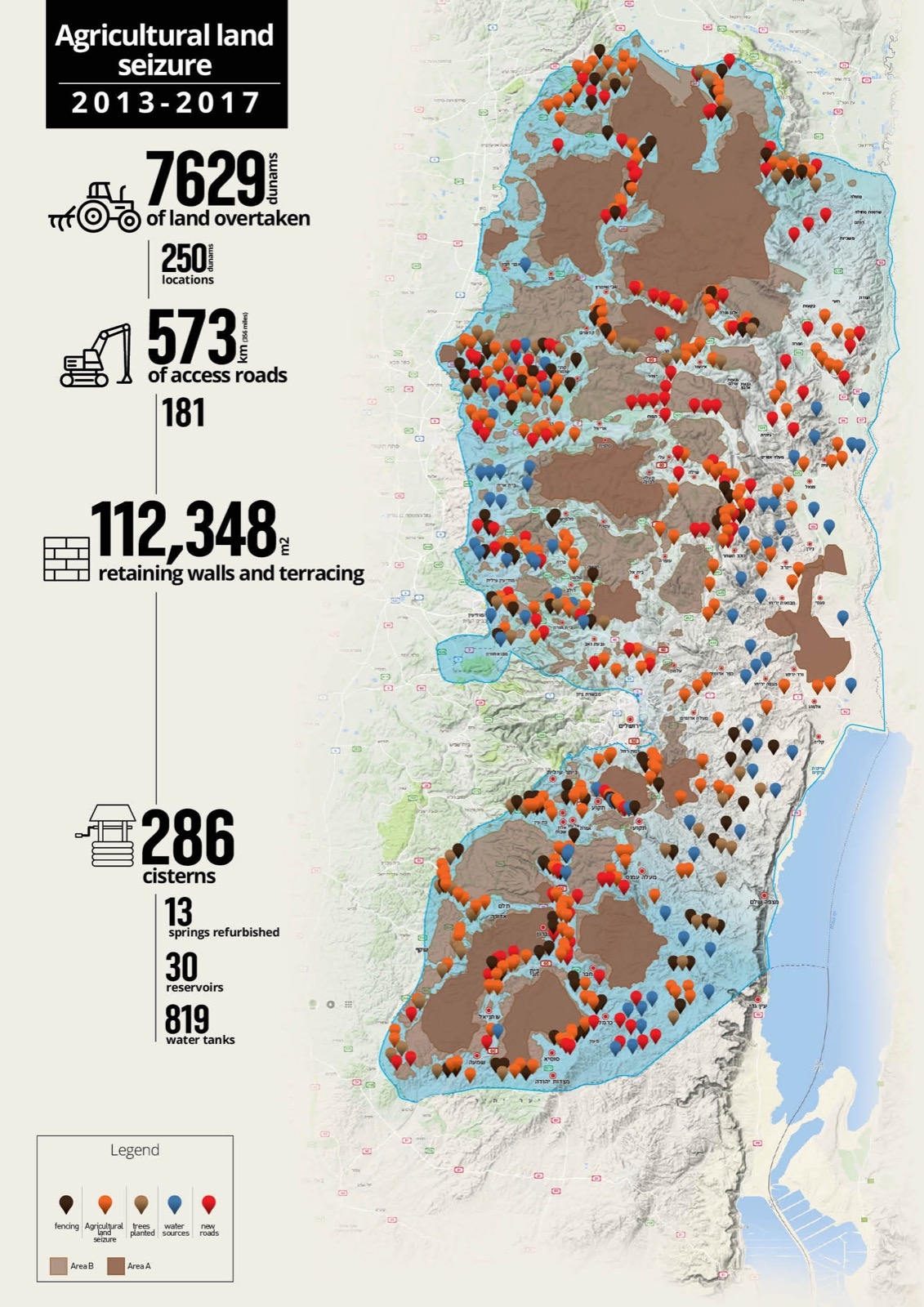
Pictured: Illegal land seizures of thousands of acres in the West Bank, funded by the European Union under the guise of “agricultural assistance.” EU funding is facilitating a massive program of land theft by the Palestinian Authority. (Image source: Regavim)
Under the guise of “agricultural assistance,” the Palestinian Authority is taking over Area C (the area placed under full Israeli jurisdiction in the Oslo Accords, pending a full peace agreement which would establish sovereignty over the area for one side or the other), with the help of massive European financial support — in violation of the law, and of international agreements signed by the EU.
Over the past decade, the Palestinian Authority (PA) has implemented a long-term program aimed at taking control of strategic locations in Area C of the disputed territories of Judea and Samaria. The PA’s apparent objective is to annex these areas and bring them under PA control, as part of its larger plan for the unilateral creation of a Palestinian state. This plan was publicized in 2009, in an official PA document written by then-Prime Minister Salam Fayyad; since its publication, it has been carried out virtually unhindered, with the help of massive European funding.
Since 2013 there has been a marked acceleration of the plan’s execution, mainly through intensive, large-scale agricultural activity, with the understanding that this tactic, as opposed to illegal construction, enables the PA to take control of vast tracts of land relatively quickly. This activity, carried out under the umbrella of the Palestinian Authority’s “Roots Project” (جذور or Juthoor), enables massive land grabs to be more easily presented to international media outlets and foreign benefactors as “humanitarian aid.”
The key actor in these land-grab projects is the Union of Agricultural Work Committees (UAWC). With branch offices throughout Judea and Samaria, UAWC maintains close organizational and operational ties to the Popular Front for the Liberation of Palestine (PFLP), a terror organization that has carried out many deadly attacks against Israel’s citizens, including numerous suicide bombings in the 2000s. UAWC is funded, for the most part, by European governments and humanitarian aid organizations, and by the European Union.
The majority of UAWC’s activities are carried out in Area C. Among the more central projects: Illegal seizure of thousands of dunams of land through agricultural use, illegal seizure of water sources, and creation of new roads, ostensibly to facilitate Palestinian farmers’ access to agricultural areas. These activities are concentrated in areas of strategic importance, particularly areas adjacent to Jewish settlements and the security barrier, as well as locations in Area C that serve as a buffer zone between Areas A and B (which are under full or partial Palestinian Authority jurisdiction, respectively).
Needless to say, all of this activity is carried out unilaterally, without permits or coordination with the State of Israel — in violation of the law that is in force in these areas, in violation of the Oslo Accords, and in violation of international law.
A non-governmental organization, Regavim, dedicated to preserving Israel’s land resources and promoting a forward-thinking land-use policy, has conducted precise documentation and mapping of PA activity in the field, and culled information regarding EU funding for UAWC activities by monitoring Palestinian and European Union publications, media reports, and internet coverage (such as this recent video which boasts of extensive illegal activity). The results of this research, which were presented in a comprehensive report to the Knesset Subcommittee of the Foreign Affairs and Defense Committee on Judea and Samaria, are summarized in “The Roots of Evil.”
The Political Context – The Battle for Control of Judea and Samaria
In the “Interim Agreement between the State of Israel and the Palestinian Authority” signed in Oslo in 1993 (“The Oslo Accord“) between Israel and the leaders of the PLO, the State of Israel officially recognized what had openly operated as a terrorist organization, and allowed it to establish a Palestinian Authority to oversee autonomous Arab governance in parts of Judea and Samaria.
Under these accords, Judea and Samaria were divided into three regions: Area A was placed under full Palestinian civil and security jurisdiction; Area B was assigned to PA civil control, while Israel remained responsible for security; and Area C, which was placed under full Israeli civil and security jurisdiction. Despite the fact that, in practice, many of the Oslo Accords’ clauses were never activated and other elements are no longer relevant, the division of jurisdictional authority remains in force.
Almost a decade ago, then-Prime Minister of the Palestinian Authority Salam Fayyad began to promote a unilateral program for the creation of “an independent, fully autonomous Arab state on all of the territory of the West Bank and Gaza Strip, as per the 1967 borders, with Jerusalem as its capital.” A central element of the Fayyad Plan is the attempt to deepen the PA’s official administrative presence specifically in Area C and to establish de facto annexation of the territory, based on the underlying assumption that Areas A and B have already been “taken care of” by the Oslo Accords.
The implementation of this program of “creeping annexation” is carried out on two parallel tracks. The first involves cooperation with Israel: The PA submits requests to the relevant Israeli authorities for approval of “special priority” construction projects; generally, international funding for these projects is contingent upon a “seal of approval” from Israel. The second track, which is far more widespread, is the creation of facts on the ground, through extensive illegal construction and development, obviously without coordination or permission of the Israeli authorities. The projects in this illegal track are planned and executed according to a clear, systematic master plan that aims to create territorial contiguity for the future Palestinian state while disrupting the growth and contiguity of Israeli communities.
Over the past number of years, the illegal track has become not only more pronounced but more “creative,” using agricultural work to establish facts on the ground — in violation of the law in force in this region, in violation of the Oslo Accords which stipulate that the State of Israel is the sole sovereign over this territory, in violation of international law.
The PA has enjoyed the diplomatic support of European countries for decades. Although the European Union was an active participant in the formulation of the Oslo Accords and its representatives participated in the signing ceremony, in recent years the EU has actively funded many of the PA’s illegal activities in Area C, contributing to the very projects that undermine those accords by taking unilateral steps to create a Palestinian state encompassing all of Judea and Samaria.
Palestinian “civil society” organizations and the PA itself have received massive practical and economic support from European governments and organizations. European funding, as well as diplomatic support and other forms of active participation, have been channeled directly to Fayyad Plan projects.
One of the methods employed by the European Union to create a de facto Palestinian state is to block the development of infrastructure and expansion of Jewish settlements in Judea and Samaria through Palestinian construction and agriculture. Over the last several years, the EU has built more than 2,000 structures in Area C for the Palestinian population, creating or supporting dozens of illegal settlement clusters, without requesting or receiving construction permits or coordinating these projects with the relevant Israeli authorities. In fact, when Prime Minister Benjamin Netanyahu protested the EU’s blatant violation of the law, EU foreign policy chief Federica Mogherini gave an official commitment to desist from any additional illegal construction in the E1 area – but not in the rest of Area C. All of the EU-funded construction projects, agricultural projects, and infrastructure projects in Area C are clearly designed to establish territorial contiguity for the Palestinian Authority presence, in an attempt to preclude the possibility of annexation or development of these areas by Israel in the future. All are carried out illegally, in contravention of Israeli jurisdiction over this territory, under the guise of European Union Foreign Affairs Council humanitarian aid to needy Palestinian communities in Judea and Samaria.
The Legal Context – Ottoman Property Law in the Service of Land Expropriation
The law in force in Area C of Judea and Samaria, which is under full Israeli jurisdiction, is comprised of many layers of legal systems, including Ottoman law, Mandatory law, Jordanian law, military rule, international law, as well as legislative acts of Israel’s parliament, the Knesset. In general, however, the essential underpinnings of property law in Area C rest upon Ottoman law.
According to Ottoman law and Israeli Supreme Court decisions that continue to enforce it, uncultivated land belongs to the sovereign – in this case, the State of Israel. Additionally, some of the land in Area C is classified as “survey land” – tracts that are not registered as privately owned, which the sovereign (the Israeli government) is in the process of regulating and registering as state land.
A private individual may be granted ownership of agricultural land (as per section 78 of the Ottoman Legal Code) if he held and cultivated the land in question for a consecutive period of several years (the precise period required is dictated by the nature of the land parcel itself).
Thus, a person who poaches land and uses it for agricultural purposes may claim ownership or other rights to the land in question, simply by claiming to have worked the land for a number of years. Palestinian land-use projects exploit this “loophole” in Ottoman law to great advantage.
Activities carried out under the Roots Project, the systematic program of land seizure in Area C, are presented as agricultural projects; nonetheless, many of these types of work – erecting fences and walls, excavation with heavy machinery, creation of roads, and more – require building permits, which they obviously do not have. On the other hand, the law is meticulously enforced against Jewish construction, resulting in what can best be described as “reverse apartheid:” A number of draconian regulations are applied exclusively to Jewish residents of Area C, such as “delimiting orders” and “obstructive use orders,” which empower the authorities to demolish structures en masse and to bar residents, without due process, from contested areas.
The Union of Agricultural Work Committees – The Operational Arm of the Land Seizure Enterprise
The Union of Agricultural Work Committees (UAWC) is the main operational arm of the PA’s plan to seize control of Area C and to create a de facto Palestinian state in this territory.
The Union, headquartered in Ramallah, is comprised of more than 65 branches of local agricultural councils throughout Judea, Samaria, and Gaza. With more than 100 employees, its annual budget exceeds 5 million euros (nearly $6 million USD). Its budget is based mainly on direct and indirect donations from foreign sources, including the European Union and the United Nations, and the governments of France, Norway, and Holland.
UAWC has both overt and covert ties to the terrorist organization Popular Front for the Liberation of Palestine (PFLP) and its activities are carried out in coordination with the Palestinian security apparatus and other Palestinian judicial bodies.
Both the PFLP and UAWC have attempted to obscure their close ties, in order to portray the civilian organization as an independent non-profit entity. Notwithstanding their efforts, there is clear evidence of their ideological and financial interdependence: An internal document prepared for the American humanitarian organization USAID in 1993 stated that the UAWC is “[t]he PFLP’s agricultural organization” and “The PFLP’s agricultural extension services are provided by the Union of Agricultural Work Committees (UAWC).” In fact, the PLO’s dominant Fatah faction identified the UAWC as an “affiliate” of the PFLP.
The affiliation of the UAWC with the PFLP is ongoing, despite the classification of the PFLP as a terrorist organization both by the United States and the European Union. Senior figures in the PFLP hierarchy have served in senior positions in the UAWC, among them Jamil Muhamad Ismail Al Majdalawi, formerly the Vice President of the UAWC in Gaza, who is a well-known senior officer in the PFLP. He served as head of the political division of the PFLP in Gaza, and in 2013 acted as the PFLP’s representative to Fatah bodies in the Palestinian Authority. Bashar Al Khiri served as Chief of the PFLP’s Political Division in the early 2000s. He was arrested and imprisoned by the State of Israel, and after his release served as President of the UAWC Advisory Board from 2005-2010.
One of the European organizations that provides financial support for UAWC activities is Norwegian People’s Aid (NPA), a Norwegian society that describes itself as “committed to building democratic society and to strengthening people’s ability to take control of their own lives.” NPA describes itself as non-political, although its views are not neutral. Thus, it “supports organizations that represent weak or vulnerable populations, particularly if they resist or are in conflict with those in power.” NPA lists UAWC as one of its partner organizations in Palestine.
NPA, which was supported by the American government’s humanitarian aid program USAID for many years, was brought up on charges of supporting terrorism by the US Department of Justice in 2017. In the course of the trial, which was concluded in 2018, the NPA admitted to supporting Iran, Hamas, and a number of other terror organizations.
From 2016 to 2018, NPA received 32,000,000 Norwegian kroner (3,320,000 euros – nearly $4 million USD) from the government of Norway (out of a total commitment of 50 million kroner) for joint UAWC-NPA projects.
In fact, the terrorist ties of the UAWC have not deterred the EU, which earmarked 3.6 million euros to the UAWC to run the Roots Project in the Bethlehem area in 2014, and funded 90% of its overall budget. Under the auspices of the Roots Project, a representative of the EU visited the area in order to report on the progress of the initiative and provide an overview of the UAWC’s activities.
In March 2015 the inaugural ceremony for the Roots Project was held in Bethlehem. The EU’s ambassador to the Palestinian Authority, John Gatt-Ruter, an honored guest, addressed the ceremony:
“The projects the European Union will carry out for the residents of Area C are essential, particularly in the agricultural sector, which is an important segment of the economy. This project will contribute to assistance for Palestinian farmers … and establishing Palestinian facts on the ground … The Union of Agricultural Work Committees has demonstrated its ability to carry out agricultural projects in many Palestinian areas, and the relationship with the European Union is the result of the successes achieved by the UAWC.” [Emphasis added.]
Conclusions and Recommendations
In the past decade, the Palestinian Authority has made a concerted effort to gain control over as much land in Area C as possible. In recent years, and in particular since 2013, the Palestinians have intensified agricultural activity as a means of quickly and efficiently seizing large swaths of land under the guise of humanitarian aid for farmers. This activity is illegal, and violates the international treaties to which the PA is a signatory. But this has not troubled foreign governments and organizations, including the European Union, who continue to bankroll this illegal activity – while at the same time vocally criticizing the State of Israel.
Because of the large-scale strategic consequences of the Palestinian program of land seizure, this problem cannot be addressed as a case-by-case, localized problem. The larger picture must be taken into consideration, and the European Union must cease its unbridled intervention in the internal affairs of a democratic state (Israel) and its wholesale violations of international law and treaty – activities that entrench Palestinian intransigence, cripple the prospect for a negotiated settlement, and endanger the security of Israelis in a very real and immediate sense.
Naomi Linder Kahn is Director of the International Division of Regavim.
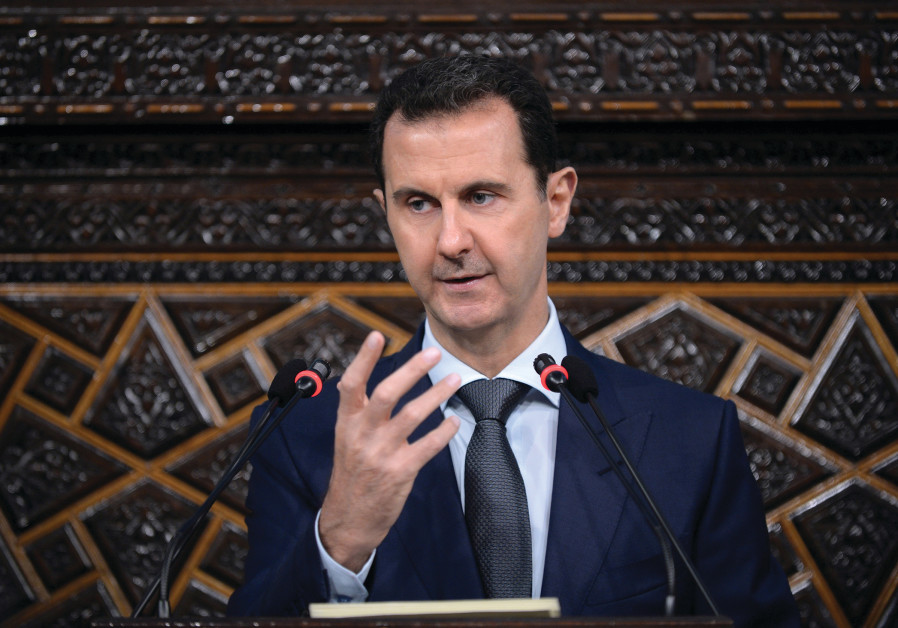
President Bashar al-Assad of Syria. (photo credit: REUTERS)
Over two consecutive nights, rumors of airstrikes by the US against pro-Syrian regime forces in eastern Syria have led to false reports and denials. The frequency of the reports points to attempts by different actors in the conflict to create tensions between not only Iran and the US, but also between the Syrian regime and the Syrian Democratic Forces, which are backed by Iran and the US, respectively.
The reports are laundered via various publications and spread on social media. For instance Al-Masdar News, which is generally supportive of the Syrian regime, claimed on Tuesday night that the US is “plotting to expel [the] Syrian army, IRGC from key border town.”
The report is based on another report in Al-Watan which claims that “these forces will attempt to expel the Syrian Arab Army and Islamic Revolutionary Guard Corps from the key border town of Albukamal and the large town of Al-Maydeen in rural Deir Ezzor.”
US plotting to expel Syrian Army, IRGC from key border town: Al-Watan
BEIRUT, LEBANON (5:00 P.M.) – The Arabic-language Al-Watan newspaper claimed on Monday that the U.S.-backed Jaysh Mughawar Al-Thura is forcing tens of
mobile.almasdarnews.com
On the night of April 22, social media accounts reported airstrikes near Deir Ezzor. Soon thereafter, the Syrian military had reportedly had to deny that there was a “US attack on IRGC.” The report, also from Al-Masdar, noted that “all reports claiming the US air force bombed the IRGC near Albukamal are false.” The source said reports claiming the SDF and SAA clashed near Albukamal are false. The clashes actually involved ISIS fighting with the Syrian regime. Yet the reports of US “plots” go back several days, seeking to fuel tensions along the Euphrates River, where the US and SDF are stationed on one side, and Syrian regime and pro-Iranian militias on the other.
The area near Albukamal is a restive and sensitive area. The SDF, with backing from the US-led coalition defeated ISIS in Baghouz, just across the river from Albukamal, in late March. The SDF and the US clashed with pro-Syrian regime militias last year near Deir Ezzor after militias tried to grab control of an oil field in February 2018. In addition in the summer of 2018 an airstrike hit a group of Kata’ib Hezbollah, fueling accusations the US had targeted the Iraqi-based pro-Iranian militia.
Since the US left the Iran Deal and began exerting pressure on Tehran via sanctions, there have been tensions between the US and pro-Iranian groups in Syria and Iraq. This includes the Hashd al-Shaabi (PMU), a group of mostly Shi’ite paramilitaries in Iraq that are now part of the Iraqi Security Forces. They have harassed US soldiers in Anbar province and near Mosul in the last several months. In addition, some militias in the Hashd have openly threatened the US. This includes Asaib Ahl al-Haq and Harakat Hezbollah al-Nujaba. Harakat Hezbollah was listed as a terrorist organization in March by the US. The US has warned that any attack by pro-Iranian groups in Iraq would lead the US to hold Tehran responsible.
The area of Albukamal is also sensitive because ISIS is present there. Even after its defeat, its cells move back and forth, striking the Syrian regime and SDF. Iran carried out a ballistic missile strike on ISIS near Albukamal in October 2018, not far from US forces. In addition, the US had claimed it was leaving Syria in December 2018, only to reverse the policy. However, the changes in US posture led the SDF, the main partners of the US against ISIS, to open more discussions with the Syrian regime about the possibility of a compromise.
Those discussions have gone cold in the last month and tensions between the SDF and regime may increase. Amid all this, the Iranians have sent high-level delegations to Syria, including the foreign minister, earlier this month. Iran says it supports Syria taking back all of the country, including from the SDF and Turkey in the north. Iran, Turkey and Russia are all part of the Astana peace process in Syria and they all oppose the US presence in eastern Syria. This means that many of these actors and their supporters want tensions with the US to rise and that some may want to test the SDF.
It is in this context that recent rumors have been spread to see if the SDF and the regime will clash and if Iran and the US might be dragged in. The US recently designated the IRGC a terrorist group, which further raises the prospect that any small conflict could spill over into US-IRGC tensions in Syria. Iran has dozens of bases in Syria, a result of its support of the regime in the civil war.
Members of the PMU has were also reported to have claimed the US is conspiring with the SDF to strike at Albukamal and Al-Qaim in Iraq. For instance, on the night of April 23, reports on social media claimed 100 trucks had arrived at Al-Qaim with fuel for Syria and they had been hit by airstrikes. It turned out very quickly to have been entirely made up. Just after midnight, Al-Arabiya reported the same claim: “US airstrikes targeted 32 oil tankers in Deir ez-Zor which tried to enter Syrian government-held areas.”
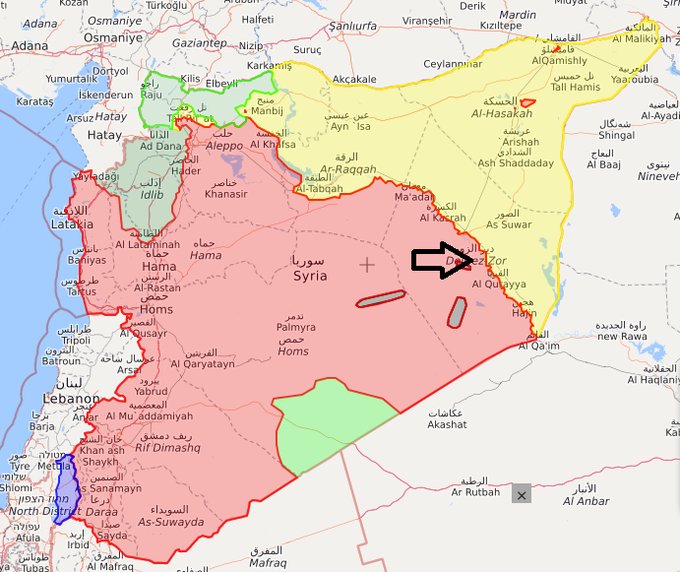
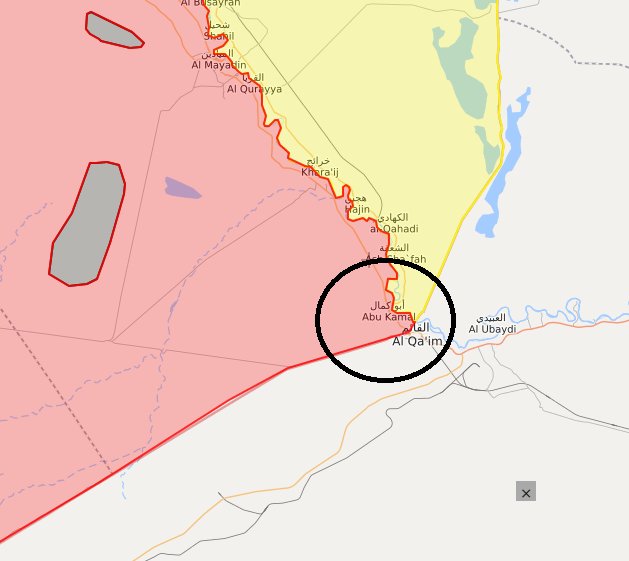
The reports on April 23 were also oddly specific, with maps and arrows even being posted by users.
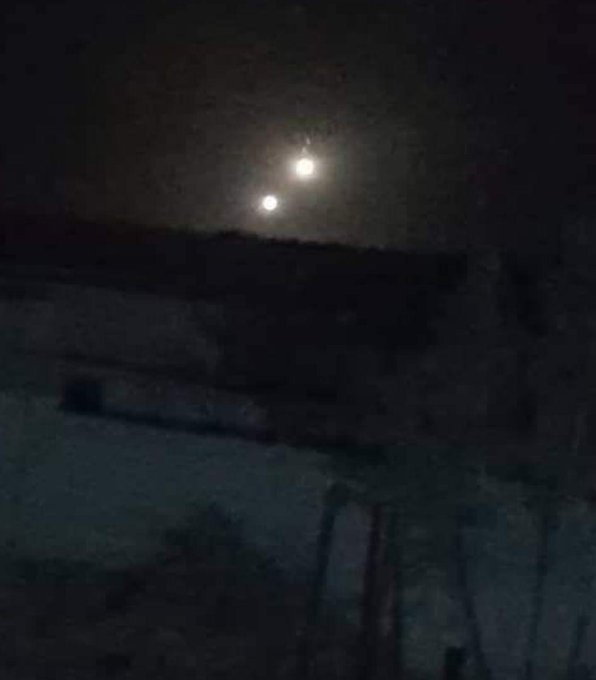
“Local sources confirm the targeting by US warplanes of a number of sites belonging to the IRGC and militias affiliated with them in the vicinity of Albukamal and inside the military airport of Deir ez-Zor,” tweeted Eva Koulouriotis, an analyst. There were even images of flares. “100% false,” wrote another user who follows developments in Iraq and Syria. Yet the rumors have persisted now for 24 hours, with each night bringing more “reports” of battles that never took place.
The reports of the strike on oil tankers came after a full day of reports that the SDF was trading oil with the Syrian regime and the US was pressuring them not to. It is almost as if those who created the stories about the strikes wish they would be true but can’t even decide if it is Iraq sending oil to the Syrian regime, or the SDF.
The Syrian conflict has always been full of rumors and conspiracies. On April 24, Iran’s Press TV claimed that a Jihadist group in Idlib was preparing a “false flag chemical attack.” This is the level of coverage pushed by different countries and groups that have an agenda. The way the rumor-mill becomes “news” is that it begins with several social media accounts and then smaller websites pick up the chatter and claim there are “local reports.” Then larger media organizations pick up the “local media reports” and suddenly there are whole articles at Press TV or other places. Then Western media will repeat the claim based on an “Iranian report.”
What may be entirely manufactured or made-up information can then become “reports of airstrikes.” Once the cycle of laundering the information has begun, it spreads quickly. Eventually governments may even be forced to respond to the rumors. Even hours after the “airstrikes” on the 32 tankers, more and more media were picking up the report. At the same time, other social media users were still trying to figure out what happened on the night of April 22, concluding there had been no airstrikes. Idrees Ali of Reuters also noted on Wednesday morning that “US officials say they have no evidence to support any such strike taking place.”
The increased tensions appear to be leading to false reports of airstrikes. This could be an honest mistake that feeds rumors. It also appears that the groundwork has been laid through reports of “conspiracies” to accuse the US of actions against the IRGC in the border area of Iraq and Syria. This could potentially lead to a wider conflict if the rumors eventually turn into reality, because people on the ground are also tense and nervous regarding the complex situation and competing groups all in close proximity to one another.
An Air Force F-16 Fighting Falcon refuels during operations in support of US-led coalition forces in Syria.
U.S.-led air strikes targeted Iranian-backed forces and oil tankers late Tuesday night, according to multiple unconfirmed reports from local sources, Middle East political analysts and Arab media.
A gathering of Islamic Revolutionary Guard Corps were targeted by air strikes aimed at the forces in the Syrian village of Al Sayyal, according to the reports.
In addition, 32 oil tankers were attacked in Deir es-Zor as they tried to enter Syria’s government-held areas, according to a report by Al Arabiya.
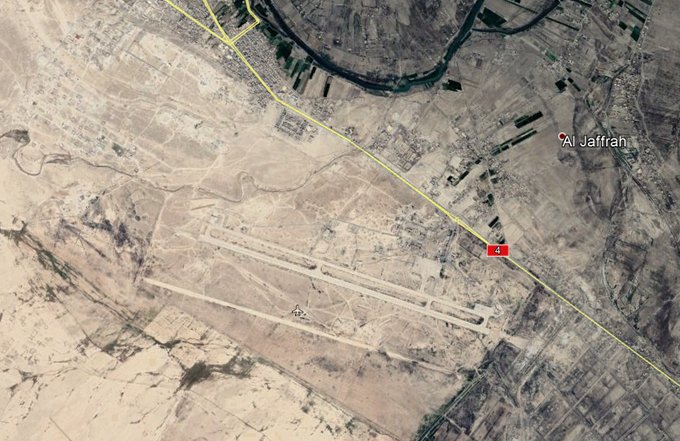
U.S. coalition aircraft also allegedly bombed the military airport at the Deir es-Zor air base, multiple local sources reported late Tuesday night.
Large parts of the airport were reportedly destroyed, along with the runway and radar facilities, and “many dead and wounded” were reported in the ranks of the Iranian Islamic Revolutionary Guard Corps (IRGC) forces there, according to Middle East political analyst Eva J. Koulouriotis.
According to a local source, the mountain, radar, air defenses, command center and airport runways were targeted.
“Local sources confirm the targeting by #USA warplanes of a number of sites belonging to the Iranian Revolutionary Guards and militias affiliated with them in the vicinity of the city of #Albuqmal,” Koulouriotis tweeted.
Photo Credit: US Air Force photo by Senior Airman Jordan Castelan
An Air Force F-16 Fighting Falcon refuels during operations in support of US-led coalition forces in Syria.
U.S.-led air strikes targeted Iranian-backed forces and oil tankers late Tuesday night, according to multiple unconfirmed reports from local sources, Middle East political analysts and Arab media.
A gathering of Islamic Revolutionary Guard Corps were targeted by air strikes aimed at the forces in the Syrian village of Al Sayyal, according to the reports.
In addition, 32 oil tankers were attacked in Deir es-Zor as they tried to enter Syria’s government-held areas, according to a report by Al Arabiya.
U.S. coalition aircraft also allegedly bombed the military airport at the Deir es-Zor air base, multiple local sources reported late Tuesday night.
Large parts of the airport were reportedly destroyed, along with the runway and radar facilities, and “many dead and wounded” were reported in the ranks of the Iranian Islamic Revolutionary Guard Corps (IRGC) forces there, according to Middle East political analyst Eva J. Koulouriotis.
According to a local source, the mountain, radar, air defenses, command center and airport runways were targeted.
“Local sources confirm the targeting by #USA warplanes of a number of sites belonging to the Iranian Revolutionary Guards and militias affiliated with them in the vicinity of the city of #Albuqmal,” Koulouriotis tweeted.
Comment posted on my YouTube upload of this vid: but taken down by YouTube
Islamic Threat:
As long as the Muslim population remains around or under 3% in any given country, they will be for the most part be regarded as a peace-loving minority, and not as a threat to other citizens.
This is the case in:
Spain — Muslim 3%
United States — Muslim 2%
Australia — Muslim 2.5%
Canada — Muslim 2.8%
Norway — Muslim 2.8%
China — Muslim 2.9%
Italy — Muslim 2.5%
At 3% to 8%, they begin to proselytize from other ethnic minorities and disaffected groups, often with major recruiting from the jails and among street gangs.
This is happening in:
Denmark — Muslim 5%
Germany — Muslim 6.7%
United Kingdom — Muslim 7.7%
Thailand — Muslim 7.6%
From 8% on, they exercise an inordinate influence in proportion to their percentage of the population. For example, they will push for the introduction of halal (clean by Islamic standards) food, thereby securing food preparation jobs for Muslims. They will increase pressure on supermarket chains to feature halal on their shelves –along with threats for failure to comply.
This is occurring in:
France — Muslim 12%
Philippines — Muslim 9%
Sweden — Muslim 8%
Switzerland — Muslim 8.3%
The Netherlands — Muslim 8.5%
Trinidad & Tobago — Muslim10.8%
At this point, they will work to get the ruling government to allow them to rule themselves (within their ghettos)under Sharia, the Islamic Law. The ultimate goal of Islamists is to establish Sharia law over the entire world. When Muslims approach 15% of the population, they tend to increase lawlessness as a means of complaint about their conditions. In Paris, we are already seeing car-burnings. Any non-Muslim action offends Islam, and results in uprisings and threats, such as in Amsterdam, with opposition to Mohammed cartoons and films about Islam.
Such tensions are seen daily, particularly in Muslim sections, in:
Guyana — Muslim 15%
India — Muslim 19.4%
Israel — Muslim 16%
Kenya — Muslim 18%
Russia — Muslim 21%
After reaching 25%, nations can expect hair-trigger rioting, jihad militia formations, sporadic killings,andthe burnings of Christian churches and Jewish synagogues, such as in:
Ethiopia — Muslim 32.8%
At 40%, nations experience widespread massacres, chronic terror attacks, and ongoing militia warfare, such as in:
Bosnia — Muslim 40%
Chad — Muslim 53.1%
Lebanon — Muslim 59.7%
From 60%, nations experience unfettered persecution of non-believers of all other religions (including non-conforming Muslims), sporadic ethnic cleansing (genocide), use of Sharia Law as a weapon, and Joya, the tax placed on infidels, such as in:
Albania — Muslim 70%
Malaysia — Muslim 60.4%
Qatar — Muslim 77.5%
Sudan — Muslim 70%
After 80%, expect daily intimidation and violent jihad, some State-run ethnic cleansing, and even some genocide, as these nations drive out the infidels, and move toward 100% Muslim,such as has been experienced and in some ways is on-going in:
Bangladesh — Muslim 83%
Egypt — Muslim 90%
Gaza — Muslim 98.7%
Indonesia — Muslim 86.1%
Iran — Muslim 98%
Iraq — Muslim 97%
Jordan – Muslim 92%
Morocco – Muslim 98.7%
Pakistan – Muslim 97%
Syria – Muslim 90%
Tajikistan – Muslim 90%
Turkey — Muslim 99.8%
United Arab Emirates — Muslim 96%
100% will usher in the peace of ‘Dar-es-Salaam’ — the Islamic House of Peace.. Here there’s supposed to be peace, because everybody is a Muslim, the Madrassas are the only schools, and the Koran is the only word, such as in:
Afghanistan — Muslim 100%
Saudi Arabia — Muslim 100%
Somalia — Muslim 100%
Yemen — Muslim 100%
It is important to understand that in some countries, with well under 100% Muslim populations, such as France, the minority Muslim populations live in ghettos, within which they are 100% Muslim,andwithin which they live by Sharia Law. The national police do not even enter these ghettos. Police will indeed harass and threaten to charge will breach-of-the-peace, to anyone who tries to enter these NOGO zones.
There are no national courts, nor schools, nor non-Muslim religious facilities.. In such situations, Muslims do not integrate into the community at large. The children attend madrassas. They learn only the Koran. To even associate with an infidel is a crime punishable with death.
Therefore, in some areas of certain nations, Muslim Imams and extremists exercise more power than the national average would indicate. The modernizing trend in the 1960’s came to a brutal end with the 1979 revolution by the radicals.
Today’s 2 billion Muslims make up 28% of the world’s population. But their birth rates dwarf the birth rates of Christians, Hindus, Buddhists, Jews, and all other believers. Muslims will exceed 50% of the world’s population by the end of this century.
“We can export as much of our oil as we need and want.”
BY REUTERS
APRIL 24, 2019 12:16
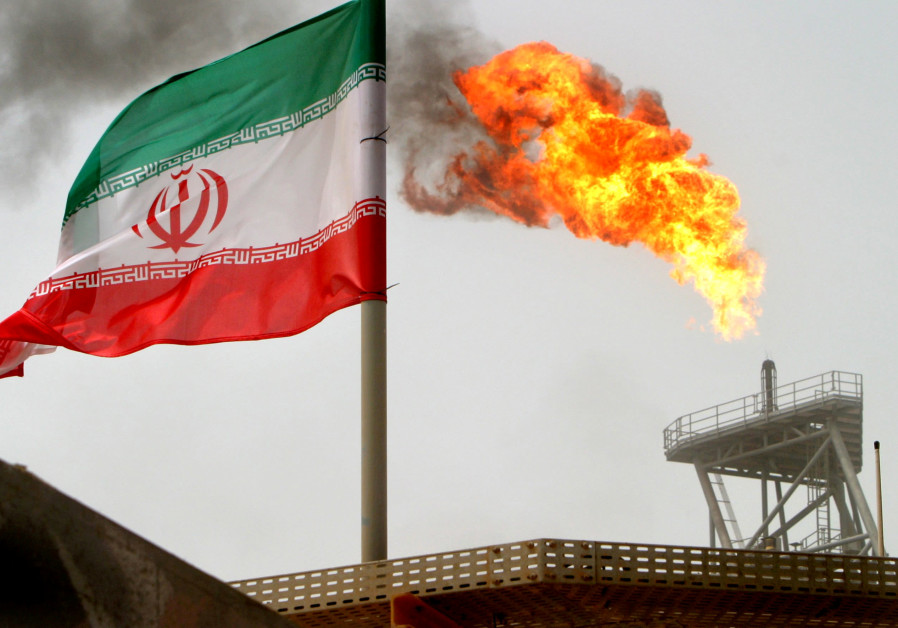
A gas flare on an oil production platform in the Soroush oil fields is seen alongside an Iranian flag in the Persian Gulf, Iran, July 25, 2005. (photo credit: RAHEB HOMAVANDI/REUTERS)
Iran can export as much oil as it needs, Iran’s Supreme Leader Ayatollah Ali Khamenei said on Wednesday, according to his official website.
“America’s efforts in sanctioning the sale of Iranian oil won’t get anywhere,” Khamenei said. “We can export as much of our oil as we need and want.”
Oil prices hit their highest level since November on Tuesday after Washington announced all waivers on imports of sanctions-hit Iranian oil would end next week, pressuring importers to stop buying from Tehran and further tightening global supply.







 anneinpt
 artaxes
 danmillerinpanama
 davidking1530
 Peter Hofman
 Joseph Wouk
 Peter
Peter Louisiana Steve
 WarSclerotic
Recent Comments