Archive for December 2018

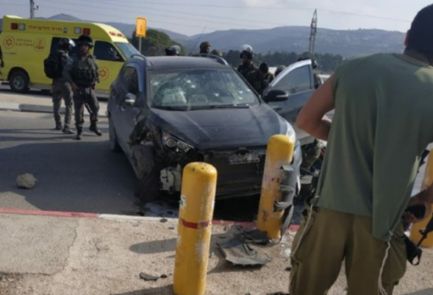
Security forces prevent ramming attack in Samaria, ‎terrorist arrested

December 26, 2018

Source: Security forces prevent ramming attack in Samaria, ‎terrorist arrested – Israel Hayom


Report: Israeli strike in Syria targets Hezbollah ‎officials 

December 26, 2018

Source: Report: Israeli strike in Syria targets Hezbollah ‎officials – Israel Hayom


Israel’s extensive Syria strike signals: Business as usual despite Trump and Putin 

December 26, 2018

Source: Israel’s extensive Syria strike signals: Business as usual despite Trump and Putin – Israel News – Haaretz.com

The strike in the Damascus area was likely aimed at a specific target such as Iranian weapons depots, but it has a wider geopolitical context ■ Netanyahu is reverse-engineering facts on Hezbollah tunnels ahead of elections

Uncredited,AP

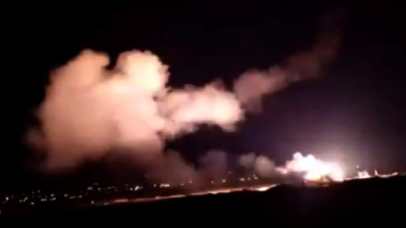
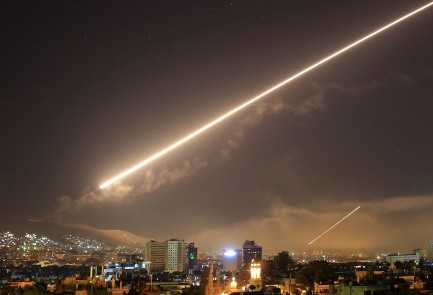
The aerial attack on Syria Tuesday attributed to Israel came less than a week after U.S. President Donald Trump announced the pullout of American forces from the country. The alleged Israeli strike may have been in pursuit of some specific military goal – to bomb Iranian weapons depots, for instance – but it has a broader political context. Israel is signaling that from its perspective, it’s business as usual again: Despite Trump’s announcement and despite Russia’s fury about its Ilyushin plane getting shot down last September, Israel sees itself as free to continue attacking targets in Syria, when necessary.

Israeli attacks on Syria have very much reduced since the downing of the Ilyushin (which the Syria aerial defense system shot by mistake during an Israeli air raid), according to foreign media reports.

Russia, wanting to stabilize the Assad regime, pressed Iran to reduce its arms smuggling and attempts to establish a military presence in Syria; it also leveraged the incident of the downed plane to press Israel to reduce its Syria strikes.

The Israeli army sent a delegation headed by General Aharon Haliwa, head of the IDF operations division, to Moscow in mid-December. It is possible that Russia’s opposition to Israel’s renewed attacks in Syria was softened to some degree by that meeting. The Russians could also have an interest in Israel constraining the Iranian drive to increase its military assets in Syria.

It is of interest in any case that the attacks ascribed to Israel are focusing on the greater Damascus area, remote from the most sensitive area from Russia’s perspective – an air base and the cities of Tartus and Latakia, in northwest Syria where the Ilyushin was shot down.

Israel has another argument beyond the message that Trump’s withdrawal does not deflect it from its path. Last summer, when Russia aided Assad’s forces in regaining Syria’s south, Moscow promised Jerusalem that it would keep the Iranians 80 kilometers away from Israel’s border in the Golan Heights.

In practice, the Russians didn’t include Damascus and its suburbs in that no-go zone, and the Iranian Revolutionary Guard Corps’ Quds force continues to operate there. Moreover, there are still signs of Iranian and Hezbollah activity on the Syrian side of the border in the Golan Heights.

In any case, the resumed Israeli-Iranian brawl in Syria is still low-key. Israel may prefer to strike more targets in fewer raids to prevent a gratuitous escalation of the situation. According to Syrian reports, the Israeli jets that struck Damascus operated from Lebanese airspace. The Syrian anti-aircraft systems responded, as they have done over the last two years, with massive missile fire. One of the missiles seemed to penetrate Israeli airspace and an intercepting missile was fired in response. Insofar as is known, there was no interception and the IDF did not specify which air defense systems were activated.

Meanwhile, the IDF is still working on locating Hezbollah tunnelson the Lebanese border. Likud ministers on the talk radio circuit on Tuesday following Prime Minister Benjamin Netanyahu’s surprise snap election announcement said the mission up north is all but over.

It’s a classic case of reverse engineering the facts. To prevent Habayit Hayehudi from abandoning the coalition in mid-November, Netanyahu used the excuse of the tunnels (the nature of the challenge remains as mysterious to Hezbollah as it does to the Israeli public), claiming that the military situation was sensitive (so elections shouldn’t be held).

Now that the legal and political circumstances have changed and elections are planned, one can hardly be in the middle of a sensitive operation, hence the haste to declare it all but finished.

In practice, however, it will take many more weeks to finish finding and destroying all of Hezbollah’s tunnels into Israel. This shouldn’t affect the timing of elections, but in hindsight also applies to Netanyahu’s original “sacrifice” speech more than a month ago.

The tunnels operation is complicated and has some potential for trouble developing with Hezbollah, which hasn’t happened yet. That’s all, and it has nothing to do with the elections.


Iranian Cargo Planes In Damascus During Air Strike – Israeli Media

December 26, 2018

Source: Iranian Cargo Planes In Damascus During Air Strike – Israeli Media

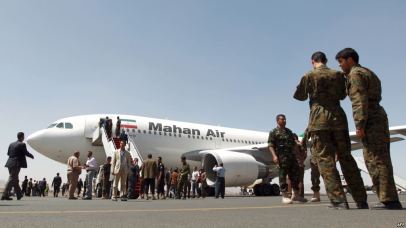
An airplane of Mahan Air sits at the tarmac after landing at Sanaa International Airport in the Yemeni capital on March 1, 2015 a day after officials from the Shiite militia-controlled city signed an aviation agreement with Tehran.

After reports that an Israeli aircraft launched a missile attack on an arms depot near Damascus, Israeli media reported more information showing possible links to Iranian activities in Syria.

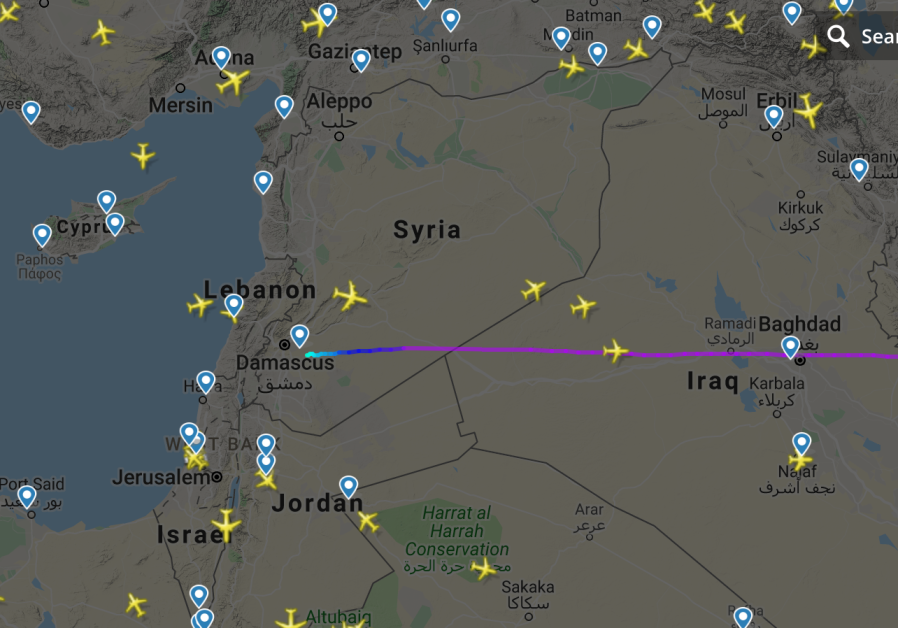
The Jerusalem Post, using commercial airline tracking information, reported that two Iranian cargo planes left Damascus around 10 PM, right before or during the air attack took place.

A Mahan airlines plane and a Fars Air Qeshm flight took off, crossed into Iraq and flew on toward Tehran.

Mahan Air has been targeted by U.S. sanctions for delivering arms to Syria, which at least partly reach the Lebanese Hezbollah, designated as a terror group by the U.S.

The JP and other Israeli media also quoted a report by Newsweek that the attack might have targeted and wounded high-ranking Hezbollah officials visiting Damascus, but this information has a single source; an unnamed U.S. Department of Defense official.

A Lebanese website has also reported that a Hezbollah delegation was arriving in Damascus at the time of the airstrikes to board one of the Iranian flights to go to the funeral of Ayatollah Mahmoud Hashemi Shahroudi who passed away in Tehran on December 24.

A Hezbollah delegation heading to Iran for the funeral of a senior regime official is entirely possible, as such trips have been quite common in the past. But whether Tuesday night a Hezbollah delegation was indeed in Damascus at about the time of the air attack, is not confirmed.

Speculations that the Hezbollah delegation might have been targeted while on board of one of the Iranian planes was discounted by former director of Israeli Military Intelligence, Maj. Gen. (res.) Amos Yadlin, who told the Israeli radio the probability of such an incident is “very low” according to Haaretz.

Indeed an Israeli strike on an Iranian plane on the ground in Damascus would be unprecedented and would be a major escalation.

Yadlin added that Israel does not attack Hezbollah officials but targets weapons and ammunition and said a lot of things are still unknown and need to be pieced together,


U.S. sanctions may prevent Iran’s expansion, despite exit from Syria 

December 26, 2018

Source: U.S. sanctions may prevent Iran’s expansion, despite exit from Syria – Middle East – Jerusalem Post

A report by the Meir Amit Intelligence and Terrorism Information Center said Tehran’s ambitions to expand in Syria could be bucked through sanctions and internal protests.

BY YONAH JEREMY BOB
 DECEMBER 25, 2018 10:55
U.S. sanctions may prevent Iran's expansion, despite exit from Syria

Though Iran’s morale is high with the US’s withdrawal from Syria, a combination of sanctions and internal domestic pressures may prevent it from filling the vacuum, an intelligence center report said late Monday.

The Meir Amit Intelligence and Terrorism Information Center report said that Iranian regime officials’ public statements on the issue have been limited to date, but that it is clear from domestic media coverage that the US withdrawal is viewed as a victory and a surprise.

Iran’s Foreign Ministry spokesman has already issued a statement that the US presence in Syria “lacked logic,” and a few other more minor officials have made comments, but its Supreme leader Ayatollah Ali Khamenei, President Hassan Rouhani and others have remained silent.

Out of concern that the Trump administration could reverse course if publicly embarrassed, the report said that these top officials may wait to weigh in publicly until US forces are actually withdrawn.

In addition, the report said that the sudden withdrawal announcement caught them by surprise.

Still, the report said it is clear that since the US entered the fray in Syria, a primary goal of the Islamic Republic has been to ensure that the American military presence did not stick around long-term, even as it took advantage of that same military force against ISIS.

Absent a US presence, the report stated, Tehran has potentially a much freer hand to use its land bridge from Iran to Syria and Lebanon to establish power centers and to move weaponry and militias closer to Israel’s border.

To date, Iran has mainly used the land route of Albukamal route, which goes from Baghdad through the Euphrates Valley and passes through the Albukamal crossing, to get weapons and supplies to Syria and Lebanon.

Though this was considered a substantial achievement and improvement over full reliance on transporting weapons by air, the Iranian Revolutionary Guard Corps (IRGC) has always preferred to use the Tanf route if it ever opened up.

The Tanf route, leading from Baghdad to Damascus and going through the Tanf border crossing, near the tri-border area between Iraq, Jordan, and Syria, was off-limits as long as the US military presence physically blocked access.

It is a shorter route than the Albukamal route and avoids potential threats from some of the remainder of ISIS forces, said the Meir Amit center.

With the US withdrawal, the IRGC may press to substantially increase transporting weapons and supplies using the shorter Tanf route, which would also force Israel to keep an eye on multiple passages.

Yet, at the same time, the report said that “in the short term Iran will continue with a cautious policy mostly based on foreign [non-Iranian] Shi’ite militias and on local Syrian militias in order to deepen its influence in Syria.”

The intelligence center explained that US sanctions have exacerbated internal Iranian tensions about how much it should be investing its own blood and treasure in foreign adventures.

At a time when the Islamic Republic’s economy is at a significant low from sanctions, it is harder for the IRGC to justify fighting in foreign areas, let alone increasing its foreign presence, said the report.

Overall, even as the regime has succeeded in containing nation-wide protests from representing an imminent danger to its rule, it is still sensitive to the issue and likely to opt to rely on proxies in the Syria and Lebanon sphere for the near future.

For example, the report cited a public statement by Jafar al-Hassini, spokesman for an Iraqi Shi’ite militia using the name Hezbollah, which said that after the US pullout, his forces would fill the vacuum, including protecting Kurdish forces which until now had been protected by Iran.

Further, the report pointed out that US forces to date had not actually directly confronted Iranian forces.

In other words, the main foreign power limits on Tehran’s activities in Syria were pressures from Israel and Russia – pressures which will continue.
Suspicious Iranian cargo plane left Damascus minutes before airstrike 

December 26, 2018

Source: Suspicious Iranian cargo plane left Damascus minutes before airstrike – Arab-Israeli Conflict – Jerusalem Post

According to the site Flightradar24.com, the Boeing 747-281F left Damascus and flew due east towards Tehran, climbing to 30,000 feet and then crossing into Iraq after ten in the evening.

BY SETH J. FRANTZMAN
 DECEMBER 26, 2018 00:59
Iran Cargo Plane

Two suspicious Iranian planes left Damascus on Tuesday night just prior to reports of airstrikes.

Details from flight monitoring sites show that a Fars Air Qeshm 747 cargo plane left Damascus International Airport at 9:28 in the evening, just half an hour before reports emerged of air strikes in Syria on Tuesday night.

According to the site Flightradar24.com, the Boeing 747-281F left Damascus and flew due east towards Tehran, climbing to 30,000 feet and then crossing into Iraq after ten in the evening.

By midnight it had entered Iranian airspace and began a beeline for Tehran. A second Tehran bound flight, Maham Air took off at 10:04 in the evening and flew precisely the same route. The Far Air Qeshm flight has been in the news in the past in relation to alleged smuggling of arms to Syria and also to Damascus. Al-Arabiya claimed that it transferred weapons to Hezbollah in early December.  In October, FoxNews carried a similar report.

Similarly Mahan Air has been targeted by the US Treasury Department for links to the Islamic Revolutionary Guard Corps, making its departure right after the Fars Air Qeshm suspicions. Although the Fars Air Qeshm flight appears to have left before the airstrikes began, the Mahan Air flight seems to have left around the same time.

In the past reports have indicated that airstrikes targeted Damascus after suspicious flights landed and allegedly disembarked cargo for arms smuggling to Hezbollah factions.


Airstrike in Damascus an embarrassment for Syrian regime at crucial time 

December 26, 2018

Source: Airstrike in Damascus an embarrassment for Syrian regime at crucial time – Arab-Israeli Conflict – Jerusalem Post

For months it has been relatively quiet.

BY SETH J. FRANTZMAN
 DECEMBER 26, 2018 00:12
rebels

Syrian air defense confronted a complex threat over Damascus Tuesday night. It comes after several months of relative quiet for Bashar al-Assad’s Syrian regime, which is grappling with a crises in eastern Syria as the US withdraws.

The airstrikes took place as the Syrian state media was seeking to highlight Christmas in Syria. Syria was witnessing a “victory over terrorism,” SANA said. However the airstrikes were the most serious since September when an Israeli airstrike targeted Latakia and resulted in Syrian air defense shooting down a Russian IL-20 aircraft. That incident caused Moscow to give Syria the S-300 system and warn Israeli “hotheads” against further incidents.

For months it has been relatively quiet. An incident on November 29 and December 9th worked up Damascus as air defenses were activated. But both incidents seemed minor. One was a false alarm apparently. However December 25 was a major escalation. It comes as Syria is seeking to deal with a major crises in eastern Syria as the US withdraws.

US President Donald Trump announced the withdrawal on December 19 and since then there have been discussions about what comes next. Turkey wants to launch a major operation into eastern Syria to strike at the Kurdish People’s Protection Units (YPG) which Ankara says are terrorists linked to the Kurdistan Workers Party (PKK). The YPG were partners of the US-led Coalition’s anti-ISIS campaign.

Syrian rebel groups aligned with Turkey have volunteered to help fight the YPG. One group already announced it would attack Manbij in northern Syria.

For the Syrian regime this is a problem because there are Syrian troops in eastern Syria in Qamishli and Hasakeh. The Syrian regime has amicable relations with the YPG but the regime must rely on Russia and Iran to help negotiate with Turkey in eastern Syria. As Damascus focuses on that, it also wanted a quiet Christmas to highlight stability after seven years of civil war. The airstrikes burst that quiet and will make Damascus wonder if worse is to come.

Israel has said it struck 200 targets in the last two years throughout Syria. Many of these were near Damascus according to local reports. But Syria thinks that the S-300 and Russia’s support will reduce the airstrikes.

Instead it appears Syria has not been successful at preventing an airstrike around Damascus. Even though its state media claims it intercepted all the missiles fired at targets near Damascus on December 25, that assertion is unlikely.

The Syrian government must now ask itself if Russia is serious about training it to use the S-300 and if the S-300 is effective.

These two issues relate to how Damascus will concentrate the challenges it still faces. Israel has said that as the US withdraws, Jerusalem will continue to challenge Iran in Syria. In addition there are reports that Russia could offer to help reduce Iranian influence or presence in Syria in return for something.

Syria’s regime looks at the region and realizes that decisions about what happens in Syria always seem to be outsourced to Moscow, Tehran or Ankara. For instance the foreign ministers of Russia, Iran and Turkey met in Geneva on December 18 to discuss a constitutional committee for Syria.

Russian defense officials visited Tehran on December 25 and Iran discussed expanding cooperation with Russia. Russia also speaks directly with Israel and reports indicate that this includes discussions about Syria.

Syria is trying to rebuild its reputation in the region. The Sudanese leader Omar Bashir went to Damascus on December 16 and Syria’s powerful intelligence chief Ali Mamluk went to Cairo on December 23. Normally that would look like Syria is coming in from the cold in the region, welcoming foreign leaders and working with Arab regimes after years of being treated like a pariah by much of the Arab League.

But Syria’s regime also wants to secure Damascus and wants to negotiate what happens in Idlib and in eastern Syria. Yet it has to rely on Russia for much of these details. It also has to rely on Russia for improving its air defenses around Damascus. The explosions and wild-firing of missiles on Tuesday illustrates that Damascus has a long way to go to confront airstrikes around its capital.


Were Hezbollah members targeted near Damascus? 

December 26, 2018

Source: Were Hezbollah members targeted near Damascus? – Middle East – Jerusalem Post

Mountain road from Beirut to Damascus has been frequent target of past airstrikes, but claims that Hezbollah leaders were targeted leaves questions about why they travelled to Syria.

BY SETH J. FRANTZMAN
 DECEMBER 26, 2018 10:28
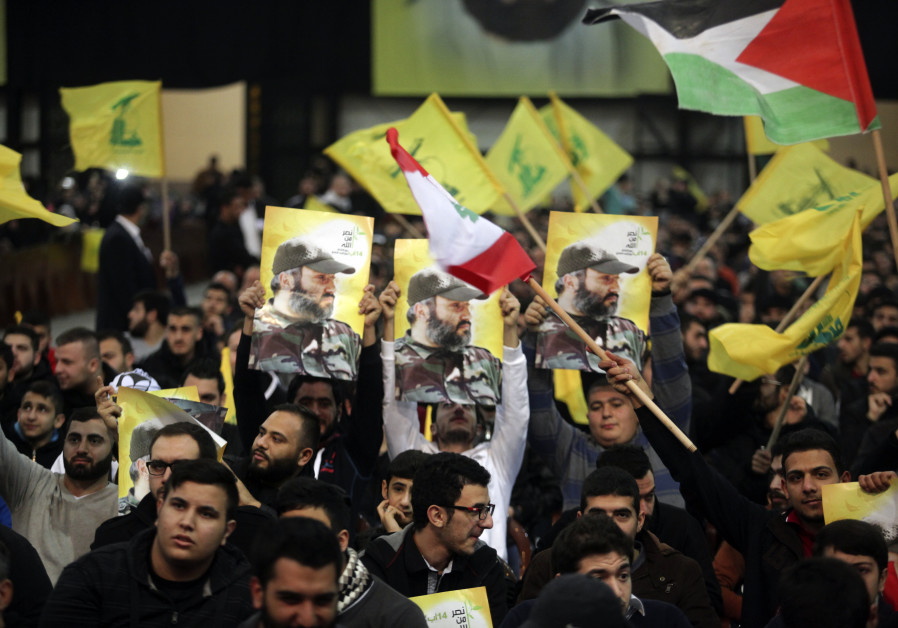
Supporters of Lebanon's Hezbollah leader Sayyed Hassan Nasrallah carry pictures of Hezbollah's late

Hezbollah senior leaders and members were travelling to Damascus during the airstrikes that rocked areas west of the Syrian capital on Tuesday evening. They were reportedly hit during the air strikes leaving many questions as to why they were targeted and who they were.

Newsweek reported on Wednesday that Hezbollah leaders were targeted in the airstrikes. According to several sources, including the Lebanese website NewLebanon.info, the Hezbollah delegation was journeying to Damascus to board a flight bound for Tehran. They were heading to the funeral for Grand Ayatollah Mahmoud Hashemi Shahroudi, an important Iranian cleric who was head of the Expediency Discernment Council. He passed away on December 24 and senior Iranian religious figures buried him on Wednesday. Supreme Leader Ali Khamenei presided at the ceremonies according to Iranian Fars News. It now appears the Hezbollah delegation may have been heading to Damascus to board a flight to Tehran for the important event. Hezbollah and Iranian regime leaders regularly attend each others funerals and ceremonies. For instance IRGC Quds Force Commander Qasem Soleimani went to the grave of Jihad Mughniyeh in 2015 in Beirut.

A Mahan Air flight left Damascus around 10 in the evening in the midst of the airstrikes. Mahan Air has been designated by the US Treasury Department for its links to the IRGC. Israel Ambassador to the United Nations Danny Danon said in 2016 that Mahan Air was among those flights used by Tehran to supply Hezbollah. However these flights could fly directly to Beirut so why would a Hezbollah delegation need to travel to Damascus to board the flight?

The claim that the Hezbollah members were targeted and that they were traveling for the Shahroudi funeral has not been confirmed. Newsweek reported that a Department of Defense source had told them the strike was “conducted minutes after the leaders board a plane bound for Iran.” Strikes also targeted ammunition warehouses that held precision ammunition. The claim that the Hezbollah members had already boarded a plane has not been corroborated with any footage on the ground that shows a plane being hit. A strike on a plane at a Damascus airport would be a serious escalation. The report may be only partly accurate and may indicate the men were struck on the way to board a blame, not after they had boarded.

Syria’s state media SANA claims that Syrian air defense had “intercepted hostile missiles fired by Israeli warplanes from Lebanese territory and managed to drop most of the rockets before reaching their targets.” SANA says the airstrikes hit an ammunition depot and wounded only three soldiers. Several Syria observers, including the Twitter account @Syria_SR claimed the airstrikes were more complex than that, involving “55 munition, four waves [of cruise missiles] in 35 minutes and managed to hit 7 times in 2 different locations.” In response Syrian air defense fired 60 missiles to intercept the attack. Several Syrian SA-125 anti-air missiles misfired during the attempt to stop the attack, hitting areas around Damascus and causing confusion.

If the Hezbollah members were targeted it would not be the first time Hezbollah members have been struck in the same location on the roads that lead from Damascus over the mountains to Lebanon. For instance two Hezbollah members were killed in an airstrike near Dimas in December 2014. In addition in January 2015 “senior Hezbollah figures,” including Jihad Mughniyeh were killed near Quneitra. Mezzeh military airport was also struck in December 2016. Airstrikes also targeted an area near Saboura on the mountain road in November 2016 and in April 2017. The road that passes from Damascus via the Mezzeh military airport and Saboura, Dimas and then over to Lebanon is a 116km stretch of beautiful mountain driving that takes around 2 and a half hours on a normal day of traffic.

The allegation that the senior Hezbollah members were targeted on their way to the Shahroudi funeral has now been repeated by many sources on social media and online. Why would Hezbollah members expose themselves on the road to Damascus knowing that there have been tensions in the region in recent months. Did they feel safe, hoping Syria’s S-300 air defense system, supplied by Russia in the wake of the downing of a Russian IL-20 in September during an Israeli air strike, would provide them security? Targeted in the past on the same stretch of road they would have known its dangers. It doesn’t answer the final question of why they didn’t board a flight directly from Beirut and save themselves the drive and exposure.

Hezbollah media and pro-Syrian regime media has been silent on this issue. Iranian regime media has also been silent, discussing only the Syrian air defense system’s “success” at targeting the attack and continuing the story that only a warehouse was hit and several soldiers injured. In coming hours or days the Syrian regime or pro-Hezbollah media may begin to reveal what happened, especially if senior members of the group were killed they will want to hold lavish funerals for the “martyrs.” Hezbollah is often outspoken about these kinds of events. On December 3, for instance, Hezbollah claimed its member had not been hit in an alleged November 29 airstrike south of Damascus. This was to respond to rumors that its members had been targeted. Now the ball is in Hezbollah’s court once again to see if it will respond to the rumors from December 25 regarding its members being targeted.


US sources: Israeli F-16s fired Delilah cruise missiles over Syria from Lebanese air space. F-35s joined second wave – DEBKAfile

December 26, 2018

Source: US sources: Israeli F-16s fired Delilah cruise missiles over Syria from Lebanese air space. F-35s joined second wave – DEBKAfile

US military sources disclose that the Israeli air offensive on Tuesday night, Dec. 25, was conducted by IAF F-16I fighter jets firing Delilah cruise missiles from Lebanese air space into Syria. Damascus is said to have countered the attack with Russian Pantsir-S2 and S-200 SAM air defense weapons.

These highly credible sources also disclose that the Israeli attack was aimed at Syrian military sites – not Iranian and Hizballah targets as earlier reported in Israel and Damascus. The Israeli government and military chiefs had apparently decided, say the US sources, to take advantage of the chaos generated by President Donald Trump’s decision to pull US troops out of Syria and Ankara’s threat of a Turkish army thrust across the Euphrates. Their purpose was to disable Syrian military sites where Iranian and Hizballah combat assets were quartered.

After the F-16 jets failed to connect to their targets, the IDF sent the F-35 stealth planes over in a second wave.

According to the earlier accounts coming from inside the region, a wide-ranging IDF attack southwest of Damascus Tuesday night, Dec. 25, hit Iranian and Hizballah targets. They confirmed that some of them were embedded in Syrian army bases. Both versions confirm the attack was launched from Lebanese air space.

Early Wednesday, the Syrian army released a video claiming to depict the interception of one of many Israeli missiles hit by its air defense systems. Syrian and Lebanese sources describe the Israeli air offensive as lasting 30 minutes. If correct, then this latest Israeli attack over Syria was the same length as the massive Israel Air Force strike of Nov. 29 which struck at least 15 Iranian and Hizballah targets. After that multiple raid, Damascus warned that henceforth there would be payback against corresponding targets inside Israel.

A blackout covers the circumstances of the massive explosion that rocked Israeli towns, including Hadera, Caesarea and Zichron Yaacov while the attack over Syria was in progress. It appears, however, that Syria did indeed fire an air defense missile into Israel in retaliation. The IDF spokesman would only say “The air defense system was activated against an anti-air missile launched from Syria, No damage or casualties.”

This laconic statement indicates that interception did not take place and the Syrian missile may have landed somewhere in Israel. Social media carry photos of its fragments. Witnesses attest to the activation of an Israeli air defense battery located at Ain Shemer.

This was the second time in six months that an IDF air defense battery failed to down a Syrian missile. On July 23, a David’s Sling anti-air battery missed two Syrian SS-21 surface missiles that were heading for the Sea of Galilee.

According to Arab sources, the targets of the Israeli attack were located at the military section of Damascus airport, where an Iranian transport plane – some say three – had landed, and two other locations: Dimat, headquarters of the Syrian army’s 4th Division, Qatana, site of its 10th Division, and the command center of Syrian artillery forces further south at Khan al-Sheikh.

Newsweek magazine quotes anonymous Pentagon sources as saying that one of the Israeli missiles was aimed at a high-profile Hizballah delegation which had landed in Damascus from Beirut at 16:00 local time ready to board an Iranian flight bound for Tehran. They are said to have been on their way to the funeral of Ayatollah Hashemi Alshaharoudi. Other American sources report that only one member of the delegation was hurt.


Missile from Syria intercepted in central Israel

December 26, 2018

Source: Missile from Syria intercepted in central Israel

Israeli air defenses were activated against a missile launched from Syria, there were no casualties or damage to property; meanwhile, Syrian state media reports Syrian air defenses intercepted ‘hostile targets’ near Damascus.

According to the Syrian Observatory for Human Rights, Israel had attacked three targets—Iran or Hezbollah’s arms depots located southwest of Damascus. The IDF did not specify whether air defenses intercepted the missile.

Hezbollah’s information channel reported that S-200 missiles were launched against the attack missiles. The Syrian Assad regime has yet to respond to the reports.

Syrian air defenses intercept 'hostile targets' near Damascus, December 25, 2018

Syrian air defenses intercept ‘hostile targets’ near Damascus, December 25, 2018

Loud explosions were heard in the Syrian capital Tuesday night. “Our air defenses have intercepted a number of hostile targets near Damascus,” Syrian state TV said and added the attack “originated from above the Lebanese territories.”

At the same time, Lebanese state-run National News Agency reported Israeli war planes performed mock raids above southern Lebanon.

As in previous reports of attacks in Syria, this attack is also connected to an Iranian plane. On Tuesday morning, the Boeing 747 of Iranian airline Fars Air Qeshm, which is affiliated with the Revolutionary Guards, took off from Tehran International Airport (THR) to Imam Khomeini International Airport (IKA).

At 5:30pm, the plane took off for Damascus International Airport where it landed shortly after 7:45 pm. The plane was apparently used to transport military equipment to the Syrian army and Hezbollah.

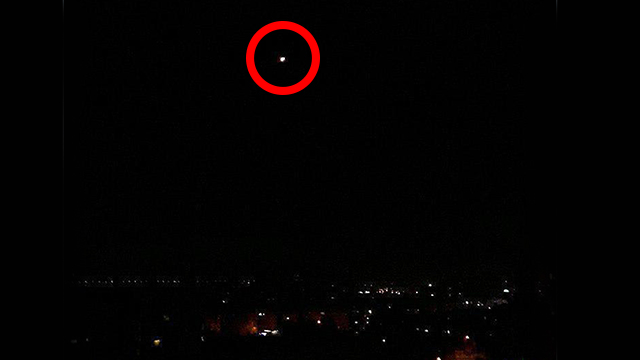
Residents from central Israel reported seeing a trail of smoke in the sky near Hadera. The trail was also seen in the north. “We were sitting in the living room when the noise shook the entire house. We heard a launch and immediately went outside. It was flying fast, we saw a trail of smoke and a yellow spot in the sky. It’s not the first time, it already happened twice since we’ve moved here a decade ago,” said Sa’ar Pardi, a resident of Maor, a moshav in north-central Israel.

Smoke trail seen in the sky near Hadera, December 25, 2018 (Photo: Sa'ar Pardi)

Smoke trail seen in the sky near Hadera, December 25, 2018 (Photo: Sa’ar Pardi)
The Lebanese Ansharah website reported that the Syrians used a new type of missile. According to preliminary assessments, the attack took place on the Lebanese-Syrian border, the news website added.The attack is the first since the missile assault on the southern outskirts of Damascuson November 29.

Last week, Prime Minister Benjamin Netanyahu said that Israel will escalate its fight against Iranian-aligned forces in Syria after the withdrawal of US troops from the country. “We will continue to aggressively act against Iran’s efforts to entrench in Syria. We do not intend to reduce our efforts. We will intensify them, and I know that we do so with the full support and backing of the United States.”

Earlier this month, Syria reported that air defense system had been used against enemy targets in Damascus. According to the report, the attack was carried out in the air space of Damascus airport. Not long after, the reports were removed.

The Foreign Ministry attributed the attack to “the direct result of the American policy of contempt for human values and the disrespect shown in the establishment of the coalition that attacked Deir al-Zour.” It was the first time the Syrians had admitted an Israeli attack since the Russian plane crash in September.

In recent months there have been fewer reports of Israeli attacks in Syria, especially after the downing of the Russian aircraft.

Reuters contributed to this report.