Archive for December 2018

IDF warns Gazans: Don’t protest on Friday or you’ll get hurt 

December 27, 2018

Source: IDF warns Gazans: Don’t protest on Friday or you’ll get hurt – Arab-Israeli Conflict – Jerusalem Post

“How do you want to spend your Friday? With members of your family, or at the violence on the fence?” Sarhan posted on Facebook in Arabic.

BY YVETTE J. DEANE
 DECEMBER 27, 2018 10:59
A demonstrator wearing a mask at the back of his head holds a Palestinian flag during a protest near

Head of Coordination and Liaison Administration in Gaza, Col. Iyad Sarhan, urged Gazans to stay away from protests via the Arabic-language Facebook page of the Coordinator of Government Activities in the Territories (COGAT) on Thursday.

“How do you want to spend your Friday? With members of your family, or at the violence on the fence?” Sarhan wrote. “The IDF will not tolerate attempts to sabotage the fence or violations of Israel’s sovereignty!”

“We too want a Friday without casualties among you, but this depends on you and you alone,” Sarhan added. “Keep your distance from the fence area, in so doing you will keep yourselves safe.”

This warning comes as four Palestinians were killed and dozens more injured last week during the weekly March of Return protests along the Gaza border that tend to ramp up on Friday after prayers.

Some 8,000 Palestinians took part in the protests last Friday. They burned tires and threw rocks and an explosive device toward troops, though it did not land in Israeli territory.

Anna Ahronheim contributed to this report.


IDF warns Gazans: Don’t protest on Friday or you’ll get hurt 

December 27, 2018

Source: IDF warns Gazans: Don’t protest on Friday or you’ll get hurt – Arab-Israeli Conflict – Jerusalem Post

“How do you want to spend your Friday? With members of your family, or at the violence on the fence?” Sarhan posted on Facebook in Arabic.

BY YVETTE J. DEANE
 DECEMBER 27, 2018 10:59
A demonstrator wearing a mask at the back of his head holds a Palestinian flag during a protest near

Head of Coordination and Liaison Administration in Gaza, Col. Iyad Sarhan, urged Gazans to stay away from protests via the Arabic-language Facebook page of the Coordinator of Government Activities in the Territories (COGAT) on Thursday.

“How do you want to spend your Friday? With members of your family, or at the violence on the fence?” Sarhan wrote. “The IDF will not tolerate attempts to sabotage the fence or violations of Israel’s sovereignty!”

“We too want a Friday without casualties among you, but this depends on you and you alone,” Sarhan added. “Keep your distance from the fence area, in so doing you will keep yourselves safe.”

This warning comes as four Palestinians were killed and dozens more injured last week during the weekly March of Return protests along the Gaza border that tend to ramp up on Friday after prayers.

Some 8,000 Palestinians took part in the protests last Friday. They burned tires and threw rocks and an explosive device toward troops, though it did not land in Israeli territory.

Anna Ahronheim contributed to this report.


Hanegbi: We don’t need Russian help in Syria, our soldiers work alone

December 27, 2018

Source: Hanegbi: We don’t need Russian help in Syria, our soldiers work alone – Middle East – Jerusalem Post

He refused to comment on the AP report that an Israeli official confirmed the state launched airstrikes in Syria overnight on Tuesday.

BY YVETTE J. DEANE

DECEMBER 27, 2018 08:23

A pair of US Air Force F-15E Strike Eagles fl

A pair of US Air Force F-15E Strike Eagles fly over northern Iraq after conducting airstrikes in Syria. (photo credit: REUTERS)

MK Tzachi Hanegbi insisted Israeli soldiers do not need the help of Russia in Syria, insisting Israel can work alone, he said in an interview on Army Radio Thursday morning.

“We do not ask the Russians to keep us safe, assistance is essential from the Americans, but our soldiers know how to work alone,” Hanegbi said.

He refused to comment on the AP report that an Israeli official confirmed the state launched airstrikes in Syria overnight on Tuesday.

According to the report, Israel targeted storage and logistics facilities that were involved with the Iranian weapons transfer to Hezbollah.

Hanegbi also commented on Prime Minister Benjamin Netanyahu’s possible indictment.

“Netanyahu will be able to function with an indictment, he does not have to sit in court – that’s why there are lawyers,” Hanegbi said.


Army finds, destroys fifth attack tunnel from Lebanon

December 27, 2018

Source: Army finds, destroys fifth attack tunnel from Lebanon | The Times of Israel

IDF says underground passage entered Israel, blames Lebanese government for ‘blatant violation of Israeli sovereignty’

The Israeli military announced Wednesday it had discovered a new cross-border attack tunnel from Lebanon, the fifth such subterranean passage it has uncovered since launching an operation to destroy the Hezbollah-dug tunnels.

The latest tunnel was dug from Ayta ash Shab, a village across the border from the farming community of Shtula, and entered Israeli territory, according to the Israel Defense Forces.

The IDF said the tunnel was found “a number of days ago” and has now been destroyed.

“A short while ago, the tunnel was neutralized by an explosion,” it said in a statement.

Regional council heads and the United Nations’ peacekeeping force in Syria were notified ahead of the explosion, the military said.

The statement did not mention Hezbollah, the Lebanese terror group Israel has accused of digging the other tunnels.

The IDF reiterated it holds Lebanon’s government responsible for the cross-border tunnels.

“This is another blatant violation of UN Resolution 1701 and of Israeli sovereignty,” it said, referring to a UN Security Council resolution ending the 2006 Lebanon War, that requires all armed groups besides the Lebanese military to remain north of the country’s Litani River.

The military also said it would continue its efforts to locate and destroy attack tunnels from Lebanon.

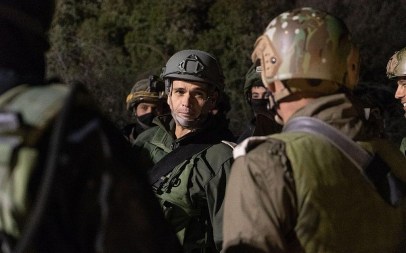
In this photo provided by the IDF on December 26, 2018, Maj. Gen. Yoel Strik, the head of the IDF’s Northern Command is seen during an operation to destroy a tunnel dug across the border from Lebanon. (IDF Spokesperson)

The announcement by the military comes a day after Prime Minister Benjamin Netanyahu said the military was close to wrapping up the operation to find and eliminate the tunnels.

The IDF launched Operation Northern Shield earlier this month to track down the tunnels, which it says Hezbollah planned to use in an opening strike in a future war with Israel.

“This operation is almost entirely behind us,” Netanyahu said in a statement released by his office.

“There is exceptional work being carried out here that has disarmed the Hezbollah tunnels,” he said. Hezbollah “invested heavily in [the project] and we destroyed it.”

Netanyahu made the comments while touring the northern border with other lawmakers, as they unofficially kicked off a campaign for re-election in which national security is expected to be a central issue.

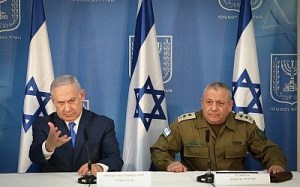
Prime Minister Benjamin Netanyahu (left) and IDF Chief of Staff Gadi Eisenkot deliver statements to the press at the Kirya military headquarters in Tel Aviv, on December 4, 2018 (Noam Revkin Fenton/Flash90)

On Sunday IDF Chief of Staff Eisenkot also said the operation was nearing completion.

“Most of the passages that enter Israel have been found, and I believe that we will complete this mission in the near future,” Eisenkot said.

However, during a tour of the northern border for journalists last week, a senior officer said the army was engaged in an open-ended effort.

“We are not restricted by time. It can take days, weeks, months. We will find all of them,” the officer said.

Israel has said it believes the tunnels were meant to be used by the Iran-backed terror group as a surprise component of an opening salvo in a future war, to allow dozens or hundreds of its fighters into Israel, alongside a mass infiltration of operatives above ground and the launching of rockets, missiles and mortar shells at northern Israel.

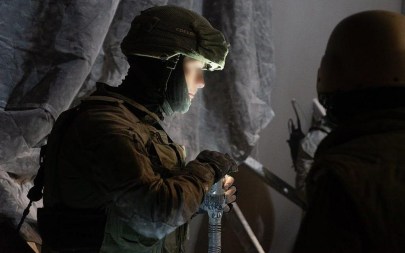
In this photo provided by the IDF on December 26, 2018, an Israeli soldier is seen a during an operation to destroy a tunnel dug across the border from Lebanon. (IDF Spokesperson)

The UN peacekeeping force UNIFIL confirmed last week that at least two of the tunnels crossed into Israel and were therefore a violation of the UN resolution that ended the 2006 Second Lebanon War, but did not confirm Israel’s allegations they were dug by Hezbollah. United Nation peacekeepers have stepped up patrols since the launch of the operation to ensure the frontier remains calm.

The operation is taking place close to Lebanese territory, sometimes on the north side of the border wall, albeit still inside Israeli territory.

Judah Ari Gross contributed to this report.


Netanyahu vows to keep hitting Iran in Syria: ‘We stand firmly on our red lines’ 

December 27, 2018

Source: Netanyahu vows to keep hitting Iran in Syria: ‘We stand firmly on our red lines’ | The Times of Israel

Prime minister says US military pullout from northern neighbor will not alter Israel’s policy of preventing Iranian military from entrenchment in Syrian territory

Prime Minister Benjamin Netanyahu attends a graduation ceremony for pilots who completed the Israel Air Force flight course, at the Hatzerim Air Base in the Negev desert, December 26, 2018. (Aharon Krohn/Flash90)

Prime Minister Benjamin Netanyahu attends a graduation ceremony for pilots who completed the Israel Air Force flight course, at the Hatzerim Air Base in the Negev desert, December 26, 2018. (Aharon Krohn/Flash90)

Brushing aside Russian criticism of a reported Israeli airstrike in Syria overnight, Prime Minister Benjamin Netanyahu on Wednesday doubled down on Israel’s policy of attacking Iranian-linked targets in Syria.

“We will not abide an Iranian entrenchment in Syria,” Netanyahu, who is also the defense minister, said at a graduation ceremony for fresh Israeli Air Force pilots at the Hatzerim air base in the south.

“We are taking action against it aggressively and powerfully, including in these very days,” he said.

US President Donald Trump’s “decision to pullout American soldiers from Syria does not change our policy,” Netanyahu said. “We stand firmly on our red lines in Syria and everywhere else.”

The Israeli air force’s capabilities are unmatched, and can reach arenas “near and far, very far,” he added.

US President Donald Trump surprised the world and many of his own officials by announcing last week that he would pull all 2,000 US soldiers in Syria out of the warn-torn country. Israel is concerned that Iran will take advantage of the military vacuum to expand its entrenchment in Syria.

Israel Air Force commander Amikam Norkin told the pilot course graduates that ongoing air force action, “through extraordinary cooperation with the intelligence branch,” has “prevented the setting up of Iranian military capability in the northern sector. It is not the end of the story and if needed we will act with the same determination.”

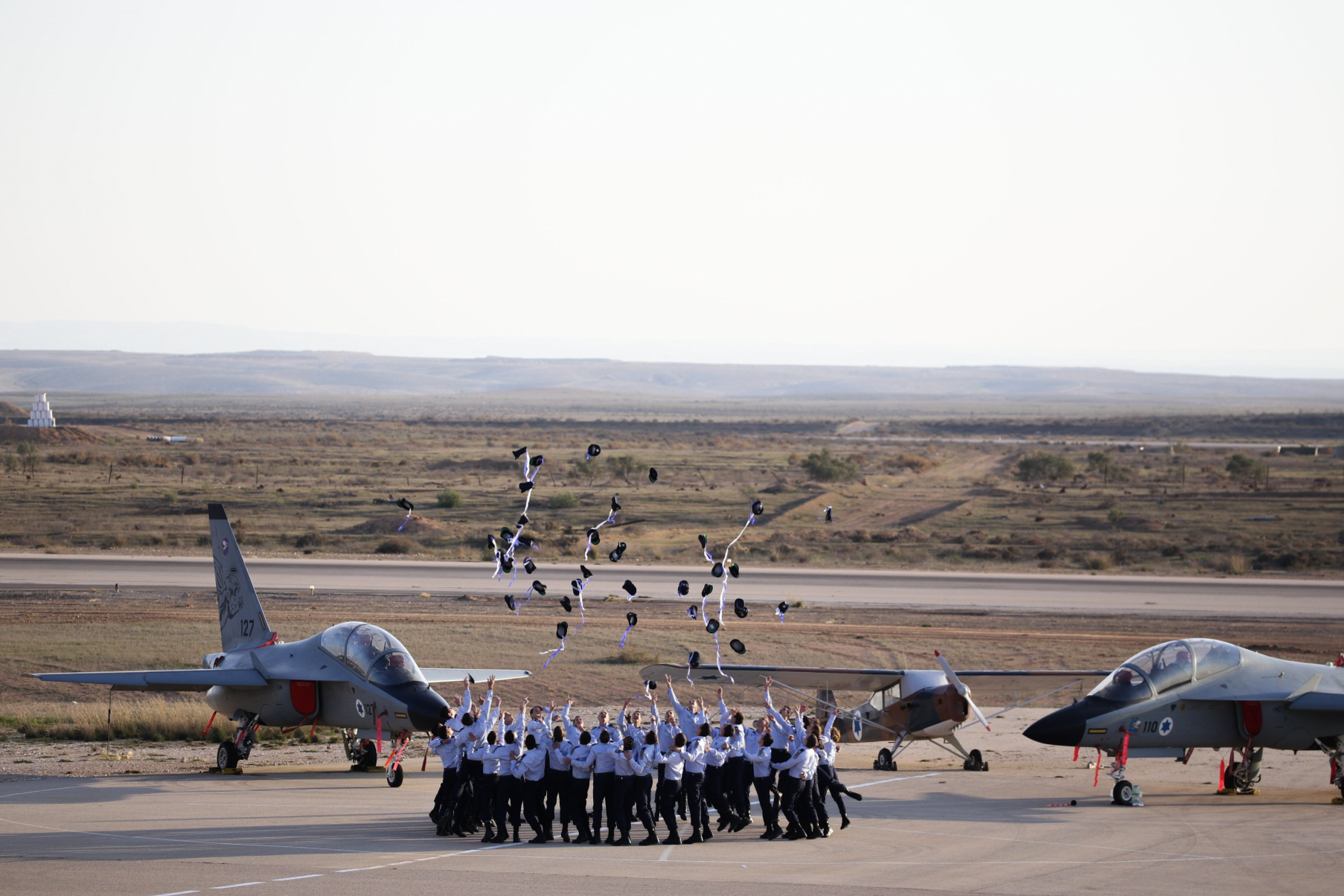
A graduation ceremony for pilots who completed the Israel Air Force flight course, at the Hatzerim Air Base in the Negev desert, December 26, 2018. (Aharon Krohn/Flash90)

Israel Defense Forces chief Gadi Eisenkot, also at the ceremony, said:  “In recent years, the IDF has been active in a campaign that took place far from the public eye — the inter-war campaign, beginning with deep intelligence gathering and fruitful cooperation…and culminating by performing the mission accurately and qualitatively, knowing that the air and space arm is powerful and has outstanding planning and execution capabilities.”

The Russian military earlier criticized Israel, which it said was responsible for the airstrike Tuesday night near the Syrian capital, saying it had endangered civilian flights. Moscow has provided military resources and air power to help its Syrian ally end a civil war which has dragged on for seven years.

Russian Defense Ministry spokesman Maj. Gen. Igor Konashenkov said that six Israeli F-16 jets launched the “provocative” raid at the moment when two civilian airliners were preparing to land in Damascus and Beirut, creating a “direct threat” to the aircraft.

Israel is widely believed to have been behind a series of past airstrikes that targeted Iranian and Hezbollah forces fighting alongside the government in Syria.

The Britain-based Syrian Observatory for Human Rights, a war monitor, said Tuesday’s Israeli strike targeted three positions south of Damascus that are arms depots for Lebanon’s militant Hezbollah group and Iranian forces.

Also Wednesday Russia’s Foreign Ministry said that Moscow expects the Syrian government to take over the areas where the US troops are currently deployed following their withdrawal.

Ministry spokeswoman Maria Zakharova emphasized that the territories in eastern Syria should be handed over to the Syrian government in line with international law. She said Moscow is unaware of any details of the planned US withdrawal from Syria, but added that the move would help peaceful settlement in Syria if implemented.

Turkey has said it is working with the US to coordinate the withdrawal of American forces but remains “determined” to clear US-allied Kurdish fighters from northeastern Syria and has been dispatching tanks and other military units to the border area.


Jerusalem official confirms Israel struck Iranian arms depot in Syria 

December 27, 2018

Source: Jerusalem official confirms Israel struck Iranian arms depot in Syria | The Times of Israel

Security source says Tuesday airstrikes hit site being used to transfer weapons to Hezbollah terror group as well as anti-aircraft battery

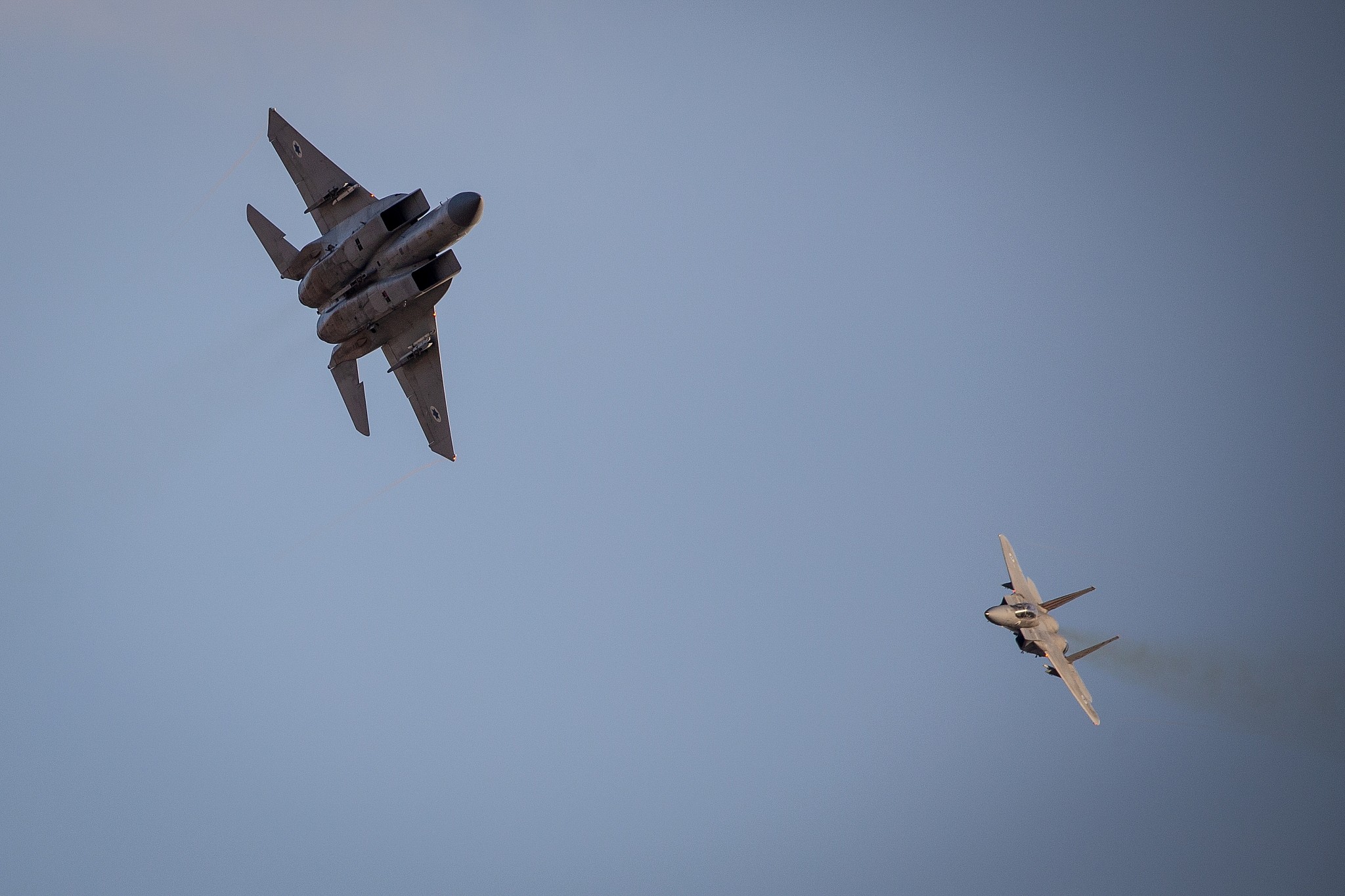
Israeli fighter jets performing an aerial show at a graduation ceremony at the Hatzerim Air Base in the Negev desert, December 26, 2018. (Aharon Krohn/Flash90)

Israeli fighter jets performing an aerial show at a graduation ceremony at the Hatzerim Air Base in the Negev desert, December 26, 2018. (Aharon Krohn/Flash90)

An Israeli security official confirmed Wednesday that Israel carried out an overnight airstrike in Syria, saying a series of Iranian targets were hit.

The Israeli official said the air force had attacked several Iranian targets in three main locations late Tuesday and early Wednesday. He said the targets were primarily storage and logistics facilities used by archenemy Iran to ship weapons to Hezbollah, an Iranian-backed Lebanese terror group that fought Israel in a 2006 war.

He said Israel also destroyed a Syrian anti-aircraft battery that fired at the Israeli planes, and claimed that Iranian forces are operating less than 80 kilometers (50 miles) from the Israeli border, contrary to Russian assurances.

The official spoke on condition of anonymity under standard security protocols. The Israeli military has not commented on the incident.

Earlier Wednesday, Russia criticized the airstrikes, saying they had endangered civilian flights. The Israeli official said, however, that Israel alerted Russia about the airstrikes ahead of time and the flights were endangered by Syrian anti-aircraft fire.

Russian Defense Ministry spokesman Maj. Gen. Igor Konashenkov said the Syrian air defense forces shot down 14 of the 16 precision-guided bombs dropped by the Israeli jets, while the remaining two hit a Syrian military depot 7 kilometers (about 4 miles) west of Damascus, injuring three Syrian soldiers.

But the Israeli official said all targets had been hit, in some cases causing secondary explosions.

Israel has previously confirmed carrying out scores of airstrikes in Syria, mostly believed to be aimed at suspected weapons shipments to Hezbollah.

“We will not abide an Iranian entrenchment in Syria,” Prime Minister Benjamin Netanyahu, who is also the defense minister, said at a graduation ceremony for fresh Israeli Air Force pilots at the Hatzerim air base in the south earlier Wednesday.

“We are taking action against it aggressively and powerfully, including in these very days,” he said.

Prime Minister Benjamin Netanyahu attends a graduation ceremony for pilots who completed the Israel Air Force flight course, at the Hatzerim Air Base in the Negev desert, December 26, 2018. (Aharon Krohn/Flash90)

According to Syrian state media, the strikes began around 10 p.m. Tuesday and were carried out by Israel from Lebanon. It said Syria’s air defenses opened fire on “enemy targets,” shooting them down.

The Britain-based Syrian Observatory for Human Rights, a war monitor, said Tuesday’s Israeli strike targeted three positions south of Damascus that are arms depots for Lebanon’s Hezbollah terror group and Iranian forces.

Newsweek reported Wednesday morning that the alleged Israeli airstrike hit several senior Hezbollah officials as they boarded a plane bound for Iran, citing a US Defense Department source. The unnamed source told the magazine he had received the information from top Israeli military brass.

He said strategic Iranian munitions were also targeted, including advanced GPS components for weaponry.

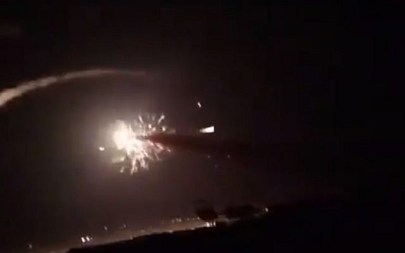
A screenshot from video on social media purporting to show airstrikes near Damascus on December 25, 2018. (Screen capture: Twitter)

However, that report was later denied by Lebanon’s Al-Mayadeen, widely regarded as pro-Hezbollah, which said no senior members of the terror group were hurt.

Syrian media said Wednesday morning that Israel hit a base used by Hezbollah in Al-Dimas, a weapons depot at a base belonging to the Syrian army’s 4th division in Sabura and the military’s 10th Division command in Qatana.

Israel said Tuesday it deployed it’s own air defenses against a missile fired from Syria as Damascus attempted to repel the alleged airstrikes. The Israel Defense Forces said there was no damage or injuries from the surface-to-air missile fired from Syria at Israel.

Earlier Wednesday, Konashenkov said that six Israeli F-16 jets launched a “provocative” raid at the moment when two civilian airliners were preparing to land in Damascus and Beirut, creating a “direct threat” to the aircraft.

Lebanon’s acting Transport Minister Youssef Fenianos later on Wednesday confirmed Konashenkov’s account, saying the two airplanes in Lebanese airspace “narrowly” escaped Israeli warplanes, averting a “human catastrophe.”

Fenianos said the Lebanese government will present a complaint to the UN Security Council.

The Syrian military didn’t fully engage its air defense assets to avoid accidentally hitting the passenger jets, Konashenkov said. He added that Syrian air traffic controllers redirected the Damascus-bound plane to a Russian air base in Syria’s coastal province of Latakia.

Moscow blamed Israel after Syrian anti-aircraft fire aimed at an Israeli jet downed a Russian spy plane in October, sending ties between Jerusalem and the Kremlin into a tailspin. Russia claimed the Israeli jet had used the lumbering sply plane for cover, a charge Israel denied.

Israeli bombing campaigns in Syria had seemingly been curbed since the October incident as Moscow and Jerusalem worked to re-establish a deconfliction method.


Trump skips meeting with Iraqi leader as Baghdad fumes over visit 

December 27, 2018

Source: Trump skips meeting with Iraqi leader as Baghdad fumes over visit | The Times of Israel

White House says Prime Minister Adel Abdul-Mahdi will visit White House next year, but Iraqi leader’s office only confirms that Trump was invited to Baghdad

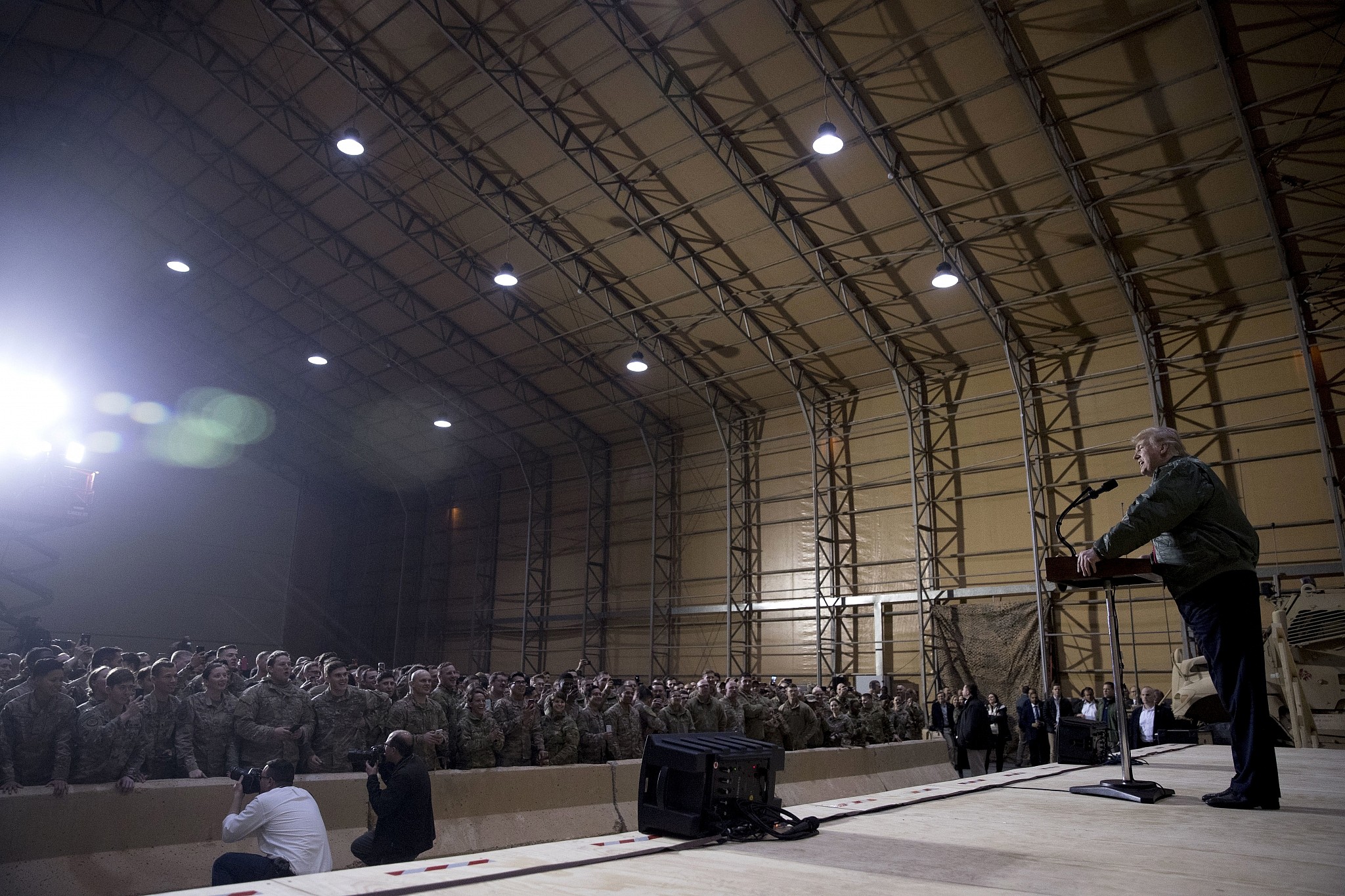
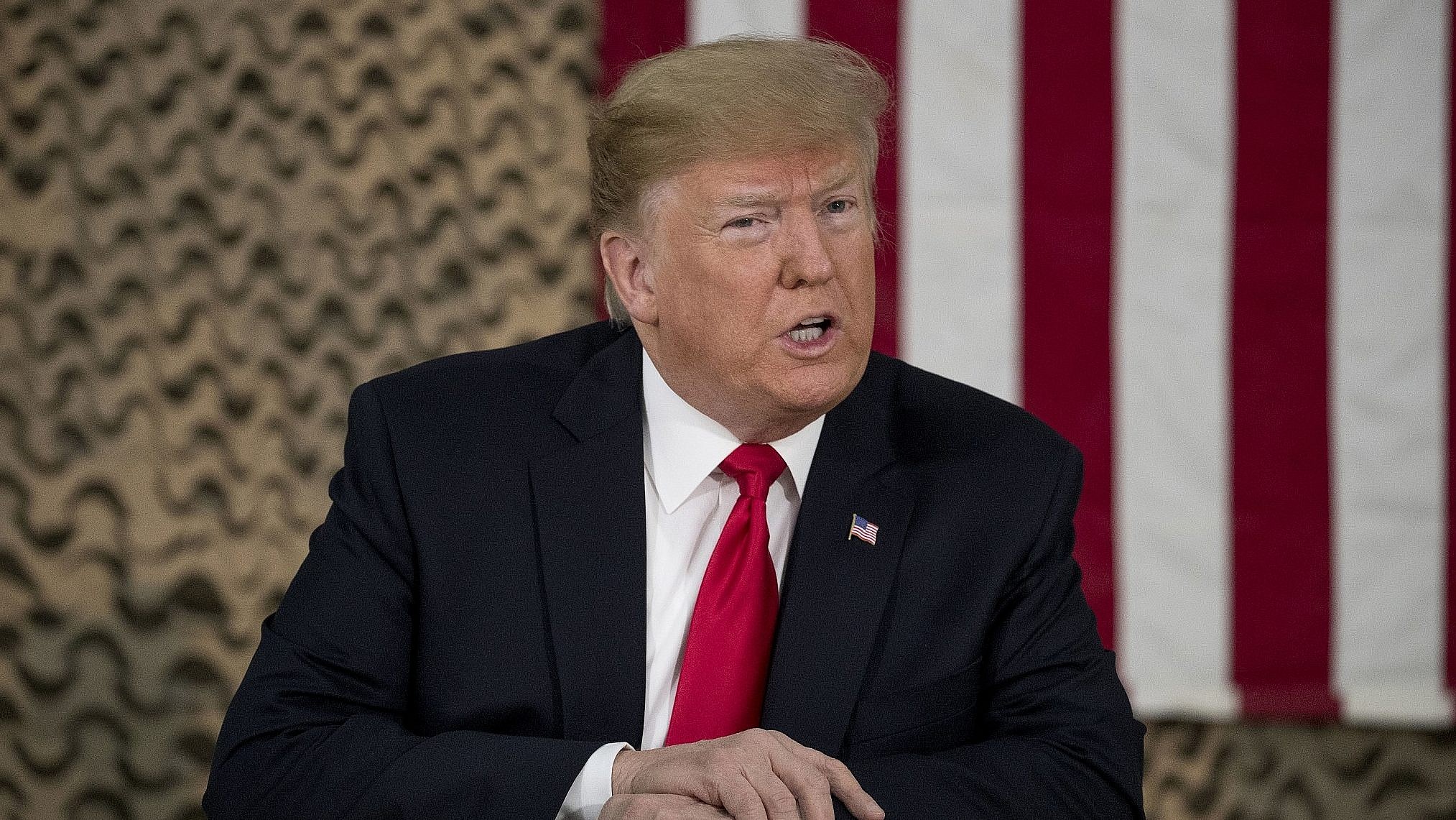
President Donald Trump speaks at a hanger rally at Al Asad Air Base, Iraq, Wednesday, Dec. 26, 2018. (AP/Andrew Harnik)

President Donald Trump speaks at a hanger rally at Al Asad Air Base, Iraq, Wednesday, Dec. 26, 2018. (AP/Andrew Harnik)

US President Donald Trump’s surprise visit to Iraq did not include a meeting with Prime Minister Adel Abdul-Mahdi, and enraged local lawmakers, exposing rifts between Baghdad and Washington.

Trump made a surprise trip to al-Asad Airbase in western Iraq Wednesday, his first visit to troops in a war zone since becoming president. He met with US service members during the three-hour visit, but no Iraqi officials.

White House press secretary Sarah Huckabee Sanders said Trump was unable to meet with Abdul-Mahdi because of security concerns and the short notice of the president’s trip to Iraq.

She said Abdul-Mahdi had accepted Trump’s invitation for him to visit the White House next year.
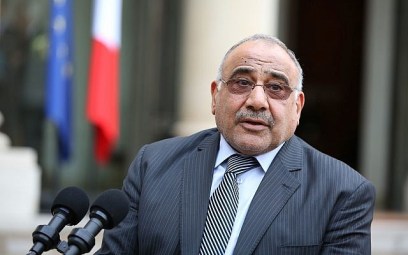
Adel Abdel Mahdi addresses reporters at the Elysee Palace in Paris, France, Thursday April 2, 2015. (AP/Remy de la Mauviniere)

Abdul-Mahdi’s office did not say whether he had accepted Trump’s invitation to visit Washington, and attributed the missed connection to “differences in points of view over the arrangements.”

The premier’s office said in a statement that the two spoke by phone and discussed security issues and Trump’s order to withdraw US troops from Syria over the phone.

The statement said the Iraqi leader had invited the president to visit Baghdad, and Trump invited Abdel-Mahdi to Washington. But it did not say whether Abdel-Mahdi accepted the invitation.
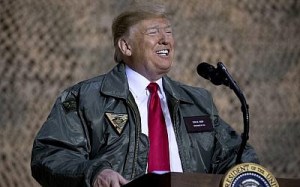
US President Donald Trump speaks at a hanger rally at Al Asad Air Base, Iraq, on December 26, 2018. (AP Photo/Andrew Harnik)

While meeting with US troops, Trump defended his decision to pull soldiers out of Syria, but said the US military presence in Iraq would remain.

“We can use this as a base if we wanted to do something in Syria,” he said. “If we see something happening with ISIS that we don’t like, we can hit them so fast and so hard” that they “really won’t know what the hell happened.”

Both main blocs of parliamentarians expressed outrage over the unannounced visit and Trump’s vow that troops would remain in Iraq.
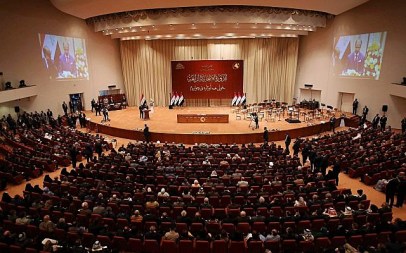
Iraqi lawmakers attend the first parliament session in Baghdad, Iraq, Sept. 3, 2018 (AP Photo/Karim Kadim)

Qais Khazali, the head of the Iran-backed Asaib Ahl al-Haq militia, promised on Twitter that Iraq’s parliament would vote to expel US forces from Iraq, or the militia and others would force them out by “other means.”

Khazali is an avowed opponent of the US who rose to prominence as a leader in the Shiite insurgency against the US occupation. He was detained by British and US forces in Iraq from 2007 to 2010.
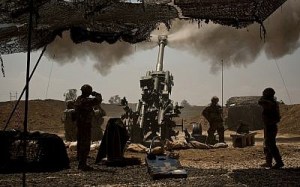
US soldiers from the 82nd Airborne Division fire artillery in support of Iraqi forces fighting Islamic State militants from their base east of Mosul, Iraq, April 17, 2017. (Maya Alleruzzo/AP)

Asaib Ahl al-Haq is represented in Iraq’s parliament by the Binaa bloc, one of the two rival coalitions which together control nearly all the seats in the lawmaking body.

Sabah al-Saidi, the head of the other bloc, Islah, also denounced Trump’s unannounced visit as a “blatant violation of Iraq’s sovereignty,” and called for an emergency session of Parliament to discuss Trump’s visit Wednesday evening.

“The American occupation of Iraq is over,” al-Saida said. Trump should not be allowed to arrive “as if Iraq is a state of the United States.”

Iraq’s government has close military and diplomatic ties with Washington, though few parties want to be seen as overly close to the US. The Islah bloc is considered closer to the US than the Binaa bloc, which espouses close ties with Iran.

‘Sad’ surprise

Speaking to reporters, Trump grumbled over the need for security precautions and said security concerns forced him to scrap earlier trips to visit US troops in the Middle East.

“I had concerns about the institution of the presidency. Not for myself personally. I had concerns for the first lady, I will tell you.” Trump, who made the trip along with his wife Melania, told reporters.

Trump, who left unannounced from Washington in the dead of night in a darkened plane, said that a “couple” of trips had been previously set up but canceled as word got out, including one a few weeks ago.

“Pretty sad when you spend $7 trillion in the Middle East, and going in has to be under this massive cover with planes all over and all of the greatest equipment in the world, and you do everything to get in safely,” he said.
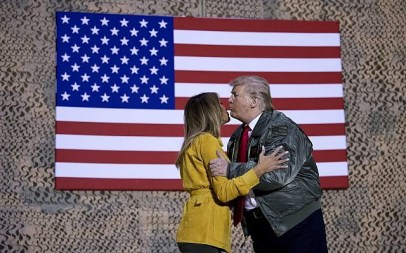
US President Donald Trump kisses first lady Melania Trump during a hanger rally at Al Asad Air Base, Iraq, on December 26, 2018. (AP Photo/Andrew Harnik)

Trump had faced criticism for not yet visiting US troops stationed in harm’s way as he comes up on his two-year mark in office. He told The Associated Press in October that he “will do that at some point, but I don’t think it’s overly necessary.

On the way home, the president made a second surprise visit to troops, this time in Germany as his plane refueled.

Trump and his wife Melania slowly made his way down a rope line at the Ramstein airbase, shaking hands, chatting and posing for photos. Some service members held up “Make America Great Again” caps for Trump to sign.

AFP contributed to this report.


Trump: We give Israel billions, it can defend itself in Syria 

December 27, 2018

Source: Trump: We give Israel billions, it can defend itself in Syria | The Times of Israel

President says he’s told Netanyahu military aid makes up for lack of US troops, amid jitters in Israel that withdrawal will make battling Iranian entrenchment more difficult

President Donald Trump speaks to members of the media at Al Asad Air Base, Iraq, December 26, 2018. (AP Photo/Andrew Harnik)

WASHINGTON — US President Donald Trump on Wednesday said he was not worried that pulling troops out of Syria could endanger Israel, citing vast American military aid to the Jewish state and saying it can defend itself.

Trump made the comments while on a surprise trip to Iraq — the president’s first official visit to a conflict zone — where he defended his controversial decision last week to remove US military forces from Syria, where they have been leading the coalition to fight the Islamic State terror group.

Speaking with reporters, Trump was asked about criticism that the move could put Israel in jeopardy by allowing Iran to expand its foothold in Syria.

“Well, I don’t see it. I spoke with Bibi,” he said, referring to Prime Minister Benjamin Netanyahu. “I told Bibi. And, you know, we give Israel $4.5 billion a year. And they’re doing very well defending themselves, if you take a look.”

“So that’s the way it is,” Trump said, according to a White House transcript.

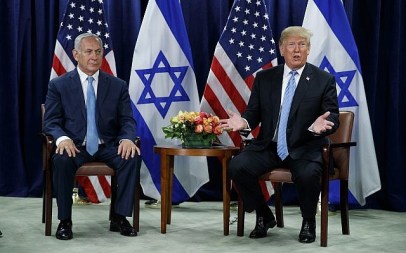
US President Donald Trump (right) and Prime Minister Benjamin Netanyahu meet at the United Nations General Assembly at UN Headquarters, on September 26, 2018. (AP Photo/Evan Vucci)

“We’re going to take good care of Israel. Israel is going to be good. But we give Israel $4.5 billion a year. And we give them, frankly, a lot more money than that, if you look at the books — a lot more money than that. And they’ve been doing a very good job for themselves,” he added.

It was not immediately clear where Trump’s figure of $4.5 billion or more came from.

The United States currently allocates $3.8 billion to Israel every year as part of a defense aid package forged between the Obama administration and the Netanyahu government. The memorandum of understanding provides Israel with $38 billion over a 10-year period, which includes funding for Iron Dome system and other missile interception programs.

The Trump White House has maintained that agreement since taking office, despite Trump complaining about foreign aid disbursements.

The president on Wednesday cited his decision to move the US embassy from Tel Aviv to Jerusalem as evidence of his commitment to Israel.

A US soldier walks on a newly installed position, near the tense front line between the US-backed Syrian Manbij Military Council and the Turkish-backed fighters, in Manbij, north Syria, April 4, 2018. (AP/Hussein Malla)

“We’ll always be there for Israel,” he said. “I’m the one that moved the embassy to Jerusalem. You know, nobody was willing to do that. All these presidents came and went. They all said they will do it. They never did it.”

Last week, Trump said that he would withdraw all US soldiers in Syria, a decision that was met with shock within the US government as well as among regional allies.

Defense Secretary Jim Mattis announced his resignation shortly after the announcement that Trump was pulling back the nation’s roughly 2,000 soldiers in the country.

The president has voiced an isolationist justification for his decision, saying that it is not America’s role to manage international crises.

“The United States cannot continue to be the policeman of the world,” he repeated Wednesday. “We don’t want to do that.”

Israel has repeatedly warned in recent years that Iran is seeking to establish a military presence in Syria, where it is fighting alongside Russia and its Lebanese proxy Hezbollah on behalf of Syrian President Bashar Assad.

Israeli officials have said that America’s absence would open the door for Tehran to create a so-called “land bridge” from Iran, through Iraq and Syria, into Lebanon and to the Mediterranean Sea.

“We will study its timetable, how it will be implemented and — of course — its implications for us. In any case we will take care to maintain the security of Israel and to defend ourselves in this area,” Netanyahu said in an English-language statement released by his office immediately following Trump’s announcement on December 19.

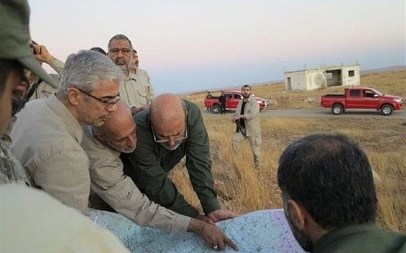
This photo provided on October 20, 2017, by the government-controlled Syrian Central Military Media shows Iran’s army chief of staff Maj. Gen. Mohammad Bagheri, left, looking at a map with senior officers from the Iranian military as they visit a front line in the northern province of Aleppo, Syria. (Syrian Central Military Media, via AP)

While most American troops have been stationed in northeastern Syria, backing Kurdish fighters, a smaller number have maintained a presence along the Iraqi border at al-Tanf, frustrating Iranian efforts to move weapons and technology.

A screenshot from video on social media purporting to show airstrikes near Damascus on December 25, 2018. (Screen capture: Twitter)

Diplomatically as well, the US retreat is seen as essentially ceding the battle arena to Russia, which has been less amenable about Israeli demands to keep Iran from entrenching itself militarily.

On Wednesday, Russia vocally protested following reported Israeli airstrikes on alleged Iranian weapons sites near Damascus.

The Israeli military said Tuesday night during the airstrikes that it deployed its air defenses to shoot down a Syrian anti-aircraft missile shot at the country, in what some interpreted as a sign that Assad had been emboldened.

The airstrike was the first attributed to Israel since Trump’s announcement of the troop withdrawal.


Russia and Syria threaten to fire SA-5 missiles into central Israel if IAF air strikes continue – DEBKAfile

December 27, 2018

Source: Russia and Syria threaten to fire SA-5 missiles into central Israel if IAF air strikes continue – DEBKAfile

A new Russian threat was received in Israel on Wednesday, Dec. 26: Any more air strikes and Syria’s SA-5 air defense missiles will be fired deep into Israel – like the one that shook several towns on Tuesday night in the middle of an IAF attack on Iranian sites in Syria.

Israel’s air defense system missed the intruding missile; it exploded harmlessly in an unpopulated part of Mt. Carmel. By issuing this threat, Moscow confirmed that the Syrian missile was aimed deliberately at the Israeli heartland, and was not a stray from the attacks on Israeli aircraft, as some Israeli officials have claimed.

People living in the towns of Hadera, Caesarea, Or Akiva, Zichon Yacov and Binyamina reported that their houses shook under the blast and for many hours the air reeked of gunpowder. A quarter of a million Israeli civilians were affected. That would be a mild foretaste of what is to come if the Russians carry out their threat of payback for any more Israeli air strikes over Syria. And that was a single SA-5 missile. The impact of five or 10 fired by a Syrian battery does not bear thinking of.

The SA-5 (Russian coded S-200) is elderly but it has a very long range, medium-to-high altitude surface-to-air capacity, can function in all weathers and can be used to hit ground targets as well as aircraft and missiles. DEBKAfile’s military sources note that the Russians indicated that Syria would not launch a surface missile offensive against Israel but would employ a tit-for-tat strategy, countering Israeli air strikes over Syrian air space with missile attacks over Israeli air space. There was no indication of whether Israeli air attacks mounted from Lebanese skies were included in the threat.

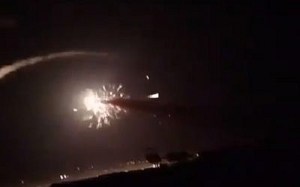
This warning from Moscow and Damascus prompted an Israeli official to confirm for the first time early Thursday, Dec, 27, that the IAF had struck several Iranian targets in three main locations – primarily storage and logistics facilities used by Iran to ship weapons to Hezbollah – and also destroyed a Syrian anti-aircraft battery that fired at the Israeli jets. The official did not elaborate, but the battery was the one that had fired the SA-5 into central Israel This disclosure embodied Israel’s counter-threat.

Our military sources also reveal that the three targets attacked in Syria were the command center of the Syrian army’s 10th Division at Qatana, its Dimat base and the 4th Division’s compound in Saboura, which houses Iranian Revolutionary Guards weapons and ammunition stores laid in for arming the five militias Iran is building in Syria for a long-term presence.


🔴 President Trump gives UNBELIEVABLE Speech to troops in Iraq 

December 27, 2018


Donald Trump has made his first visit as president to US troops serving overseas with a surprise appearance at Al Asad air base in Iraq. During a speech to troops, Trump congratulated them for achieving what he called a ’near elimination’ of Isis. Trump’s visit comes after he pledged a major drawdown of US military presence in Syria . ‘America shouldn’t be doing the fighting for every nation on earth,’ Trump told troops, adding that the US wouldn’t be helping to rebuild Syria. ‘We’re no longer the suckers, folks. We’re respected again as a nation’