Archive for December 2018

Netanyahu, Brazil’s next president hail alliance, but no mention of embassy move 

December 29, 2018

Source: Netanyahu, Brazil’s next president hail alliance, but no mention of embassy move | The Times of Israel

After talks in Rio on first-ever visit by an Israeli PM, Netanyahu and Bolsonaro speak of budding ‘brotherhood,’ ignore Jerusalem issue
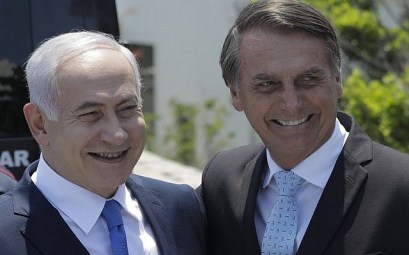
Prime Minister Benjamin Netanyahu (L) is welcomed by Brazil's President-elect Jair Bolsonaro at the Copacabana fort in Rio de Janeiro, Brazil, on December 28, 2018.  (Photo by Leo CORREA / POOL / AFP)
Prime Minister Benjamin Netanyahu (L) is welcomed by Brazil’s President-elect Jair Bolsonaro at the Copacabana fort in Rio de Janeiro, Brazil, on December 28, 2018. (Photo by Leo CORREA / POOL / AFP)

RIO DE JANIERO (AFP) — Prime Minister Benjamin Netanyahu and Brazil’s president-elect Jair Bolsonaro on Friday announced a nascent “brotherhood” between their countries that will boost economic, military, and technological cooperation.

The two issued the warm words to the media after a meeting in a century-old military fort on Rio de Janeiro’s Copacabana beach, at the beginning of the first-ever visit by an Israeli prime minister to Brazil.

Netanyahu said Bolsonaro had accepted an invitation to make his own visit to Israel, without giving a date.

The Israeli leader is to stay on through Tuesday to join other foreign dignitaries at the inauguration in Brasilia of Bolsonaro, a far-right, security-conscious politician and former army officer elected in October on pledges to crack down on endemic crime and corruption.

Bolsonaro, sometimes called the “Trump of the tropics” for a similar style to US President Donald Trump and rejection of multilateral diplomacy, emphasized the bond he wants to build with Netanyahu, a firm US ally.
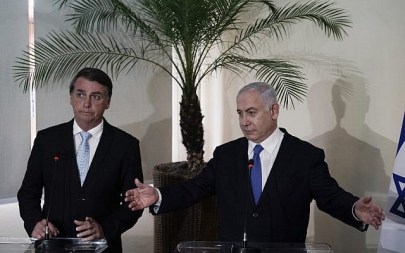
Prime Minister Benjamin Netanyahu (R) and Brazil’s President-elect Jair Bolsonaro give a press conference after holding a meeting at the Copacabana fort in Rio de Janeiro, Brazil, on December 28, 2018. (Photo by Leo CORREA / POOL / AFP)

“More than partners, we will be brothers in the future, in economy, technology, all that can bring benefit to our two countries,” Bolsonaro said. He also spoke of cooperation in military and agriculture matters.

Netanyahu, calling his visit “historic,” also spoke of “the brotherhood, the alliance” the two planned as something that “can carry us to great heights.”

“It’s hard to believe that we had no such contacts before,” he said.

Later, the two leaders visited a synagogue in the city.

Embassy move

However there was no mention of Bolsonaro’s post-election declaration — later walked back — that he intended to follow Trump in moving his country’s embassy in Israel to Jerusalem.

Netanyahu had told reporters on his flight to Brazil that “you can be certain I will speak with him about that in our first meeting.” But neither man raised the topic in their comments to media, and no questions were taken.

An embassy move could put at risk lucrative Brazilian poultry and halal meat exports to Arab countries, which fiercely oppose any unilateral moves seen as cementing Israel’s claim to all of Jerusalem as its capital.

The Palestinians view East Jerusalem as the capital of their future state, and most countries in the world back a longstanding consensus that Jerusalem’s status can only be resolved through negotiations and as part of an Israeli-Palestinian peace process.
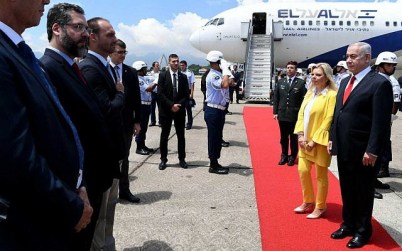
Prime Minister Benjamin Netanyahu (R) and his wife Sara take part in a welcoming ceremony upon their arrival in Rio De Janeiro, Brazil, on December 28, 2018. Third-to-left is Brazilian MP Eduardo Bolsonaro, the son of President-elect Jair Bolsonaro. (Avi Ohayon/GPO)

Nearly 20 percent of Brazil’s $5 billion beef exports go to 17 Arab countries.

Brazil-Israel trade currently amounts to $1.2 billion. Bolsonaro said Tuesday he is looking to import Israeli technology to produce water for Brazil’s parched northeast.

Rightward shift

Bolsonaro’s ascent to the presidency represents a dramatic, rightward shift in Brazil’s politics.

For decades, the country has been under center-left and center-right rule and resolutely sought to carve out foreign policy independent of the United States. In 2010 the country recognized a Palestinian state, and it nurtured trade and investment relations with China.

But Bolsonaro has spoken with hostility of China’s investments in Brazil, and he and one of his politician sons have reached out to Trump and people in his orbit.

He and his team have also excluded the far-left leaders of Cuba, Venezuela, and Nicaragua from attending the inauguration in Brasilia, although Bolivia’s leftwing President Evo Morales received an invitation.
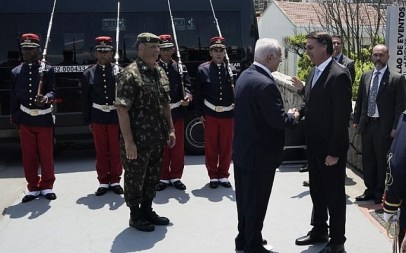
Prime Minister Benjamin Netanyahu (L) is welcomed by Brazil’s President-elect Jair Bolsonaro at the Copacabana fort in Rio de Janeiro, Brazil, on December 28, 2018. (Photo by Leo CORREA / POOL / AFP)

Other VIPs attending include conservative Chilean President Sebastian Pinera, Hungary’s far-right Prime Minister Viktor Orban, and US Secretary of State Mike Pompeo.

Meeting Pompeo

Netanyahu made his Brazil trip despite domestic political turmoil in Israel and a spike in military volatility in neighboring Syria.

Pompeo and Netanyahu are to discuss Syria on the sidelines of Bolsonaro’s swearing-in, an Israeli official and the US State Department said.

US allies including Israel were caught by surprise by President Donald Trump’s abrupt announcement last week that he was pulling US troops out of Syria, where Israel’s arch-foe Iran has built up a significant military and political presence.

Israel has made several aerial strikes in Syria against positions held by Iran and its Lebanese militia Hezbollah.

Domestically, Netanyahu is maneuvering to extend his reign in Israel despite a slew of corruption allegations. On Wednesday, Israel’s parliament approved a government decision to call early elections for April 9.
 

Trump advisor heads to Turkey, Israel after Syria pullout

December 29, 2018

Source: Trump advisor heads to Turkey, Israel after Syria pullout | The Times of Israel

US president last week unexpectedly said he was pulling all 2,000 troops from war-torn country, declaring that America had achieved its objective there

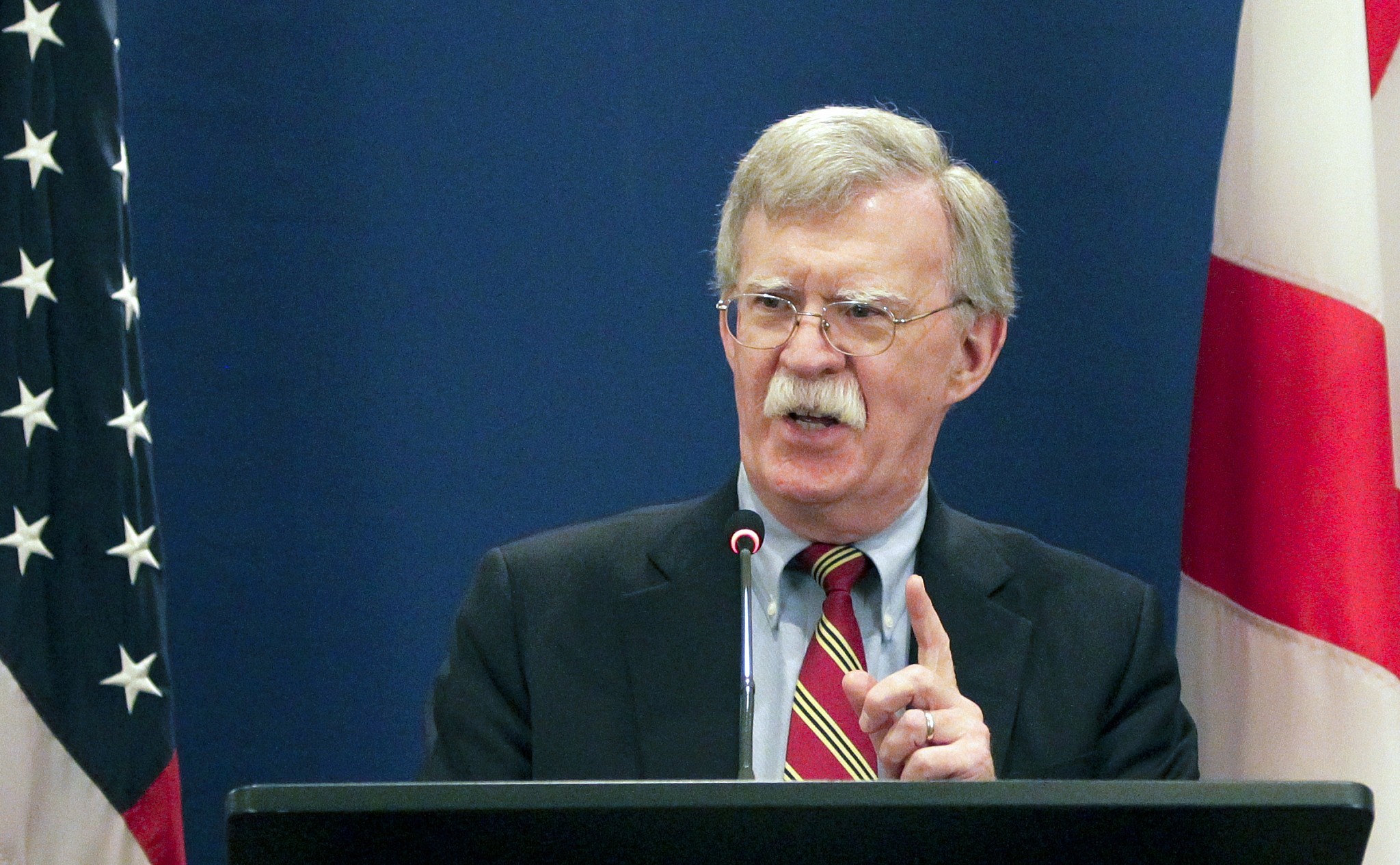
US National security adviser John Bolton gestures while speaking to the media during a news briefing following his meetings with Georgian officials in Tbilisi, Georgia, October 26, 2018. (Shakh Aivazov/AP)

US national security advisor John Bolton said Friday he would visit Turkey and Israel to coordinate on Syria, after President Donald Trump’s decision to withdraw all US forces.

Bolton said he would head in January to both Turkey — which has enthusiastically backed Trump’s sudden move — as well as Israel, a close US ally where the pullout has caused concern.

“We will discuss our continued work confronting security challenges facing allies and partners in the region, including the next phase of the fight against ISIS, as the US begins to bring troops home from Syria,” Bolton tweeted.

Trump last week unexpectedly said he was pulling all 2,000 troops from Syria, declaring that the United States had achieved its objective as the Islamic State extremist movement had been “knocked” out.

Islamic State, also known as ISIS, has lost nearly all of its territory, although thousands of its jihadists are thought to remain in war-battered Syria.

The United States, meanwhile, robustly defended Israel’s right to strike inside Syria after criticism from Russia, which backs President Bashar Assad and will see its clout grow with the US pullout.

Moscow condemned Israel’s alleged Tuesday missile strikes near Damascus, the latest of hundreds of raids Israel says are aimed at Iranian forces and their Hezbollah allies.

“The United States fully supports Israel’s right to defend itself against the Iranian regime’s aggressive adventurism, and we will continue to ensure that Israel has the military capacity to do so decisively,” State Department spokesman Robert Palladino said in a statement.

“The commitment of the Trump administration and the American people to ensuring Israel’s security is both enduring and unshakable,” he said.

Israeli Prime Minister Benjamin Netanyahu has been delighted by Trump’s hard line on Iran and landmark move of the US embassy in Israel to Jerusalem, but the pullout from Syria has caused unease concern in the Jewish state.

Secretary of State Mike Pompeo is set to meet next week in Brazil with Netanyahu in the wake of the Syria pullout decision, which triggered the resignation of Defense Secretary Jim Mattis.


Russia to host Putin-Erdogan-Rouhani summit on Syria

December 29, 2018

Source: Russia to host Putin-Erdogan-Rouhani summit on Syria | The Times of Israel

Meeting comes following US President Donald Trump’s announcement that he will withdraw 2,000 US soldiers deployed in war-torn country

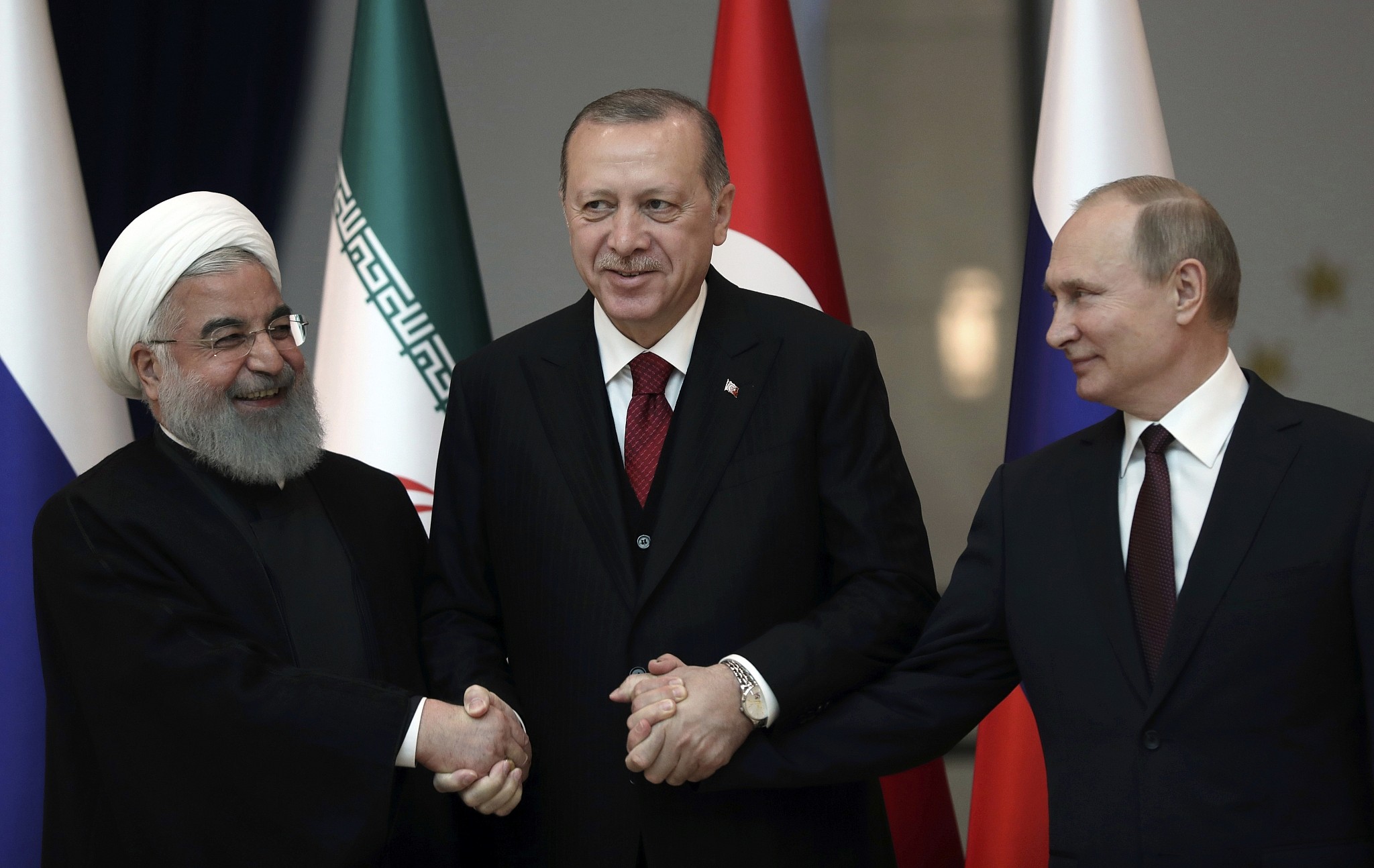
Iran's President Hassan Rouhani, left, Russia's President Vladimir Putin, right, and Turkey's President Recep Tayyip Erdogan lock hands during a group photo in Ankara, Turkey, April 4, 2018. (Tolga Bozoglu/Pool Photo via AP)

Iran’s President Hassan Rouhani, left, Russia’s President Vladimir Putin, right, and Turkey’s President Recep Tayyip Erdogan lock hands during a group photo in Ankara, Turkey, April 4, 2018. (Tolga Bozoglu/Pool Photo via AP)

MOSCOW, Russia — Russia said Friday it will host a three-way summit with Turkey and Iran on the Syrian conflict early next year, after Foreign Minister Sergei Lavrov voiced skepticism about an announced withdrawal of US forces.

“It’s our turn to host the summit… around the first week of the year. This will depend on the schedules of the presidents” of the three countries, deputy foreign minister Mikhail Bogdanov was cited as saying by Interfax news agency.

The last meeting between Russia’s Vladimir Putin, Iran’s Hassan Rouhani and Turkey’s Recep Tayyip Erdogan took place in Iran in September.

Lavrov refused to comment Friday on the US announcement, saying he was “waiting for actions to follow words.”

US President Donald Trump has said he will withdraw 2,000 US soldiers deployed in Syria, claiming that the Islamic State jihadists there had been defeated.

“The Americans don’t always do what they promise, far from it,” Lavrov said. “Washington clearly wants to pass on the responsibilities on the ground to its partners in the coalition.”

A Turkish delegation that includes Foreign Minister Mevlut Cavusoglu and Defense Minister Hulusi Akar is due in Moscow on Saturday to discuss the US pullout.

Meanwhile, Kremlin spokesman Dmitry Peskov hailed the entry on Friday by Syrian forces into the key northern city of Manbij for the first time in six years after Kurds opened the gates.

“Of course, this will help in stabilizing the situation. The enlargement of the zone under the control of government forces… is without doubt a positive trend,” he said.

Kurdish forces who were left exposed by Trump’s pledge to withdraw US troops have asked the Syrian regime for help to face a threatened Turkish offensive.

Ankara is opposed to Kurdish control of Syrian territory close to its border, saying it helps Kurdish separatists inside Turkey.

Peskov said the Turkish ministers’ visit to Moscow would serve to “clarify” the situation and “synchronize actions” between the two countries.

A three-way summit in January would be the latest step in the Astana peace process — set up in early 2017 by Russia and Iran, who support President Bashar al-Assad’s regime in Syria, and opposition backer Turkey.

The Astana process was launched after Russia’s military intervention in Syria tipped the balance in the Damascus regime’s favor.

Lavrov said the “ultimate goal” of the Astana process is to “restore peace in Syria, with all ethnic and religious groups at ease and at peace, including the Kurds of course.”


IDF attacks Hamas’ position in response to rocket fire from Gaza

December 29, 2018

Source: IDF attacks Hamas’ position in response to rocket fire from Gaza | The Times of Israel

Projectile launched from Strip landed in open area within the Jewish state, causing no damages or injures

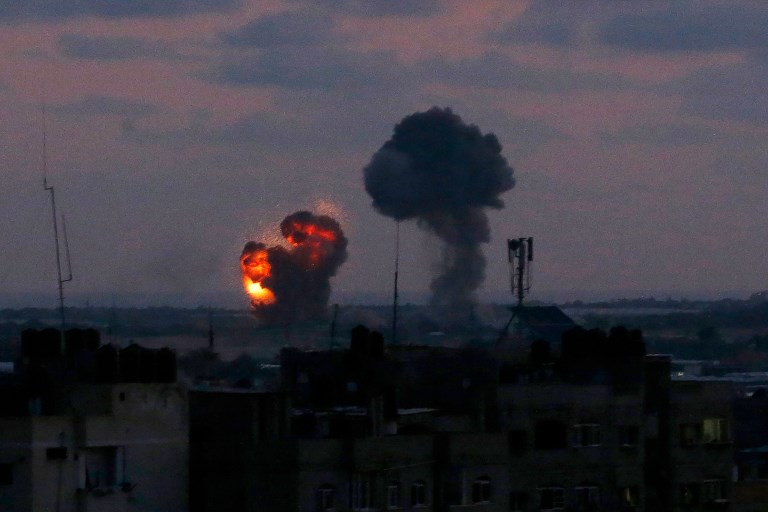
Illustrative: An explosion is seen from the city of Rafah in the southern Gaza Strip after an airstrike by Israeli forces in response to dozens of rocket attacks by Palestinian terrorist groups from the coastal enclave on June 20, 2018. (Said Khatib/AFP)

An IDF combat helicopter attacked a Hamas position in the southern Gaza Strip, the Israeli army said Saturday.

According to the IDF, the strike was carried out in response to an earlier rocket launch from the Strip at Israel.

The rocket fired Friday was the first such incident in over one month, the IDF Spokesperson’s Office said.

The Red Alert alarm warning system was not activated as the projectile landed in an open area, the spokesperson added.

No injuries or damage were reported.

Earlier Friday, a Palestinian was reported killed as thousands took part in protests along the border with the Gaza Strip, amid threats by terror factions in the coastal enclave to ramp up violence with Israel.

An Israeli army spokesperson said some 4,000 Palestinians took part in the riots, throwing rocks and explosive devices at soldiers. The explosives did not reach the border fence where troops were deployed.

Israeli forces responded with riot dispersal means, including live fire, the spokesperson said.

Also Friday, a suspected incendiary device landed near a kindergarten in a Gaza-area community, after a lull of several weeks for the airborne arson attempts from the coastal enclave.

Gaza protesters have launched hundreds of incendiary kites and balloons into Israel, sparking fires that have destroyed forests, burned crops, and killed livestock. Over 7,000 acres of land have been burned, causing millions of shekels in damages, according to Israeli officials. Some balloons have carried improvised explosive devices.

Suspected incendiary balloons discovered in community close to the Gaza border, December 28, 2018 (Police spokesperson’s unit)

Last week, Prime Minister Benjamin Netanyahu said he had issued a warning to the rulers of the Strip, amid a spike in terror attacks in the West Bank. “I conveyed a clear message to Hamas — we won’t accept a situation of a truce in Gaza and terror in Judea and Samaria,” he told a cabinet meeting, using the biblical name for the West Bank.

Friday’s rocket fire came more than six weeks after Hamas and Palestinian terror groups in Gaza engaged in the heaviest battle with Israel since the 2014 war.

After an Israeli special forces operation in Gaza was exposed, and an Israeli soldier and seven Hamas gunmen were killed in the ensuing firefight, some 500 rockets and mortar shells were fired at southern Israel over the course of November 12-13 — more than twice the rate at which they were launched during the 2014 conflict.

The Iron Dome missile defense system intercepted over 100 of them. Most of the rest landed in open fields, but dozens landed inside Israeli cities and towns, killing one person, injuring dozens and causing significant property damage.

In response, the Israeli military said it targeted approximately 160 sites in the Gaza Strip connected to the Hamas and Palestinian Islamic Jihad terror groups, including four facilities that the army designated as “key strategic assets.”

The fighting ended on Tuesday, November 13, after a Hamas-announced ceasefire took effect, though this was not officially confirmed by Israel.

Defense minister Avigdor Liberman resigned in protest at the ceasefire, having pushed for a harsher Israeli response to the Hamas rocket attacks, reducing Netanyahu’s governing coalition to just 61 of the 120 Knesset seats — a move that helped trigger the dissolution of the Knesset on Wednesday, with elections now set for April 9. Education Minister Naftali Bennett threatened to quit and bolt the coalition with his Jewish Home party if he was not appointed to replace Liberman, but he subsequently withdrew his ultimatum.

Since March, Palestinians have been holding weekly protests on the border that Israel has accused Hamas of using as a cover for attacks on troops and attempts to breach the security fence. Israel has demanded an end to the violent demonstrations along the border in any ceasefire agreement.

Hamas, an Islamist terror group that seized control of Gaza in 2007 from the Fatah faction of Palestinian Authority President Mahmoud Abbas, openly seeks to destroy Israel.


US troop withdrawal from Syria could take several months — report 

December 28, 2018

Source: US troop withdrawal from Syria could take several months — report | The Times of Israel

Officials tell ABC News that pullout plan will be carefully executed to ensure the safety of all US personnel and the removal of all military hardware

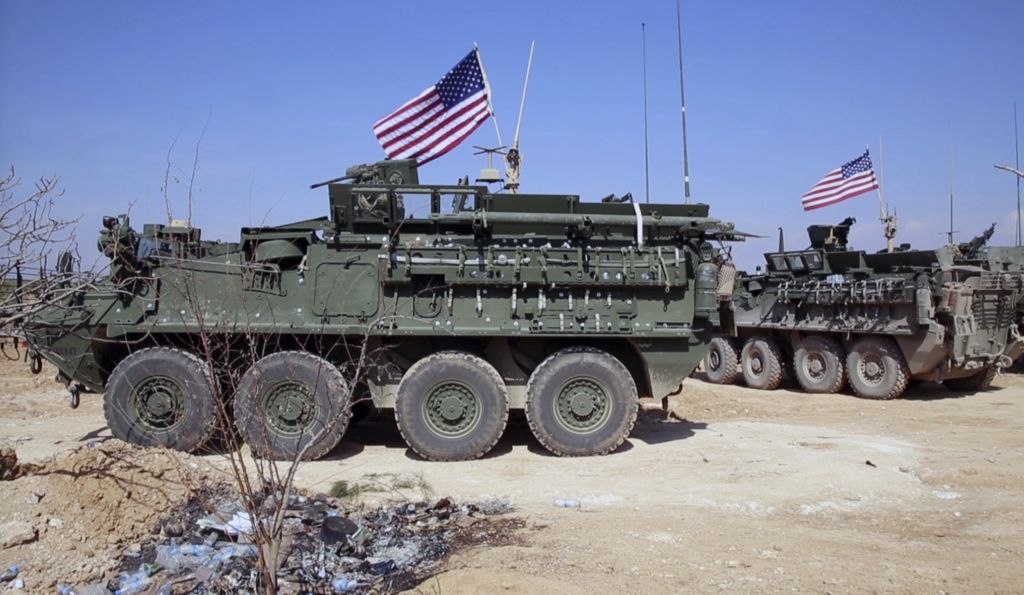
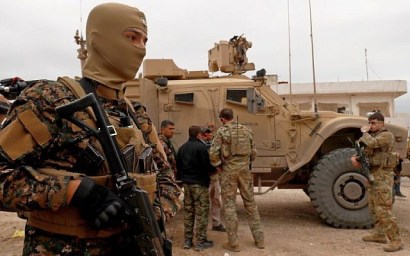
This Tuesday, March 7, 2017 frame grab from video provided by Arab 24 network, shows US forces take up positions on the outskirts of the Syrian town, Manbij, a flashpoint between Turkish troops and allied Syrian fighters and US-backed Kurdish fighters, in al-Asaliyah village, Aleppo province, Syria (Arab 24 network, via AP)

This Tuesday, March 7, 2017 frame grab from video provided by Arab 24 network, shows US forces take up positions on the outskirts of the Syrian town, Manbij, a flashpoint between Turkish troops and allied Syrian fighters and US-backed Kurdish fighters, in al-Asaliyah village, Aleppo province, Syria (Arab 24 network, via AP)

The Trump administration’s plan to withdraw American troops from Syria could take several months to implement, US officials told ABC NewsFriday, stressing that an exact time frame has not yet been agreed.

Shortly after US President Donald Trump’s surprise announcement that the forces would pullout, officials said the plan could be implemented in as little as 30 days.

However, according to ABC, the pace of withdrawal could actually be far slower, appearing to confirm the president’s statement during a surprise trip to Iraq on Wednesday when he said there would be a “strong, deliberate and orderly withdrawal” of US forces from Syria, where they have been helping battle Islamic State jihadists.

Officials told ABC that the withdrawal plan will be carefully executed to ensure the safety of all US personnel, as well as the removal of all military hardware from the country.

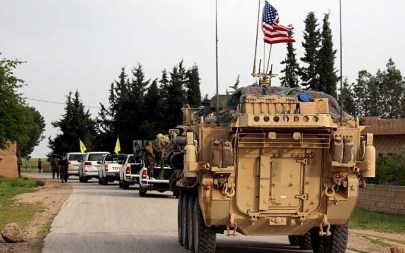
In this photo from April 28, 2017, US forces, accompanied by Kurdish People’s Protection Units (YPG) fighters, drive their armored vehicles near the northern Syrian village of Darbasiyah, on the border with Turkey. (Delil Souleiman/AFP)

Officials said US and coalition aircraft will carry out airstrikes and provide air support for US troops during the withdrawal, but it was not made clear whether the strikes would continue after the pullout.

The president this week defended his decision to pull the troops out, saying that it is because of US military gains that he can withdraw 2,000 forces from Syria.

“We’re no longer the suckers, folks,” Trump told American servicemen and women at a base in western Iraq. “We’re respected again as a nation.”

“I made it clear from the beginning that our mission in Syria was to strip ISIS of its military strongholds,” Trump told troops clad in fatigues at al-Asad Airbase west of Baghdad.

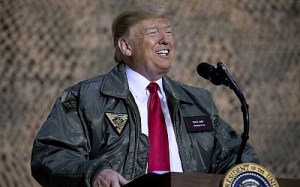
US President Donald Trump speaks at a hanger rally at Al Asad Air Base, Iraq, on December 26, 2018. (AP Photo/Andrew Harnik)

“Eight years ago, we went there for three months and we never left,” he said. “Now, we’re doing it right and we’re going to finish it off.”

“It’s not fair when the burden is all on us,” he said. “We don’t want to be taken advantage of any more by countries that use us and use our incredible military to protect them. They don’t pay for it and they’re going to have to.”

“We are spread out all over the world. We are in countries most people haven’t even heard about. Frankly, it’s ridiculous,” he added.

He said that Turkish President Recep Tayyip Erdogan has agreed to take out “any remnants” of IS left in Syria. The US presence in Syria was not meant to be “open-ended,” he said, adding that other wealthy nations should pay for rebuilding Syria.

“The nations of the region must step up and take more responsibility for their future,” said Trump.

Trump’s trip to Iraq came a week after he stunned his national security advisers by announcing the US troop withdrawal from Syria.

In this file from November 4, 2018, US forces patrol the Kurdish-held town of Al-Darbasiyah in northeastern Syria. (Delil Souleiman/AFP)

Defense Secretary Jim Mattis abruptly resigned following the announcement, and Trump’s decision rattled allies around the world, including in Iraq.

Trump told reporters he had overruled generals asking to extend the Syria deployment, where about 2,000 US forces, joined by other foreign troops, assist local fighters battling the Islamic State jihadist group.

“You can’t have any more time. You’ve had enough time,” he said he told the top brass.

For Israel, the pullout leaves it without a staunch ally in the fight against Iran in Syria and potentially opens the door for the Islamic Republic to create a so-called “land bridge” from Iran, through Iraq and Syria, into Lebanon and the Mediterranean Sea.

Until now, American troops have been stationed in northeastern Syria, along the Iraqi border, blocking such a corridor, through which Iran could more easily distribute advanced weapons and technology throughout the region, especially to its Lebanese client the Hezbollah terrorist army.

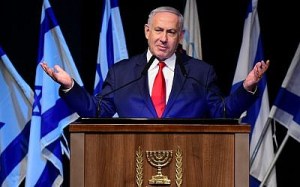
Prime Minister Benjamin Netanyahu speaks at an event with Christian IDF soldiers for Christmas and the New Year at the Palmach Museum in Tel Aviv, December 23, 2018. (Tomer Neuberg/Flash90)

Prime Minister Benjamin Netanyahu vowed that Israel would step up its fight against Iran’s military presence in Syria, amid concerns that the US military’s pullout from the war-torn country would limit the Jewish state’s ability to operate there.

Israel has repeatedly vowed to prevent Iran establishing a permanent presence in Syria and Lebanon and has carried out hundreds of airstrikes in recent years against Iran-backed forces and attempts to smuggle advanced weapons to Hezbollah.

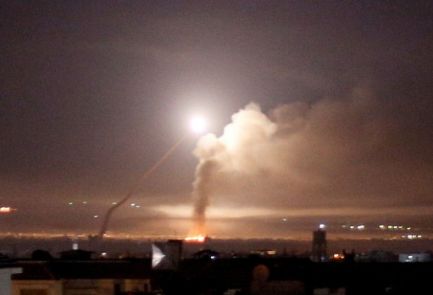
Israel allegedly carried out a series of airstrikes in Syria on Tuesday evening, with the IDF announcing it had deployed air defenses against a missile fired from Syria as Damascus attempted to repel the alleged strikes.

Israel’s Channel 10 news reported that Netanyahu tried in vain to persuade Trump to change his mind, and that there was tremendous “disappointment” in Jerusalem over the pullout, which is regarded as a victory for Russia, Iran and Hezbollah.

The TV report described the US move as “a slap in the face” for Israel, noting that the US presence in Syria was “the only bargaining chip” in Israel’s efforts to persuade Russia to prevent Iran deepening its entrenchment in Syria.


Nature abhors a vacuum 

December 28, 2018

Source: Nature abhors a vacuum – Israel Hayom


Is Trump following in Obama’s footsteps?

December 28, 2018

Source: Is Trump following in Obama’s footsteps? – Israel Hayom

Rachel Avraham

U.S. President Donald Trump is known to loathe former President Barack Obama. When Trump was running for president, he labeled Obama “the founder of ISIS” due to his premature withdrawal from Iraq in 2011 that led to the rise of the murderous terror group.

He also labeled Obama’s Iran deal “the worst deal ever” and since he was elected, he not only ripped the Iran deal apart but also re-imposed sanctions against the Iranian regime and has given moral support to Iranian protesters who are seeking to overthrow the mullah’s government, all in stark contrast to his predecessor.

When Trump was elected president, after the free world dealt with Neville Chamberlain-like appeasement under Obama for eight years, many had high hopes that America finally had a Churchill in the White House.  Indeed, for a while, it appeared on the surface that America finally had a president who understood the dangers posed by the Iranian regime and was willing to take a stand against the mullahs.

But now, just as the Iranian regime is beginning to feel the full effect of the sanctions imposed against it, is Trump backtracking from Churchill’s path and is instead following in the footsteps of his predecessor by handing Syria over on a silver platter to Iran and Turkey? Was the U.S. withdrawal from Syria a grand betrayal of America’s allies who fought against ISIS, as U.S. Defense Secretary James Mattis indicated in his resignation letter? Or is the U.S. withdrawal from Syria part of some greater strategy against the Iranian regime, as some analysts have indicated?

While it appears that all of America’s Middle Eastern allies are likely to suffer as a result of America’s withdrawal from Syria, Iranian political analyst Dr. Reza Parchizadeh believes thatTrump may have some surprises in store for us all. Trump and his top foreign policy advisers are very much aware of the consequences should the United States unconditionally withdraw from the Middle East. Given this, he says that we should not be deceived by appearances. He does not think that at this point, Trump will relent on Iran: “His administration has already invested too much in the Iranian portfolio to want to give it up now.”

Salah Bayaziddi, the U.S. representative of the Komala Party of Iranian Kurdistan, concurs with Parchizadeh. While he believes that a full U.S. withdrawal from Syria poses a security risk to America’s allies in the Middle East, he still thinks it is too soon to foretell how Trump’s new policy will play out. Furthermore, he adds: “The U.S. has enough leverage and capabilities to control and protect its interests in Syria even without a massive military presence if still the main strategy is to curb and finish off the Iranian regime in the region.”

On the other hand, Trump is unpredictable and there have been reports that he plans to let Turkey take over the struggle against what remains of ISIS. In fact, Turkish-backed fighters in Syria are already gearing up to replace the U.S. in the region. Therefore, Trump’s announcement not only threatens the anti-ISIS struggle due to Erdogan’s track record of enabling ISIS to thrive but also risks further emboldening the Iranian regime.

Syrian Kurdish dissident Sherkoh Abbas claims that by enabling Turkey and Iran to take over all of Syria, Trump is undoing all of the good that he did by tearing up Obama’s Iran deal: “Now, with this announcement, it will be easier for Iran to bypass sanctions. All of the ports of Syria and oil resources are at their disposal. They control Iraq and Lebanon as well. They can export anything that they want via them. They also have some understandings with Turkey and Russia that they can work to move America and the Kurds from the region.” According to Abbas, due to the understandings reached between Turkey and Iran, handing over an area to Turkey will also embolden Iran, enabling them to have a contiguous “Shia crescent” from Tehran to the Mediterranean Sea.

Already, Trump has allowed Turkey to take over Afrin and now, it looks like he will permit it to take over the rest of Syrian Kurdistan. Abbas claims that this will adversely affect the fight against ISIS: “Look at Afrin. The area used to be majority Kurdish. It is only 30% Kurdish now. The Turks got Eastern Euphrates, Kobane, Afrin, Kurdish Mountain, etc. as Islamist centers. Turkey will now be allowed to have pockets in northern Syria. That allows them to Arabize the region. The Kurds of Syria will have no viability for they will be forced to run away and will be destroyed. The area will be populated by ISIS groups and will be rebranded under a name appealing to Trump.”

Mendi Safadi, who heads the Safadi Center for International Diplomacy, Research, Public Relations and Human Rights, claims that Trump’s decision to withdraw was premature and that it is not a tactic that ensures security in the region for America’s allies. The decision to withdraw added to Israel’s strategic difficulties, and the Kurds can expect to be ethnically cleansed from the area; the American withdrawal enables “the destruction of the Kurdish dream.” According to Safadi, “The fighting in Syria is far from ending and is even expected to be worse than in the past. The Turks and the Iranians have an open wound with the Kurds who ask to be independent and will take advantage of the opportunity.” He claims that this “makes the challenges ahead even more difficult than the Yom Kippur War.”

Finally, according to Turkish journalist Uzay Bulut, should Trump follow through with his decision to unconditionally withdraw from Syria entirely, he will be following in the footsteps of former British Prime Minister Neville Chamberlain, whose pre-World War II foreign policy made his name synonymous with appeasement – exactly as Obama did.

Rachel Avraham is the president of the Dona Gracia Mendes Nasi Center for Human Rights and a political analyst at the Safadi Center for International Diplomacy, Research and Public Relations.


Hezbollah races to save terror tunnels as IDF floods them

December 28, 2018

Source: Hezbollah races to save terror tunnels as IDF floods them

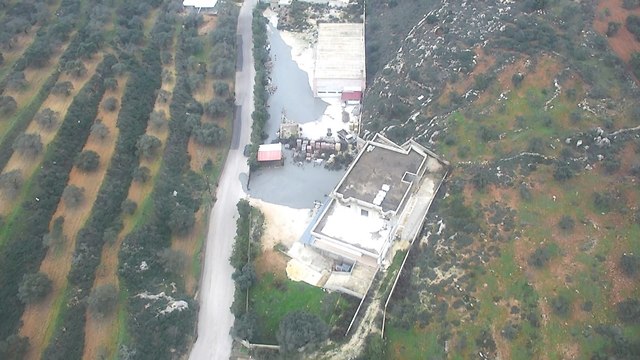
sraeli military fills underground terror constructions near Metula with water and cement in order to expose entry shafts dug from residential homes in Lebanese villages, and to eliminate possibility of Shi’ite terror group salvaging what’s left of their strategic assets.
The IDF flooded with cement and water the Hezbollah tunnels, which appear to have been dug from residential houses in Lebanese villages, as the Shi’ite terror group scrambles to salvage what’s left of their strategic assets.At the beginning of the month, the IDF launched Operation Northern Shield to expose and neutralize terror tunnels Hezbollah has constructed along the Israel-Lebanon border since 2006, and so far five underground constructions have been destroyed by the Israeli military.

The tunnels near the northern city of Metula were deliberately filled with large quantities of water and construction substances such as cement and bentonite, in order to not only eliminate the possibility of them being at least partially saved by Hezbollah, but to also cause flooding and expose the Lebanese villages from which the constructions originate.

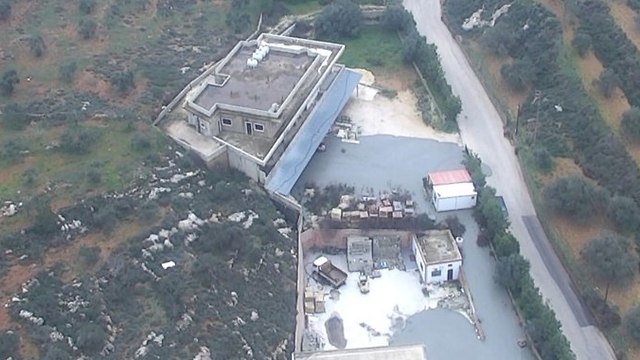
Residental homes on Lebanese border from which tunnels originated (Photo: IDF Spokesperson's Unit)

Residental homes on Lebanese border from which tunnels originated (Photo: IDF Spokesperson’s Unit)

Shortly after the IDF operation was launched, Lebanese media aired footageshowing a concrete block factory that was set up by Hezbollah along the border meant to conceal the entry shafts to the terror tunnels, which sources in the IDF initially described as a “surprise.”

“The methods which we use to neutralize the tunnels vary depending on their size, shape and surroundings. If the best way to neutralize a specific tunnel would result in the destruction of houses on the other side of the border, we still have to do it. The responsibility is 100% on us, not on UNIFIL or the Lebanese army,” said one IDF officer.

After the tunnels were flooded, it became clear that tunnels excavated from the village of Kila—only two kilometres from Metula—had several openings which seemed to have been dug from inside residential homes.

Tunnels excavated from the village of Kila (Photo: IDF Spokesperson's Unit)

Tunnels excavated from the village of Kila (Photo: IDF Spokesperson’s Unit)

The IDF Spokesperson Ronen Manelis warned Hezbollah that the IDF could fill the tunnels with substances much more hazardous than cement or water.

“We’ve warned the residents on the Lebanese side of the border that they endanger their lives by allowing for these tunnels to be dug from their homes.”

“The operation is not over yet,” added Manelis. “We haven’t seen either UNIFIL or the Lebanese army operating against the tunnels, even though we’ve presented them with the evidence.”

The IDF Spokesperson’s Unit also clarified the two tunnels exposed by the Israeli military last week, which originated from the Lebanese border towns of Ramyah and Ayta ash Shab, were destroyed in its entirety by a controlled explosion carried out by the army.


US confirms Pompeo and Netanyahu to meet in Brazil 

December 28, 2018

Source: US confirms Pompeo and Netanyahu to meet in Brazil | The Times of Israel

Israeli leader to hold talks with top diplomat weeks after Trump decision to pull out of Syria, putting Jerusalem at odds with Washington

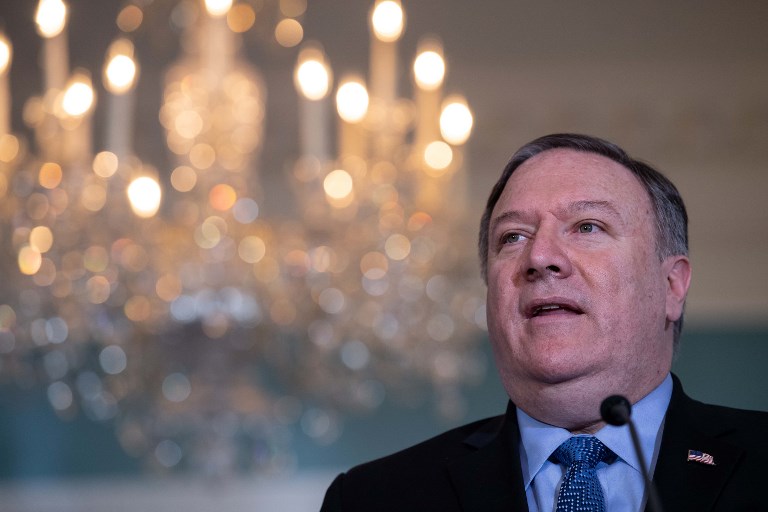
In this file photo taken on December 13, 2018 US Secretary of State Mike Pompeo speaks to the press at the State Department in Washington, DC. (NICHOLAS KAMM / AFP)

WASHINGTON — US Secretary of State Mike Pompeo will meet next week in Brazil with Prime Minister Benjamin Netanyahu as Washington prepares to withdraw troops from Syria, the State Department said Thursday.

Pompeo and Netanyahu will meet in Brasilia where both will be attending the New Year’s Day inauguration of president-elect Jair Bolsonaro, a right-wing firebrand who has vowed to move Brazil closer to Israel and US President Donald Trump.

The State Department and Netanyahu’s office have not offered details about the planned meeting.

Netanyahu has met frequently with Pompeo and enjoys a warm relationship with Trump, happy about his withdrawal from a denuclearization deal with Iran and his landmark shift of the US embassy to Jerusalem.

Prime Minister Benjamin Netanyahu (left) meets US Secretary of State Mike Pompeo at the UN in New York on September 26, 2018 (Avi Ohayon/GPO)

But Netanyahu has for the first time found himself at odds with Trump after the US leader’s sudden announcement last week that he will bring home all 2,000 American troops from war-ravaged Syria, where Israel saw Washington’s presence as a bulwark against Iran and counterweight to the influence of Russia.

Israel has been measured in its public response, saying it respects Trump’s decision, which led to the resignation of Defense Secretary Jim Mattis.

Israel has carried out hundreds of strikes in Syria that it says are targeting Iranian forces and their Hezbollah allies.

Trump has said that US troops were solely focused on fighting the Islamic State jihadist group, which he has declared to be “largely defeated.”

Pompeo will also meet in Brazil with Peruvian President Martin Vizcarra and afterward fly to Cartagena to hold talks with Colombian President Ivan Duque.


Ahead of Netanyahu visit, incoming Brazilian leader blasts Israel critics

December 28, 2018

Source: Ahead of Netanyahu visit, incoming Brazilian leader blasts Israel critics | The Times of Israel

Jair Bolsonaro lauds importance of Israeli tech, says those criticizing talks with Jerusalem on deepening bilateral relationship ‘do nothing, only destroy and steal’

Brazil's president-elect Jair Bolsonaro, center, poses for photos during a lunch with popular singers who supported his campaign, at the Army Club, in Brasilia, Brazil, Tuesday, Dec. 11, 2018. (AP/Eraldo Peres)

Brazil’s president-elect Jair Bolsonaro, center, poses for photos during a lunch with popular singers who supported his campaign, at the Army Club, in Brasilia, Brazil, Tuesday, Dec. 11, 2018. (AP/Eraldo Peres)

Brazil’s incoming president Jair Bolsonaro pushed back against critics and feted burgeoning ties with Israel Thursday, as Israeli Prime Minister Benjamin Netanyahu made his way to Brasilia for the new leader’s swearing in.

Jair Bolsonaro said those who were protesting his drive to develop deeper ties with Israel had done nothing to help Latin America’s biggest country.

“There is no reason to criticize dialogue, especially when the criticism comes from those who did nothing, only destroyed and stole from the country,” Bolsonaro said on Twitter.

He said Brazil was interested in technological services that Israel is a world leader in, likely referring to agritech and cyber security.

“We want the best for Brazil,” he wrote.

The comments came shortly after Netanyahu played up potential ties with Brasilia as he boarded a plane for Rio de Janiero to attend Bolsonaro’s inauguration next week.

Prime Minister Benjamin Netanyahu arrives in the Knesset plenum for a vote on a bill to dissolve parliament, in Jerusalem on December 26, 2018. (Yonatan Sindel/Flash90)

“I’m glad that we can open a new era in Israel’s relationship with this superpower,” he said, describing Brazil as “a vast nation that represents vast potential for Israel, including in the economic, security and diplomatic realms.”

He said Bolsonaro was heralding “profound changes” in bilateral ties.

Bolsonaro said Thursday he was looking forward to talks with Netanyahu to discuss expanding ties, calling it an “unprecedented moment of our history.”

Bolsonaro’s strong support of Israel won him praise from the country’s large evangelical population. But the strongman has also been criticized over his vow to move his country’s embassy from Tel Aviv to Jerusalem, and to close the Palestinian embassy in Brasilia.

His election is seen as marking a hard-right shift for the country, which has traditionally maintained positive relationships with the Palestinians.

In 2010, Brazil was the first South American country to recognize a Palestinian state based on pre-1967 borders.

Demonstrators light flares and hold Palestinians flags as they protest against clashes in Gaza and the transfer of the US embassy to Jerusalem, in Sao Paulo, Brazil, Tuesday, May 15, 2018. (AP/Andre Penner)

The Arab and Muslim world has warned Bolsonaro that a possible move of the Brazilian embassy to Jerusalem would negatively affect commercial ties. Brazil is among the largest exporters of halal meat to the Arab world, and exporters have reportedly lobbied Bolsonaro not to move the embassy and risk harming the industry.

Netanyahu is expected to land in Rio de Janeiro Friday, where he will hold meetings with Bolsonaro, Defense Minister Fernando Azevedo e Silva and Foreign Minister Ernesto Araujo.

On Monday, he is scheduled to fly to the capital, Brasilia for several events at the Presidential Palace, the Foreign Ministry Palace, and at the National Congress surrounding the inauguration.

Earlier this week, sources in Netanyahu’s office told Hebrew-language media outlets that he is considering cutting his trip short due to the political developments in Israel. But on Wednesday evening, after the Knesset voted to disband and hold early elections in April, the prime minister decided to go ahead with the original travel plan.

“Bolsonaro’s election marks a new era in Israel-Brazil relations and he fully intends to strengthen this relationship on all levels — political and economic — throughout his tenure,” Leah Soibel, the founder and CEO of Fuenta Latina, a Jerusalem-based nonprofit seeking to improve ties between Latin America and the Jewish state, told The Times of Israel this week.

“To illustrate just how important this trip to Brazil is, Netanyahu is still pressing ahead with it despite all of the challenges he faces at home,” she said. “The fact that he didn’t cancel it speaks volumes.”

Supporters of far-right lawmaker and presidential candidate for the Social Liberal Party, Jair Bolsonaro, celebrate in Rio de Janeiro, after the former army captain won Brazil’s presidential election, on October 28, 2018. (CARL DE SOUZA / AFP)

Netanyahu, who also serves as foreign minister, last year made the first trip by a sitting Israeli prime minister to Latin America, visiting Argentina, Colombia and Mexico.

He has sought to expand Israel’s diplomatic reach through technology and defence exports, and has worked to persuade more countries to vote in his country’s favour at the United Nations, where it faces frequent criticism over its treatment of the Palestinians.

“Step by step, methodically and persistently, we are turning Israel into a rising global power,” he told his cabinet Sunday.

“Brazil is a huge market, almost 250 million people; the opening of this gigantic market will create new jobs in Israel and will greatly help the Israeli economy,” he added.

Brazilian Jews wave Brazilian and Israeli flags and take part in chants supporting Brazilian presidential candidate Jair Bolsonaro in Tel Aviv’s Rabin Square on OCtober 27, 2018, ahead of Brazil’s upcoming presidential elections. (Screen capture: Channel 20)

Even before Bolsonaro’s election in October, trade ties between the countries had been picking up for years. In March, Israeli Science Minister Ofer Akunis traveled to Brazil to work on trade agreements, with bilateral trade already surpassing $1 billion annually.

“Israel is strong in technology, but we are not growing coffee or producing meat,” Israeli Ambassador Yossi Shelley told The Brazilian Report at the time. “And now, those things are being brought here in good quantities. It’s a win-win.”

Brazil is also among Israel’s largest buyers of defense equipment. Last year, a Brazilian subsidiary of Elbit Systems Ltd., Israel’s largest non-government-owned defense company, signed a $100 million framework contract to supply the Brazilian army with remote-controlled weapon stations.