Archive for December 2018

A lesson in deterrence – Israel Hayom

December 25, 2018

Source: A lesson in deterrence – Israel Hayom

Dr. Ephraim Kam

There can be no doubt that U.S. President Donald Trump’s decision to withdraw from Syria plays into Iran’s hands. Ever since the 1990s, the Iranians have seen the United States as presenting the greatest threat. Accordingly, and with the aim of achieving regional hegemony, the primary objective of Iran’s strategy has been to limit the U.S.’s presence and influence in the Middle East. In the past two years, Iran was increasingly concerned by Trump’s policy on Tehran, which included Washington’s withdrawal from the nuclear deal and the imposition of severe sanctions on the ayatollah regime. These steps, along with Trump’s unpredictable behavior, helped bolster American deterrence against Iran. The U.S. presence in Syria was beneficial to Israel and reflected Washington’s willingness to help Jerusalem out.

The decision to withdraw from Syria could negatively impact American deterrence against Iran because it portrays the U.S. as the one who has been deterred from using force. The U.S. could be seen as willing to limit its role in the Middle East and undermine the security of its allies. Iran could, as a result, become convinced it has been afforded new opportunities to promote its interests in the region, in particular in Syria and Iraq.

Above all else, Iran could respond to the U.S. move by deciding to bolster its efforts to maintain forces and aides in Syria in the long-term. In recent months, the future of these forces had been in question for a number of reasons, including that the Iranians have no good military answer to Israeli strikes and the U.S. has demanded their removal from the area. Russia is also liable to act to end or limit their activities, possibly through a deal with the United States, in an effort to prevent an all-out confrontation between Israel and Iran that will endanger Syria’s rehabilitation. Now, the withdrawal of U.S. troops could make it even more difficult to exert military pressure on Iran.

Another development concerns the Iranian plan to establish a land corridor that stretches from Iran to Syria and Lebanon and passes through Iraq. The purpose of this corridor is to transfer weapons and members of the Revolutionary Guards and Shiite militia, in particular, Hezbollah. But the land corridor plan went partially awry as a result of Israeli airstrikes on Iranian targets inside Syria and Islamic State activity in the area as well as concerns the U.S. military presence in the border area between Iraq, Syria and Jordan would disrupt its implementation. Although a few small convoys have apparently passed through the corridor, the Iranians have in large part preferred to move freight by air. With the Americans’ inevitable departure, the Iranians will be less concerned about the possible disruption of traffic through the corridor and will likely decide to expand their use of the corridor.

And yet despite all this, the change will not likely be so far-reaching. The American attacks on Iranian forces and Shiite militias in Syria and Iraq were carried out on a small scale and relatively rare. Almost all of the air strikes on Iranian targets in Syria were carried out by the Israeli Air Force, who exposed the Iranian military’s weaknesses and made it difficult for Tehran to establish a military outpost in Syria. Israel has already declared it intends to continue to strike Iranian targets in Syria as necessary to prevent their establishment in the country, and rightfully so.

Even with the troop withdrawal, the U.S. administration can continue to assist Israel in thwarting the establishment of an Iranian front in Syria. The White House still has a negative view of Iran and can act to increase pressure on Tehran. Despite now having fewer tools at its disposal, Washington can also try to convince Russia not to assist the Iranians in fending off the Israeli attacks and possibly lead to the eventual removal of their forces from Syria.

Dr. Ephraim Kam is a senior research fellow with the Institute for National Security Studies.
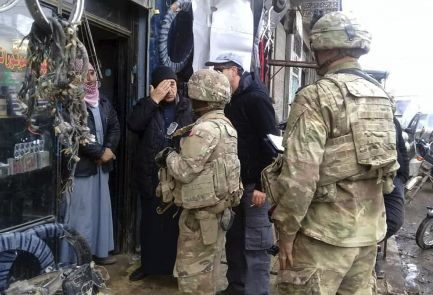
 

Turkey-backed fighters prepare to replace US forces in Syria 

December 25, 2018

Source: Turkey-backed fighters prepare to replace US forces in Syria – Israel Hayom


The Netanyahu-Eisenkot no-war tactics may be the PM’s winning card – even against probes – DEBKAfile

December 25, 2018

Source: The Netanyahu-Eisenkot no-war tactics may be the PM’s winning card – even against probes – DEBKAfile

On Monday, Dec. 24, Prime Minister Binyamin Netanyahu took a big gamble by leading a unanimous coalition decision to call an early election on April 9. He could be crushed under the weight of multiple corruption probes, or he could sail through to his fourth term as head of government, breaking all records as Israel’s longest running prime minister with the highest number of wins at the polls.

Opposition leaders were clearly bucked up by the coming contest. Zionist Union leader Avi Gabay said: “It’s a straight contest between Netanyahu and me.” Political commentators gave high ratings to Yair Lapid, as well as Education Minister Naftali Bennet, who failed to persuade Netanyahu to name him defense minister after Avigdor Lieberman quit, and the promising newcomer, former chief for of staff Benny Gantz.

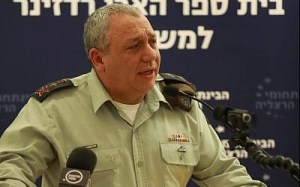
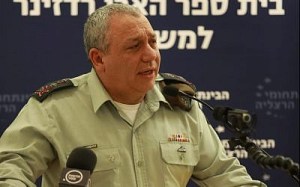
However, the average Israel voter has most often been swayed by considerations of security when choosing his/her leaders. In recent security crises, Netanyahu has increasingly turned out to be of one mind with IDF Chief of Staff Lt. Gen. Gady Eisenkot for driving a succession of crises away from major war confrontations into alternative channels. In this, he bucked his own hawkish Likud and the communities of Judea and Samaria. The Netanyahu-Eisenkot duo pair refrained from blocking these territories’ highways to Palestinian traffic, even after deadly drive-by shootings. They waved the Qatari dollars, derided as “protection,” through to the Hamas terrorist rulers of the Gaza Strip, instead of a routing them as demanded by Lieberman. And finally, Netanyahu as defense minister backed the chief of staff’s decision to go for Hizballah’s cross-border tunnels instead of its arsenal, knowing that Hizballah would weather the challenge unharmed and unbowed.

Both are criticized loud and often for using kid gloves against terrorists at the expense of the IDF’s deterrence and the country’s future safety. Nonetheless, Netanyahu broke with his natural political allies to stand foursquare behind the chief of staff. His secret? He had discovered in private opinion polls that 58 percent of the voting public were behind his policy of restraint.

Eisenkot retires next month. With campaigning in high gear, few will notice that his successor Maj. Gen. Aviv Kochavi will most likely continue his temperate tactics, especially under a re-elected Netanyahu, for as long as a full military confrontation can be avoided.   The Netanyahu-Eisenkot partnership has in some senses allowed a new political bloc to take shape, which better suits broad strata of the middle and upper classes than the existing polarizing party setup. Maybe this explains why the prime minister consistently tops all opinion polls as the favorite to succeed himself, notwithstanding more than two years of police investigations played up day by day by the media. The reporting on an early election was also admixed with claims that the prosecution was close to indictments. Even so, the squeaky clean Benny Gantz, while his debut on the political scene is rated high, falls short of a direct challenge to the ubiquitous Bibi. A large segment of the voting public appears more inclined to leave the country in the hands of a cautious prime minister, even if he is proved to be corrupt, and a less flamboyant army chief, who are intent on keeping the country clear of the loss of life and destruction inherent in major wars for as long as possible, while conducting controlled, covert operations against enemies. Therefore, Netanyahu felt able to launch his campaign with his usual confidence, especially after learning that the attorney general, Avichai Mandelblit. had chosen to hold back on an indictment decision so as not to influence the election one way or another. Barring sudden national or security catastrophes, Netanyahu’s chances of staying in the prime minister’s residence are fairly good.


Analysis: Dangers of a widening Iranian corridor through Syria

December 24, 2018

Source: Analysis: Dangers of a widening Iranian corridor through Syria

The Iranians want a land corridor stretching from Iran through Iraq, Syria, and Lebanon to move weapons and troops, threatening Israel and Jordan alike.

By Yaakov Lapin, BESA Center

In responding to President Donald Trump’s surprise announcement of a withdrawal of all U.S. forces from Syria on Wednesday, Israeli Prime Minister Benjamin Netanyahu issued a brief statement that contained two messages.

“This is, of course, an American decision,” he said, emphasizing that it is not Israel’s place to tell its senior partner where to deploy troops. This is an important message to send, as it shows respect for America’s internal decisions on the use of military force.

Officially, Israel must not play a part in the argument now raging between the American defense establishment and Trump.

At the same time, Netanyahu’s statement did not contain any praise for the decision. This reflects real concern on Israel’s part over how the American exit will affect the regional balance of power.

“We will study its timetable, how it will be implemented, and, of course, its implications for us,” said the prime minister. “In any case, we will take care to maintain the security of Israel and to defend ourselves in this area.”

These comments are hardly a warm endorsement. Netanyahu’s statement reflects a veiled warning to the toxic regional actor that is set to most immediately benefit from Trump’s step: Iran.

The Islamic Republic is working hard to spread its influence, proxies, weapons, and terrorism across the Middle East. Its goal is to create a network of areas under its control, filled with armed organizations, weapons factories, and missile bases. Tehran wants to build these assets so it can later use them to attack Israel, and to threaten and extort moderate Sunni states that stand in the way of its regional hegemony.

The American troop presence in Syria’s east remains part of a “roadblock” to Iranian designs to infiltrate from Iraq.

The Iranian regime and its elite Islamic Revolutionary Guard Corps (IRGC) desire a land corridor stretching from Iran through Iraq, Syria, and Lebanon. Control of such a corridor would enable Iran to move weapons, Shiite militias, and Iranian military formations from the east into Syria, threatening Israel and Jordan alike.

The seriousness of the threat was reflected in an airstrike on July 16 of this year, attributed by international media reports to Israel. That strike targeted Iranian forces that appeared to be building such a land corridor. The strike, on a villa on the Syrian-Iraqi border, reportedly resulted in a high number of casualties among Iraqi Shiite militia members and Iranian officers.

According to additional reports, Iran has also moved ballistic missiles to Iraq, placing them under the guardianship of Shiite militias, which has led to speculation that Israel may launch attacks on Iranian interests in Iraq.

In August of this year, a Shiite militia in Iraq claimed hostile drones targeted their storage facilities in an airstrike, though they did not identify the attacker.

Trying to deliver weapons from Iraq

Brig.-Gen. Yossi Kuperwasser, former head of the Research Division in Israel Defense Forces’ Military Intelligence, said, “If…the [U.S.] forces in the south are going to leave the area, it would mean that the [Bashar] Assad forces and the Iranians will have full control over Syria. This would mean that they may try to deliver weapons from Iran through Iraq to Syria, and then to Lebanon, and there’s not going to be anything in between to stop them … that’s where the problem lies.”

Kuperwasser was referring to American special forces based near Tanaf, which is close to the borders of Syria, Iraq, and Jordan. US forces are also stationed further to the north, near the Turkish border, where they work with Kurdish units.

Kuperwasser, who also served as director general of the Ministry of International Affairs and Strategy, added, “It’s true that the original mission, of getting rid of ISIS forces, was more or less accomplished. But the question was whether to still have U.S. troops in Syria to take care of the Iranian issue or not.”

Asked whether Tehran would be emboldened by the move, Kuperwasser responded that “the Iranians are going to be empowered and feel much stronger,” adding, “it’s not totally clear that the Islamic State cannot re-emerge, taking advantage of the weakening of their adversaries in this area, and they can rise again.”

Israel, he stressed, will take any measure it deems necessary to defend itself and never expected the U.S. to protect it with forces.

‘It’s a very unstable situation’

“The issue is that we have a common enemy,” Kuperwasser said, regarding the matter of U.S. troops on the ground in Syria. “The purpose of the U.S. forces in Syria was to act against those common enemies – Islamic State, [who are] ultra-radical Sunnis; and secondly, the ultra-radical Shiites, the Iranians. The American presence over there was a major impediment in the way of the Iranians, who tried to turn all of Syria into a territory of control for them. By moving forces away, it will make it easier for the Iranians to control Syria entirely. This is not something for Israel to have a say about. It is up to the Americans to determine their role.”

Russia, which has emerged as a bitter competitor to the U.S. in the region, will be “very satisfied” by Trump’s decision, Kuperwasser noted, and “will have more [of a] free hand to control what’s going on in Syria.” Indeed, shortly after the Trump announcement, Russian President Vladimir Putin welcomed the move, calling it “the right decision.”

Kuperwasser pointed out that Russia has been unable to keep Iran away from southern Syria, despite pledges to the contrary. “They pretend to take care of Israel’s concern. In the south [of Syria], they just announced again [that] they [had] managed to keep Iranian forces further away from the Syrian-Israeli border, 100 kilometers away,” he said.

“But the fact is that Syrian forces deployed in the Golan Heights are not totally Syrian. Some of them are actually forces that are subordinate to Iranian and Hezbollah command. Though they have a Syrian identity, they actually take orders from the Iranians and Hezbollah. This is a situation we are very concerned about, and I don’t think the Russians are doing enough to make sure that this doesn’t happen,” cautioned Kuperwasser.

Russia has, however, stepped up efforts to convince the Iranians not to bring in weapons into Syria. If Russia can consistently reduce Iran’s weapons’ trafficking, it would help stabilize the region, he argued.

Still, he warned, “it’s a very unstable situation, and we will have to wait and see if the Iranians really behave in a way that keeps the stability and quiet in Syria, and as an extension, if they turn Lebanon into an unstable area.”

The recent Hezbollah attack tunnels uncovered by the IDF, and attempts by Iran and Hezbollah to build precision missile sites in Lebanon, are examples of actions that destabilize the region.

With many question marks remaining, one thing appears to be clear following Trump’s announcement: Russia will solidify its control over Syria, and Moscow’s relationship with Israel will be even more important due to the vacuum left behind by Trump in the region.

Kuperwasser offered a simple formula for understanding the dynamics of Israel’s relationship with Russia.

“The Russians don’t want to end up facing Israeli aircraft in Syria,” he said. “The way to avoid it is to make sure that the Iranians don’t bring weapons through Syria because Israel won’t tolerate that delivery. The best way to avoid friction is simply to convince the Iranians not to bring weapons in.

Yaakov Lappin is a Research Associate at the Begin-Sadat Center for Strategic Studies. He specializes in Israel’s defense establishment, military affairs, and the Middle Eastern strategic environment.


Erdogan is not a benevolent sultan of old, hes a monster that must be stopped

December 24, 2018

Source: Erdogan is not a benevolent sultan of old, hes a monster that must be stopped

Opinion: The world has a strange double standard on the Muslim world – it’s ok when they massacre their own, and the Turkish president is the master of it

Life was not always good for the Jews under the Ottomans and/or the Turks. But what is very clear is that the current Sultan, Recep

Tayyip Erdoğan, is an impudent anti-Semite. His repeated statements make it clear that his role model is former Iranian president Mahmoud Ahmadinejad, and not sultans of yore who treated the Jews fairly. This attitude of Erdogan’s did not start today, or even with the 2010 Mavi Marmara crisis, when IDF troops and Turkish activists clashed on board a Gaza-bound boat with deadly results. When he was younger, Erdogan wrote a play called “Mas-Kom-Ya”, which depicts a conspiracy by the Freemasons, the Communists, and the Jews.Since 1984, Turkey has destroyed 3,000 Kurdish villages, implemented mass transfer of the local population and caused a “Kurdish Nakba” of two million people who became refugees in their own country. During this orchestrated war on the Kurdish people, there have been massacres during which 30,000 people were killed. Even if Israel made every effort, it could not scratch the surface of the horrors perpetrated by the Turks, not those of recent decades and certainly not those of the last century, including the genocide committed by the Turks against the Armenians, and the atrocities committed in the framework of the expulsion of Christians at the end of the First World War.

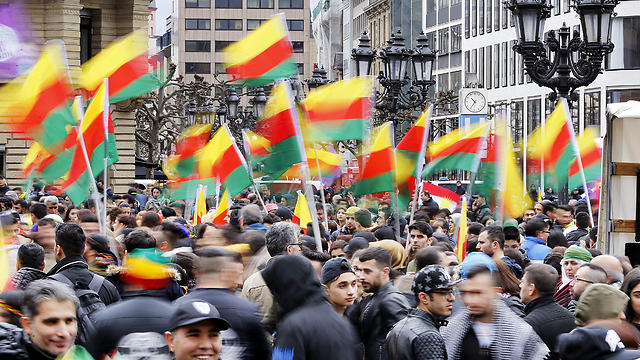
Kurds protesting against Erdogan in Germany (Photo: AP))

Kurds protesting against Erdogan in Germany (Photo: AP))

Erdogan himself is responsible for several massacres committed in recent years. For example, his soldiers raided the city of Cizre, in the northeast of the country, in February 2016. Hundreds of civilians hid in three basements, but it did not help them as Erdogan’s soldiers massacred them mercilessly. A total of 178 people were killed, most of them innocent civilians.

And this is one of many events. The list of crimes is long, but the world barely pays heed with them, because the guiding principle is all too familiar: As far as Muslims massacring Muslims is concerned – the world is silent. Muslims are treated like stupid children, and allowed to get away with much. The unfortunate Muslims on the receiving end complain bitterly about this treatment, which is seen as a license to commit atrocities.

Erdogan has managed to raise this principle to new heights. He complains about Israel, which is fighting jihad, while he also supports this jihad; he has erased the gap (although it is doubtful this gap even exists) between anti-Semitism and anti-Zionism; he commits massacres against his own people, while accusing Israel of massacring the Palestinians.

Erdogan’s anti-Semitic campaign continues with full force. Last year, Turkish TV aired an anti-Semitic series that included allegations of plots that were allegedly the brainchild the Jew Theodor Herzl, which were “inspired by real historical facts.” This was not the first antisemitic series. In Turkey, it’s routine.

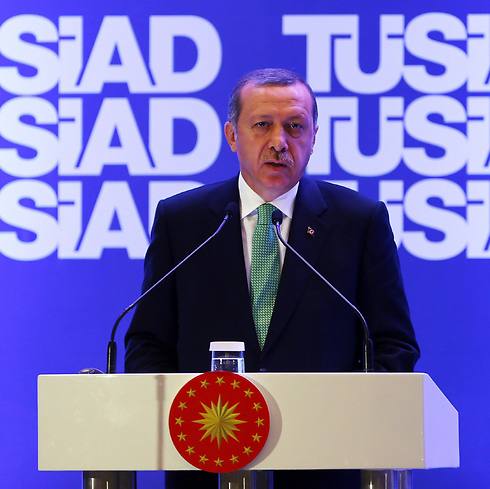
Turkish President Recep Tayyip Erdogan  (Photo: Reuters)

Turkish President Recep Tayyip Erdogan (Photo: Reuters)

One cannot easily dismmiss Erdogan, who in the past voiced opposition to Bashar Assad’s continued rule in Syria, but soon joined the axis of evil that includes Iran and Hezbollah. There are those who argue that Turkey’s economic interests will lead to restraint, but that’s a mistake. History proves that leaders of Erdogan’s ilk will pick ideological principles, especially those rooted in hatred, over national interests. Erdogan’s Justice and Development Party is tied to the Muslim Brotherhood, whose founder, Hassan al-Banna, penned an article on the importance of the “industry of death.” That’s the idea, those are the principles that Erdogan follows.

It is important to note that the president of Turkey is not the enemy of Israel, he is the enemy of the free world. Europe already detests him; countries such as the Netherlands and Germany refused entry to ministers from his party. But this did not stop Erdogan from becoming the contractor for the project to stop the flow of refugees, for which he gets billions. This helps in the short term, but in the long run, Europe is cultivating a monster who is becoming increasingly racist and anti-Semitic.

Monsters like this must be stopped when they are small and toothless. But Europe has forgotten everything and learned nothing. And the monster continues to grow.


Iran says ready to respond, but U.S. aircraft carrier no threat

December 24, 2018

Source: Iran says ready to respond, but U.S. aircraft carrier no threat – Middle East – Jerusalem Post

“We will not allow this warship to come near our territorial waters in the Persian Gulf,” he added.

BY REUTERS
 DECEMBER 24, 2018 12:36

NIMITZ-CLASS aircraft

LONDON, Dec 24 – Iran said on Monday it was ready to respond to any hostile US action, but it did not consider the arrival of a US aircraft carrier in the Gulf last week as a significant threat.

The USS John C. Stennis entered the Gulf on Friday, ending a long absence of US aircraft carriers in the region as tensions rise between Tehran and Washington.

“The presence of this warship is insignificant to us,” Iran’s Navy commander Habibollah Sayyari was quoted as saying by the semi-official ISNA news agency.

“We will not allow this warship to come near our territorial waters in the Persian Gulf,” he added.

Sayyari said the US navy was allowed to sail in international waters near Iran, just as the Iranian navy could sail in the Atlantic Ocean near US waters.

He said, however, that Iran was on alert for possible threats. “They do not have the courage or ability to take any measures against us. We have enough capabilities to stand against their actions and we have fully rehearsed for that.”

A US-Iranian war of words has escalated since US President Donald Trump withdrew Washington in May from a world powers’ nuclear deal with Iran, and reimposed sanctions on its banking and energy sectors.

Iran has warned that if it cannot sell its oil due to US pressures, then no other regional country will be allowed to do so either, threatening to block the Strait of Hormuz in the Gulf.

A fifth of global oil consumption passes through the Strait from Middle East crude producers to major markets.In recent years, there have been periodic confrontations between Iran’s Revolutionary Guards and US military in the Gulf, but the number of incidents has dropped in recent months.

IDF opens fire at gunmen approaching border fence from Syria 

December 24, 2018

Source: IDF opens fire at gunmen approaching border fence from Syria | The Times of Israel

Army working to determine if suspects crossed 1974 ceasefire line for intelligence-gathering purposes; no Israeli injuries reported

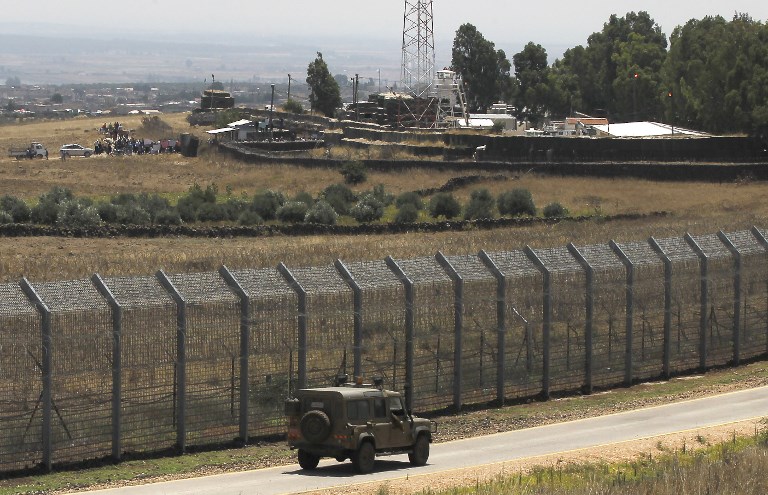
A picture taken on July 4, 2018 from the Golan Heights shows displaced Syrians from the province of Daraa staging a protest (top L) calling for international protection, in the Syrian village of al-Rafid, near the border fence with Israel. (AFP/Jalaa Marey)

A picture taken on July 4, 2018 from the Golan Heights shows displaced Syrians from the province of Daraa staging a protest (top L) calling for international protection, in the Syrian village of al-Rafid, near the border fence with Israel. (AFP/Jalaa Marey)

IDF soldiers opened fire at a group of gunmen who crossed the 1974 ceasefire line in the Golan Heights and were approaching Israel’s border fence from Syria, the army said Sunday night.

No Israeli injuries were reported in the incident and the IDF was working to determine whether the unidentified individuals had been on an intelligence-gathering operation.

The 1974 ceasefire accord marked the end of the previous year’s Yom Kippur War and established a buffer zone between Israel and Syria. The area closest to the border became a full demilitarized zone, where only the United Nations Disengagement Observer Force and police could operate, while the rest of the buffer zone had strict limits on the number and types of military units and equipment allowed inside it.

The gunmen were said to have entered the demilitarized zone, but did not cross the border with Israel.

In October a border crossing between enemy nations Syria and Israel reopened at Quneitra, four years after it closed as UN observers fled the area due to fierce fighting in the Syrian civil war. The move marked a de facto recognition by Israel that dictator President Bashar Assad has returned to govern in southern Syria, after he defeated rebel groups in the area earlier this summer.

Israeli soldiers guard at the Quneitra border crossing with Syria in the Golan Heights on September 27, 2018. (Basel Awidat/Flash90)

Sunday’s incident comes just days after US President Donald Trump shocked the world — and his own defense and foreign policy officials — by declaring that the US had fulfilled its mission in Syria of defeating the Islamic State terror group and was therefore planning to remove its troops from the country. Defense analysts and officials from around the world largely rejected the claim that IS had been defeated, citing the terror group’s thousands of fighters still operating inside Syria despite its territorial losses.

Israel’s Channel 10 news reported that Prime Minister Benjamin Netanyahu tried in vain to persuade Trump to change his mind, and that there was tremendous “disappointment” in Jerusalem over the pullout, which is regarded as a victory for Russia, Iran and Hezbollah.

The TV report described the US move as “a slap in the face” for Israel, noting that the US presence in Syria was “the only bargaining chip” in Israel’s efforts to persuade Russia to prevent Iran deepening its entrenchment in Syria.

For Israel, the pullout leaves it without a staunch ally in the fight against Iran in Syria and potentially opens the door for the Islamic Republic to create a so-called “land bridge” from Iran, through Iraq and Syria, into Lebanon and the Mediterranean Sea.

Until now, American troops have been stationed in northeastern Syria, along the Iraqi border, blocking such a corridor, through which Iran could more easily distribute advanced weapons and technology throughout the region, especially to its Lebanese client the Hezbollah terrorist army.

IDF Chief of Staff Gadi Eisenkot speaks at a conference in the Interdisciplinary Center in Herzliya on December 23, 2018. (Eli Dassa/IDC)

Earlier on Sunday, IDF Chief of Staff Gadi Eisenkot called the White House’s decision to pull its troops from Syria a “significant event,” but said the Israeli military would continue to independently fight Iran’s military presence in the neighboring country.

In August, the IDF said it conducted an airstrike that killed seven Islamic State fighters who had crossed the ceasefire line. The gunmen had made it some 200 meters (650 feet) past the “alpha line” but did not manage to reach the technical fence bordering the Israeli Golan Heights, IDF spokesman Jonathan Conricus said.

A number of explosive belts and a Kalashnikov rifle were later found during searches of the area, according to the army.

Those gunmen had crossed into the Israeli territory through the Syria-Jordan-Israel border triangle.

The army later released a short clip showing the IS gunmen heading toward Israel and Israeli soldiers crossing into no-man’s land to search for them. Conricus said that there had been no threat to Israeli communities along the northern border, but he did not say whether the IS gunmen were intending to attack Israeli military targets.

Times of Israel staff contributed to this report.


IDF opens fire at gunmen approaching border fence from Syria 

December 24, 2018

Source: IDF opens fire at gunmen approaching border fence from Syria | The Times of Israel

Army working to determine if suspects crossed 1974 ceasefire line for intelligence-gathering purposes; no Israeli injuries reported

A picture taken on July 4, 2018 from the Golan Heights shows displaced Syrians from the province of Daraa staging a protest (top L) calling for international protection, in the Syrian village of al-Rafid, near the border fence with Israel. (AFP/Jalaa Marey)

A picture taken on July 4, 2018 from the Golan Heights shows displaced Syrians from the province of Daraa staging a protest (top L) calling for international protection, in the Syrian village of al-Rafid, near the border fence with Israel. (AFP/Jalaa Marey)

IDF soldiers opened fire at a group of gunmen who crossed the 1974 ceasefire line in the Golan Heights and were approaching Israel’s border fence from Syria, the army said Sunday night.

No Israeli injuries were reported in the incident and the IDF was working to determine whether the unidentified individuals had been on an intelligence-gathering operation.

The 1974 ceasefire accord marked the end of the previous year’s Yom Kippur War and established a buffer zone between Israel and Syria. The area closest to the border became a full demilitarized zone, where only the United Nations Disengagement Observer Force and police could operate, while the rest of the buffer zone had strict limits on the number and types of military units and equipment allowed inside it.

The gunmen were said to have entered the demilitarized zone, but did not cross the border with Israel.

In October a border crossing between enemy nations Syria and Israel reopened at Quneitra, four years after it closed as UN observers fled the area due to fierce fighting in the Syrian civil war. The move marked a de facto recognition by Israel that dictator President Bashar Assad has returned to govern in southern Syria, after he defeated rebel groups in the area earlier this summer.

Israeli soldiers guard at the Quneitra border crossing with Syria in the Golan Heights on September 27, 2018. (Basel Awidat/Flash90)

Sunday’s incident comes just days after US President Donald Trump shocked the world — and his own defense and foreign policy officials — by declaring that the US had fulfilled its mission in Syria of defeating the Islamic State terror group and was therefore planning to remove its troops from the country. Defense analysts and officials from around the world largely rejected the claim that IS had been defeated, citing the terror group’s thousands of fighters still operating inside Syria despite its territorial losses.

Israel’s Channel 10 news reported that Prime Minister Benjamin Netanyahu tried in vain to persuade Trump to change his mind, and that there was tremendous “disappointment” in Jerusalem over the pullout, which is regarded as a victory for Russia, Iran and Hezbollah.

The TV report described the US move as “a slap in the face” for Israel, noting that the US presence in Syria was “the only bargaining chip” in Israel’s efforts to persuade Russia to prevent Iran deepening its entrenchment in Syria.

For Israel, the pullout leaves it without a staunch ally in the fight against Iran in Syria and potentially opens the door for the Islamic Republic to create a so-called “land bridge” from Iran, through Iraq and Syria, into Lebanon and the Mediterranean Sea.

Until now, American troops have been stationed in northeastern Syria, along the Iraqi border, blocking such a corridor, through which Iran could more easily distribute advanced weapons and technology throughout the region, especially to its Lebanese client the Hezbollah terrorist army.

IDF Chief of Staff Gadi Eisenkot speaks at a conference in the Interdisciplinary Center in Herzliya on December 23, 2018. (Eli Dassa/IDC)

Earlier on Sunday, IDF Chief of Staff Gadi Eisenkot called the White House’s decision to pull its troops from Syria a “significant event,” but said the Israeli military would continue to independently fight Iran’s military presence in the neighboring country.

In August, the IDF said it conducted an airstrike that killed seven Islamic State fighters who had crossed the ceasefire line. The gunmen had made it some 200 meters (650 feet) past the “alpha line” but did not manage to reach the technical fence bordering the Israeli Golan Heights, IDF spokesman Jonathan Conricus said.

A number of explosive belts and a Kalashnikov rifle were later found during searches of the area, according to the army.

Those gunmen had crossed into the Israeli territory through the Syria-Jordan-Israel border triangle.

The army later released a short clip showing the IS gunmen heading toward Israel and Israeli soldiers crossing into no-man’s land to search for them. Conricus said that there had been no threat to Israeli communities along the northern border, but he did not say whether the IS gunmen were intending to attack Israeli military targets.

Times of Israel staff contributed to this report.


Off Topic:  UK army said to use Israeli-made system to end drone chaos at London airport 

December 24, 2018

Source: UK army said to use Israeli-made system to end drone chaos at London airport | The Times of Israel

After hours of futile efforts, UK daily says Rafael’s ‘Drone Dome’ was brought in to ground UAV that caused tens of thousands of passengers at Gatwick to miss their flights

A drone that was grounded using Rafael's 'Drone Dome' system. (Screen capture: YouTube)

A drone that was grounded using Rafael’s ‘Drone Dome’ system. (Screen capture: YouTube)

The British military reportedly used an Israeli anti-drone system to ground an unmanned aerial vehicle that shuttered the airfield at London’s Gatwick Airport for over 36 hours beginning Thursday, stranding tens of thousands of passengers.

Flights resumed Friday at Gatwick, the United Kingdom’s second busiest airport, while police said they were still hunting for the drone operator or operators and Transport Secretary Chris Grayling said “military capabilities” were being deployed to safeguard the airport.

Though Grayling did not give details on what equipment was being deployed, The Daily Mail reported that the British Army used the Israeli-made “Drone Dome” to bring down the UAV after police failed for hours to do so with a commercial anti-drone system.

Six of the systems, which were developed by Israeli defense firm Rafael, were sold to the UK Ministry of Defense in August in an estimated $20 million deal, according to Israel’s Globes financial daily.

According to RADA Electronic Industries, which makes the radars used in the Drone Dome, the system can identify drones from 3-5 kilometers (1.8-3 miles) away using 360-degree detection technology.

The Drone Dome can then use its electro-optical sensors to jam the radio frequencies being used by the drone’s operator to control it, making the UAV inoperable and bringing it down in a so-called “soft-kill.”

The system also has a laser that can melt drones, but the Daily Mail said this technology was not purchased by Britain.

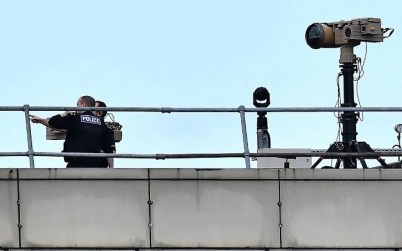
Police officers stand near equipment on the rooftop of a building at London Gatwick Airport, south of London, on December 21, 2018. (Ben Stansall/AFP)

The British military on Thursday joined police and aviation authorities in the search for the culprit or culprits behind the drone intrusion, which police said was designed to cause maximum disruption over the holiday period.

“There are a range of measures which are there today which should give passengers confidence that they are safe to fly,” Grayling, the transportation minister, told the BBC.

Grayling said there had been about 40 sightings of “a small number of drones” while the airport was shut down. He told the BBC the drone disruption at Gatwick was “unprecedented anywhere in the world.”

The last confirmed drone sighting was at 10 p.m. Thursday.

Officials said shooting down a drone remained a “tactical option” but there were concerns that any weapon used to attack the drone could inadvertently hurt people on the ground.

The airport, about 30 miles (45 kilometers) south of central London, sees more than 43 million passengers a year. About 110,000 had been scheduled to pass through on Thursday, one of the busiest days of the year.

The runway closure has had a spillover impact on the international air travel system, and thousands of passengers remain short of their destinations.

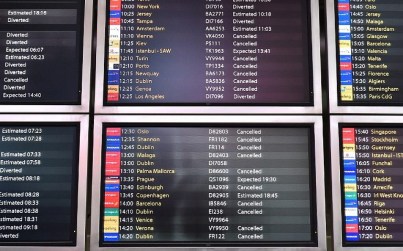
An information board shows scheduled flights arrivals cancelled and diverted at London Gatwick Airport, south of London, on December 20, 2018 after all flights were grounded due to drones flying over the airfield. (Glyn Kirk/AFP)

Many holiday plans were disrupted and travelers stuck at Gatwick described freezing conditions as hundreds slept on benches and floors. Many passengers and their families complained they weren’t being kept informed about re-routed flights.

Authorities haven’t released details about the drones being used except to characterize them as meeting “industrial specifications.”

The motive for the drone use isn’t clear. Police say there is no indication it is “terror related.”


Israel sees limits of Trump support with Syria pullout

December 24, 2018

Source: Israel sees limits of Trump support with Syria pullout | The Times of Israel

Beneath public pronouncements that it respects US decision are concerns that Iran will seek to take advantage of vacuum in war-torn country

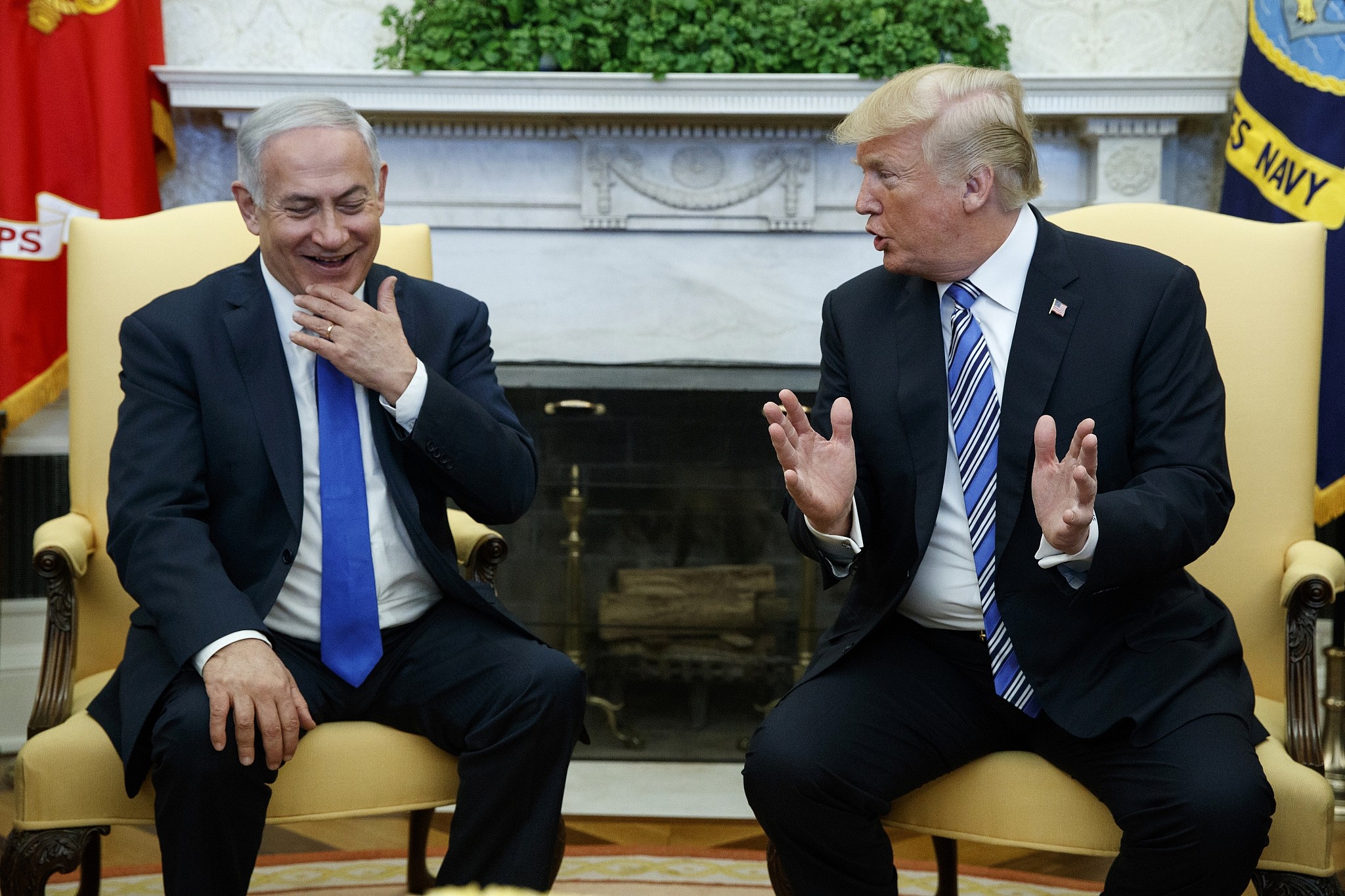
US President Donald Trump (r) meets with Prime Minister Benjamin Netanyahu in the Oval Office of the White House, March 5, 2018, in Washington. (AP Photo/Evan Vucci)

AFP — Israeli leaders have lauded Donald Trump for his list of decisions in support of their country since taking office, but the mercurial US president’s withdrawal of US troops from Syria will not rank among them.

After Trump’s surprise announcement of the pullout last week, Israel is concerned over whether its main enemy Iran will have a freer hand to operate in the neighboring country, analysts say.

Israel’s response to the announcement has been measured — careful to point out that it respects the US decision, coupled with pledges to continue to defend its interests in Syria.

But beneath those public pronouncements are worries over whether Iran will seek to take advantage of the US absence from the war-torn country and if Russia will respond to Israel’s calls to limit it.

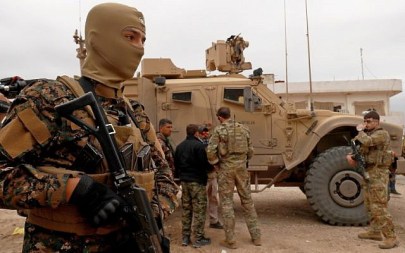
In this file from November 4, 2018, US forces patrol the Kurdish-held town of Al-Darbasiyah in northeastern Syria. (Delil Souleiman/AFP)

Beyond that, the manner in which the decision was taken and announced — and US Defense Secretary Jim Mattis’s resignation in response — may also give Israeli leaders pause, some analysts say.

“Since it’s our major ally, we want the United States to be strong … and we want an ally which is being perceived in the region as strong and effective,” said Eyal Zisser, vice rector of Tel Aviv University, who has written extensively on Syria.

“And I think that what worries some Israelis is what message does this decision — the way it was taken, what stood behind it — send to the region?”

‘Even expand our activities’

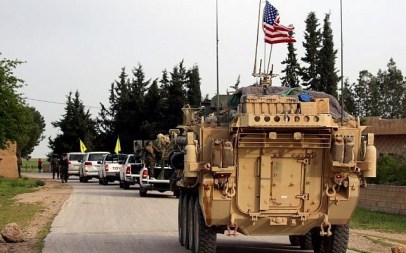
The United States has only around 2,000 troops in Syria focused on fighting the Islamic State group, but they have been deployed in two areas along the Iraqi border, helping keep Iranian movement into the country in check.

There have been warnings from Israel and others that Iran is seeking to form a “land bridge” across to the Mediterranean, and some analysts have said that the US withdrawal could help that effort.

With Iran supporting Syrian President Bashar Assad in his country’s civil war, Prime Minister Benjamin Netanyahu has long pledged to keep it from entrenching itself militarily next door.

US forces, accompanied by Kurdish People’s Protection Units (YPG) fighters, drive their armored vehicles near the northern Syrian village of Darbasiyah, on the border with Turkey, April 28, 2017 . (DELIL SOULEIMAN / AFP)

Israel has repeatedly taken action, carrying out hundreds of airstrikes in Syria against what it says are Iranian military targets and advanced arms deliveries to Hezbollah, the Iranian-backed Lebanese group.

With the United States pulling out, Israel may look more to Russia, which is also backing Assad, to use its influence to limit Iran, some analysts say.

But that is not a given, and a friendly fire incident in September that led to a Russian plane being downed by Syrian air defenses during an Israeli strike remains an issue.

The incident angered Russia and complicated Israel’s operations in Syria, particularly after Moscow’s delivery of the advanced S-300 air defense system there in response.

Netanyahu and Israel’s military chief of staff, Gadi Eisenkot, on Sunday sought to tamp down concerns over the withdrawal.

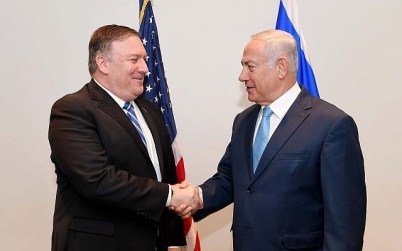
Prime Minister Benjamin Netanyahu (left) meets US Secretary of State Mike Pompeo at the UN in New York on September 26, 2018 (Avi Ohayon/GPO)

The Israeli premier has indicated he was not taken off-guard, saying he had spoken with Trump two days before the December 19 announcement as well as US Secretary of State Mike Pompeo the previous day.

“The decision to remove the 2,000 US soldiers from Syria won’t change our consistent policy,” Netanyahu said Sunday.

“We will continue to act against Iran’s attempt to establish a military presence in Syria, and if the need arises, we will even expand our activities there.”

‘A free ride’

Yaakov Amidror, a former national security adviser to Netanyahu and ex-military intelligence official, noted US troops were not directly involved in Israel’s fight against Iran’s presence in Syria.

But he said concerns over whether Iran will take advantage of the US withdrawal were legitimate.

“From now on, it will be a free ride for the Iranians and they will use the corridor logistically to enhance their capabilities to build the military forces in Syria and to help Hezbollah afterwards,” he told AFP.

An analysis by the US-based Center for Strategic and International Studies think tank said “Israel is among the most important losers” of the withdrawal, along with the United States’ Kurdish allies in Syria.

But Netanyahu has vowed that Israel will continue to “defend ourselves” and Eisenkot, the military chief of staff, called it “a significant event but it should not be overstated.”

“For decades we’ve been handling this front alone,” said Eisenkot.