Archive for December 30, 2018

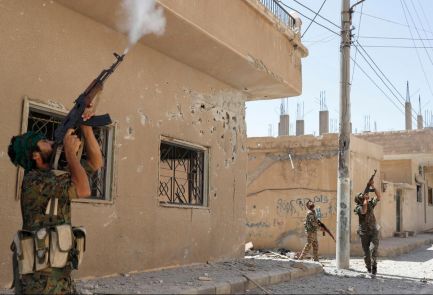
Let Kurdish fighters in Syria keep US weapons, US commanders say 

December 30, 2018

Source: Let Kurdish fighters in Syria keep US weapons, US commanders say – Israel Hayom


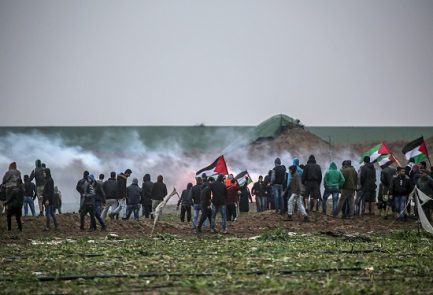
Rocket fired from Gaza shatters six-week calm in Israeli south 

December 30, 2018

Source: Rocket fired from Gaza shatters six-week calm in Israeli south – Israel Hayom


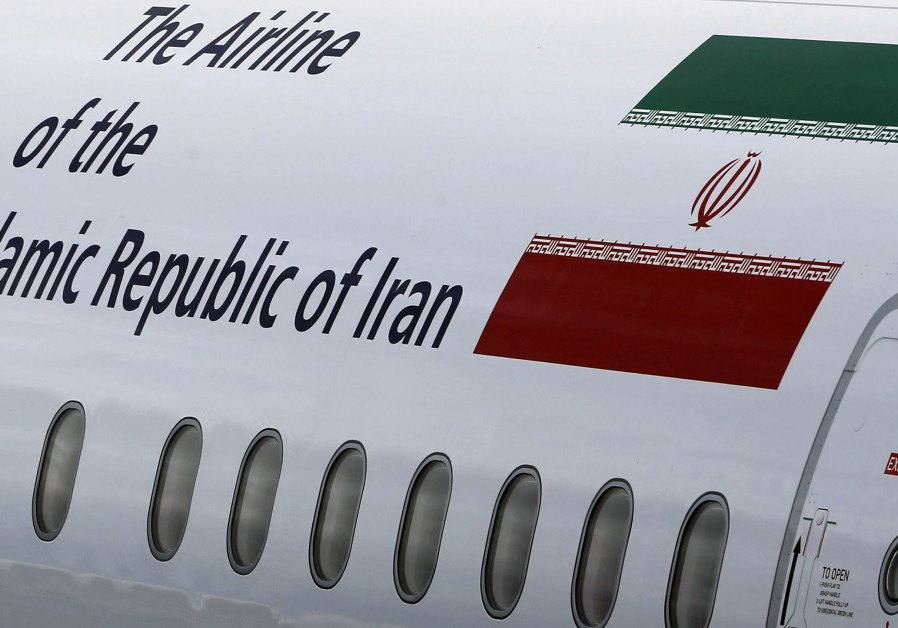
Iran’s Zarif meets Islamic Jihad leader, pledges support for Palestinians 

December 30, 2018

Source: Iran’s Zarif meets Islamic Jihad leader, pledges support for Palestinians – Middle East – Jerusalem Post

Palestinian Islamic Jihad has been labelled a terrorist organization by the US, EU, Israel and other countries

BY CASSANDRA GOMES-HOCHBERG
 DECEMBER 30, 2018 09:45
Iran's Zarif meets Islamic Jihad leader, pledges support for Palestinians

Iranian Foreign Minister Mohammad Javad Zarif claimed that supporting Palestine was a fundamental principle of the Islamic Republic’s foreign policy, the Iranian news network Press TV reported on Saturday.

Zarif met the Secretary General of the Palestinian Islamic Jihad (PIJ) movement Ziad al-Nakhala in Tehran to strengthen ties with the group, emphasizing his support for the Palestinian people and their cause.

“We hope that some Muslim countries that have pinned their hopes on support for the Zionists and the US will return to the Muslim world and realize that the Zionists are not a trustworthy friend or partner for anybody,” Zarif said.

Islamic Jihad has been labelled a terrorist organization by the US, EU, Israel and other countries, and has seen been backed with Iranian funds. With its main strongholds in Hebron and Jenin in the West Bank, its operations have included suicide bombings, attacks on Israeli civilians and rocket fire, including a bomb attack in Jerusalem that injured more than 100 people.

Following Islamic Jihad rocket fire in Gaza into Israel in October, an IDF statement said that they launched rockets “under the encouragement of the terror-exporting Iranian regime,” and that rocket fire was conducted with “clear guidance from Iran.”

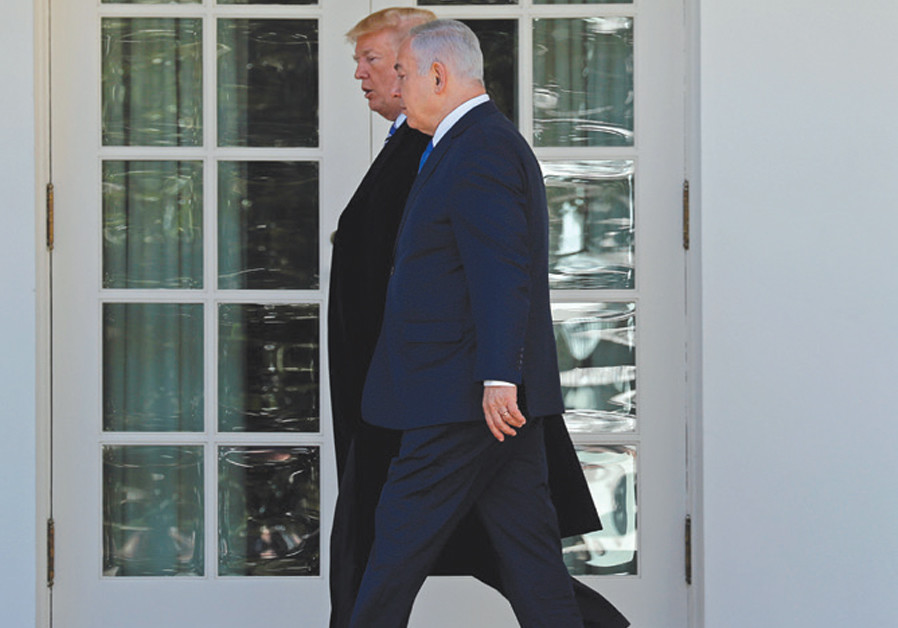
How will Trump’s address in Iraq effect Israel? 

December 30, 2018

Source: How will Trump’s address in Iraq effect Israel? – Opinion – Jerusalem Post

Since Trump’s Syria withdrawal decision on December 19, Israeli leaders have put on a brave face, not openly disagreeing with the US decision.

BY JPOST EDITORIAL
 DECEMBER 29, 2018 21:48
How will Trump's address in Iraq effect Israel?

President Donald Trump flew to Iraq’s Ayn al-Asad airbase on Wednesday in a surprise address to US troops stationed there. It came the day after Christmas and was Trump’s first visit to a US war zone. He echoed comments he had made since his campaign, aiming to reduce America’s presence abroad and get other countries to pay for their own defense. He also sought to hammer home his decision to leave Syria. He is charting a unique course for the United States, but by doing so and reducing the US influence and presence in the Middle East, his words will have ramifications on Israel.

Since Trump’s Syria withdrawal decision on December 19, Israeli leaders have put on a brave face, not openly disagreeing with the US decision and asserting that Israel will act against Iranian threats in Syria and other threats that may emerge. The alleged Israeli airstrikes on December 25 near Damascus can be interpreted as part of the message. The Syrian regime blamed Israel, and Russia critiqued Jerusalem for endangering a civilian aircraft. Russia’s words are not only about the civilian aircraft. The threat to Syrian civilian flights comes from Syrian air defense whose wild firing of missiles threatens their own planes just as they mistakenly shot down a Russian IL-20 in September. However, Moscow’s warning is a warning to Israel about continued operations.

This dovetails with Trump’s Iraq visit. The US President could have made this part of a larger trip, going to Baghdad and Erbil to meet essential Iraqi leaders, and then to Turkey, the UAE, Saudi Arabia and Israel to show that the US may be leaving Syria, but the US is not leaving the Middle East. Instead this visit was a US-only visit. It took place in Iraq, but at a US airbase. Therefore it was designed for a domestic American audience, but the Middle East paid close attention to Trump’s words.

Trump said ISIS was mostly defeated, and that the US would remain in Iraq to prevent a resurgence. “We are putting America first for the first time in a long time,” Trump said, arguing that the US would no longer be suckers, paying for foreign wars. He said the Syria conflict demands a political solution, and that Saudi Arabia and Turkey might be part of that. He argued that the US would withdraw in an orderly manner from Syria “while maintaining US presence in Iraq to prevent ISIS resurgence and protect US interests, and also to always watch very closely over any reformation of ISIS and also to watch over Iran. We’ll be watching,” Trump said.

The comments about Iran are part of a larger US policy that began with Trump’s decision to quit the Iran nuclear deal and continued with sanctions applied this fall, particularly in November. However Iran appears to be on a charm offensive in the region. Its president was recently in Turkey, and it is working with Ankara and Moscow to form a constitution committee for Syria. It also attended the Doha Forum. In each instance, Iran seeks to show that it is an influential country, and it pairs its visits with jibes at Israel. Recent comments by Turkey’s president against Israel, even comparing Israeli actions against the Palestinians to the Holocaust, paired with Iran’s comments and Russia’s criticism, show that Israel may be in for rough sailing ahead. Israel has improved some relations in the Gulf but Turkey and Iran are two of the most important and powerful countries and economies in the region. The warmth their leaders show is a threat to Israel, as is Iran’s presence in Syria and its growing influence in Iraq. Confabs like the Doha Forum also isolate Israel as Jerusalem has no presence at them, even as Qatar still claims to play a positive role in the peace process.

Now is the time to have a serious conversation with the US about its Middle East strategy. Trump wants to put America first. The US is increasing its defense budget which is good for Israel because of defense connections between Israel and the US. But a reduced US presence in the region is not helpful in the long term.


Iranian cargo plane suspected of bringing arms to Hezbollah departs Tehran

December 30, 2018

Source: Iranian cargo plane suspected of bringing arms to Hezbollah departs Tehra – Middle East – Jerusalem Post

“The Iranians are trying to come up with new ways and routes to smuggle weapons from Iran to its allies in the Middle East.”

BY SETH J. FRANTZMAN
 DECEMBER 30, 2018 10:16
Iranian cargo plane suspected of bringing arms to Hezbollah departs Tehran

A Fars Air Qeshm 747 that left Tehran Sunday morning, landing in Damascus at 10:30 a.m., has been accused in the past of transporting weapons to Hezbollah.

Eyewitnesses saw the aircraft land in Damascus.

The accusations surfaced in a September Fox News report based on western intelligence assessments. The cargo plane made suspicious flights in July and August to Damascus and Beirut.

“The Iranians are trying to come up with new ways and routes to smuggle weapons from Iran to its allies in the Middle East,” a source told Fox News.

The cargo plane made another suspicious trip on November 29 to Beirut. On December 25 it flew to Damascus and left later that same evening. Airstrikes, which Russia and Syria blamed on Israel, struck west of Damascus soon after.

Israel has warned in the past about Hezbollah storing weapons in locations in Beirut.

According to observers online who track suspicious flights and military activity, the arrival of the flight coincided with activity by at least two other flights off the coast of Lebanon that are involved in collecting intelligence.

“If I had to guess I would say they were targeting Iranian facilities in Syria and possible weapons transfers to Hezbollah in Lebanon,” Rick Francona, a retired US Air Force intelligence officer and former CNN military analyst tweeted Sunday morning.


Tripartite meeting to be held to discuss Hezbollah tunnels

December 30, 2018

Source: Tripartite meeting to be held to discuss Hezbollah tunnels – Arab-Israeli Conflict – Jerusalem Post

Date not disclosed; UNIFIL confirmed existence of fourth Hezbollah cross-border tunnel.

BY ANNA AHRONHEIM
 DECEMBER 30, 2018 14:34
An Israeli soldier lowers a camera down an Israeli-dug hole into a cross-border tunnel dug from Leba

The United Nations Interim Force in Lebanon (UNIFIL) will hold a tripartite meeting with representatives from the IDF and Lebanese Armed Forces to discuss the cross border tunnels dug by Hezbollah into northern Israel, it was announced on Sunday.

The meeting, whose date was not disclosed, will be held at UNIFIL’s base in Naqoura in southern Lebanon and will also discuss other violations of UN Security Council resolution 1701, UNIFIL spokesperson Andrea Tenenti told Lebanon’s National News Agency.

Israel launched Operation Northern Shield in early December to discover and destroy tunnels dug by the Lebanese Shiite terror group into northern Israel.  The IDF has so far found five tunnels and has destroyed at least four of them, two by explosives and another two by flooding with liquid concrete.

The Israeli military has repeatedly warned that the Lebanese government is responsible for the digging of the tunnels which they say were part of a Hezbollah plan to attack communities in northern Israel.

On Friday the military flooded at least two tunnels which extended several meters into Israel near the community of Metula with liquid concrete to prevent Hezbollah from using them.

The material was seen coming out of the tunnel in several places in the southern Lebanese village of Kfar Kila where the tunnel was dug from, including in a residential building next to the border fence which was used to make bricks.

“This fact indicates Hezbollah’s use of civilian structures in the heart of an urban area in southern Lebanon, in flagrant violation of Resolution 1701 and endangering its citizens by using them as human shields,” the military said in a statement.

“It is clear that this factory belongs to Hezbollah and was used to build tunnels,” Manelis said, adding that there were other locations in Kfar Kila which were connected to tunnels and therefore the IDF saw material come out in several locations, including into residential homes.

“The IDF views the Lebanese government as responsible for the digging of the tunnels and for the consequences of its action. This is a serious violation of Resolution 1701 and the sovereignty of the State of Israel,” the IDF Spokesperson warned.

On Saturday UNIFIL released a statement confirming the existence of four tunnels, including the ones flooded by the IDF.

“In the course of the ongoing investigation into the presence of tunnels along the Blue Line, UNIFIL together with the Lebanese Armed Forces (LAF) surveyed the premises of an old concrete factory in the southern part of (Kafr Kila), after UNIFIL had observed liquified cement flowing out from the building within this facility,” read the statement.

“The liquid overflowing on the Lebanese side had been injected by the Israel Defense Forces (IDF) through a shaft drilled on their end of a tunnel that UNIFIL had previously independently confirmed to be crossing the Blue Line in the same general area. Based on this observation, UNIFIL can confirm that the old concrete factory in (the village) has an opening to the tunnel, which is crossing the Blue Line,” the statement added.

UNIFIL added that it had been informed by the IDF on Wednesday of another tunnel that had been destroyed near the Lebanese village of Ayta ash-Shab that had not been reported to UN peacekeepers, “therefore it’s existence has not been independently verified by UNIFIL.”

Peacekeepers “conducted a post-blast assessment and observed a crater in the area,” the statement continued adding that they are working with the Lebanese army to assess any damage caused by the explosion.

“UNIFIL remains engaged with the parties to ensure that all activities in sensitive areas are duly coordinated, the Blue Line is fully respected by both sides, and to help the parties uphold their respective obligations towards the cessation of hostilities under resolution 1701,” it concluded.


2018, the year Donald Trump upended the US-Israel relationship 

December 30, 2018

Source: 2018, the year Donald Trump upended the US-Israel relationship | The Times of Israel

Twelve months ago, the US embassy was in Tel Aviv, the Iran deal was humming along, Palestinians were enjoying aid and a peace plan was just a twinkle in Jared Kushner’s eye

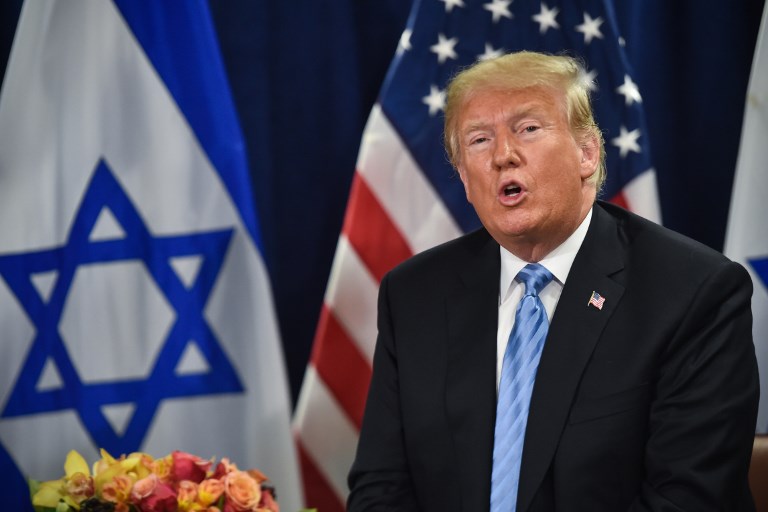
US President Donald Trump meets with Israeli Prime Minister Benjamin Netanyahu on September 26, 2018 in New York on the sidelines of the UN General Assembly. (AFP PHOTO / Nicholas Kamm)

US President Donald Trump meets with Israeli Prime Minister Benjamin Netanyahu on September 26, 2018 in New York on the sidelines of the UN General Assembly. (AFP PHOTO / Nicholas Kamm)

WASHINGTON — US President Donald Trump ran for the presidency as a disrupter. When it comes to his managing the US-Israel relationship, he has been precisely that.

Throughout 2018, Trump made a series of decisions that have had vast implications for Israel’s future — for its conflict with the Palestinians, for its efforts to thwart Iran’s quest to obtain a nuclear weapon and spread its influence throughout the region.

And, throughout it all, he has put Israel in the center of the news, and made it a focal point of his administration.

In typical Trumpian fashion, the president made the last year one of upheaval and controversy. Here are the five ways that he upended US-Israel relations in 2018.

Moving the US embassy to Israel

In May, Trump followed through on his commitment to move the US embassy from Tel Aviv to Jerusalem. The move was warmly praised by Prime Minister Benjamin Netanyahu (he compared Trump to King Cyrus) and widely castigated by the Palestinians and much of the international community.

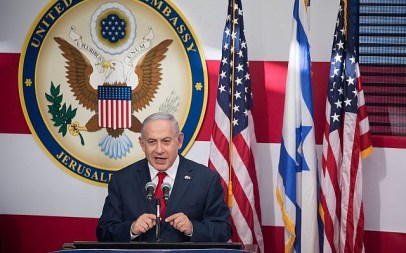
Prime Minister Benjamin Netanyahu speaks at the official opening ceremony of the US embassy in Jerusalem on May 14, 2018. Yonatan Sindel/Flash90)

Palestinian Authority President Mahmoud Abbas said the new embassy amounted to a “new settlement,” as he refused to meet with any Trump officials, arguing that, by recognizing Jerusalem as Israel’s capital, they had forfeited their right to act as honest mediators in the conflict.

“With this step, the US administration has cancelled its role in the peace process and has insulted the world, the Palestinian people and the Arab and the Islamic nation and it has created incitement and instability,” said PA spokesman Nabil Abu Rdeineh at the time.

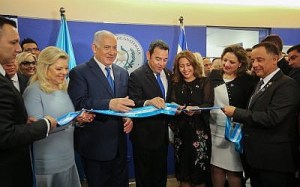
Prime Minister Benjamin Netanyahu (3rd-L) Guatemala President Jimmy Morales (C) and Guatemalan Foreign Minister Sandra Jovel (2R) at the official opening of the Guatemalan embassy in Jerusalem on May 16, 2018. (Marc Israel Sellem/Pool/Flash90)

But while the move effectively ended the US-Palestinian relationship, it was seen in Israel as the crown jewel of a close bond forged between Trump and Netanyahu. The limits of that bond, however, were later tested by Trump’s decision to pull troops out of Syria (see below), when the Israeli leader was accused of selling out Israel’s security interests for a symbolic gesture.

The new embassy hasn’t only shifted US-Israel ties, but has also affected Israel’s relationship with other countries. Israel has touted the embassy relocation as the first of many, with a minister even planning a diplomatic compound in the capital for foreign missions.

A number of capitals have since made moves toward bringing their embassies to Jerusalem, especially Latin American countries. According to analysts, at least some of this is borne out of a desire to cozy up to Trump, but it’s also meant a possible flourishing of ties between Israel and Central and South America.

Withdrawing the US from the Iran deal

The relationship between Netanyahu and Barack Obama famously hit rock bottom after the US and five other world powers forged a nuclear deal with Iran. During the 2016 campaign, Trump both promised to scrap the deal and enforce it vigorously. In May, he finally did what Netanyahu had long wanted: he pulled the United States out of the landmark pact.

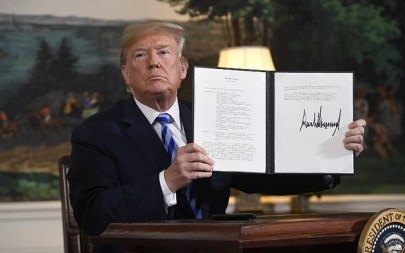
US President Donald Trump signs a document reinstating sanctions against Iran after announcing the US withdrawal from the Iran nuclear deal, in the Diplomatic Reception Room at the White House in Washington, DC, on May 8, 2018. (AFP PHOTO / SAUL LOEB)

Iran, in response, vowed to remain a party to the deal, as did its other signatories — England, France, Germany, Russia and China. The Trump administration said it would seek to forge another agreement with the Islamic Republic that addressed the president’s core complaints, including the deal’s sunset provisions, it’s not dealing with ballistic missile testing, and not allowing access to Iran’s military sites.

As of now, the Trump White House does not appear on the brink of reaching a new accord.

While Israel remains a partisan issue in Washington — perhaps even more so than ever — the removal of the nuclear deal also removed what had been a major point of contention between Washington and Jerusalem.

Cutting US aid to the Palestinians

In September, Trump went on a crusade against the Palestinian Authority. As the Palestinians continued to refuse to meet with his team tasked with seeking an Israeli-Palestinian peace deal, Trump began cutting vast sums of US aid to Palestinian organizations and UN groups that support Palestinians.

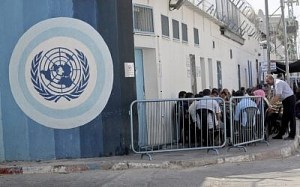
Palestinian employees of the United Nations Relief and Works Agency (UNRWA) take part in a sit in, in front of the agency’s headquarters in Gaza City on October 2, 2018, to protest against job cuts announced by the UNRWA. (AFP PHOTO / SAID KHATIB)

He withdrew US funds from UNRWA,  the UN agency for Palestinian refugees, the Palestinian Authority, the East Jerusalem hospital network, and Israeli-Palestinian co-existence programs. This pressure campaign came as the White House was planning to release its highly anticipated peace plan.

While some Israeli officials privately warned the moves would only exacerbate tensions — in public at least — Israeli government figures praised the move. Israel, which long argued that UNRWA was perpetuating the Palestinians’ refugee status rather than solving it, now had the US on its side.

Conditioning Palestinian funding on coming to the table for peace negotiations, while not threatening Israeli military aid, was a huge victory for Netanyahu.

Pulling US troops from Syria

Earlier this month, Trump rattled Jerusalem by announcing that he would pull all US troops from Syria. US soldiers had been leading the coalition against the Islamic State terror group, while also thwarting Iran from entrenching itself in the battered country.

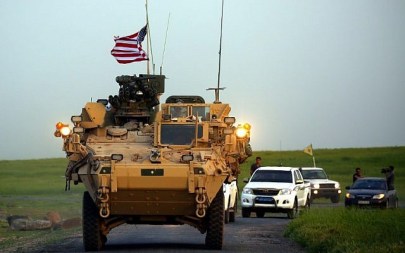
US forces, accompanied by Kurdish People’s Protection Units (YPG) fighters, drive their armored vehicles near the northern Syrian village of Darbasiyah, on the border with Turkey, April 28, 2017. (Delil Souleiman/AFP)

Israel has repeatedly warned in recent years that Iran is seeking to establish a military presence in Syria, where it is fighting alongside Russia and its Lebanese proxy Hezbollah on behalf of Syrian President Bashar Assad. Israeli officials have said that America’s absence would open the door for Tehran to create a so-called “land bridge” from Iran, through Iraq and Syria, into Lebanon and to the Mediterranean Sea.

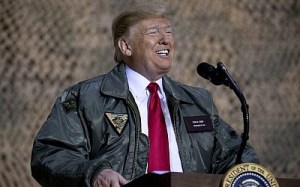
US President Donald Trump speaks at a hanger rally at Al Asad Air Base, Iraq, on December 26, 2018. (AP Photo/Andrew Harnik)

Trump, however, dismissed that concern last week during a surprise visit to Iraq. “Well, I don’t see it. I spoke with Bibi,” he said. “I told Bibi. And, you know, we give Israel $4.5 billion a year. And they’re doing very well defending themselves, if you take a look … So that’s the way it is.”

The decision to pull troops out is seen as the first point of contention between Washington and Jerusalem since Trump took office, and has served to cement the idea that he views the relationship as transactional.

Trump has several times hinted at a “price” Israel will have to pay for him moving the embassy. While he was likely referring to negotiations with the Palestinians, his mention of the embassy when asked about the decision to remove troops from Syria shows it may well be that Israel’s pays for the move in more ways than one.

Teasing the release of his peace plan

Throughout 2018, Trump’s peace team — led by his son-in-law and senior adviser Jared Kushner and special envoy Jason Greenblatt — has signaled that the publication of their proposal was imminent. There has been no indication of what the plan will entail; although Trump once said he preferred a two-state outcome.

In recent months, officials have said the plan is “completed” but that it would be released “when the time was right,” making it the biggest elephant in a room full of them. But finding the right time seems to have eluded the Americans.

Trump himself vowed on during the UN General Assembly that it would be unveiled by January. As of now, it seems unlikely that the White House will release plan with Israel heading into an election this spring, and many see a summer rollout as the earliest likely window.

With the plan gathering dust, it remains one big question mark, with the potential of it one day upending not only the US-Israel relationship, but the broader Middle East.