Archive for December 25, 2018

How will the Israeli elections affect Trump’s peace plan?

December 25, 2018

Source: How will the Israeli elections affect Trump’s peace plan? – American Politics – Jerusalem Post

Netanyahu has reportedly requested a delay, and the administration’s desire to get on with its peace process may have factored in to his call for elections seven months earlier than necessary.
BY MICHAEL WILNER
 DECEMBER 24, 2018 18:07
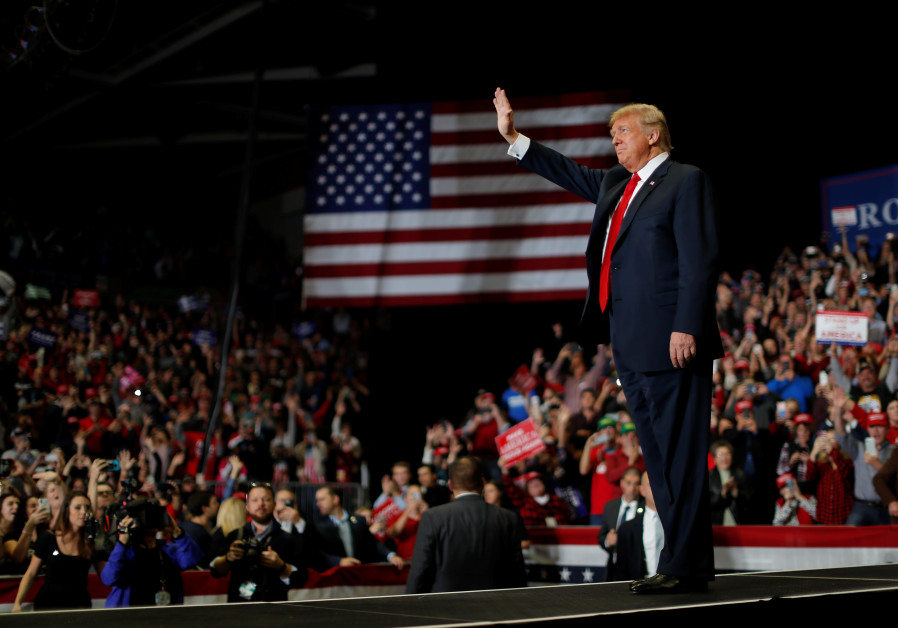
How will the Israeli elections affect Trump's peace plan?

WASHINGTON – News of Israeli elections in April is certain to affect the Trump administration’s strategic plan for the rollout of its Middle East peace initiative.

Unless their proposals are intentionally calibrated to boost the electoral prospects of Prime Minister Benjamin Netanyahu – privately their preferred candidate – White House officials are likely to delay its release once again, fearing both the perception of election interference in Israel as well as any unintended political consequences sure to arise from the contents of the plan.

Netanyahu has reportedly requested a delay, and the administration’s desire to get on with its peace process may have factored in to his call for elections seven months earlier than necessary.

Having a date gives US President Donald Trump’s team some clarity on its own timeline, presuming Netanyahu emerges victorious. The election of a prime minister to Netanyahu’s political right would likely kill the plan, and US officials doubt anyone to his left could cobble together a governing coalition.

On Christmas Eve, Trump’s peace team was assessing precisely how the April date will alter their rollout. The president’s aides earlier this year had thought the release of the plan might prove an election-inducing event, but now that elections are already set, they face an entirely new calculus.

While elections may provide the White House with confidence it will release its plan with a stable Israeli government in office, they also amount to yet another hurdle toward its launch. Once slated for release in the spring, and then summer, Trump proclaimed in September that his initiative would finally launch by the end of the year. That soon slipped into February or March, only now likely to slide again even further, possibly into the heat of the 2020 US presidential election cycle.

The peace team – led by Jared Kushner, his son-in-law; Jason Greenblatt, his senior adviser and special envoy; and David Friedman, his ambassador to Israel – continues to say it will release its plan when the timing is right. But developments such as the breakdown in US-Palestinian communications and Saudi Arabia’s killing of Jamal Khashoggi have only deteriorated the environment for peace talks.
A summer release would give the Trump team just over one year to pursue peace before the 2020 US election.

“The upcoming election in Israel on April 9 is one of many factors we are considering in evaluating the timing of the release of the peace plan,” one White House official told The Jerusalem Post on Monday.
 

Report: Honduras in negotiations to move embassy to Jerusalem 

December 25, 2018

Source: Report: Honduras in negotiations to move embassy to Jerusalem – Israel News – Jerusalem Post

“There is a negotiation, discussions with the Honduran authorities and for the moment no decision has been made,” Israeli Foreign Ministry Spokesman Emmanuel Nahshon said.

BY JTA
 DECEMBER 25, 2018 15:56
President Reuven Rivlin accepts the credentials of Honduras' new ambassador to Israel, June 15 2017.

Senior Honduran officials expressed their government’s willingness to move its embassy from Tel Aviv to Jerusalem, following in the footsteps of the United States and Guatemala.

“There is a negotiation, discussions with the Honduran authorities and for the moment no decision has been made,” Israeli Foreign Ministry Spokesman Emmanuel Nahshon said, the Prensa Libre news website reported. “These are still the first steps.”

The delegation discussed the issue with Israel’s Foreign Ministry Director-General Yuval Rotem, Israel’s Channel 2 television news reported Sunday. The officials also would hold “secret talks” with Prime Minister Benjamin Netanyahu, reported the Times of Israel.

Honduras expects Israel to reciprocate with its own changes, including upgrading the current Israeli consulate in Tegucigalpa to a full embassy –  at a cost of an estimated $1 million annually, and deepening bilateral trade. The Hondurans also are interested in getting advice from Israeli experts on crime fighting, water management, agriculture, and cyber issues.

Netanyahu, who holds the position of foreign minister, will land in Brazil on Friday for the inauguration of President-Elect Jair Bolsonaro next week. Netanyahu may meet with Honduran President Juan Orlando Hernandez, who also will be at the ceremony, to seal the Central American country’s embassy move. In November, Bolsonaro also made public his intention to move the Brazilian embassy to Jerusalem.

Earlier this year, Paraguay also announced its plan to move its embassy, but reversed the decision months later. Between 1984 and 2006, Costa Rica and El Salvador had their embassies in Jerusalem.


Is Abbas trying to reach out to Trump in his Christmas message? 

December 25, 2018

Source: Is Abbas trying to reach out to Trump in his Christmas message? – Israel News – Jerusalem Post

“We are not the enemies of anyone; we are not the enemies of America. We want America’s friendship and good relations with it, but it should treat us justly,” Abbas said.

BY KHALED ABU TOAMEH
 DECEMBER 25, 2018 15:18
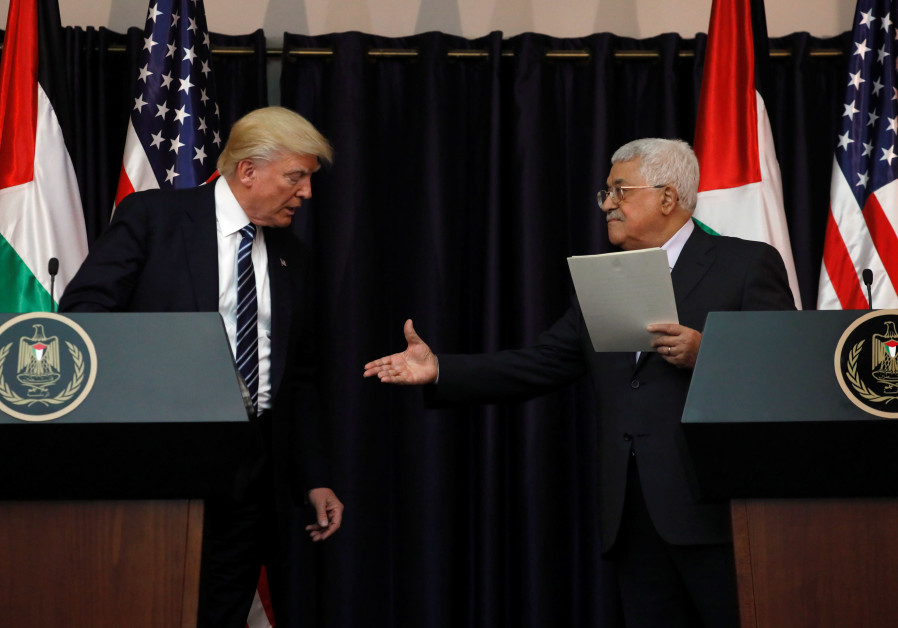
Is Mahmoud Abbas trying to reach out to Donald Trump in his Christmas message?

The Palestinian Authority leadership’s position toward the US administration has not changed, a PA official in Ramallah said on Tuesday.

His statement came after President Mahmoud Abbas’s remarks during Christmas Eve Mass in Bethlehem sparked a wave of speculation about a possible change in the PA’s position toward US President Donald Trump and his administration.

The PA leadership has been boycotting the Trump administration since December 2017, when the US president announced his decision to recognize Jerusalem as Israel’s capital.

That announcement, together with the subsequent decisions to move the US Embassy from Tel Aviv to Jerusalem and cut US financial aid to the PA and the United Nations Relief and Works Agency (UNRWA), have drawn strong condemnations from Abbas and many of his senior officials.

Abbas and the PA have since hardly missed an opportunity to lash out at Trump and his senior representatives, especially US Ambassador to Israel David Friedman and presidential advisers Jason Greenblatt and Jared Kushner.

Moreover, Palestinian officials have used every available platform to denounce and reject Trump’s yet-to-be-announced plan for peace in the Middle East, which is also known as the “deal of the century.” In their eyes, Trump’s upcoming – but unseen – plan is part of an Israeli-American “conspiracy” to liquidate the Palestinian cause and pave the way for the establishment of a separate Hamas-controlled Palestinian state in the Gaza Strip.

Just last week, Abbas again reaffirmed his rejection of the “deal of the century” and called it the “slap of the century.”

On Monday night, however, some Palestinians said they detected a certain change in Abbas’s tone as he was speaking during the Christmas celebration in Bethlehem. Abbas, they noted, did not use the podium to condemn Trump and his administration.

Other Palestinians went as far as saying that Abbas sounded as if he was reaching out to the Trump administration with a conciliatory message – one indicting his readiness to mend fences with the US president.  

This assessment is based on Abbas’s assertion that, “We are not the enemies of anyone; we are not the enemies of America. We want America’s friendship and good relations with it, but it should treat us justly. We are not asking for more than that.”

Abbas said that the Palestinians “want Trump to backtrack on his decisions and to implement international resolutions.” The PA president went on to voice his opposition to “violence and terrorism.” The Palestinians, he added, stand with the US and other countries that are combating terrorism.”

It’s premature to determine whether Abbas’s remarks were part of a decision on the part of the PA leadership to tone down militant statements against Trump and his administration.

Asked whether Abbas’s relatively restrained remarks were connected to Trump’s controversial decision to withdraw US troops from Syria (a decision that has raised concern among some Israelis), a Palestinian official in Ramallah said: “That’s not unlikely.”

The official told The Jerusalem Post that there are some Palestinians in Ramallah who believe that it’s still possible to deal with the Trump administration. “It would be a mistake to burn all bridges with Trump,” the official explained. “We’re not against the US, and it would be unwise for us to engage in a confrontation with the US administration. Our problem is with the policies of this administration, and there are some here in Ramallah who are convinced that policies can be changed.”

This somewhat optimistic assessment, however, does not seem to be shared by other PA officials and top representatives of Abbas’s ruling Fatah faction. For them, the damage that the Trump administration has done to American-Palestinian relations is irreparable.

“I don’t believe there is any change in President Abbas’s attitude toward the Trump administration,” said a member of the Fatah Revolutionary Council. “The change will come only when Trump backtracks on his anti-Palestinian decisions. I don’t see Trump cancelling any of his anti-Palestinian decisions, at least not in the forceable future. Meanwhile, no Palestinian leader would be able to deal with the Trump administration as long as it continues to endorse the policies of [Prime Minister Benjamin] Netanyahu and treat the Palestinians as if they were the enemy of the US.”


Rouhani says US sanctions won’t bring Iran ‘to its knees’

December 25, 2018

Source: Rouhani says US sanctions won’t bring Iran ‘to its knees’ | The Times of Israel

Islamic Republic’s president acknowledges measures pushed by Trump will affect the public, the country’s economy and its development

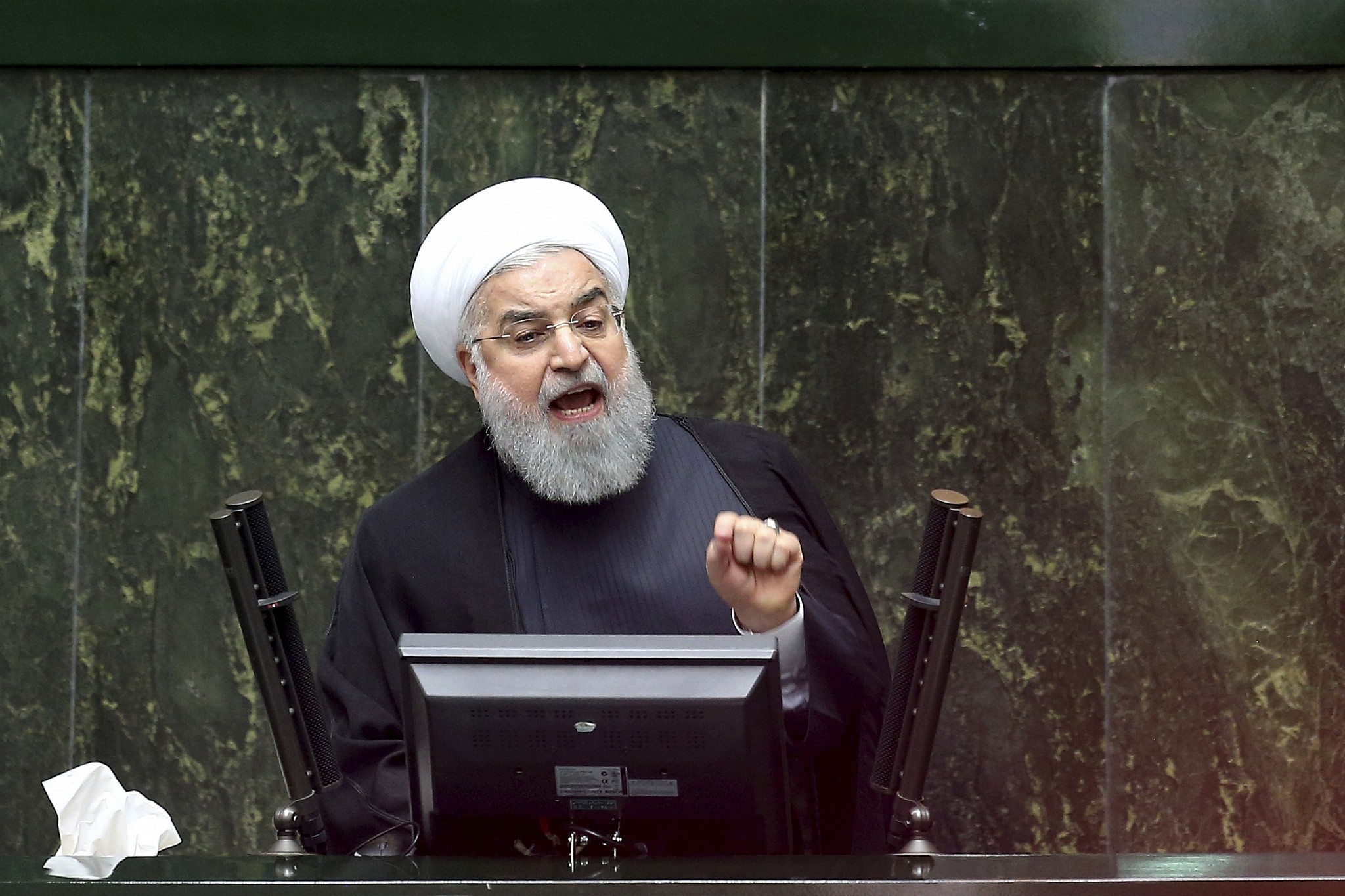
Iranian President Hassan Rouhani speaks during parliament's open session on confidence vote for four new ministers, in Tehran, Iran, October 27, 2018. (Ebrahim Noroozi/AP)

Iranian President Hassan Rouhani speaks during parliament’s open session on confidence vote for four new ministers, in Tehran, Iran, October 27, 2018. (Ebrahim Noroozi/AP)

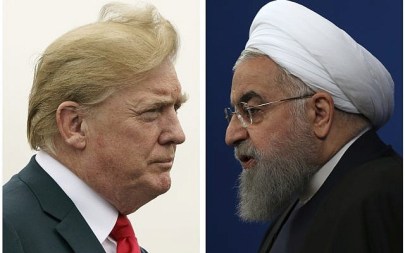
Iranian President Hassan Rouhani on Tuesday presented the country’s new state budget for next year, vowing in a televised speech that reimposed sanctions by US President Donald Trump won’t bring Tehran “to its knees” but acknowledging that they will hinder the economy and affect people’s lives.

Washington has reimposed an oil embargo and other damaging sanctions on Iran since pulling out in May from a landmark 2015 nuclear deal between Tehran and major powers.

“America’s goal is to bring Iran’s Islamic system to its knees,” Rouhani told the parliament, according to the Reuters news agency, “and it will fail in this, but sanctions will no doubt affect people’s lives, and the country’s development and economic growth.”

Rouhani presented an annual state budget of some 4,700 trillion rials ($47 billion), for the next Iranian year, which begins on March 21, according to Reuters.

Islamic Republic’s president acknowledges measures pushed by Trump will affect the public, the country’s economy and its development

“I warn those who impose sanctions that if Iran’s ability to fight drugs and terrorism are affected… you will not be safe from a deluge of drugs, asylum seekers, bombs and terrorism,” he said, according to Reuters.

“America’s unjust and illegal sanctions against the honorable nation of Iran have targeted our nation in a clear instance of terrorism,” Rouhani said in a televised speech from a conference on terrorism and regional cooperation attended by parliament speakers from Afghanistan, China, Pakistan, Russia and Turkey.

“We are here to say that we don’t intend to tolerate such insolence.”

AFP contributed to this report.


Russian envoy: Bad relations with US unlikely to improve

December 25, 2018

Source: Russian envoy: Bad relations with US unlikely to improve | The Times of Israel

In far-reaching interview, Moscow’s UN ambassador warns of ‘danger’ if Trump’s Iran sanctions don’t bring about results and president decides to ‘go to the limits’

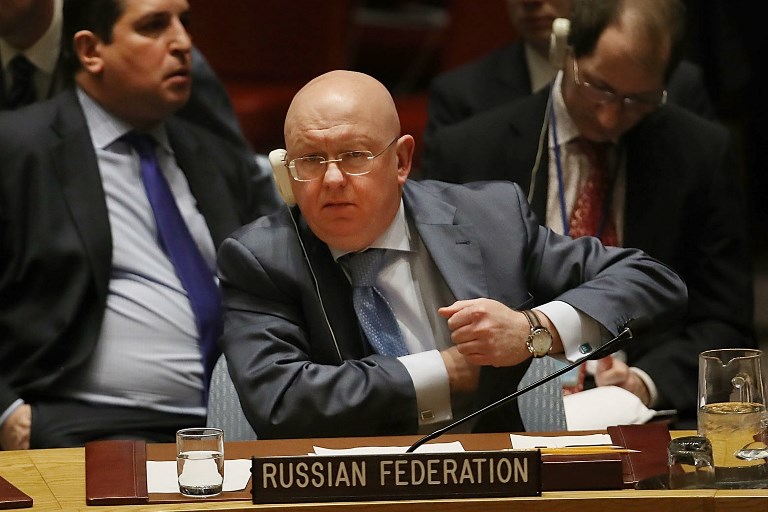
Russian Ambassador to the United Nations Vassily Nebenzia addresses the assembly during a UN Security Council meeting on the situation in Syria at the United Nations on March 12, 2018 in New York City. (Spencer Platt/Getty Images/AFP)

UNITED NATIONS (AP) — Russia’s UN ambassador says relations between Moscow and Washington are “practically non-existent,” which he says is bad not only for both countries but for the world — and he sees little prospect for improvement anytime soon.

Vassily Nebenzia said in a recent wide-ranging interview with a small group of journalists that the Trump administration should offer some incentives to North Korea to move forward toward denuclearization, saying the situation “is stalemated at the moment.”

Russia and China have backed an easing of sanctions to spur momentum, but the US insists that North Korea must first make major steps toward eliminating its nuclear program.

“I’m concerned that it doesn’t roll back” to the 2017 era of increasing nuclear and missile tests and escalating rhetoric, Nebenzia said. “I think that the US hopefully is starting to understand that the situation may go [back].”

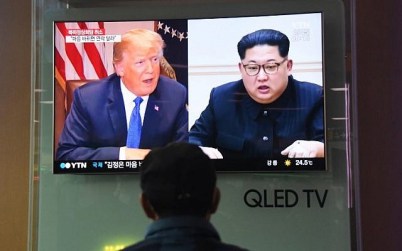
A man watches a television news screen showing US President Donald Trump, left, and North Korean leader Kim Jong Un, at a railway station in Seoul on May 25, 2018. (AFP/Jung Yeon-je)

As for Iran, Nebenzia said he worries about US strategy if its sanctions don’t bring about the changes in behavior the Trump administration wants. He sees “a danger if they go to the limits.”

“I’m worried if anybody wants to go to war with Iran, and that is the enigma and the question — what is the strategy about Iran?” Nebenzia asked.

He said the US and Russia need to talk about global issues including strategic stability, terrorism, narcotics and regional conflicts, and he thinks President Donald Trump “understands pretty well that it’s better to cooperate.”

But he said because Russia has become a major issue in US domestic policies — accused of hacking and interfering in the 2016 US elections which is being investigated by special counsel Robert Mueller — “and given the vulnerabilities that drift around this administration, I don’t see too bright prospects for improving [relations] any time soon.”

Looking more broadly at the US position in the world under President Trump, whose overarching policy is “America First,” Nebenzia said he doesn’t see the United States retreating.

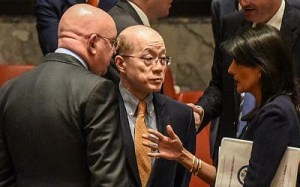
US Ambassador to the UN, Nikki Haley, right, speaks on the sidelines with Chinese Ambassador Liu Jieyi, center, and with Russian Ambassador Vasilly Nebenzia after a United Nations Security Council meeting on North Korea in New York City, September 4, 2017. (Stephanie Keith/Getty Images/AFP)

It’s that the balance of power in the world is changing, he said, “and we definitely witness the rise in a multipolar world” where other centers of power not only Russia and China but India, Brazil and Africa “all want to be a part of the world governance and they want their voice to be heard and their interests taken into account.”

Nebenzia echoed Russian President Vladimir Putin’s view that Trump’s decision to pull US troops out of Syria was a good move, though he expressed some skepticism about whether the announcement will become a reality.

He said in the interview at Russia’s UN Mission late Friday that a pullout “will be helpful and conducive to the eventual Syrian settlement” of the seven-year conflict.

If and when the US leaves Syria, Nebenzia said, America’s Kurdish allies in the northeast should reintegrate into Syrian society, and “their rights and interests should be taken into account in the final settlement.”

Alluding to fears that Turkish forces could cross the border and go after the US-allied Kurdish fighters, Nebenzia added, “I think that’s the best antidote for them against any possible bad developments that might take place.”

Nebenzia said former US Secretary of State Condoleeza Rice voiced his answer to the question of why Russia is in Syria: “The only reason Russia is present in Syria is to prevent another Libya, and that is true.”

He said “Syria was a hotbed of the terrorist caliphate” established by Islamic State extremists, and “our aim was not to let them flourish there” and to restore Syria’s territorial integrity and sovereignty.

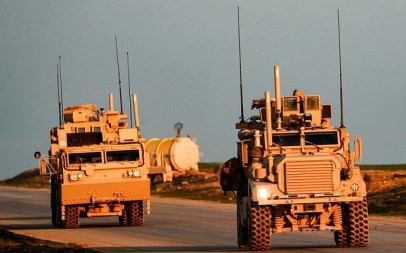
US Marine Corps tactical vehicles are seen driving along a road near the town of Tal Baydar in the countryside of Syria’s northeastern Hasakeh province on December 21, 2018. (Delil Souleiman/AFP)

Nebenzia said the greatest threat in today’s world is not Russia, China, North Korea and Iran as the US national security strategy claims but terrorism — and what’s needed most is “a true coalition to fight international terrorism.”

Responding to questions about Trump’s decision to cut the US force in Afghanistan in half, Nebenzia said: “Afghanistan is one country that demonstrated to the whole world that it’s impossible to defeat.”

“That was demonstrated by the British.That was demonstrated by the Soviets and now it’s the turn of the Americans,” he said.

Nebenzia said it “looks like there’s no military solution, and the understanding of that is gaining momentum.”

The government and the Taliban will have to talk to each other, he said, stressing that “the Taliban is part of Afghan society — you can’t write them off.”


First poll after elections called shows Likud breezing past Gantz to easy win

December 25, 2018

Source: First poll after elections called shows Likud breezing past Gantz to easy win | The Times of Israel

Netanyahu’s party maintains massive lead in new survey, way ahead of hypothetical new party led by former IDF chief

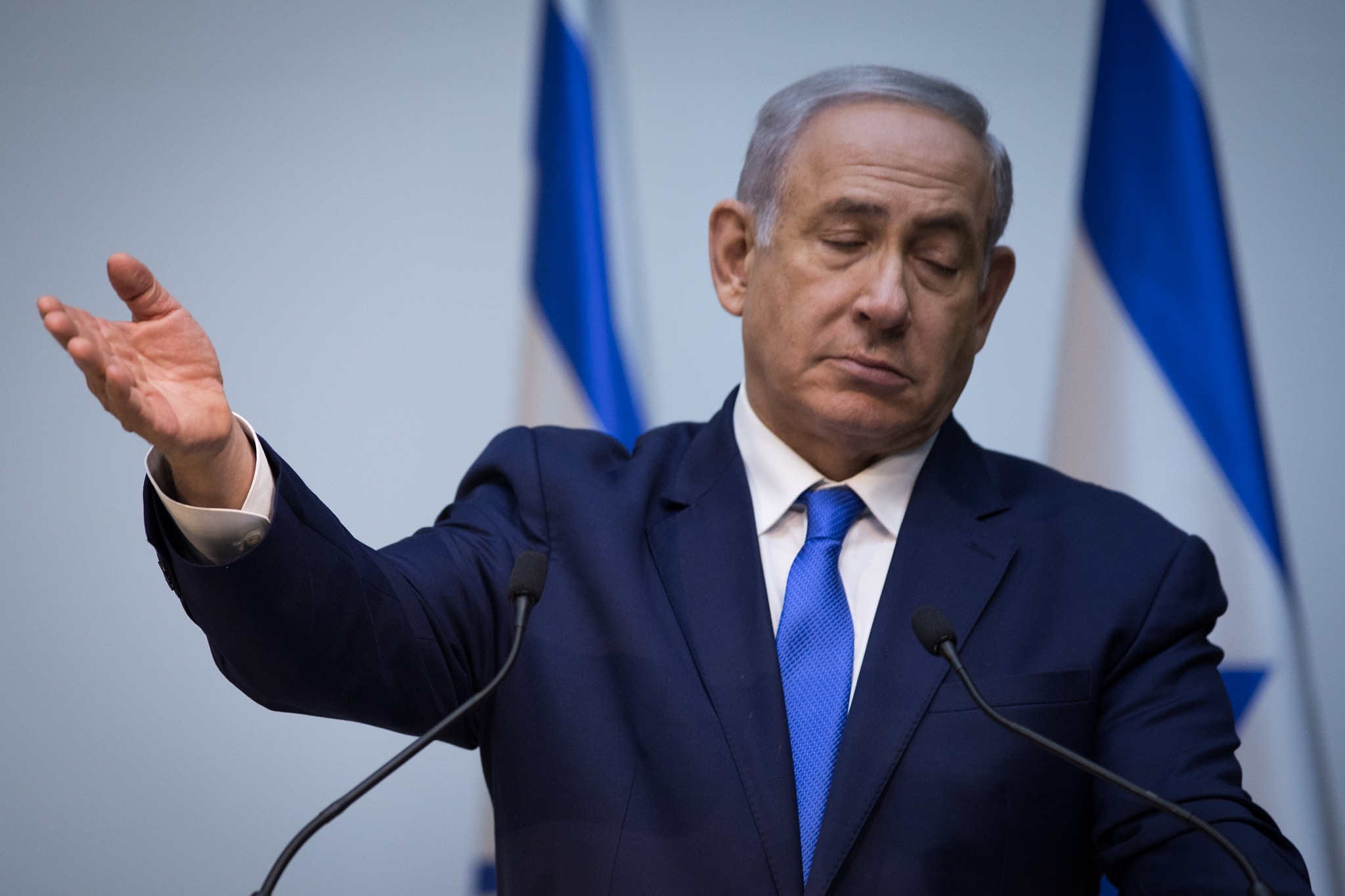
Prime Minister Benjamin Netanyahu delivers a statement to the press at the Knesset in Jerusalem on December 19, 2018. (Hadas Parush/Flash90)

Prime Minister Benjamin Netanyahu delivers a statement to the press at the Knesset in Jerusalem on December 19, 2018. (Hadas Parush/Flash90)

Prime Minister Benjamin Netanyahu’s Likud party would maintain a strong lead over all other political rivals if elections were held today, including over a hypothetical party led by former IDF chief of staff Benny Gantz, according to a first public opinion poll taken after Monday’s announcement that a national vote will take place in April.

The poll, conducted by the Panels Politics polling agency for the Maariv daily newspaper, showed Likud taking 30 Knesset seats, the same as it holds today, whether Gantz enters the race or not.

If Gantz, who helmed the Israel Defense Forces from 2011 to 2015 and is seen as a centrist, were to run, the survey shows that he could garner 13 seats in his own party, making it the second-largest in the Knesset, but still trailing Likud by a huge margin.

In that scenario, Yesh Atid would be in third place with 12 (up one from its current 11), followed by the Joint (Arab) List and the Jewish Home with 11 apiece (down from 13 and up from eight, respectively).

With Gantz in the race, the poll found, the Zionist Union, today the Knesset’s second largest party with 24 seats, would drop to nine.

Prime Minister Benjamin Netanyahu meets with outgoing IDF Chief of Staff, Benny Gantz, at the military base, HaKirya, in Tel Aviv, February 12, 2015. (photo credit: Haim Zach / GPO)

Of the remaining parties, Finance Minister Moshe Kahlon’s Kulanu party would drop four of its 10 seats — possibly a reflection of a recent price hike on basic items and electricity.

The left-wing Meretz party would score six seats, as would a party led by independent MK Orly Levy-Abekasis, up from five seats and one, respectively.

Avigdor Liberman, who resigned as defense minister last month and pulled his Yisrael Beytenu’s six MKs from the coalition in protest of the government’s handling of border violence with the Gaza Strip, would lost one seat, the poll found. Liberman is reportedly eager to regain the defense portfolio in a future government.

Among the ultra-Orthodox parties, the United Torah Judaism party would win seven seats, gaining one, while the Shas party, led by Interior Minister Aryeh Deri, would drop from seven to four seats — dangerously close to the minimum threshold for entering the Knesset.

Overall, the results show Netanyahu would be able to form a narrow right-wing government together with his current coalition partners, including the ultra-Orthodox parties. Partnering with Gantz and Lapid and other right-wing parties would boost Netanyahu to a wide majority without the need for ultra-Orthodox parties, which have, for decades, been a deciding factor in coalitions.

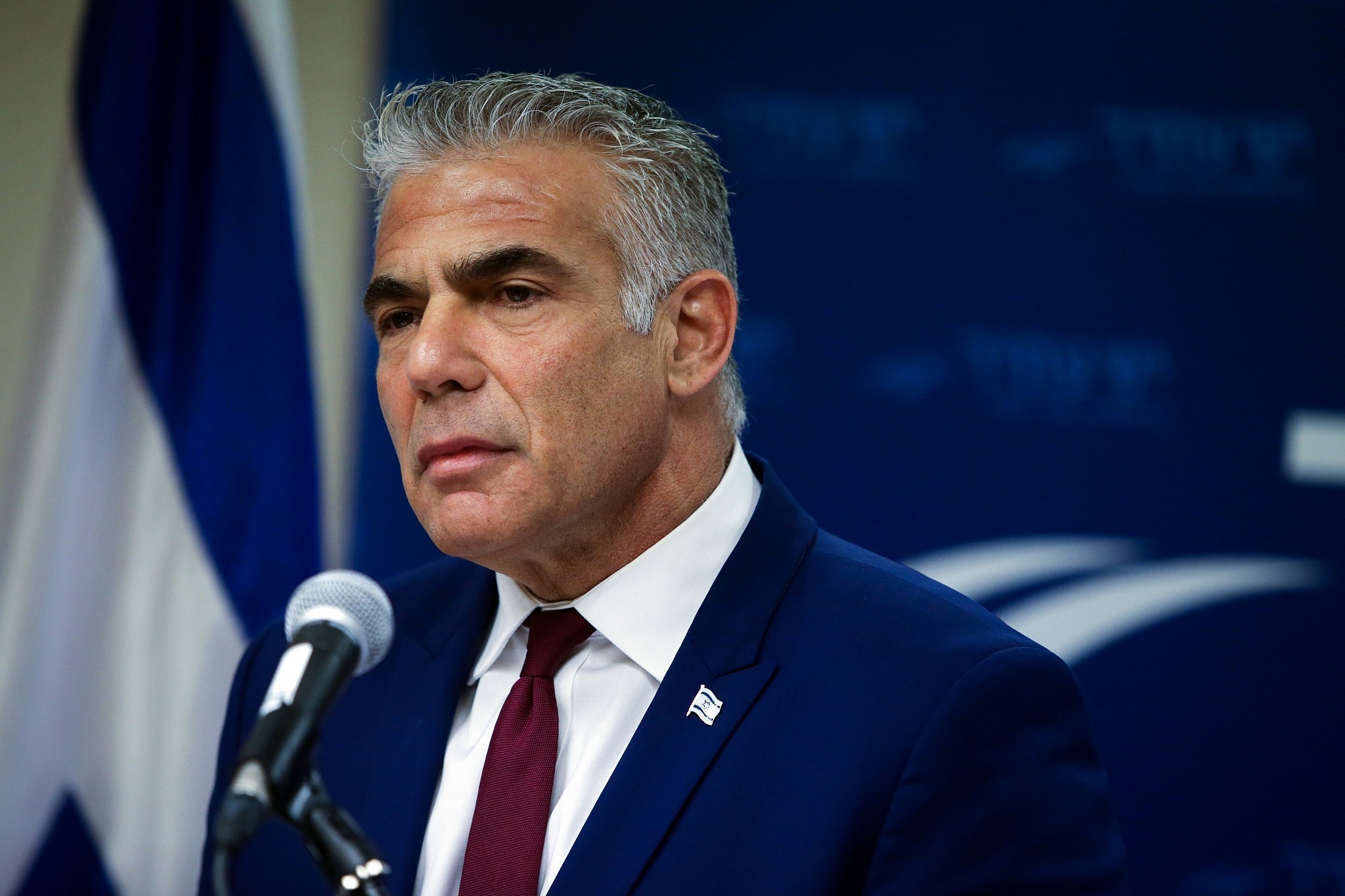
Head of the Yesh Atid party Yair Lapid gives a statement to the media in the Knesset on December 24, 2018. (Yonatan Sindel/Flash90)

A poll conducted earlier this month showed that a political union between Gantz and Yesh Atid could pose a serious challenge to Likud and take 26 seats.

Should Gantz not enter politics, Zionist Union would still shrink to 11 seats, and Likud would remain in power with 31 seats, according to an October survey, which dovetailed closely with other polls published at the time.

Speculation over Gantz’s political future has swirled this year with the expiration of his legally required “cooling off” period, under which former top security officials must wait three years after retiring before entering politics. Gantz, 59, left the military in 2015 after a four-year stint as its chief that saw him command the 2014 Gaza war.

Though Gantz has yet to formally announce his entry into politics, he has reportedly gathered enough signatures to set up his own party and is said to prefer to run alone rather than join an existing center-left or centrist faction.

Former prime minister Ehud Barak said on Monday that he may resurrect his political career if a center-left political bloc were formed to challenge Netnayahu in April’s elections.

“If a center-left bloc coalesces that is led by a man who can both win elections and govern the country, he will win the election,” Barak told Hadashot TV news, hours after the national vote was moved up seven months by coalition leaders.

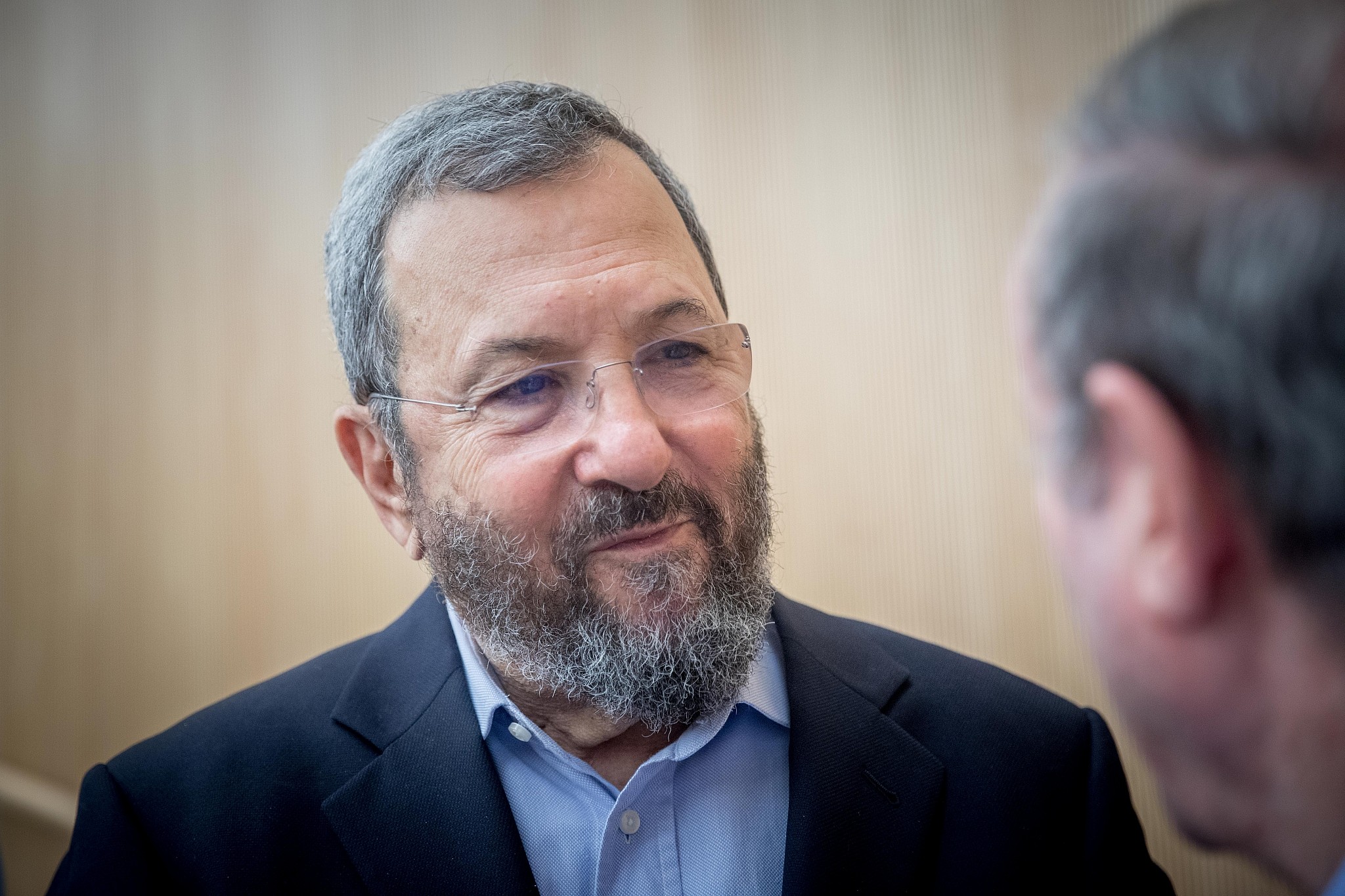
Former Israeli prime minister Ehud Barak attends a conference marking the 50th anniversary of the Six Day War, at the Ben Zvi Institute in Jerusalem on June 5, 2017. (Yonatan Sindel/Flash90)

“It’s important to me that this bloc be formed — certainly I could lead it, I’ve led [a party] to victory in elections over Netanyahu — but I cannot make myself a condition to the formation of the bloc,” continued Barak, who also previously served as commander of the IDF.

“There is certainly a chance I will join — but I alone am not enough,” added the 76-year-old Barak.

Barak, a former Labor party leader who served as Netanyahu’s defense minister between 2009 and 2013, has over the past several years become an outspoken critic of the prime minister, with many believing he may be setting the stage for a return to politics.

Sunday’s Maariv poll sampled 502 Jewish and Arab Israelis and had a 4.3 percent margin of error.

Times of Israel staff contributed to this report.


Turkey warns France against supporting Kurd militia

December 25, 2018

Source: Turkey warns France against supporting Kurd militia | The Times of Israel

Turkey warns France against supporting Kurd militia

Turkey warns France against protecting a US-backed Kurdish militia in Syria and says Ankara’s military power was enough to defeat the Islamic State after US troops withdraw.

Washington’s decision to pull out all 2,000 ground forces from Syria has stunned most allies, including France, but was greeted with approval by Turkey.

Ankara believes its forces supporting Syrian opposition fighters will now have a freer rein to target Kurdish fighters from the US-backed People’s Protection Units (YPG).

“If France is staying to contribute to Syria’s future, great, but if they are doing this to protect the [militia], this will bring no benefit to anyone,” Foreign Minister Mevlut Cavusoglu says, according to Hurriyet daily.


A lesson in deterrence – Israel Hayom

December 25, 2018

Source: A lesson in deterrence – Israel Hayom

Dr. Ephraim Kam

There can be no doubt that U.S. President Donald Trump’s decision to withdraw from Syria plays into Iran’s hands. Ever since the 1990s, the Iranians have seen the United States as presenting the greatest threat. Accordingly, and with the aim of achieving regional hegemony, the primary objective of Iran’s strategy has been to limit the U.S.’s presence and influence in the Middle East. In the past two years, Iran was increasingly concerned by Trump’s policy on Tehran, which included Washington’s withdrawal from the nuclear deal and the imposition of severe sanctions on the ayatollah regime. These steps, along with Trump’s unpredictable behavior, helped bolster American deterrence against Iran. The U.S. presence in Syria was beneficial to Israel and reflected Washington’s willingness to help Jerusalem out.

The decision to withdraw from Syria could negatively impact American deterrence against Iran because it portrays the U.S. as the one who has been deterred from using force. The U.S. could be seen as willing to limit its role in the Middle East and undermine the security of its allies. Iran could, as a result, become convinced it has been afforded new opportunities to promote its interests in the region, in particular in Syria and Iraq.

Above all else, Iran could respond to the U.S. move by deciding to bolster its efforts to maintain forces and aides in Syria in the long-term. In recent months, the future of these forces had been in question for a number of reasons, including that the Iranians have no good military answer to Israeli strikes and the U.S. has demanded their removal from the area. Russia is also liable to act to end or limit their activities, possibly through a deal with the United States, in an effort to prevent an all-out confrontation between Israel and Iran that will endanger Syria’s rehabilitation. Now, the withdrawal of U.S. troops could make it even more difficult to exert military pressure on Iran.

Another development concerns the Iranian plan to establish a land corridor that stretches from Iran to Syria and Lebanon and passes through Iraq. The purpose of this corridor is to transfer weapons and members of the Revolutionary Guards and Shiite militia, in particular, Hezbollah. But the land corridor plan went partially awry as a result of Israeli airstrikes on Iranian targets inside Syria and Islamic State activity in the area as well as concerns the U.S. military presence in the border area between Iraq, Syria and Jordan would disrupt its implementation. Although a few small convoys have apparently passed through the corridor, the Iranians have in large part preferred to move freight by air. With the Americans’ inevitable departure, the Iranians will be less concerned about the possible disruption of traffic through the corridor and will likely decide to expand their use of the corridor.

And yet despite all this, the change will not likely be so far-reaching. The American attacks on Iranian forces and Shiite militias in Syria and Iraq were carried out on a small scale and relatively rare. Almost all of the air strikes on Iranian targets in Syria were carried out by the Israeli Air Force, who exposed the Iranian military’s weaknesses and made it difficult for Tehran to establish a military outpost in Syria. Israel has already declared it intends to continue to strike Iranian targets in Syria as necessary to prevent their establishment in the country, and rightfully so.

Even with the troop withdrawal, the U.S. administration can continue to assist Israel in thwarting the establishment of an Iranian front in Syria. The White House still has a negative view of Iran and can act to increase pressure on Tehran. Despite now having fewer tools at its disposal, Washington can also try to convince Russia not to assist the Iranians in fending off the Israeli attacks and possibly lead to the eventual removal of their forces from Syria.

Dr. Ephraim Kam is a senior research fellow with the Institute for National Security Studies.


Turkey-backed fighters prepare to replace US forces in Syria 

December 25, 2018

Source: Turkey-backed fighters prepare to replace US forces in Syria – Israel Hayom


The Netanyahu-Eisenkot no-war tactics may be the PM’s winning card – even against probes – DEBKAfile

December 25, 2018

Source: The Netanyahu-Eisenkot no-war tactics may be the PM’s winning card – even against probes – DEBKAfile

On Monday, Dec. 24, Prime Minister Binyamin Netanyahu took a big gamble by leading a unanimous coalition decision to call an early election on April 9. He could be crushed under the weight of multiple corruption probes, or he could sail through to his fourth term as head of government, breaking all records as Israel’s longest running prime minister with the highest number of wins at the polls.

Opposition leaders were clearly bucked up by the coming contest. Zionist Union leader Avi Gabay said: “It’s a straight contest between Netanyahu and me.” Political commentators gave high ratings to Yair Lapid, as well as Education Minister Naftali Bennet, who failed to persuade Netanyahu to name him defense minister after Avigdor Lieberman quit, and the promising newcomer, former chief for of staff Benny Gantz.

However, the average Israel voter has most often been swayed by considerations of security when choosing his/her leaders. In recent security crises, Netanyahu has increasingly turned out to be of one mind with IDF Chief of Staff Lt. Gen. Gady Eisenkot for driving a succession of crises away from major war confrontations into alternative channels. In this, he bucked his own hawkish Likud and the communities of Judea and Samaria. The Netanyahu-Eisenkot duo pair refrained from blocking these territories’ highways to Palestinian traffic, even after deadly drive-by shootings. They waved the Qatari dollars, derided as “protection,” through to the Hamas terrorist rulers of the Gaza Strip, instead of a routing them as demanded by Lieberman. And finally, Netanyahu as defense minister backed the chief of staff’s decision to go for Hizballah’s cross-border tunnels instead of its arsenal, knowing that Hizballah would weather the challenge unharmed and unbowed.

Both are criticized loud and often for using kid gloves against terrorists at the expense of the IDF’s deterrence and the country’s future safety. Nonetheless, Netanyahu broke with his natural political allies to stand foursquare behind the chief of staff. His secret? He had discovered in private opinion polls that 58 percent of the voting public were behind his policy of restraint.

Eisenkot retires next month. With campaigning in high gear, few will notice that his successor Maj. Gen. Aviv Kochavi will most likely continue his temperate tactics, especially under a re-elected Netanyahu, for as long as a full military confrontation can be avoided.   The Netanyahu-Eisenkot partnership has in some senses allowed a new political bloc to take shape, which better suits broad strata of the middle and upper classes than the existing polarizing party setup. Maybe this explains why the prime minister consistently tops all opinion polls as the favorite to succeed himself, notwithstanding more than two years of police investigations played up day by day by the media. The reporting on an early election was also admixed with claims that the prosecution was close to indictments. Even so, the squeaky clean Benny Gantz, while his debut on the political scene is rated high, falls short of a direct challenge to the ubiquitous Bibi. A large segment of the voting public appears more inclined to leave the country in the hands of a cautious prime minister, even if he is proved to be corrupt, and a less flamboyant army chief, who are intent on keeping the country clear of the loss of life and destruction inherent in major wars for as long as possible, while conducting controlled, covert operations against enemies. Therefore, Netanyahu felt able to launch his campaign with his usual confidence, especially after learning that the attorney general, Avichai Mandelblit. had chosen to hold back on an indictment decision so as not to influence the election one way or another. Barring sudden national or security catastrophes, Netanyahu’s chances of staying in the prime minister’s residence are fairly good.