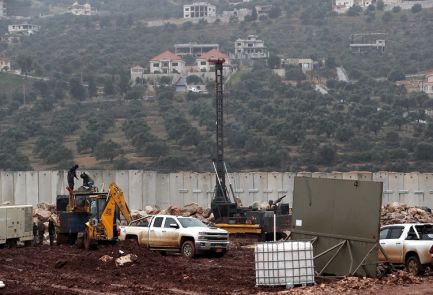
Archive for December 23, 2018

Israeli-Russian relations strained following U.S. withdrawal from Syria 

December 23, 2018

Source: Israeli-Russian relations strained following U.S. withdrawal from Syria – Israel News – Jerusalem Post

After airing out their disagreements at the U.N., Jerusalem and Moscow have signaled a willingness to move beyond crisis over beyond downed Russian plane.

BY TERRANCE J. MINTNER & TARA KAVALER/THE MEDIA LINE
 DECEMBER 22, 2018 18:39
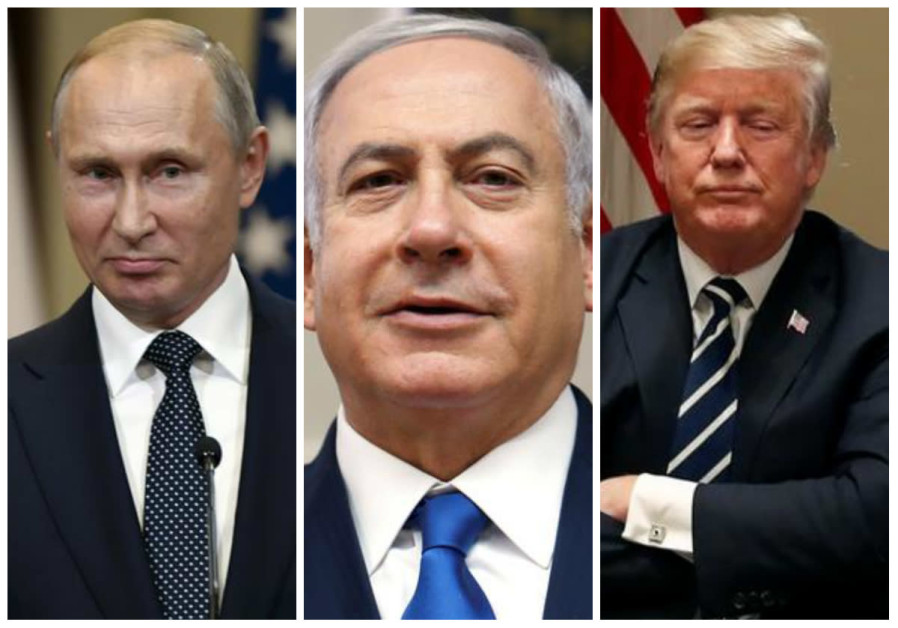
Putin (L), Netanyahu (C) and Trump (R)

Following United States President Donald Trump’s announcement that Washington will immediately begin withdrawing troops from Syria, analysts believe it is more important than ever for Israel to mend strained ties with Russia.

Israeli-Russian relations deteriorated sharply in the aftermath of the downing in September of a Russian plane in Syria that came amid an Israeli airstrike targeting Iranian assets. Though the aircraft was shot down by Syrian-manned air defenses—killing all 15 people on board—Moscow blamed Israel for failing to issue adequate advance warning before it attacked targets close to a Russian military base. Israel has denied the charge.

There have been several attempts at a rapprochement, including last week when Israel sent a military delegation to Moscow to brief Russian officials on Operation Northern Shield, launched by the Israeli army to uncover and destroy Hezbollah attack tunnels stretching into Israel.
On Wednesday, Moscow sent a special delegation to Israel to help ease tensions, potentially signaling a willingness by the Kremlin to move beyond the dispute over the downed plane.
Before the delegation’s arrival, however, the discord played out at the United Nations, with both governments taking contrasting positions on resolutions in the General Assembly. For its part, Russia helped defeat a United States-sponsored resolution that would have condemned Hamas, the Palestinian terrorist group that rules the Gaza Strip.
The Kremlin also invited Hamas leader Ismail Haniyeh to visit Moscow later this month despite opposition by Jerusalem.
Israel seemingly retaliated diplomatically when earlier this week it voted for a UNGA resolution that denounced Russia’s “progressive militarization of Crimea.” The measure also called on Moscow to “end its temporary occupation of Ukraine’s territory.” Up until that point, Israel had notably been silent on the Russia-Ukraine crisis.
“We are still figuring out the [Israeli-Russian] relationship after the downing of the Russian aircraft,” Zvi Magen, a former Israeli ambassador to Russia and the Ukraine, told The Media Line.
“The Russians tried to change the rules of the game [by courting Haniyeh] and the Israelis didn’t like that. Russian officials, on the other hand, wanted to teach Israel a lesson that they will assert their own independent interests.
“Generally speaking,” he elaborated, “Israel’s relations with Russia are very tense. It is a problematic country that exerts a huge influence in the region. It is in Israel’s security interest to maintain good bilateral relations.”
With respect to President Trump’s decision to pull US troops out of Syria, Magen expressed skepticism the move will actually be carried out. “This could just be a version of ‘fake news’ because we are talking about the potential withdrawal of only 2,000 American soldiers. The U.S.’ main military capabilities would still exist as it maintains naval fleets and air force bases around Syria. Therefore, it can quickly intervene in any conflict.
“For Israel, this is not a big blow because it has learned to manage its own problems,” he concluded.
By contrast, Dr. Samuel Barnai, an expert on the history and politics of East-Central Europe at the Hebrew University in Jerusalem, believes that the current tensions over Syria can have a long-term impact on Israel’s ties to Russia.
“The Russians supply the Assad regime mainly with air support while Iran and its various Shiite militias provide boots on the ground. This partnership forces Israel to reckon with Moscow’s military presence in the region but makes it difficult for Jerusalem to maintain a good relationship with Russia,” he noted.
“It is a question of life and death for Israel because it can’t allow Iran-backed proxies to become stronger. It can cooperate with the Russians on certain matters, but not when it comes to the terrorist group’s hostile stance toward Israel.”
(Tara Kavaler, an intern in The Media Line’s Press and Policy Student Program, contributed to this report)


Turkey reportedly reinforcing Syrian border after U.S. exit from country 

December 23, 2018

Source: Turkey reportedly reinforcing Syrian border after U.S. exit from country – Middle East – Jerusalem Post

Erdogan said on Friday that Turkey will take over the fight against Islamic State militants in Syria as the United States withdraws its troops.

BY REUTERS
 DECEMBER 23, 2018 14:03
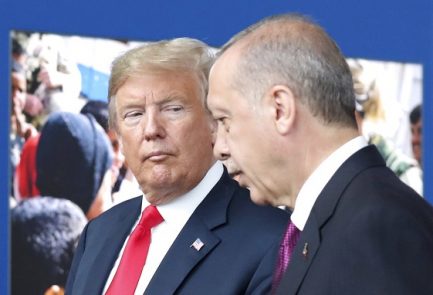
U.S. PRESIDENT Donald Trump speaks with Turkish President Recep Tayyip Erdogan in July 2018

ISTANBUL – Turkey is sending reinforcements to its border with Syria, Demiroren News Agency (DHA) reported on Sunday, adding that some 100 vehicles including mounted pickup trucks and weaponry had made their way to the area.

The heightened military activity comes days after President Tayyip Erdogan said Turkey would postpone a planned military operation on the Kurdish YPG militia in northern Syria after the United States decided to withdraw from Syria.

HA said the Turkish convoy, headed toward the border district of Kilis, located in the southern province of Hatay, included tanks, howitzers, machine guns and buses carrying commandos.

Part of the military equipment and personnel are to be positioned in posts along the border while some had crossed into Syria via the district of Elbeyli, DHA said.

Elbeyli is located 45 kilometers (27.96 miles) from the northern Syrian town of Manbij, which has been a major flashpoint between Ankara and Washington. In June, the NATO allies reached an agreement that would see the YPG ousted from the area but Turkey has complained the roadmap has been delayed.

Reuters could not independently verify the reason for the reinforcements and Turkish officials were not immediately available for comment.

Erdogan said on Friday that Turkey will take over the fight against Islamic State militants in Syria as the United States withdraws its troops, adding that the planned operation would target the YPG, as well as the Islamic State.

Ankara considers the US-backed YPG militia a terrorist organization and an extension of the Kurdistan Workers Party (PKK), which has waged an insurgency in Turkey since the 1980s.

Turkey has carried out two operations in Syria, dubbed “Euphrates Shield” and “Olive Branch,” against the YPG and the Islamic State in northern Syria.


Operation Northern Shield’s goals – and Trump’s disservice to Israel 

December 23, 2018

Source: Operation Northern Shield’s goals – and Trump’s disservice to Israel – Arab-Israeli Conflict – Jerusalem Post

Hezbollah had a long history of digging underground bunkers and tunnels as was evident during the 2006 Lebanese war between Israel and Hezbollah.

BY YOSSI MELMAN
 DECEMBER 23, 2018 04:56
Operation Northern Shield’s goals – and Trump’s disservice to Israel

The dramatic and surprising announcement by Israel in early December that it had exposed a secret plan to dig invasive tunnels on its Lebanese border gave the impression that another war with Hezbollah is imminent. However, all indications are that we are not on the verge of a new round of violence, despite the IDF’s declaration that it had launched Operation Northern Shield.
Israeli intelligence managed once again to penetrate deeply into the Iranian-backed Hezbollah movement and obtain via technological sources the exact locations of the tunnels along the 130 kilometer-long northern border.

It was revealed that Hezbollah excavated a few tunnels that infiltrated Israel. Two tunnels had already been discovered as of press time. The first tunnel – 25 meters deep, 200-meters long, including 40 meters inside Israeli territory near Metula, was fully exposed – and the IDF Engineering Corps blocked it with heavy cement. In the coming weeks, more tunnels are expected to be discovered and cemented.

Hezbollah had a long history of digging underground bunkers and tunnels as was evident during the 2006 Lebanese war between Israel and Hezbollah. But they served for defensive purposes – moving troops, communication and observation – to repel the Israeli invasion. This time however, the tunnels were intended for offensive objectives.

Hezbollah dug the tunnels to use them in the first phase of a future war, in which its elite fighters and motorcycles would be stealthily transported into Israel to lay ambushes, kidnap soldiers and civilians, and, if possible, take over Israeli villages.

This military doctrine was developed as a lesson learned from the relatively successful use of attack tunnels by Hamas on the Israel-Gaza border. Though most of Hamas’s tunnels were discovered and destroyed, they have undermined Israel’s sense of superiority and have left a psychological impact that still resonates in the consciousness of the Israeli public, the military, and the government led by Prime Minister Benjamin Netanyahu.

The Hamas tunnels were built as the result of lessons learned from North Korea and Vietnam, with Iranian engineering and financial support.

The close cooperation between Hamas and Hezbollah coordinated by Iran have led to the cross-fertilization of ideas and sharing of experience and know-how.

Yet it was easier for Hamas to dig its tunnels on soft, sandy desert soil while Hezbollah had to struggle with much more difficult, hard rocky mountain terrain.

The exposure of the northern tunnels has not only dealt an important military blow to Hezbollah’s secret plans, but also inflicted a heavy psychological blow to the Shi’ite organization and its leaders. Operation Northern Shield shows how deeply Israeli military intelligence has managed to penetrate Hezbollah and glean accurate information from one of its best-guarded secrets.

Hezbollah will now have to once again start a soul-searching and self-damaging process of asking itself what went wrong, how the enemy (Israel) obtained information about the tunnels and whether there are traitors and spies among its own ranks. Another question that should be asked is whether the Mossad was involved, as was previously published.

The discovery of the tunnels – as impressive an operation as it was – doesn’t solve Israeli problems vis-à-vis Hezbollah. The main strategic threat challenging Israel, if a new round of hostilities breaks out, is the unprecedented arsenal of rockets and missiles held by the Lebanese Shi’ite movement. It is estimated that Hezbollah has acquired 120,000 to 150,000 rockets and missiles capable of carrying up to 500 kilograms of explosives and reaching almost any place in Israel – including its air fields, army bases, power stations and the Dimona nuclear reactor. In that sense, Hezbollah has one of the largest missile stockpiles in the world, more than most armies, the IDF included.

Israeli war games and simulations have shown that hundreds of Israelis would be killed in the next war, which would inflict heavy damage to buildings, and rural communities near the border would have to be evacuated.

Another major headache for Israel is a new stage of the joint Iran-Hezbollah missile project. With the assistance of Iranian expertise and experts, Hezbollah is seeking to improve the accuracy and guidance systems of its long-range missiles.

This systematic effort is the main explanation for the Israel Air Force campaign in the last three years to bomb, sabotage and disrupt the supply lines from Iran via Syria to Hezbollah. Israeli warplanes ahave ttacked more than 200 times in Syria over the last year.

But now, due to Russian pressure, the freedom of IAF operations in Syria and the number of sorties have been drastically reduced.

At the same time, Iran has changed its supply lines to Hezbollah. It is flying the new guidance systems in civilian planes directly to Lebanon without a stopover and transition in Syria.

Israel finds itself challenged. Its dilemma is evident. It can’t allow itself to down civilian airliners, which would be a violation of international norms and laws. If it bombs the missile factories, warehouses and launching sites in Lebanon, Hezbollah could retaliate with all its rocket and missile force, and an all-out war would break out.

Both sides, as well as Iran and the US – which has troops in Syria and has imposed sanctions on Iran – do not want a new war in the Middle East. Thus it seems that despite the inflammatory rhetoric and the drama surrounding the tunnels, mutual deterrence among all parties involved is still maintained.

THE BIBLE tells us the story of Balaam and Balak, which is interpreted as a fable, about how the best intentions of blessing and offering praise backfire into a curse. This is exactly how President Donald Trump’s most recent reference to Israel should be interpreted.

In his interview with The Washington Post, Trump said that the only reason that US troops are in the Middle East is not because of oil but because of Israel.

“Oil is becoming less and less of a reason because we’re producing more oil now than we’ve ever produced,” Trump said. “So, you know, all of a sudden it gets to a point where you don’t have to stay there. One reason to stay is Israel.”

As far as oil is concerned, Trump is right. US dependence on Middle East oil has decreased in the last decade. Ostensibly, Israel should be satisfied with Trump’s words. For the last year, Israeli officials, led by Prime Minister Benjamin Netanyahu, and its military and intelligence chiefs worked hard to persuade the administration not to withdraw US troops from Syria.

Israel has a huge stake in American servicemen remaining in the Middle East in general and Syria in particular. There are currently around 2,000 US soldiers in Syria, most of them belonging to special forces. They are deployed to counter the Russian incursion into the region and repel Iranian hegemonic aspirations. Though publicly Israeli leaders will say nothing that may be interpreted as criticism of Trump, privately they express uneasiness about the president’s comments.

Over decades, American and Israeli leaders have established a solid strategic alliance, which is based on mutual interests, shared values and cultural ties.

This alliance enables Israel to benefit from a generous 4.3 billion dollars in financial aid annually as well as strong diplomatic support. The US protects Israel at international forums, especially at the United Nations against resolutions to condemn and occasionally sanction Israel for its continued occupation of the Palestinian West Bank.

Israel purchases from the US its most advanced state-of-the-art weaponry, above all warplanes and sophisticated intelligence equipment. The two countries conduct joint military exercises and share and exchange intelligence including in the most sensitive operations.

The assassination in Damascus in 2008 of Imad Mughniyah is a case in point. The Washington Post reported that Mughniyah, the “chief of staff” of Lebanon’s Hezbollah was killed by a car bomb, in a joint Mossad-CIA operation. But throughout the years, successive Israeli governments, Netanyahu’s included, have emphasized that Israel can and will defend itself if necessary. They have stressed time and again that the don’t need and don’t want US troops to fight shoulder to shoulder with Israeli soldiers and spill their blood in defense of the Jewish state.

Trump is adored by the right-wing Netanyahu government. He is considered as the most pro-Israel US president in history, and some of Netanyahu’s supporters have elevated him to the status of Israel’s savior. He has moved the US Embassy to Jerusalem and cut aid to the Palestinian Authority but his long-awaited “deal of the century” between Israel and the Palestinians is still pending.

Practically he has given Israel a license to do whatever it wants and get away with it. But now, in his clumsy way and with his limited vocabulary, Trump’s words have set a trap for Israel. If US troops are killed in the Middle East, Israel’s rivals and bashers as well as right-wing antisemites will hold Israel responsible. Comments in this direction have already been written and voiced in social media.

Had Trump been more careful in choosing his words, he should have justified his decision to leave the US military in the region with a different kind of explanation.

National Security Adviser John Bolton stated in September that American forces would remain in Syria “as long as Iranian troops are outside Iranian borders, and that includes Iranian proxies and militias.” James Jeffrey, the US envoy to Syria, said that same month Washington was “going to be focusing on the long-range Iranian presence there and ways to get that out while we’re working on the Daesh problem,” referring to the Arabic acronym for ISIS. On the ground, the US-led coalition has already used deadly force in several high-profile encounters with Iranian-backed or pro-regime forces.

It would have been better for Israel, which Trump so strongly supports, and it would have been more accurate to say that the reason the president changed his view to recall US troops back home was because he wants to rein in Iran and that he is doing this to support all US allies in the region, and not only Israel.

By not explaining his policy’s rationale and even twisting it, notwithstanding his good intentions, the American president has done a disservice to Israeli national interests.

Yossi Melman blogs at http://www.yossimelman.com and tweets @Yossi_melman


With U.S. policy on Syria in turmoil, will ISIS win? 

December 23, 2018

Source: With U.S. policy on Syria in turmoil, will ISIS win? – Middle East – Jerusalem Post

McGurk’s role as anti-ISIS envoy came with some political baggage, particularly with regards to Iraq where he did not jell with the Trump administration’s view on the Iranian threat.

BY SETH J. FRANTZMAN
 DECEMBER 23, 2018 12:33
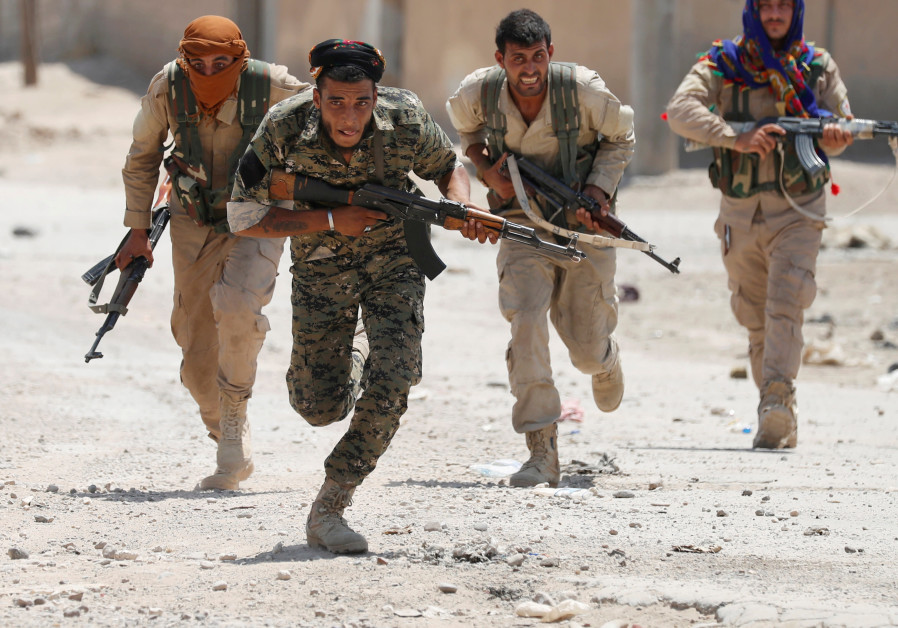
Kurdish fighters from the People's Protection Units (YPG) run across a street in Raqqa, Syria, July

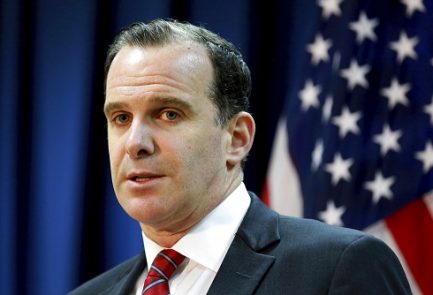
Brett McGurk, the US anti-ISIS envoy who was key to building the 74 nation coalition against ISIS, resigned on Saturday, casting doubt on the coalition’s viability and effectiveness.

McGurk was appointed under the Obama administration in 2015 and was not only a key aspect to the creation of the largest military coalition in history, but also played a major role in the politics of the Middle East, meeting frequently with officials and local leaders in Syria, Iraq and the Gulf.According to reports, McGurk was shocked by US President Donald Trump’s decision on December 19 to withdraw from Syria and thus, after Secretary of Defense James Mattis resigned, McGurk also decided it was time to exit.

He was supposed to leave in February 2019, but he pushed up the decision. “The recent decision by the president came as a shock and was a complete reversal of policy,” he wrote in an email reported by the Associated Press. It leaves US coalition partners confused and bewildered, he noted.

McGurk took pride in the work the anti-ISIS coalition had accomplished, particularly in Syria. His pinned Tweet shows him visiting coalition-supported projects in Raqqa, including schools that he says helped “thousands of children traumatized by ISIS.”
He had recently welcomed a $57 million contribution from the EU that was going to help Mosul recovery projects. Much of the work McGurk concentrated on in the last year, since the coalition liberated the ISIS capital in Raqqa, was “stabilization” – working to invest in local communities in order to prevent ISIS from returning. On December 12 he welcomed support from Denmark for stabilization programs.

McGurk was an Iraq policy expert who had served as the White House senior director for Iraq issues in 2008 and had dealt with issues then that would later plague Iraq during the war against ISIS. For instance, during his time in the White House, he was aware of the Iranian encroachment in Iraq and its attempts to confront the US; he knew Adil Abdul Mahdi, the current Iraqi prime minister, when he was still vice president; and he dealt with the Kurdish region and was aware of Turkey’s concerns, as well as Syria’s role, in allowing jihadists to transit into Iraq via the Euphrates valley.

McGurk comes across as taciturn in State Department cables from 2008 and 2009, rarely expressing an opinion but clearly abreast of the Iraqi political playing field. Many of these players have not changed 10 years later, whether it is the Kurdish political leadership in the north, or Iranian attempt to influence politics, or the lack of security along the Syrian border.

McGurk’s role as anti-ISIS envoy, therefore, came with some political baggage, particularly with regards to Iraq, where he did not jell with the Trump administration’s view on the Iranian threat. However, McGurk did play a key role in 2017 of reviving Iraq-Saudi Arabia relations. This was important to the Trump administration which was working closely with the Saudis.

The anti-ISIS envoy was passionate about his work, particularly by continuing to remember the ISIS genocide of the Yazidis in 2014, which had compelled Obama to act. The Obama administration had left Iraq in 2011 and McGurk had played a role in that, hoping Iraq’s future would be stable. Instead, Iraq was ripped apart by an ISIS offensive in the summer of 2014 that destroyed Iraqi army divisions, captured around 2,000 vehicles – most of them supplied by the US to Iraq – and captured a third of Iraq.

McGurk said in early December that the US would remain committed to the victims of ISIS genocide and crimes against humanity. He praised Trump for signing into law the Iraq and Genocide Relief and Accountability Act and he praised the US for being able to lead a coalition that defeated ISIS on the battlefield. McGurk pointed out that in 2014 ISIS had controlled territory the size of the United Kingdom and ruled over eight million people. It even was making revenues of $1 billion a year, according to US reports. “Today ISIS is down to its final town in Syria and Iraq,” he wrote then.

For Trump the ISIS campaign was a success. The group was “largely defeated,” he tweeted on Saturday, “We’re coming home.”

Trump claimed not to know McGurk after he resigned. He noted that he was appointed by Obama in 2015 and “was supposed to leave in February but he just resigned prior to leaving. Grandstander? The Fake News is making such a big deal about this nothing event.”

McGurk’s leaving will likely spook US coalition partners, who are already concerned about the abrupt change in US policy and by the Mattis departure.

Mattis said he would stay on until February to smooth the transition and also because US troops should be out of Syria by then. But US coalition partners, such as the UK and France who both have troops in eastern Syria, are left with holding the line now and they don’t know what to do.

Paris has hosted a delegation from eastern Syria to discuss their next move, according to reports. The UK, dealing with the Brexit crisis, will be faced with tough choices.

The rest of the coalition, even though it contains 74 countries and several international groupings, has focused primarily on Iraq. In fact the coalition, despite its anti-ISIS posture, is not really involved in fighting ISIS globally. There are no coalition troops, for instance, helping Egypt in Sinai confront ISIS.

But US leadership was the glue that held this massive group of countries together.

Trump wants these countries to do more and doesn’t think the US should be a global policeman. However, the US was the country that led the efforts to create this coalition. If Trump didn’t know who McGurk was and hadn’t met with him, that indicates a wider policy issue in Washington of not being committed to the coalition or the key leaders of it. McGurk would have left anyway in February, but the question now is whether Trump will find a successor to him that shares Trump’s worldview, or whether the coalition will be left to wither.


Trump decision to pull troops from Syria puts pro-Israel groups in a bind 

December 23, 2018

Source: Trump decision to pull troops from Syria puts pro-Israel groups in a bind | The Times of Israel

Organizations that once applauded the president for moving the US embassy and leaving the Iran deal are now navigating their first major disagreement with the administration
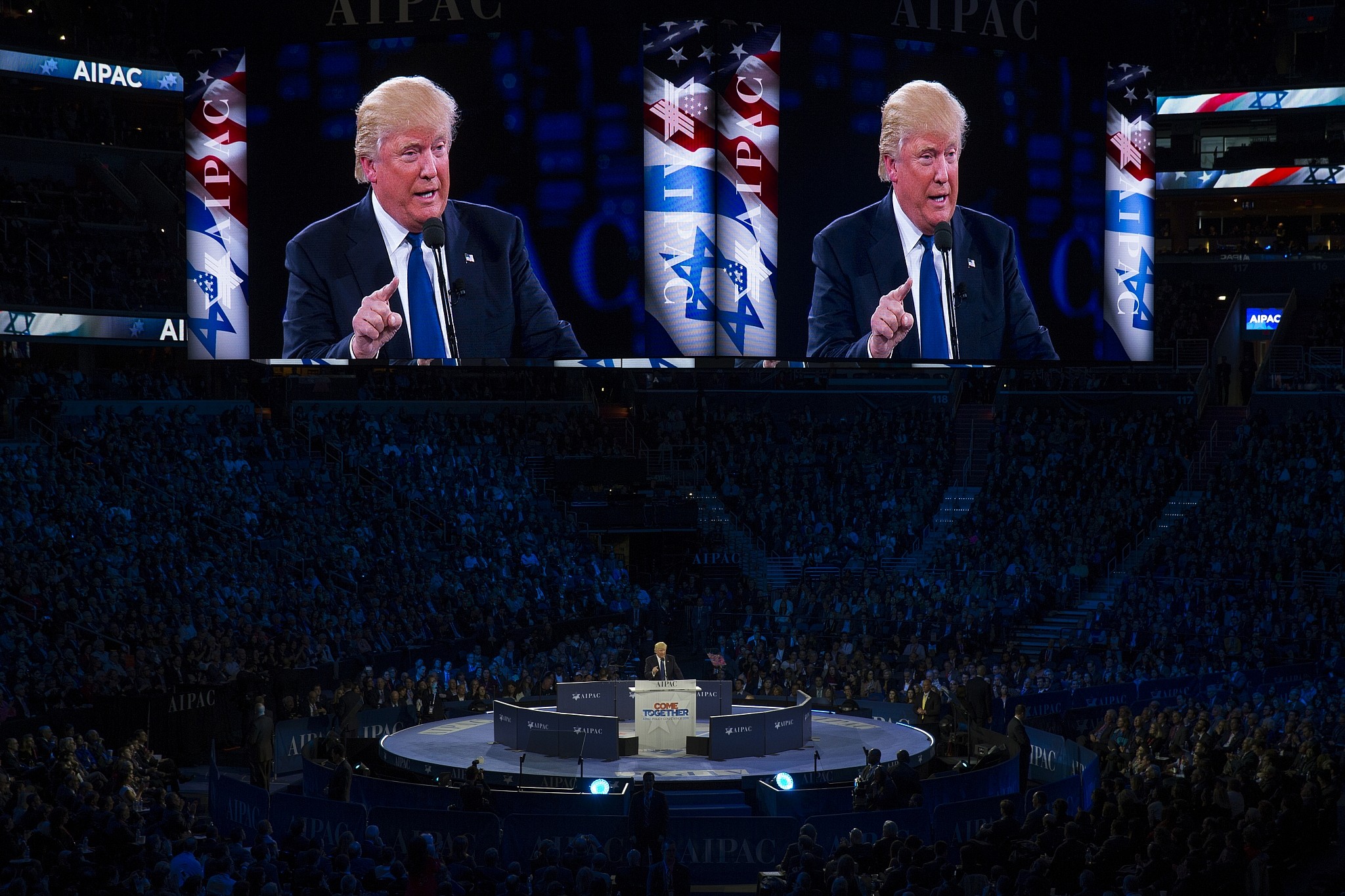
Donald Trump speaks at the 2016 American Israel Public Affairs Committee (AIPAC) Policy Conference at the Verizon Center, March 21, 2016, in Washington. (AP/Evan Vucci)

WASHINGTON — US President Donald Trump’s decision to pull American troops out of Syria has created a serious policy dispute with Israel, potentially complicating his relationship with the mainstream US pro-Israel community for the first time since he took office.

The withdrawal of some 2,000 soldiers from Syria will likely make it more difficult for Israel to fight Iranian efforts to entrench itself in the war-torn country and expand its influence in the region.

Much like Israel’s government, which is faced with trying to preserve its tight bond with the Trump administration despite reports of Jerusalem feeling “betrayed,” the pro-Israel community in the US is also having to find a way to navigate between backing Trump and backing Israel.

“I think the relationship between the Trump administration and most pro-Israel groups has been complicated by this,” Alan Dershowitz, a former Harvard Law professor and Israel advocate, told The Times of Israel.

Major pro-Israel policy groups have mostly avoided clashing with the Trump White House, and their policy positions on Iran and Israel have general been in lockstep with the administration.

But a bland statement released by the American Israel Public Affairs Committee (AIPAC) on Thursday appeared to indicate its disagreement with the White House over the Syria decision.

“It is imperative that Iran and Hezbollah are prevented from exploiting this development to further destabilize the region and threaten our allies,” the powerful lobby said.

“The administration should work with our regional allies and take steps to counter the mounting aggression of Iran and its terrorist proxy Hezbollah. Iran must not be allowed to have a permanent military presence in Syria, which is counter to US interests and threatens the peace and security of the region.”

The American Jewish Committee was even more direct in criticizing the pullout.

AJC

@AJCGlobal

Many of the groups that have been supporters of Trump’s Israel and Iran policies — StandWithUs, the Israeli-American Council, the Republican Jewish Coalition — have not commented publicly since the president announced he was removing America’s military presence from Syria.

Israel has repeatedly warned in recent years that Iran is seeking to establish a military presence in Syria, where it is fighting alongside Russia and its Lebanese proxy Hezbollah on behalf of Syrian President Bashar Assad.

For Israel, the pullout leaves it without a staunch ally in the fight against Iran in Syria and also potentially opens the door for Tehran to create a so-called “land bridge” from Iran, through Iraq and Syria, into Lebanon and to the Mediterranean Sea.

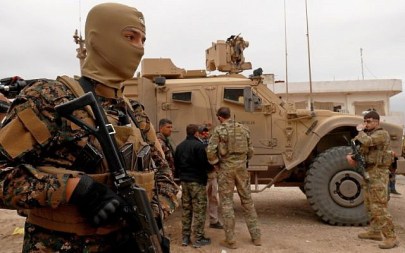
US soldiers gather for a brief during a combined joint patrol rehearsal in Manbij, Syria, November 7, 2018. (US Army photo by Spc. Zoe Garbarino via AP)

While most American troops have been stationed in northeastern Syria, backing Kurdish fighters, a smaller amount have maintained a presence along the Iraqi border at al-Tanf, frustrating Iranian efforts to move weapons and technology. Diplomatically as well, the retreat is seen as essentially ceding the battle arena to Russia, which has been less amenable about Israeli demands to keep Iran from entrenching itself militarily.

Despite being caught off guard by the planned exit, the Israeli government has avoided criticizing Trump publicly, with Prime Minister Benjamin Netanyahu saying only that he had been informed of the decision and vowing to redouble efforts to keep Iran and allied militias from gaining a foothold in the country.

Privately, though, some Israeli officials have grumbled over the move. An unnamed diplomatic official described the decision as a “blow” to Israel in Hebrew-language media and The New York Times reported Fridaythat Israeli intelligence officials “felt betrayed by the United States withdrawal.”

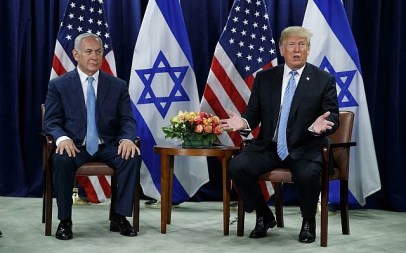
US President Donald Trump (right) and Prime Minister Benjamin Netanyahu meet at the United Nations General Assembly at UN Headquarters, on September 26, 2018. (AP Photo/Evan Vucci)

Throughout Trump’s term in office, he has had exceedingly warm relations with Israel — and a complex relationship with America’s Jewish and pro-Israel community.

While Jewish groups have criticized the president’s failure to unequivocally condemn the Charlottesville white supremacist rioters and his own anti-Semitic supporters, many of them have lauded his decisions to move the US embassy to Jerusalem and withdraw from the Iran nuclear deal.

Trump and his supporters have portrayed the Syria decision as a realization of part of his isolationist America First policy. In the past, Israel has usually gotten a pass: while Trump has complained about military aid to many countries, he has boasted about the billions Israel receives every year.

Now he has made clear that in making sure America is not used as the world’s policeman, Israel may be left in the same lurch as everyone else.

Alan Dershowitz speaks at an event at the David Intercontinental Hotel in Tel Aviv on December 11, 2016. (Miriam Alster/Flash90)

And that worries even some staunch backers.

Dershowitz, who has defended Trump throughout his term, said the president’s decision had left him “very concerned.”

“I think it creates a vacuum that will be filled by Iran and Russia,” he said Saturday. “It’s something that one has to be very concerned about.  Obama created a vacuum there as well when he didn’t carry out his promise on the chemical weapons, and that opened up the door for the Russians to come in. I would hope that mistake would not be repeated.”


Minister: Trump’s Syria pullout ‘doesn’t help’ Israel, emboldens Erdogan 

December 23, 2018

Source: Minister: Trump’s Syria pullout ‘doesn’t help’ Israel, emboldens Erdogan | The Times of Israel

Justice Minister Ayelet Shaked says surprise US withdrawal ‘certainly not a good thing,’ but vows Israel ‘will still know how to defend ourselves’

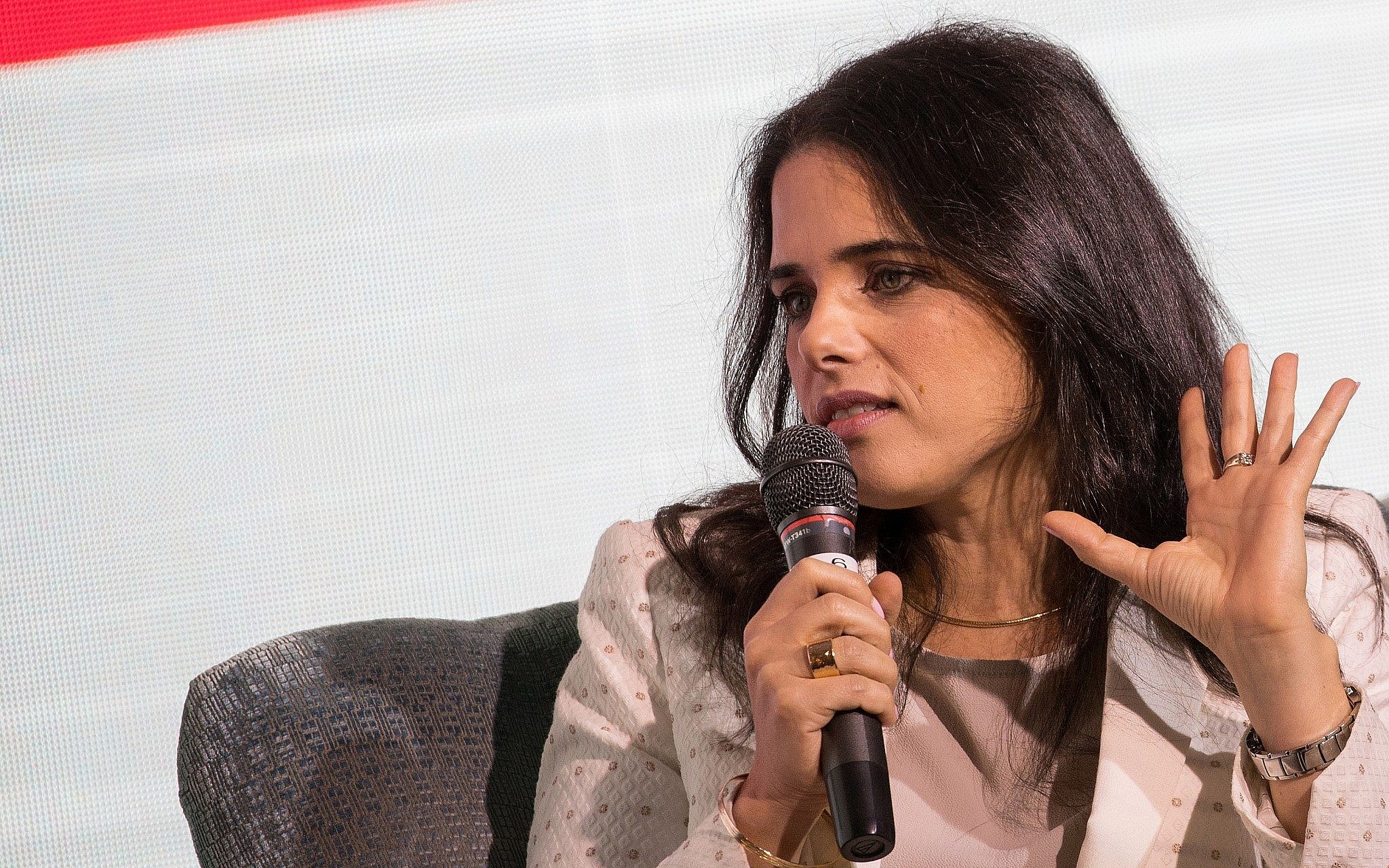
Justice Minister Ayelet Shaked in Jerusalem on October 15, 2018. (Yonatan Sindel/Flash90)

Justice Minister Ayelet Shaked in Jerusalem on October 15, 2018. (Yonatan Sindel/Flash90)

In the latest expression of Israel’s concern over US President Donald Trump’s surprise announcement that he was pulling US troops from Syria, Justice Minister Ayelet Shaked on Sunday warned the move “doesn’t help us,” but insisted Israel would still be capable of defending itself.

Shaked’s pro-settlement Jewish Home party has been openly supportive of Trump, especially after his recognition of Jerusalem as Israel’s capital last December and subsequent move of the US embassy to the capital in May.

In an interview Sunday morning on Army Radio, she cautioned that the US withdrawal strengthened the “anti-Semitic war criminal” Recep Tayyip Erdogan of Turkey, but tried to tamp down concerns that it would hurt Israel’s security.

“It’s certainly not a good thing,” she said of Trump’s decision, but added, “The president of the United States, Donald Trump, is a great friend of Israel, and this administration is, I think, the friendliest administration there’s ever been.”

She warned: “This step doesn’t help Israel. It strengthens Erdogan, an anti-Semitic war criminal who carries out massacres of the Kurdish people, and does so with a wink from the international community.”

In this file from November 4, 2018, US forces patrol the Kurdish-held town of Al-Darbasiyah in northeastern Syria. (Delil Souleiman/AFP)

Israel, she insisted, “will still know how to defend ourselves after this withdrawal, if it takes place. It’s true this opens more avenues for passage between Iran and Syria, but just as we know how to defend ourselves now, we’ll know how to deal with the new situation.”

Trump’s announcement appeared to upend US policy in the region, leading to the angry resignations of the US defense secretary, Jim Mattis, and the administration’s coordinator of anti-Islamic State efforts, State Department official Brett McGurk.

Trump’s declaration was also met with profound concern in Israel, with the US presence in Syria seen as a barrier to Iran’s military efforts there.

Channel 10 news reported Wednesday that Prime Minister Benjamin Netanyahu tried in vain to persuade Trump to change his mind, and that there was tremendous “disappointment” in Jerusalem over the pullout, which is regarded as a victory for Russia, Iran and Hezbollah.

The TV report described the US move as “a slap in the face” for Israel, noting that the US presence in Syria was “the only bargaining chip” in Israel’s efforts to persuade Russia to prevent Iran deepening its entrenchment in Syria.

Though most top Israeli government officials have publicly refrained from criticizing the move, Channel 10 quoted a senior diplomatic official on Friday harshly criticizing Trump’s decision.

“Trump threw us under the wheels of the semi-truck of the Russian army, the one that transfers weapons to Syria and Hezbollah,” the unnamed official said.

The pullout came as a surprise to US commanders in the field, according to media reports, and contradicted the policy statements of top administration officials. Earlier this year, Trump’s National Security Adviser John Bolton vowed that the US would remain in Syria as long as Iranian forces were deployed there.

Just last week McGurk, a Barack Obama appointee whom Trump kept on, said “nobody is declaring a mission accomplished” in the battle against IS — just days before the president announced victory against the jihadist movement.

Trump on Saturday said that the jihadist group “is largely defeated.”

US Marine Corps tactical vehicles are seen driving along a road near the town of Tal Baydar in the countryside of Syria’s northeastern Hasakeh province on December 21, 2018. (Delil Souleiman/AFP)

“When I became President, ISIS was going wild,” the US president tweeted. “Now ISIS is largely defeated and other local countries, including Turkey, should be able to easily take care of whatever remains. We’re coming home!”

According to reports, Trump appears to have made the decision to withdraw after a December 14 call with Erdogan in which he is said to have asked the Turkish president to finish up the fight against IS.

Turkey’s forces in Syria have also been battling US-allied Kurdish forces in a bid to prevent the formation of a Kurdish-dominated enclave on the Turkish border.

After McGurk announced his resignation, Trump took aim at the diplomat on Twitter, referring to him as a “grandstander” who was quitting just before his time was up.

McGurk, 45, was set to leave his position in February, but reportedly felt he could no longer continue in the job after Trump’s declaration and on Friday evening informed Secretary of State Mike Pompeo of his intention to wrap up at year’s end.

His conclusion mirrored that of Mattis, who was seen as a voice of moderation in the mercurial Trump White House and quit after telling the president he could not go along with the Syria decision.

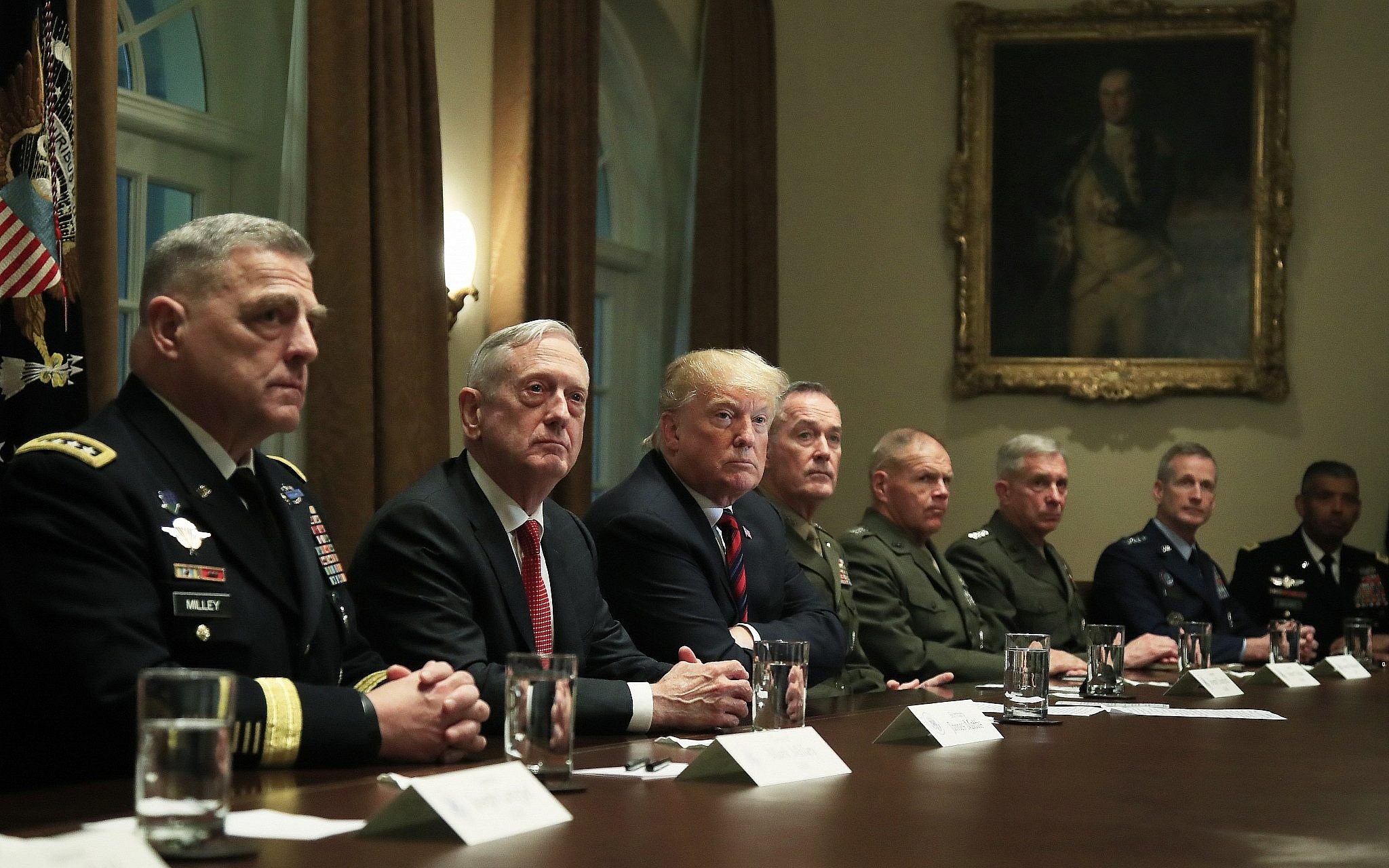
US President Donald Trump with, from left, Chief of Staff of the Army Gen. Mark Milley, Defense Secretary Jim Mattis, Chairman of the Joint Chiefs of Staff Gen. Joseph Dunford and Marine Corps Commandant Gen. Robert Neller, listen to questions from members of the media during a briefing with senior military leaders in the Cabinet Room at the White House on October 23, 2018. (AP Photo/Manuel Balce Ceneta)

The troop pullout will leave thousands of Kurdish fighters — which the Pentagon spent years training and arming against IS — vulnerable to Turkish attack.

On Saturday, a senior Kurdish official called on the United States to prevent a potential Turkish offensive against areas in northern Syria inhabited by Kurds, calling it America’s “duty to prevent any attack and to put an end to Turkish threats.”

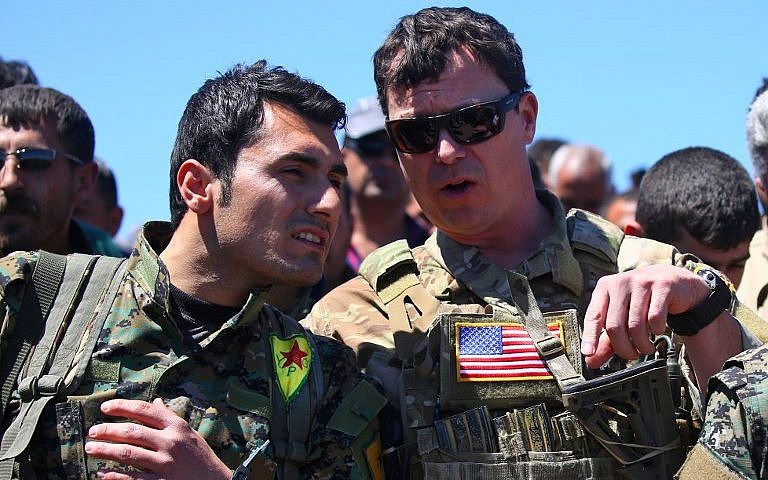
A file photo taken on April 25, 2017, shows a US military officer (R) speaking with a fighter from the Kurdish People’s Protection Units (YPG) at the site of Turkish airstrikes near the northeastern Syrian Kurdish town of Derik, known as al-Malikiyah in Arabic. (Delil Souleiman/AFP)

The US has for years supported the Kurdish-led Syrian Democratic Forces (SDF) in the fight against IS in Syria.

Aldar Khalil, a key player in establishing Syria’s semi-autonomous Kurdish region in 2013, said the US and its partners “must honor their commitments.”

Heavyweight adviser Mattis — a decorated Marine general who was often referred to as “the last adult in the room” — made clear in his resignation letter that pulling out of Syria crossed the line.

The departures of Mattis and now McGurk follow those of national security advisor H.R. McMaster and White House chief of staff John Kelly.


IDF chief touts secret fight against Iran in Syria, confronts Gaza criticism 

December 23, 2018

Source: IDF chief touts secret fight against Iran in Syria, confronts Gaza criticism | The Times of Israel

Outgoing army commander Eisenkot admits failure in giving residents of southern Israel ‘feeling of security,’ but says people don’t see most of what army does

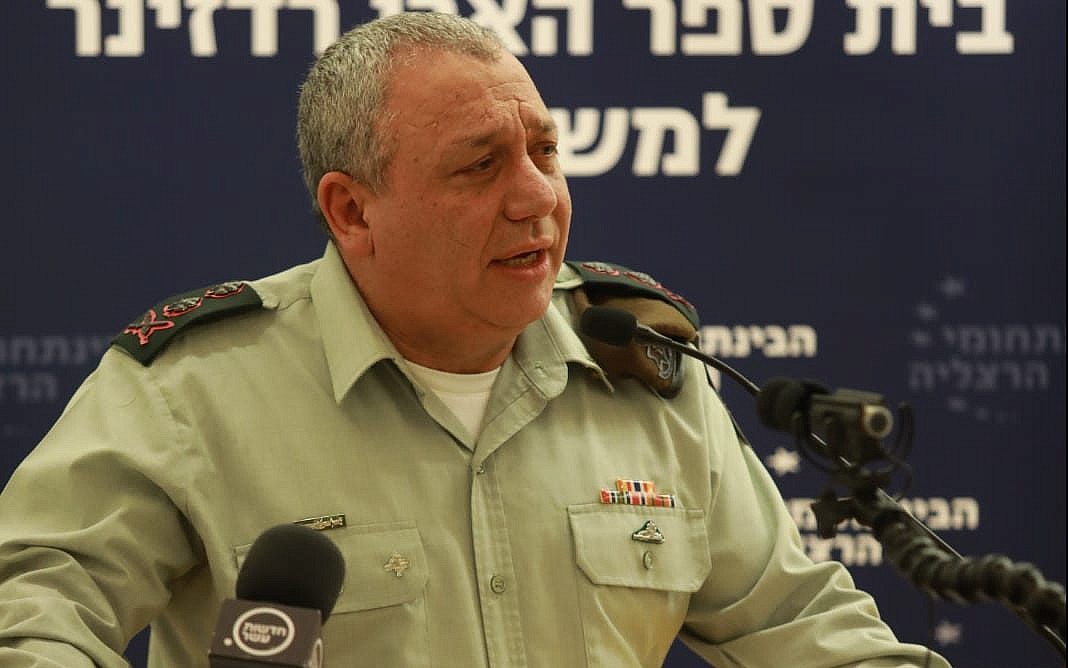
IDF Chief of Staff Gadi Eisenkot speaks at a conference in the Interdisciplinary Center in Herzliya on December 23, 2018. (Eli Dassa/IDC)

Outgoing IDF chief Lt. Gen. Gadi Eisenkot on Sunday defended the military against recent criticism of insufficient action against Palestinian terrorism in the West Bank and Gaza Strip, saying the army’s primary goal in recent years has been thwarting Iran’s efforts to establish a permanent military presence in Syria.

Eisenkot, who is due to end his four-year tenure as army chief next month, acknowledged that the Israel Defense Forces had failed to give Israelis, especially those living near Gaza, a “feeling of security,” but indicated this was in part due to the fact that the civilian population is unaware of the majority of the military’s activities.

Comparing the threats to Israel to an iceberg, Eisenkot said that the visible dangers — terror attacks in the West Bank, rockets from Gaza — are the smallest, while “what isn’t seen, and which takes much of the army’s effort, is the multi-dimensional threat of Iran.”

While the army chief warned of ongoing threats to Israel, his speech was overall optimistic about the Jewish state’s security situation.

“I think we can look back proudly at how the country has grown and thrived in the past year despite the mighty challenges Israel has faced, from Iran, from Syria, from Lebanon, from the West Bank, from Gaza, from international terror groups,” Eisenkot said.
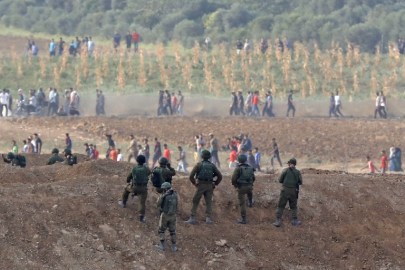
Israeli soldiers taking positions during clashes with Palestinian protesters across the Gaza border on October 19, 2018 near Nahal Oz. (Jack Guez/AFP)

“Israel has great deterrence toward our surroundings, in terms of the way we radiate power and in how we are seen by our enemies. Israel has intelligence superiority, aerial superiority, naval superiority, cybernetic superiority. [The country’s enemies] experience this,” he said.

Without elaborating, Eisenkot also added that Israel played a key role in the fight against the Islamic State terror group.

“The Israeli contribution to the defeat of IS is much greater than what the media and the public eye see. I can say this today. I didn’t think it was right to say that in 2015, 2016 or 2017,” he said.

The army chief made his remarks during a wide-ranging and extensive speech at the Interdisciplinary Center in Herzliya at an annual event honoring former IDF chief of staff Amnon Lipkin-Shahak, who died in 2012.
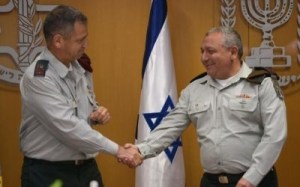
Incoming Deputy Chief of Staff Maj. Gen. Aviv Kochavi shakes hands with IDF Chief of Staff Gadi Eisenkot at a ceremony in the army’s Tel Aviv headquarters on May 11, 2017. (Israel Defense Forces)

As this was his last appearance at the conference as IDF chief, Eisenkot discussed not only the threats currently facing the State of Israel, but also the successes and failures of the military over his four-year tenure, which will end on January 15 when he is replaced by Maj. Gen. Aviv Kochavi.

The IDF commander also briefly discussed the White House’s recent decision to pull its troops from Syria — which analysts fear will allow Iran to more easily spread weapons and fighters throughout the Middle East — saying it was a “significant event,” but not an issue whose importance should be exaggerated.

Last week, US President Donald Trump announced he was withdrawing the approximately 2,000 US troops currently stationed in northeastern Syria. The soldiers had been specifically deployed there to fight the Islamic State terror group, but had also helped block the establishment of an Iranian-controlled land corridor from the Islamic Republic through Iraq and Syria, into Lebanon and to the Mediterranean Sea.
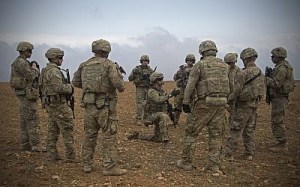
US soldiers gather for a briefing during a combined joint patrol rehearsal in Manbij, Syria, November 7, 2018. (US Army photo by Spc. Zoe Garbarino via AP)

“The American decision to withdraw troops from Syria is a significant event, but there’s no need to overstate it. We’ve been dealing alone with this front for decades,” Eisenkot said.

These were the Israeli general’s first public comments about the American withdrawal decision.

“This was an American decision. The IDF has been working independently this whole time, including during the period of American and Russian presence,” Eisenkot said.

100,000 pro-Iranian troops on Israel’s border

The main concern of the Israeli army over the past four years has been Iran and specifically its efforts to entrench militarily in Syria, where the Islamic Republic has been assisting the country’s dictator Bashar Assad since nearly the start of its civil war in 2011, the army chief said.

Israel has long warned of Iranian efforts to establish a permanent military presence along the Golan border.

According to Eisenkot, this plan was led by the Islamic Revolutionary Guard Corps’ Quds Force. The goal was to create a second front from which Iran could threaten the Jewish state, the first being Lebanon, where Iran’s proxy and client Hezbollah has amassed a huge arsenal of over 100,000 rockets and missiles.

“The Iranian vision for Syria for the day after [the war]… was to build a force of 100,000 ground troops. There are already 20,000 fighters from Hezbollah, Shiite militias from Iraq, Afghanistan and Pakistan, and thousands of advisers from Iran. The desire is to build a combined ground, aerial, naval and intelligence capability, really to construct a line of military positions along the Golan [border],” Eisenkot said.
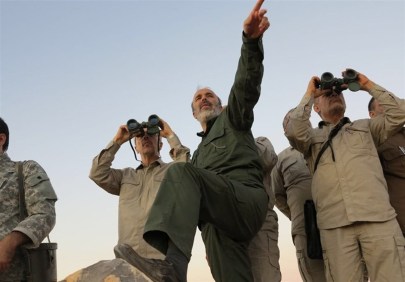
This file photo provided on Friday October 20, 2017 by the government-controlled Syrian Central Military Media shows Iran’s army chief of staff Maj. Gen. Mohammad Bagheri, left, looks into binoculars as he visits with other senior officers from the Iranian military on a front line in the northern province of Aleppo, Syria. (Syrian Central Military Media, via AP)

The army chief said the IDF has been largely successful in preventing this Iranian plan — destroying weapons-manufacturing facilities, pushing pro-Iranian forces from the border and limiting the number of Shiite militia forces inside the country — by conducting “constant” strikes and operations inside Syria.

“Preventing the entrenchment of Iran in Syria was the main focus of the IDF in the past four years. This was the large base of the iceberg, which was hidden from the Israeli public’s eye. We devoted significant resources, intelligence, aerial resources and other mostly covert operations that average Israelis, even those living in the Golan, were unaware of over the years,” the army chief said.

Israel has been destroying arms factories in Syria that “combine Syrian infrastructure, Iranian money and Hezbollah capabilities.”

Eisenkot said Israel has carried out this fight against Iran independently for years, under varying conditions.

He acknowledged that Russia’s military presence in Syria since 2015 — in support of Assad — made the IDF’s operations more complicated.

“It influenced how we used force. But I, as the chief of staff, felt that there was an understanding [with Russia] about the security of the State of Israel,” he said. “Russia allowed us to work toward the benefit of Israel’s interests.”
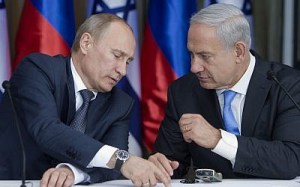
Russian President Vladimir Putin (left) with Prime Minister Benjamin Netanyahu as they prepare to deliver joint statements after a meeting and a lunch in the Israeli leader’s Jerusalem residence, June 25, 2012. (AP/Jim Hollander, Pool)

Ties between Israel and Russia have been strained since a Russian spy plane was shot down by Syrian air defenses during an Israeli airstrike in September, which Moscow officially blamed on the IDF. Russia publicly condemned Israel for the downing of its aircraft and the deaths of 15 men on board, accusing Israeli pilots of deliberately “taking cover” behind the plane — which the IDF has repeatedly denied.

While the military says it continues to operate in Syria as necessary, Israeli officials have indicated that the event soured relations with Russia and limited the IDF’s freedom of operation.

According to Eisenkot, most of the IDF’s activities in Syria were unknown to most Israeli citizens until the beginning of this year. He put the turning point at an event on February 10, in which an F-16 fighter jet was shot down by Syrian air defenses while it was conducting raids against Iranian and Syrian targets.
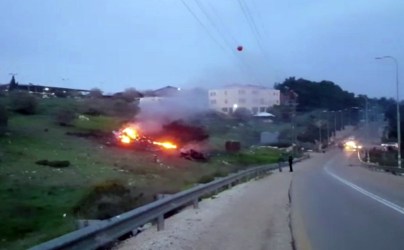
In this image made from video provided by Yehunda Pinto, the wreckage of an Israeli F-16 is seen on fire near Harduf, northern Israel, February 10, 2018. (Yehunda Pinto via AP)

“Unfortunately, the Israeli citizen only became aware of this when an F-16 jet was shot down during one of our attacks against Iranian sites deep inside Syria. Before this, there were hundreds of operations and attacks that benefited Israel, but they were out of sight,” he said.

“We thought it correct not to publicize them, even if it would give us more credit, increase support and raise the national morale a bit,” the army chief said.

Eisenkot said the army’s activities in Syria again came to the fore three months later, as Iran planned to launch approximately 60 missiles at northern Israel in response to the IDF’s regular air raids.

“This effort was spotted,” he said.
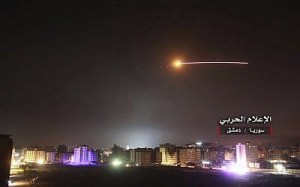
Anti-aircraft fire rises into the sky as Israeli missiles hit air defense positions and other military bases around Damascus, Syria, on May 10, 2018, following what the Israeli military said was an Iranian barrage of rockets against Israeli bases on the Golan Heights. (Syrian Central Military Media, via AP)

“They managed to fire about half of what they planned. And there wasn’t a single hit inside Israel, and that night there were extensive strikes against Iranian and Syrian targets throughout Syria,” Eisenkot said.

The army chief said this campaign against Iran in Syria has been largely successful.

In recent weeks, Israeli defense officials have said that Iran and Hezbollah have also failed to mass produce precision guided missiles in Lebanon, as they had planned to do.

Eisenkot indicated that these aspects of the army’s activities are unknown or ignored, leading to feelings of inaction.

“There’s a gap between what’s in the public eye and the work [the IDF is doing],” he said.

No ‘feeling of security’

In southern Israel, since late March, there have been regular clashes along the Gaza border directed by the ruling Hamas terror group; thousands of acres of land in southern Israel burned by Palestinians in the Strip launching airborne incendiary devices; and occasional outbreaks of violence with hundreds of rockets and mortar shells launched at Israeli communities surrounding the coastal enclave.

Despite these attacks, the Israeli government refrained from launching a large-scale campaign against Hamas. Eisenkot defended the decision, saying he believed Hamas had failed to achieve its goals, but acknowledged that the choice was “arguable” and did not come without a cost.

“I am aware of the fact that we as a military did not succeed in providing a good feeling of security in the past eight, nine months. I think we provided security under very, very complicated conditions. But the feeling of security was harmed with fairly primitive means by our enemy,” he said.
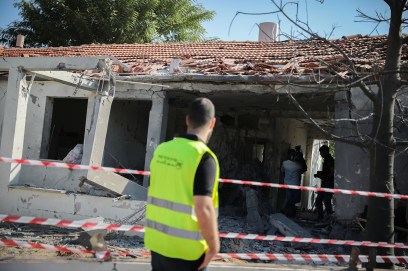
People gather outside a house that was hit by a rocket fired from the Gaza Strip in the southern Israeli city of Ashkelon, on November 13, 2018 (Hadas Parush/Flash90)

Indeed, former defense minister Avigdor Liberman resigned from his position in protest of the government’s policies toward Gaza, saying they were “a capitulation to terror.”

According to the army chief, Hamas hoped to use the border protests and clashes — dubbed the “Great March of Return” — to end the blockade Israel has in place on Gaza, to inspire similar riots in the West Bank, and to garner international recognition and legitimacy.

“They’ve failed, relatively, in reaching those three goals. Though they have greatly succeeded in shaking the feeling of security of Gaza-adjacent residents,” Eisenkot said.
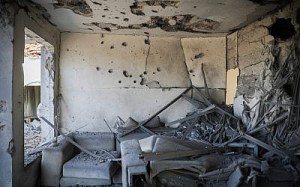
A house hit by a rocket fired from the Gaza Strip in the southern Israeli city of Ashkelon, November 13, 2018 (Hadas Parush/Flash90)

The army chief noted that no Israeli civilians have been killed and few have been injured by attacks from the Gaza Strip since the 2014 war, known in Israel as Operation Protective Edge. He later acknowledged that a Palestinian man living in Ashkelon had been killed in  a missile attack from Gaza in the most recent bout with Hamas in November.

In the interim four years, he added, only two soldiers have been killed and 16 injured from Gaza attacks — a record low in Israel’s history.

However, while he maintained the terror group remained “relatively deterred” since the 2014 war, Eisenkot said the expectation that Hamas would cease all military activities was unrealistic.

“This is arguable, but from my experience, it’s impossible to deter countries and organizations from conventional rearmament. I can’t think of a historical example of forcefully preventing rearmament,” he said.

“We’ve done a lot to prevent as much as we can Hamas’s armament and preventing advanced munitions from reaching Gaza. We’ve significantly damaged [Hamas’s] ability to create and re-arm in the last four years. We’ve bombed 800 targets — headquarters, military positions or manufacturing facilities,” he said.
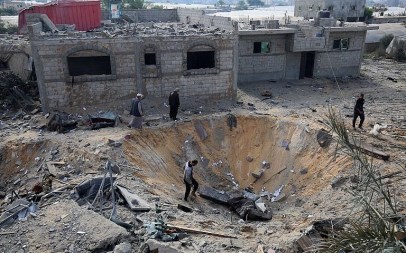
Palestinians inspect a crater caused by an Israeli airstrike earlier this week during fighting with Palestinian terror groups, in Rafah in the southern Gaza Strip, on November 14, 2018. (Said Khatib/AFP)

He dismissed the allegation that Hamas no longer fears the IDF — one often heard from Israeli politicians on both sides of the aisle.

“Deterrence isn’t built in a day and it doesn’t disappear in a day,” Eisenkot said.

Turning to the West Bank, the army chief acknowledged that the military needed to work harder to prevent terror attacks, while defending the IDF’s policies and arguing against harsher treatment of Palestinians.

In recent months, the West Bank too has seen a significant rise in attacks against both Israeli civilians and troops, which has prompted yet more criticism of the IDF for both failing to prevent the attacks and taking insufficient retributive action after the fact.

This month has seen two deadly terror attacks and several others in which people were injured. On December 9, Palestinian terrorists opened fire at a group of Israelis standing at a bus stop outside the West Bank settlement of Ofra, hitting seven of them. A seven-months pregnant woman was seriously wounded, and her baby, who was prematurely delivered in an emergency Caesarean section, died several days later.

Less than a week later, another Palestinian terrorist opened fire at a bus stop outside the nearby Givat Assaf outpost, killing two soldiers and seriously injuring a third serviceman and a civilian woman.

The Ofra terrorist was killed by Israeli troops when they came to arrest him, while the army says it has yet to capture the Givat Assaf gunman.

Israeli soldiers, medical officials and police inspect the scene of a terrorist shooting attack near Givat Assaf, in the central West Bank, on December 13, 2018. (Hadas Parush/Flash90)

Eisenkot said the military and other security services were largely successful in countering terrorism in the West Bank and allowing both Israelis and Palestinians to go about their daily lives, but nevertheless needed to thwart all attacks, not just most.

“Last year, we arrested over 3,000 potential assailants and prevented hundreds and hundreds of attacks,” Eisenkot said.

“But our job as an army is to provide results, not excuses. We need to prevent 100 percent of attacks,” the army chief said.

However, Eisenkot argued against the calls for more forceful action against Palestinians. The chief of staff has repeatedly come out against retaliatory measures following terror attacks, insisting that the best way to prevent violence in the West Bank is to allow Palestinians to work and go to school with minimal interference by or friction with Israeli troops.

“There is a thought that if we use more force, [the attacks] will end. This is a wrong approach,” he said.

Hezbollah tunnels: Another Yom Kippur War

The outgoing army chief also discussed the IDF’s latest operation, Northern Shield, which was launched earlier this month to find and destroy attack tunnels dug into Israeli territory from southern Lebanon.

The tunnels were part of a plot by Hezbollah to “conquer the Galilee, to take over a five-kilometer strip in the north of the country in order to attain a resounding historical achievement,” Eisenkot said.

According to the military, the terror group’s plan was to use the tunnels as a surprise component of the opening salvo of a future war with Israel. In order to conquer parts of the Galilee panhandle, Hezbollah would send dozens or hundreds of fighters through the tunnels, along with masses of troops above ground, accompanied by a large fusillade of rockets and mortars aimed at northern Israel to prevent the IDF from reaching and liberating the area.
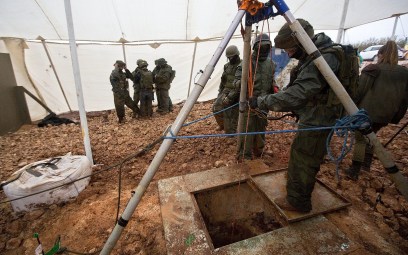
Israeli soldiers stand around the opening of a hole that leads to a tunnel that the army says was dug by the Hezbollah terror group across the Israel-Lebanon border, near Metula, on December 19, 2018. (AP Photo/Sebastian Scheiner)

Referring to its as a “grandiose” plan, the army chief said Hezbollah considered it akin to the surprise launch of the 1973 Yom Kippur War by Syria and Egypt, which caught the IDF off guard.

“We found out about this plan four years ago and set out to thwart it,” Eisenkot said.

So far, the Israeli military has uncovered four cross-border attack tunnels. After studying them, the IDF began the process of destroying the passages on Thursday.

“Most of the passages that enter Israel have been found, and I believe that we will complete this mission in the near future,” Eisenkot said.
 

Phone call with Erdogan sheds light on Trump’s snap Syria withdrawal 

December 23, 2018

Source: Phone call with Erdogan sheds light on Trump’s snap Syria withdrawal – Israel Hayom


US envoy in charge of fighting ISIS quits over Syria pullout 

December 23, 2018

Source: US envoy in charge of fighting ISIS quits over Syria pullout – Israel Hayom


IDF: UNIFIL, Lebanese army ignoring Israeli intel on Hezbollah tunnels 

December 23, 2018

Source: IDF: UNIFIL, Lebanese army ignoring Israeli intel on Hezbollah tunnels – Israel Hayom