Archive for December 22, 2018

U.S. declares it no longer seeks to topple Assad regime 

December 22, 2018

Source: U.S. declares it no longer seeks to topple Assad regime – Middle East – Jerusalem Post

Announcement represents a reversal of former U.S. president Barack Obama’s aim of ousting the Syrian dictator.

BY TERRANCE J. MINTNER/THE MEDIA LINE
 DECEMBER 22, 2018 09:59
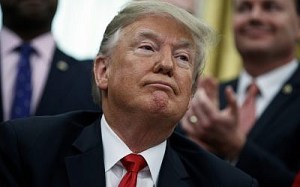
Assad and Trump

United States special representative for Syria James Jeffrey confirmed that the Trump administration is not seeking to oust dictator Bashar al-Assad and accepts that Iran will play a diplomatic role in the process aimed at achieving a political solution to end the nearly eight-year conflict.

Jeffrey nevertheless stressed that Assad and his Russian and Iranian backers need to create a “fundamentally different” atmosphere in the country if they expect Washington to fund reconstruction projects once the war concludes. He estimated it will cost $300-400 billion to rebuild the war-torn country and contended that Western powers will not commit funds if their demands are not met.

The Syrian peace process has been focused around the so-called Astana talks between representatives from Moscow, Tehran and Ankara, with parallel United Nations-backed negotiations in Geneva being long-stalled in large part due to infighting within the Syrian opposition.

Though acknowledging Tehran’s diplomatic role, Jeffrey reiterated the US demand that all Iranian military forces vacate Syria, a position strongly advocated by Israel which over the past two years has conducted hundreds of aerial raids targeting the Islamic Republic’s military infrastructure therein. Jerusalem has repeatedly stated that it will not allow Iran to establish a military foothold in Syria from which its proxies can carry out attacks against the Jewish state.

In many ways Jeffrey’s comments can be construed as an about-face regarding US policy on Assad, given that former US president Barack Obama explicitly called for his removal from power in 2011.

“Yet it is not a total reversal of Washington’s stance,” Dr. Christopher Phillips, a Syrian specialist at the London-based Chatham House think-tank, told The Media Line.

“Since 2013, when Obama refrained from launching strikes on Damascus after the regime’s alleged use of chemical weapons, there has been a gradual softening of US policy against Assad.”

The Trump administration’s goal of remaining in Syria to block Iranian expansionism is a fairly new development, Phillips added. “Jeffrey’s statement is a recognition of the reality that pushing the Islamic Republic out of the country altogether is extremely difficult. Therefore, if Washington acknowledges that Assad is here to stay, it must also grant the Iranians a role to play.”

What is problematic about Jeffrey’s statement is that it damages US credibility, according to Phillips. “The Americans made a commitment to remove Assad under Obama, but, unfortunately, it is not rare for dictatorial regimes with blood on their hands to remain unprosecuted for long periods of time and the outside world doesn’t seem willing to do much about it.”

Lt. Col. (res.) Dr. Mordechai Kedar, a Syrian expert at Israel’s Bar-Ilan University, believes that Syria is on the verge of descending into further anarchy. “There has not been much reporting on Turkey’s threat to invade Syria in order to fight the Kurds,” he stressed to The Media Line.

In the event, such clashes could ignite wider hostilities between Turkish and American forces. “This explains the policy change because America is now torn between supporting the Kurds and trying to keep Turkey part of NATO,” Dr. Kedar explained.

In 2011, pro-democracy demonstrators in Syria staged a series of protests inspired by the “Arab Spring” in neighboring countries. Following a major crackdown, the ensuing civil war pitted pro-regime forces—including Assad’s army, Russian air power and Iranian-backed groups like Hizbullah—against primarily Sunni rebel fighters. It also saw the rise and near fall of Islamic State, one of the most brutal terrorist regimes in modern times.

In recent months, the Syrian regime has recaptured rebel-held territories except the last remaining holdout in northwest Idlib Province. Nevertheless, Damascus and its opponents still need to hash out a political deal to officially end the conflict, which has left more than 350,000 people dead—although some estimates peg the number at 500,000—and displaced millions.

 

What were the goals of Operation Northern Shield? 

December 22, 2018

Source: What were the goals of Operation Northern Shield? – Israel News – Jerusalem Post

srael believes that the tunnels would have been used by the Hezbollah’s elite Radwan unit to infiltrate into Israel in an attempt to take control of several communities and kill civilians.

BY ANNA AHRONHEIM
 DECEMBER 22, 2018 03:51
IDF discovers the third tunnel since the announcement of Operation Northern Shield from Lebanon.

As Israel’s Operation Northern Shield continues into its third week, the IDF’s 869th Shahaf (Seagull) Field Intelligence Battalion are the eyes and ears of the troops in the field.

“We are in charge of identifying and stopping enemy moves,” Lt.-Col. Tomer Meltzman told The Jerusalem Post. “We are the taking the eyes in the field and expanding it, looking across the border to make sure that no enemy targets our troops and, if we identify a threat, to stop it.”

While the IDF has various surveillance and intelligence gathering techniques nothing can replace the IDF field intelligence battalion unit made up of female observers and male combat troops who spend all day, every day watching Lebanon.

The IDF launched Operation Northern Shield in order to detect and neutralize cross-border attack tunnels dug by the Iranian-backed Shi’ite organization. Israel believes that the tunnels would have been used by the Hezbollah’s elite Radwan unit to infiltrate into Israel in an attempt to take control of several communities and kill as many civilians and troops as possible.

Dozens of Hezbollah tunnels are believed to have been dug along the 130-km.-long border between the two countries, and the military said the operation dubbed “Northern Shield” would take weeks or months to complete.

“From the first night of the operation, we have been a part of it and we will remain part of it until it’s over, and even after it,” Metzman told the Post, adding that “The soldiers were surprised about the tunnels on the northern border. We kept it a secret. But we have trained the soldiers to deal with surprises. We always have to expect the unexpected.”

The precious intelligence gathered by the battalion is not only crucial in the operation, but according to the IDF, Israel’s intelligence capabilities has increased dramatically since the Second Lebanon War in 2006 and has a significant number of targets in the north if another war were to break out.

Gathering intelligence in the field is always a challenge, especially when Hezbollah militants do not wear military uniforms or openly carry weapons because of Resolution 1701 which ended the Second Lebanon War in 2006.

The group also plants themselves in the middle of civilian areas. Prime Minister Benjamin Netanyahu said Wednesday that almost every second home in Southern Lebanon is being used by the Shi’ite militant group.

“It’s an organization which has been growing over the years, and we have been watching them and we have stopped them many times in the past few years,” Meltzman said, referring to the group’s fictitious environmental group known as “Green Without Borders.”

According to Meltzman, the battalion has also observed Lebanese troops, including intelligence officers, meeting with Hezbollah militants numerous times.

“The Lebanese Armed Forces (LAF) and Lebanese government is responsible for what is happening. While the LAF is not part of Hezbollah, the LAF should stop Hezbollah’s activities in south Lebanon, Hezbollah should not exist,” Meltzman said.

Early on in the operation, the IDF fired warning shots at three Hezbollah militants dressed in civilian clothes attempting to approach the border area where the IDF was carrying out tunnel excavation work. According to the military the three men – who fled back to Lebanon after IDF troops opened fire – took advantage of bad weather to steal IDF equipment deployed to uncover the tunnels.

Lebanon meanwhile said that IDF troops opened fire on a “Lebanese army patrol near the Blue Line in the Kroum al-Sharaqi region east of the village of Meis al-Jabal “because of heavy fog in the area.”

But, Meltzman said “the battalion lives the Lebanon border day in and out. We know people across the border and their faces. We know how to differentiate between Hezbollah and Lebanese armed forces.”

The female soldiers in unit monitor the feeds of remote controlled cameras set up along the border and locate any terrorist infiltration while at the same time alerting troops in the field and communicate with them to remove any threat. The unit’s male soldiers spent hours in the field every week, working quietly to set up forward camouflaged posts to watch the enemy across the border.

The battalion is also helped by the IDF’s “Mars” multi-sensory system developed by Elbit Systems and Rafael Advanced Defense Systems. The next-generation thermal imager operates using un-cooled sensor technology and combines a laser range-finder, GPS, compass, day channel and recording system. Due to its advanced observation and target acquisition capabilities as well as being a lightweight system, MARS is especially suited for the infantry and special units.


The eclipse of Trump’s generals

December 22, 2018

Source: The eclipse of Trump’s generals – American Politics – Jerusalem Post

With Secretary of Defense James Mattis resignation, the era of Trump delegating responsibility to generals is waning.

BY SETH J. FRANTZMAN
 DECEMBER 22, 2018 11:07
US PRESIDENT Donald Trump is flanked by Secretary of State Rex Tillerson (left) and Defense Secretar

When US President Donald Trump was elected he leaned heavily on retired and current US military officers to guide his policies abroad and at home. Now, with the resignation of Secretary of Defense James Mattis, the generals are going home and with them their policies in Syria and other countries. This marks a major turning point for the administration and Trump appears poised for a new round of isolationism and global retreat that will change the Middle East and the US posture globally.

After Trump’s election he didn’t have a major team in place to transition into the presidency. A week after the vote, according to Bob Woodward’s account, Trump met with General Jack Keane at Trump tower. Keane recommended that Trump reach out to retired four-star Marine Corps general James Mattis. Mattis has been pushed out by the Obama administration in 2013. Keane said Mattis was very experienced in the Middle East and noted he was a combat veteran of Afghanistan and Iraq. “ In Fear, the Woodward account, Trump met Mattis in November. “We need to change what we are doing,” Mattis told Trump. “It can’t be a war of attrition, it must be a war of annihilation.”

John Kelly, who had left Southern Command in 2016, also joined the administration as head of Homeland Security. Joseph Dunford would continue on as the chairman of the Joint Chiefs. He had been nominated in 2015 and like Kelly and Mattis had a Marine Corps background. In February 2017 Trump also named Army Lt. Gen. H.R. McMaster as national security advisor after retired Army Lt. Gen. Michael Flynn had resigned for misleading statements that would eventually lead to his indictment.

The McMaster-Mattis-Kelly team would be a key trio in the first year of the administration. They also played a central role as Trump sought to delegate more to the military. John Kelly became White House Chief of Staff in July 2017. Trump wanted to delegate more to the military, not micro-manage issues. Foreign Policy pointed out that the actual shift in strategy was minimal because most of the policies on the ground, such as working ‘by, with and through,’ US partners would continue. Many of these generals had crafted the current approach of using a minimum number of troops and a maximum amount of airpower combined with intelligence gathering to defeat terror groups. A Defense official in April 2017 said that new policies were “beginning to take shape.” It was a sense that the commanders could “do a bit more.”

Some critics expressed concern at the military-heavy White House. They pointed out that Mike Pompeo also came from a West Point background and had been in the army during the Gulf War. He would lead the CIA and then the State Department under Trump. Lt. General Keith Kellogg would also come on board on the National Security Council. Derek Harvey, a former Colonel who had served in Iraq and wanted the US to be tough on Iran, would also serve on the NSC, but he would be pushed out by McMaster in July 2017.

Trump wanted to focus on the war on ISIS, while Mattis wanted a broader strategy for the Middle East, according to accounts. Early on it seemed that McMaster would focus on North Korea while Mattis would focus on a strategy to defeat ISIS. The war on ISIS was going smoothly under Trump. Mosul in Iraq was liberated in the summer and Raqqa, the ISIS capital in Syria, was liberated in the fall of 2017. That is when Trump appears to have first begun to think of getting out of Syria. Saudi Gulf Affairs Minister Thamer al-Sabhan visited Raqqa as part of a Saudi discussion about how the Gulf state could help stabilize Sunni Arab areas of eastern Syria.

At the time the US was doing most of the work of the 70-nation anti-ISIS Coalition. Trump had kept Brett McGurk, Obama’s anti-ISIS envoy, on as the point person for the Coalition. In early 2018 Trump began pressing for other US allies, such as Saudi Arabia, to foot the bill for post-ISIS Syria operations. The Coalition and US Department of Defense was saying that ISIS had lost 98 percent of its territory by March 2018. In mid-March the Trump administration indicated Riyadh might spend billions in Syria and Trump said the US would be leaving “very soon.”

However the US didn’t leave Syria in April. Instead John Bolton, who replaced McMaster in March, and Mike Pompeo replaced Rex Tillerson as Secretary of State. The changeover in March meant that the US decided in April to focus on Iran as a threat in the Middle East. This is clear because Trump left the Iran Deal in May. Bolton and Pompeo wanted to shift US strategy to confront Iran and use eastern Syria as leverage. With the US and its mostly Kurdish partners in eastern Syria controlling around a third of the country, this could be used to influence Damascus. Throughout the summer and fall the administration rolled out a new concept about stabilizing eastern Syria and using it to leverage against the Iranian presence in Syria. The US was planning for the long term.

Then Trump confirmed that John Kelly would be leaving as Chief of Staff. The announcement in early December came just days before Trump’s call with Turkish president Recep Tayyip Erdogan on December 14 when he decided to wrap things up in Syria. Numerous reports confirm that Trump didn’t consult with most of his administration. James Jeffrey, the US envoy for Syria engagement gave a talk about the future of Syria on December 17 without appearing to know anything about Trump’s plans to leave. Mattis also appears to have been stunned. Reports indicate that Trump and Kelly were also on cold terms ahead of Kelly’s leaving. This left Trump isolated, the exact opposite of his desire to delegate to his generals, instead he made the quick decision on Syria without the war cabinet anywhere in sight.

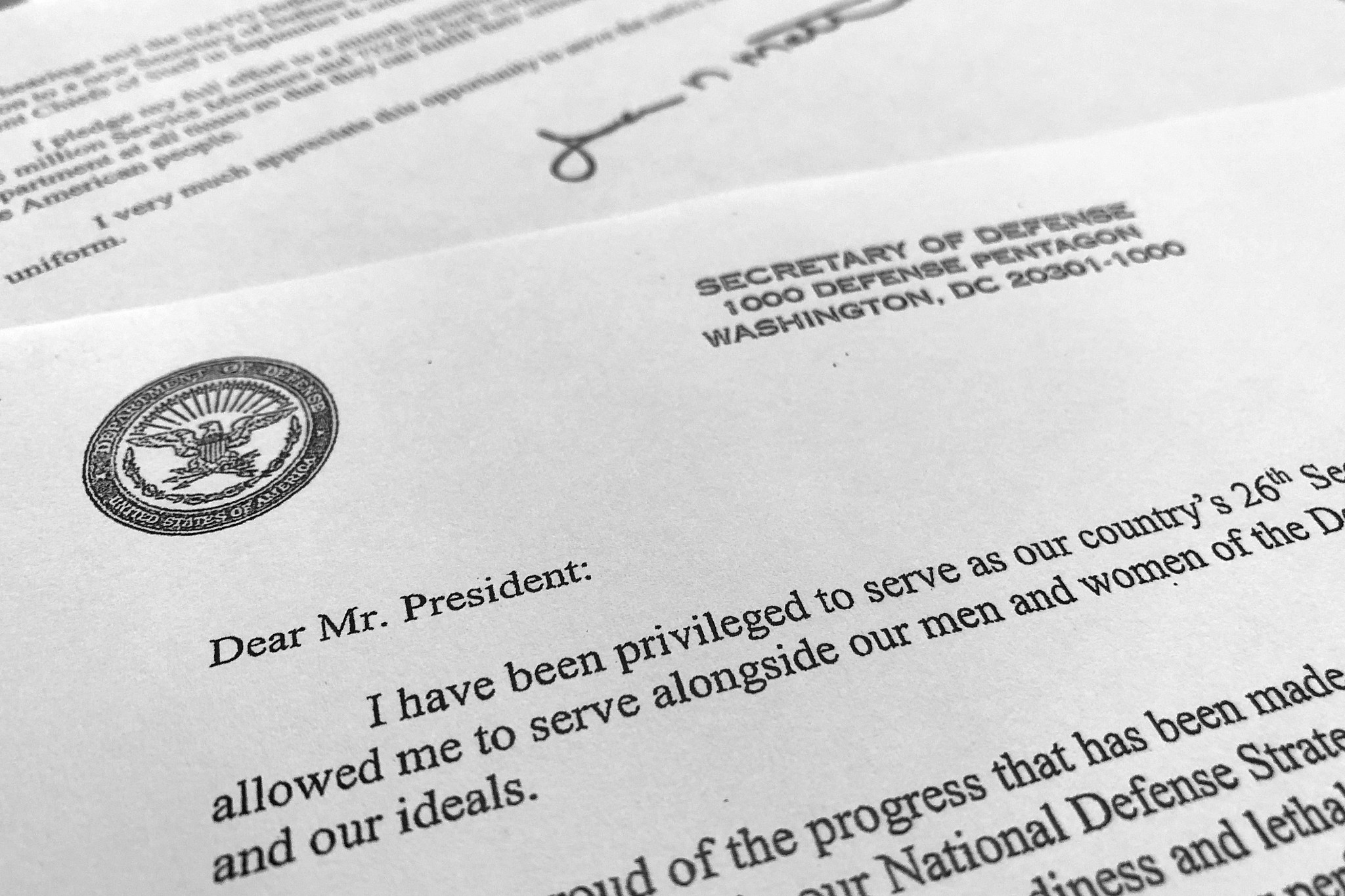
Mattis drafted a resignation letter and provided it to Trump on December 20. He doesn’t specifically mention Syria, but he does mention US allies and the need for the US to sustain global influence. “While the US remains the indispensable nation in the free world, we cannot protect our interests or serve that role effectively without maintaining strong alliances and showing respect to those allies,” he writes. He mentions US leadership in relation to the 74-nation global Coalition to defeat ISIS. That Coalition’s effectiveness is now in question as the US leaves Syria. The fight against ISIS is not over, with the US launching 200 airstrikes in the second week of December.

Trump’s decision to leave Syria, seemingly made in haste, but actually after around one year of Trump already questioning why the US was doing the heavy lifting in Syria, comes as the generals are being eclipsed in his administration. Their desire for a clear strategy and tendency towards caution and status quo appears to be leaving with them. Trump also wanted to leave Afghanistan in the first months of his administration. “I want to find out why we’ve been there 17 years, how’s it going and what we should do in terms of additional ideas,” he said in July 2017 according to Woodward. Lindsey Graham, who has also urged the US to stay in Syria, said the US needed to be working towards stabilization in Afghanistan as well.

Under the tenure of Mattis some of the US policies in Iraq, Afghanistan and Syria could be delegated to his capable hands. With him gone, the policies will be less clear and Trump may take on more responsibility in decision making on these issues. This is precisely the opposite of what Trump initially wanted to do when he delegated authority and told the generals to decide.This is already reverberating around the Middle East where adversaries will see this as an opportunity to threaten the US and US allies.


Erdogan: We will take command of the fighting in Syria 

December 22, 2018

Source: Erdogan: We will take command of the fighting in Syria – Middle East – Jerusalem Post

Turkish President Tayyip Erdogan spoke on Friday following the US withdrawal from Syria.

BY ALON EINHORN
 DECEMBER 22, 2018 12:20
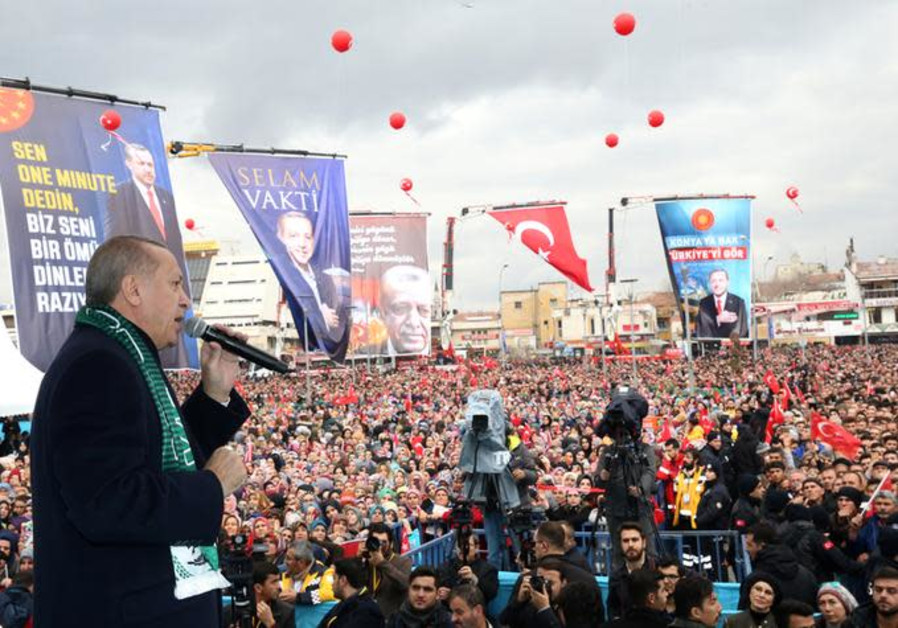
Turkish President Tayyip Erdogan addresses his supporters in Konya, Turkey, December 17, 2018.

Turkish President Tayyip Erdogan spoke on Friday following the US withdrawal from Syria.

Erdogan claimed his country will take command of the fighting against ISIS in Syria, and continue its fighting against the Kurds in northern Syria.

A US official speaking anonymously said that US considers putting special forces in Iraq, to respond to events in Syria.

US Secretary of State Mike Pompeo assured Iraqi Prime Minister Adel Abdul Mahdi that the U.S. is still committed to fighting Islamic State in Iraq and other areas despite its planned troop withdrawal from Syria, Abdul Mahdi’s office said on Saturday.

US President Donald Trump’s decision to withdraw the US forces from Syria was followed by harsh criticism from Israeli intelligence officials.

“A feeling of abandonment,” An official told The New York Times. “Trump threw us under Israel bus – and in this case the bus is a Russian truck supplying weapons to Syria and Hezbollah.”

Trump’s decision also received criticism in the Republican camp. “It is an Obama-like mistake made by the Trump administration.” Senator Lindsey Graham called the withdrawal. “This will be a great victory for ISIS, Iran, Assad and the Russians.”


Iran’s Revolutionary Guard launches drill near Strait of Hormuz 

December 22, 2018

Source: Iran’s Revolutionary Guard launches drill near Strait of Hormuz | The Times of Israel

Paramilitary force answerable to Supreme Leader Khamenei begins annual combat helicopter and drone exercise day after US Navy carrier enters Persian Gulf

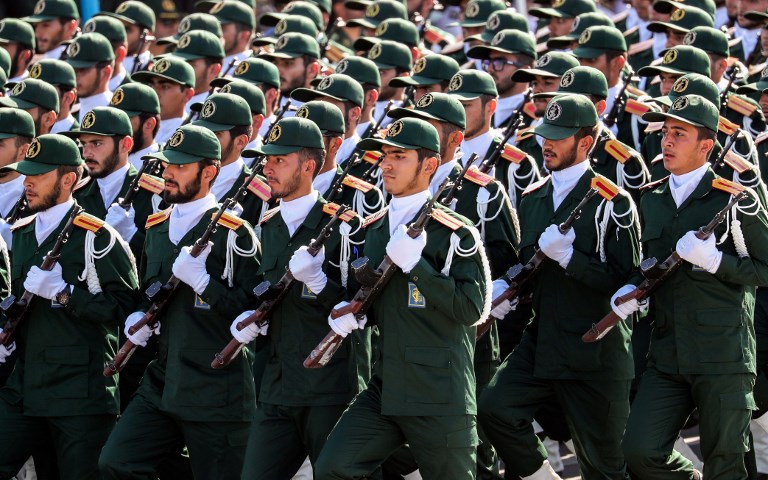
Members of Iran's Revolutionary Guard Corps (IRGC) march during the annual military parade marking the anniversary of the outbreak of the devastating 1980-1988 war with Saddam Hussein's Iraq, in the capital Tehran on September 22, 2018. (AFP/STR)

Members of Iran’s Revolutionary Guard Corps (IRGC) march during the annual military parade marking the anniversary of the outbreak of the devastating 1980-1988 war with Saddam Hussein’s Iraq, in the capital Tehran on September 22, 2018. (AFP/STR)

Iranian state TV reported that Iran’s Revolutionary Guard ground force launched a drill Saturday near the strategic Strait of Hormuz, the passageway for nearly a third of all oil traded by sea.

The report said the guard’s forces will use combat helicopters and drones around Qeshm Island at the mouth of the waterway.

The annual war game, dubbed “The Great Prophet,” came a day after the USS John C. Stennis, a US aircraft carrier, sailed into the Persian Gulf on Friday.

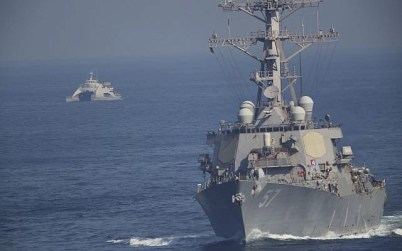
Throughout the carrier’s trip Friday, some 30 Iranian Revolution Guard vessels trailed the Stennis and its strike group. One small vessel launched what appeared to be a commercial-grade drone to film the American ships.

Embedded video

Tasnim News Agency

@Tasnimnews_EN

Photographers and videographers on the Iranian boats could clearly be seen also filming the Stennis while journalists on board the aircraft carrier filmed them.

The USS Mitscher, part of a strike group led by the USS John C. Stennis aircraft carrier, sails as an Iranian Revolutionary Guard vessel shadows it on December 21, 2018. (AP Photo/Jon Gambrell)

The strait at its narrowest point is 33 kilometers (21 miles) wide, in the waters between Iran and Oman.

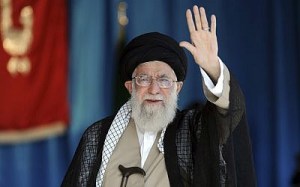
Supreme Leader Ayatollah Ali Khamenei waves to thousands of members of the Basij paramilitary organization in their gathering at the Azadi stadium in Tehran, Iran, on October 4, 2018. (Office of the Iranian Supreme Leader via AP)

Despite being so narrow and within the territorial waters of those two nations, the strait is viewed as an international transit route. American forces routinely travel through the area, despite sometimes tense encounters with the Revolutionary Guard, a paramilitary force answerable only to Supreme Leader Ayatollah Ali Khamenei.

Tensions have been high since US President Donald Trump’s May withdrawal from Iran’s nuclear deal, which saw sanctions lifted for Tehran limiting its uranium enrichment.

Iranian President Hassan Rouhani, a relative moderate within the country’s Shiite theocracy whose major achievement was the deal, has repeatedly warned any attempt to stop Iran’s export of crude oil could see it close off the strait.


Mattis said to cancel trip to Israel following resignation

December 22, 2018

Source: Mattis said to cancel trip to Israel following resignation | The Times of Israel

TV report says US defense secretary was set to hold talks with in Israel next week on Iran and Syria; senior Israeli officials said to harshly criticize Syria pullout decision

US Secretary of Defense Jim Mattis at a press conference with Prime Minister Benjamin Netanyahu (unseen) at the latter's office in Jerusalem on April 21, 2017. (Marc Israel Sellem/Pool/Flash90)

US Secretary of Defense Jim Mattis at a press conference with Prime Minister Benjamin Netanyahu (unseen) at the latter’s office in Jerusalem on April 21, 2017. (Marc Israel Sellem/Pool/Flash90)

US Defense Secretary James Mattis has cancelled a trip to Israel planned for next week after submitting his resignation in the wake of President Donald Trump’s decision to pull US forces out of Syria, Israeli television reported Friday.

Mattis’s talks in Israel had been set to focus on Iran and Syria, according to Channel 10 news.

The former marine general’s decision to resign came after Trump’s sudden announcement Wednesday that he would withdraw all American troops from Syria, saying they had completed their task of defeating the Islamic State jihadist group. That claim has been largely rejected by defense analysts and officials from around the world.

Trump’s declaration was met with profound concern in Israel, with the US presence in Syria seen as a barrier to Iran’s military efforts there.

A senior Israeli official quoted by Channel 10 said Mattis had informed Israeli leaders Trump might pull out American soldiers from Syria. It was not specified when Mattis reportedly said this.

Channel 10 news reported Wednesday that Netanyahu tried in vain to persuade Trump to change his mind, and that there was tremendous “disappointment” in Jerusalem over the pullout, which is regarded as a victory for Russia, Iran and Hezbollah.

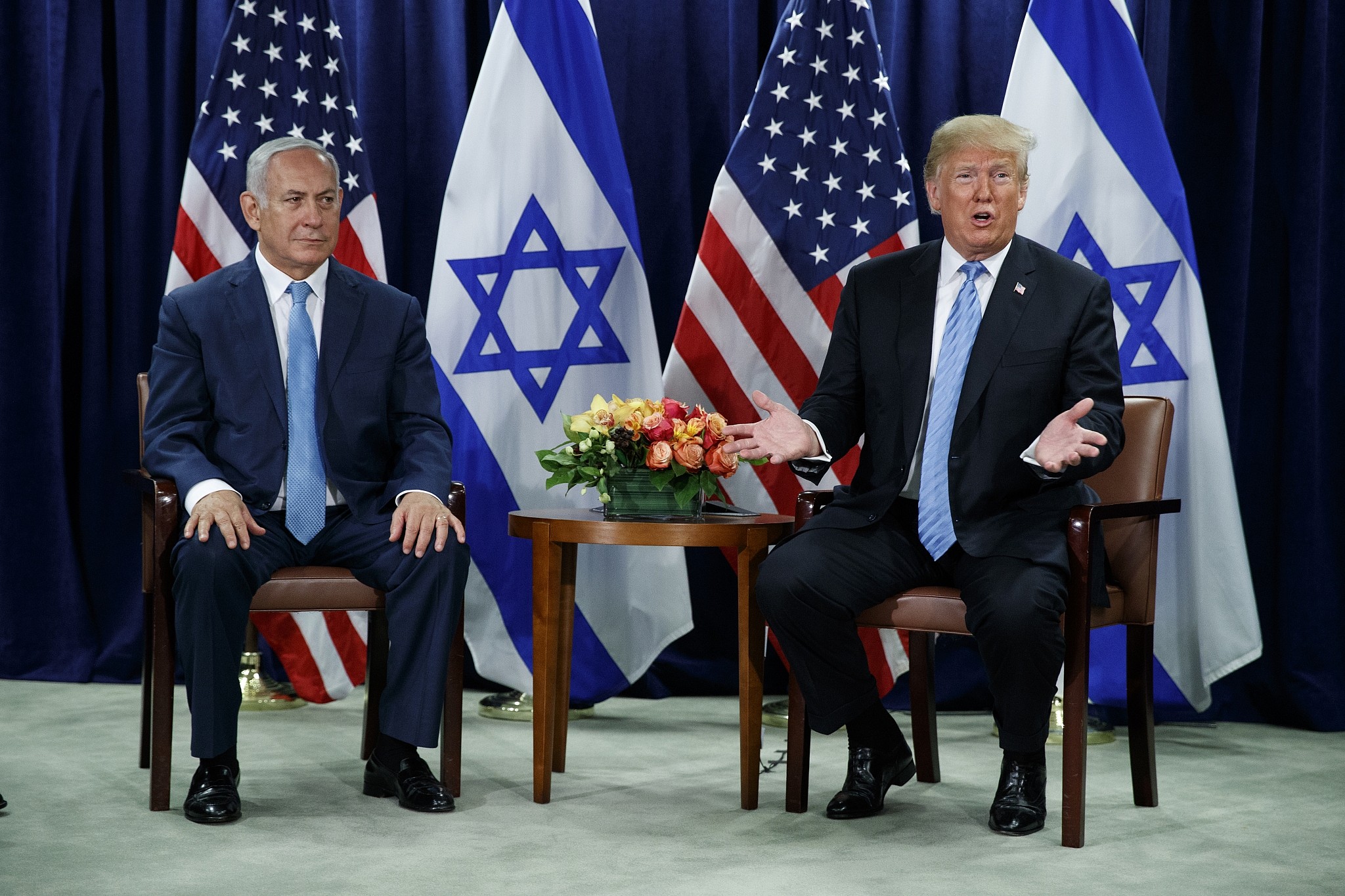
US President Donald Trump (right) and Prime Minister Benjamin Netanyahu meet at the United Nations General Assembly at UN Headquarters, on September 26, 2018. (AP Photo/Evan Vucci)

The TV report described the US move as “a slap in the face” for Israel, noting that the US presence in Syria was “the only bargaining chip” in Israel’s efforts to persuade Russia to prevent Iran deepening its entrenchment in Syria.

Though top Israeli government officials have publicly refrained from criticizing the move, Channel 10 quoted a senior diplomatic official on Friday harshly criticizing Trump’s decision.

“Trump threw us under the wheels of the semi-truck of the Russian army, the one that transfers weapons to Syria and Hezbollah,” the unnamed official said.

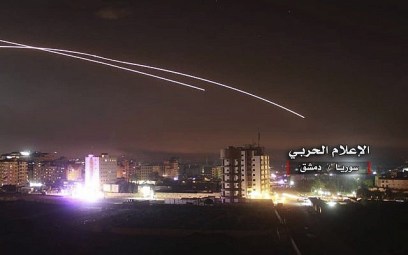
Illustrative: Missiles rise into the sky as Israeli missiles hit air defense position and other military bases, in Damascus, Syria, May 10, 2018. (Syrian Central Military Media, via AP)

Israel has repeatedly warned in recent years over Iran’s efforts to establish a military presence in Syria, where it is fighting alongside Russia and its Lebanese proxy Hezbollah on behalf of Syrian President Bashar Assad.

For Israel, the pullout leaves it without a staunch ally in the fight against Iran in Syria and also potentially opens the door for the Islamic Republic to create a so-called “land bridge” from Iran, through Iraq and Syria, into Lebanon and the Mediterranean Sea.

Until now, American troops have been stationed in northeastern Syria, along the Iraqi border, blocking such a corridor, through which Iran could more easily distribute advanced weapons and technology throughout the region, especially to its Lebanese client the Hezbollah terrorist army.

Netanyahu spoke with Trump about the drawdown from Syria on Thursday, after which his office said they discussed “ways to continue cooperation between Israel and the United States against Iranian aggression.”

In recent years Israel has carried out hundreds of airstrikes against targets linked to Iran, whose leaders have called for the destruction of the Jewish state.

Mattis went to the White House Thursday to resign after failing to persuade the president in a tense Oval Office meeting to change his decision on withdrawing troops from Syria, according to two people with knowledge of the conversation but not authorized to discuss it publicly.

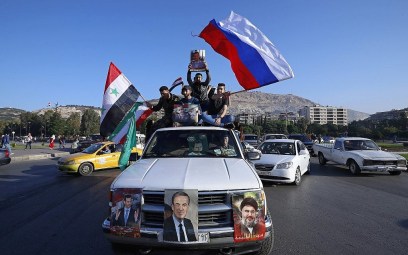
Syrian government supporters wave Syrian, Iranian and Russian flags as they chant slogans against US President Trump during demonstrations following a wave of US, British and French military strikes to punish President Bashar Assad for suspected chemical attack against civilians, in Damascus, Syria, April 14, 2018. (AP Photo/Hassan Ammar)

Though Trump has in the past said he intended to pull American troops out of Syria, Wednesday’s announcement caught many State Department and Department of Defense officials off guard.

Part of Defense Secretary Jim Mattis’ resignation letter to President Donald Trump is photographed in Washington, Thursday, Dec. 20, 2018. Mattis is stepping down from his post, Trump announced, after the retired Marine general clashed with the president over a troop drawdown in Syria and Trump’s go-it-alone stance in world affairs. (AP Photo/Jon Elswick)

Many details of the plan to remove the approximately 2,000 US troops from Syria remain unclear, notably the exact timeline.

The Associated Press contributed to this report.


PM said to have rejected Russian promise to boot Iran from Syria for US pullout 

December 22, 2018

Source: PM said to have rejected Russian promise to boot Iran from Syria for US pullout | The Times of Israel

Report says Netanyahu rebuffed September offer as it would have also included halt to reimposition of American nuclear sanctions on Tehran

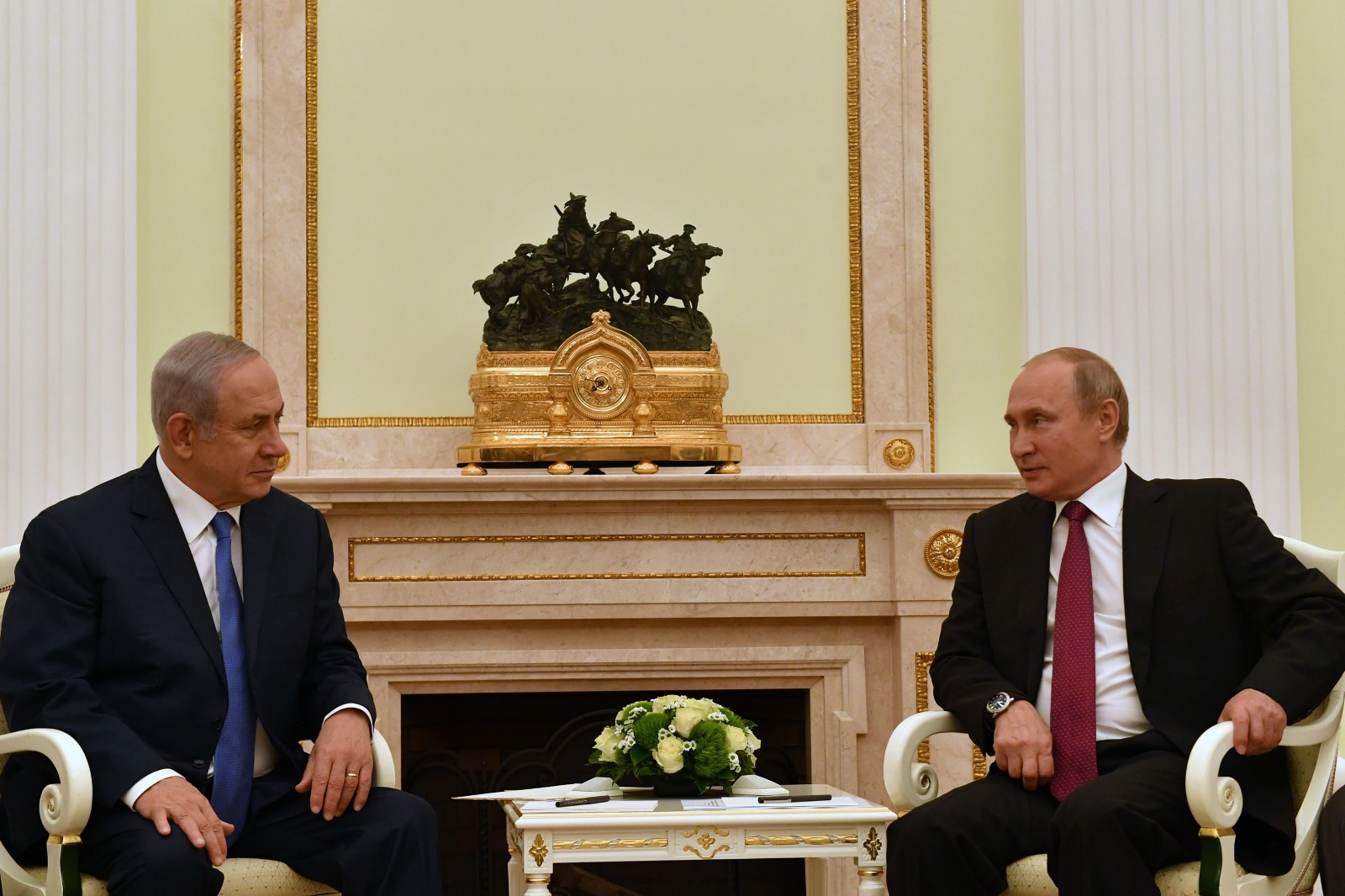
Prime Minister Benjamin Netanyahu, left, meets with Russian President Vladimir Putin in Moscow, July 11, 2018. (Israel Foreign Ministry)

Prime Minister Benjamin Netanyahu reportedly rejected a Russian proposal three months ago that would have committed Moscow to expelling Iran and its proxy forces from Syria in exchange for a withdrawal of US troops from that country.

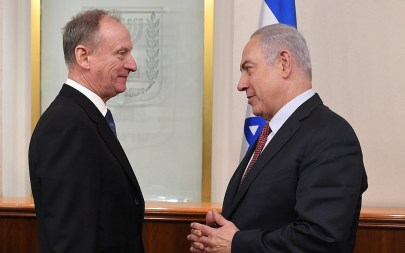
The offer was part of a pitch Russian Security Council Secretary Nikolai Patrushev gave to his Israeli counterpart Meir Ben-Shabbat in September, and was aimed at fostering better ties between the United States and Russia through a deal on Iran and Syria, the Axios news site reportedThursday.

The proposal was however rebuffed by Netanyahu as it would have also included suspending US sanctions on Iran that took effect last month as part of US President Donald Trump’s withdrawal from the international accord meant to limit the Iranian nuclear program, the report said, quoting unnamed Israeli officials..

“For Netanyahu, stopping the Iranian nuclear program was above everything else, and this is why he refused to show any flexibility on the issue of US sanctions,” one of the officials was quoted saying.

Russian Federation Security Council Secretary Nikolai Patrushev, left, meets with Prime Minister Benjamin Netanyahu in the Prime Minister’s Office in Jerusalem, February 1, 2018. (Kobi Gideon/GPO)

The report came just a day after Trump abruptly announced the withdrawal of all US troops from Syria, asserting they had accomplished their mission of defeating the Islamic State jihadist group.

The announcement sparked concerns among Israeli and US lawmakers, who saw the American presence as also helping curb Iran’s military efforts in Syria, where alongside Russia and its proxies such as Lebanon’s Hezbollah it is fighting on behalf of Syrian President Bashar Assad’s regime.

Another official quoted by Axios said if Israel had not rejected the offer, the US pullout could have also been accompanied by the withdrawal of Iranian forces from Syria.

The report said Patrushev presented the proposal to Ben-Shabbat in Moscow on September 13, just days before ties between Jerusalem and Moscow were sent into a tailspin after 15 Russian servicemen aboard a military aircraft were killed by Syrian air defenses during Israeli airstrikes in Syria.

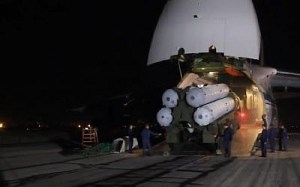
Screen capture from video showing the delivery of Russian S-300 air defense missiles to Syria. (YouTube)

Russia has blamed the Israeli military over that incident — a charge rejected by Israel — and later sent advanced S-300 air defense systems to Syria.

The deployment of the S-300s was protested by the US and Israel, which could complicate ongoing Israeli efforts to prevent Iran deepening its military presence in Syria and to thwart the transfer of weapons in Syria to Hezbollah.

Israel has carried out hundreds of airstrikes in recent years against targets linked to Iran, whose leaders have called for the destruction of the Jewish state.

Netanyahu spoke with Trump on Thursday about the US military drawdown in Syria, with his office saying they discussed “ways to continue cooperation between Israel and the United States against Iranian aggression.”

Earlier Thursday, Netanyahu said Israel would increase its activity in Syria to counter Iran’s influence and proxy militias.

Though Trump has in the past said he intended to pull American troops out of Syria, Wednesday’s announcement caught many State Department and Department of Defense officials off guard.

Many details of the plan to remove the approximately 2,000 US troops from Syria remain unclear, notably the exact timeline.

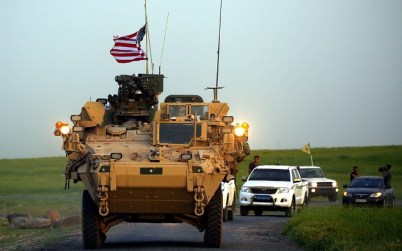
US forces, accompanied by Kurdish People’s Protection Units (YPG) fighters, drive their armored vehicles near the northern Syrian village of Darbasiyah, on the border with Turkey, April 28, 2017. (Delil Souleiman/AFP)

For Israel, the pullout leaves it without a staunch ally in the fight against Iran in Syria and potentially opens the door for the Islamic Republic to create a so-called “land bridge” from Iran, through Iraq and Syria, into Lebanon and the Mediterranean Sea.

Until now, American troops have been stationed in northeastern Syria, along the Iraqi border, blocking such a corridor, through which Iran could more easily distribute advanced weapons and technology throughout the region, especially to its Lebanese client the Hezbollah terrorist army.


US pullout strengthens Iran ‘land bridge’ to the Mediterranean

December 22, 2018

Source: US pullout strengthens Iran ‘land bridge’ to the Mediterranean | The Times of Israel

Critics say Trump has just gifted Tehran a decades-old strategic goal of a presence across Iraq, Syria and Lebanon, which Israel has vowed to oppose

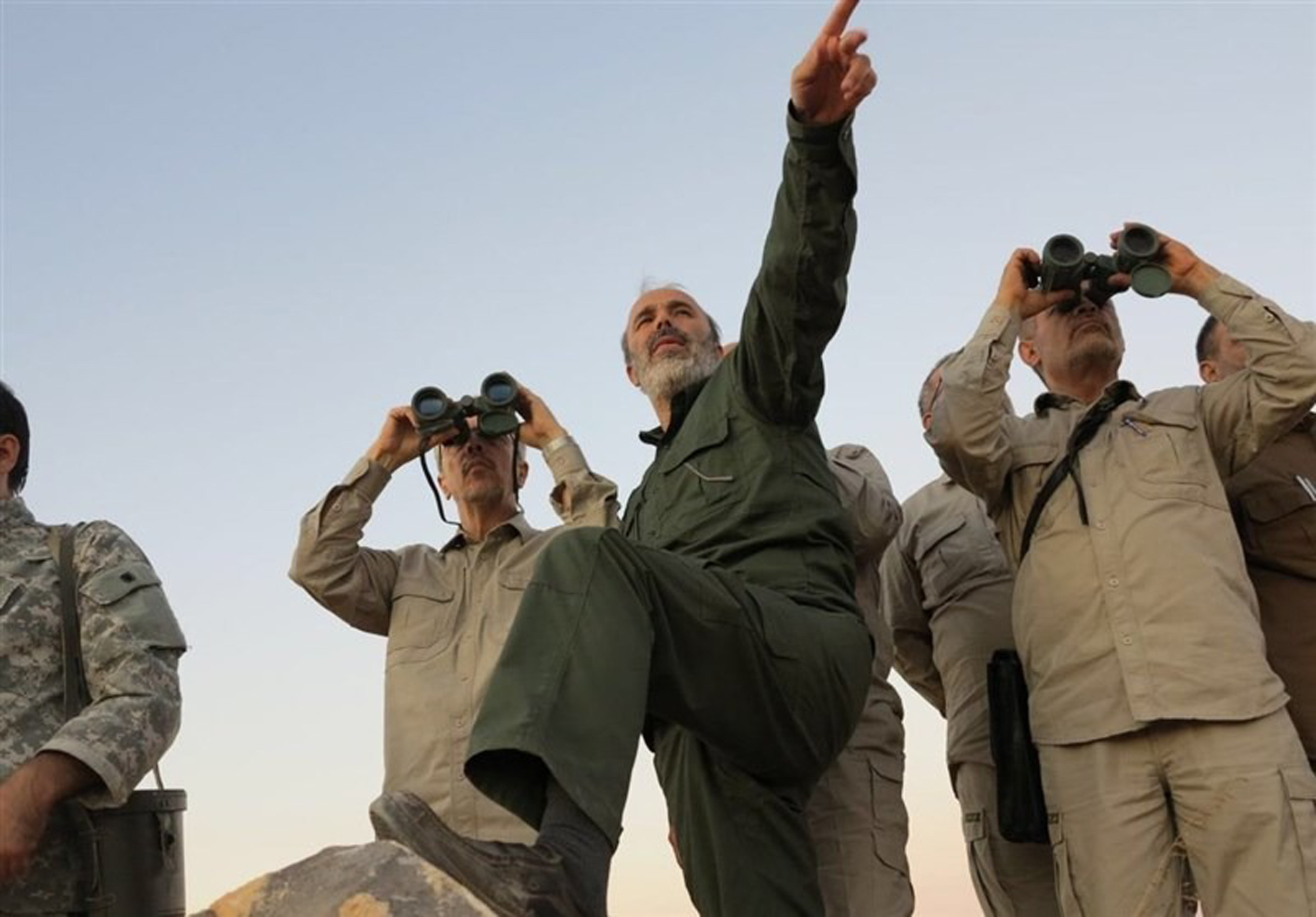
This file photo provided on Friday October 20, 2017 by the government-controlled Syrian Central Military Media shows Iran's army chief of staff Maj. Gen. Mohammad Bagheri, left, looks into binoculars as he visits and other senior officers from the Iranian military on a front line in the northern province of Aleppo, Syria. (Syrian Central Military Media, via AP)

This file photo provided on Friday October 20, 2017 by the government-controlled Syrian Central Military Media shows Iran’s army chief of staff Maj. Gen. Mohammad Bagheri, left, looks into binoculars as he visits and other senior officers from the Iranian military on a front line in the northern province of Aleppo, Syria. (Syrian Central Military Media, via AP)

BEIRUT (AFP) — US President Donald Trump’s decision to withdraw US troops from Syria risks shattering a cornerstone of Washington’s Middle East policy by allowing Iran to consolidate a “land bridge” to the Mediterranean.

The much-bandied about scenario that sees Iran redrawing the regional map by entrenching a land corridor across Iraq, Syria and Lebanon is becoming a reality, analysts say.

Critics of Trump’s decision argue that for all his fiercely anti-Iranian stance, he has just gifted Tehran a decades-old strategic goal.

Trump made the shock announcement on Wednesday, saying that the troop deployment in Syria was no longer needed because the Islamic State (IS) group had been defeated.

Many in his own camp challenged that assessment and warned that such a move would abandon the ground to the United States’ main regional foe.

The top Republican and Democrat on the House Armed Services Committee even issued a rare joint statement warning against “a strategic error” that would empower “malign actors such as Russia and Iran.”

Iran has thousands of regular forces deployed across Syria in support of the regime, as well as thousands of militiamen it supports from various countries.

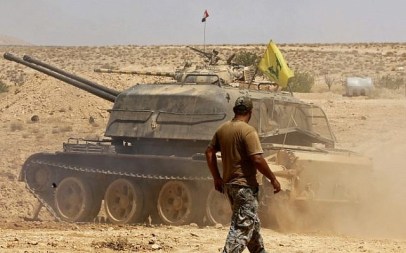
Illustrative image of a tank flying the Hezbollah terror group’s flag seen in the Qara area in Syria’s Qalamoun region on August 28, 2017 (AFP Photo/Louai Beshara)

“It is clearly a strategic victory for Tehran,” said Middle East analyst Julien Theron. “It will allow it to remove the Western buffer between Syria and Iraq.”

The United States currently has around 2,000 forces deployed in Syria in two areas along the Iraqi border that did not fully block Iranian movement but kept it in check.

Threat to Israel

One is in support of Kurdish-led forces spearheading the ongoing battle against IS jihadists east of the Euphrates River in northeastern Syria. The other is further south at the Al-Tanaf desert base, where Damascus and its allies have repeatedly said US troops had no reason to be.

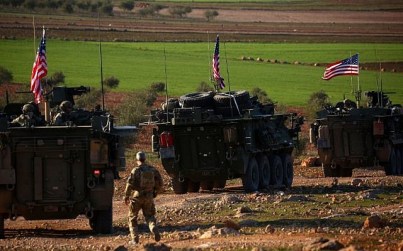
US forces armored vehicles drive near the village of Yalanli, on the western outskirts of the northern Syrian city of Manbij, on March 5, 2017. (Delil Souleiman/AFP)

US troops in Iraq and in Syria keep some level of pressure on the “Iranian land bridge,” stretching from Iran to the Mediterranean.

Syria’s government, which has recently been reclaiming control over vast swathes of territory it lost when the war broke out in 2011, is aligned with Tehran.

The government in Iraq, a regional Sunni bastion until Saddam Hussein’s fall in 2003, is Shiite-dominated and militia groups loyal to Iran play an important security role across much of the country.

One of the reasons for the White House to oppose a “land bridge” is preventing Iran from expanding its military footprint, including to positions in Syria and Lebanon near the border with US ally Israel.

“The White House should understand that a key element of its Iran policy is at stake here,” the Washington Institute said in a policy paper.

“Namely, the effort to keep Tehran from entrenching itself in Syria, establishing a land bridge to Lebanon, and directly threatening Israel,” it said.

Significant chunks of Lebanon are controlled by Hezbollah, a Shiite terror group with very close ties to Iran and a powerful military branch.

 ‘Really messy’

Hezbollah was created at Tehran’s initiative as an anti-Israeli proxy, a few years after the 1979 Islamic revolution in Iran.

Bassam Abu Abdallah, who heads the Damascus Centre for Strategic Research and is close to the government of Syrian President Bashar al-Assad, said however that the impact of the US withdrawal was being exaggerated.

US national security adviser John Bolton had previously said that US troops would remain in Syria as long as Iranian forces remained deployed there.

Abu Abdallah argued that, similarly, Iranian troops would be less needed once US forces leave.

“There is no doubt that this withdrawal will lead in the long term to a scaling down of the Iranian military presence,” he said.

“But for now the conditions are not yet there for an easing of the military deployment,” he added.

Aaron Lund, an analyst at the Century Foundation, said however that it was too early to say who would fill the security vacuum left behind by the Americans.

“I think we’ll have to wait and see what happens, how quickly and completely the United States withdraws and who fills the void,” he said.

“It could get really messy,” Lund said.


Iran says US troops’ presence in Syria is ‘a primary source of regional tension’ 

December 22, 2018

Source: Iran says US troops’ presence in Syria is ‘a primary source of regional tension’ | The Times of Israel

In first official reaction to Trump’s announcement of a military recall, Tehran says it was ‘wrong and illogical’ from the start for American soldiers to be there

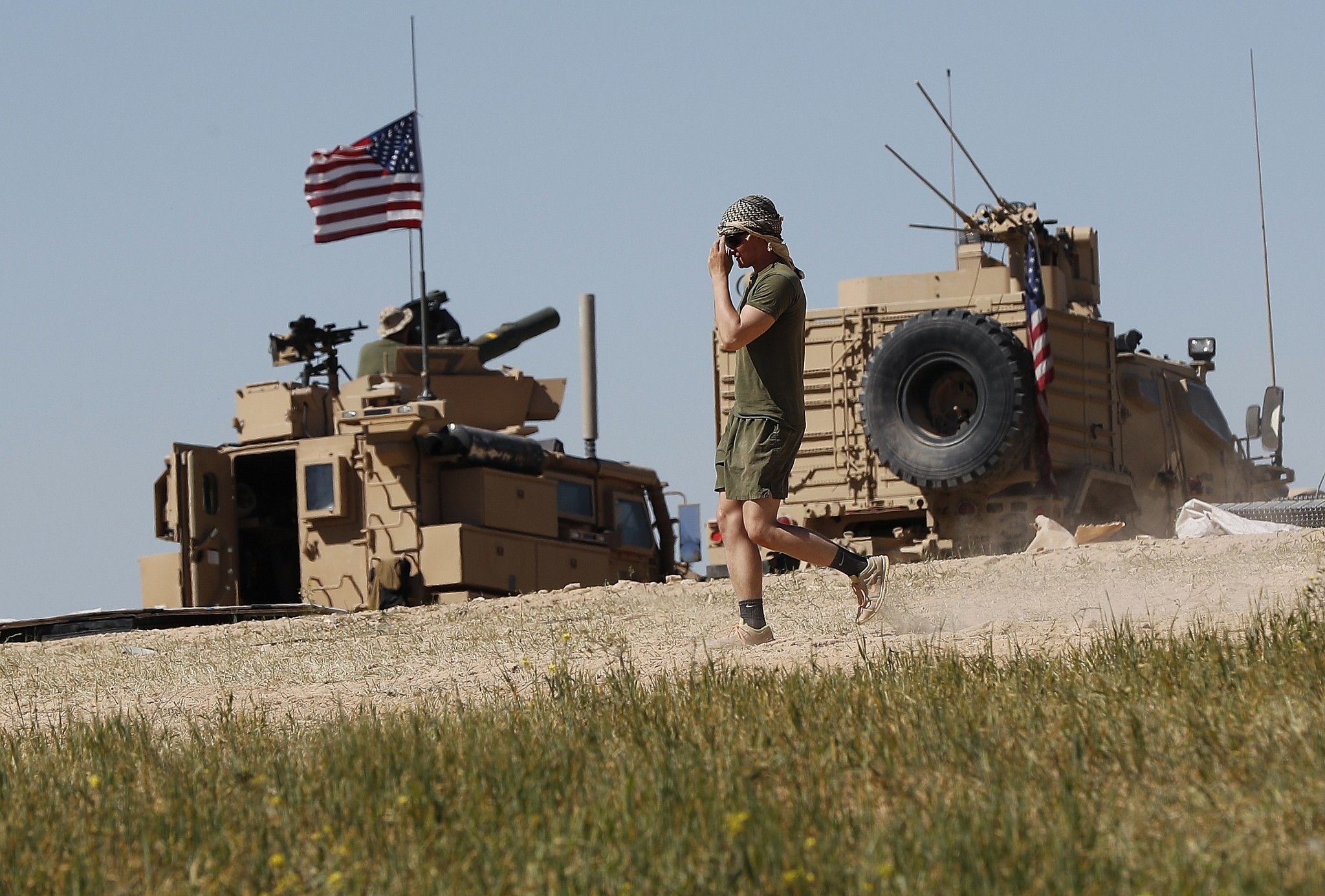
A US soldier walks on a newly installed position, near the tense front line between the US-backed Syrian Manbij Military Council and the Turkish-backed fighters, in Manbij, north Syria, April 4, 2018. (AP/Hussein Malla)

A US soldier walks on a newly installed position, near the tense front line between the US-backed Syrian Manbij Military Council and the Turkish-backed fighters, in Manbij, north Syria, April 4, 2018. (AP/Hussein Malla)

Iran said Saturday the US presence in Syria had been “wrong and illogical” from the start and was a major cause of tension in the Middle East, in its first official reaction to US President Donald Trump’s decision to withdraw troops.

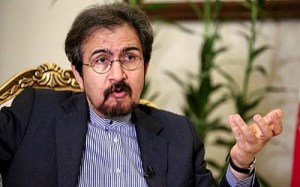
“The presence of American forces was from the very start, in principle, a wrong and illogical move and a primary cause of instability and insecurity in the region,” said foreign ministry spokesman Bahram Ghasemi on his Telegram channel.

On Wednesday, the White House shocked the world — and its own defense and foreign policy officials — by declaring that the US had fulfilled its mission in Syria of defeating the Islamic State terror group and was therefore planning to remove its troops from the country. Defense analysts and officials from around the world largely rejected the claim that IS had been defeated, citing the terror group’s thousands of fighters still operating inside Syria despite its territorial losses.

Israel’s Channel 10 news reported that Prime Minister Benjamin Netanyahu tried in vain to persuade Trump to change his mind, and that there was tremendous “disappointment” in Jerusalem over the pullout, which is regarded as a victory for Russia, Iran and Hezbollah.

Bahram Ghasemi, Iran’s foreign ministry spokesman, gives an interview with AFP in the capital Tehran on October 2, 2018. (AFP Photo/Atta Kenare)

The TV report described the US move as “a slap in the face” for Israel, noting that the US presence in Syria was “the only bargaining chip” in Israel’s efforts to persuade Russia to prevent Iran deepening its entrenchment in Syria.

In April, two US officials told The Associated Press that a phone call at the time between Trump and Netanyahu grew tense over Israeli objections to US plans to leave Syria within six months.

Though Trump has in the past said he intended to pull American troops out of Syria, Wednesday’s announcement caught many State Department and Department of Defense officials off guard.

Many details of the plan to remove the approximately 2,000 US troops from Syria remain unclear, notably the exact timeline.

President Donald Trump speaks during a signing ceremony for criminal justice reform legislation in the Oval Office of the White House, Friday, December 21, 2018, in Washington. (AP Photo/Evan Vucci)

For Israel, the pullout leaves it without a staunch ally in the fight against Iran in Syria and potentially opens the door for the Islamic Republic to create a so-called “land bridge” from Iran, through Iraq and Syria, into Lebanon and the Mediterranean Sea.

Until now, American troops have been stationed in northeastern Syria, along the Iraqi border, blocking such a corridor, through which Iran could more easily distribute advanced weapons and technology throughout the region, especially to its Lebanese client the Hezbollah terrorist army.

Israel has repeatedly vowed to prevent Iran establishing a permanent presence in Syria and Lebanon and has carried out hundreds of airstrikes in recent years against Iran-backed forces and attempts to smuggle advanced weapons to Hezbollah.

Agencies contributed to this report.


Israel to escalate efforts against Iran on all fronts – TV7 Israel News 21 12 18

December 22, 2018