Archive for December 21, 2018
(2) U.S. military to withdraw from Syria, despite Israeli objection – TV7 Israel News 20.12.18
December 21, 2018Trump on Syria: ‘Does the US want to be the policeman of the Middle East?
December 21, 2018“Getting out of Syria was no surprise. I’ve been campaigning on it for years.”
DECEMBER 20, 2018 14:41
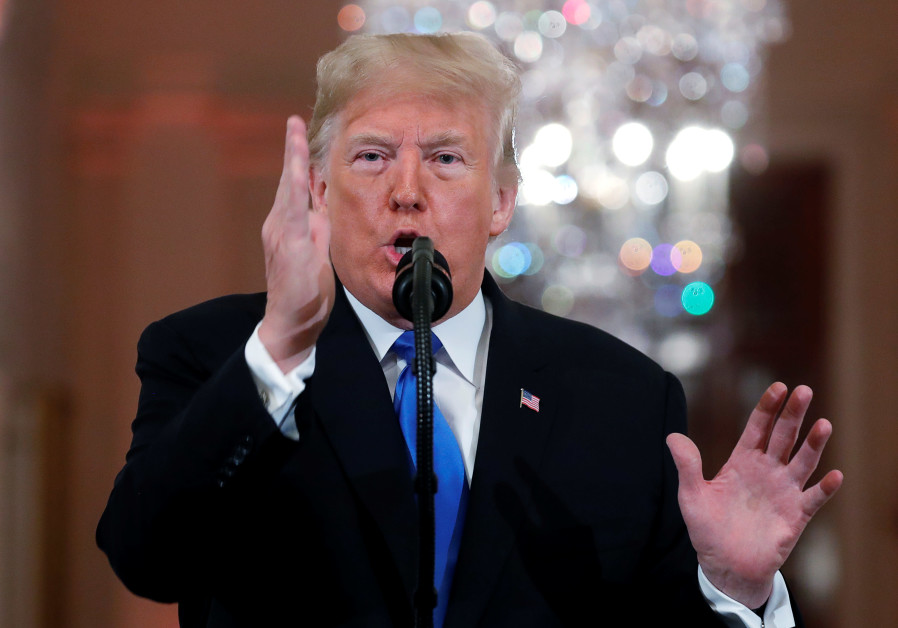
U.S. President Donald Trump addresses a news conference following Tuesday’s midterm congressional elections at the White House in Washington, US, November 7, 2018. (photo credit: REUTERS/KEVIN LAMARQUE)
Is it America’s responsibility to police the Middle East, US President Donald Trump asked as he defended his decision to begin pulling US troops out of Syria early Thursday morning.
“Does the USA want to be the Policeman of the Middle East, getting NOTHING but spending precious lives and trillions of dollars protecting others who, in almost all cases, do not appreciate what we are doing? Do we want to be there forever? Time for others to finally fight,” he asked.
 Donald J. Trump
✔@realDonaldTrump
Does the USA want to be the Policeman of the Middle East, getting NOTHING but spending precious lives and trillions of dollars protecting others who, in almost all cases, do not appreciate what we are doing? Do we want to be there forever? Time for others to finally fight…..
“Getting out of Syria was no surprise. I’ve been campaigning on it for years, and six months ago, when I very publicly wanted to do it, I agreed to stay longer. Russia, Iran, Syria & others are the local enemy of ISIS. We were doing there work. Time to come home & rebuild,” Trump said.
Donald J. Trump✔@realDonaldTrump
Getting out of Syria was no surprise. I’ve been campaigning on it for years, and six months ago, when I very publicly wanted to do it, I agreed to stay longer. Russia, Iran, Syria & others are the local enemy of ISIS. We were doing there work. Time to come home & rebuild. #MAGA
“Russia, Iran, Syria & many others are not happy about the U.S. leaving, despite what the Fake News says, because now they will have to fight ISIS and others, who they hate, without us,: Trump said.
“I am building by far the most powerful military in the world. ISIS hits us they are doomed!,” he said.
Trump’s announcement on Wednesday upended a central pillar of American policy in the Middle East and stunned U.S. lawmakers and allies, who challenged the president’s claim of victory.
The Syrian Democratic Forces (SDF), supported by roughly 2,000 U.S. troops, are in the final stages of a campaign to recapture areas seized by Islamic State militants.
But they face the threat of a military incursion by Turkey, which considers the Kurdish YPG fighters who spearhead the force to be a terrorist group, and possible advances by Syrian forces – backed by Russia and Iran – committed to restoring President Bashar al-Assad’s control over the whole country.
After three years of fighting alongside U.S. forces, the SDF said the battle against Islamic State had reached a decisive phase that required more support, not a precipitate U.S. withdrawal.
Western allies including France, Britain and Germany also described Trump’s assertion of victory as premature.
Officials said France will keep its troops in northern Syria for now because Islamic State militants have not been wiped out and pose a threat to French interests.
“For now, of course we are staying in Syria because the fight against Islamic State is essential,” Europe Minister Nathalie Loiseau said.
France has about 1,100 troops in Iraq and Syria providing logistics, training and heavy artillery support as well as fighter jets. In Syria it has dozens of special forces, military advisers and some foreign office personnel.
A British junior defense minister said on Wednesday he strongly disagreed with Trump. “(Islamic State) has morphed into other forms of extremism and the threat is very much alive,” Tobias Ellwood said in a tweet.
Neighboring Turkey, which has threatened an imminent military incursion targeting the U.S.-allied Kurdish YPG fighters in northern Syria, has not commented directly on Trump’s decision, although an end to the U.S.-Kurdish partnership will be welcomed in Ankara.
Kurdish militants east of the Euphrates in Syria “will be buried in their ditches when the time comes”, state-owned Anadolu news agency reported Defense Minister Hulusi Akar as saying.
Amos Yadlin, Executive Director of Tel Aviv University’s Institute for National Security Studies (INSS) wrote on Twitter, that the US withdrawal was most likely part of a “drive to decrease US presence and casualties, the US people’s fatigue from the nation’s long wars, but perhaps mainly what looks like a “grand deal” with Turkey.”
“Trump’s decision embolden its rivals which are committed to the region on the long term: Russia, Iran, Assad and ISIS.
“Such abrupt US turns, seen by many as betraying its Kurdish partners in the war on ISIS, undermines the US’ reputation and credibility,” Yadlin wrote on twitter.
Reuters contributed to this report.
Trump on Syria: ‘Does the US want to be the policeman of the Middle East?
December 21, 2018“Getting out of Syria was no surprise. I’ve been campaigning on it for years.”
DECEMBER 20, 2018 14:41
U.S. President Donald Trump addresses a news conference following Tuesday’s midterm congressional elections at the White House in Washington, US, November 7, 2018. (photo credit: REUTERS/KEVIN LAMARQUE)
Is it America’s responsibility to police the Middle East, US President Donald Trump asked as he defended his decision to begin pulling US troops out of Syria early Thursday morning.
“Does the USA want to be the Policeman of the Middle East, getting NOTHING but spending precious lives and trillions of dollars protecting others who, in almost all cases, do not appreciate what we are doing? Do we want to be there forever? Time for others to finally fight,” he asked.
 Donald J. Trump
✔@realDonaldTrump
Does the USA want to be the Policeman of the Middle East, getting NOTHING but spending precious lives and trillions of dollars protecting others who, in almost all cases, do not appreciate what we are doing? Do we want to be there forever? Time for others to finally fight…..
Donald J. Trump✔@realDonaldTrump
“Russia, Iran, Syria & many others are not happy about the U.S. leaving, despite what the Fake News says, because now they will have to fight ISIS and others, who they hate, without us,: Trump said.
“I am building by far the most powerful military in the world. ISIS hits us they are doomed!,” he said.
Trump’s announcement on Wednesday upended a central pillar of American policy in the Middle East and stunned U.S. lawmakers and allies, who challenged the president’s claim of victory.
The Syrian Democratic Forces (SDF), supported by roughly 2,000 U.S. troops, are in the final stages of a campaign to recapture areas seized by Islamic State militants.
But they face the threat of a military incursion by Turkey, which considers the Kurdish YPG fighters who spearhead the force to be a terrorist group, and possible advances by Syrian forces – backed by Russia and Iran – committed to restoring President Bashar al-Assad’s control over the whole country.
After three years of fighting alongside U.S. forces, the SDF said the battle against Islamic State had reached a decisive phase that required more support, not a precipitate U.S. withdrawal.
Western allies including France, Britain and Germany also described Trump’s assertion of victory as premature.
Officials said France will keep its troops in northern Syria for now because Islamic State militants have not been wiped out and pose a threat to French interests.
“For now, of course we are staying in Syria because the fight against Islamic State is essential,” Europe Minister Nathalie Loiseau said.
France has about 1,100 troops in Iraq and Syria providing logistics, training and heavy artillery support as well as fighter jets. In Syria it has dozens of special forces, military advisers and some foreign office personnel.
A British junior defense minister said on Wednesday he strongly disagreed with Trump. “(Islamic State) has morphed into other forms of extremism and the threat is very much alive,” Tobias Ellwood said in a tweet.
Neighboring Turkey, which has threatened an imminent military incursion targeting the U.S.-allied Kurdish YPG fighters in northern Syria, has not commented directly on Trump’s decision, although an end to the U.S.-Kurdish partnership will be welcomed in Ankara.
Kurdish militants east of the Euphrates in Syria “will be buried in their ditches when the time comes”, state-owned Anadolu news agency reported Defense Minister Hulusi Akar as saying.
Amos Yadlin, Executive Director of Tel Aviv University’s Institute for National Security Studies (INSS) wrote on Twitter, that the US withdrawal was most likely part of a “drive to decrease US presence and casualties, the US people’s fatigue from the nation’s long wars, but perhaps mainly what looks like a “grand deal” with Turkey.”
“Trump’s decision embolden its rivals which are committed to the region on the long term: Russia, Iran, Assad and ISIS.
“Such abrupt US turns, seen by many as betraying its Kurdish partners in the war on ISIS, undermines the US’ reputation and credibility,” Yadlin wrote on twitter.
Reuters contributed to this report.
U.S. air campaign against Islamic State in Syria likely to end
December 21, 2018Source: U.S. air campaign against Islamic State in Syria likely to end – Middle East – Jerusalem Post
US Defense Secretary Jim Mattis, who had opposed Trump’s decision on Syria, abruptly announced on Thursday he was resigning after meeting with the president.
BY REUTERS
DECEMBER 21, 2018 03:27
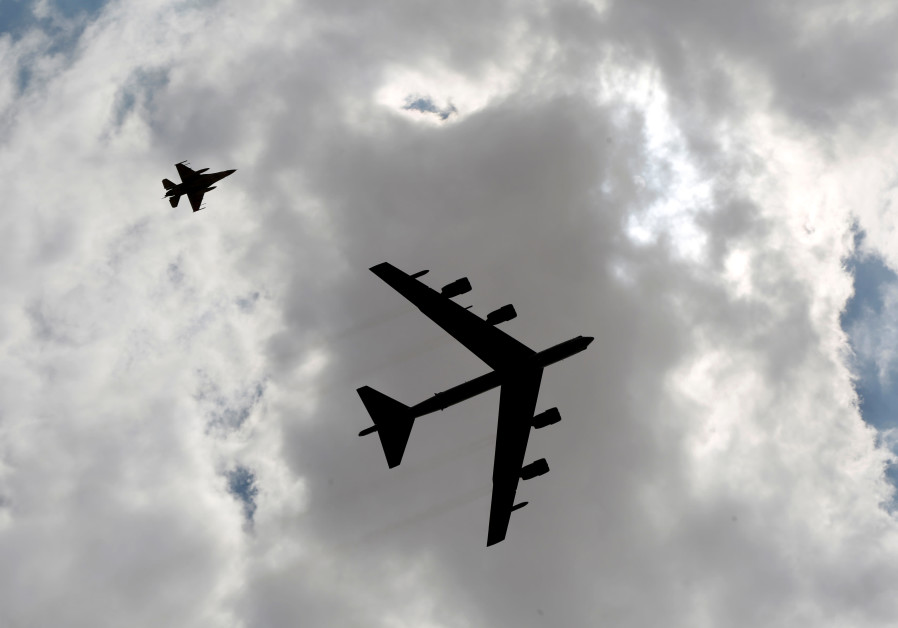
A U.S. B52 plane (R) flies during Exercise Eager Lion at one of the Jordanian military bases in Zarqa, east of Amman, Jordan, May 24, 2016. . (photo credit: MUHAMMAD HAMED / REUTERS)
The United States will likely end its air campaign against Islamic State in Syria when it pulls out troops, US officials said on Thursday, as President Donald Trump defended the planned withdrawal against criticism from allies abroad and at home.
US Defense Secretary Jim Mattis, who had opposed Trump’s decision on Syria, abruptly announced on Thursday he was resigning after meeting with the president. In a candid letter to Trump, the retired Marine general emphasized the importance of “showing respect” to allies.
NATO allies France and Germany said Washington’s change of course on Syria risks damaging the fight against Islamic State, the militant group that had seized swathes of Iraq and Syria but has now been squeezed to a sliver of Syrian territory.
Several of Trump’s fellow Republicans in Congress, joined by opposition Democrats, urged the president to reverse course, saying the withdrawal would strengthen the hand of Russia and Iran in Syria and enable a resurgence of Islamic State.
Trump, however, gave no sign of changing his mind and lashed out at Senator Lindsey Graham, a Republican who is sometimes an ally of the president but who has said a withdrawal would have “devastating consequences” for the United States.
“So hard to believe that Lindsey Graham would be against saving soldier lives & billions of $$$,” Trump tweeted. “Why are we fighting for our enemy, Syria, by staying & killing ISIS for them, Russia, Iran & other locals? Time to focus on our Country & bring our youth back home where they belong!”
Trump’s troop announcement on Wednesday upended a pillar of American policy in the Middle East and caused consternation in domestic and foreign critics who argued it would make it harder to find a diplomatic solution to Syria’s seven-year civil war.
It also appeared to add momentum to Trump’s long-stated goal of extricating the United States from its 17-year war in Afghanistan. US officials told Reuters on Thursday that the administration is planning to significantly draw down thousands of the 14,000 troops now in Afghanistan, where Mattis has argued for a strong US military presence.
France, a leading member of the US-led coalition against Islamic State, said it would keep its troops in northern Syria for now and contested Trump’s assertion that the group has been defeated in the country.
“Islamic State has not been wiped from the map nor have its roots. The last pockets of this terrorist organization must be defeated militarily once and for all,” French Defence Minister Florence Parly said on Twitter.
France has about 1,100 troops in Iraq and Syria providing logistics, training and heavy artillery support as well as fighter jets. In Syria it has dozens of special forces, military advisers and some foreign office personnel.
Trump, however, tweeted that he was fulfilling a promise to leave Syria made during his presidential campaign and arguing that the United States was doing the work of other countries and it was “time for others to finally fight.”
Four US officials, who spoke to Reuters on condition of anonymity, said the troop withdrawal is expected to mean an end to the US air campaign against Islamic State in Syria. The US-led air war has been vital to crushing the militants there and in neighboring Iraq, with more than 100,000 bombs and missiles fired at targets in the two countries since 2015.
Still, one US official said a final decision on the air campaign had not been made and did not rule out some kind of support for partners and allies.
The United States told the UN Security Council it was committed to the “permanent destruction” of Islamic State in Syria and would keep pushing for the withdrawal of Iranian-backed forces in the country.
The roughly 2,000 US troops in Syria, many of them special forces, were ostensibly helping to combat Islamic State but were also seen as a possible bulwark against Syrian President Bashar al-Assad, who has retaken much of the country from his foes in the civil war, with military help from Iran and Russia.
The Kurdish-led Syrian Democratic Forces (SDF), which have been fighting Islamic State with US support for three years, said the withdrawal of troops would let the militants regroup at a critical stage and leave Syrians stuck between “the claws of hostile parties” fighting for territory in the civil war.
The SDF are in the final stages of a campaign to recapture areas seized by the militants.
But they face the threat of a military incursion by Turkey, which considers the Kurdish YPG fighters who spearhead the force to be a terrorist group, and Syrian forces committed to restoring Assad’s control over the whole country.
The SDF said the battle against Islamic State had reached a decisive phase that required more support, not a precipitate US withdrawal.
Islamic State declared a caliphate in 2014 after seizing parts of Syria and Iraq. The hardline group established its de facto capital in the Syrian city of Raqqa, using it as a base to plot attacks in Europe.
According to US estimates, the group oversaw about 100,000 square kms (39,000 square miles) of territory, with about 8 million people under its control and estimated revenues of nearly $1 billion a year.
A senior US official last week said the group was down to its last 1 percent of the territory it once held. It has no remaining territory in Iraq, although militants have resumed insurgent attacks since the group’s defeat there last year.
Russian President Vladimir Putin said he largely agreed with Trump that the group had been defeated in Syria but added there was a risk it could recover.
He also questioned what Trump’s announcement meant in practical terms, saying there was no sign yet of a withdrawal of US forces, whose presence in Syria Moscow calls illegitimate.
Israel will escalate its fight against Iranian-aligned forces in Syria after the withdrawal of US troops, Prime Minister Benjamin Netanyahu said.
While Turkey has not commented directly on Trump’s decision, an end to the US-Kurdish partnership will please Ankara.
Kurdish militants east of the Euphrates in Syria “will be buried in their ditches when the time comes,” state-owned Anadolu news agency reported Defence Minister Hulusi Akar as saying.
Turkey has intervened to sweep YPG and Islamic State fighters from parts of northern Syria that lie west of the Euphrates over the past two years. It has not gone east of the river, partly to avoid direct confrontation with US forces.
U.S. air campaign against Islamic State in Syria likely to end
December 21, 2018Source: U.S. air campaign against Islamic State in Syria likely to end – Middle East – Jerusalem Post
US Defense Secretary Jim Mattis, who had opposed Trump’s decision on Syria, abruptly announced on Thursday he was resigning after meeting with the president.
BY REUTERS
DECEMBER 21, 2018 03:27
A U.S. B52 plane (R) flies during Exercise Eager Lion at one of the Jordanian military bases in Zarqa, east of Amman, Jordan, May 24, 2016. . (photo credit: MUHAMMAD HAMED / REUTERS)
The United States will likely end its air campaign against Islamic State in Syria when it pulls out troops, US officials said on Thursday, as President Donald Trump defended the planned withdrawal against criticism from allies abroad and at home.
US Defense Secretary Jim Mattis, who had opposed Trump’s decision on Syria, abruptly announced on Thursday he was resigning after meeting with the president. In a candid letter to Trump, the retired Marine general emphasized the importance of “showing respect” to allies.
NATO allies France and Germany said Washington’s change of course on Syria risks damaging the fight against Islamic State, the militant group that had seized swathes of Iraq and Syria but has now been squeezed to a sliver of Syrian territory.
Several of Trump’s fellow Republicans in Congress, joined by opposition Democrats, urged the president to reverse course, saying the withdrawal would strengthen the hand of Russia and Iran in Syria and enable a resurgence of Islamic State.
Trump, however, gave no sign of changing his mind and lashed out at Senator Lindsey Graham, a Republican who is sometimes an ally of the president but who has said a withdrawal would have “devastating consequences” for the United States.
“So hard to believe that Lindsey Graham would be against saving soldier lives & billions of $$$,” Trump tweeted. “Why are we fighting for our enemy, Syria, by staying & killing ISIS for them, Russia, Iran & other locals? Time to focus on our Country & bring our youth back home where they belong!”
Trump’s troop announcement on Wednesday upended a pillar of American policy in the Middle East and caused consternation in domestic and foreign critics who argued it would make it harder to find a diplomatic solution to Syria’s seven-year civil war.
It also appeared to add momentum to Trump’s long-stated goal of extricating the United States from its 17-year war in Afghanistan. US officials told Reuters on Thursday that the administration is planning to significantly draw down thousands of the 14,000 troops now in Afghanistan, where Mattis has argued for a strong US military presence.
France, a leading member of the US-led coalition against Islamic State, said it would keep its troops in northern Syria for now and contested Trump’s assertion that the group has been defeated in the country.
“Islamic State has not been wiped from the map nor have its roots. The last pockets of this terrorist organization must be defeated militarily once and for all,” French Defence Minister Florence Parly said on Twitter.
France has about 1,100 troops in Iraq and Syria providing logistics, training and heavy artillery support as well as fighter jets. In Syria it has dozens of special forces, military advisers and some foreign office personnel.
Trump, however, tweeted that he was fulfilling a promise to leave Syria made during his presidential campaign and arguing that the United States was doing the work of other countries and it was “time for others to finally fight.”
Four US officials, who spoke to Reuters on condition of anonymity, said the troop withdrawal is expected to mean an end to the US air campaign against Islamic State in Syria. The US-led air war has been vital to crushing the militants there and in neighboring Iraq, with more than 100,000 bombs and missiles fired at targets in the two countries since 2015.
Still, one US official said a final decision on the air campaign had not been made and did not rule out some kind of support for partners and allies.
The United States told the UN Security Council it was committed to the “permanent destruction” of Islamic State in Syria and would keep pushing for the withdrawal of Iranian-backed forces in the country.
The roughly 2,000 US troops in Syria, many of them special forces, were ostensibly helping to combat Islamic State but were also seen as a possible bulwark against Syrian President Bashar al-Assad, who has retaken much of the country from his foes in the civil war, with military help from Iran and Russia.
The Kurdish-led Syrian Democratic Forces (SDF), which have been fighting Islamic State with US support for three years, said the withdrawal of troops would let the militants regroup at a critical stage and leave Syrians stuck between “the claws of hostile parties” fighting for territory in the civil war.
The SDF are in the final stages of a campaign to recapture areas seized by the militants.
But they face the threat of a military incursion by Turkey, which considers the Kurdish YPG fighters who spearhead the force to be a terrorist group, and Syrian forces committed to restoring Assad’s control over the whole country.
The SDF said the battle against Islamic State had reached a decisive phase that required more support, not a precipitate US withdrawal.
Islamic State declared a caliphate in 2014 after seizing parts of Syria and Iraq. The hardline group established its de facto capital in the Syrian city of Raqqa, using it as a base to plot attacks in Europe.
According to US estimates, the group oversaw about 100,000 square kms (39,000 square miles) of territory, with about 8 million people under its control and estimated revenues of nearly $1 billion a year.
A senior US official last week said the group was down to its last 1 percent of the territory it once held. It has no remaining territory in Iraq, although militants have resumed insurgent attacks since the group’s defeat there last year.
Russian President Vladimir Putin said he largely agreed with Trump that the group had been defeated in Syria but added there was a risk it could recover.
He also questioned what Trump’s announcement meant in practical terms, saying there was no sign yet of a withdrawal of US forces, whose presence in Syria Moscow calls illegitimate.
Israel will escalate its fight against Iranian-aligned forces in Syria after the withdrawal of US troops, Prime Minister Benjamin Netanyahu said.
While Turkey has not commented directly on Trump’s decision, an end to the US-Kurdish partnership will please Ankara.
Kurdish militants east of the Euphrates in Syria “will be buried in their ditches when the time comes,” state-owned Anadolu news agency reported Defence Minister Hulusi Akar as saying.
Turkey has intervened to sweep YPG and Islamic State fighters from parts of northern Syria that lie west of the Euphrates over the past two years. It has not gone east of the river, partly to avoid direct confrontation with US forces.
Iraq’s Kurdish region alarmed by U.S. withdrawal
December 21, 2018Source: Iraq’s Kurdish region alarmed by U.S. withdrawal – Middle East – Jerusalem Post
Discussions to try and soften Ankara’s stance, dilute PKK role in eastern Syria came to naught.
DECEMBER 20, 2018 17:41
A KURDISH peshmerga soldier stands at a lookout near Bashiqa in northern Iraq. (photo credit: REUTERS)
In the days leading up to US President Donald Trump’s announcement that the US would withdraw from eastern Syria, Kurdish leaders in northern Iraq sought answers to rumors of US policy changes. Former Kurdistan Regional President Masoud Barzani met US anti-ISIS envoy Brett McGurk on December 17 and voiced concern about Kurds in eastern Syria.
The meeting with McGurk came as Turkey was upping its rhetoric about launching an operation in Syria against the Kurdish People’s Protection Units. US policy commitments at the time were unclear. The Kurds in northern Iraq had seen this before, in particular they saw the US commit to the Kurds and then walk away in the 1970s. They knew US policy zig-zagged occasionally and remembered the 1980s when the US met with Saddam Hussein, and the 1990s when the US set up a no fly zone and protected the Kurds from Saddam.
BARZANI AND KRG leaders had proposed in the past to allow Kurds affiliated with the KDP, and the umbrella KNC party in Syria, to play a greater role in eastern Syria. Many Kurds from Syria fled to the Kurdish region of Iraq in 2011 and 2012 as the rebellion against Assad began. Some formed a unit called the Rojava Peshmerga and wanted to return to eastern Syria to fight Assad and protect their lands. But the YPG and PKK-affiliates had come to control eastern Syria. The cleavages grew in 2014 when ISIS attacked the Kurds in Iraq and Syria. Although the Kurdish Peshmerga in Iraq and the YPG were both fighting ISIS, they traded accusations about their goals. The YPG entered Iraq’s Sinjar region to save tens of thousands of Yazidis from ISIS genocide in 2014 and accused the KDP of retreating. Over the years the border crossing from the Kurdish region of Iraq to the Kurdish region of Syria was a symbol of the failed relations between the two. It also symbolized an almost “cold war” between the regions. The Rojava Peshmerga, guarding roads in northern Iraq, even clashed with YPG fighters in areas near Sinjar.
Kurdish officials in Iraq discussed with the US what might come next. Their agenda was both personal and had larger ramifications. They understood that eventually Turkey would attack eastern Syria, just as it had sent Turkish forces into northern Iraq to attack the PKK.
This wasn’t an idle threat, since Turkey had done the same in eastern Turkey after the ceasefire with the PKK broke down in 2015. It had done the same in Afrin in northwest Turkey, and destroyed the YPG located there in during the two months of fighting.
According to accounts from these meetings, US officials discussed this issue with Kurdish officials. Could the YPG be convinced to reduce its visible presence in eastern Syria and withdraw from urban areas? Could the PYD, the political group connected to the PKK which runs eastern Syria, be convinced to allow more parties to participate? Would this ease Turkey’s concerns? The US suggested these measures that might tone down the tensions with Turkey, even as Ankara upped its rhetoric in the fall of 2018, threatening a major operation to “bury the YPG in their trenches,” “cleanse the border of a terrorist corridor,” and return eastern Syria to its “true owners.” Turkey also wanted to show its support for Arab opposition groups. This was the line of discussions that took place in the lead up to the December 14 crisis, when Trump phoned Turkish President Recep Tayyip Erdogan. Trump apparently made his decision to withdraw from Syria after the call.
NOW EASTERN SYRIA prepares for a Turkish operation. Kurds in Iraq fear that instability will result and that many Kurds from Rojava may flee a new round of fighting. US officials, including US envoy James Jeffrey, have discussed allowing the Rojava Peshmerga into eastern Syria, but these efforts have not come to fruition. They only have 6,000 fighters and this is not enough to control eastern Syria.
The potential for tragedy in eastern Syria involves some missed opportunities. Sources say that in 2012, before the rise of ISIS, there were attempts to reconcile the growing power of the PYD and Turkey. This was during a ceasefire with the PKK in eastern Turkey. Turkey was open to having a border crossing to eastern Syria, but didn’t want PKK flags on the border.
The Kurds in eastern Syria will face a choice between a tough battle they will inevitably lose against Turkey’s massive modern army, or signing an agreement between the Syrian regime and Russia that may allow the regime to return, or finding some other model. They have hundreds of kilometers of potential frontline with Turkey and they face internal dissent, including many in the areas which were liberated from ISIS who resent the SDF and are angling to ally with the Syrian regime, Turkey or a resurgent ISIS.
The Kurdish leadership in the KRG faced a crisis last year after its referendum, when Baghdad took back Kirkuk and Sinjar from the Peshmerga. They too felt betrayed by the US, which had backed them against ISIS. Now they have salvaged these problems, held elections, improved the economy and are hosting international events and diplomats. Unlike the KRG, eastern Syria is isolated. It once had closer friends in Damascus and Moscow, and even some discussions with Iran. But Russia and Iran have grown closer to Turkey. Iran’s President came to Turkey on December 20, and Turkey, Russia and Iran met in Geneva this week. With a US drawdown scheduled over three months – and only France appearing to say it will stay in eastern Syria – a new challenge awaits. Kurds in Iraq, sympathetic with Kurds in Syria even if there are political and ideological disagreements, don’t want to see a new crisis across the border.
Michael Oren on Mattis resignation: Israel will fend for itself
December 21, 2018Source: Michael Oren on Mattis resation: Israel will fend for itself – Israel News – Jerusalem Post
Mattis has been a strong supporter of Israel and its right to defend itself.
DECEMBER 21, 2018 10:28
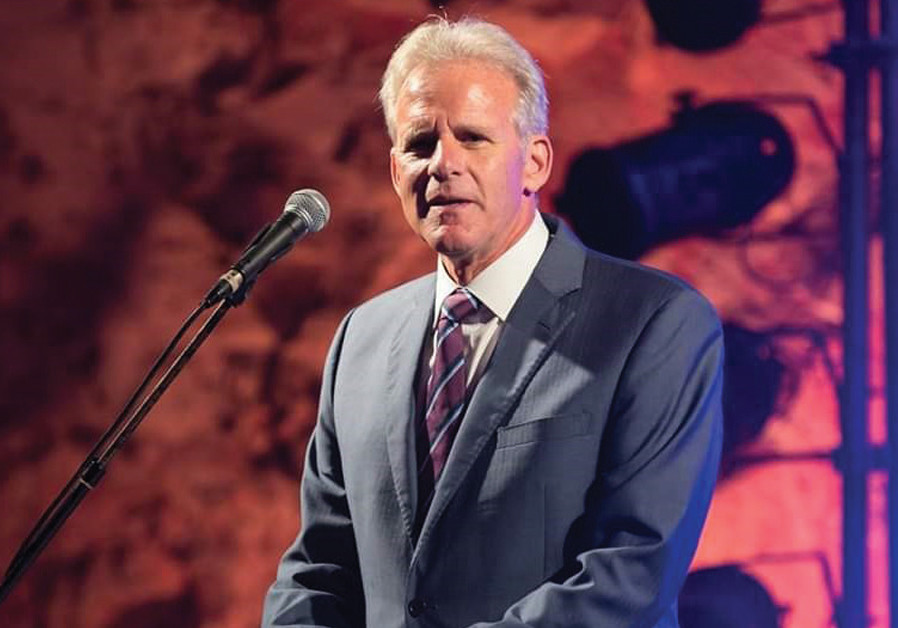
Michael Oren at Zedekiah’s Cave. (photo credit: GPO)
Deputy Minister and former ambassador to the US Michael Oren responded to the resignation of US Secretary of Defense Jim Mattis on Friday, “Today, as in the past, Israel will have to defend itself with its own forces in order to deal with the great threats in the north.”
Oren added, “”Thank you very much Jim Mattis, the outgoing Secretary of Defense, for many years of service and commitment to Israeli security. Like in Israel, Mattis believed that a strong American presence in the Middle East served as a buffer to Iran and other hostile elements.”
Knesset Foreign Affairs and Defense Committee chairman Avi Dichter also responded to the resignation on Friday in an interview on Army Radio. “There is no doubt that it is always good to have a friend in the region, but the presence of the American army here was not critical for us,” Dichter said.
“The US withdrawal can actually give rise to an opportunity to leverage a move to remove Iran from Syria, at least against the Russians,” he added.
Mattis has been a strong supporter of Israel and its right to defend itself. Mattis, a previous commander of the United States Central Command, responded to previous clashes involving Israel and Syria earlier this year with staunch words of support for Israel.
“Israel has an absolute right to defend itself – they don’t have to wait until their citizens are dying under attack before they actually address that issue,” Mattis has said in response to an Israeli attempt to strike a Syrian launch site in February 2018.
Avraham Gold contributed to this report.
How U.S.-Turkey crisis influenced Trump’s decision to withdraw from Syria
December 21, 2018Source: How U.S.-Turkey crisis influenced Trump’s decision to withdraw from Syria – Opinion – Jerusalem Post
Trump’s hurried exit from Syria, under pressure from a Turkish threat, will be interpreted by all sides as a strategic defeat, an abandonment and a debacle.
DECEMBER 20, 2018 21:45
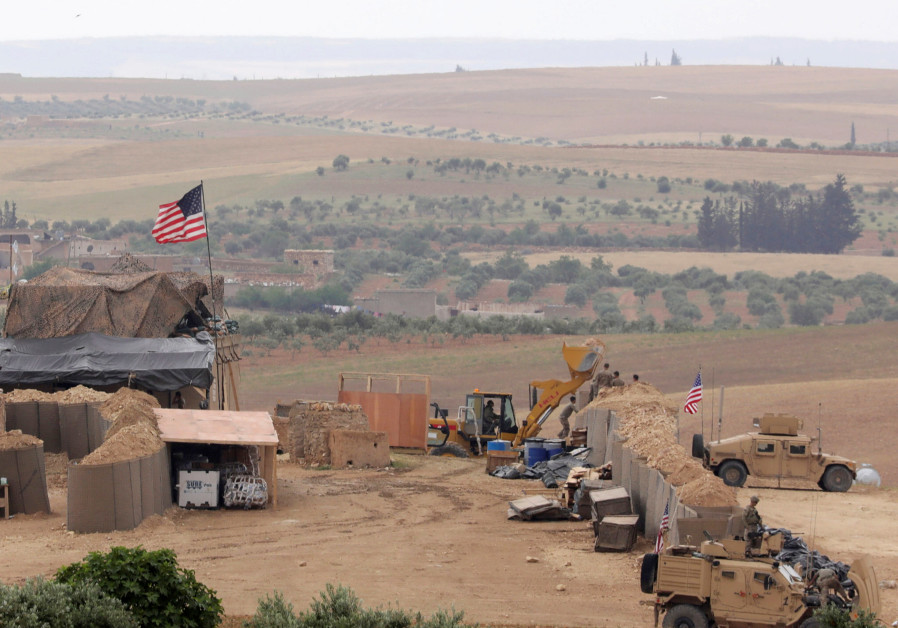
U.S. forces set up a new base in Manbij, Syria May 8, 2018. Picture Taken May 8, 2018. (photo credit: RODI SAID / REUTERS)
The apparent decision by US President Donald Trump to order the complete withdrawal of US forces from Syria was preceded by a looming crisis between the US and Turkey. It is worth looking at this crisis in detail, as it may well hold the key to this latest dramatic development.
Trump and Turkish President Recep Tayyip Erdogan discussed the matter of Syria in a phone call last Friday. In a speech on Monday, Erdogan then reiterated his threat to launch a military incursion into northeast Syria.
This operation, if undertaken, would have pitted Turkish troops against a US partner force – the Kurdish-led Syrian Democratic Forces (SDF). Ankara sees the latter as inseparably linked to the PKK (Kurdish Workers Party), which has been engaged in an insurgency against Turkey since 1984.
To his audience in Konya province, Erdogan asserted that the Turkish incursion would commence “at any moment now.” According to local media reports, both Kurdish and Turkish forces had begun to dig entrenchments along the border, in anticipation of the coming fight.
The Turkish threat placed the US in a difficult position.
On the one hand, Turkey is a NATO member state, with a powerful army. The air base at Incirlik in southern Turkey is an important US strategic asset in the Middle East. Under President Erdogan and the AKP, Turkey has in recent years been set on a path of increasing authoritarianism at home, and support for Sunni Islamist and jihadi forces in the region.
In recent months, Ankara has been strengthening ties with Russia. Turkey is set to pursue the Russian S-400 air-defense system and is an active participant in the Russian-led attempt at a diplomatic process to conclude the Syrian civil war on the basis of continued rule by the Assads. Yet precisely because of the problematic nature of its leadership, coupled with its size and economic and military power, the US is concerned to prevent further Turkish drift toward closer relations with Western rivals and enemies in the region.
On the other hand, the SDF (with the Kurdish YPG at its core) has emerged as an example of a reliable and successful partner force for US air power and Special Forces (and Western strategic objectives) in the troubled Syrian arena. The SDF was the main ground force in the war against ISIS. The territorial phase of this war is now almost completed, with the SDF’s conquest of the town of Hajin in the lower Euphrates River Valley earlier this month. But the US partnership with this force, and tacitly with the de facto governing authorities in the area that it controls, goes beyond the conventional fight against the Sunni jihadists of ISIS.
The SDF is linked to the Democratic Federation of Northern Syria, which is the Kurdish-led authority in roughly 30% of Syrian territory. De facto ownership of this territory by a US ally brings with it a series of advantages to the West.
Firstly, this area contains around 80% of Syria’s oil and gas reserves. Whoever controls it hence becomes automatically a key player in any discussion of Syria’s future.
Secondly, ISIS may have disappeared as a ruling authority, but it remains very much in existence as a networked insurgency. A recent Pentagon estimate suggested that the movement still possesses around 30,000 fighters in Syria and Iraq, and has access to $400 million. Control of the territory east of the Euphrates, and alliance with a ground force of proven reliability, provide the opportunity for continued action where necessary to prevent the reemergence of ISIS.
Thirdly, possession of Syria east of the Euphrates forms a partial land obstacle to the Iranian ambition of building an area of contiguous control from the Iraq-Iran border to the Mediterranean Sea, Lebanon and the border with Israel. For all these reasons, Israel has supported and continues to favor the maintenance of the current arrangement in eastern Syria.
THE PREFERRED US method for resolving this dilemma until now has been to seek to avoid it. Washington has tried to keep both sides happy.
Regarding Turkey, the US made no attempt to prevent Ankara’s destruction in January 2018 of the Kurdish canton in Afrin in northwest Syria. Rather, the US stressed that since that area had no part in the war against ISIS further east, it was not included in the alliance between the US and the SDF.
Similarly, the relationship with the de facto rulers in eastern Syria has been officially limited to the purely military. Neither the US nor any other country has recognized the Democratic Federation of Northern Syria.
Yet the US has also sought to reassure the Kurds, and indeed the relations between the sides have been deepening on the ground. The US recently committed to the training of “35,000 to 40,000” additional local forces to provide stability in eastern Syria, according to a recent statement by Joseph Dunford, chairman of the Joint Chiefs of Staff. Washington recently also established a series of observation points along the border – at Tel Abyad, Ras al-Ain and Kobani. Both Kurds and Turks understood these as intended to deter any possibility of a Turkish incursion.
Ankara evidently was no longer willing to acquiesce to this ambiguous situation, and wanted to test the issue. Why now? Turkey’s substantive concerns notwithstanding, there are local elections due in the country in March. The poor state of the economy has led to a sharp decline in current levels of support for the AKP and its allies. A bout of nationalist saber–rattling may have helped to rectify this.
But this does not mean that the threat was not a serious one. Erdogan would have noted not only the precedent of Afrin, but also the abandonment by the West of its rebel clients in Deraa and Quneitra provinces in summer 2018, in the face of a determined assault by the regime, Russia and Iran’s proxies. He would have listened carefully to the many ambiguous statements by US officials regarding the relationship with the SDF. In the most recent example, James Jeffrey, US special representative for Syria engagement, had described the relations as “transactional” and “tactical” and noted that the US does not have “permanent relations with sub-state entities.”
All this may have encouraged him to believe that the US, after perhaps some words of disapproval, would acquiesce to threats of a Turkish campaign whose actual purpose would be the expulsion of Washington from the Syrian space, so that Ankara, Moscow, Tehran and Damascus could then seek to broker an end to the war in the country.
WHAT REMAINED to be seen was who would blink first. A major military incursion east of the Euphrates would have been a clear act of defiant aggression against the expressed will of Washington. At that point, the US would have needed to decide whether its interests in Syria and its credibility more broadly were of sufficient importance to necessitate an effort to induce Ankara to reverse course.
Or, of course, the confrontation could be avoided by the wholesale US acceptance of Turkish demands, in contradiction to stated US policy.
The contradiction between the Western attempt to appease Turkey, and the tentatively emergent strategy vis-à-vis Syria had been apparent for some months. It was now set to be resolved – one way or the other.
If the US indeed now follows through with the rapid withdrawal of the American military presence in Syria in its entirety, as a number of news outlets have reported and the president appears to have confirmed, then we have an answer. It means that the US has indeed blinked first, and is set on reversing course in Syria – by embarking on a hurried exit from the country. This will be interpreted by all sides as a strategic defeat, an abandonment, under pressure, of allies and a debacle.
The writer is a research fellow at the Jerusalem Institute for Strategic Studies.
Caroline Glick: Trump’s decision to pull forces out of Syria has upsides
December 21, 2018Source: Caroline Glick: Trump’s decision to pull forces out of Syria has upsides – Opinion – Jerusalem Post
On its face, Trump’s announcement that he is pulling US forces out of Syria seems like an unfriendly act toward Israel. But it isn’t.
DECEMBER 21, 2018 14:57
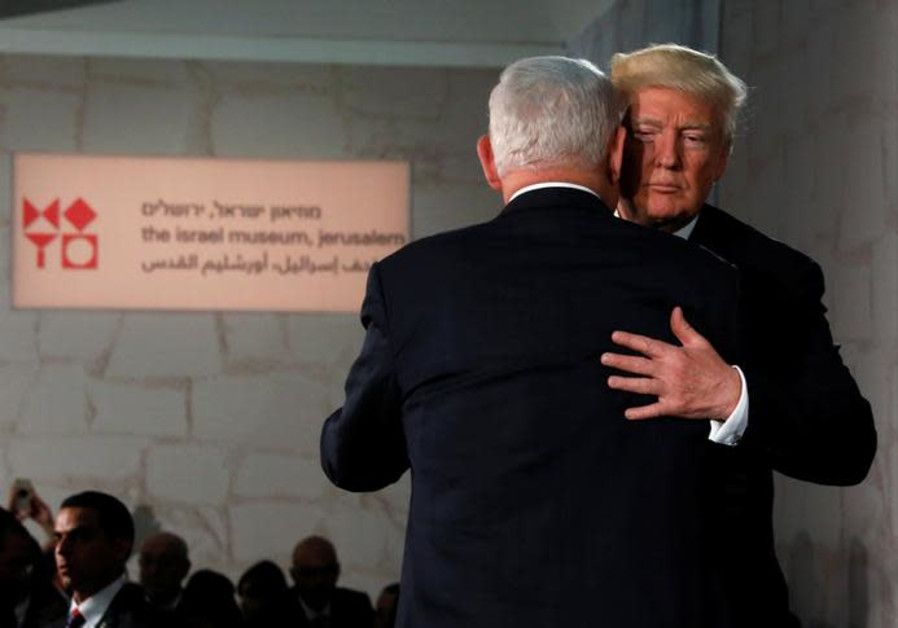
U.S. President Donald Trump (R) embraces Israel’s Prime Minister Benjamin Netanyahu after his remarks at the Israel Museum in Jerusalem May 23, 2017. (photo credit: JONATHAN ERNST / REUTERS)
On its face, President Donald Trump’s announcement that he is pulling US forces out of Syria seems like an unfriendly act towards Israel. But it isn’t. Trump’s decision to pull US forces out of Syria is of a piece with outgoing US Ambassador to the UN Nikki Haley’s address on Tuesday to the UN Security Council regarding the Palestinian conflict with Israel. Both statements reflect the depths of the administration’s friendship and support for the State of Israel.
In Haley’s speech at the Security Council’s monthly meeting concerning the Palestinians’ conflict with Israel she decried the “UN’s obsession with Israel.”
Haley noted that the peace process between Israel and the Palestinians has failed for 50 years. And she said that it is time to try something new. She enjoined her “Arab and European brothers and sisters” to move beyond the “failed talking points” that formed the basis of the failed peace plans of the past half century.
Haley’s address intuited a key point that has never been raised by a senior US official. The “peace process” which has been ongoing between Israel and the PLO since 1993 is antithetical to actual peace.
Consequently, any effort to achieve actual peace between Israel and the Palestinians requires the abandonment of the “peace process.”
Haley made this clear by acknowledging that Israel has far less to gain and much more to lose from the peace process than the Palestinians do.
In her words, “Israel wants a peace agreement, but it doesn’t need one.”
“Both sides would benefit tremendously from a peace agreement. But the Palestinians would benefit more and the Israelis would risk more,” Haley said.
She added that if efforts to achieve peace were to fail, “Israel would continue to grow and prosper.”
The Palestinians on the other hand, “would continue to suffer.”
Haley’s insight puts paid the popular claim that Israel’s survival depends on the establishment of a Palestinian state in Judea, Samaria, Gaza and northern, eastern and southern Jerusalem. For years, pro-Palestinian forces have insisted that their demand that Israel surrender its capital and its heartland to the PLO is actually a pro-Israel position. Indeed, they say, anyone who rejects it is anti-Israel.
Haley exposed their conceit. “It would be foolish for [Israel] to make a deal that weakened its security,” she insisted.
The ambassador argued in favor of the administration’s still unpublished peace plan based on the plan’s rejection of the peace process’s “unspecific and unimaginative guidelines.” The administration’s plan is promising she said, because it is based on reality – or in her words, because it “recognizes [that] the realities on the ground in the Middle East have changed… in very powerful and important ways.”
HALEY ENCOURAGED the Europeans and Arabs to make a choice “between a hopeful future that sheds the tired, old and unrealistic demands of the past or a darker future that sticks with the proven-failed talking points of the past.”
That is, she told them to abandon the catechisms of the peace process in favor of a path that is based on the realities she outlined in her speech: Israel doesn’t need peace and it won’t sacrifice its security to achieve one. The Palestinians need peace more than Israel does and they should be willing to make sacrifices to achieve it.
The European response to Haley’s speech showed just how stark a departure her speech – and the Trump administration’s general vision for resolving the Palestinian conflict with Israel – is from everything we have experienced since 1993.
The eight European members of the Security Council – France, Britain, the Netherlands, Poland, Sweden, Belgium, Germany and Italy – issued a joint statement rebuking her. They warned the administration that any peace plan that would disregard “internationally agreed parameters… would risk being condemned to failure.”
The European statement continued, “The EU is truly convinced that the achievement of the two-state solution based on the 1967 borders with Jerusalem as the capital of both States – that meets Israeli and Palestinian security needs and Palestinian aspirations for statehood and sovereignty, ends the occupation and resolves all final status issues in accordance with Security Council Resolution 2234 and previous agreements – is the only viable and realistic way to end the conflict and to achieve a just and lasting peace.”
They then enjoined the US to get back to the business of putting the screws on Israel to agree to these “parameters,” stating that the EU “will continue to work towards that end with both parties and its regional and international partners.”
Trump and his advisers are unlikely to be swayed by the European threats. After all, if they had been trying to make the Europeans like them, they would have just continued the foreign policy of their predecessors. The EU’s rebuke of Haley was important not because it impacted the administration’s determination to abandon a quarter century of failure in favor of reality-based success – it was important because it showed just how far away the Trump administration has walked from the failures of its predecessors.
THIS BRINGS us to Syria and Trump’s sudden announcement that he is pulling all US forces out of the embattled country. How are we to understand a move that seems to advance the interests of all of the US’s worst enemies at the expense of its closest allies?
US forces were first deployed to Syria in 2014 as part of an international anti-Islamic-State coalition. At the time, then president Barack Obama was engaged in negotiations with the Iranian regime toward the nuclear deal.
Obama’s embrace of Iran was part of an overall strategic realignment of the US away from its traditional Sunni Arab allies and Israel toward Iran and the Muslim Brotherhood. As Obama’s deputy national security adviser Ben Rhodes told an audience of pro-Obama activists at the time, Obama viewed his embrace of Iran through nuclear talks as the central policy of his second term.
Since Sunni ISIS was perceived as hostile to Shi’ite Iran, by fighting ISIS, Obama was achieving two goals: He was helping Iran by getting rid of a powerful adversary in Iraq and Syria, and he was selling the idea to the American public that Iran was their ally in a common war against ISIS.
US forces in Syria were given a very narrow mandate. They were prohibited from taking any action against Iran or Iranian-backed forces.
For the past two years, the Trump administration has continued implementing Obama’s pro-Iran policy in Syria. Efforts to change the US mission have failed, largely due to Pentagon opposition. During his visit to Israel in August, National Security Advisor John Bolton said that the mission of US forces had been expanded to block Iran from asserting control over Syria. But since the administration didn’t request a new mandate from Congress, the mission remained officially what it has been since 2014.
It is true that on the ground, the US forces in Syria do far more than fight ISIS. They block Iran from controlling the Syrian border with Iraq and so prevent Iran from controlling a land route from Tehran to the Mediterranean Sea.
US forces also have blocked Turkey from taking over Syrian Kurdistan and have prevented Turkish President Recep Erdogan from carrying out his pledge to destroy the Kurdish-dominated Syrian Democratic Forces. If the US chooses not to arm and supply the SDF, once the Americans leave, Syria’s Kurds – America’s only loyal allies there – will either have to cut a deal with Russia and Iran or face Turkey alone.
US forces in Syria also block Russia from taking over Syria’s oil fields. On February 7, forty US Special Forces troops blocked hundreds of Russian mercenaries from seizing the Conoco oil field on the eastern side of the Euphrates.
Finally, US forces in Syria act as a deterrent against Russian, Iranian and Hezbollah aggression against Israel. With US forces on the ground, they fear that provoking a war with Israel will be tantamount to going to war against America. With US forces out of Syria, their fear of attacking Israel will diminish.
BUT THERE ARE two significant upsides to the US move which together outweigh the downside, at least as far as Israel is concerned.
First, by leaving Syria, the US is abandoning Obama’s pro-Iranian policy once and for all. Further indication that this is part of a far-reaching strategic shift rather than a dangerous move by an impulsive president came with a Hadashot News report Wednesday night that senior US officials told Israel this week that Washington will align its policy towards Lebanon and the Lebanese Armed Forces (LAF) with Israel’s position if Hezbollah receives a larger role in the next Lebanese government than it enjoyed in the previous one.
Hezbollah and its allies won a majority of the seats in May’s parliamentary elections. Negotiations towards a new government have been deadlocked over Hezbollah’s demands for expanded portfolios.
Obama’s Lebanon policy – to support the Hezbollah-controlled Lebanese government and the LAF – was part of his overall policy to empower Iran at the expense of Israel and the Sunni Arab states. Until now, guided by the Pentagon, the Trump administration has maintained this policy, much to Israel’s distress.
The advantage Israel gains from US abandonment of the Hezbollah-controlled Lebanese government and the LAF far outweighs the blow it takes from the withdrawal of US forces from Syria. If the US abandons its support for the LAF and the Lebanese government, Israel will be able to defeat Hezbollah in war.
PRIME MINISTER Benjamin Netanyahu’s statement Thursday morning revealed the second upside of Trump’s decision.
Netanyahu said: “We will continue to act in Syria to prevent Iran’s effort to militarily entrench itself against us. We are not reducing our efforts; we will increase our efforts.”
He added that, “I know that we do so with the full support and backing of the US.”
If the US backs Israel in war against Iran and Hezbollah by, among other things, deterring Russia and Turkey from getting involved; defending Israel at the UN; and supplying it with the weapons and other indirect support it needs to succeed – and it gives Israel a green light to attack the Hezbollah-controlled Lebanese government and military – then Trump’s move represents a full abandonment of Obama’s anti-Israel, pro-Iranian policies.
Haley explained on Tuesday that, “The world must know that America will remain steadfast in our support of Israel, its people and its security. That is an unshakable bond between our two peoples. And it is that bond – more than anything else – that makes peace possible.”
By abandoning the anti-Israel fake “peace process” and striking out on a new path based on reality, and by walking away from Obama’s pro-Iran policies in Syria and Lebanon and backing Israel in its efforts to defeat its enemies, the Trump administration is demonstrating what pro-Israel really means. So long as it is true to its word, Israel is safer and stronger for it.
http://www.CarolineGlick.com
Ex-government agent discusses using AI to battle Hezbollah rockets
December 21, 2018Source: Ex-government agent discusses using AI to battle Hezbollah rockets – Opinion – Jerusalem Post
Ex-government agent discusses using AI in battling Hezbollah rockets, targeting terrorists, Russia-China cyber challenges and Iran.
DECEMBER 20, 2018 21:25

A man holds a laptop computer as cyber code is projected on him. (photo credit: KACPER PEMPEL/REUTERS)
Amit Meltzer is not only a former chief technology officer for a key Israeli government agency and a top cyber security consultant, he is also a master strategist.
Discussing the applications of Israeli government artificial intelligence (AI) power in combating a range of national security issues on the sidelines of a Basis Technology conference in Tel Aviv, it was apparent that his answers to most questions went several layers deeper than even many others in his field.
Meltzer had unusual insights into using AI operationally against Hezbollah rockets, for targeting terrorists, competing with Russian and Chinese cyber hacking, and going beyond AI regarding Iran’s nuclear weapons program.
Noting to Meltzer that The Jerusalem Post reported back in June 2015 that former “Israeli NSA” head Brig.-Gen. (res.) Pinchas Buchris had said that Israel could hack Hezbollah’s advanced computerized rockets, he was asked what was new that AI could bring to the table.
Meltzer said that it was important to understand that it’s possible there were multiple technologies in play, and that Hezbollah is trying to compensate for Israeli hacking abilities by using less hackable technologies.
In many cases, he said, “it is easy” to hack digital systems and that with GPS – “you just need to block the signal.”
However, he said there are inertial navigation systems which use a variety of motion, biometric and other censors to calculate a flight pattern to a target in advance which are much harder to disrupt or hack.
Further, he said, Israeli adversaries have themselves learned how to block GPS signals reportedly causing the IDF to “lose the ability to do exact targeting” using solely that tool.
While Meltzer clarified this jamming and hacking arms race with Hezbollah, where does AI come into the picture?
Here, Meltzer’s insights were penetrating.
Essentially, he said, AI can collect massive amounts of data about the timing and location of Hezbollah rocket crews both before and during their preparations for firing rockets, in order to target those teams before they launch their rockets.
So powerful are the AI indicators, he said, that sometimes they determine where a rocket cell will be going to before it gets there.
Moreover, he said, they can likely have the IDF’s targeting “tool” (aircraft or, according to foreign reports, drones) wait for the cell to arrive or even take the time to strike another target first, knowing that the rocket cell cannot set up and fire for minutes.
AI may be able to rate cells and their weaponry which fire more than once, in terms of their likelihood of hitting an actual Israeli target. This would function much the same way that the Iron Dome can rate the level of danger of rockets once they are launched based on their trajectory.
How?
Both in peace time, but especially if a conflict starts, he said that Israeli intelligence is constantly surveilling Hezbollah rocket crews and known or suspected locations of rockets.
AI can analyze the surveillance data and geography to calculate and compare how long different teams will take from the moment they start to unearth their hidden rockets until the moment they are set up to fire them, said Meltzer.
Some cells may need to move short distances, while some may need to drive a kilometer.
In some cases, he said, AI can also identify an operational window precisely for deploying paratroopers to deal with a Hezbollah threat for which aerial strikes may be insufficient.
He said that before AI, sometimes such windows were missed or there was undo operational hesitation because of imprecise information.
All of this can also be crucial, he noted, in targeting Hezbollah rocket cells at a point relatively far away from the civilian location where the rockets are often hidden so as to reduce collateral civilian casualties.
This last point does not just apply to Hezbollah, but any targeting of terrorists who use human shields.
For example, Meltzer said that, unlike Saudi Arabia, Pakistan and others, Israel has a “weakness” that it wants to be ethical. He added that Hamas has exploited this by hiding much of its leadership under Shifa Hospital in Gaza at various times over the last decade.
AI can help calculate when and where an arch-terrorist will be alone with a rate of precision that past intelligence could almost never approach.
Moving to cyber challenges from Russia and China following a range of reports of those cyber powers using their tools on Israel, Melzer said that the issue is, “not a zero-sum game.”
Continuing, he said that there is “a big difference between intelligence collection by the Chinese versus the Russians” when they use cyber tools on Israel.
With Russia, he noted that it is “working strategically with countries in the area” and could pass on intelligence it obtains to the Assad regime in Syria.
“There is a built-in motive for them” which can lead to Russia “hurting us operationally,” but in terms of retaliating, he said “we also do not want a conflict with Russia.”
In contrast, he said that “the Chinese have no interest against Israel. They just collect intelligence on the entire world” as a mode of operation. He said this means that the “chance they will give this intelligence to adversaries” of Israel is “much lower than with the Russians.”
Next, Meltzer discussed reports about the US government banning the use of Chinese cellphones and some other Chinese technologies to address concerns of spying, while Israel dives deeper into importing many of the same Chinese technologies.
Why is the US acting defensively while Israel is not?
According to Meltzer, the US ban was mainly for show since China’s factories have been producing chips and elements of broadband technology for devices all over the world for years.
His point was that these elements of Chinese technology are so deeply ingrained in most of the world’s technological infrastructure, including in the US, that there is essentially no way to be free of it even in the medium term.
Really, he said, the US ban is part of the broader trade war for influence between the US and China which is harming both, and which Israel has no interest in.
He said this also means that China does not need to hack into systems the way that Russia does. Rather, it has a built-in advantage of backdoor access through its technology used worldwide.
In contrast, he said that Russia must employ more classic spying and offensive cyber tactics to collect information on foreign countries.
Meltzer was not particularly optimistic about Israel’s ability to use AI to defend against Chinese or Russian cyber powers, but was not concerned about the impact from China, and even with Russia, he believed that Russia would act conservatively so as not to inflame the Israeli-Syrian conflict.
He said that Russia’s moving its anti-aircraft S-300 system to Syria could serve as a diplomatic statement. But he implied that Russia would want to avoid the embarrassment that could occur if Israel had to target the S-300 systems.
With regard to Iran’s nuclear program, Meltzer was not optimistic about the long-term impact of Israeli cyber or AI despite past success, according to foreign reports of using the Stuxnet virus to delay the program.
“That is a delaying strategy… but you cannot stop them completely with viruses,” he said.
He said that cyber and AI could be interwoven with other technological and human intelligence to locate facilities, including facilities with large uranium footprints.
But mostly, he said, short of using military force, only some form of diplomacy “like Trump is trying to do with North Korea using both carrots and sticks” can solve the issue.
Switching to discussing AI and Basis technology’s products – designed to extract intelligence from multilingual texts – he said that “text analytics… is underutilized for the civilian sector.”
He said that AI and other new technological tools could be used to map out genetic data and tailor treatments and treatment plans to specific patients so that more patients can receive complex treatments and at reduced costs.
Meltzer explained that under the current system, a huge amount of costs comes from regular doctor visits to carry out generic checks, many of which might not be necessary or which a patient could administer at home given AI’s benefits.
Overall, the picture that Meltzer paints is that AI’s largest benefits are not its first level of increased speed at performing tasks, but the way it can be creatively used through second-level higher order and operational planning.




 anneinpt
 artaxes
 danmillerinpanama
 davidking1530
 Peter Hofman
 Joseph Wouk
 Peter
Peter Louisiana Steve
 WarSclerotic
Recent Comments