Republican Sens. Tom Cotton (Ark.) and Ted Cruz (Texas) introduced a resolution on Tuesday encouraging the United States to recognize Israel’s sovereignty over Golan Heights.
The resolution’s aim is for the U.S. Senate to recognize Israel’s 51 years of control over the contested region. Israel took control of the region in 1967, during the Six Day War in which Israel defended itself from attacks from Syria and other Arab nations in the region. In 1981, Israel annexed the Golan Heights. Since then, the U.S. has refused to recognize the region as sovereign territory of Jewish state.
Cotton and Cruz released a statement telling their colleagues it is now time for the U.S. to recognize Israel’s sovereignty over the region.
“Israel’s northern border is threatened by Iranian forces and their proxies in Lebanon and Syria, including Hezbollah’s 150,000 rockets, armed drones, newly discovered terror tunnels, and more. Meanwhile, with the Ayatollahs’ help, Bashar al Assad’s regime is on the verge of securing victory in Syria’s civil war. He may soon turn his attention back to threatening the Jewish state.” Cotton and Cruz said. “Israel gained possession over the Golan Heights in a defensive war over 50 years ago, and has responsibly controlled the area ever since. It’s past time for the United States to recognize reality by affirming Israel’s sovereignty over the Golan Heights.”
Earlier this year, the House of Representatives debated a similar resolution. Then-Rep. Ron DeSantis (R., Fla.) introduced a resolution that would have Congress recognize the Golan Heights as fully belonging to Israel. The measure was never adopted and was killed by House leadership.
If the resolution introduced by Cruz and Cotton is adopted, the Senate would recognize six points:
(1) the United States supports the sovereign right of the Government of Israel to defend its territory and its citizens from attacks against Israel, including by Iran or its proxies;
(2) Israel’s sovereignty over the Golan Heights is critical to Israel’s national security;
(3) Israel’s security from attack from Syria and Lebanon cannot be assured without Israeli sovereignty over the Golan Heights;
(4) it is in the United States’ national security interest to ensure Israel’s security;
(5) it is in the United States’ national security interest to ensure that the Assad regime faces diplomatic and geopolitical consequences for the killing of civilians, the ethnic cleansing of Syrian Sunnis, and the use of weapons of mass destruction, including by ensuring that Israel retains control of the Golan Heights; and
(6) the United States should recognize Israel’s sovereignty over the Golan Heights.
Israel will study the US decision to pull its forces from Syria and will ensure its own security, Prime Minister Benjamin Netanyahu said on Wednesday.
Netanyahu in a statement said he had spoken over the past two days with US President Donald Trump and Secretary of State Mike Pompeo about their intention to withdraw troops from Syria.
“They made clear they have other ways to have influence in the area,” Netanyahu said.”We will study the timeline, how it will be done and of course the implications for us. In any case, we will make sure to maintain Israel’s security and protect ourselves from this arena,” he said.
Russia’s Foreign Ministry, meanwhile, said the US decision to withdraw creates prospects for political settlement to the years-long, bloody Syrian civil war, according to the TASS news agency.
TASS also cited the ministry as saying that an initiative to form a Syrian constitutional committee had a bright future with the US troop withdrawal.
Russia is a key backer of Syrian President Bashar Assad, and Russian President Vladimir Putin’s support is believed by many to have turned the tide of the war in Assad’s favor.
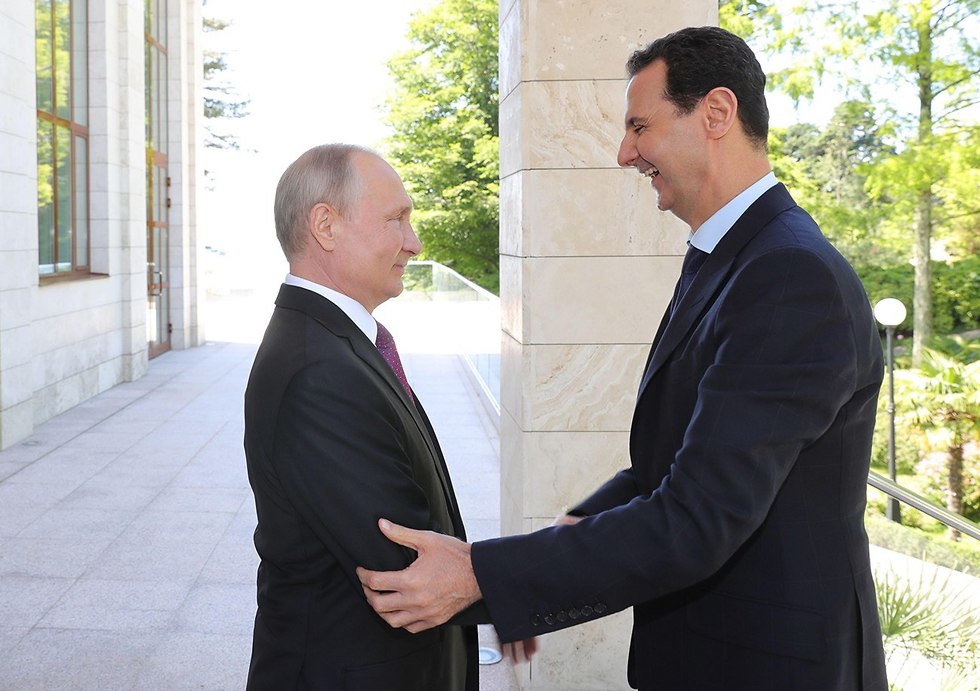
Russian President Vladimir Putin with Syrian counterpart Bashar Assad (Photo: Reuters)
Trump tweeted that the troops would be leaving as the US had defeated ISIS, which he said was his sole reason for being in Syria.
But in the UK, minister in the Defense Ministry Tobias Ellwood used Trump’s favored means of communication to express his disapproval of the decision.”I strongly disagree,” Ellwood tweeted in response to Trump’s claim that Islamic State had been defeated. He warned that the organization “has morphed into other forms of extremism and the threat is very much alive.”
In the US, senior members of Trump’s own Republican Party denounced the decision as having a far-reaching, negative impact.
Withdrawing the troops, said Senator Lindsey Graham, a recent staunch supporter of the president, would be “a big win for ISIS, Iran, Bashar al-Assad of Syria and Russia.”
Fellow GOP Senator Marco Rubio also condemned the move, saying that a full, rapid withdrawal would be a “grave error” that had implications beyond the battle against Islamic State.
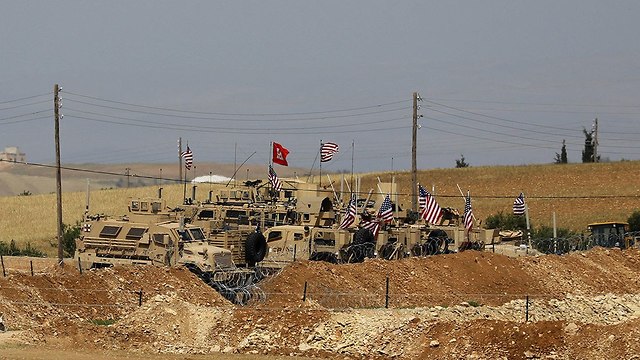
An American military base in Syria (Photo: AFP)
The Pentagon said Wednesday that the process of withdrawing had already begun, while a US official said that the full redeployment would take between 60-100 days.
“The Coalition has liberated the ISIS-held territory, but the campaign against ISIS is not over,” Pentagon spokeswoman Dana White said in a statement, using an acronym for Islamic State.
“We have started the process of returning US troops home from Syria as we transition to the next phase of the campaign,” she said.
“For force protection and operational security reasons we will not provide further details. We will continue working with our partners and allies to defeat ISIS wherever it operates.”
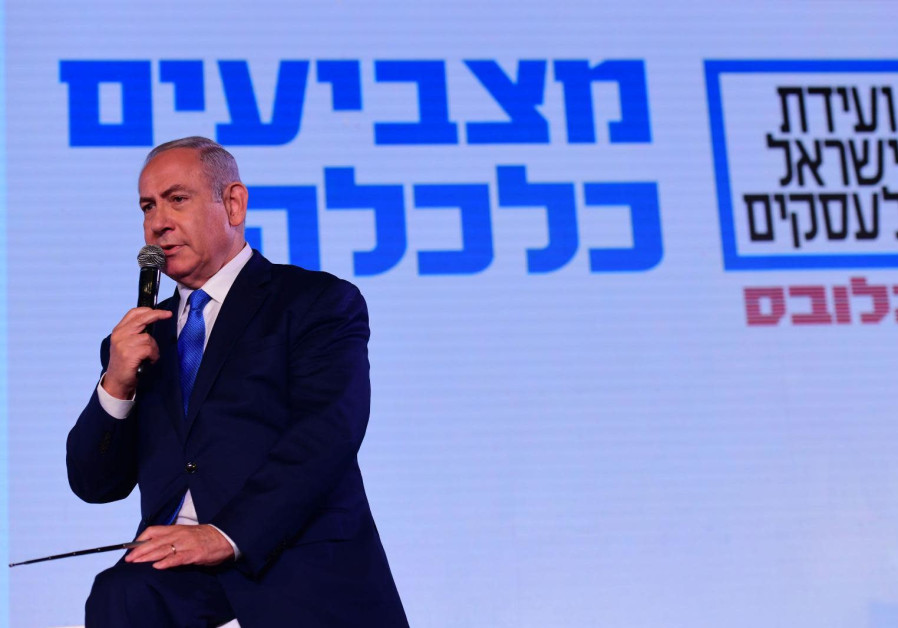
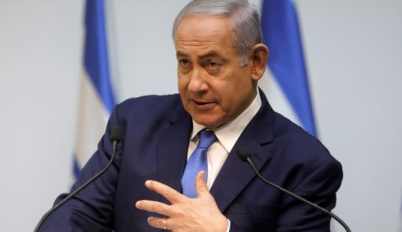
Prime Minister Benjamin Netanyahu at the Globes Conference, December 19, 2018. (photo credit: KOBI GIDEON/GPO)
‘The IDF is the only army that is fighting the Iranian army in the world, we are seeing great success’
The only way that Israel can ensure its military might is through a powerful, free market economy, Prime Minister Benjamin Netanyahu said on Wednesday.
“It is impossible to maintain the very foundation of our existence without economic power that requires a free market,” Netanyahu told the Globes Business Conference.
While recognizing the significant contribution of American aid to finance Israel’s security needs, Netanyahu emphasized that Israel is responsible for generating 88% of the vast security budget that funds the IDF, Mossad and Shin Bet (Israel Security Agency).
“That is why we have implemented 50 to 60 major reforms that have boosted the GDP and given us the tools to make progress,” Netanyahu said, adding that the combination of Israel’s military, technological and economic power has resulted in unprecedented political prosperity.
“Only the strong survive, and with strength you make alliances and make peace,” Netanyahu said. “The strong maintain peace, and we are ensuring that Israel will be very strong indeed.”
Netanyahu said he had discussed the recent imposition of American sanctions against Iran with US President Donald Trump and Secretary of State Mike Pompeo earlier this week, stating that Israel had been striking Iran in Syria, and the US had been striking Iran economically, in order to shrink the body responsible for most of Israel’s security problems.
“The IDF is the only army fighting the Iranians in the world and, so far, we have had significant success,” said Netanyahu.
“We are fighting the branches of Iran, and its offshoot Hezbollah. We are exposing its tunnels and systematically depriving them of all their tunnels, just as we are doing to Hamas in the South by various means.”
Since launching Operation Northern Shield two weeks ago, the IDF has already exposed four Hezbollah attack tunnels. The operation is expected to be completed in the coming weeks.
“We are denying them precise weaponry by various means. They planned to have thousands of precise missiles, but they have a few dozen at most.”
Netanyahu also said Israel has uncovered several Iranian-backed terror plots in Europe recently, and thwarted 40 major terror attacks worldwide. “The whole world needs this,” said Netanyahu, “and therefore the whole world is coming to us.”
Turning to Israel’s international relations, Netanyahu said that the process of normalization with Arab states is expanding.
No longer conditional on a peace agreement with the Palestinians, Netanyahu said both Israel and Arab states are now actively seeking to make peace.
Speaking with foreign media ahead of UN Security Council meeting, the prime minister says he asked Putin not to support or stay neutral on Hezbollah
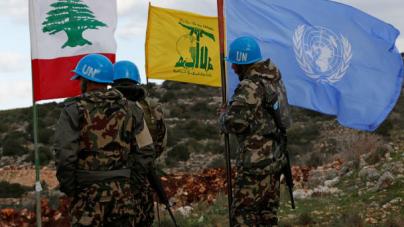
UN peacekeepers hold their flag while standing next to Hezbollah and Lebanese flags, near the border with Israel, December 13, 2018.Hussein Malla,AP
Prime Minister Benjamin Netanyahu said on Wednesday that the Lebanese Army, to the best of Israel’s knowledge, was not aware of the tunnels being dug by Hezbollah from Lebanon into Israel, but noted that Israel sees Lebanon responsible for demolishing them.
Speaking at a press conference to foreign media ahead of a UN Security Council session on the discovery of the Hezbollah tunnels, Netanyahu called on the international community to hold Lebanon accountable for the tunnels.
skip – Netanyahu’s press briefing on Hezbollah
Netanyahu’s press briefing on Hezbollah – דלג
Netanyahu’s press briefing ahead of UN Security Council on Hezbollah
“[N]ow they know and they should be there to uncover and neutralize them,” Netanyahu said. “The Lebanese government is doing nothing at best and colluding at worst.”
Netanyahu said that he appreciates the U.S. for taking a stance against Hezbollah and urging the Security Council to hold the emergency meeting on Wednesday and called on “all members of the Security Council to condemn Hezbollah’s wanton acts of aggression,” designate it as a terrorist group, impose sanctions against it, and support Israel’s right to defend itself.
Netanyahu delivers a statement ahead of a UN Security Council discussion on Hezbollah’s tunnels into Israel, Jerusalem, December 19, 2018.AFP
Netanyahu told the reporters that, in recent days, ahead of the Security Council meeting, he spoke with Russian President Vladimir Putin and asked him to take a stand against Hezbollah, “to condemn Hezbollah and not to support them or be neutral.”
Visit to focus on mutual interests, security coordination and the situation in the Middle East, organizers say ■ Delegation includes Sergey Kislyak, a central figure in the probe into Russian meddling in U.S. elections
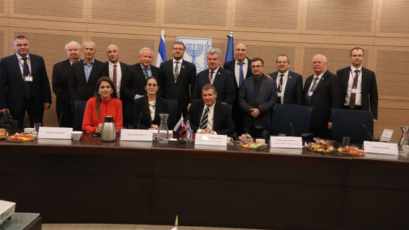
Russian delegation of senators visits Israel’s Knesset, December 19, 2018.Yitzhak Harari / Knesset Spokesperson’s Office
A delegation of Russian senators began a visit to Israel on Wednesday with a meeting at the Knesset to discuss the “joint struggle against terrorism and anti-Semitism.”
The Russians senators are expected to meet their Israeli couterparts to discuss cooperation to “advance the two countries’ mutual interests, security coordination and the situation in the Middle East in general, with an emphasis on the northern front.”
The five senators serve on the foreign affairs committee and the committee on defense and security at the upper chamber of the Russian parliament.
They met Wednesday with the chairman of the Knesset Foreign Affairs and Defense Committee, MK Avi Dichter (Likud), and will meet during their two-day visit with Knesset Speaker Yuli Edelstein, Jerusalem Affairs Minister Zeev Elkin and with a senior official in the National Security Council.
The senators are expected to tour the Old City of Jerusalem and Israel’s northern border, where they will be briefed by senior military commanders.
Russia ended Sergey Kislyak’s tenure as ambassador to the U.S. after he became a prominent figure in the controversy over Russia’s possible involvement in the 2016 U.S. presidential election.
U.S. President Donald Trump’s first national security adviser, Michael Flynn, resigned after lying about contacts with Kislyak. Attorney General Jeff Sessions recused himself from the investigation into possible Russian interference in the 2016 election after reports that he had not disclosed meetings with Kislyak.
Both sides in the civil war recruit children, but the Houthis are believed to have recruited many more than the coalition — often forcibly. Children are told they are joining a holy war against Jews and Christians and Arab countries that have succumbed to Western influence
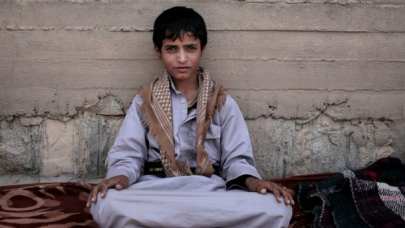
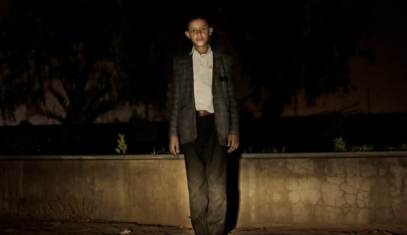
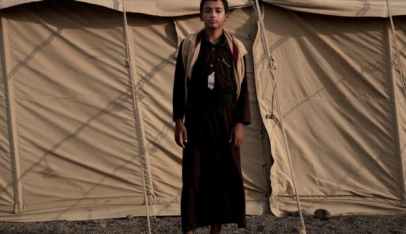
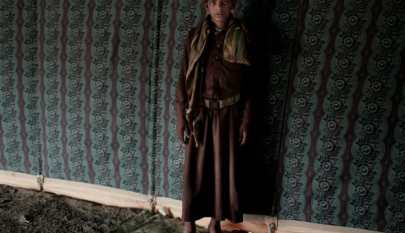
Abdel-Hamid, a 14-year-old former child soldier, poses for a photograph at a camp for displaced persons where he took shelter, in Marib, Yemen, July 27, 2018.(AP Photo/Nariman El-Mofty
The number etched on the bracelet around Mohammed’s wrist gave the 13-year-old soldier comfort as missiles fired from enemy warplanes shook the earth beneath him.
For two years Mohammed fought with Yemen’s Houthi rebels against a military coalition led by Saudi Arabia and backed by the United States. He says he tortured and killed people and didn’t care whether he lived or died.
But if he died, the bracelet would guarantee his body made it home.
“When I become a martyr, they enter my number in the computer, retrieve my picture and my name, then print them with the name ‘Martyr’ underneath,” Mohammed said. It would be pasted to the lid of his coffin for return to his family.
Mohammed was among 18 former child soldiers interviewed by The Associated Press who described the Houthis’ unrelenting efficiency when it comes to the recruitment, deployment and even battlefield deaths of boys as young as 10.
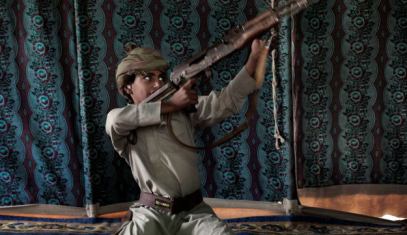
Kahlan, a 12-year-old former child soldier, demonstrates how to use a weapon, at a camp for displaced persons where he took shelter with his family, in Marib, Yemen, July 27, 2018.AP Photo/Nariman El-Mofty
While both sides in the four-year civil war have sent children into combat in violation of international human rights conventions, the Houthis are believed to have recruited many more than the coalition — often forcibly.
The Houthis have inducted 18,000 child soldiers into their rebel army since the beginning of the war in 2014, a senior Houthi military official acknowledged to the AP. He spoke on condition of anonymity due to the sensitivity of the information.
That figure is higher than any number previously reported. The United Nations was able to verify 2,721 children recruited to fight for all sides in the conflict, the large majority for the Houthis, but officials say that count is likely low, because many families will not speak about the issue out of fear of reprisals from Houthi militiamen.
The Houthis say officially that they don’t recruit children and send away those who try to enlist.
Some of the children told the AP they joined the rebels willingly, mainly because of promises of money or the chance to carry a weapon. But others described being forced into the service of the Houthis — abducted from schools or homes or coerced into joining in exchange for a family member’s release from detention.
Riyadh, a 13-year-old former child soldier forced to enlist by Houthi rebels, poses for a photograph, in Marib, Yemen, July 28, 2018. AP Photo/Nariman El-Mofty
Many can be seen manning checkpoints along main roads across northern and western Yemen, AK-47s dangling from their narrow shoulders. Others are sent to the front lines as foot soldiers.
A 13-year-old named Riyadh said half of the fighters he served with on the front lines in Yemen’s mountainous Sirwah district were children. Rebel officers ordered them to push forward during battles, even as coalition jets zoomed overhead, he said.
He said he pleaded with his commander to let the young fighters take cover during airstrikes: “Sir, the planes are bombing.”
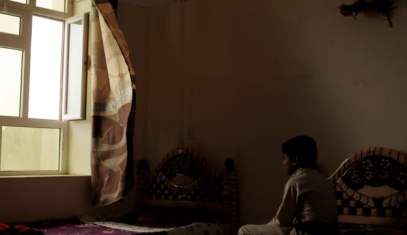
A boy sits on his bed in a rehabilitation center for former child soldiers in Marib, Yemen, July 28, 2018.AP Photo/Nariman El-Mofty
The reply, he said, was always: “Followers of God, you must attack!”
An unknown number of child soldiers have been sent home in coffins.
More than 6,000 children have died or been maimed in Yemen since the beginning of the war, UNICEF reported in October. But the U.N. agency has not been able to determine how many of those minors were combatants and the Houthi-run Defense Ministry does not release its records for casualties.
A former teacher from the city of Dhamar said that at least 14 pupils from his school were recruited and then died in battle. Their pictures were placed on empty classroom seats in 2016 during the Week of the Martyr, which the Houthis celebrate each year in February. Most of them were fifth and sixth graders, he said. An education official from Dhamar confirmed his account. The two spoke on condition of anonymity because of fear of retribution.
The teacher said some of the dead children’s parents were Houthi leaders who willingly sent their sons to the front lines. “It’s painful because this is a child and they are all my children because I was their teacher,” he said. “They were taken from the school and returned in coffins.”
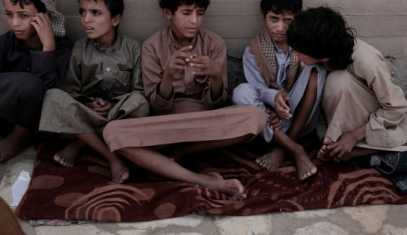
14 year-old Abdel Hamid, second right, and 14 year-old Morsal, third right, sit at a camp for displaced persons where they took shelter, in Marib, Yemen, July 27, 2018.AP Photo/Nariman El-Mofty
The Houthis and the coalition forces began peace talks in Sweden two weeks ago, but an end to the war appears far off. Many worry about what will become of the children who fought in the Middle East’s poorest country once a peace treaty is signed.
Naguib al-Saadi, a Yemeni human rights activist who founded a Saudi-funded counseling center in Marib for child warriors, said “the real problem with Houthi recruitment of the children will be felt in 10 years — when a generation that has been brainwashed with hatred and enmity toward the West comes of age.”
‘Firewood for this war’
The war began after Houthi rebels swept down from the northern highlands in late 2014, seizing the capital, Sanaa, and then pushing south. Yemen’s internationally recognized government sought help from the Saudis and other oil-rich neighbors, which formed the military coalition opposing the Houthis.
The result has been a proxy war as much as a civil war, with forces backed by the Saudis fighting the Houthis, a Zaidi-Shiite religious and political group with ties to Iran.
A report released in August by a U.N. expert panel said both sides are using child soldiers. The panel said it had information that coalition forces had targeted “particularly vulnerable children” living in displacement camps and “offered significant payments for child recruits.” The report said coalition units “frequently used children in support roles, although they have also been used in combat on the front lines.”
Sadek, a 14 year-old former child soldier, poses for a photograph at a camp for displaced persons where he took shelter with his family, in Marib, Yemen, July 27, 2018.AP Photo/Nariman El-Mofty
The panel noted that nearly two-thirds of the child soldiers identified by the U.N. in 2017 were deployed by the Houthis and their allies.
The Houthis constantly recruit new fighters because their ranks are smaller and thinned by battlefield losses. The well-funded and well-equipped coalition units have nearly 140,000 troops in the field, experts who study the war say. The Houthi military official told the AP that rebel forces have 60,000 fighters on the front lines. Outside experts estimate the Houthis’ troop strength at between 15,000 and 50,000.
Top Houthi officials heap praise on young soldiers who have died in a conflict they describe as a sacred war against America, Israel and other outside powers they believe are trying to take over the country.
Under the Houthi-controlled Defense Ministry, the rebels have pursued what they call a “national voluntary recruitment campaign.”
Brig. Gen. Yahia Sarie, a spokesman for the Houthis’ armed forces, told the AP “there is no general policy to use the children in the battles,” but he acknowledged that some young people do volunteer to join the fight.
Nawaf, a 15-year-old former child soldier, poses for a photograph at a camp for displaced persons where he took shelter with his family, in Marib, Yemen, July 27, 2018.AP Photo/Nariman El-Mofty
“It’s personal initiative,” the general said. “Some of the children are motivated by the desire to take revenge, thinking it’s better to take action and fight with honor instead of getting killed inside our homes.” When they try to join, he said, Houthi leaders “send them back home.”
He dismissed the accounts from the children who spoke to the AP, saying their claims were coalition propaganda.
Children, parents, educators, social workers and other Yemenis interviewed by the AP described an aggressive campaign that targets children — and is not always completely voluntary. Houthi officials use their access to the Civil Registry Authority and other state records to gather data that allows them to narrow down their target list of the neediest families in villages and displacement camps — the ones most likely to accept offers of cash in return for recruits.
In Sanaa, the Yemeni capital under Houthi control, recruiters go door to door telling parents they must either turn over their sons or pay money for the war effort, according to residents.
The AP interviewed the 18 former child soldiers at displacement camps and a counseling center in the city of Marib, which is controlled by the Saudi-led, U.S.-backed coalition. They had come to Marib after slipping away from rebel forces or being captured by coalition units.
Because of their ages and because some of them acknowledge committing acts of brutality, the AP is only using their first names. Some children gave themselves a nom du guerre after they joined the fighting. One 10-year-old boy, for example, called himself Abu Nasr, Arabic for “Father of Victory.”
A 13-year-old boy named Saleh told the AP that Houthi militiamen stormed his family’s home in the northern district of Bani Matar on a Saturday morning and demanded he and his father come with them to the front lines. He said his father told them, “Not me and my son” and then tried to pull his rifle on them. “They dragged him away,” the boy recalled. “I heard the bullets, then my father collapsing dead.”
14 year-old Abdel Majeed sits on the floor at a rehabilitation center for former child soldiers in Marib, Yemen, July 25, 2018.AP Photo/Nariman El-Mofty
Saleh said the militiamen took him with them and forced him to do sentry duty at a checkpoint 12 hours a day.
International relief agencies working on child protection programs in northern Yemen are not allowed to discuss the use of child soldiers, out of fear their agencies will be barred from delivering aid to Houthi-controlled territories, according to four aid workers who spoke on the condition of anonymity. “This is a taboo,” one said.
“They don’t raise the issue,” said Abdullah al-Hamadi, a former deputy education minister who defected earlier this year from the Houthi-controlled government in the north.
Al-Hamadi said that the children who are targeted for recruitment are not the sons of important Houthi families or top commanders. Instead, they are usually kids from poor tribes who are being used “as firewood for this war.”
In villages and small towns, recruiters include teenagers whose brothers or fathers already work for the Houthis. They can be seen hanging around schools, handing out chewing tobacco and trying to persuade the boys to become fighters.
Several residents of Sanaa told the AP that Houthis divide the capital into security blocs, each overseen by a supervisor who must meet rolling quotas for bringing in new recruits. He collects information on the families living in his bloc by knocking on the doors of each house and asking for the number of male members, their names and ages.
“It looks random from the outside, but in reality it’s not,” a Yemeni journalist who worked in Houthi territory said, speaking on condition of anonymity because of the risks of talking about the rebels. “There are teams with specific missions and clear structure.”
He and his family fled to Marib, a coalition stronghold, because he feared that the rebels would try to recruit his children.
Houthi recruiters assure families their sons won’t be assigned to battle zones, but instead will be sent to work behind the lines at roadside checkpoints. Once militiamen get hold of the children, they often instead send them to indoctrination and training camps, and then the front lines, according to two children interviewed by the AP and officials from two child protection groups. The officials spoke on condition of anonymity because of concerns that the Houthis might retaliate by blocking their groups from working in Yemen.
Children interviewed by the AP said they were targeted by recruiters on soccer pitches, farms and, especially, schools.
A 12-year-old named Kahlan said Houthi militiamen drove him and 10 of his classmates away in a pickup truck, telling them they were being taken to a place where they would get new school bags.
It was a lie.
Instead, still in their school uniforms, they found themselves inside a training camp getting instructions on how to hide from airstrikes.
‘Key for heaven’
New recruits are usually taken first to “culture centers” for religious courses lasting nearly a month. Instructors read aloud to the children from the lectures of the Houthi movement’s founder, Hussein Badr Eddin al-Houthi, the late brother of the current leader, Abdul-Malek al-Houthi.
The lectures, dating back to 2002, are circulated in audio and video and transcribed into booklets known as “Malazem.”
They are told they are joining a holy war against Jews and Christians and Arab countries that have succumbed to Western influence — and that if the boys die fighting, they will go to heaven. The instructors fuel the recruits’ anger with accounts of coalition attacks that have killed civilians, including an airstrike in August that hit a bus full of schoolchildren.
“When you get out of the culture center, you don’t want to go home anymore,” said Mohammed, the boy who served with the Houthis from ages 13 to 15. “You want to go to jihad.”
The recruits are then sent to military training camps in the mountains, according to several children who defected from the Houthis. By night, they sleep in tents or huts made of tree branches. By day, they learn how to fire weapons, plant explosives and avoid missiles fired by coalition jets.
From noon to sunset, the young soldiers get a daily share of the green leaves of qat, a mild stimulant that the vast majority of Yemenis chew every day. Coming from poor families, having qat is an incentive for the children, who might not be able to afford it at home.
After less than a month of boot camp, they are sent to war, wearing the bracelets that are supposed to ensure that, if they die, they are returned to their families and honored as martyrs.
The children call the inscription their “jihadi number.” Critics of the Houthis sardonically call the bracelets the children’s “key for heaven.”
Once in the battle zones, some children said, their weapons and their beliefs made them feel powerful. Others just felt frightened.
Mohammed fought in and around the city of Taiz, the scene of the war’s longest running battle.
One day, his comrades captured a coalition fighter and brought him to a bombed-out restaurant for interrogation. Mohammed, 14 at the time, said he fetched an electric generator and hooked it up to the prisoner. He sent electric shocks screaming through the man’s body, he said, as his commander questioned the captive about coalition forces’ positions.
When the questioning was over, he said, his commander gave this order: “Get rid of him.” Mohammed said he took a heavy metal tool, heated it in a flame, then swung it, caving in the back of the man’s head.
“He was my master,” Mohammed recalled. “If he says kill, I would kill…. I would blow myself up for him.”
Riyadh, the 13-year-old who fought in the Sirwah mountains, said he and his 11-year-old brother once shot and killed two enemy soldiers who had refused to lay down their weapons. But more often, he said, he closed his eyes tightly when he fired his rifle.
“Honestly, when I am afraid, I don’t know where I am shooting — sometimes in the air and sometimes just randomly,” he said.
The most frightening moment came when his brother disappeared during a firefight.
“I was crying,” Riyadh recalled. “I told the commander that my brother had been martyred.”
He began turning over corpses on the battlefield, searching bloodied faces for his lost brother when he and other fighters came under fire. They fired back. Then, after some yelling back and forth, he realized the shooter was not an enemy fighter but his brother, lost in the fog of battle.
A few weeks later, Riyadh and his brother escaped, paying a truck driver to smuggle them away from the Houthi forces.
Kahlan — the schoolboy who had been lured into combat with the promise of a new book bag — was first assigned to carry boxes of food and ammunition for soldiers. Then he was deployed to fight. He and the other boys had no clothes other than their school uniforms, he said. They were so filthy many sprouted skin rashes.
Coalition aircraft screeched overhead, dropping bombs and firing missiles at Houthi positions. Afterward, trucks rumbled in to collect the dead.
“The sight of the bodies was scary,” Kahlan recalled, using his hands to pantomime how corpses were missing heads or limbs or had their intestines oozing out.
He slipped away from the Houthi camp early one morning, running from one village to another. “I was afraid to look back. I saw trees and rocks and I got more scared because they used to hide behind the trees.”
‘Listening session’
Mohammed, Riyadh and Kahlan all ended up in Marib, at a rehabilitation center for children who served as Houthi soldiers. Since September 2017, nearly 200 boys have come through the center, which was founded by the Wethaq Foundation for Civil Orientation and funded with Saudi money.
Mayoub al-Makhlafi, the center’s psychiatrist, said the common symptom among all the former child soldiers is extreme aggression. They suffer anxiety, panic attacks and attention deficits. Some describe being beaten by their own commanders, a staffer at the center said. She said she has also heard reports from children on both sides of the fighting about being sexually abused by officers. She spoke on condition of anonymity because of the sensitivity of sexual abuse issues.
The center brings the children together for “listening sessions” that help them remember their lives before they were sent to war.
On his first day at the center, Mohammed said, he was terrified. He didn’t know what they would do to him there. “But then I saw the teachers and they gave me a room to stay in. I felt good after that.”
His mother lives in Taiz, in an area under Houthi control, so he can’t live with her. He has other relatives and moves from one house to another. Sometimes, he said, he sleeps in the street.
He no longer has the bracelet with the serial number that the Houthis gave him as part of their promise that he’d get a martyr’s funeral. When he defected, he said, his older brother sent him to be questioned by coalition authorities.
During the interrogation, a security officer took out a pair of scissors and cut the bracelet from Mohammed’s wrist.
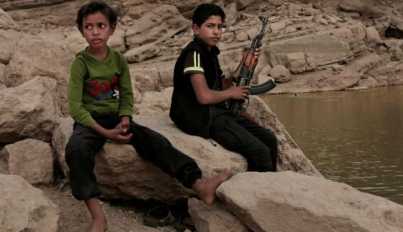
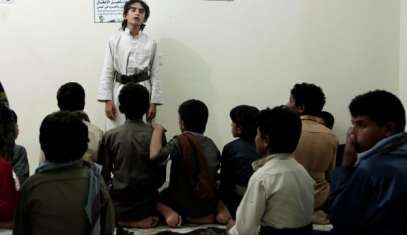
17 year-old boy holds his weapon in High dam in Marib, Yemen, July 30, 2018.AP Photo/Nariman El-MoftyBoys recite poems during a session at a rehabilitation center for former child soldiers in Marib, Yemen, July 25, 2018.AP Photo/Nariman El-Mofty
In Texas, legislation designed to ensure that suppliers of services to the state do not engage in anti-Israeli boycotts has resulted in the dismissal of a school speech pathologist, who has sued
Texas speech pathologist Bahia Amawi, who lost her contract with a school district for refusing to sign a commitment to comply with the state’s anti-BDS law.From The intercept
Legislation in the United States outlawing some activity in support for BDS, the anti-Israel boycott movement, is generating a backlash on the legal front and in the media.
As Congress works to head off a partial federal government shutdown on Friday, one piece of legislation in the spotlight is the Israel Anti-Boycott Act, sponsored by Democratic Senator Ben Cardin of Maryland, and Ohio Republican Senator Rob Portrman. The bill would impose criminal and civil penalties on American firms that participate in boycotts in support of Palestinian rights. The sponsors reportedly hope to tack it onto funding legislation that would head off the shutdown.
“Our bipartisan legislation is a direct response to highly selective and discriminatory efforts to isolate Israel, such as those by the UN Human Rights Council,” Mr. Portman said in a statement quoted by the New York Times.
Also in the spotlight is legislation in Texas, one of a number of states with laws outlawing some anti-Israel boycott activity. A Texas school speech pathologist, Bahia Amawi, who is of Palestinian descent, lost her job as a supplier of services to a Texas school district for refusing to sign a commitment to comply with the Texas law.
Anti-BDS laws have been passed in 26 U.S. states, according to The Forward newspaper, and generally seek to bar state governments from doing business with companies that boycott Israel.
“It would be more constructive if political leaders would focus on the injustice and finding viable solutions to the Israeli-Palestinian conflict rather than reinforcing divisions between the two parties and promoting legislation that raises free speech concerns,” the New York Times wrote in a lead editorial on Wednesday.
For his part, Washington Post columnist David Von Drehle, wrote this week: “Israel and its friends can win the fight against BDS only through persuasion and example; outlawing dissent will never work.” With regard to the Texas school speech therapist, he said: “As an American citizen, Bahia Amawi possesses a number of ironclad rights, the first of which — according to the Constitution — protects her freedom of speech. So when the Pflugerville, Tex., school district refused to renew her annual contract to provide speech therapy for its students because she was, in her view, exercising those rights, she responded like a true American. She sued.”
The American Civil Liberties Union announced on Wednesday that it has filed a legal challenge to the law. The lawsuit was filed by the organization on behalf of four Texas citizens who had either lost their jobs because of the law, or were “forced” to sign it against their beliefs in order not to lose their income. The organization has also been critical the Israel Anti-Boycott Act, the federal bill sponsored by Senators Portman and Cardin.
Earlier this year, Cardin issued a statement in which he said: “We have welcomed the public discussions that have been essential in focusing this bipartisan legislation in such a way that definitively upholds the rights of individual Americans while clarifying decades-old legislation.” It quotes Portman as saying: “I am confident this bill strikes the right balance between protecting U.S. businesses and our Israeli allies from unfair targeting by international organization, while upholding America’s commitment to free speech and individual liberty.”
An ACLU analysis claimed, however, that it “leaves intact key provisions which would impose civil and criminal penalties on companies….”
Taking Portman and Cardin to task, the Times editorial board wrote: “In a properly functioning Congress, a matter of such moment would be openly debated. Instead, Mr. Cardin and Mr. Portman are trying to tack the BDS provision onto the lame-duck spending bill, meaning it could by enacted into law in the 11th-hour crush to keep the government fully open.”
In a column critical of anti-BDS legislation, Batya Ungar-Sargon, the opinion editor of The Forward, wrote: “This is not to say that BDS is worthy of support. I, like many Jews, find BDS distasteful. I find its leaders morally unimpressive and its ranks full of anti-Semites, some of them Jews.” But she added: “The entire point of the First Amendment is to protect the speech of people we despise (you don’t need the law to protect the speech of people you like). It’s something we Americans hold dear, and something we seem to recognize as crucial to our identity in all areas but Israel. It’s nothing short of a shonda [a disgrace] for Israel to be the one topic where Americans forget about their most dearly held values.”
File: Israel’s ambassador to the United Nations Danny Danon speaks to members of the UN Security Council during an emergency session on the Israel-Gaza Conflict at United Nations headquarters in New York on May 30, 2018. (Eduardo Munoz Alvarez/Getty Images/AFP)
The UN Security Council will convene Wednesday to discuss the discovery of attack tunnels under the Israel-Lebanon border that Israel says were dug by the Hezbollah terrorist group, Israel’s UN mission said Tuesday.
The discussion, requested by Israel and the United States, will begin at 10 a.m. local time (5 p.m. Israel time) on Wednesday.
Israel has so far uncovered four passages crossing into Israel from Lebanon, and the UNIFIL peacekeeping force has confirmed their existence and acknowledged that the tunnels violate UN resolution 1701, adopted at the end of the 2006 Second Lebanon War. UNIFIL said Tuesday at least two of the tunnels crossed into Israeli territory.
“It is time for the Security Council to employ all its means against the terror infrastructure of Hezbollah, which continues to gain strength under the Lebanese government,” Israel’s UN envoy Danny Danon said in a statement.
Earlier this month, Israel launched Operation Northern Shield, an effort to find and destroy the tunnels it attributes to the Iran-backed terrorist group.
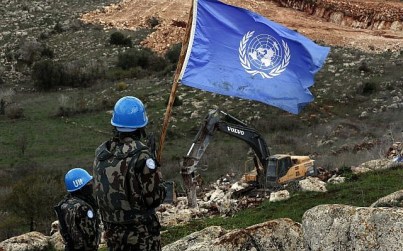
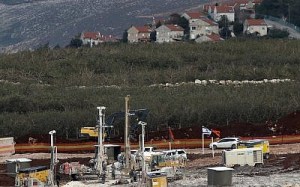
In this Thursday, December 13, 2018, photo, UN peacekeepers hold their flag, as they observe Israeli excavators working near the southern border village of Mays al-Jabal, Lebanon. (AP/Hussein Malla)
The operation has raised prospects of a possible fresh conflict on the volatile border, though Lebanon has downplayed chances of war, so long as Israeli troops do not cross its territory. UN peacekeepers, meanwhile, have stepped up their patrols to ensure that the frontier remains calm.
On Monday, UNIFIL declared that cross-border attack tunnels dug from southern Lebanon into Israel were a violation of the UN resolution that ended the 2006 conflict, saying it had confirmed that at least two tunnels crossed into Israel.
UN Resolution 1701 called for all armed groups in Lebanon besides the country’s military to remain north of the Litani River.
In this Thursday, December 13, 2018, photo, Israeli military equipment works on the Lebanese-Israeli border in front of the Israeli town of Metula, background, near the southern village of Kafr Kila, Lebanon. (AP Photo/Hussein Malla)
Israel has for years claimed that Hezbollah has been violating Resolution 1701 by conducting military activities along the border. UNIFIL has largely rebuffed these allegations, and its announcement on Monday represented one of the few cases in which it has confirmed a violation of the UN resolution.
A spokesperson for the peacekeeping group said UNIFIL could not yet confirm the Israeli allegation that the tunnels were dug by Hezbollah, but said it was continuing to investigate the matter.
“UNIFIL has requested the Lebanese authorities ensure urgent follow-up actions in accordance with the responsibilities of the Government of Lebanon pursuant to resolution 1701,” UNIFIL said.
The peacekeeping force said it was working with both Lebanon and Israel in order to “ensure stability along the Blue Line and prevent misunderstandings in order to keep the area of operation calm.”
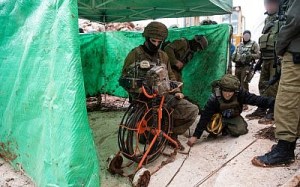
IDF troops uncover a tunnel leading into Israeli territory from southern Lebanon, which Israel says was dug by the Hezbollah terror group, on December 11, 2018. (Israel Defense Forces)
Also on Monday, Lebanese Prime Minister Saad Hariri met with UNIFIL commander Maj. Gen. Stefano Del Col, telling him that Beirut remained committed to upholding UN Resolution 1701.
The military said it believes the tunnels were meant to be used by Hezbollah as a surprise component of an opening salvo in a future war, to allow dozens or hundreds of terrorists into Israel, alongside a mass infiltration of operatives above-ground and the launching of rockets, missiles, and mortar shells at northern Israel.








 anneinpt
 artaxes
 danmillerinpanama
 davidking1530
 Peter Hofman
 Joseph Wouk
 Peter
Peter Louisiana Steve
 WarSclerotic
Recent Comments