Archive for December 18, 2018

Tunnels and terror: A subterranean war

December 18, 2018

Source: Tunnels and terror: A subterranean war – Israel News – Jerusalem Post

From ISIS to Hezbollah, many terror groups have become experts in tunneling.

BY SETH J. FRANTZMAN
 DECEMBER 18, 2018 14:22
Tunnels and terror: A subterranean war

In April 2017, a lumbering American MC-130 prop plane flew over a mountainous area in eastern Afghanistan. Just before 8 p.m., the plane dropped a 9,797 kg. bomb, known as a GBU-43, the largest non-nuclear explosive ever used, on a tunnel network used by Islamic State. Thirty-six ISIS members were killed in the massive explosion that followed, according to US estimates. That tunnel network was more complex than the one that Hezbollah has built in southern Lebanon. But just as the US has had to contend with terrorist tunnels, Israel and all countries facing terrorism are increasingly forced to fight an underground war.

The complex of caves and tunnels is one of many in Afghanistan used by terrorist groups. ISIS, like many terrorist groups, has become expert in tunneling. ISIS didn’t invent this on its own. The group expanded on technology that other terrorist groups have used. ISIS also used tunnels that have existed in places like Iraq, Syria and Afghanistan for decades. Some of these are bunker complexes that various regimes built and were improved upon by the terrorists, or they may be terrorism tunnels built by groups such as the Taliban and Al-Qaeda.

In Douma, Syrian rebels built a complex of tunnels which the BBC termed “quite a work of engineering.” Excavated through solid clay and stones, it was big enough to “drive a vehicle down.” It was a “subterranean life,” said the reporter said who descended into the Douma tunnels.

Four of Hezbollah’s cross-border tunnels into Israel have now been exposed since Israel began Operation Northern Shield. None of these tunnels were large enough for vehicles. To understand their origin and the kinds of difficulty in confronting them, we need to look back at the 2006 Lebanon war. Hezbollah spent decades improving its terrorist infrastructure in southern Lebanon. After Israel withdrew in 2000 from southern Lebanon, Hezbollah’s leaders planned an extensive network of what were labeled “nature reserves” by Israel, complexes of tunnels and bunkers designed to conceal the group’s growing arsenal. Hezbollah attempted to make them not only difficult to find but also difficult to bomb, according to a 2016 article by the Foundation for Defense of Democracies.

According to the report by David Daoud, it built fortified areas in 200 villages. In an article called ‘We were caught unprepared’ published by the US Army Combined Arms Center in 2008, the authors looked at Hezbollah’s tunnel expertise. According to this study, which quoted an Iranian Revolutionary Guard Corps officer, Hezbollah had “North Korean advisers [who] had assisted Hezbollah in building tunnel infrastructure.” One tunnel was supposedly 25 km. long. This extraordinary claim, printed in the London-based daily Al-Sharq al-Awsat, may be inaccurate. The actual reports of the tunnel system by one IDF soldier after the 2006 war, quoted in a book called Back to Basics, remarked that he found a bunker near Maroun al-Ras. It was 8 meters deep and linked several rooms. It had a camera that Hezbollah used to monitor movement outside.

The US army report suggests that Hezbollah, which was founded in the 1980s, may have been inspired by the Viet Cong who used tunnels to confront the US military in Vietnam in the 1960s. The Viet Cong dug massive tunnel systems. One at Cu Chi was 250 km. in extent. Hezbollah might have sought to copy the Vietnamese, but it also wanted to exploit modern technology. Tunnels that were found in 2006 included some with hydraulic steel doors.

Considering Hezbollah’s close relationship with Iran and the Syrian regime, it should be expected that Hezbollah’s expertise in tunneling has more similarities with the kind of network a state might be able to create, and not just a terrorist organization. This means the tunnels have levels of technology, depth and ability to go through difficult terrain. However, as has been shown in the Syrian civil war context, any group that has even limited resources and devotion, can build sophisticated tunnels.

Confronting tunnels is a complex task. Militaries and law enforcement agencies which deal with drug trafficking and smuggling both have to monitor tunnels. For instance, in Gaza the tunnels built under the border with Egypt were used to smuggle people, infrastructure and weapons. Militaries can bomb tunnel networks, like the US did in Afghanistan, but only if they aren’t located in civilian areas. ISIS, for instance, festooned civilian areas with tunnels so that its fighters could pass unnoticed under houses and roads. They were able to hold out in Mosul for 9 months using these tunnels, against a 70-nation Coalition and the Iraqi army.

Armies don’t like to send men down into tunnels because naturally the enemy has the advantage in its own tunnel system allowing it to neutralize a modern army’s technological superiority. The New Yorker in 2016 noted that Israel had developed a kind of “underground Iron Dome” to confront tunnels. But Brig. Gen. (res.) Danny Gold, who helped pioneer the above ground Iron Dome, told the New Yorker that “Since the Vietnam War, it [tunnel threats] hasn’t been solved. Between Mexico and the United States, it isn’t solved. Sometimes it’s even harder than finding oil in the ground.” An Israeli system, according to this report, cost hundreds of millions of dollars, some of which was supplied by the US, to “field some 400 different ideas for the detection and destruction of tunnels.”

But for countries fighting tunnels, detection is only one issue. You can listen for the tunnel or postulate on where it might be, but you don’t want any threats coming from it or surprises when trying to unearth it. This may not be such an easy challenge to confront in an environment with containing civilians and homes. Once detected, the goal would be to stop the tunnel if it is a threat. But a country might want to monitor what the enemy is doing before interdicting the tunnel. Also a means to dig a counter-tunnel has to be developed and used without alerting the adversary that the counter-tunnel is moving toward the original. Different countries have employed different means. Egypt flooded the tunnels along the Gaza border. The most important aspect of confronting tunnels may also be mapping their point of origin to know what threats may be lurking where they begin.

Tunnels in warfare have not only been used to hide men and material, but sometimes to store explosives. Israel, by necessity, has become proficient at confronting tunnels. Hezbollah, like other terror groups and like its allied regimes, has also likely increased its skills. The subterranean war will continue to be a layer of the modern battlefield.


Iranian cyber attacks threaten the U.S. Could Israel be next? 

December 18, 2018

Source: Iranian cyber attacks threaten the U.S. Could Israel be next? – Israel News – Jerusalem Post

Reports show Iranian fake news could succeed in causing public panic.

BY YONAH JEREMY BOB
 DECEMBER 18, 2018 14:21
Iranian flag and cyber code [Illustrative]

Iran’s cyber attacks have been more successful against the US than against Israel so far, but the threat against Israel could increase in the future, according to a new INSS report.

Gathering recent reports from multiple computer security firms and other think tanks, as well as analysis by INSS researcher Itay Haiminis, the report delves into the latest stage of Iranian cyber attacks on the US and Israel and warns of future escalation.

According to the report, Iran’s cyber influence campaign against the US “is not merely a reaction to US moves (real and imagined), but also another step towards Iran’s longstanding objective of destabilizing the United States by weakening its internal robustness.”

As the nuclear standoff and other US-Iran confrontations appear likely to be drawn out for an extended period, Tehran is fighting for Americans’ hearts and minds as a way to wear down US pressure, especially as the US position remains out of step with the EU and the UN.

“Israel, likewise a target of Iranian cyber influence efforts, would do well to monitor Iran’s development of cyber attack capabilities, along with Iran’s overt threats in conventional and non-conventional weapons,” the report said.

More specifically, the report notes that Fire-Eye Ltd., a cyber security company, has issued warnings about many fake news accounts on Facebook and Twitter that it assessed were operated by the Islamic Republic as part of its cyber influence campaign.

Tehran’s cyber influence efforts have been exposed by Twitter, which posted one million Tweets generated by fake accounts, and by Facebook, which announced it had deleted dozens of fake profiles.

Fire-Eye’s report, a report by Fortinet, another cyber security outfit, and a recent study by the Foundation for the Defense of Democracies all describe Iran as an increasingly aggressive player in cyberspace, the INSS said.

In the US, Iran’s cyber influence efforts are targeted at exacerbating internal US political debates between liberals and conservatives, African-Americans and Caucasians, Trump opponents and Trump supporters and other groups.

The report describes the Islamic Republic as using its cyberspace efforts to pour fuel on contentious domestic issues including racial tensions, controversial Trump policies and police brutality.

Iranian cyber manipulation also attempts to turn US citizens against Israel and Saudi Arabia, while providing sympathetic coverage of Iranian positions on ongoing conflicts in Yemen, Lebanon, Syria and Iraq, said the report.

The INSS report said that, eventually, “this Iranian activity may prove to make a decisive contribution to the erosion of trust in the media among US citizens or lead to a change in political and/or social positions.”

Moreover, unlike Russia, whose cyber activities in the US are now constantly being publicly scrutinized, the report noted that “Iran has not suffered any consequences, and may even have managed to inflate the public image of its intelligence and technology capabilities.”

INSS said that, “It appears that the Iranian cyber influence threat against Israel is still limited,” citing the Islamic Republic’s past activities as merely amounting to “website destruction and false contents planted in news sites” which “resulted in little significant public impact.”

Furthermore, “Iran’s news website directed at the Israeli public, recently exposed by Clear Sky Ltd. failed to influence Israeli public discourse,” Haiminis wrote.

The report also said that, comparatively, “an examination of Iran’s cyber influence efforts against Israel… suggests that Israel is not a central target.”

However, in the future, “Iran may succeed in planting fake news items about impending Israeli attacks, to cause public panic and/or temporarily disrupt Israel’s decision-making process,” said the report.

Similarly, Iran may plant items “that could convince an enemy state or terrorist organization of an intended Israeli attack, which in turn sparks a preemptive attack against Israel.”

Impressively, Haiminis wrote that Iran succeeded in 2016 in “eliciting a Pakistani verbal response to a false report that Israel had threatened Pakistan with a nuclear attack should Pakistan send forces to Syria.”

He suggested that, as Israel “confronts Iran’s influence campaign in cyberspace,” Israel must double its defensive efforts and “should leverage the exposure and disruption of Iran’s influence tactics.”

The INSS report said that such a move could “garner political benefits by presenting” Iran’s cyber behavior “as yet another manifestation of Iran’s negative regional conduct and violations of international norms.”


Is the U.N. asking the world to fund salaries for Palestinian terrorists? 

December 18, 2018

Source: Is the U.N. asking the world to fund salaries for Palestinian terrorists? – Arab-Israeli Conflict – Jerusalem Post

Palestinian Media Watch expressed outrage on Tuesday that the sum raised by the UN and the PA is equivalent to the $355 million dollars the PA allocated to payments for its “pay-for-slay” policy.

BY GIL HOFFMAN
 DECEMBER 18, 2018 15:00
Is the U.N. asking the world to fund salaries for Palestinian terrorists?

The United Nations Office for the Coordination of Humanitarian Affairs and the Palestinian Authority issued a joint statement Monday in which they launched a $350 million appeal to “address critical humanitarian needs of Palestinians.”

In the appeal, they called upon the international donor community to help in securing the requested funds for 2019 to provide basic food, protection, health care, shelter, water and sanitation to 1.4 million Palestinians, who have been identified as most in need of humanitarian interventions in the Gaza Strip, the West Bank and east Jerusalem.

The organization Palestinian Media Watch expressed outrage on Tuesday that the sum being raised by the UN and the PA is equivalent to the $355 million dollars the PA allocated in its 2018 budget to fund its payments rewarding terror. These include payments to terrorists in prison, terrorists released from prison and families of terrorists killed while carrying out attacks, including suicide bombers.

“Instead of the UN asking donor countries to contribute $350 million to provide for Palestinian ‘humanitarian needs,’ the UN should be joining the unequivocal call from many governments that the PA immediately stop squandering the $355 million dollars of its own funds on its ‘Pay for Slay’ policy that incentivizes and rewards terrorism, and instead spend that money on needy Palestinians,” said Maurice Hirsch, head of legal strategies at Palestinian Media Watch.

Hirsch said that abolishing the “Pay for Slay” policy would re-open the door for the PA to receive the approximately $215 million dollars of US aid to the PA withheld by the American Taylor Force Act. It would also avert the imminent deduction by Israel of the PA’s expenditures on salaries for terrorists and their families from the tax revenues Israel collects and transfers to the PA. He said it would also ensure the PA would not lose funding from Australia and the Netherlands.

“The so-called Palestinian humanitarian crisis is a self-imposed crisis created by the PA leaders,” Hirsch said. “The leaders of the PA have repeatedly made their moral bankruptcy crystal clear by saying that even if they only have one penny left in the bank, they will spend it on the terrorists before any other Palestinians. It is altogether unclear why the UN’s OCHA has decided that it is appropriate to assist the PA in raising the funds it needs to support its pugnacious policy of financially rewarding terrorists.”

UN officials declined to respond to Palestinian Media Watch connecting the fundraising appeal with the funding for terrorists and their families but said the funding would go to a long list of humanitarian projects. A 58-page plan available for the public to see is available on the OCHA website.

The UN said in a press release that the PA’s minister of social development, Ibrahim Al-Shaer, and the UN’s humanitarian coordinator, Jamie McGoldrick, launched the fundraising effort for 203 projects that will be implemented by 88 organizations, including 38 national, 37 international NGOs, and 13 UN agencies. About 77 percent of the requested funds target Gaza.

“The humanitarian context in the occupied Palestinian territories is still deteriorating due to the Israeli occupation violations in a time of lack of resources and declining funds because of the politicization of the humanitarian aid,” Al Shaer said. “We have a big concern on the rights and services for the poorest and most vulnerable households who are in need of humanitarian interventions.”

McGoldrick said the situation in the PA is preventing Palestinians from accessing health care, clean water, jobs and other needs.

“Humanitarian actors are facing unprecedented challenges, including record-low funding and a rise in attacks to delegitimize humanitarian action,” McGoldrick said. “This year’s plan is a new approach, reflecting what we can realistically accomplish in this highly-constrained context.  We recognize that much more assistance is needed, and indeed we can do much more, but we require increased support of the international community.”


UNIFIL: At least 2 two tunnels crossed Israel border, violating UN resolution 

December 18, 2018

Source: UNIFIL: At least 2 two tunnels crossed Israel border, violating UN resolution | The Times of Israel

( If not Hezbollah, then who? Gophers? – JW )

Lebanon peacemakers confirm existence of four passages; say they’re still investigating whether Hezbollah behind them

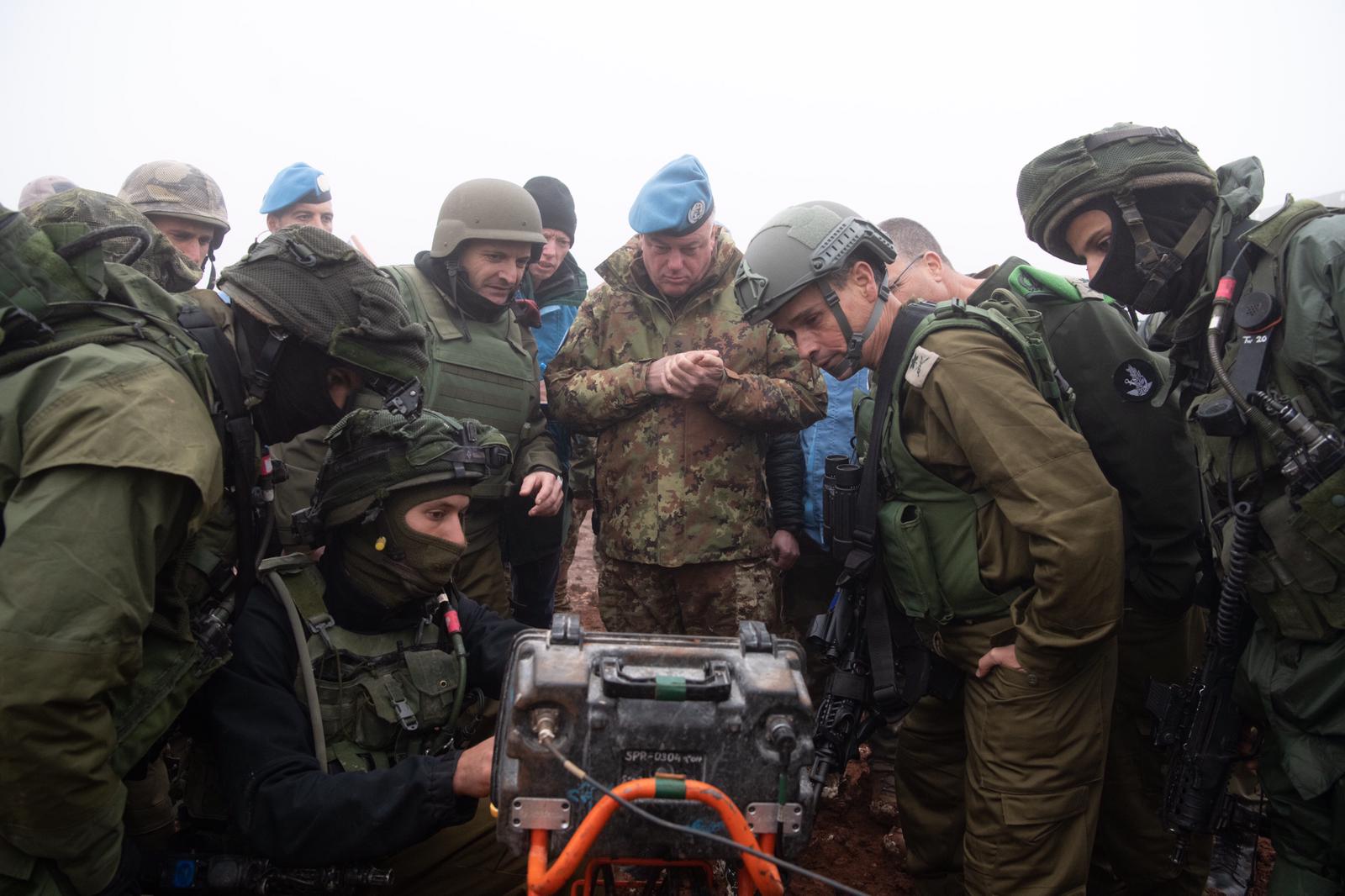
Israeli soldiers show UNIFIL commander Maj. Gen. Stefano Del Col a Hezbollah tunnel that penetrated Israeli territory from southern Lebanon on December 6, 2018. (Israel Defense Forces)

Israeli soldiers show UNIFIL commander Maj. Gen. Stefano Del Col a Hezbollah tunnel that penetrated Israeli territory from southern Lebanon on December 6, 2018. (Israel Defense Forces)

The United Nations peacekeeping force UNIFIL on Monday declared the cross-border attack tunnels dug from southern Lebanon into Israel a violation of the UN resolution that ended the 2006 Second Lebanon War, saying it has confirmed that at least two tunnels crossed into Israel.

It was the first such pronouncement about the tunnels from the peacekeeping group, formally known as the UN Interim Force in Lebanon.

Earlier this month, Israel launched Operation Northern Shield, an effort to find and destroy attack tunnels that it says were dug under the border by the Iran-backed Hezbollah terror group.

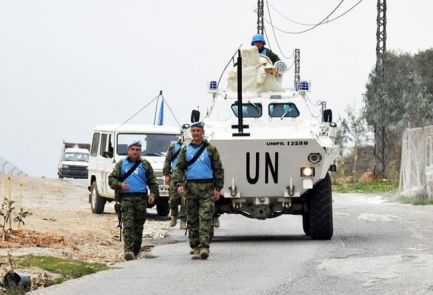
The operation has raised prospects of a possible fresh conflict on the volatile border, though Lebanon has downplayed chances of war, so long as Israeli troops do not cross its territory. UN peacekeepers, meanwhile, have stepped up their patrols to ensure that the frontier remains calm.

In a statement, UNIFIL confirmed the existence of the four tunnels that Israel announced it had discovered along the border. The peacekeeping force said it ordered an independent investigations of the passages, which has so far found that at least two of the four penetrated into Israeli territory

“These constitute violations of UN Security Council Resolution 1701,” the statement said.

UN Resolution 1701 called for all armed groups in Lebanon besides the country’s military to remain north of the Litani River.

Israel has for years claimed that Hezbollah has been violating Resolution 1701 by conducting military activities along the border. UNIFIL has largely rebuffed these allegations, and its announcement on Monday represented one of the few cases in which it has confirmed a violation of the UN resolution.

Israeli and United Nations Interim Forces in Lebanon (UNIFIL) soldiers gathered on the Israeli side of the border between the two countries, in a picture taken from the southern Lebanese village of Meiss al-Jabal, on December 9, 2018. (Ali DIA / AFP)

“UNIFIL technical teams have undertaken a number of site inspections south of the Blue Line in order to ascertain the facts,” the group said, referring to the armistice line that acts as a de facto border between Israel and Lebanon.

A spokesperson for the peacekeeping group said UNIFIL could not yet confirm the Israeli allegation that the tunnels were dug by Hezbollah, but said it was continuing to investigate the matter.

“UNIFIL has requested the Lebanese authorities ensure urgent follow-up actions in accordance with the responsibilities of the Government of Lebanon pursuant to resolution 1701,” UNIFIL said.

The peacekeeping force said it was working with both Lebanon and Israel in order to “ensure stability along the Blue Line and prevent misunderstandings in order to keep the area of operation calm.”

Also on Monday, Lebanese Prime Minister Saad Hariri met with UNIFIL commander Maj. Gen. Stefano Del Col, telling him that Beirut remained committed to upholding UN Resolution 1701.

“Hariri said during a meeting with Del Col… that the Lebanese army, which is sole responsible of defending the sovereignty and territorial integrity of Lebanon, cooperates with the UNIFIL forces and will conduct patrols to deal with any flaw in the implementation of resolution 1701 from the Lebanese side,” official Lebanese state media outlet National News Agency reported Monday.

According to NNA, Hariri also called on the UN to “shoulder its responsibilities in facing the daily violations by Israel of Lebanese airspace and territorial waters.”

UNIFIL’s announcement came hours after Israeli and Lebanese troops verbally sparred along the border with guns drawn over the exact location of the border, after Israel placed concertina wire along the Blue Line as part of the ongoing tunnel-busting operation.

UN peacekeepers were at the scene, working to prevent conflict between the two sides.

Embedded video

علي شعيب 🇱🇧@ali_shoeib1

هكذا منع الجيش اللبناني جنود العدو من وضع أسلاك شائكة على الخط الأزرق في ميس الجبل بغياب فريق جغرافي لبناني

This weekend, the military uncovered a fourth cross-border attack tunnel that it says Hezbollah dug into Israel from southern Lebanon.

The IDF refused to specify where the tunnel was found, but said the “relevant local governments” were notified of its location. “The tunnel is under IDF control and does not present a threat,” the army said in a statement.

The IDF filled the tunnel with explosives — as it did with the three other tunnels it exposed in recent weeks — in order to ensure that it could not be used to carry out an attack.

“Whoever enters it from the Lebanese side forfeits his life,” the army said in a statement.

The military said it believes the tunnels were meant to be used by Hezbollah as a surprise component of an opening salvo in a future war, to allow dozens or hundreds of terrorists into Israel, alongside a mass infiltration of operatives above-ground and the launching of rockets, missiles, and mortar shells at northern Israel.

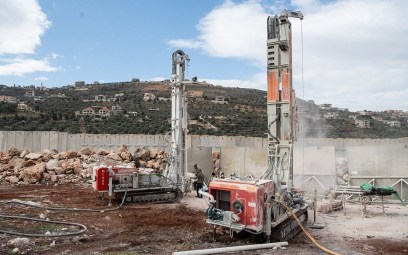
The Israeli military drills into the soil south of the Lebanese border in an effort to locate and destroy Hezbollah attack tunnels that it says entered Israeli territory, on December 5, 2018. (Israel Defense Forces)

The specific number of tunnels that Israel believes were dug from Lebanon, as well as other information about the operation, cannot be published by order of the military censor.

According to the IDF, Operation Northern Shield is taking place close to Lebanese territory, sometimes on the north side of the border wall, albeit still inside Israeli territory.

An IDF incursion into Lebanon could spark a major confrontation with Hezbollah, which bills itself as a defender of Lebanon against Israeli aggression.

Israeli officials have indicated that the IDF may operate within Lebanese territory, if necessary, to destroy the tunnels. Lebanese President Michel Aoun, a Hezbollah ally, said Tuesday that the United States assured him that Israel has “no aggressive intentions” with Operation Northern Shield.

The first and second tunnels were found outside the town of Metulla, near the Lebanese border. The military has refused to reveal the locations of the subsequent tunnels it found, and censored much of the information surrounding the operation, citing national security.


Israel reportedly asking US to lean on Lebanon over Hezbollah tunnels 

December 18, 2018

Source: Israel reportedly asking US to lean on Lebanon over Hezbollah tunnels | The Times of Israel

Lebanese report claims Jerusalem wants Washington to threaten aid cut if Lebanese army does not help find and destroy attack tunnels dug under border

Lebanese soldiers monitor the border with Israel near the southern Lebanese village of Meiss el-Jabal on December 16, 2018. (Mahmoud ZAYYAT/AFP)

Israel has reportedly asked the US to push the Lebanese government into taking action against attack tunnels dug by the Hezbollah terror group under the border between the two countries.

Jerusalem wants the Lebanese Armed Forces to work with international UN peacekeepers in locating and destroying the sections of cross-border tunnels that lie inside Lebanese territory, the Beirut-based Al-Akhbar daily reported Tuesday citing unnamed Western diplomatic sources.

The IDF launched Operation Northern Shield on December 4 in an effort to find attack tunnels dug into Israel from southern Lebanon by the Hezbollah terror group. So far, the Israeli military has said it’s uncovered four such tunnels and believes there are more.

The United Nations peacekeeping force UNIFIL on Monday confirmed the existence of four tunnels and said they violate a UN resolution that ended a 2006 war between Israel and Hezbollah.

According to al-Akhbar, Israel wants the US to threaten a halt in military aid to galvanize the LAF into action, since UNIFIL maintains the tunnels are “beyond its mandate” and that it is up to Lebanese authorities to deal with the issue.

The US already rejected an Israeli request to levy sanctions on Lebanon over its backing of Hezbollah, which sits in the Lebanese government, the Haaretz daily reported last week. Secretary of State Mike Pompeo reportedly cited the US’s strategic ties with Lebanon and agreed instead to increase measures against the Iranian-backed Hezbollah terrorist group.

On Monday, Lebanese Prime Minister Saad Hariri told UNIFIL commander Maj. Gen. Stefano Del Col that Beirut remained committed to upholding UN Resolution 1701 and the Lebanese army would “conduct patrols to deal with any flaw in the implementation of Resolution 1701 from the Lebanese side,” official Lebanese state media outlet National News Agency reported.

According to al-Akhbar, Lebanon is refusing to discuss letting international forces intervene in dealing with the tunnels, and UNIFIL is skittish about taking any action that could create tensions with those living in southern villages along the border, or with Hezbollah itself.

The Beirut government has also been told by Russia to keep the peace along the border following a visit earlier this month to Moscow by senior IDF officers who presented the Russians with evidence of the Hezbollah tunnels, Channel 10 television reported Monday.

Heavy machinery work on the border between Israel and Lebanon near Metulla, northern Israel, on December 6, 2018. (Yaakov Lederman/Flash90)

On Monday UNIFIL declared the tunnels a violation of the UN resolutionthat ended the 2006 Second Lebanon War, saying it has confirmed that at least two tunnels crossed into Israel.

It was the first such pronouncement about the tunnels from the peacekeeping group, formally known as the UN Interim Force in Lebanon.

In a statement, UNIFIL confirmed the existence of the four tunnels that Israel announced it had discovered along the border. The peacekeeping force said it ordered an independent investigations of the passages, which has so far found that at least two of the four penetrated into Israeli territory

“These constitute violations of UN Security Council Resolution 1701,” the statement said.

UN Resolution 1701 called for all armed groups in Lebanon besides the country’s military to remain north of the Litani River.

UNIFIL’s announcement came hours after Israeli and Lebanese troops verbally sparred along the border with guns drawn over the exact location of the border, after Israel placed concertina wire along the Blue Line as part of the ongoing tunnel-busting operation.

UN peacekeepers were at the scene, working to prevent conflict between the two sides.

Embedded video

علي شعيب 🇱🇧@ali_shoeib1

هكذا منع الجيش اللبناني جنود العدو من وضع أسلاك شائكة على الخط الأزرق في ميس الجبل بغياب فريق جغرافي لبناني

Israel has for years claimed that Hezbollah has been violating Resolution 1701 by conducting military activities along the border. UNIFIL has largely rebuffed these allegations, and its announcement on Monday represented one of the few cases in which it has confirmed a violation of the UN resolution.

According to the IDF, Operation Northern Shield is taking place close to Lebanese territory, sometimes on the north side of the border wall, albeit still inside Israeli territory.

The operation has raised prospects of a possible fresh conflict on the volatile border, though Lebanon has downplayed chances of war so long as Israeli troops do not cross the border. UN peacekeepers have also stepped up patrols to ensure the frontier remains calm.

An IDF incursion into Lebanon could spark a major confrontation with Hezbollah, which bills itself as a defender of Lebanon against Israeli aggression.

Judah Ari Gross contributed to this report.


IDF: Hezbollah likely attempting to close off its attack tunnels 

December 18, 2018

Source: IDF: Hezbollah likely attempting to close off its attack tunnels | The Times of Israel

Military releases footage of one of the border-crossing passages it uncovered in recent weeks, which peacekeepers say violate UN resolution

The Israel Defense Forces released video footage of one of the four tunnels it has so far exposed as part of its operation to find and destroy them.

“An attempt to seal off the passage can be seen, which we understand was carried out by operatives of the Hezbollah terror group in recent days,” the army said in a statement.

An IDF spokesperson said the attempt to seal was made after the tunnel had been found and boobytrapped by the military.

Citing national security concerns, he refused to comment on how Hezbollah had tried to seal off the tunnel or why this effort had not set off the explosives placed inside the tunnel by the IDF.

The army said the tunnel seen in the footage was constructed in a different way than others, wider and with concrete lined walls. Security officials told the Walla news site this was likely to allow Hezbollah to send operatives on motorbikes and other larger weapons through the passage.

The footage was apparently filmed with a small robot, sent into the tunnel by combat engineers.

The IDF refused to specify which tunnel was seen in the footage. The military has uncovered four of these passages since launching Operation Northern Shield on December 4.

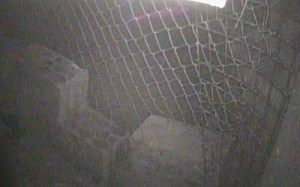
The interior of what Israel says is an attack tunnel dug by the Hezbollah terror group that crossed into Israeli territory from southern Lebanon, from footage released by the military on December 18, 2018. (Israel Defense Forces)

The army said the four tunnels did not present an immediate threat to nearby Israeli communities as they lacked an exit point. The tunnels are under constant surveillance and explosives have been placed inside all of them to ensure they cannot be used while the IDF studies them and prepares them for demolition.

The first and second tunnels were found outside the town of Metulla, near the Lebanese border. The military has refused to reveal the locations of the subsequent tunnels it found, and censored much of the information surrounding the operation, citing national security.

The operation has raised prospects of a possible fresh conflict on the volatile border, though Lebanon has downplayed chances of war so long as Israeli troops do not cross into its territory. UN peacekeepers, meanwhile, have stepped up their patrols to ensure that the frontier remains calm and to mediate any disagreements that arise over the exact location of the border, as they did Monday morning.

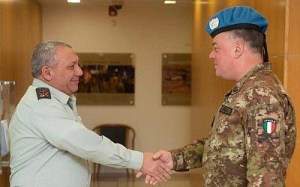
IDF chief Gadi Eisenkot, left, meets with Maj. Gen. Stefano Del Col, commander of the UN peacekeeping force UNIFIL, at the IDF’s Tel Aviv headquarters on December 9, 2018. (Israel Defense Forces)

On Monday, the UN peacekeeping force UNIFIL confirmed the existence of four tunnels within Israeli territory and further confirmed that two of them indeed originate in Lebanon.

“These constitute violations of UN Security Council Resolution 1701,” UNIFIL said in a statement.

UN Resolution 1701, which ended the 2006 Second Lebanon War, called for all armed groups in Lebanon besides the country’s military to remain north of the Litani River.

It was the first such pronouncement about the tunnels from the peacekeeping group, formally known as the UN Interim Force in Lebanon.

The UN Security Council was scheduled to discuss the tunnels and the IDF operation to find them on Wednesday.

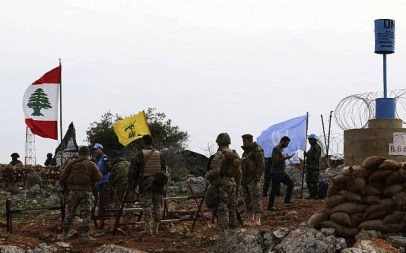
A picture taken from the southern Lebanese village of Meiss al-Jabal on December 16, 2018, shows Israeli soldiers watching as United Nations Interim Forces in Lebanon (UNIFIL) soldiers speak with Lebanese soldiers in front of a Hezbollah flag. (Mahmoud ZAYYAT / AFP)

Israel has for years claimed that Hezbollah has been violating Resolution 1701 by conducting military activities along the border. UNIFIL has largely rebuffed these allegations, and its announcement on Monday represented one of the few cases in which it has confirmed a violation of the UN resolution.

“UNIFIL technical teams have undertaken a number of site inspections south of the Blue Line in order to ascertain the facts,” the group said, referring to the armistice line that acts as a de facto border between Israel and Lebanon.

A spokesperson for the peacekeeping group said UNIFIL could not yet confirm the Israeli allegation that the tunnels were dug by Hezbollah, but said it was continuing to investigate the matter.

“UNIFIL has requested the Lebanese authorities ensure urgent follow-up actions in accordance with the responsibilities of the Government of Lebanon pursuant to resolution 1701,” UNIFIL said.

The peacekeeping force said it was working with both Lebanon and Israel in order to “ensure stability along the Blue Line and prevent misunderstandings in order to keep the area of operation calm.”

Also on Monday, Lebanese Prime Minister Saad Hariri met with UNIFIL commander Maj. Gen. Stefano Del Col, telling him that Beirut remained committed to upholding UN Resolution 1701.

Hariri said the Lebanese army “will conduct patrols to deal with any flaw in the implementation of Resolution 1701 from the Lebanese side,” official Lebanese state media outlet National News Agency reported.

According to NNA, Hariri also called on the UN to “shoulder its responsibilities in facing the daily violations by Israel of Lebanese airspace and territorial waters.”

UNIFIL’s announcement came hours after Israeli and Lebanese troops verbally sparred along the border with guns drawn over the exact location of the border, after Israel placed concertina wire along the Blue Line as part of the ongoing tunnel-busting operation.

UN peacekeepers were at the scene, working to prevent conflict between the two sides.

Embedded video

علي شعيب 🇱🇧@ali_shoeib1

هكذا منع الجيش اللبناني جنود العدو من وضع أسلاك شائكة على الخط الأزرق في ميس الجبل بغياب فريق جغرافي لبناني

The military said it believes the tunnels were meant to be used by Hezbollah as a surprise component of an opening salvo in a future war, to allow dozens or hundreds of terrorists into Israel, alongside a mass infiltration of operatives above-ground and the launching of rockets, missiles, and mortar shells at northern Israel.

The specific number of tunnels that Israel believes were dug from Lebanon, as well as other information about the operation, cannot be published by order of the military censor.

According to the IDF, Operation Northern Shield is taking place close to Lebanese territory, sometimes on the north side of the border wall, albeit still inside Israeli territory.

An IDF incursion into Lebanon could spark a major confrontation with Hezbollah, which bills itself as a defender of Lebanon against Israeli aggression.

Israeli officials have indicated that the IDF may operate within Lebanese territory, if necessary, to destroy the tunnels. Lebanese President Michel Aoun, a Hezbollah ally, said last week that the United States assured him that Israel has “no aggressive intentions” with Operation Northern Shield.


Airbnb shelves decision to delist Judea and Samaria rentals

December 18, 2018

Source: Airbnb shelves decision to delist Judea and Samaria rentals – Israel Hayom

( VICTORY ! – JW )


Tensions rise as Israeli, Lebanese soldiers face off on northern border 

December 18, 2018

Source: Tensions rise as Israeli, Lebanese soldiers face off on northern border – Israel Hayom


Hizballah distances its forces from proximity with Israeli troops, moves its S. Lebanon HQ to Tyre – DEBKAfile

December 18, 2018

Source: Hizballah distances its forces from proximity with Israeli troops, moves its S. Lebanon HQ to Tyre – DEBKAfile

Hizballah quietly pulled its forces in S. Lebanon back from close quarters with Israeli troops on Monday, Dec. 17, and changed their operational format, DEBKAfile reports exclusively from military sources.

It is too soon to determine what exactly the Lebanese group is up to as regards its next steps, except that the move came a day after the IDF uncovered a fourth cross-border tunnel. Hizballah also silenced its military communications network in South Lebanon and stopped relaying instructions to its command centers and field troops.

In addition –

  • The main Hizballah commandcenter for S. Lebanon was suddenly whisked out of Maaroub near the Litani River across to prepared structures at the Mediterranean town of Tyre in a smooth and apparently well-prepared operation.
  • The personnel manning Hizballah’sobservation towers facing the Israeli border abruptly abandoned their posts,leaving only a handful of watchers.
  • Hizballah agents, who had hung around the border, disguised as local farmers, beggars or shepherds, to watch every movement of the IDF excavations, disappeared. They also stopped trying to whip up local Lebanese civilians for protests on the Israeli border.
  • The vehicles with fluttering yellow Hizballah flags which had been driving back and forth opposite the IDF operations have also vanished.
  • The hush descending on Hizballah’s communications network has extended to the cell phones used by its operatives.

One theory to account for Hizballah’s abrupt distancing of its S.  Lebanese units from contact with the IDF is that it is part of a strategy for fending off a US condemnation resolution at the UN Security Council on Wednesday, Dec. 19. Another is that the IDF will soon finishing uncovering the rest of the Hizballah tunnels and, when that happens, a clash of arms may be expected. Hizballah is preparing for that moment by aligning its military at arm’s length from the IDF.


Turkey Aiming to Head a Global Islamic Union Governed by Sharia

December 18, 2018