The USS George H.W. Bush docked in northern Israel’s Haifa Port, July 3, 2017. (photo credit: MARC ISRAEL SELLEM/THE JERUSALEM POST)
WASHINGTON – The US Navy has acknowledged that its longstanding operations in Haifa may change once a Chinese firm takes over the civilian port in 2021, prompting Israel’s national security cabinet to revisit the arrangement, The Jerusalem Post has learned.
Haifa, the nation’s largest port city, regularly hosts joint US-Israeli naval drills and visits from American vessels. But a 2015 agreement between Israel’s Transportation Ministry and Shanghai International Port Group (SIPG) – a company in which the Chinese government has a majority stake – has raised intelligence and security concerns that are only now prompting an interagency review.
That agreement granted SIPG control over the port for 25 years. The Chinese company has committed $2 billion to the project and, according to state-run media, plans to transform the port’s bay terminal into the largest harbor in the country.
A representative of the Sixth Fleet said the navy’s partnership with Israel remains “steadfast.”
“Our US Navy ships frequently visit Haifa, Israel, for both US-Israel bilateral military activity and port calls,” Commander Kyle Raines told the Post, when asked whether China’s coming presence might affect fleet operations in the Mediterranean city.
“For now, there are no changes to our operations in Israel,” the commander continued. “I can’t speculate on what might or might not occur in 2021.”
Three sources familiar with the matter said that due to concerns that US defense officials privately shared with their Israeli counterparts, the Israeli government has launched “a review of the agreement at a high level,” specifically among members of the inner cabinet.
According to one source, several members expressed worry that sensitive infrastructure matters have not been properly vetted by Israel’s full national security cabinet prior to approval.
“You don’t want a decision that was made ostensibly for business reasons to have an impact on Israel’s relationship with the American navy,” the source said.
The deal was signed off by Israel Katz, who was serving as transportation minister at the time and has remained in the position since. He occupies a seat in the national security cabinet.
A senior IDF officer confirmed that the review is under way. But it is unclear whether Israel has any recourse to allay US concerns with the China project, which is already sealed and in motion.
“Historically, it’s interesting to see [that] the whole awakening is now when the contract was signed in 2015 – it begs the question what the hype is all about. It’s probably more conducive now because of the US-China tensions over trade, national security and the like,” said Assaf Orion, a retired Israeli brigadier-general and expert on Israel-China relations now based at the Washington Institute for Near East Policy. “There is always a question of encouraging investment versus managing risk.”
“The bottom line here is that Israel will make a fatal mistake by doing either or both of the following: disregarding China’s potential to advance Israel’s economy, and doing it with our eyes shut,” Orion continued. “We must keep our eyes open, fully aware of the risk management requirements and its possible impact on the US-Israel relationship.”
Retired Israeli and American defense and intelligence officials raised concerns throughout the summer that Chinese management of the port might jeopardize America’s operations there.
The former head of Israel’s Mossad, Efraim Halevy, sounded an alarm in recent months over the security implications of China’s creeping presence across Israel’s critical infrastructure. And retired admiral Gary Roughead, ex-chief of US naval operations, warned that a Chinese-run seaport in the bay could force the navy to dock its warships elsewhere.
“The Chinese port operators will be able to monitor closely US ship movements, be aware of maintenance activity and could have access to equipment moving to and from repair sites and interact freely with our crews over protracted periods,” Roughead remarked during a conference last month at the University of Haifa.
“Significantly, the information systems and new infrastructure integral to the ports and the likelihood of information and electronic surveillance systems jeopardize US information and cybersecurity,” he added.
Israel has its own security concerns in Haifa to consider as well. The seaport in question is not far from an Israeli navy base where the country maintains its fleet of submarines, which foreign press has reported are capable of carrying and launching nuclear missiles. Domestic critics say that China’s shipping operations in close proximity to the fleet amount to an unacceptable security risk.
This would not be the first time that the Sixth Fleet altered its operations in Haifa due to security concerns. In the aftermath of the USS Cole bombing in Yemen in 2000, and during the Second Intifada, the frequency of port calls fell dramatically and USO Haifa was permanently shuttered.
But neither of those events were within Israeli government control.
The Prime Minister’s Office, Transportation Ministry and Foreign Ministry declined requests for comment on this report.
In recent months, the increasingly tense relations between Tehran and Washington have been manifested again in cyberspace. Over the past six months, cyber security firms and technology companies have exposed extensive Iranian cognitive-related activity in cyberspace aimed primarily at the US public.
Fire-Eye Ltd., a cyber security company, issued a warning about many fake news sites and profiles on Facebook and Twitter that in its assessment were operated by the Iranian regime as part of its cyber influence campaign. Cyber influence efforts were also exposed by Twitter, which posted one million Tweets generated by fake accounts; Facebook, too, announced it had deleted dozens of fake profiles.
These revelations come on the heels of other warnings regarding Iranian activity in cyberspace appearing in annual summaries published in November 2018 by Fire-Eye and Fortinet, another cyber security outfit, and a current study released by the US think tank Foundation for the Defense of Democracies. These publications all describe Iran as an increasingly aggressive player in cyberspace.
Contents and Methods
Iran’s cyber influence efforts aim to exacerbate internal US debates between different groups (liberals versus conservatives, African-Americans versus Caucasians, Trump opponents versus Trump supporters). Typical examples of sensitive, charged issues in the United States are racism, Trump’s controversial policies, and police brutality. Material on these issues was delivered so as to inflame passions and radicalize positions. Contents dealing with the Middle East were highly critical of US policy, Israel, and Saudi Arabia, compared to sympathetic coverage of Iran on developments in Yemen, Lebanon, Syria, and Iraq. It appears that in this context, Iran relies on its experience during the Obama administration when according to some US media elements, Iran was a possible partner in US efforts in the Middle East against radical Sunni Islam, with emphasis on the war against the Islamic State (ISIS) in Iraq.
To conceal its fingerprints while expanding the incitement circles, Iran has developed a broad synchronized network of fake but reliable-sounding news sites and social media identities, involved them in internet and social media discourse, and paid for their advertising. Furthermore, the contents are formulated in a way that speaks to the mindset of the target audiences. Still, Iran’s efforts have not been foolproof. Use of Iranian contact data (such as phone numbers and email addresses), copied content, and poor writing have led to their public exposure. Until then, however, Iran managed to reach many people in the United States; some contents were viewed by millions of views, and some contents earned responses by hundreds of thousands of surfers.
Implications for Israel’s Security
Iran’s influence efforts in cyberspace reflect the importance Tehran attributes to the ideological struggle at home and against its external enemies, first and foremost the United States. In the regime’s eyes, the United States, in addition to its political and economic war, is waging an ideological struggle for the hearts and minds of the Iranian public against the values of the Islamic Revolution. Therefore, Iran’s cyber influence campaign is not merely a counteraction to US moves (real and imagined), but also another step in Iran’s longstanding desire to destabilize the United States by weakening its internal robustness.
Like other states (including the United States, Russia, and China), Iran is proving it can reach large audiences, retain the covert nature of its efforts over long periods of time, and “infect” the public discourse with provocative content. In the future, this Iranian activity may prove to have made a decisive contribution to the erosion of trust in the media among US citizens, or led to a change in political and/or social positions. Moreover, Iran presumably benefits from the exposure of its activities, because despite the embarrassment involved, Iran has not suffered any consequences, and may even have managed to inflate the image of its intelligence and technology capabilities. In addition, compared to past Iranian cognitive campaigns, the current activity demonstrates that Iran has improved its technological infrastructures and operational capabilities in both scope and quality (e.g., software mimicking human users).
Exposure in the media seems to have been made possible thanks to increased cooperation among technology companies, information security companies, and Western intelligence agencies. Such cooperation can be expected to become necessary over the next few years to confront cyber influence efforts of this type. For Israel’s public and decisionmakers, these exposures make it possible to learn – in a way that to date was impossible – about yet another tool in Iran’s operational toolbox.
It appears that Iran’s cyber influence threat against Israel is still limited. In the past, Iran’s cyber influence efforts against Israel, which amounted to website destruction and false contents planted in news sites, resulted in little significant public impact. Iran’s news website directed at the Israeli public, recently exposed by Clear Sky Ltd., seems to have failed to influence the Israeli discourse. Furthermore, an examination of Iran’s cyber influence efforts against Israel compared to Iran’s other cyber influence efforts at this time suggests that Israel is not a central target. Iran’s focus on other arenas may stem from the fact that Hezbollah is already engaged in cognitive efforts, whether via Nasrallah’s threatening speeches or by way of the many media options at Hezbollah’s disposal.
Nonetheless, looking ahead, one could sketch out several more severe scenarios of Iran turning its cyberspace influence tools against Israel. Iran might succeed in planting fake news items about impending Israeli attacks, to cause public panic and/or temporarily disrupt Israel’s decision making process. Similarly, Iran might succeed in planting items that could convince an enemy state or terrorist organization of an intended Israeli attack, which in turn sparks a preemptive attack against Israel. In December 2016, Iran succeeded in eliciting a Pakistani verbal response to a false report that Israel had threatened Pakistan with a nuclear attack should Pakistan send forces to Syria.
Given the current features of Iran’s influence effort in cyberspace, Israel would do well to monitor Iran’s developing cyberattack capabilities (e.g., attacks on critical infrastructures or weapon systems), along with Iran’s overt threatening capabilities in conventional and non-conventional weapons. As it confronts Iran’s influence campaign in cyberspace, Israel must focus mostly on defensive measures, including exposure and disruption of Iranian efforts. Beyond this, Israel should leverage the exposure and disruption of Iran’s influence tactics in cyberspace to attain political benefits by presenting these as yet another manifestation of Iran’s negative regional conduct and violations of international norms.
This episode was demonetized by YouTube. Please support The Rubin Report: http://www.rubinreport.com/support Imam Tawhidi (Australian Muslim Scholar) joins Dave to discuss his work to reform Islam, ISIS and the radicalization of Muslims in the west, defining the labels within his religion, his support of free speech, Muslim immigration, and more.
The Rubin Report is the only talk show about free speech and big ideas on YouTube. Each week Dave Rubin uses logic and reason to have honest conversations about politics, polarizing issues, current events, and more. Dave goes one on one with thought leaders, authors, and comedians in ‘The Sit Down,’ moderates opposing voices in ‘The Panel,’ and gives his unfiltered thoughts in ‘Direct Message.’ The Rubin Report is fan-funded, find us on Patreon.
Iran is keeping a low profile with regards to the “Northern Shield” operation carried out by the Israeli Defense Forces (IDF) to destroy Hezbollah tunnels along Israel’s border with Lebanon. The reports published on this matter in Iranian media largely focused on reporting on developments and touted the line adopted by Hezbollah that claims that Israel is deterred by the advanced capabilities of the organization.
In response to reports about Israeli strikes on Iranian targets around Damascus in late November, the spokesman of the Iranian armed forces declared that Iran does not have military bases in Syria. He claimed that the only targets Israel could attack are bases and positions of the Syrian military in which Iranian advisers operate, at the request of the Damascus government.
The Commander of the Iranian Revolutionary Guards (IRGC)’s Qods Force, Qasem Soleimani, visited Iraq and met with the country’s grand mufti. According to Iraq sources, the meeting, also attended by the deputy commander of the Shi’ite militias in Iraq, dealt with ongoing efforts to complete the formation of a new government in Baghdad. Meanwhile, Hadi al-Ameri, who heads the al-Fath Coalition of the Shi’ite militias that participated in the latest elections in Iraq, admitted that Iran intervenes in Iraq’s political affairs and assists some of the country’s Shi’ite militias. He insisted, however, that Iran did not meddle in Iraq’s latest elections.
An extraordinary commentary published in the reformist Iranian paper Qanoon harshly criticized Hamas, which in recent years adopted positions contrary to Iran’s. The commentary warned that if Hamas acts against Iranian interests in the future, Tehran should find a replacement for it among Palestinian militant groups. The commentary was published following the appeal of Hamas’ leader to the Iranian minister of foreign affairs for Iranian support in opposing the U.S. proposal to condemn Hamas in the United Nations’ General Assembly.
Iranian Involvement in Syria and Lebanon
Iran is keeping a low profile with regards to the “Northern Shield” operation to destroy Hezbollah tunnels along Israel’s border with Lebanon. The reports published on this matter in Iranian media were largely focused on conveying information of the latest IDF moves on the ground, based mainly on Lebanese sources. Iranian media touted the line adopted by Hezbollah that reflected an attempt to project a deterrent message to Israel and argue that Israel is deterred by the advanced capabilities of Hezbollah, which prevent it from initiating actions against the organization on Lebanese soil.
Thus, for example, a report published on the website Basirat (December 6), which is affiliated with the IRGC, alleged that the threats of the “Zionist regime” against Hezbollah stem from its weakness and helplessness with regards to the Resistance Front, as reflected in Israel’s defeat in the last escalatory exchange of fire in Gaza. The website referred to Israel’s threats against Hezbollah as a reflection of “psychological warfare” waged by Israel’s leaders, whose goal is to recover domestic popular support. The commentary claimed that the increasing concern in Israel due to Hezbollah’s growing military power, the capabilities of the Resistance in Syria and the possibility of opening a new front in the struggle against Israel in the Golan, is what prompted Israel to turn to military threats and diplomatic activity in an effort to restrain the Resistance Front, and Hezbollah in particular.
Hossein Jaberi Ansari, the Senior Advisor to the Minister of Foreign Affairs, addressed the matter of Iranian military presence in Syria in an interview to the website Tabnak (December 4) after Russian officials made several statements with regards to the withdrawal of foreign forces from the country. Ansari was asked what Iran would do if asked by Russia to remove its forces from Syria. Ansari responded that Iran’s presence in Syria is based on the request of the legitimate government in Damascus and therefore, the question of Iran’s continued presence in the country, depends on agreements with the Syrian government and developments in the battlefield. He mentioned, however, that Iran does not operate in a vacuum and that its policies are affected by the positions of other actors engaged in Syria, including Russia.
The Spokesman of the Iranian Armed Forces Abolfazl Shekarchi denied that Iran operates military bases in Syria. In an interview to the IRNA news agency (December 4) Shekarchi claimed that Iran does not have independent bases in Syria, and the only possible targets are Syrian bases and positions in which Iranian advisers operate. According to him, Iran provides assistance in the form of military advisors in Syria and Iraq, in accordance with the request of the legitimate governments of those countries and that Iran is not officially involved in combat. He remarked that Iran and Russia maintain coordination concerning the military advising they provide to Syria.
Iranian Involvement in Iraq
In early December, the Commander of the IRGC’s Qods Forces, Qasem Soleimani, met Iraq’s Grand Mufti, Sheikh Abdul Mahdi al-Sumaidaie in his home in Baghdad. The meeting was also attended by the Deputy Commander of Iraq’s Shi’ite militias, Abu Mahdi al-Muhandis. Iraqi sources report that the meeting focused on the new government formation process in Baghdad (BaghdadToday.news, December 4).
On December 9, the Adviser to Iran’s Deputy President and former Iranian Ambassador to Iraq, Hassan Danaifer, met with the Iraqi Minister of Transportation, Abdullah Luaibi, and discussed expanding transportation links between the two countries, including the completion of laying the railway connecting Khoramshahr in southwestern Iran to Basra in southern Iraq. According to the agreement signed between the two countries, Iraq is supposed to complete laying down the last 30 kilometers (18.6 miles) of the railway. Danaifer mentioned that Iranian companies are willing to take it upon themselves the completion of the project. During his visit to Baghdad, Danaifer also met with Iraq’s Prime Minister Adil Abdul Mahdi, and some of his ministers. In the meeting, the Iraqi prime minister declared that the relationship between Iran and Iraq is in the national interests of both countries, and can not be affected by pressures from other forces. He asserted that Iraq is a sovereign country that sees a great deal of importance in its foreign relations, and particularly, the economic ties with Iran. During the meeting, Danaifer called for opening additional border crossings between the two countries to expand the export of Iranian goods to Iraq (IRNA, December 9). The railway between Iran and Iraq is later planned to reach the Lattakia Port in northwestern Syria and allow the transfer of Iranian goods from Syria via Iraq.
Hadi al-Ameri who heads the al-Fath Coalition that participated in Iraq’s last general elections, confirmed in a press conference in Baghdad that Iran intervenes in Iraq’s political matters to ensure the rights of the Shi’ite community. He asserted, however, that Iran avoided meddling in the last Iraqi elections, unlike Saudi Arabia and the United States. Al-Ameri stated that Iran directly assists several militias in Iraq, including Asaeb al-Haqq headed by Qais al-Ghazzali, Harakat al-Nujabaa led by Akram al-Kaabi, Kataeb Hezbollah, Kataeb Sayyid al-Shuhada and Saraya al-Khorasani, by providing them with materiel, funds and by establishing satellite TV channels for them. He mentioned that he recently refused Iran’s demand that his list join the al-Nasr Coalition headed by former Prime Minister Haider al-Abadi, to form a united Shi’ite bloc (al-Arabiya, December 9).
Meanwhile, former Iraqi Prime Minister, Haider al-Abadi, claimed in an interview to the Iraqi TV station, al-Sharqiya, that Iran acted to foil his reelection as Prime Minister due to his commitment to abide by the U.S. sanctions against Iran. He stated that Iran felt threatened by his position on the manner, and thus supported the appointment of Adel Abdul Mahdi as prime minister instead (ISNA, December 10).
Iranian Involvement in the Palestinian Arena
On December 3, the head of Hamas’ Political Bureau, Ismail Haniyyeh spoke on the phone with the Iranian Minister of Foreign Affairs, Mohammad Javad Zarif, and discussed the latest developments in the Palestinian arena. Haniyyeh asked Zarif for Iran’s support in opposing the U.S. proposal to condemn Hamas in the UN General Assembly. Zarif reiterated Iran’s support for the Palestinians and promised that Iran will act in cooperation with Muslim and additional “progressive” countries to foil the proposed U.S. condemnation (ILNA, December 3).
An commentary published in the reformist Iranian paper Qanoon (December 4) harshly criticized Hamas’ past conduct and argued that Iran can replace Hamas with other Palestinian militant groups as the object of its support if the organization once again adopts position contrary to Iranian interests. This is a reference to Hamas’ decision to support the opposition to Assad’s regime in the Syrian civil war and Saudi Arabia in the civil war raging in Yemen.
The article was published following reports on the phone conversation between Ismail Haniyyeh and the Iranian Minister of Foreign Affairs Zarif during which Hamas’ leader asked for Iran’s support in foiling the U.S. proposal to condemn Hamas in the UN. The commentary argued that what matters now is that Hamas fights a common enemy of Hamas and Iran [Israel], and since Israel commits crimes against the Palestinians and directly threatens the Iranian people, the Islamic Republic should support groups such as Hamas. However, Hamas previously acted against Iranian interests and thought it could maintain its interests by relying on other countries that are supported by Israel and the United States. Now that Hamas has come to its senses, the commentary argued, one would hope that its leaders adopt a new path, because if they do not, there are other jihadist groups that Iran can replace Hamas with to further the goal of liberating Jerusalem, which is a top Iranian priority.
Illustration on Hezbollah attacks on Israel by Linas Garsys/The Washington Times
By Jed Babbin – – Sunday, December 16, 2018
ANALYSIS/OPINION:
On a three-day trip to Baghdad and Fallujah in December 2005, I could see the devastating effects of precision-guided munitions months after the bombs were dropped.
Of the many images that stuck in my mind was the devastation inside one of Saddam Hussein’s palaces. In the high-domed ceiling were two holes, each about two feet in diameter, and spaced about a foot apart. They were made by two precision-guided bombs that completely wrecked the palace below. It was pretty impressive marksmanship.
In the 13 years since, the technology that guides PGMs has gotten more sophisticated, giving an even greater advantage to the forces using them.
About a week ago, Israel warned the Lebanese government that it would strike Lebanese territory if Iran and Hezbollah — the Iran’s terrorist proxy force — didn’t stop converting Hezbollah’s missiles into precision-guided weapons inside Lebanon.
The Lebanese government has no power to stop them, so the chances of Iran and Hezbollah ceasing their missile conversions are nil. The odds of a war igniting between Israel and Hezbollah in the coming months are almost 100 percent.
Hezbollah’s war to destroy Israel never stops and pauses only after major combat between the two. The last such war, in 2006, lasted 34 days and cost the lives of at least 1,000 Hezbollah and almost 200 Israelis.
Since 2006, the conflict was hollowed out by Iran’s ordering Hezbollah fighters to Syria to defend Bashar Assad’s regime. Several thousand are believed to have been killed, but there are at least 7,000 Hezbollah fighters now in Lebanon. Israel’s warning to Lebanon came as Israelis discovered that Hezbollah had dug tunnels below the Israel-Lebanon border through which to infiltrate its terrorist fighters.
Hezbollah is armed with an estimated 130,000 rockets and missiles of various capabilities, a few types of which can reach anywhere in Israel. They range from crude 107mm Katyusha unguided rockets to the GPS-guided Fateh-110 and M-600 missiles which have a range of up to 180 miles and can carry thousand-pound warheads.
We don’t know which of Hezbollah’s missiles Iran is converting into PGMs but among them are probably the Zelzal, Fateh-110 and M-600 missiles. The Zelzals are versions of the “FROG” missiles — free rocket over ground — Iraq used against Israel and U.S. forces in 2003. They have a range of about 120 miles and can carry thousand-pound warheads. Hezbollah has many hundreds — perhaps thousands — of them. The Fateh-110 and M-600 missiles can probably be upgraded to PGMs more easily.
Charles Freilich, a former Israeli deputy national security adviser, told me that the threat of the Hezbollah PGMs is very great, but has yet to materialize because of the success of Israeli strikes interdicting shipments of parts from Iran. That slows, but by no means stops, the missile conversions.
When Hezbollah is able to gain significant PGM capability, the threat to Israel will be enormous. According to Mr. Freilich, it would enable them to do three things no Arab force has ever been able to do.
First, he said, “Hezbollah could disrupt Israel’s preparations and mobilization for war (attacking mobilization centers, weapons and equipment storehouses, troop concentrations).”
Second, they could, ” disrupt Israel’s offensive war fighting capabilities by, for example, attacking airbases and other military sites of great importance. PGMs would enable them not just to hit an airbase randomly, as they already can, but to target specific planes, in the shelters, and various sensitive sites, intelligence and otherwise.”
Third, Mr. Freilich said, Hezbollah could ” disrupt Israel’s chain of command and control — attacking, for example, the Ministry of Defense or Israeli Defense Forces headquarters in Tel Aviv, the Prime Minister’s office in Jerusalem,” as well as vital civilian and military communications nodes.
The common wisdom is that neither Hezbollah nor Israel wants another round of war but that is belied by Hezbollah’s tunnel excavations and Iran’s actions, including construction of bases in Syria near the Israeli border. Iran and Hezbollah understand that when the threat they pose increases to a critical level, Israel must attack to reduce the threat.
Israel’s attack will be focused on the threat, but Hezbollah’s — and Iran’s — responses will not. Israel will do its best to minimize what will probably be the worst missile attack it has ever endured by firing intercepting missiles from its Iron Dome and David’s Sling systems.
We will have to play a major role in defending Israel. Not kinetically, but by diplomatic, media and economic means.
During and after the 2006 war, Hezbollah and Arab media used “fauxtography” — phony posed photos and videos of civilian casualties — to condemn Israeli action. The global media — U.S., European, Russian and Chinese as well as Iranian and Arab — will criticize Israeli action harshly. We need to help Israel expose and defeat the lies.
The United Nations will, again, be the center of action against Israel. U.N. Ambassador Nikki Haley — as long as she is there — and the president himself will have to take the stage at the U.N. to defend Israel. If Mr. Trump’s new U,N, ambassador is confirmed by that time, she will have to hit the ground running.
When this fight comes — and it will come soon — we must be resolute in defending Israel not only because it is in the right, but because its enemies are our enemies too.
• Jed Babbin, a deputy undersecretary of defense in the George H.W. Bush administration, is the author of “In the Words of Our Enemies.”
The researchers mentioned that while for the most part, Hezbollah’s missiles are small and inaccurate, “the sheer amount of them makes them an efficient weapon.”
BY UDI SEGAL
DECEMBER 17, 2018 08:19
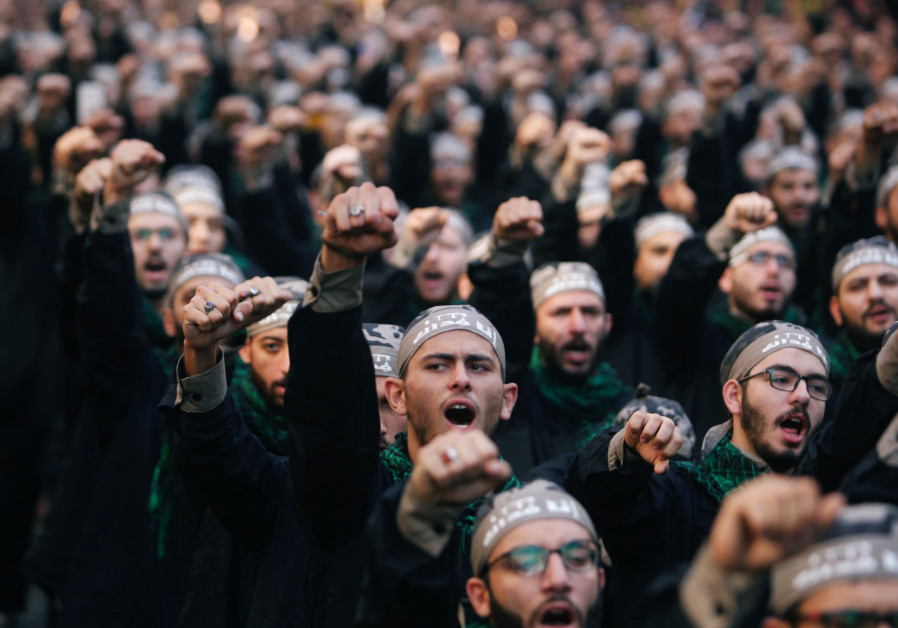
Lebanon’s Hezbollah supporters chant slogans during last day of Ashura, in Beirut, Lebanon September 20, 2018. (photo credit: AZIZ TAHER/REUTERS)
In northern Israel the IDF continues to dig and expose tunnels and break apart Hezbollah’s attack array.
What’s more, it’s turning the northern region into a pilgrimage site for politicians armed with windbreakers, who are there to shoot declarations toward the border – which are really meant for the Israelis, meant to increase our self confidence and calm our fears.
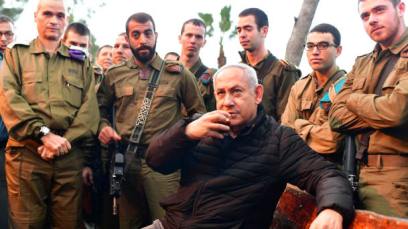
Prime Minister Benjamin Netanyahu showed up there this week, threatening Hezbollah that were they to dare respond, they will be hit in a way they can’t even imagine. He then had black coffee with the soldiers there before going right back to slamming the media while his son gives cameramen the finger during his day in court, and his wife spreads smiles and photo ops in Guatemala.
It’s hard to say whether Netanyahu actually managed to deter Hezbollah – and maybe he did – but he did expose something else with regards to Operation Northern Shield: a deep, disturbing disagreement with the US regarding Lebanon.
This was one of the reasons for Netanyahu’s urgent meeting with US Secretary of State Mike Pompeo in Brussels. According to political sources, Netanyahu went there to explain the IDF’s defense move in the North, to discuss options and scenarios for deterrence, and to talk about the US’s support of the Lebanese army.
This wouldn’t be the first time. A senior source has revealed that Israel has been working for a while now on “incriminating” the Lebanese army – proving that they are working alongside Hezbollah.
Col. (res.) Giora Eiland said this week that this is a delicate, complicated issue because the only way to deter the Iran-backed Hezbollah is to clarify that any kind of campaign by Israel would be “all in,” which would stand to harm Lebanon itself, including infrastructure, roads, airports, oil reservoirs and Beirut.
Netanyahu and his ministers continue to talk only about Hezbollah itself, but Eiland stresses: We have to make sure they understand that an attack from Lebanon territory risks the entirety of Lebanon.
UN Ambassador Danny Danon admitted to me that the US isn’t buying it. It sees the Lebanese army as one they can work with, and that’s why it pays for and trains the army – which this week took station at the border, right in front of Israeli soldiers. Israel passed along testimonies and intelligence files about Lebanese officers who are doing everything Hezbollah asks of them, but Pompeo, like his predecessors in the State Department, believes there are still people to work with in Lebanon.
Thus, Israel and the US are in disagreement, one that could hurt Israel’s deterrence capability.
In fact, Israel knows – especially now, after exposing the tunnels – that its ability to hurt Hezbollah is limited. If they managed to dig these tunnels inside Israel, imagine what they had dug in southern Lebanon as part of the preparation for an Israeli attack.
We saw the same thing 12 years ago in Hezbollah’s “Nature Reserves,” and now it’s even more elaborate and sophisticated.
This is also evident from an American research report published this week, claiming that Hezbollah currently holds some 130,000 missiles of various kinds, and that it is “the world’s most well-armed player which is not a country.” The researchers added that their list of missiles is in no way final, and it’s based only on overt sources – so it is certainly possible that an additional arsenal is hidden underground.
The researchers mentioned that while for the most part, Hezbollah’s missiles are small and inaccurate, “the sheer amount of them makes them an efficient weapon.”
Hezbollah has an additional arsenal of Skad missiles, which are considered particularly threatening thanks to their launching abilities. However, they are difficult to carry around, hide and operate. “They don’t give Hezbollah much advantage,” wrote the researchers.
One more point that comes up in the report is that most of Hezbollah’s missiles cover a relatively small space, but they do compel IDF planes to fly higher and so might scale down Israel’s ability to hit ground objectives. In this scenario, Israel could find itself facing off against a Lebanese army paid for by the US government, while Hezbollah is deep in the ground, shooting constantly, and forcing Israel into complicated ground action that will lead to multiple casualties.
Hezbollah’s tunnels are meant to surprise Israel and to maintain a deterrence balance along the border, wrote Yoram Schweitzer and Ofek Riemer from the Institute for National Security Studies (INSS). The tunnels are a part of a ground-attack plan created by Hezbollah called “Conquering the Galilee” and meant to help the organization’s commando units penetrate Israel and obtain a victory photo op by taking over – even if temporarily – a village, an IDF base or a major road.
The researchers wrote that taking this ability away from Hezbollah would prove Israel’s military superiority and deepen the gulf between Hezbollah and Israel in a way that could shift the deterrence balance that has been stable since 2006. For instance, from Hezbollah’s point of view, if Israel feels relatively protected from the threat, it is more likely to challenge Hezbollah’s redlines by attacking Lebanon – which, according to the INSS, will invite an escalation.
Right now, Israeli and Lebanese soldiers are facing each other, only a few dozen kilometers apart. The atmosphere is quiet, tense and explosive. Israel’s moves are out in the open and the potential targets are clear, in case things go south, so to speak. This is just one part of the campaign against Iran. The true aim is the Islamic Revolutionary Guard Corps (IRGC) and Hezbollah’s move of creating rockets for accurate long-range guided missiles on Lebanon soil.
In Syria, Israel has the ability and the legitimacy to operate. In order to widen the limits of such an operation, an Israeli military delegation left for Russia this week. The Russians are signaling that they are hard to get – for instance, by sending junior ranks to this meeting – but Israel isn’t there to make friends, it’s there to clarify redlines. This is a part of Netanyahu’s wider diplomatic move: he warned Lebanon about the price it might pay, he exposed critical sites during his recent UN speech, and he met with Pompeo on the subject.
All this tension is exposing the main – and strange – problem: the US’s insistence on seeing the Lebanese army as something open for influence. Washington does not want to give up any influence in a region conquered both militarily and diplomatically by Russia. But for Israel, this creates a vague restriction.
Earlier this week, former prime minister Ehud Olmert denied absolutely any operational restrictions laid on the IDF by the US during the Second Lebanon War. His ministers and IDF senior officials remember well Condoleezza Rice’s instructions, which limited some of their ability to use force. In the next war, Israel has to act in Lebanon quickly, strongly and with no restrictions if it wants to create a quick ceasefire.
Right now, the US is tying our hands behind our back – that still needs work. It speaks of a certain thought pattern in Washington while Israel, ever grateful for the embassy move and the UN veto, should be modest in its objection to US strategic moves in the region.
One more question remains: Is this the same thought pattern that guides the Trump administration’s “deal of the century” peace plan for the Middle East?
Discussions on how to respond split Israel’s leadership, with the PM equivocating about the timing and Eisenkot advocating immediate action
Prime Minister Benjamin Netanyahu visits Israeli forces stationed near Israel’s border with Lebanon, December 11, 2018.קובי גדעון / לע”מ
On the eve of the first day of Operation Northern Shield, Prime Minister Benjamin Netanyahu and Chief of General Staff Gadi Eisenkot stood alongside each other at a press conference and demonstrated a united front regarding the urgent need to destroy the tunnels under the border with Lebanon. Yet, Eisenkot had to exert quite a bit of pressure on the politicians to get to that moment at Defense Ministry headquarters in Tel Aviv. Months of tense debates that climaxed with the resignation of former Defense Minister Avigdor Lieberman, who believed his constant struggle with the defense establishment could end his political future, the evening with the unified message.
Conversations Haaretz conducted with some of those involved in the discussions preceding the operation reveal that the prime minister equivocated about the suitable time for such an operation until it was approved on November 7. Netanyahu was well-versed in the details of the tunnel project, for which the Israel Defense forces had been preparing for two years. Sources said that Netanyahu wasn’t hesitating about whether to act; the question for him, as for Eisenkot, was the timing.
A source privy to some of the discussions about launching the operation in the north asserted that Eisenkot exerted more pressure on this issue than on any other issue since taking over as chief of general staff. According to people who were at the discussions, Eisenkot pushed to start destroying the tunnels as soon as possible and wrangled with several security cabinet ministers, especially with Lieberman and Education Minister Naftali Bennett. Eisenkot insisted it would be mistaken to launch an operation in the south before tackling the threat of Hezbollah tunnels, they said.
“This is the organization’s [Hezbollah’s] next Operation Barbarossaagainst Israel,” Eisenkot said, referring to Germany’s surprise invasion against the Soviet Union in June 1941. “This is Hezbollah’s most significant part of the next confrontation,” he noted in arguing to prioritize the northern front over the southern one. “It is building on this card, which could be its signature achievement.”
During another discussion, Eisenkot presented a letter from Northern Command head Maj. Gen. Yoel Strick, in which the general warned that the delay could lead to the loss of the element of surprise, and would allow Hezbollah to carry out a deadly attack.
At another meeting, the chief of staff asked specifically to include Strick’s warnings in the minutes. Security sources said that Netanyahu was not pleased that Eisenkot had brought the letter, let alone sought to insert it in the protocol. But according to the sources, this was the moment that shifted the balance, because afterward Netanyahu gave the operation the green light. “Eisenkot, like all those present at that security discussion, knew unequivocally that no one could avoid taking responsibility for a terror attack coming from Lebanon when there were minutes in which the chief of staff and the head of Northern Command were warning of one,” said an official familiar with the details.
Irreparable relationship
The backdrop to the discussions on Operation Northern Shield was the harsh criticism over the way Israel was responding to Hamas in the south. The pressure was also coming from Lieberman, whose relationship with security officials had become so hostile that it was disrupting their work together.
The tension between the defense minister and the chief of staff had been evident in the Elor Azaria affair, the disputes over closing Army Radio, the return of terrorists’ bodies and in other cases where Lieberman believed the defense establishment was not backing the policies he advocated in the Defense Ministry and the military. Another incident that increased the tension occurred when Eisenkot submitted the candidacy of Maj. Gen. Roni Noma as the sole nominee to be the next head of Military Intelligence. Sources familiar with the situation said that Lieberman had told Eisenkot that he should submit the name of at least one other candidate to enable a choice. A few weeks later, Eisenkot was informed that Lieberman had chosen Maj. Gen. Tamir Heyman as head of Military Intelligence, after consulting with several former senior IDF officers.
Lebanese villagers smoke a water pipe and take souvenir pictures in front of Israeli excavators, Mays al-Jabal, southern Lebanon, December 13, 2018.Hussein Malla,AP
At the end of March, when the Friday demonstrations began near the Gaza perimeter fence, the tension further worsened. The gaps between Lieberman’s position and that of defense officials regarding the Gaza policy gradually turned the tension into hostility, to the point where the relationship became irreparable.
At one of its peak moments, Lieberman told senior IDF officers that he felt “as if I were talking to the Peace Now leadership.” The defense minister announced at the time that he would stop supplying fuel to Gaza until the demonstrations and incendiary kites stopped. After a certain lull, there was a conference call in which the heads of the defense establishment expressed support for allowing fuel back into Gaza due to the humanitarian crisis there. The call involved Lieberman, the chief of Military Intelligence, the head of the Shin Bet security service, Eisenkot and the coordinator of government activities in the territories. According to sources familiar with the conversation, after he compared the security officials to Peace Now leaders, Lieberman hung up, leaving his surprise listeners on the line.
In another meeting, after a heavy barrage of rocket fire at Israel from the Gaza Strip, Lieberman demanded a decisive blow against Gaza. When a few of those present asked him what he meant, Lieberman replied: Attacks from the air that will scare them, so they understand they have crossed the red lines. Bennett presented a plan for a military operation that would also lead to the evacuation of Israeli residents in the area near the border with Gaza. Bennett also wanted aerial attacks, but without having soldiers enter the Gaza Strip.
The operation in the north was approved at this meeting, and the defense establishment thought it would be irresponsible to be dragged into a conflict with Hamas only a few days before such sensitive operations against Hezbollah. Eisenkot looked like a man who had lost his patience, said sources acquainted with the discussion. Eisenkot said that it would be impossible to deliver a harsh blow acting only from the air, said Eisenkot, according to those sources. Weakening Hamas would require a ground operation, he stressed, adding that all involved needed to realize the implications of such a decision.
Eisenkot and Shin Bet director Nadav Argaman, and after them National Security Adviser Meir Ben-Shabbat and Mossad chief Yossi Cohen, were unanimous in their views concerning the need to act in the north, and not at the same time as an operation in Gaza. All the leaders of the defense establishment agreed it was necessary to first exhaust all efforts to reach an arrangement with Hamas.
The commander of the IDF’s Operations Directorate, Maj. Gen. Aharon Haliva, said the humanitarian situation in Gaza was making the security situation worse. Haliva said that Israel could initiate economic and practical steps to prevent an escalation of the situation. He foresaw a two-month window of opportunity to move to bring about calm in the south.
The IDF’s coordinator of government activities in the territories, Maj. Gen. Kamil Abu Rukun, agreed with Haliva and presented data on the crisis in the Gaza Strip. But Lieberman did not want to hear it, said one of the sources. “Lieberman would become annoyed with the officers every time they would talk about the humanitarian situation,” said the source. “He didn’t let them say humanitarian crisis, it would drive him crazy.”
Netanyahu supported Eisenkot concerning the south, and left Lieberman all by himself with his positions. At a meeting after the day of fighting in which Hamas fired hundreds of rockets at Israel, on November 12, all those at the meeting went out for a short break, during which someone showed Lieberman a tweet from journalist Sharon Gal. “This toy Rambo defense minister is silent,” said the tweet. “I’m embarrassed that I was a Knesset member in Yisrael Beiteinu under this defense minister, who except for talk is not doing anything.” At that moment, Lieberman realized that he was seen as being responsible for the restrained response in the south and he expected to pay the political price for it, said sources familiar with the details.
Top priority
Thus, the discussions regarding the Hezbollah tunnels came about against the backdrop of this tension on the table, and the military – with Netanyahu’s support – trying to prevent broader military action in Gaza. Netanyahu did not talk mention an exact when he informed security cabinet members about the Hezbollah tunnels and sought approval for the operation. Eisenkot thought it was best to start the operation immediately, both for practical reasons and because Netanyahu and the other ministers who supported restraint in Gaza were losing their ability to withstand the public’s criticism.
Israeli soldiers stand guard at the site of their excavation work, near the southern border village of Mays al-Jabal, Lebanon, December 13, 2018.Hussein Malla,AP
Eisenkot’s position was reinforced by Haliva and Heyman at the meeting in which Eisenkot compared the Hezbollah tunnels to Operation Barbarossa. Haliva said the issue of the tunnels was top priority, not just over dealing with Hamas, but also over Hezbollah’s project for precision missiles, which has kept the IDF very busy in Syria.
In one of the meetings just before the approval of the tunnel operation, Eisenkot introduced the warning letter by Strick, the Northern Command head, about possible scenarios if Israel did not undertake the operation against the tunnels. Strick said the preparations for the operation had been completed and the military had the intelligence information needed for the operation. Strick also said that any delay would increase the possibility of the information leaking out and being exposed in the media, and the IDF could well lose its element of surprise, which was of critical importance. If Hezbollah learned that Israel knew about the tunnels, the threat to Israeli communities along the border with Lebanon would grow, said Strick. It was possible that Hezbollah would take advantage of this and act against Israel from the tunnels, he warned. Such action could make the situation worse than what was expected from the response to an operation to destroy the tunnels. The tunnels were intended to provide Hezbollah with victory pictures for Nasrallah as the first Muslim leader in years to fight against the IDF on Israeli soil, added Strick. Netanyahu was not pleased that Eisenkot presented the letter from Strick, and made it clear that the matter had been on the agenda for a long time and had received proper treatment, even without warning letters, said defense sources.
Lieberman also brought in reinforcements to support his position, in which Israel needed to begin an operation in the Gaza Strip and postpone the tunnel operation in the north by a few weeks or months. Lieberman invited the head of the Research Division of Military Intelligence, Brig. Gen. Dror Shalom, who said more intelligence was needed to ensure the tunnels would be found. Eisenkot allowed Shalom to give his briefing. There were those who reminded Lieberman that only a few months earlier it was Shalom who contradicted his statements in meetings about attacking Gaza. “But in this case, Shalom’s opinion matched Lieberman’s interests,” said a defense source.
During the briefing in which the approval of the tunnel operation was discussed, Eisenkot pressed to include Strick’s letter in the minutes of the meeting. He began reading out a few sentences from the letter for the minutes. “As far as Netanyahu and all those who were in the room at the time, it was a step that led to the final approval of the operation, even if someone still had minor reservations,” said a source familiar with the situation.
Another source involved in the matter said that if such an incident had taken place, even if it was not conducted from inside the tunnels and led to an escalation between Israel and Hezbollah, it would have placed the responsibility on Netanyahu and the members of the security cabinet. This is what made the approval of the tunnel operation the obvious choice, said the source.
The preparations for the tunnel operation took about two years, so a difference of a week or two from the set date would not have had any great affect, said security sources. “The intelligence assessment that preceded the decision on undertaking the operation was that Hezbollah would not respond, because the work would be in [Israeli] territory and Hezbollah would find it difficult to find an excuse to take action,” said a security source. “In addition, the assessments were that Hezbollah was in a very difficult situation concerning Iran and Lebanon, something that made it difficult [for Hezbollah] to go and fight Israel today.”
Eisenkot was not a partner in all these optimistic assessments and said in meetings that there is always uncertainty concerning Hezbollah’s action in extreme situations, so Israel must prepare for the worst possibility of a graduated escalation – all the way up to a war in the north. “It was important to Eisenkot, before the operation, to complete all the training exercises of the [front-line] divisions and to bring the IDF to high readiness in preparation in case the operation would lead to an escalation,” said the defense source. Eisenkot thought that “we are not completely past the threats and developments that could very well come in response to the [tunnel] operation.”
A spokesman for Lieberman said, “This is a mix of lies and absurdities that mostly points out the distorted approach and prejudices of the leakers and those who make use of these same leaks.”
Damon Joseph spent months posting photos of weapons, praising ISIS, and talking about carrying out a violent attack; his plan crystallized after Pittsburgh shooting.
Federal authorities said Monday they have charged two people involved in planning separate large-scale attacks—one who wanted to carry out a shooting at a synagogue and another who had been plotting to attack a bar and blow up a pipeline.
The attacks were never carried out, and there was never an immediate threat to the public, the FBI and Department of Justice said at a news conference announcing the charges.
Damon Joseph (Photo: Reuters)
The two suspects, both from the Toledo area, had identified specific places they wanted to target, authorities said.
The two were under investigation for months and had talked about their plans with undercover FBI agents, according to the Justice Department.
“These cases demonstrate terrorism comes in many forms,” said Justin Herdman, the US attorney for northern Ohio.
Damon Joseph, 21, spent months posting photos of weapons, praising the Islamic State group (ISIS) and talking about carrying out a violent attack before he eventually settled on a synagogue in the Toledo area, Herdman said.
His plan for the shooting came together after a gunman killed 11 people at a Pittsburgh synagogue in October, Herdman said. Authorities said he told an undercover agent: “I admire what the guy did with the shooting actually.”
He wanted to kill as many people as possible, including a rabbi, and make sure no one escaped, the Justice Department said.
Joseph said his decision about which synagogue to attack would come down to “which one will have the most people, what time and what day. Go big or go home,” according to court documents.
Joseph was arrested Friday after he received two AR-15 rifles from an undercover agent and was charged with attempting to provide material support to ISIS.
He appeared in court Monday and waived a preliminary hearing, The Blade reported. There was no telephone listing for Joseph and a message seeking comment was left with his attorney.
FBI Acting Special Agent in Charge Jeff Fortunato said it did not appear Joseph was working with anyone else.
Within months, Joseph became radicalized and began planning an attack, Fortunato said.
Court records show that Joseph was charged with domestic violence nearly two years ago and later entered an Alford plea, which acknowledges prosecutors have enough evidence to convict without admitting guilt.
A person pays their respects at the memorial to the victims of the Pittsburgh synagogue attack (Photo:AFP) (Photo: AFP)
Israeli Consul General in New York Dani Dayan expressed his gratitude to the FBI and US law enforcement authorities for preventing the deadly attack.
“I thank the FBI for thwarting the cruel terror attack,” Dayan said. “The uncompromising war against anti-Semitism, which is rearing its head, must be bolstered.”
He added: “We’ll continue fighting anti-Semitism, anti-Zionism and the cruel terrorism, which are meant to make us fear to be proud of our identity.”
Authorities also arrested Elizabeth Lecron, 23, of Toledo, on Monday after they said she bought bomb-making materials. She was charged with transporting explosives and explosive material with the purpose of harming others.
A telephone listing for Lecron could not be located and court records did not indicate whether she has an attorney.
Lecron had been talking about carrying out several different types of violent attacks, including telling undercover agents in August that she and someone else had come up with a plan to commit a mass killing at a Toledo bar, officials said.
She also discussed attacking a livestock farm, her workplace and bombing a pipeline, according to authorities, who also said Lecron told agents she was making a pipe bomb.
Jasser Barghouti was freed in the 2011 Shalit deal, deported to Gaza where terror group made good use of his knowledge of the area where shootings occurred
Palestinian Authority officials believe they have identified the mastermind behind the Hamas cell that carried out the recent shooting attacks at the Ofra settlement and Giv’at Asaf outpost. According to the PA, the mastermind is Jasser Barghouti, a member of the infamous Barghouti clan.
The senior officials told Ynet on Monday that Barghouti is part of the “West Bank headquarters” of Hamas, which operates from the Gaza Strip to launch attacks in the West Bank under the leadership of Hamas second-in-command Saleh al-Arouri and Maher Obeid.The attacks claimed the lives of two IDF soldiers—Sergeant Yosef Cohen and Staff Sergeant Yovel Moryosef—and Amiad Israel Ish-Ran, a baby boy who died just days he was delivered prematurely due his mother’s gunshot wounds. A third soldier who was wounded in the Giv’at Asaf attack is still fighting for his life.
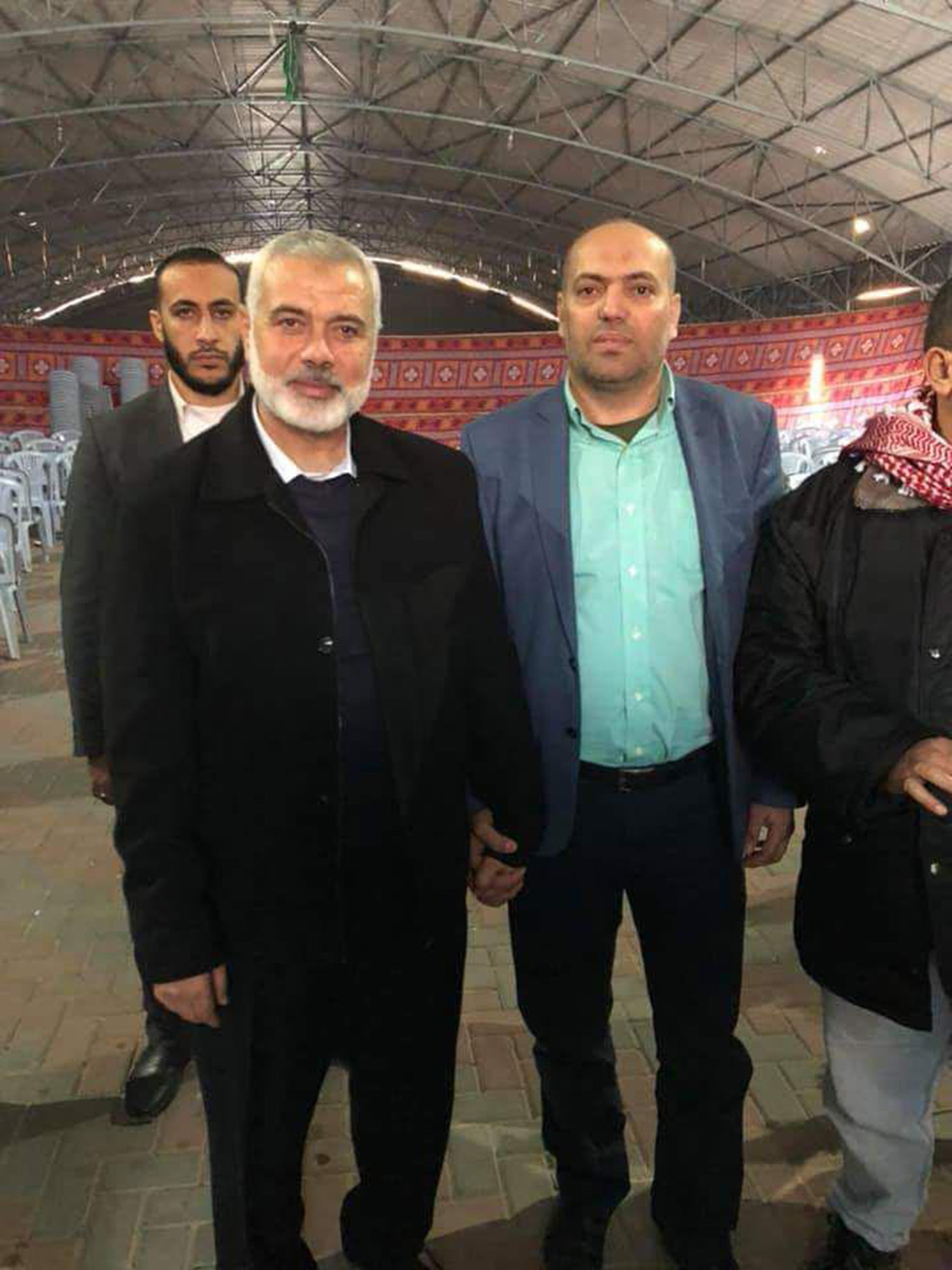
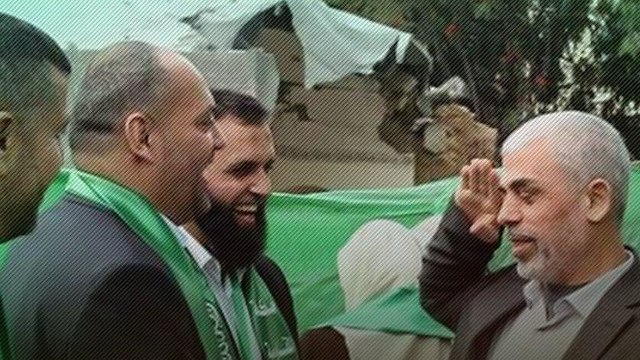
Jasser Barghouti holds hands with Hamas political leader Ismail Haniyeh in an image taken after the Ofra attack
Jassar Barghouti is the uncle of Saleh Barghouti, one of the members of the cell that carried out the attack at Ofra, who was killed last week in an exchange of fire during an arrest operation by the Israel Police counter-terrorism unit Yamam.
Barghouti was one of the senior members of the Hamas military wing in the Ramallah area during the Second Intifada. He was one of the perpetrators of a shooting attack in the village of Ein Yabrud near Ramallah in 2003, in which three IDF soldiers were killed.
Sources say that Jasser Barghouti was responsible for setting up and directing the Hamas cells in the villages of Bir Zeit, Kubar and Mazra’a al-Gharbiyya, as these are in which areas he grew up and was therefore deeply familiar with the local population.
The sources, who are familiar with the security situation, say Jassar Barghouti is responsible for setting up and recruiting the firing squad that carried out the two deadly attacks last week, using his familial connections to Salah Barghouti, the gunman who was hunted and killed by Israeli troops following the attack.
Jasser Barghouti with senior Hamas officials
Barghouti is responsible for directing other deadly attacks on Israelis. He was arrested and sentenced to nine life terms but released in 2011 he was released as part of the prisoner exchange for captured IDF soldier Gilad Shalit.
As Barghouti was seen as one of the most dangerous prisoners freed in the deal, Israel conditioned his release on immediate deportation to the Gaza Strip. After being deported to the Gaza Strip, Barghouti became involved the Hamas “West Bank headquarters.”
“This is an offensive force that belongs to the State of Israel and is relevant for all our different fronts,” the prime minister said.
BY JERUSALEM POST STAFF
DECEMBER 17, 2018 14:52
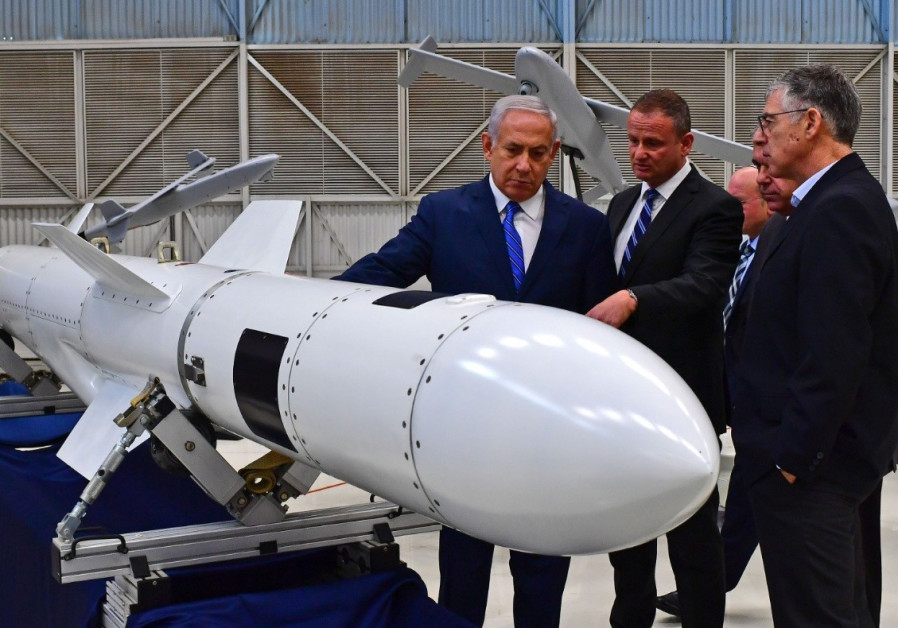
Prime Minister Benjamin Netanyahu inspects a missile at Israel Aerospace Industries.. (photo credit: KOBI GIDEON/GPO)
Amid rising tension in the North, Prime Minister Benjamin Netanyahu declared on Monday that Israel has missiles that can reach any target throughout the Middle East.
“They develop offensive missiles here that can reach any place in the region and any target,” Netanyahu said during a visit to Israel Aerospace Industries outside of Tel Aviv. “This is an offensive force that belongs to the State of Israel and is relevant for all of our different fronts. They develop weapons here that don’t exist in any other country. “There is a group of minds and people here who develop the best of the defenses needed for the State of Israel. This includes micro satellites that are fired into space, and some missiles that you see here behind me. Space is a huge field that the State of Israel is entering.”
Netanyahu was asked about reports that the US was blocking the Israeli sale of 12 F-16 C/D Barak fighter jets to Croatia.
“This is ongoing between the countries and I have dealt with this personally,” Netanyahu said. “It is too early to say anything clear about this. We are working on this.”
Earlier this week, Channel 10 reported that the Trump administration was blocking the $500 million deal, although Croatia’s defense minister, Damir Krsticevic, denied reports that Washington does not want the European country to buy the planes.
 By
By 








 anneinpt
 artaxes
 danmillerinpanama
 davidking1530
 Peter Hofman
 Joseph Wouk
 Peter
Peter Louisiana Steve
 WarSclerotic
Recent Comments