Archive for December 16, 2018

How far will the IDF go? 

December 16, 2018

Source: How far will the IDF go? – Israel Hayom

Maj. Gen. (ret.) Yaakov Amidror

Operation Northern Shield, encompassing the IDF’s efforts to uncover and destroy Hezbollah attack tunnels crossing under the Israel-Lebanon border, has been made possible by technological advancements and accurate intelligence gathering.

The operation followed a detailed plan outlined by operational officials, and if the plan is implemented as presented, it will undoubtedly achieve the desired effect. The desired being  neutralizing the big surprise that Hezbollah was preparing ahead of its next confrontation with Israel – attack tunnels that would allow it to strike at Israel’s home front.

Hezbollah’s aim was two-fold: to seize Israeli vantage points and stir panic inside Israel, thereby compelling the Israeli military force fighting Hezbollah’s complex attack to turn back. And no less importantly, they sought to take over an Israeli community and abduct as many civilians as possible. Thus, at the end of the war, Israel’s failure would continue to resonate for a long time after the fighting itself ends, because the hostage negotiations would take a long time and would bring Israel to its knees.

The operation currently underway in the north has the power to reverse this threat. Without a winning card up its sleeve, Hezbollah will need to consider its next step carefully. The many missiles (many of them advanced precision missiles) the organization possesses are still its main strength, and its ability to defend southern Lebanon tenaciously has not waned. But without the winning tunnel card, which would have catapulted Hezbollah’s capabilities to a new level, its strength has eroded. This means the organization is more likely to be cautious and less likely to initiate a war in the near future.

Operation Northern Shield raises complicated questions about Israel’s initiative and willingness to enter a war to prevent the threat it sees growing. When it comes to nuclear weapons, the accepted view in Israel – known as the Begin Doctrine, named after the late prime minister Menachem Begin, who implemented it when Israel bombed Iraq’s nuclear reaction in the 1980s – is preventive. The same policy guided former Prime Minister Ehud Olmert in 2007, when he decided to attack the nuclear reactor in Syria.

But when it comes to conventional weapons, Israel has launched a pre-emptive war only once – Operation Kadesh in 1956, when then-Chief of Staff Moshe Dayan launched a mission to keep Egyptian forces from acquiring the capability to overpower the IDF. The operation was a success and bought Israel 11 years of relative calm, at a difficult time when the country was also busy absorbing massive waves of new immigrants and building its economic and military infrastructure.

“Pre-emptive wars” are considered problematic. They are hard to legitimize, because they are by definition “wars of choice.” In other words, sacrificing thousands of lives may not be necessary when the enemy isn’t pounding at the gates. The country’s citizens, like the international community, have a difficult time supporting wars if there is even the slightest possibility it won’t erupt. Thus, for example, Israel allowed Hezbollah to grow exponentially stronger and acquire the best Syrian, Iranian and even Russian-made missiles – and deploy them.

Israel spoke in extremely lofty terms following its unilateral withdrawal from Lebanon in 2000, and after the Second Lebanon War in 2006, but hasn’t done anything to stop Hezbollah’s armament in Lebanon. Only in the chaos of the Syrian civil war, which began in 2011, did Israel decide to use force to prevent the transfer of sophisticated weapons to Hezbollah from Syria and Iran – while its policy of non-intervention in Lebanon persists.

Can this operation – which is currently being carried out strictly from Israeli territory – spark hostilities on the other side of the border? The answer is a resounding yes, whether intentionally or otherwise. But even if the operation remains on Israel’s side of the fence, it could, if Hezbollah’s assets and dignity continue taking a hit, trigger a violent response.

Although the chances of this happening are presently low, this must be the IDF’s working assumption and its war readiness should be adjusted accordingly. This situation, as stated, raises the question: How far the IDF is willing to go to impair Hezbollah’s capabilities? Secondly, should a pre-emptive strike – say a large operation inside Lebanon – be considered after Hezbollah’s tunnels are successfully neutralized? These questions require considerable thought.
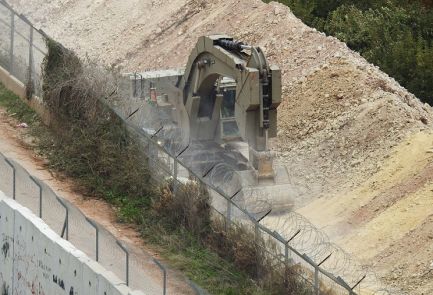
IDF uncovers 4th Hezbollah tunnel under Israel-‎Lebanon border 

December 16, 2018

Source: IDF uncovers 4th Hezbollah tunnel under Israel-‎Lebanon border – Israel Hayom


Hizballah tunnel issue goes into diplomatic fog. Hamas relocates terror to West Bank front – DEBKAfile

December 16, 2018

Source: Hizballah tunnel issue goes into diplomatic fog. Hamas relocates terror to West Bank front – DEBKAfile

Lebanon too is girding up to counter the US-Israeli UNSC motion condemning Hizballah’s tunnels which is due to be aired on Wednesday, Dec. 19.

The fourth tunnel was unearthed on Sunday. Israel will present evidence of the tunnels violating its sovereignty and providing a gateway for Hizballah to conduct cross-border raids for terror. The US plans to use this evidence for a motion to declare Hizballah a terrorist organization.

However, as a precondition for gaining the votes of all 15 members, the Israeli account must be backed up by UNIFIL’s confirmation. There lies the first rub. It is highly doubtful that the international force’s commander Gen. Stafano De Col, of Italy will provide this confirmation.
The Lebanese government’s strategy designed by President Michel Aoun was outlined in detail by the London-based Arab paper Al-Hayat on Saturday.

These are the high points:

Hizballah tunnel issue goes into diplomatic fog. Hamas relocates terror to West Bank front

  • None of the tunnels Hizballah is accused of digging for the purpose of terrorism have exits on the Israeli side of the border.
  • Israeli claims they were excavated as of 2013. Lebanon has proofs that some date back to 2006 and are decrepit and in disuse.
  • One or two may have reached under the “Blue Line” (which the UN marked out on the border in 2000), but the Lebanese delegation will insist that this is not a significant violation of UNSC Resolution 1701, which terminated the 2006 Israeli-Hizballah war. In contrast, they will point to Israel as committing far more substantial infringements– both in the course of its Operation Northern Shield and beforehand.
  • UNIFIL has no proof of where the tunnels start (because it has no mandate to enter private homes on the Lebanese side of the border.)
  • Lebanese sources admit quite openly that President Michel Aoun’s presentation of the Lebanese case to the Security Council is designed to consolidate his cooperation with Hizballah as the dominant force in Beirut for establishing a stable government. A transitional administration is currently in office. Therefore, if the Israeli government had hoped its tunnel operation would loosen the ties the president and Lebanese army maintain with Hizballah, Aoun has turned the tables by using it as a tool for further cementing the partnership.

This is not the only obstacle standing in the way of a UNSC resolution in Israel’s favor. US Security of State Mike Pompeo and Prime Minister Binyamin Netanyahu counted on UNIFIL playing ball with Israel’s tunnel operation – or else, it was suggested, the US would chop its funding. But UNIFIL will have to be counted out.

Excepting Greece alone, which has strong military and economic ties with Israel, all the other governments contributing personnel to UNIFIL are against the Middle East policies the US and Israel pursue and do not share their view of Hizballah as a bad player. Indeed, Italy, France, Germany, Ireland, Austria, Holland and Spain interpret the Israeli tunnel operation as part and parcel of the joint US-Israeli drive against Iran and the US sanctions regime,  to which they are opposed.

Italy’s deputy prime minister Matteo Salvini,when he visited Israel, was briefly willing to declare Hizballah “Islamicterrorists” after Israel asked him to use his influence with Gen. Del Col to try and bring UNIFIL in line. But then, the Italian defense ministry issued a statement formally and strongly disavowing Salvini’s declaration, accusing him of placing the Italian troops posted on the Lebanese-Israeli border in harm’sway.

In these circumstances, it is hard to see the proposed US condemnation of Hizballah gaining Security Council approval without running into a veto. At best, the Council will urge both parties to refrain from military escalation on their common border, thereby opening the door for Israel to be directed to discontinue its Operation Northern Shield. It will then be up to the US to apply its veto to kill that motion.

While Israel’s major tunnel operation seemed to be heading for a diplomatic stalemate, the Israeli government and military were caught unawares last week by the Palestinian Hamas initiative to counter-balance its slowdown of violence in the Gaza Strip by inflaming a second terror front in Judea and Samaria, It claimed the lives of two soldiers and a four-day old infant as well as a number of critically injured casualties.

Hamas cells, including some of the perpetrators, are still at large looking for more Israeli victims – even in the face of a heavily reinforced Israeli military presence. This time round the terrorists are plentifully provided with sidearms and vehicles.

And so, while the prime minister and IDF Chief of Staff Lt. Gen. Gady Eisenkot were immersed in the tunnel operation on the northern border and counted on Qatar’s multimillion-dollar gift to the Gaza Strip for pacifying the southern front, the same Hamas switched its attention to the West Bank and opened up a third front.

Maj-Gen. (res.) Gady Shamni, former head of the IDF’s Central Comment, said the spiraling crises had grown out of the “kid gloves” policy with which the IDF and government had greeted months of heightened Hamas aggression from the Gaza Strip.


Engagement between Syria and Israel, as Russia changes its position

December 16, 2018

Posted on

New Rules of engagement between Syria and Israel, as Russia changes its position


Syria will adopt a new rule of engagement with Israel now that Russia has taken a tougher and clearer stance on the conflict between Israel and the “Axis of the Resistance”. Henceforth, Damascus will be responding to any Israeli strike. If it damages a specific military target it will reply with a strike against a similar objective in Israel. Decision makers in Damascus said “Syria will not hesitate to hit an Israeli airport if Damascus airport is targeted and hit by Israel. This will be with the consent of the Russian military based in the Levant”.

This Syrian political decision is based on a clear position taken by Russia in Syria following the downing of its aircraft on September 18 this year. In 2015 when the Russian military landed in Syria, it informed the parties concerned (i.e. Syria, Iran and Israel) that it had no intention to interfere in the conflict between them and Hezbollah and that it would not stand in the way of Tel Aviv’s planes bombing Hezbollah military convoys on their way to Lebanon or Iranian military warehouses not allocated to the war in Syria. This was a commitment to remain an onlooker if Israel hit Iranian military objectives or Hezbollah convoys transporting arms to Hezbollah from Syria to Lebanon, within Syrian territory. It also informed Israel that it would not accept any attacks on its allies (Syria, Iran, Hezbollah, and their allies) engaged in fighting ISIS, al-Qaeda and its allies.

Israel respected the will of Moscow until the beginning of 2018, when it started to attack Iranian bases and Syrian military warehouses, though it never attacked a Hezbollah military position. Israel justified its attack against the Iranian base, a military facility called T4, by claiming it had sent drones over Israel. Tel Aviv considered violation of its neighbours’ sovereignty as its exclusive prerogative. Damascus and Iran have responded with at least one confirmed shooting down of an Israeli F-16. Israel started to attack Syrian warehouses, mainly where Iranian missiles were stored. Iran has replaced every single destroyed warehouse with other more sophisticated precision missiles, capable of hitting any objective in Israel.

However, Russia’s neutrality towards Israel in the Levant turned out to be quite expensive. It has lost more than Iran, especially after the downing of its IL-20, and with it, 15 officers highly trained to use the most advanced communication and espionage systems.

Russia then brought to Syria its long-awaited advanced S-300 missiles and delivered them to the Syrian army while maintaining electronic coordination and radar command. The S-300 poses a danger to Israeli jets only if these violate Syrian airspace. Tel Aviv has kept its planes out of Syria since last September but launched long range missiles against a couple of targets.

For many months, the Russian President Vladimir Putin refused to receive Israeli Prime Minister Benjamin Netanyahu. Only through real harassment by the latter did Putin finally accept to briefly meet with Netanyahu over lunch or around the dinner table during a large Summit or meeting of Heads of State, without however accepting any compromise or reconciliation. Russia has now taken a clear position and has no intention of extending its embrace or pardon to Israel. Russia felt that its generosity (by closing its eyes to Israel’s activities in Syria) was neither recognised nor sufficiently appreciated by Tel Aviv.

This week, Moscow agreed to receive an Israeli military delegation led by Major-General Aharon Haliva,  following Israel’s insistence on breaking the ice between the two countries. However, Russia’s position is not expected to change in Syria and no Israeli bombing of Syrian or Iranian targets will be tolerated.

According to these sources, “Russia has informed Israel that there are Russian officers present at every Syrian or Iranian military base and that any strike against Syrian or Iranian objectives would hit Russian forces as well. Putin will not allow his soldiers and officers to be struck down by Israel’s direct or indirect bombing”.

Moreover, Russia has given Syria the green light – said the source- to strike Israel at any time if and when Tel Aviv’s planes launch raids against Syrian military targets or launch long-range missiles without flying over Syria (for fear of the S-300 and to avoid seeing its jets downed over Syria or Lebanon).

The source confirmed that Syria – contrary to what Israel claims – now has the most accurate missiles, which can hit any target inside Israel. The Syrian armed forces have received unrevealed long and medium-range missiles from Iran. These operate on the GLONASS system – the abbreviation for Globalnaya Navigazionnaya Sputnikovaya Sistema, the Russian version of the GPS. Thus, the delivery of Iran and the manufacture of missiles inside Syria (and Lebanon) is now complete. Israel, however, claims it has destroyed Syria’s missile capability, including that of the missiles delivered by Iran. According to the source, Damascus controls a very large number of precision missiles, notwithstanding those destroyed by Israel. “In Iran, the cheapest and most accessible items are the Sabzi and the missiles”, said the source.

The new Syrian rule of engagement – according to the source – is now as follows: an airport will be hit if Israel hits an airport, and any attack on a barracks or command and control centre will result in an attack on similar target in Israel. It appears that the decision has been taken at the highest level and a clear “bank of objectives” has now been set in place.

The rules of engagement are changing and situation in the Levant theatre is becoming more dangerous; regional and international confrontations are still possible. The Middle East will not be quiet unless the Syrian war ends—a war in which the two superpowers, Europe, Israel, Jordan, Saudi Arabia and Qatar, have played essential roles. The final chapters have not yet been written.

Proofread by:  Maurice Brasher and C.B.


