Archive for December 12, 2018

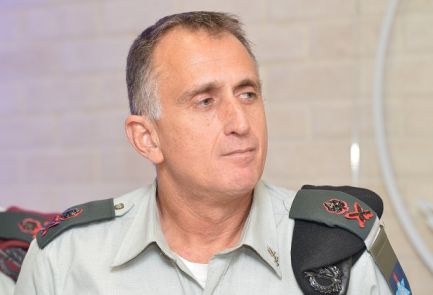
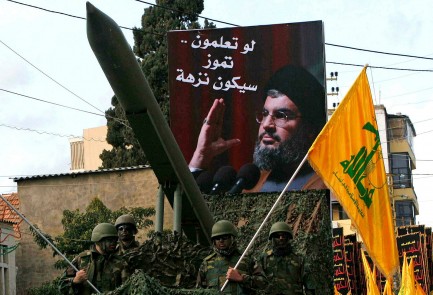
IDF official: Hezbollah unable to produce ‎precision weapons 

December 12, 2018

Source: IDF official: Hezbollah unable to produce ‎precision weapons – Israel Hayom


US poised to present Middle East peace plan ‘soon,’ top official says 

December 12, 2018

Source: US poised to present Middle East peace plan ‘soon,’ top official says – Israel Hayom


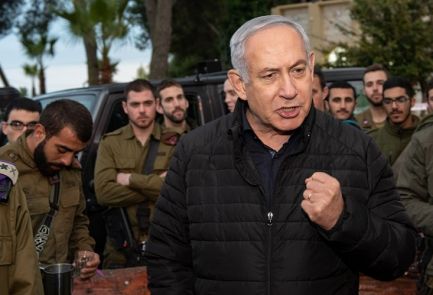
PM warns Hezbollah against targeting ‎tunnel operation ‎

December 12, 2018

Source: PM warns Hezbollah against targeting ‎tunnel operation ‎ – Israel Hayom


Following in Egypt’s footsteps 

December 12, 2018

Source: Following in Egypt’s footsteps – Israel Hayom

Itzhak Levanon

Saudi Arabia took Israel by surprise during a vote over a draft resolution condemning Hamas aggression against Israel at the U.N. General Assembly on Thursday.

For decades, speeches delivered by Saudi Arabia’s permanent representatives to the world body have included an attack on Israel. In one such speech in the 1970s, the Saudi envoy to the U.N. claimed there was no such thing as the Jewish people and repeated the myth that Ashkenazi Jews were in fact descended from the Khazars, a multiethnic and semi-nomadic Turkic people.

Current Saudi Ambassador to the U.N. Abdallah Yahya Al-Mouallimi began his address to the General Assembly, Thursday, by blasting Israel’s policies toward the Palestinians, according to Saudi tradition, and reiterated his country’s historical support for a two-state solution, with east Jerusalem as the capital of a Palestinian state. But woven into his remarks was a significant and innovative sentence: “Saudi Arabia condemns the firing of missiles from the Gaza Strip on civilian Israeli targets.” Al-Mouallimi even called for urgent steps to be taken to ensure an immediate cease-fire.

What we have then is open Saudi criticism of Hamas attacks on Israel in an international arena that did not include any corresponding condemnation of the Israeli Air Force’s strikes on Gaza. This is a Saudi Arabia we had yet to encounter, one that dares to openly express a position that differs from that of the general Arab position and one that is music to Israeli ears. These things could not have been said in such a central global forum as the U.N. without having first been approved by the kingdom in Riyadh. The ambassador’s remarks then reflect official Saudi policy given the changes underway in the Middle East and the escalation of the Sunni-Shiite conflict in the region.

Then-Egyptian President Anwar Sadat came down hard on Israel in a speech to the country’s parliament in 1977 ahead of his historic trip to Israel. But in his remarks, he also made sure to include one key transformative sentence: “I am willing to go to the end of the world, to the Knesset, to talk to the Israelis.”

Is Saudi Arabia preparing the ground to follow in Sadat’s footsteps?

There have been increasing reports in recent days that Jerusalem is interested in formalizing ties with Riyadh. While we cannot be certain this will happen in the near future, the ambassador’s remarks to the U.N. are a sign that attitudes are changing in Riyadh.

Hamas and its cronies did not criticize the Saudi ambassador’s remarks as one might have expected. By voting against the U.S.-sponsored resolution condemning Hamas, Saudi Arabia sent the Palestinians the message they would continue to support them, the two-state solution and the Arab peace initiative. Riyadh also needs to find a way to avoid the ongoing dispute between Hamas and the Palestinian Authority.

In contrast, the ambassador’s remarks condemning Hamas fire on Israel were meant for Israeli ears, and it may be that the message they are sending is that Saudi Arabia’s policies in the region will change according to the kingdom’s needs and as situations develop. While completely new, these extraordinary changes have gone under the radar in the media. Nevertheless, Israel can draw inspiration from these changes and expect there will be more to come in the future.

Itzhak Levanon is the former Israeli ambassador to Egypt.

Hamas behind Ofra and Barkan terror, celebrates three “successful” months – DEBKAfile

December 12, 2018

Source: Hamas behind Ofra and Barkan terror, celebrates three “successful” months – DEBKAfile

The terrorists who shot and injured 9 Israelis at the Ofra junction on Sunday, Dec. 9 were sent by Hamas. They are part of the same Hamas squad which murdered two Israelis, Ziv Hajbi and Kim Levengrund, at the Barkan industrial center on Oct. 7 and got away. So long as those killers were at large, IDF and Shin Bet investigators had expected Hamas to use them to strike again.

The Palestinian Ashraf Naalawa, 23, from the village of Sweika near Tulkarmm, who is still on the run, was presented as the lone killer at Barkan. But he was not alone and the manhunt is in fact focusing on a large squad of at least five to eight terrorists, all of them mobilized by Hamas to unleash a major campaign of terror in Judea and Samaria. It had been hoped that when they surfaced for their next attack – possibly on the anniversary of the Barkan hit, it would be possible to lay hands on them.  But again, after the drive-by shooting at Ofra, when the pregnant Shira Ish-Ran was deliberately targeted, the shooters got away. Raids and searches by IDF units in a number of Palestinian towns and villages, including Ramallah and El-Bireh, failed to turn up any lead to the fugitives and the investigation must again rely on intelligence informants.

On Tuesday night, Dec. 11, security was finally boosted in Judea and Samaria. The IDF reinforcements were charged with securing road traffic, while other units had their hands full hunting for the escaped terrorists. But, so long as the killers are on the loose, their main mission is to be on the spot for anticipating and cutting short the next Hamas strike.
The IDF and Shin Bet have identified the hand behind the latest round of terror as Gaza-based Abdel Rahman Jinmati, who is in charge of terrorist operations on the West Bank and the right hand of Saleh al-Arouri, overall chief of Hamas terror.

During the eight months of Palestinian turbulence on the Gaza front, Israeli security forces were able to keep the lid on Hamas efforts, oiled with substantial funding, to establish West Bank terrorist networks as well as thwarting attempts to launch attacks.  But in late November, when Hamas began easing up on aggression from the Gaza Strip upon receipt of Qatari dollars, the Gaza-based terrorist organization succeeded in setting up an active infrastructure for terror in Judea and Samaria, which has so far eluded discovery by Israel’s security and intelligence authorities.

In the past three months, Hamas has pulled off a string of successes against Israel: One was the murderous Barkan attack on Oct. 7. Then, on Nov. 11, the Palestinian group uncovered an Israeli covert force which had operated for several weeks in the Khan Younes district of southern Gaza. An IDF colonel was killed in the ensuing firefight. Whereupon Hamas loosed nearly 500 rockets against Israeli communities. Nonetheless, the Israeli government decided against retaliation for the outrageous assault on a civilian population and instead, agreed to a ceasefire bought from Hamas by Qatar’s $90m payout. The first two of six $15m instalments are already in Hamas hands. The price paid by Israel? The drive-by shooting at the Ofra junction was the down-payment. Its youngest victim, a baby, is in mortal danger two days after being delivered prematurely from its injured mother.

Palestinian terrorist groups are celebrating what they perceive as Hamas’s extraordinary feats against Israel’s army and security authorities. In this atmosphere, a further upsurge of Palestinian terror is to be expected.
|


Strasbourg Christmas market shooting: suspect on the run after three killed 

December 12, 2018

Source: Strasbourg Christmas market shooting: suspect on the run after three killed | World news | The Guardian

France upgrades security threat level after terrorist attack leaves at least 12 injured

Play Video
1:01
 Gunman on the run after deadly shooting at Strasbourg’s Christmas market – video

France has upgraded its security threat level as police hunted a gunman who shot three people dead and injured 12 others in a terror attack on Strasbourg’s celebrated Christmas market on Tuesday evening.

Six hours after the gunman disappeared after firing at passers-by in the busy city centre, interior minister Christophe Castaner said the government had raised the risk level to the highest category.

The move would strengthen border controls and bolster protection of Christmas markets and other events.

In a statement, Castaner said the gunman had opened fire in three different places in the city before engaging in firefights with patrolling soldiers.

“He fought twice with our security forces,” Castaner said.

French media reported the man, who was injured in one of the exchanges, then jumped in a taxi and disappeared.

Police immediately cut off major roads in and out of the city and launched a massive operation involving 350 police gendarmes and soldiers, as well as helicopters, to find him. French security services said they had identified the gunman as a 29-year-old born in Strasbourg, known to police and also on the “Fiche S” list of potential security threats.

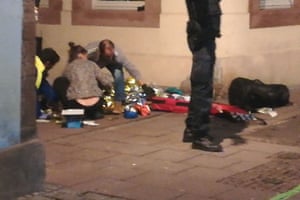
Picture taken with a mobile phone shows rescuers treating an injured person in the streets of Strasbourg.
Pinterest
 Picture taken with a mobile phone shows rescuers treating an injured person in the streets of Strasbourg. Photograph: Francois D’astier/AFP/Getty Images

French media reported that gendarmes had attempted to arrest the man for a separate crime at his home in the Neudorf district of southeast Strasbourg earlier on Tuesday. The suspect was not home, but officers reportedly found “grenades” in his apartment.

Shortly before 8pm local time, the man, armed with an automatic rifle, walked over one of Strasbourg’s many bridges around the Grand Île toward the Christmas market, which attracts millions of visitors every year. Witnesses said the man fired a first volley of rounds and then walked down the street before opening fire again.

Local resident Yoann Bazard said he heard “two or three shots” and screams; when he went to his window he saw people running. “After that I closed the shutters. Then I heard more shots, closer this time.

“There were two or three episodes like that … As it got close, it was really shocking. There were a lot of screams.”

Freelance journalist Camille Belsoeur said he was at a friend’s apartment in the city centre and at first mistook the gunfire for firecrackers. “We opened the window. I saw a soldier firing shots, about 12 to 15 shots,” he said.

He said other soldiers yelled for people to stay indoors and shouted “Go home! Go home!” to those outside.

One of the dead was said to be a Thai tourist who was shot in the head outside a restaurant. Staff and diners tried to save him but were unsuccessful.

Six of the injured were reported to be in a critical condition.

The anti-terrorist section of the Paris prosecutor’s office declared the incident to be an act of terrorism and announced an inquiry had been opened into “murder and attempted murder in relation to a criminal enterprise”.

The French president, Emmanuel Macron, immediately held a crisis meeting at the interior ministry in Paris.

The gunman reportedly shot at soldiers patrolling as part of the nationwide Operation Sentinelle, the French military operation introduced in the aftermath of terrorist attacks in and around Paris in January 2015, and was injured when they fired back.

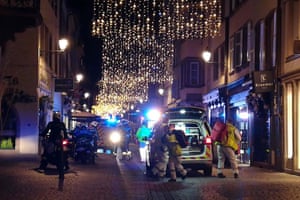
Rescuers at the scene of gun attack near Strasbourg Christmas Market.
Pinterest
 Rescuers at the scene of gun attack near Strasbourg Christmas Market. Photograph: Murielle Kasprzak/AFP/Getty Images

Police asked residents in the centre of Strasbourg to stay at home bars and restaurants were ordered to close and not let customers leave. Hours after the shootings, thousands of people remained unable to leave city centre restaurants, bars, libraries, and other public buildings following police orders for everyone to stay off the streets. Around 5,000 people were stuck inside the local sports stadium

The European Parliament, which is currently sitting in Strasbourg, was put on lockdown, and the parliament’s safety awareness division sent a message to MEPs advising those dining in the city centre to “please stay inside and don’t go out”.

“[A] decision has been taken, as a precautionary measure, to close the European Parliament building in Strasbourg. We ask you to stay calm and safe within [European parliament] premises,” it read.

Later Antonio Tajani, president of the parliament, said it would not be ‘“intimidated” by terrorism.

Antonio Tajani

@EP_President

Several MEPs in city centre restaurants reported hearing gunfire. The Yorkshire and Humber MEP Richard Corbett tweeted that he was dining in the city “where shots (were) fired”. The restaurant was “not letting anyone in or out”, he added.

Theresa May said she was “shocked and saddened” by the “terrible” attack in Strasbourg. “My thoughts are with all of those affected and with the French people,” the British prime minister tweeted.

https://interactive.guim.co.uk/maps/embed/dec/2018-12-11T19:51:24.html

The local prefecture tweeted that people should avoid the area near the city’s police headquarters and that all access to the A35 motorway bisecting the city was blocked.

Police in Germany said they were strengthening controls at the Franco-German border near Strasbourg. The police force of Baden-Wurttemberg, a state in south-west Germany bordering Strasbourg, tweeted they were taking the extra measures at the border because of the shooting. The transnational tramway between France and Germany was suspended.

In the early hours of Wednesday, local prefect Roland Ries announced the Christmas Market would be closed Wednesday and all local cultural events cancelled.

France remains on high alert after suffering a wave of attacks commissioned or inspired by Islamic State militants in 2015 and 2016, which killed more than 200 people.

Strasbourg’s Christmas Market, which started in 1570, is one of France’s most popular seasonal events. The “Grande Ile” where the market is held is surrounded by water, on one side the main channel of the River Ill and the other by the Canal du Faux-Rempart, is only accessible by bridges.

Since the Paris terrorist attacks in 2015, the event has been held under high security. Access to the area is controlled and visitors bags are searched. Vehicles are banned from the area.

In 2016, a truck was deliberately driven into the Christmas market in Berlin killing 12 people and injuring 56 others. The perpetrator Anis Amri, a Tunisian who had failed to gain asylum in Germany, was killed four days later in a shootout with police near Milan in Italy.

The attack comes during a period of intense tension across France after four weeks of civil unrest by anti-government and anti-president Emmanuel Macron, protesters from the gilets jaunes movement.