Archive for December 10, 2018

Poisonous quiet on Israel-Lebanon border

December 10, 2018

Source: Poisonous quiet on Israel-Lebanon border

Op-ed: Hezbollah has exploited the years of calm on the northern border to prepare for the next war, and the discovery of terror tunnels along the border doesn’t provide a solution to thousands of Hezbollah missiles already aimed at central Israel.
Big Ben, one of the most iconic symbols not only of London but perhaps of the British democracy as a whole, is now surrounded by scaffolding. The famous landmark, situated alongside the Parliament building, signals to many tourists and locals the depth of the crisis experienced by the government of Prime Minister Theresa May, who is most likely on her way out after she failed to win the confidence of the House of Commons, which is expected to reject the Brexit deal she negotiated.
More than one hundred of May’s colleagues from the the Conservative Party have already announced that they will vote against the agreement reached with the European Union in Brussels.

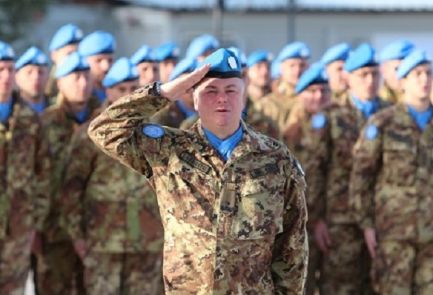
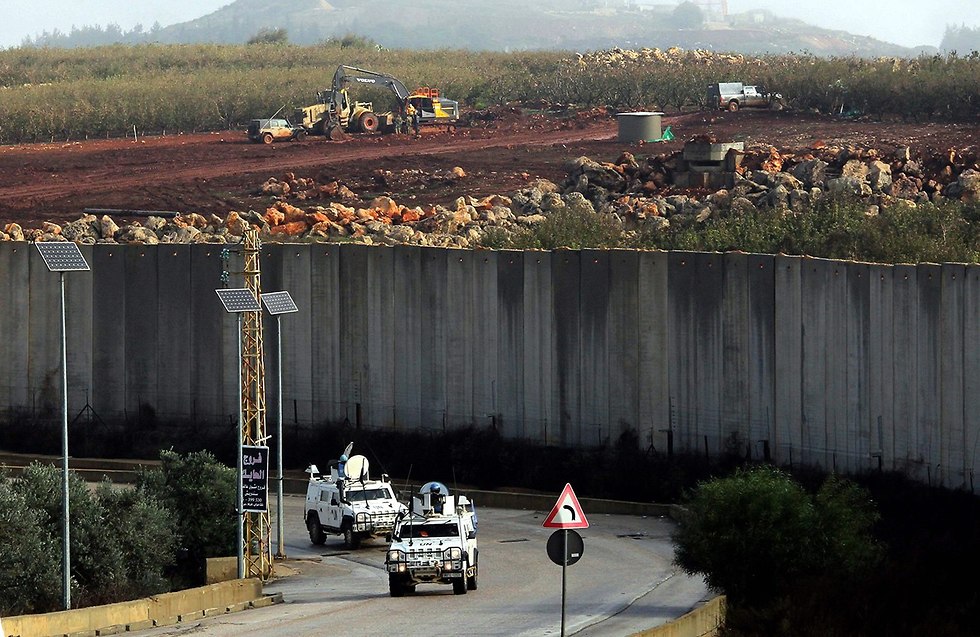
UNIFIL force along Israel-Lebanon border (Photo: AFP)

UNIFIL force along Israel-Lebanon border (Photo: AFP)

I write about this with much jealousy, because Israeli elected officials, unlike their British counterparts, follow Prime Minister Benjamin Netanyahu like a herd. Take, for example, what is happening in Hezbollah strongholds in Lebanon. More than 100,000 rockets and missiles are aimed and ready to be launched at targets in central Israel. Has any of our ministers said anything on the matter? No, not a single one.

In recent years, Netanyahu has enjoyed the longest period of quiet on the northern border, but this quiet was a poisonous one, because it was exploited by Hezbollah leader Hassan Nasrallah and his Iranian allies to build up a huge arsenal of weapons.

Netanyahu prefers to have our security policy vis-à-vis Hezbollah, just like in Gaza, based on the formula of quiet for quiet. The problem with this philosophy is that the missiles didn’t really rust, as former defense minister Moshe Ya’alon once claimed they would.

Last week, Hezbollah terror tunnels along the border with Lebanon have been exposed with pomp and circumstance. Netanyahu took part in a photo-op and gave an impassioned speech, while we are still left with the same threat.

Perhaps the time has come to hold a public debate on pressing national security issues the same way the British do? Perhaps it is time for our leader to give us a detailed account of his positions? And perhaps, most importantly, it’s time we heard from our politicians, from those who have ambitions to replace Netanyahu one day. What do they think about the missiles aimed at us and could be launched at any moment?


How Iran turned a ‘counterterror’ meeting into a push for new order 

December 10, 2018

Source: How Iran turned a ‘counterterror’ meeting into a push for new order – Middle East – Jerusalem Post

The meeting comes as Gulf Cooperation Council gathers in Riyadh.

BY SETH J. FRANTZMAN
 DECEMBER 9, 2018 12:22
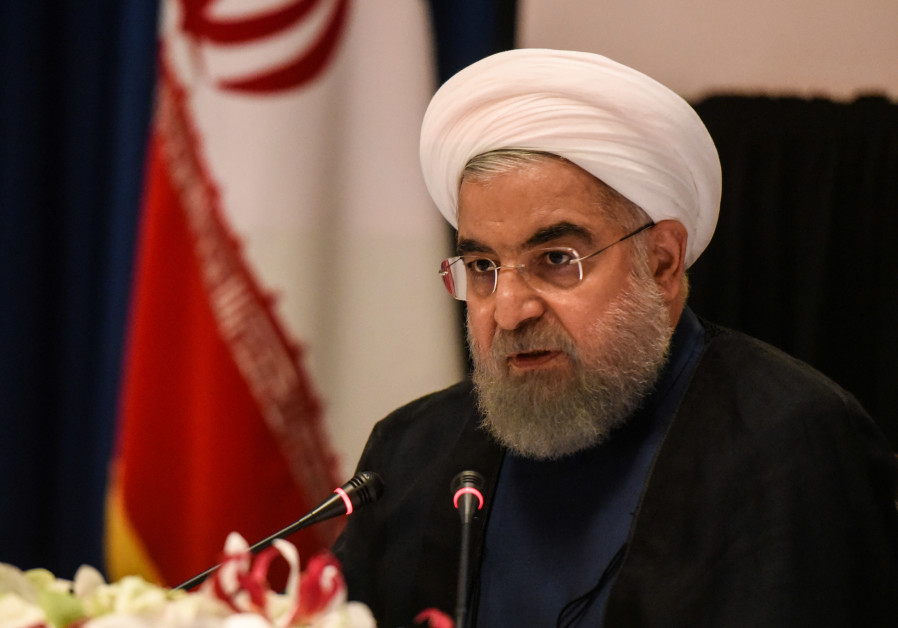
Hassan Rouhani

Iran continues to try to increase its clout in the region and beyond by hosting important high level meetings and portraying the US and its allies as isolated.

A key meeting took place on Saturday in Tehran between Iranian President Hassan Rouhani and officials from China, Pakistan, Russia, Turkey and Afghanistan. Rouhani used the meeting to attack “the US, the West and the Zionist regime,” which he claimed are supporters of terrorist groups. As such he leveraged a meeting on terrorism to attack Iran’s adversaries. The Tehran meeting came a day before the Gulf Cooperation Council, which consists primarily of western allies, gathered in Riyadh on Sunday.

The gathering of leaders in Tehran was the second “Meeting of the Parliament Speakers on Combating Terrorism and Extremism.” According to pro-regime media in Tehran, the meeting also highlighted “regional connectivity.” The attendees at the meeting are important because Turkey, Afghanistan and Pakistan are ostensibly US allies, while China and Russia are two of the most powerful global states challenging the US on different fronts. China is engaged in arguments with the Trump administration over trade while Russia is involved in putting pressure on western allies, such as Ukraine, by detaining Ukrainian naval boats, harassing shipping and supporting proxies.

Iran, which is supposed to be under new US sanctions and which the Trump administration has been attempting to confront, showed its ability to arrange a high-level conference in Tehran and slam the US both among American allies and adversaries.

Speaking with the Pakistani National Assembly speaker Asad Qaiser, Iran’s leader claimed that the two countries must battle “terrorism” and then said that this would mean “resisting US bullying.” Iran wanted to expand relations, Press TV reported.

Iran also sought to reach out to Turkey. This is part of a growing relationship that has developed in recent years, partly over trade but also over security issues relating to Kurdish opposition groups. Speaking with Turkey’s Binali Yildirim, the Iranians sought to drive a wedge between Ankara and Washington.

Iran “hailed the Turkish government’s positive stance vis-à-vis illegal sanctions imposed by the US against Iran.” Iran said that it viewed Turkey’s security as important as its own. This is a tremendous statement considering the fact that Turkey and Iran are on different sides of the Syrian conflict, with Turkey supporting the opposition and Iran supporting the Syrian government of President Bashar Assad.

Turkish news site Anadolu Agency also highlighted the meeting, showing its importance to Ankara. It noted that Iran was eager to work on issues such as “banking and energy” as well as security and regional “stability.” Turkish media also highlighted a joint exercise between China and Pakistan as well as comments by Iran’s foreign minister attacking US arms sales.

Russia is also part of this important and growing counterbalance to the US’s role in the region. During a speech on Saturday, Russian President Vladimir Putin said that the world was in a state of transformation and he urged Russia not to lag behind.
Significantly, Russia is seeking to hold a four-way summit on Syria, this time with Germany, France and Turkey, though Kremlin spokesman Dmitry Peskov said that the date of the meeting had not yet been set.

What’s clear is that Russia and those meeting to discuss Syria are excluding the US from these discussions even though the US is operating in eastern Syria.

Taken together, the growing relationship between Russia, Iran, China, Turkey and Pakistan does not auger well for US policy in the Middle East or globally. Together these are some of the most important economies in the world as well as important militaries, but they also present a challenge to the US in different regions. While US policy in the Middle East appears to lack clarity, such as US-Saudi relations and US policy in Syria, these countries increasingly see eye-to-eye on certain issues, particularly their views on Washington.

Pakistan and Turkey, two former Cold War allies, are in the process of apparent drift in their policy while the US does not acknowledge these changes. For other US allies these kinds of meetings send a message that one can be both a US ally in name and also work with Washington’s adversaries.

Allies of Washington from the Gulf Cooperation Council gathered in Riyadh on Sunday. In addition to Saudi Arabia, these include Kuwait, Bahrain, Oman, Qatar, and the UAE. On the agenda were discussions about Syria, tension in Iraq and Yemen. Among the discussions will be an attempt to take a “firm position in the face of Iranian interference in Arab affairs,” according to Al-Arabiya. The problem is that the meeting comes amid a continued crisis between Qatar and its neighbors, and as Saudi Arabia faces condemnation for the murder of former Saudi insider Jamal Khashoggi in its Istanbul consulate in October.

There is also a crisis in OPEC after Qatar said it would withdraw from the oil cartel.

All of this puts these western allies in disarray at a time when Tehran is gathering together lines of influence with its neighbors and portraying itself as a stable country contributing to the region.


After Ofra shooting US diplomats point at UN for failing to condemn Hamas 

December 10, 2018

Source: After Ofra shooting US diplomats point at UN for failing to condemn Hamas – Arab-Israeli Conflict – Jerusalem Post

Norway, Iceland, Switzerland, New Zealand are four ‘western’ states that played big part in failure to pass anti-Hamas resolution.

BY HERB KEINON
 DECEMBER 10, 2018 14:36

Israeli security forces and emergency personnel work at the scene of what an initial report from the

In the wake of Sunday night’s terror attack near Ofra which Hamas termed “heroic,” US Ambassador David Friedman underlined that the UN could not even get itself to condemn that organization last week.

“Another vile act of Palestinian terrorism last night included the shooting of a pregnant woman. Hamas calls the shooters “heroic” — yes, the same Hamas that the UN could not resolve to condemn last week. The US stands with Israel against terrorists even if others won’t,” Friedman wrote in a tweet on Monday.

Jason Greenblatt, US President Donald Trump’s special representative for international negotiations, also highlighted Hamas’s reaction and slammed the UN vote as a result. In a tweet directed at the UN, he wrote: “Hamas praises yet another terror attack. You had the ability to help fight against terror. Is this what the UN wants its legacy to be?”

The UN on Thursday failed to adopt an American-sponsored resolution that would have – for the first time – condemned Hamas, Palestinian Islamic Jihad and other terror organizations in Gaza.

Although 87 countries supported the anti-Hamas measure, while 57 opposed and another 33 abstained, the measure did not pass because the Palestinians succeeded in getting a measure passed necessitating a two-thirds majority. That measure passed by a slim three votes.

Of the top ten countries who received US foreign aid in 2018, Israel was the only country that supported the measure.

Uganda, Tanzania and Kenya – who together will receive $1.6b in aid from the US this year – all abstained.

Iraq, Nigeria, Zambia, Afghanistan, Jordan and Egypt – who will receive a total of $4.4b in US aid – all voted against.

Turkey was the only one of the 29 NATO countries that voted against the measure.

Two other NATO countries – Norway and Iceland – voted for the measure requiring a two-thirds majority, which passed 75-72, with 26 abstentions.

Had both those NATO countries voted against the measure – as well as two of three other “western” nations that abstained: Norway, Switzerland and Liechtenstein – than a simple majority on the measure would have been all that was necessary, and the anti-Hamas resolution would have passed.

On Thursday night, at a Hanukka reception at the UN hosted by the Israeli mission, Haley said, “The president called and he said, ‘Nikki what happened?’ And I told him, and he goes, ‘Who do we need to get upset at? Who do you want me to yell at? Who do we take their money away?’”

Haley jokingly said to those at the reception, “I’m not gonna tell you what I told him.”


Assad says Israel deliberately caused Syria to down Russian spy plane

December 10, 2018

Source: Assad says Israel deliberately caused Syria to down Russian spy plane | The Times of Israel

Syrian leader claims Moscow in full agreement that IDF acted intentionally during September incident that led to Syrian air defenses shooting down aircraft

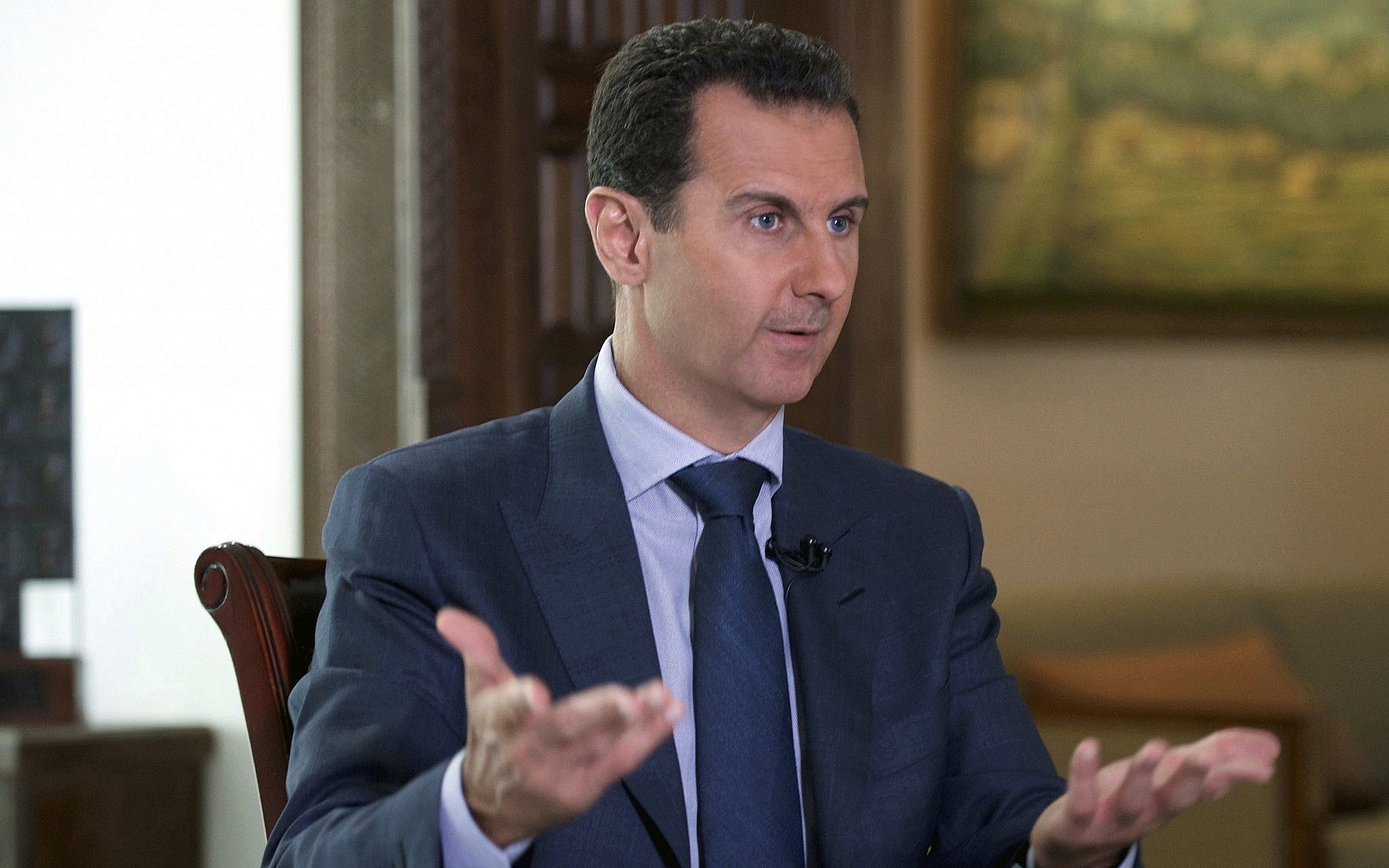
Syrian President Bashar Assad in an AP interview at the presidential palace in Damascus, Syria, September 2016. (Syrian Presidency via AP)

Syrian President Bashar Assad in an AP interview at the presidential palace in Damascus, Syria, September 2016. (Syrian Presidency via AP)

Syria’s President Bashar Assad said Monday that Israel acted deliberately during a September 17 incident that led to the downing of a Russian spy aircraft by Syrian forces, which were responding to an Israeli strike over Syrian airspace.

In an interview with an Omani newspaper, a Gulf state that has seen a recent warming of ties with Israel, Assad said that Damascus and Moscow had reached a consensus that the downing of the place was not an accident.

“Our leadership is united with the Russians, and it is clear that the incident is deliberate. The Russian media is transparent and has managed to expose the lies of some of the claims,” he said, according to Ynet.

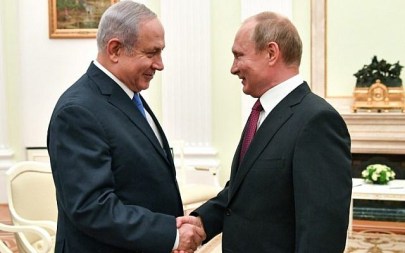
The interview came after Russian President Vladimir Putin told Prime Minister Benjamin Netanyahu on Saturday that Israel and Russia must improve their military cooperation in Syria.

Russian President Vladimir Putin (R) shakes hands with Israeli Prime Minister Benjamin Netanyahu during their meeting at the Kremlin in Moscow on July 11, 2018. (AFP/Pool/Yuri Kadobnov)

Putin emphasized the importance of upcoming consultations between defense experts from the two countries during the conversation, which was held at the initiative of Netanyahu, the Kremlin said.

The two leaders were said to be considering holding a meeting in person.

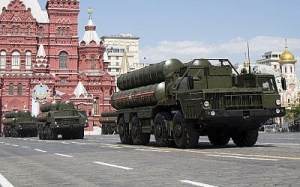
Ties between the two countries have been strained since Russia’s delivery of the S-300 missile defense system to Syria following the downing of Moscow’s plane.

Russia has blamed Israel for the incident, which killed 15 Russian crew members. Israel has emphatically denied responsibility.

Russian S-300 air defense missile systems drive by during the Victory Day military parade marking 71 years after the victory in WWII in Red Square in Moscow, Russia, on May 9, 2016. (AP/Alexander Zemlianichenko, File)

Although Putin initially told reporters that the incident was due to a “chain of tragic accidental circumstances,” the Russian defense ministry later declared that Israel was responsible, saying the Israeli Air Force jets used the Russian plane as cover.

Israel rejected the accusation.

Israel has repeatedly said it will not allow Iran, or its Shiite proxies, to establish a permanent presence in postwar Syria. It has launched numerous attacks on targets it says are a threat to its security.

Russia, which is a main backer of Syrian President Bashar Assad, has maintained a deconfliction hotline with Israel, allowing the Jewish state to carry out the attacks as long as it is informed beforehand.


Unprecedented EU poll finds 90% of European Jews feel anti-Semitism increasing

December 10, 2018

Source: Unprecedented EU poll finds 90% of European Jews feel anti-Semitism increasing | The Times of Israel

Anti-Semitism ‘disturbingly normalized,’ says EU rights chief, after massive survey of 12 EU states finds 85% of Jews rate it the biggest social problem in their countries

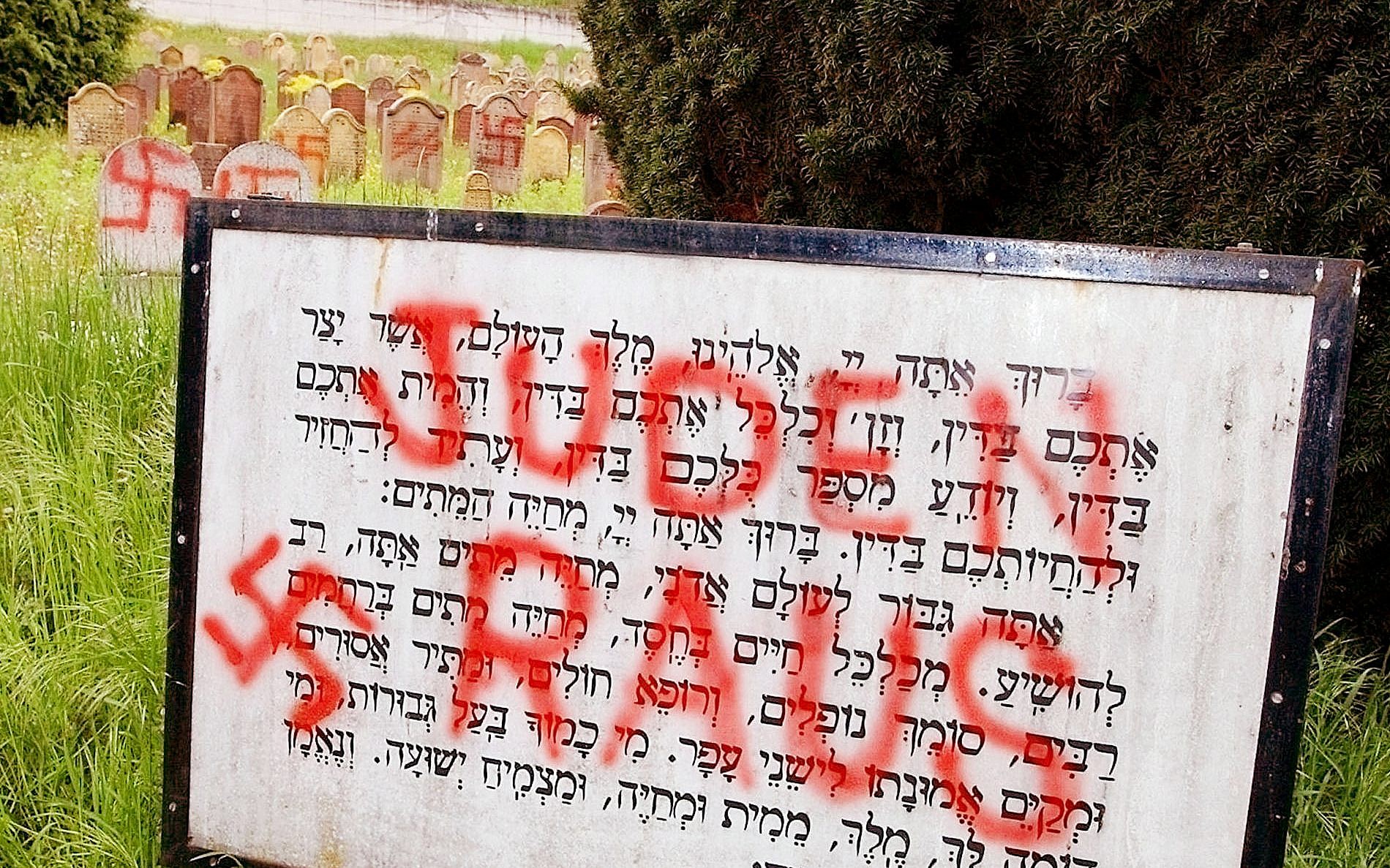
Illustrative: Nazi signs reading 'Jews out' and swastikas are painted at the entrance of a Jewish cemetery in Herrlisheim, eastern France, in this April 30, 2004 photo. (AP Photo/Gil Michel)

Illustrative: Nazi signs reading ‘Jews out’ and swastikas are painted at the entrance of a Jewish cemetery in Herrlisheim, eastern France, in this April 30, 2004 photo. (AP Photo/Gil Michel)

LONDON — Nearly 90 percent of European Jews feel that anti-Semitism has increased in their home countries over the past five years, and almost 30% say they have been harassed at least once in the past year, reveals a major European Union report published on Monday.

The poll was carried out in 12 European Union member states, and was the largest ever of its kind worldwide.

Of the more than 16,000 Jews who participated in the online survey, 85% rated anti-Semitism the biggest social or political problem in the country where they live. Thirty-eight percent said they had considered emigrating because they did not feel safe as Jews.

Britain, Germany, and Sweden saw the sharpest increases in those saying anti-Semitism is a “very big” or “fairly big” problem. The highest level recorded was in France at 95%. Denmark saw the lowest level at 56%, while Jews in Hungary suggested that anti-Semitism was becoming less of a problem.

The UK results, experts suggest, may point to a “Corbyn factor” connected to the ongoing row over anti-Semitism in the British Labour party.

“Decades after the Holocaust, shocking and mounting levels of anti-Semitism continue to plague the EU,” said Michael O’Flaherty, director of the EU’s Agency for Fundamental Rights (FRA), which published the research. “In many ways,” he suggested, anti-Semitism had become “disturbingly normalized.”

The research is a follow-up to a 2012 survey conducted by the FRA. The 12 EU countries surveyed — Austria, Belgium, Denmark, France, Germany, Hungary, Italy, the Netherlands, Poland, Spain, Sweden and the United Kingdom — are home to 96% of the EU’s estimated Jewish population. The online survey was conducted from May to June this year.

Anti-Semitic graffiti reading ‘Jewish scum live here,’ on a building in Paris. ‘Notably on the third floor,’ it adds on the other side of the door, above a drawing of a target. (Twitter)

The report was released after a major poll for CNN last month found that one-fifth of Europeans believe Jewish people have too much influence in finance and politics, and a third said they knew nothing at all or “just a little” about the Holocaust.

Nearly half of those participating in the FRA survey said they were worried about becoming the victim of an anti-Semitic verbal insult or being harassed in the next year, while over one-third suggested they avoided visiting Jewish sites and events because they do not feel safe. Forty percent fear being physically attacked in the next 12 months and 3% report they actually have been over the past five years.

Over one-third suggested they avoided visiting Jewish sites and events because they do not feel safe

While the 28% of Jews who said they had been subject to harassment at least once in the past year (a figure which rose to nearly 40% in the five years before the survey), almost 80% said they do not report serious incidents to the police — often because they feel nothing will change. Seventy percent believe national governments’ efforts to combat anti-Semitism are ineffective, although more than half positively assessed their work to ensure the security needs of Jewish communities.

“The survey findings suggest that people face so much anti-Semitic abuse that some of the incidents they experience appear trivial to them,” argues the report.

Around 90% of those surveyed said anti-Semitism was most problematic online and on social media. Seven in 10 cited public spaces, the media and politics as common sources of anti-Semitism.

Anti-Semitic Facebook post posted by an employee of German aid organization GIZ. (Screen capture: Hadashot news)

The most common anti-Semitic statements Jews come across regularly, according to the survey, are comparisons between Israelis and the Nazis with regard to the Palestinians. Suggestions that Jews have too much power and “exploit Holocaust victimhood for their own purposes” also ranked highly. Such abuse was most commonly experienced online, in the media and at political events.

The survey indicates that those who had experienced harassment — which included offensive or threatening text messages, phone calls, comments, gestures or online messages — and were able to identify the perpetrator were more likely to suggest the culprit was “someone with an extremist Muslim view” (30%) than someone with left-wing political views (21%) or right-wing politics (13%).

UK’s ‘Corbyn factor’

The survey also exposes large variations between European countries in terms of the experience of anti-Semitism.

The highest level of concern about anti-Semitism in political life was expressed by British Jews — at 84% — with around three-quarters of those surveyed in Poland and Hungary also indicating it was a problem. Together with Germany and Sweden, the UK also saw the highest increase in the number of Jews who had considered emigrating in the past five years due to safety concerns.

Dr. Jonathan Boyd, executive director of the London-based Institute for Jewish Policy Research, said it was “highly probable that a Corbyn factor can be found in the UK results.”

“Simply looking at the proportions of Jews in the UK who highlight ‘anti-Semitism in political life’ as a problem indicates this,” he suggested.

“Given everything that has happened recently around Corbyn, and given other research data on the political preferences of British Jews which show a dramatic drop in support for the Labour party, there can be little doubt that there is a Corbyn factor here.”

British Jews protest against anti-Semitism in Manchester, September 16, 2018 (screen capture: YouTube)

Perception of rising anti-Semitism part of wider trends

Concern about the level of anti-Semitism on the internet and social media was expressed by more than 70% in every country. It was especially high, however, in Belgium, France, Italy and Poland, where more than nine in 10 respondents indicated it was problematic.

Expressions of hostility to Jews in the street and other public spaces is considered a “very big” or “fairly big” problem by more than 70% of respondents in France, Belgium, Germany and the Netherlands, but less than half of Jews expressed concern in Poland, Hungary and Denmark.

Fear of becoming a victim of a verbal insults or harassment in the next 12 months also varied widely, ranging from around 60% in France and Germany to less half that level in Italy, the UK, Denmark and Hungary. Fifty-eight percent of French Jews and nearly half of Jews in Germany worry they may be physically attacked in the next year.

Overall, roughly equal numbers of Jews said that they wear, carry or display items in public — such as a kippa or Star of David — that could identify them as Jewish, as said that they do not. However, there were again large variations between individual European countries, with around 60% in Poland, Spain, the UK, Hungary and the Netherlands saying that they do wear such identifying items at least sometimes. In France, Denmark and Belgium more than 50% said that they never did.

An Arabic-speaking man is seen preparing to whip a kippah-wearing non-Jewish man in an anti-Semitic attack in Berlin in a video published on April 18, 2018. (Screen capture: Twitter)

The drop in the number of Hungarian Jews saying anti-Semitism is a problem comes despite the controversy surrounding the country’s right-wing government, which has been accused of “whipping up prejudice” and deploying “vivid anti-Semitism” in this year’s general election campaign.

The result may reflect differences in the survey sampling between 2012 and 2018. It may also indicate that foreign perceptions of Viktor Orbán’s government are different from the perspectives of Hungarian Jews. The far-right Jobbik party is also less powerful and less vocally anti-Semitic than it was five years ago.

The survey also tested perceptions of the influence of events in the Middle East on anti-Semitic incidents. Over 85% of Jews surveyed in Belgium and France and at least 70% in Spain, Germany and Denmark said that the Arab-Israeli conflict had a notable impact on how safe they felt as Jews. That figure dropped to around one in five in Poland and Hungary.

In Belgium, France, Germany and Spain more than half of respondents said they felt that people in their country frequently or always blamed them for the actions of the Israeli government.

In Hungary and Poland the equivalent percentages were 8% and 19% respectively. Eighty-two percent of European Jews classed calls by non-Jews to boycott Israel or Israelis as anti-Semitic.

The survey did, however, suggest that instances of discrimination against Jews in employment, education, health or housing are quite rare, especially in comparison with a generation ago. Overall, 11% of Jews said they felt they had suffered discrimination in the past year in the workplace and when accessing public services.

O’Flaherty called on EU states to “take note and step up their efforts to prevent and combat anti-Semitism.” “Jewish people have a right to live freely, without hate and without fear for their safety,” he argued.
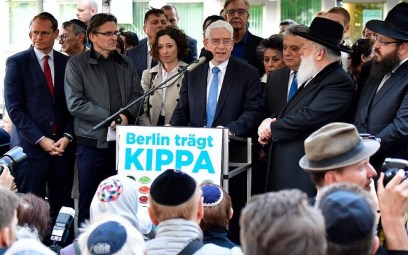
Josef Schuster, President of the Central Council of Jews in Germany, speaks during the ‘Berlin wears kippa’ event, with more than 2,000 Jews and non-Jews wearing the traditional skullcap to show solidarity with Jews on April 25, 2018 in Berlin after Germany was rocked by a series of anti-Semitic incidents.(AFP PHOTO / Tobias SCHWARZ)

The EU human rights body urged a strengthening of Holocaust education and “awareness raising activities,” action to keep Jewish communities and sites safe, and regular monitoring of hate crime towards Jews.

Boyd said it was also important to consider wider trends. “The results of this survey are shocking in many respects, but temperatures are rising about many social, political and economic issues everywhere, not just in Europe, so we are still left with questions about whether what Jews are experiencing is part of a wider social change or malaise that is causing general instability, or whether there is something unique about the Jewish experience that needs to be understood independently of everything else,” he argued.

Seventy-six percent of those surveyed, for instance, expressed concern about rising levels of racism, with rates especially high in Sweden, Italy, Hungary, Poland, Austria and the Netherlands. Seventy-two percent said intolerance towards Muslims was increasing, with 76% of Jews in Hungary and 74% in Poland suggesting it had “increased a lot” over the past five years.

Boyd also cautioned that the survey measured Jews’ “perceptions of anti-Semitism.”

“We can clearly see that they feel anxious — and indeed, more anxious than they did five years ago in most instances — and whilst these are valuable indicators, genuine threat levels are much more objectively and accurately measured by security services than these types of surveys,” he noted.
 

Diaspora affairs minister to devise plan to bring French Jews to Israel 

December 10, 2018


Source: Diaspora affairs minister to devise plan to bring French Jews to Israel – Israel Hayom


Saudi king urges united front against Iran at ‎Riyadh summit 

December 10, 2018

Source: Saudi king urges united front against Iran at ‎Riyadh summit – Israel Hayom


Amid tunnel tensions, Lebanese army sends troops to Israeli border

December 10, 2018

Source: Amid tunnel tensions, Lebanese army sends troops to Israeli border – Israel Hayom


7 Israelis wounded in terrorist shooting at Samaria bus stop – Israel Hayom

December 10, 2018

Source: 7 Israelis wounded in terrorist shooting at Samaria bus stop – Israel Hayom


Stop playing into Hezbollah’s hands 

December 10, 2018

Prof. Eyal; Zisser

The operation to eliminate Hezbollah’s terror tunnels, which Israel launched last week, is further testament to the IDF’s superiority in the fields of technology and intelligence gathering, leaving no stone unturned in Lebanon. It is also a blow to Hezbollah, not only because it was caught off guard and embarrassed, but mainly because the tunnels … Continue reading “Stop playing into Hezbollah’s hands”

Source: Stop playing into Hezbollah’s hands – Israel Hayom