Archive for December 6, 2018

US takes aim at China, Iran, Russia over treaty violations

December 6, 2018

Source: US takes aim at China, Iran, Russia over treaty violations | The Times of Israel

Secretary of state defends administration’s foreign policy; says UN, EU, African Union, International Monetary Fund and World Bank are no longer doing their jobs
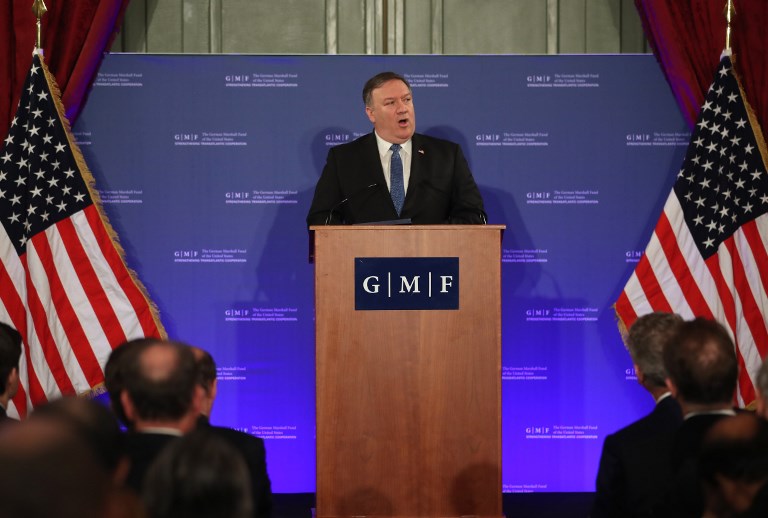
US Secretary of State Mike Pompeo speaks during an event at the Concert Noble in Brussels on December 4, 2018. (Francisco Seco/POOL/AFP)

US Secretary of State Mike Pompeo speaks during an event at the Concert Noble in Brussels on December 4, 2018. (Francisco Seco/POOL/AFP)

BRUSSELS (AP) — US Secretary of State Mike Pompeo took aim at China, Iran, Russia and others on Tuesday for violating numerous treaties and multistate agreements, and he questioned whether many pillars of international trade and diplomacy are still relevant.

Pompeo said the Trump administration is no longer willing to accept such transgressions and is acting to reform institutions that have formed the basis of the post-World War II global order. He said a lack of American and European leadership over the last 30 years had contributed to the malaise.

“After the Cold War ended, we allowed this liberal order to begin to corrode: It failed us, and it failed you,” he said in a speech to the German Marshall Fund in Brussels.

He lamented that conventional wisdom had concluded that “the more treaties we sign, the safer we supposedly are” and “the more bureaucrats we have, the better the job gets done.”

Pompeo said organizations such as the United Nations, the European Union, the African Union, the International Monetary Fund and the World Bank are no longer doing the jobs they were created to do and are in dire need of change.

He also challenged the validity of the International Criminal Court and suggested the World Trade Organization is not upholding its own rules as they relate to China. Russia, he said, is violating key arms control treaties and undermining the sovereignty of its neighbors, while Iran is flouting UN Security Council resolutions. China, Iran and Russia all deny the charges, which the US makes frequently.

“International bodies must help facilitate cooperation that bolsters the security and values of the free world, or they must be reformed or eliminated,” Pompeo said. “When treaties are broken, the violators must be confronted, and the treaties must be fixed or discarded. Words should mean something.”
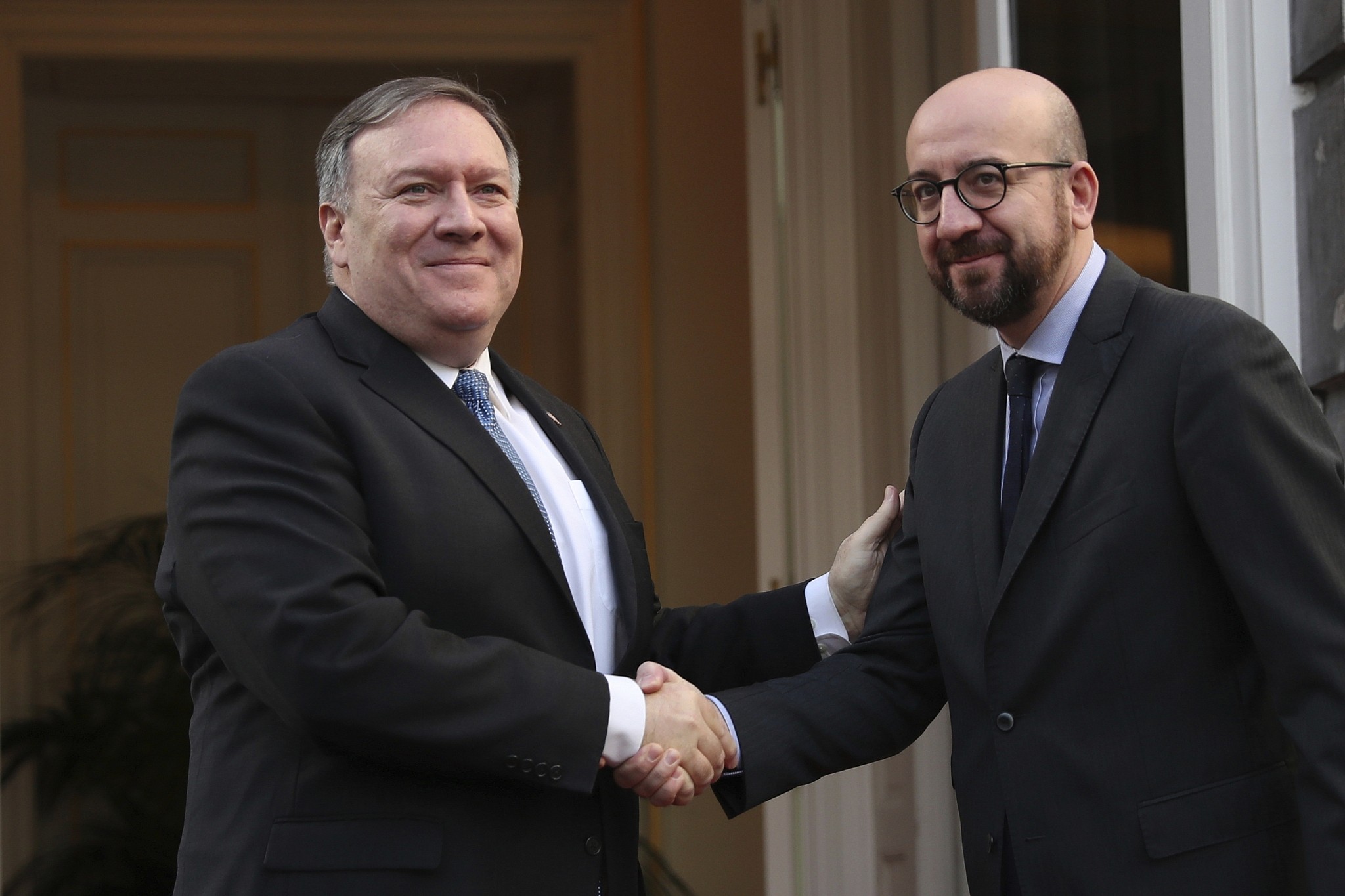
US Secretary of State Mike Pompeo, left, is greeted by Belgian Prime Minister Charles Michel prior to a meeting in Brussels, December 4, 2018. (Francisco Seco/AP)

The Trump administration has been accused by friends and foes alike of attacking the international order with its unilateral approach to many issues. It has withdrawn from the Paris climate accord, the Iran nuclear deal, the UN’s top human rights and educational agencies and the Trans-Pacific Partnership trade deal with Pacific Rim nations.

But Pompeo rejected that criticism and said the US under President Donald Trump would restore its leadership by calling out countries that have exploited loopholes and weaknesses in these institutions as well as the unwillingness of the West to take action for their own gain. And, he argued that Trump is forging change necessary to preserve the liberal order.

“Under President Trump, we are not abandoning international leadership or our friends in the international system,” he said. “We are acting to preserve, protect and advance an open, just, transparent and free world of sovereign states. This project will require actual, not pretend, restoration of the liberal order among nations.”

Pompeo is in Brussels for a meeting of NATO foreign ministers. He called on the allies to work together “to strengthen what is already the greatest military alliance in history.”

NATO will celebrate its 70th anniversary next year, and Pompeo announced that he would host an event to commemorate that in Washington in April.

Pompeo’s remarks were delivered to an organization named for one of his predecessors, George Marshall, the secretary of state who championed the reconstruction of post-war Europe and the creation of the rules-based system that Trump is now questioning.


 

Canada arrests CFO of China’s Huawei for possible violation of Iran sanctions 

December 6, 2018

Source: Canada arrests CFO of China’s Huawei for possible violation of Iran sanctions | The Times of Israel

Meng Wanzhou detained in Vancouver for potential extradition to the United States; tech giant denies any wrongdoing

A shopper walks past a Huawei store at a shopping mall in Beijing Wednesday, July 4, 2018. (AP Photo/Mark Schiefelbein)

A shopper walks past a Huawei store at a shopping mall in Beijing Wednesday, July 4, 2018. (AP Photo/Mark Schiefelbein)

TORONTO (AP) — Canadian authorities said Wednesday that they have arrested the chief financial officer of China’s Huawei Technologies for possible extradition to the United States.

Justice Department spokesman Ian McLeod said Meng Wanzhou was detained in Vancouver, British Columbia, on Saturday.

McLeod said a publication ban had been imposed in the case and he could not provide further details. The ban was sought by Meng, who has a bail hearing Friday, he said.

The Wall Street Journal reported earlier this year that US authorities are investigating whether Chinese tech giant Huawei violated sanctions on Iran.

Meng is also deputy chairman of the board and the daughter of company founder Ren Zhengfei.

Huawei issued a statement saying Meng was changing flights in Canada when she was detained “on behalf of the United States of America” to face “unspecified charges” in New York.

“The company has been provided very little information regarding the charges and is not aware of any wrongdoing by Ms. Meng,” the statement said.

Huawei CFO Meng Wanzhou (Courtesy)

Huawei said it complies with all laws and rules where it operates, including export controls and sanctions of the United Nations, the US and European Union.

The Chinese Embassy in Ottawa said her human rights were violated and demanded her immediate release.

“At the request of the US side, the Canadian side arrested a Chinese citizen not violating any American or Canadian law. The Chinese side firmly opposes and strongly protests over such kind of actions which seriously harmed the human rights of the victim,” the statement said.

A US Justice Department spokesman declined to comment.

In April, China appealed to Washington to avoid damaging business confidence following the Wall Street Journal report that US authorities were investigating whether Huawei violated sanctions on Iran amid spiraling technology tensions.

A foreign ministry spokeswoman, Hua Chunying, said then that China opposes any country imposing unilateral sanctions based on its own law.

Asked about the report that Huawei was under investigation, Hua said in April, “We hope the US will refrain from taking actions that could further undermine investor confidence in the US business environment and harm its domestic economy and normal, open, transparent and win-win international trade.”

That same month Washington barred Huawei rival ZTE Corp. from exporting US technology in a separate case over exports to Iran and North Korea

Trump has threatened to raise tariffs on Chinese goods in response to complaints that Beijing improperly pressures foreign companies to hand over technology. That is widely seen as part of a broader effort by Washington to respond to intensifying competition with Chinese technology industries that Trump says benefit from improper subsidies and market barriers.

US Sen. Ben Sasse, a member of the Senate Armed Services and Banking committees, said China is working to undermine US national security interests.

“Sometimes Chinese aggression is explicitly state-sponsored and sometimes it’s laundered through many of Beijing’s so-called ‘private’ sector entities that are in bed with Xi’s communist party,” the Nebraska Republican said in a statement. “Americans are grateful that our Canadian partners have arrested the Chief Financial Officer of a giant Chinese telecom company for breaking US sanctions against Iran.”


Off Topic:  ‘Europe is finished,’ leading lawyer says as he leaves UK for Israel

December 6, 2018

Source: ‘Europe is finished,’ leading lawyer says as he leaves UK for Israel | The Times of Israel

‘It’s time to wander again,’ Mark Lewis tells fellow Jews facing rising anti-Semitism in Britain and across Europe

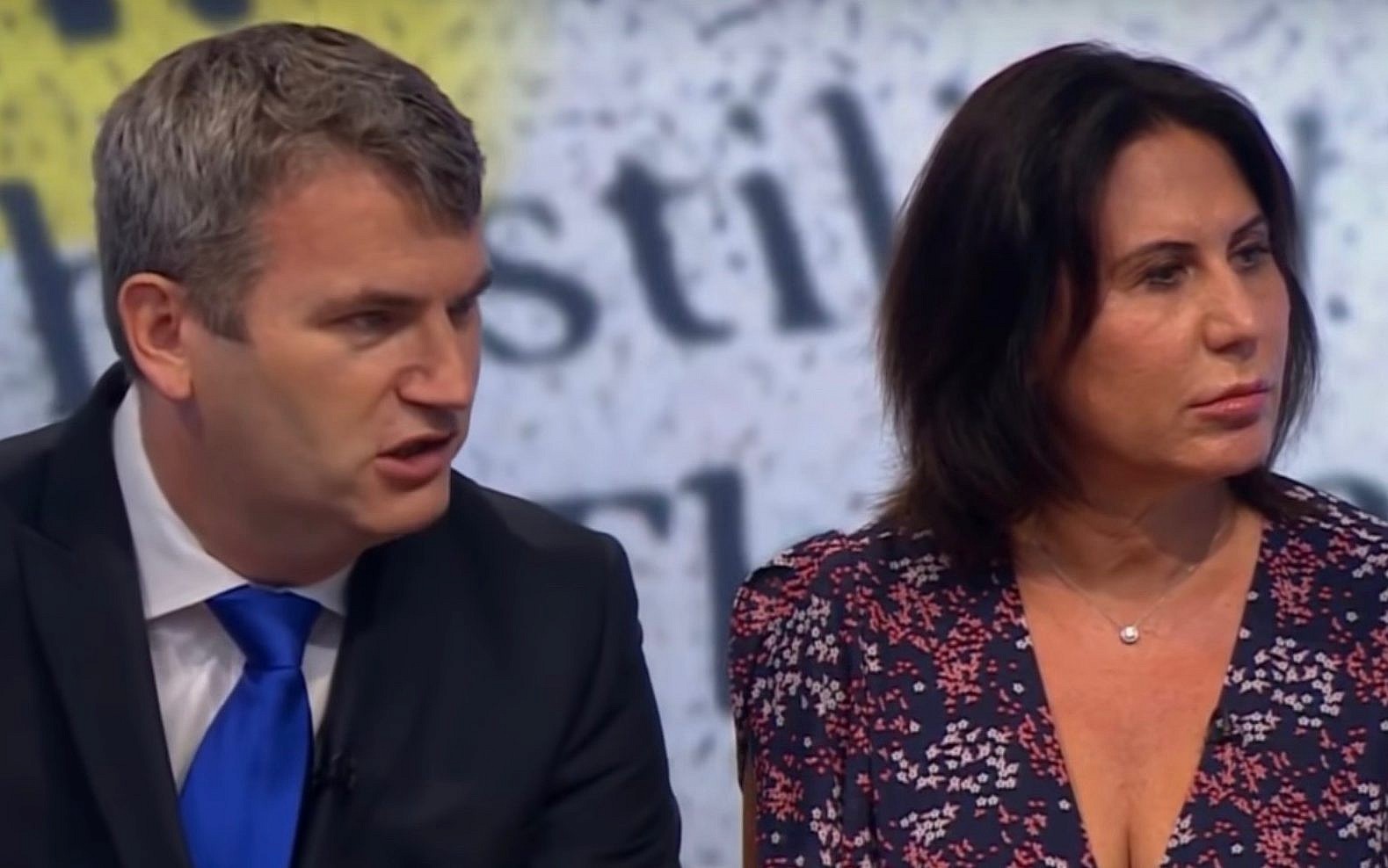
Mark Lewis (L) and his partner Mandy Blumenthal in an interview with the BBC. (Screen capture: YouTube)

Mark Lewis (L) and his partner Mandy Blumenthal in an interview with the BBC. (Screen capture: YouTube)

A top British lawyer and his partner immigrated to Israel this week, citing rising anti-Semitism in Europe.

“Europe in my view is finished. Every day you see people being attacked in one way or another across Europe,” Mark Lewis told Israel’s Channel 10 news, which accompanied his arrival, together with partner Mandy Blumenthal, at Israel’s Ben Gurion Airport.

“You see people murdered in museums in Belgium, people murdered in schools in France, people attacked in England. There is only one place for Jewish people to go,” Lewis added.

Lewis, 54, one of the UK’s leading libel lawyers, said he has been increasingly subjected to hate speech and threats for being Jewish, including being subjected to regular abuse and death threats online.

The decision to leave Britain did not come easily, the couple has said, but they feel it was inevitable. “We’re a wandering people, and it’s time to wander again. People just don’t want to see it,” Lewis said of his fellow British Jews.

Mark Lewis, right, and Mandy Blumenthal arrive at Ben Gurion Airport, December 5, 2018. (Channel 10 screen capture)

“We’ve accelerated our decision of moving to go to Israel because of anti-Semitism being so institutional and accepted in mainstream life,” Blumenthal charged.

“So many people have these ideas about Jews being responsible for every disaster that’s ever happened in the world.”

Lewis and Blumenthal first publicized their intention to leave for Israel in an interview with the BBC in August. They said they knew other people who are considering leaving the country because of anti-Semitism.

In the interview, the couple also blamed the leadership of Labour under Jeremy Corbyn for creating an atmosphere that allows anti-Semitic feelings to bubble up, and largely dismissed Corbyn’s assertion that anti-Semitism is not tolerated in the party.

“Jeremy Corbyn moved the rock, and the anti-Semites crawled out from underneath the rock. They’re not going back,” said Lewis.

“There’s been a total climate change. It’s become acceptable to be anti-Semitic. It’s brought out people’s feelings to the surface,” Blumenthal said.

She said though Corbyn and Labour are not solely responsible for the recent anti-Semitism, they have a “very loud part” in its rise.

“It’s not just Jeremy Corbyn and it’s not all of the Labour party. But it’s a very, very loud part of it that’s actually enabled this anti-Semitism to foster here in the UK and go throughout society,” she said.

Lewis said while anti-Semitism was a fringe phenomenon in the past, it is has become more prominent due to social media.

“Social media has caused so much harm,” he said. “Fifteen years ago there was still anti-Semitism but it was an obscure thing. Fifteen years ago somebody painted a swastika on my garage door in Manchester, that was a message. But it was a one-off, it was something you could almost laugh off. Now with the effect of social media, it’s almost every day.”

Lewis, who in an interview with The Times of Israel last year said he likes to take on anti-Semitic trolls on social media, said he has also faced anti-Semitism when trying to raise the issue.

“If you complain about anti-Semitism, the most anti-Semitic thing is said back to you: You’re making it up, it’s all a smear, you haven’t even got the right to complain,” he said.

He said he was bombarded with messages of hate from “people who claim to represent [grassroots Corbyn backing group] Momentum, who claim to represent the Labour Party.”

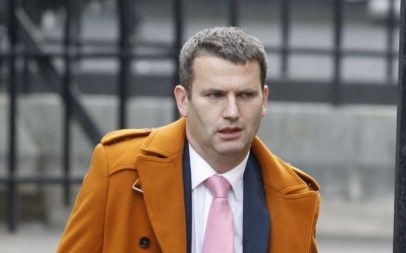
Lawyer Mark Lewis arrives at a media ethics inquiry at the Royal Courts of Justice in central London, Thursday, November 24, 2011. (AP/Lefteris Pitarakis)

Explaining the couple’s decision to move to Israel, Lewis said “there is only so much you can take.”

“The online abuse might continue, the Israelis might not like me because I am too left, might not like me because they think I am too right, whatever their view. But they are not going to dislike me because I am Jewish. And there is only so much you can take – when you are getting threats to kill you.”

“When you are getting threats from people that they want you to be ill, etc. It’s a drip drip effect,” said Lewis, who suffers from multiple sclerosis. “And where do you say ‘actually, enough is enough.’”

In response to the couple’s interview, a Labour spokesperson said Corbyn is a “militant opponent” of anti-Semitism and committed to uprooting it from the party.

Britain’s Labour Party leader Jeremy Corbyn speaks at the Tolpuddle Martyrs Festival in Tolpuddle, England, on July 22, 2018. (Ben Birchall/PA via AP)

Blumenthal, however, said she did not believe Corbyn’s expressed commitment to addressing Labour’s anti-Semitism problems.

“Words are cheap. I honestly believe that when I hear Jeremy Corbyn’s words, they’re cheap, they’re excuses, they’re not actually expressing his true feelings. I don’t believe him,” she said.

In August, Corbyn faced renewed criticism after the Daily Mail newspaper published photos of him holding a wreath during a 2014 ceremony at a Tunisian cemetery. It appeared from the snapshots that Corbyn was standing near the graves of Palestinian terrorists involved in the massacre of 11 Israeli athletes at the Munich Olympics in 1972.

The scandal is only the latest round in a long-running crisis for the Labour Party, with a constant stream of members and prominent officials being forced out or chastised for making anti-Semitic and virulent anti-Israel comments, and Corbyn himself criticized for tolerating and/or being part of the problem.

The fracas has seen excoriation from rabbis, including Britain’s chief rabbi, as well as from some of Labour’s own MPs, charging that the party and its leader seem unable or unwilling to decisively excise anti-Semitic members and sentiments from Labour’s ranks.


Ex-defense minister admits officials lied about Hezbollah tunnels for years

December 6, 2018

Source: Ex-defense minister admits officials lied about Hezbollah tunnels for years | The Times of Israel

Moshe Ya’alon defends hiding knowledge of subterranean threat from residents of northern Israel, says it was for their own good and to trick the Lebanese terror group

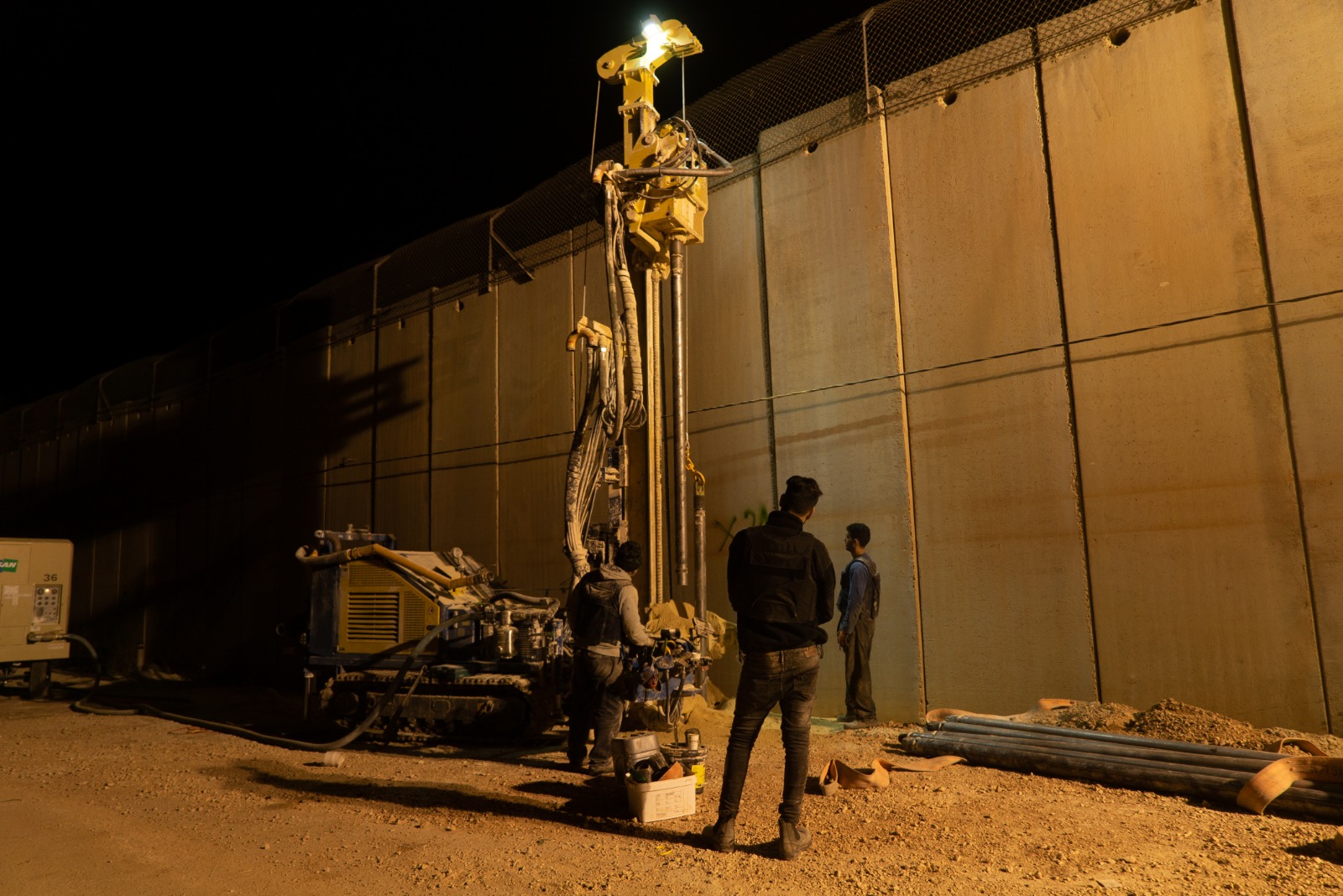
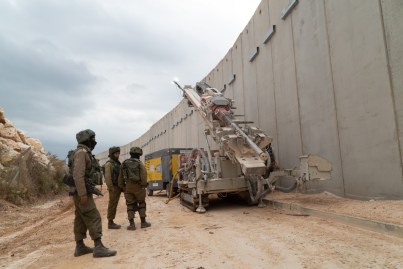
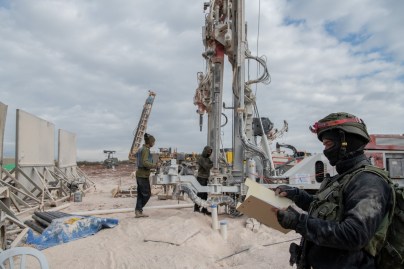
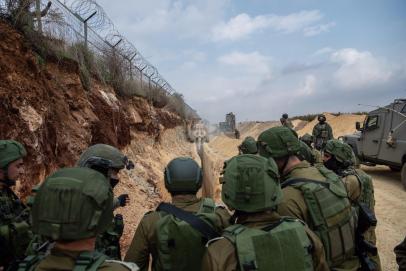
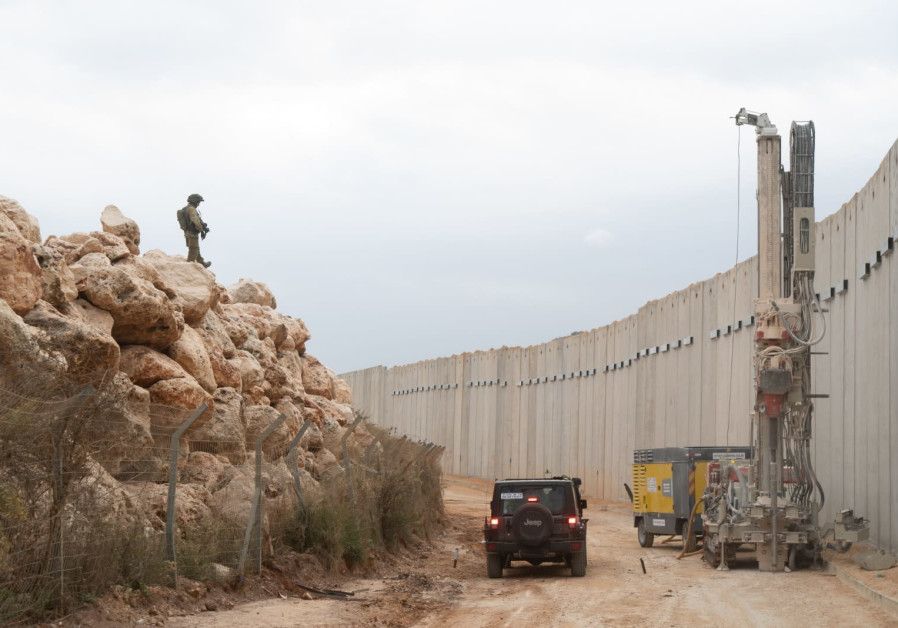
The Israeli military drills into the soil south of the Lebanese border in an effort to locate and destroy Hezbollah attack tunnels that it says entered Israeli territory, on December 5, 2018. (Israel Defense Forces)

The Israeli military drills into the soil south of the Lebanese border in an effort to locate and destroy Hezbollah attack tunnels that it says entered Israeli territory, on December 5, 2018. (Israel Defense Forces)

Former defense minister Moshe Ya’alon on Thursday acknowledged that Israeli officials lied about the existence of Hezbollah’s cross-border attack tunnels for years before the military announced this week that it planned to destroy them in a new operation dubbed Northern Shield.

“We did it to mislead the other side,” he told Army Radio.

Ya’alon joined a chorus of Israeli officials criticizing the manner in which the army’s effort to destroy the Hezbollah attack tunnels was revealed to the public.

A number of former military officials and opposition politicians have accused Prime Minister Benjamin Netanyahu of overdramatizing the operation, though they nevertheless acknowledged its importance to Israel’s security. Some took issue with referring to Northern Shield as an operation — which gives an impression of an offensive campaign — rather than as an effort or an action.

“There’s an exaggeration in the way it was presented, and I hope that doesn’t hurt us,” Ya’alon said. “But the decision [to do it] was professionally made and came from within the military.”

Former defense minister Moshe Ya’alon speaks at a cultural event in Ra’anana on July 15, 2017. (Flash90)

For years, residents of northern Israel reported hearing the sounds of excavation and underground construction, but were repeatedly dismissed by the Israel Defense Forces.

During his tenure as defense minister, Ya’alon was asked at least twice — in 2015 and 2016 — about the existence of Hezbollah attack tunnels entering Israeli territory from southern Lebanon, and in both cases he said there were none.

In recent years, IDF officers have also been asked about the threat of Hezbollah tunnels from Lebanon, and they too either explicitly denied that the army knew they existed or refused to comment.

In January 2015, Ya’alon rejected the claims from northern residents that they’d heard tunneling, telling a group of high school students in the town of Kiryat Shmona that such sounds were just “horses in a stable next door.”

He did, however, add that the military was nevertheless investigating the matter.

My comments two years ago that there are no tunnels in the north was a lie in order to preserve the security of the state

In March 2016, Ya’alon was more explicit, telling students preparing to go into the military, “in the north, we haven’t discovered a single tunnel” — despite the fact that the army said this week it had by that point located tunnels.

Ya’alon told the students that “Hezbollah doesn’t even have a good reason to even dig tunnels in the north” as the terror group had other potential means to infiltrate into Israeli territory.

In the Army Radio interview on Thursday, Ya’alon admitted that he’d lied.

“My comments two years ago that there are no tunnels in the north was a lie in order to preserve the security of the state. I didn’t want Hezbollah to know that we knew,” he said.

Ya’alon said he was also trying to “calm” residents of the north.

However, the former defense minister still maintained that most of the reports from residents of the north from that time were incorrect.

“We took it seriously. We looked and we didn’t find anything,” he said.

“Even today, I will continue to calm down northern residents. None of the tunnels reach any of the communities where people said they’d heard [tunneling], nor to any home,” he said.

The Israeli military drills into the soil south of the Lebanese border in an effort to locate and destroy Hezbollah attack tunnels that it says entered Israeli territory, on December 5, 2018. (Israel Defense Forces)

The IDF said it believes Hezbollah was planning to use the tunnels as a surprise component in the launch of a future war against Israel.

On Tuesday night, Prime Minister Benjamin Netanyahu made a similar claim, saying the tunnels were part of a wider effort to “inflict great damage” to Israel and Israeli citizens.

“Capturing parts of the Galilee by Hezbollah is a concrete threat,” he said. “It is also part of a regional and global terror effort led by Iran.”

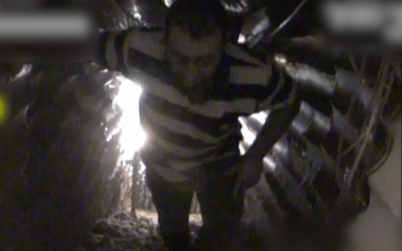
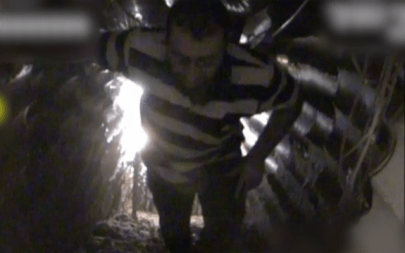
An alleged Hezbollah member walks through a tunnel dug into Israeli territory from southern Lebanon on December 4, 2018. (Screen capture: Israel Defense Forces)

The tunnel discovered on Tuesday, south of the village of Metulla in the upper tip of the Galilee, was apparently meant to be used to send heavily armed terrorists into the area and cut off Metulla from the rest of Israel. According to the military, in such an event, additional Hezbollah operatives would also likely be sent into Israel above ground at the same time, along with a massive salvo of rocket and missile fire.

Israel’s last major confrontation with Hezbollah, 2006’s Second Lebanon War, was sparked when the terror group managed to infiltrate just over the border, kill several soldiers and capture two of their bodies.

IDF Chief of Staff Gadi Eisenkot said Tuesday that the army “is in possession of” Hezbollah’s tunnel plan.

According to a senior officer in the IDF Northern Command, the army believes Hezbollah was “surprised” that Israel had learned of its tunnel project and is struggling to determine what Israel knows.

“At this point, it seems to be trying to understand what we know and what we don’t, but I think that Hezbollah has not figured out how much we know about its tunnel project, and it will be even more surprised going forward,” he said, speaking on condition of anonymity.


All may not be as it seems as IDF, Hezbollah play hide and seek over tunnels 

December 6, 2018

Source: All may not be as it seems as IDF, Hezbollah play hide and seek over tunnels | The Times of Israel

Army promises more ‘surprises’ for the Lebanese terror group as it reportedly expands its tunnel-busting operation to two other locations

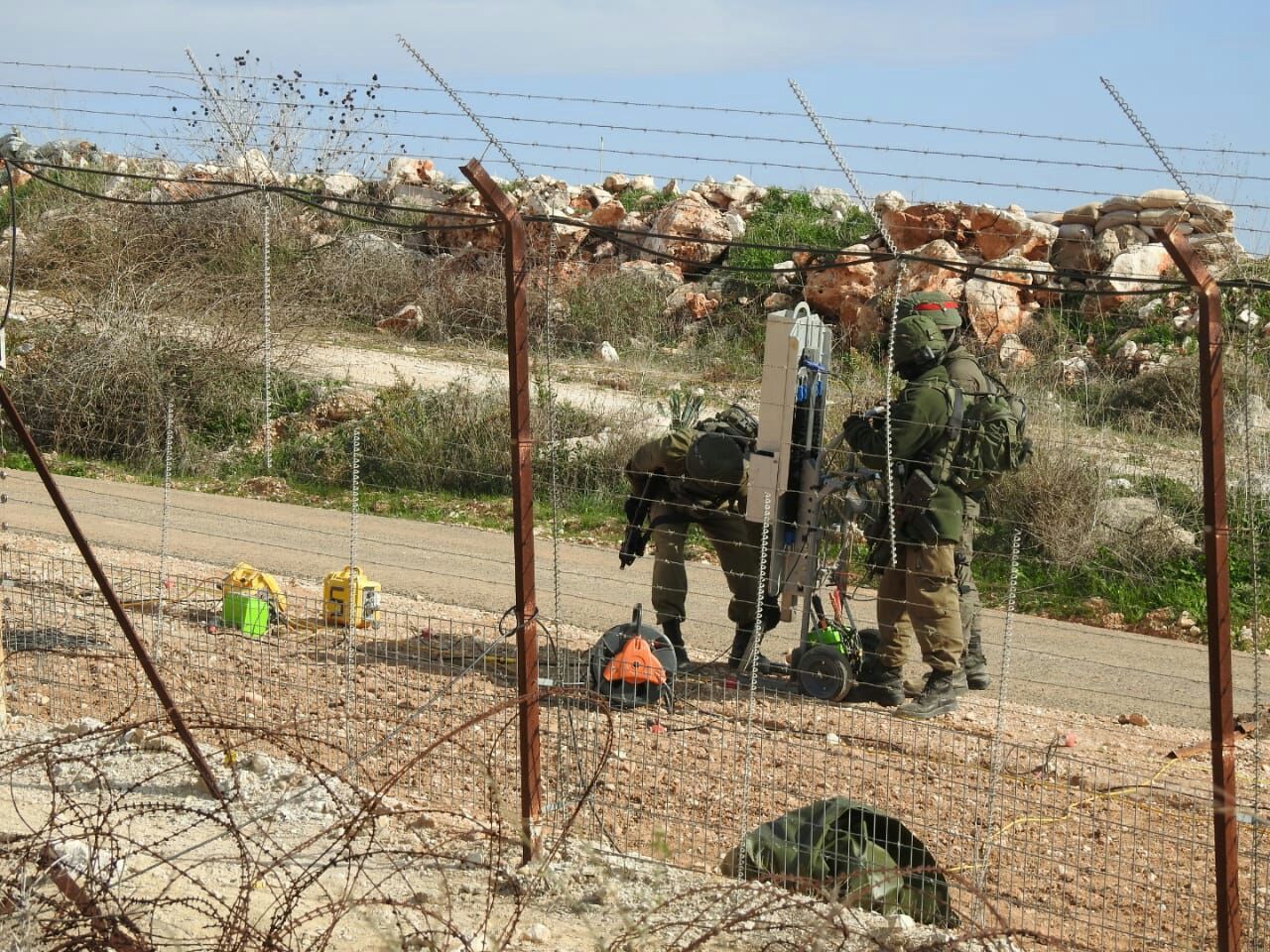
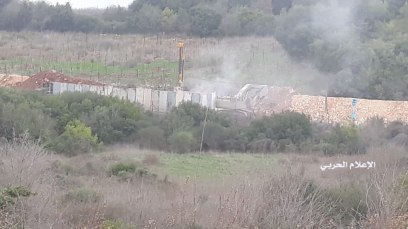
Israeli troops insteall machinery near the town of Meiss al-Jabal in southern Lebanon on December 5, 2018, according to the Hezbollah terror group. (Hezbollah Military Media)

Israeli troops insteall machinery near the town of Meiss al-Jabal in southern Lebanon on December 5, 2018, according to the Hezbollah terror group. (Hezbollah Military Media)

Since the launch of Israel’s operation to find and destroy Hezbollah’s cross-border attack tunnels on Tuesday, the Lebanese terror group has been dutifully tracking the Israel Defense Forces’ activities along the border and publicizing them.

The apparent message that Hezbollah is seeking to convey to the Israeli military is that it is unfazed — it knows exactly what the IDF is up to, is keeping an eye on things, is tracking soldiers’ movements.

That the terror group is looking closely should come as no surprise to the IDF, which has for years watched Hezbollah operatives watching its soldiers from across the border and, indeed, has been known to supply Hezbollah with disinformation in order to confuse and mislead. All of which makes reports from Lebanon and from Israel based solely on the naked eye potentially unreliable.

Israel would like to keep its observers surprised. With its work so close to a border that is heavily monitored — not just by Hezbollah, but also by the Lebanese Armed Forces, and UN peacekeeping force UNIFIL — the IDF will likely be forced, in addition to the tunnel-busting operation, to put on other such shows to keep Hezbollah guessing. Many analysts believe that tackling the tunnels is a precursor to tackling the threat of Hezbollah’s precision-guided missile program, as detailed by Prime Minister Benjamin Netanyahu in his speech to the UN General Assembly in September.

According to a senior officer in the IDF Northern Command, the army believes Hezbollah was “surprised” that Israel had learned of its tunnel project and was struggling to determine what Israel knew, which also accounts for its close monitoring of the border — specifically where the IDF is, and isn’t, digging and searching.

The Israeli military drills into the soil south of the Lebanese border in an effort to locate and destroy Hezbollah attack tunnels that it says entered Israeli territory, on December 5, 2018. (Israel Defense Forces)

“At this point, it seems to be trying to understand what we know and what we don’t, but I think that Hezbollah has not figured out how much we know about its tunnel project, and it will be even more surprised going forward,” he said, speaking on condition of anonymity.

According to the Iran-backed group, the Israeli military is currently operating at three locations along the border — only one of which the IDF has publicly acknowledged, east of the Lebanese village of Kafr Kila, where the army said it discovered a first tunnel on Tuesday. The IDF has not formally acknowledged this, and many aspects of Operation Northern Shield remain subject to Israeli military censorship.

In addition to the area east of Kafr Kila, Hezbollah has also taken and shared photographs of the army’s operations at Ramiya, which lies north of the Israeli community of Zarit, and Meiss al-Jabal, west of the town of Kfar Blum.

Israeli troops operate heavy machinery near the town of Ramya in southern Lebanon on December 5, 2018, according to the Hezbollah terror group. (Hezbollah Military Media)

Hadashot TV said Wednesday that the IDF first tackled the tunnel from Kafr Kila, which was heading toward the Israeli town Metulla, because it was being dug toward a residential area.

The army said that tunnel, and all the others, was at least several months away from being operational and did not present an immediate threat to residents of the area.

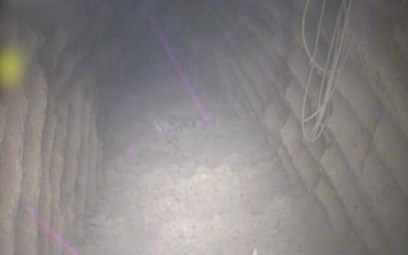
The interior of what Israel says is an attack tunnel dug by the Hezbollah terror group that crossed into Israeli territory from south of the Lebanese village of Kafr Kila, December 4, 2018. (Israel Defense Forces)

“None of the tunnels was ready for war tomorrow. In some cases, it was a matter of months and in other it was a matter of years before they’d be operationally ready,” a senior officer from the Northern Command said Wednesday, speaking on condition of anonymity.

And the IDF will be hoping to avoid receiving any surprises of its own.

While the IDF believes it has fully mapped out Hezbollah’s tunnel infrastructure, the senior officer allowed for potential “surprises,” but said that chances of that were low.

“There are some places we know more about, and some that we know less about. But we have the means to see through the operation to the end — to find and destroy them all,” the senior officer said.

The officer said the tunnels were discovered using seismic sensors, which were buried underground.

“Using audio systems, [troops] are able to listen to the ground and identify suspicious activities,” he said.

According to the Israeli military, Operation Northern Shield is expected to last several weeks and is being led by the head of the IDF Northern Command Maj. Gen. Yoel Strick.

According to the officer, the IDF believes Hezbollah was planning to use that first tunnel to cut off Metulla, which lies in the upper tip of the Galilee, from the rest of Israel as part of a surprise attack in the opening salvo of a future war.

Approximately seven years ago, Hezbollah created a special forces unit — known as the Radwan Unit — specifically tasked with crossing into Israel and causing as much mayhem and destruction as possible both for the sake of the damage to Israel itself and for the symbolic victory of having troops carry out attacks inside Israel.

Israel’s last major confrontation with Hezbollah, 2006’s Second Lebanon War, was sparked when the terror group managed to infiltrate just over the border, kill several soldiers and capture two of their bodies.

The senior officer, citing military assessments, said Hezbollah intended to use the tunnels as part of a wider operation to conquer parts of the panhandle in Israel’s Galilee in a future conflict.

IDF Chief of Staff Gadi Eisenkot, center, visits soldiers searching for Hezbollah attack tunnels on Israeli-Lebanese border on December 4, 2018. (Israel Defense Forces)

On Tuesday night, Prime Minister Benjamin Netanyahu made a similar claim, saying the tunnels were part of a wider effort to “inflict great damage” to Israel and Israeli citizens.

“Capturing parts of the Galilee by Hezbollah is a concrete threat,” he said. “It is also part of a regional and global terror effort led by Iran.”

The one tunnel the army says it has uncovered so far reached 40 meters (130 feet) into Israeli territory outside Metulla, and was two meters (six feet) high by two meters (six feet) wide. It’s unclear how many fighters Hezbollah could have sent through the tunnel before being detected and if they would be enough to capture or hold significant swaths of Israeli territory. TV reports indicated that Hezbollah intended to send in gunmen through the tunnels and above ground.

Chief of Staff Gadi Eisenkot said Tuesday that the army “is in possession of” Hezbollah’s tunnel plan.

Hezbollah operatives were still working in the tunnel uncovered on Tuesday right up until it was exposed by the IDF, according to footage released by the Israeli military.

An alleged Hezbollah member walks through a tunnel dug into Israeli territory from southern Lebanon on December 4, 2018. (Screen capture: Israel Defense Forces)

The video, filmed by a robot sent into the tunnel on Tuesday morning, shows two men entering the tunnel and approaching the camera before the robot triggers a small explosive device, scaring the men away.


U.N. Security Council to meet on Hezbollah tunnels 

December 6, 2018

Source: U.N. Security Council to meet on Hezbollah tunnels – Arab-Israeli Conflict – Jerusalem Post

IDF, Lebanese Army and UNIFIL officials meet for regular-scheduled meeting; Russia expresses some support for Israel’s anti-tunnel operation.

BY HERB KEINON
 DECEMBER 5, 2018 22:07
Hezbollah terror tunnel reaching from Lebanon into Israeli territory

The UN Security Council will hold a meeting in the coming days on the uncovering of Hezbollah terror tunnels that have penetrated into Israel, the country’s Ambassador to the UN Danny Danon said on Wednesday.

Danon said the meeting will deal with Hezbollah’s infringement of Israeli sovereignty, as well as the violation of UN Security Council Resolution 1701 from 2006 that called for southern Lebanon – the area from the Litani River to the border with Israel – to be free of foreign forces.

Prime Minister Benjamin Netanyahu spoke about the operation on Wednesday with UN Secretary General António Guterres, saying that Hezbollah’s violation of Israel’s sovereignty and UN Security resolutions was “another part of Iran’s aggression in the region.”

Netanyahu briefed Guterres on the details of the anti-tunnel operation, dubbed Operation Northern Shield, and said he expected a strong condemnation of the tunnels by the UN. So far, Guterres has not commented publicly on the matter.

Israel, Danon said, asked the US – one of the five permanent members of the 15-member Security Council – to request the meeting about the tunnels.

The ambassador said that among the issues that Israel will raise is the failure of UNIFIL to fulfill the mandate the council gave it in 2006 to monitor south Lebanon and ensure that it is not used for hostile activities.

Danon said Israel will also raise the Lebanese Army’s failure to reassert its control over the entire country. This army, he said, receives significant assistance from the US and European countries, and “unfortunately allows Hezbollah to operate freely, and even cooperates with them in southern Lebanon.”

While Danon acknowledged that there was no chance of the Security Council passing a resolution against Hezbollah, the very existence of the meeting is significant because it will shine a light on Hezbollah’s activities.

Israel has complained for years that UNIFIL is not fulfilling its mandate, and allowing Hezbollah – in contravention of 1701 – to arm itself right under the monitoring group’s watch.

And Israel was not alone in raising these complaints.

In August 2017, US Ambassador to the UN Nikki Haley leveled withering criticism of Irish Maj.–Gen. Michael Beary, the commander of UNIFIL at the time, accusing him of turning a blind eye to Iran’s covert arming of Hezbollah.

“Hezbollah openly brags about their weapons. They parade them before TV cameras. The secretary-general’s reports have confirmed this. For the UNIFIL commander to deny it… shows that we need to have changes in UNIFIL,” Haley said.

ON THURSDAY, the head of UNIFIL Major General Stefano Del Col chaired a regular tripartite meeting with senior officers from the IDF and the Lebanese army at the UN position in Ras Al Naqoura.

A statement issued by UNIFIL said that the IDF operations against the tunnels were discussed.

“I emphasize the critical role of our liaison and coordination mechanisms in mitigating tensions through continuous communication, at the heart of which is the Tripartite Forum,” he said. He also encouraged both sides to “avoid misunderstandings and ensure that security and stability along the Blue Line is maintained and reinforced.”

These meetings have been held regularly since the end of the Second Lebanon War in August 2006.

In a related development, Russia offered some support on Wednesday for Israel’s operation, but said it hoped these efforts will not conflict with UNSC resolution 1701 that calls for the border between the two countries to be respected by all sides.

The Russian embassy in Tel Aviv posted a tweet saying that there is “no doubt that Israel has the right to protect its national security, including to prevent the illegal entry of anyone into the country.”

At the same time, the tweet continued, “We hope that the actions taken for this purpose will not conflict with UNSC Resolution 1701.”

This tweet paraphrased and condensed comments made by Russian Foreign Ministry spokeswoman Maria Zakharova on Wednesday. She said that Russia hoped UNIFIL would fulfill its monitoring mission in southern Lebanon and “not allow any violations.”

Zakharova also said that Moscow called on all parties “to show the necessary responsibility and restraint – to avoid provocative steps and harsh statements that can further aggravate [the] tense situation.”

While IDF and government spokespersons said on Tuesday that the operation was taking place on Israel’s side of the border, there was no guarantee that at some point in time it might spill over to the Lebanese side.

Moscow’s comments came a day after the US gave unreserved support for the operation. US National Security Adviser John Bolton issued a statement saying that the US “strongly supports Israel’s efforts to defend its sovereignty, and we call on Hezbollah to stop its tunneling into Israel and to refrain from escalation and violence.”


Does Hezbollah really pose a far greater danger to Israel than Hamas? 

December 6, 2018

Source: Does Hezbollah really pose a far greater danger to Israel than Hamas? – Arab-Israeli Conflict – Jerusalem Post

News about the diplomatic push to achieve a cease-fire agreement between Israel and Hamas has conspicuously disappeared from the headlines.

BY CHARLES BYBELEZER/THE MEDIA LINE
 DECEMBER 6, 2018 07:30
 IDF soldier stands watch over engineering device looking for Hezbollah tunnels

The launch of Operation Northern Shield to uncover and destroy Hezbollah’s network of cross-border tunnelscontextualizes the Israeli government’s decision last month to swallow some tough pills and a little pride in order to avert full-blown conflict against Hamas. At the time, Prime Minister Binyamin Netanyahu, under significant political and public pressure, spoke cryptically of Israel already being engaged in a military campaign and that an “unnecessary war” in the Gaza Strip would derail this undefined endeavor.

While the move was still panned by an overwhelming majority of Israelis and led to the resignation of defense minister Avigdor Liberman—who called the choice a “capitulation to terror”—it is now clear that Netanyahu, with the backing of the military, was prioritizing the northern threat that evidently demanded immediate action.

That plans to destroy Hezbollah’s terror tunnels were discussed during security meetings ahead of a final decision on Gaza dispels the notion that the premier is acting out of political interest in order to deflect attention away from the criminal investigations against him. His trip to Brussels on Monday to provide advanced warning of the IDF operation to American Secretary of States Mike Pompeo reinforces that current developments have been weeks-in- the-making.

There is little argument among analysts that Hezbollah poses a far greater danger to Israel than Hamas. Indeed, Netanyahu over the past two months repeatedly has warned that Iran’s Lebanese terror proxy is constructing underground factories capable of producing precision- guided missiles that can target critical infrastructure anywhere in Israel.

Notably, the prime minister described Operation Northern Shield as a “small piece of the big picture of our efforts and actions to ensure security on all fronts,” a comment construed as an indication that the mission may be a precursor to confronting what is viewed as the more acute threat of Hezbollah’s arsenal of some 120,000 projectiles.

Then there is the broader and more important strategic goal of curbing Tehran’s regional expansionism—foremost its effort to establish a permanent military presence in Syria—as well as preventing its nuclearization.

Accordingly, Israel’s decision-making process and related courses of action appear well- calculated and correct.

Which would be truer if the situation in Gaza was actually stable.

In fact, news about the diplomatic push to achieve a cease-fire agreement between Israel and Hamas has conspicuously disappeared from the headlines. It seems that the Egyptian-, Qatari- and United Nations-mediated negotiating process has reached a standstill and, instead, the parties have resigned themselves to the return of the longstanding status quo of “quiet-for-quiet.”

“We are slowly moving back to some sort of regularization that re-establishes the rules of the game set following Operation Protective Edge, [the 50-day war in 2014],” Brig. Gen.(res.) Yossi Kuperwasser, formerly the director general of Israel’s Ministry of Strategic Affairs and presently head of the Project on Middle East Developments at the Jerusalem Center for Public Affairs, explained to The Media Line.

“A long-term cease-fire, however, is not realistic because Hamas is unwilling to give up its jihadist identity and its rule over Gaza. Because of this, they are not ready for the type of truce that includes serious conditions.” But while rockets are not indiscriminately raining down on Israeli civilian centers, the so- called “March of Return” protests nevertheless are ongoing and one incident along the border can easily enflame tensions. Additionally, there is always the possibility of external interference, as the mullahs in Tehran might be tempted to instruct their Palestinian proxies in Gaza to resume their terror operations with a view to diverting Israel’s military focus from north to south.

Moreover, the IDF undoubtedly will continue to monitor and pursue objectives in the Palestinian territory, which carries the risk of a botched operation similar to that of November 11, when an elite Israeli unit was identified three miles deep in Gaza. The ensuing firefight killed one senior IDF officer and seven Hamas members and was a catalyst for the next day’s largest-ever 24-hour barrage of some 500 missiles fired into Israel.

“The Israeli government has not forgotten about Gaza but right now the overall situation is more under control. There is Qatari money and fuel going in so things are less sensitive,” Brig. Gen. (res.) Nitzan Nuriel, former director of the Counter-Terrorism Bureau at the Israeli Prime Minister’s Office and prior to that deputy commander of the IDF’s Gaza Division, explained to The Media Line.

“A long-term cease-fire would be a ‘win-win’ scenario and create a totally different environment but this cannot happen yet because of [the intra-Palestinian divide and Mahmoud Abbas’ refusal to re-assume control over Gaza so long as Hamas retains its weapons.] However, the current Hamas leadership knows two things: namely, that they will not be able to defeat the state of Israel and that compromises will need to be made.

“In the long-run,” he therefore concluded, “solutions will be found. Until then, there can always be mistakes that could lead to another round of violence.”

The interplay of so many variables and competing interests means the Gaza conundrum remains as complex and potentially volatile as ever. Many argue that absent formal understandings between the sides, accompanied by an international plan for improving the humanitarian conditions in the enclave, the Gaza powder keg is bound to be reignited.


Lebanese media blame Northern Shield on Netanyahu, Russia’s S-300 in Syria 

December 6, 2018

Source: Lebanese media blame Northern Shield on Netanyahu, Russia’s S-300 in Syri – Middle East – Jerusalem Post

At the same time as media have downplayed the operation and portrayed it as an Israeli issue, unlikely to affect Lebanon, the military and political elites in Lebanon have sought to demand proof that the tunnels came from Lebanon or entered Israeli territory.

BY SETH J. FRANTZMAN
 DECEMBER 6, 2018 10:18
Lebanese media blame Northern Shield on Netanyahu, Russia's S-300 in Syria

Hezbollah and its allies in the region have responded to Israel’s Operation Northern Shield with bemused incredulity.

On the Lebanese side of the border, some media have broadcast images of Israel’s work to dismantle the tunnels, but in general the response has been tepid. Lebanese Prime Minister Saad Hariri said on Wednesday that Lebanon guards its sovereignty, an insinuation that Lebanon had not allowed the tunnels to be built and enter Israel. The statement was designed to make it seem the government was unaware of their existence.

The central narrative of media sources that tend to be sympathetic to Hezbollah is to portray Israel’s activity as an “internal” Israeli issue. For instance Al-Maaydeen ran an article questioning the reasons behind Israel’s operation.

“Israel has a crisis in its inability to launch an aggression against Lebanon and Syria,” the website of the satellite television station said. The whole offensive was “fabricated,” the article asserts. It has more to do with Prime Minister Benjamin Netanyahu’s battle with his own government after the “failure” in Gaza. This references the clashes with Hamas in November in which Hamas fired 460 rockets at Israel and Defense Minister Avigdor Liberman resigned. The article then claims that Israel has been curtailed from entering Syrian airspace after Russia deployed the S-300 defense system with Syrian air defense. “Israel launched missiles remotely on November 29,” the article asserts, referring to air strikes that took place south of Damascus which it blamed on Israel.

Al-Akhbar, a Lebanese daily, also had an article Thursday claiming the search for the tunnels by Israel was an internal Israeli issue and that it would not likely escalate. The article consisted primarily of discussions about what Israeli media are saying about the operation.

Al-Manar, which is affiliated with Hezbollah, ran an article detailing how the Lebanese army has sought to confirm Israel’s claims of tunnels. It also noted that Lebanon demanded Israel return Sheba Farms, a disputed border area controlled by Israel that Hezbollah has long used as an excuse to maintain its arsenal of “resistance.”

At the same time, as media have downplayed the operation and portrayed it as an Israeli issue, unlikely to affect Lebanon, the military and political elites in Lebanon have sought to demand proof that the tunnels came from Lebanon or entered Israeli territory. The Lebanese army has said that, so far, Israeli activity along the border has not entered Lebanese territory.

The review of regional media’s reactions to Israel’s Northern Shield operation reveals a very tepid response. This is particularly true among Iranian pro-regime media, Syria’s state media and those channels that are sympathetic to Hezbollah. These outlets usually have similar narratives and Iran’s especially has been in the habit of boasting reverently about various new missiles and programs that threaten Israel.

Yet in the last few days, Tehran has been more quiet in its approach. Similarly Hezbollah’s boasting has been reduced. Last Friday, Hezbollah released a video threatening sites throughout Israel with retaliation in case of attack. What is particularly interesting is that Hezbollah’s narrative is primarily about retaliation, not its previous discussions of invading the Galilee. This response appears to seek to deescalate the situation along the northern border, and also to indicate that Hezbollah does not care about its tunnels being dismantled. This would be in line with its claims that the tunnels are actually more mundane activities, such as claiming one was actually part of a legitimate cement factory.

Overall the Lebanese narrative, whether associated with Hezbollah or the opposition parties such as Saad Hariri’s political coalition, is adamant about not wanting an escalation. For Hezbollah this is an embarrassment: its tunnels were exposed and it is left unable to respond.

But Hezbollah has also been keen on regrouping after its involvement in the war in Syria and the losses it suffered there. It enjoys the war of words with Jerusalem, in which Israel accuses Hezbollah of various nefarious activities such as housing weapons in Beirut, and Hezbollah says any action by Israel will be met with retaliation. But it may be more wary of escalating an actual conflict. This is not a calculation only for Hezbollah. Its allies in the Syrian regime and in Tehran are also keenly aware of the risks involved in escalation. Syria appears to think it is close to having an air defense umbrella with Russian support and its S-300 system. It too wants to consolidate gains in the south after having defeated the Syrian rebels there five months ago. So far Operation Northern Shield has been accomplished with quiet on the border.