Source: Senior official: Russia helping stop weapon transfers to Hezbollah – Middle East – Jerusalem Post
Prime Minister Benjamin Netanyahu briefed some 25 ambassadors in Misgav Am on Thursday about Operation Northern Shield, Israel’s campaign to detect and destroy Hezbollah terror tunnels.

Russia has deployed troops on the Syrian-Lebanese border to prevent the transfer of weapons and precision-guided technology to Hezbollah, a senior diplomatic official said on Thursday.
The official said that this deployment, as well as IDF actions inside Syria to disrupt the transfer of these weapons and technology to turn ordinary missiles into precision-guided ones, has had a significant impact, and that Hezbollah has only been able to convert “a few dozen” of their estimated 140,000 missiles in Lebanon into precision-guided ones. The official said that Hezbollah had hoped by now to have converted thousands of missiles into precision-guided ones.
These comments came as Prime Minister Benjamin Netanyahu briefed some 25 ambassadors in Misgav Am on Thursday about Operation Northern Shield, Israel’s campaign to detect and destroy Hezbollah terror tunnels.
Israel is acting “systemically and with determination” to deny Hezbollah and Hamas their strategic tunnel weapon, Netanyahu said.
Netanyahu added that Hezbollah’s tunnels are just one expression of Iran’s aggressiveness in the region. He asked the ambassadors to condemn the violation of Israel’s sovereignty, and to support Israel’s demand for greater sanctions against Hezbollah.
“Our action [against the tunnels] is only in the beginning stage,” he said. “But at the end the tunnel weapon, which Hezbollah has invested so much money in, will not let it exist or be effective.”
One diplomatic official said that the purpose of the briefing with the ambassadors was to create legitimacy for future military actions if the need arises.
Source: Israel may have to act inside Lebanon, senior official says | The Times of Israel
Hezbollah’s terror tunnels were designed to for carrying out a ‘killing spree,’ official says; PM briefs foreign diplomats about current IDF op at northern border

A senior Israeli official on Thursday indicated the IDF may have to extend its current operation to detect and destroy Hezbollah’s attack tunnels at Israel’s northern border and take action on the Lebanese side of the Blue Line.
“It is possible that we will be required to act inside Lebanon,” the official said, speaking on condition of anonymity.
The cross-border tunnels “are wider and larger, and their goal is to transfer battalions, large forces, into Israeli territory, in order to come in and carry out a killing spree and kidnappings and to capture villages,” he said.
Operation Northern Shield was launched earlier this week due to the fear that the details of the operation would be leaked and revealed to Hezbollah, the senior official went on.
“If Hezbollah knew that we knew [about the existence of the tunnels] then this would accelerate their kidnapping efforts, and we did not want to get to a situation where the kidnappers infiltrate into Israel and abduct a soldier or a civilian, and no one would know anything about it,” the senior official said.
The decision to embark on the operation was taken on November 7, and was one of the reasons why the cabinet decided not to launch a major military campaign against Hamas in Gaza, the official added. “There were other reasons, too, but that was one of them,” he said.
Also on Thursday, Prime Minister Benjamin Netanyahu on Thursday briefed foreign diplomats about the army’s ongoing operation, urging them to condemn and sanction the Shiite terror group for its aggressive actions.
“Israel’s expectation is unequivocal condemnation of Hezbollah, additional sanctions on Hezbollah, and condemnation and demand from the Lebanese government to stop granting permission to use its territory for these attacks on Israel,” he told a group of senior ambassadors from across the globe.



 David Quarrey@DavidQuarreyPM Netanyahu briefed ambassadors today on the Hizballah tunnel threat. We visited tunnel site close to the Blue Line. UK condemns such tunnels as blatant and destabilising violation of UN resolutions.
“Anyone who attacks us — is taking his life into his hands,” he added. “Hezbollah knows this and Hamas knows that too.”
Operation Northern Shield has just begun, but at the end of it, Hezbollah’s tunnels “will no longer exist,” he vowed.
Netanyahu also spoke to the foreign diplomats about Iran, calling the Islamic Republic Israel’s greatest enemy.
“What we’re facing is one big enemy. That enemy is called Iran,” he said.
“Iran is trying to act on two levels: one is to develop a nuclear arsenal. We are dealing with that with other means including exposing the nuclear archive and the secret nuclear warehouse in Tehran. The second thing that Iran is doing is developing conventional weapons against us in their declared war to annihilate Israel. They declare so openly everyday.”
More than a dozen ambassadors participated in the briefing on a foggy Thursday morning, including those from the European Union, France, the UK, Russia, Hungary and Poland.
“The purpose of the ambassadors’ briefing was to receive support and legitimacy for additional actions, if they will become necessary,” the senior Israeli official said, speaking on condition of anonymity.
Israel will push for a discussion of Hezbollah’s terror tunnels at the UN Security Council later this week or early next week, the official said.
Source: ’Israel’s power will crush Hezbollah,’ senior MK warns – Israel Hayom
Hezbollah’s reckless actions will “drag Lebanon’s puppet government [to war] and Lebanon will end up paying a heavy price,” Knesset’s Foreign Affairs and Defense Committee head Avi Dichter says • ”It will find itself back in the 19th century,” he says.
|
Knesset’s Foreign Affairs and Defense Committee Chairman MK Avi Dichter (Likud)
| Photo: Dudi Vaaknin
|
Knesset’s Foreign Affairs and Defense Committee chairman MK Avi Dichter (Likud) warned Wednesday that any offensive action by Hezbollah will see the IDF “crush” the Shiite terrorist group.
In a Facebook post following the discovery of Hezbollah terror tunnels snaking under the Israel-Lebanon border, Dichter wrote that “if Hezbollah digs tunnels as a means of transporting hundreds of thousands of terrorists into Israel, aiming to seize control over Israeli territory and wave the Hezbollah flag there, they will soon find that they will be crushed in Lebanon by Israel’s power.”
”They will also drag Lebanon’s puppet government [to war] and Lebanon will end up paying a heavy price. It will find itself back in the 19th century,” Dichter wrote.
Hezbollah, he continued, “is trying to imitate Hamas in Gaza, but Hamas understands that digging tunnels means digging graves for its operatives. As of yesterday [Tuesday], Hezbollah understands this, too.”
”The tunnels breaching Israeli territory are a clear operational manifestation of Hezbollah’s policy shift. They demonstrate that Hezbollah is preparing an offensive action, not just building its defenses. This is perhaps the most significant lesson Nasrallah learned following the [2006] Second Lebanon War,” Dichter wrote.
In another post, days after the Israeli military launched Operation Northern Shield to destroy the Hezbollah tunnels, Dichter dismissed the Zionist Union’s demand to convene an urgent meeting of the Foreign Affairs and Defense Committee to explore the timing of the operation.
The opposition claims the operation was launched to distract the public from Prime Minister Benjamin Netanyahu’s latest legal troubles and the fact that the police recently recommended he be indicted on corruption charges.
”The members of the opposition chose to link the operation in the north to political interests. To them, that is what the IDF does. After failing to shorten the term of the current coalition, the opposition leaders chose to tie the Hezbollah tunnels in Lebanon to the prime minister’s and the coalition’s personal political interests. They are not letting the fact that the IDF chief of staff supported and pushed for this operation change their mind. There is no operational aspect to the timing, in their eyes – it’s all political,” he wrote.
Source: Report: Hezbollah mobilizing missiles from Syria to south Lebanon – Israel Hayom
Shiite terrorist group is concerned the Israeli operation to neutralize its cross-border terror tunnels heralds a wider IDF campaign • Hezbollah said to deploy Soviet-made ballistic missiles, Iranian short-range projectiles near south Lebanon border.
|
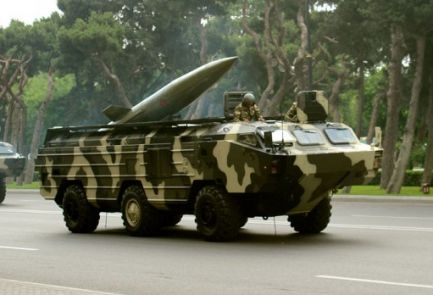
An OTR-21 Tochka missile
| Illustration: Urek Meniashvili / Wikipedia
|
Hezbollah has begun mobilizing missiles from Syria to southern Lebanon in a bid to counter a potential Israeli strike, rebel-affiliated media outlets in Syria reported Thursday.
The Shiite terrorist group is reportedly concerned that the Israeli operation to neutralize its cross-border terror tunnels is the opening move to a wider military campaign, the reports said.
Syrian opposition officials said that Hezbollah was moving OTR-21 Tochka missile batteries to southern Lebanon. The OTR-21 is a Soviet-made tactical ballistic missile system ranging between 15 and 185 kilometers (9 to 115 miles).
Other reports said Hezbollah was also deploying short-range Iranian-made projectiles in southern Lebanon, adding that the group has blocked dozens of roads in the area to allow the convoy smooth transport.
Source: Thank you, Mr. President – Israel Hayom
Michael Oren
Ever since Israel and the U.S. struck a strategic alliance at the end of the 1960s, the world has seen that alliance as a measure of American credibility and power worldwide. The closer U.S.-Israel ties are, the stronger the U.S.’s status and influence in the international community are.
Despite that, in times of tension between America and the Jewish state, the U.S.’s stature is seen as less influential. For example, when former President Barack Obama distanced himself from Israel, Russia invaded Ukraine and the Crimean Peninsula, as well as Syria. We can see the same dynamic at work today under the Trump administration, which is the friendliest Israel has known since the state was established.
This friendship isn’t merely personal. Former President George W. Bush, a friend and ally of Israel, said, “The U.S. is not a country of 300 million, but one of 308 million.” But Bush had a secretary of state, Condoleezza Rice, who frequently made harsh statements against Israeli settlements and against Israeli military actions in Lebanon and Gaza and compared the suffering of the Palestinians to that of the black population in the U.S. prior to the civil rights movement. There is no one like Rice in the Trump administration.
Secretary of State Mike Pompeo is adopting unqualified pro-Israeli stances and placing responsibility for instability in the Middle East squarely on Iran. In addition, National Security Adviser John Bolton has defied the Israeli-American alliance as “a cornerstone” of U.S. foreign policy in the Trump era.
In addition, outgoing U.S. Ambassador to the U.N. Nikki Haley hasn’t missed a chance to defend Israel and its right to defend itself, and set a pro-Israeli precedent that others will find difficult to erase, even after she leaves the job at the end of this month. For two years, the White House has not voiced even a word of real criticism against Israel.
The closeness is expressed by two historic decisions. The first was the U.S. withdrawing from the 2015 nuclear deal with Iran, a move that served both U.S. and Israeli interests. The second was America recognizing Jerusalem as our eternal capital, and relocating its embassy to the city. In both cases, President Donald Trump demonstrated that he was for Israel and took a stance against the opinions of almost everyone. As a result, he only grew stronger.
That approach has not gone unnoticed by other world leaders, who are impressed with the strong stance the U.S. is taking alongside Israel. They were impressed that the commitments Trump made to Israel, including campaign promises, were fulfilled, strengthening his reputation as someone who keeps his promises. That will help the president change trade conditions between the U.S. and Canada, Mexico, and China.
Strategically, the president’s commitment to Israel has given credence to his threats to use force against North Korea if Kim Jong Un didn’t stop firing missiles at Japan. One result was the U.S.-North Korean summit – North Korea saw that Trump lives up to his words, dialed back its threats, and held the summit.
A year has passed since the president stood up at the White House and recognized Jerusalem as the capital of Israel. Since then, other countries – including the Czech Republic and Brazil, have declared their intentions to follow suit. Likewise, stringent American sanctions are back in place against Iran and most businesspeople in the world – including in Europe, which fought so hard to protect the nuclear deal – have been forced to cooperate.
Only this week, the Chinese announced that they were willing to significantly increase their purchase of American products. The most dramatic effect was seen in the Arab world. Arab leaders know they can’t step between the U.S. and Israel and that they can depend on the president when it comes to Iran. That has led to an unprecedented rapprochement between Israel and the Sunni Muslim world, a most welcome development, and not only on Iran but also for current and future American efforts to broker peace between Israel and the Palestinians.
This is all good news for Israel. No one disputes that our diplomatic situation is better now than it was in 2016, and much of that is due to the policies of the current U.S. administration. But not only Israel – the entire world can now enjoy the advantages of being able to depend on an uncompromising American position.
Michael Oren is a former Israeli ambassador to the U.S. He currently serves as deputy public diplomacy minister.
Source: Thank you, Mr. President – Israel Hayom
Michael Oren
Ever since Israel and the U.S. struck a strategic alliance at the end of the 1960s, the world has seen that alliance as a measure of American credibility and power worldwide. The closer U.S.-Israel ties are, the stronger the U.S.’s status and influence in the international community are.
Despite that, in times of tension between America and the Jewish state, the U.S.’s stature is seen as less influential. For example, when former President Barack Obama distanced himself from Israel, Russia invaded Ukraine and the Crimean Peninsula, as well as Syria. We can see the same dynamic at work today under the Trump administration, which is the friendliest Israel has known since the state was established.
This friendship isn’t merely personal. Former President George W. Bush, a friend and ally of Israel, said, “The U.S. is not a country of 300 million, but one of 308 million.” But Bush had a secretary of state, Condoleezza Rice, who frequently made harsh statements against Israeli settlements and against Israeli military actions in Lebanon and Gaza and compared the suffering of the Palestinians to that of the black population in the U.S. prior to the civil rights movement. There is no one like Rice in the Trump administration.
Secretary of State Mike Pompeo is adopting unqualified pro-Israeli stances and placing responsibility for instability in the Middle East squarely on Iran. In addition, National Security Adviser John Bolton has defied the Israeli-American alliance as “a cornerstone” of U.S. foreign policy in the Trump era.
In addition, outgoing U.S. Ambassador to the U.N. Nikki Haley hasn’t missed a chance to defend Israel and its right to defend itself, and set a pro-Israeli precedent that others will find difficult to erase, even after she leaves the job at the end of this month. For two years, the White House has not voiced even a word of real criticism against Israel.
The closeness is expressed by two historic decisions. The first was the U.S. withdrawing from the 2015 nuclear deal with Iran, a move that served both U.S. and Israeli interests. The second was America recognizing Jerusalem as our eternal capital, and relocating its embassy to the city. In both cases, President Donald Trump demonstrated that he was for Israel and took a stance against the opinions of almost everyone. As a result, he only grew stronger.
That approach has not gone unnoticed by other world leaders, who are impressed with the strong stance the U.S. is taking alongside Israel. They were impressed that the commitments Trump made to Israel, including campaign promises, were fulfilled, strengthening his reputation as someone who keeps his promises. That will help the president change trade conditions between the U.S. and Canada, Mexico, and China.
Strategically, the president’s commitment to Israel has given credence to his threats to use force against North Korea if Kim Jong Un didn’t stop firing missiles at Japan. One result was the U.S.-North Korean summit – North Korea saw that Trump lives up to his words, dialed back its threats, and held the summit.
A year has passed since the president stood up at the White House and recognized Jerusalem as the capital of Israel. Since then, other countries – including the Czech Republic and Brazil, have declared their intentions to follow suit. Likewise, stringent American sanctions are back in place against Iran and most businesspeople in the world – including in Europe, which fought so hard to protect the nuclear deal – have been forced to cooperate.
Only this week, the Chinese announced that they were willing to significantly increase their purchase of American products. The most dramatic effect was seen in the Arab world. Arab leaders know they can’t step between the U.S. and Israel and that they can depend on the president when it comes to Iran. That has led to an unprecedented rapprochement between Israel and the Sunni Muslim world, a most welcome development, and not only on Iran but also for current and future American efforts to broker peace between Israel and the Palestinians.
This is all good news for Israel. No one disputes that our diplomatic situation is better now than it was in 2016, and much of that is due to the policies of the current U.S. administration. But not only Israel – the entire world can now enjoy the advantages of being able to depend on an uncompromising American position.
Michael Oren is a former Israeli ambassador to the U.S. He currently serves as deputy public diplomacy minister.
Source: Israel faces complex decisions on Lebanon – Israel Hayom
Yoav Limor
The Hezbollah cross-border tunnel exposed Tuesday near the northern town of Metula is likely to become a pilgrimage site in the next few weeks as lawmakers, as well as foreign diplomats and journalists, will all flock to see it.
This is a golden opportunity for Israel to call out Hezbollah on the international stage, and the powers that be have no intention of letting this unique public diplomacy asset go to waste – not when it can illustrate so clearly what Israel has been saying about Hezbollah’s extensive web of lies, its operational plans and its ties to Iran.
The tunnel in question was supposed to allow Hezbollah to realize Hassan Nasrallah’s pledge to “liberate the Galilee.” Hezbollah lacks the operational prowess to do so, and Israel was aware of plans by Hezbollah special forces, the Raduan Brigades, to rush IDF posts or a small border-adjacent community; but it seems the tunnel was meant to help a Hezbollah contingent sneak under the border and seize control of a part of Highway 90 linking Metula to the rest of the country, as other forces rush the Israeli town.
Hezbollah operates systematically, and most likely managed its secret tunnel project in the same way, ensuring any information about it within the organization was on a need-to-know basis. This was a highly compartmentalized endeavor, and as one Israeli defense official said Wednesday, “More people on our side knew about it than on their side.”
Hezbollah officials have remained mum since Tuesday. The extensive evidence Israel has and is now distributing to governments and media outlets worldwide is indisputable and is very embarrassing not only for Hezbollah but also for the Lebanese government and the United Nations Interim Force in Lebanon, as both were adamant that the group was not operating near the Israeli border.
Still, Israel would be wise not to expect the U.N. to revise Resolution 1701, which ended the 2006 Second Lebanon War and imposed various restrictions on all parties involved.
The U.S. will likely support such revisions, but Russia will veto such a move. Prime Minister Benjamin Netanyahu is expected to brief Russian President Vladimir Putin on the issue soon.
Alongside the public diplomacy efforts, military efforts on the ground will continue as well. Chances for a potential border flare-up had significantly diminished after the first day, but the IDF will remain on high alert on the border for as long as Operation Northern Shield is in play.
The real potential for a flare-up will surface after all the tunnels are exposed and the IDF gears up to destroy them, as Israel will have to decide whether to destroy only the parts of the tunnels that are Israeli territory or whether to step over the border and eliminate their origins on Lebanese soil.
This is less important operationally because it is doubtful whether Hezbollah will refocus its attention on the tunnels anytime in the near future. The main issue here is deterrence, or what risk would Israel be willing to take given the near-certain need for military action against Hezbollah’s precision-missiles facilities.
Source: Hezbollah leader Hassan Nasrallah showed his true colors – Israel Hayom
ANALYSIS: Nasrallah claims to be Lebanon’s ”defender” but he has no qualms about sacrificing Lebanon’s interests to please Iran • Hezbollah’s silence over Israel’s operation to neutralize its cross-border tunnels proves the group suffered a major blow.
|
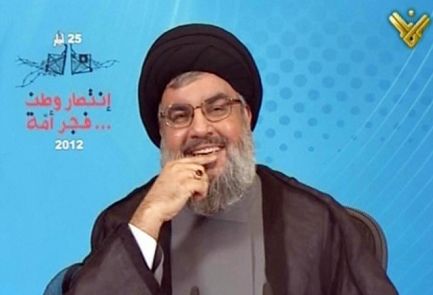
Hezbollah leader Hassan Nasrallah
| Screenshot: Al Manar TV
|
Over two days have passed since Israel exposed Hezbollah’s terror tunnels under the Israel-Lebanon border, and Hezbollah leader Hassan Nasrallah, as well as the Shiite terrorist group’s other top officials, have all remained mum.
Following a string of stammered statements in Hezbollah-affiliated media, mostly speculating that Operation Northern Shield seeks to distract Israelis from Prime Minister Benjamin Netanyahu’s legal troubles, it fell to Nabih Berri, Lebanon’s parliament speaker, to assert that “there are no tunnels. If anyone says there are, let them show me where.”
The lack of any real reaction from Hezbollah, which is very uncharacteristic, is a direct result of the shock crippling it over the Israeli operation. This shock is understandable. Hezbollah’s tunneling project was one of Nasrallah’s top secret schemes and only a handful of his confidants within the organization knew about it.
Hezbollah’s confidence that it was operating under Israel’s radar was so ironclad that the project continued even when reports surfaced that the IDF was looking into complaints by the residents of the border-adjacent communities about strange digging noises near the border.
And then, out of the blue, this expansive – and expensive – project collapsed right before Nasrallah’s eyes. One tunnel is fully exposed to the world, another’s location has been revealed and before you know it, the IDF announces it has information about the entire grid. This means that this was not a random discovery but one based on highly accurate intelligence, meaning that Hezbollah has been significantly compromised.
It should be said that the discovery of Hezbollah’s cross-border terror tunnels, significant as it may be, does little to change the fundamental balance of power between Israel and the Shiite terrorist group.
Nasrallah is a bitter enemy and Hezbollah is a mini-army of highly motivated terrorists, who are skilled in battle and are armed with 150,000 missiles that threaten Israel nationwide.
We must also remember that Hezbollah would be willing to contain Operation Northern Shield as long as it takes place on the Israeli side of the border. Should the IDF deem it necessary to cross into Lebanese territory Hezbollah will retaliate, even though its tunnels’ infringement on Israeli sovereignty is just as grave, if not graver, than a potential IDF infringement on Lebanon’s sovereignty. Moreover, if Israel decides to target Hezbollah’s missile-production facilities in Beirut, harsh retaliation by the group is all but guaranteed.
Meanwhile, both parties are waging a psychological war, but this time, Israel has the upper hand in terms of public diplomacy.
This goes beyond the clear-cut evidence that Hezbollah’s tunnel enterprise blatantly violates U.N. Security Council Resolution 1701 and Israeli sovereignty, as here, a picture is worth far more than a thousand words: Hezbollah’s TV channel Al Manar airs daily propaganda videos showing the group’s “fearless fighters” training for battle with Israel, but now, an IDF video showing Hezbollah operatives flee in panic from the exposed tunnel has gone viral, dealing morale a well-aimed blow.
Exposing the tunnels also exposed Nasrallah’s true colors as one who, while professing to be Lebanon’s ”defender,” actually has no qualms about sacrificing its interests to please his Iranian patrons.
On Wednesday, commentator Ahmed Ayyash wrote in An-Nahar daily that Hezbollah was dragging Lebanon down the tunnels with it, warning that Beirut will not be immune to the consequences of Nasrallah’s recklessness.
Source: London, Berlin condemn Hezbollah tunnels, back Israeli border operation | The Times of Israel
Diplomats for European nations say Lebanese terror group showing ‘blatant disregard’ for UN resolutions in its ‘aggressive behavior’ along Israel’s northern frontier

British and German diplomats on Wednesday backed Israel’s right to combat Hezbollah tunnels dug beneath its northern border and strongly condemned the Lebanese terror group for its actions.
Alistair Burt, British Minister of State for the Middle East, said Hezbollah actions were “a blatant disregard of UN resolutions, threatening Israel and Lebanon’s stability.”
Meanwhile German Ambassador to Israel Susanne Wasum-Rainer said her government “strongly condemns the aggressive behaviour of Hezbollah, as manifested in the tunnel system built in violation of Israel’s territorial integrity.”
The statements joined those of US National Security Adviser John Bolton who on Tuesday expressed “strong support” for Israel’s “efforts to defend its sovereignty.”
 Alistair Burt
✔@AlistairBurtUK
UK condemns Hizballah tunnels into northern Israel. This is a blatant disregard of UN resolutions, threatening Israel and Lebanon’s stability. UNSCR 1701 must be implemented. UK supports Israel’s right to defend itself.
The Israeli army on Tuesday launched Operation Northern Shield to find and destroy what Israel says are cross-border tunnels planned for use by Hezbollah to attack the country and perhaps launch a full-scale war.
 Susanne.Wasum-Rainer
✔@GerAmbTLV
The German Government strongly condemns the aggressive behaviour of Hezbollah, as manifested in the tunnel system built in violation of Israel’s territorial integrity.
At a regularly scheduled meeting with peacekeepers and representatives from the Lebanese Armed Forces, Israeli officers “presented the uncovered Hezbollah attack tunnel that had been dug from Lebanon to Israel,” a statement from the Israeli military said, without providing details.

“The IDF expressed its protest to the serious violation of Israeli territory and UN Resolution 1701,” the statement said referring to the 2006 UN Security Council resolution calling for Hezbollah to withdraw from southern Lebanon following the Second Lebanon War, the last major conflict between the IDF and the Iran-backed Hezbollah terror group.
The statement came after Lebanese parliament speaker Nabih Berri, a Hezbollah ally, said earlier that the Israeli army offered no “coordinates or information” about the tunnels during the talks, according to Lebanon’s National News Agency.
Berri and others in Lebanon have questioned the authenticity of the IDF’s claims about attack tunnels leading into Israeli territory, while Hezbollah has remained silent.
Ali Bazzi, a lawmaker from Berri’s parliamentary bloc, said Israel had no evidence to its claims, calling them a “distraction” and an attempt by Israel’s Prime Minister Benjamin Netanyahu to “evade” possible new indictment at home for corruption charges.
However, Lebanese Prime Minister Said Hariri said that his country was not seeking an escalation.
Lebanon does not want an escalation and is seeking to maintain calm with “all international and friendly parties concerned,” Hariri said in a statement from his office, without directly referring to the tunnels .
The United Nations Interim Force in Lebanon (UNIFIL) said Wednesday it will send a team to Israel to “ascertain facts” and called for full access to all locations along the border. According to Israel’s Hadashot news, some UNIFIL personnel were shown the Israeli side of the tunnel.
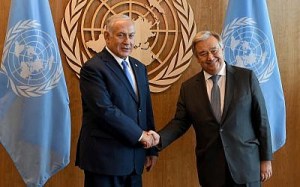
Speaking to UN Secretary-General Antonio Guterres by phone, Netanyahu Wednesday urged international condemnation of Hezbollah and more sanctions against the Iran-backed terror group, calling it a “flagrant violation of Israeli sovereignty” and “an additional part of Iran’s aggression in the region.”
Netanyahu “said that he expects the UN to strongly condemn the violation of Israel’s sovereignty,” a statement from the Prime Minister’s Office read. “The prime minister also told the UN secretary-general that the international community must join in the demand to impose increased sanctions on Hezbollah in the wake of the events.”
There was no comment from Guterres’s office.
Israel has long been critical of what it describes as UNIFIL’s failure to rein in the powerful Iran-backed Hezbollah terrorist group, which the IDF says maintains a large arsenal in the area despite Resolution 1701.
The US has already imposed some sanctions on Hezbollah and its affiliates. Other Western nations have made moves to impose sanctions and restrictions against the organization, which is part of the Lebanese government, though most measures differentiate between the group’s political and armed wings.
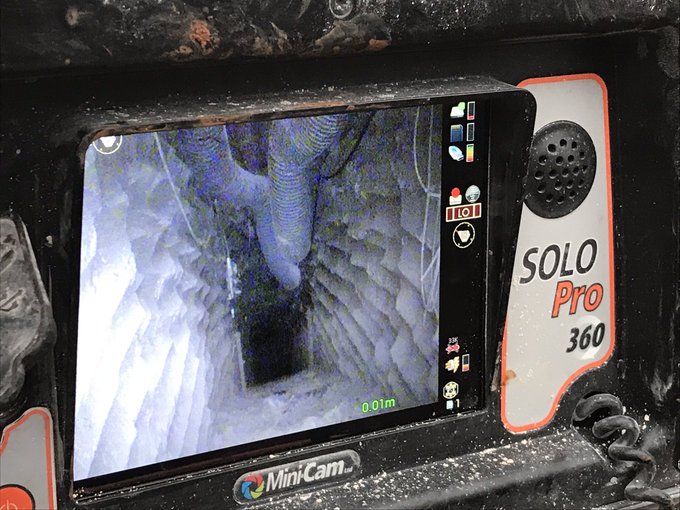
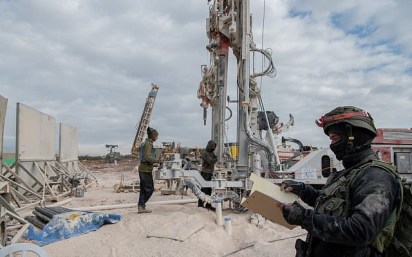
According to the IDF, the tunnel found Tuesday originated in the Lebanese village of Kafr Kila, near the Israeli border, and was approximately 200 meters (650 feet) long. It was dug some 25 meters (80 feet) below ground and was approximately two meters (six feet) tall by two meters (six feet) wide, which would easily make it large enough for heavily armed infantry to pass through it.
The IDF said the tunnel, which extended some 40 meters into Israel, was the “first of what are sure to be many” attack tunnels dug by Hezbollah across the border discovered as part of the newly launched operation.
In addition to images from inside the tunnel the IDF also provided footage, taken by an army robot which surprised two Hezbollah operatives who were inside the passage at the time.
IDF spokesperson Brig. Gen. Ronen Manelis said Tuesday the tunnel originated under an ostensibly civilian building, meters away from a position controlled by UNIFIL, which is meant to ensure that armed groups other than the Lebanese military stay away from the border zone under UN Resolution 1701.
Lebanese TV Wednesday aired footage of a chicken coop that it said was the building where the tunnel allegedly originated.
IDF Chief of Staff Gadi Eisenkott said Tuesday that the army “is in possession of” Hezbollah’s tunnel plan.
Hadashot TV said Wednesday that the IDF tackled the tunnel heading to Metulla first, because it was being dug toward a residential area, while other tunnels are heading to army positions.
The military operation is expected to last several weeks and is being led by the head of the IDF Northern Command Maj. Gen. Yoel Strick, army officials have said. The army said the Hezbollah tunnels are not yet operational and do not present an immediate threat to Israelis.
Judah Ari Gross and Raphel Ahren and agencies contributed to this report.




 anneinpt
 artaxes
 danmillerinpanama
 davidking1530
 Peter Hofman
 Joseph Wouk
 Peter
Peter Louisiana Steve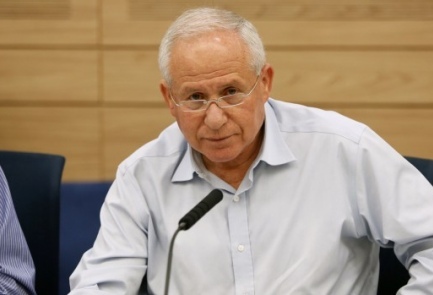
 WarSclerotic
Recent Comments