Archive for December 4, 2018

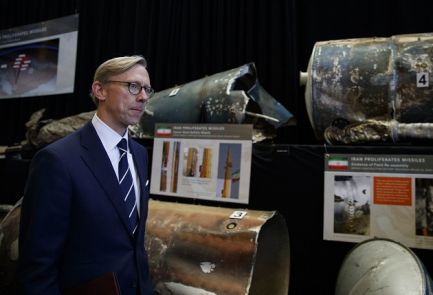
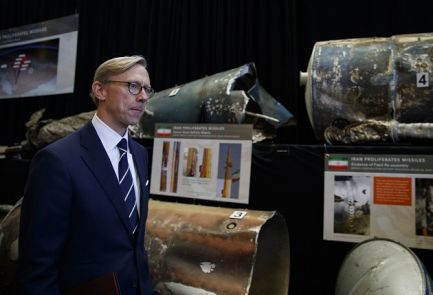
US urges Europe to impose sanctions on Iran over missiles 

December 4, 2018

Source: US urges Europe to impose sanctions on Iran over missiles – Israel Hayom


US urges Europe to impose sanctions on Iran over missiles 

December 4, 2018

Source: US urges Europe to impose sanctions on Iran over missiles – Israel Hayom


US coalition targets ISIS figure involved in killing American 

December 4, 2018

Source: US coalition targets ISIS figure involved in killing American – Israel Hayom


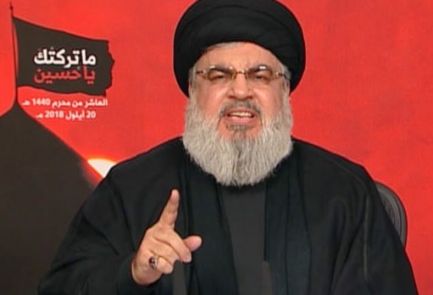
Hezbollah threatens ‘inevitable retaliation’ if ‎Israel attacks Lebanon‎ 

December 4, 2018

Source: Hezbollah threatens ‘inevitable retaliation’ if ‎Israel attacks Lebanon‎ – Israel Hayom


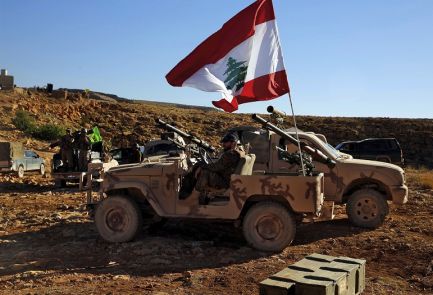
Report: Lebanese army mobilizes forces amid Israeli border operation 

December 4, 2018

Source: Report: Lebanese army mobilizes forces amid Israeli border operation – Israel Hayom


Israel launches operation to counter Hezbollah tunnels

December 4, 2018

Source: Israel launches operation to counter Hezbollah tunnels – Israel Hayom


The Israeli dilemma ‎in Lebanon 

December 4, 2018

Source: The Israeli dilemma ‎in Lebanon – Israel Hayom

Oded Granot

Every few months, Hezbollah leader Hassan Nasrallah ‎makes a point of warning Israel not to attack ‎Lebanon and make all sorts of threats. Last week, he did so using aerial footage ‎of strategic targets in Israel, including the IDF’s ‎headquarters in Tel Aviv, captioned “If you strike, ‎you will regret it.” ‎

While normally one could say that Nasrallah’s ‎threats serve an internal propaganda ‎purpose, the most recent declarations appear to indicate that Hezbollah believed an Israeli strike was imminent. ‎

These speculations were likely fueled by ‎frequent statements made by senior Israeli officials, ‎whose main concern is the growing threat posed by Hezbollah’s ‎buildup. ‎

Hezbollah believes that Israel has been laying the groundwork for a potential strike in Lebanon, taking into account a number of indicators: Prime Minister Benjamin Netanyahu’s presentation at the ‎U.N. in September in which he revealed that the Shiite terrorist group was building up missile production facilities in ‎Beirut; the reports exposing Iranian cargo planes that delivered ‎weapons directly to Hezbollah in Lebanon; and ‎Netanyahu’s speech two weeks ago, at the height of a ‎political crisis, in which he suggested it was a “highly ‎sensitive time, security-wise.”

Hezbollah-affiliated media in Lebanon tried to ‎downplay these concerns, saying that the Israeli rhetoric ‎is designed to cause panic in Lebanon, but no one was actually able to breathe easier. ‎

Clearly, neither Israel nor Hezbollah are interested ‎in another war, but recent developments on the ‎Israel-Lebanon border indicate that, given the ‎simmering tensions there, a major flare-up is only a ‎matter of time. ‎

The first prominent development in the sector has to ‎do with what appears to be Israel’s narrowing operational leeway ‎with respect to operating in Syria against Iranian ‎weapon shipments to Hezbollah, in the wake of the ‎Sept. 17 downing of a Russian reconnaissance plane ‎by Syrian air defenses trying to counter an Israeli ‎airstrike. ‎

The incident sparked a crisis between Jerusalem and ‎Moscow and the Russian government decided to supply Syria with S-300 ‎missile defense systems, which could pose a direct threat to Israeli aircraft. While ‎those have yet to become operational, Israel has all ‎but refrained from operating in Syria in recent ‎weeks. ‎

The second development most likely evolved from the ‎first: it seems that Iran, whose operational leeway ‎in Syria has also been curtailed by Russia, has come ‎to the conclusion that it would be best if it ‎delivered weapons to Hezbollah in Lebanon directly, ‎thus avoiding the more vulnerable Syrian routes.‎

There is no doubt that these direct deliveries, ‎especially of equipment meant to upgrade Hezbollah’s ‎projectile arsenal with precision-missiles, attests to ‎Tehran’s increasing audacity, as it appears to no longer even try to deny that it is transferring weapons to ‎Hezbollah.‎

This also attests as to Nasrallah’s self-confidence, ‎which has been fueled by his success in propping up ‎Syrian President Bashar Assad’s regime throughout ‎the Syrian civil war. The Shiite terrorist group sided with Assad on Iran’s orders and has gained valuable military experience in ‎fighting alongside the Syrian army.‎

But, as aforementioned, Nasrallah’s confidence has begun to wane amid public declarations by Israeli officials asserting that Israel will not allow Iran to turn Lebanon into a front with Israel.

Still, Israeli decision-makers face a complex dilemma. Hezbollah is believed to be in ‎possession of 150,000 advanced projectiles – far ‎more advanced than anything Hamas has – and ‎Nasrallah repeatedly boasts they are capable of striking any target anywhere in Israel. ‎

Moreover, a strike in Lebanon is not akin to a ‎strike in Syria. With the Syrian civil war ‎practically over, Russian President Vladimir Putin ‎has emerged as the master of the Syrian domain, ‎meaning that while Jerusalem and Moscow may have ‎their conflict of interests, there is someone to ‎reason with if need be, and someone who can, to an ‎extent, curb the Iranians. ‎

Lebanon, on the other hand, is plagued by serious ‎political turmoil that sees Prime Minister Saad ‎Hariri (whose father, Prime Minister Rafic Hariri, was ‎assassinated by Hezbollah in 2005) and Nasrallah ‎constantly lock horns. ‎

Given Hezbollah’s considerable political clout in ‎the Lebanese parliament, Nasrallah is the real ‎master of the Lebanese domain and there is no one ‎there who can stop him. ‎

This is why defense officials believe that an ‎Israeli operation in Lebanon – even a limited one – ‎would not necessarily meet a measured response by Hezbollah, making ‎the potential for a full-scale war, which would ‎expose the Israeli homefront to thousands of ‎missiles, far greater

IDF operation launched against Hizballah cross-border assault tunnels – DEBKAfile

December 4, 2018

Source: IDF operation launched against Hizballah cross-border assault tunnels – DEBKAfile

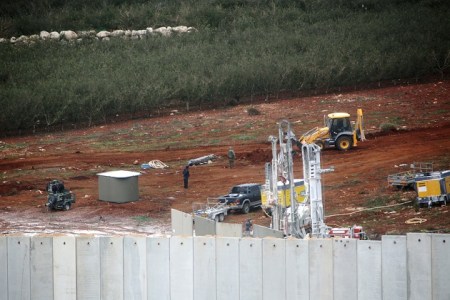
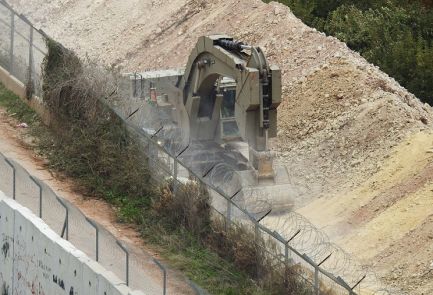
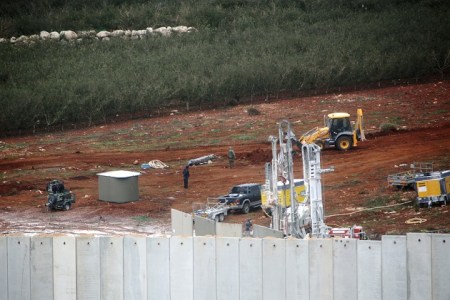
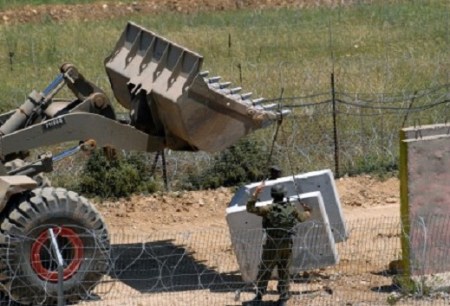
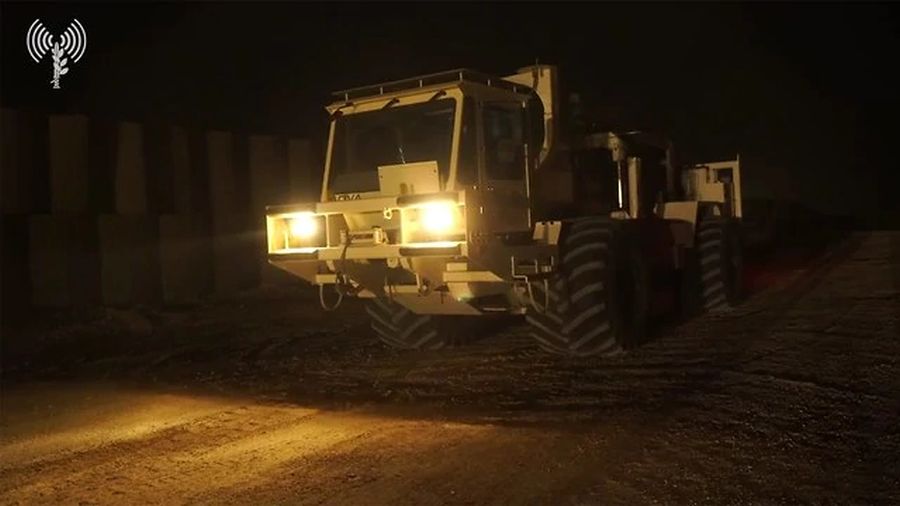
The assault tunnels dug by Hizballah under the Lebanese border into Israel are the target of IDF Operation Northern Shield announced early Tuesday, Dec. 4. It is led by OC Northern Command, Maj Gen.Yoel Strick. The IDF stressed that the operation is confined to the Israeli side of the border and was mounted before the tunnels were operational and posed a direct threat to northern security. Although the operation is sensitive, citizens of the north were advised to carry on as normal.

The IDF notice went on to say that, since 2012, Israel has been aware of Hizballah’s plan to conquer Galilee in a surprise stealth invasion through tunnels. In 2013, military investigations failed to uncover any tunnels.  From 2014, “a special joint task force of the Intelligence Directorate and the Northern Command has led the operational, technological and intelligence efforts to find and neutralize any such tunnels. In a parallel project, the IDF constructed a wall along the Lebanese border, known as the “Defensive Obstacle Project”, which raised obstructions and cleared vegetation to thwart any enemy incursion.

The IDF spokesman went on to say that, of late, all these actions came together to create the conditions for the General Staff to decide on action at this time against the tunnels, whose construction provides  additional proof of Hizballah’s disregard of UN Security Council Resolution 1701 which both the Lebanese terrorist group and Israel endorsed for ending the 2006 war.

Military reinforcements have been deployed to the northern border; Israel’s northernmost point, the town of Metulah and its vicinity, have been placed off-limits to civilians and the situation is under control and going forward according to the plan for eliminating the underground threat to the country. The army is keeping the heads of local councils in the picture and civilians are advised to go about their normal lives.

DEBKAfile’s military sources report that the operation was given the bombastic title of Operation Northern Shield less because of the scope of the action against Hizballah tunnels than to prepare the ground for a possible outbreak of hostilities. It tells Hizballah “We are well prepared to fight you.”

The IDF has meanwhile not addressed the big challenges posed from Lebanon, chiefly the Iranian workshops making Hizballah’s rockets precision-guided, the missile factories Iran is establishing in the Beqaa Valley of Lebanon, Hizballah’s Radwan commando force which is undergoing special training for storming into Israel in the event of all-out war. The IDF has also held back from striking the Iranian transport planes landing almost daily at Beirut international airport with cargoes of weapons and missiles.

Hizballah retaliation for the IDF operation against its tunnels is unlikely, so long as it is confined to Israeli territory. This Iranian proxy is after bigger game: Its latest propaganda video depicted the Israeli General Staff Headquarters in Tel Aviv as within reach of its missiles. Its chief, Hassan Nasrallah, will no doubt deliver a speech in the coming days making a mockery of Israel’s Operation Northern Shield and leave it there – unless two things happen:

  1. If the IDF crosses the “Blue Line” and follows the tunnels to their source in Lebanese territory (the IDF spokesman mentioned “villages in South Lebanon), the Hizballah may start shooting at Israeli troops.
  2. If Tehran issues Hizballah with an order to attack Israeli forces in revenge for the IDF’s massive missile assault on Iranian, Hizballah and Shiite militia forces in Syria on Thursday night, Nov. 29.


Operation Northern Shield

December 4, 2018

Published on Dec 4, 2018

Hezbollah has spent years digging cross-border attack tunnels between Lebanon and Israel. It’s part Hezbollah’s plan called, “Conquering the Galilee.”

IDF Launches Operation Northern Shield 

December 4, 2018

Published on Dec 4, 2018

The Israel Defense Forces just launched Operation Northern Shield to expose and neutralize cross-border attack tunnels that Hezbollah dug from Lebanon to Israel.