Archive for December 4, 2018

Iran vows to increase missile range despite looming UN meet

December 4, 2018

Source: Iran vows to increase missile range despite looming UN meet | The Times of Israel

Tehran extols program as one of its ‘most important,’ ahead of Security Council gathering on test of nuclear-capable missile

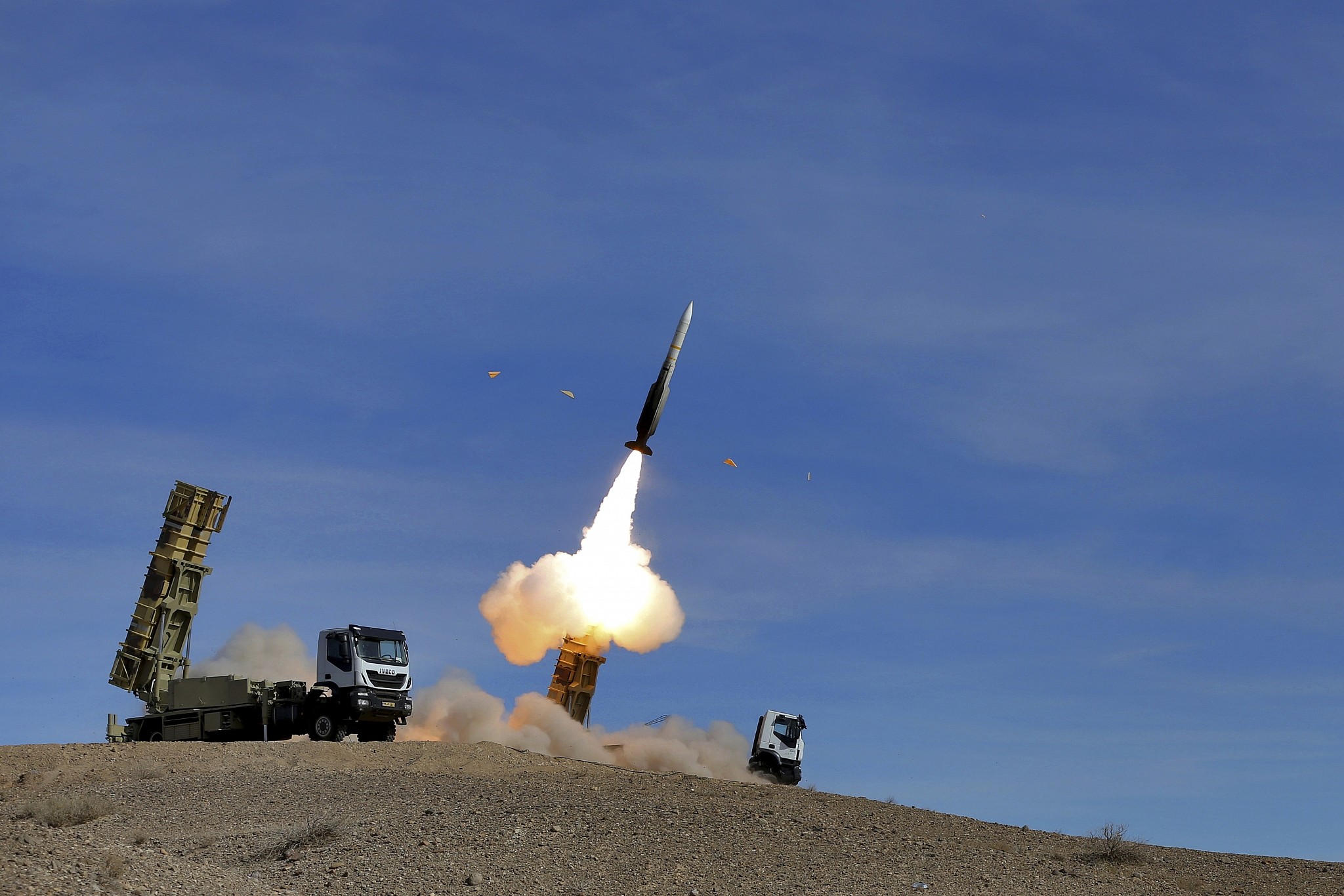
In this photo provided November 5, 2018, by the Iranian Army, a Sayyad 2 missile is fired by the Talash air defense system during drills in an undisclosed location in Iran. (Iranian Army via AP)

Ahead of a UN Security Council meeting concerning Iran’s weekend test of a nuclear-capable missile, Tehran’s air force chief adopted a defiant tone Tuesday, insisting his country would continue to increase the range of its missiles.

“One of our most important programs is increasing the range of missiles and ammunition,” Brigadier General Aziz Nasirzadeh told the state-linked Fars news agency in comments reported by Reuters.

“We don’t see any limitations for ourselves in this field,” he added.

The UN Security Council will meet behind closed doors on Tuesday at the request of France and Britain after they accused Iran of test-firing a medium-range nuclear-capable missile on Saturday, diplomats said.

The United States said the missile launch was a violation of a UN resolution that endorsed the 2015 Iran nuclear deal, from which Washington has withdrawn.

That resolution calls on Iran to refrain from testing missiles capable of carrying a nuclear weapon.

The UN Security Council meets on April 14, 2018, at UN Headquarters in New York. (AFP/Hector Retamal)

France said it was concerned by the test, with the foreign ministry describing it as “provocative and destabilizing” and saying it “does not conform” with UN resolution 2231 on the Iran deal.

British Foreign Secretary Jeremy Hunt called the missile test “provocative, threatening and inconsistent” with the resolution and said Britain was determined “that it should cease.”

Iran has long maintained that its missile program is defensive in nature and not aimed at ensuring the delivery of a nuclear weapon, a stance upheld by Russia at the Security Council. Western powers disagree.

Iran has long refused to compromise on its missile development programs, recently revealing that the country’s missile forces can deliver a payload at a distance of some 2,000 kilometers (1,240 miles).

In the Fars report, Air Force chief Nasirzadeh did not specify the new range the military was seeking for its missiles.

Earlier this week, Washington’s Iran envoy Brian Hook urged the European Union to employ sanctions that target Tehran’s missile program as US Secretary of State Mike Pompeo traveled to Brussels for talks with European partners.

In this photo released on October 1, 2018, by the Iranian Revolutionary Guard Corps, a missile is fired from city of Kermanshah in western Iran targeting the Islamic State group in Syria. (Sepahnews via AP)

Hook said US discussions with the Europeans about missile sanctions are gaining traction. Those talks center on slapping penalties on companies and people involved in Iran’s program.

“It is a grave and escalating threat, and nations around the world, not just Europe, need to do everything they can to be targeting Iran’s missile program,” Hook said.

The United States decided in May to withdraw from the 2015 nuclear deal and reimpose sanctions on Iran, to the dismay of its Europeans allies.

The nuclear deal provides for a lifting of sanctions against Iran in return for curbs on its nuclear activities.

The remaining five signatories to the nuclear deal — Britain, China, France, Germany and Russia — have backed an EU effort to set up a special payment system in a bid to maintain trade and business ties with Iran.

On Monday night, Pompeo told Prime Minister Benjamin Netanyahu, a fierce critic of the deal, that the US was committed to “confronting the totality of the Iranian regime’s threats through maximum pressure,” during talks in Brussels on joint efforts to curb Iranian aggression in the region, including by reining in Lebanon’s Hezbollah terror group.

Netanyahu made an unexpected trip to Brussels on Monday afternoon to meet with Pompeo.

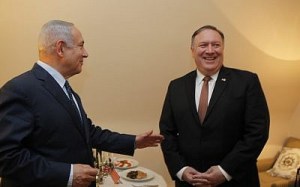
Prime Minister Benjamin Netanyahu and US Secretary of State Mike Pompeo pictured in front of a menorah on the second night of the Hanukkah festival, during their meeting on the sidelines of a NATO conference in Brussels, Belgium, on December 3, 2018. (Gaby Farkash/GPO)

In a public statement before the closed door talks, Netanyahu thanked Pompeo for the administration’s “strong” stance on Iran, and said he looked forward to discussing joint Israeli-US efforts to “curb Iran’s aggression in the region, in Syria, in Iraq, in Lebanon and elsewhere.”

Netanyahu was reported to be telling Pompeo that Israel could take military action if Beirut does not clamp down on Hezbollah, amid concerns that Tehran has begun shipping advanced arms directly to the terror group in Lebanon.


Of course Hezbollah was tunneling under the border. Why wouldn’t it? 

December 4, 2018

Source: Of course Hezbollah was tunneling under the border. Why wouldn’t it? | The Times of Israel

The Lebanese terror group is stronger than ever and, by drilling attack tunnels, has shown it’s still planning ground offensives against Israel — not ‘just’ massive rocket attacks

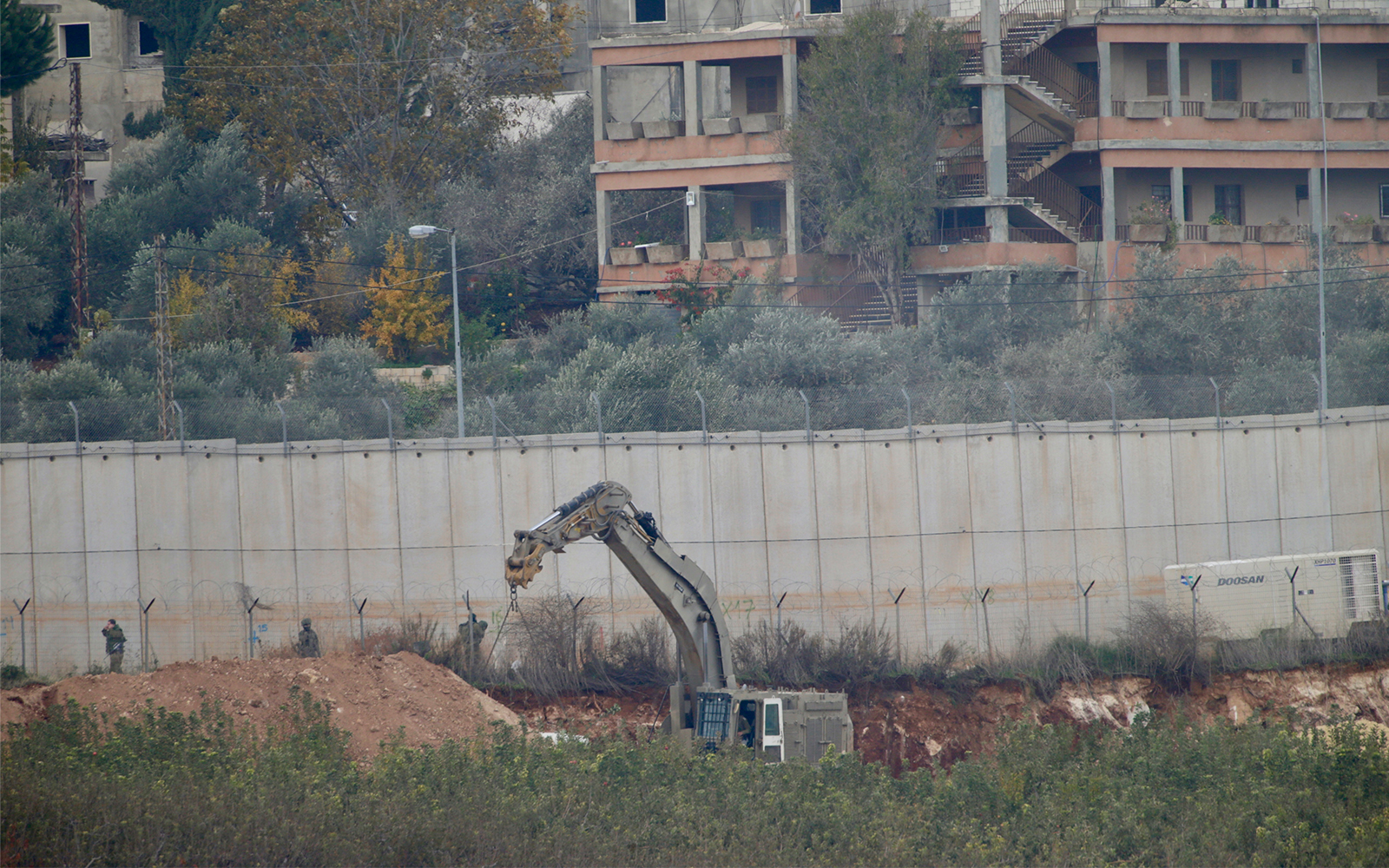
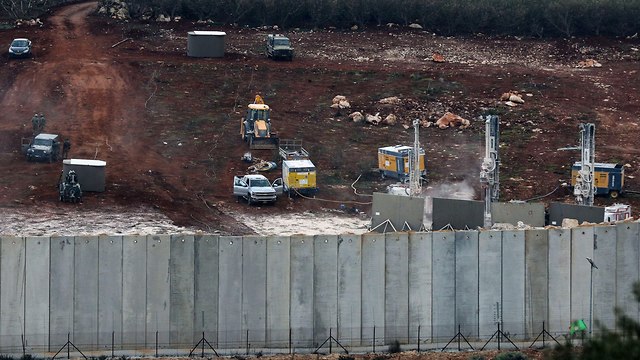
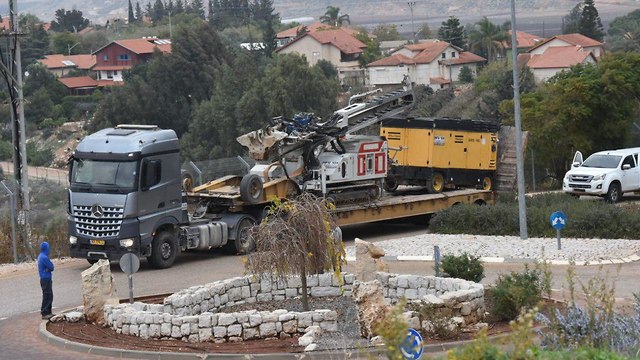
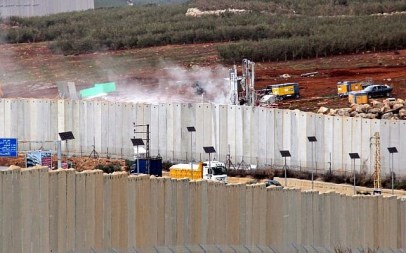
An Israeli military digger works on the border with Lebanon in the northern Israeli town of Metulla, December 4, 2018. (AP Photo/Ariel Schalit)

An Israeli military digger works on the border with Lebanon in the northern Israeli town of Metulla, December 4, 2018. (AP Photo/Ariel Schalit)

The IDF’s announcement Tuesday morning of an operation against Hezbollah attack tunnels from Lebanese territory into Israel is not necessarily a clear indication of an escalation with the Shiite terror group. Except that an examination of the breadth of regional developments, including these tunnels and in particular Hezbollah’s Iran-backed factories for precision rockets, prompts a worrying conclusion: The next war between Israel and Hezbollah is already at the door.

Hezbollah, in the wake of the dwindling civil war in Syria, is a stronger organization than it was before the violence erupted there seven years ago. True, it suffered major losses, with about 2,000 of its fighters killed and four times that number wounded, as it battled against rebels on behalf of the Assad regime. But on the battlefield, Israel is now facing a more dangerous enemy, trained and practiced from a prolonged ground war.

The Lebanon-based terror group has began rehabilitating its abilities against Israel in a number of ways. First, in rocketry. Hezbollah had a vast number of rockets before the Syrian civil war erupted, although most of them were not accurate. Now, under Iranian guidance in Syria and Lebanon, it is working to change that.

The factories for producing accurate missiles that Hezbollah is working to establish, with the assistance of Iran’s Republican Guards Corps, will give the Shiite terror organization impressive capabilities to damage Israeli infrastructure, both military and civilian — the kind of damage that will make the 2006 conflict, when it last battled Israel and rained down rockets on the north of the country, look like a walk in the park.

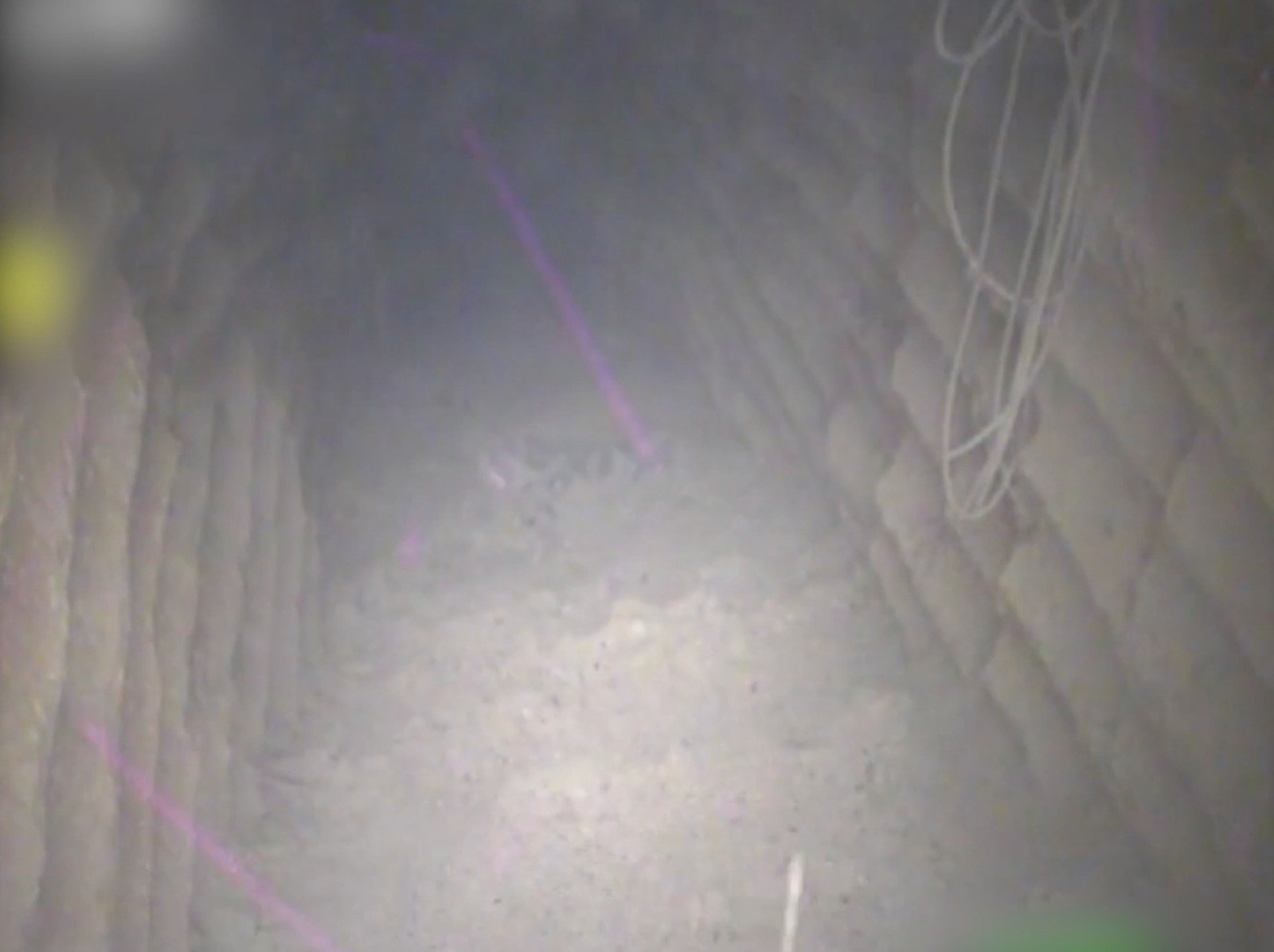
The interior of what Israel says is an attack tunnel dug by the Hezbollah terror group that crossed into Israeli territory from south of the Lebanese village of Kafr Kila, December 4, 2018. (Israel Defense Forces)

At the same time, Hezbollah is busy enlisting fresh fighters, training them, and equipping them with Iranian weapons and money.

In addition, the organization is engaged in setting up a military infrastructure on the Syrian Golan Heights, under the noses of, and with the agreement of, Syrian authorities, yet ignored by Russia.

In 2015, Israel allegedly hit Hezbollah senior commander Jihad Mughniyah, who was leading that project; apparently one of his brothers has taken over.

It now becomes clear that Hezbollah’s preparations for a land operation against Israeli, within the framework of the next war, did not cease even for a moment. The goal is not just directing heavy rocket fire at Israel but also attempting to take control of Israeli communities — scenarios that Hezbollah chiefs have called “conquering the Galilee.”

Like many others, I had heard endless explanations from senior and not-so-senior IDF officers that Hezbollah has no interest in tunnels because of the cost and difficulty of digging them in the northern terrain. The limestone bedrock is completely different from the sandy soil of the Gaza Strip, where the Hamas terror group has tunneled for years. It was also asserted that a ground operation launched under the cover of darkness, in the forested areas of the north, would be more effective and efficient than investing in tunnels. Residents in the north were told the same things by the IDF.

Yet Hezbollah plainly thought differently. With the wisdom of hindsight, it is hard to understand why it wouldn’t do just what it evidently has been doing. In the Second Lebanon War in 2006, the IDF discovered that the “nature reserves” Hezbollah had set up on the northern border included a network of tunnels, carved out in that difficult hilly territory — drilled through the limestone bedrock. Therefore, it was eminently reasonable to imagine that Hezbollah would try to build attack tunnels into Israel.

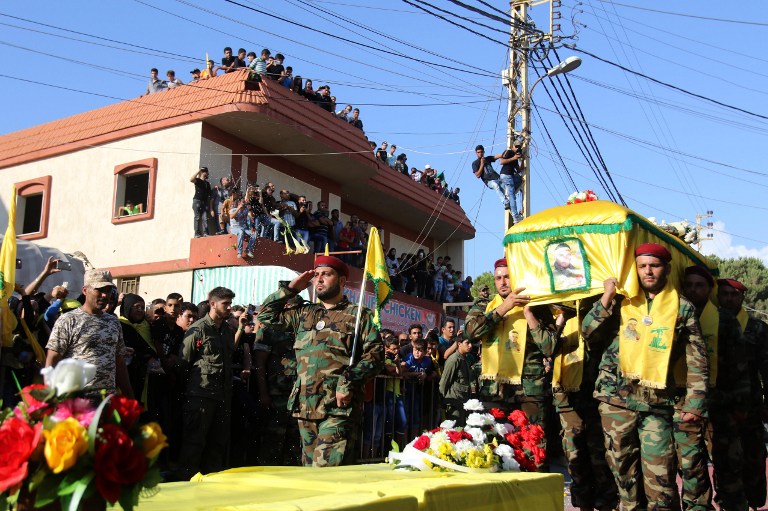
Members of Lebanon’s Shiite movement Hezbollah carry the coffin of a comrade who was killed in combat alongside Syrian government forces fighting against Islamic State group jihadists in Syria. (AFP PHOTO / MAHMOUD ZAYYAT)

Another relevant factor here is the departure of the Islamic State jihadist group from the Middle East arena, which has given Hezbollah more energy, resources, and motivation for a renewed confrontation with Israel. The extremist Sunni threat of IS has been almost completely wiped out; now it is possible to focus on efforts to harm Israel, under the close guidance of Iran. Hezbollah has taken over Lebanon and does whatever it wants there. Israeli threats to hit Lebanese infrastructure have made little impression on the group. It exists solely to serve its masters in Tehran.

A final point for consideration is that the IDF effort to uncover and counter the Hezbollah tunnels is not a military “operation” on the Lebanese home front. It is also not a daring commando raid. Rather, this is an engineering operation. True, it has the potential for escalation, but there does not seem to be a reason to worry about a war just because of an operation inside Israeli territory.

Which brings me, finally, to the Gaza Strip.

Even the imperative for the work at the northern border by the IDF’s engineering corps and other units does not constitute a real reason to allow the transfer of money — $15 million to be exact, in Qatari cash, every month — to the Hamas coffers, as was apparently agreed after last month’s clashes between Israel and Hamas. With that policy, Israel is buying not quiet but the next escalation. Not from the north, but from the south.


Netanyahu-Pompeo Brussels meeting is a warning to Lebanon

December 4, 2018

Source: Netanyahu-Pompeo Brussels meeting is a warning to Lebanon

Analysis: PM Netanyahu and US Secretary of State Pompeo will likely discuss the accelerated establishment of Iran and Hezbollah’s high-precision guided missile factories in Lebanon, as preparation for a possible Israeli action to thwart these efforts.
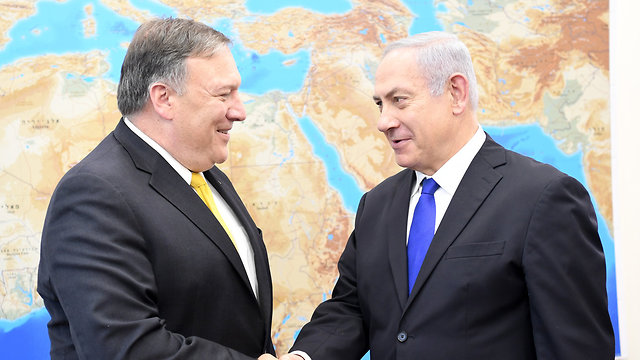
Prime Minister Benjamin Netanyahu is set to meet US Secretary of State Mike Pompeo in Brussels later on Monday, the Prime Minister’s Office said in a statement. It said the meeting was arranged last week and that “developments in the region” would be discussed, although it did not provide details.

The prime minister will be accompanied by the head of the Mossad spy agency, the Israeli national security adviser and his military attache.

Netanyahu and Pompeo’s meeting, which was pushed up, is reminiscent of the meetings former prime minister Ehud Olmert held with US administration officials in Washington before bombing the nuclear reactor in Syria in 2007.

US Secretary of State Mike Pompeo (L) and Prime Minister Netanyahu

US Secretary of State Mike Pompeo (L) and Prime Minister Netanyahu

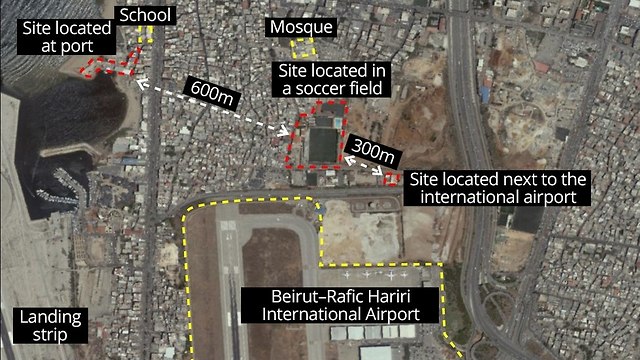
Netanyahu and Pompeo will likely discuss the quick establishment of Iran and Hezbollah’s high-precision guided missile factories in Lebanon, as preparation for a possible Israeli action to thwart these efforts.

Netanyahu will probably present the Americans with the facts to gain US support in case Israel chooses to act, which could lead to a complaint against the Jewish State at the United Nations Security Council.

Satellit images of Hezbollah missile factory (Photo: IDF Spokesperson's Unit)

Satellit images of Hezbollah missile factory (Photo: IDF Spokesperson’s Unit)

One can assume that Pompeo will promise Netanyahu to update President Donald Trump and US National Security Advisor John Bolton on the matter, adding a favorable recommendation to assist Israel in the international arena by giving Iran a “final warning,” even before Israel decides to act.

It could be that the announcement on the meeting in Brussels (that could have remained confidential) is Israel’s way of signaling to Lebanon and Iran that it is planning to act, maybe in an effort to avoid the need for such action.

Israel might also want the Americans to put pressure on Beirut, as the US has considerable influence over Lebanon—Washington supplies the Lebanese armies with weapons, and the Americans are also mediating between Israel and Lebanon in the dispute on oil drilling rights in the Mediterranean Sea.

However, the timing of the meeting is problematic from an Israeli standpoint. If the prime minister orders action in Lebanon, Syria or both after the police announced Sunday morning that there is sufficient evidence to indict him in Case 4000, he would be accused of doing so in an effort to divert the public’s attention from his legal woes and postpone the attorney general’s decision on whether to indict him. Netanyahu would be accused of sacrificing IDF soldiers on the altar of his political survival.

With a possible indictment hovering over his head, Netanyahu will have a hard time reaching a decision, knowing that no matter whether he instructs the IDF to act in Syria and Lebanon or not, his opponents would slam him for doing it out of selfish interests. To avoid such criticism, the prime minister would have to receive a definitive approval from the Security Cabinet to everything he does as prime minister and defense minister.

On Thursday, the Syrian news agency SANA reported that the regime’s air force continues to repel Israeli “aggression” over southern Syria and that its air defenses have downed several “hostile targets” that were flying over the town of al-Kiswah, south of Damascus, a home to military bases only 50 kilometers away from the Israeli border. The IDF Spokesperson’s Office denied this report.

Russia’s RIA news agency cited a Syrian security source as saying that the “Syrian air defense forces shot down an Israeli war plane and four missiles.” In addition, Syrian state television reported that “the Israeli attack did not achieve its goals because the hostile targets were shot down.”

Another Syrian news agency claimed that the sites belonged to Iranian militias, but this report is yet to be confirmed.

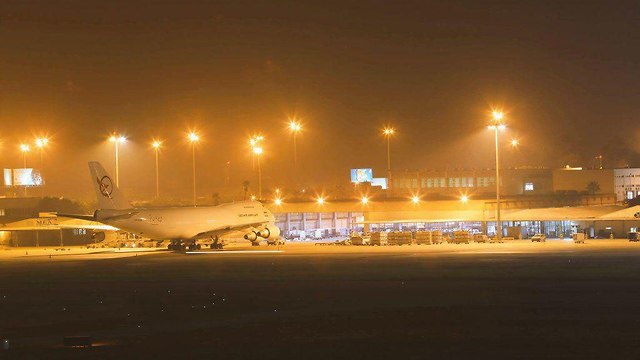
Boeing 747 aircraft in Beirut

Boeing 747 aircraft in Beirut

The attack, the first Syria has admitted to since Assad’s forces accidentally shot down a Russian intelligence aircraft following an Israeli missile strike on Latakia in September, occurred several hours after a Boeing 747 aircraft belonging to the Iranian cargo airline Fars Air Qeshm flew directly from Tehran to Beirut, reportedly carrying weapon shipments to Hezbollah.

Reuters contributed to this article.


Tunnels are only a precursor to the real threat

December 4, 2018

Source: Tunnels are only a precursor to the real threat

Analysis: Hezbollah will take time deciding how to respond to the tunnel discovery; the fact the tunnels cross into Israel will allow diplomatic—and perhaps military—action against the greater danger: precision missiles in the hands of Hezbollah.

Hezbollah was caught by surprise. The digging of the offensive tunnels into Israel was carried out quietly and apparently at a depth that led Hezbollah to believe that Israel remained oblivious to the underground effort. It will take a few days for the terror group to conduct a situation assessment and decide whether to act or not.

IDF activity from the Lebanese side

IDF activity from the Lebanese side


 (Photo: AFP)

(Photo: AFP)

Another reason that war is not expected at this stage is the fact that offensive tunnels are uncovered inside Israeli territory embarrasses the Lebanese government, Hezbollah and their Iranian patrons in the eyes of the international community. Hezbollah has no interest in escalating the situation, as such an escalation would only elicit international condemnation, led by the United States and France, and perhaps even sanctions against Lebanon.There is one more reason, perhaps the most important of all: if Hezbollah tries to interfere with the effort to uncover and neutralize the tunnels by firing into Israeli territory, Israel may expand the operation to all of Lebanon and undermine Iran’s efforts to establish factories in Lebanon to upgrade the accuracy of Hezbollah’s missile and rocket arsenal. Hezbollah and the Iranians are very concerned about such an eventuality.

In this context, we recall Prime Minister Benjamin Netanyahu’s meeting with US Secretary of State Mike Pompeo in Brussels on Monday. Mossad Director Yossi Cohen, National Security Advisor Meir Ben Shabbat and the prime minister’s military secretary also took part in the meeting.

 (Photo: AFP)

(Photo: AFP)
IDF on the northern border (Photo: Avihu Shapiro)

IDF on the northern border (Photo: Avihu Shapiro)

An official statement about the meeting stated it dealt with curbing Iranian activity in the north, including in Lebanon and Iraq, but it is safe to assume Netanyahu asked for the meeting to warn the United States about the Operation Northern Shield to clear the tunnels, which can of course develop into a major war if Hezbollah decides to retaliate.

The meeting itself was meant to signal to all the parties operating alongside and under the auspices of Iran that Israel will not accept offensive tunnels infiltrating its territory, nor will it allow Hezbollah to improve the accuracy of its vast arsenal of missiles and rockets—ezbollah has between 150-120 thousand missiles and rockets ready for launch throughout Lebanon, including southern Lebanon.

 (Photo: Avihu Shapiro)

(Photo: Avihu Shapiro)

Diplomatic pressure will increase

A few years ago, Hassan Nasrallah announced that Hezbollah intends to “conquer the Galilee.” Websites associated with the Shiite organization published a map of the operation, according to which Hezbollah intends to penetrate into Israel by way of a number of traffic arteries, and occupy a large part of the western and eastern Galilee between Metula and Rosh Hanikra.

Israel took this plan very seriously, and as a result it was decided to build an obstacle on the northern border that would make it difficult for Hezbollah militants to infiltrate in a ground operation.

A few days ago, UN Secretary-General Antonio Guterres condemned the construction of the barrier, including a wall, in certain sections of the Lebanese border, claiming that this obstacle creates tensions on the frontier.

Guterres also condemned the Lebanese government for not maintaining its part of the ceasefire agreement that ended the Second Lebanon War in 2006.

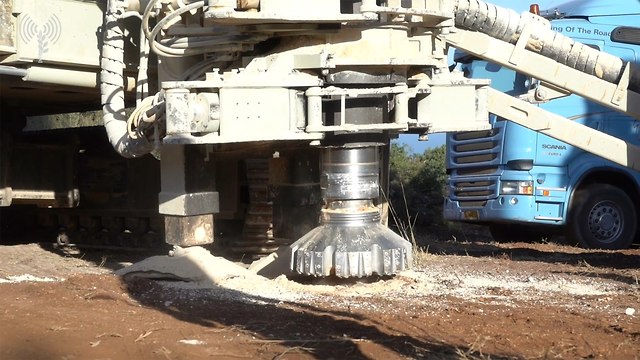
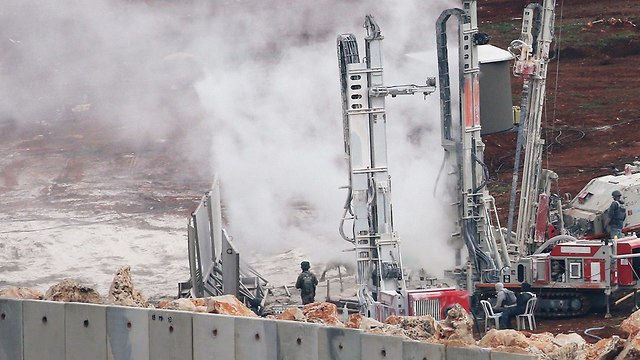
Engineering equipment to combat tunnels (Photo: IDF Spokesperson)

Engineering equipment to combat tunnels (Photo: IDF Spokesperson)

Now that Israel has revealed and proven to the UN the existence of offensive tunnels from Lebanon into Israel, the secretary-general will have to address the matter and the pressure on Lebanon will increase.

It is now likely that the United States, France, Great Britain, Germany and other countries in the West—including the European Union—will put pressure on Hezbollah and Iran to not only stop the construction of cross-border tunnels—which is itself considered a blatant violation of international law—but to also stop work on upgrading Hezbollah’s rocket and missile arsenal.

As far as Israel is concerned, the tunnels cease to be a threat once they are exposed, while the real threat is the accuracy and improvement of missiles and rockets. If war breaks out, Israel could face substantial destruction and heavy losses. Interception systems will not be able to handle such large barrages of missiles equipped with an accurate navigation mechanism that could hit critical military and civilian targets. Israel is determined to prevent such a situation at all costs.

The discovery of the tunnels can aid on the diplomatic front—and perhaps also validate military action against the main threat.   (Photo: Reuters)

(Photo: Reuters)

Tunnels dug in wadis, not towns

It is impossible not to address the claims of residents living along the northern border, some of whom say they could detect tunnel digging under their homes. They will certainly say, “We told you so,” but the truth is that Hezbollah dug their tunnels in a manner that would enable its men to exit in an orderly fashion and then attack Israeli towns.

What motivated Hezbollah to build the tunnels is actually the border obstacle that Israel has built, and continues to build, above ground. They realized that Israel was conducting a military operation on the surface, and then, like Hamas at the time, began digging tunnels through the hard rock of the Galilee. The residents’ intuition was correct, but apparently they did not actually hear the digging of the tunnels as they claimed.

Hezbollah has taken on a difficult task by digging tunnels on the northern border because of the terrain. In the south Hamas is digging through clay soil mixed with sand, which is easy to dig in—even with a spoon. In the north, the terrain is composed of limestone rock, which is hard to quarry and requires mechanical tools that make a lot of noise and are relatively easy to spot. Therefore, Hezbollah tried to situate its tunnels in dry riverbeds (wadis) with thick layers of ordinary earth, in which digging tunnels is easier.

In any case, we can assume that the methods and means developed for exposing the tunnels along the Gaza border have been adapted to meet the needs of the northern border, which enabled the discovery of the tunnels and their route, and now their destruction. The IDF, the intelligence community and the defense establishment as a whole deserve a big pat on the back.

Operation Northern Shield comes amid rising Iranian, Hezbollah rhetoric

December 4, 2018

Source: Operation Northern Shield comes amid rising Iranian, Hezbollah rhetoric – Arab-Israeli Conflict – Jerusalem Post

In the last two months since the downing of the IL-20 and the deployment of the S-300, there has been relative quiet. But Hezbollah has continued its rhetoric of threats.

BY SETH J. FRANTZMAN
 DECEMBER 4, 2018 09:58
Preparations for 'Operation Northern Shield'

Iran launched a new warship and tested a ballistic missile in the days before Israel launched Operation Northern Shield. Hezbollah released a video threatening sites throughout Israel. In addition, tensions in Syria have risen after a mysterious air strike south of Damascus last Thursday. Hezbollah claimed its fighters were not hurt in that air strike.

In the last year, as the Syrian civil war has wound down and the Syrian regime, backed by Iran and Russia, has largely defeated the Syrian rebels, Iran’s influence has grown. Iran has constructed a corridor of influence stretching from Tehran via Baghdad to Damascus and Beirut. This “road to the sea” enabled Iran to funnel weapons to Syria and its Hezbollah ally.

The IDF revealed in September that it had carried out more than 200 air strikes against Iran in the last year and a half. One of those strikes led to the downing of a Russian IL-20 in September, when Syrian air defense S-200s mistakenly shot down the Russian plane in Latakia while trying to defend against an attack.

Then Russia deployed the S-300 air defense system to Syria and has been training Syrians to use it. The Institute for the Study of War warned on November 30 that Russia’s air defense network was expanding in Syria.

The overall picture in Syria and Lebanon is of increasing Iranian activity, especially amid the Syrian regime’s attempt to consolidate its control. It has consolidated that control in southern Syria in the last six months after defeating the Syrian rebels near Quneitra and returning to the border.

As with the S-300, Russia has played a role there as well. Russia sent military police to the southern Quneitra area in Syria as the UN re-deployed along the ceasefire line. This was supposed to calm the north, and show that the regime was willing to return to the pre-2011 quiet.

In the last two months since the downing of the IL-20 and the deployment of the S-300, there has been relative calm. But Hezbollah has continued its rhetoric of threats. In addition, Iran has continued its activity.

For instance, an Iranian 747 flew to Beirut last week. The Fars Air Qeshm flight has been previously flagged for allegations it was involved in transporting arms. Not long after the flight landed and departed from Beirut, a separate incident raised tensions when airstrikes hit the area of al-Kiswah, south of Damascus.

Hezbollah claimed Sunday that its positions in Syria had not been hit in the air strike. This reveals that Hezbollah has positions in Syria, because it didn’t say that it has no positions south of Damascus, only that its positions were not affected.

Alongside Hezbollah’s threats, the increasing power of the Syrian regime to control its territory and Iran’s “road to the sea,” the regime in Tehran has also increased its rhetoric in recent months. It has boasted of new missiles almost every week, either missiles developed in Yemen, or those developed in Tehran.

On December 2, Tehran said that it was among the world’s “top missile powers” and said it would continue to test ballistic missiles. This came after US Secretary of State Mike Pompeo accused Iran of testing a medium-range ballistic missile. Pompeo met Prime Minister Benjamin Netanyahu a day after accusing Iran of testing the missile.

Hezbollah and Iran are riding a wave of success after their role in the Syrian civil war. Both have expanded their influence and their weapons systems. In the last months, reports emerged of new precision guidance systems sent from Tehran to Hezbollah. Israel has also warned about Hezbollah’s entrenchment in Beirut.

Hezbollah had been a major contributor to Syria’s war effort against the rebellion. After the signing of the Idlib agreement in September between Russia and Turkey, preventing a Syrian regime offensive, there has been some breathing space in Syria for Hezbollah to husband its resources and focus on bolstering them.

Iran’s role in Syria also faces growing opposition from Washington. Since the summer, the US administration has urged Iran to leave Syria and US policy in eastern Syria has shifted from fighting ISIS to also indicating that the US will only leave eastern Syria when Iranian-commanded forces leave the rest of Syria.

This has been more fully articulated in a November press conference with US’s Syria Engagement representative James Jeffrey, who said the US goal was the withdrawal of “all Iranian-commanded forces.”

Now Iran faces a crossroads in Syria. As the US winds down the war with ISIS, entering its last bastion in Hajin on the Euphrates, the tension will increase between the US and Iran.

In addition, Russia has warned the US about its involvement in eastern Syria. Syria was on edge on Sunday after a US air strike against an ISIS target on Saturday night. Syria’s state media claimed the US-led coalition had struck its base. It has been on alert since then. Yet when news of Israel’s Operation Northern Shield emerged on Monday, the state media was initially silent, as were Hezbollah channels, indicating they want to see what transpires in the north.

Hezbollah’s attack tunnels are just part of Israel’s concerns in North 

December 4, 2018

Source: Hezbollah’s attack tunnels are just part of Israel’s concerns in North – Arab-Israeli Conflict – Jerusalem Post

Israel is increasingly concerned with Hezbollah and Iranian efforts to improve the precision and range of the Lebanese terrorist group’s missile arsenal.

BY YAAKOV KATZ
 DECEMBER 4, 2018 13:51
Hezbollah’s attack tunnels are just part of Israel’s concerns in North

The IDF operation, launched on Tuesday to uncover and destroy cross-border attack tunnels Hezbollah has dug into Israel, is just one of the reasons for the rise in tensions in recent weeks along Israel’s northern border.

Prime Minister Benjamin Netanyahu’s surprise trip Monday night to Brussels to meet with Secretary of State Mike Pompeo was said to have been about Israeli concerns regarding Hezbollah’s military buildup in Lebanon. It was, and that briefing included talk about the tunnels and the threat they pose to Israeli civilians. Netanyahu smartly wanted to update the Americans before the operation began.

For now, Military Intelligence does not predict that a conflict will erupt with Hezbollah due to the operation and for that reason has instructed residents of the North to continue with their regular routine. The reason is that for now, the operation is taking place completely on the Israeli side of the border and is defensive in nature. As a result, even if it wants to, Hezbollah would have difficulty justifying an attack against Israel.

The tunnels, and the need for an operation to uncover and destroy them, was known to the Security Cabinet when it convened on November 13 and decided to accept a ceasefire with Hamas and not launch a larger offensive against the Gaza Strip following the firing of almost 500 rockets into Israel.

The ministers were presented with the tunnel threat along the border with Lebanon as well as with the need to launch an operation to destroy the underground passageways. The IDF and Netanyahu all agreed that the Lebanese border needed Israel’s full attention and that an operation against Hamas would have been, at that time, an unnecessary distraction.

The tunnels also seem to be what Netanyahu was referring to when he announced two-and-a-half weeks ago that he was holding onto the defense portfolio in wake of the resignation of defense minister Avigdor Liberman. Netanyahu claimed that there was a mysterious security situation unfolding, which he said at the time, he could not reveal to the public.

“I will not say when we will act and how we will act,” Netanyahu said on November 18. “I have a clear plan. I know what to do and when to do it. And we will do it.”

While the Hezbollah tunnels were part of this “situation”, they are not the only concern Israel has today when it comes to Lebanon.

Israel is increasingly concerned with Hezbollah and Iranian efforts to improve the precision and range of the Lebanese terrorist group’s missile arsenal. This is being done through the establishment of new missile production facilities in Lebanon – the existence of which Netanyahu revealed at the United Nations in September – as well as with the transfer of new and advanced weapons systems from Iran and Syria, possibly through some of the Iranian transport planes that have begun landing recently at Beirut International Airport.

The tense reality along the border will continue and while Israel will do what it can to avoid a full-fledged war, it will need to ensure that certain lines are not crossed that could undermine its operational freedom ahead of a future conflict with Hezbollah.


Bolton: U.S. strongly supports Israel’s efforts against Hezbollah 

December 4, 2018

Source: Bolton: U.S. strongly supports Israel’s efforts against Hezbollah – Arab-Israeli Conflict – Jerusalem Post

The IDF destroyed a Hezbollah tunnel that penetrated into Israeli territory south of the Lebanese village of Kfar Kila, the IDF Spokesperson’s Unit announced in a statement.

BY JERUSALEM POST STAFF
 DECEMBER 4, 2018 15:11
Bolton: U.S. strongly supports Israel's efforts against Hezbollah

The United States “strongly supports Israel’s efforts to defend its soverignty,” US National Security Advisor John Bolton wrote on Twitter on Tuesday.

“More broadly, we call on Iran and all of its agents to stop their regional agresssion and provocation, which pose an unacceptable threat to Israeli and regional security,” he also wrote.

Israel launched Operation Northern Shield to expose and neutralize Hezbollah tunnels earlier in the day.

The objective of the operation is to expose and neutralize all Hezbollah attack tunnels which have crossed into Israeli territory. The operation will take place all along the “Blue Line,” the name for the international border between Israel and Lebanon and strictly within Israeli territory.

The IDF destroyed a Hezbollah tunnel that penetrated into Israeli territory south of the Lebanese village of Kfar Kila, the IDF Spokesperson’s Unit announced in a statement.

The operation will be led by Strick and will include troops from the Combat Engineering Corps, the Intelligence Branch, as well as the Defense Ministry’s Administration for the Development of Weapons and Technological Infrastructure (MAFAT) will take part.

Anna Ahronheim contributed to this report. 


PM threatens more operations, says Hezbollah will pay ‘heavy price’

December 4, 2018

Source: PM threatens more operations, says Hezbollah will pay ‘heavy price’ | The Times of Israel

Foreign Ministry calls for international community to act against Lebanese terror group, says Iranian money for tunnels came from nuclear deal

Prime Minister Benjamin Netanyahu speaks during a press conference at the Defense Ministry in Tel Aviv, on November 18, 2018. (Tomer Neuberg/Flash90)

Prime Minister Benjamin Netanyahu speaks during a press conference at the Defense Ministry in Tel Aviv, on November 18, 2018. (Tomer Neuberg/Flash90)

Prime Minister Benjamin Netanyahu on Tuesday vowed to take additional steps, including clandestine operations, to protect Israel against Hezbollah’s efforts to attack the Jewish state, hours after IDF started a large-scale operation to destroy cross-border attack tunnels constructed by the Shiite terrorist organization.

“Anyone who tries to harm the State of Israel will pay a heavy price,” he said in a statement, his first public comment on Operation Northern Shield.

“We act with determination and responsibility in all areas simultaneously. We will continue with other actions, overt and covert, in order to ensure Israel’s security,” he said, adding that there had been early “successes” in the operation.

Netanyahu, who also serves as defense minister and foreign minister, returned to Israel from Brussels early on Tuesday, after a snap meeting with US Secretary of State Mike Pompeo, during which the two discussed the operation.

The prime minister told the US diplomat Monday said that the tunnels were “a flagrant violation of Israeli sovereignty and UN Security Council Resolution 1701,” according to a readout provided by Netanyahu’s office.

Netanyahu further told Pompeo that Tehran’s aggression also needed to be confronted in Syria, Iraq, Lebanon and elsewhere.

Prime Minister Benjamin Netanyahu and US Secretary of State Mike Pompeo pictured in front of a menorah on the second night of the Hanukkah festival, during their meeting on the sidelines of a NATO conference in Brussels, Belgium, on December 3, 2018. (Gaby Farkash/GPO)

The Foreign Ministry in Jerusalem said Tuesday that Israel was not seeking war, and blamed the 2015 Iran nuclear deal for providing the Islamic Republic with cash that was used to help Hezbollah built its terror tunnels.

“Hezbollah is digging tunnels for terror purposes from Lebanon into Israel,” the ministry said in a statement, saying these acts constitute “a severe attack on Israel’s sovereignty” and violate UN Resolutions 1701, which ended the 2006 war with Hezbollah, and 1559, which called on Hezbollah to cease militant activity in 2004.

“Israel is conducting defensive actions within its sovereign territory. Israel has the right to defend itself and is not interested in escalation,” the ministry’s statement read.

Hezbollah has worked on “a broad expansion of its subterranean terror infrastructure” since the 2006 Lebanon War, the statement read, accusing the group of acting as Iran’s proxy.

“Hezbollah is building these terror tunnels in order to attack Israel, take Israeli citizens hostage and spread terror. Hezbollah’s tunnel project is another example of the dangerous strengthening of Hezbollah that is funded, supported and directed by Iran,” the Foreign Ministry said.

“Hezbollah has taken control of Lebanon and is pushing an Iranian agenda to turn that country into a base for attacks against Israel. Its actions harm Lebanon and threaten to make the tremendous investments of the international community worthless,” the statement went on.

The ministry said Iran was funding Hezbollah using money “billions of dollars it received as part of the nuclear deal,” referring to the 2015 accord that lifted sanctions on Tehran in exchange for curbs on nuclear activity.

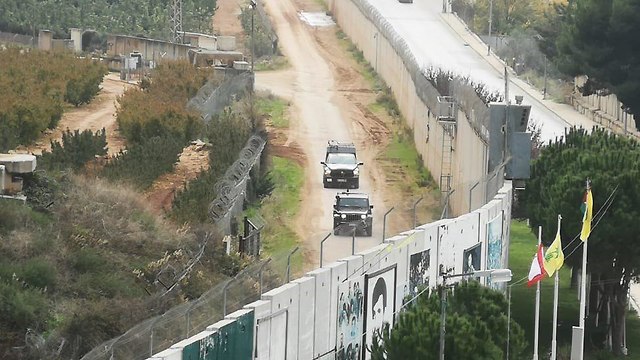
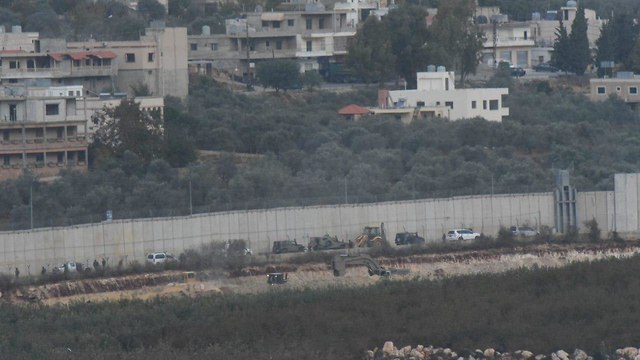
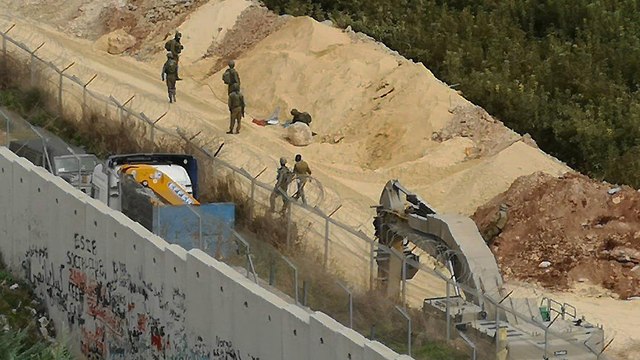
This picture taken on December 4, 2018 from the southern Lebanese village of Kfar Kila shows a view of Israeli machinery operating behind the border wall in Israel (R). (Photo by Ali DIA / AFP)

The statement accused Hezbollah of committing “a double war crime” as it operates from “within Lebanon’s civilian population, in order to harm Israel’s civilian population.”

Israel holds the Lebanese government responsible for all activities conducted inside the country, the ministry said, but the tunnels’ existence proved that its army was not up to the task of making sure the terror group does not operate in southern Lebanon.

“Israel has been monitoring Hezbollah’s intentions and attack tunnel activities for years. The current operation will continue as necessary, along with construction of a northern border obstacle.”

The statement did not mention UNIFIL, the UN peacekeeping force also charged with keeping Hezbollah out of southern Lebanon.

However, the ministry instructed the Israeli mission to the United Nations to write to UN Secretary-General Antonio Guterres in order to protest the “aggression from Lebanese territory,” ministry spokesperson Emmanuel Nahshon said.


Iran’s Rouhani renews threat to blockade Gulf oil shipments 

December 4, 2018

Source: Iran’s Rouhani renews threat to blockade Gulf oil shipments | The Times of Israel

( Rouhani  is securing his dynamite with a blowtorch… – JW )

President says country will cut off key Hormuz Strait if US puts crimps on energy exports

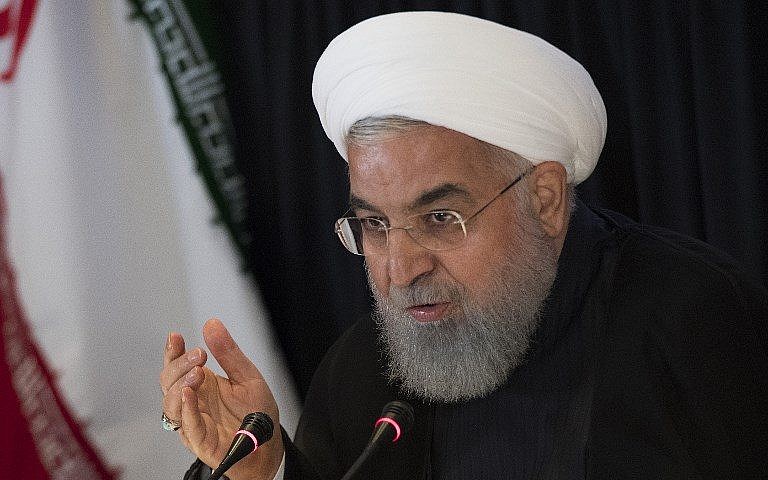
Iranian President Hassan Rouhani speaks during a press conference in New York on September 26, 2018, on the sidelines of the United Nations General Assembly (AFP Photo/Jim Watson)

Iranian President Hassan Rouhani speaks during a press conference in New York on September 26, 2018, on the sidelines of the United Nations General Assembly (AFP Photo/Jim Watson)

TEHRAN, Iran — Iran’s President Hassan Rouhani struck a defiant stance against US sanctions on Tuesday, renewing his threat to cut off international oil sales from the Gulf.

“America should know… it is not capable of preventing the export of Iran’s oil,” Rouhani said at a televised rally in Semnan province.

“If it ever tries to do so… no oil will be exported from the Persian Gulf,” he added.

Since the 1980s, Iran has said repeatedly it would blockade the Gulf in response to international pressure but has never carried out the threat.

Washington has reimposed sanctions, including an oil embargo, since withdrawing from a landmark 2015 nuclear deal between Tehran and major powers in May.

It has vowed to reduce Iran’s oil sales to zero, but has granted temporary waivers to eight countries.

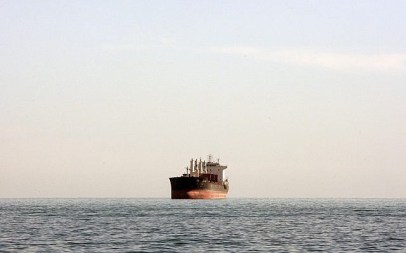
Illustrative — A cargo ship is seen between Iranian city port of Bandar Abbas and Qeshm island in the strategic water way of Persian Gulf, on Dec. 23, 2011. (AP Photo/Vahid Salemi)

Rouhani last threatened to close the Gulf in July when he warned the US “should not play with the lion’s tail.”

The president downplayed the economic impact of sanctions, accusing the media of exaggerating the country’s problems.

“No hyperinflation, no massive unemployment will threaten us. People should stop saying such things in the papers,” he told the crowd.

The latest inflation report from Iran’s central bank says food prices rose 56 percent year-on-year in October.

Rouhani acknowledged there were “some problems,” but said these would be addressed in the new budget plan to be presented on December 16.

He said the government would maintain subsidies on essential goods and increase public sector wages and pensions by 20 percent.

Rouhani, a relative moderate, last month called Israel a “cancerous tumor”established by Western countries to advance their interests in the Middle East.

The president said the United States cultivates close ties with “regional Muslim nations” to protect Israel, an apparent reference to Iran’s regional rival Saudi Arabia and the kingdom’s Sunni Arab allies. He said bowing to American pressure amounts to “treason.”

Times of Israel staff contributed to this report.


IDF says 200-meter attack tunnel from Lebanon uncovered as operation launches

December 4, 2018

Source: IDF says 200-meter attack tunnel from Lebanon uncovered as operation launches | The Times of Israel

Army releases photograph from inside subterranean passage, which it says penetrated 40 meters into Israel near northern town of Metulla but was not yet a threat to residents

The interior of what Israel says is an attack tunnel dug by the Hezbollah terror group that crossed into Israeli territory from south of the Lebanese village of Kafr Kila, December 4, 2018. (Israel Defense Forces)

The interior of what Israel says is an attack tunnel dug by the Hezbollah terror group that crossed into Israeli territory from south of the Lebanese village of Kafr Kila, December 4, 2018. (Israel Defense Forces)

The Israeli military on Tuesday said it uncovered the “first of sure to be many” cross-border attack tunnels dug by the Lebanese Hezbollah terrorist group, this one from under a house in the Lebanese village of Kafr Kila, across from the Israeli town of Metulla.

This was the first tunnel that the Israel Defense Forces has said it discovered as part of a newly launched operation — Northern Shield — to find and destroy the offensive subterranean passages from Lebanon, which the army said are not yet operational and do not present an immediate threat to Israelis.

“At this time, having exposed the tunnel, IDF soldiers are conducting engineering and operational efforts before neutralizing it,” the army said in a statement.

Though for now the army’s activities are limited to the Israeli side of the Blue Line — the internationally recognized armistice line that acts as a de facto border between Israel and Lebanon — IDF Spokesperson Ronen Manelis indicated that other tunnels may be destroyed within Lebanon as well.

“We are prepared for all options, and the operation is only in its first day. The neutralizing of the tunnels will not necessarily take place within our territory,” he said.

The Israeli military dismissed allegations that the timing of Operation Northern Shield was tied to Israeli political developments, notably the recent calls by police to indict Prime Minister Benjamin Netanyahu.

“There’s no cynicism here,” Manelis said.

According to another IDF spokesperson Lt. Col. Jonathan Conricus, the specific timing of the launch of the operation was planned “over a very long period of time.”

The IDF said the “terror tunnel” originated under a Lebanese home in Kafr Kila and extended some 40 meters (130 feet) into Israeli territory.

The army said the tunnel was approximately 200 meters (650 feet) long, some 25 meters (80 feet) deep, and was two meters (six feet) tall by two meters (six feet) wide, significantly larger than most of the tunnels dug by the Hamas terror group in Gaza.

According to the IDF, the tunnel took over two years to excavate — due to the harsh terrain under the border — and contained electrical and communication lines as well as ventilation.

“Hezbollah has been using industrial equipment in order to dig these tunnels. We are beginning to assess and analyze the findings,” Conricus told reporters.

In a tweet in English, the army added that the tunnel was dug “with the intention of harming Israeli civilians.”

The army lauded itself for finding the tunnel. According to Conricus, Hezbollah’s program to build the underground infrastructure was kept “ultra secret” within the terrorist organization.

The IDF spokesman said the IDF’s effort to find and destroy Hezbollah’s tunnels was also kept on a need-to-know basis.

“It was deeply compartmentalized. Only a select few who needed to know were involved in this operation,” Conricus said.

An illustrative map provided by the IDF indicated that the tunnel entered Israeli territory between the communities of Metulla and Misgav Am.

“The tunnel crossed into Israeli territory, but did not present an immediate threat to residents of the area,” the army said.

Earlier, the military said it had found a number of tunnels that entered Israeli territory from Lebanon, but none of them were operational and therefore did not present an immediate danger to Israelis.

On Tuesday morning, the Israeli military launched Operation Northern Shield to uncover and destroy these tunnels. Conricus said the military was, for now, operating within Israeli territory and not entering Lebanon, where the tunnels originate.

“We see Hezbollah’s actions as a flagrant and blatant violation of Israeli sovereignty,” he said.

The military said it believed these tunnels were for offensive purposes, unlike the tunnels and underground bunkers used by Hezbollah during the 2006 Second Lebanon War, which were primarily utilized as defensive measures.

“This was part of a surprise component of [Hezbollah’s] plan,” Conricus said.

According to the IDF, approximately seven years ago, Hezbollah created a special forces unit — known as the Radwan Unit — specifically tasked with crossing into Israel and causing as much mayhem and destruction as possible both for the sake of the damage to Israel itself and for the “symbolism” of having troops carry out attacks inside Israel.
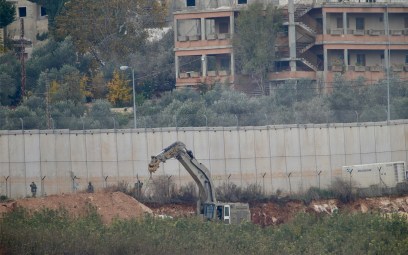
Israeli military digger works on the border with Lebanon in the northern Israeli town of Metula, Tuesday, Dec. 4, 2018. The Israeli military launched an operation on Tuesday to “expose and thwart” tunnels built by the Hezbollah militant group it says stretch from Lebanon into northern Israel. (AP Photo/Ariel Schalit)

Tuesday’s operation came as tensions on Israel’s northern border have ramped up in recent days, and hours after Prime Minister Benjamin Netanyahu traveled to Brussels for a meeting with US Secretary of State Mike Pompeo to discuss Iran and the Hezbollah tunnels.

Last Friday, the Lebanese terror group issued a warning video to Israel apparently filled with satellite images and precise map locations of strategic sites in the Jewish state, with a message: “Attack and you will regret it.”
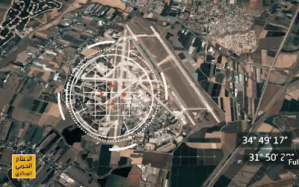
A screenshot from a warning video issued by Hezbollah apparently showing satellite imagery of an Israeli airbase superimposed with a target and its map coordinates (Screenshot/Youtube)

The video was posted after an alleged Israeli airstrike on Iranian and Hezbollah targets in Syria the night before.

The video, with Hebrew subtitles, opened with scenes of Hezbollah fighters preparing to launch rockets and leader Hassan Nasrallah warning that the Lebanese terror group would respond to any attack on Lebanon.

Israeli security chiefs were holding security assessments throughout the day Tuesday in order to deal with any possible Hezbollah reaction to the IDF operation.

The Israeli military’s Arabic-language spokesperson called on Hezbollah members and Lebanese citizens to keep away from the tunnels. “You’ve been warned,” he wrote on Twitter.

A spokesperson for the UN peacekeeping force UNIFIL, which is meant to enforce UN Resolution 1701, told The Times of Israel that it was aware of the reports that the IDF was launching Operation Northern Shield and was maintaining contact with “all relevant interlocutors to ensure that the parties use the UNIFIL liaison and coordination mechanisms to maintain the continued calm and stability.”

“The situation in UNIFIL’s area of operation remains calm,” the UNIFIL spokesperson said.

Israel has long said that Hezbollah planned to conduct cross-border raids in any future conflict, with the specific goal of attacking and conquering a civilian town near the border. Northern residents have raised fears in recent years of attack tunnels being dug under the border, spurring the IDF to launch a task force to investigate the concerns in 2014.

“[Hezbollah’s] main goal is to kill as many people as they can in [Israeli] villages and army bases,” a senior officer IDF officer said earlier this year, in a briefing to reporters on the Lebanese border.

The IDF operation began in the predawn hours of Tuesday morning. The military declared the area around the community of Metulla a closed military zone, but gave no other special instructions to Israeli civilians in the area.
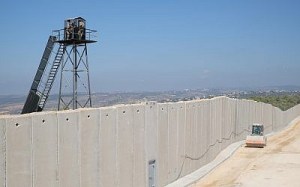
An Israeli construction vehicle drives by a concrete wall being built along the ‘Blue Line’ separating Israel and Lebanon, as members of the Lebanese Armed Forces watch from a guard tower, near the Israeli town of Rosh Hanikra on September 5, 2018. (Judah Ari Gross/Times of Israel)

Additional troops were deployed to northern Israel as a precaution against potential attacks by Hezbollah, but no reservists were called up.

Conricus would not comment on whether additional air defenses were deployed to the area as a precautionary measure as well. Hezbollah is believed to have an arsenal of over 100,000 rockets and missiles.

The attack tunnels were long rumored to have been dug from southern Lebanon into Israeli territory by the Iran backed terror group, but Israeli defense officials repeatedly either denied their existence or refused to discuss the matter.

Conricus said he could not elaborate on the number of tunnels or how deeply they penetrated into Israel, but said such information may be provided in the future.

The IDF spokesperson would not comment on how the military sought to destroy the alleged Hezbollah tunnels, but said it would use some of the techniques and technologies it employs in countering the attack tunnels dug into Israel from the Gaza Strip.

“It will take time to neutralize and expose all the tunnels,” the IDF spokesperson said.

Israeli government officials speculated that the operation would take several weeks.
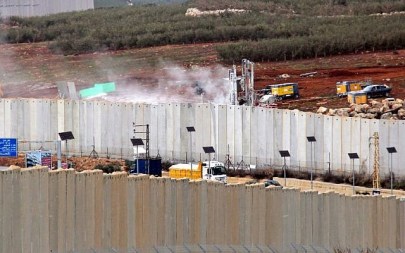
This picture taken on December 4, 2018, from the southern Lebanese village of Kfar Kila shows a view of Israeli machinery operating behind the border wall in Israel (R). (Ali DIA / AFP)

The spokesperson said units from the IDF Northern Command, Military Intelligence, Combat Engineering Corps and Ministry of Defense were leading Operation Northern Shield.

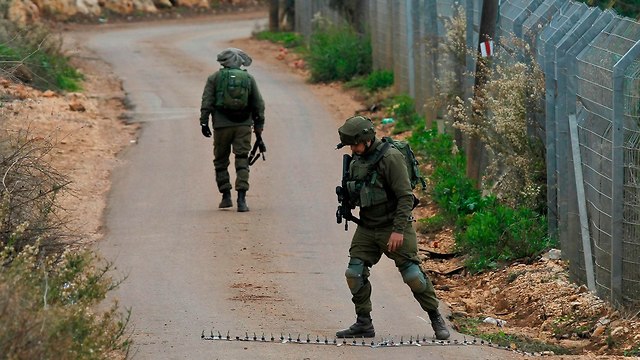
In recent years, the Israeli military and Defense Ministry have been bolstering defenses along the Israeli-Lebanese border: setting up berms, clearing vegetation, creating artificial cliffs and building nine-meter-tall concrete walls.

Conricus blamed Iran for providing the funding and support for Hezbollah’s tunnel program. The Foreign Ministry later released a statement saying the money had come from cash freed up by the 2015 nuclear deal.

According to the IDF, the Gaza-ruling Hamas terror group also provided Hezbollah with technical assistance, based on its extensive experience digging attack tunnels from the Strip into southern Israel.
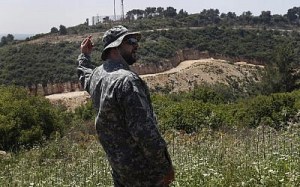
A Hezbollah officer stands in front an IDF army position, background, as he explains to journalists about the defensive measures established by the Israeli forces, south Lebanon, April 20, 2017. (Hussein Malla/AP)

Conricus also accused the Lebanese government of failing to prevent Hezbollah from establishing a military presence in southern Lebanon, despite this being a violation of United Nations Resolution 1701, which ended the 2006 Second Lebanon War and called for all armed groups besides the Lebanese military to remain north of the country’s Litani River.

The last 12 years have seen relative quiet along the frontier. However, Israeli officials have raised alarms over Iran arming Hezbollah, via Syria or directly into Lebanon, with precision missile technology.

On Monday, Netanyahu had reportedly told Pompeo to pass a message to Beirut that Israel would act militarily if it did not crack down on Hezbollah.

The prime minister told the US diplomat Monday said that the tunnels were “a flagrant violation of Israeli sovereignty and UN Security Council Resolution 1701,” according to a readout provided by Netanyahu’s office.

Netanyahu further told Pompeo that Tehran’s aggression also needed to be confronted in Syria, Iraq, Lebanon and elsewhere.

Times of Israel staff contributed to this report.