Archive for November 2018

Bracing for Gaza clash, IDF launches urban, tunnel warfare drill ‎ 

November 29, 2018

Source: Bracing for Gaza clash, IDF launches urban, tunnel warfare drill ‎ – Israel Hayom


Iranian air freighters now routed to Beirut instead of Syrian air bases – DEBKAfile

November 29, 2018

Source: Iranian air freighters now routed to Beirut instead of Syrian air bases – DEBKAfile

Day by day at least one, if not two, Iranian transport aircraft, are landing at Beirut international airport in the past week, DEBKAfile’s military sources report.

Flights to Syrian air bases have all but ceased. On their return flights, they refuel at Damascus airport. Most of the incoming aircraft are Boeing 747s of Qeshm Fars Air, which serves Iran’s Revolutionary Guards Corps (IRGC). Intelligence watchers, speculating about the reason for the accelerated Iranian air runs to Beirut and the nature of their cargoes, suggest that they are anxious to avoid encounters with the USAF aircraft circling Syrian skies (as DEBKAfile first revealed on Nov. 22).

Another conjecture is that, since the Russian- S-300 air defense systems won’t be operational before the end of January, Iran and Russia agreed that it would be less hazardous for Iranian air deliveries to be routed to Beirut than to risk possible Israel air strikes over Syria.

Israel last bombed Beirut International Airport 12 years ago in the course of the 2006 Lebanon War against Hizballah. Its air force then dropped rockets on three runways to block Iranian ammo and missile resupplies for the enemy.

Tehran calculates that Israel will not repeat those strikes for fear of sparking an all-out war with Hizballah. This threat was conveyed to Israel on Nov. 10 by the Lebanese Shiite group’s leader, Hassan Nasrallah, after Prime Minister Binyamin Netanyahu exposed the presence in the vicinity of the airport of workshops for upgrading Hizballah’s surface rockets to precision-guided capabilities.

Nasrallah said: “…an attack on Lebanon will definitely and certainly be responded to,” and went on to say that, although Israel “ possesses a large army, advanced air force and nuclear weapons, it cannot handle the number of missiles possessed by Hizballah.”

Nasrallah and Tehran have since taken note of the fact that although the prime minister exposed the missile workshops, Israel refrained from destroying them.

The rerouting of Iranian deliveries for Hizballah from Syria to Beirut is a game changer that warrants altered tactics against the Lebanese Shiite terrorists and their supplier. Tehran is furthermore in the course of a bold new step in Syria with the potential for a major shift in the region’s strategic contours.


Off Topic: Facebook removes viral video protesting Airbnb boycott 

November 28, 2018

Source: Facebook removes viral video protesting Airbnb boycott – Israel Hayom


Iran’s patience with EU is running thin, nuclear chief warns

November 28, 2018

Source: Iran’s patience with EU is running thin, nuclear chief warns – Israel Hayom


US lobbies Europe to back United Nations vote on condemning Hamas

November 28, 2018

Source: US lobbies Europe to back United Nations vote on condemning Hamas | The Times of Israel

Israeli envoy says General Assembly expected to vote Friday or Monday on resolution slamming rocket fire from Gaza

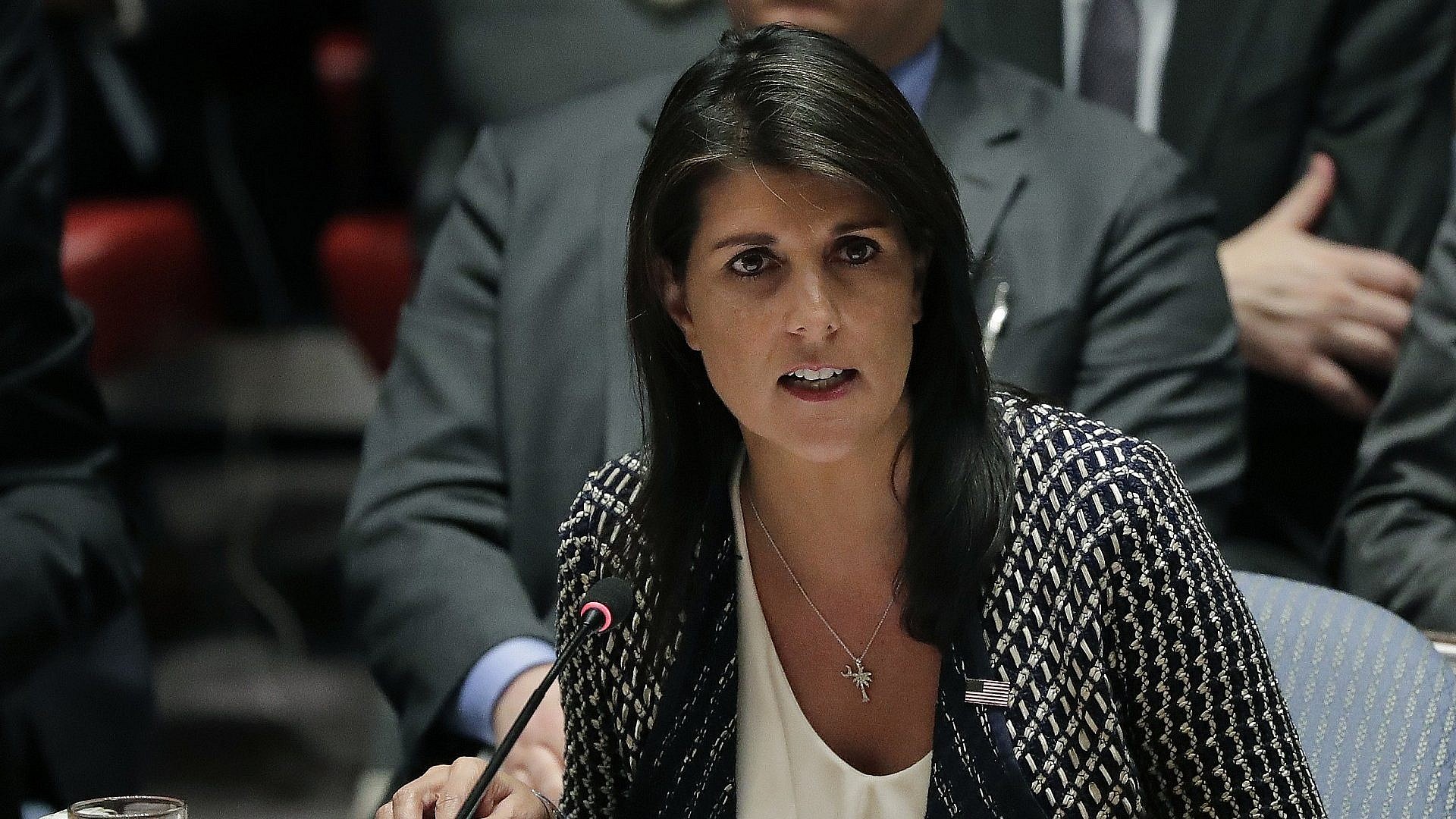
Nikki Haley, US ambassador to the United Nations, speaks during a Security Council meeting on April 13, 2018, at United Nations headquarters. (AP Photo/Julie Jacobson)

Nikki Haley, US ambassador to the United Nations, speaks during a Security Council meeting on April 13, 2018, at United Nations headquarters. (AP Photo/Julie Jacobson)

The United States is leading a push at the United Nations to win crucial backing from European countries for a resolution condemning Hamas, the Israeli ambassador said Tuesday.

The General Assembly is expected to vote Friday or possibly Monday on the proposed resolution condemning rocket firings into Israel and demanding that Hamas end the use of violence.

Israel’s Ambassador Danny Danon told reporters that US diplomats were in talks with their EU counterparts on the draft text. European backing would significantly boost chances of approval by the 193-nation body.

“The US is negotiating the language with the EU,” Danon told a briefing. “For us it’s very symbolic to have this resolution presented with the support of the EU.”

If adopted, it would mark the first time that the assembly has voted to condemn Hamas, the Islamist terror group that has ruled the Gaza Strip since 2007.

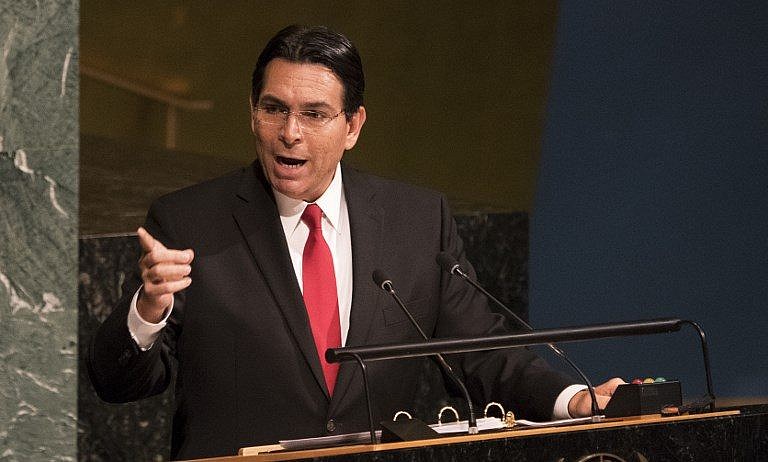
In this file photo taken on June 13, 2018 Israel’s Ambassador to the United Nations Danny Danon speaks to the General Assembly before a vote to condemn Israeli actions in East Jerusalem and the West Bank, in the General Assembly in New York. (Don Emmert/AFP)

European diplomats said there were disagreements on the proposed US text, notably including references to UN resolutions and to the two-state solution to the Israeli-Palestinian conflict, which is supported by the UN.

A draft text seen by AFP “condemns Hamas for repeatedly firing rockets into Israel and for inciting violence” and “demands that Hamas and other militant actors cease all provocative actions and violent activity.”

The European Union has put Hamas on its blacklist of terror groups, but the 28-nation bloc has struggled to come up with a united position on the Israeli-Palestinian conflict.

In June, US Ambassador Nikki Haley sought to amend an Arab-backed resolution condemning Israel for the violence in Gaza, but failed to win the required votes in the assembly.

The US amendment condemning Hamas received 62 votes in favor, with 58 against and 42 abstentions.

The Israeli ambassador said the US draft resolution had created a “win-win solution” for his government because it had forced capitals to turn their attention to Hamas.

On Thursday, the United Nations will hold events to mark the International Day of Solidarity with the Palestinians, which commemorates the adoption of the 1947 partition plan intended to establish an Arab state and a Jewish state.


Senator Rand Paul blocking US military aid to Israel

November 28, 2018

Source: Senator Rand Paul blocking US military aid to Israel | The Times of Israel

Kentucky Republican who previously called to cut assistance to Jewish state holding up $38 billion defense package

Sen. Rand Paul speaks during a hearing before Senate Foreign Relations Committee on Capitol Hill, July 25, 2018. (Alex Wong/Getty Images)

Sen. Rand Paul speaks during a hearing before Senate Foreign Relations Committee on Capitol Hill, July 25, 2018. (Alex Wong/Getty Images)

Republican Senator Rand Paul of Kentucky is blocking US military aid to Israel.

Paul, who has previously called to cut defense assistance to Israel, recently put a hold on the US-Israel Security Assistance Authorization Act of 2018, which codifies into law the $38 billion defense aid package for Israel over 10 years that was negotiated in the final days of the Obama administration.

A hold is a parliamentary procedure that allows senators to prevent a motion from reaching a floor vote.

The Senate passed the act in early August; the House of Representatives followed suit the following month. Now the Senate must pass a final version in line with the bill passed by the House.

The American Israel Public Affairs Committee, or AIPAC, has bought advertisements on Facebook identifying Paul as the main force blocking the act, the Washington Free Beacon reported, citing what it called sources close to the effort.

Meanwhile, Christians United for Israel, or CUFI, sent out an Action Alert email blast on Monday to its supporters calling on them to flood Paul’s office with calls and letters encouraging him to support the legislation. CUFI also invested heavily in ads in Kentucky to target the senator’s constituents directly on the issue, the Free Beacon reported.

Paul’s office did not immediately return a request for comment.

Paul, a presidential candidate in 2016, alienated pro-Israel Republicans almost as soon as he became a senator in 2011, when he embraced his congressman father’s longtime call to cut defense assistance to Israel. The younger Paul later backtracked, saying he regarded Israel as a close ally, and would cut assistance only once it was clear the country was self-sufficient in its defense needs.

The hold comes as Israel faces major immediate threats from Hamas in Gaza, Hezbollah in Lebanon and Syria, and Iran.

The $38 billion deal negotiated in 2016 is the most generous ever to Israel. The act also expands a stockpile of weapons that the United States keeps in Israel, which may access the stockpile in wartime. It also enhances Israel’s qualitative military edge and urges space research cooperation between Israel and the United States.


Israeli envoy said to meet with Sudan officials, offer aid in bid for new ties 

November 28, 2018

Source: Israeli envoy said to meet with Sudan officials, offer aid in bid for new ties | The Times of Israel

Secret Istanbul meeting seen as part of efforts to establish diplomatic relations with a number of central African nations

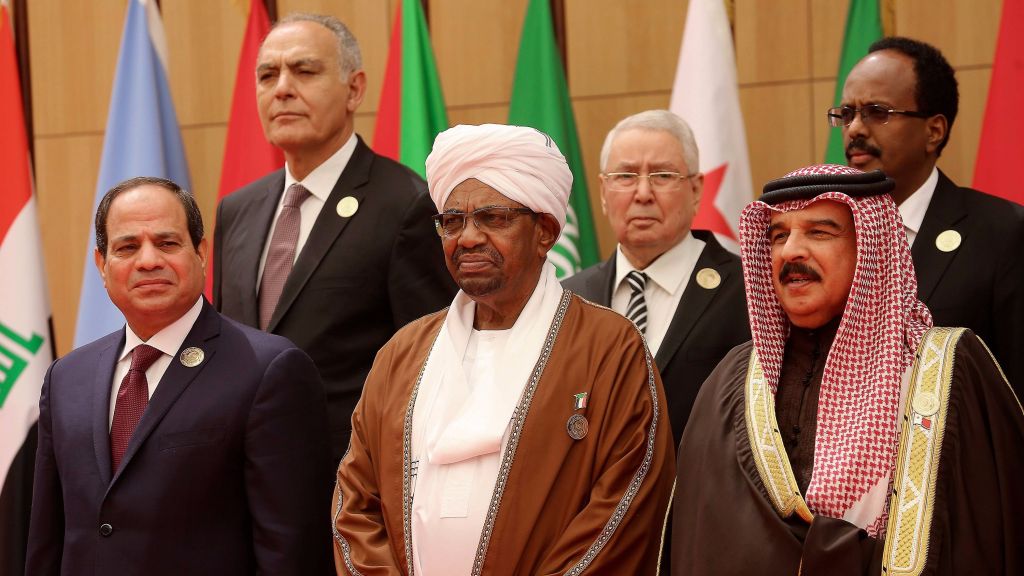
Omar al-Bashir, center, president of Sudan, stands between Egyptian president Abdel Fattah el-Sisi, left, and Bahrain's King Hamad bin Isa Al Khalifa at the annual Arab League summit on Wednesday, March 29, 2017 held this year on the Dead Sea in Jordan.  (AP Photo/ Raad Adayleh)

Omar al-Bashir, center, president of Sudan, stands between Egyptian president Abdel Fattah el-Sisi, left, and Bahrain’s King Hamad bin Isa Al Khalifa at the annual Arab League summit on Wednesday, March 29, 2017 held this year on the Dead Sea in Jordan. (AP Photo/ Raad Adayleh)

A senior Israeli diplomat reportedly met with Sudanese officials in a secret meeting held in Istanbul as part of efforts to renew ties between the two countries and even establish full diplomatic relations.

The meeting took place around a year ago between a special Israeli Foreign Ministry envoy and a team of senior representatives from Sudan, including then-intelligence chief Mohamed Atta, Channel 10 news reported Tuesday night.

According to a source familiar with the meeting quoted by the channel, the two sides discussed “the warming of relations between the countries and possible Israeli aid to Sudan in the fields of medicine, agriculture and the economy.”

The meeting, the report said, was part of Israel efforts to establish diplomatic ties with a number of central African nations and was known to Prime Minister Benjamin Netanyahu.

Israel’s Foreign Ministry offered no comment on the meeting.

The report comes after Chadian leader Idriss Déby made a historic visit to the Jewish state and Netanyahu announced that he will soon fly to N’Djamena to announce the resumption of full diplomatic ties with the Muslim-majority country, nearly half a century after they were severed.

A senior Israeli official told Channel 10 that Déby’s visit was laying the groundwork for normalizing ties with Muslim-majority countries Sudan, Mali and Niger.

According to the report, Israel’s diplomatic push in Africa is driven in part by a desire to ease air travel to Latin America. Flying in the airspace of traditionally hostile African countries — namely Chad and Sudan — would allow airlines to offer faster, more direct flights between Israel and the continent.

Flying directly from Israel to Brazil over Sudan could shave some four hours off the average journey, which currently takes at least 17 hours, and requires a stopover in either Europe or North America.

Prime Minister Benjamin Netanyahu (L) talks with Sultan Qaboos bin Said in Oman on October 26, 2018 (Courtesy)

Israel has long been wary of Sudan, which was traditionally seen as close to Iran. However, in early 2017, Khartoum joined Sunni Bahrain and Saudi Arabia in severing its ties with the Islamic Republic.

At the time, the country also appeared to make overtures toward Israel. Foreign Minister Ibrahim Ghandour said in a 2016 interview that Sudan was open to the idea of normalizing ties with Israel in exchange for lifting US sanctions on Khartoum. According Hebrew-language media reports at the time, Israeli diplomats tried to drum up support for Sudan in the international community after it severed its ties to Tehran.

In the past, Sudan has allegedly served as a way-station for the transfer of Iranian weapons to the Hamas terrorist group in Gaza. Israel has reportedly intercepted and destroyed transfers of weapons from Sudan bound for Gaza.

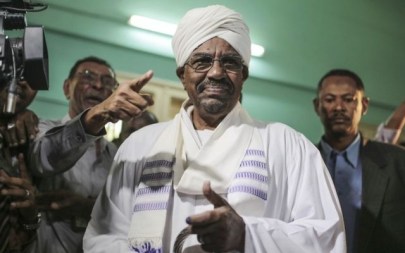
In 2009, the International Criminal Court also issued an arrest warrant for Sudanese President Omar al-Bashir for genocide, war crimes, and crimes against humanity, relating to the bloody conflict in the western Darfur region.

However, since it broke ties with Iran, Sudan is no longer perceived by Israel as a threat, but rather as a potential ally.

Sudanese President Omar al-Bashir prepares to cast his ballot for the country’s presidential and legislative elections in Khartoum, Sudan, April 13, 2015. (AP Photo/Mosa’ab Elshamy, File)

Netanyahu portrayed Déby’s unprecedented visit as the result of his hard-won diplomatic efforts, referring to his three visits to Africa over the last couple years and his surprise trip to Oman in October.

The visit to Oman, a major diplomatic victory for Netanyahu, was an apparent sign of Israeli progress in improving ties with Gulf countries.

Also Sunday, Netanyahu added that “there will be more such visits in Arab countries very soon,” without providing details.


Netanyahu to elite troops: Once they could slaughter us, today we can respond 

November 28, 2018

Source: Netanyahu to elite troops: Once they could slaughter us, today we can respond | The Times of Israel

Following CNN poll that found rampant anti-Jewish views among Europeans, PM tells IDF commandos ‘the best answer to anti-Semitism is Israel and the IDF’

Prime Minister Benjamin Netanyahu, left, meeting with soldiers from the IDF's Commando Brigade, on November 27, 2018. (Kobi Gideon/GPO)

Prime Minister Benjamin Netanyahu, left, meeting with soldiers from the IDF’s Commando Brigade, on November 27, 2018. (Kobi Gideon/GPO)

At a major training exercise of the Israeli military’s brigade-level elite Commando Formation on Tuesday evening, Prime Minister Benjamin Netanyahu said Israel’s military prowess was the Jews’ “best answer” to anti-Semitism.

Netanyahu’s comments followed the publication Monday of a poll by CNN that showed over 20 percent of Europeans believe Jews have “too much influence” across the world.

“The best answer to anti-Semitism is the State of Israel and the Israel Defense Forces,” Netanyahu, who has also been serving as defense minister since the resignation earlier this month of Avigdor Liberman, told the soldiers. “Once we were a leaf driven by the wind; they could slaughter us. Today, we have the power to respond.”

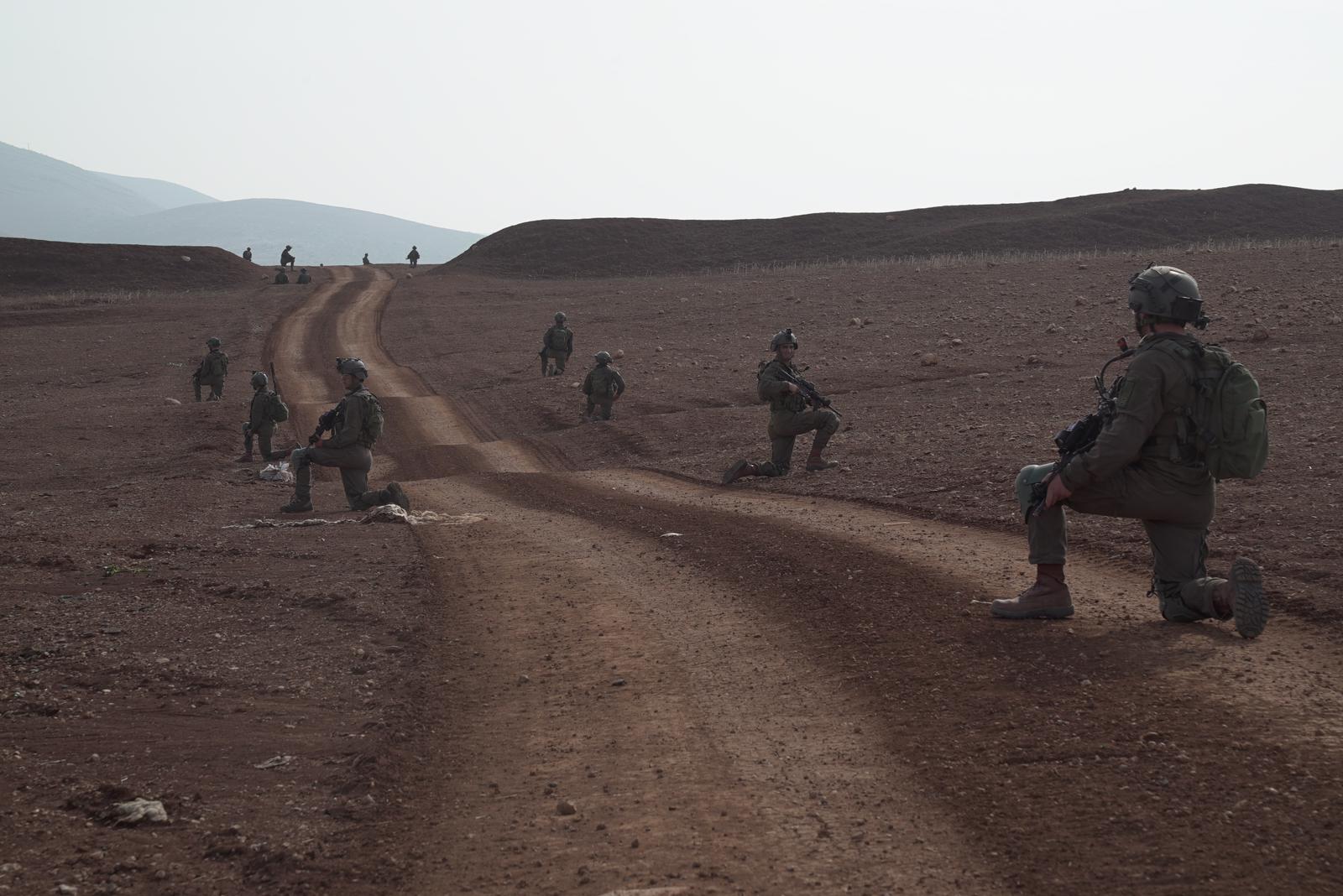
Netanyahu’s visit coincided with a 10-day training exercise the brigade is conducting throughout the country, practicing its responses to various complex attack scenarios against Israel and Israeli civilians by different enemies.

“We are on the eve of Hannukah. The spirit of the Maccabees is here – you are the Maccabees. We overcome our enemies with the extraordinary strength and extraordinary spirit that I see here, that I see in the IDF and all our warriors,” Netanyahu said.

Soldiers from the IDF Commando Brigade take part in a large-scale training exercise in November 2018. (Israel Defense Forces)

During the visit, the prime minister, received a briefing from Chief of Staff Lt. Gen. Gadi Eisenkot and brigade commander Col. Kobi Helleron on the brigade’s capabilities and the threats it is expected to face. He was also given a demonstration of the various commando units’ advanced new weapons systems.

Netanyahu’s comments followed an interview he gave the day before to CNN discussing the anti-Semitism poll findings.

In that interview, he accused the extreme left and radical Islam of perpetuating the world’s oldest hatred, but refrained from criticizing right-wing leaders accused of using anti-Semitic tropes.

“I’m concerned because I think anti-Semitism is an ancient disease that rears its ugly head. It first attacks the Jews, but it never stops with them. It then sweeps entire societies,” he said.

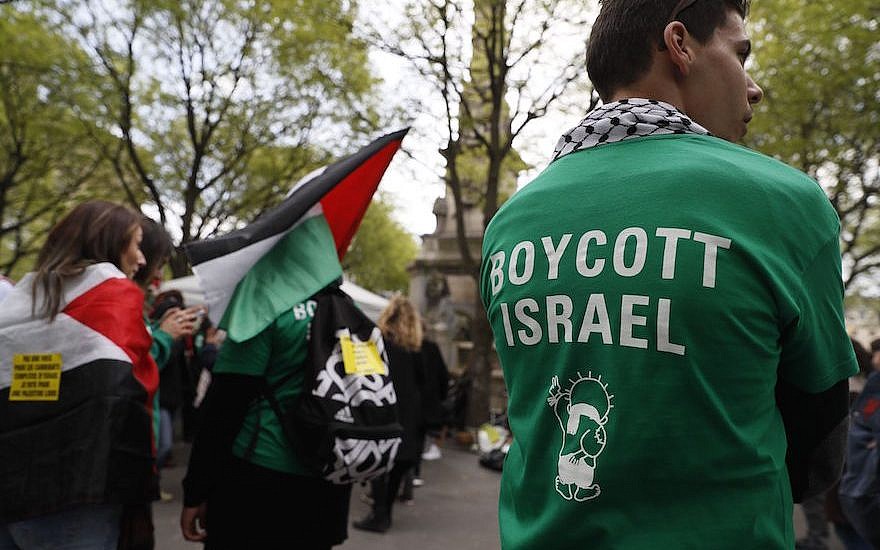
Protesters on the Place du Chatelet in Paris demonstrating against Israel, April 1, 2017. (Thomas Samson/ AFP/ Getty Images via JTA)

Despite this concern, Netanyahu commended “most of the European countries’ governments” for working to combat anti-Semitism, specifically naming German Chancellor Angela Merkel, French President Emmanuel Macron, British Prime Minister Theresa May, Hungarian Prime Minister Viktor Orban, and Austrian Chancellor Sebastian Kurz.

Netanyahu focused much of his criticism of European anti-Semitism on what he dubbed “new anti-Semitism,” which he differentiated from the “old anti-Semitism in Europe that came from the extreme right.”

“There’s also new anti-Semitism that comes from the extreme left and also the radical Islamic pockets in Europe that spew forth these slanders and lies about Israel, the only democracy in this entire region, the only one that has the courts, human rights, rights for all religions, gays, everything, I mean, the whole thing is ridiculous,” he said.

Prime Minister Benjamin Netanyahu and Hungarian Prime Minister Viktor Orban (L) hold a Rubik’s Cube at the Hungary-Israel Business Forum in Budapest, Hungary, on July 19, 2017. (Haim Zach/GPO/Flash90)

Asked about Hungary and Poland, whose right-wing leaders have been accused of employing anti-Semitic imagery, Netanyahu said he did not believe the two countries’ governments were doing so and said the real problem is calls for Israel’s destruction.

“I don’t think they do and I think that ultimately the real issue is can we tolerate the idea that people say that Israel doesn’t have a right to exist, which I think is the ultimate anti-Semitic statement,” he said.

“Anti-Semitism and anti-Zionism, anti-Israeli policies, the idea that the Jewish people don’t have the right to a state, that’s the ultimate anti-Semitism of today,” Netanyahu added.


Trump says US troops will remain in Middle East for Israel’s sake 

November 28, 2018

Source: Trump says US troops will remain in Middle East for Israel’s sake | The Times of Israel

US president notes he could lower military presence in region as cheaper oil leads to reduced reliance on Saudi Arabia, but will not, partly due to concerns for Israel’s security

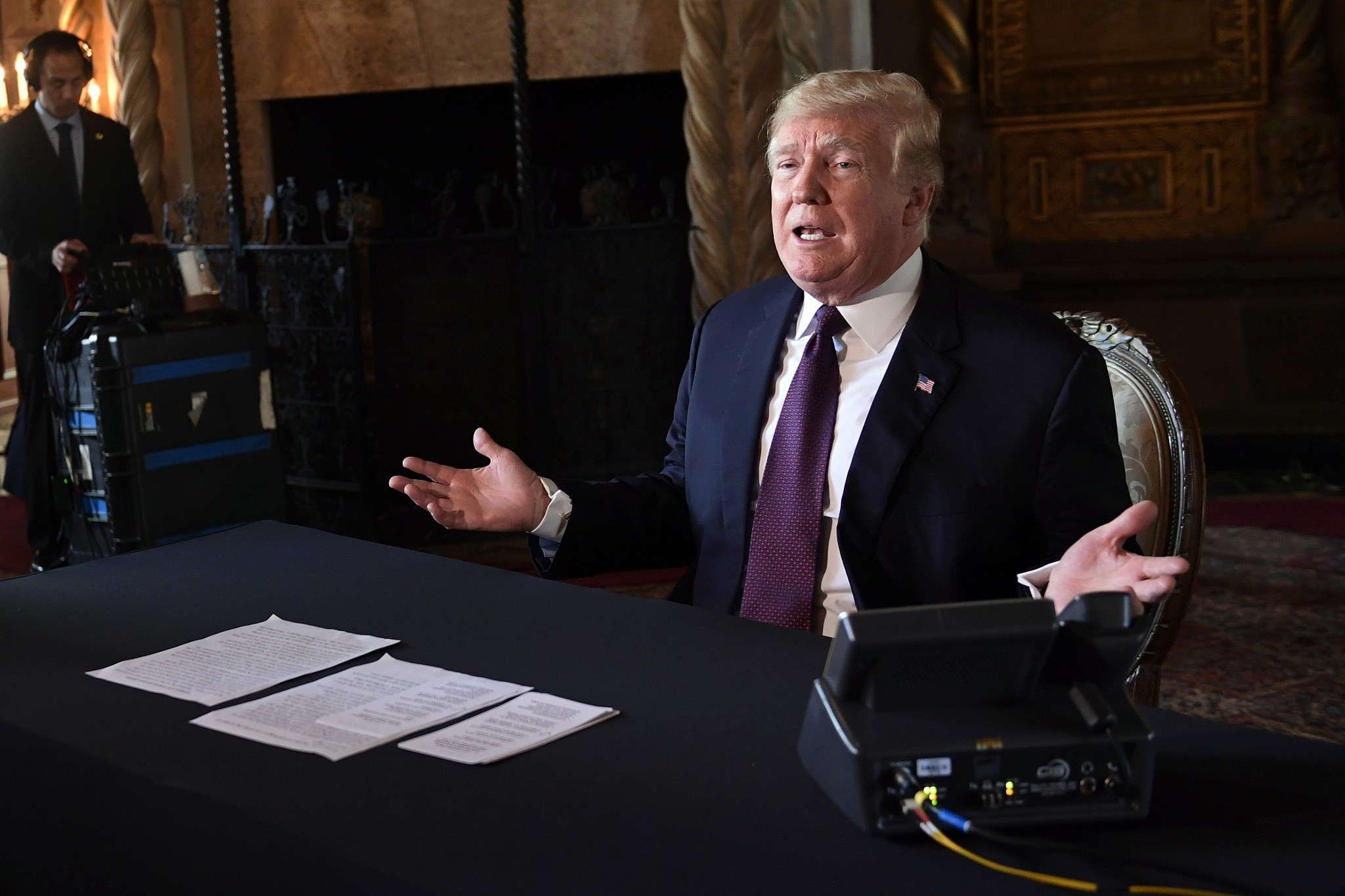
US President Donald Trump speaks to reporters following his teleconference with troops from his Mar-a-Lago estate in Palm Beach, Florida, November 22, 2018. (AP Photo/Susan Walsh)

US President Donald Trump speaks to reporters following his teleconference with troops from his Mar-a-Lago estate in Palm Beach, Florida, November 22, 2018. (AP Photo/Susan Walsh)

US President Donald Trump said in an interview published Wednesday that, although he could remove troops from the Middle East, citing cheaper oil as an explanation, one reason not to do so is concern for Israel’s security.

“Now, are we going to stay in that part of the world? One reason to is Israel,” Trump told the Washington Post.

“Oil is becoming less and less of a reason because we’re producing more oil now than we’ve ever produced,” he added, appearing to envision a world where the US would be less beholden to Saudi Arabia. “So, you know, all of a sudden it gets to a point where you don’t have to stay there.”

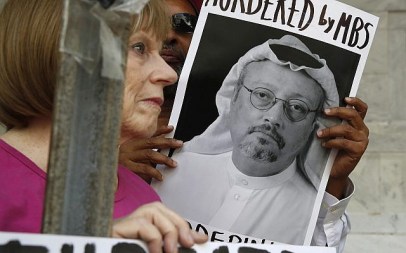
Trump publicly thanked Riyadh last week for plunging oil prices, after he was harshly criticized for deciding not to further punish the kingdom for the killing of US-based columnist Jamal Khashoggi.

People hold signs during a protest at the Embassy of Saudi Arabia about the disappearance of Saudi journalist Jamal Khashoggi, in Washington, DC, on October 10, 2018. (AP Photo/Jacquelyn Martin, File)

Trump last week suggested that Israel would face major regional difficulties in the Middle East were it not for the stabilizing presence of Saudi Arabia, explaining his decision not to take measures against Riyadh.

“Israel would be in big trouble without Saudi Arabia,” Trump told reporters at the time from his Mar-a-Lago resort home in Florida.

During the wide-ranging interview, Trump also threatened to cancel an upcoming meeting with Russian President Vladimir Putin over the captureof three Ukrainian ships and their crew in the Black Sea this week.

Ukraine’s parliament voted Monday to impose martial law in parts of the country to fight what its president called “growing aggression” from Moscow, after the weekend naval clash off the disputed Crimean Peninsula, in which Russia fired on and seized three Ukrainian vessels, amid renewed tensions between the neighbors.

Western leaders and diplomats have urged both sides to deescalate the conflict, and the US has blamed Russia for what it called “unlawful conduct” over Sunday’s incident in the Black Sea.

Three Ukrainian ships are seen as they docked after been seized, in Kerch, Crimea, November 25, 2018. (AP Photo)

Trump said he was awaiting a “full report” by his national security team on the matter: “That will be very determinative. Maybe I won’t have the meeting.”

“I don’t like that aggression,” he added. “I don’t want that aggression at all. Absolutely. And by the way, Europe shouldn’t like that aggression. And Germany shouldn’t like that aggression.”

The US president reiterated his rejection of a federal government reportreleased last week that concluded that damage from global warming was intensifying, saying he does not believe the scientific consensus that the crisis is man-made.

“One of the problems [is] that a lot of people like myself, we have very high levels of intelligence, but we’re not necessarily such believers,” Trump told the Washington Post. “You look at our air and our water, and it’s right now at a record clean.”

Federal Reserve Chair Janet Yellen during the 32nd Annual Group of 30 (G30) International Banking Seminar in Washington, DC, October 15, 2017. (AFP PHOTO / SAUL LOEB)

Much of the interview was dedicated to Trump’s criticism of Federal Reserve Chair Jerome Powell, nominated by the president last year. Trump said he was “not even a little bit happy with my selection” so far, but the report detailed an unorthodox reason for his decision not to reappoint predecessor Janet Yellen — her height.

The 5-foot-3-inch (160-centimeter) economist, who is Jewish, is “not tall enough” to lead the country’s central bank, Trump told aides on the National Economic Council on several occasions, the newspaper said, citing current and former officials. The officials said Trump had also asked them whether they agreed with his opinion on her height.

Times of Israel staff and agencies contributed to this report.


On the map

November 27, 2018

Source: On the map – Opinion – Jerusalem Post

Sudan, together with Chad, is key to making a direct way to fly from Israel to Brazil, a major world economy.

BY JPOST EDITORIAL
 NOVEMBER 26, 2018 20:45
Prime Minister Benjamin Netanyahu meets with Chad President  Idriss Déby in Jerusalem in November 25

This is another successful week for Prime Minister Benjamin Netanyahu’s foreign policy. Chad’s President Idriss Déby’s visit marks stronger ties between Israel and the central African Muslim state. And the Czech Republic’s President Miloš Zeman’s visit is a step toward having his country become the first European Union member state to move its embassy to Jerusalem.

On the heels of these visits came reports that Israel is working on expanding ties with other Muslim countries, like Bahrain and Sudan. And this comes after Netanyahu’s historic visit to Oman.

Sudan, together with Chad, is key to making a direct way to fly from Israel to Brazil, a major world economy. And Brazil’s new president, Jair Bolsonaro, may visit Israel and would like to move his country’s embassy to Jerusalem, as well.

Much is said about what Israel is doing for many of these countries, whether it’s sharing cybersecurity, agricultural know-how, or intelligence and training to fight terrorism. Debby, for example, visited Netafim to see Israeli drip irrigation technology.

It’s true that few of these newly friendly countries have translated into pro-Israel UN votes, but Israel still benefits greatly from these ties, economically as well as in matters of security and international diplomacy.

Chad is also reportedly interested in Israeli military technology. This is where Netanyahu must tread more carefully. We should not allow some of the world’s most abusive regimes to take advantage of their new or stronger ties with Israel to further harm innocent people. Myanmar, which has ethnically cleansed its Muslim minority, is another example of this. Israel does not comment on where it sells weapons, but Myanmar’s military says that it has bought from Israel.

Still, it is important to note that no country in the world cuts ties with all human-rights violators, and Israel should not be held to an impossible double-standard.

Countries like Germany may turn up their noses, but they have continued working to circumvent sanctions on Iran, one of the world’s most prolific invokers of the death penalty, and a country that continually threatens Israel with genocide.

It’s hard to take someone like Swedish Foreign Minister Margot Wallström seriously. She claims to have a “feminist foreign policy” while veiling herself in Tehran and continually condemning Israel, which has a better record on gender equality than anywhere else in the region and was recently ranked one of the world’s top 20 countries for working women.

French President Emmanuel Macron reportedly refuses to visit Israel because of a lack of progress with the Palestinians. But there’s a photo of him hugging the president of Chad, not exactly a beacon of human rights.

It’s clear that double-standard is part of why Netanyahu has sought out ties elsewhere. Europe is Israel’s largest trading partner, but – for better or for worse – the benefits of strengthening ties with countries elsewhere are less likely to come with these kinds of strings attached. A country like Chad is not connecting with Israel because of shared values – it’s because of shared interests. In some ways, these ties are weaker; when the interests end, the ties may end. At the same time, they are simpler.

And with Zeman in Israel, Netanyahu is making sure to maintain the other kinds of ties as well.

These are ties that bind democracies committed to the values of freedom of speech and conscience. These ties are special, because Israel is the only democracy in the Middle East.

The mixed and growing portfolio of international ties that Netanyahu has been cultivating is something that Israel can be proud of. Even on a day when the state prosecution team working on Cases 1000 and 2000 sent their recommendations to the state attorney about indicting Netanyahu, the visit of Chad’s president is an achievement that should not be overlooked.

It, and the other diplomatic inroads forged by Netanyahu, are part of how he will likely be remembered in the future. He has strengthened Israel’s standing in the world and opened new opportunities for Israel to leverage its diplomatic and military power throughout the world.