Rush Limbaugh, Lee Greenwood, Sean Hannity, Judge Jeanine Speak at Trump Missouri Rally. The final rally before the midterms.
–
Rush Limbaugh, Lee Greenwood, Sean Hannity, Judge Jeanine Speak at Trump Missouri Rally. The final rally before the midterms.
–
As well as 480 major attacks, Shin Bet also thwarted 590 lone-wolf attacks and arrested 219 Hamas cells, while combating cyberattacks and espionage plots, agency director says • Hamas is constantly trying to stage attacks in Judea and Samaria, he warns.
|
Shin Bet security agency Director Nadav Argaman
| Photo: Dudi Vaaknin
|
The Shin Bet security agency has thwarted 480 Palestinian terrorist attacks so far in 2018, agency Director Nadav Argaman told the Knesset’s Foreign Affairs and Defense Committee on Tuesday.
The Shin Bet’s efforts were a major factor in the defense establishment’s ability to maintain the fragile calm between Israel and the Palestinians, especially in Judea and Samaria, Argaman said.
”The situation in the Palestinian arena has been very unstable this year. In the Gaza Strip, we are somewhere between a potential [military] campaign and efforts to stabilize the humanitarian situation,” he told the committee.
”In Judea and Samaria the situation is very complex as well. Things on the ground are relatively calm, but this calm is deceptive. The situation is actually highly combustible.”
Argaman continued, “Hamas is constantly trying to launch terrorist attacks in and from Judea and Samaria.
“We were able to prevent 480 major terrorist attacks, stop 590 lone-wolf terrorists and arrest 219 Hamas cells. This indicates that there is a large, clandestine terrorist infrastructure there.”
Hamas leaders in Gaza and Turkey are sparing no effort to mastermind terrorist attacks in Judea and Samaria, and similar efforts are being made from Lebanon by the Hezbollah terrorist group, Argaman said.
He said the Shin Bet uses a variety of methods to track down lone terrorists, including monitoring Palestinians’ social media accounts and general online activity, using confidential informants, and implementing a complex profiling algorithm.
The agency “has also been able to foil multiple cyberattacks and espionage plots against Israel. The current reality is the result of intensive efforts by all branches of the defense establishment – the IDF, Shin Bet and the Israel Police – that enable Israelis to live their daily lives peacefully,” he said.
Shin Bet data indicates that in 2017, the agency thwarted over 400 terrorist attacks, including 13 suicide attacks and eight abductions, as well as 1,100 potential lone-wolf attacks.
In 2016, the Shin Bet prevented 344 major terrorist attacks.
Source: Moment of truth for Trump – Israel Hayom
U.S. President Donald Trump has spared no effort to help the Republicans keep their majority in the Senate, but if the Democrats take the House of Representatives as predicted, he will have to adopt a more pragmatic approach just to be able to govern.
|
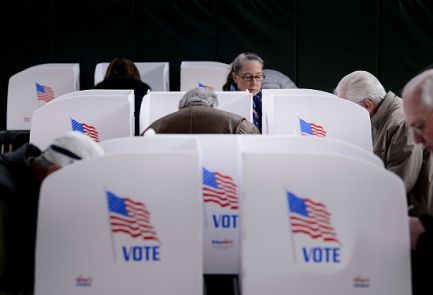
Americans cast their ballots in early voting in Potomac, Maryland
| Photo: AFP
|
The U.S. political system is at a dramatic crossroads, with American voters in the midterm elections about to decide the fate of 35 out of 100 Senate seats and all 435 seats in the House of Representatives.
Since the last midterm elections, in 2014, Congress has had a Republican majority, with the party controlling both houses. Almost all the predictions are that this is about to change, as the Democrats are expected to win the majority of the House and their chances of winning a majority in the Senate cannot be completely discounted.
If this happens, the political upset would be in line with the familiar pattern of American politics, which reflects the voters’ desire to create balance between the various branches of government and prevent one party from having too much power for too long.
However, in the current political and social climate, which is fraught with tension and ideological hostility, any shift in the balance of power on Capitol Hill will have far more significant implications than ever before.
The Republicans are likely to maintain a narrow majority in the Senate and may even gain slightly, but the prevailing forecast – which gives the Democrats at least 23 new seats, and the majority, in the House of Representatives – raises the possibility of an escalation in the political and social hostility polarizing the United States to the point of creating “gridlocks” in the legislative process.
On the eve of these midterm elections, the White House faced a difficult dilemma. On the one hand, to try to preserve the Republican majority in the House, President Donald Trump had to adopt a conciliatory and unifying strategy that would underscore the common denominator between different ethnic groups.
This was necessary because the vast majority of the electoral districts giving the Democrats the advantage are located in suburban, affluent and educated areas, where the majority of voters hold moderate positions.
On the other hand, to win the majority of races for the Senate and ensure the Republicans continue to control Congress, Trump needed to adopt a completely contradictory strategy.
Since most of these races are held in “red” states, such as North Dakota, Montana, Missouri and Indiana, where incumbent Democratic senators must champion clearly conservative positions to have a fighting chance, the president needed to take a harder line to help Republican candidates.
In light of this contradiction, Trump has all but decided to come to terms with the fact that the Democrats will take the House in exchange for increasing the chances of the Republican maintain the majority in the Senate, which, among other things, exclusively controls the appointment of judges to the Supreme Court.
A direct result of this decision was the radicalization of the rhetoric coming from the White House.
Trump’s harsh statements about illegal immigration, the threat to revoke the citizenships of children of illegal immigrants, the attacks on media and his aspiration to implement a “nationalistic” vision for the U.S. were all part of this strategy. The objective is clear: to mobilize and invigorate the Republican voter base, thus ensuring that the Republicans retain the majority in the Senate.
However, if this scenario materializes and the Republicans win the Senate but lose the House, the 45th president will have to deviate from this puritanical policy and adopt a more pragmatic approach that will ensure compromises with the Democratic majority in the House.
The alternative is an ongoing duel in Congress, which could disrupt the legislative process and hamper Trump’s ability to govern in the next two years. As things stand, it remains to be seen where the White House is headed.
Source: EU struggles to find host for new Iran trade mechanism – Israel Hayom
So-called “special purpose vehicle” seeks to preserve EU’s ability to trade with Iran and circumvent reimposed U.S. sanctions, as well as keep Iran in the 2015 nuclear deal • U.S. official warns of possible sanctions against any potential host country.
|
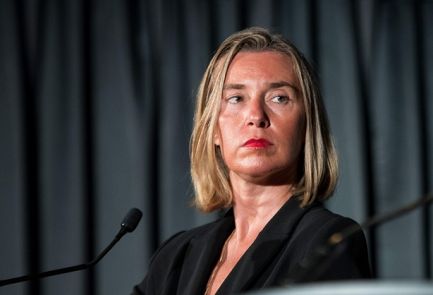
EU foreign policy chief Federica Mogherini
| Photo: AFP
|
The European Union has so far failed to find a country to host a special mechanism to trade with Iran and circumvent the newly reimposed U.S. sanctions that went into effect Monday, according to three EU diplomats, who said European governments fear being targeted by U.S. countermeasures.
The EU on Monday reissued its Nov. 2 statement, saying it was still setting up the so-called “special purpose vehicle,” or SPV, which is designed to circumvent the sanctions.
The EU, which opposes the sanctions, had hoped to have the SPV ready by the time the sanctions came into force.
However, no EU country has so far volunteered to host the entity, the diplomats said. Several states have been asked by EU foreign policy chief Federica Mogherini to consider hosting the SPV headquarters, as the bloc tries to uphold the nuclear accord from which U.S. President Donald Trump withdrew in May.
While the European Commission declined to comment on Monday, European Economic Affairs Commissioner Pierre Moscovici said that “the European Union does not approve” of the reimposition of U.S. sanctions, which were lifted under the 2015 nuclear deal.
Brian Hook, Washington’s special representative for Iran, underscored the risks for European companies, warning that any EU country hosting the SPV could potentially be sanctioned.
“The United States will not hesitate to sanction any sanctionable activity in connection with our Iran sanctions regime,” Hook said.
The SPV may incorporate a barter system and aims to sidestep the U.S. financial system by using an EU intermediary to handle trade with Iran. It could ensure, for example, that Iranian oil bought by Europeans could be paid for with EU goods and services of the same value.
A senior French diplomat said Paris was confident the mechanism would be legally in place soon, but things needed to be fully cemented first.
“We hope the legal instruments will be put in place in the coming days. It will then be a few weeks or months to finalize its modalities, and its implementation will be during 2019,” he said. He added there was no way any trade with this mechanism could be done before the end of the year.
Hook said he had not seen demand from European companies to use the SPV because they preferred to invest in the United States.
“If you take a look at the over 100 corporations that have decided to choose the United States market over the Iranian market, they are not looking to avail themselves of any type of vehicle, they are very pleased to continue working with the United States,” he told reporters.
The EU, with support from China and Russia, hopes to keep Iran in the deal by allowing trade to flow despite U.S. penalties.
The SPV follows several other EU initiatives to try to shield European business with Iran from the U.S. sanctions, which Trump says aim to punish Iran for its role in the wars in Syria and Yemen.
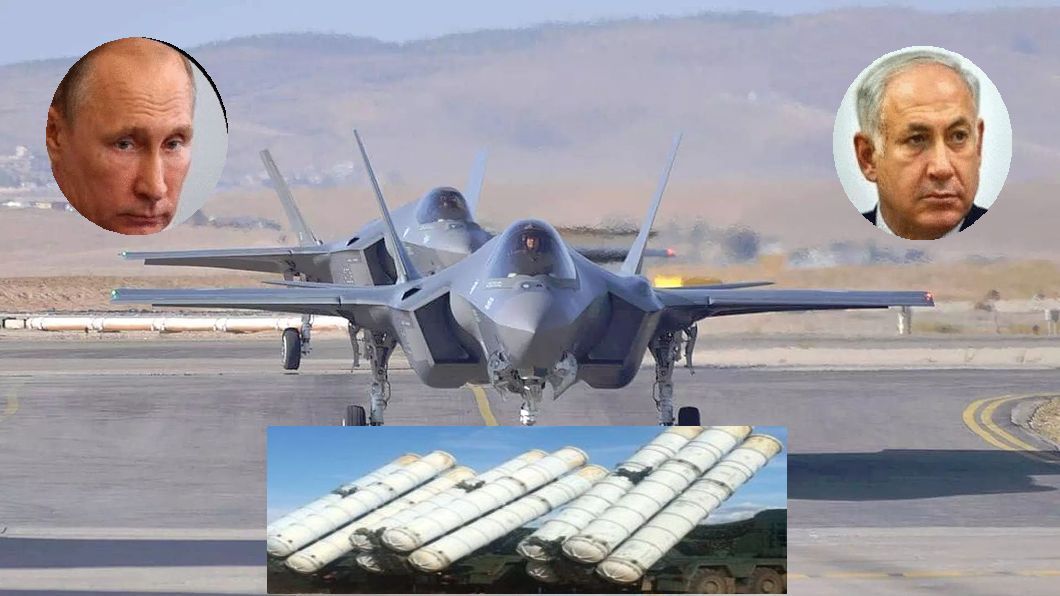
Israel warned publicly for the first time that its air force would strike Syria’s S-300 air defense weapons supplied by Russia and Russian personnel could be in jeopardy. On Monday, Nov. 6, Ze’ev Elkin, minister for Jerusalem affairs and the environment said that Israel will attack Syria’s new Russian S-300 air defense systems if they are used against Israeli jets, Addressing Russian media in a rare briefing, Elkin, who is co-chair of the Russia-Israel Intergovernmental Commission, criticized Moscow, saying: “We consider the very fact of shipping S-300 to Syria a big mistake. The Syrian military are not always capable of correctly using the hardware transferred to them. In case of improper operation, civilian aircrafts may be harmed,” he said.
The minister, a member of Israel’s security cabinet, made these remarks after a month during which Israel refrained from air strikes over Syria and Russia had begun installing the first S-300s with Syrian operational teams.
“The Syrians, if they ever want to, might use [these systems] to down an Israeli military or commercial plane over Israeli territory,” Elkin said: “Considering the mess that is going on in the Syrian Army, shipping S-300s might lead to destabilization of the situation.” Pointing again at Moscow, the Israeli minister went on to say: “By shipping these kinds of weapons to Syrians, Russia bears partial responsibility for their use,” Elkin went on to warn: “Usually, Israel reacts to attacks on its territory and its aircraft not through international demarches, but with practical actions. Actions would undoubtedly take place, should [an attack] occur, against the launchers used to attack Israeli territory or Israeli planes.”
“I hope greatly that there would be no Russian military specialists [at S-300 sites],” he continued. “Israel has for all these years been doing everything it can to make sure Russian military personnel are not harmed. The Iranians have repeatedly used the Russian military as a living shield and conducted arms relocation operations under the cover of the Russian military presence.”
Elkin claimed that, according to Israeli intelligence, the Iranian military has attempted to use Russian military bases for arms shipment operations. “We have good enough intelligence regarding Iranian actions, and we know how to warn our Russian colleagues about such attempts in time.”
A response from Moscow will no doubt be coming for the first direct criticism by an Israeli minister of Russian actions in Syria.

The reactor building at the Bushehr nuclear power plant in southern Iran / Getty Imag
BY: Follow @Kredo0
Trump Admin Permits Iran to Continue Nuclear Work at Secretive Military Sites
The Trump administration has allowed European countries to continue cooperating with Iran’s nuclear activities at a contested, secretive facility where Iran had wanted to make weapons-grade uranium, one of many loopholes in the recently announced sanctions reimposition that Iran hawks have criticized as being too weak.
Iran is being given a pass from the administration to continue nuclear projects at the Arak, Bushehr, and Fordow facilities, all contested sites that have been at the center of Tehran’s secretive nuclear enrichment work in the past.
The decision is part of a package of concessions granted by the Trump administration to Iran and European allies as a bevy of new U.S. sanctions go back into effect. In addition to permitting continued nuclear projects, the administration has walked back its vow to cut Iran’s oil exports to zero and fully disconnect Tehran from the international banking system.
These concessions, first reported last week by the Washington Free Beacon and subsequently confirmed by numerous publications, have riled Iran hawks on Capitol Hill and elsewhere who have long fought to close all existing loopholes in U.S. sanctions.
The State Department on Monday confirmed the Free Beacon‘s reporting, issuing a statement admitting to granting waivers for nuclear projects in Iran.
“We are specifically permitting nonproliferation projects at Arak, Bushehr, and Fordow to continue under the strictest scrutiny to ensure transparency and maintain constraints on Iran,” the administration announced.
“Permitting these specific activities to continue is an interim measure that preserves oversight of Iran’s civil nuclear program,” according to the statement, which has sparked fierce pushback from Iran hawks. “It enables the United States and our partners to reduce the proliferation risks at Arak, maintain safe oversight of operations at Bushehr, limit Iran’s stockpile of enriched uranium, and prevent the regime from reconstituting sites such as Fordow for proliferation-sensitive purposes.”
“This oversight enhances our ability to constrain Iran’s program and keep pressure on the regime while we pursue a new, stronger deal,” the administration maintained, hinting at efforts to preserve the landmark nuclear deal that Trump abandoned in frustration over what he described as glaring loopholes that have empowered Iran’s global terror operations.
While the administration will not consent to Iran undertaking new nuclear activities, it has conceded permission for European allies to continue projects already underway in the country.
“We are not issuing waivers for any new civil nuclear projects,” according to the administration. “We are only permitting the continuation for a temporary period of certain ongoing projects that impede Iran’s ability to reconstitute its weapons program and that lock in the nuclear status quo until we can secure a stronger deal that fully and firmly addresses all of our concerns.”
Advocates of a hardline approach to Iran in Congress say they are not being fooled by the administration’s rhetoric, which has historically been tough but is not being backed up with action.
“It’s not maximum pressure if Iran gets to keep selling oil, gets to keep accessing the global financial system, and—now—gets to keep working on its nuclear program with help from Europe, Russia, and China,” said one senior Republican congressional official.
“The administration is even letting Iran continue working with partners at Fordow, a bunker built into the side of a mountain which even Obama used to say needed to be closed,” the source said. “The policy announced today will lock in the nuclear deal under Trump’s watch.”
Added a second GOP congressional official working on the matter: “The pro-Obama deep state and Tillerson holdovers in Foggy Bottom strike back.”
David Albright, a veteran nuclear expert who runs the Institute for Science and International Security, told the Free Beacon the waiver issued for the contested Fordow nuclear facility is “hard to swallow.”
“It was grouped with the Arak reactor and a nuclear safety center, and hard to separate off,” Albright explained. “Those two provide concrete benefits, namely a reactor no longer able to make much plutonium and less fear that Bushehr, or for that matter the little Tehran Research Reactor, will melt down and spread dangerous radiation throughout the region.”
“Fordow employs centrifuge experts in a non-uranium enrichment process, which is good, but the whole process is quickly reversible,” Albright warned. “Those experts could be rapidly reassigned to work on advanced centrifuges to enrich uranium and Fordow could be restarted to enrich uranium.”
With Fordow continuing its operations, the issue is likely to “complicate, but not unravel future negotiations aimed at ending enrichment in Iran, which appears to be the Trump administration’s goal,” Albright said. “It is justified since Iran has no civil need to enrich uranium. Given its immense cost, and the ability to buy enriched uranium for civil purposes internationally at far less cost, any increase in domestic Iranian enriched uranium production should be viewed as military activity.”
Moreover, if “Iran violates the nuclear limits or refuses IAEA [International Atomic Energy Agency] inspections, then the E3 [in Europe] will have a responsibility to snap back sanctions under the JCPOA,” Albright added. “In anticipation of that possibility, the United States should continue to publicly make clear that it will not allow Iran to acquire nuclear weapons.”
Organizations that have supported the Trump administration’s moves on Iran also have expressed caution with the new concessions, another sign of mounting frustration among those who expected the White House to get tough with Tehran.
“The implementation of a maximum pressure, full economic blockade on Iran is the only way to force the regime to change its malignant behavior,” United Against Nuclear Iran (UANI) Chairman Sen. Joe Lieberman and CEO Amb. Mark Wallace said in a statement. “This campaign should include action by SWIFT to disconnect Iranian banks and no repeat of these oil waivers after 180 days. Anything else will continue allowing the world’s leading state sponsor of terrorism to fund its global terror campaign.”




 anneinpt
 artaxes
 danmillerinpanama
 davidking1530
 Peter Hofman
 Joseph Wouk
 Peter
Peter Louisiana Steve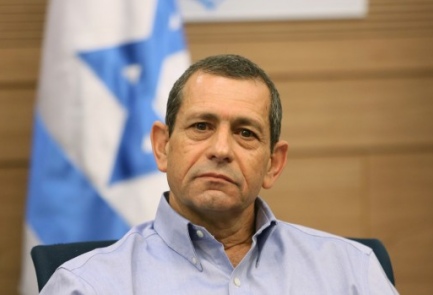
 WarSclerotic
Recent Comments