–
–
–
Source: PM: Iran ‘most potent force of militant Islam’; threatens Israel, Europe alike | The Times of Israel
In Bulgaria for international forum, Netanyahu says West must ‘stand together’ in countering threat to its civilization
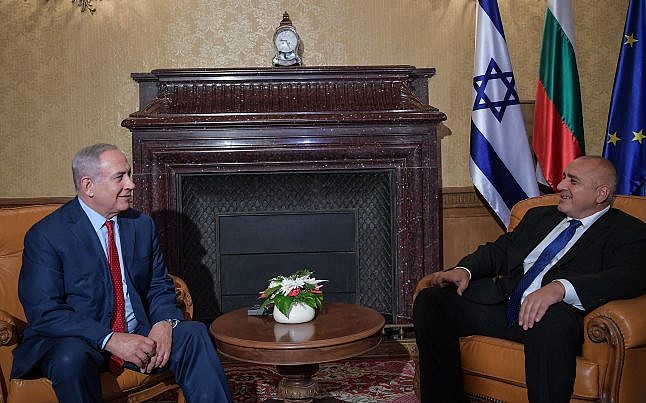
Prime Minister Benjamin Netanyahu on Thursday night called Iran the “most potent force of militant Islam” in the world and warned Europe of possible Iranian attacks on its soil.
Speaking to reporters after talks with his Bulgarian counterpart, Boyko Borissov, Netanyahu said radical Islam is a threat to the world, and that Israel has recently revealed a number of Iranian plots to carry out attacks on European soil.
He said Israel and Europe “stand together” in the face of such attacks.
Israeli officials said Wednesday that the Mossad intelligence service had provided its Danish counterpart with information concerning an alleged Iranian plot to assassinate opposition activists in its territory.
“We are part of the same civilization, a civilization that values liberty, peace and progress, and today this civilization is under attack, most notably by the forces of militant Islam. Militant Islam attacks all of us. It attacks Arabs. It attacks Europeans. It attacks Israelis. It attacks everyone,” he said.
Netanyahu arrived in Bulgaria’s Black Sea city of Varna for Friday’s meeting of the Craiova Forum, which includes the prime ministers of Bulgaria, Greece and Romania, as well as the president of Serbia.
Ahead of his trip, Netanyahu said he wants to strengthen ties with these countries and “change the hostile and hypocritical approach of the European Union” toward Israel.

The premier said he would discuss with Bulgaria’s prime minister cooperation on military matters, trade, cyber-security, health and science.
“Israel is an innovation nation and it can help the people of Bulgaria and the other countries here by cooperating in ways that will help us and will help you in every field,” he said.
Netanyahu said the purpose of the visit was to strengthen Israel’s relationship with Balkan nations, but also to promote his agenda with the European bloc, which he has long chastised for what he claims is an anti-Israel bias.
Netanyahu didn’t specify which of the EU’s policies he takes issue with, but he has previously been at loggerheads with the bloc over the Israeli-Palestinian peace process and the Iran nuclear deal. Members of the coalition and some in the opposition also often claim that the union treats the Jewish state unfairly and often stands on the wrong side of history.
Brussels’ adamant opposition to settlement expansion and to Israel’s demolition of Palestinian structures, as well as European funding of leftist nonprofits, have angered right-wing Israelis for years.
Israel’s ties with the 28-member state union significantly worsened after the EU’s November 2015 decision to label settlement products. In its initial anger, Israel suspended contacts with the EU, but soon reinstated them. There were other signs of a detente, for example when a senior official in Brussels said in late 2016 that the union was willing to reconvene the EU-Israel Association Council, a bilateral forum on ministerial level, after a five-year hiatus.
But relations quickly went south again. In July 2017, Netanyahu was overheard, during a visit to Budapest, calling the EU “crazy” for insisting on linking the advancement of bilateral ties to progress in the peace process.
Tensions were exacerbated after US President Donald Trump’s December 6, 2017, recognition of Jerusalem as Israel’s capital, a move the union vehemently opposed.
Brussels also assumed the role of chief defender of the Iranian nuclear deal after Trump announced the US’s withdrawal from the landmark pact on March 8. Brussels not only condemned the president’s move but also vowed to protect European companies from reimposed sanctions.
Israeli attacks on the union have since increased in frequency and intensity. Ministers openly accuse the EU of funding anti-Israel boycottsand even organizations with terrorist links.
Raphael Ahren contributed to this report.
Source: Iran’s Khamenei: Trump has ‘disgraced’ US prestige | The Times of Israel
Lashing out at Washington days before fresh sanctions to be reimposed, supreme leader says America in decline and will be the ultimate loser against Islamic republic
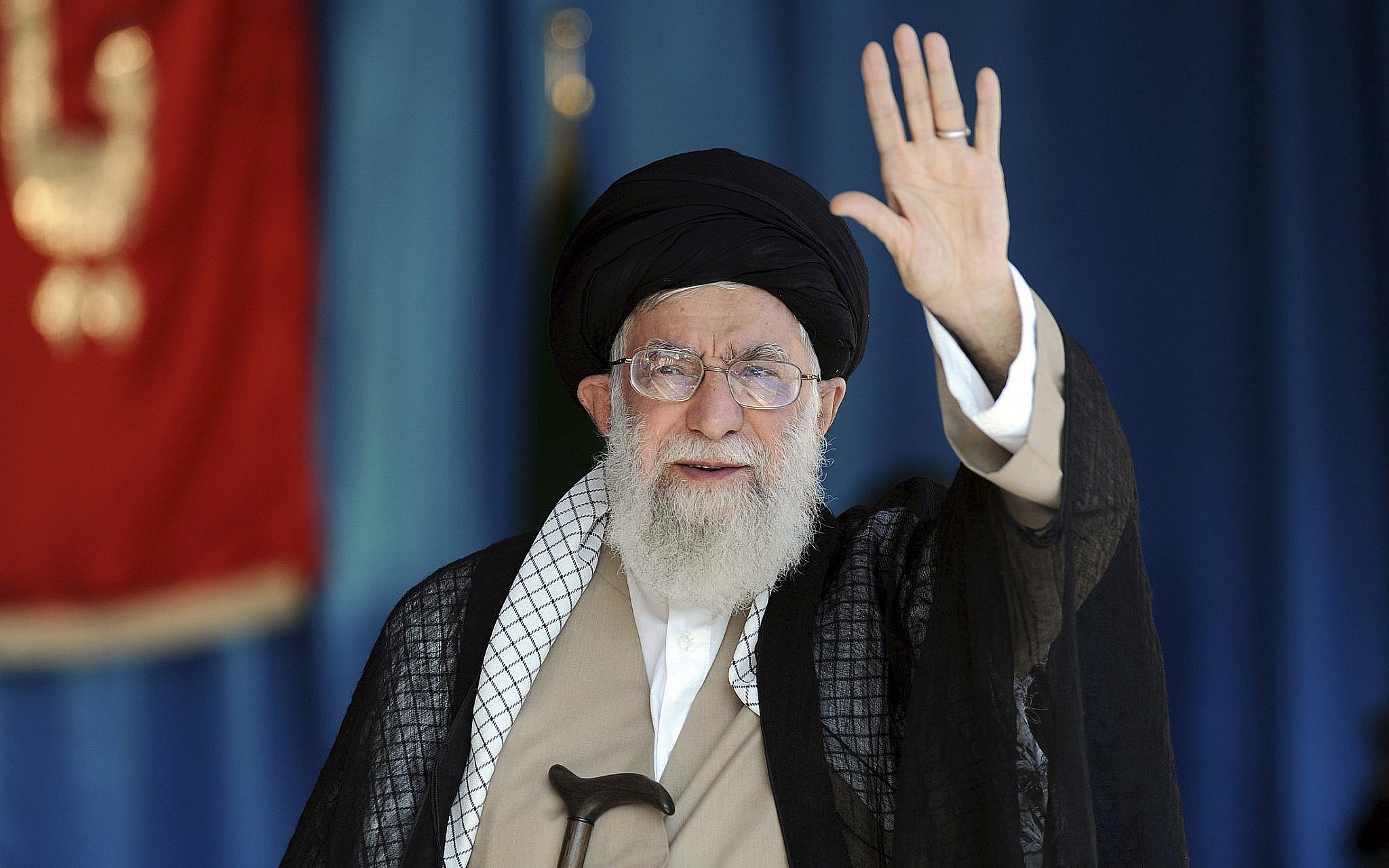
Iran’s supreme leader Ayatollah Ali Khamenei said Saturday that US President Donald Trump has “disgraced” US prestige and would be the ultimate loser from renewing sanctions on the Islamic republic.
“This new US president… has disgraced the remnant of America’s prestige and that of liberal democracy. America’s hard power, that is to say their economic and military power, is declining too,” he said on his Persian Twitter account, quoting a speech in Tehran.
A defiant Khamenei dismissed the renewed US sanctions — including an oil embargo — that take effect on Monday.
“The challenge between the US and Iran has lasted for 40 years so far and the US has made various efforts against us: military, economic and media warfare,” he said.
“There’s a key fact here: in this 40-year challenge, the defeated is the US and the victorious is the Islamic republic.”
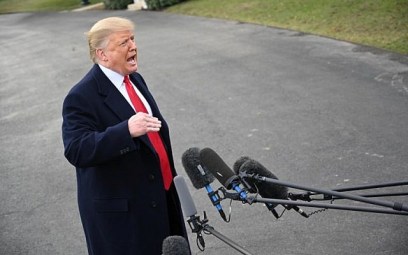
On Friday, the Trump administration restored US sanctions on Iran that had been lifted under the 2015 nuclear deal, but carved out exemptions for eight countries that can still import oil from the Islamic Republic without penalty.
The sanctions take effect Monday and cover Iran’s shipping, financial and energy sectors. They are the second batch the administration has re-imposed since Trump withdrew from the landmark accord in May.
The 2015 deal, one of former president Barack Obama’s biggest diplomatic achievements, gave Iran billions of dollars in sanctions relief in exchange for curbs on its nuclear program, which many believed it was using to develop atomic weapons. Trump repeatedly denounced the agreement as the “worst ever” negotiated by the United States and said it gave Iran too much in return for too little.
In a statement issued Friday night, Trump said, “Our objective is to force the regime into a clear choice: either abandon its destructive behavior or continue down the path toward economic disaster.”
Secretary of State Mike Pompeo said the sanctions are “aimed at fundamentally altering the behavior of the Islamic Republic of Iran.” He has issued a list of 12 demands that Iran must meet to get the sanctions lifted that include an end to its support for terrorism and military engagement in Syria and a halt to nuclear and ballistic missile development. He said US allies such as Turkey, Italy, India, Japan and South Korea will receive temporary waivers allowing them to continue to import Iranian petroleum products as they move to end such imports entirely.
But proponents as well as the other parties to the deal — Britain, China, France, Germany, Russia and the European Union — have vehemently defended it. The Europeans have mounted a drive to save the agreement without the US, fearing that the new sanctions will drive Iran to pull out and resume all of its nuclear work.
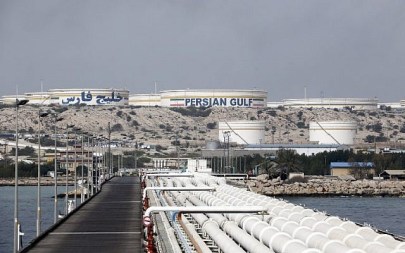
Friday’s announcement comes just days before congressional midterm elections in the US, allowing Trump to highlight his decision to withdraw from the deal — a move that was popular among Republicans.
Washington says it wants a new deal with Iran, curtailing its regional interventions and missile program — demands which have been flatly rejected by Tehran.
Source: European signatories to Iran nuclear deal condemn new US sanctions | The Times of Israel
France, UK, Germany and EU ‘deeply regret’ American measures, call accord ‘essential for the security of Europe, the region and the whole world’
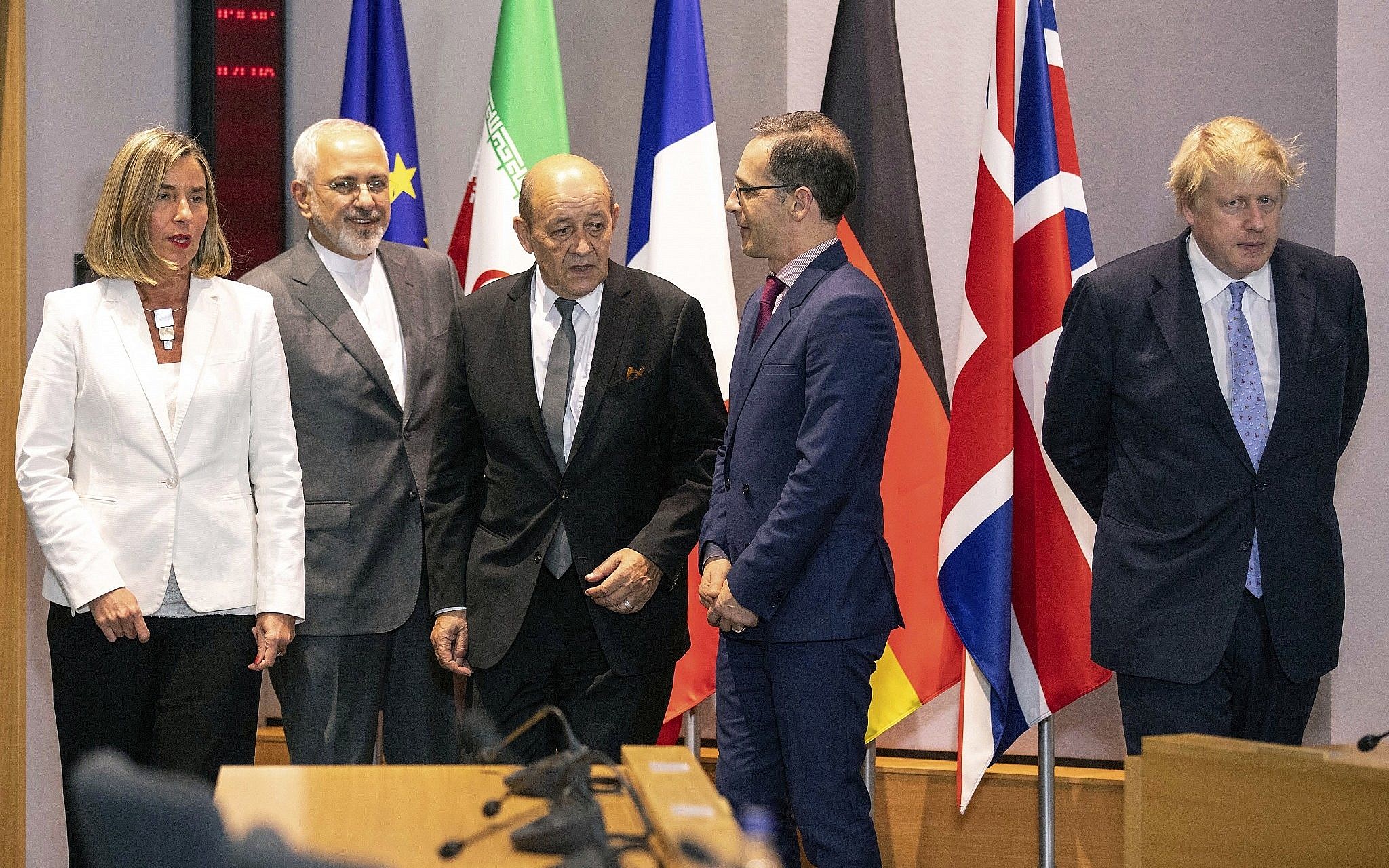
PARIS — France, Germany, Britain and the European Union issued a joint condemnation Friday of the US move to place fresh sanctions on the Iranian economy, vowing to protect European companies doing “legitimate” business with Tehran.
“We deeply regret the reimposition of sanctions by the United States stemming from their withdrawal from the Joint Comprehensive Plan of Action,” the statement said in reference to the hard-fought 2015 nuclear deal with Iran.
Struck between world powers and Tehran after years of fraught negotiations, the deal was aimed at limiting Iran’s nuclear capabilities in exchange for sanctions relief.
But US President Donald Trump announced in May that he was walking away from the deal and would reimpose sanctions, leaving the EU scrambling to protect companies that have forged trade links with Iran.
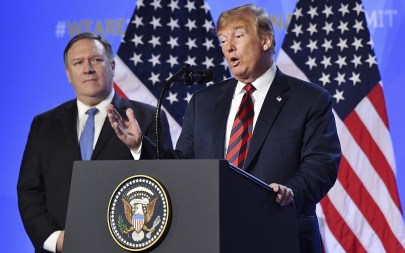
Friday’s statement from EU nations defended the deal as “essential for the security of Europe, the region and the whole world.”
“Our objective is to protect European economic actors involved in legitimate commercial trade with Iran,” it added.
Europe will also seek to “maintain financial channels operational with Iran and to ensure the continuation of Iranian oil and gas exports,” it said.
US officials said Friday that Washington was adding 700 individuals and entities to its Iran blacklist and pressuring the global SWIFT banking network to cut off Tehran when expanded sanctions are put in place next week.
US Secretary of State Mike Pompeo said the sanctions were aimed at getting Tehran to halt its nuclear activities and what the US says is broad support for terrorism in the region.
The EU says 12 consecutive reports from the International Atomic Energy Agency show that Iran has stuck to the terms of the deal.
Source: US reimposes all sanctions on Iran lifted under nuclear deal | The Times of Israel
Pompeo says new measures aimed at forcing Tehran to give up ‘its well-documented outlaw activities,’ grants temporary waivers to 8 countries
WASHINGTON (AP) — The Trump administration on Friday announced the reimposition of all US sanctions on Iran that had been lifted under the 2015 nuclear deal, ramping up economic pressure on the Islamic Republic as President Donald Trump completed the unraveling of what had been one of his predecessor’s signature foreign policy achievements.
The sanctions, which will take effect on Monday, cover Iran’s shipping, financial and energy sectors and are the second batch the administration has reimposed since Trump withdrew from the landmark accord in May. The rollback ends US participation in the nuclear deal, which now hangs in the balance as Iran no longer enjoys any relief from sanctions imposed by the world’s largest economy.
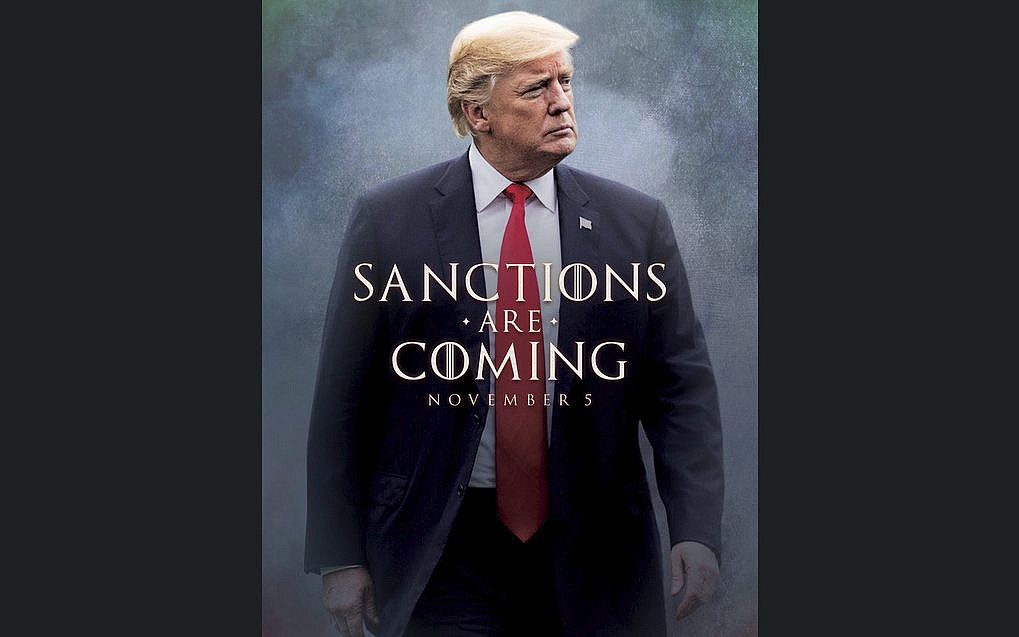
Shortly after the announcement, Trump tweeted a movie poster-like image of himself walking out of what appears to be fog with the phrase “Sanctions are Coming, November 5.”
With limited exceptions, the sanctions will hit countries that do not stop importing Iranian oil and foreign firms that do business with blacklisted Iranian entities, including its central bank, a number of private financial institutions, and state-run port and shipping firms, as well as hundreds of individual Iranian officials.
 Donald J. Trump
✔@realDonaldTrump
Secretary of State Mike Pompeo said the sanctions are “aimed at fundamentally altering the behavior of the Islamic Republic of Iran.” He has issued a list of 12 demands that Iran must meet if it wants the sanctions lifted. Those include ending support for terrorism and military engagement in Syria and a complete halt to its nuclear and ballistic missile development.
“Our ultimate aim is to compel Iran to permanently abandon its well-documented outlaw activities and behave as a normal country,” Pompeo told reporters in a conference call with Treasury Secretary Steven Mnuchin. “Maximum pressure means maximum pressure.”
Pompeo said eight nations will receive temporary waivers allowing them to continue to import Iranian petroleum products for a limited period as they move to end such imports entirely. He said those countries, which other officials said would include US allies such as Turkey, Italy, India, Japan and South Korea, had made efforts to eliminate their imports but could not complete the task by Monday.
The waivers, expected to be announced Monday, will be valid for six months, during which time the importing country can buy Iranian oil but must deposit Iran’s revenue in an escrow account. Iran can spend the money but only on a narrow range of humanitarian items. Pompeo said two of the eight countries would wind down imports to zero within weeks.
Mnuchin said 700 more Iranian companies and people would be added to the sanctions rolls. Those, he said, would include more than 300 that had not been included under previous sanctions.
“We are sending a very clear message with our maximum pressure campaign: that the US intends to aggressively enforce our sanctions,” he said.
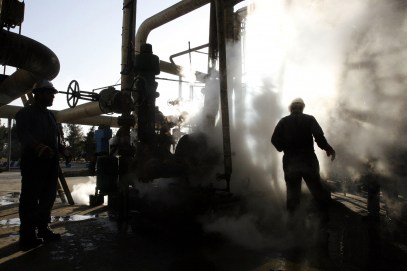
Iran hawks in Congress and elsewhere were likely to be disappointed in the sanctions as they had been pushing for no oil import waivers as well as the complete disconnection of Iran from the main international financial messaging network known as SWIFT.
One group that has been highly critical of the deal welcomed the new sanctions but said there should be no exceptions.
“We encourage the Trump administration to fulfill the promise of a maximum pressure campaign — no exceptions — until Iran permanently and verifiably changes its behavior,” United Against a Nuclear Iran said in a statement. “Oil and gas firms, including those from friendly countries like India, South Korea and Japan, should not be granted sanctions waivers. Similarly, financial entities — including SWIFT — must sever ties with Iranian banks and financial institutions.”
Mnuchin defended the decision to allow some Iranian banks to remain connected to SWIFT, saying that the Belgium-based firm had been warned that it will face penalties if sanctioned institutions are permitted to use it. And, he said that US regulators would be watching closely Iranian transactions that use SWIFT to ensure any that run afoul of US sanctions would be punished.
Pompeo, meanwhile, defended the oil waivers, saying US efforts to cut Iran’s petroleum revenue had already been successful. He noted that since May, when the US began to press countries to stop buying Iranian oil, Iran’s exports had dropped by more than 1 million barrels per day.
Pompeo and Mnuchin both said the sanctions will have exceptions for humanitarian purchases.
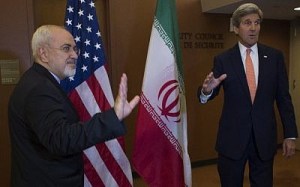
The 2015 nuclear deal, one of former president Barack Obama’s signature foreign policy achievements, gave Iran billions of dollars in sanctions relief in exchange for curbs on its nuclear program, which many believed it was using to develop atomic weapons. Trump repeatedly denounced the agreement as the “worst ever” negotiated by the United States and vowed to withdraw from it during the 2016 presidential campaign.
Trump and other critics of the deal said it gave Iran too much in return for too little, allowed Iran to gradually resume nuclear activity that could eventually be used for weapons development and did not address any of the country’s other problematic activities.
Obama-era officials as well as the other parties to the deal — Britain, China, France, Germany, Russia and the European Union — have vehemently defended it. The Europeans have mounted a drive to save the agreement from the US withdrawal, fearing that the new sanctions will drive Iran to pull out and resume all of its nuclear work.
Source: Iran inaugurates production line of local fighter jets ahead of US sanctions | The Times of Israel
Defense minister says domestically made Kowsar aircraft symbolizes Islamic Republic’s battle against ‘global ‘arrogance’ led by the US
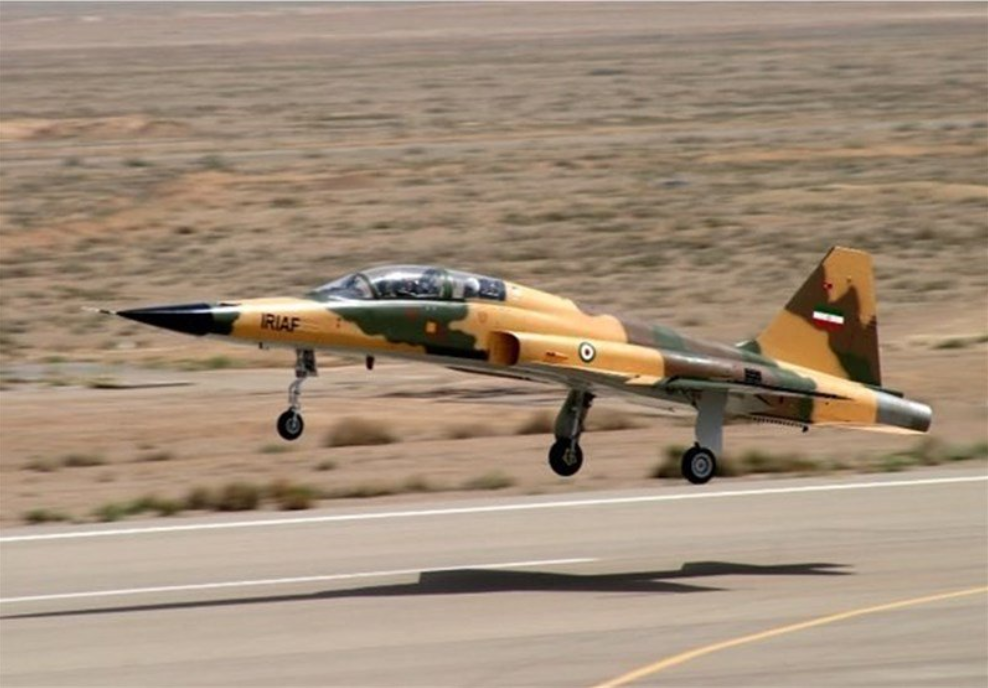
Iran on Saturday inaugurated the production line of its domestically produced fighter jet, a day after the Trump administration announced the reimposition of remaining US sanctions on Tehran to ramp up economic pressure on the Islamic Republic.
Defense Minister Gen. Amir Hatami said the production line highlighted the capabilities of Iranian experts despite “sanctions by enemies,” according to state-run news outlet Press TV.
Hatami said inaugurating production of the Kowsar fighter was “the very symbol of fighting the [global] arrogance and standing against the excessive demands of the imperial system, which is being led by the Great Satan, the United States.”
Speaking at an industrial complex in the Isfahan province, Hatami added that the “fourth-generation” fighter, with “advanced maneuvering capability” and multi-purpose radar would be service the entire Iranian Air Force “soon.”
Hatamui’s announcement comes days before the US sanctions lifted under the 2015 nuclear deal were set to be reimposed on the Islamic Republic. The sanctions take effect Monday and cover Iran’s shipping, financial and energy sectors. They are the second batch the administration has reimposed since Trump withdrew from the international accord in May.


 Mark Pyruz@INTELonIRANIran promotion of HESA Kowsar upgrade assembly line; extending service life for the F-5E/F Tiger II type aircraft, originally built by Northrop and exported to Iran during the mid 1970’s.
Iran unveiled the Kowsar fighter in August, but analysts quickly noted similarities between the Iranian jet and the American F-5 fighter, made by Northrop-Grumman in the 1950s, and expressed doubts that the plane was actually new.
At the time, state TV said the Kowsar had already been through successful testing and showed footage of the plane on the runway, though the broadcast stopped before the plane took off.
The F-5 was sold to Iran in the 1960s and first entered operation in the Iranian Imperial Air Force in 1965. In the West, the F-5 line of jets is mostly used for training purposes.
Iran has already used the F-5 platform — and, some observers suggest, actual parts from its aging fleet of non-flying F-5s — to develop its newer jets. The Saeqeh, first flown in 2004, was one such plane.
In 2013, Iran unveiled its “first,” domestically-made fighter jet, the Qaher F313, but it was quickly derided by numerous experts in the West who said the plane was actually a plastic model, and was unable to fly.
Source: Iran admits to being hit by potent cyber attack
Gholam Reza Jalali, head of Iran’s civil defense agency, told media outlets on Sunday that the government successfully neutralized “a new generation of Stuxnet which consisted of several parts… and was trying to enter our systems.”
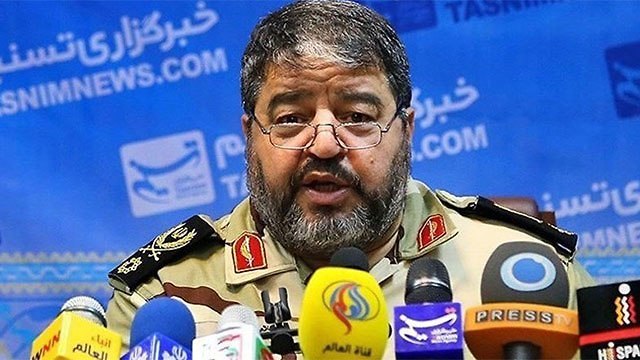
The Iranians, however, did not reveal the extent of its damage. Israel, considered the Islamic republic’s archenemy, has been silent on the matter.
Eyal Wachsman, CEO of Israeli cyber-security company Cymulate, told The Media Line that “Iran has physically attacked civilian and military targets worldwide with bombs and guns, and in recent years, has taken the fight to the cyber world.
“The US and Israel, masters of cyber warfare, are believed to have been behind counterattacks against Iran in the past, including the Stuxnet virus,” Wachsman said. That virus sabotaged Iran’s nuclear enrichment efforts by speeding up and damaging its centrifuges.
“In 2012, the Flame virus was deployed targeting Iran’s computer networks that collect intelligence, and Duqu 2.0 was used in 2015 during the nuclear talks. There were presumably additional attacks which have received little to no attention,” Wachsman continued.
After US sanctions against Iran come into full force on November 5, “Iran could feel cornered, and therefore might unleash a very severe cyber-attack, forcing the US and Israel to retaliate at the same level or possibly higher.”

The latest attack on Iran’s networks comes on the backdrop of two earlier security-related developments involving the Islamic republic.
A few hours before the attack, the Mossad helped Danish officials thwart an Iranian murder plot against three anti-regime Iranian dissidents living in Denmark.
Two days before that, Iranian officials acknowledged that Iranian President Hassan Rouhani’s mobile phone had been bugged by unknown hackers, the semi-official Iranian Students News Agency reported.
In response to the bugging, Iran’s Supreme Leader Ayatollah Ali Khamenei urged defense officials to step up counter-intelligence efforts against “the enemy’s complex practices,” according to a report on Iranian state TV. He also urged security bodies to “confront infiltration through scientific, accurate, and up-to-date action.”
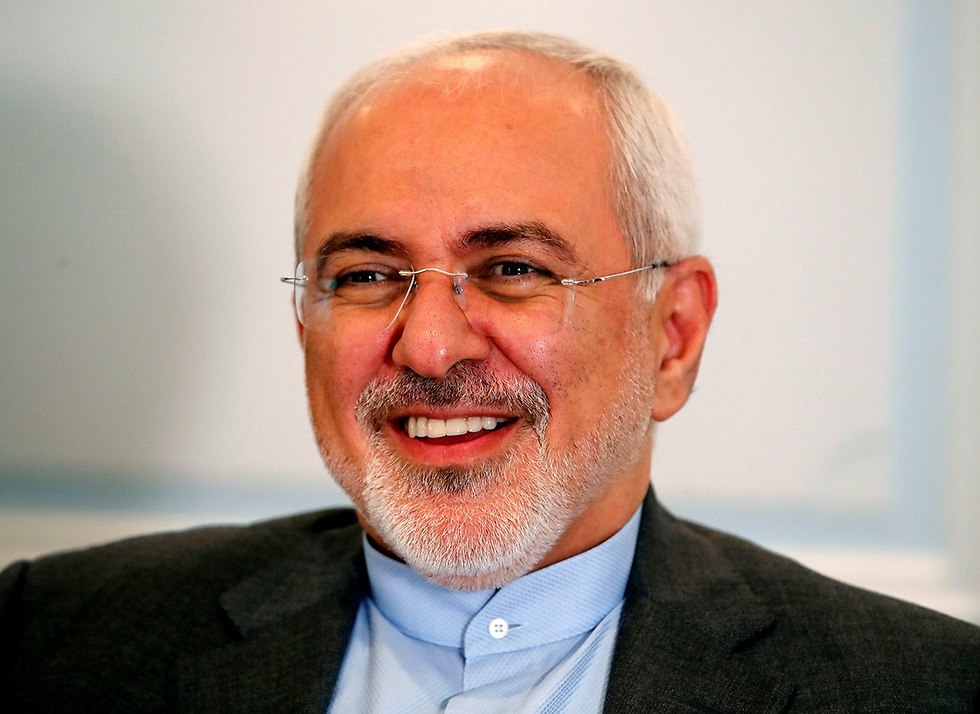
On Thursday, Iranian Foreign Minister Javad Zarif sent out a tweet citing the recent sequence of events, claiming Israel was behind it.
“Incredible series of coincidences. Or, a simple chronology of a Mossad program to kill the JCPOA?” he wrote, referring to the 2015 Joint Comprehensive Plan of Action, also known as the Iran nuclear deal.
Asaf Romirowsky, a Middle East historian and Executive Director of Scholars for Peace in the Middle East, told The Media Line that in the last few months “Israeli intelligence was able to unearth 100,000 documents regarding Iran’s nuclear ambitions.”
The operation to infiltrate Iranian intelligence was part of ongoing attempts to prove what Iran has been doing despite its rhetoric of cooperation with European powers, which are trying to salvage the nuclear deal, Romirowsky explained.
“The Israelis showcasing their intelligence was key, because all along the debate—especially when it comes to American foreign policy toward Israel—was that Iran was not doing things under the table. But the Israelis uncovered actual data that proved the opposite. It was part of the tactic to show the world what Iran’s true intentions were.
“The latest attack in the cyber warfare taking place in the region is part of an effort to calm the region by whatever means necessary,” Romirowsky concluded.
Israel fiercely opposed the 2015 nuclear deal with Iran, claiming that it was Iran’s way of arriving at a nuclear bomb through cooperative means. Last May, US President Donald Trump withdrew from the accord and began reimposing economic sanctions on Tehran.

As Iran and European powers work to salvage the deal, Israeli officials claim that Tehran is still pursuing aggressive policies through covert operations. Earlier this year, the Mossad claimed to have extracted a vast archive of documents from Tehran that details Iran’s nuclear ambitions.
Prime Minister Benjamin Netanyahu revealed some findings from the stolen achieve at the UN General Assembly meeting in New York last September. He used graphics to pinpoint covert nuclear facilities inside Iran, Syria and Lebanon.
“What Iran hides, Israel will find,” Netanyahu said during his address to the assembly.
The Trump administration said on Friday that eight importing countries would temporarily be allowed to keep buying Iranian oil
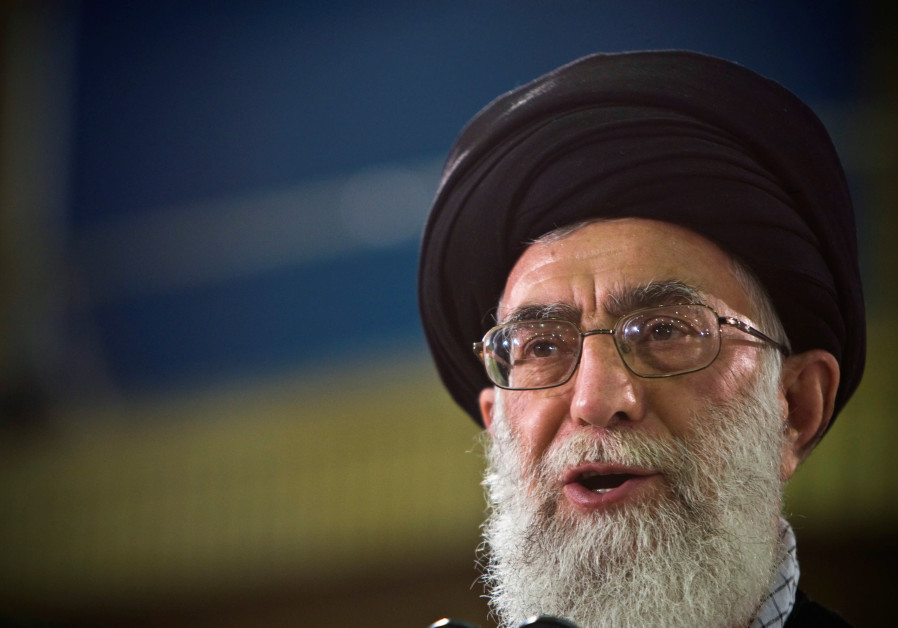
DUBAI, Nov 3 – Iran’s top leader said on Saturday U.S. President Donald Trump’s policies face opposition across the world as Washington prepared to reimpose sanctions on Iran’s vital oil-exporting and financial sectors, state television reported.
Ayatollah Ali Khamenei also said Iran’s arch-adversary the United States had failed to reassert its domination over Iran since the country’s 1979 Islamic Revolution that toppled the U.S.-backed Shah.
“The world opposes every decision made by Trump,” Iranian state television quoted Khamenei as saying during a meeting with thousands of students.
“America’s goal has been to re-establish the domination it had (before 1979) but it has failed. America has been defeated by the Islamic Republic over the past 40 years.”
Washington will on Monday reintroduce far-reaching sanctions on Iran’s vital oil sales and banking sectors to try to force the Islamic Republic into negotiations to scrap its nuclear energy and ballistic missile programs and end its support for proxies in conflicts across the Middle East.
However, the Trump administration said on Friday that eight importing countries would temporarily be allowed to keep buying Iranian oil when sanctions come back into effect. Iran is the world’s No. 3 oil exporter.
Turkey said on Saturday that Ankara had received initial indications from Washington that it would be granted a waiver, but is awaiting clarification on Monday.
Most international sanctions on Iran were lifted in early 2016 under a deal Iran signed with world powers the year before under which it curbed its uranium enrichment program, widely seen abroad as a disguised effort to develop an atomic bomb.
Iranian Foreign Minister Mohammed Javad Zarif spoke by telephone with the European Union’s foreign policy chief, Federica Mogherini, and his counterparts from Germany, Sweden and Denmark about European measures to counter the U.S. sanctions, the Iranian state news agency IRNA reported.
“Mogherini and the European ministers … highlighted the importance of the finance ministers’ commitment to Europe’s financial mechanism to save the Iran nuclear deal and said the mechanism will be operational in the coming days,” IRNA said.
Diplomats told Reuters last week that the new EU mechanism to facilitate payments for Iranian exports should be legally in place by Nov. 4, when the next phase of U.S. sanctions hit, but will not be operational until early next year.
The EU, France, Germany and Britain – all co-signatories, along with Russia and China, to the nuclear deal with Iran – said in a joint statement on Friday they regretted Trump’s decision to restore sanctions on Iran.
With the sanctions clampdown, Trump is seeking to push Iran to end uranium enrichment outright, and halt its ballistic missile development and support for proxy forces in Yemen, Syria, Lebanon and elsewhere in the Middle East.
“Iran … will not permit the Trump regime, which has made American foreign policy devoid of any principles, to reach its illegitimate goals,” the Iranian Foreign Ministry said in a statement carried by IRNA.
Trump denounced the nuclear deal, approved by his predecessor Barack Obama, as flawed in Iran’s favor and withdrew Washington from the pact in May.
Source: ‘Israel is protecting Western civilization’ – Middle East – Jerusalem Post
Conservative American firebrand Ben Shapiro opens up about Israel and Judaism.
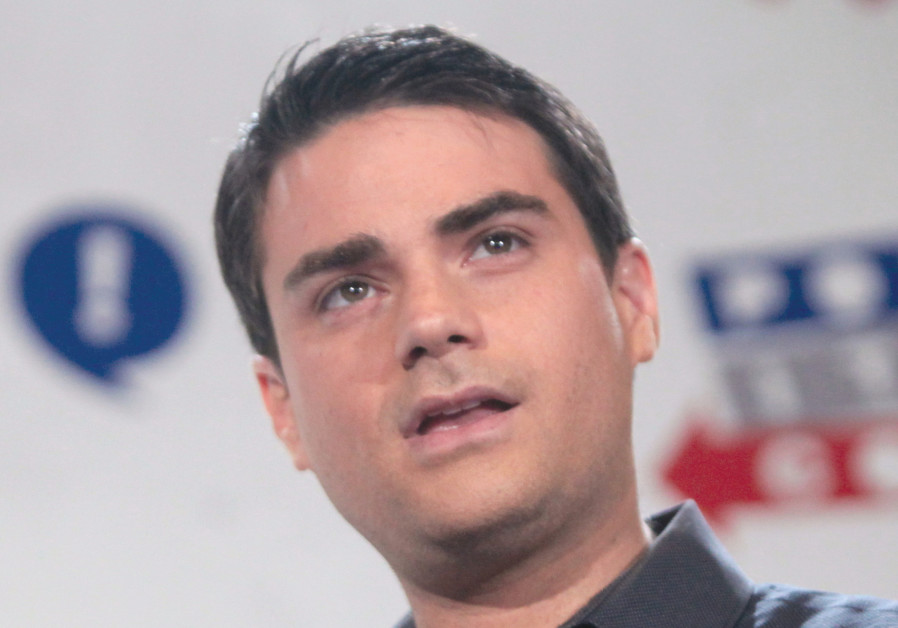
Conservative commentator Ben Shapiro‘s star has been rising in the US in recent years. He’s only 34 years old, but he began his career 17 years ago, writing a syndicated column, and now he has his own news site, The Daily Wire, “The Ben Shapiro Show,” a podcast with millions of listeners, and, more recently, a weekly show on Fox News.
In between, he managed to become editor-at-large of the far-right – these days, some would say alt-right – website Breitbart, and resigned in 2016. Shapiro accused Breitbart chairman Steve Bannon, an eventual adviser to US President Donald Trump, of turning the site into “Trump’s personal Pravda.”
Later that year, the Anti-Defamation League identified Shapiro as the No. 1 target of online antisemitism among Jewish journalists in the US, and he received the most hate by far.
Shapiro continues to be targeted from all ends: from the Left, because he’s staunchly conservative, and from the Right, because he is not a Trump cheerleader, and doesn’t hesitate to criticize the president.
His no-nonsense attitude and caustic humor have attracted admirers and detractors; “facts don’t care about your feelings” is his most famous slogan, and he sells coffee mugs that are labeled “leftist tears.” He’s found allies in the self-described Intellectual Dark Web, a group of thinkers – their day jobs include academia, journalism and comedy – who don’t fit perfectly into mainstream media’s liberal or conservative labels, and have found wild success producing their own content online.
Although Shapiro is an Orthodox Jew and a vocal supporter of Israel, his content is aimed at a broader American audience, and therefore he doesn’t often focus on those areas.
In a conversation with The Jerusalem Post last month from his LA podcast studio, the father of two – married to a Moroccan-Israeli doctor about whom he often sweetly scheps naches (expresses great pride) – discussed American Jewish identity, support for Israel and more, in his typically no-holds-barred manner.
“I LOVE Israel, it’s an amazing country!” Shapiro said. “Obviously, being religious has a tremendous impact on how I view Israel.”
But Shapiro’s support goes beyond that. “Israel is an unbelievable example of how Western civilization and liberal values can thrive in the most violent neighborhood on planet earth. It’s an amazing thing.”
Shapiro often bounced between his religious view and a secular, logic-based view. One instance where this came up strongly was in the debate over abortion in the US.
A tweet by Shapiro in July started a huge firestorm of debate among US Jews, which expanded into general media, as well: “Virtually every major Jewish halachist [interpreter of Jewish law] of the modern era has barred abortion except when the life of the mother is threatened. Don’t try quoting the Talmud at me. You just don’t know enough.”
Shapiro explained the tweet, saying that he thought people who disagreed with his idea are “misguided” when it comes to Jewish law, and that “the original claim that set it off is that Judaism is a pro-choice religion, where you get to decide on your own whether to kill a baby or not.
“People on the Left are claiming Judaism is pro-choice, because you have to ask a rabbi for a heter [permission]? You’re a theocrat now. Congratulations.”
Though Shapiro said he makes his Jewish values a priority, he also finds it important to have a secular rationale for political ideas in a secular society.
“I’ll never argue based on the Torah, but I don’t want to see people misrepresenting Torah based on leftist politics. I’m not quoting Shulhan Aruch at people,” he said. “We have to have a conversation on a secular level in a free society, so we agree on parameters of a debate. I am consistent in that I almost never invoke Judaism.
“You don’t hear me cite biblical sources on same-sex marriage; that’s an appeal to authority, not an argument,” he added.
At the same time, Shapiro regularly relays his interpretation of the weekly Torah portion during his podcast, which he said comes from an approach that the Torah “lies at the root of Western civilizational values,” not from an aim to analyze the Jewish view on a specific issue. These divrei Torah are “trying to discuss broader themes that appear not only in daily life, but how we define our values as a civilization.”
Shapiro argued that Jews on the Left do not put their Jewish values first. Right-wing Jews “see Jewish values as the paramount values,” while on the Left there are either people who say “I’m supposed to get extra credit for views on Israel and Judaism, even though I don’t practice anything,” or those who “take Judaism seriously enough that they practice some of it, but still see Left political priorities as the chief moral priorities.”
According to Shapiro, “they value social liberalism more than they value Judaism…. American Jews care more about same-sex marriage and abortion than Israel, as a rule. It’s not true about Orthodox Jews, who tend to love Israel and have a stake in its future, and it’s not true about older Jews who understand the necessity for a Jewish state on secular Zionist grounds.
“Even secular people in Israel have a nationalist identity and care about security and know Israel must be Jewish and democratic to survive,” he added.
The high rate of intermarriage in the American Jewish community is explained by the US being tolerant, Shapiro said, which is also why some “don’t understand the need for Israel.”
Liberal views on Israel held by US Jews are a result of Israel’s success, and “by the leftist view [that] a successful country [is] by necessity an exploiter.”
“Zionism is an outgrowth of late-stage Western civilization,” he said. “Every state has to argue what makes it unique, that it’s worthy of survival and worthy of fighting for.”
This idea, Shapiro said, is part of what inspires anti-Israel activists.
“Anti-Israel folks on campus are generally anti-American. People who don’t like the hierarchies of Western civilization see Israel as an exploiter,” he said, recounting that when he was a student at the University of California, Los Angeles, the student body “voted for BDS and voted to divest from the United States. I don’t know how that would work.
“The people who protest me for being conservative, protest Israel for existing,” said Shapiro, whose speeches are a frequent target of campus demonstrations, which have turned violent in some cases.
SHAPIRO’S VIEWS on the Palestinians have undergone changes. While he was always a staunch Israel supporter, he wrote a column when he was 19 that called to transfer Palestinians out of the West Bank and Gaza, which many of his opponents cite.
Now, Shapiro says he regrets writing it.
“When you’re younger, you tend to be more utopian and simplistic in your views of conflict,” he explained.
The column was “a poorly thought out idea, aside from the moral implications of having to forcibly move millions of people…. It’s a bad idea and an immoral idea.”
Much like many on the Israeli Right, Shapiro advocates for managing the conflict with the Palestinians, because he does not see a solution.
The conflict, he said, “is destined to continue ad infinitum [if there is not] some kind of change on the part of the Palestinians. It means security, not peace, from here to the end of time.”
At the end of the interview, Shapiro asked to relay a message of thanks to Israel.
“As a US Jew, I can’t be more grateful to the people of Israel for protecting and defending not only eternal values but the survival of Western civilization more broadly. It’s not often enough that US Jews say thank you to Israelis, but they ought to…. Americans benefit from having Israelis on the front lines protecting civilization and Jewish lives,” he said.
“I have enormous hakarat hatov [gratitude] for Israelis,” Shapiro added.




 anneinpt
 artaxes
 danmillerinpanama
 davidking1530
 Peter Hofman
 Joseph Wouk
 Peter
Peter Louisiana Steve
 WarSclerotic
Recent Comments