Archive for November 2018

Europe agrees to back UN resolution condemning Hamas terror group 

November 30, 2018

Source: Europe agrees to back UN resolution condemning Hamas terror group | The Times of Israel

New draft of US proposal, which now includes a reference to international law and ‘relevant UN resolutions,’ to be voted on Monday in General Assembly
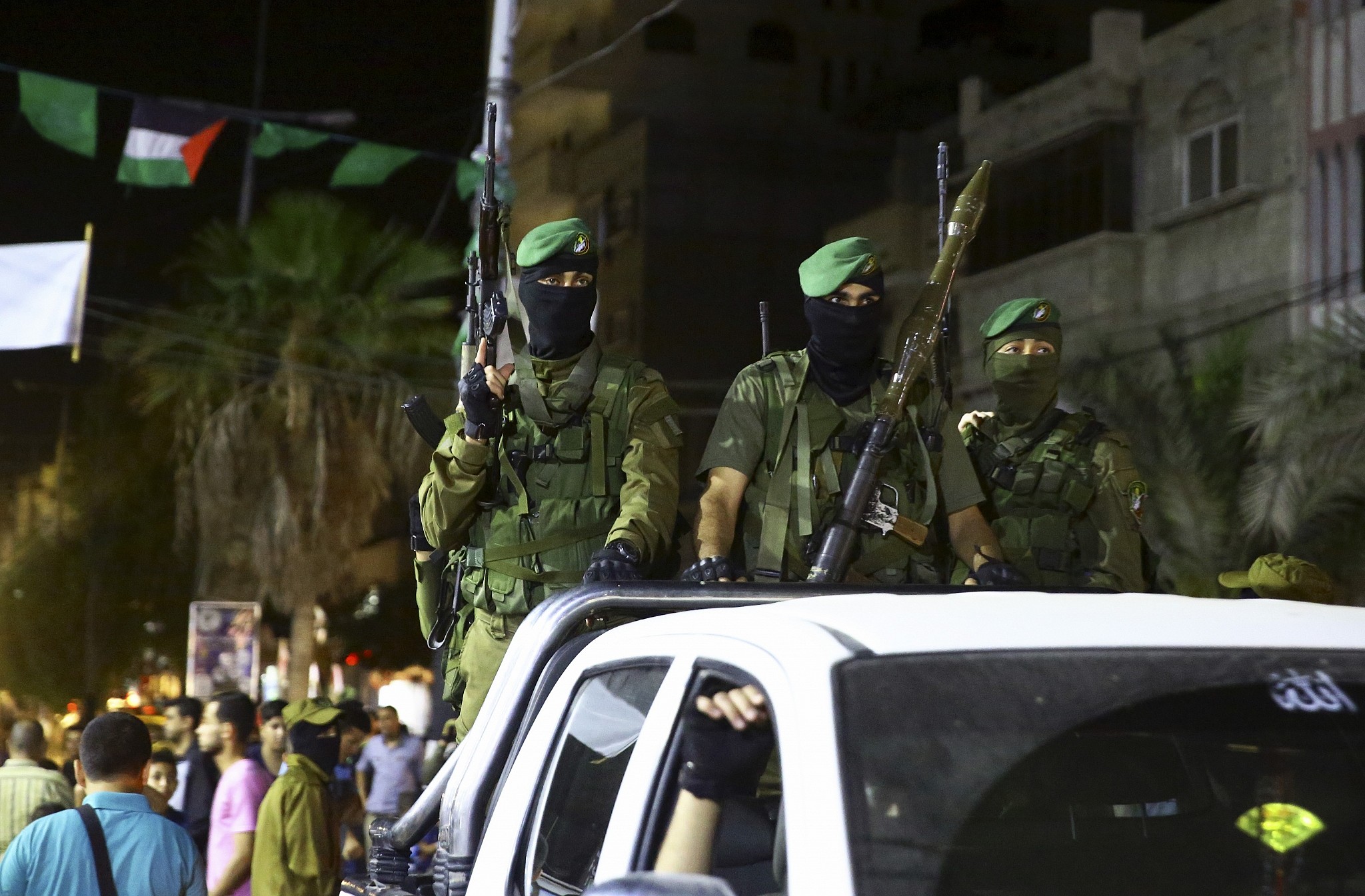
Members of the Izzedine al-Qassam Brigades, Hamass armed wing, marking Al-Quds, Jerusalem, Day in Nusseirat refugee camp, in the central Gaza Strip, Friday, June 23, 2017. (AP/Adel Hana)

Members of the Izzedine al-Qassam Brigades, Hamass armed wing, marking Al-Quds, Jerusalem, Day in Nusseirat refugee camp, in the central Gaza Strip, Friday, June 23, 2017. (AP/Adel Hana)

The European Union agreed to support a US-sponsored United Nations General Assembly resolution condemning Hamas, following negotiations with Washington, diplomats said Thursday.

The draft resolution will likely be voted on in the United Nations General Assembly on Monday, an official in Israel’s mission to the UN told The Times of Israel on Thursday.

After the US agreed to make some changes to the initial draft, the EU on Thursday agreed to support the text. All 28 EU member states are expected to vote in favor.

“All 28 members will support the US text,” a European diplomat told AFP.

EU Ambassador to the UN João Vale de Almeida at a Security Council meeting January 18, 2017. UN/Evan Schneider)

If adopted, the resolution would be the first General Assembly vote to condemn the Palestinian terrorist group. The EU’s support dramatically increases its chances of passing, though it is unclear whether it will guarantee the needed simple majority among the UN’s 193 member states.

Earlier this week, European diplomats said there were disagreements on the proposed US text, notably including references to UN resolutions and to the two-state solution.

The Europeans had asked, and the Americans agreed, to insert a clause that states that a future Israeli-Palestinian peace deal should be “in accordance with international law, and bearing in mind relevant UN resolutions.”

However, the draft still does not make explicit mention of a two-state solution, though virtually all recently passed UN resolutions passed on the subject do.

Both the US and the EU recognize Hamas as a terrorist organization.

United States Ambassador to the United Nations Nikki Haley, right, talks with the French UN Ambassador Francois Delattre, center, and British UN Ambassador Karen Pierce before a Security Council meeting at UN. headquarters, Monday, April 9, 2018. (AP/Seth Wenig)

The new draft of resolution, entitled, “Activities of Hamas and Other Militant Groups in Gaza,” also makes explicit mention of Palestinian Islamic Jihad, another terror group with a large presence in the Gaza Strip.

The draft “condemns Hamas for repeatedly firing rockets into Israel and for inciting violence, thereby putting civilians at risk” and demands that “Hamas and other militant actors including Palestinian Islamic Jihad cease all provocative actions and violent activity, including by using airborne incendiary devices.”

It further condemns Hamas’s use of sources in Gaza “construct military infrastructure, including tunnels to infiltrate Israel and equipment to launch rockets into civilian areas, when such resources could be used to address the critical needs of the civilian population.”
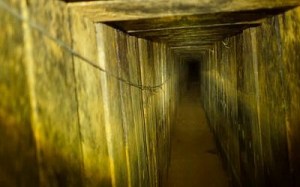
The interior of a Hamas attack tunnel that penetrated Israeli territory and was destroyed by the Israeli military on October 11, 2018. (Israel Defense Forces)

The draft resolution also calls on all parties to fully respect international humanitarian law, “including in regards to the protection of the civilian population.”

It encourages “tangible steps towards intra-Palestinian reconciliation,” as well as “concrete steps to reunite the Gaza Strip and the West Bank under the Palestinian Authority and ensure its effective functioning in the Gaza Strip.”

Addressing the General Assembly’s annual debate on the “Question of Palestine” on Thursday, Israel’s Ambassador to the UN Danny Danon urged the international community to vote in favor of condemning Hamas for the first time in the body’s history.

“Every year, the United Nations adopts at least 20 resolutions specifically to condemn Israel. Not a single one of these resolutions or any GA resolution at all has ever included Hamas,” he said.

In this file photo taken on June 13, 2018 Israel’s Ambassador to the United Nations Danny Danon speaks to the General Assembly before a vote to condemn Israeli actions in East Jerusalem and the West Bank, in the General Assembly in New York. (Don Emmert/AFP)

“But the international community has an opportunity to take a moral stance and finally condemn Hamas,” Danon said. “If the international community does not condemn Hamas, it is enabling a terrorist organization.”

On Wednesday, Hamas leader Ismail Haniyeh sent an open letter to General Assembly President Maria Fernanda Espinosa and to its member states, slamming the US-sponsored resolution, arguing it was meant to “delegitimize Palestinian resistance.”

“We in the Islamic Resistance Movement — Hamas are following up with great anger and condemnation the ongoing and miserable efforts by the United States of America, not only by adopting the Israeli narrative of the conflict, but also by providing all the necessary material and moral support for the Israeli occupation to continue its aggression against our people and deprive them of their basic rights of freedom, independence and self-determination, guaranteed by all international conventions and laws,” Haniyeh wrote in the letter.
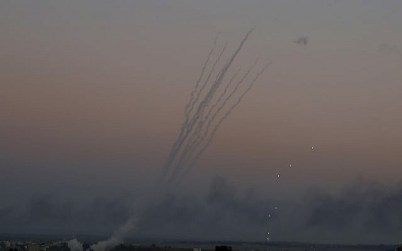
Palestinian rockets are shot toward Israel from Gaza on November 12, 2018. (AP/Hatem Moussa)

“We stress on the necessity to work hard to thwart the American efforts to condemn the resistance at the UN General Assembly,” the letter added.

Earlier this month, Hamas fired more than 400 rockets and mortar shells at southern Israel from the Gaza Strip in the space of a single day, killing at least one person — a Palestinian man living in Israel with a work permit — and injuring dozens more.

It appeared to be the largest-ever number of projectiles fired at Israel from the coastal enclave in a 24-hour period, more than twice the number fired on any day of the 2014 Gaza war, according to Israeli statistics.

The flareup was sparked after a covert Israeli operation in the Strip went awry, with seven Palestinians, including a Hamas commander, killed in the ensuing gun battle. One Israeli soldier was also killed.
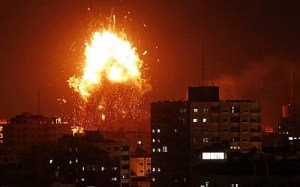
A ball of fire above the building housing the Hamas-run television station al-Aqsa TV in the Gaza Strip during an Israeli air strike, on November 12, 2018. (MAHMUD HAMS / AFP)

A ceasefire negotiated by Egypt, the UN and others has largely held since then.

Danon responded to the Hamas letter by saying that “a terrorist organization going to the UN for assistance is like a serial killer asking the police for assistance.”

“Hamas speaks about international law while it fires rockets into civilian populations, holds the bodies of IDF soldiers and Israeli citizens, and uses its own people as human shields,” Danon said.

Two apparently mentally ill Israeli civilians — Avera Mengistu and Hisham al-Sayed — who entered Gaza of their own volition in 2014 and 2015, respectively, are currently being held by Hamas, along with the remains of two IDF soldiers, Hadar Goldin and Oron Shaul, killed in the 2014 Israel-Gaza war.

Michael Bachner and AFP contributed to this report.
 

Iran, facing off against Israel in Syria, now sending arms directly to Lebanon 

November 30, 2018

Source: Iran, facing off against Israel in Syria, now sending arms directly to Lebanon | The Times of Israel

Israel’s alleged airstrike in Syria overnight was a rare exception to the new Russian-imposed rules; Tehran is shifting its tactics, as well

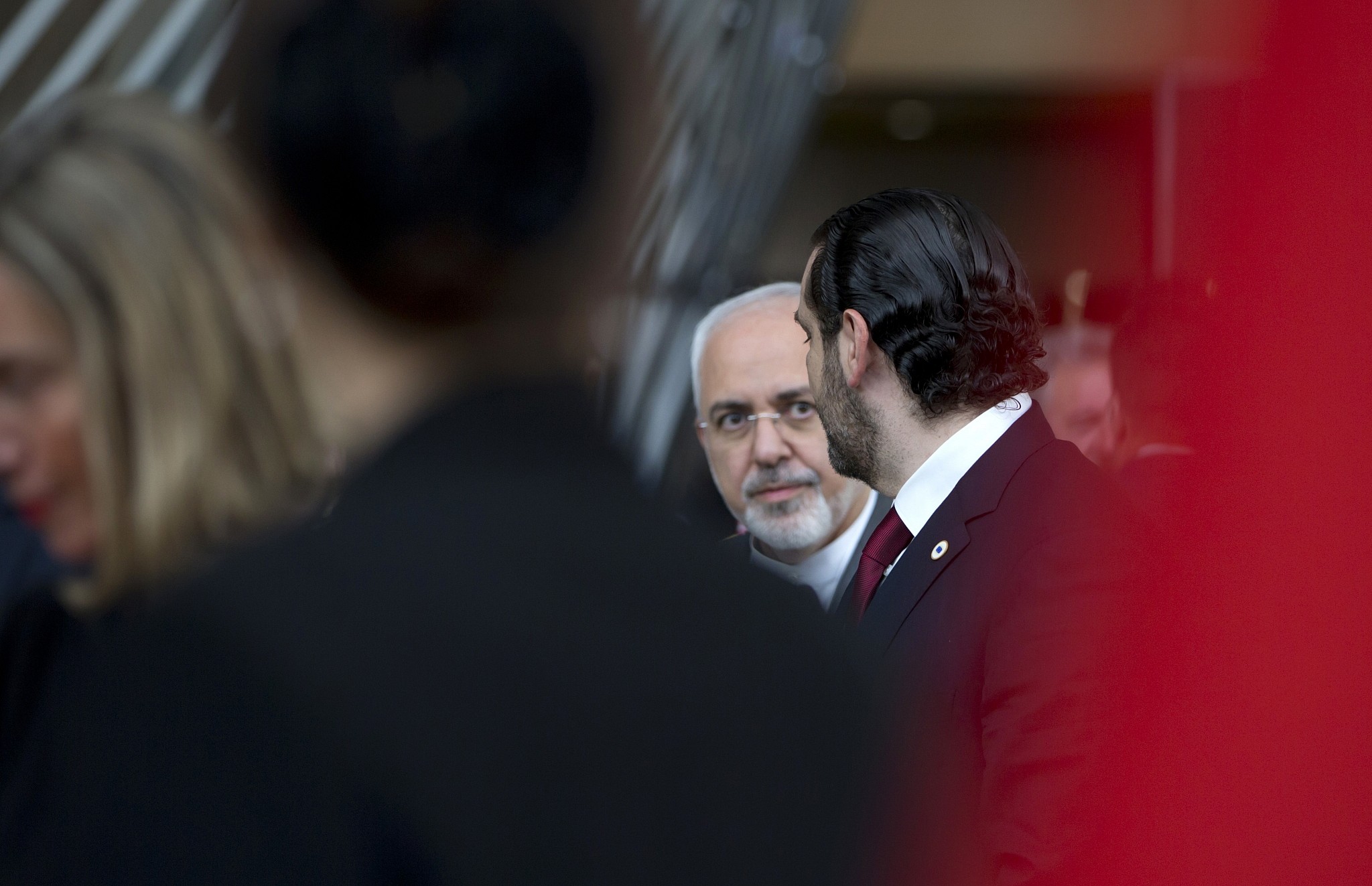
Iranian Foreign Minister Mohammad Javad Zarif, center, speaks with Lebanon's Prime Minister Saad Hariri, right, after a group photo at a conference 'Supporting the future of Syria and the region' at the Europa building in Brussels on Wednesday, April 25, 2018. (AP Photo/Virginia Mayo)

Iranian Foreign Minister Mohammad Javad Zarif, center, speaks with Lebanon’s Prime Minister Saad Hariri, right, after a group photo at a conference ‘Supporting the future of Syria and the region’ at the Europa building in Brussels on Wednesday, April 25, 2018. (AP Photo/Virginia Mayo)

Airstrikes in southern Syria on Thursday attributed to Israel were not necessarily indicative of the renewal of what were once routine Israeli attacks on Syrian territory, but rather a likely exception to the new rules imposed by Russia on the region.

Israel has almost completely halted these strikes over the last two-and-a-half months, since Syrian anti-aircraft fire — responding to an Israeli strike in Latakia — accidentally shot down a Russian reconnaissance plane, killing all 15 servicemen aboard in an incident Moscow has blamed on the Israeli military.

Since then, it turns out a number of things have happened simultaneously.

First, Russia sent a clear message to Israel regarding its anger over the strikes on Iranian-linked targets, including by dispatching S-300 aerial defense systems to Syria to complicate further such strikes.

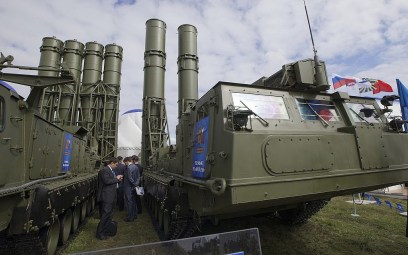
In this illustrative photo taken on August 27, 2013, a Russian S-300 air defense system is on display at the opening of the MAKS Air Show in Zhukovsky outside Moscow, Russia (AP Photo/Ivan Sekretarev, File)

Israel appeared to take the hint, with the number of airstrikes dropping considerably.

If Israel was in fact behind the extensive attack in Syria late on Thursday, it can be assumed the target of the strikes posed a clear-cut threat to Israel and that additionally, crucially, the existence of these targets in Syrian territory was not to the satisfaction of the Russians either.

Direct shipment

Second, it also appears that since the September incident over Latakia there has been a shift in Iran’s modus operandi. As Maj. Gen. (res.) Amos Yadlin, the head of the Institute for National Security Studies think tank, told Radio 103FM on Thursday: Iran changed tactics.

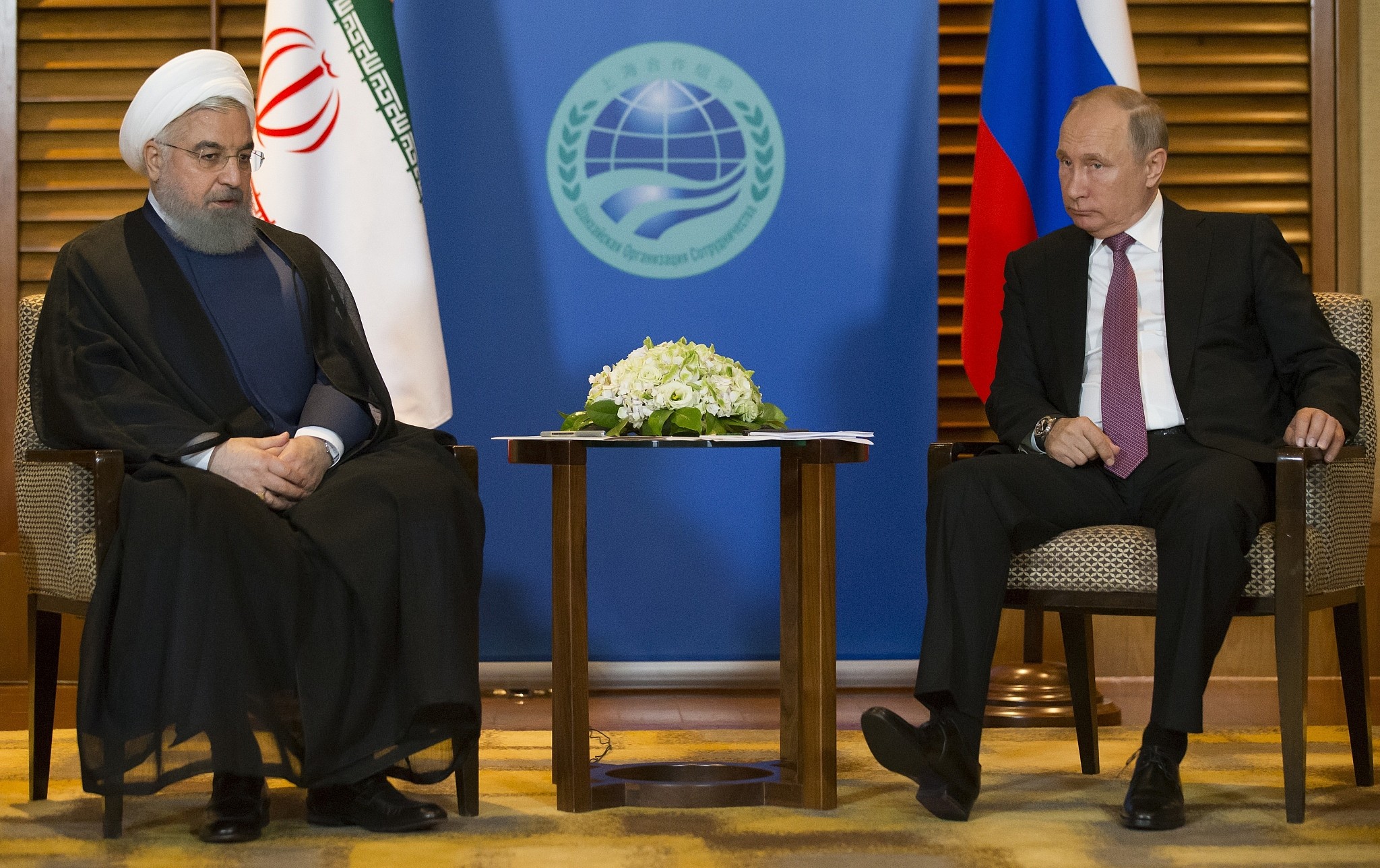
In this June 9, 2018 file photo, Russian President Vladimir Putin, right, speaks to Iranian President Hassan Rouhani during a meeting in Qingdao, China. (AP Photo/Alexander Zemlianichenko, Pool, File)

Rather than seeking to take control of Syria militarily and economically, Iran has switched its attention to two other arenas — Lebanon and Iraq.

This new focus includes turning Lebanon into a de facto Iranian province, using a variety of political, economic and military measures.

While this does not mean Iran is abandoning Syria, as the imperative for Thursday’s strikes underlined, the country is no longer a critical waypoint for the transfer of advanced weapons systems to Hezbollah. Arms can instead be shipped, and are being shipped, directly.

In the past few days, there have been numerous reports of Iranian planesaffiliated with the elite Islamic Revolutionary Guard Corps landing at Beirut’s airport with modern weaponry, possibly the same type Israel has tried to prevent from entering Lebanon by attacking weapons convoys in Syria.

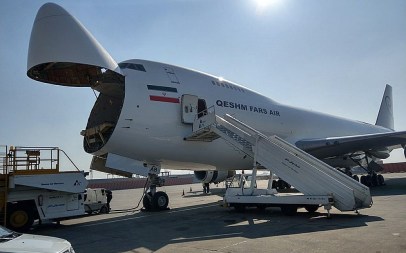
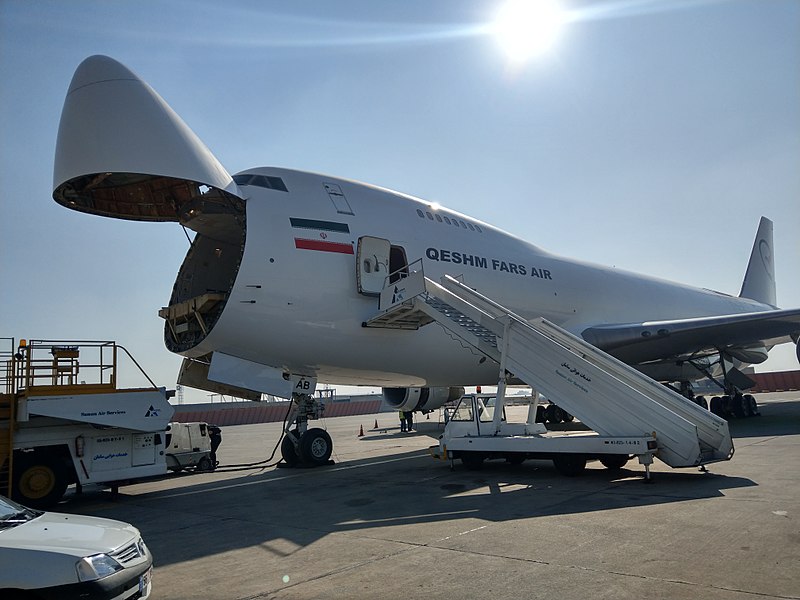
Illustrative image of a Fars Air Qeshm cargo plane (Wikimedia Commons)

Evidently Iran has found a more effective method — a simple channel designed to strengthen Hezbollah and the Shiite terror group’s presence in Lebanon.

Rather than sending weapons bound for Hezbollah through Syria and risking a clash with Israel and tension with Russia, Tehran delivers them directly to Lebanon.

In Iraq things are even easier — weapons and fighters can be transferred directly by land to the Iranian-backed Shiite militias in Iraq.

This change in Iran’s operating pattern comes first and foremost, as noted above, because of Russia’s stance. Though Moscow did not approve of the Israeli strikes, neither did it approve of Iran’s efforts to take over Syria.

The message appears to have been heard in Tehran, with more of Iran’s efforts now focused on Lebanon, presenting further headaches for Israel.

Guns and influence

In Lebanon, furthermore, a substantial change has taken place concerning Hezbollah’s presence and dominance.

Hezbollah has been more or less the landlord in Lebanon since the early 1990s, following the Taif Agreement ending the country’s 15-year-long civil war and requiring all political groups to disarm… except Hezbollah.

Still, Iran seems to have made further significant moves over the past year with an eye toward taking over not only Lebanon’s military dimensions, but also its government.

The Ministry of Public Health, for instance, is headed by a doctor tied to Hezbollah. There is also Abbas Ibrahim, the head of General Security Directorate — one of Lebanon’s most important intelligence agencies, who is considered a Hezbollah appointee.

Lebanon’s president, Michel Aoun, is considered a member of the March 8 Alliance, which is led by the Shiite group.

Lebanese President Michel Aoun, left, meets with Prime Minister Saad Hariri at the Presidential Palace in Baabda, east of Beirut, Lebanon, May 24, 2018. (Dalati Nohra/Lebanese Government via AP)

Such is the case, too, with the chief of staff of the Lebanese Armed Forces and many others.

An investigation by Western and Arab intelligence agencies published in an Emirati newspaper last week revealed that Hezbollah’s “Unit 900,” known as the “security unit” within the terror group, has successfully recruited and planted dozens of moles in official Lebanese government institutions, including the director generals of government ministries, the head of economic bodies and senior commanders in the military.

According to the report, these same agents are transferring sensitive information to Hezbollah, allowing it to do as it likes in the country.

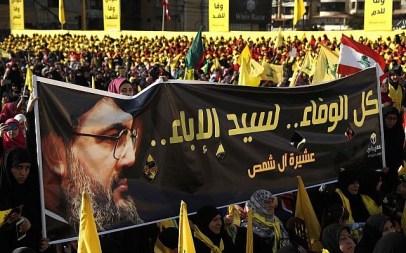
In this photo from April 13, 2018, supporters of Hezbollah leader Sayyed Hassan Nasrallah hold a banner with his portrait and Arabic words that read: ‘All the loyalty to the man of nobility.’ (AP /Hussein Malla)

Iran’s efforts are also reflected in Lebanon’s fractious politics, with no government in place since national elections in May.

Prime Minister Saad Hariri has tried unsuccessfully to cobble together a government and when asked to explain the delay in appointing a new cabinet, he immediately blamed Hezbollah.

The Shiite organization is apparently insisting on a ministerial appointment for one of six Sunni members of parliament considered allies, a move opposed by Hariri, himself a Sunni.

While Lebanon may have celebrated 75 years of independence a week ago, Iran’s takeover activities are making a mockery of any notion of Lebanese independence. Seeking to prevent Iran establishing itself in Syria, Israel now needs to be watching Lebanon ever more warily as well.


Syrian regime and allies downplay ‘airstrikes’ after wild night in Damascus 

November 30, 2018

Source: Syrian regime and allies downplay ‘airstrikes’ after wild night in Damascus – Middle East – Jerusalem Post

Syria’s allies now appear to want to sweep the incident under the carpet. This may be to protect the regime from embarrassment.

BY SETH J. FRANTZMAN
 NOVEMBER 30, 2018 15:42
Syrian Air Force fighter jet launches missiles [file]

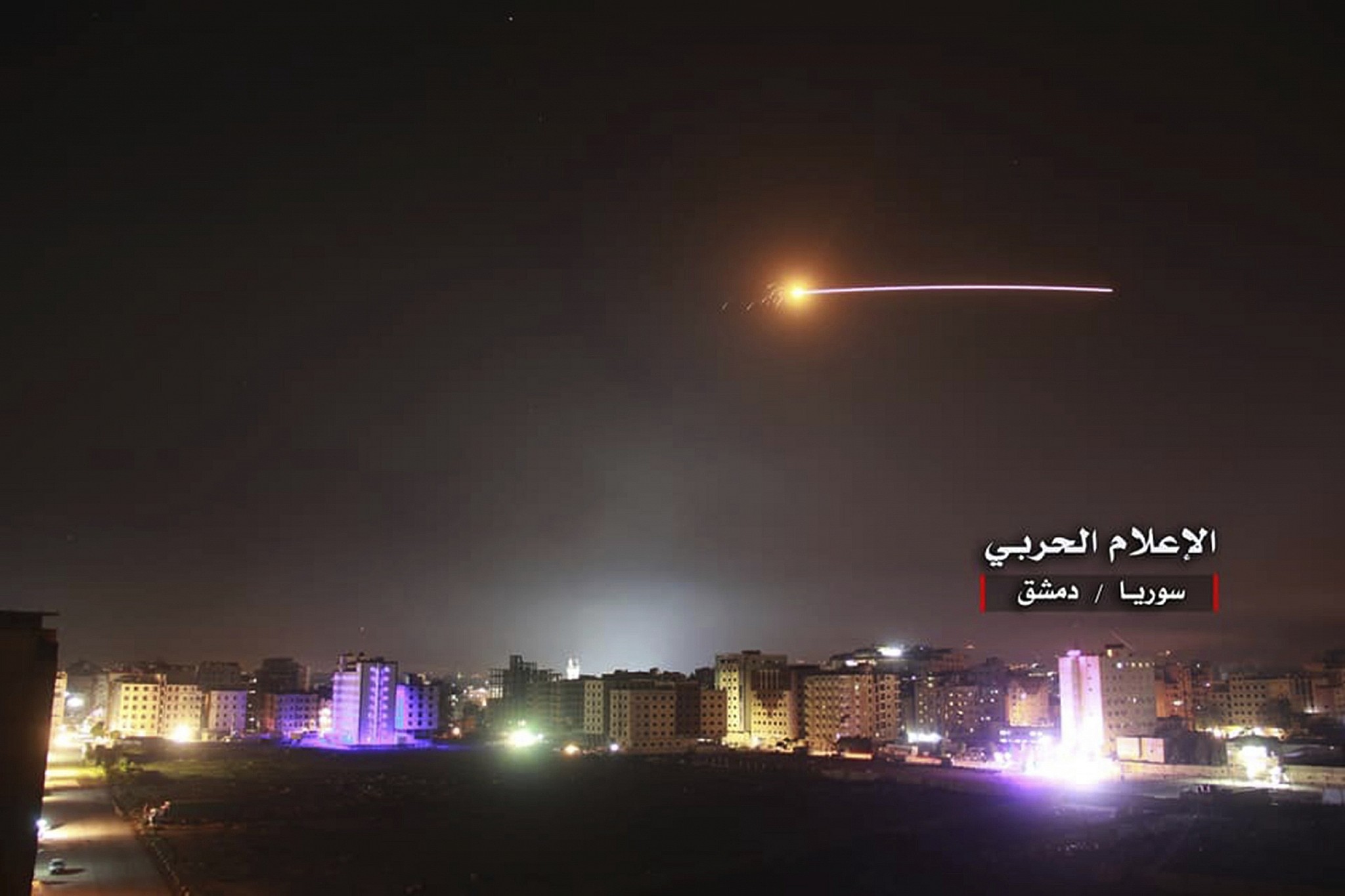
On Thursday night social media accounts that follow Syria lit up with reports of airstrikes south of Damascus. SANA, the Damascus state media, claimed that “air defenses of the Syrian Arab Army responded to an aggression on the southern region” and had prevented the attack from achieving objectives. However Syrian state media and allies of the Syrian regime have downplayed the incident in the twelve hours after it happened. From wild claims that the air defenses had down rockets and even a plane, Syria’s allies now appear to want to sweep the incident under the carpet. This may be to protect the regime from embarrassment.

A variety of social media accounts that support the Syrian government were active Thursday night, but many now seem disinterested in the aftermath. This is also true of Iranian media, which supports Syria, and media that tends to be pro-Hezbollah. On Thursday night some of these outlets, such as Al Mayadeen, showed images purportedly of air defenses over Damascus. Reports began around ten in the evening and continued for more than an hour. By midnight it was all over and what appeared to be a serious incident had gone quiet. Most of these reports followed the message from Damascus. “Our air defenses met hostile targets over the area of Al-Kiswah” and had intercepted the attack.

What’s particularly interesting is that none of the media sought to point fingers at who the aggressor was. In the past the Syrian regime has blamed Israel and the US. One of the only major accounts that have kept on the story is Sputnik News in Arabic, a Russian channel. Russia supports the Syrian regime. On Friday Sputnik claimed that shrapnel from Syrian air defenses was found on the Golan Heights. It based its report on an announcement from Israel. Sputnik also noted that Syrian air defense had used the S-200, not the more advanced S-300 system that Russia supplied to Syria in October and which the Syrians are still being trained to use. Sputnik also reported that Syrian officials told them the S-300 was not used.

This was a major climb-down from Thursday night when the same news channel had tweeted reports that Syrian air defense intercepted four cruise missiles and a jet that was involved in the attack. By Friday morning, all those reports had stopped. Iranian media also did not report heavily on the incident. Tasnim entirely ignored it. Fars News did the same. PressTV claimed Syria had downed targets over Damascus. However PressTV also made sure to emphasize that it was unclear if the S-300 had been used and noted that a “military source [in Syria] did not specify the targets but dismissed reports that an Israeli plane had been downed.”
Al-Masdar News published images of what it said were the remains of projectiles that fell south of Damascus. These might have been pieces of incoming missiles or of Syrian air defense. Babak Taghvaee, a social media user who has expertise on air defense and follows conflict in the region, claimed Syria used Pantsir 57E6 air defense missiles and S-200s against the attack “scoring at least 3 kills on Delilah cruise missiles.”

The decision to downplay Thursday’s airstrikes, after initially hyping them, clearly indicates that Damascus wants to save face. It didn’t use the S-300, or if it did it found the system was ineffective at interdicting the strike. It wants to therefore highlight its use of the older air defense system, which has been ineffective in the past at defending Damascus. Russia is busy at the G20 and dealing with a crises with Ukraine over navigation of the Kerch Straits. This means that Syria’s main ally is distracted by other issues. Russia has condemned attacks on Syria in the past and has warned against any “hot heads” carrying out air raids. But Russia has been mum about whatever happened on Thursday night. RT and Tass news agencies both lack reports about the attack. Syria’s Iranian ally is also quiet, indicating that Iran also knows that discussing the attack too much will lead to questions about Iran’s own activities in places like Kiswah, where the attack was reported. Kiswah was the site of an airstrike in May that the regime blamed on Israel.  After an airstrike near Kisway in December satellite images showed damage to an alleged Iranian base.

Countries that oppose the Syrian regime have been more outspoken about the airstrikes. Turkey’s Anadolu news claimed that “Israeli airstrikes carried out inside Syrian territory on Thursday targeted positions held by the Damascus regime and allied militias backed by Iran.” Turkish media emphasized that the incident was the most serious since September when Syrian air defense downed a Russian IL-20 aircraft during an Israeli airstrike. That strike led Russia to send the S-300 and warn against further attacks. Al-Arabiya reported that “two senior security sources” told the Saudi outlet that the Kiswah site was used by Hezbollah and Iranian-backed militias. Jordan’s Al-Ghad and Kuwait’s Al-Jarida, had no reports about the Syrian incident.


Laura Loomer Twitter Protest 

November 30, 2018

As it happened…


Off Topic:  CNN commentator fired for ‘Free Palestine from river to the sea’ comment

November 30, 2018

Source: CNN commentator fired for ‘Free Palestine from rir to the sea’ comment – Arab-Israeli Conflict – Jerusalem Post

Marc Lamont Hill accused Israel of denying “citizenship rights and due process to Palestinians just because they are not Jewish,” and expressed his support for the BDS movement.

BY SARA RUBENSTEIN
 NOVEMBER 29, 2018 23:25
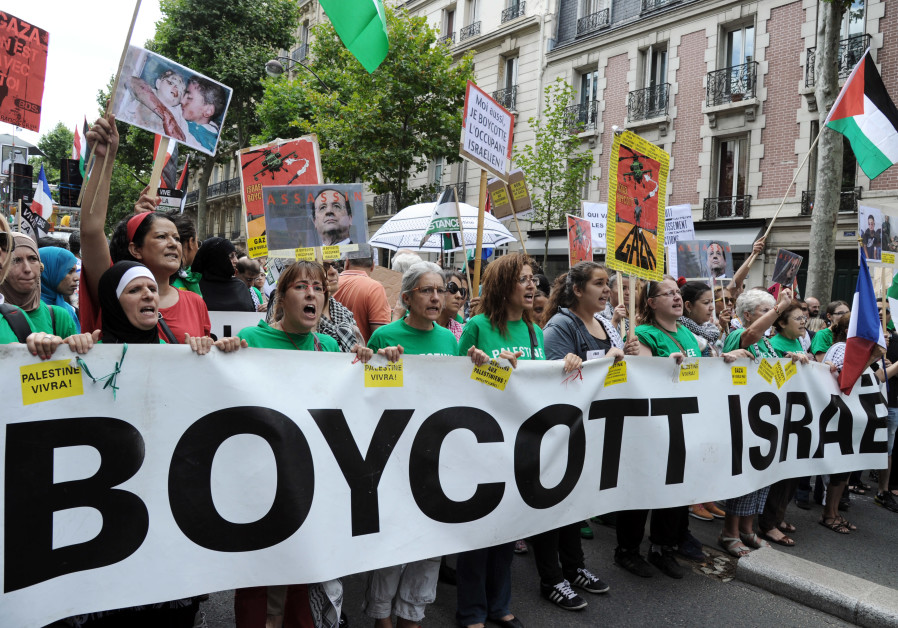
Protesters hold abanner that reads "Boycott Israel" during a pro-Palestinian demonstration in Paris

CNN political commentator and Temple University Prof. Marc Lamont Hill condemned Israel in a speech at the United Nations on Wednesday, saying that he thinks that there needs to be “a free Palestine from the river to the sea.”

Embedded video

Ryan Saavedra

@RealSaavedra

The phrase “from the river to the sea” is a phrase used by those who believe Israel should be eliminated.

Hill accused Israel of denying “citizenship rights and due process to Palestinians just because they are not Jewish,” and expressed his support for the BDS movement. Hill stressed that, although peace is an ideal, “we must not romanticize or fetishize it. We must promote nonviolence at every opportunity, but cannot endorse narrow politics that shames Palestinians for resisting, for refusing to do nothing in ethnic cleansing.”

The Anti-Defamation League (ADL) responded to Hill’s speech, calling his comment “divisive” and “destructive” in an email to the Jewish Journal.

“Those calling for ‘from the river to the sea’ are calling for an end to the State of Israel,” Sharon Nazarian, the ADL’s senior vice president for international affairs, wrote to the Journal. “It is a shame that once again, this annual event at the United Nations does not promote constructive pathways to ‘Palestinian solidarity’ and a future of peace, but instead divisive and destructive action against Israel.”

Dani Dayan

@AmbDaniDayan

Off Topic:  Airbnb Facing Lawsuit in the U.S. Over Israeli Settlements Ban 

November 30, 2018

Source: Airbnb Facing Lawsuit in the U.S. Over Israeli Settlements Ban – CTech

A group of 18 Americans has filed a lawsuit in Delaware against Airbnb following the company’s announcement that it will be removing listing in Israeli settlements in the West Bank

Adi Pick15:2729.11.18

A group of 18 Americans has filed a lawsuit in Delaware against Airbnb, following the company’s announcement that it will be removing listing in Israeli settlements in the West Bank from its service. More than 25 states have enacted legislation against boycotting Israel.

Airbnb’s announcement of the planned removal of settlement listings came a day before the New York-based nonprofit organization Human Rights Watch was set to publish a report outlining the company’s activities in the West Bank. The report lists 139 properties in Israeli settlements in the West Bank listed on Airbnb’s service.

Airbnb's CEO Brian Chesky. Photo: Bloomberg
Airbnb’s CEO Brian Chesky. Photo: Bloomberg

Secretary-General of the Palestine Liberation Organization (PLO) Saeb Erekat praised the company’s decision.

Israeli officials have since criticized the company, and several Israeli ministries are involved in efforts to try and overturn it.

Israel’s Minister of Strategic Affairs Gilad Erdan stated that he will act “in all possible ways to cancel the decision discriminating against citizens in the State of Israel”. On Wednesday, Erdan sent letters to five governors in the United States, asking them to look into possible sanctions that can be taken against the company, according to a statement sent to Calcalist Wednesday.


ICC judges bias against Israel

November 30, 2018

Source: ICC judges bias against Israel

Op-ed: Judges in The Hague decide to reopen the investigation against Israel in the Mavi Marmara incident despite the prosecutor repeatedly closing the case over flotilla organizers IHH’s ties to global Jihad.

Following the incident, a number of investigation committees were established, most prominently that of the UN Security Council, led by former Prime Minister of New Zealand Jeffrey Palmer. The Palmer Committee determined that Israel used excessive force, but that the blockade itself was legal. Following that conclusion, Bensouda decided to close the case in 2014.

In 2015, a committee of three ICC justices demanded the case be reopened. Bensouda appealed the decision. After her appeal was rejected, she again investigated and again decided to close the case.

IDF forces board the Mavi Marmara (Photo: IDF Spokesperson)

IDF forces board the Mavi Marmara (Photo: IDF Spokesperson)

But last week, a panel of judges ordered the prosecutor to open an investigation, in order to file a claim against Israel. The authority to file a claim, it should be noted, is that of the prosecutor alone. Thus, for years the prosecutor has ruled that there are no grounds for an investigation, and various panels of judges insist on having one anyway.

That Gaza flotilla was an initiative by IHH, a Turkish-Islamic organization. Even before the flotilla set sail, European intelligence sources noted that IHH was linked to the global Jihad movement, including al-Qaeda. The European Union’s delegate to the International Convention for the Suppression of the Financing of Terrorism, Jean-Louis Burgier, affirmed that IHH is connected to the global terrorist network.

Fatou Bensouda

Fatou Bensouda

When members of the organization were aboard the Mavi Marmara on their way to Gaza, they chanted the song of annihilation, “Khaybar Khaybar, ya Yahud, Jaish Muhammad, sa Yahud” (“Khaybar, Khaybar, O Jews, Mohammed’s army will return” is a thinly disguised call to murder Jews, referring to a battle in Khaybar when Mohammed slaughtered scores of Jews).

One of the flotilla’s prominent members was Sheikh Raed Salah, leader of the northern branch of the Islamic Movement in Israel, who energized the participants with hate speech. Like other members of the global Jihad, IHH members made it clear, even before the incident, that they were destined to be martyrs. Of the 500 participants in the flotilla, 40 were members of the IHH and of the nine killed, eight were IHH members.

A few months after they returned to Turkey, members of IHH traveled to Tehran to meet their ally, Mahmoud Ahmadinejad, then president of Iran. Saleh Ozer, the organization’s leader, declared: “We are here today with the yearning and determination to build a Middle East without Israel and America.” Similar statements were made by IHH leaders later on.

IHH members attack IDF soldiers (Photo: IDF Spokesperson's Unit)

IHH members attack IDF soldiers (Photo: IDF Spokesperson’s Unit)

All this information, and probably additional information, was available to Bensouda. One cannot “accuse” her of being overly sympathetic to Israel, but she understood that this was a planned provocation by a terrorist organization that forged an alliance with “progressive forces”—the red-green alliance of jihadists and the radical left, whose only common denominator is anti-Semitism.

Considering these facts, an investigation should have been launched against Turkey, which sponsored the flotilla and the IHH, and encouraged and equipped them. In the struggle between Jihad and its supporters and a free country, the West was supposed to side with the latter.

But presumptions go through a dangerous change when it comes to Israel. It is fighting an organization that is recognized as a terrorist organization, whose members declare in advance their desire to become martyrs, an anti-Semitic ideology dominated the deck, but wonder of wonders—the ICC court’s judges repeatedly demand an indictment against Israel.

During the last round of discussions at the UN General Assembly, various committees submitted nine condemnations of Israel—and not even one proposal against any other country in the world. This is a shameful extension of the obsessive bias against Israel. These organizations have an automatic majority against Israel, but what about the judges?!

In the United States, a bipartisan majority in Congress passed the “Hague Invasion Act,” which states that if there is an attempt to arrest an American soldier or an American citizen for prosecution, the United States will invade The Hague in order to release the detainee, which sounds like a strange law. But reality, it turns out, is even stranger.


Syria: Wide-ranging Israel air strikes in three waves over Damascus region – DEBKAfile

November 30, 2018

Source: Syria: Wide-ranging Israel air strikes in three waves over Damascus region – DEBKAfile

Syrian sources reported shortly before midnight of Nov. 29, that Israeli air attacks had been ongoing from 21:30 over areas in the Damascus vicinity. Three waves of air and missile attacks had struck Al Kiswah, south of the capital, Qanaqar to the southwest, and Quneitra opposite Israel’s Golan border.

Arab broadcasting stations claimed that flames were rising over Damascus airport from targeted aircraft. Also hit, they reported, were pro-Iranian militias’ command posts and bases, various missile batteries and Hizballah forces.  None of these reports are officially confirmed. However, DEBKAfile’s military sources estimate that even if they are partly correct, Israel is conducting its most wide-ranging assault on Iranian and Hizballah targets in southwestern Syria since its major offensive of May 10 on 52 Iranian and Syrian sites.

The IDF has meanwhile reported that a missile was fired from Syria into Israeli Golan. It exploded on open ground. The spokesman denied any Israeli aircraft were hit by Syrian fire. According to Hizballah’s TV, all IDF bases on the Golan have been suddenly blacked out.

When the news first came in earlier, DEBKAfile posted this report:
Syrian sources, including the official news agency SANA, reported Thursday night that Syria air defenses had repelled “hostiles targets” in the Al-Kiswah region south of Damascus and that the operation was still ongoing. Other sources claimed that the Israeli Air Force had attacked pro-Iranian militia concentrations in the same region. Some said there were Hizballah units present there.

DEBKAfile: If those reports are confirmed, then this will be the third Israel attack by air or missile on targets in Syria since suspending its air strikes following the shooting down of a Russian spy plane on Sept. 17. Before that, Al Kiswah took a number of Israeli air strikes, the last occurring on May 10 against a shipment of Iranian Fatteh-313 missiles landing in Syria. Our military sources add that Al Kiswah is the seat of the Iranian command for South Syria which is headed by Maj. Gen. Hossein Hamadani.


Tehran-Beirut cargo flight sparks concerns Iran arming Hezbollah more easily 

November 30, 2018

Source: Tehran-Beirut cargo flight sparks concerns Iran arming Hezbollah more easily | The Times of Israel

Israeli, western officials suspect ostensibly civilian airlines, which once used Syria as a conduit, are bringing advanced military equipment into Lebanon for use against Israel

Illustrative image of a Fars Air Qeshm cargo plane (Wikimedia Commons)

Illustrative image of a Fars Air Qeshm cargo plane (Wikimedia Commons)

An Iranian cargo plane allegedly transporting advanced weaponry to the Hezbollah terror group was spotted flying directly from Tehran to Beirut on Thursday morning, hours before Israel allegedly conducted airstrikes on pro-Iranian targets in Syria.

Israeli and American security officials have long claimed that Iran has been supplying Lebanon’s Hezbollah with advanced munitions by shipping them through ostensibly civilian airlines, including the one that flew into Lebanon on Thursday: Fars Air Qeshm.

However, these cargo planes typically unload their materiel in Syria or stop there en route to Beirut, rather than flying directly into Lebanon, where Hezbollah is based.

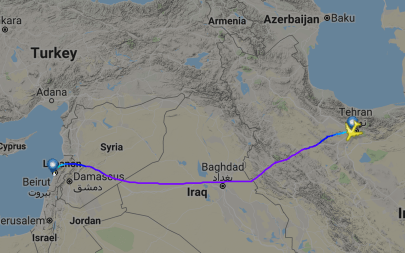
According to publicly available flight data, Fars Air Qeshm flight No. QFZ-9964 left Tehran shortly after 8:00 a.m., flew over Iraq, cut northwest into Syria and then landed in Beirut’s Rafik Hariri International Airport some two hours later.

Later, the Boeing 747 jet flew to Doha in Qatar before returning to Tehran.

Iran’s Fars Air Qeshm flight No. QFZ-9964 travels directly from Tehran to Beirut on November 29, 2018. (Screen capture: FlightRadar24)

On Thursday evening, the Israel Defense Forces indicated that the plane had been carrying weapons into Beirut.

Without specifically mentioning the flight, the army’s Arabic-language spokesperson Lt. Col. Avichay Adraee tweeted that Lebanon should stop allowing Iranian planes to bring war materiel into the country, along with a black-and-white satellite photograph of Rafik Hariri International Airport.

افيخاي ادرعي

@AvichayAdraee

التي تسمح بهبوط طائرات إيرانية تحاولون من خلالها نقل أسلحة من

US special representative for Iran Brian Hook said Thursday that Washington has “evidence that Iran is helping Hezbollah build missile production facilities” in Lebanon, without elaborating.

He accused Iran of brazenly exporting missiles to Afghanistan and Yemen, in violation of UN arms bans, including at least one with Persian writing on it.

“The conspicuous Farsi markings is Iran’s way of saying they don’t mind being caught violating UN arms restrictions,” he said.

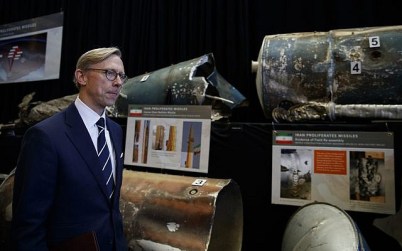
Brian Hook, US special representative for Iran, walks past fragments of Iranian short-range ballistic missiles (Qiam) at the Iranian Materiel Display (IMD) at Joint Base Anacostia-Bolling, in Washington, November 29, 2018. (AP/Carolyn Kaster)

Hook called for increased world pressure on Iran and told journalists at a briefing that the intercepted Iranian weapons presented “irrefutable evidence” that Iran’s destabilizing activity in the region “is a problem that’s not getting better, it’s getting worse.”

When asked for data that would support administration claims that Iran is increasing support for destabilizing activities in the region, Hook said Iran has spent over $16 billion since 2013 supporting militia forces in Syria, Iraq and Yemen, but did not specify if that spending has increased in recent years.

“Iran must stop testing and proliferating missiles, stop launching and developing nuclear-capable missiles, and stop supporting militias in Lebanon, Syria, Iraq, Bahrain, and Yemen,” he said.

Reported airstrikes on pro-Iran sites in Syria

The Tehran-Beirut flight came hours before Israel reportedly launched a series of airstrikes against Iranian and pro-Iranian sites in Syria on Thursday night.

According to media reports and claims by the Syrian military, missiles were fired at targets in and around Damascus, in southern Syrian near the Israeli border and along the Damascus-Beirut highway, which runs to Lebanon.

It was not immediately clear if the two incidents were related to each other.

Fars Air Qeshm has previously been identified as one of several airlines allegedly acting as transporters of weapons systems for the Iranian military. Some of these have been targeted by US sanctions, though Fars Air Qeshm has not.

Last month, the airline reportedly transferred advanced GPS components to Hezbollah that would allow the terrorist group to turn previously unguided rockets into precision guided-missiles, thus increasing the threat to Israel.

A Fars Air Qeshm airplane was also reportedly bombed in an Israeli strikein September, the target of which was machinery used in the production of the precision missiles, which was en route to Hezbollah, The Times of Israel learned at the time.

The remains of a suspected Iranian aircraft, which was hit in an Israeli airstrike, Damascus, September 18, 2018. (ImageSat International (ISI/Ynet)

During the Israeli air raid, a Russian spy plane was inadvertently shot down by Syrian air defenses, which Moscow blames on Israel.

Israeli officials have repeatedly expressed concern about Hezbollah acquiring precision-guided missiles.

The Iran-backed terrorist militia, with whom Israel fought a punishing war in 2006, maintains an arsenal of over 100,000 rockets and missiles — a larger stock than some European armies, with the capacity to strike anywhere in Israel.

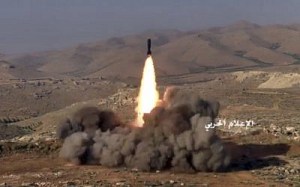
Screenshot from a video released on July 22, 2017, and provided by the government-controlled Syrian Central Military Media, shows Hezbollah fighters firing a missile at positions of al-Qaeda-linked militants in an area on the Lebanon-Syria border. (Syrian Central Military Media, via AP)

“The difference is accuracy. Missiles are much more accurate, and now there is a tendency [for Iran] to give precision strike capability to its proxies or clients,” Brig. Gen. Ram Yavne, the head of the army’s strategy division, said earlier this month.

“They are far, far from there, but just imagine that they can launch not a rocket that — when you look at the chances — only a few of them would hit an urban area or strategic site, but a very precise missile that can hit, much more directly, a strategic site in Israel,” he said.

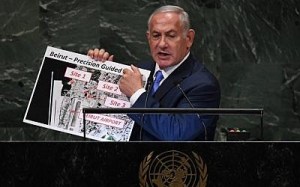
In September, Prime Minister Benjamin Netanyahu brandished pictures of what he said were Hezbollah missile facilities inside Beirut, including near the airport. Lebanon denied the claim, taking media and diplomats on a tour of some of the sites days later.

Prime Minister Benjamin Netanyahu, holding up a placard detailing alleged Hezbollah missile sites in Beirut, addresses the General Assembly at the UN in New York on September 27, 2018. (AFP/Timothy A. Clary)

In recent years, Israel has acknowledged conducting hundreds of airstrikes in Syria, which it says were aimed at both preventing Iran from establishing a permanent military presence in Syria and blocking the transfer of advanced munitions to Hezbollah in Lebanon.

The Israeli Air Force has largely abstained from conducting raids inside Lebanon itself, though it has indicated that it was prepared to do so.

Earlier this year, IAF chief Amiram Norkin showed visiting generals a picture of an Israeli F-35 stealth fighter flying next to Beirut’s airport, in what was seen as a direct message to Hezbollah.

Times of Israel staff and the Associated Press contributed to this report.


Army finds pieces of Syrian missile in Golan field after alleged Israeli strikes 

November 30, 2018

Source: Army finds pieces of Syrian missile in Golan field after alleged Israeli strikes | The Times of Israel

Fragments found of surface-to-air missile fired overnight; Syrian monitors say IAF raid targeted Iranian, Hezbollah weapons depots; Israel mum on raid, denies claim it lost a plane

Syrian anti-aircraft missiles rise into the sky as Israeli missiles hit air defense positions and other military bases, in Damascus, Syria, on May 10, 2018. (Government-controlled Syrian Central Military Media, via AP)

Syrian anti-aircraft missiles rise into the sky as Israeli missiles hit air defense positions and other military bases, in Damascus, Syria, on May 10, 2018. (Government-controlled Syrian Central Military Media, via AP)

Israeli troops on the Golan Heights on Friday found a number of fragments of a Syrian surface-to-air missile that was fired during an alleged Israeli airstrike on Iranian and Hezbollah targets in Syria the night before.

According to the Israel Defense Forces, the remnants of the missile were found in an open field on the Golan heights. The pieces have been taken in for further examination by the military and the police, the army said.

Also on Friday, the Syria Observatory for Human Rights monitoring group said it identified several of the sites hit in what it said was an Israeli bombardment that lasted “for an hour.”

The Israeli military refused to comment on the raid, but denied a report in Russian media that an Israeli plane had been shot down. The Syrian military claimed its air defenses shot down all incoming “hostile targets” late Thursday. However, many security analysts believe Syria often falsely claims to have intercepted missiles that successfully penetrated its air defenses.

According to the director of the Syria Observatory for Human Rights, Rami Abdel Rahman, the Israeli bombardment hit two positions in the south of Damascus province, including an area believed to be an Iranian weapons depot near the capital.Once a regular occurrence, reports of Israeli airstrikes in Syria have become increasingly rare in the past two months, after Syria accidentally shot down a Russian spy plane during an Israeli raid, which Moscow blamed on Israel.

According to Abdel Rahmn, two Israeli missiles hit al-Kiswah, where he said there are “weapons depots belonging to the Lebanese Hezbollah [terrorist group] as well as Iranian forces.”

Another missile hit the area of Harfa, near the Israeli border, where there is a Syrian military base, the UK-based monitor said.

In Kisweh, “the depots that were targeted are used to temporarily store rockets until they are taken somewhere else,” Abdel Rahman said.

Illustrative: This photo released on Wednesday, May 9, 2018, by the Syrian official news agency SANA, shows flames rising after an attack in an area known to have numerous Syrian army military bases, in Kisweh, south of Damascus. (SANA via AP)

“It appears the Israelis had intelligence that weapons had arrived there recently,” he said.

Explosions were also reported in and around the Syrian capital of Damascus, near its international airport, which Israel claims has been used by Iran to supply terror groups with advanced weaponry.

According to the Kremlin-backed Sputnik new site, blasts were also heard near the town of al-Dimas, along the Damascus-Beirut highway, which may indicate that an arms shipment was targeted in the alleged Israeli strikes.

Thursday’s strike was the first time Syria’s air defenses had been called into action since they inadvertently shot down a Russian spy plane and the 15 people on board during an Israeli raid on September 17.

Despite the strained relationship with Russia, Israeli officials maintain that the IDF continues to operate in the country. However, many defense analysts suspect that Russia — with the advanced air defense systems it has in Syria — may be curbing Israel’s ability to rein its arch nemesis Iran’s military presence in the country.

In recent years, Israel has acknowledged conducting hundreds of airstrikes in Syria, which it says were aimed at both preventing Iran from establishing a permanent military presence in Syria and blocking the transfer of advanced munitions to Hezbollah in Lebanon.

Israel has designated these two issues as “red lines” that it will take military action to prevent.

However, this has slowed in the past two months following the downing of the Russian plane.

Moscow blamed Israel for the incident and supplied Damascus with the advanced S-300 air defense system — something it had previously refrained from doing following requests from Jerusalem.

The S-300 systems were delivered to Syria last month, but they are not yet believed to be in use, as the Syrian air defense teams still need to be trained to operate them.