Archive for September 2018

‘Major mistake’: Israel, US warn Russia against giving S-300 missiles to Syria

September 25, 2018

Source: ‘Major mistake’: Israel, US warn Russia against giving S-300 missiles to Syria | The Times of Israel

Netanyahu says move to arm Assad with advanced system within 2 weeks following downing of spy plane will ‘magnify dangers’ in region, Bolton cautions of ‘significant escalation’
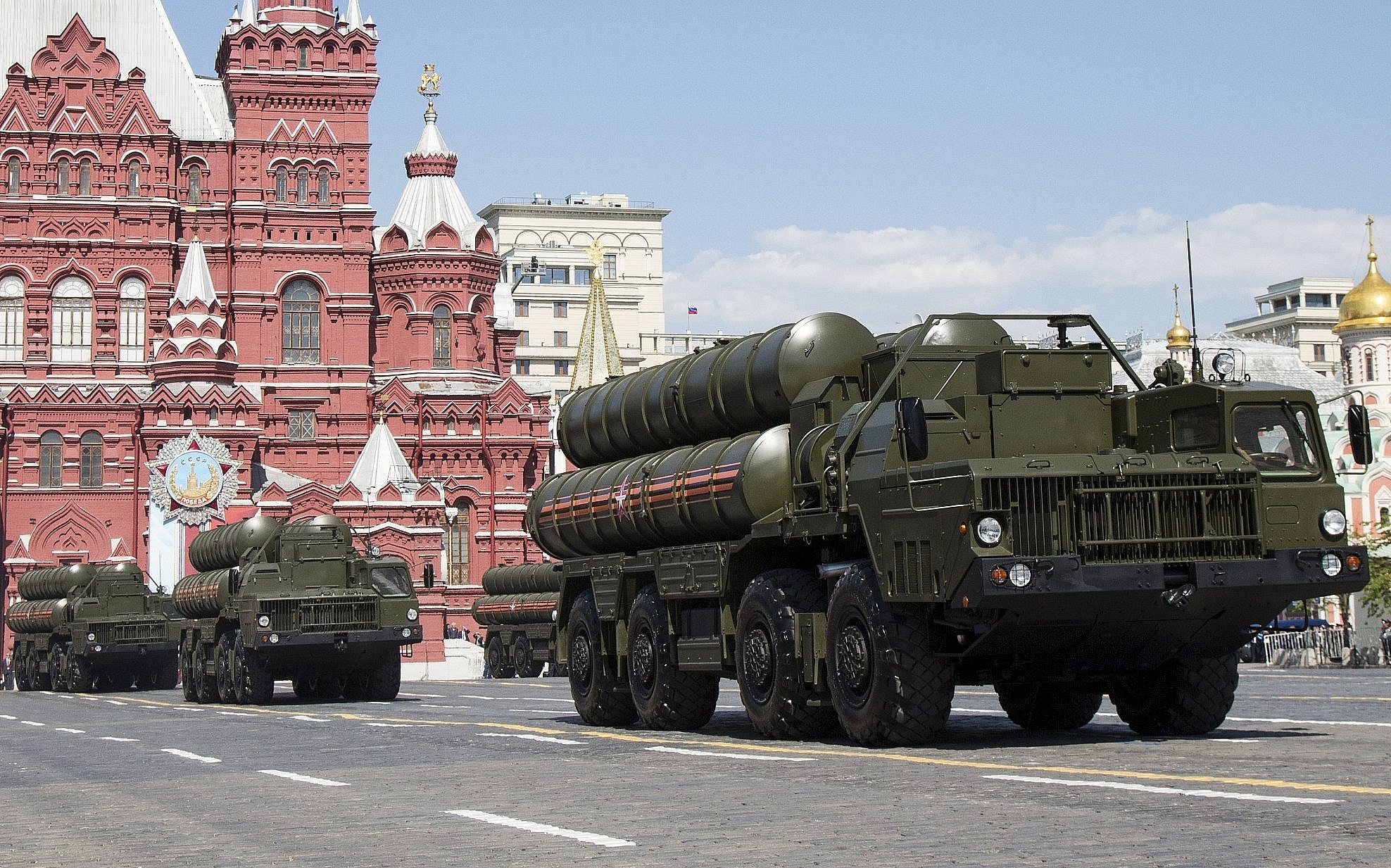
File: Russian S-300 air defense missile systems drive during a Victory Day military parade marking the victory in WWII in Red Square in Moscow, Russia, May 9, 2016. (AP Photo/Alexander Zemlianichenko)

File: Russian S-300 air defense missile systems drive during a Victory Day military parade marking the victory in WWII in Red Square in Moscow, Russia, May 9, 2016. (AP Photo/Alexander Zemlianichenko)

Both Jerusalem and Washington warned Russia on Monday evening against its declared intention to provide the Syrian military with advanced surface-to-air missiles within two weeks, saying the move would further destabilize the region and increase already high tensions.

Israel’s high-level security cabinet was set to meet Tuesday morning to discuss the latest developments involving ties with Russia, in the aftermath of last week’s downing of a Russian plane by Syrian anti-aircraft fire during an Israeli airstrike.

Russian President Vladimir Putin informed Prime Minister Benjamin Netanyahu of the decision to provide Syria with the S-300 system in a phone call Sunday.

In response, according to a statement by Netanyahu’s office, “The prime minister said providing advanced weapons systems to irresponsible actors will magnify dangers in the region, and that Israel will continue to defend itself and its interests.”

Concurrently US National Security Adviser John Bolton said Russia’s decision was a “major mistake” that would cause a “significant escalation” of  tensions. He urged Moscow to reconsider.

Channel 10 News quoted a senior American official who noted that the system could endanger US Air Force jets operating against Islamic State in Syria.

“Bringing more anti-aircraft missiles into Syria won’t solve the Syrian army’s unprofessional and indiscriminate firing of missiles and won’t mitigate the danger to aircraft flying in the area,” the unnamed official said.

Russia made the announcement following last week’s downing of a Russian plane by Syria in a friendly fire incident that killed 15 Russia soldiers. The Russian military’s reconnaissance Ilyushin Il-20 was shot down by Syrian missile defense systems responding to an Israeli airstrike.

In his call with Netanyahu, Putin said he disagreed with the Israeli version of events concerning the downing of the Russian plane.
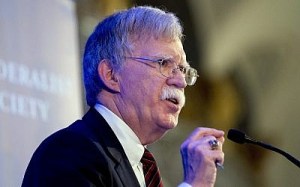
US National Security Adviser John Bolton speaks at a Federalist Society luncheon at the Mayflower Hotel, Monday, Sept. 10, 2018, in Washington. (AP Photo/Andrew Harnik)

“The information provided by the Israeli military… runs counter to conclusions of the Russian defense ministry,” the Kremlin said of the content of Putin’s remarks in the call, adding that the actions of the Israeli pilots had led to the plane being targeted by Syrian air defense systems.

“The Russian side proceeds from the fact that the actions by the Israeli air force were the main reason for the tragedy,” a statement said.

Last Tuesday, by contrast, in a previous Putin-Netanyahu call, the Russian president had absolved Israel and blamed a “chain of tragic accidental circumstances.”
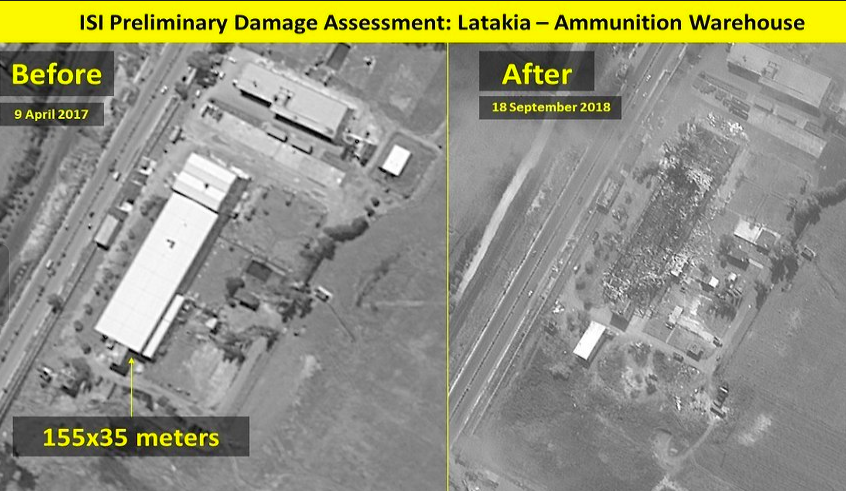
A before and after photo of an ammunition warehouse which was destroyed in an Israeli airstrike on a Syrian base in Latakia, September 18, 2018 (ImageSat International (ISI/Ynet)

Netanyahu’s office said Monday night that, in the call, he had “expressed his confidence in the credibility of the IDF probe and its conclusions, and stressed once again that responsibility for the unfortunate incident lay with the Syrian army that brought down the plane, and with Iran, whose aggression destabilizes [the region].”

At the same time, it said, Netanyahu had “once again expressed his condolences for the deaths of the Russia soldiers.”

The statement added that the two leaders agreed to “continue talks between professional teams and coordination between the armies through military channels.”

The Kremlin earlier Monday issued a devastating critique of Israel over the incident, accusing Israel’s air force of “premeditated actions,” and warning the incident would harm relations between the two countries.

“According to information of our military experts, the reason (behind the downing) were premeditated actions by Israeli pilots which certainly cannot but harm our relations,” Kremlin spokesman Dmitry Peskov told journalists.

Defense Ministry spokesman Maj. Gen. Igor Konashenkov produced data collected by Russian air defense systems in Syria purportedly indicating that one of the Israeli F-16 fighter jets was flying close to the much larger Russian plane. When the F-16 was targeted by a Syrian missile it suddenly veered off, resulting in the missile homing in on the bigger target.

Konashenkov also said that data showed that the Israeli jets remained over the Mediterranean Sea off Syria’s coast after the Russian plane was downed, though Israel has said its fighters were long gone by the time the Syrian missiles were launched.

The Russian defense ministry had announced the upcoming transfer of the S-300 earlier in the day, saying Moscow would “transfer the modern S-300 air defense system to the Syrian armed forces within two weeks.”

Defense Minister Sergei Shoigu also said Russia planned to jam radars of military planes striking from off the coast of the Mediterranean — measures that would complicate Israel’s ongoing efforts, including numerous airstrikes, to prevent Iran deepening its military presence in Syria and to thwart the transfer of weapons in Syria to Hezbollah.

“In regions near Syria over the Mediterranean Sea, there will be radio-electronic suppression of satellite navigation, on-board radar systems and communication systems of military aviation attacking objects on Syrian territory,” Shoigu said.
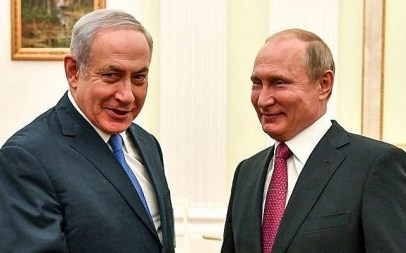
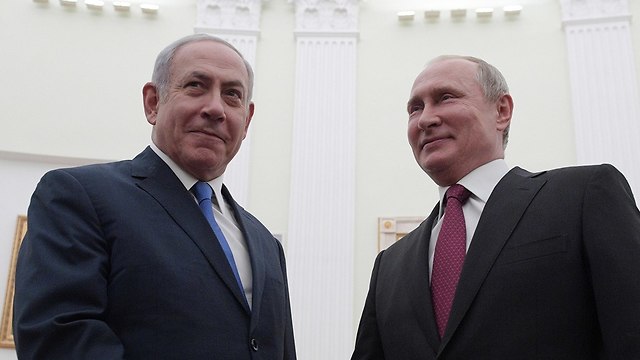
Russian President Vladimir Putin (R) with Israeli Prime Minister Benjamin Netanyahu during their meeting at the Kremlin in Moscow on July 11, 2018. (AFP/ Pool/Yuri Kadobnov)

Russia had originally agreed to sell the system to Syria in 2010, but scrapped the plan at Israel’s behest. However, the Syrian military has already received training to use the system.

“We are certain that the realization of these measures will cool the ‘hot heads’ and will keep them from poorly thought-out actions which threaten our servicemen,” Shoigu said.
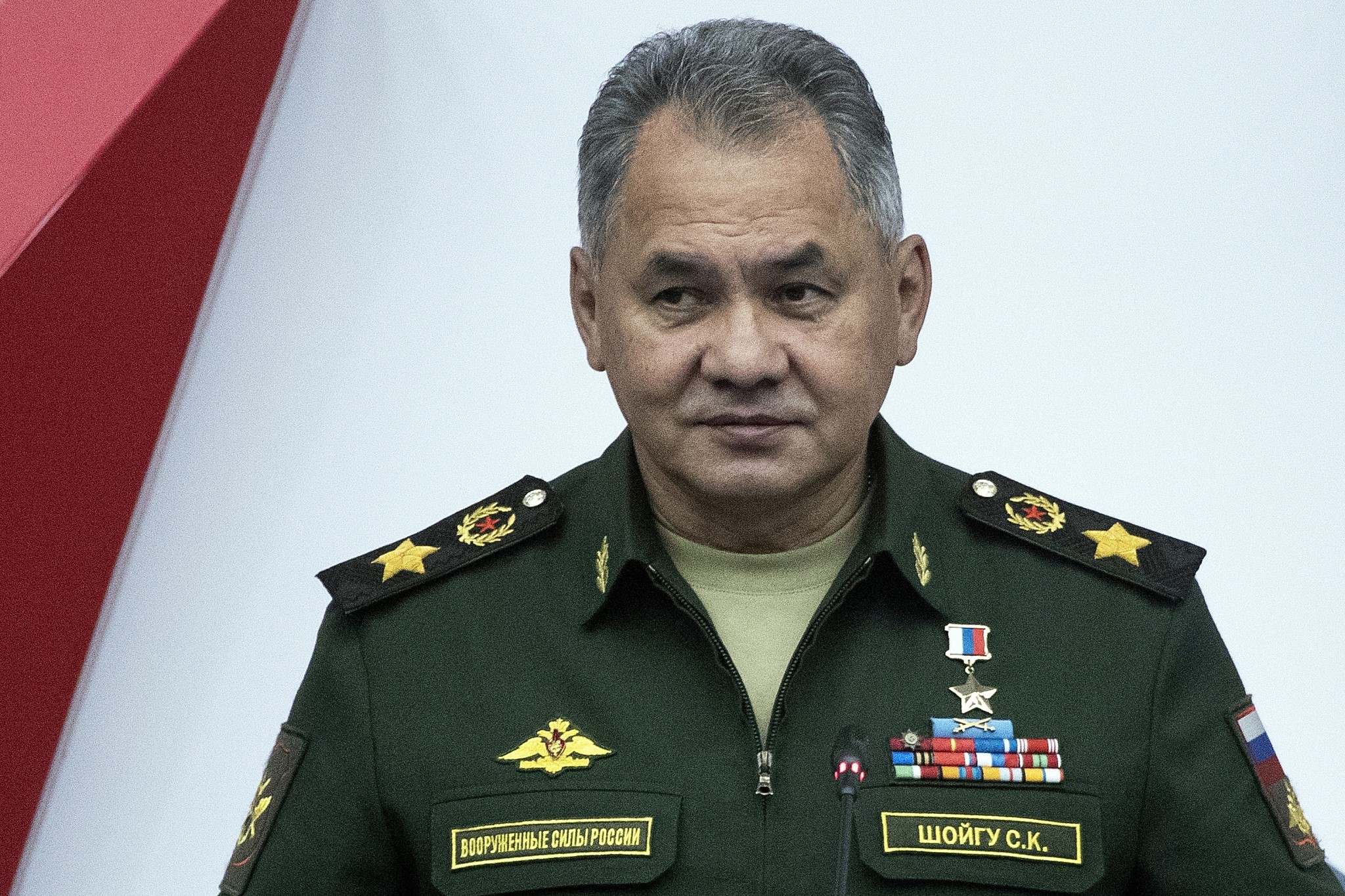
Russian Defence Minister Sergei Shoigu. (AP Photo/Pavel Golovkin)

Shoigu noted that Russia had also intended to supply Syria with the systems in 2013, but had held back because of Israeli concerns. Now, he said, “the situation has changed, and that isn’t our fault.”

Peskov said the measures were “not directed against third countries but towards defending our own military.”

Syria’s Ambassador to Russia Riyad Haddad said following the announcement that Damascus required the S-300 “in order to defend Syrian land from Israel’s aggressive actions.”

Also Monday, Putin told Syrian President Bashar Assad of Moscow’s plan to deliver the new S-300 air defense system, in the first conversation between the two leaders since the downing of the plane.
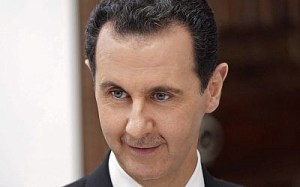
Syrian President Bashar Assad speaks during an interview with the Greek Kathimerini newspaper, in Damascus, Syria, in this photo released May 10, 2018. (SANA via AP)

In the phone call, initiated by Assad, Putin spoke of “additional measures to ensure the safety of Russian troops in Syria and to reinforce the country’s air defense system,” the Kremlin said in a statement.

According to the Syrian president’s office, Putin told Assad the blame for the plane incident lay squarely with Israel.

“This is absurd,” said Israeli Middle East analyst Ehud Ya’ari on Monday night. “The Syrians down a Russian plane and get the prize of an advanced weapons system.”

Israeli fighter jets conducted the airstrike last Monday night on a weapons facility in the coastal city of Latakia that the IDF said was going to provide weapons to the Hezbollah terror group and other Iranian proxies. During a Syrian air defenses counterattack, the Russian spy plane was shot down by an S-200 anti-aircraft missile and its 15 crew members were killed.

Russia already has its own S-300 air defense system in Syria, along with the more advanced S-400 system.

Defense analysts have questioned whether an S-300 system in Syrian, not Russian, hands could threaten Israel’s air power in the region and prevent it from being able to conduct strikes against targets in Syria.

Earlier this year Defense Minister Avigdor Liberman downplayed Israeli concerns over Russia’s purported plans to install the system in Syria.
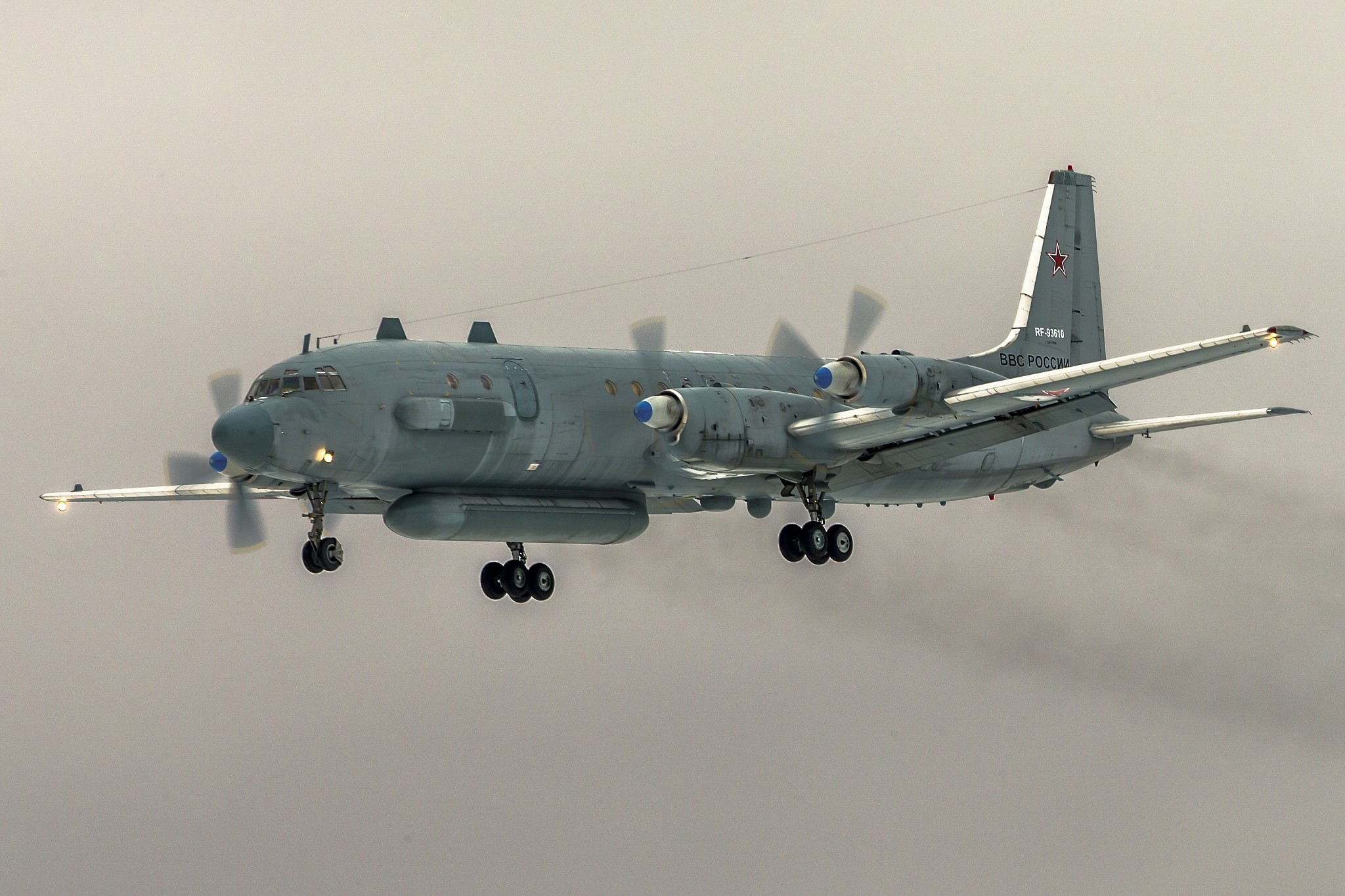
In this file photo taken on Saturday, March 4, 2017, the Russian Ilyushin Il-20 electronic intelligence plane of the Russian air force with the registration number RF 93610, which was accidentally downed by Syrian forces responding to an Israeli air strike, flies near Kubinka airport, outside Moscow, Russia. (AP Photo/Marina Lystseva)

“One thing needs to be clear: If someone shoots at our planes, we will destroy them. It doesn’t matter if it’s an S-300 or an S-700,” he said.

Israel’s former Military Intelligence chief Amos Yadlin, who currently heads the influential Institute for National Security Studies in Tel Aviv, said months ago that he assumed the air force would work quickly to destroy the S-300, if it were indeed handed over to Syria.

“If I know the air force well, we have already made proper plans to deal with this threat. After you remove the threat, which is basically what will be done, we’re back to square one,” Yadlin told Bloomberg news in April.

Moscow announced earlier this year that it was considering reversing its longtime policy against supplying the S-300 system to the regime following a series of airstrikes against Syrian targets by the United States, United Kingdom and France in response to an alleged chemical weapons attack by Assad.

The Russian-made system, made up of radar arrays and missile launchers, offers long-range protection against both fighter jets and missiles. The system has been supplied by Moscow to Tehran, and deployed by the Russian army in Syria alongside its more advanced iteration, the S-400.

The Israeli military on Sunday entirely rejected the Russian defense ministry’s claim that it was to blame for the downing of the Russian spy plane, reiterating that Syria was at fault.
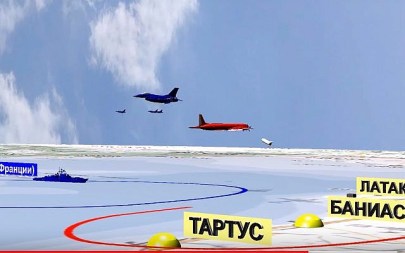
A computer simulation released by the Russian Defense Ministry, Sunday, September 23, 2018, purports to show Israeli jets near a Russian reconnaissance plane, in red, off Syria’s coast before it was accidentally shot down by Syria forces responding to the Israeli air strike. The Russian Defense Ministry on Sunday again blamed Israel for the downing of its plane, as Syrian government forces are thought to have mistook the Russian Il-20 reconnaissance plane for an Israeli jet and shot it down Monday, killing all 15 people aboard. (Russian Defense Ministry Press Service via AP)

In a statement, the Israel Defense Forces maintained its version of events — that the Russian reconnaissance plane was shot down as a result of indiscriminate Syrian anti-aircraft fire — and said it would continue to act to prevent terrorist groups from obtaining advanced weapons.

Earlier on Sunday, the Russian defense ministry released the findings of its investigation into the downing of the plane and the deaths of the crew. Moscow said Israel alone was responsible for the incident, accusing the IDF of failing to give notice of its attack in a timely and accurate manner, and claiming the Israeli pilots used the Russian surveillance aircraft as cover during their strike.

Nevertheless, the Israeli military said that it would continue to operate against Iran and Hezbollah in Syria and that it hoped its coordination efforts with Russia continued.
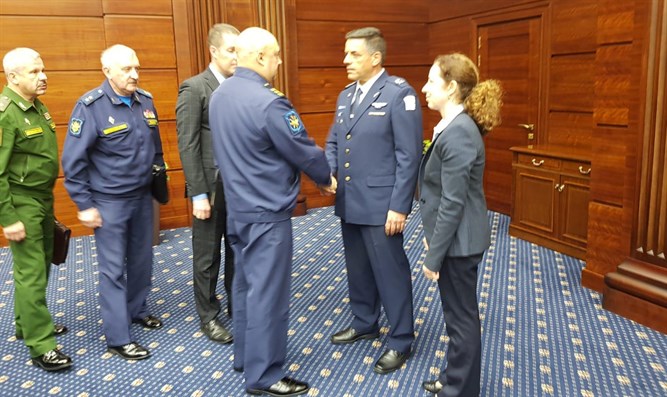
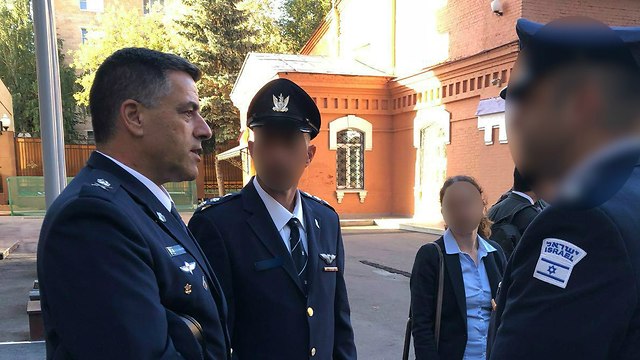
Air Force chief Maj. Gen. Amikam Norkin (second from right) in Moscow on September 20 (IDF spokesman)

An Israel delegation that flew to Moscow last Thursday, led by IAF chief Amikam Norkin, detailed to the Russians that it gave considerable advance warning — 12 minutes according to Israeli reports — and precise information on the target area to the Russians before the strike, that its jets did not hide behind the Russian plane, and that its planes had left the area before the Syrians fired one of 40 anti-aircraft missiles “indiscriminately,” downing the Russian plane. Israeli officials said on the return of the delegation that they believed their Russian hosts had accepted their version of events.

Judah Ari Gross contributed to this report
 

Security Cabinet to convene over relations with Russia

September 25, 2018

Source: Security Cabinet to convene over relations with Russia

After PM Netanyahu speaks with Russia’s Putin regarding Moscow’ announcement to supply Syria with S-300 anti-missile system, Security Cabinet to convene Tuesday to discuss issue.

The Security Cabinet will convene on Tuesday at the Prime Minister’s Office amid the raised tensions between Israel and Russia following Moscow’s announcement it will supply an S-300 anti-missile system to Syria within two weeks.

Russia’s announcement comes a day after its defense ministry presented the findings of its investigation into the downing of the reconnaissance plane, which concluded that Israel bears responsibility for the aircraft’s shooting down that killed 15 crewmen.

Netanyahu (L) and Putin  (Photo: EPA)

Netanyahu (L) and Putin (Photo: EPA)

During the one-hour Security Cabinet meeting, ministers will be updated on recent developments.

Shortly after, Prime Minister Netanyahu will depart for New York to attend the United Nations General Assembly.

On Monday, President Vladimir Putin said while speaking with Netanyahu on the phone that Russia’s actions were aimed at protecting its military, according to the Kremlin statement.

Netanyahu told Putin that “transferring advanced weapons systems into irresponsible hands will increase the dangers in the region,” adding “Israel will continue to defend its security and its interests,” According to a statement released by the GPO.

He also blamed the Syrians for the downing of the Ilyushin IL-20 plane after an IAF strike in Latakia, despite Russia’s conclusions that Israel bears responsibility for the incident.

“Both leaders agreed to continue dialogue between the professional teams and the inter-military coordination via the military channels, and Netanyahu reiterated his condolences over the 15 crewmen killed in last week’s incident in Latakia,” the GPO added.

Meanwhile, US National Security Adviser John Bolton said on Monday that Russian plans to supply Syria with an S-300 missile system would be a “significant escalation” by Moscow and that he hopes it will reconsider.

Bolton added Iran is the one to blame for the attack in Syria and the downing of the Russian plane.

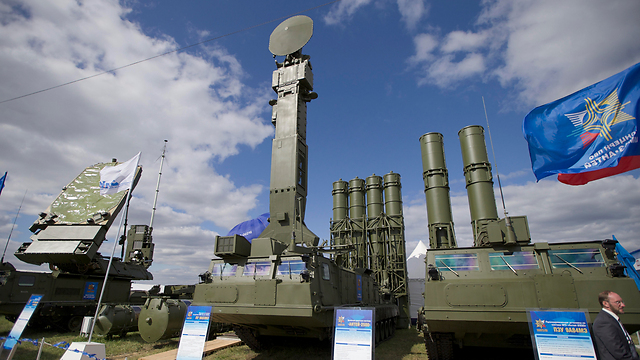
S-300 anti-aircraft missile system  (Photo: AP)

S-300 anti-aircraft missile system (Photo: AP)

“We think introducing the S-300s to the Syrian government would be a significant escalation by the Russians … and something that we hope, if these press reports are accurate, they would reconsider,” Bolton told reporters.

“There shouldn’t be any misunderstanding here … The party responsible for the attacks in Syria and Lebanon and really the party responsible for the shooting down of the Russian plane is Iran,” he said.

On Sunday, during a press briefing, ministry spokesman Maj. Gen. Igor Konashenkov said the heads of the IDF do not appreciate the relationship with Moscow.

“The military leadership of Israel either has no appreciation for the level of relations with Russia, or has no control over individual commands or commanding officers who understood that their actions would lead to tragedy,” Konashenkov elucidated.

“The actions of the Israeli fighter pilots, which led to the loss of life of 15 Russian servicemen, either lacked professionalism or were an act of criminal negligence, to say the least,” he opined.


The Russian exploitation of a good crisis

September 25, 2018

Source: The Russian exploitation of a good crisis

Analysis: Russia really had no interest in hearing the Israeli version of the Latakia offensive. Moscow’s reception of the IAF commander to explain Israel’s version was merely a facade. For Russia, Israel’s culpability was a foregone conclusion, but what it really wanted was more information on how Israel’s intel works and to alter agreements of regarding Israel’s freedom to act in Syrian skies.
It turns out that the visit by an IDF delegation to Moscow to protest Israel’s innocence and to thaw the icy standoff that has developed since has only served to frost relations further and underscore the disparity in the versions that have surfaced between the two sides.

Netanyahu (L) and Putin  (Photo: EPA)

Netanyahu (L) and Putin (Photo: EPA)

In the briefings that were given to Russian media by President Vladimir Putin’s representatives, the Israeli version was presented as nothing more than fallacious. The Israeli investigation appears not to have interested the Russians, and Prime Minister Netanyahu’s gesture of sending the IAF commander to Moscow left no impression on them. From the Russian point of view, this was purely a perfunctory facade. What they were really interested in was how Israel’s IAF intelligence works.

The Russian newspaper “Komsomolskaya Pravda” which has close ties with the Russian Defense Ministry and with the Kremlin spokesman Dmitry Peskov described on Thursday the meeting between the IAF chief Maj. Gen. Amikam Norkin and his Russian counterpart as cold, difficult, stern and without smiles. The paper said that the Russians had demanded that Israel, before anything else, recognize that its actions had brought about a tragedy and that “the blame lies with the Israelis. That is our basic position.”

“We made clear to Norkin that our facts contradict theirs, and conclusions such as those reached by the Israelis may have been invented,” he said.

IAF delegation in Russia (Photo: IDF Spokesmans Unit)

IAF delegation in Russia (Photo: IDF Spokesmans Unit)

It is important to note that in Russia there are no leaks about sensitive security meetings such as this one. Therefore, Israel concluded that the report was no coincidence and it comes directly from Putin’s spokesman or another senior official in the Kremlin. Either way, the article described the Israelis as people shuffling around uncomfortably in their chairs, as people who avoided answering technical questions and who tried to speak about Iranian responsibility for the incident and Assad’s culpability.

The paper also said that Norkin’s Russian counterpart asked during the meeting: “What did you do in the airspace?” According to them, Norkin admitted that Israel did not look into the presence of Russian aircraft in the area during the attack.

The Russian message to Israel is a political and unequivocal one: They do not want Israel to continue flying and launching strikes in Syria and certainly not in the current state of affairs. The downing of the plane is an opportunity for the Russians to change the current understanding with Israel regarding the IAF’s freedom to operate in Syria. Israel now face a dramatic decision on the depth of the crisis and how far it is willing to take it with the Russians. At the moment, the crisis seems insolvable.

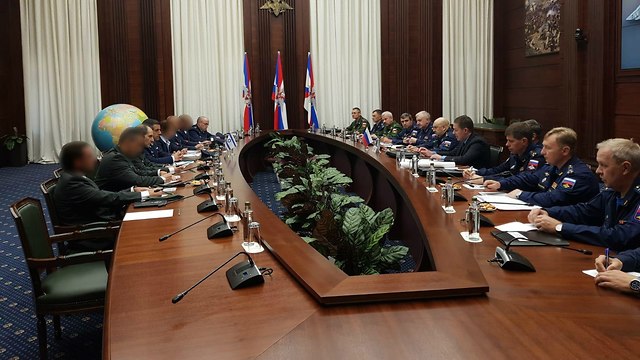
Russian-Israeli meeting  (Photo: IDF Spokesmans Unit)

Russian-Israeli meeting (Photo: IDF Spokesmans Unit)

In the Israeli security establishment, officials have repeatedly emphasized that Israel will not be compromising on its military efforts to remove the Iranian military presence from Syria and prevent the transfer of weapons to Hezbollah.The message being conveyed from Moscow is that the Kremlin does not encourage visits to Russia by Israeli officials in an effort to bridge the diplomatic rift that has developed. Nor does it support visits by Russian officials to Israel over the matter.Israel is convinced that it acted in accordance with the agreements reached with Russia and that everything that took place stemmed from a lack of professionalism demonstrated by the Syrians who shot down the plane. Moreover, the Israelis are convinced that the fact that they have hitherto refrained from hitting Syrian and Iranian targets along the Syrian coast has brought about a situation in which the Iranians believe they can establish military facilities in the area under the umbrella of Russian air defenses. Thus, Israel will continue to do everything in order to expunge the Iranian presence from the area.

Nevertheless, beyond the declarations and policies, in the coming days Israel will need to make decisions on the continuation of operations above Syrian territory and on relations with the Russians. Israel believes that time will run its course and the mutual interest in preserving healthy relations will ultimately prevail over the crisis.

The next Israeli strike in Syria will therefore be a test for both sides. It is possible to assume that if and when Israel chooses to strike a target, it will do everything in its abilities to ensure early and thorough coordination with the Russians, even if it comes at the expense of security information, lest it awaken an even angrier Russian bear.


Iran, major powers agree to work on nuclear deal despite U.S. sanctions 

September 25, 2018

Source: Iran, major powers agree to work on nuclear deal despite U.S. sanctions – Middle East – Jerusalem Post

The idea is to circumvent US sanctions due to be restored in November under which Washington can cut off from the US financial system any bank that facilitates an oil transaction with Iran.

BY REUTERS
 SEPTEMBER 25, 2018 06:08
Iran, major powers agree to work on nuclear deal despite U.S. sanctions

UNITED NATIONS – The remaining parties to the Iran nuclear deal on Monday agreed to keep working to maintain trade with Tehran despite skepticism this is possible as US sanctions to choke off Iranian oil sales resume in November.

US President Donald Trump decided in May to abandon the pact and to restore economic sanctions on Iran, including those that seek to force the OPEC member’s major oil customers to stop buying Iranian crude.

In a statement after a meeting of Britain, China, France, Germany, Russia and Iran, the group said they were determined to develop payment mechanisms to continue trade with Iran despite skepticism by many diplomats that this will be possible.

“Mindful of the urgency and the need for tangible results, the participants welcomed practical proposals to maintain and develop payment channels notably the initiative to establish a Special Purpose Vehicle (SPV) to facilitate payments related to Iran’s exports, including oil,” the group said in a joint statement issued after the statement.

Several European diplomats said the SPV idea was to create a barter system, similar to one used by the Soviet Union during the Cold War, to exchange Iranian oil for European goods without money changing hands.

The idea is to circumvent US sanctions due to be restored in November under which Washington can cut off from the US financial system any bank that facilitates an oil transaction with Iran.

Speaking to reporters after the meeting, European Union foreign policy chief Federica Mogherini said the decision to set up such a vehicle had already been taken and that technical experts would meet again to flesh out the details.

“In practical terms this will mean that EU member states will set up a legal entity to facilitate legitimate financial transactions with Iran and this will allow European companies to continue to trade with Iran in accordance with European Union law and could be open to other partners in the world,” she said.

Many diplomats and analysts, however, are skeptical such a vehicle could ultimately thwart US sanctions given that the United States could amend its sanctions laws to prohibit such barter transactions.

“The key is to keep all possibilities open so that we can signal to the Iranians that the door isn’t closing,” said a senior French diplomat.

The European Union, has so far failed to devise a workable legal framework to shield its companies from US sanctions that go into effect in November and that, among other things, seek to choke off Iran’s oil sales, diplomats said.

Highlighting how difficult it will be for the Europeans to come up with concrete solutions, French state-owned bank Bpifrance on Monday abandoned a plan to set up a financial mechanism to aid French firms trading with Iran.

The crux of the 2015 nuclear deal, negotiated over almost two years by the administration of former US President Barack Obama, was that Iran would restrain its nuclear program in return for the relaxation of sanctions that had crippled its economy.

Trump considered it flawed because it did not include curbs on Iran’s ballistic missiles program or its support for proxies in Syria, Yemen, Lebanon and Iraq.

The impending return of US sanctions has contributed to a slide in Iran’s currency. The rial has lost about two-thirds of its value this year, hitting a record low against the US dollar this month.


Russia declares electronic war on Israel ranging over Syria, E. Mediterranean – DEBKAfile

September 24, 2018

Source: Russia declares electronic war on Israel ranging over Syria, E. Mediterranean – DEBKAfile

Within two weeks, Russia will arm Syria with S-300 air defense systems and start jamming navigation in the E. Mediterranean – two of the three measures announced by Defense Minister Sergei Shoigu in Moscow on Monday, Sept. 24 “in response to Israel’s role in downing the Russian IL-20” on Sept. 17.

Syria’s air defense electronic capacities will be boosted to level that of Russian forces in the country. But the most significant measure announced by Shoigu was: “Russia will jam satellite navigation, on-board radars and communication systems of combat aircraft, which attack targets in the Syrian territory, in the regions over the waters of the Mediterranean Sea bordering with Syria.”

The Russian minister stressed that if these measures “fail to cool hotheads, [He was obviously referring to Israel.], we will have to respond in line with the current situation.”

The crucial measure he announced is not the arming of Syria for the first time with S-300 systems – which Moscow withheld in the past at Israel’s request – but the jamming of navigation. DEBKAfile’s military experts point out that this the first time a major world power has declared electronic war against any country. After rejecting Israel’s version of the Ilyushin crash with 15 Russian servicemen aboard as untruthful, Moscow has thrown down the electronic gauntlet before the IDF and pitched the dispute onto a much higher elevation. This challenge confronts Prime Minister Binyamin Netanyahu and Chief of Staff Lt. Gen. Gady Eisenkot with three tough options:

  1. They could have sought a way out of this high-stakes showdown with Moscow up until Monday. But now, it is too late. Shoigu slammed the door shut on a quiet exit. However, Israel is even more unable to give up on its air offensive against Iranian and its proxies’ presence in Syria, despite the escalated risk of a clash with the Russians, because it would constitute a humiliating comedown against Iran and Hizballah. However, in future, the IDF may be more cautious and select its targets with greater circumspection.
  2. They could meet Moscow’s challenge for an electronic duel. In previous encounters, Israel came of best. In 1982, the Israeli Air Force destroyed a Russian air defense network installed by Russia in the Lebanese Beqaa Valley; and more recently, in 2007, Israeli planes, before destroying the Iranian-North Korean plutonium reactor in Deir Ez-Zour, activated its “Suter” system to “blind” the Syrian/Russian radar protecting the site.
    Russian electronic warfare specialists have since sought answers for Israel’s jamming measures, but have found it difficult to catch up with is constant advances. However, this time may be different. DEBKAfile reports that the latest Russian challenge may stretch Israel’s Air Force and Navies beyond their capacity. While successful in coping with electronic antagonists over small targets in the past, they now see the Russian Defense Minister painting a large arena of many hundreds of kilometers covering Syria and the eastern Mediterranean for the new challenge. Israel lacks operational experience on this scale of electronic warfare.
  3. The IDF is much less worried about the impending delivery of S-300 missiles systems to Bashar Assad’s army. For years, the IAF has been practicing combat against these batteries. But for taking on massive Russian jamming across the eastern Mediterranean, Israel may have to turn to the United States for assistance. This request may be raised when Netanyahu meets President Donald Trump on Wednesday Sept. 26, on the sidelines of the UN General Assembly in New York.


Iran warns Israel and U.S. to expect ‘devastating’ revenge 

September 24, 2018

Source: Iran warns Israel and U.S. to expect ‘devastating’ revenge – Middle East – Jerusalem Post

Salami addressed Israeli and US leaders, saying that “you have seen our revenge before … You will see that our response will be crushing and devastating.”

BY REUTERS, JPOST.COM STAFF
 SEPTEMBER 24, 2018 09:41
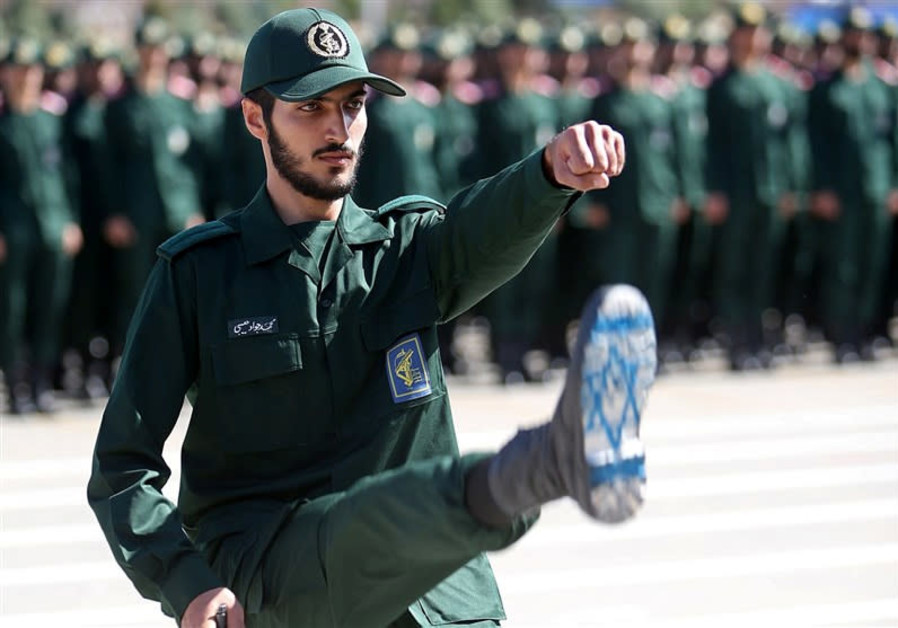
An Iranian Officer of Revolutionary Guards with Israel flag drawn on his boots

The deputy head of Iran’s Revolutionary Guards Hossein Salami warned Israeli and US leaders to expect a “devastating” response from Iran, as reported by Reuters.

In a speech before the funeral of the victims in Ahvaz, broadcast live on the state television, he accused them of involvement in Saturday’s attack on a military parade in the city of Ahvaz that killed 25 people, including military personnel and a four-year-old child, and wounded more than 60.

Thousands of people packed the streets of the southwestern Iranian city of Ahvaz to mourn the victims. The assault, one of the worst against the most powerful military force of the Islamic Republic, struck a blow at its security establishment at a time when the United States and its Gulf allies are working to isolate Tehran.

Many chanted “death to Israel and America.”

The coffins, wrapped in the flag of the Islamic Republic, were carried by the mourners. Many held pictures of a four year old boy killed in the attack.

Salami addressed Israeli and US leaders, saying that “you have seen our revenge before … You will see that our response will be crushing and devastating and you will regret what you have done.”

Iranian President Hassan Rouhani also accused other countries of the attack, right before leaving for the United Nations Meeting on Sunday.

US Ambassador to the United Nations Nikki Haley dismissed his comments.

“He’s got the Iranian people are protesting, every ounce of money that goes into Iran goes into his military, he has oppressed his people for a long time and he needs to look at his own base to figure out where that’s coming from,” she told CNN’s “State of the Union.”

“He can blame us all he wants. The thing he’s got to do is look at the mirror.”


O Come All Ye Jew Haters 

September 24, 2018


YouTube actually put up a warning about this anti antisemitism video. The high tech media companies are really getting scary…  – JW

PM Netanyahu may help Trump preside over UN Security Council session 

September 23, 2018

Source: PM Netanyahu may help Trump preside over UN Security Council session – Israel Hayom


Russia blames Israel ‘entirely’ for plane shot down over Syria

September 23, 2018

Source: Russia blames Israel ‘entirely’ for plane shot down over Syria – Israel Hayom


Ahvaz attack reveals Tehran under heavy pressure at home and in regional wars – DEBKAfile

September 23, 2018

Source: Ahvaz attack reveals Tehran under heavy pressure at home and in regional wars – DEBKAfile

The terror attack on a military parade the Iranian oil city of Ahvaz on Saturday, Sept. 22, killing 29 and injuring 90, was a direct hit at the Tehran regime’s elite arm, the Revolutionary Guards (IRGC), which took half of the casualties. The Shiite Islamic Republic is under heavy pressure from two minorities, its foreign warfronts and US sanctions:
  1. Responsibility for the attack was claimed by the Ahvaz National Resistance, which has for decades fought the Persian Shiite regime for a Sunni Arab state in the oil-rich Khuzestan province. Four underground groups banded under this heading represent some 2 million Arab Sunni adherents, who account for around 40 percent of the province’s population and make up most of the workforce at the oilfields. Sporadic protests and unrest are brutally beaten down by the IRGC with extreme measures like induced famine.
    But the shooting attack on Saturday, by four gunmen clad in Iranian army uniforms, was the worst the elite IRGC had faced and appeared to have meticulously planned well in advance. The gunmen zoomed in on motorbikes, a favored vehicle of IRGC goons, and opened fire on the saluting stand and the military parade marching at the time causing chaos and panic.
    Tehran customarily accuses three parties for inciting anti-Shiite terror: Saudi and UAE intelligence and the US CIA. This time the Iranian military spokesman added the Israeli Mossad to the roster and charged the Saudis with arming and sending the terrorists.
  2. The ayatollahs’ regime also has its hands full against another restive ethnic minority, the Kurds of northwestern Iran. Their underground movement is led by the Kurdish Democratic Party of Iran (KDPI or HDKA) and the armed Kurdish opposition PJAK. From bases on the Iraqi side of the border, they mount periodic raids on Iranian patrols and IRGC border posts. On July 21, they killed 11 Guardsmen in the Marivan area and blew up a large Iranian ammunition store. The IRGC hit back on Sept. 8 with long-range missile mire on the main Kurdish command centers in eastern Iraq, killing 17 Kurds and injuring 40. This cross-border assault by Iran did not raise any international interest.
  3. During August and September, Iran concentrated large numbers of Iraqi Shiite militia proxy fighters in Iraq’s western province of Anbar, recently arming them with long-range surface missiles. They are on standby for (a) intervening in the Syrian war if Tehran deems this necessary; (b) as a reserve force for crossing into Syria in the event of a war erupting between Hizballah and Israel; and (3) to step in to quell the riots and attacks on Iranian institutions and missions raging in Iraqi Shiite cities, including the oil city of Basra. Tehran fears that this tide of anti-Iran disaffection if it gets out of control will eradicate Iranian influence in Baghdad.
  4. Iran is also up against active opposition to expanding its foothold in the Red Sea region from the US, Saudi Arabia and the UAE.  

All these setbacks are symptomic of a weakening at the core off the Shiite regime in Tehran and its intelligence agencies, under the crushing burdens of mounting terrorist attacks by minority groups in southern and northern Iran and Tehran’s drive for dominance on major external fronts, Syria, Iraq and Yemen, amid crippling US economic sanctions. In these circumstances, the regime in Tehran is bound to hit back at its enemies with the “resolve and swiftness” promised Saturday its military spokesman pledged after the Ahvaz attack.