Archive for September 2018

Netanyahu: Israel, Russia will continue close defense coordination 

September 26, 2018

Source: Netanyahu: Israel, Russia will continue close defense coordination – Israel Hayom


Mossad head flies to US with Netanyahu to discuss Russia crisis

September 26, 2018

Source: Mossad head flies to US with Netanyahu to discuss Russia crisis | The Times of Israel

After 3-hour meeting, ministers tell IDF to keep working to prevent Iran deepening presence in Syria; PM said to tell cabinet to stay silent, after Moscow vows to give Syria S-300s

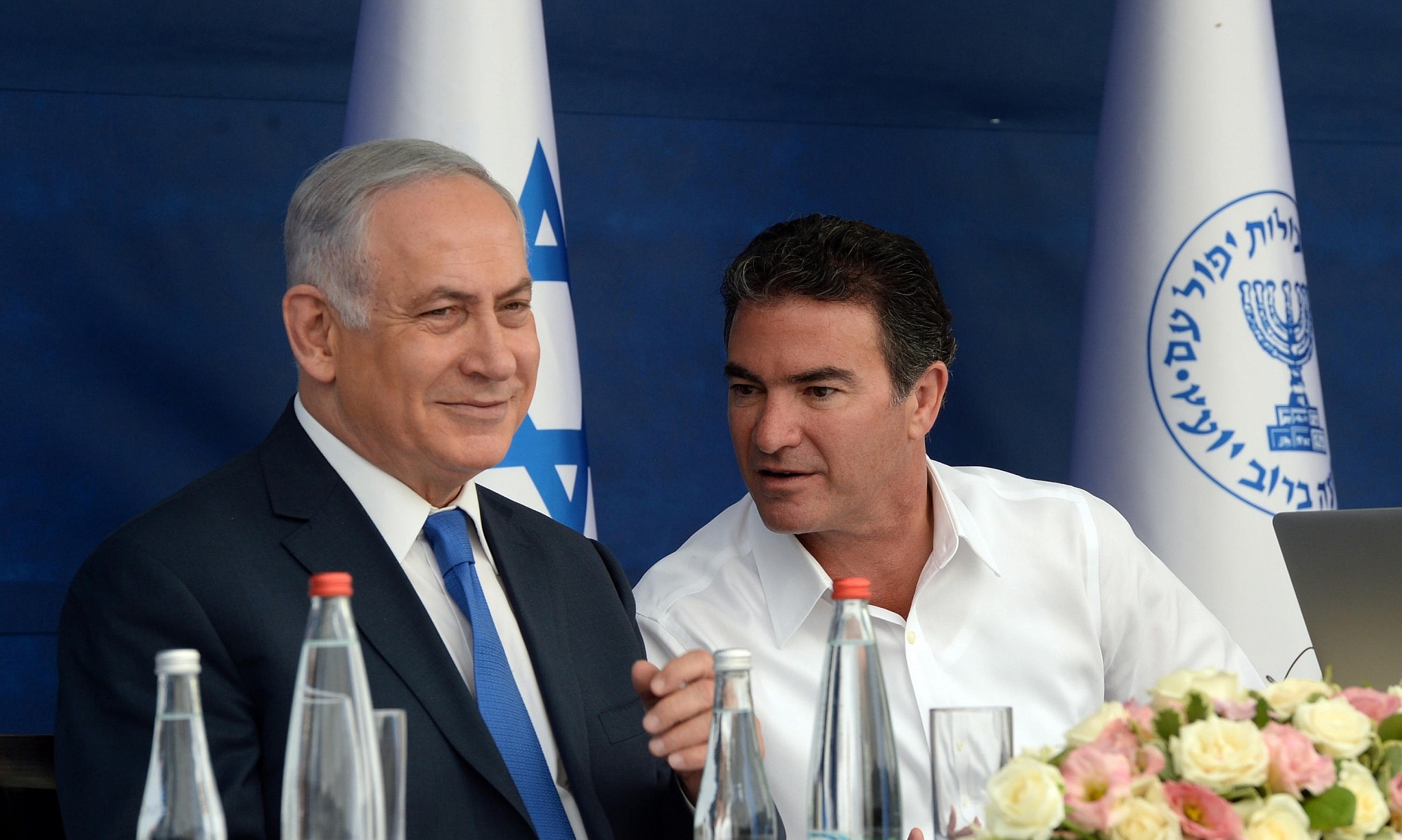
Prime Minister Benjamin Netanyahu (left) and Head of the Mossad Yossi Cohen during a toast for the Jewish New Year on October 02, 2017. (Haim Zach/GPO)

Prime Minister Benjamin Netanyahu (left) and Head of the Mossad Yossi Cohen during a toast for the Jewish New Year on October 02, 2017. (Haim Zach/GPO)

Mossad head Yossi Cohen is flying Tuesday to the US with Prime Minister Benjamin Netanyahu to discuss the crisis in ties with Russia, in the aftermath of last week’s downing of a Russian plane by Syrian anti-aircraft fire during an Israeli airstrike.

Army Radio said that Cohen was headed to Washington to meet with senior US officials about Russia’s decision to send S-300 advanced surface-to-air missiles within two weeks to Syria, which both Jerusalem and Washington have warned would further destabilize the region and increase already high tensions.

The Kan national broadcaster, meanwhile, claimed Cohen would join Netanyahu in New York and discuss Iran’s involvement in the Middle East with a number of officials from other countries on the sidelines of the United Nations General Assembly.

The reports of Cohen’s trip followed an almost three-hour meeting of the security cabinet Tuesday during which Netanyahu warned ministers to remain silent on the Russian affair, Hadashot news reported.

A statement after the meeting said the Security Cabinet “instructed the IDF to continue to take action against attempts by Iran to establish a military presence in Syria while continuing the security coordination with Russia.” It said ministers “share in the sorrow of the families in Russia and of the Russian people over the loss of the Russian air crew members as a result of the irresponsible action of the Syrian military.”

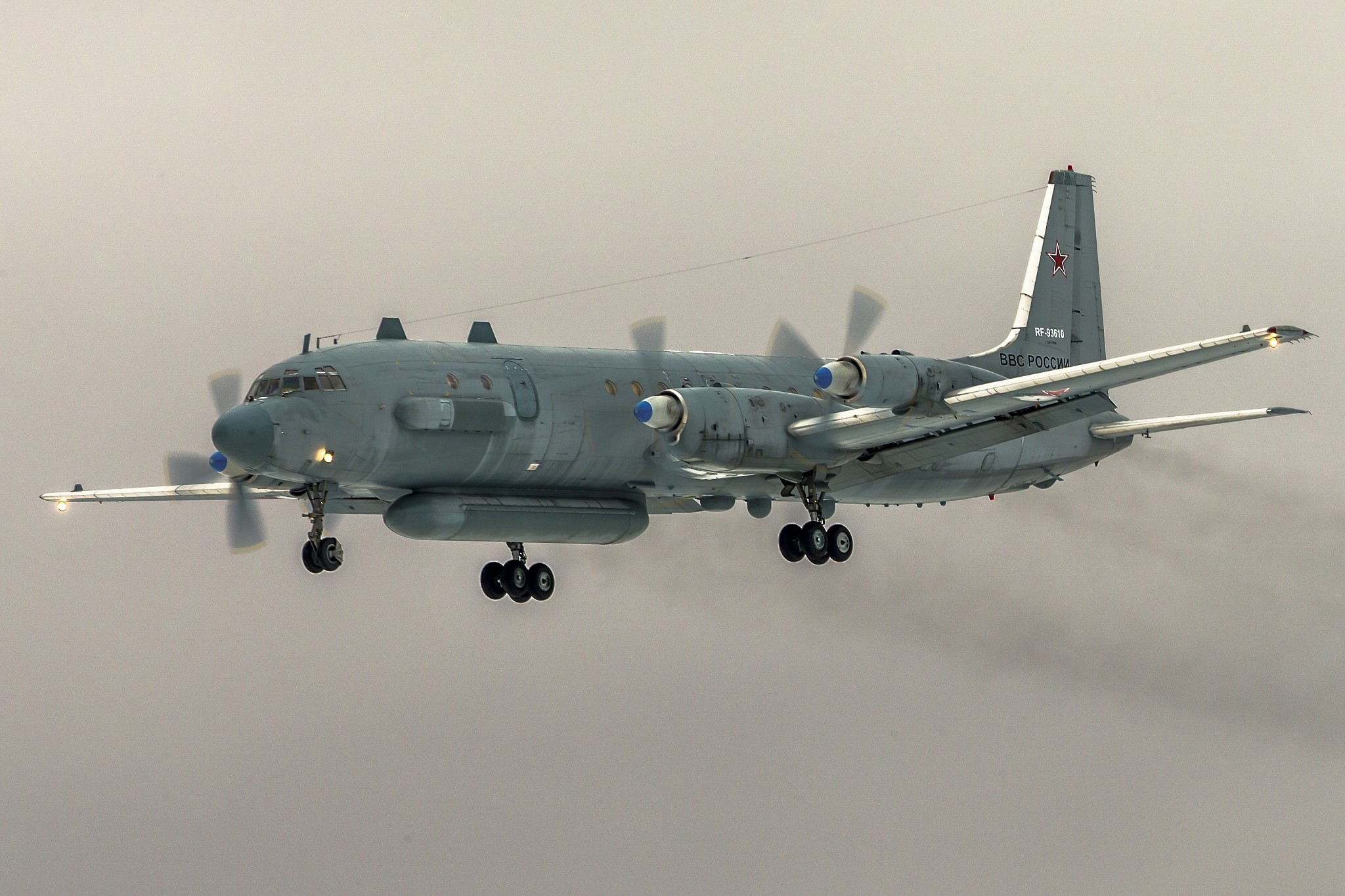
In this file photo taken on Saturday, March 4, 2017, the Russian Ilyushin Il-20 electronic intelligence plane of the Russian air force with the registration number RF 93610, which was accidentally downed by Syrian forces responding to an Israeli air strike, flies near Kubinka airport, outside Moscow, Russia. (AP Photo/Marina Lystseva)

Following the meeting, Netanyahu left for New York for the UN General Assembly, where he will give a speech and also meet with US President Donald Trump.

Russia blamed Israeli actions for the downing, by Syrian anti-aircraft fire, of the plane, in which all 15 Russian serviceman aboard were killed. The Israel Defense Forces has maintained the plane was shot down due to indiscriminate Syrian fire and vowed to continue targeting Iranian weapons shipments in Syria.

Russian President Vladimir Putin had informed Netanyahu of the decision to provide Syria with the S-300 system in a phone call Sunday.

In response, according to a statement by Netanyahu’s office, “The prime minister said providing advanced weapons systems to irresponsible actors will magnify dangers in the region, and that Israel will continue to defend itself and its interests.”

In his call with Netanyahu, Putin said he disagreed with the Israeli version of events concerning the downing of the Russian plane.

“The information provided by the Israeli military… runs counter to conclusions of the Russian defense ministry,” the Kremlin said of the content of Putin’s remarks in the call, adding that the actions of the Israeli pilots had led to the plane being targeted by Syrian air defense systems.

“The Russian side proceeds from the fact that the actions by the Israeli air force were the main reason for the tragedy,” a statement said.

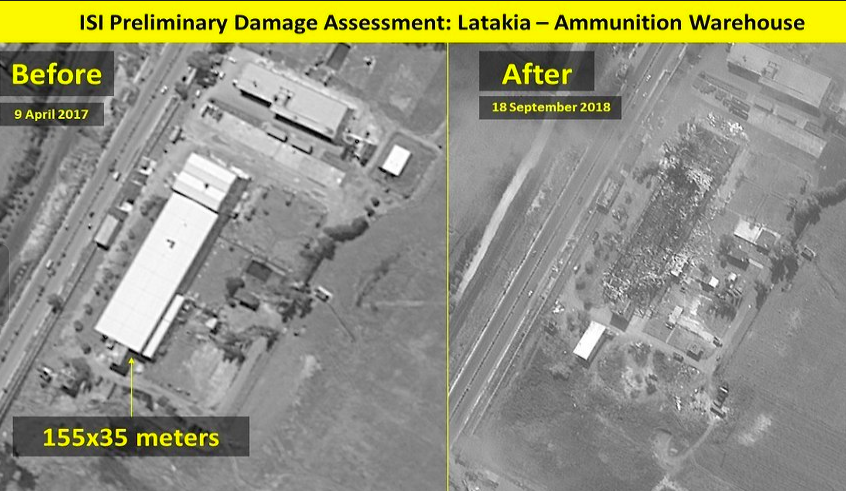
A before and after photo of an ammunition warehouse which was destroyed in an Israeli airstrike on a Syrian base in Latakia, September 18, 2018 (ImageSat International (ISI/Ynet)

Netanyahu’s office said Monday night that, in the call, he had “expressed his confidence in the credibility of the IDF probe and its conclusions, and stressed once again that responsibility for the unfortunate incident lay with the Syrian army that brought down the plane, and with Iran, whose aggression destabilizes [the region].”

At the same time, it said, Netanyahu had “once again expressed his condolences for the deaths of the Russia soldiers.”

The statement added that the two leaders agreed to “continue talks between professional teams and coordination between the armies through military channels.”

Agencies contributed to this report.


Pompeo accuses EU of ‘solidifying Iran’s ranking’ as top state sponsor of terror

September 26, 2018

Source: Pompeo accuses EU of ‘solidifying Iran’s ranking’ as top state sponsor of terror | The Times of Israel

US secretary of state blasts European states over payment plan to preserve business with Tehran and avoid renewed American sanctions

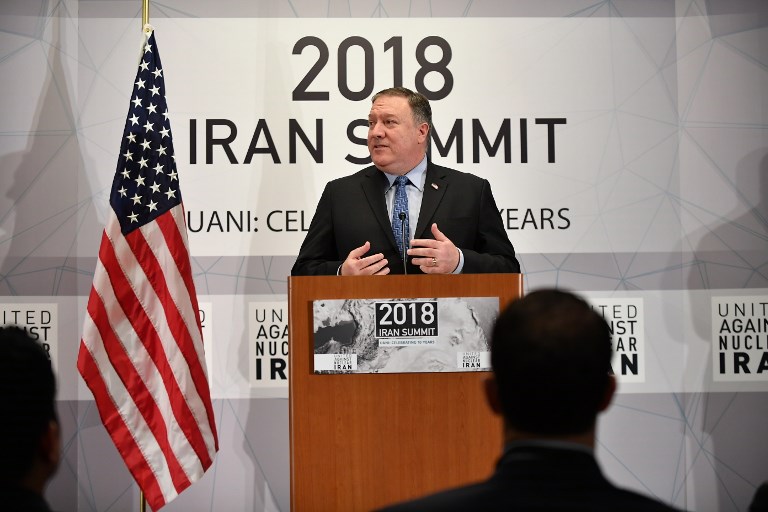
US Secretary of State Mike Pompeo speaks at the United Against Nuclear Iran Summit in New York on September 25, 2018. (AFP PHOTO / MANDEL NGAN)

US Secretary of State Mike Pompeo speaks at the United Against Nuclear Iran Summit in New York on September 25, 2018. (AFP PHOTO / MANDEL NGAN)

NEW YORK — US Secretary of State Mike Pompeo denounced Tuesday a European Union plan to set up a way to preserve business with Iran and avoid renewed American sanctions.

Addressing the United Against a Nuclear Iran pressure group being held near the annual UN General Assembly, Pompeo said he was “disturbed and indeed deeply disappointed” by Monday’s announcement from remaining members of an international nuclear deal.

“This is one of the most counterproductive measures imaginable for regional peace and security,” Pompeo said, accusing the European Union of “solidifying Iran’s ranking as the number-one state sponsor of terrorism.”

“I imagine the corrupt ayatollahs and IGRC were laughing this morning,” Pompeo added at the event in New York, referring to the elite Revolutionary Guards, in a speech that was interrupted several times by anti-war protesters.

President Donald Trump pulled out of an agreement negotiated under his predecessor Barack Obama for Iran to curtail its nuclear program sharply in exchange for sanctions relief.

EU foreign policy chief Federica Mogherini, speaking late Monday alongside Iranian Foreign Minister Mohammad Javad Zarif, said that the agreement was in the global interest and pointed to UN inspectors’ findings that Iran is in compliance.

She said that European Union members were working on a legal entity that would allow businesses to buy oil and conduct other business with Iran in hopes of avoiding US sanctions.


Bolton warns Iran of ‘hell to pay’ in impassioned NY speech 

September 26, 2018

Source: Bolton warns Iran of ‘hell to pay’ in impassioned NY speech | The Times of Israel

Using unusually harsh language even for Trump administration, US national security adviser tells Tehran: ‘We are watching, and we will come after you’

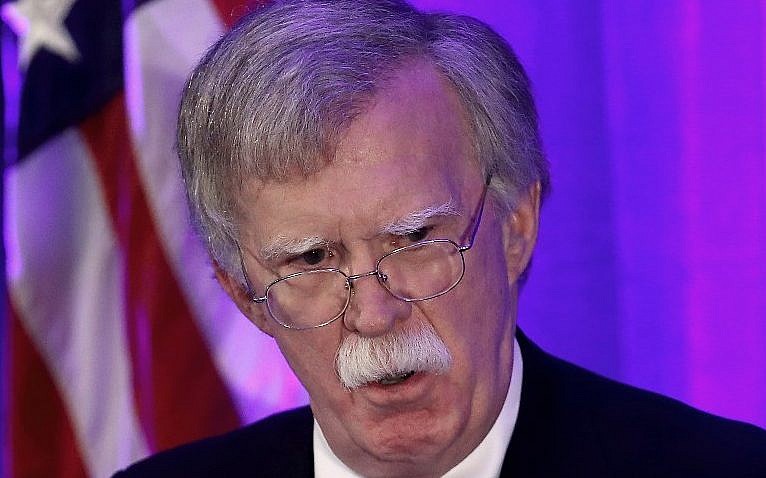
US National Security Adviser John Bolton speaks at a Federalist Society luncheon at the Mayflower Hotel September 10, 2018 in Washington, DC. (Win McNamee/Getty Images/AFP)

US National Security Adviser John Bolton speaks at a Federalist Society luncheon at the Mayflower Hotel September 10, 2018 in Washington, DC. (Win McNamee/Getty Images/AFP)

US national security adviser John Bolton warned Iran of “hell to pay” and “serious consequences” if it defies the US, using some of the most aggressive language employed by administration officials in recent decades.

Bolton delivered the speech Tuesday in New York, hosted by an organization that opposed the 2015 nuclear deal that the Trump administration withdrew from earlier this year. The speech, which saw excerpts released before the delivery, features rhetoric that is tough even by the standards of an administration fiercely opposed to Tehran.

“According to the mullahs in Tehran, we are ‘the Great Satan,’ lord of the underworld, master of the raging inferno,” Bolton told the annual summit of United Against Nuclear Iran. “So, I might imagine they would take me seriously when I assure them today: If you cross us, our allies, or our partners; if you harm our citizens; if you continue to lie, cheat, and deceive, yes, there will indeed be hell to pay.”

“The Iran deal was the worst diplomatic debacle in American history,” he continued in the speech, which coincided with the annual UN General Assembly. “It did nothing to address the regime’s destabilizing activities or its ballistic missile development and proliferation. Worst of all, the deal failed in its fundamental objective: permanently denying Iran all paths to a nuclear bomb.

“The United States is not naive. We will not be duped, cheated, or intimidated. The days of impunity for Tehran and its enablers are over. The murderous regime and its supporters will face significant consequences if they do not change their behavior. Let my message today be clear: We are watching, and we will come after you.”

Earlier Tuesday, US President Donald Trump urged the international community to isolate Iran, during a combative address before the UN General Assembly in which he accused the Tehran regime of sowing “chaos, death, and destruction.”

US President Donald Trump addresses the 73rd session of the General Assembly at the United Nations in New York, September 25, 2018. (AFP PHOTO / Nicholas Kamm)

“We cannot allow the world’s leading sponsor of terrorism to possess the planet’s most dangerous weapons,” Trump said, citing Iran’s “threatening Israel with annihilation” and chants of “death to America.”

“We ask all nations to isolate Iran’s regime as long as its aggression continues and we ask all nations to support Iran’s people as they struggle to reclaim their religious and righteous destiny,” he added.

In May, Trump withdrew from the 2015 Iran nuclear deal with Iran, which was forged under his predecessor, Barack Obama. The administration tore into the deal for its sunset clauses that allow certain restrictions on Iran’s nuclear program to expire, its failure to prevent Iranian ballistic missile testing, and the partial access it provides for inspectors into Iran’s military sites.

Trump’s pullout from the deal was met with intense criticism from world leaders, especially those of the other countries — Britain, France, Germany, China, and Russia — that brokered the accord.

Iranian President Hassan Rouhani responded to Trump’s fiery speech by calling the reimposed sanctions “economic terrorism” and claiming the United States was plotting to overthrow Tehran’s regime.

“It is ironic that the US government doesn’t even conceal its plan for overthrowing the same government it invites to talks,” he said.

Eric Cortellessa contributed to this report.


The Russian exploitation of a good crisis

September 26, 2018

Source: The Russian exploitation of a good crisis

Analysis: Russia really had no interest in hearing the Israeli version of the Latakia offensive. Moscow’s reception of the IAF commander to explain Israel’s version was merely a facade. For Russia, Israel’s culpability was a foregone conclusion, but what it really wanted was more information on how Israel’s intel works and to alter agreements regarding Israel’s freedom to act in Syrian skies.

It turns out that the visit by an IDF delegation to Moscow to protest Israel’s innocence and to thaw the icy standoff that has developed since has only served to frost relations further and underscore the disparity in the versions that have surfaced between the two sides.

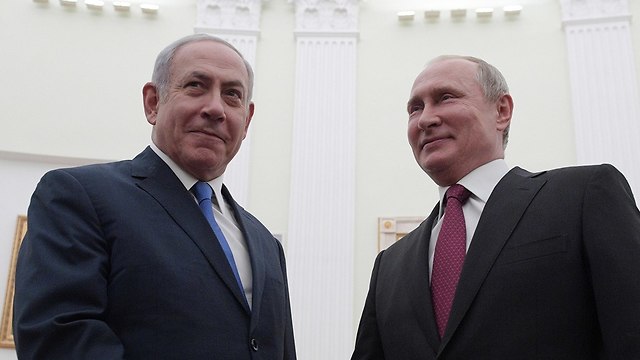
Netanyahu (L) and Putin  (Photo: EPA)

Netanyahu (L) and Putin (Photo: EPA)

In the briefings that were given to Russian media by President Vladimir Putin’s representatives, the Israeli version was presented as nothing more than fallacious. The Israeli investigation appears not to have interested the Russians, and Prime Minister Netanyahu’s gesture of sending the IAF commander to Moscow left no impression on them. From the Russian point of view, this was purely a perfunctory facade. What they were really interested in was how Israel’s IAF intelligence works.

The Russian newspaper “Komsomolskaya Pravda” which has close ties with the Russian Defense Ministry and with the Kremlin spokesman Dmitry Peskov described on Thursday the meeting between the IAF chief Maj. Gen. Amikam Norkin and his Russian counterpart as cold, difficult, stern and without smiles. The paper said that the Russians had demanded that Israel, before anything else, recognize that its actions had brought about a tragedy and that “the blame lies with the Israelis. That is our basic position.”

“We made clear to Norkin that our facts contradict theirs, and conclusions such as those reached by the Israelis may have been invented,” he said.

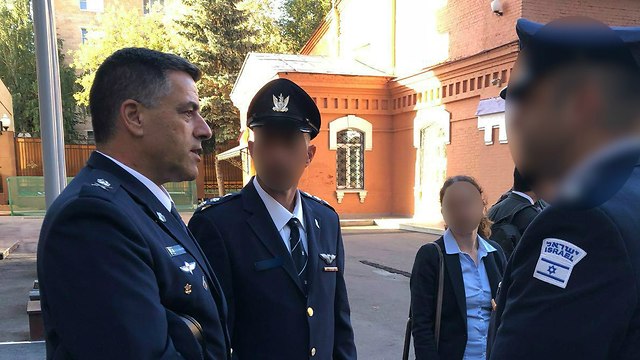
IAF delegation in Russia (Photo: IDF Spokesmans Unit)

IAF delegation in Russia (Photo: IDF Spokesmans Unit)

It is important to note that in Russia there are no leaks about sensitive security meetings such as this one. Therefore, Israel concluded that the report was no coincidence and it comes directly from Putin’s spokesman or another senior official in the Kremlin. Either way, the article described the Israelis as people shuffling around uncomfortably in their chairs, as people who avoided answering technical questions and who tried to speak about Iranian responsibility for the incident and Assad’s culpability.

The paper also said that Norkin’s Russian counterpart asked during the meeting: “What did you do in the airspace?” According to them, Norkin admitted that Israel did not look into the presence of Russian aircraft in the area during the attack.The Russian message to Israel is a political and unequivocal one: They do not want Israel to continue flying and launching strikes in Syria and certainly not in the current state of affairs. The downing of the plane is an opportunity for the Russians to change the current understanding with Israel regarding the IAF’s freedom to operate in Syria. Israel now face a dramatic decision on the depth of the crisis and how far it is willing to take it with the Russians. At the moment, the crisis seems insolvable.

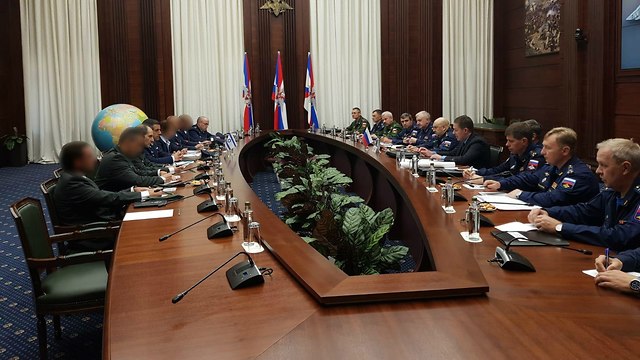
Russian-Israeli meeting  (Photo: IDF Spokesmans Unit)

Russian-Israeli meeting (Photo: IDF Spokesmans Unit)

In the Israeli security establishment, officials have repeatedly emphasized that Israel will not be compromising on its military efforts to remove the Iranian military presence from Syria and prevent the transfer of weapons to Hezbollah.The message being conveyed from Moscow is that the Kremlin does not encourage visits to Russia by Israeli officials in an effort to bridge the diplomatic rift that has developed. Nor does it support visits by Russian officials to Israel over the matter.

Israel is convinced that it acted in accordance with the agreements reached with Russia and that everything that took place stemmed from a lack of professionalism demonstrated by the Syrians who shot down the plane. Moreover, the Israelis are convinced that the fact that they have hitherto refrained from hitting Syrian and Iranian targets along the Syrian coast has brought about a situation in which the Iranians believe they can establish military facilities in the area under the umbrella of Russian air defenses. Thus, Israel will continue to do everything in order to expunge the Iranian presence from the area.

Nevertheless, beyond the declarations and policies, in the coming days Israel will need to make decisions on the continuation of operations above Syrian territory and on relations with the Russians. Israel believes that time will run its course and the mutual interest in preserving healthy relations will ultimately prevail over the crisis.

The next Israeli strike in Syria will therefore be a test for both sides. It is possible to assume that if and when Israel chooses to strike a target, it will do everything in its abilities to ensure early and thorough coordination with the Russians, even if it comes at the expense of security information, lest it awaken an even angrier Russian bear.


Rouhani says Israel biggest threat to world peace

September 26, 2018

Source: Rouhani says Israel biggest threat to world peace

At UN General Assembly, Iranian president accuses Israel of threatening to use nuclear weapons, of being an apartheid state and slams US for supporting Israel’s ‘countless crimes against Palestinians.’
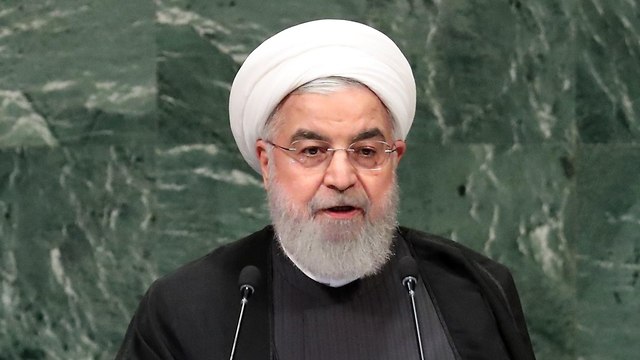
Iranian President Hassan Rouhani on Tuesday described Israel as “the most terrifying threat to the peace and stability of the region and the world.”

“Israel, which has a nuclear arsenal and is blatantly threatening others with nuclear annihilation, is the most terrifying threat to the peace and stability of the region and the world,” the Iranian president said.

“The countless crimes by Israel against the Palestinians would not have been able to take place without assistance and support from the US,” Rouhani said in his speech to the United Nations General Assembly.

President Rouhani (Photo: Reuters)

President Rouhani (Photo: Reuters)

He also added that the passage of the years cannot justify what he described as the “continued occupation.”Rouhani further emphasized that the US decision to transfer its embassy from Tel Aviv to Jerusalem was a flagrant example of Washington undermining regional peace.

He also slammed Israel’s recent passage of the Nation-State Law was another clear example of the country being an apartheid state.

Rouhani criticized Washington for its hostile policy toward his country and said the US approach was doomed to failure.

He  said the United States had waged “economic war” against Iran by reimposing unilateral sanctions, which were lifted under the country’s 2015 multinational nuclear deal in return for Tehran curbing its nuclear program.

 (Photo: Reuters)

(Photo: Reuters)

“The United States policy vis-a -vis the Islamic Republic of Iran has been wrong from the beginning, and its approach of resisting the wishes of the Iranian people as manifested in numerous elections is doomed to failure,” Rouhani said.

President Donald Trump pulled the United States out of the pact in May, and his administration reimposed sanctions on Iran in August. Harsher sanctions on Iran’s oil and banking sector are expected in November.

“The economic war that the United States has initiated under the rubric of new sanctions not only targets the Iranian people but also entails harmful repercussions for the people of other countries, and that war has caused a disruption in the state of global trade,” Rouhani said.

“What Iran says is clear: no war, no sanctions, no threats, no bullying; just acting according to the law and the fulfillment of obligations.”

Mounting pressure from the Trump administration combined with discontent among many Iranians at the state of the economy are rattling the Islamic Republic, with little sign that its leaders have the answers, officials and analysts say.

The rial has lost 40 percent of its value against the US dollar since April. Iran has blamed US sanctions for the currency’s fall, saying the measures amount to a “political, psychological and economic” war on Tehran.

Threat for threat

To pile on the pain, Washington says all countries must end crude imports from Iran by November 4, hitting the oil sales that generate 60 percent of the country’s income. Iran says this level of cuts will never happen.Tehran has suggested it could take military action in the Gulf to block other countries’ oil exports in retaliation for US sanctions intended to halt its sales of crude. Washington maintains a fleet in the Gulf that protects oil shipping routes.

 (Photo: Reuters)

(Photo: Reuters)

“The security of the Persian Gulf and the Strait of Hormuz has always been important for us … we will confront any and all disruptive efforts in this critical waterway in the future,” said Rouhani.

The Strait of Hormuz is a strategic artery linking Middle East crude producers to key markets in the Asia-Pacific, Europe, North America and beyond. A third of the world’s seaborne oil passes through the strait in southern Iran.

Trump, in his annual UN speech, said he would keep up economic pressure on Tehran to try to force a change in its behavior. But Rouhani said Iran had no intention of succumbing to the US pressure.

“The United States’ understanding of international relations is authoritarian. … Its understanding of power, not of legal and legitimate authority, is reflected in bullying and imposition,” Rouhani said.

“No state and nation can be brought to the negotiating table by force,” said the pragmatist president, adding that Iran did not want any war.

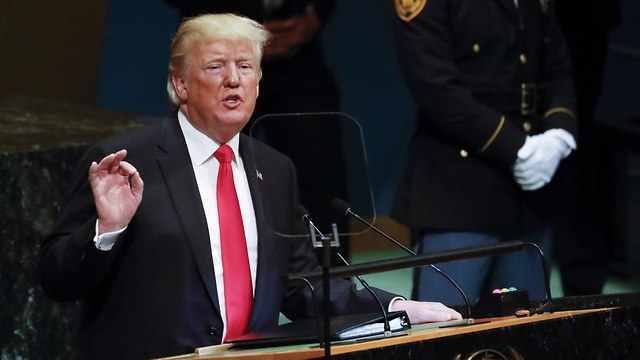
President Trump (Photo: EPA)

President Trump (Photo: EPA)

“Our proposal is clear: commitment for commitment; violation for violation; threat for threat; and step for step, instead of talk for talk,” he said.

Rouhani expressed Iran’s willingness to improve ties with the regional countries. Sunni Muslim Saudi Arabia has been at loggerheads with Shi’ite Iran for decades, fighting a long-running proxy war in the Middle East and beyond that has influenced conflicts in Iraq, Syria, Lebanon and Yemen.

Riyadh and its Gulf allies have hailed Trump’s decision to exit the nuclear deal and to reimpose sanctions on Tehran, reflecting their concern about Iran’s influence in the region.

“We believe in the formation of a collective mechanism for the Persian Gulf region with the presence and participation of all regional countries,” Rouhani said.


This ground breaking alternative won’t cause our skies to fall

September 26, 2018

Source: This ground breaking alternative won’t cause our skies to fall

Op-ed: Contrary to the perception of many, when it comes to the defensibility of the skies above Israel, seconds really do count. Despite all of the technological advantages we enjoy, the triple factors of geography, topography and territory must not be overlooked. From an air defense perspective, those who disregard such considerations are acting in a manner that will prove deeply unwise.
In recent months, several senior security experts have expressed support for an alternative to Israel’s status quo with the Palestinians. The plan, known as the New State Solution, proposes joining a coastal section of the northern Sinai Peninsula to the territory of Gaza, forming an expanded Palestinian state to the south of Israel.
Irrespective of the political dimensions of this proposed configuration of Palestinian sovereignty, as the immediate past Commander of Israel’s Air Defense Forces, I see distinct advantages in such a plan from the perspective of air defense.

Not reducing Israel’s strategic depth

Every mile of air space under Israel’s control contributes to our reaction time. We are a small country lacking strategic depth.

To understand the value of a mile to air defense, we do not need to look beyond events of the last week, which demonstrate the kind of time frames our air defenses are afforded. Some weeks ago, two missiles fired by ISIS in Syria landed in Israel’s Sea of Galilee. Within seconds of recognizing their trajectory, a decision had to be made whether to intercept the missiles or allow them to impact harmlessly in the water, reportedly within fifty meters (150 feet) of the shoreline.

Just one day prior to that, a Syrian fighter jet, taking off from the T4 Airbase in central Syria approached the Golan Heights at high speed and flew a mile into Israeli airspace before being downed by Israel’s air defenses. The decision to shoot down the plane had to be made and acted upon in the few short seconds it takes for a fighter jet to traverse a mile at high speed.

The day before that, Israel activated its David’s Sling missile-defense system for the first time in its operational history, in order to fire at two Syrian surface-to-surface missiles which were calculated to impact within Israeli territory. Though the Syrian missiles ended up falling short and impacted within Syria, Israeli Air Defense forces had only moments to assess what actions were needed, and to react decisively.

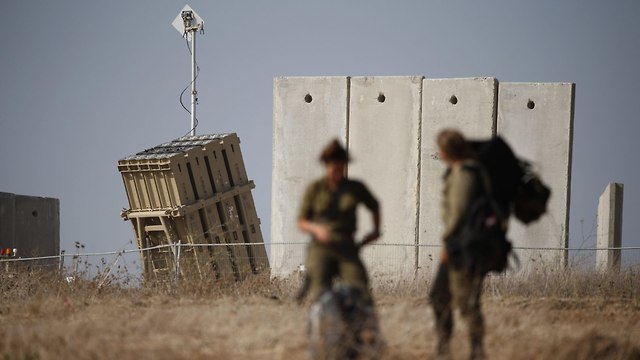
Iron Dome missile defense system (Photo: AFP)

Iron Dome missile defense system (Photo: AFP)

Israel possesses remarkably advanced air defenses, but it is crucial to understand that there is a limit to how much technology can compensate for a lack of strategic depth. In the context of Israeli air defense, geography, topography and territory matter.

It is for that reason that maintaining Israeli air defense control over our skies is vital. Reducing the territory under our air control means reducing Israel’s protective envelope over an already narrow strip of land.

In this context, when discussing alternative security configurations relating to our conflict with the Palestinians, I would consider the expansion of Palestinian territory along Israel’s southern border, as in the New State plan, because it does not reduce Israel’s strategic depth.

Not compromising Israel’s topographical advantage

Expanding the territory of Gaza into Sinai would not negatively compromise Israel’s control over the high ground. Both Gaza and the northern Sinai are situated on the coastal lowlands, with Israel retaining the strategic benefit of the Negev highlands, so a Gaza Sinai plan presents an air defense advantage in the case of airborne attacks launched toward Israel.

By contrast, the Palestinian population of Judea and Samaria (The West Bank) sits on the mountainous ridge overlooking Israel’s populous central coastline. Millions of Israelis live and work in that coastal area. A Palestinian state perched atop the West Bank high ground would render Israeli territory and citizens exposed.

Mountains surrounding Ma'ale Adumim (Photo: AFP)

Mountains surrounding Ma’ale Adumim (Photo: AFP)

A Palestinian State in the hills surrounding Jerusalem, Hebron, or Samaria could cause harm to the cities of central Israel and could target our strategic sites.

Israel’s Ben Gurion International Airport could be exposed to weapons such as shoulder-fired missiles targeting aircraft during take-offs and landings from the nearby Samaria hills. On their landing routes, many aircraft also fly near Route 6, which straddles Samaria, bringing them even closer to potential enemy fire in the event of Palestinian control over this topography.

The Jerusalem Hills are up to 3,000 feet high. Israel’s presence there enables early detection of long-range threats coming from our eastern flank, including airborne attacks from as far away as Iran. These same hills grant Israel aerial control to the west, and any threats emanating from the direction of the Mediterranean. Palestinian control of the Jerusalem hills would expose Israel to a widened variety of projectile attacks.

Not reducing this distance between our populace and potential belligerents

During Israel’s 2012 Operation Pillar of Defense and 2014 Operation Protective Edge, short-range mortar fire from Hamas in Gaza killed Israeli civilians and soldiers and caused significant migration of Israeli residents out of the area adjacent to Gaza. Today, we bear witness to the advent of improvised fire kites launched by Gazans to indiscriminately set fires wherever they land, causing significant damage to open areas, including agricultural fields and woodlands.

While the areas of Israel closest to Gaza are sparsely populated, the opposite is true when it comes to Israel’s central region which is located in proximity to Judea and Samaria. For example, the Palestinian city of Tulkarem is less than nine miles from the major Israeli city of Netanya. Should Palestinians control Judea and Samaria, these areas and more beyond them would be under immediate risk, not just from fire kites, but all manner of airborne attacks, including short-range enemy fire.

Extending the Gaza Strip into part of the Sinai would not reduce Israel’s limited strategic depth. Israel would not cede control of the high ground losing its topographical advantage. Israel would not shorten the distance between belligerents and the Israeli populace.

If the political will for the New State plan can be garnered, I would not oppose it from an air defense perspective. If the people of Gaza would benefit on a humanitarian basis, I would consider that a positive outcome for both the Palestinians and Israel. Bringing stability to Sinai and Egypt would be a boon for Egyptians, the region and the world.

Brigadier General Shachar Shohat was Chief Commander of the Israel Air Defense Forces from 2012-2014, overseeing operations including Operation Pillar of Defense and Operation Protective Edge


Netanyahu: IDF to continue anti-Iran strikes in Syria, despite S-300 

September 26, 2018

Source: Netanyahu: IDF to continue anti-Iran strikes in Syria, despite S-300 – Israel News – Jerusalem Post

“Israel has been very successful in the last three years in preventing Iran’s military buildup in Syria as well as its attempts to deliver lethal weapons to Hezbollah in Lebanon,” Netanyahu said.

BY TOVAH LAZAROFF
 SEPTEMBER 25, 2018 15:07
Prime Minister Benjamin Netanyahu addresses the media

The IDF will continue to strike at Iranian target in Syria, Prime Minister Benjamin Netanyahu said after Russia announced plans to transfer to Syria an advanced anti-missile system known as the S-300.

“Israel has been very successful in the last three years in preventing Iran’s military buildup in Syria as well as its attempts to deliver lethal weapons to Hezbollah in Lebanon,” Netanyahu said.

He spoke before departing for New York where he plans to meet with US President Donald Trump on the sidelines of the General Assembly, for what will be their fifth, face-to-face encounter.

Russian plans with regard to the S-300, which the US also opposes, will be an important part of that conversation. Israel fears that the S-300, will make it more difficult for the IDF to execute air raids against Iranian targets.

The decision to transfer the S-300 comes after a Russian war plane was shot down in Syria on September 17, leading to the loss of 15 Russian military personnel. Russia has blamed Israel, while Israel in turn has accused Syria and Iran of downing the plane.

Netanyahu and Russian President Vladimir Putin spoke by telephone on Monday night and agreed to continue their security coordination in Syria.

“Since the tragic events in the Syrian skies, I have spoken twice with President Putin, expressing deep sorrow about the loss of lives of the Russia crew on the plane, that was irresponsibly shot down by Syrian fire,” Netanyahu said.

On Tuesday morning Netanyahu held a special security cabinet meeting and brief the ministers on events with Syria, Russia and Iran.

The cabinet ministers also expressed sorrow over the loss of Russian lives, Netanyahu said.

“We will continue to act to prevent the Iranian military build up in Syria and to continue with the security coordination between the IDF and the Russian army,” Netanyahu said.

He added that he and Putin had agreed that representatives from the Israeli and Russian armies would meet soon to discuss continued coordination in Syria.

“We will do what is necessary to defend Israel’s security,” Netanyahu said.


Intel minister vows harsh response if Iran attacks 

September 26, 2018

Source: Intel minister vows harsh response if Iran attacks – Middle East – Jerusalem Post

Regarding Iran’s involvement in Syria, Katz said that “if the Iranian undermining does not stop, Israel will be forced to continue doing everything possible to defend itself.”

BY GIL HOFFMAN
 SEPTEMBER 25, 2018 21:55
MK Israel Katz

Intelligence Services Minister Israel Katz warned Iran not to attack Israel after the Islamic Republic blamed the Jewish state and vowed retaliation for an attack on an Iranian military parade Saturday that killed at least 25 people.

Speaking at his annual Succot party near his home on Moshav Kfar Ahim in the northern Negev, the minister in charge of Israel’s intelligence agencies predicted that the regime of Ayatollahs in Iran would soon disappear.

“Israel had no involvement in the Iran explosion,” Katz said. “But if they attack us, we will respond with full force.”

Katz also threatened Hezbollah, saying that if it attacks Israel, its leader Hassan Nasrallah would be harmed and “Lebanon will pay a heavy price and will return many generations backward.”

Regarding Iran’s involvement in Syria, Katz said that “if the Iranian undermining does not stop, Israel will be forced to continue doing everything possible to defend itself.”

He said that the regime of Syrian President Bashar Assad was exclusively responsible for the downing of the Russian plane and the death of its 15 passengers. As for the Gaza periphery, Katz said there would be no tolerance for terror tunnels, missiles, mortars and kites.

Turning his fire to the media, Katz complained about the negative coverage of the new Jerusalem rail line that goes to Ben-Gurion International Airport and not yet directly to Tel Aviv as he had promised.

“The press has been off the rails with its criticism,” he told the crowd of thousands of Likud activists. “The media is upset because it was the Likud that inaugurated the rail line to Jerusalem. But it will be the public who will give the answer to the press.”

Katz, who correctly predicted 30 seats for the Likud in his Succot party four years ago, said the party would “win 40 mandates and maybe even more” in the next election that will be held in 2019.


Trump U.N. speech signals disruptive Mideast peace plan to come 

September 26, 2018

Source: Trump U.N. speech signals disruptive Mideast peace plan to come – Arab-Israeli Conflict – Jerusalem Post

Trump’s second speech to the international body only briefly touched on Middle East peace. But what he said was telling.

BY MICHAEL WILNER
 SEPTEMBER 25, 2018 20:44
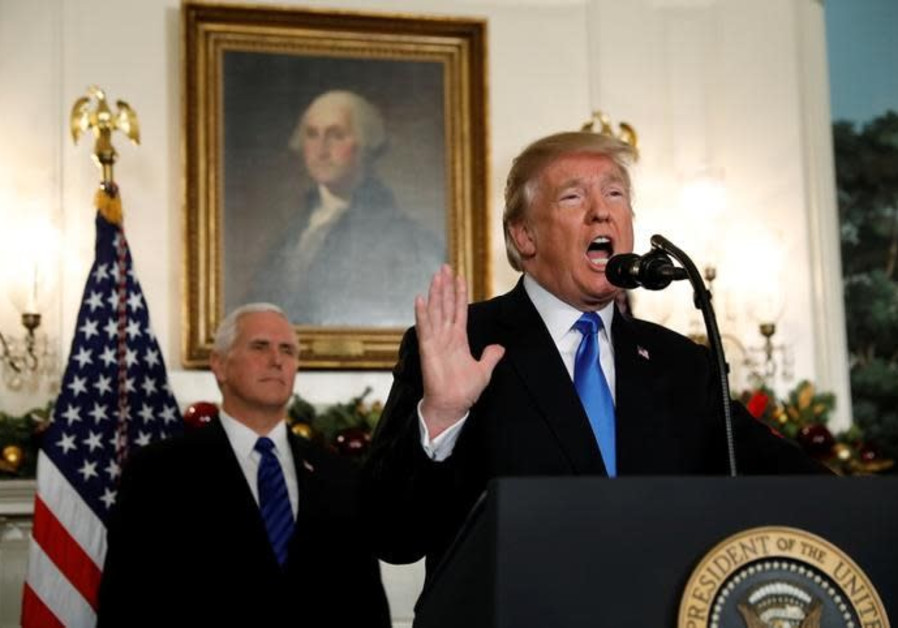
Trump Jerusalem

NEW YORK — Months after the UN General Assembly voted to rebuke US President Donald Trump for recognizing Jerusalem as Israel’s capital, on Tuesday he warned the world to brace for more policy changes that would rile the status quo of a conflict that has been frozen for decades.

Trump’s second speech to the international body only briefly touched on Middle East peace. But what he said was telling and reflective of recent comments from members of his peace team who are beginning to preview a plan for Israeli-Palestinian peace that will buck conventional norms long governing the process.

The president was channeling Jared Kushner, his son-in-law leading the peace effort, who in an interview with The New York Times earlier this month, said the administration was intentionally slaughtering sacred cows of the conflict in order to disrupt the dis- cussion.

“There were too many false realities that were created – that people worship – that I think needed to be changed,” Kushner said on the anniversary of the signing of the Oslo Accords.

Similarly, the president in his speech said the aim of peace “is advanced, not harmed, by acknowledging the obvious facts.

“America’s policy of principled realism means we will not be held hostage to old dogmas, discredited ideologies and so-called experts who have been proven wrong over the years, time and time again,” Trump told the gathering.

This is the administration’s main explanation and defense of Trump’s actions on Jerusalem, as well as its decision to defund the UN agency on Palestinian refugees which – according to the peace team – perpetuates a narrative on the status of refugees unhelpful to the pursuit of peace.

The Palestinians see in these statements tea leaves of a plan that will attempt to redefine the terms of their cause, in which they seek sovereignty and independence from Israel in a two-state solution – a term the administration has yet to use. They are already cam- paigning against the US proposals, which Trump aides note they have not seen.

While Trump’s comments on the peace plan were brief, they at the very least signal policy growth from a year ago, when he addressed the UN General Assembly for the first time. In that speech, he made no mention of the peace process.