Iran supreme leader’s comments come after increasing tensions surrounding future of nuclear accord.
BY REUTERS
SEPTEMBER 2, 2018 15:07
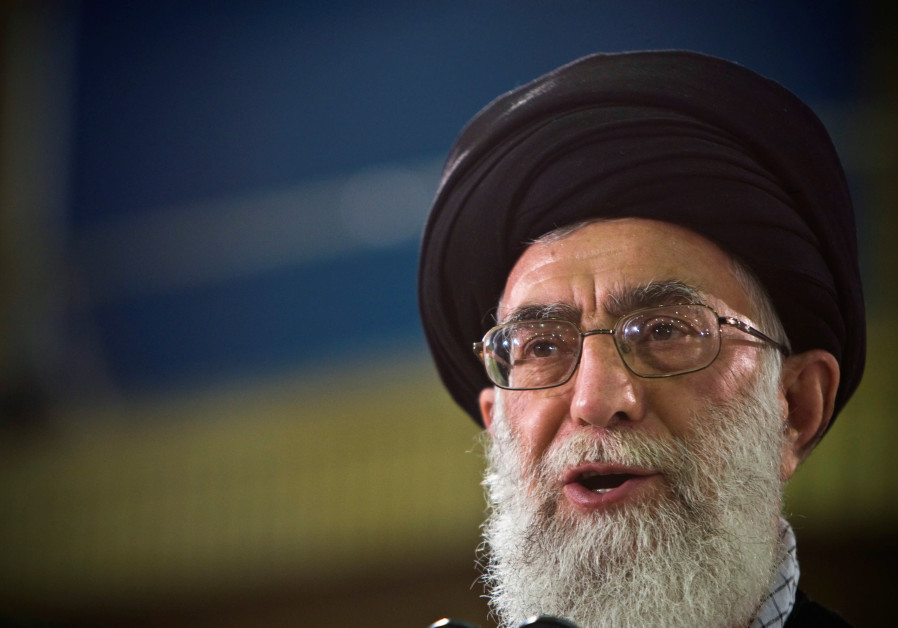
Iran’s Supreme Leader Ayatollah Ali Khamenei speaks live on television after casting his ballot in the Iranian presidential election in Tehran June 12, 2009. (photo credit: REUTERS/CAREN FIROUZ)
DUBAI- Iranian Supreme Leader Ayatollah Ali Khamenei said on Sunday war was unlikely but called on Iran’s armed forces to boost their defense capacities, according to his official website.
On Saturday, Iran announced plans to boost its ballistic and cruise missile capacity and acquire modern fighter planes and submarines to boost its defenses as the country faces increased tension with the United States following the US pullout from Tehran’s nuclear agreement with world powers.
“Ayatollah Khamenei emphasized that based on political calculations there is no likelihood of a military war but added that the armed forces must be vigilant … and raise their personnel and equipment capacities,” the website quoted Khamenei as telling commanders of Iran’s air defense forces.
Saturday’s news of the military development plans came a day after Iran dismissed a French call for negotiations on Tehran’s future nuclear plans, its ballistic missile arsenal and its role in wars in Syria and Yemen.
Iranian President Hassan Rouhani said last month the Islamic Republic’s military prowess was what deterred Washington from attacking it.
Recent reports that Iran has deployed missiles in western Iraq speak of the Islamic republic’s attempts to entrench itself militarily in the region.
While Tehran has denied the reports and says they aim to undermine Iran’s ties with its neighbors, it is hardly a secret that Iran is trying to increase its influence across the so-called “Shiite crescent,” which stretches through Yemen, Bahrain, Iraq, Syria and Lebanon, and has an offshoot in the Gaza Strip.
Iran’s Quds Force, the Revolutionary Guards’ elite extraterritorial black-ops arm, has been tasked with overseeing this mission, which enjoys an annual budget of billions of dollars despite the economic hardships plaguing the Islamic republic.
The regime in Tehran had hoped to be in a different position by now, especially in the Syrian arena.
However, Israel’s substantial counter-operations over the past year have thrown a wrench in their plans, so it stands to reason that the Iranians have temporarily shifted their focus to Iraq, where it is less dangerous for them to operate.
This is most likely also why Iran deployed missiles in western Iraq. The 1991 Gulf War may have taught us that any missiles in that area pose a clear and present danger to Israel, but the reality is far more complex.
Iran wants to control Iraq, which is the scene of a fierce battle between pro-American and pro-Iranian forces. Controlling Iraq means more than money and power; it means continuous land access between Iran and the Mediterranean nations. From Iraq, Iran would be able to have direct, more effective influence on Syria.
Israel is not the only one threatened by these entrenchment efforts. Saudi Arabia and the emirates are high on Iran’s list of objectives, as are the moderates in Iraq.
Above all, Iran wants to undermine the United States, which challenges all of Iran’s regional interests.
For this reason, it is likely that the reports of the Iranian deployment in western Iraq sought to send a message to the U.S., at a time when Washington is considering pulling its troops from Syria.
It was also a message to France, Britain and Germany, illustrating how while they are scrambling to salvage the 2015 nuclear deal in the wake of the U.S. withdrawal, Iran is sparing no effort to undermine their regional interests.
International coordination is vital to stop the Iranian plan in its tracks. Israel cannot accomplish this unilaterally, not only because chances of an Israeli strike in Iraq are slim (so as not to hinder U.S. interests) but mainly because this is a long-term game that requires a balance of carrots and sticks only the world’s powers can provide.
If world powers stay on the sidelines, Iran will forge on with its plan, including the development of local missile production capabilities.
However, one must remember that it is highly doubtful that the Iranian missiles deployed in western Iraq would be launched at Israel anytime soon. This option does exist, but its likelihood is slim as Iran still prefers to wage a covert campaign against Israel, rather than an overt one.
Much like in the theater, where a gun seen in the first act will be fired in the third, Iran is planning ahead. Once it reintroduces the threat of having missiles in western Iraq trained at Israel, it will undoubtedly deploy long-range missiles in Yemen that will also allow it to threaten Israel.
International sanctions have not hampered the development of Iran’s military industry, deputy defense minister says • Comments come a day after Iran dismisses calls for talks on its future nuclear plans, ballistic missile arsenal and role in Middle East.
Reuters and Israel Hayom Staff
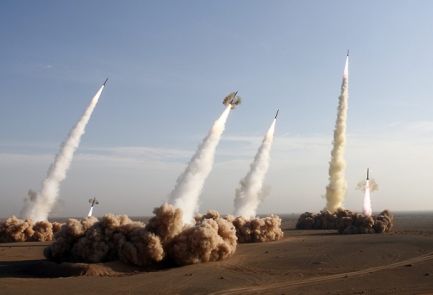
Iran’s Revolutionary Guards fire test missiles as part of war games in Qom
|Illustration: Reuters
Iran plans to boost its ballistic and cruise missile capacity and acquire modern fighter planes and submarines, state news agency IRNA quoted a senior Iranian defense official as saying on Saturday.
The report came a day after Iran dismissed a French call for negotiations on Iran’s future nuclear plans, its ballistic missile arsenal and its role in the wars in Syria and Yemen, in the wake of the U.S. pullout from the 2015 nuclear agreement between Iran and world powers.
Iranian state media also reported the launch last week of war games involving some 150,000 volunteer Basij militia members, who vowed to defend the Islamic republic against “foreign threats,” including from the United States.
Tehran is furious over U.S. President Donald Trump’s decision to withdraw from the nuclear accord and reimpose sanctions on Iran.
Senior Iranian officials say the country will not yield easily to a renewed U.S. campaign to strangle Iran’s vital oil exports. They also say Iran’s missile program is solely for defense purposes and is not negotiable, as is being demanded by the United States and European countries.
“Increasing ballistic and cruise missile capacity and the acquisition of next-generation fighters and heavy and long-range vessels and submarines with various weapons capabilities are among the new plans of this ministry,” IRNA quoted Deputy Defense Minister for International Affairs Mohammad Ahadi as saying.
Speaking to Tehran-based foreign military attaches, Ahadi said international sanctions had not hampered the development of Iran’s arms industry.
“We have the necessary infrastructure and what we need to do is research and development, and at the same time upgrade and update the defense industry while relying on the country’s very high scientific capacities and tens of thousands of graduates in technical fields and engineering,” Ahadi said.
He also defended Iran’s role in conflicts in Iraq and Syria, saying, “If Iran and its allies in Syria and Iraq had not stopped [the jihadi group] Islamic State, today the map of the region would be different and the world would face a terrible challenge.”
Separately, the head of the Defense Ministry’s naval industries said Iran is developing a water jet propulsion system that will be ready by March next year, and a military commander said the Iranian air force is planning to adopt the new Kowsar fighter plane after successful tests, the semi-official news agency Tasnim reported.
Last month, Iranian President Hassan Rouhani said the Islamic republic’s military prowess was what was deterring the U.S. from attacking it.
The exercises by the Basij militia, which are led by the elite Revolutionary Guards, come ahead of massive annual rallies planned for later this month to mark the start of the 1980-1988 Iran-Iraq war.
“The motto of these war games is unity … and to declare that, when it comes to adversity and threats from foreigners, we all join to defend the [Islamic] republic’s system,” Basij commander Gholam-Hossein Gheibparvar was quoted as saying by IRNA.
A member of Iran’s army speaks with a visitor as they stand next to the Iranian Yasser ballistic bomb during a war exhibition to commemorate the anniversary of Iran-Iraq war (1980-88), in Baharestan square near the Parliament building in southern Tehran . (photo credit: REUTERS/MORTEZA NIKOUBAZL)
Two recent reports reveal the depth of Iran’s missile threat emanating from Iraq and Syria. In Syria, a clandestine surface-to-surface missile (SSM) facility at Wadi Jahannam will likely be completed by early 2019. In Iraq, the Iranian regime has deployed medium-range missiles with Shi’ite militia proxies that are capable of hitting Israel.
Together the missile threats represent a creeping power play by Tehran at the same time Prime Minister Benjamin Netanyahu has insisted Jerusalem will continue to act against threats, and after John Bolton visited Jerusalem in mid-August.
By reportedly basing its missiles near Russian forces in northern Syria and near US-led Coalition forces in Iraq, Iran is trying to protect its missiles while threatening Israel and potentially dragging Israel into a regional conflict should Jerusalem strike at these facilities. Tehran seeks to play this dangerous regional missile game as it carves out an arc of influence from Baghdad via Damascus to Lebanon.
On August 30th, ImageSat International released a report noting that “Tehran is a major contributor to the Syrian missile project, including building the new SSM facility near Baniyas.” ImageSat International had previously released satellite images of the Wadi Jahanamm site last August. But the new details link the Wadi Jahannam facility to the nearby Masyaf facility which was repeatedly hit by IAF air-strikes. Both Masyaf and the other site are “located within the operational range of an S-400 deployment” because they are close to Russian facilities at Tartus on the coast.
The warnings about the development at the Syrian site come as a new report emerged that Iran has sent missiles to its allies in Iraq. Iran has transferred three missile types into Iraq, including its latest Zolfaghar (Zulfiqar) missile, which is a solid-fueled short range ballistic missile capable of reaching a range of 700 km. It was first used in a strike by Iran against Islamic State in June 2017, and was fired from Kermanshah, Iraq. Its deployment there puts it within range of Israel.
The Zolfaghar is complimented by Fateh 110 short range, road-mobile missiles that can reach up to 300 km. To reach Israel, these missiles would have to be deployed in Iraq’s Western Desert. According to the report, Iran also transported Zelzal-3 rockets that can reach up to 250 km. Iranian and Iraqi sources told Reuters that Iran had made a decision to produce missiles in Iraq. A Western source said that factories had been established east of Baghdad and north of Kerbala. “It seems Iran has been turning Iraq into its forward missile base.” Kata’ib Hezbollah, a Shi’ite militia in Iraq that is allied to Iran, controls the areas where the missiles are located. It shares a similar name and role as Lebanese Hezbollah, but is a separate militia.
There are two interesting details here. First, that the missiles or warheads for them are being produced in Iraq, and that Shi’ite militias run the factories. Second, that Kata’ib Hezbollah is specifically mentioned. These militias are part of a group of militias that make up the Popular Mobilization Forces (PMU) which helped Iraq fight ISIS. In 2016, the PMU was incorporated into Iraq’s official paramilitary structure. In 2017, Iraqi Prime Minister Haider al-Abadi, said that these Shi’ite militias were the “hope” of the future of Iraq. In 2018, the militias gained even more influence when their political party, the Fatah alliance, came in second in the May elections.
This puts militias like Kata’ib Hezbollah close to the center of power in Baghdad. US officials said in May that these militias “posed the greatest threat to the safety of US personnel” and could harm the stabilization of Iraq. The US Department of Treasury has not only sanctioned Kata’ib Hezbollah leader Abu Mahdi al-Muhandis but also sanctioned Iraq’s al-Bilad Islamic Bank, accusing it of transferring funds to Hezbollah and the Islamic Revolutionary Guard Corps.
In June, an air-strike in Syria near al-Bukamal on the Euphrates River near the Iraqi border allegedly killed numerous members of Kata’ib Hezbollah. The militia is operating in Syria aiding Bashar al-Assad’s regime. The militia blamed the Americans for the air-strike but Kuwaiti newspaper Al-Jarida blamed Israel. It now appears that Iran has transferred new missiles to Iraq since June, according to the Reuters report. This also took place as the Fatah alliance was jockeying for control of a coalition government in Iraq. So the transfer of weapons into Iraq to be managed and run by the Shi’ite militias gives these militias new power and leverage over Iraq, allowing them to act not only as an official force of the government, but as a parallel state with their own missiles capable of striking Israel.
In effect, this allows the militias like Kata’ib Hezbollah to be the long arm of the IRGC and Quds Force commander Qassem Soleimani. Iran can use Iraq as a base to threaten Israel, and not only do Iraqis pay the potential consequences, but Iran’s proxy forces hope that the US coalition would have to defend Iraq from any potential Israeli retaliation for the presence of these missiles. The US is still training and equipping the Iraqi army.
This is the strategic paradigm that underpins Iran’s goals in Syria and Iraq. It wants to build missile factories underneath the S-400 air defense umbrella in northern Syria near Russian forces in order to protect its facilities. In Iraq, it wants to locate missiles near coalition air bases and facilities in Anbar province.
Jerusalem has the multi-layered missile defense to confront these threats, including David’s Sling, the Arrow and US Patriot batteries. But Tehran’s goal is to pressure Israel on two or more fronts, making any Israeli moves more complex in this dangerous chessboard of missile threats.
Foreign ministry spokesman calls report on weapons reportedly capable of reaching Tel Aviv an ‘unfounded lie’ intended to ’cause panic among countries in the region’
Iran on Saturday denied a Reuters report that it has transferred ballistic missiles to militias loyal to it in Iraq.
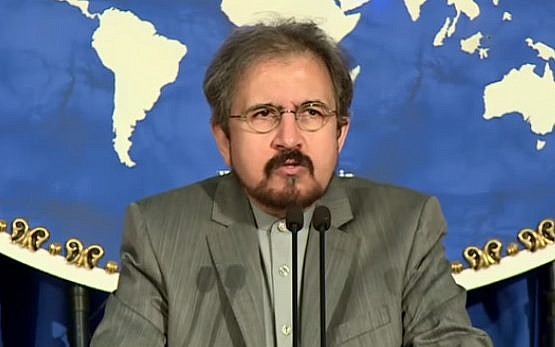
“The lie disseminated by some media on shipment of Iran-made missiles to Iraq is totally irrelevant and unfounded,” Iranian Foreign Ministry spokesman Bahram Qasemi said.
“Such news comes merely to cause panic among countries in the region and is in line with their policy to spread Iranophobia,” Qasemi said.
They seek to influence Iran’s foreign relations mainly with its neighbors, he said.
The Friday report stated that several dozen rockets capable of hitting Israel and Tehran’s Sunni rival Saudi Arabia had been deployed with Iran’s Shiite proxies in Iraq.
It added that Iran was working to provide its allies with missile manufacturing facilities, and has been training militia members in operating the new weapons.
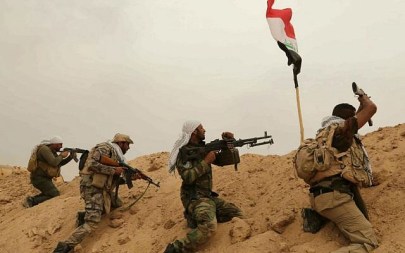
Fighters from the Badr Brigades Shiite militia clash with Islamic State fighters at the front line on the outskirts of Fallujah, Anbar province, Iraq, Monday, June 1, 2015. (AP Photo/Hadi Mizban)
The deployment is meant to improve Iran’s ability to retaliate against any Western or Arab attacks on its territory, as well as to expand its options for attacking opponents in the region, Reuters said.
The report cited “three Iranian officials, two Iraqi intelligence sources and two Western intelligence sources.”
Iran’s proxies, allied militias as well as its own forces are involved in internal conflicts in Syria, Lebanon, Iraq, and Yemen.
The move makes Iran’s allies in Iraq better able to attack US troops in the country in the event Iran is attacked.
“We have bases like that in many places and Iraq is one of them. If America attacks us, our friends will attack America’s interests and its allies in the region,” one top IRGC commander said.
Iran has long used its Shiite proxies and allies in Iraq to hit back at its opponents. According to transcripts of interrogations in 2007 of a top Shiite military and religious figure in Iraq declassified earlier this year, Iran was heavily involved in Iraqi Shiite militias’ attacks on US troops in the years following the American invasion of the country in 2003.
Qais al-Khazali, who now heads the Asaib Ahl al-Haq militia that won 15 parliamentary seats in the country’s May elections, detailed the scale of Iranian involvement in the country in the 2007 interrogation, the Wall Street Journal reported Thursday, citing recently declassified documents.
Syria denies reports of Israeli strike after large explosions seen at Mazzeh airfield, targeted by Israel in the past. Says blasts caused by electrical fire at ammo depot
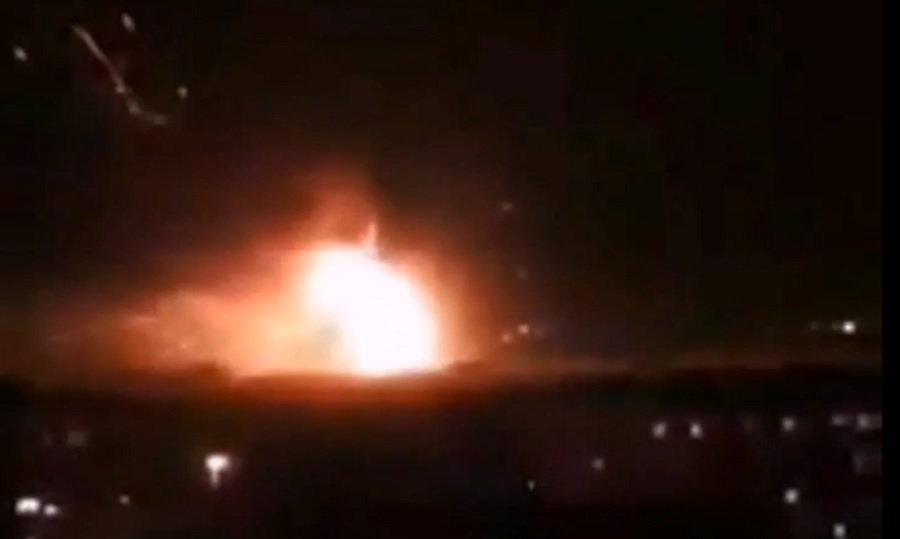
A missile attack reported at Mazzeh air base in Syria, September 2, 2018. (screen capture: Twitter)
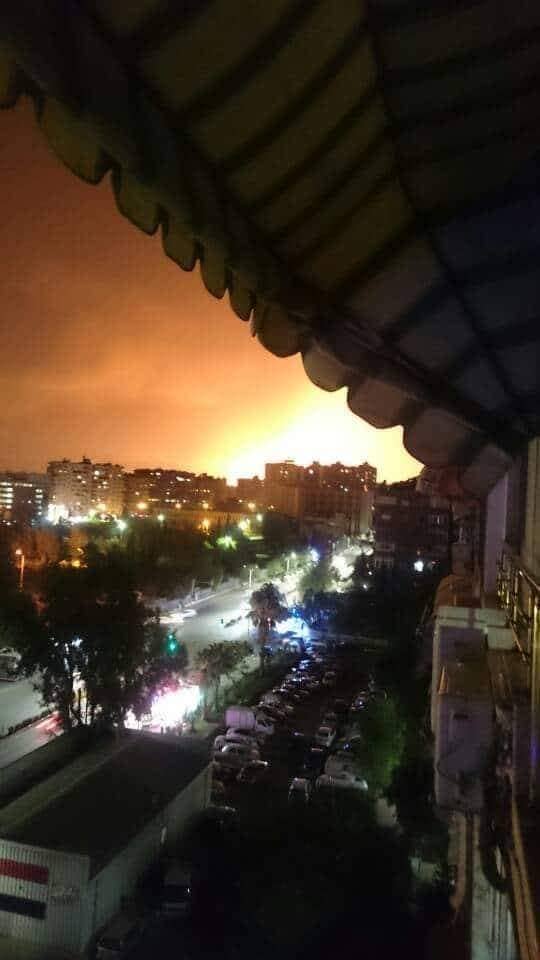
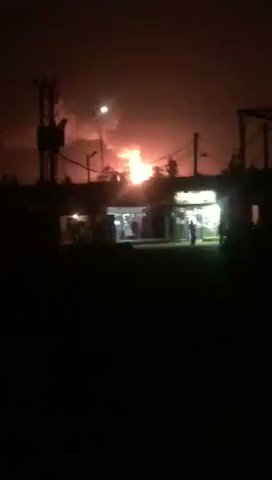
Large explosions were reported at a Syrian military air base early Sunday in an attack widely attributed to Israeli warplanes. However, Syria denied an attack had taken place.
The reported strike occurred just after midnight at Mazzeh air base near Damascus, a key regime facility thought to have been targeted by Israel in the past.
The military airport of Mazzeh, in the west suburbs of Damascus, was hit by a “possible Israeli missile, which hit a munitions store setting off successive explosions,” the head of the Syrian Observatory for Human Rights Rami Abdel Rahmane told AFP.
The observatory also said there were casualties, according to reports.
The Lebanese al-Meyadeen news outlet, seen as closely linked to Bashar Assad regime, claimed that the explosions were the result of an Israeli missile strike.
Five missiles were reported to have targeted the air base.
Eyewitnesses reported large blasts and pictures shared on social media showed large explosions, as well as what appeared to be air defense missiles streaking in the sky.
However, Syria’s official SANA news outlet reported that the blasts were the result of a technical problem.
“The explosions heard were due to an explosion at a munitions deposit close to the airport which was due to an electrical short circuit,” a Syrian military source said.
A Syrian official had earlier said that the base was targeted by a missile strike. It claimed that missiles had been intercepted by Syria’s air defense systems.
Israel generally does not comment on reports of strikes in Syria.
EHSANI2@EHSANI22
#Israel strike is on Mazze airport around Damascus #Syria
The reported strike came as senior US officials from the State Department were in Israel to discuss Syria with Jerusalem officials.
In January 2017, Syria accused Israel of launching missiles that hit the Mazzeh base, and threatened repercussions. Israeli missiles also reportedly targeted the base in late 2016.
Officials in Jerusalem have said they take action to stop the transfer of advanced weapons to terror groups and to keep Iran from gaining a foothold in the country; Dozens of strikes inside Syria have been attributed to Israel.
On Wednesday, Prime Minister Benjamin Netanyahu vowed that Israel would continue taking action against Iran and its proxies in Syria, and would not be affected by a defense cooperation agreement signed between Damascus and Tehran.
“We are close to a historic turning point at the continental level. I am astonished at the stupor of a political left that now exists only to challenge others and believes that Milan should not host the president of a European country, as if the left has the authority to decide who has the right to speak and who does not — and then they wonder why no one votes for them anymore.” — Italian Interior Minister Matteo Salvini.
“This is the first of a long series of meetings to change destinies, not only of Italy and of Hungary, but of the whole European continent.” — Italian Interior Minister Matteo Salvini.
“We need a new European Commission that is committed to the defense of Europe’s borders. We need a Commission after the European elections that does not punish those countries — like Hungary — that protect their borders.” — Hungarian Prime Minister Viktor Orbán.
Hungarian Prime Minister Viktor Orbán and Italian Interior Minister Matteo Salvini have pledged to create an “anti-immigration axis” aimed at countering the pro-migration policies of the European Union.
Meeting in Milan on August 28, Orbán and Salvini, vowed to work together with Austria and the Visegrad Group — the Czech Republic, Hungary, Poland and Slovakia — to oppose a pro-migration group of EU countries led by French President Emmanuel Macron.
Hungarian Prime Minister Viktor Orbán and Italian Interior Minister Matteo Salvini meet in Milan, Italy on August 28. (Image source: RT France video screenshot)
Orbán and Salvini are seeking a coordinated strategy ahead of the March 2019 European Parliament elections to defeat the pro-immigration Party of European Socialists (PES), a pan-European party representing national-level socialist parties from all EU member states. The objective is to change the political composition of European institutions, including the European Parliament and the European Commission, to reverse the EU’s open-door migration policies.
“Today begins a journey that will continue in the coming months for a different Europe, for a change of the European Commission, of European policies, which puts at the center the right to life, work, health, safety, all that the European elites, financed by [billionaire Hungarian philanthropist George] Soros and represented by Macron, deny.
“We are close to a historic turning point at the continental level. I am astonished at the stupor of a political left that now exists only to challenge others and believes that Milan should not host the president of a European country, as if the left has the authority to decide who has the right to speak and who does not — and then they wonder why no one votes for them anymore.
“This is the first of a long series of meetings to change destinies, not only of Italy and of Hungary, but of the whole European continent.”
“European elections will be held soon, and many things must change. At the moment there are two sides in Europe: One is led by Macron, who supports mass migration. The other side is led by countries that want to protect their borders. Hungary and Italy belong to the latter.
“Hungary has shown that we can stop migrants on land. Salvini has shown that migrants can be stopped at sea. We thank him for protecting Europe’s borders.
“Migrants must be sent back to their countries. Brussels says we cannot do it. They also said it was impossible to stop migrants on land, but we did it.
“Salvini and I, we seem to share the same destiny. He is my hero.”
“If they wanted to see me as their main opponent, they were right to do so. It is clear that today a strong opposition is building up between nationalists and progressives and I will yield nothing to nationalists and those who advocate hate speech.”
“From the beginning of 2017 to the present day, the France of ‘do-good Macron’ has rejected more than 48,000 immigrants at the Italian border, including women and children. Is this the ‘welcoming and supportive’ Europe that Macron and the do-gooders are talking about?
“Instead of giving lessons to others, I would invite the hypocritical French president to reopen his borders and welcome the thousands of refugees he promised to take in.
“Italy is no longer the refugee camp of Europe. The party for smugglers and do-gooders is over!”
In July, Salvini said that he wanted to create a pan-European network of like-minded, nationalist parties:
“To win [the Italian elections] we had to unite Italy, now we have to unite Europe. I am thinking about a ‘League of the Leagues of Europe,’ bringing together all the free and sovereign movements that want to defend their people and their borders.”
Salvini proposed that the network include Austrian Chancellor Sebastian Kurz, Dutch Freedom Party leader Geert Wilders, France’s National Front leader Marine Le Pen, and Hungary’s Orbán, among others. He also said that the European Parliament elections in 2019 should be a referendum on “a Europe without borders” versus “a Europe that protects its citizens.”
Salvini has repeatedly criticized the European Union over mass migration, accusing the bloc of having abandoned Italy as it struggles to deal with the more than 600,000 migrants who have arrived in the country since 2014. The problem has been exacerbated by EU regulations.
Under an EU rule — known as the Dublin Regulation — migrants must seek asylum in the country where they first enter the European Union. This has placed an inordinate burden on Italy, given its geographical proximity to Africa.
Italy has long sought to overhaul the Dublin Regulation, but other EU member states, most notably Hungary, have opposed changing the agreement. The dispute highlights the challenges of forming a united anti-immigration axis at the EU level: the interests of many EU member states are diametrically opposed.
Although Italy and Hungary, for example, agree that mass migration should be completely stopped, they disagree on how to deal with the migrants who already are in the EU. While Italy wants the migrants redistributed to other EU countries, Hungary and the Visegrad states are adamantly opposed to accepting any migrants at all.
In an interview with the Czech newspaper DNES, Czech Prime Minister Andrej Babiš, ahead of his August 28 visit in Rome with Italian Prime Minister Giuseppe Conte, said:
“I insist that we will not take any illegal migrants from Italy or elsewhere. This is nothing against Italy, to which we are sympathetic; it is a crucial strategy. It is, in my view, a key signal, a symbol and a message to migrants and smugglers that it makes no sense to sail to Europe….
Babiš added that the European Union must overcome its differences and agree on a common pan-European migration policy:
“If Italy does not accept migrants, if Malta does not accept them, then Spain will. We are sending a message that it is possible to get to Europe from Morocco through Spain. We must stop the migration stream. I want to talk about it with my partners in Italy, Malta, and, of course, with German Chancellor Angela Merkel, who has now acted with Spain. We have to work very hard to work on the solution because we have needlessly lost three years with the absurd debate about quotas…
“We must protect what our ancestors built for more than a thousand years. It is not a slogan, it is a fact.”
Salvini’s embrace of Orbán has also exposed differences in Italy’s ruling coalition, comprised of Salvini’s League and the populist Five Star Movement (M5S) led by Luigi Di Maio.
On August 23, Di Maio threatened to withhold Italian payments to the European Union if a top-level EU meeting in Brussels scheduled for August 24 failed to produce pledges from other EU countries to accept migrants from Italy. In an interview on Italian TV, which he also posted on his Facebook account, Di Maio said:
“If tomorrow nothing comes out of the European Commission meeting, if they decide nothing regarding the … redistribution of the migrants, the whole Five Star Movement and I will no longer be prepared to give €20 billion euros ($23 billion) to the European Union every year.”
After the EU meeting failed to produce a solution, the leaders of M5S in Italy’s chamber of deputies and senate, Francesco D’Uva and Stefano Patuanelli, respectively, issued a statement:
“Countries that do not participate in relocation and which do not even deign to respond to Italy’s request for help, should no longer receive European funds from us, and among these at the moment, is Hungary.”
In an August 27 interview with the newspaper La Stampa, Di Maio again lashed out at Orbán:
“Orbán’s Hungary raises barbed-wire walls and refuses migrant allocations. For those who do not accept the allocation, they should not be entitled to European funding.”
Salvini defended Orbán: “I respect Hungary’s absolute right to defend the borders and the security of its people. The shared objective is the defense of external borders.”
Orbán replied: “We need a new European Commission that is committed to the defense of Europe’s borders. We need a Commission after the European elections that does not punish those countries — like Hungary — that protect their borders.”
Washington Free Beacon senior writer Adam Kredo said Friday that two Iranian spies recently arrested in the U.S. were part of a much larger intelligence effort by the Islamic Republic.
“This is a story long-ignored,” Kredo said.
Kredo, speaking on on One America News Network’s “Tipping Point,” described how Iran’s intelligence activity reaches far around the world. Rep. Peter Roskam (R., Ill.) described the arrested Iranians as just the “tip of the iceberg,” and Kredo warned of mounting evidence that Iran is actively engaged in the U.S. and the western hemisphere.
“All we have to do is look at Latin America and the sophisticated operation that Hezbollah runs to just operating with impunity in terms of drug trade and arms trafficking, but very much embedding themselves in the government of certain left-leaning South American nations,” he said.
He described how the agents arrested were focused on Jewish and Israeli facilities for a possible attack.
“They were canvassing, essentially spying on Jewish and Israeli facilities around town with what they expected was the intent of planning some sort of terror attack,” he said.
“The Iranians have a very sophisticated espionage operation,” he said, noting it is bolstered by terrorist organizations like Hezbollah.
He said it’s important to “take the Iranians at face value” when they show their intentions.
Roskam told the Free Beacon that more is yet to be learned about Iran’s activities:
While the arrest of the two Iranians was met with shock in the press, Roskam said he was not surprised by the arrests, which have unearthed concrete evidence of the Islamic Republic’s efforts to foment discord across the globe, including on American soil.
“This is the tip of the iceberg,” Roskam said in an interview. “This is not a surprise and this is a result of the Iran regime getting financial support from the Obama administration in the Iran deal.”
Iran has been emboldened by the lack of international repercussions on its malevolent behavior and may have increased its intelligence operations in America in the years since the landmark nuclear deal, he said.
Iran is “acting with impunity, that deal emboldened them,” Roskam said. “This is an unmasking of that. Unfortunately it’s all too predictable. Give a malevolent regime huge amounts of cash with no restraining influence and this is what happens.”
The Trump Justice Department announced last week it had arrested two Iranians and charged them with spying on behalf of the hardline regime, a discovery that has refocused attention on the Islamic Republic’s global spy operations.
“The administration has carefully reviewed the issue and determined that the United States will not make additional contributions to UNRWA,” the State Department said in a statement.
A Palestinian woman takes part in a protest against possible reductions of the services and aid offered by United Nations Relief and Works Agency (UNRWA), in front of UNRWA headquarters in Gaza City August 16, 2015.. (photo credit: REUTERS/MOHAMMED SALEM)
WASHINGTON — The Trump administration has cut all funding to the United Nations Relief and Works Agency (UNRWA), questioning the organization’s “fundamental business model” of servicing an “endlessly and exponentially expanding community” of declared Palestinian refugees.
The move was previewed by US media outlets in recent weeks after e-mails from President Donald Trump’s son-in-law, Jared Kushner, were leaked showing his interest in “disrupting” the UN body.
“The administration has carefully reviewed the issue and determined that the United States will not make additional contributions to UNRWA,” the State Department said in a statement. “When we made a US contribution of $60 million in January, we made it clear that the United States was no longer willing to shoulder the very disproportionate share of the burden of UNRWA’s costs that we had assumed for many years.”
“Beyond the budget gap itself and failure to mobilize adequate and appropriate burden sharing, the fundamental business model and fiscal practices that have marked UNRWA for years– tied to UNRWA’s endlessly and exponentially expanding community of entitled beneficiaries– is simply unsustainable and has been in crisis mode for many years,” it continued. “The United States will no longer commit further funding to this irredeemably flawed operation.”
The Palestinian Authority envoy to Washington, Husam Zomlot, said in a statement that the US was “reneging on its international commitments” by cutting its aid– the most generous of any country.
“It’s not up to the US administration to define the status of Palestinian refugees,” Zomlot said. “The only status the US can define is, its own role in peacemaking in the region. By endorsing the most extreme Israeli narrative on all issues including the rights of more than 5 million Palestinian refugees, the US administration has lost its status as peacemaker and is damaging not only an already volatile situation but the prospects for future peace in the Middle East.”
A State Department official confirmed to The Jerusalem Post earlier this week that, while the administration would disapprove of UNRWA’s definition for Palestinian refugees qualifying for aid, it would not redefine nor enumerate the category.
UNRWA claims that the descendants of refugees from 1940s Mandate Palestine qualify as refugees themselves– a definition that has allowed the number of beneficiaries to balloon in recent years.
“We are very mindful of and deeply concerned regarding the impact upon innocent Palestinians, especially school children, of the failure of UNRWA and key members of the regional and international donor community to reform and reset the UNRWA way of doing business,” the State Department said. “These children are part of the future of the Middle East. Palestinians, wherever they live, deserve better than an endlessly crisis-driven service provision model. They deserve to be able to plan for the future.”
US ambassador to the UN Nikki Haley and Secretary of State Mike Pompeo joined Kushner in support of the decision. The administration had already cut much of its aid to UNRWA earlier in the year.
“UNRWA can stay there, and we will be a donor if it reforms what it does,” Haley told the Foundation for Defense of Democracies earlier this week. “If it goes and makes sure that they’re not doing those teachings in textbooks, if they actually change the number of refugees to an accurate account. We will look back at partnering them.”
A spokesman for Palestinian Authority President Mahmoud Abbas called the US decision a “flagrant assault” against the Palestinian people, and a “defiance of UN resolutions.”
“Such a punishment will not succeed to change the fact that the United States no longer has a role in the region and that it is not a part of the solution.”
In Gaza, the Islamist group Hamas also condemned the US move as a “grave escalation against the Palestinian people.”
“The American decision aims to wipe out the right of return and is a grave US escalation against the Palestinian people,” said Hamas spokesman Sami Abu Zuhri.
Abu Zuhri told Reuters the “US leadership has become an enemy of our people and of our nation and we will not surrender before such unjust decisions.”
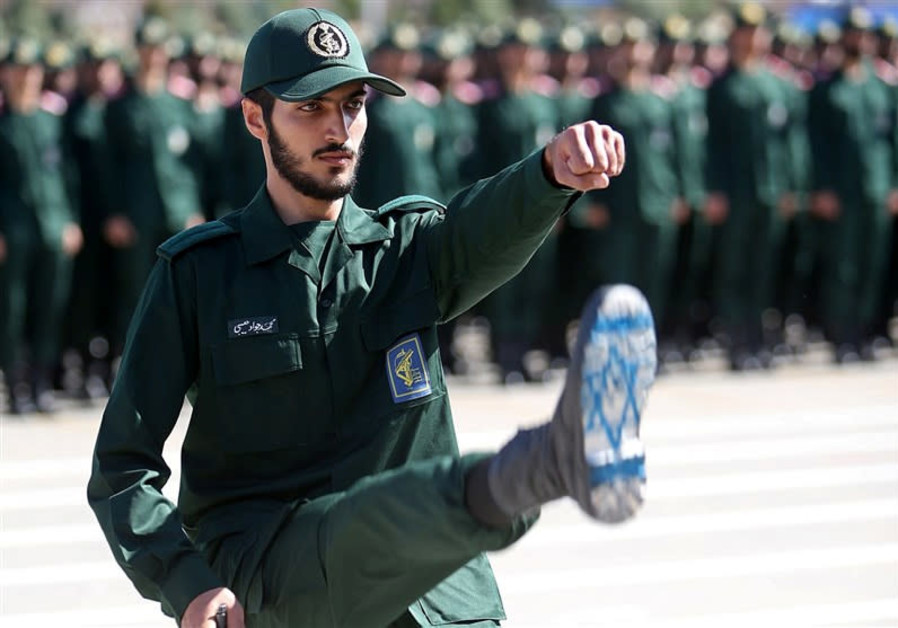
An Iranian Officer of Revolutionary Guards, with Israel flag drawn on his boots, is seen during graduation ceremony, held for the military cadets in a military academy, in Tehran, Iran June 30, 2018. (photo credit: TASNIM NEWS AGENCY/HANDOUT VIA REUTERS)
Two new reports reveal the depth of Iran’s missile threat emanating from Iraq and Syria. In Syria a clandestine surface-to-surface missile (SSM) facility at Wadi Jahanamm will likely be completed by early 2019. In Iraq the Iranian regime has deployed medium-range missiles with Shi’ite militia proxies that are capable of hitting Israel. Together the missile threats represent a creeping power-play by Tehran at the same time Israeli Prime Minister Benjamin Netanyahu has insisted Jerusalem would continue to act against threats and after John Boltonvisited Jerusalem in mid-August.
By reportedly basing its missiles near Russian forces in northern Syria and near US-led Coalition forces in Iraq, Iran is trying to protect its missiles while threatening Israel and potentially dragging Israel into a regional conflict if Jerusalem wanted to strike at these facilities and threats. Tehran seeks to play this dangerous regional missile game as it carves out an arc of influence from Baghdad via Damascus to Lebanon.
On August 30 ImageSat International released a report noting that “Tehran is a major contributor to the Syrian missile project, including building the new SSM facility near Baniyas.” ImageSat International had previously released satellite images of the Wadi Jahanamm site last August. But there are new details now that link the Wadi Jahannam facility to the nearby Masyaf facility which has been hit by airstrikes several times. The Syrian regime has blamed Israel for these attacks. Both Masyaf and the other site are “located within the operational range of an S-400 deployment” because they are close to Russian facilities at Tartus on the coast.
The warnings about the development at the Syrian site come as a new report emerged that Iran has sent missiles to its allies in Iraq. Iran has transferred three missile types into Iraq, including its latest Zolfaghar (Zulfiqar) missile, which is a solid-fueled short range ballistic missile capable of reaching a range of 700 km. It was first used in a strike by Iran against Islamic State in June 2017 and was fired from Kermanshah in Iraq. Its deployment in Iraq puts it within easy range of Israel. The Zolfaghar is complimented by Fateh 110 short range, road-mobile missiles that can reach up to 300km. To reach Israel these missiles would have to be deployed in the Western desert of Iraq. According to the report Iran also transported Zelzal-3 rockets that can reach up to 250km. Iranian and Iraqi sources told Reuters that Iran had made a decision to produce missiles in Iraq. A Western source said that factories had been established east of Baghdad and north of Kerbala. “It seems Iran has been turning Iraq into its forward missile base.” Kata’ib Hezbollah, a Shi’ite militia in Iraq that is allied to Iran controls the areas where the missiles are. It shares a similar name and role as Lebanese Hezbollah, but is a separate militia.
There are two interesting details here. First, that the missiles or warheads for them are being produced in Iraq and that Shi’ite militias run the factories. Second, that Kata’ib Hezbollah is specifically mentioned. These militias is part of a group of militias that make up the Popular Mobilization Forces (PMU) which helped Iraq fight ISIS. In 2016 the PMU was incorporated into Iraq’s official paramilitary structure. In 2017 Iraqi Prime Minister Haider al-Abadi, said that these Shi’ite militias were the “hope” of the future of Iraq. In 2018 the militias gained even more influence when their political party, the Fatah alliance, came in second in the May elections.
This puts militias like Kata’ib Hezbollah close to the center of power in Baghdad. US officials said in May that these militias “posed the greatest threat to the safety of US personnel” and could harm the stabilization of Iraq. The US Department of Treasury has not only sanctioned Kata’ib Hezbollah leader Abu Mahdi al-Muhandis, but also sanctioned the Iraqi bank Al Bilad Islamic Bank, accusing it of transferring funds to Hezbollah and the Islamic Revolutionary Guard Corps.
In June an airstrike in Syrua near Albukamal on the Iraqi allegedly killed numerous members of Kata’ib Hezbollah. The militia is operating in Syria aiding the Syrian regime. The militia blamed the Americans for the airstrike but Kuwaiti newspaper Al-Jarida blamed Israel. It now appears that Iran transferred new missiles to Iraq since June, according to the Reuters report. This also took place as the Fatah alliance was jockeying for control of a coalition government in Iraq. So the transfer of weapons into Iraq to be managed and run by the Shi’ite militias gives these militias new power and leverage over Iraq, allowing them to act not only as an official force of the government, but as a parallel state with their own missiles capable of striking Israel. This, in affect, allows the militias like Kata’ib Hezbollah to be the long arm of the IRGC and Quds Force commander Qassem Soleimani. Iran can use Iraq as a base to threaten Israel, and not only do Iraqis pay the potential consequences, but Iran’s proxy forces hope that the US Coalition would have to defend Iraq from any potential Israeli retaliation for the presence of these missiles. The US is still training and equipping the Iraqi army and an ally of Baghdad.
This is the strategic paradigm that underpins Iran’s goals in Syria and Iraq. It wants to use both countries for its own goals. It wants to build missile factories underneath the S-400 air defense umbrella in northern Syria near Russian forces in order to protect its facilities. In Iraq it wants to locate missiles near Coalition air bases and facilities in Anbar province.
Jerusalem has the multi-layered missile defense to confront these threats, including David’s Sling, the Arrow and US Patriot batteries. But Tehran’s goals is to pressure Israel on two or more fronts, making any Israeli moves more complex in this dangerous chessboard of missile threats.





 Hungarian Prime Minister Viktor Orbán and Italian Interior Minister Matteo Salvini meet in Milan, Italy on August 28. (Image source: RT France video screenshot)




 anneinpt
 artaxes
 danmillerinpanama
 davidking1530
 Peter Hofman
 Joseph Wouk
 Peter
Peter Louisiana Steve
 WarSclerotic
Recent Comments