Archive for September 2018

Iran’s attack on Kurds is a message to Washington, Riyadh and Jerusalem 

September 10, 2018

Source: Iran’s attack on Kurds is a message to Washington, Riyadh and Jerusalem – Middle East – Jerusalem Post

Iran has been fighting Kurdish opposition for years and in Iran there have been increasing clashes.

BY SETH J. FRANTZMAN
 SEPTEMBER 9, 2018 18:22
People stage a protest against the recent execution by Iran of up to 20 Kurds.

The Islamic Revolutionary Guard Corps (IRGC) in Iran claimed credit for a missile attack on Kurdish opposition groups in Koya in northern Iraq. The attack on Saturday killed a dozen and wounded numerous others. It was the first time Iranian forces had used this kind of precision missile attack deep inside Iraq. The brazen daylight missile attack is a message from Tehran to the region that it can do what it wants, not only in neighboring Iraq, but throughout the Middle East. In the last year Iranian missiles and Iranian-supported groups using Tehran’s technical advisors have targeted Saudi Arabia from Yemen and Israel from Syria. As Washington seeks to pressure Iran, the missile threat is clear indication that Tehran is flexing its muscles in the face of sanctions.

The IRGC attempted a decapitation strike against the Kurdish KDP-I, an opposition group that has a headquarters in Koya. Numerous senior leaders were present and a missile crashed into the building where they were meeting. This was a precise and unprecedented strike. Although Iran has targeted Kurdish groups in Iraq before, and it has fired missiles at other opposition groups, the missiles used in this attack were precise and showcases Iranian intelligence operations and know how.

The missile attack on Koya should not be seen as an isolated Iran regime attack on an opposition group. Iran has been fighting Kurdish opposition for years and in Iran there have been increasing clashes. But the missile strike was an escalation and should be seen in the context of the Iranian-backed Houthis using ballistic missiles to target Riyadh, flying some 900 km from their launch point. Iranian forces from Syria have also targeted and tested Israel’s defenses. They flew a drone into Israeli airspace in February and fired a salvo of missiles in May. Recent satellite images show missile production facilities in northern Syria. Reports also indicate that Iran has transferred missiles to the Hashd al-Shaabi, or Shia militias, in Iraq. And Iran has armed Hezbollah with missiles for years and also supplied Hamas with technical support.

The big picture then is an Iranian missile threat throughout the region. The National Defense Authorization Act signed by US President Donald Trump in August included passages about Iran’s ballistic missile threat. Congress had looked deeply into how Iran’s missile program threatens the region. During a June speech at the Foundation for the Defense of Democracies US Under Secretary of the Treasury for terrorism and financial intelligence Sigal Mandelker said that “Iran must end its proliferation of ballistic missiles.”

US allies in the region have missile defense technology to confront the Iranian threat. Israel has a layered system of missile defense included Iron Dome, David’s Sling and the Arrow program, while Saudi Arabia has used Patriot missile batteries to stop the Houthi missiles. This has proven effective. It is also why the IRGC decided to test out its missiles by targeting defenseless Kurdish groups in northern Iraq.

The IRGC’s strike on the Kurds is a message to Washington and to Israel. It shows how the IRGC operates across borders and across with the region, seeing Iran’s policy in Yemen, Iraq, Syria and Lebanon as linked into one larger program. The IRGC is also the group responsible for working with various proxies and Shia militias across the region. The US administration’s response to the missile attack in Iraq will reveal whether Washington takes this new front in northern Iraq seriously and whether the discussions about stopping Iran’s activities see Iraq as a frontier to confront these missile threats, or whether Iraq will continue to be an area that Iran can operate freely in.
U.N. Security Council, led by Trump, meeting to reduce pressure on Iran 

September 10, 2018

Source: U.N. Security Council, led by Trump, meeting to reduce pressure on Iran – Middle East – Jerusalem Post

Experts expect the US president to use the occasion to mobilize international support for renewed economic sanctions.

BY MAYA MARGIT/THE MEDIA LINE
 SEPTEMBER 10, 2018 05:18
U.N. Security Council, led by Trump, meeting to reduce pressure on Iran

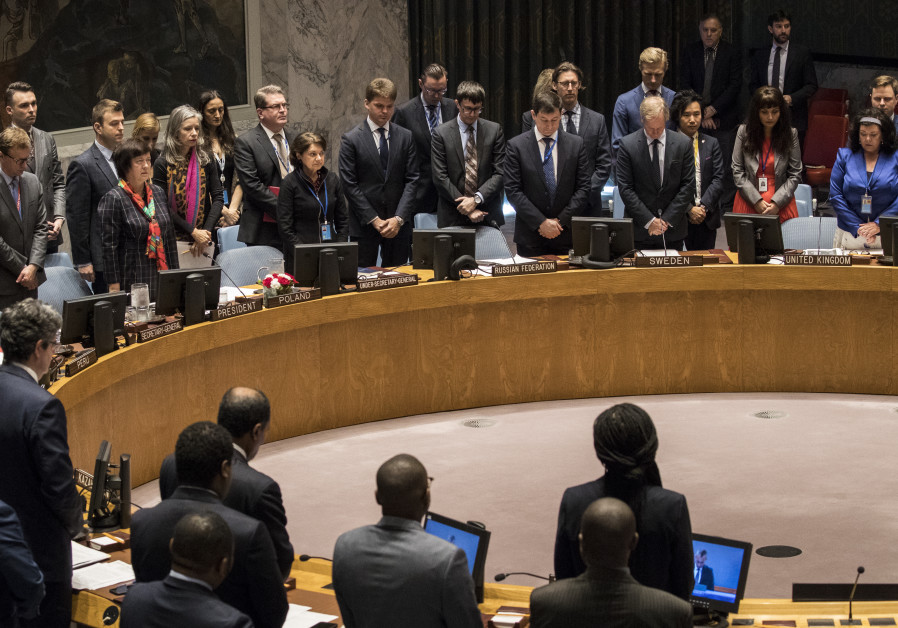
United States President Donald Trump will later this month chair a high-level United Nations Security Council meeting on the situation in the Middle East, in a bid to tighten the diplomatic screws on Iran. The American leader is expected to use the session to focus the spotlight on Tehran’s regional expansionism through its proxies in Iraq, Syria, Lebanon and Yemen; its ballistic missile program; and its global arm sales—all of which, according to the Trump administration, violate existing UNSC resolutions.

“We want to make sure that [the Iranians] understand the world is watching [and] that is the biggest reason for this meeting,” US Ambassador to the UN Nikki Haley explained, leading analysts to posit that the primary American goal is to continue ratcheting up pressure on the mullahs.

In response, Iranian Foreign Minister Mohammad Javad Zarif accused the US president of hypocrisy, tweeting, “There’s only one UNSC resolution on Iran. @realDonaldTrump is violating it & bullying others to do same. Now he plans to abuse [the rotating] presidency of [the Security Council which Washington holds in September] to divert a session—item devoted to Palestine for 70 yrs—to blame Iran for horrors US & clients have unleashed across M.E. #chutzpah.”

Zarif was referring to the unanimous adoption in July 2015 of UNSC resolution 2231, which endorsed the Joint Comprehensive Plan of Action—commonly known as the Iran nuclear deal—and President Trump’s subsequent unilateral withdrawal from the pact in May.

Washington has to date failed to condemn Iran in the Security Council due to the veto power of the latter’s backers Russia and China. This past February, for example, Moscow torpedoed a US

bid to denounce Tehran for shipping weaponry to Houthi rebels in Yemen.

“[President Trump] is looking to mobilize the support of the international community, especially the signatories of the Iran nuclear deal,” with regards to economic sanctions, Dr. Raz Zimmt, a Senior Research Fellow at the Tel Aviv-based Institute for National Security Studies, asserted to The Media Line.

“[The Iranians] consider Trump’s appearance as a provocation and they expect him to use this opportunity to attack Iran,” he elaborated. “The main question is whether Trump wants to use this opportunity to arrange a meeting with [Iranian] President Hassan Rouhani, assuming he will be attending. We still don’t know because Zarif might be sent instead. My assessment is that Tehran will [anyways] never agree to that meeting.

“All we will see is continued anti-Iranian rhetoric so I don’t think [Trump’s speech] will change anything in particular,” Dr. Zimmt predicted. “Each side is just going to use this opportunity to express their stance.” Dr. Eldad Pardo, an Iran expert at the Hebrew University in Jerusalem, stressed to The Media Line that reining in Tehran is a “major foreign policy issue for the U.S.” and that the UNSC meeting would be geared towards getting the Islamic Republic back to the negotiating table.

“Trump wants to change Iran’s behavior by exerting a lot of pressure on it,” he explained. “Most of all, the U.S. would like to see Iran give up its nuclear ambitions” and destabilizing activities in the region.

“In order to pressure Iran, you need to rebuild the crippling sanctions and for this you need an international coalition,” Dr. Zimmt noted, arguing that other nations would likely abide by Washington’s demands in order to maintain crucial diplomatic and trade ties.

A second batch of US sanctions targeting Iran’s oil sector will take effect in November, with a report this week by Oxford Economics suggesting that the new penalties will “cripple the [Iranian] economy” which could to contract by as much as 4 percent next year.

President Trump on Wednesday contended that Iran is in “total turmoil” and that the Iranian regime is now “just worrying about [its] own survival.”

The Security Council session is slated to take place on September 26 during the annual opening of UN General Assembly in New York.

Charles Bybelezer contributed to this report.


How to get a MIG jet fighter !

September 10, 2018

Secrets of War Season 2, Ep 13: Shadows of the Six Day War

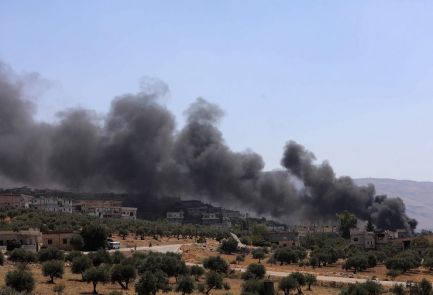
Russian, Syrian jets pound Idlib province to root out ‘terrorists’ 

September 9, 2018

Source: Russian, Syrian jets pound Idlib province to root out ‘terrorists’ – Israel Hayom

Shana Tova from PM Netanyahu – YouTube

September 9, 2018


Rouhani: US asks Iran for new talks ‘every day’ 

September 9, 2018

Source: Rouhani: US asks Iran for new talks ‘every day’ | The Times of Israel

Iranian president says Tehran in an ‘economic, psychological and propaganda war’ after Trump keeps open possibility of meeting at UN

Iranian President Hassan Rouhani speaks during a press conference in Tehran, September 7, 2018. (AFP/Kirill Kudryavtsev/Pool)

Iranian President Hassan Rouhani speaks during a press conference in Tehran, September 7, 2018. (AFP/Kirill Kudryavtsev/Pool)

Iranian President Hassan Rouhani on Saturday said the United States sends Iran requests “every day” to hold negotiations.

Following his decision to withdraw from the deal meant to limit Iran’s nuclear program and reimpose sanctions, US President Donald Trump in July offered to hold unconditional talks with Tehran, an offer rejected by Iranian leaders.

“From one side they try to pressure the people of Iran, on another side they send us messages every day through various methods that we should come and negotiate together,” Rouhani said in a speech shown on state television, according to Reuters.

The US says “we should negotiate here, we should negotiate there,” Rouhani added. “We want to resolve the issues… should we see your message… or should we see your brutish actions?”

Echoing comments made Thursday by Iranian Supreme Leader Ayatollah Ali Khamenei, Rouhani also said Iran is in an “economic, psychological and propaganda war” against the US and Israel.

Trump in May announced the US would leave the 2015 agreement between Iran and world powers, charging it did not do enough to curb Iran’s nuclear development. He also assailed the accord for not addressing Iranian support for armed groups in the region or the country’s ballistic missile program.

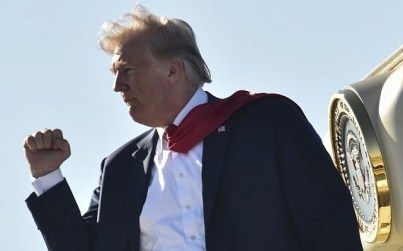
US President Donald Trump gestures as he boards Air Force One at Sioux Falls, South Dakota, on September 7, 2018. (AFP/Nicholas Kamm)

Despite his frequently hawkish rhetoric toward Iran, Trump has kept open the possibility of talks and on Wednesday said it was possible he could meet Rouhani at the UN General Assembly later this month.

“We’ll see what happens with Iran. Whether they want to talk or not, that’s up to them, not up to me,” Trump told reporters in the Oval Office.

“Iran is a much different place than when I took over the presidency,” he added, describing the country as “in turmoil.”

“When I took office it was just a question of how long until they took over the entire Middle East. Now they are just worrying about their own survival as a country.”

Trump is due to lead a September 26 meeting of heads of state of the UN Security Council, with the goal of ramping up pressure on Tehran over its alleged violations of council resolutions.

With the United States now holding the presidency of the Security Council, UN Ambassador Nikki Haley on Tuesday said the aim was to put further pressure on Tehran.

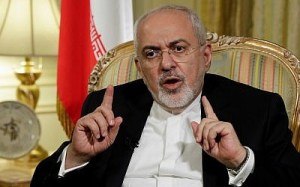
Iran’s Foreign Minister Mohammad Javad Zarif in New York, April 24, 2018. (AP/Richard Drew)

But Iran’s foreign minister, Mohammad Javad Zarif, on Wednesday hit out at the US plan.

“There’s only one UNSC resolution on Iran… @realDonaldTrump is violating it & bullying others to do same,” Zarif wrote on Twitter.

Washington has sought to build up international pressure on Iran after reimposing tough, unilateral sanctions on August 7 and setting a November 5 deadline for halting Iran’s oil exports.

Iran’s economy has been battered as countries wrap up trade ties in fear of violating the US sanctions, which Washington said would be strictly imposed.


Off Topic: No long-range missiles, N.Korea military parade features floats and flowers

September 9, 2018

Source: No long-range missiles, N.Korea military parade features floats and flowe – International news – Jerusalem Post

The regime also refrained from carrying out nuclear tests to mark the day, as has happened in each of the last two years.

BY REUTERS
 SEPTEMBER 9, 2018 09:15

kim jong un

PYONGYANG- With no long-range missiles on display, North Korea staged a military parade on Sunday focused on peace and economic development, filled with colored balloons and flowers to mark the 70th anniversary of the country’s founding.

A sea of spectators watched the parade as tens of thousands goose-stepping soldiers and columns of tanks drove past a review stand where North Korean leader Kim Jong Un took the salute.

Unlike in previous years, there were no inter-continental missiles on display. And there were no nuclear tests to mark the day, as has happened in each of the last two years.

North Korea routinely uses major holidays to showcase its military capabilities and the latest developments in missile technology.

But that has been dropped this year, underlining Kim’s stated aim for denuclearising the Korean peninsula and his recent meetings with South Korean President Moon Jae-in and summits with U.S. President Donald Trump and Chinese President Xi Jinping.

The theme for the celebrations this year was unifying the Korean peninsula, divided since the 1950-53 Korean War. Floats on unification passed by a throng of North Koreans waving unified Korea flags.

“All Koreans should join forces to accomplish unification in our generation. Unification is the only way Koreans can survive,” said an editorial in North Korea’s party newspaper Rodong Sinmun.

Kim and Moon will meet in Pyongyang on Sept. 18-20 for the third time this year and discuss “practical measures” towards denuclearisation, officials in Seoul have said.

Kim was seen laughing and holding hands up with a Chinese special envoy as he oversaw the festivities at Pyongyang’s main Kim Il Sung square on a clear autumn day. Kim waved to the crowd before leaving but did not make any public remarks.

North Korea has invited a large group of foreign journalists to cover a military parade and other events to mark the 70th anniversary of its founding.

That includes iconic mass games that Pyongyang is organizing for the first time in five years, a huge, nationalist pageant performed by up to 100,000 people in one of the world’s largest stadiums.

Earlier on Sunday, Kim visited the mausoleum where his grandfather, the country’s founder, and his father lie in state, according to state media.A concert on Saturday night attended by the titular head of state, Kim Yong Nam, and foreign delegations featured little in the way of martial messaging or images, with only a few shadowy American bombers shown briefly in footage of the 1950-1953 Korean War.


While Iran’s leaders and allies confer on Idlib, Shiite Iraq implodes in their faces – DEBKAfile

September 9, 2018

Source: While Iran’s leaders and allies confer on Idlib, Shiite Iraq implodes in their faces – DEBKAfile

Tehran’s back yard, Shiite Iraq, is on the brink of a violent civil war. Anti-Iran riots were raging in the southern oil city of Basra and spreading to Baghdad when Iran’s leaders, Ayatollah Ali Khamenei and President Hassan Rouhani were conferring with Russian President Vladimir Putin and Turkey’s Tayyip Erdogan in Tehran on Friday, Sept. 7 on an offensive to subdue the last rebel holdout of Idlib and so finally end Syria’s civil war.

Iraq was to have emerged as the vital link in Iran’s coveted post-war land bridge to the Mediterranean via Syria and Lebanon. However, this week, the Islamic Republic of Iran was slapped by a historical irony, a backlash from its own Shiite coreligionists in Iraq, which threatens to snatch that goal away just as it comes within Tehran’s grasp.

During five days of violent protests and clashes with security forces, in which at least 11 people were killed, Shiites who dominate Iraq’s second city, the southern port of Basra, stormed and set fire to the Iranian consulate, blaming Tehran for the corruption rife in the country and the breakdown of basic services. Crowds on the streets chanted slogans against Iranian influence on Iraqi politics, ransacking and torching official buildings. Pro- and anti-Shiite militias were fighting each other on the streets. The violence reached the capital on Friday, when the fortified Green Zone, seat of government and foreign embassies, came under attack – first by Katyusha rockets then by mortars. The streets were cleared on Friday night by a nocturnal curfew. Moments after it was lifted Saturday morning, protesters came out to shell Basra’s international airport. Overnight they had seized control of Umm Qasr, Iraq’s oil export port.

If Iranian and Russian leaders had hoped to get the Idlib operation quickly out of the way and so ring the curtain down on the Syrian civil war, they were suddenly set back by the real prospect of a civil war breaking out in Iraq. Tehran was caught unawares by this development, which is all the more calamitous given the country’s disastrous economic crisis: Shop shelves in Tehran and other cities are empty, and even baby diapers are hard to find. The national currency continues the slide sparked in May by President Donald Trump’s exit from the Iran nuclear deal. The rial has plunged 140pc in value.

Putin too is confronted with a grave setback to his plans. He had gambled on the Idlib operation bringing the Syrian war to an end and, by solidifying Iran’s grip on Syria, opening the door for Russia to set up bases in Iraq. Iraq’s descent into internal anti-Iran Shiite violence may oblige Moscow to revamp the basic premise of his policy, i.e. partnership with the Shiite Muslim camp against the US- Israeli alignment with the Sunni Muslim bloc. The fate of the Idlib operation pales in significance compared with the pivotal turnabout in the region’s balance of power generated in less than a week by fiery Iraqi Shiite protests.

For this setback, Tehran has only itself to blame. In early July, when temperatures in Iraq were hitting 48 degrees Celsius, an unnamed Iranian official decided to turn off the current to Basra because the Baghdad government had stopped paying electricity bills. With their water taps running dry and air conditioning switched off, the citizens of Shiite Basra surged onto the streets to vent their ire against Tehran. It appeared that Iranian intelligence sources fell down on the job of assessing the mood current in the Shiite majority in Iraq.

However, DEBKAfile’s sources report that non-payment of electric bills was merely a pretext. Tehran had decided to stir up trouble in Iraq as a muscle-flexing lesson for President Trump and a demonstration of Iran’s ability to sow mayhem in various parts of the Middle East, if he goes through with the sanctions he proposes to impose on Iranian oil sales on Nov. 4. But the Iranian policy-maker responsible for sparking unrest in Shiite Iraq failed to appreciate its boomerang effect against Tehran rather than America.
The masses out on the streets in the Shiite towns of Iraq are protesting against the corruption deeply entrenched in Iraq’s ruling circles, including the government, the army and the forces of law and order, for which they hold strong Iranian political and military influence in Baghdad responsible. The violence was immediately directed against the pro-Iran militias and their political organs, while images of Ayatollah Khamenei were burned and banners carried the legend: “In the name of religion, the thieves are robbing us.”

Although Iraq’s general election took place in May, the various parties, none of which gained a majority, have failed to form a coalition, leaving the former prime minister Haydar Abadi at the head of a caretaker government. The machinations in Baghdad of Iran’s foremost regional wire-puller and strategist, Al-Qods chief Gen. Qassem Soleimani, are a key factor in the chaotic situation in Iraq. His efforts to install an Iranian puppet, Iraqi militia chief Hadi al-Amiri, as prime minister has deadlocked coalition negotiations, since it is opposed mainly by the Shiite cleric Muqtada Sadr whose bloc came out first in the election. The unrest in Iraq, though sparked by Tehran, threatens to veer out of its control in the absence of a government in Baghdad. to seize the reins.

What is the Jew?

September 8, 2018

Leo Tolstoy, What is the Jew? printed in Jewish World periodical, 1908:

“What is the Jew?…

What kind of unique creature is this whom all the rulers of all the nations of the world have disgraced and crushed and expelled and destroyed; persecuted, burned and drowned, and who, despite their anger and their fury, continues to live and to flourish.

What is this Jew whom they have never succeeded in enticing with all the enticements in the world, whose oppressors and persecutors only suggested that he deny (and disown) his religion and cast aside the faithfulness of his ancestors?!

“The Jew – is the symbol of eternity. … He is the one who for so long had guarded the prophetic message and transmitted it to all mankind. A people such as this can never disappear.

“The Jew is eternal. He is the embodiment of eternity.”

H/T Linda Rivera

http://barenakedislam.com/2018/09/07/one-third-of-all-countries-have-religious-symbols-on-their-flag-but-only-israel-is-slandered-as-racist-for-having-a-jewish-symbol-on-its-flag/


Erdogan and Putin clash over Idlib ceasefire

September 8, 2018

Source: Erdogan and Putin clash over Idlib ceasefire | The Times of Israel

Open disagreement highlights differences between leaders as they meet in Iran to discuss the fate of Syria’s last major rebel bastion

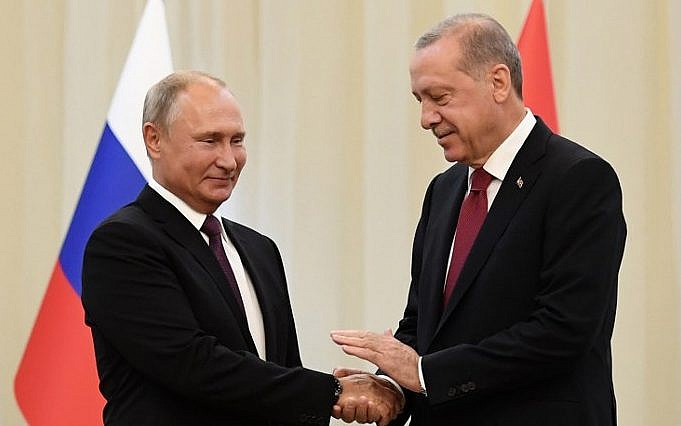
Russia’s President Vladimir Putin (L) shakes hands with his Turkey’s counterpart Recep Tayyip Erdogan during their meeting in Tehran on September 7, 2018. (AFP PHOTO / Kirill KUDRYAVTSEV)

TEHRAN — Russian President Vladimir Putin and his Turkish counterpart Recep Tayyip Erdogan Friday openly disagreed about a “ceasefire” in Syria’s Idlib province, highlighting their differences despite a close cooperation.

The rare scenes captured on camera came as Putin, Erdogan and Iranian President Hassan Rouhani met in Tehran for a three-way summit to discuss the fate of the country’s last major rebel bastion of Idlib.

Russia and Iran are key allies of President Bashar Assad’s regime. Turkey however backs opposition fighters seeking the ouster of the Syrian leader, and has argued against a large-scale offensive against the rebels fearing it could trigger a mass exodus towards its borders.

An unusual public exchange of words between Erdogan and Putin during the summit in the Iranian capital was carried live, as the Turkish leader pushed for a mention of a ceasefire in a joint statement.

“In the third point of the joint statement it’s clearly stated – we have considered the situation in the Idlib de-escalation zone and have decided to seek a path to regulate the situation there,” Putin said.

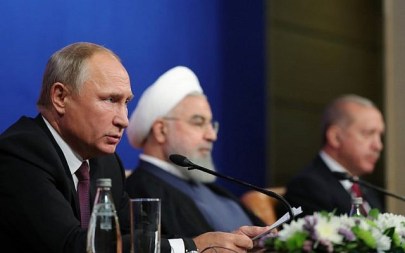
Russian President Vladimir Putin (L), Iranian President Hassan Rouhani (C) and Turkish President Recep Tayyip Erdogan (R) attend a press conference after meeting in Tehran on September 7, 2018.(AFP PHOTO / SPUTNIK / Mikhail KLIMENTYEV)

Idlib is one of the so-called “de-escalation” zones set up as a result of talks by Russia, Turkey and Iran last year as Damascus regained control of more of the country.

But Erdogan retorted: “Yes, the third point is wonderful, we take the diplomatic point. But there is no mention of ‘truce’. It would be good if we could have this phrase. It would strengthen the point… it would strengthen and calm this process.”

To which Putin replied: “The fact is there are no representatives of the armed opposition at our table,” citing the al-Nusra front and the so-called Islamic State extremist group. He also noted that the Syrian army was absent from the talks.

Idlib is dominated by jihadists of the Hayat Tahrir al-Sham (HTS) alliance, but in the past years has taken in tens of thousands of rebels and civilians evacuated from other areas recaptured by the regime.

Syrian rebel fighters from the Quneitra province walk with their rifles as they wait at the Morek crossing point to be transfered in the provinces of Idlib and Aleppo on July 21, 2018. (AFP Photo/Aaref Watad)

“I believe the Turkish president is right overall. It would be good. But we cannot say for them — any more than we can say for the al-Nusra front or IS — that they will stop shooting or stop using armed drones,” Putin noted.

But as Russian airplanes pounded rebel positions in the Syrian province, Erdogan insisted: “If we can ensure a ceasefire here, this will be one of the most important steps of the summit, it will seriously put civilians at ease.”

“Any attack launched or to be launched on Idlib will result in a disaster, massacre and a very big humanitarian tragedy.”

He said it must be possible to find a reasonable way to ensure everyone’s concerns are dealt with.

“We can try to pull the elements which Russia finds disturbing to areas where they will be unable to attack the Aleppo and the Hmeimim regions,” he suggested.

Hmeimim is home to Russia’s main military base in northwestern province of Latakia.

On Friday morning, Russian air raids pounded rebel positions in the southwest of Idlib killing five people, the Syrian Observatory for Human Rights said.

Among them were positions of the jihadist Hayat Tahrir al-Sham (HTS) alliance, as well as of the hardline Ahrar al-Sham group, the Britain-based monitor said.

Hundreds of civilians have already begun to flee Idlib ahead of what could be the last — and bloodiest — major battle of the devastating conflict.