Archive for September 30, 2018

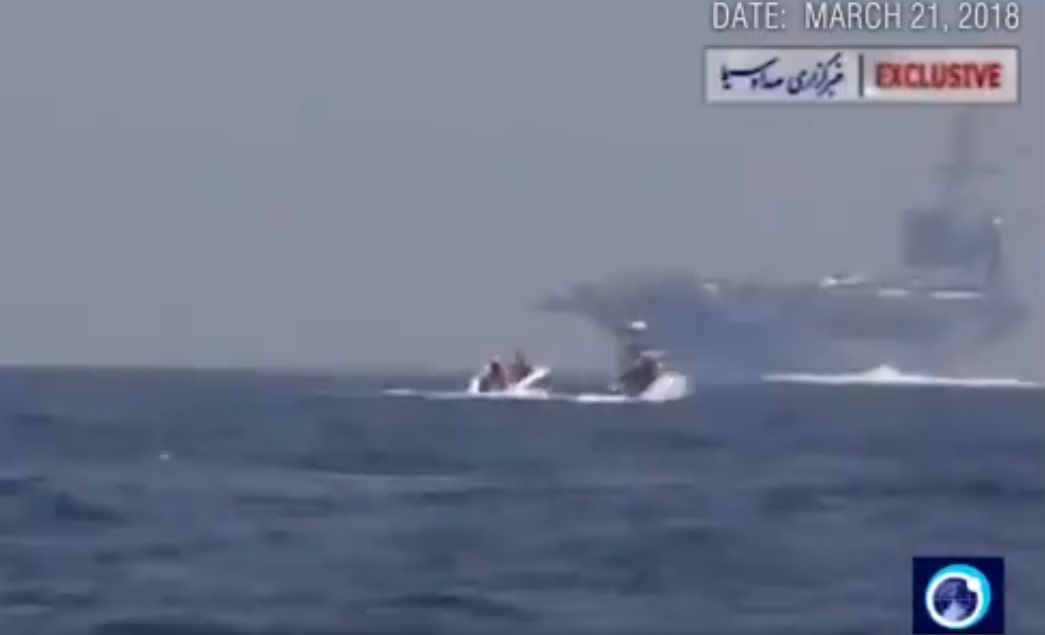
Iran shows off footage of boats harassing US carrier 

September 30, 2018

Source: Iran shows off footage of boats harassing US carrier | The Times of Israel

Video, purportedly taken in March, seemingly marks sea change after Navy had reported confrontations stopped after election of Trump

A still from a video published by Iranian state media showing a boat approaching a US carrier in March, 2018. (screen capture: Twitter)

A still from a video published by Iranian state media showing a boat approaching a US carrier in March, 2018. (screen capture: Twitter)

TEHRAN, Iran — Iran’s state TV has broadcast footage purporting to show a close encounter between the Revolutionary Guard’s navy and the USS Theodore Roosevelt early this year.

Press TV’s website said the encounter occurred March 21 in the strategic Strait of Hormuz in the Persian Gulf, the passageway for nearly a third of all oil traded by sea.

The TV agency said the video was aired Saturday as part of a documentary.

The footage is likely meant as a show of strength amid new US sanctions on Iran and the Trump administration plans to bring Iranian oil exports down to zero.

In the video, Guard speedboats are seen closing in on the US carrier.

Iranian sailors then warn the Americans over radio communication to “keep well clear” of the Guard patrol boats and say they advise the Americans to “refrain from the threat or use of force in any manner.”

Séamus Malekafzali@Seamus_Malek

Newly released footage from ‘s state media shows a previously unreported close encounter between speedboats and the USS Theodore Roosevelt in the Strait of Hormuz in March of this year.

No comment from the @USNavy yet.

There was no immediate comment from the US Navy.

Iranian harassment of US ships in the Gulf was a regular occurrence, but according to the US Navy, the practice declined sharply after the election of US President Donald Trump in 2016 and had totally stopped by 2018.

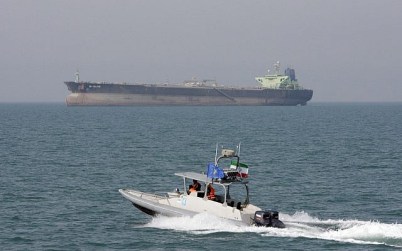
In this July 2, 2012 file photo, an Iranian Revolutionary Guard speedboat moves in the Persian Gulf while an oil tanker is seen in the background (AP Photo/Vahid Salemi, File)

Administration officials have touted the drop in confrontations as proof that Washington’s hard line toward the regime brought about a change in behavior.

Donald J. Trump

@realDonaldTrump

Iranian Harassment of U.S. Warships:

2015: 22
2016: 36
2017: 14
2018: 0

Source: @USNavy

Iran boasts it can sink US carriers… Really? !

Israeli official: S-300 delivery to Syria ‘a complex challenge’ for Israel 

September 30, 2018

Source: Israeli official: S-300 delivery to Syria ‘a complex challenge’ for Israel | The Times of Israel

Senior official says Israel dealing with Moscow’s decision ‘in many ways’; Netanyahu had criticized the move to supply Assad regime with advanced defense system as ‘irresponsible’ 

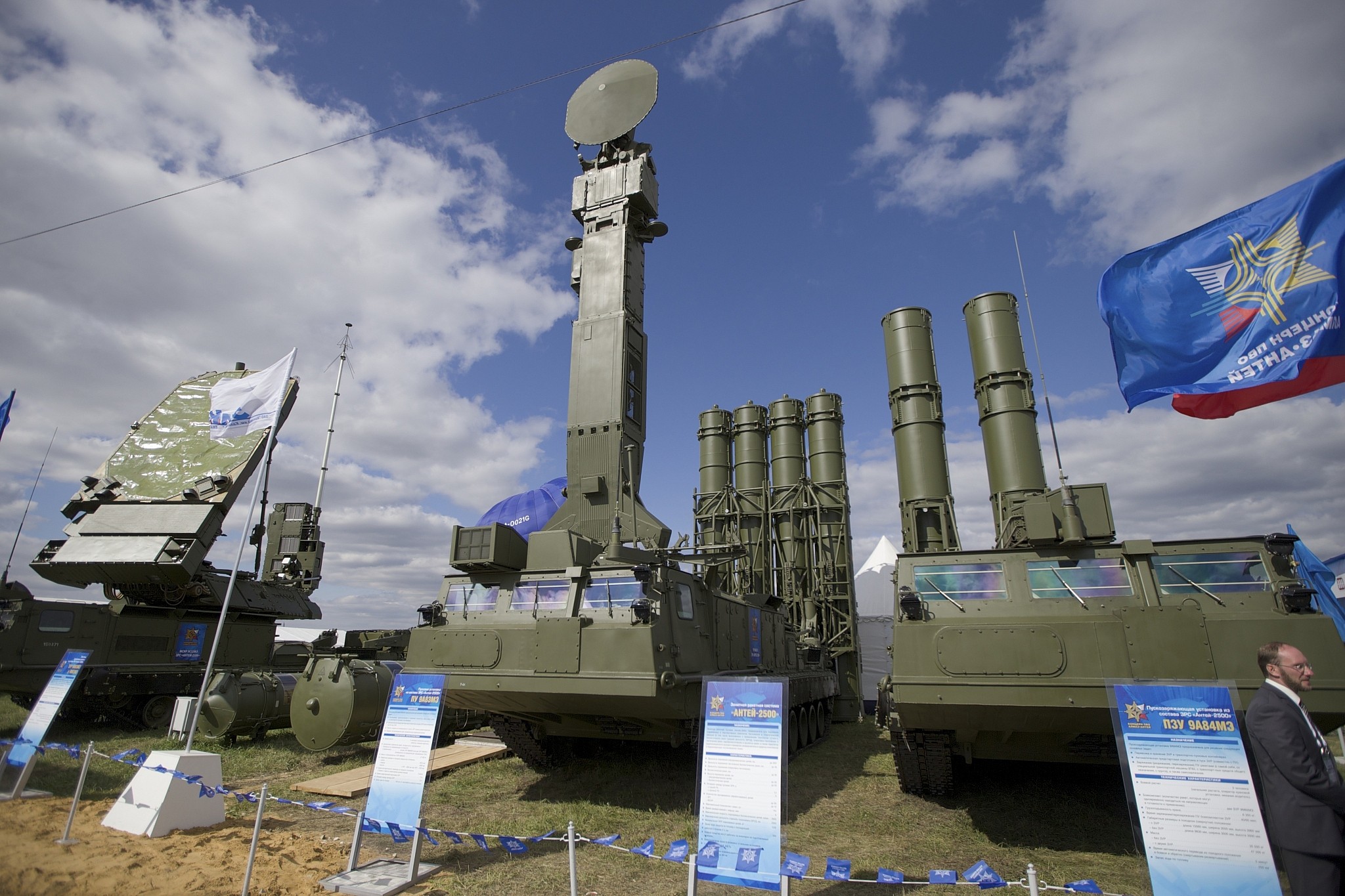
In this August 27, 2013, photo, a Russian air defense system missile system Antey 2500, or S-300 VM, is on display at the opening of the MAKS Air Show in Zhukovsky outside Moscow, Russia. (AP Photo/Ivan Sekretarev, file)

In this August 27, 2013, photo, a Russian air defense system missile system Antey 2500, or S-300 VM, is on display at the opening of the MAKS Air Show in Zhukovsky outside Moscow, Russia. (AP Photo/Ivan Sekretarev, file)

A senior Israeli official said that Russia’s decision to provide advanced anti-aircraft systems to Syria posed a serious challenge for the Jewish state, but added that Israel was working on ways to prevent the development from becoming a major threat to the country’s security.

“The S-300 is a complex challenge for the State of Israel. We are dealing with the [decision] in different ways, not necessarily by preventing shipment [of the anti-aircraft system],” the official said.

The official added that he believes Russian President Vladimir Putin understands that while Moscow “made a move, the playing field is very large,” indicating that Israel reserved the right to protect itself and that it had the support of the United States.

Prime Minister Benjamin Netanyahu on Friday criticized Russia’s decision to supply Syria with the defense system as “irresponsible,” but said Israel was committed to continued deconfliction with Moscow in its military operations in the region.

Speaking to CNN in New York after the annual UN General Assembly, Netanyahu said that he spoke to Putin earlier this month after Syrian forces responding to an Israeli airstrike mistakenly shot down a Russian military reconnaissance plane, killing all 15 people on board.

Netanyahu said he told Putin, “Let’s continue this deconfliction, but at the same time, I told him very respectfully and very clearly that Israel will do, will continue to do what it has to do to defend itself.”

He said both sides wanted to avoid a military clash in Syria, noting that the many militaries and other groups operating in the region were making it “very crowded over there in this tiny space.

“Through this mess, we’ve been able for three years to avoid any clash between … between Russian and Israeli forces,” he said. “I think there’s a desire on both our part and Russia’s part to…. avoid a clash.”

On Friday, Russia began supplying the S-300 air-defense system to Syria despite Israeli protests.

Russian Foreign Minister Sergei Lavrov announced the deliveries had started during a UN press conference. He said the anti-aircraft system “will be devoted to ensure 100 percent safety and security of our men in Syria.”

Lavrov’s announcement came in the wake of the downing of the Russian plane.

The Russian defense ministry also announced it would begin jamming radars of military planes striking targets in Syria from off the coast of the Mediterranean.

Russian electronic warfare equipment intended to disrupt airstrikes has already arrived in Syria, according to Russian media reports. According to the Moscow-based Izvestia daily newspaper, the electronic warfare equipment arrived at Hmeimim Air Base near Latakia on Monday, aboard Il-76 transport aircraft. Without detailing exactly what was sent, the sources noted that the systems were intended to disrupt airborne radar, aircraft communication and controls, and satellite navigation systems used in attack jets, drones, and guided munitions.

Both Israel and the United States have protested the decision to supply Syria with the S-300, which could complicate ongoing Israeli efforts to prevent Iran deepening its military presence in Syria and to thwart the transfer of weapons in Syria to Hezbollah.

Israel has vowed to continue its operations. On the sidelines of the UN General Assembly this week, Netanyahu said after meeting US President Donald Trump that the US president gave him various unspecified guarantees regarding Israel’s freedom of operation in Syria. “I received what I asked for. I came with specific points and I got them,” he told reporters.

Israel has carried out hundreds of strikes against Syrian and Iranian targets in Syria over the last several years, with fighter jets going nearly unchallenged by the country’s air defenses — though an F-16 was downed by a Syrian anti-aircraft missile in February in what the IDF later said was the result of a professional error by the pilots.

Jerusalem has vowed to prevent Lebanon-based Hezbollah or Iranian proxy militias in Syria from obtaining advance weapons that could threaten the Jewish state and has worked to keep Iran from gaining a foothold in Syria that can be used to attack Israel.

Russia, which is a main backer of Syrian President Bashar Assad, has maintained a deconfliction hotline with Israel, allowing the Jewish state to carry out the attacks as long as it was informed beforehand.

The future of that program has been uncertain since the September 17 incident, which occurred as four Israeli fighter jets conducted an airstrike on the weapons warehouse near the coastal city of Latakia, which the IDF said was intended to provide weapons to the Hezbollah terror group and other Iranian proxies.

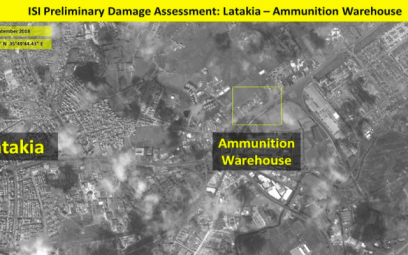
The remains of a Syrian ammunition warehouse which was destroyed in an Israeli airstrike on a base in Latakia, September 18, 2018. (ImageSat International (ISI/Ynet)

Moscow has accused Israel of using the IL-20 spy plane as a shield after the attack, rejecting Israel’s claims that poorly trained Syrian air defense operators are to blame for the deaths of 15 Russian servicemen aboard the aircraft.

Israel denies this charge, and insists it also notified the Russians 12 minutes before the attack — while Moscow has said it was given only a minute’s notice.

Earlier this year Defense Minister Avigdor Lieberman downplayed Israeli concerns over Russia’s purported plans to install the system in Syria.

“One thing needs to be clear: If someone shoots at our planes, we will destroy them. It doesn’t matter if it’s an S-300 or an S-700,” he said.


Netanyahu was to reveal ‘third site’ in speech on Iran, but intel chiefs said no

September 30, 2018

Source: Netanyahu was to reveal ‘third site’ in speech on Iran, but intel chiefs said no | The Times of Israel

Along with details of Tehran atomic warehouse and Hezbollah missile factories in Beirut, PM planned to expose additional intel haul, but defense heads recommended against it

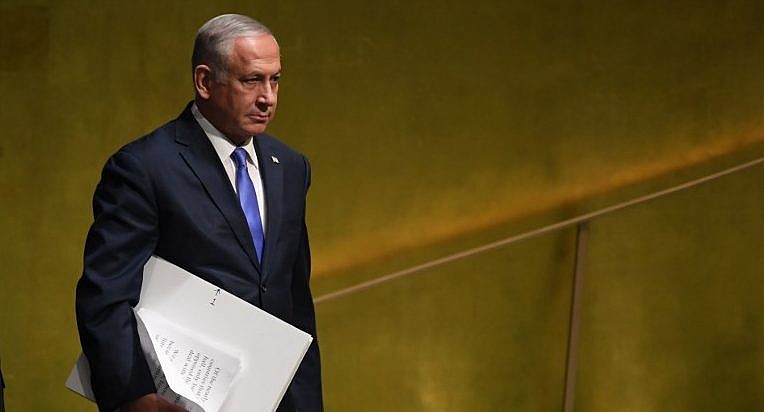
Prime Minister Benjamin Netanyahu arrives to address the General Assembly at the United Nations in New York September 27, 2018. (AFP/Timothy A. Clary)

Prime Minister Benjamin Netanyahu intended to reveal a third batch of intelligence material in his UN speech on Thursday, in which he exposed what he said was a “secret atomic warehouse” in Tehran and revealed details of Hezbollah missile factories in Beirut, a senior Israeli official said at the weekend.

Netanyahu ultimately elected not to include the third revelation in his address to the General Assembly because the security establishment recommended that he not do so, Israel’s Channel 10 news said Saturday night.

Beyond indicating that the intelligence material related to “a third site,” the official provided no further details of the information.

Netanyahu’s decision to specify the location and alleged content of the Tehran atomic warehouse, from which he said the Iranians recently removed 15 kilograms of radioactive material, was taken after consultations with the security establishment and with its approval, the prime minister has made clear.

Israel had provided details of the warehouse to the IAEA and to the US administration six weeks ago, but Netanyahu charged that the IAEA failed to act. It was decided after security consultations at the Prime Minister’s Office that Netanyahu would publicize the information at the UN, in the hope of galvanizing the IAEA into action.
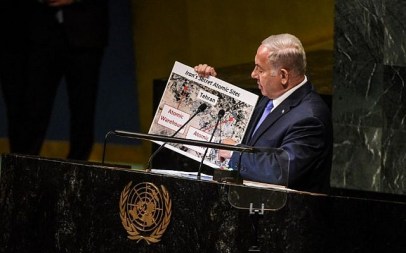
Benjamin Netanyahu holds up a placard of suspected Iranian atomic sites while delivering a speech at the United Nations during the United Nations General Assembly on September 27, 2018, in New York City. (Stephanie Keith/Getty Images/AFP)

Since his speech, the US has indeed asked the IAEA to investigate the site, and Netanyahu also asked UN Secretary-General Antonio Guterres to push the IAEA on this.

Immediately after Netanyahu’s speech, meanwhile, the IDF published further information on the Hezbollah missile factories that Netanyahu had referred to.

Presumably the recommendation from security chiefs that Netanyahu not include material on the third site in his speech stemmed from a decision to work behind the scenes on this issue for the time being.
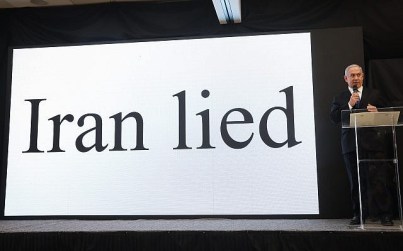
Prime Minister Benjamin Netanyahu gives a speech on files obtained by Israel he says prove Iran lied about its nuclear program, at the Defense Ministry in Tel Aviv, on April 30, 2018. (Miriam Alster/Flash90)

In April, Netanyahu held a press conference to detail the contents of a huge haul of documentation taken by the Mossad from a secret Iranian nuclear weapons project archive in Tehran. The operation to remove that material from under the Iranians’ noses had taken place months earlier. Israel had privately shared some of the material with the US and with the IAEA, Netanyahu said at the time, but did not rush to make the haul public.

Briefing Israeli reporters traveling with Netanyahu in the US on Friday, a senior Israeli official said the prime minister’s revelation of the atomic warehouse and its contents has caused “growing pressure inside Iran.”

“They’re wondering how to deal with this facility, how to evacuate it, how to cover it up,” the official said. “There is no doubt it is a very important site for them; they’re seeking to conceal it and stall in any way possible.”

According to the official, the 15 kilograms of radioactive material that Netanyahu said was removed from the facility and dispersed around Tehran was taken away at the beginning of August.

Netanyahu himself told Israeli reporters at the briefing that it was past time for the IAEA to act, and that Iran had been exposed “as deceiving and cheating the international community.” He also said that Iran was aiming to break out to a nuclear arsenal when it deems the time ripe: “There’ll be a crisis somewhere or other, and they’ll [take advantage of the distraction] to break out to a nuclear arsenal,” he warned. “That’s the Iranian plan.”

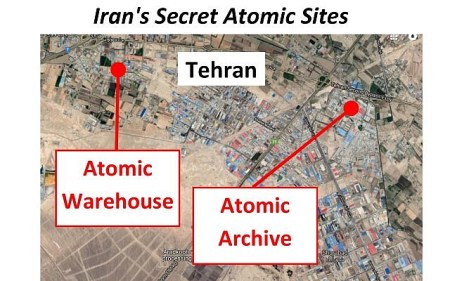
In his address to the General Assembly on Thursday revealing the “secret atomic warehouse,” Netanyahu said “[Global] intelligence services and the International Atomic Energy Agency (IAEA) have known about this for six weeks” and failed to act. The warehouse allegedly contained nuclear materials that Iran is not allowed to hold without declaring them to the IAEA.

Netanyahu, in his speech, claimed the warehouse was used for “storing massive amounts of equipment and material from Iran’s secret weapons program,” which was quickly being moved to other parts of the city.

The site may contain as much as 300 tons of nuclear-related equipment and material in 15 shipping containers, he added.

The US on Friday asked the IAEA to investigate Netanyahu’s new allegations, although Reuters also quoted a US official as saying the prime minister’s information was misleading, and that the site contained documentation and not nuclear materials.

The Israeli official rejected this on Friday, saying, “It’s not just documents. There are other things there,” and added: “Did he check it? First of all, let them check.” He noted that it seemed “very important for Iran to hide it, to disperse things across Tehran.”

The official acknowledged that Israel did not have information on everything contained within the site, and said this was why the IAEA should “go and check.”

Asked if the existence of the secret warehouse and its contents definitely violated the terms of the 2015 Iran nuclear deal, the Israeli official replied: “First of all, let them check… Why did they remove 15 kilograms of radioactive material? That’s a question that needs to be looked into.

“We know there’s radioactive material there. They distributed that radioactive material all around Tehran. Those 15 kilograms are a fact. Why did they go around dispersing it? What happened? They need to check.”

Iranians on Friday published selfies on social media taken outside the facility, and mocked Netanyahu’s claim that it was a secret nuclear facility. The official said, “The fact that you have young Iranians taking selfies there is unbelievable.”
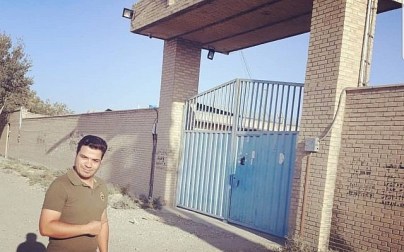
An Iranian poses outside the site identified by Prime Minister Benjamin Netanyahu as a secret Iranian nuclear facility on September 28, 2018. (Twitter)

The senior official scoffed at the notion that Netanyahu had exposed sensitive intelligence material. “That’s absurd. We had discussions about this, what to reveal and what not to, and it was decided to reveal it at this point.”

Netanyahu himself on Friday said it was “time for [the IAEA] to act.” As to whether it would, he said: “They may act and they may not act, but one thing is certain — Iran has been exposed as deceiving and cheating the international community. That’s been revealed and that’s the main purpose. Anything else is a bonus.”

Netanyahu once again lambasted the 2015 nuclear deal, saying Iran “immediately” used funds freed up by the accord to bolster its war machine. “It gave them hundreds of millions of dollars in direct released funds, in credit and in the entry of investors” and Iran had since seen “a 40 percent increase in its defense budget.”

Said Netanyahu Friday, in a bitter denunciation of the accord: “The essence of the 2015 nuclear deal was that, in that in return for not enriching uranium for a single bomb, Iran in a few years will get the right to enrich for hundreds of bombs. Iran has already announced that it will produce 200,000 centrifuges, some of them 20 times faster than the current generation.”

Iran, he said, has “mountains of yellowcake” uranium concentrate. “They have their archived information [on bomb-making] in their secret atomic archive. They can push not for one bomb, but for hundreds of bombs simultaneously.”

“There’ll be a crisis somewhere or other, and they’ll [take advantage of the distraction] to break out to a nuclear arsenal,” he warned. “That’s the Iranian plan. And that’s what the agreement gave them.

“It also gave them hundreds of millions of dollars — directly released funds,” he noted. “They put that money directly into their war machine; there’s been a 40% increase in their defense budget.

The Iranians, he said, “were also obligated [under the deal] to come clean on all their [nuclear] activities. The 15 kilograms [of radioactive material] is further prove [of their failure to do so].”

The newly revealed warehouse, said Netanyahu, did not merely contain documents, as some US officials have charged. “There are other things too. But they key fact is that they hid it.”

On Friday an unnamed official told Channel 10 news that the facility was uncovered by the Mossad spy agency a few months ago, and had since been kept under surveillance.

When the IAEA failed to act, the Israeli government apparently agonized over what to do with the information, and decided after discussions in the Prime Minister’s Office that Netanyahu would reveal it in his annual speech to the United Nations General Assembly on Thursday in an attempt to goad the IAEA into taking action.
An image from a placard displayed by Prime Minister Benjamin Netanyahu during his speech to the United Nations General Assembly showing a suspected ‘secret atomic warehouse’ in the Turquzabad district of Tehran containing up to 300 tons of nuclear material. (GPO)

“There was no choice but to reveal this information, because the goal is to prompt the IAEA to take action,” the senior official said. “We wanted to wake up the world and pressure the IAEA to act against the suspected facilities in Iran.”

Channel 10 reported that the senior official revealed that the nuclear facility is under the supervision of a secret Iranian defense ministry department headed by Mohsen Fakhrizadeh, named by Netanyahu in his April presentation of the seized nuclear archive as the Iranian physicist who heads the country’s nuclear program.
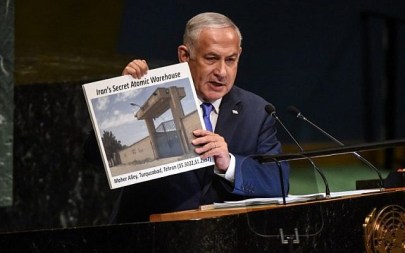
Benjamin Netanyahu, Prime Minister of Israel, holds up a placard showing a suspected Iranian atomic site while delivering a speech at the United Nations during the United Nations General Assembly on September 27, 2018, in New York City. (Stephanie Keith/Getty Images/AFP)

“Remember that name, Fakhrizadeh,” Netanyahu had said in April, showcasing the material that he said proved conclusively that Iran lied when it said it had not sought nuclear weapons and that the 2015 nuclear deal was built upon “Iranian deception.”

The Israeli official was adamant, by contrast, that what the Iranians were keeping in the newly revealed warehouse was considerably more grave than the contents of the archive. The official did not elaborate beyond saying it was “forbidden nuclear material,” the TV report said.

In May an Israeli TV report suggested Jerusalem may have decided not to assassinate Fakhrizadeh because it prefers to keep him alive and watch what he is up to, even as other Iranian nuclear experts have been assassinated in recent years in hits attributed to the Mossad.

At the General Assembly speech (full text here),  the prime minister said the IAEA had failed to take any action after he revealed in April a nuclear archive that Israeli spies managed to spirit out of Iran, and so he was now revealing what he said was a “secret atomic warehouse” in the Turquzabad district of Tehran, a few miles from the archive.

Both the archive and warehouse, Netanyahu said, were proof that Iran had not given up its nuclear program. “Iran has not abandoned its goal to develop nuclear weapons … Rest assured that will not happen. What Iran hides, Israel will find,” Netanyahu added.

On Thursday, Netanyahu also met with UN Secretary-General Guterres and urged him to ask the IAEA to investigate the facility.
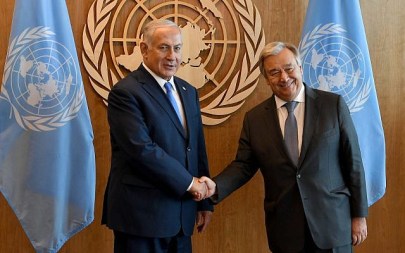
Prime Minister Benjamin Netanyahu (L) and UN Secretary-General Antonio Guterres (R) in New York, September 27, 2018. (Avi Ohayon/GPO)

He urged IAEA director-general Yukiya Amano, whom he called “a good man,” to “do the right thing” and “go and inspect this atomic warehouse immediately — before the Iranians finish cleaning it out.”

Inspect “right here, right now,” he urged, “and inspect the other sites we told you about… Tell the world the truth about Iran.”

Iranian officials have dismissed Netanyahu’s claims about the atomic warehouse as unfounded and “obscene.”

Referring to Netanyahu’s statements as “ridiculous,” an Iranian state TV report said the country is committed to nonproliferation and Iran’s nuclear program is under surveillance of the IAEA. The website of state TV briefly reported the Netanyahu accusation and called it an “illusion.”

Agencies contributed to this report.
 

Is Israel’s military honeymoon with Russia in Syria over?

September 30, 2018

Source: Is Israel’s military honeymoon with Russia in Syria over? – Arab-Israeli Conflict – Jerusalem Post

Jerusalem also considered sending Prime Minister Benjamin Netanyahu or Defense Minister Avigdor Liberman to visit Moscow to stop the diplomatic crisis from spiraling even further.

BY ANNA AHRONHEIM
 SEPTEMBER 29, 2018 23:56
Russian Air Force Ilyushin Il-20M

For the first time in decades, the operational freedom of the Israel Air Force may truly be at risk – not because of terrorist groups or countries bent on Israel’s destruction, but because of Russia – and intense efforts have been put into motion on all sides to prevent that from occurring.

The downing of the Russian Ilyushin Il-20 plane by a Syrian air-defense missile during Israeli air strikes against Iranian targets has led to one of the lowest points in the relationship between Jerusalem and Moscow in years.

The deaths of 15 Russian servicemen is a major embarrassment for Moscow, which has positioned itself as the main superpower in the region and has placed the blame of the downing of the plane last week squarely on Israel, accusing it of using the Il-20 as cover to carry out the strikes on targets in Syria.

Israel, meanwhile, has placed the blame for the incident on the Syrian regime, which used a Russian-made antiaircraft battery to bring down the plane during a strike by Israeli F-16 fighter jets on a Syrian military facility near the coastal city of Latakia on September 17.

Following the incident, Israel sent an IDF delegation to Moscow headed by IAF commander Maj.-Gen. Amikam Norkin to present the Russians with all of the facts regarding the incident, including intelligence gathered prior to the attack, a recording of the hotline call between Tel Aviv and the Khmeimim Air Base before the Israeli operation, and the findings of the IDF’s own investigation into the accident.

Russian officials reportedly rebuffed an Israeli attempt to dispatch a high-level government delegation to Moscow led by national security adviser Meir Ben-Shabbat along with the IAF delegation led by Norkin.

According to reports, Jerusalem also considered sending Prime Minister Benjamin Netanyahu or Defense Minister Avigdor Liberman to visit Moscow to stop the diplomatic crisis from spiraling even further.

But Russia, which has blamed the Israeli military and not the government, preferred instead to meet only with Norkin, to hear his team’s explanation for the deadly incident.

While it is indisputable that Syrian forces are the ones that shot down the Russian plane using a Russian-made missile defense system, nevertheless, despite the Israeli delegation’s visit to Moscow and telephone calls between Netanyahu and Russian President Vladimir Putin, Russia is ignoring the findings of the IAF’s investigation.

The question is why: to save face for an operational blunder, to which Russia, which helps manage Syria’s air defense network, bears some responsibility? Or because Moscow has decided that the downing provides a long-sought-after pretext to void its agreement with Israel, which up until now has allowed the IAF to attack targets in Syria with relative impunity?

The answer is likely both. As many analysts have suggested, the downing of the Ilyushin Il20 has revealed fundamental problems with Russian air defenses in Syria, particularly the robustness of its IFF (identification friend or foe) electronic signals carried by its aircraft.

The fact that it didn’t work to save one of its own spy planes is a profound embarrassment for its military, especially since the Russian officers who operate the air defenses alongside Syrian troops failed to properly supervise the Syrians who pressed the launch button for the intensive antiaircraft fire that ended up taking down the Russian plane.

Accusing Israel of using the Russian plane as shield from the missiles is likely nothing more than a shield against the failure of its troops deployed in Syria.

Equally vexing has been the pounding Russia’s allies in Syria have taken in recent months at the hands of the IAF. With Israel’s recent admission that it had struck Syria over 200 times since 2017, Moscow needs to show some resolve, to demonstrate its commitment to its primary strategic partners in the region, which remain Damascus and Tehran.

Russia, which views Iran as a key player in resolving the crisis in Syria, has repeatedly emphasized the importance of the role that the Islamic Republic plays in the war-torn country.

Israel rarely comments on foreign reports of military activity in Syria and has remained silent on hundreds of other strikes since the outbreak of the country’s civil war, which Russia joined in September 2015.

Some of the strikes attributed to Israel even occurred in areas where the Russians have deployed their advanced S-300 and S-400 missile defense batteries. But thanks to a deconfliction mechanism in place, no Israeli jets were ever at risk.

According to the IDF, the strikes, which mainly targeted advanced weapons systems and infrastructure belonging to Iran’s Revolutionary Guard Corps, were aimed at preventing Iranian entrenchment in Syria.

Following the downing of the Russian plane, Moscow announced it would supply Syria with the advanced S-300 missile defense system and impose electronic countermeasures over Syria’s coastline that would suppress satellite navigation, onboard radar systems and the communications of warplanes attacking targets in Syrian territory.

Emboldened by Moscow’s announcement, Syrian Deputy Foreign Minister Faisal Mekdad said Wednesday that “Israel, which got used to carrying out many attacks under different pretexts, would have to recalculate and reconsider before attacking again.”

But while some think the supplying of S-300 systems to the Syrians may jeopardize Israeli missions over Syria, according to foreign reports Israeli pilots have already trained to defeat the system.

NATO member Greece, for example, has operated the S-300 since the late 1990s, and Israeli aircraft have trained in its airspace as well as in Cyprus, undoubtedly giving it an opportunity to learn its tracking system in real time.

“The S-300 delivery to Syria is overinflated,” wrote Amos Yadlin, head of the Institute for National Security Studies and former head of Military Intelligence, on his Twitter account on Tuesday. The “S-300 doesn’t change the strategic balance. No air defense system is impregnable or indestructible. Israel has F-35s which were designed with exactly such systems in mind.”

“If S-300 batteries are operated by Russians – that’s not new, with Russian S-400 operating in Syria for years, never launching against Israel or US aircraft. If Syrian crews operate them, Israel will know how to hit it. Russian air defense systems’ reputation will take a hit,” he added.

Netanyahu, too, warned Tuesday, before flying to New York to address the UN General Assembly, that Israel will continue to act against Iranian entrenchment in the region, even with Moscow supplying the system to the Syrians.

“In the past three years, Israel has been very successful in preventing the Iranian military from setting up bases in Syria and attempting to supply lethal weapons to Hezbollah. We did this with maximum and successful security coordination with the Russian military,” said Netanyahu.

“We will continue to act to prevent the Iranian military buildup in Syria,” he continued. “We will do what is necessary to defend Israel’s security.”•


How the U.S.-Iran war-of-words could play out 

September 30, 2018

Source: How the U.S.-Iran war-of-words could play out – Middle East – Jerusalem Post

Although most believe a direct confrontation is unlikely in the short-term, Tehran’s regional expansionism could eventually place it in President Trump’s crosshairs.

BY CHARLES BYBELEZER/THE MEDIA LINE
 SEPTEMBER 30, 2018 05:56
 US President Donald Trump and US Ambassador to the United Nations Nikki Haley confer during a meeti

United States President Donald Trump continued his verbal assault on Iran from his pulpit at the opening session of the United Nations General Assembly, calling on the international community to isolate the Islamic Republic which he described as the world’s foremost “[state] sponsor of terrorism…[whose] leaders sow chaos, death and destruction.” Hours later, in his own speech to the forum, Iranian President Hassan Rouhani accused the “authoritarian” Trump administration of maintaining a “Nazi disposition” and reiterated a refusal to engage in direct negotiations with Washington.

The war-of-words comes on the heels of last week’s attack on a military parade in the southern Iranian city of Ahvaz, which killed more than two dozen people including members of the Revolutionary Guard Corps. Tehran blamed Washington of backing the perpetrators, with Qasem Soleimani, the notorious chief of the Quds Force—which spearheads Iranian military activities abroad—threatening to unleash the “gates of hell” on U.S. troops in the Middle East.

The comment was, in turn, addressed by American Secretary of State Mike Pompeo, who told a gathering of the United Against Nuclear Iran organization that the White House “will hold Iran accountable for any attack on our interests and personnel in the region.” For his part, U.S. national security adviser John Bolton at the same summit asserted that, “I assure [the mullahs] today: If you cross us, our allies, or our partners; if you harm our citizens; if you continue to lie, cheat, and deceive, yes, there will indeed be hell to pay.”

Tensions between the two nations boiled over in May when President Trump withdrew from the 2015 nuclear accord and announced the re-imposition of sanctions on Iran, the first batch of which took effect last month. Observers predict the stand-off will intensify moving forward, with a second tranche of financial penalties targeting the Islamic Republic’s crucial energy and shipping sectors slated for implementation in November. Moreover, the back-and-forth rhetoric is, increasingly, becoming militaristic in nature, raising fears of a potential confrontation between the countries’ armed forces.

“Words can manifest in conflicts on the ground, not only in Iraq and Syria but in Yemen as well,” Professor Eyal Zisser, Vice Rector of Tel Aviv University and an expert on the Middle East, contended to The Media Line. “In Syria, specifically, the boundaries are not quite clear so there can be an escalation and an engagement, especially if the Americans come along and say they do not want the Iranians operating in certain areas.

“With respect to Iraq,” he elaborated, “there is presently little fighting going on and for the Iranians to turn it into a combat zone would be a mistake. If Iraq uses its proxies there against American assets this could result in a war. I do not think the [Iranian regime] will dare to play such games.”

Tehran nevertheless appears to be pushing the envelope, testing President Trump’s resolve by working to enhance its military capabilities throughout the Middle East. Notably, American Ambassador Nikki Haley last week affirmed at a UN Security Council meeting that, “in recent months, Iran’s aggression has escalated. Iranian proxies in Iraq operate openly, with funding, training, and weapons supplied by Tehran…[which] is reportedly developing the capability for its militias to produce their own missiles.”

More broadly, top-ranking American officials have on numerous occasions called for Iranian troops, along with Hezbollah and allied Shiite mercenaries, to fully vacate Syria as the conflict winds down. Simultaneously, Washington is providing arms and tactical support to the Saudi-led coalition fighting Iranian-backed Shiite Houthi rebels in Yemen.

Dr. Ali Nouri Zadeh, Director of the London-based Center of Arab-Iranian Studies, believes that Tehran’s course will in large part be determined by an ongoing internal struggle between hardline and more moderate regime elements. “There are people in Iran such as some Revolutionary Guard commanders who are not concerned about the US These individuals do not fear American power even though they do not necessarily want to attack the US, but, rather, perhaps its allies in the Gulf.

“Another train of thought,” he expounded to The Media Line, “rejects a military clash because it is assumed the US response would bring Iran to its knees. [Proponents] of this position argue there needs to be a return to negotiations. There is still a chance that Tehran will come back to the table and, in fact, officials have told me that Iran is preparing to launch an initiative to diminish its influence in Yemen. This could reduce tensions with Riyadh and perhaps open the door to talks.”

As regards Israel, the Islamic Republic alleged that it too had a hand in last week’s attack in Ahvaz and warned of reprisals. Jerusalem has gone to great lengths to curb Iran’s efforts to entrench itself in Syria, by conducting hundreds of cross-border military strikes against Iranian assets and weapons convoys destined for Hezbollah in Lebanon. Some analysts thus view the Jewish state as a more plausible target should the mullahs choose to lash out.

“If the Iranians are looking for a quick and close reply while limiting the impact on international stability then Israel is right in front of them as well as the Saudis,” Col. (res.) Dr. Eran Lerman, Vice President of the Jerusalem Institute for Strategy and Security, related to The Media Line. “However, Iran is reserving the option to attack Israel if ever [the Jewish state] abides by the Begin Doctrine [which demands that enemy nations be prevented at any cost from going nuclear], and it is improbable that Tehran would waste this strategic card now by creating a major conflict.

“The Iranians are leading [the Shiite] camp across the region and while Israel is trying to curb [this adventurism], it is only one party in the [mainly Sunni Arab] anti-Iran alliance,” he continued. “The Islamic Republic therefore has many potential targets and given the nature of the American administration it would certainly think twice before doing something that might cause the White House to become unhinged. Irrespective of the bravado of the Revolutionary Guard, there is a good understanding of what would await.”

Indeed, despite mounting pressure on Iran many hold that the regime remains rational and thus presently is unlikely to seek out a confrontation with the US Instead, they argue, Tehran will attempt to weather the financial storm in the short-turn by lobbying foreign governments to continue doing business-as-usual with it.

Concurrently, though, the Islamic Republic is liable to pursue its guiding, expansionist policy, a scenario that, by design or not, could eventually place it in America’s crosshairs; at which point President Trump will be forced to decide whether to translate harsh words into even more severe concrete action.


A mental health Break .

September 30, 2018

My Art, My Life

For more info contact the artist directly or contact me .