Archive for September 29, 2018

Russia says Syria now has S-300 anti-air system

September 29, 2018

Source: Russia says Syria now has S-300 anti-air system

Foreign Minister Lavrov claims Moscow already started supplying anti-aircraft missiles to Assad’s army in response to downing of Russian spy plane; two aircrafts reportedly carrying defense system, landed over the past two days in air base near Latakia.
Russian Foreign Minister Sergey Lavrov says Moscow has started delivering S-300 air defense systems to Syria’s government.It was reported that two Russian Air Force 124 Antonov military aircrafts landed on Thursday and Friday in the Russian base near Latakia, transporting equipment and logistics, which had allegedly been loaded onto the planes along the way.

Russia announced earlier this week that it would supply the anti-aircraft missiles after Syrian forces responding to an Israeli airstrike on September 17 mistakenly shot down a Russian military reconnaissance plane, killing all 15 people on board.
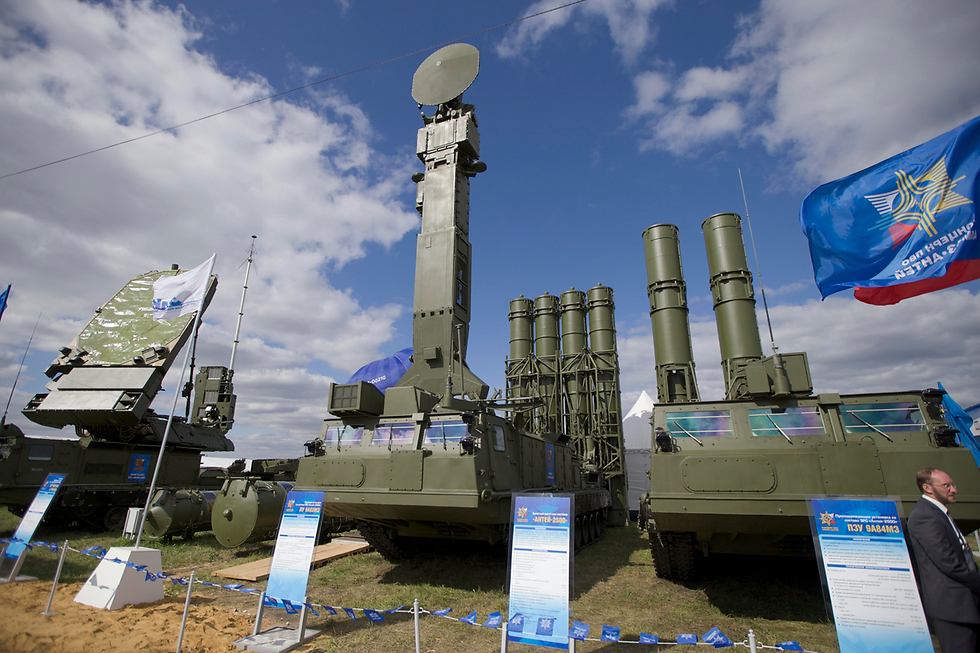
S-300 (Photo: AP)

S-300 (Photo: AP)

The friendly fire incident sparked regional tensions. Prime Minister Benjamin Netanyahu called Russian President Vladimir Putin to express sorrow at the loss of life and sent a high-level military delegation to Moscow.Lavrov was asked about the S-300s at a news conference Friday and responded: “The deliveries started already.”

He added that “the measures we will take will be devoted to ensure 100 percent safety and security of our men in Syria, and we will do this.”

Sergey Lavrov (Photo: EPA)

Sergey Lavrov (Photo: EPA)

A spokesman for a Russian company producing electronic warfare systems says that their deployment to Syria will help protect the country’s air defense assets and fend off enemy air raids.

Vladimir Mikheyev of Radioelectronics Technologies said Friday in remarks carried by the Interfax news agency that Krasukha and Zhitel electronic countermeasure units will place Syria’s air defenses under an “electronic umbrella,” making it hard to spot and attack them.

Moscow also said it will start using electronic countermeasures to jam any aircraft that would try to launch attacks off Syria’s coast.

On Monday, Russian Defense Minister Sergei Shoigu said that the S-300 delivery and is intended to “calm down some hotheads” whose actions “pose a threat to our troops.”

“In 2013, we agreed to stop the transfer of the system to Syria due to an Israeli request. However, through no fault of our own, the situation has changed,” the defense minister stressed.

Later that day, Krelmin spokesman Dmitry Peskov told journalists on a conference call that the decision to supply the weapons was “not directed at any third country”. “Russia needs to increase safety of its military and it should be clear for everyone,” he said.

On Sunday, during a press briefing, ministry spokesman Maj. Gen. Igor Konashenkov said the heads of the IDF do not appreciate the relationship with Moscow.
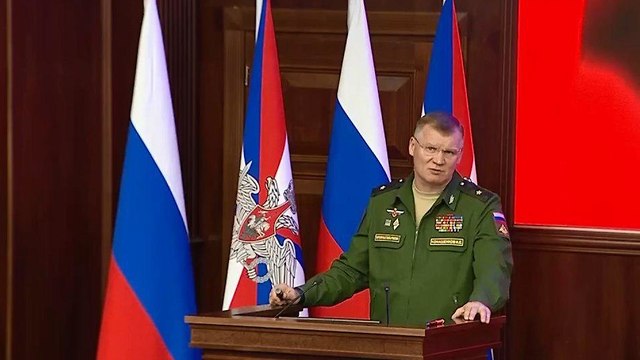
Maj. Gen. Igor Konashenkov (Photo: RT)

Maj. Gen. Igor Konashenkov (Photo: RT)

“The military leadership of Israel either has no appreciation for the level of relations with Russia, or has no control over individual commands or commanding officers who understood that their actions would lead to tragedy,” Konashenkov stressed.

“The actions of the Israeli fighter pilots, which led to the loss of life of 15 Russian servicemen, either lacked professionalism or were an act of criminal negligence, to say the least,” he continued.

Russia has claimed since the attack that Israel gave the Kremlin less than one minute’s notice before the attack, giving the plane insufficient time to fly to safety—”a clear violation of the 2015 Russian-Israeli agreements.”

RT said in its report that the IDF “failed to provide the location of their jets or properly specify their targets, claiming they were going to attack several ‘industrial facilities’ in northern Syria, close to the Il-20’s area of operation.

“The misinformation prompted the Russian Command to order the recon plane back to the Khmeimim air base. The Israeli jets, however, instead almost immediately attacked the western Syrian Latakia province.”


US pushes forward with plans for anti-Iran Arab alliance

September 29, 2018

Source: US pushes forward with plans for anti-Iran Arab alliance

Trump administration proposes establishing ‘Arab NATO’ in order to isolate Iran in Middle East as Secretary of State Pompeo meets with leaders of Gulf states, as well as Egypt and Jordan, to advance issue; Qatar stalls the project, says crisis among Gulf countries should be solved first.
The Trump administration pressed ahead Friday with plans to create an “Arab NATO” that would unite US partners in the Middle East in an anti-Iran alliance, but Qatar said the crisis among Gulf countries must be solved first.
Secretary of State Mike Pompeo met in New York with foreign ministers from Bahrain, Egypt, Jordan, Kuwait, Oman, Qatar, Saudi Arabia and the United Arab Emirates to advance the project.The State Department said Pompeo had stressed the need to defeat the Islamic State group and other terrorist organizations as well as ending the conflicts in Syria and Yemen, securing Iraq and “stopping Iran’s malign activity in the region.”

Mike Pompeo (Photo: AP)

Mike Pompeo (Photo: AP)

Qatar’s Foreign Minister Sheikh Mohammed bin Abdulrahman Al Thani told a news conference afterward that the alliance should be built on existing institutions, and he asked how that could be done when the most powerful Gulf countries have been engaged in a more-than-yearlong dispute.”The real challenge facing the US-led alliance is to solve the Gulf crisis,” he said.

It pits Saudi Arabia, Bahrain and the United Arab Emirates against Qatar, and has split the membership of the main regional group, the Gulf Cooperation Council or GCC.

Since June 2017, the Saudis, Emiratis and Bahrain, along with Egypt, have been boycotting Qatar and demanding that it limit its diplomatic ties with Iran, shut down the state-funded Al-Jazeera news network, and sever ties to “terrorist organizations” such as the Muslim Brotherhood and Lebanon’s Hezbollah. Qatar denies supporting terrorists.

Mediation by Kuwait and the United States has failed to end the dispute, which US officials have warned could affect the fight against the Islamic State.

Al Thani said Friday’s meeting of the GCC was cordial but there was “no progress” on resolving the Gulf dispute and “it is still a stalemate.”

He said Qatar remains “open to dialogue” with Saudi Arabia and its allies and “we hope there will be progress.”

 (Photo: EPA)

(Photo: EPA)

Al Thani said Qatar appreciates “all efforts” by US President Donald Trump, who has sent several letters to GCC leaders to try to solve the crisis, “but unfortunately the response” from Saudis and their supporters has not been positive.The State Department said, “All participants agreed on the need to confront threats from Iran directed at the region and the United States.”

It said in a statement that the ministers had “productive discussions” on setting up what is to be known as the “Middle East Strategic Alliance” to promote security and stability in the region


