Archive for August 17, 2018

Report: One killed, 100 wounded, in Gaza border clashes 

August 17, 2018

Source: Report: One killed, 100 wounded, in Gaza border clashes – Arab-Israeli Conflict – Jerusalem Post

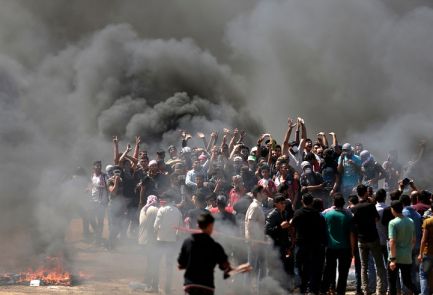
Palestinian reports say protestors have gathered along the border fence and are rioting and burning tires.

BY JERUSALEM POST STAFF
 AUGUST 17, 2018 16:55
Report: One killed, 100 wounded, in Gaza border clashes

Palestinian reports say protestors have gathered along the border fence and are rioting and burning tires.

In addition, KKL firefighters are working on putting out two fires caused by incendiary balloons launched from the coastal enclave, both in the Be’eri forest in southern Israel.

On Thursday, it appeared that Prime Minister Benjamin Netanyahu had met with Egypt’s intelligence minister to discuss possible terms for a ceasefire between Israel and Hamas.

According to one source, the proposed ceasefire would include a year-long period of calm which could potentially be elongated to four years. The possible return of two Israeli civilians and the bodies of IDF soldiers held by Hamas would be discussed in negotiations throughout the year.

Following three days of relative calm along the border, Israel reopened Gaza’s Kerem Shalom border crossing on Wednesday morning to allow for the passage of economic goods into the Strip.

Despite the attempts to broker a ceasefire, Hamas-affiliated sources stated Friday that its people would continue to engage in weekly “Great March of Return” protests along the border – demonstrations and oft-violent riots that have been happening every Friday since March 30.

Thousands protest near Gaza border amid reports of imminent truce

August 17, 2018

Source: Thousands protest near Gaza border amid reports of imminent truce | The Times of Israel

At least 7 said injured in violent clashes with Israeli troops; defense officials say day’s events will be test of Hamas’s intent and ability to ensure calm

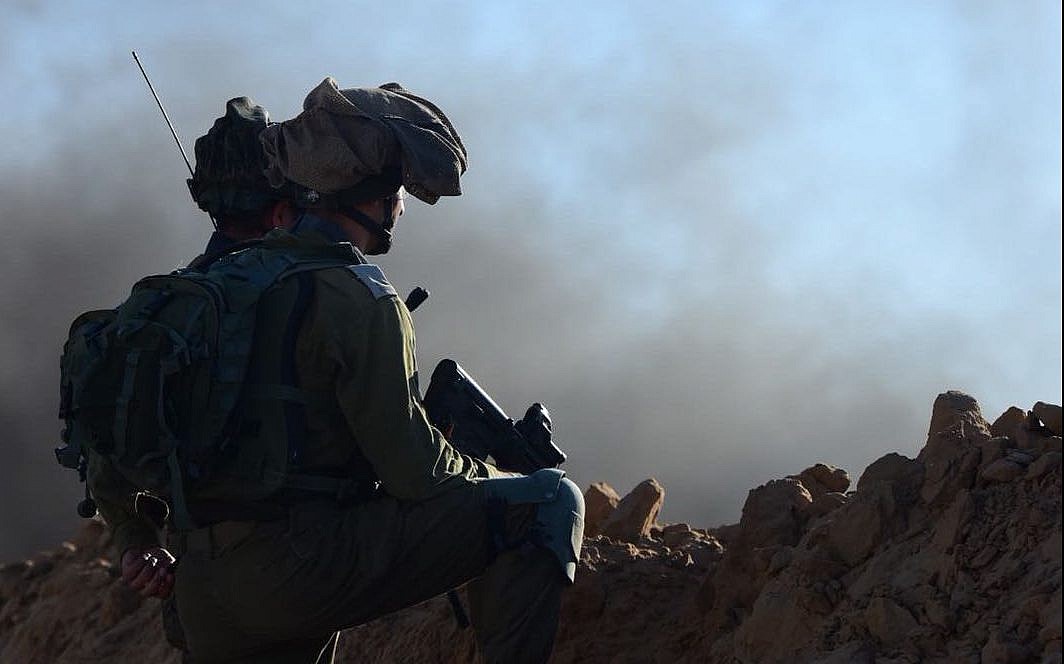
Illustrative: Israeli soldiers in defensive positions on an embankment near the Gaza border during a violent Palestinian protest, July 27, 2018 (Courtesy IDF)

Illustrative: Israeli soldiers in defensive positions on an embankment near the Gaza border during a violent Palestinian protest, July 27, 2018 (Courtesy IDF)

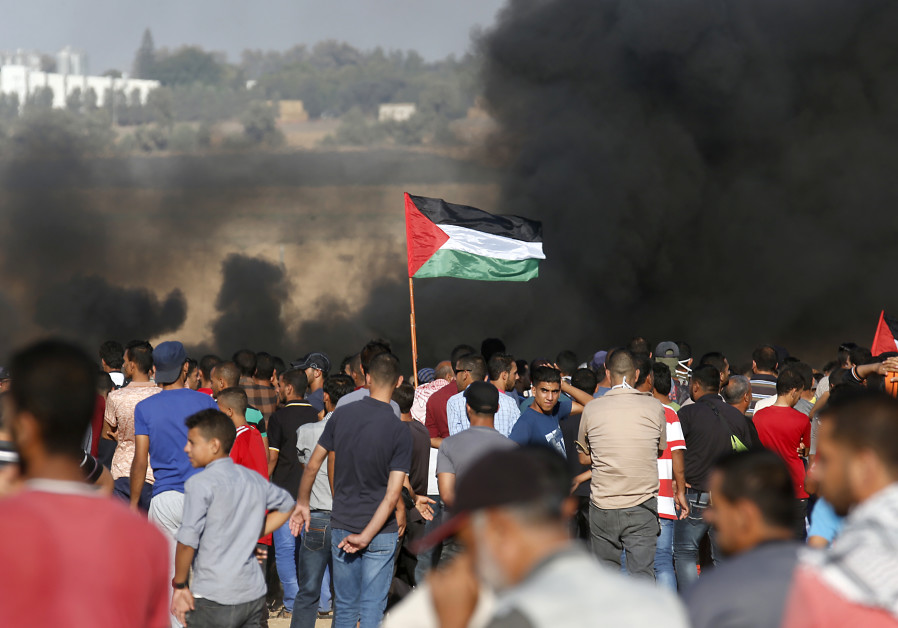
Despite talk of an imminent truce in the Gaza Strip, thousands of Palestinian protesters once again gathered near the territory’s border with Israel Friday for the weekly Hamas-backed ‘March of Return’ demonstrations, with some rioters attacking Israeli soldiers along the fence.

Palestinian media reported at least 7 people wounded by IDF fire.

Meanwhile an incendiary balloon launched from the Strip sparked a fire near Kibbutz Be’eri. Firefighters were at the scene.

Gazan protesters gathered at several points along the border with Israel and some had launched balloons carrying pictures of so-called “martyrs” who had been killed by Israel.

Sources in the Defense Ministry said the events of the day would be a test of Hamas’s willingness or ability to enforce calm as part of a deal.

An unconfirmed Lebanese television report Thursday said the truce was set to last for a year and see the establishment of a cargo shipping connectionbetween Gaza and Cyprus.

Defense Minister Avigdor Liberman said he would remain in the Kirya military base in Tel Aviv to receive constant updates about what was happening along the border.

A female Palestinian protester holds a slingshot during a demonstration at the Israel-Gaza border, east of Khan Yunis in the southern Gaza Strip on August 10, 2018. (AFP/Said Khatib)The army stressed that its preparations ahead of Friday’s demonstrations has been no different than in the previous four months.

Over the past four months the “March of Return” protests have led to deadly clashes which saw Israeli security forces facing gunfire, grenades, Molotov cocktails, and efforts — sometimes successful — to damage or cross the border fence.

At least 160 Palestinians have been killed by Israeli fire since the weekly protests began, a Hamas ministry says. Hamas has acknowledged that dozens of those killed were its members.

One Israeli soldier was shot dead by a Palestinian sniper.

In addition to the border clashes, southern Israel has experienced hundreds of fires as a result of incendiary kites and balloons flown over the border from Gaza. Over 7,000 acres of land have been burned, causing millions of shekels in damages, according to Israeli officials.

Adam Rasgon contributed to this report.

IDFs war plans for facing Hezbollah

August 17, 2018

Source: IDFs war plans for facing Hezbollah

The IDF understands that Hezbollah has gained masses of experience in the civil war. Now it is undergoing changes to prepare it for the next showdown with ‘the strongest army in the Middle East after the IDF.’
Yoav Zitun|Published:  08.17.18 , 10:49
For the very first time, the IDF’s ground forces are implementing a four-dimensional ‘combined battle’ strategy in preparation for a possible war with Hezbollah.

Over the past few days, the IDF has been carrying out the most extensive training exercises conducted by the 36th Armored Division, including the 7th Armored Brigade.

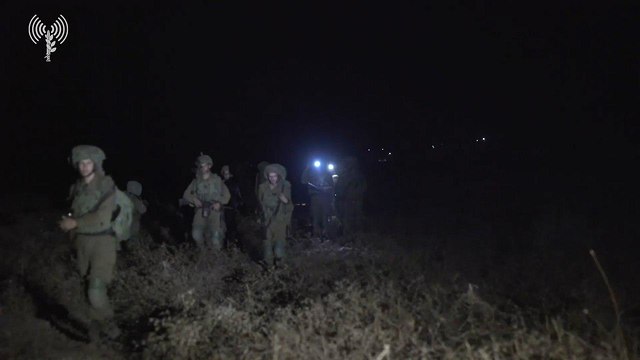
The “Gideon” battlgroup—a combat brigade that includes thousands of IDF soldiers—is training in the Golan Heights for a possible conformation with the modern Hezbollah terror group. Militarily, the Labenon-based group is an army in every sense. It is advanced, fast, mobile and combative.
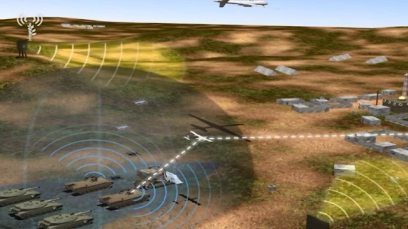
IDF prepares for an armed conflict with Hezbollah (Photo: IDF Spokesperson's Unit)

IDF prepares for an armed conflict with Hezbollah (Photo: IDF Spokesperson’s Unit)

Hassan Nasrallah’s organization, bruised and bleeding from the Syrian civil war in which thousands of Hezbollah fighters were killed and wounded, is slowly returning to Lebanon. Hezbollah also faces internal problems as well as a reduction in the annual Iranian support budget.

Nevertheless, the organization has a high operational self-confidence and has gained rich experience from four years of fighting.

Hezbollah now has new military capabilities, such as the ability to maneuver forces into enemy territory, drafting large forces in rapid speed, and more.

The organization, recently described by a senior officer in the Northern Command as “the strongest army in the Middle East after the IDF,” has received a new arsenal of weapons: special and high-quality night vision devices, electronic combat weapons, and hundreds of drones and UAVs, along with mortars carrying half a ton of explosives, and heavy rockets.

Meanwhile, IDF ground forces are undergoing a major facelift that will be implemented in the coming years by additional standing army brigades, under the guidance of the four-dimensional ‘combined battle’ strategy.

The IDF will practice fighting in the underground, cyber warfare, and prepare for shooting from rooftops or from high-rise building windows.
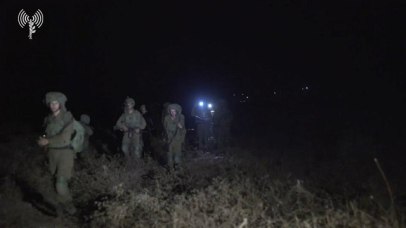
IDF training in the north (Photo: IDF Spokesperson's Unit)

IDF training in the north (Photo: IDF Spokesperson’s Unit)

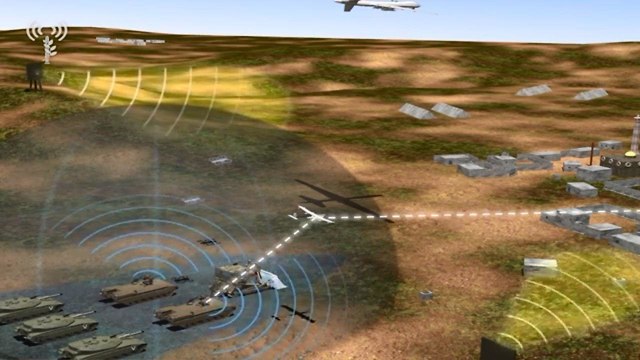
In addition, the Gideon battlegroup will implement an invisible network on the battlefield that includes 24 intelligence planes that can detect anything that emits a signal. Once a signal is detected and decoded, an exact location is found, and the “smart trigger” system turns it into a target in a matter of seconds or minutes.

During training in the Golan Heights, the Golani Brigade’s 13th Battalion fighters fired the first precision-guided mortar shell that has flight control capabilities and a five meter magin of error accuracy.

Next year a similar conversion of artillery shells is expected. “Our goal is to convert 50 percent of the land-based ammunition stockpiles into precise weaponry,” said a senior official from the ground forces.

Following incidents such as the Kfar Giladi disaster in the Second Lebanon War, and the fighting in Shuja’iyya in Operation Protective Edge, each ground maneuver unit will be provided with an air defense battery to combat heavy mortar and suicide bombers threats, similar to the old antiaircraft batteries that protected IDF ground maneuver forces in the 60s, 70s and 80s.
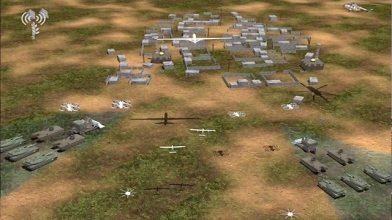
 (Photo: IDF Spokesperson's Unit)

(Photo: IDF Spokesperson’s Unit)

The battleground will include dozens of aircraft—the air force’s rescue and evacuation helicopters, logistic drones, observation drones, and more.

“Each air maneuver unit in the air force will have a small airport with an air control team that will manage everything that happens up to 1,000 feet,” a source in ground forces explained.

The ground forces, together with the air force, will cover the aerial territory above 1,000 feet, while the area above 3,000 feet would be covered by the air force alone.

In one of the drills performed by the IDF, a helicopter landed without the inference of drones and UAVs. In fact, recent events in Gaza helped with this type of training.

According to a senior officer in the ground forces, “this is not a fantasy, we are looking ahead… each division will have its own communications and logistical capabilities.”

A revolution on the ground will also change the engineering capabilities of the brigades: an engineering battalion will include a special unit for handling enemy tunnels.

The elite Yahalom unit will join each battalion and will cover difficult targets and situations such as penetrating bunkers. In addition, within a year, the IDF will be able to receive real-time intelligence from intelligence corps.
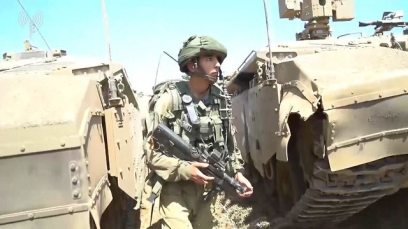
 (Photo: IDF Spokesperson's Unit)

(Photo: IDF Spokesperson’s Unit)

“We are training the forces against the most updated and relevant enemy,” said a senior officer in the ground forces.

“We set up a special battalion that includes about 400 fighters, and deployed them throughout the Golan Heights in order to simulate the capabilities Hezbollah has today,” the officer added.
Off topic:  PM’s wife to lone soldiers: You are the greatest example of Zionism 

August 17, 2018

Source: PM’s wife to lone soldiers: You are the greatest example of Zionism – Israel Hayom

( As a former “lone soldier” who joined the Israeli Navy after graduating from Columbia Law School, this story makes me proud and happy to see the current volunteers so appreciated. – JW )

Garin Tzabar, a program that mentors Diaspora Jews and Israelis raised abroad who choose to come to Israel and serve in the IDF, kicks off its 2018 class with ceremony at Tel Aviv University • Prime minister’s wife Sara Netanyahu: Welcome home, to Israel.

Defense official: Without PA, truce with Hamas will embolden terrorists 

August 17, 2018

Source: Defense official: Without PA, truce with Hamas will embolden terrorists – Israel Hayom

Despite long-term truce overtures, Hamas urges ‎mass border protest

August 17, 2018

Source: Despite long-term truce overtures, Hamas urges ‎mass border protest – Israel Hayom

Hamas’ moment of truth 

August 17, 2018

Source: Hamas’ moment of truth – Israel Hayom

Yoav Limor

Optimistic media reports about far-reaching ‎agreements with Hamas in the Gaza Strip, meant to ‎ensure peace and quiet on the border, are premature. ‎As of now, the only understanding in place is that ‎Friday will pose a significant test for Gaza’s ‎rulers, who have yet to shelve their border riot ‎campaign, and only it the day proves to be incident-‎free will it be possible to go ahead with the ‎negotiations. ‎

It is not that nothing is happening behind the ‎scenes. Several mediators, headed by Egyptian ‎intelligence officials and U.N. Middle East envoy ‎Nickolay Mladenov, are holding intense talks between ‎Palestinian and Israeli officials in an effort to ‎broker a long-term cease-fire, and the U.S., Russia ‎and several Persian Gulf states are also involved, ‎at one level or another.‎

Israel’s primary stipulation has always been ‎complete calm on the border. Hamas agreed to that ‎last week, following the latest flare-up, and seeing ‎that the deal was holding, Israel lived up to its ‎word, resumed operations at the Kerem Shalom cargo ‎crossing and expanded the fishing zone ‎off Gaza’s coast from 6 to 9 nautical miles. ‎

This was phase one of mutual gestures, and it gave ‎the south the calmest week it has seen since March ‎‎30. ‎

Much of phase two depends on this Friday’s border ‎protest. Over the past four months, border protests ‎have attracted thousands of Palestinian and have ‎consistently turned into mass riots that include ‎attempts to breach the security fence alongside ‎burning tires, hurling stones and firebombs at ‎Israeli troops and sending incendiary kites and ‎balloon over the border, where they have wreaked ‎havoc on Israeli communities. ‎

Hamas has pledged to ensure this Friday’s protest ‎would indeed be quiet, but if anything, this will be ‎a test of its leadership and its ability to hold ‎both the masses and the rogue terrorist group in ‎Gaza at bay. ‎

The Palestinian interest in maintaining calm ‎stems from another reason: Next week they mark the ‎Eid al-Adha holiday and they would undoubtedly prefer ‎celebrating it airstrike-free. Israel and Egypt may even ‎offer additional gestures for the holiday as ‎confidence-building moves between the parties.‎

If the calm does prevail in the coming days, truce ‎talks will continue and they will probably be delved ‎into more serious issues, such as Gaza’s energy, ‎water, sewage and wages problems.‎

This phase will require making some serious ‎decision, such as whether the Palestinian Authority ‎will be part of a potential Israel-Hamas deal – in ‎other words, are Israel and the world going to ‎officially recognize Hamas as the sovereign in Gaza; ‎whether the deal would include a mere truce or be a ‎broader “rehabilitation for disarmament” agreement ‎and, of course, whether it will include a prisoner ‎exchange deal. ‎

One must remember, however, that none of the ‎understandings reach so far between Israel and Hamas ‎have even been put on paper. Media reports ‎suggesting otherwise are premature and it would take ‎days, if not weeks, of calm on the border before the ‎negotiations can address practical measures on the ‎ground. Even then, there would still be numerous hurdles to ‎cross. ‎

While we have to wait and see how things develop, ‎for not, at least, we can say that the mediators ‎have been able to broker a clam and avoid war.

Official: Trump and Putin agreed to get Iran out of Syria

August 17, 2018

Source: Official: Trump and Putin agreed to get Iran out of Syria – Israel Hayom

Trump administration creates Iran Action Group at State Department

August 17, 2018

Source: Trump administration creates Iran Action Group at State Department – American Politics – Jerusalem Post

US President Donald Trump pulled out of an international nuclear deal with Iran in May and has directed his administration to apply “maximum economic pressure” on the country to change its behavior.

BY MICHAEL WILNER
 AUGUST 17, 2018 05:47
Trump administration creates Iran Action Group at State Department

WASHINGTON – The Trump administration has created an “elite team” at the State Department on Iran policy hoping to streamline execution of its newly aggressive strategy toward the Islamic republic.

US Secretary of State Mike Pompeo said the team will be responsible with “directing, reviewing and coordinating all aspects of the State Department’s Iran-related activity,” reporting directly to him.

“Our hope is that one day soon we can make a new agreement with Iran, but we must see major changes,” Pompeo said. US President Donald Trump pulled out of an international nuclear deal with Iran in May and has directed his administration to apply “maximum economic pressure” on the country to change its behavior.

Brian Hook, a veteran diplomat, will lead the group with the new title of special representative for Iran. Hook was primarily responsible with forging a strategy for the administration on exiting the nuclear agreement, and is currently liaising with US allies as sanctions once lifted by the deal snap back into effect.

Hook said Iran will have to demonstrate its willingness to fundamentally change its behavior in the region before direct talks can resume between the two nations. The Trump administration believes Iranian forces are primarily responsible for the continued destabilization of Iraq, Syria, Lebanon and Yemen.

“The scope of Iranian malign activity is so wide-ranging,” Hook told State Department reporters on Thursday. “The Iran regime has been a force for instability and violence.”

He declined to name any other officials on the new team, but said that it was comprised of a “core staff of several permanent personnel.”

Jordan-Israel negotiations on Trump peace plan set to bypass PLO

August 17, 2018

Another article from the always interesting David Singer.

He is an Aussie lawyer. His articles can be found on the site link for this article, as well as at his own blog here:  

http://jordanispalestine.blogspot.com/

Here is an extract from his bio from his blog:

An Australian Lawyer, Foundation Member of the International Analyst Network and Convenor of Jordan is Palestine International — an organization founded in 1979 calling for sovereignty of the West Bank and Gaza to be allocated between Israel and Jordan (and possibly Egypt)as the two successor States to the Mandate for Palestine. His articles have been published extensively on the internet…

He wrote some very interesting articles years ago about the demographic “time bomb” that Iran is facing, which I can’t seem to find at the moment. Iran’s fertility rate suddenly dropped from around 6 or 7 to below the replacement rate (at around 1-2) about a generation ago (that is, around the time the “islamic revolution” occurred in Iran). But it didn’t occur because of the islamic revolution (you’d expect the opposite to occur), but because (from memory) the Shah introduced equal opportunity for women in education, and this was introduced just before he was deposed.

Anyway, David Singer wrote a few articles about this, how there is this huge “bulge” in the demographic distribution of Iran, and how this bulge will be moving into retirement age in years ahead, with very few young people to move into the labour force to support them. It is a very interesting issue, apparently the huge drop in the fertility rate from 6-7-ish to 1-2-ish occurring so suddenly (ie in such a short period of time) is some sort of record in terms of demographic changes.

Time will tell…

http://www.onlineopinion.com.au/view.asp?article=19898&page=0

Jordan-Israel negotiations based on President Trump’s long-awaited peace plan seem increasingly likely to happen after retired Jordanian Ambassador, and former editor of the Jordan Times, Walid Sadi flagged Jordan’s legal and sovereignty claims in the West Bank (Judea and Samaria) and East Jerusalem (“disputed territories”).

Sadi – in an op-ed article in the Jordan Times on 12 August – has forcefully argued that Jordan’s decision to cut off all legal and administrative relations with the disputed territories in July 1988 did not amount to Jordan ceding its claims to sovereignty for the following reasons:

First of all, the unity of the West Bank with the East Bank was officially and constitutionally adopted on 24 of April 1950. No one disputes this fact. The Constitution of the country at the time was the 1952 Constitution, which stipulated in no uncertain terms that no part of the Kingdom shall be ceded, period. This provision makes the 1988 decision to cut off all legal and administrative relations between the two banks stopping short of ceding the West Bank to any side whatsoever. Any other interpretation of the 1988 political decision is absolutely untenable constitutionally.

The Jordan Times is published by the Jordan Press Foundation – in which the government-owned Social Security Investment Fund has a majority stake. Wadi’s politically-charged and highly-significant article could only have been published with the knowledge and approval of Jordan’s King Abdullah.

Jordan’s claims are far superior to those of the Palestine Liberation Organisation (PLO), Jordan being the last Arab state to occupy and claim sovereignty (albeit illegally) in the disputed territories from 1948 until their loss to Israel in the 1967 Six Day War.

Indeed the 1964 PLO Charter made no claim to sovereignty in the disputed territories –completely negating any claimed ancient and long-standing rights accruing to its Arab populations which would outweigh the claims by Jordan to these areas – where sovereignty still remains undetermined between Arabs and Jews.

Jordan’s pivotal role in bringing Trump’s peace proposals to a successful conclusion are grounded in the following salient facts:

  • West Bank and East Jerusalem Arabs voted to unify these areas with Transjordan in 1950 and rename the unified entity – “Jordan”
  • West Bank Arabs were citizens of Jordan possessing Jordanian passports between 1950 and 1988.
  • Half the members of the Jordanian Parliament were elected from the West Bank Arab population between 1950 and 1967.
  • Jordan’s population is overwhelmingly comprised of Arabs born east or west of the Jordan River.
  • Jordan itself comprises 78% of the territory of former Palestine
  • Jordan and Israel are the two successor states to the League of Nations Mandate for Palestine already exercising between them mutually-agreed sovereignty in 95% of former Palestine
  • Jordanian custodianship of Islamic holy sites in Jerusalem is guaranteed under the 1994 Israel-Jordan Peace Treaty.

Reunifying into one territorial unit the East Bank with areas of the West Bank allocated to Jordan only requires Israel and Jordan to redraw their already existing internationally-recognised border.

Israeli and Jordanian negotiators – armed only with pencils, sharpeners and erasers – can achieve this new dividing line between their respective states within a relatively short time.

The PLO has made it clear it wants no part in negotiating Trump’s proposals. The PLO and Hamas will be left to cool their heels and contemplate their many squandered opportunities to create an additional state between Israel and Jordan since the Oslo Accords were signed in 1993.

Jordan’s decision to resurrect its long-dormant claims after 30 years of studied silence and subservience to PLO posturing should be welcomed by all who want to see the Jewish-Arab conflict ended.