Archive for July 28, 2018

South Africa: Thousands March in Pretoria to Demand Full Resumption of Ties With Israel

July 28, 2018

By – on

South Africa: Thousands March in Pretoria to Demand Full Resumption of Ties With Israel

It is remarkable that so many people turned out for this despite the raging antisemitism of the African National Congress. Pro-jihad former South African President (and polygamist and accused rapist) Jacob Zuma had downgraded  South Africa’s embassy in Israel to “Liaison Office” status. Along with Mahmoud Abbas, they have tried to stop Israel from achieving further diplomatic relations with African countries.

“Thousands Rally in South Africa’s Capital to Demand Full Resumption of Ties With Israel,” by Ben Cohen, Algemeiner, July 26, 2018:

Thousands of South African supporters of Israel marched through the streets of Pretoria, the capital, on Wednesday, demanding the reinstatement of South Africa’s envoy to Israel, along with an end to the efforts of the ruling African National Congress (ANC) to further downgrade diplomatic ties with the Jewish state.

Rallying on Wednesday outside Union Buildings — the seat of the South African government — the predominantly Christian marchers, totaling around 5,000 in number, carried placards reading “SA Bless Israel” and “No Cutting Ties With Israel.” South Africa’s ambassador in Tel Aviv, Sisa Ngombane, was recalled to Pretoria on May 14 as a gesture of solidarity with the violent Palestinian demonstrations on the Israel-Gaza border.

Political party leaders at the rally included Mosiuoa Lekota of the Congress of the People (COPE) and Rev. Kenneth Meshoe of the African Democratic Christian Party (ADCP), South African news outlet IOL reported. A petition with 41,000 signatures urging the restoration of ties with Israel was presented to the South African presidency’s office.

Rev. Meshoe told the crowd that the ANC’s forthcoming bid in 2019 for the votes of South Africa’s professed Christians — more than 80 percent of the country’s population of 56 million — might be rebuffed if its political and diplomatic campaign against Israel continues.

At its special conference in December 2017 where members of Hamas were honored, the ANC voted to downgrade South Africa’s embassy in Israel to a “Liaison Office.” Over the last six months, the ruling party has stepped up its anti-Israel rhetoric amid the unrest on the Gaza border, further raising the profile of the country’s vocal boycott, divestment and sanctions (BDS) movement.

“The people that are here, the majority of them are Christians who are saying to the ANC, ‘If you don’t listen to these thousands who are here to represent millions of Christians in South Africa, who are saying do not downgrade the Israeli embassy, then next year Hamas, which influences you, won’t be there to vote for you,’” Rev. Meshoe declared.

He added that anyone who advocated cutting ties with Israel was “undermining our faith.”

“Every year, you get thousands of Christians who go on a pilgrimage to Israel and we don’t want that to be undermined by people who are expecting votes from the Christians,” Meshoe said.

In his address, COPE leader Mosiuoa Lekota emphasized that the sympathy among South Africans for the plight of the Palestinians was being exploited by activists opposed to Israel. “We cannot support or accept that some of the young people and some of the people who support Palestine now use our country as a platform to attack Israel,” Lekota said.

About The blind left and the results .

July 28, 2018

Of Topic but it is still important and give an in look into the mentality of our governments .

And indirect by looking away we adding the agricultural developments in Russia .

“We Fear For Our Lives”: First 50 White South African Families Start Resettlement In Russia

Just weeks after we reported that white South African farmers, facing racial genocide, had begun seeking refuge – from the violent attacks and death threats of their own government’s policies – in friendly foreign nations such as Australia, RT reportsthe first 50 families of Boers, descendants of Dutch settlers in South Africa, could soon be moving to Russia to escape rising violence against farmers.

As a reminder, back in February, after literally years of scandal, abuse, and incompetence, South Africa’s president Jacob Zuma was finally forced to resign last week, and new President, Cyril Ramaphosa, was supposed to represent a positive, new chapter for South Africa.

However, as Simon Black wrote at the time, Ramaphosa addressed the nation’s parliament in Cape Town and made clear that his priority is to heal the divisions and injustice of the past, going all the way back to the original European colonists in the 1600s taking land from the indigenous tribes.

Ramaphosa called this “original sin”, and stated that he wants to see “the return of the land to the people from whom it was taken… to heal the divisions of the past.”

How does he plan on doing that?

Confiscation. Specifically– confiscation without compensation.

The expropriation of land without compensation is envisaged as one of the measures that we will use to accelerate redistribution of land to black South Africans.

Ramaphosa minced no words: he’s talking about taking land from white farmers and giving it to black South Africans.

And since then the violence and death threats have only worsened forcing many to want to leave South Africa and become farmers in Russia.

And as RT reports, earlier this month, farmer Adi Schlebusch visited Russia’s farmbelt Stavropol Region.

Schlebusch, whose grandfather was murdered at his farm, told RT that the land in South Africa “was never taken by whites from blacks with violence or in an unjust manner.”

He explained that when Boers moved to South Africa in the 19th century, they tried to act in a way that was fair, to negotiate officially and to avoid conflict, but Ramaphosa’s new government refuses to negotiate.

Rights groups said the initiative incites violence – there were 74 farm murders and 638 attacks, primarily against white farmers, in 2016-17 in South Africa – and while the government doesn’t dispute the figures, officials say farmers are victims of crime like just other citizens of the country gripped by violence and that they are not targeted because they are white.

Schlebusch confirmed to RT that roughly 15,000 Boers are ready to leave their country and begin a new life in Russia.

The reason I’m considering immigration is honestly because I see dark clouds hanging over our future. The reality is that we do fear for our lives. And the reality is that a white farmer is attacked every day in South Africa. My grandfather was murdered on this farm. The government is certainly responsible for creating that climate of antagonism towards white farmers.”

The farmer said he visited Russia with his family to explore the possibilities of resettling in the area. “I know the growth of agricultural production is immense in Russia. So, I think it’s the right time to buy in into agriculture in Russia. And I think there’s a lot of potential.”

Stavropol is ready to settle up to 50 Boer families, according to the region’s Deputy Commissioner for human rights Vladimir Poluboyarenko. A Russian delegation is due to come to South Africa to work out a more detailed resettlement plan with the Boer community.

The story continues

It’s A “Matter Of Life And Death” – White South African Farmers Seek Refuge In Russia

Authored by Mac Slavo via SHTFplan.com,

As the violent attacks and death threats against white farmers in South Africa ramps up, many of those affected are seeking refuge.  A delegation of 30 South African farming families has arrived in Russia’s Stavropol region as the South African government continues to steal their land.

According to RT, up to 15,000 Boers, descendants of Dutch settlers in South Africa, are planning to move to Russia amid rising violence stemming from government plans to expropriate their land, according to the delegation.

White farmers, despite being a minority in South Africa, own 72 percent of the country’s farms. The new South African government recently announced a plan to redistribute land to the black population in the highly racist move. Critics have warned South Africa may repeat the disastrous experiment by the Zimbabwean government in 1999-2000. The measure plunged the country into an intense famine, reported RT. –SHTFPlan

A report by DieselGasOil.com stated that the new South African government led by racist President Cyril Ramaphosa has pledged to return the lands owned by white farmers since the 1600s to the black citizens of the country. The government said it is planning to put an end to what it calls the “legacy of apartheid.” Most of South Africa’s farming land is still in the hands of its minority white population. Human rights groups have said the initiative incites violence. There were 74 farm murders and 638 attacks, primarily against white farmers, in 2016-17 in South Africa, according to data by minority rights group AfriForum.  South Africa will face the real threat of famine in the absence of experienced farmers – regardless of their race.

The farmers have been facing racial genocide in South Africa, and many say moving to Russia has become a “life or death” matter, Rossiya 1 TV channel reported.

 “It’s a matter of life and death — there are attacks on us. It’s got to the point where the politicians are stirring up a wave of violence,” Adi Slebus told the media.

“The climate here [in the Stavropol region] is temperate, and this land is created by God for farming. All this is very attractive.”

The farmers who faced execution and violence in South Africa are ready to make a contribution to Russia’s booming agricultural sector, according to Rossiya 1. Each family is ready to bring up to $100,000 to help them lease the land required to add to Russia’s farming industry.

Russia has around 43 million hectares of unused farmland, reported RT.  The country has recently begun giving out free land to Russian citizens to cultivate farming. The land giveaway program, which began in 2014, has been a huge success.  Increases in food production in Russia will boost the economy as South Africa will face famines as their food production drops in the absence of reliable and experienced farmers.

Iran is much smarter than Trump – The Washington Post

July 28, 2018

Source: Iran is much smarter than Trump – The Washington Post

( I couldn’t make this stuff up.  The MSM has transmogrified into a Dickensian grotesque… – JW )  


President Trump. (Daniel Acker/Bloomberg News)
ColumnistJuly 27 at 5:29 PM

On Monday, the world awoke to a bloodcurdling threat from President Trump to President Hassan Rouhani of Iran: “NEVER, EVER THREATEN THE UNITED STATES AGAIN OR YOU WILL SUFFER CONSEQUENCES THE LIKES OF WHICH FEW THROUGHOUT HISTORY HAVE EVER SUFFERED BEFORE. WE ARE NO LONGER A COUNTRY THAT WILL STAND FOR YOUR DEMENTED WORDS OF VIOLENCE & DEATH. BE CAUTIOUS!”

This vitriol was prompted by a speech in which Rouhani had said: “America should know that peace with Iran is the mother of all peace, and war with Iran is the mother of all wars.” Trump’s reaction seemed disproportionate and reeked, as I noted, of a desperate attempt to distract attention from his subservience to Russia. Speaking on CNN, I said, “If anybody is issuing ‘demented words of violence and death,’ I would say it’s the president of the United States. It’s quite a pass we’ve come to when the leadership of a country like Iran seems more stable and rational than the president of the United States.”

Cue the right-wing outrage machine. Herman Cain (remember him?) tweeted: “So, @CNN thinks people who chant ‘death to America,’ execute gays, charge rape victims with illegal sexual conduct, fund terrorists, imprison journalists, lead the world in child executions, and censor non-islamic media seem ‘more rational’ than Trump.” The right-wing website Twitchy blared in a headline: “ ‘SICK!’ Max Boot stoops to TWISTED low to slam Donald Trump on Iran, Russia.” NewsBusters found my comments “particularly disturbing” and added, “how an American television station could ever find Iran in a morally superior position is bewildering to say the very least.”

I’m sure all of these Trump supporters were equally outraged when the president described Russian dictator Vladimir Putin, who specializes in repression and aggression, as a “fine” person. Or when he called North Korean dictator Kim Jong Un, who imprisons 200,000 people in concentration camps, “a very talented” and “very smart” man who “loves his country very much.” Or when he congratulated President Rodrigo Duterte of the Philippines on “the unbelievable job” he was doing “on the drug problem” by unleashing death squads that have killed thousands of Filipinos.

They weren’t? How hypocritical!

The rule on the right seems to be: Trump can praise dictators as extravagantly as he likes, and it’s brilliant dealmaking. But it’s “SICK!” for anyone to say anything positive about the few regimes that Trump opportunistically criticizes on human-rights grounds: With North Korea having fallen off the list, it’s now down to Iran, Venezuela and Cuba.

Let’s be clear: I was not praising Iran as a moral paragon. Iran is ruled by a criminal clique which represses its own populace, exports terrorism, destabilizes its neighbors, imprisons and murders Americans, and threatens Israel. Yet, sad to say, Iran’s odious rulers appear more “stable and rational” than our erratic would-be autocrat, who launches destructive trade wars (with subsidies for the victims), undermines NATO (the most successful alliance in history) and insults our allies.

Iran has been all too successful in spreading its baleful influence across the Middle East. It dominates a “Shiite crescent” that stretches from Tehran to Beirut. To jump-start its economy, Iran agreed to dismantle most of its nuclear program in return for the lifting of international sanctions. And after the more bellicose Trump came into office, Iran was shrewd enough to curb its harassment of U.S. Navy ships in the Persian Gulf so as not to give him an excuse to attack it or tear up the nuclear deal.

By contrast, Trump’s policy toward Iran is neither stable nor rational. He exited the nuclear deal, which had forced Iran to give up 97 percent of its fissile material, even though Secretary of State Mike Pompeo admitted that Tehran was “in compliance.” Trump reinstated sanctions, which are hurting the Iranian economy and driving up the price of oil, but Iran is succeeding in luring Chinese and Russian investors to make up for the departure of the Europeans and Americans.

Trump seems to have set his heart on regime change even though it’s not clear whether a successor regime would be any friendlier to the United States. He doesn’t seem to realize that, outside of South Africa, there is little precedent for sanctions toppling a regime: Cuba, North Korea and Venezuela have all withstood decades of U.S. isolation.

Meanwhile, belying Trump’s Alice-in-Wonderland claim that “Iran is acting a lot differently,” Tehran still supports proxies that dominate in Iraq, Yemen, Lebanon and Syria. The Iranian-backed Bashar al-Assad regime is violating the “deconfliction zones” that Trump and Putin had agreed on last year while allowing the Iranians to establish military bases to threaten Israel. Far from curbing the Iranian onslaught in Syria, Trump appears eager to pull out U.S. troops and cut a deal with Putin to restrain Iran — something that Moscow has neither the interest nor the ability to do. Trump doesn’t seem to understand that his pro-Russia bias conflicts with his anti-Iran bias, because the two regimes are partners in crime.

In short, the president’s policy toward Iran seems to consist of petulant tweets and wishful thinking. Iran certainly isn’t morally superior to the United States. But it is smarter strategically.

Report: U.S considering military options to keep strait of Hormuz open

July 28, 2018

Source: Report: U.S considering military options to keep strait of Hormuz open – Middle East – Jerusalem Post

Officials claim that any military action would be carried by U.S allies, not the U.S armed forces, with the Saudis being the logical choice.

BY JPOST.COM STAFF, REUTERS
 JULY 28, 2018 11:48
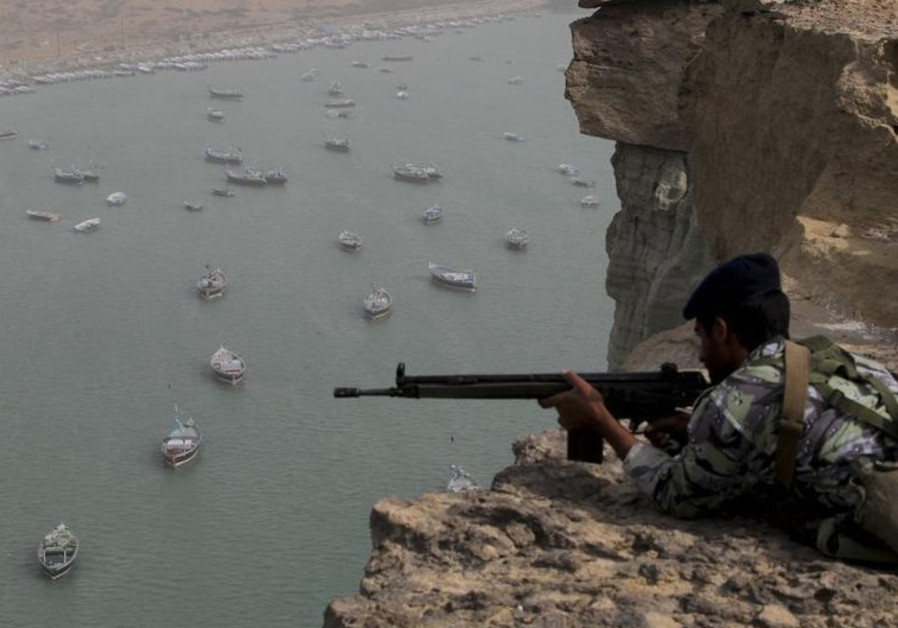
Iranian military personnel participate in war games in an unknown location near the Strait of Hormuz

The US is considering military options should Iran decide to close the strait of Hormuz, a vital shipping route for oil produced in the Middle East, reported Maariv on Saturday.

Located between the Persian Gulf and the Gulf of Oman, it is the only sea passage from the Persian Gulf to the open sea, with roughly one fifth of the petroleum on the planet passing through it.

US Secretary of Defense James N. Mattis said at a July 27 press conference at the Pentagon that ” Iran has threatened to close the Strait of Hormuz,” adding that in the past this lead dozens of nations to “put their naval forces in for exercises,” which lead the Iranians to not follow through on their plan.

Meanwhile, US President Donald Trump is pushing ahead with a bid to create a new security and political alliance with six Gulf Arab states, Egypt and Jordan. This alliance, dubbed “Arab NATO” was suggested by the Saudis last year when Trump visited Saudi Arabia

The administration’s hope is that the effort, tentatively known as the Middle East Strategic Alliance (MESA), might be discussed at a summit provisionally scheduled for Washington on Oct. 12-13, several sources said.

Should the US strike against Iran, Australia and the UK are reported to play a major role in the operation, ABC news reported on July 27.

The aid provided by Australia is expected to be mostly providing intelligence and information as Pine Gap joint defense facility in the Northern Territory is a key site in the operation of US spy satellites.

Australian Prime Minister Malcolm Turnbull denied having any knowledge on an upcoming US military strike or the US leader discussing such notion with him.

US working to set up ‘Arab NATO’ as bulwark against Iran

July 28, 2018

Source: US working to set up ‘Arab NATO’ as bulwark against Iran | The Times of Israel

National Security Council says proposed Middle East Strategic Alliance would ‘bring stability to the Middle East,’ thwart ‘Iranian aggression’

US President Donald Trump, Saudi Arabia's King Salman bin Abdulaziz al-Saud, Jordan's King Abdullah II, Egyptian President Abdel Fattah al-Sissi and other officials pose for a group photo during the Arabic Islamic American Summit at the King Abdulaziz Conference Center in Riyadh on May 21, 2017. (AFP/Mandel Ngan)

US President Donald Trump, Saudi Arabia’s King Salman bin Abdulaziz al-Saud, Jordan’s King Abdullah II, Egyptian President Abdel Fattah al-Sissi and other officials pose for a group photo during the Arabic Islamic American Summit at the King Abdulaziz Conference Center in Riyadh on May 21, 2017. (AFP/Mandel Ngan)

The United States is reportedly working to set up an “Arab NATO” security alliance of friendly Middle East states as part of its efforts to thwart Iran’s military expansionism in the region.

The alliance — which would include Egypt, Jordan and the six Gulf Cooperation Council states — is aimed at fostering further military cooperation between the countries, such as on missile defense and counter-terrorism, Reuters reported Friday.

The proposed pact, known as the Middle East Strategic Alliance, would also be aimed at deepening economic and diplomatic ties, US and Arab sources quoted by the news agency said.

“MESA will serve as a bulwark against Iranian aggression, terrorism, extremism, and will bring stability to the Middle East,” a spokesperson for the US National Security Council said.

According to Reuters, the potential alliance may be discussed at a summit in Washington in October, though the NSC spokesperson would not confirm US President Donald Trump will host such a meeting then.

The report said the idea was first brought up by Saudi Arabia ahead of Trump’s visit to Riyadh last year but did not go anywhere.

US President Donald Trump shows a chart highlighting arms sales to Saudi Arabia during a meeting with Saudi Crown Prince Mohammed bin Salman in the Oval Office of the White House, March 20, 2018, in Washington. (AP Photo/Evan Vucci)

An unnamed Iranian official said the security pact would only further fuel the divide between Iran and US-allied states in the region.

“Under the pretext of securing stability in the Middle East, Americans and their regional allies are fomenting tension in the region,” the official told Reuters.

While the ongoing diplomatic spat between Qatar and its neighbors Saudi Arabia and the United Arab Emirates could be a hindrance to the alliance, an official quoted in the report said the US has received assurances from both Riyadh and Abu Dhabi that it would not be an issue.

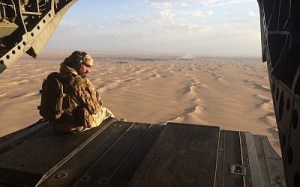
An Emirati gunner watches for enemy fire from the rear gate of a United Arab Emirates Chinook military helicopter flying over Yemen. (AP Photo/Adam Schreck, File)

Saudi Arabia and the UAE have adopted a more confrontational approach to Shiite rival Iran in recent years, accusing it of supporting terror groups and fueling turmoil in regional countries.

The two Sunni states head a military coalition in Yemen aimed at toppling the Iran-backed Houthi rebel group and returning the internationally recognized government to power.

Under Trump, the US has adopted a much more hawkish stance toward Tehran than under his predecessor Barack Obama, culminating in his May decision to quit the 2015 deal aimed at curbing Iran’s nuclear program and reimpose punishing sanctions.

Though it was not immediately clear how the military alliance would seek to counter Iran, a CNN report on Friday said the US is weighing military action by its regional allies such as Saudi Arabia to keep open key oil shipping routes in the Middle East amid Iranian threats against the waterways.

The CNN report came just days after Iranian-backed Houthi rebels in Yemen attacked a pair of Saudi oil tankers traveling through the Bab al-Mandab Strait leading to the Red Sea. The waterway is one of the world’s busiest shipping routes.

Iranian leaders also recently threatened to shutter the Strait of Hormuz, through which one-third of the world’s oil supply passes as it travels from the Persian Gulf.

The US in turn vowed to keep the Strait of Hormuz open and not allow Iran to jeopardize world oil supplies.

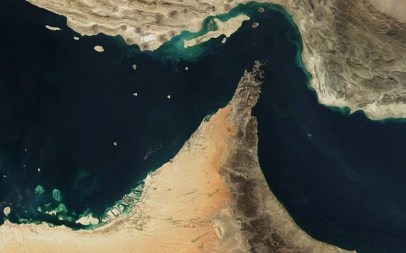
Satellite view of the Strait of Hormuz (photo credit: NASA/Public domain)

Satellite view of the Strait of Hormuz (photo credit: NASA/Public domain)

Earlier this week, US President Donald Trump issued an intense warning against Tehran, threatening that it could “suffer consequences the likes of which few throughout history have ever seen before.”

The response came after Iranian President Hassan Rouhani earlier Sunday issued his own warning to the US leader not to “play with the lion’s tail,” saying that conflict with Iran would be the “mother of all wars.”

However, Trump tempered the threat Tuesday, saying “we’re ready to make a real deal” with Iran.

Agencies contributed to this report.

US said weighing military action amid Iranian threats to Middle East waterways

July 28, 2018

Report says US looking into options to keep key oil routes open in wake of attack by Iran-backed rebels on Saudi tankers in Red Sea

Today, 11:14 am

https://www.timesofisrael.com/us-said-weighing-military-action-amid-iranian-threats-to-middle-east-waterways/

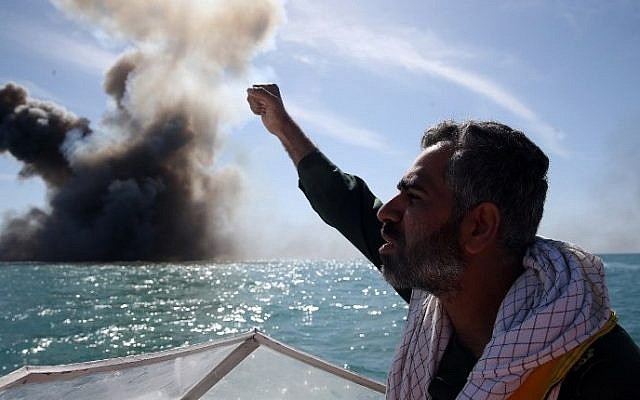
A member of Iran’s elite Revolutionary Guards chants slogans after attacking a naval vessel during a military drill in the Strait of Hormuz in southern Iran, February 25, 2015. (Hamed Jafarnejad/AFP/Fars News)

The United States is reportedly weighing possible military action to keep open key oil shipping routes in the Middle East amid Iranian threats against the waterways.

However, a CNN report Friday citing Trump administration officials said that any military action would be taken by US regional allies such as Saudi Arabia, and not American troops.

The officials said that though the US maintains a naval presence in the Middle East, any military operation would need a long-term commitment from other countries.

The report came just days after Iranian-backed Houthi rebels in Yemen attacked a pair of Saudi oil tankers traveling through the Bab al-Mandab Strait leading to the Red Sea. The waterway is one of the world’s busiest shipping routes.

Iranian leaders have also recently threatened to shutter the Strait of Hormuz, through which one-third of the world’s oil supply passes as it travels from the Persian Gulf.

In this file photo taken on February 8, 2017, a member of the pro-government forces raises his weapon in the port of the western Yemeni coastal town of Mokha as the Saudi-backed troops advance in a bid to try to drive the Shiite Houthi rebels away from the Red Sea coast. (AFP Photo/Saleh al-Obeidi)

Following the attack by the Houthis on the Saudi tankers, each with a capacity to haul 2 million barrels of oil, Saudi Arabia temporarily halted oil shipments through Bab al-Mandab.

State-run Aramco said the decision to suspend shipments was “in the interest of the safety of ships and their crews and to avoid the risk of oil spill.”

A Saudi-led coalition fighting in Yemen has repeatedly warned that Houthi rebels threaten vessels in the Red Sea — a key shipping route for world trade — through their control of the strategic Hodeida port.

Pro-government forces backed by a coalition including Saudi Arabia and the United Arab Emirates have paused their offensive on Hodeida port in a bid they say is to give UN-led peace efforts a chance.

Saudi Arabia intervened in Yemen in 2015 at the head of a military coalition backing the country’s government after Houthi rebels ousted it from the capital Sanaa the previous year.

Earlier this month, the US vowed to keep open the Strait of Hormuz after Iranian generals backed President Hassan Rouhani’s threat to jeopardize world oil supplies if Iranian oil exports are blocked under US sanctions.

Iran’s president Hassan Rouhani gives a speech in the city of Tabriz in the northwestern East-Azerbaijan province on April 25, 2018, (Atta Kenare/AFP)

“It would be meaningless that Iran cannot export its oil while others in the region can. Do this if you can and see the consequences,” Rouhani said at the time.

Since the US pulled out of the nuclear deal with Iran, known officially as the Joint Comprehensive Plan of Action, Washington has been pushing allies to cut oil imports from the Islamic Republic altogether by November.

The Trump administration has vowed to stick with its pressure campaign against Iran, affirming its strategy to change Tehran’s behavior by gutting its oil revenue and isolating the country globally.

Iran is OPEC’s second-largest crude exporter with more than 2 million barrels a day.

Earlier this week, US President Donald Trump issued an intense warning against Tehran, threatening that it could “suffer consequences the likes of which few throughout history have ever seen before.”

The response came after Iranian President Hassan Rouhani earlier Sunday issued his own warning to the US leader not to “play with the lion’s tail,” saying that conflict with Iran would be the “mother of all wars.”

However, Trump tempered the threat Tuesday, saying “we’re ready to make a real deal” with Iran.

Agencies contributed to this report.

Palestinian politicians come out against PA’s boycott of US

July 28, 2018
Forner PA minister Nabeel Amro says ‘boycott on the entire US administration is not helpful,’ while political analyst Hanna Issa believes the US alone holds the keys to resolving the Israeli-Palestinian conflict.
https://www.ynetnews.com/articles/0,7340,L-5318226,00.html
Some leading Palestinian politicians don’t believe that Palestinian President Mahmoud Abbas’ boycott on American officials—imposed in the wake of Washington’s recognition in December of Jerusalem as Israel’s capital—is proving beneficial to the Palestinian cause.

In the current diplomatic climate, officials warned, Europe cannot replace the US as an intermediary for peace talks with Israel, because many European capitals are reluctant to assume America’s traditional role as primary peace broker between the two sides. European leaders are also wary of ignoring the Trump administration’s demand to not abide by the PA’s push to form a new, multilateral mechanism for negotiations.Nabeel Amro, a former Palestinian minister of information, explained to The Media Line that “the Palestinians want Europeans to be more involved, but we can’t force them.”

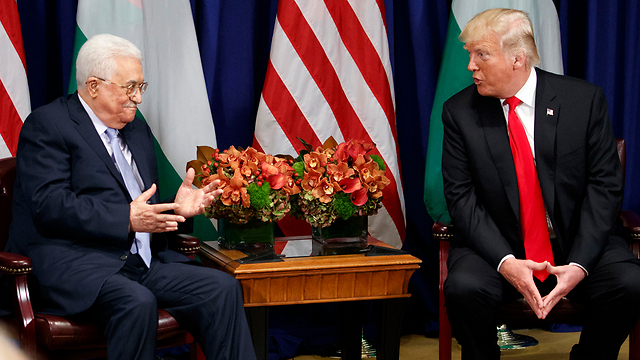
Palestinian President Abbas meets with US President Trump (Photo: AP)

Palestinian President Abbas meets with US President Trump (Photo: AP)

While he believes that “it is right to reject the (prospective) American (peace) plan as it violates Palestinian rights, a boycott on the entire US administration is not helpful. Our relationship with the US should be about dialogue, not boycotts.”

Whereas, Amro supports the PA’s rejection of the White House’s decision to relocate the American Embassy to Jerusalem, he stressed that “there is no need to boycott the whole country. Diplomacy requires activity and movement at all levels. The US is still supporting the PA in matters of security. Why do we accept security cooperation, but not the political collaboration?”

Amro concluded by noting that the US and Russia, for example, “have been going through political tensions for years, but still officials from both nations continue to meet and talk.”
Hanna Issa, a Palestinian political analyst, believes that the US alone holds the keys to resolving the Israeli-Palestinian conflict. “America is a great country and most of world’s governments have mutual interests with it,” he told The Media Line. “Therefore, boycotting (Washington) will not benefit the Palestinians.”

Issa highlighted that the PA does not even yet know the exact details of the White House’s plan, as it has not been published. Therefore, the PA’s rejection of the proposal out-of-hand is, in his estimation, premature and counter-productive.

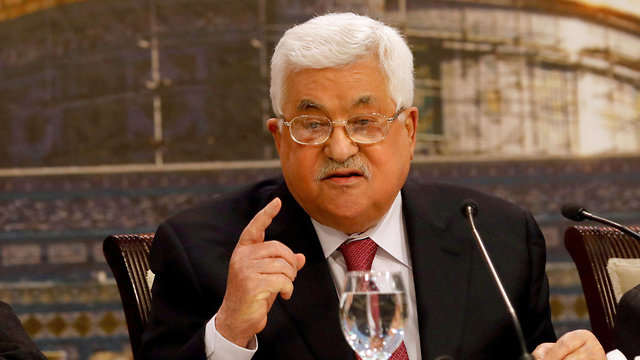
Palestinian President Abbas (Photo: Reuters)

Palestinian President Abbas (Photo: Reuters)

Nabil Shaath, a foreign affairs adviser to Abbas, disagrees with these assessments. “We are not seeking to replace the US with the European Union,” he conveyed to The Media Line.

“Abbas was clear in his speeches that we want multilateral negotiations involving European countries, Russia and China. At the same time, we refuse the US monopoly on talks and the contempt of the Trump administration for the Palestinian side.”

In this respect, Shaath made explicit that the Palestinians will not tolerate what they perceive as President Donald Trump’s unwavering support for Israel despite its “many violations of international law, its occupation of Palestinian territories, settlement building and refusal to accept the Palestinian right of return.”

Shaath nevertheless rejected the claim that Ramallah’s positions amount to a boycott on the the American administration. Rather, he qualified, “we are boycotting political dialogue with the US over the so-called ‘deal of the century.’ We still speak with the US Consulate in Jerusalem on daily basis and we still have our representative office in Washington.”

To this end, the PA repeatedly has reiterated an unwillingness to engage with Trump’s peace envoys, including senior adviser Jared Kushner, US Special Representative for International Negotiations Jason Greenblatt and US Ambassador to Israel David Friedman—who, together, Shaath described as a “Zionist, extremist team.”

Last weekend, the American trio penned an op-ed in The Washington Post calling on Hamas to rejects its violent tactics and refusal to accept Israel’s right to exist. The three envoys also called on the Palestinian people to find a way out of the “hopeless treadmill” of “destruction, violence and human misery.”

“The world is moving forward, but bad choices are causing Palestinians to fall further and further behind,” the op-ed read.

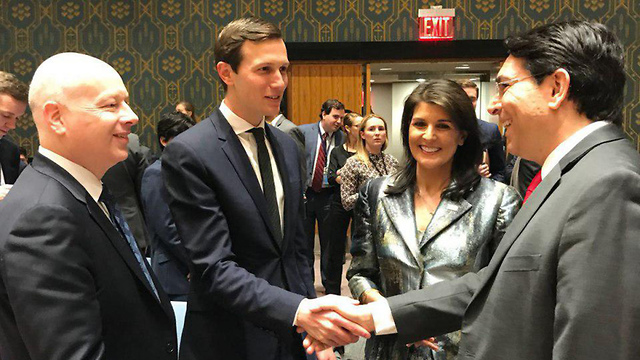
Members of Trump's peace team, Jason Greenblatt and Jared Kushner, with US Ambassador to the UN Nikki Haley and Israeli Ambassador to the UN Danny Danon

Members of Trump’s peace team, Jason Greenblatt and Jared Kushner, with US Ambassador to the UN Nikki Haley and Israeli Ambassador to the UN Danny Danon

Responding to the article, Abd al-Lateef Qanou, a Hamas spokesman in Gaza, told The Media Line that “the US administration is completely biased in Israel’s favor and doesn’t meet our peoples’ hopes and ambitions.

“It takes the side of the occupation and is a partner in the killing of Palestinians. We do not rely on any American efforts in finding a solution to the conflict.”

Article written by Dima Abumaria

Reprinted with permission from The Media Line

I was thinking !

July 28, 2018

H/T for  and a big head bow from me .

I was thinking; If Liberals don’t believe in biological gender then why did they march for women’s rights?

I was thinking; If women do the same job for less money, why do companies hire men to do the same job for more money?

I was thinking; Since only 11 million people have Obama-Care, how will 24 million people die if it is repealed? Will an additional 13 million people be randomly shot?

I was thinking; We should stop calling them all ‘Entitlements’. Welfare, Food Stamps, WIC, ad nausea are not Entitlements. They are taxpayer-funded handouts and shouldn’t be called Entitlements at all. But, Social Security and Veterans Benefits are Entitlements because the people receiving them are entitled to them. They were earned and paid for by the recipients.

I was thinking; If you rob a bank in a Sanctuary City, is it illegal or is it just an Undocumented Withdrawal?

I was thinking; After the London ‘Lone Wolf’ terrorist attack, government officials arrested at least eight other ‘Lone Wolves’ who had conspired with the original ‘Lone Wolf’ in planning the ‘Lone Wolf’ attack. Why do they tell us even though all involved are Muslims, you can be assured that the ‘Lone Wolf’ attack has nothing at all to do with Islam, just like the other 1,000-plus ‘Lone Wolf’ attacks by Muslims, are completely unassociated with Islam?

I was thinking; Why is each ISIS attack now a reaction to Trump policies, but all ISIS attacks during Obama’s term were due to Climate Change and a plea for jobs?

I was thinking; If Muslims want to run away from a Muslim country, does that mean they are Islamophobic?

I was thinking; If Democrats don’t want foreigners involved in our elections, why do they think it’s all right for illegals to vote?

I was thinking; Is the DNC is mad at Russia because it ‘thinks’ they are trying to manipulate our elections, or because Russia is exposing that the DNC is manipulating our elections?

I was thinking; How did the Russians get Debbie Wasserman Schultz and the DNC to steal the Primary from Bernie Sanders? How did Russia get Donna Brazile to leak debate questions to Hillary Clinton in advance of the debates?

I was thinking; Why is it that Democrats think Super delegates are fine, but they have a problem with the Electoral College?

I was thinking; If Donald Trump deleted all of his emails, wiped his server with Bleachbit and destroyed all of his phones with a hammer, would the Mainstream Media suddenly lose all interest in the story and declare him innocent?

I was thinking; If Hillary’s speeches cost $250,000 an hour, how come no one shows up to her free speeches?

I was thinking; If you don’t want the FBI involved in elections, don’t nominate someone who’s being investigated by the FBI.

Congress Seeks Major Downsizing of U.N. Palestinian Refugee Agency

July 28, 2018

New bill would cut U.S. funding to UNRWA, redefine Palestinian refugees

UNRWA staff take part in a protest in front of the agency's headquarters in Gaza City

UNRWA staff take part in a protest in front of the agency’s headquarters in Gaza City / Getty Images

BY:

Congress Seeks Major Downsizing of U.N. Palestinian Refugee Agency

Congress is considering new legislation that would cut U.S. contributions to a key United Nations agency responsible for Palestinian refugees and change the official definition of a refugee in a way that could strip such status for millions of Palestinians, according to new legislation.

Legislation introduced by Rep. Doug Lamborn (R., Colo.), a member of the House Armed Services Committee, seeks to redefine how Palestinian refugees are viewed by the international community, reducing millions in U.S. aid dollars to the U.N. Relief Works Agency, or UNRWA, which currently provides resources to some 5.3 million refugees.

The Trump administration significantly reduced U.S. funding to UNRWA earlier this year in a bid to reform the embattled agency, which has long faced accusations of anti-Israel bias and been ensnared in scandals regarding its material support to the Hamas terror group.

Lamborn’s legislation, which would scale back UNRWA’s mission, comes on the heels of a congressional effort to compel the State Department to release a long classified report that is believed to show the number of actual Palestinian refugees is far few from the 5.3 million. Sources familiar with the report’s contents say the actual number of refugees is closer to 20 or 30,000 and that U.S. officials have over classified these findings in order to prevent public disclosure that could cripple UNRWA.

America has been UNRWA’s largest financial donor since its inception in 1949. Since that time, the agency has faced multiple scandals and has been plagued by accusations it harbors an anti-Israel bias and disseminates such materials in its taxpayer-funded schools in the region.

Lamborn, who also has been working to ensure the State Department release the classified refugee report, told the Washington Free Beacon that readjusting the official definition of a Palestinian refugee could change the calculus in the long-stalled peace process, a major sticking point of which has been the so-called right of return to Israel for Palestinian refugees. An influx of millions of refugees would erase Israel’s Jewish majority.

“It’s critical that we return UNRWA to its original and intended framework. UNRWA’s inflated refugee count is intended to increase the number of Palestinians that would receive the so-called right of return. U.S. funds should only go to UNRWA to the extent that they carry out their original mission of resettling refugees,” Lamborn said.

“Unfortunately, UNRWA has become another anti-Semitic and anti-American agency at the United Nations. It is time for the United States to address UNRWA’s twisted definition of a refugee,” Lamborn said. “This is the first step towards peace in the region.”

The legislation notes that in the 1950s, UNRWA altered its refugee requirements, enabling scores of Palestinians previously ineligible for refugee status to take advantage of the agency.

“This change significantly inflated the number of purported refugees and subsequently the number of individuals who are eligible to receive UNRWA benefits,” the bill notes.

“This classification process is inconsistent with how all other refugees in the world are classified, including the definition used by the United Nations High Commission on Refugees (UNHCR) and the laws concerning refugees in the United States,” the bill states. “Because of UNRWA’s unique definition of a refugee, the number of Palestinian refugees has grown exponentially over the years, from approximately 600,000 in 1949 to 5,300,000 today.”

The issue is further complicated by multiple scandals in which UNRWA has been accused of anti-Israel bias and of working with Hamas terrorists.

Hamas missiles, used to attack Jewish citizens, have been found stored in UNRWA facilities multiple times in the past years, including in UNRWA-run schools.

If approved, the new legislation would limit the amount of U.S. taxpayer dollars allocated to UNRWA until it moves to resettle only original Palestinian refugees, as laid out in the law.

Opinion :Chaos on the borders: Israel has lost its deterrence

July 28, 2018
Analysis: The Israeli government and IDF’s policy against Hamas in Gaza has reached a dead end, the Iranian entrenchment in Syria is being disrupted but not stopped, and very little is left of Israel’s deterrence. The last week’s events remind us that Israel will soon have to make dramatic decisions on both fronts. Meanwhile, it’s at a loss.
First published: 07.27.18, 23:34
https://www.ynetnews.com/articles/0,7340,L-5318196,00.html
The government and the IDF’s deterrence and containment strategy has reached a dead end. In the south, on the Gaza border, Israel hasn’t managed to achieve a stable calm and provide the western Negev residents with a sense of security in almost four months—in fact, since March 30, the day the protests by the border fence began. In the north, Israel is unable to stop Iranian military entrenchment in Syria, just slow it down.The Iranians and their proxies—despite the blows they suffer several times a week—continue their efforts to turn Syria into an active separate front against Israel, from which precise surface-to-surface and surface-to-sea missiles will be launched and where anti-aircraft systems will be stationed.

All of these will reduce the IAF’s freedom of operations and make it difficult for Israel to deal with the thousands of missiles and rockets Hezbollah has accumulated in Lebanon, and that the Iranians are progressively accumulating in Syria. The intense diplomatic dialogue Israel is having with the Russians, and the “kinetic dialogue” (the exchange of fire) with the Syrian army, only make up a partial solution and do not prevent spillover fire.
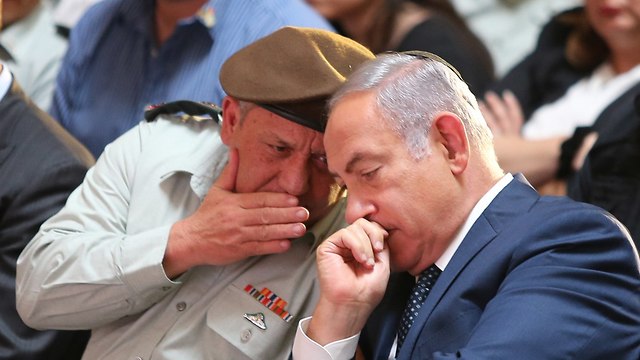
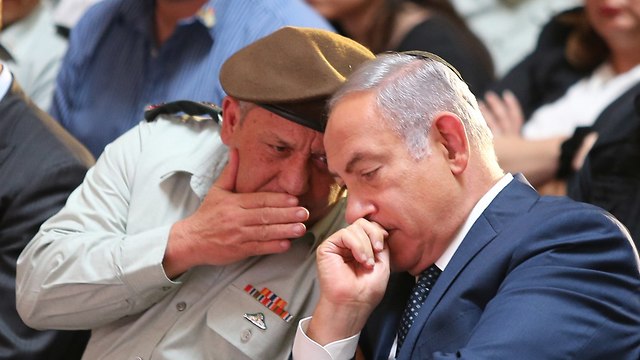
IDF chief Eisenkot and Prime Minister Netanyahu (Photo: Alex Kolomoisky)

IDF chief Eisenkot and Prime Minister Netanyahu (Photo: Alex Kolomoisky)
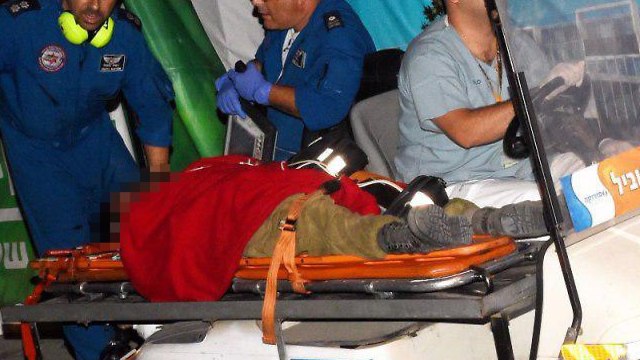
The Syrian Sukhoi jet that was shot down this week by the Air Force deters the regime of Syrian President Bashar Assad, but not the Iranians. The events that followed over the next 24 hours—the shooting of rockets from Syria that landed in the Kinneret and the Palestinian sniper fire that wounded a Givati officer on the Gaza border—do a good job of demonstrating the severity of the problem, which can be defined by one word: Chaos. Things have gotten out of hand.Those who shot and hit the IDF officer on the Gaza border were likely members of what the army refers to as an “errant” Palestinian group. Normally this means extremist Jihadist-Salafist organizations trying to undermine Hamas’s rule in the strip. But this time there’s reason to believe that much like last Friday—when Staff Sgt. Aviv Levi was shot to death—this was a member of an extremist faction within Hamas’s military wing, who made a law unto themselves.
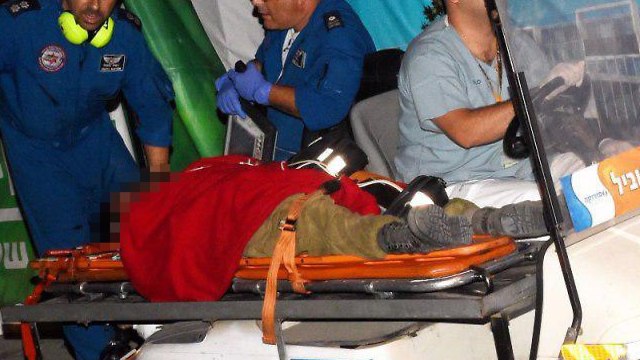
The IDF officer wounded by sniper fire this week (Photo: Haim Horenstein)

The IDF officer wounded by sniper fire this week (Photo: Haim Horenstein)

What’s interesting is that both the errant Salafists and the extremists from within Hamas’s ranks are trying, using the attacks on the border, to drag the IDF into another large-scale round of fighting inside the Gaza Strip. The errants hope this would bring the end of Hamas, while the Hamas extremists believe that if the IDF enters the strip, they would be able to cause great losses to Israel and kidnap soldiers to free prisoners.

That must have been the goal of the attack, which started with children being sent to protest by the border fence. When an IDF force showed up, out in the open and exposed, to disperse them, the sniper, who was ready nearby, opened fire at the troops. The IDF will have to reexamine its methods of operation on the border fence, and ensure its soldiers carry out their missions from behind cover.

But this won’t solve the problem. There’s no calm in the south because Hamas is not interested in calm until it achieves its goals without having to make any significant concessions. Hamas wants money from the Palestinian Authority, electricity and water from Israel, and an open Rafah crossing from Egypt. These are part of the demands it is making.

Israel is willing to provide Hamas with humanitarian aid on the condition it stops the arson terrorism, and even rehabilitate the strip if it returns the bodies of the MIA soldiers from Operation Protective Edge and the two Israeli civilians it is holding. But Hamas is unwilling, which is why it allows the errant factions to operate on a low scale, while at the same time leading incendiary kite and balloon squads. In this way, it maintains the tensions along the border as well as Israel, Egypt and the UN’s need to meet its demands.

The Middle East’s game of pool

The economic carrot and military stick system Israel is using on Hamas recently has gone bankrupt, as the residents of the western Negev can attest while Code Red rocket alert sirens send them running to shelters almost every other night. The IDF’s retaliatory strikes, even though they very much hurt Hamas, not only don’t cause the terror group to stop the incendiary balloons harassment, but they also don’t cause Hamas to stop the rockets and gunfire—whether it’s done directly by the Gaza rulers or by the errant factions.

Stopping the flow of trucks through the Kerem Shalom crossing is as useful as putting a milk bucket under a bull; and the Egyptians can’t influence Hamas either, let alone stop it. The Egyptian and UN envoy Mladenov’s efforts to achieve calm fail again and again. It’s time we realize we can’t expect them to restore the quiet. Every time the IDF delivers a blow to Hamas’s military infrastructure, the Hamasniks rush to the head of Egyptian intelligence and to Mladenov, who restrain Israel for them. The opposite effect: the mediators are unable to bring an end to the Gazans’ hostile attacks, they can only restrain the Israeli response just as it begins to hurt Hamas and harm it. How convenient this arrangement is to an organization that is trying to keep the flames low to achieve its political and economic goals.
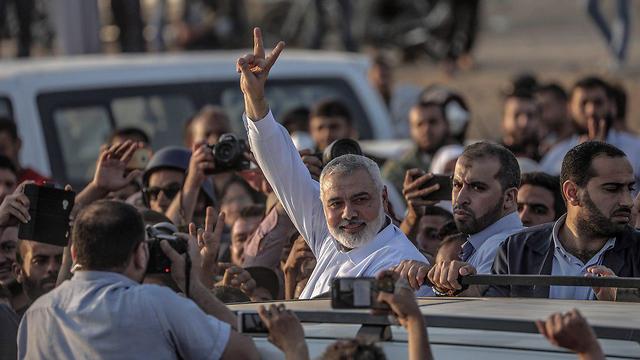
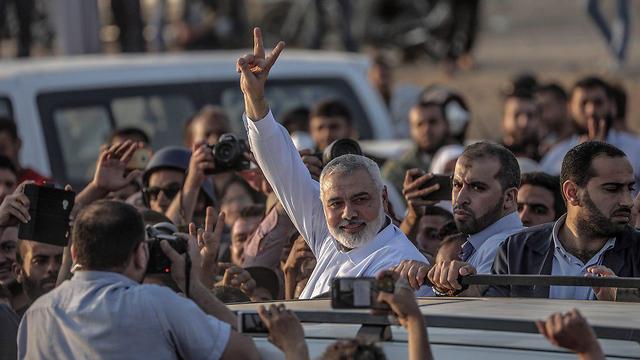
Hamas leader Haniyeh on the Gaza border (Photo: EPA)

Hamas leader Haniyeh on the Gaza border (Photo: EPA)

This trick works not only in the south, but in the north as well. The Khalid ibn al-Walid Army—which belongs to ISIS and controls the enclave where the borders of Jordan, Syria and Israel meet—is currently under a massive attack by the Assad army and the Shiite militias fighting alongside it. The Syrian ISIS realizes it is about to lose its stronghold to the regime army, just as it did in Daraa and Quneitra, and so it took a measure this week that we know from the Gazan scene—it launched grad rockets at the Kinneret, so Israel would respond by shooting at the regime army, which is attacking ISIS. The Syrian ISIS men on the triple-border area hoped the Israeli response to the rockets they fired as a provocation would stop Assad’s men. A perfect imitation of what the errant groups in Gaza are trying to do. But unlike what’s happening in Gaza, there are quite a few ISIS targets on the IAF and Artillery Corps’ lists; which is why Israeli aircraft attacked the mobile BM21 launcher that fired the grad rockets at Israel.

Just like in a game a pool—I hit the Israeli ball so it in turn hits the Syrian regime’s ball, which is about to hit me.
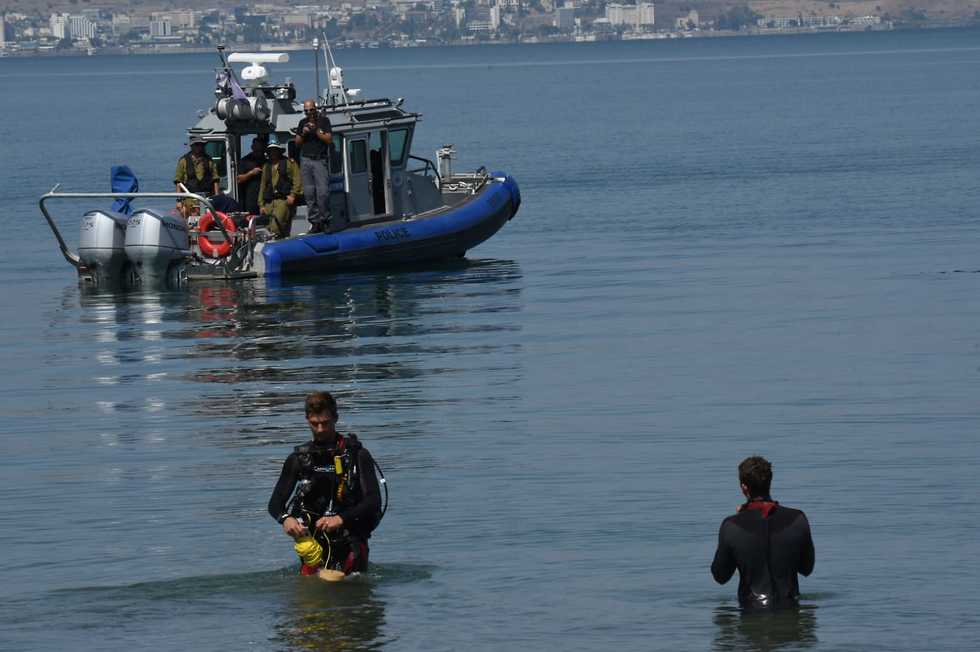
Searching for ISIS rockets shrapnel in the Kinneret (Photo: Avihu Shapira)

Searching for ISIS rockets shrapnel in the Kinneret (Photo: Avihu Shapira)

If it hadn’t been for the operations that do take place, the situation in the north could’ve been much worse. The IDF manages to disrupt and slow down the Iranian entrenchment, and the violations of sovereignty are limited and do not include terror attacks on the border. Israel is also successful in making the Russians interested in having a dialogue with us.

And yet, all of this is part of a chaotic reality, which contains a lot of details, but the bottom line is all that matters: the IDF and the Israeli government are no longer successful in creating effective deterrence—not in the north and not in the south. The deterrence may not be completely gone, but it has been seriously eroded, in a way that puts the State of Israel in a hopeless situation, with a continuous threat to its sovereignty along its borders, to the safety of its residents who live in these border areas, and to its daily routine.

So what can be done in such a situation? In the south, the dilemma is much more difficult and complex. The IDF can do more than what it has already done by continuing to destroy Hamas’s infrastructure and even by hitting its leaders (assassination), but such moves will almost necessarily lead to a long military operations inside the Gaza Strip. At the end of such an operation, we will be facing dilemmas just as complex: bring down the Hamas regime and stay in the strip until a different regime comes in its stead, or pull out of the strip after destroying most of Hamas’s military capabilities and returning more or less to the situation we were in before the operation began. Neither option assures long-term quiet for the residents of south Israel.
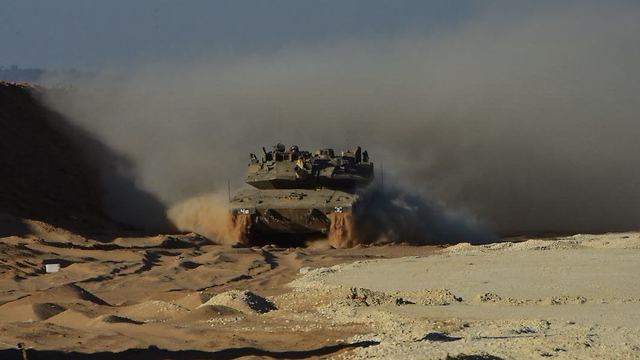
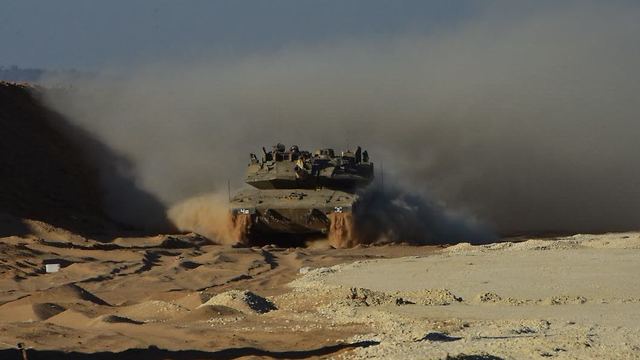
IDF tank on the Gaza border (Photo: IDF Spokesman's Office)

IDF tank on the Gaza border (Photo: IDF Spokesman’s Office)

On the other side is a civilian-economic arrangement that would calm the situation in the strip and Hamas. But those proposing such large-scale economic rehabilitation plans still can’t demonstrate just how these plans will be carried out in practice.

A combined solution is required—both military and civilian—in conjunction with Arab Gulf nations, which will allow the rehabilitation of the strip in cooperation with Hamas or—if a decision is made for Israel to go into the strip—without Hamas.

In the north, the dilemma is much simpler. Unlike the Egyptians, who have proven to be unable to influence Hamas and restrain it, the Russians in Syria can actually deliver the goods. They haven’t done it yet because they still need the Iranians to fight the last stronghold of the rebels in the Idlib Governorate in northern Syria. If and when Assad completes his takeover of Idlib, the time will come when the Russians could put into action the “big political agreement” they’re planning in Syria, as part of which the foreign forces will have to leave.

Right now, there is no use in removing the Iranians to within 100 or even 200 kilometers from Israel. In the age of missiles, rockets and cyber attacks, several hundred kilometers are meaningless. By being in our area, it’s as if the Iranians are right on our border. That is why Israel needs to continue acting militarily and make it clear to the Russians that there will be no agreement—and they won’t be able to reap the benefits of their interference in Syria—until the Iranians and their proxies leave Syria completely.

At the moment it appears the Israeli government and the IDF are at a loss in light of the serious erosion of the deterrence and of the ability to maintain security along the borders in the north and south. The immediate action needed right now to significantly reinforce the active anti-aircraft and anti-missile defense array—including the acquisition of thousands of interceptors and dozens of launchers, and of course fortifying structures all across the country. Such steps, in and of themselves, could immediately boost the deterrence.