Israel’s 50th anniversary of the “miracle war.”
Israel’s 50th anniversary of the “miracle war.”
Source: Hamas’ new equation: Rockets in response to every IDF strike

Hamas operatives began firing rockets on Tuesday night after the IAF bombed a Hamas military facility in Rafah in response to incendiary kites dispatched from the strip, which sparked major fires in Gaza vicinity fields. The operatives thereby proved that a similar incident earlier this week, in which three rockets were fired at Israel, was intentional rather than random.
The targets attacked by Israel on Tuesday night included Hamas posts, warehouses, offices and an underground training facility for the organization’s operatives.
Defense establishment officials believe that Hamas is operating under the perception that Israel isn’t interested in a war in the south right now, four years after Operation Protective Edge. As a result, the organization is allowing itself to adopt what it considers an unprecedented and bold retaliation policy.
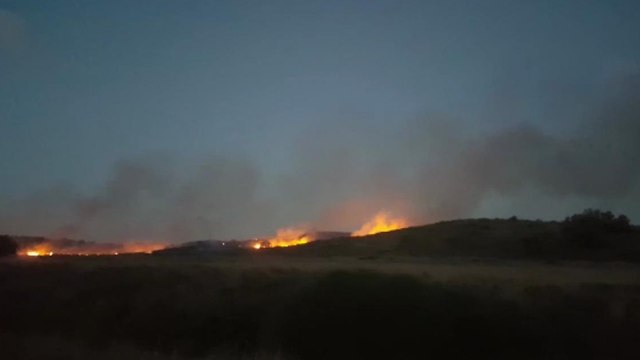
Nevertheless, the Hamas rocket fire is still limited to the Gaza vicinity areas and is only carried out at night. Israeli officials believe that Hamas’ desire to change the rules of the game is driven by its frustration in light of its failures in recent months and the measured exacerbation of the Israeli policy against the incendiary kites.
About two weeks ago, the IAF started firing warning shots among kite flyers. In the past few days, it begun attacking empty vehicles of senior members of Hamas’ kite unit, kite-flying infrastructures, and finally Hamas targets as well.
The organization is also frustrated by the fact that the border with Israel wasn’t breached as planned since the beginning of the fence protests in late March, while more than 165 Palestinians—mostly Hamas operatives, according to the IDF—were killed in the clashes and some 100 targets in the strip were attacked by the IAF, affecting the organization’s military power.

Israel has been conveying indirect messages to Hamas that its perception concerning the Israeli policy is wrong, and that the IDF will step up its attacks even at the cost of a deterioration if the current situation continues, despite the political echelon’s desire “not to stop playing by the rules” vis-à-vis Gaza.
“At this time, thereis more pressure from Tel Aviv and Jerusalem residents concerning the fires caused by the incendiary kites than from Gaza vicinity residents,” a security source told Ynet on Tuesday. “We are making a lot of progress in the technological efforts to find a solution to the kite phenomenon, but even in the future there will be no hermetic solution.
“Ministers’ statements that kite flyers must be attacked directly are intended primarily for public opinion purposes and have nothing to do with security. As far as Hamas is concerned, the use of the kite phenomenon is a win-win situation to raise awareness to their issue in the global public opinion.”
God bless Niki Haley….
Haley calls global body ‘a cesspool of political bias’; announces US departure after protracted criticism of its obsessive focus on Israel; US official says move is ‘immediate’
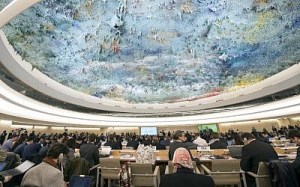
The United States is withdrawing from the UN Human Rights Council, US Ambassador to the UN Nikki Haley said Tuesday, branding the global body a “cesspool of political bias.”
“We take this step because our commitment does not allow us to remain a part of a hypocritical and self-serving organization that makes a mockery of human rights,” she said at a press conference announcing the move.
The council, she added, has a “chronic bias against Israel.”
Haley said that if the council reforms, the United States “would be happy to rejoin.”
Although the US could have remained a non-voting observer on the council, a US official said it was a “complete withdrawal” and that the United States was resigning its seat “effective immediately.” The official wasn’t authorized to comment publicly and insisted on anonymity.
US officials said earlier Tuesday that the administration had concluded that its efforts to promote reform on the council had failed, and that withdrawal was the only step it could take to demonstrate its seriousness. It was not immediately clear if the US would remain a non-voting observer on the council.
US Secretary of State Mike Pompeo, appearing alongside Haley at the State Department, said there was no doubt that the council once had a “noble vision.”
But today we need to be honest,” Pompeo said. “The Human Rights Council is a poor defender of human rights.”
Haley and Pompeo stressed the decision had been made after a long year of efforts to shame the council into reform and to remove member states that themselves commit abuses.
“These reforms were needed in order to make the council a serious advocate for human rights,” Haley said. “For too long, the Human Rights Council has been a protector of human rights abusers, and a cesspool of political bias. Regrettably, it is now clear that our call for reform was not heeded.”
The Geneva-based body was established in 2006 to promote and protect human rights worldwide, but its pronouncements and reports have often infuriated the US — in particular, the council’s relentless focus on Israeli policies toward the Palestinians.
But, as Haley stressed, Washington also believes it comes up short on criticizing even flagrant abuses by US opponents like Venezuela and Cuba.
“Countries have colluded with each other to undermine the current method of selecting members,” Pompeo said. “And the council’s continued and well-documented bias against Israel is unconscionable,” he said.
“Since its creation, the council has adopted more resolutions condemning Israel than against the rest of the world combined,” he noted.
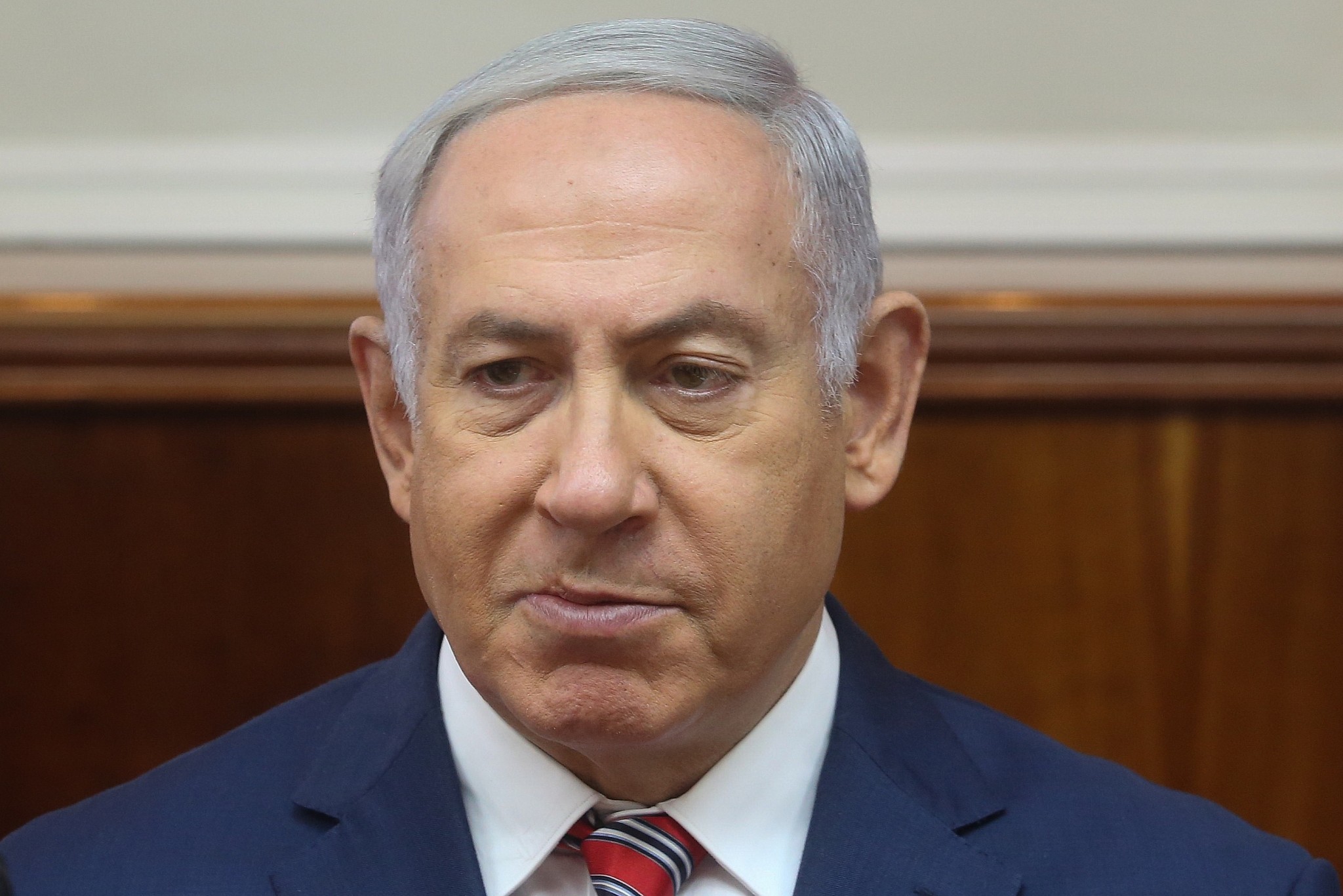
Israel’s Prime Minister Benjamin Netanyahu welcomed the US move, branding the council “a biased, hostile, anti-Israel organization that has betrayed its mission of protecting human rights.”
Haley, who issued a warning a year ago that Washington would make good on its threat to leave the council if reforms were not carried through, used even starker language.
“We take this step because our commitment does not allow us to remain a part of a hypocritical and self-serving organization that makes a mockery of human rights,” she said.
UN Secretary-General Antonio Guterres regretted the US decision, adding: “The UN’s human rights architecture plays a very important role in the promotion and protection of human rights worldwide.”
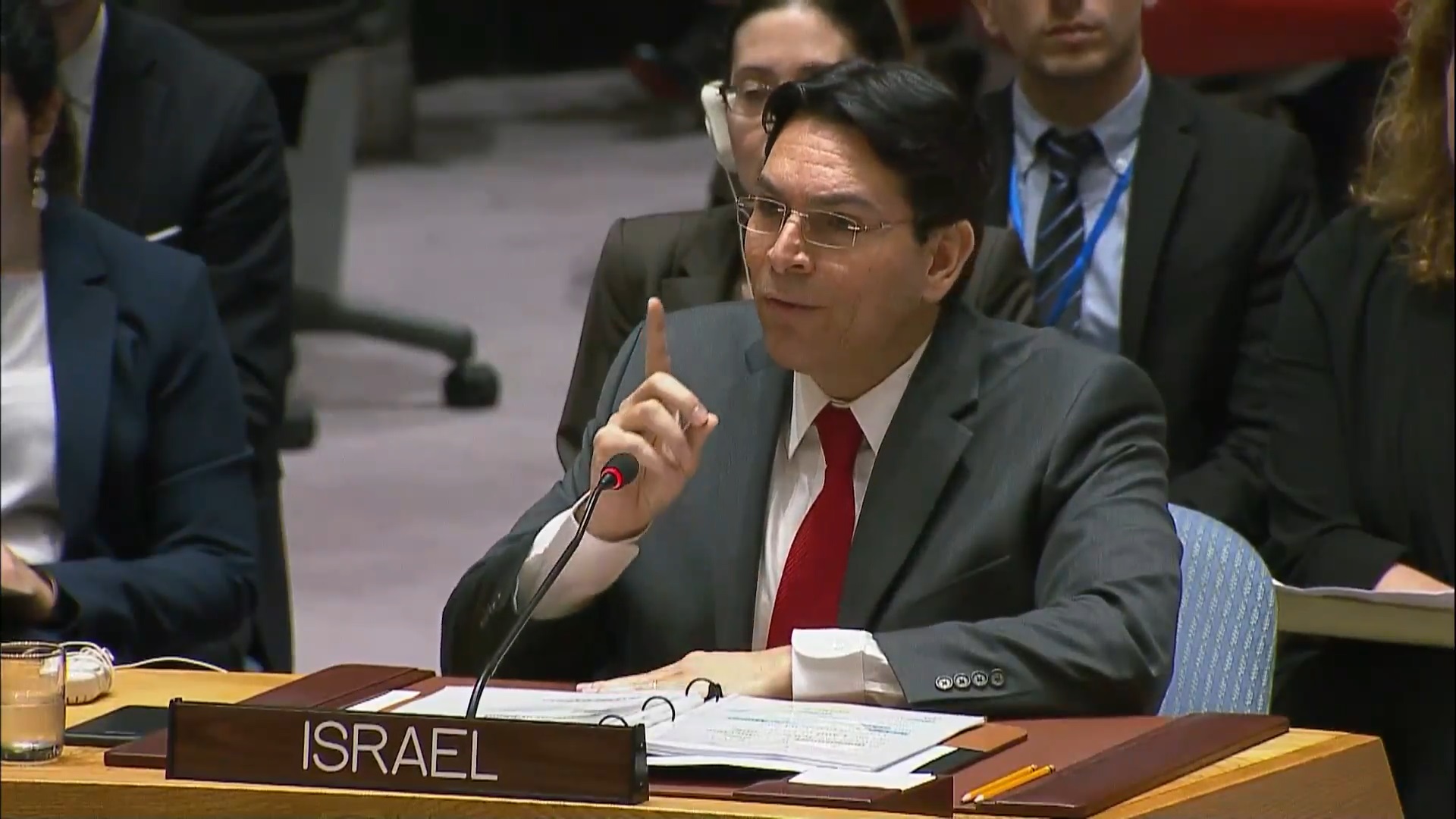
Israel’s Ambassador to the UN Danny Danon welcomed the announcement, saying in a statement that the US “has proven, yet again, its commitment to truth and justice and its unwillingness to allow the blind hatred of Israel in international institutions to stand unchallenged.”
“The Human Rights Council has long been the foe of those who truly care about human rights around the world,” Danon said immediately after Haley spoke. “We thank President Donald Trump, Secretary of State Mike Pompeo and Ambassador Nikki Haley for their leadership, and call on the moral majority at the UN to hold all of its institutions accountable.”
Haley had threatened to withdraw from the council in June 2017 unless it reformed, including by removing its built-in procedural mechanism to bash Israel.
The council’s “relentless, pathological campaign” against a state with a strong human rights record “makes a mockery not of Israel, but of the council itself,” she said at the time during a speech in Geneva, hours before she made her way to Israel for her first visit to the Jewish state.
Haley had listed several conditions for the US remaining in the council, including the need to abolish Agenda Item 7 (“the human rights situation in Palestine and other occupied Arab territories”), which since its adoption in 2007 has singled out Israel for perpetual censure, a measure that no other country faces at the UN body.
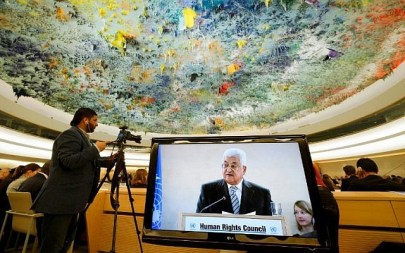
“There is no legitimate human rights reason for this agenda item to exist,” Haley said last year. “It is the central flaw that turns the Human Rights Council from an organization that can be a force for universal good, into an organization that is overwhelmed by a political agenda.”
A full pullout by the US would leave the council without one of its traditional defenders of human rights. In recent months, the United States has participated in attempts to pinpoint rights violations in places like South Sudan, Congo and Cambodia.
Opposition to the decision from human rights advocates was swift. A group of 12 organizations including Save the Children, Freedom House and the United Nations Association – USA said there were “legitimate concerns” about the council’s shortcomings but that none of them warranted a US exit.
“This decision is counterproductive to American national security and foreign policy interests and will make it more difficult to advance human rights priorities and aid victims of abuse around the world,” the organizations said in a joint statement.
Added Kenneth Roth, the executive director of Human Rights Watch: “All Trump seems to care about is defending Israel.”
The announcement came just a day after the UN human rights chief, Zeid Ra’ad al-Hussein, denounced the Trump administration for separating migrant children from their parents.
There are 47 countries in the Human Rights Council, elected by the UN’s General Assembly with a specific number of seats allocated for each region of the globe. Members serve for three-year terms and can serve only two terms in a row.
A key question will be where a US pullout will leave Israel if its biggest and most powerful defender abandons its voting rights or drops out of the council altogether.
Since last year, Haley’s office has pushed the council and its chief not to publish a UN database of companies operating in West Bank settlements, a so-called blacklist that Israel is concerned could drive companies away and cast a further pall over its presence in the Palestinian-claimed West Bank.
Last month, Defense Minister Avigdor Liberman called for Israel and the United States to withdraw from the council over what he termed its “hypocrisy” in criticizing the Jewish state’s Gaza policy.
But Israel has never been a member state of the Human Rights Council, whose members are elected by the UN General Assembly.
“We are cooperating with the council and we have an embassy to the UN institutions in Geneva… but we are not currently members of the council,” Foreign Ministry spokesperson Emmanuel Nahshon said on Tuesday, a few hours before the US announcement.
A US pullout might also be largely symbolic: The United States’ current term on the council ends next year, when it could revert to the observer status held by other countries that are not members. In that situation, the US would be able to speak out on rights abuses, but not to vote.
The United States has opted to stay out of the Human Rights Council before: The administration of president George W. Bush decided against seeking membership when the council was created in 2006. The US joined the body only in 2009 under president Barack Obama.
The expected US announcement was welcomed by Israel’s Deputy Minister for Diplomacy, Michael Oren.
“Amb. Nikki Haley will soon announce America’s withdrawal from the UN Human Rights Council. This is a welcomed response to a body that condemned Israel more than all other countries combined. The US now signals its refusal to lend legitimacy to UN bias against Israel and Jews,” he tweeted earlier on Tuesday,
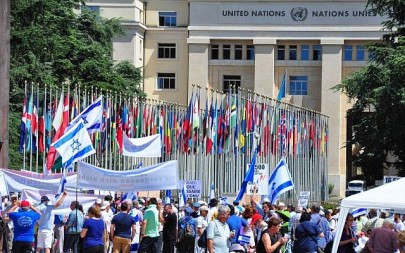
Reaction to the anticipated move from human rights advocates was equally swift.
“The Trump administration’s withdrawal is a sad reflection of its one-dimensional human rights policy: Defending Israeli abuses from criticism takes precedence above all else,” said Kenneth Roth, the executive director of Human Rights Watch.
“All Trump seems to care about is defending Israel,” he said, adding that it would be up to the remaining members to ensure that the council addresses serious abuses.
UN spokesman Stephane Dujarric declined commenting directly, saying: “We will wait to hear the details of that decision before commenting fully.”
But, he added: “What is clear is that the secretary-general is a strong believer in the human rights architecture of the UN and the active participation of all member states in that architecture.”

The withdrawal also follows strong UN criticism of Trump’s policy to separate migrant children from their families at the US-Mexico border, though the Trump administration has not yet explicitly cited that criticism, delivered Monday by UN rights chief Zeid Ra’ad Al-Hussein, as a reason for pulling out.
Speaking of the Trump administration policy, Hussein said, “the thought that any state would seek to deter parents by inflicting such abuse on children is unconscionable.”
Since Trump took office, the United States has quit the UN cultural agency UNESCO, cut UN funding, and announced plans to quit the UN-backed Paris climate agreement.
No injuries reported, but one of the projectiles landed near a kindergarten in the Eshkol regional council.
Dozens of Hamas rockets were fired on Israel from the Gaza Strip late Tuesday night and early Wednesday morning. At least three projectiles landed in Israeli communities causing no injuries, but slight damage to buildings and vehicles in southern Israel.
The IDF spokesperson’s office reported that seven rockets were intercepted by the Iron Dome and three of those fired landed within the Gaza Strip.
Residents of the south got little sleep as warning sirens blared throughout the night. Early Wednesday morning, it was decided that schools would remain open, under increased security protection.
In a second round of IAF activities, eight targets were struck including three Hamas bases.
During a third round of IAF operation, eleven targets were struck in retaliation for the rockets being fired on Israel, including four Hamas bases, the IDF spokesperson reported.


In response to over 45 rockets launched by Hamas towards southern Israeli communities, the IDF targeted military objectives in the Gaza Strip belonging to HamasA shell of a rocket fired from Gaza scars the road in the Eshkol regional council (Courtesy)
In retaliation to Hamas activity, the IAF struck 25 Hamas targets in three separate rounds of retaliatory strikes overnight. Two Hamas security men were lightly hurt in one air strike in the southern Gaza Strip, residents said.
The escalation began after Israeli fighter jets attacked three targets in a Hamas base located in the southern part of the Gaza Strip.
According to Hebrew news site Walla! one of the projectiles landed near a kindergarten in the Eshkol regional council.
The IDF warned that it is ready to use “a variety of tools and means” to respond in an increasing intensity to such acts of terror.
“The message of tit for tat attacks is that the resistance is the one that defines the equation of the conflict and we will not let the enemy isolate our people,” a Hamas spokesman said on Twitter Wednesday after the violence had died down.
Minister for Regional Cooperation Tzachi Hanegbi stated Tuesday that “there was never any idea” voiced in the cabinet to open fire on Palestinians who are flying incendiary kites into Israel.
“We do not kill those who launch kites,” Hanegbi stated, “the cabinet backs the position of the security forces that as long as this will go on more and more Hamas assets will be bombed.”
Since its last war with Gaza’s dominant Hamas Islamists in 2014, Israel has stepped up efforts to prevent cross-border attacks, improving rocket interceptors and investing in technologies for detecting and destroying guerrilla tunnels.
In recent weeks, Palestinians have sent kites dangling coal embers or burning rags across the Gaza border to set fire to arid farmland and forests, others have carried small explosive devices in a new tactic that has caused extensive damage.
At least 127 Palestinians have been killed by Israeli troops during mass demonstrations along the Gaza border since March 30 and the men sending the kites over the fence believe they have found an effective new weapon.Reuters contributed to this report.
And gave Israel a bargaining chip for peace.

By Joseph Puder June 19, 2018 Via Front Page Mag
Source Link: THE WAR THAT CHANGED THE MIDDLE EAST
{A lasting victory for a lasting peace. – LS}
Last week marked the 51st anniversary of the June, 1967 Six Day War. It was a war I took part in as a young airman in the Israel Defense Forces (IDF). For many Israelis, the Six Day War was a God given miracle, and a deliverance against immense odds. The national anxiety that preceded the War was marked by the Israeli government stockpiling coffins and rabbis consecrating parks as emergency cemeteries. The triumph of Israeli arms over the combined Arab forces was a sweet and exhilarating moment in history. Moreover, the liberation of the Old City of Jerusalem and its Western Wall was a most moving event.
The War was not of Israel’s choosing. Egypt’s dictator Gamal Abdul Nasser sought to avenge the humiliation of the 1948 Egyptian defeat. Having received massive amount of arms from the Soviet Union, and financial aid to boot, he was confident of victory. In 1948, Nasser was deputy commander of the Egyptian Expeditionary forces that secured the Falluja pocket. In August, 1948, his brigade was surrounded by the Israeli forces. Appeals for help from Jordan’s Arab Legion went unheeded. The brigade refused to surrender, however, negotiations between Israel and Egypt resulted in the ceding of the Falluja Pocket to Israel.
Some historians believe that Nasser did not want to engage in a war with Israel, principally because his army was bogged down in Yemen. Nasser however, managed to escalate his rhetoric and actions. On May 13, 1967, the Soviet Union delivered a warning to Cairo that Israel was amassing troops on the border with Syria and would attack within a week. Twenty-four hours following the Soviet alert, Egypt’s Supreme commander Abdul Hakim Amer ordered the Egyptian army to be on full alert for war.
Forty-eight hours later, Nasser ordered the UN peacekeepers stationed in the Sinai to get out. The UN peacekeepers had patrolled the border area between Egypt and Israel since 1957, following the Sinai Campaign in which Israel captured the Sinai only to return it to Egypt under American pressure, but with guarantees that Israel would have freedom of navigation through the Suez Canal and the Straits of Tiran. The departing UN peacekeepers were replaced by Egyptian soldiers Nasser dispatched to the Sinai border with Israel.
Nasser’s belligerency stepped up a notch higher when he announced Egypt’s blockade of the port of Eilat by shutting the Straits of Tiran to Israeli ships. That in itself was an act of war. Western powers, including the U.S., did nothing to reverse Nasser’s actions despite guarantees given to Israel. On May 16, 1967, Nasser sent a message to the UN Emergency Force commander stationed in Gaza, stating, “I gave my instructions to all United Arab Republic (the name remained even after the Egyptian-Syrian merger dissolved) forces to be ready for action against Israel the moment it might carry out any aggressive action against any Arab country. Due to these instructions our troops are already concentrated in Sinai on our Eastern border. For the sake of complete security of all UN troops, I request that you issue your orders to withdraw all troops immediately.”
Using the “Voice of the Arabs” (Sawt al-Arab) radio broadcast to whip up the Egyptian masses and the fawning Arab masses throughout the Middle East, Nasser, through this mouthpiece announced on May 18, 1967, “The Zionist barrack in Palestine is about to collapse and be destroyed. Every one of the hundred million Arabs has been living for the past nineteen years on one hope – to live to see the day Israel is liquidated. There is no life, no peace, nor hope for the gangs of Zionism to remain in the occupied land. As of today, there no longer exists an international emergency force to protect Israel. The sole method we shall apply against Israel is a total war which will result in the extermination of the Zionist existence.”
On May 20th, 1967, Syria’s Defense minister and later President Hafez Assad declared: “Our forces are now entirely ready, not only to repulse aggression, but to initiate the act ourselves and to explode the Zionist presence in the Arab homeland of Palestine. The Syrian army, with its finger on the trigger, is united. I believe that time has come to begin a battle of annihilation.” Not to be undone, Iraq’s President, Abdul Rahman Arif chimed in, declaring on May 31st, 1967, “Our goal is to wipe Israel off the map.”
In the meantime, Israel’s Prime Minister Levi Eshkol made a disastrous broadcast to the anxious nation on May 28, 1967. He stammered and fluffed, which compounded insecurity in the nation. As a result, he was compelled to vacate the Defense Ministry portfolio he held. Moshe Dayan became the Defense Minister, which raised the national morale. The young “sabra” (native born Israelis) generals now got the green light to mobilize the reserves. On June 1, 1967, Israel formed a National Unity Government that included Menachem Begin, and on June 4, 1967, the cabinet made the decision to go to war.
The balance of forces gave the Arab armies (Egypt, Syria, Jordan and Iraq) total advantage. According to U.S. Major John W. Dorough, the Arabs had more than four times the advantage in artillery pieces; 203 for Israel against 962 for the Arabs. The Arabs had more than three times more SAM missiles; 160 versus only 50 for Israel. In manpower, tanks and combat aircraft, Dorough’s estimates were 210,000 Israeli troops vs. 309,000 for the Arabs (not including Iraq’s Third Armored Division with another 15,000-20,000 troops), 1,000 Israeli tanks vs. 2,337 tanks for the Arabs, and more than twice the aircraft, 286 for Israel vs. 682 for the Arabs.
At this reporter’s airbase, all leaves were canceled, and feverish work ensued to prepare every aircraft for combat. During the night of June 4th, the Jordanians, under Egyptian command, shelled our base. The next morning, on June 5th, war broke out. At noon, our base commander announced with great emotion that “as of this moment the Arab Air Forces ceased to exist.” By the end of the week, Israel was in control of the Sinai, the West Bank, Jerusalem and the Golan Heights. A week later, our squadron toured the Old City of Jerusalem, the Wall, and Hebron. We didn’t arrive as conquerors, but rather as liberators. We returned to our most cherished historical and religious roots.
The Six Day War changed the map of the Middle East. It gave Israel more secure borders and lent the Jewish state an aura of invincibility (at least until the 1973 Yom Kippur War in which Israel triumphed albeit at a high cost). Most importantly however, it provided Israel with a bargaining chip for peace. Israel was ready to return the Sinai to Egypt for peace, and 10 years later President Anwar Sadat came to Jerusalem, thus stunning the world and Israelis in particular. In 1979, at Camp David, a peace treaty was signed between Egypt, the largest and most important Arab state, and Israel. Jordan followed Egypt in 1994. Minor border adjustments were made to satisfy the Jordanians, and to date, a solid peace has endured. Israel still controls defensible and natural borders along the Jordan River and the Golan Heights.
Perhaps the most profound change in the Middle East has been the realization by the moderate Sunni-Arab states that Israel will not be defeated militarily, and that it is a permanent fixture in the region. In fact geo-politically, Jordan, Egypt, Saudi Arabia, and the Gulf states no longer see Israel as a threat but as an ally against a hegemonic Iran. The Six Day war was the catalyst in that change.
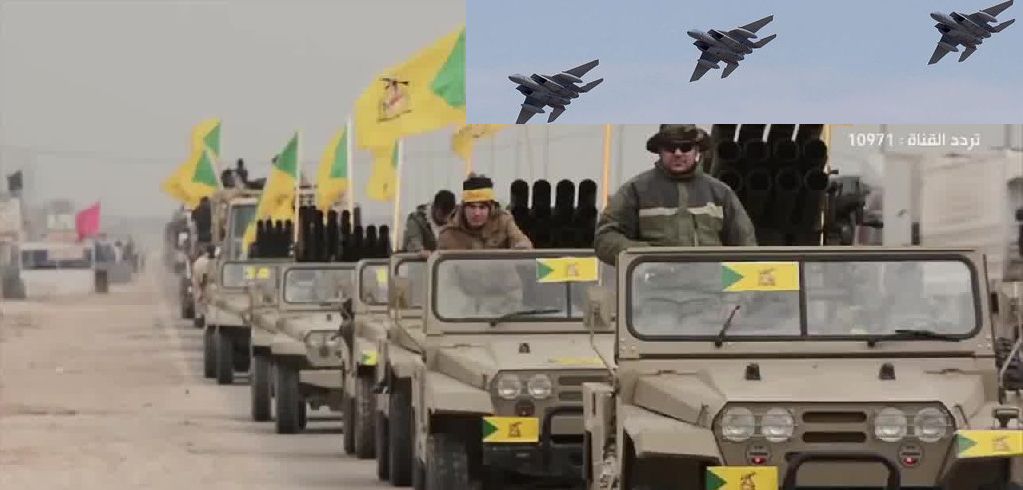
Our sources add that the Kata’ib Hizballah brigades were on their way to southwestern Syria to deploy along the Israeli and Jordanian borders. The air strike caused major havoc in their ranks and a larger number of casualties than reported. As a result, the Iraqi brigades withdrew from Syria and pulled back across the border to Iraq.
Source: Iraq denounces mysterious Syria airstrike attributed to Israel | The Times of Israel
Iraqi military denies positioning Iran-backed fighters in Syrian territory after paramilitary group says 22 of its members among the dead
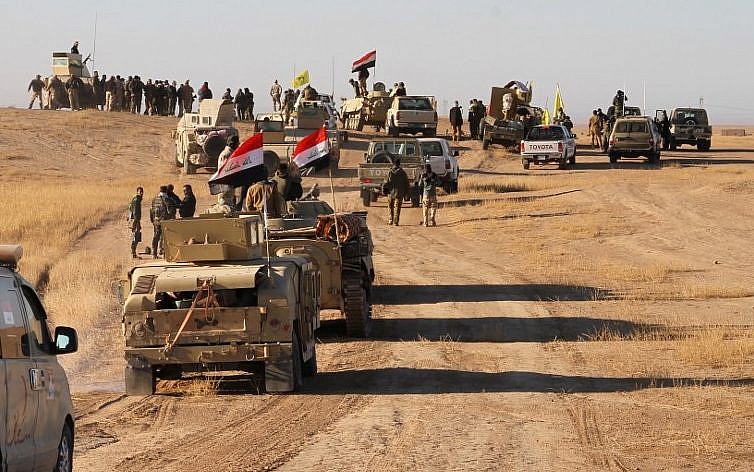
Iraq on Tuesday denounced an airstrike in Syria attributed to Israel in which over 50 pro-regime fighters, including some 20 members of an Iran-backed Iraqi paramilitary group, were killed.
The Iraqi foreign ministry said it “expresses rejection and condemnation of any air operations targeting forces in areas where they are fighting ISIS, whether in Iraq or Syria or any other area where there is a battlefield against this enemy that threatens humanity,” according to the Reuters news agency.
The ministry also called for countries to work together against “extremist groups.”
The bombing raid hit Al-Hari, a town near the Iraqi border controlled by regional militias fighting in Syria’s seven-year war alongside President Bashar Assad’s forces.
Both Syrian authorities and Iraqi forces pointed the finger at the US-led coalition, which denied it was involved in Sunday night’s attack.
“We have reasons to believe that it was an Israeli strike,” a US official told AFP on condition of anonymity on Monday.

Israel declined to comment, but a strike so far from its border would veer from most other raids in Syria that are attributed to Israel, which have largely taken place closer to Syria’s borders with Israel and Lebanon.
The target, apparently Shiite Iraqi militia fighters loyal to Assad, would also mark a shift for Israel, which has previously only carried out airstrikes against Iran’s forces and its proxies, according to reports.
At a cabinet meeting on Sunday, Prime Minister Benjamin Netanyahu warned that Israel was “taking action — against efforts to establish a military presence by Iran and its proxies in Syria both close to the border and deep inside Syria. We will act against these efforts anywhere in Syria.”
Sunday’s raid slammed into a regime-controlled position in the border town and left at least 52 fighters dead, according to a Britain-based monitor.
Among them were fighters from Iraq’s powerful Hashed al-Shaabi military alliance, some of whom have crossed into Syria to fight against IS.
The Iran-backed Hashed claimed that “US planes fired two guided missiles at a fixed position of Hashed al-Shaabi units on the border with Syria, killing 22 fighters and wounding 12.”
The bodies of three Iraqi fighters killed in the raid were returned to their hometowns for burial, said AFP’s correspondent in the southern Iraqi city of Nasiriyah.
The Syrian Observatory for Human Rights said a total of 30 Iraqi forces were among the dead in Al-Hari, as well as 16 Syrian forces and six unidentified fighters.
Hashed said its fighters had been deployed along the porous frontier with Syria on the orders of the Iraqi authorities.
However, late Monday the Iraqi military command denied it had positioned forces in Syrian territory, implying the dead fighters had acted without its consent.
Regretting the deaths, the command said it had been assured by the coalition that it was not responsible for the strikes.
Hashed is vital to the fight against IS in Iraq, but has also battled the jihadists across the border in their eastern Syria bastions.

By by Jacob Wohl June 18, 2018 Via Gateway Pundit
Source Link: BUSTED: Former Israeli Energy Minister Caught Spying for Iran
{I’m sure the leftists are calling this political. – LS}
Gonen Segev has long been known as a Israeli public servant who went astray of the law. Following a stent as a military pilot in the Israeli Airforce in the 1970’s, Zegev became a doctor before being elected to the Knesset in 1992 as part of the now defunct Tzomet Party. In April 2004, after leaving Israeli politics to focus on his business career, Segev was arrested for attempting to smuggle tens of thousands of ecstasy tablets from Amsterdam to Tel Aviv, disguised and M&M’s. On Monday, Israel’s elite counter-intelligence force, Shin Bet, arrested Segev for spying on behalf of Iran.
As the Jerusalem Post first reported, the indictment for suspicion of assisting the enemy in a time of war was entered against Segev in the Jerusalem District Prosecutor’s Office on June 15. After being first entered under seal, the indictment was approved by the Attorney General and State Attorney almost immediately. The indictment alleges that Segev provided sensitive and classified information related to Israel’s energy infrastructure to his Iranian handlers.
According to the Shin Bet investigation, Israeli authorities first became suspicious of Gonen Segev in 2012 when he made an unusual visit to the Iranian Embassy in Abuja, Nigeria. According to Israeli intelligence officials, Segev knew the people who invited him to the embassy to be Iranian intelligence operatives. On the dimly lit Udi Street Embassy, Segev’s initial meeting with his new Iranian handlers lasted late into the night. Due to the suspicious nature of his meeting, Shin Bet immediately started a case file and sought the resources of Israel’s signal intelligence specialists in Unit 8200.
In hotels, bars and sporting events in the 5 years following his initial 2012 meeting, Segev passed information to his Iranian handlers. Segev maintained his ties to unwitting members of Israel’s security and energy apparatus, and used them as sources for the information he eventually passed to Iran.
Gonen Segev’s attorneys Eli Zohar and Moshe Mazor said in a statement: “Most of the details are confidential at the request of the state. Even at this early stage, it is possible to say that the publication that was permitted makes things even more difficult, even though from the indictment, whose full details remain confidential, a different picture emerges.”
Segev requested a pardon from Israeli Health Minister Ya’acov Litzman in 2016, so that he could return to Israel to again work as a medical doctor for the first time since being convicted of smuggling MDMA pills into Israel. At this point, Segev’s concern will no longer be getting into Israel. Israeli legal and national security experts say Segev is unlikely to leave the country ever again.
Shin Bet security agency says it foiled major terrorist attacks on Israeli cities at “11th hour” after uncovering 20-member terrorist cell with “extraordinary” infrastructure in Nablus • Cell comprised mostly Hamas operatives, paid by Syrian, agency says.

By Shlomi Diaz June 18, 2018 Via Israel Hayom
Source Link: Syrian handler paid Hamas cell $100,000 to attack Israeli cities, Shin Bet reveals
{I assume the Syrian operative paid more than money for his actions. – LS}
Note: I’ll be taking a much needed vacation all next week. My grandson is playing in a baseball tournament in Pigeon Forge, Tennessee. The cool nights, majestic Smoky Mountains, and Tennessee moonshine will be on the agenda as well. And then, there’s ‘Dollywood’ for the kids. The only problem is moonshine and roller coasters don’t mix too well. I am, however, looking forward to the trip, but not the drive. At my age, driving 85mph on the interstate for 700 miles can be quite tiring.
A Hamas plan to carry out terrorist attacks in Israeli cities has been thwarted, the Shin Bet security agency revealed Sunday.
According to available details, Shin Bet agents, in collaboration with the military and police, uncovered terrorist infrastructure they described as “extraordinary in its size and level of activity” operating in the Nablus area in the West Bank.
According to the Shin Bet, the leader of the 20-member cell was paid $100,000 by a Syrian operative to target major Israeli cities.
The investigation so far has revealed that the cell became operational in October 2017 and remained active until late April, when all 20 suspects were arrested.
According to the Shin Bet, most of the suspects are Hamas operatives and some have previous records that include terrorist activities, especially building bombs.
During their interrogation, the suspects revealed that they were tasked with carrying out a number of known terrorist attack attempts, including a bombing in Tel Aviv, a suicide attack in Jerusalem, an attack in the Samaria community of Itamar, and several shooting attacks across Judea and Samaria.
The cell also enlisted the help of a Palestinian chemistry teacher to manufacture explosives.
The Shin Bet said these attacks were foiled “at the 11th hour.”
Security forces who raided the suspects’ hideouts seized weapons and explosives, and uncovered information leading to other Hamas terrorist cells, the Shin Bet said.
”The arrests were carried out smoothly. We surprised them where they least expected it, in places where they thought they would be safe. It was a complex operation,” a Golani officer who took part in the raid told Israel Hayom.
The Shin Bet identified the cell’s leaders as Mutassem Muhammad Salem, 35, and Fares Kamil Zebidi, 33.
Details of the investigation had been under a gag order that was partially lifted on Sunday, when Salem and Zebidi were indicted in a military court.
Salem is accused of acting on the orders of a Nusra Front operative in Syria. The two communicated via the Telegram messaging application, which allows for encrypted communications.
According to the indictment, the Nusra Front operative offered Salem $100,000 to prepare and detonate an explosive device in Israel, and he agreed.
”Discovering this cell demonstrates Hamas’ efforts to establish terrorist infrastructure in Judea and Samaria, as well as its constant desire to carry out terrorist attacks against Israeli targets in an effort to undermine the relative calm,” the Shin Bet said.
Commented on the arrests Sunday, Prime Minister Benjamin Netanyahu said, “The Shin Bet security agency, IDF and the Israel Police have thwarted a Hamas terrorist cell that sought to carry out horrific attacks in Jerusalem and Tel Aviv, from Nablus in Judea and Samaria.
”Hamas is trying to attack us both from Gaza and from Judea and Samaria. This is why we will continue to maintain security control of all areas west of the Jordan River.”




 anneinpt
 artaxes
 danmillerinpanama
 davidking1530
 Peter Hofman
 Joseph Wouk
 Peter
Peter Louisiana Steve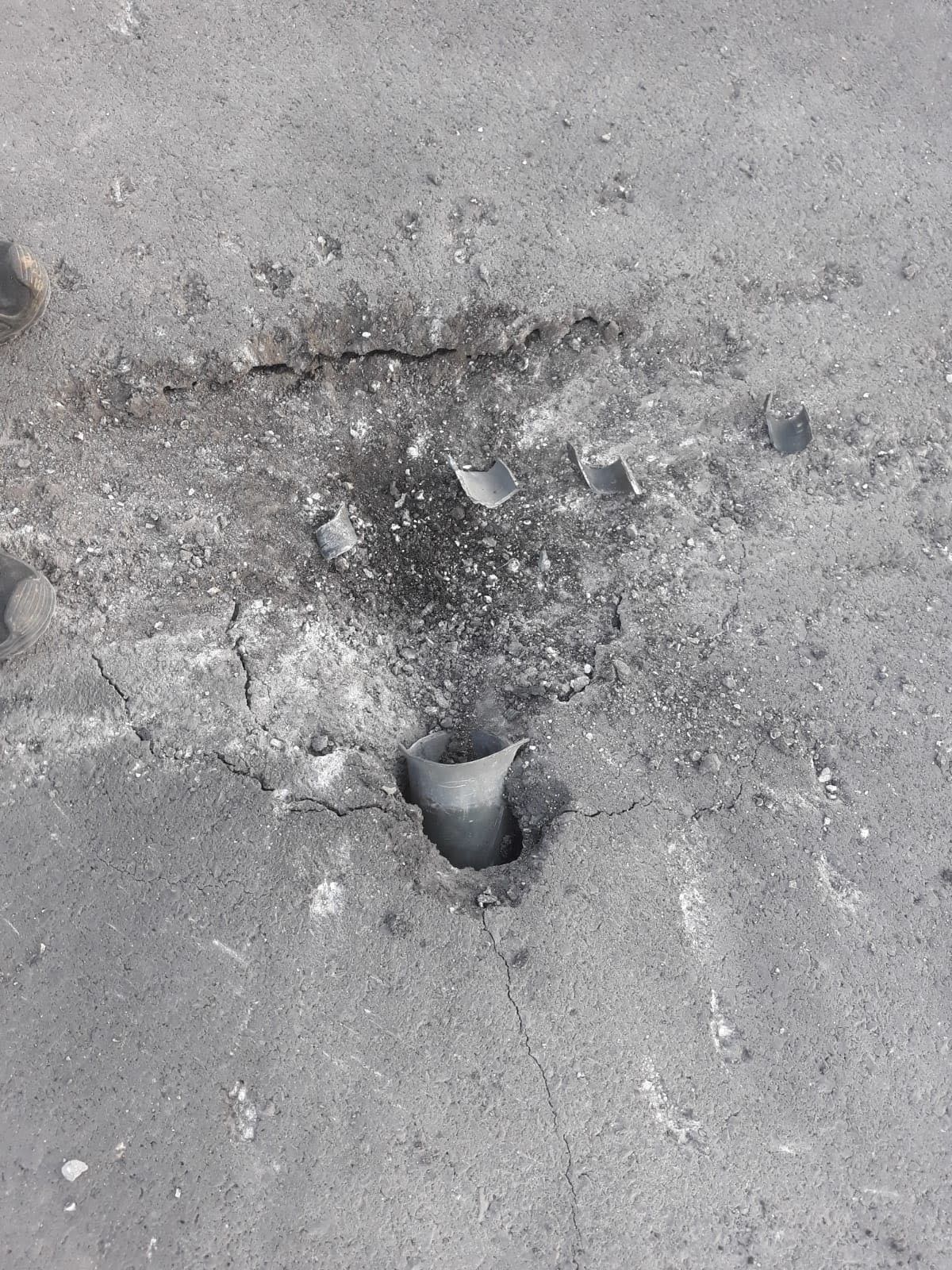
 WarSclerotic
Recent Comments