Archive for June 2018

Putin-Trump meeting set for July 16 in Helsinki, Kremlin confirms

June 28, 2018
https://www.rt.com/news/431140-trump-putin-meeting-helsinki/
FILE PHOTO © Jorge Silva / Reuters
The much-anticipated talks between Vladimir Putin and Donald Trump are set for July 16 in Helsinki, Finland, the Kremlin and White House confirmed. This will be the pair’s first meeting held outside of multilateral summits.

Putin will meet with his US counterpart in the Nordic nation on July 16th,  the Kremlin confirmed. “According to the arrangement reached [with the US side], Putin and Trump will meet in Helsinki on July 16,” the Kremlin said in a statement on Thursday.

It said discussions on the “current state of US-Russia ties” as well as “relevant international issues” will be on the meeting’s agenda.

READ MORE: Trump to meet Putin regardless of ‘noise’ at home as it’s in US national interest – Bolton

Previously, the Russian president’s adviser Yury Ushakov said the one-on-one is likely to last “for a few hours,” adding that a working breakfast and other protocol events are also scheduled. The adviser called the sit-down “the main international event of this summer,” given its importance for the two powers and the global community.

US National Security Advisor John Bolton, who visited Moscow on Wednesday, said that “despite the political noise in the US,” direct communications between Trump and Putin are in the “best interest of our country.”

“A full range of issues” will be discussed by the pair when they finally get together, including arms control, alleged Russian meddling in the 2016 US presidential election, and Moscow rejoining the G8, he said.

Next Israel-Hamas clash is imminent 

June 28, 2018

Source: Next Israel-Hamas clash is imminent – Israel Hayom

Yoav Limor

The rocket salvo fired at the Israeli communities on the Gaza Strip ‎border Wednesday signaled another step on the way to a ‎confrontation in which neither Israel nor Hamas are interested.

The reason for the escalation is less important, as it follows the ‎steady security deterioration of the past few weeks: Hamas is ‎pushing the kite terrorism campaign, the IDF has had to intensify its ‎response, and Hamas has had to escalate its reprisals so as to maintain ‎its image as the defender of Gaza.

This is a dangerous dynamic that leaves too much to chance. ‎All it would take is an incendiary kite that burns down an Israeli ‎house or an Israeli strike that results in Palestinian casualties to ‎trigger a full-blown conflict. ‎

Israel is wary of this, but every day the IDF inches closer to the ‎point where it would no longer be able to control circumstances. ‎Firing warning shots at kite terrorist cells has grown into strikes on ‎Hamas vehicles transporting them, and while this is still far from ‎targeted assassinations, it is merely one step away.‎

Offensive tactics are only one side of the Israeli solution. It is also ‎pursuing a technological response, so far to only partial success, while ‎enhancing and improving firefighters and Homefront Command ‎teams’ response to the fires raging in the Gaza-vicinity communities as ‎a result of Palestinian arson terrorism.‎

The IDF Southern Command believes these joint efforts are ‎proving successful, as shown by the decrease in the number of daily ‎fires, especially large ones, indicating the Hamas is struggling to ‎keep incendiary kites effective. ‎

Still, it seems a little early to show optimism. The battle against kite ‎terrorism is far from over and it may escalate into a full-fledged war ‎before a solution is devised.‎

But even if kite terrorism becomes a thing of the past, Hamas will ‎not relent. For the first time in months, Hamas has a feeling that its ‎struggle is bearing fruit: Egypt has opened the Rafah crossing after ‎four years, and the American envoys who visited Israel this week ‎focused on the crisis in Gaza – not the Palestinian Authority. ‎

A misinterpretation of the situation by Hamas could lead it to ‎conclude that it should intensify its border riot campaign to mark ‎more achievements. This will prompt Israeli countermeasures, ‎which could then lead to an inevitable escalation.‎

The way to change this process runs through the parallel, behind-the-scenes efforts trying to broker an understanding between Israel ‎and Hamas that could facilitate a long-term cease-fire. Quite a few ‎individuals – Western and Arab – are involved in these efforts, ‎which have yet to come to fruition. This is a race against time ‎between words and rockets and sadly, the latter may have the ‎upper hand.‎

NY congressional primary win for anti-Israel candidate stuns Dems 

June 28, 2018

Source: NY congressional primary win for anti-Israel candidate stuns Dems – Israel Hayom

US begins to dismantle Iran nuclear deal sanctions relief 

June 28, 2018

Source: US begins to dismantle Iran nuclear deal sanctions relief – Israel Hayom

Iranian president blames US, Israel for ongoing domestic unrest 

June 28, 2018

Source: Iranian president blames US, Israel for ongoing domestic unrest – Israel Hayom

Trump will demand of Putin a total Iranian exit from Syria — report

June 28, 2018

Source: Trump will demand of Putin a total Iranian exit from Syria — report | The Times of Israel

Diplomat tells Arabic newspaper US policy doesn’t oppose Assad remaining in power, but okays Israeli strikes on Iran’s military assets in the country

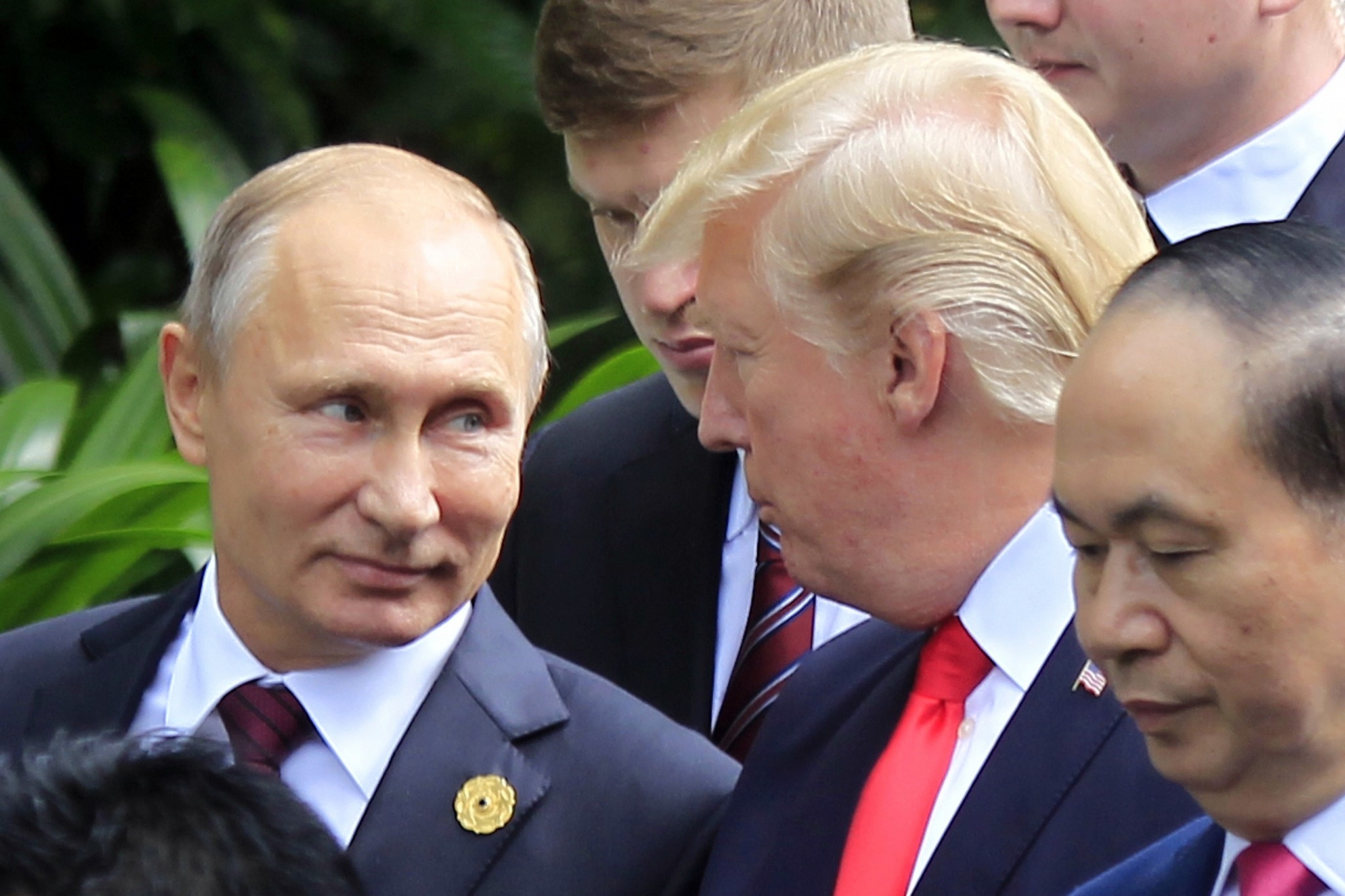
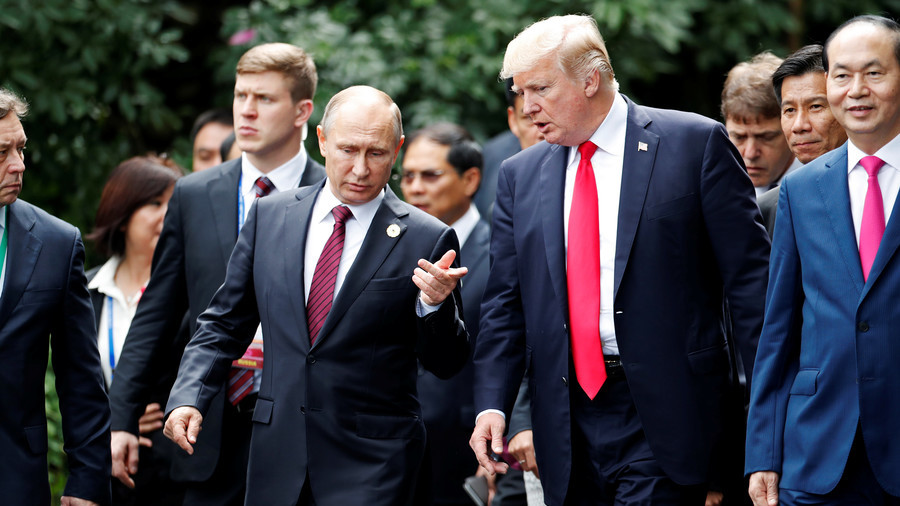
Russian President Vladimir Putin, left, and US President Donald Trump during the Asia-Pacific Economic Cooperation (APEC) Summit in Danang, Vietnam, November 11, 2017. (AP Photo/Hau Dinh)

Russian President Vladimir Putin, left, and US President Donald Trump during the Asia-Pacific Economic Cooperation (APEC) Summit in Danang, Vietnam, November 11, 2017. (AP Photo/Hau Dinh)

US President Donald Trump intends to demand from his Russian counterpart Vladimir Putin a full Iranian pullout from Syria territory, making the subject a priority in talks between the two leaders planned for next month, the Arabic-language Al-Hayat newspaper reported Thursday.

Israel has urged the international community to oppose Iran’s military presence in Syria, fearing its arch-foe will set up forward bases to use in attacks on the Jewish state.

“If the Putin-Trump summit is held on July 15, its core will be to negotiate Washington’s insistence on Iran’s withdrawal from Syria,” a Western diplomat told the London-based daily.

Iran, along with Russia, has been providing military assistance to the Bashar Assad regime in its battle against rebels.

US officials, the diplomat was quoted as saying, are convinced that Russia would be unwilling to “pay a heavy price” for Iran’s continued presence in Syria.

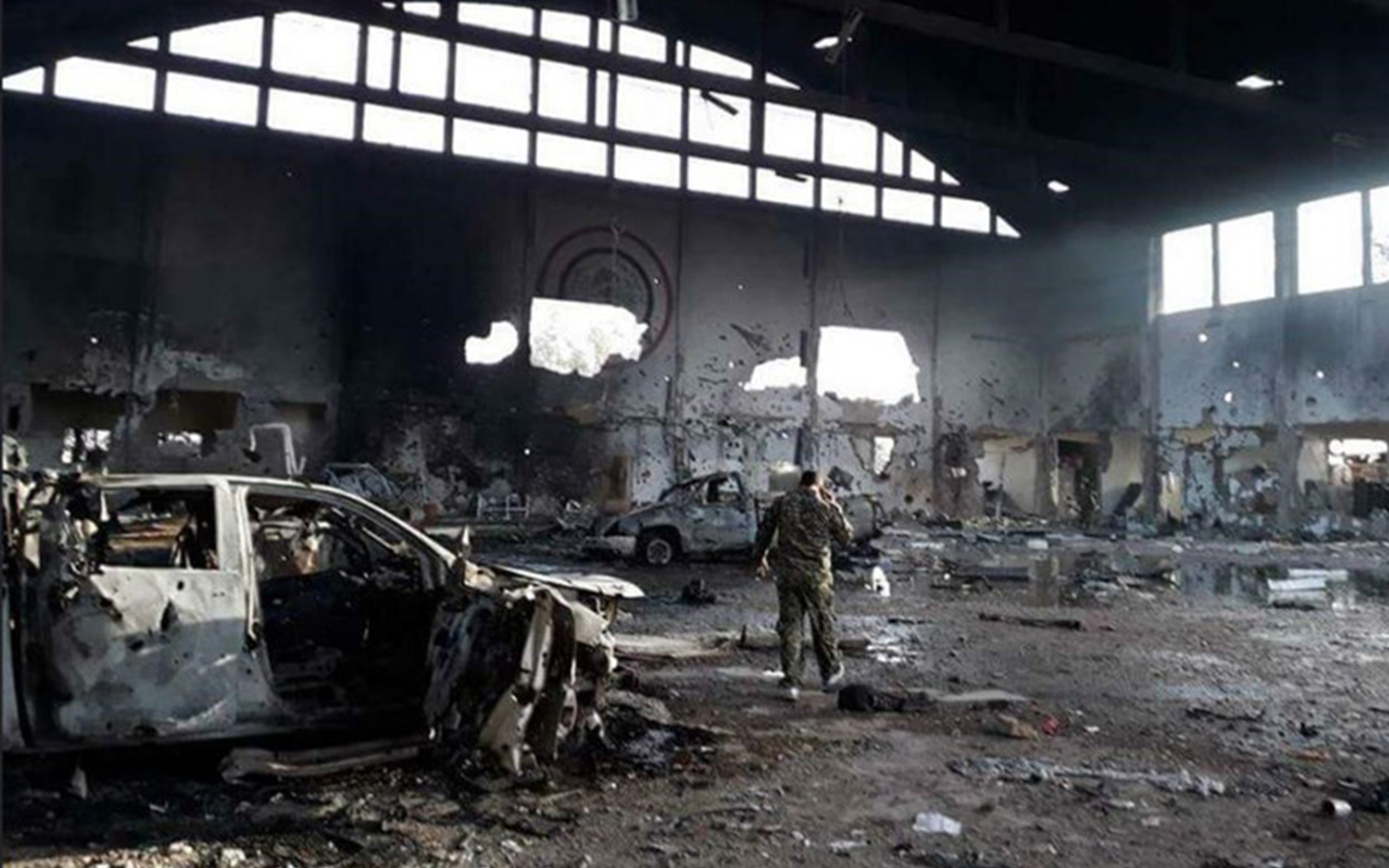
A photo released by Iranian media reportedly shows the T-4 air base in central Syria after a missile barrage attributed to Israel on April 9, 2018. (Iranian media)

The diplomat, who was not identified in the report, also said Washington had given Israel a “green light” to strike Iranian military assets in Syria. The Jewish state has vowed to use any means necessary to prevent Iranian military entrenchment and has carried out several airstrikes on targets in Syria to enforce its policy. Numerous other strikes, attributed to Israel but not officially admitted to, have also targeted weapons shipments to the Hezbollah terror group, an Iranian proxy in Lebanon and Syria.

Unconfirmed media reports have said Israel has also obtained Russian agreement to strike Iranian targets in Syria. Other reports have said that Iran-backed troops have withdrawn recently from Syria’s border with Israel at Russia’s insistence.

The diplomat told Al-Hayat that the US is open to the idea of Assad staying in power and does not oppose the regime retaking all areas it lost to rebels groups during the seven-year civil war.

Russia and the US are already in agreement that the two Salafist Jihadist rebel groups in southern Syria — the al-Nusra Front and the Khalid ibn al-Walid Army — should both be disarmed, the diplomat said.

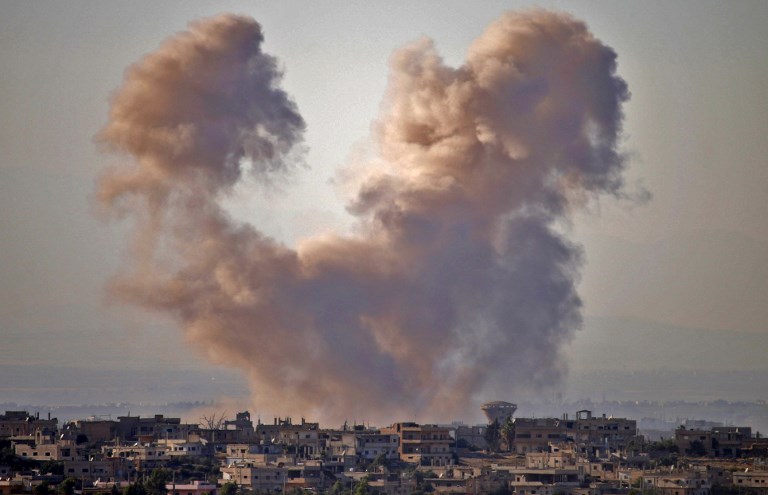
Smoke rises above opposition held areas of the Daraa province countryside during airstrikes by Syrian regime forces on June 27, 2018. (Mohamad ABAZEED/AFP)

Jordan also opposes an Iranian presence on its borders or any Syrian people, displaced by the war, on Jordanian territory, he noted. There are estimated to be some 1.4 million Syrians in Jordan, roughly half of whom are registered as refugees.

Russia, the US, and Jordan already agreed in 2017 to a deescalation zone for southern Syria, which borders on Israel and Jordan, but some fighting has continued. Over the past two weeks the Syrian army launched a heavy offensive against rebel strongholds in the Daraa province, a key rebel-held area.

On Wednesday a foreign affairs adviser to Putin said Moscow and Washington had reached an agreement on the date and location for a summit between the US and Russian leaders.

The time, venue and other details of the summit will be announced jointly by the Kremlin and the White House on Thursday, the adviser said.

Iranian-Hizballah forces join Syria’s South offensive

June 28, 2018

Source: Iranian-Hizballah forces join Syria’s South offensive – contrary to Russian pledges – DEBKAfile

In breach of Russian guarantees to the US, Israel and Jordan, Iranian Revolutionary Guards, Shiite and Hizballah forces are taking part in Syria’s offensive to capture Daraa and Quneitra.

Video clips published on June 26 by social media depicted members of the Iraqi Shiite Liwa Zulfiqar militia in the main square of Busra al-Harir north of Daraa city celebrating their victory over Syrian rebel forces.

DEBKAfile’s military sources report that it was only a matter of time before the Russian pledges were proved hollow and pro-Iranian and Hizballah forces reached the Syrian-Jordanian and Syrian-Israeli borders.

The Liwa Zulfiqar militia, which came from Iraq, has been revamped for the operation as a mixed force including also Hizballah and Syrian fighters. They serve under the overall command of the Revolutionary Guards Regional Command Center which is based at the southern Syrian town of Izra.

US Secretary of State Mike Pompeo, who is in charge of US policy for Syria, made some harsh comments to the Senate Appropriations subcommittee on Wednesday, June 27. He admitted that president Bashar Assad had come out well from Syria’s seven years of civil war, but he also called Iran’s presence in the country “the greatest threat.”

Pompeo accused Hizballah, which is totally bankrolled by Tehran, of being “active on multiple fronts and running efforts for external plotting including in the United States.”

However, the Secretary did not specify what action, if any, the US was taking to counter Iranian and Hizballah’s nefarious presence in Syria.

The Syrian operation meanwhile drew closer to Israel’s Golan border with an air strike on Wednesday night, June 27, against rebel positions around Quneitra to soften their resistance to the coming ground offensive.

Analysis: How Gulf states can get Europe to abandon Iran 

June 28, 2018

Source: Analysis: How Gulf states can get Europe to abandon Iran – Middle East – Jerusalem Post

The Gulf countries, with their economic might, have tremendous potential to influence change in the policies of European countries toward Iran.

BY BENJAMIN WEINTHAL
 JUNE 27, 2018 22:45
Analysis: How Gulf states can get Europe to abandon Iran

The protests sweeping across Iran are a clear sign the country’s economy and its Islamic revolutionary system are ready to buckle.

The Gulf states can play a critical role in stymieing the Tehran regime’s financing of terrorism across the Middle East by pushing Europe to pull the plug on investments in Iran.

Take for example the economic and diplomatic measures taken by Saudi Arabia against Germany for Chancellor Angela Merkel’s largely pro-Iranian regime foreign policy. The kingdom’s Crown Prince Muhammad bin Salman is “deeply offended” by the German government and froze new business with the Federal Republic. In November 2017, Riyadh withdrew its ambassador from Berlin, to punish then-foreign minister Sigmar Gabriel’s claim that Lebanon “could not tolerate the adventurism that has spread there,” a reference to Saudi efforts to stunt the ever-increasing control by Hezbollah and Iran of the Land of the Cedars.

On the economic front, Bloomberg News reported in March that Saudi government agencies had been told not to renew some nonessential contracts with German companies. Deutsche Bank’s investments in the kingdom were among those at risk, as is its possible participation in energy giant Saudi Aramco’s forthcoming initial public offering, which “could be the largest share sale ever.”

All of this reinforces a prescient 2016 Wall Street Journal column written by my colleague Mark Dubowitz, the chief executive of the Foundation for Defense of Democracies, and David Weinberg, who is now at the Anti-Defamation League.

“Riyadh holds sovereign-wealth funds valued at almost $700 billion, and its pension funds have foreign investments of about $70b.,” they wrote. “Those sums alone give the kingdom enormous leverage over anyone considering investing in Iran. Saudi Arabia could make the financial players choose a side: They can have Riyadh’s business or Tehran’s, but not both.”

Germany exported goods and services worth €6.6b. ($7.7b.) to Saudi Arabia in 2017, according to the Federal Republic’s statistics office. By contrast, German exports to the Islamic Republic of Iran reached €3.5b. in 2017, up from €2.6b. in 2016. France and Britain are also engaged in, and seeking additional, massive trade deals with the Saudis.

As Dubowitz and Weinberg wrote, “Riyadh projects long-term opportunities for foreign investment at $344b. Muhammad bin Salman, the kingdom’s economic czar (and the king’s son), has embarked on a privatization program that will likely increase the size of this pie.”

Questions abound regarding the kingdom’s next move – along with its Gulf allies the UAE, Bahrain and other Arab League countries that are opposed to Iranian aggression – in their efforts to pressure Europe to slash ties with Iran.

Without question, the time is ripe – if the Gulf monarchies wish to flex their economic muscle in Europe – to further tighten the economic vice on the clerical regime in Tehran. The Financial Times reported on Wednesday, “The Iranian economy is expected to deteriorate further.” The Wall Street Journal reported on Tuesday that the US expects all countries to cut oil imports from Iran to “zero” by November 4 or risk sanctions, a senior State Department official said. Iran’s Supreme Leader Ayatollah Ali Khamenei is showing signs of acute anxiety about the protests of ordinary Iranians against his regime, stating on Wednesday in a meeting, “the judiciary must confront those who disrupt economic security.”

Potent US sanctions and restrictions on Iran’s purchasing power coupled with sanctions on Tehran’s energy and oil business – to be implemented in 2018 – will surely compound the economic chaos in the Islamic Republic.

An additional and largely underutilized diplomatic pressure point: the Gulf countries could encourage European foreign ministers to follow the lead of US Secretary of State Mike Pompeo on Iran. He tweeted on Wednesday, “Iran’s corrupt regime is wasting the country’s resources on Assad, Hezbollah, Hamas & Houthis, while Iranians struggle. It should surprise no one #IranProtests continue. People are tired of the corruption, injustice & incompetence of their leaders. The world hears their voice.”

Writing on The Washington Examiner website on Monday, Michael Rubin, a scholar in resident at the American Enterprise Institute, neatly captured the trajectory of the Islamic Republic of Iran: “Like the Soviet Union and all other regimes that depend on repression rather than the consent of the governed, it is doomed to fail. The question has never been if, but when. And, increasingly, as regime officials send tens of billions of dollars outside the country, as Supreme Leader Ali Khamenei nears the end of his life, as the economy continues its death spiral, and as protests now spread to the Tehran bazaar, it seems that the answer to that question could be tantalizingly near.”

The Gulf countries, with their economic might, have tremendous potential to influence change in the policies of European countries toward Iran. Its use could represent a tipping point in economic warfare against Iran’s regime, thwarting its drive for nuclear weapons and halting its terrorism throughout the region.

Arab media leaks Trump’s “deal of the century” and Egypt’s role in it

June 28, 2018

Obviously take this with a grain of salt but…

Arab (more precisely, Arabic – Palestine Today) media has provided a description of what role Egypt would play in Trump’s so-called “deal of the century” – the deal to end the Israel-Palestinian conflict.

The article is in Arabic, but I have used Google translate to get an English version. Google translate does a pretty good job converting Arabic to English, so I have not amended anything.

This proposal sounds very interesting. More interesting is that Saudi Arabia, Egypt and Jordan are all (apparently) prepared to accept it, even if the Pally’s don’t… (and they would never accept anything that doesn’t include the so-called “right of return” and destruction of Israel’s jewish character).

The deal would seem to also have the effect of driving out of the Sinai the Isis-types, which have been a cause of concern for Egypt, hence it seems feasible that Egypt would be on side (as per the bit in blue). Trump sure does know how to do crafty deals…

Be good to see the Israel haters response if everyone (including Arab states) accepts the plan, but the Pally’s don’t. That would fully expose what most of us have known all along: the Pally’s and their supporters aren’t interested in “peace”, but instead are only interested in the eradication of the Jewish state.

I have seen this approach referred to as the “outside in” approach. Traditionally, the resolution of the Israel-Pally conflict was seen as a precusor to Israel achieving peace/acceptance with the Arab nations.

On the other hand, the “outside in” approach seeks to gain the support/acceptance of the Arab nations before peace is achieved in the Israel-Pally conflict (ie acceptance from other Arab nations is seen as driving the peace deal).

Of course, the beauty of the “outside in” approach is that will make abundantly clear to everyone the true motivation of the Pally’s when they refuse to accept the deal, and yet again, they fail to accept the opportunity placed right before their eyes. They never fail to achieve defeat in the face of victory….

But before the article I have pasted links-only to two other articles: the first where the Pally’s refute the speculated deal and that the Arab nations are on side with the US, and the second where Hamas claims Russia is against the speculated deal.

I suggest you take these two articles with an even bigger grain of salt…

PALESTINIAN AUTHORITY: NO ARAB PRESSURE TO ACCEPT TRUMP’S PEACE PLAN

https://www.jpost.com/Arab-Israeli-Conflict/Palestinian-Authority-No-Arab-pressure-to-accept-Trumps-peace-plan-560864

Hamas claims Russia opposes Trump peace plan

https://www.timesofisrael.com/hamas-claims-russia-against-trump-peace-plan/

Egyptian agreement on the “deal of the century”: Sinai is essential in the plan

https://paltoday.ps/ar/post/325810/%D9%85%D9%88%D8%A7%D9%81%D9%82%D8%A9-%D9%85%D8%B5%D8%B1%D9%8A%D8%A9-%D8%B9%D9%84%D9%89-%D8%B5%D9%81%D9%82%D8%A9-%D8%A7%D9%84%D9%82%D8%B1%D9%86-%D8%B3%D9%8A%D9%86%D8%A7%D8%A1-%D8%A3%D8%B3%D8%A7%D8%B3%D9%8A%D8%A9-%D9%81%D9%8A-%D8%A7%D9%84%D8%AE%D8%B7%D8%A9

Trump to settle the Palestinian issue known as the “Deal of the Century”, which was discussed during the last round in the region by his brother-in-law and adviser, Jared Kouchner, and his envoy to the region, Jason Greenblatt, From Jordan, Egypt, Saudi Arabia, Israel and Qatar.

The sources said the meeting, which brought together Kouchner and Greenblatt with Egyptian President Abdel Fattah al-Sisi, Foreign Minister Sameh Shukri and intelligence chief General Abbas Kamel in Cairo last week, touched on the details of the deal, which is being hampered by the Palestinian Authority’s refusal to respond.

The sources explained that the talks of Kouchner in Cairo touched on the details of the Egyptian contribution to the deal, which will be through the Sinai Gate, specifically North Sinai, which has been identified a major role in the plan, to serve as a “cornerstone,” the sources said, pointing to That the establishment of a free trade zone on the border between the Gaza Strip and Rafah, Egypt, in addition to the establishment of a giant power station in the area dedicated to production of the Gaza Strip with full funding of more than $ 500 million.

The North Sinai section of the US plan for the settlement of the Palestinian issue also includes the establishment of a joint Egyptian-Gaza seaport, which will be fully supervised by Egypt and will be operated by the sector. In addition, the project includes, according to the sources, the allocation of an Egyptian airport in the north of Sinai to serve the people of the sector, to be under the supervision and employment of Egypt in full, as well as the establishment of a large industrial area on the border between the two countries, funded by the Gulf.

The sources stressed that this formula has become very welcome in the Egyptian political circles, instead of the principle of land exchange, which was a popular Egyptian rejection, pointing out that the current perception will facilitate the popular marketing, especially as these projects will be implemented on Egyptian territory, Which will join a group of Saudi projects in South Sinai as part of the giant Neum project, which is being adopted by the Saudi Crown Prince Mohammed bin Salman, with the participation of Egypt, Jordan and Israel.

The sources stressed that there are Israeli requirements to implement these steps and all the projects allocated to the Gaza Strip within the framework of inflating it into a Palestinian state, in addition to what is left of the West Bank that has not been consumed by the settlements and other than Jerusalem as well. These requirements are to be subject to supervision, , To ensure that they are not used in “any activities hostile to Israel”.

The sources pointed out that the Egyptian government in the context of the semi-final scenario, will in the coming period, specifically the new fiscal year, to start expanding the buffer zone in Sinai, and the evacuation of larger areas, to facilitate the implementation of those proposed projects after that, to be all the land is allocated uninhabited.

In the same context, the Egyptian parliament approved the opening of a new appropriation in the state budget, about 70 billion pounds (about 4 billion dollars) earmarked for additional government expenditure items, which included payment of compensation expected to the people of Sinai. The text of the law, which was approved by the parliament on Sunday in its first article, stipulates that an additional appropriation of the state budget for the fiscal year 2017-2018 of 70 billion three hundred million pounds, distributed on the third section of the “benefits”, will be added to the amount of 57 billion pounds The benefits of local and external public debt, and also the fifth section “other expenses”, in the amount of two billion and three hundred million pounds, to meet the payment of compensation in the province of North Sinai.

Egyptian and Arab diplomatic sources confirmed to the “new Arab” earlier that the first phase of the Trump plan includes a package of measures estimated at about 3 billion dollars pledged by Gulf countries to bear them in full.

The White House issued a statement after Kouchner and Greenblatt’s visit to Cairo, saying that the meeting “discussed increased cooperation between the United States and Egypt, the need to facilitate humanitarian access to Gaza, and Trump’s efforts to facilitate peace between Israelis and Palestinians.” Egyptian Ambassador to Egypt, Ambassador Bassam Radhi, said that Sisi affirmed Egypt’s support for international efforts and initiatives aimed at reaching a just and comprehensive settlement in accordance with agreed international terms and on the basis of the two-state solution according to the 1967 borders. To review the efforts exerted by Egypt to complete the process of Palestinian reconciliation and calm the situation in Gaza and its measures to alleviate the suffering of the residents of the Gaza Strip, including the opening of the Rafah crossing throughout the month of Ramadan.



Gaza terror groups: We’re ready for all Israeli military activities

June 27, 2018

Hamas and Palestinian Islamic Jihad terror groups issue joint statement claiming responsibility for 13 rockets fired into Israel overnight Tuesday, which they say was in retaliation for IDF’s earlier attack on Hamas commander’s vehicle; ‘A bombing will be answered with a bombing,’ statement warns.

https://www.ynetnews.com/articles/0,7340,L-5297828,00.html

The joint military branches of terror organization in the Gaza Strip said Wednesday that they are prepared for to retaliate against any Israeli military activities after a to and fro round of violence beset the border that began Tuesday evening and continued into the night.

The terror organizations in the strip took responsibility Wednesday afternoon for a barrage of rockets that were fired at Israeli border communities overnight Tuesday, which they claim was a response to an Israeli attack on a Hamas militant’s vehicle.

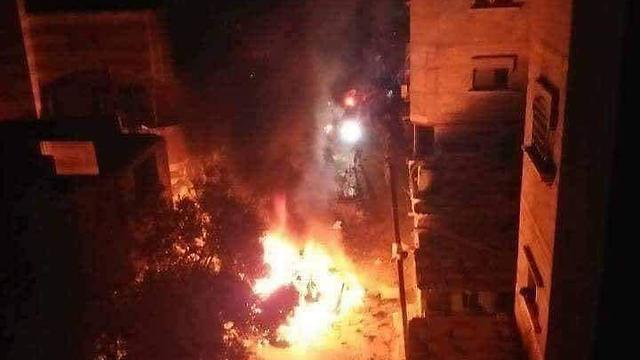
Vehicle attacked in Gaza

“A bombing will be answered with a bombing,” a statement issued from the strip said, adding that they are ready to retaliate immediately to any Israeli military provocation.

On Tuesday night, the IDF bombed a vehicle belonging to one of the commanders of Hamas’ military wing in the Neuseirat refugee camp in the central Gaza Strip. Shortly afterwards, 13 rockets were fired from the Hamas-ruled coastal enclave at adjacent Israeli communities.

The IDF confirmed in a statement issued early Wednesday that the army attacked “a vehicle belonging to a Hamas operative in a cell launching explosive and incendiary balloons” with an aircraft and a tank.

The IDF said it also struck two of the organization’s observation posts in the northern Gaza Strip. “At the same time,” the IDF Spokesperson’s Unit said in its statement, “the Hamas terror organization led a high-trajectory fire attack on the State of Israel. Hamas will pay for the terror and instability.”

The first Code Red siren sounded at 1:40 am at a kibbutz in the Sha’ar Hanegev Regional Council. The IDF Spokesperson Unit said one rocket had been fired. Residents reported hearing an explosion.

Scene of the strike

At least three of the rockets were intercepted by the Iron Dome air defense system. There were no reports of injuries.

Throughout the night, sirens sounded in other communities in the Sha’ar Hanegev, Hof Ashkelon, Eshkol and Sdot Negev regional council. At 4:01 am, a siren sounded in the city of Sderot as well.

The IDF Spokesperson’s Unit said a total of 12 rockets and mortar shells had been fired into Israel.

A Palestinian source told Ynet that the attacked vehicle was completely destroyed, but that there were no injuries in the strike and that the driver escaped unharmed. The strike took place in the western side of the Nuseirat refugee camp. Hamas closed off the area and stopped people from approaching it.

At first, the IDF refused to confirm that Israel was behind the strike, saying: “We won’t address foreign reports.” Hamas, however, rushed to announce that “a bombing will be met with a bombing.”

In another statement issued later on, Hamas said: “The Israeli escalation and the attacks on protestors and on military operatives led to a quick response from the resistance, as part of its complete readiness to carry out its mission to defend the Palestinian people.”

An incendiary balloon dispatched from the Gaza Strip was found Tuesday evening in Kibbutz Dorot in the Sha’ar Hanegev Regional Council. There were no injuries. Earlier, an IAF aircraft attacked a vehicle used by a cell of incendiary balloon launchers in the northern strip.


The tensions around Gaza have increased in recent weeks, as Gazans keep sending incendiary balloons and kites into Israel, causing more and more fires. The IDF has fired warning shots near the cells responsible for the kites and balloons and has even bombed Hamas targets, usually without causing any injuries. The terror organization, for its part, has stepped up its responses to the strikes and created the equation that “a bombing will be met with a bombing.”