Archive for May 2018

Top minister: Israel should eradicate any trace of Iranian entrenchment in Syria 

May 12, 2018

Source: Top minister: Israel should eradicate any trace of Iranian entrenchment in Syria | The Times of Israel

Security cabinet member Yoav Galant says ‘An opportunity has arisen to uproot Iran, and we’ll take advantage of it’
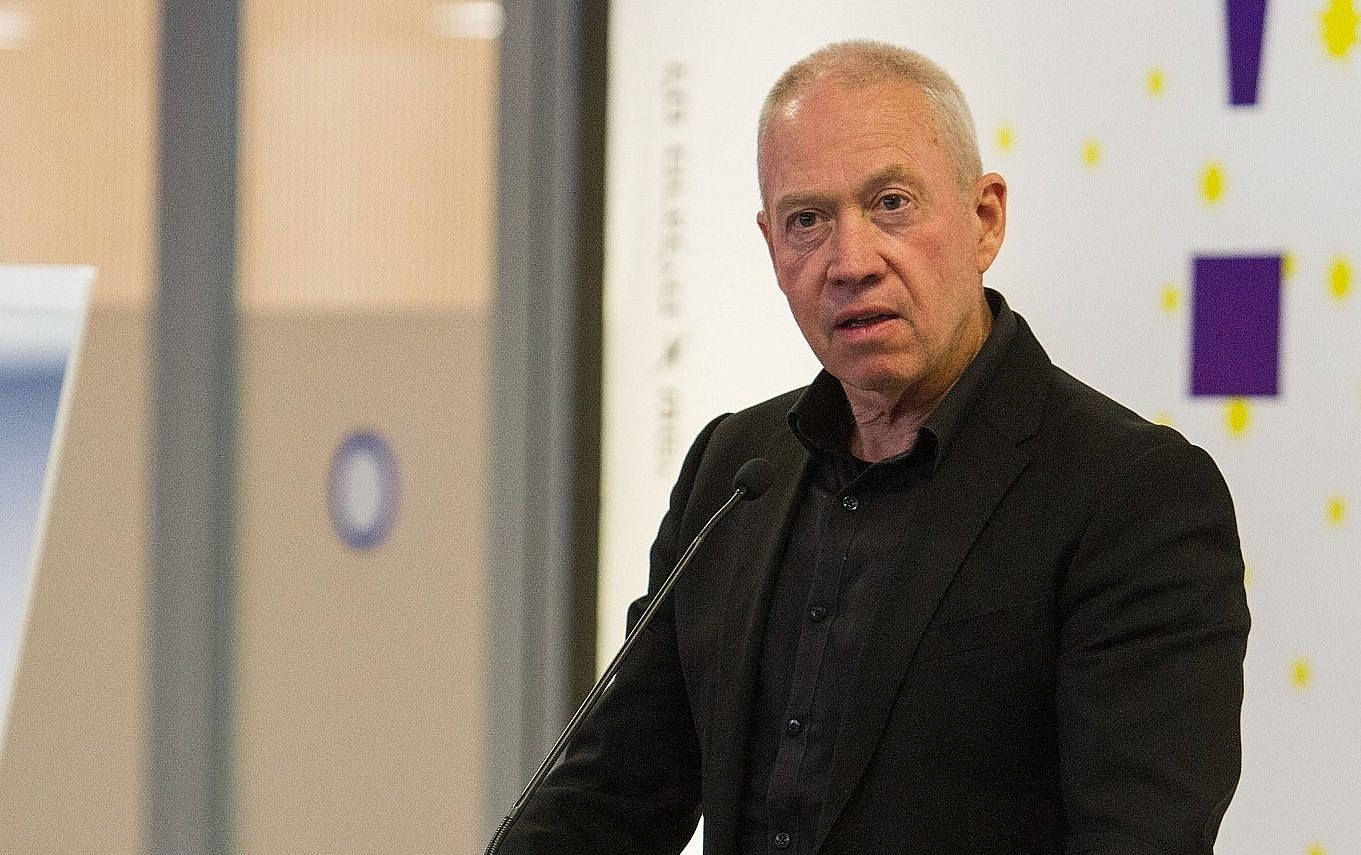
Minister of Housing and Construction Yoav Galant speaks at a signing ceremony for an agreement to build new apartments in Haifa, March 19, 2018. (Flash90)

Minister of Housing and Construction Yoav Galant speaks at a signing ceremony for an agreement to build new apartments in Haifa, March 19, 2018. (Flash90)

Housing Minister Yoav Galant said Saturday Israel would seek to totally remove Iran’s military presence from Syria. “An opportunity has arisen for Israel to uproot Iran from Syria, and we’ll take advantage of this opportunity,” he said.

Speaking at a cultural event in Tel Aviv suburb Givat Shmuel, the minister, a former army general and a member of the high-level security cabinet, said, “We need to strike while the iron is hot and eradicate any trace of Iranian entrenchment in Syria. We’ll put the Iranian genie back in its bottle.”

Galant said Iran was “an imperialist terrorist nation…they’re spread out in Yemen, Iraq, Syria and Lebanon in an attempt to create an axis from the Persian Gulf to the Mediterranean Sea…to surround us and create a war of attrition between ourselves and the Arabs.”

But he said Iran was overreaching, creating difficulties for itself. “The Iranian economy is in a bad state, and there’s an internal debate in Iran. Many understand that the focus on exporting terrorism and developing nuclear weapons is using up the resources of tens of millions of residents who need to live.”

Israeli officials told Hadashot TV news Friday night that the security cabinet believes Iran “has gotten the Israeli message, and won’t mess with us in the near future” — a day after Israel launched dozens of strikes on Iranian military sites in Syria in response to an Iranian missile barrage directed at northern Israel.

Israeli leaders assess that the Israeli action has made it clear to Tehran that it does not possess the operational infrastructure it needs in Syria to successfully contend with IDF capabilities, the report said.

The army has told ministers in the top forum that it thus believes the current round of hostilities to be over, though tensions in the north will persevere, and border incidents are still possible.

At least 11 Iranians were among those killed in unprecedented Israeli strikes in Syria, a monitor said Saturday.

“At least 27 pro-regime fighters were killed: six Syrian soldiers and 21 foreign fighters, including 11 Iranians,” said Rami Abdel Rahman, director of the Britain-based Syrian Observatory for Human Rights.

That updates the monitor’s initial death toll of 23, which did not specify the number of Iranians.

“The new report is due to the death of wounded or missing persons whose deaths have been confirmed,” Abdel Rahman said.

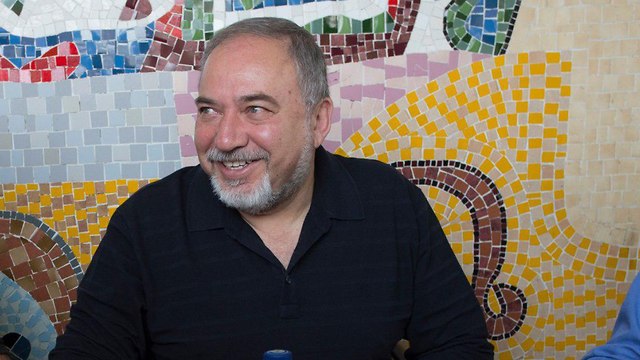
Speaking in the north of Israel earlier Friday, Defense Minister Avigdor Liberman sent a message to Syrian President Bashar Assad, telling him to “throw” Iranian forces out of his country.
Defense Minister Avigdor Liberman speaks during a Holocaust Remembrance Day ceremony at Kibbutz Yad Mordechai, on April 12, 2018. (Flash90)

Liberman visited the northern city of Katzrin to debrief residents following Israel’s largest air campaign in Syria in more than 40 years, in which it said it bombed over 50 Iranian targets.

The sortie came after Iran fired 20 missiles toward Israel just after midnight on Thursday morning, the IDF said, forcing residents of the north into bomb shelters. Four of the missiles were knocked down by the Iron Dome air defense system and the rest fell short of Israeli territory, according to the military.

Liberman also told Israelis they should not let the threat from Syria deter them from visiting the north. “You can come, you can return to the bed and breakfasts, to tour, to hike,” he said. “There are truly amazing views and among the most beautiful places, and there is no problem. We are back to normal.”

He said that it was a mistake to think that Thursday morning’s attacks on the Iranian bases had completely solved the problem, but that the army was ready for anything and would continue to do whatever necessary to ensure Israel is secure.

The defense minister welcomed Iran’s statement that it did not want an escalation between the two countries and stressed that Israel was also not looking for more confrontation with anyone.

“We did not cross Iran’s borders,” he said. “They came here.”
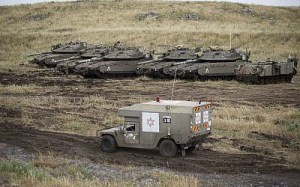
An Israeli military ambulance drives past tanks in the Golan Heights, near the border with Syria, May 10, 2018. (AP Photo/Ariel Schalit)

Prime Minister Benjamin Netanyahu said Friday that Israel would be victorious in its “ongoing campaign” against Iran.

“I have established a basic principle: Whoever strikes us, we are going to strike them,” Netanyahu said.

Israel has long warned it will not accept Iran entrenching itself militarily in neighboring Syria, where the Islamic Republic backs Assad’s regime in the country’s seven-year civil war.

The Jewish state has said said it also conducts operations in Syria to stop what it says are advanced arms deliveries to Iran-backed Hezbollah, an Iranian-backed terror group which is said to have 140,000 missiles and rockets aimed at Israel from Lebanon.

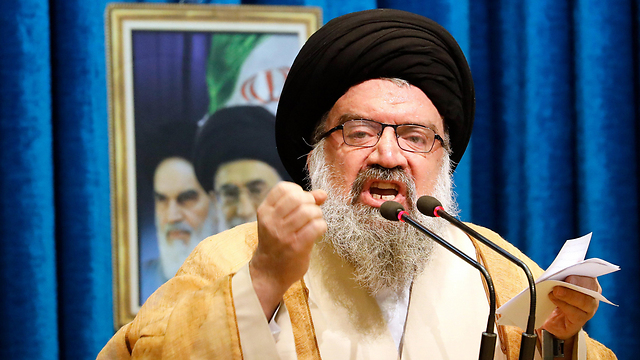
A leading Iranian cleric said Friday that Tel Aviv and Haifa will be destroyed if Israel behaves “foolishly,” while also vowing Iran will ramp up missile development despite Western criticism. He spoke as thousands of Iranians marched in anti-Israel and anti-US protests nationwide.

“We will expand our missile capabilities despite Western pressure [to curb it]… to let Israel know that if it acts foolishly, Tel Aviv and Haifa will be totally destroyed,” Reuters translated Ahmad Khatami as saying during Friday prayers at Tehran University, broadcast on Iranian state television.

Iran will quit nuclear deal, restart enrichment, ramp up military tension 

May 12, 2018

Source: Iran will quit nuclear deal, restart enrichment, ramp up military tension – DEBKAfile

DEBKAfile’s sources outline the motives behind Iran’s next steps:

  1. Tehran does not believe that Israel’s massive assault on Iranian bases, missiles stores, logistic centers and other military sites in Damascus and points south on Thursday night – described as its largest air operation since the Yom Kippur War – was triggered by the Qods rocket barrage on the Golan a few hours earlier. Iranian strategists are convinced that it was planned in advance by the Trump administration and Netanyahu government as Act One of a major joint campaign.
  2. Tehran discounts European ability to preserve the nuclear pact without the United States. In a phone conversation Thursday, German Chancellor Angela Merkel told Iran’s President Hassan Rouhani that it was imperative to halt his country’s ballistic missile development and production and rein in its military involvement in Syria and Yemen. Rouhani countered by demanding guarantees that no European Union member would join President Trump’s new sanctions, either directly or indirectly. And indeed, as they spoke, new US sanctions were clamped down on six people and three companies with ties to Iran’s Revolutionary Guard Corps (IRGC). Treasury Secretary Steven Mnuchin said the penalties targeted those who had funneled millions of dollars to the group, funding its “malign activity”. Iran’s central bank helped the IRGC to access US dollars via “a large-scale currency exchange network,” he said. The Treasury Department said all six individuals were Iranian. This order went out from Washington a few hours after Israel accused Al Qods of launching the 20-missile barrage on the Golan from Syria.
    Iran’s leaders have no illusions about the EU being able to deliver any such guarantees and are playing along with European leaders in a show of diplomacy to buy time for getting organized to confront the US and Israeli campaigns.
  3. Tehran expects the coming rounds of US sanctions to be exceptionally harsh and comprehensive. If the pressure forces Iran to agree to negotiate on a new nuclear deal as demanded by Washington, its leaders would rather not start out with the weak hand they hold at present. They believe they can only improve the odds in their favor by military escalation. When Rouhani said Thursday that Iran does not want “new tensions” in the region, he was playing for time for Iran to get its next moves – resumption of enrichment and armed confrontation – in place.

Leaked Doc Reveals White House Planning “Regime Change” In Iran

May 12, 2018

by Tyler Durden Thu, 05/10/2018 – 19:27 Zero Hedge

Source: Leaked Doc Reveals White House Planning “Regime Change” In Iran

{The question is…How would regime change impact the behavior of Iran’s military? – LS}

It appears Rudy Giuliani wasn’t lying.

Just a few days after the former NYC mayor and latest member of President Trump’sunexpectedly let it slip that “we got a president who is tough, who does not listen to the people who are naysayers, and a president who is committed to regime change [in Iran]”, the Washington Free Beacon has obtained a three-page white paper being circulated among National Security Council officials with drafted plans to spark regime change in Iran, following the US exit from the Obama-era nuclear deal and the re-imposition of tough sanctions aimed at toppling the Iranian regime. 

The plan, authored by the Security Studies Group, or SSG, a national security think-tank that has close ties to senior White House national security officials, including – who else – National Security Adviser John Bolton, seeks to reshape longstanding American foreign policy toward Iran by emphasizing an explicit policy of regime change, something the Obama administration opposed when popular protests gripped Iran in 2009, writes the Free Beacon, which obtained a leaked copy of the circulating plans.

The regime change plan seeks to fundamentally shift U.S. policy towards Iran and has found a receptive audience in the Trump administration, which has been moving in this direction since Bolton—a longtime and vocal supporter of regime change—entered the White House.

It deemphasizes U.S military intervention, instead focusing on a series of moves to embolden an Iranian population that has increasingly grown angry at the ruling regime for its heavy investments in military adventurism across the region. –Free Beacon

The ordinary people of Iran are suffering under economic stagnation, while the regime ships its wealth abroad to fight its expansionist wars and to pad the bank accounts of the Mullahs and the IRGC command,” SSG writes in the paper. “This has provoked noteworthy protests across the country in recent months” it further claims as an argument to push a “regime change” policy.

For now – at least – overthrowing the Iran government, with its extensive and close ties to the Kremlin, is not official US policy; SSG president Jim Hanson told the Free Beacon that the Trump administration does not want to engage in direct military intervention in Iran – and is instead focusing on other methods of ridding Iran of its “hardline ruling regime.” 

The Trump administration has no desire to roll tanks in an effort to directly topple the Iranian regime,” Hanson said. “But they would be much happier dealing with a post-Mullah government. That is the most likely path to a nuclear weapons-free and less dangerous Iran.”

That will likely change, however.

One source close to the White House who has previewed the plan told the Free Beacon that the nuclear deal, also known as the JCPOA, solidified the Iranian regime’s grip on power and intentionally prevented the United States from fomenting regime change

The JCPOA purposefully destroyed the carefully created global consensus against the Islamic Republic,” said the source, who would only speak to the Free Beacon on background about the sensitive issue. “Prior to that, everyone understood the dangers of playing footsie with the world’s largest state sponsor of terrorism. It’s now Trump, Bolton, and [Mike] Pompeo’s job to put this consensus back in place.”

The source tells the Beacon that Bolton is “acutely aware of the danger the Iranian regime poses to the region.”

John is someone who understands the danger of Iran viscerally, and knows that you’re never going to fundamentally change its behavior—and the threats against Israel and the Saudis especially—until that revolutionary regime is gone,” the source said, adding that “nothing’s off the table right now if Israel is attacked.

That said, Bolton is confident that an Iranian regime change will occur in the next six months.

A second source tells The Beacon that the Trump administration recognizes that the “chief impediment to the region is Iran’s tyrannical regime.”

The problem is not the Iran nuclear deal it’s the Iranian regime,” said the source. “Team Bolton has spent years creating Plans B, C, and D for dealing with that problem. President Trump hired him knowing all of that. The administration will now start aggressively moving to deal with the root cause of chaos and violence in the region in a clear-eyed way.”

Regional sources who have spoken to SSG “tell us that Iranian social media is more outraged about internal oppression, such as the recent restrictions on Telegram, than about supporting or opposing the nuclear program. Iranian regime oppression of its ethnic and religious minorities has created the conditions for an effective campaign designed to splinter the Iranian state into component parts,” the group states. –Free Beacon

“More than one third of Iran’s population is minority groups, many of whom already seek independence,” the paper explains. “U.S. support for these independence movements, both overt and covert, could force the regime to focus attention on them and limit its ability to conduct other malign activities.”

Without a regime change, the United States will continue face threats from Iranian forces stationed throughout the region, including in Iraq, Yemen, Syria, and Lebanon.

“The probability the current Iranian theocracy will stop its nuclear program willingly or even under significant pressure is low,” the plan states. “Absent a change in government within Iran, America will face a choice between accepting a nuclear-armed Iran or acting to destroy as much of this capability as possible.”

That said, President Trump made clear earlier in the week that US officials must make efforts to differentiate between the people of Iran and its ruling regime.

Any public discussion of these options, and any messaging about the Iranian regime in general, should make a bright line distinction between the theocratic regime along with its organs of oppression and the general populace,” according to the plan. “We must constantly reinforce our support for removing the iron sandal from the necks of the people to allow them the freedom they deserve.”

U.S. Monitoring Potential for Violence at Israeli Embassy Opening ‘Minute by Minute’

May 12, 2018

Officials recognize potential for violence, but emphasize preparedness

BY:

American and Israeli flags fly at the entrance to the new American embassy in Jerusalem / Getty Images

U.S. Monitoring Potential for Violence at Israeli Embassy Opening ‘Minute by Minute’

U.S. officials are closely monitoring the security situation in Israel ahead of a historic ceremony celebrating the opening of the new U.S. embassy in Jerusalem, according to senior Trump administration officials.

Senior administration officials acknowledged the potential for violence as armed protests by Palestinians continue along Israel’s border with the Gaza Strip, but emphasized their preparedness and close coordination with Israeli security organizations.

The opening of the U.S. embassy in Jerusalem became a reality when Trump made good on a campaign promise to relocate the embassy from its longstanding perch in Tel Aviv to Israel’s capital city of Jerusalem. Monday’s celebration is expected to attract more than 800 dignitaries, officials, and others.

The move has splintered U.S. allies, some of whom have praised the move and some who have objected, warning that such a recognition of Jerusalem of Israel’s capital by the United States would further foment violence and make it more difficult to broker a peace deal between Israel and the Palestinians.

The Trump administration has objected to these arguments, telling reporters that Hamas terrorists and their supporters are the ones chiefly responsible for engaging in violence in the region.

The security situation for the embassy opening is expected to be incredibly tight, U.S. officials said.

“In terms of potential conflicts, we look at this issue hourly,” according to one senior administration official who was only authorized to speak on background. “We work closely with our law enforcement and security establishments here, and our own people here from the United States.”

The United States also is working closely with Israel’s security apparatus, the official said.

“We work closely with Israeli police, with the Shin Bet, and we measure the risk of demonstrations and violence minute by minute,” the official explained. “And so we’re confident that we’re considering all potential issues and risks, and doing everything we can to mitigate those risks and to keep people safe.”

A second senior administration official emphasized that the violence along Israel’s border by Gaza is chiefly being perpetuated by Hamas terrorists seeking to further inflame regional tensions.

“We support the right for peace—to peaceful protest,” said the second official. “But the operative word there is peaceful, and particularly as you look at what’s going on down in Gaza, there are a lot of people who are legitimately protesting the very, very difficult humanitarian situation that they are enduring. But at the same time, you have some people flying kites as symbols of freedom, you have some people flying kites with Swastikas, and gas bombs attached to them, and that’s intolerable.”

“I think we need to blame that violence not on anything the United States has done or Israel has done, but firmly on Hamas,” the official said.

U.S. personnel stationed in Israel are said to be excited about the impending move and efforts are already underway to relocate a number of officials to the new Jerusalem embassy, the officials said, adding that officials held a toast early Friday saying goodbye to the Tel Aviv offices.

“We just had a little toast where we all got together and toasted our last day as Embassy Tel Aviv on Monday,” said the official. “People will be coming back to work as the embassy branch of the Jerusalem embassy, and we’re—I think we’re all very happy and excited to be participating in such a historic event.”

“People have been working literally around the clock in getting ready for our opening dedication ceremony on Monday,” the official noted. “We’ll be ready. We are expecting about 800 people. We are expecting a healthy number of dignitaries from the Congress. You’re aware of the presidential delegation; there’ll be others.”

Former Obama Officials Suggest European States Expel U.S. Ambassadors Over Iran Deal Withdrawal

May 12, 2018

BY:

Former Obama Officials Suggest European States Expel U.S. Ambassadors Over Iran Deal Withdrawal

Getty Images

Two former Obama administration officials suggested in a New York Times op-ed published Thursday that European countries allied with the United States could expel American ambassadors in retaliation for President Donald Trump withdrawing from the Iran nuclear deal.

“Europe Doesn’t Have to Be Trump’s Doormat,” wrote Steven Simon and Jonathan Stevenson. Simon served as the National Security Council’s senior director for the Middle East and North Africa, while Stevenson served as the regional director for political-military affairs.

“After months of swaggering hesitation, President Trump finally announced the United States’ withdrawal from the nuclear deal with Iran, to which Britain, France, Russia, China, Germany, and the European Union are also parties,” they wrote. “This action tramples on European leaders, who urged Mr. Trump to exercise restraint in the interest of international security and multilateralism.”

The two men urged European countries to go beyond “mere words” and counter Trump’s withdrawal from the Iran nuclear deal with real, concrete actions.

“The European Union could, for instance, announce the withdrawal of member-states’ ambassadors from the United States,” they suggested. “Isn’t this what states do when diplomatic partners breach solemn agreements, expose them to security risks and threaten to wreak havoc on their economies?”

Simon and Stevenson went on to suggest that, depending on how the United States reacted, “European capitals might even follow up with expulsion of American ambassadors.”

As the U.S. and other world powers negotiated the Iran deal in 2015, the Obama administration was critical of what its officials described as Republican efforts to undermine negotiations. Vice President Joe Biden complained that Republicans “undercut a sitting president in the midst of sensitive international negotiations,” while Obama himself accused them of making “common cause with the hardliners in Iran.”

Trump Asked What Would Happen If Iran Tried To Make A Nuke — His Answer Is Radioactive

May 11, 2018

Benny Johnson Reporter At Large 1:09 PM 05/09/2018 Daily Caller

Source: Trump Asked What Would Happen If Iran Tried To Make A Nuke — His Answer Is Radioactive

{I’m sure Trump means a conventional response. Going radioactive is a choice the Iranians must make. – LS}

President Trump recently made the historic decision to pull America out of the controversial Iran Deal enacted by his predecessor.

The agreement was a keystone accomplishment of President Barack Obama’s foreign policy. Trump has been deeply critical of the deal, promising multiple times on the campaign trail to negotiate a better deal or get the U.S. out of the current one.

Trump called the deal  “a horrible deal that should never, ever have been made,” yesterday in a speech from the White House before signing a presidential memorandum to officially exit the U.S. from the agreement and reinstate blistering sanctions on the Iranian regime.

At a cabinet meeting Wednesday, a reporter asked Trump, “What will you do if Iran starts up their nuclear program again?”

President Trump paused for a moment and said ominously, “Iran will find out.”

When pressed again by the reporter, Trump said, “I would advise Iran not to start their nuclear program. I would advise them very strongly.”

“If they do,” he continued, “there will be very severe consequence. Okay? Thank you very much.”

US Moves To Strangle Iranian Efforts To Secure Hundreds Of Millions Of Dollars To Fund Its Troubling Military Activities

May 11, 2018


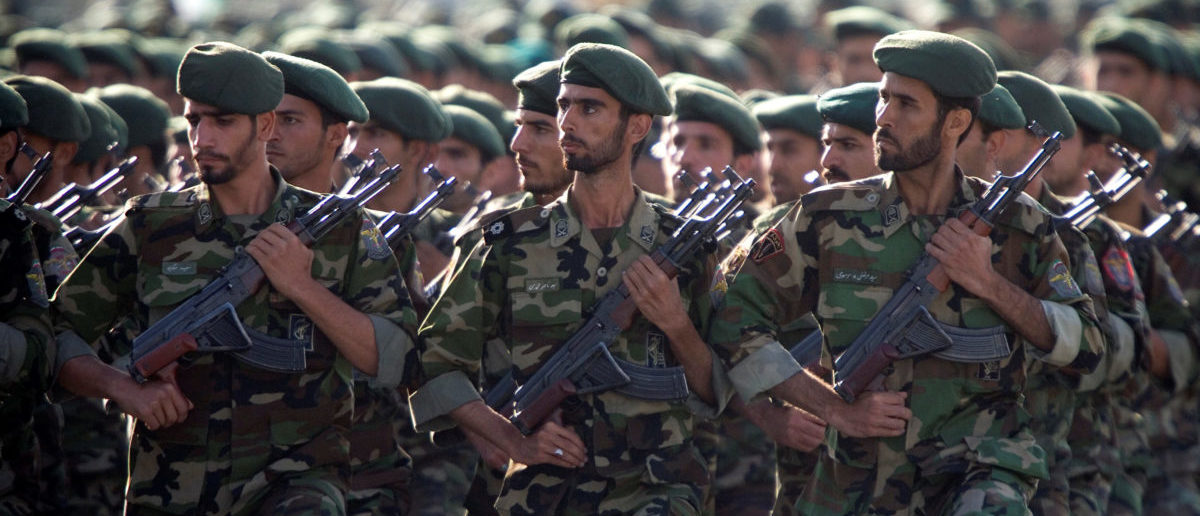
Members of Iran’s Revolutionary Guards march during a military parade to commemorate the 1980-88 Iran-Iraq war in Tehran September 22, 2007. REUTERS/Morteza Nikoubazl/File Photo

Ryan Pickrell China/Asia Pacific Reporter 3:01 PM 05/10/2018 Daily Caller

Source: US Moves To Strangle Iranian Efforts To Secure Hundreds Of Millions Of Dollars To Fund Its Troubling Military Activities

{It’s no wonder why the Iranian people are going broke. – LS}

The U.S. Department of the Treasury imposed new sanctions on Iran Thursday, just two days after President Donald Trump announced that the U.S. is withdrawing from the Iran deal.

Treasury’s Office of Foreign Assets Control blacklisted nine Iranian entities — six individuals and three firms — involved in an illegal currency-exchange network in the United Arab Emirates. Network exchangers and couriers converted and transferred hundreds of millions of U.S. dollars to the Iranian Revolutionary Guard Corps (IRGC), specifically the Quds Force (IRGC-QF), a recognized supporter of international terrorism, to “fund its malign activities and regional proxy groups,” the department said in a statement. Iran’s Central Bank is said to have been “complicit in the IRGC-QF’s scheme and actively supported this network’s currency conversion and enabled its access to funds that it held in its foreign bank accounts.”

One of the sanctioned entities Jahan Aras Kish, a front company for the IRGC-QF, retrieved oil revenues from the Central Bank of Iran and transferred the money to couriers who exchanged it for U.S. dollars by way of two other now-sanctioned companies, Rashed Exchange and Khedmati & Co. Using forged documents, network operatives were able to operate under the radar in the UAE, distributing funds to Iran’s most radical military units and regional proxies. The sanctioned persons identified by Treasury worked for either the firms or the IRGC-QF directly.

The latest move by Treasury, which was taken in cooperation with the UAE, follows the president’s announcement Tuesday that the U.S. will no longer be party to the Joint Comprehensive Plan of Action (JCPOA), more commonly known as the Iran nuclear deal.

“As I said following the President’s announcement on Tuesday, we are intent on cutting off IRGC revenue streams wherever their source and whatever their destination,” Secretary of the Treasury Steven Mnuchin said Thursday. “Today we are targeting Iranian individuals and front companies engaged in a large-scale currency exchange network that has procured and transferred millions to the IRGC-QF.”

“Countries around the world must be vigilant against Iran’s efforts to exploit their financial institutions to exchange currency and fund the nefarious actors of the IRGC-QF and the world’s largest state sponsor of terror,” the secretary added.

The IRGC-QF has been blacklisted since October 25, 2007, and the broader IRGC has been designated since October 13, 2017. Later this year, the U.S. will, as a result of the president’s decision to withdraw from the Iran deal, re-impose sanctions on the Government of Iran.


White House Examining Plan to Help Iranian People Oppose Regime

May 11, 2018

White paper pushes bid to help Iranians topple already weak hardline regime

BY: Adam Kredo May 10, 2018 3:35 pm The Free Beacon

Source: White House Examining Plan to Help Iranian People Oppose Regime

{The question is, how long will it take for the people of Iran to reach ‘critical mass’? – LS}

The Trump administration is examining a new plan to help Iranians fighting the hardline regime in Iran following America’s exit from the landmark nuclear deal and reimposition of harsh economic sanctions that could topple a regime already beset by protests and a crashing economy, according to a copy of the plan obtained by the Washington Free Beacon.

The three-page white paper being circulated among National Security Council officials in the White House offers a strategy by which the Trump administration can actively work to assist an already aggravated Iranian public topple the hardline ruling regime through a democratization strategy that focuses on driving a deeper wedge between the Iranian people and the ruling regime.

The plan, authored by the Security Studies Group, or SSG, a national security think-tank that has close ties to senior White House national security officials, including National Security Adviser John Bolton, seeks to reshape longstanding American foreign policy toward Iran by emphasizing an explicit policy of regime change, something the Obama administration opposed when popular protests gripped Iran in 2009.

The regime change plan seeks to fundamentally shift U.S. policy towards Iran and has found a receptive audience in the Trump administration, which has been moving in this direction since Bolton—a longtime and vocal supporter of regime change—entered the White House.

It deemphasizes U.S military intervention, instead focusing on a series of moves to embolden an Iranian population that has increasingly grown angry at the ruling regime for its heavy investments in military adventurism across the region.

“The ordinary people of Iran are suffering under economic stagnation, while the regime ships its wealth abroad to fight its expansionist wars and to pad the bank accounts of the Mullahs and the IRGC command,” SSG writes in the paper. “This has provoked noteworthy protests across the country in recent months.”

Jim Hanson, SSG’s president, told the Free Beacon that the Trump administration has no appetite for U.S. military intervention in Iran, but is very focused on efforts to rid Iran of its hardline ruling regime.

“The Trump administration has no desire to roll tanks in an effort to directly topple the Iranian regime,” Hanson said. “But they would be much happier dealing with a post-Mullah government. That is the most likely path to a nuclear weapons-free and less dangerous Iran.”

An NSC official declined to comment directly on the report, but confirmed the administration is consistently working to “change the Iranian regime’s behavior.”

“Our stated policy is to change the Iranian regime’s behavior of continuous destabilizing regional acts and support of terrorism,” the official said, adding that the White House reviews multiple plans and proposals from organizations. “The National Security Council is in receipt of reams of policy papers and reports, some are read with interest, others are not. Receipt of a policy paper in no way means that we are going to adopt the position of that paper.”

One source close to the White House who has previewed the plan told the Free Beacon that the nuclear deal, also known as the JCPOA, solidified the Iranian regime’s grip on power and intentionally prevented the United States from fomenting regime change

“The JCPOA purposefully destroyed the carefully created global consensus against the Islamic Republic,” said the source, who would only speak on background about the sensitive issue. “Prior to that, everyone understood the dangers of playing footsie with the world’s largest state sponsor of terrorism. It’s now Trump, Bolton, and [Mike] Pompeo’s job to put this consensus back in place.”

Bolton is said to be acutely aware of the danger the Iranian regime poses to the region, the source said.

“John is someone who understands the danger of Iran viscerally, and knows that you’re never going to fundamentally change its behavior—and the threats against Israel and the Saudis especially—until that revolutionary regime is gone,” the source said, adding that “nothing’s off the table right now if Israel is attacked.”

A second source close to the White House and familiar with the thinking on this issue told the Free Beacon the administration recognizes the chief impediment to the region is Iran’s tyrannical regime.

“The problem is not the Iran nuclear deal it’s the Iranian regime,” said the source, who would only speak on background. “Team Bolton has spent years creating Plans B, C, and D for dealing with that problem. President Trump hired him knowing all of that. The administration will now start aggressively moving to deal with the root cause of chaos and violence in the region in a clear-eyed way.”

Regional sources who have spoken to SSG “tell us that Iranian social media is more outraged about internal oppression, such as the recent restrictions on Telegram, than about supporting or opposing the nuclear program. Iranian regime oppression of its ethnic and religious minorities has created the conditions for an effective campaign designed to splinter the Iranian state into component parts,” the group states.

“More than one third of Iran’s population is minority groups, many of whom already seek independence,” the paper explains. “U.S. support for these independence movements, both overt and covert, could force the regime to focus attention on them and limit its ability to conduct other malign activities.”

American policy towards Iran has failed to explicitly support Iranian opponents of the regime who are thirsty for a change.

“U.S. policy toward Iran currently does not publicly articulate two components vital to success: That a new birth of liberty based in self-determination for the Iranian people should be official policy; and that military action should be anticipated if other measures fail,” the paper states.

In addition to preventing Iran from ever building a nuclear weapon, the Trump administration must articulate a credible military threat should Iran choose to launch full-scale attacks on Israel and U.S. forces.

“A credible hard power option exists,” according to the plan. “That option does not consist of large invasion forces or long, costly occupations.”

Without a regime change, the United States will continue face threats from Iranian forces stationed throughout the region, including in Iraq, Yemen, Syria, and Lebanon.

“The probability the current Iranian theocracy will stop its nuclear program willingly or even under significant pressure is low,” the plan states. “Absent a change in government within Iran, America will face a choice between accepting a nuclear-armed Iran or acting to destroy as much of this capability as possible.”

U.S. officials must make efforts to publicly differentiate between Iran’s ruling regime and its people, a point that was also emphasized by Trump in his statement about exiting the deal earlier this week.

“Any public discussion of these options, and any messaging about the Iranian regime in general, should make a bright line distinction between the theocratic regime along with its organs of oppression and the general populace,” according to the plan. “We must constantly reinforce our support for removing the iron sandal from the necks of the people to allow them the freedom they deserve.”

Lieberman calls on Assad to get rid of Iranian forces in Syria

May 11, 2018

Source: Lieberman calls on Assad to get rid of Iranian forces in Syria

Defense Minister Avigdor Lieberman on Friday called on Syrian President Bashar Assad to “get rid” of Iranian forces in his country, warning their continued presence would only cause trouble.

Speaking while touring the Israeli side of the Golan Heights in the wake of Iranian rocket fire on northern Israel, to which the IAF retaliated with attacks on Iranian targets in Syria, Lieberman said Israel is not looking for friction.

“We did not come to the Iranian border, they came here,” he said.

Lieberman tours Golan Heights (Photo: Ido Erez)

Lieberman tours Golan Heights (Photo: Ido Erez)
Iran has advisers and experts and has backed tens of thousands of militiamen who are fighting alongside Assad forces in the civil war. Israel has warned it will not tolerate its archenemy Iran establishing a military presence on its doorstep.”I will take this opportunity to send a message to Assad: Get rid of the Iranians, get rid of Qasem Soleimani, and the Quds Force, they are not helping you, they only cause damage, and their presence will only cause problems and damages,” Lieberman said.

Soleimani is the head of the Iranian Revolutionary Guard’s elite Quds expeditionary force which is fighting in both Iraq and Syria.

“Get rid of the Iranians and maybe it will be possible to have a different kind of life,” Lieberman added.

Lieberman tours Golan Heights (Photo: Gil Nechushtan)

Lieberman tours Golan Heights (Photo: Gil Nechushtan)

Israel attacked dozens of Iranian targets in Syria in overnight strikes in response to an Iranian rocket barrage. It was the most serious military confrontation between the two bitter enemies to date. The cross-border exchange gave way to a war of words.

Iran’s President Hassan Rouhani told German Chancellor Angela Merkel in a telephone call that he did not want “new tensions” in the Middle East.

Rouhani did not mention Israel’s strikes in Syria, or those against the Golan Heights.

Iranian President Rouhani (Photo: Reuters)

Iranian President Rouhani (Photo: Reuters)

Nevertheless, Lieberman noted that “The Iranian president’s message is an important one. I hope it’s a real one too.”

The defense minister, meanwhile, said that he didn’t think exchange of blows between Israel and Iran was over. “We remain vigilant and using discretion. We’re constantly on alert and monitoring events,” he said.

UN Secretary-General Antonio Guterres called late Thursday for an immediate halt to “all hostile acts” to avoid “a new conflagration” in the Middle East.

Guterres’ comments came as a calm night followed intense attacks on parts of Syria by Israel. Israel has called on the UN Security Council and secretary-general to condemn Iran’s attack on its positions in the Golan Heights.

The Security Council, deeply divided over Syria, is highly unlikely to issue a statement and as of Friday morning no council member had asked for a meeting.

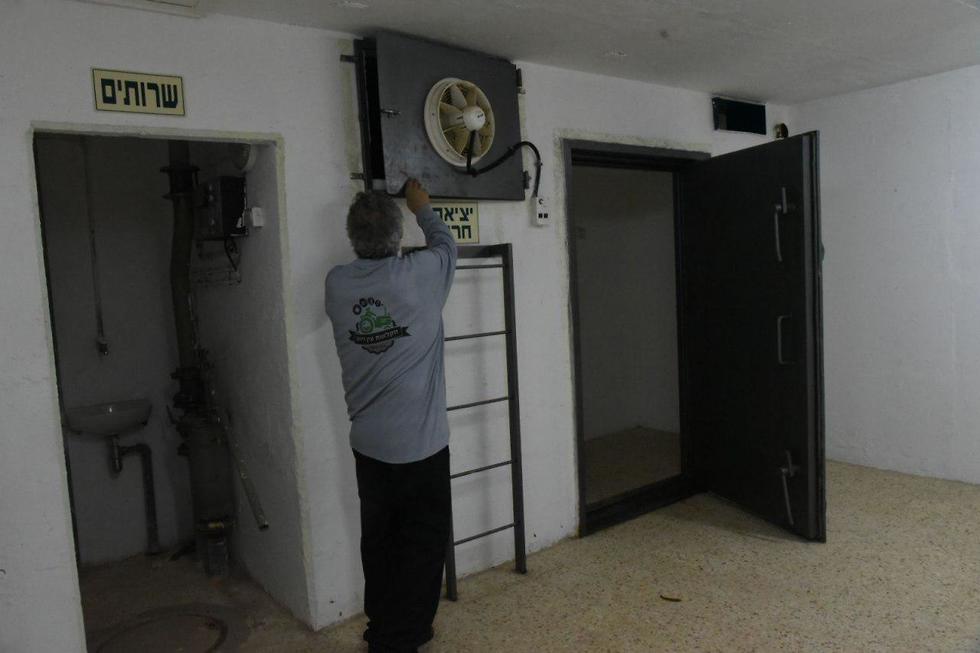
After instructing Israeli residents in the Golan Heights to open their bomb shelters on Tuesday in light of Iranian intentions to carry out an attack against Israel, the IDF said Friday shelters can now be closed.

Readying bomb shelters in the Golan on Tuesday (Photo: Avihu Shapira)

Readying bomb shelters in the Golan on Tuesday (Photo: Avihu Shapira)

Israel and Iran have long fought each other through proxies, and with the new exchange each seemed to be sending a warning that a direct clash between them could swiftly escalate.

The scope of the attacks — which Israel called its largest in Syria since the 1973 Yom Kippur War — raised the specter of a full-fledged war between Iran and Israel in Syria, a conflict that could potentially drag the militant Hezbollah and Lebanon into the mix with devastating effects, although both sides appeared to signal they wanted the confrontation to remain contained, at least for now.

The rising tension in Syria came just as the United States decided to withdraw from the 2015 nuclear deal with Iran and impose new sanctions, adding to the pressure on Tehran.

In Tehran, senior cleric Ayatollah Ahmad Khatami said the Western pressure will backfire, threatening that Israel will pay the price.

“The holy system of Islamic Republic will step up its missile capabilities day by day so that Israel, this occupying regime, will become sleepless and the nightmare will constantly haunt it that if it does anything foolish, we will raze Tel Aviv and Haifa to the ground,” the hard-line cleric said during Friday sermons. The worshipers chanted: “Death to America,” and “Death to Israel.”

Ayatollah Ahmad Khatami  (Photo: EPA)

Ayatollah Ahmad Khatami (Photo: EPA)

In a first official reaction to the confrontation on Wednesday night, Tehran said Damascus has the legitimate right to respond to what it said were repeated violations of the country’s sovereignty “under fabricated and baseless excuses.”

Iran’s Foreign Ministry spokesman Braham Ghasemi added that the international silence in the face of such “aggressive moves” is in effect a “green light” to more such attacks.

Ghasemi went on to note that the direct attacks on Syria come as the government of Assad is regaining control of territories from rebel fighters, accusing Israel and the United States of supporting the opposition which he called “terrorists.”

Yoav Zitun and Ahiya Raved contributed to this story.

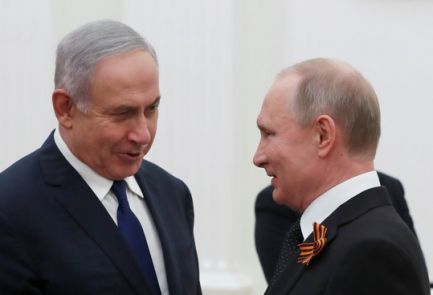
After Netanyahu visit, Russia backs off delivering S-300 missiles to Syria 

May 11, 2018

Source: After Netanyahu visit, Russia backs off delivering S-300 missiles to Syria – Israel Hayom