Archive for May 2018

Iran is the culprit behind Tuesday’s Gaza rocket barrage, Israel says

May 30, 2018

The mass produced 120mm mortars and more accurate 107 mm rockets were fired by Iranian funded Islamic Jihad

BY: Anna Ahronheim May 30, 2018 via The Jerusalem Post

Source Link:
Iran is the culprit behind Tuesday’s Gaza rocket barrage, Israel says

{The snake in the woodpile. – LS}

Israel is pointing fingers at Iran as the culprit behind the most serious escalation on it’s southern front in four years.

Less than a month after Iran’s Revolutionary Guard Corps fired 32 rockets toward Israel’s northern Golan Heights, the Iranian-funded Islamic Jihad, along with Hamas, fired some 180 Iranian-made, 120-millimeter mortar shells from the Gaza strip. The barrage included the more precise 107-millimeter rocket, which has a range of about ten kilometers into the communities in southern Israel.

It was the largest salvo fired from the Gaza Strip since the end of Operation Protective Edge in 2014. In response, Israel carried out the most extensive retaliation since 2014, striking 65 Hamas targets across the entire Gaza Strip, including a dual-purpose tunnel dug one kilometer into Egypt’s Sinai Peninsula and then 900 meters into Israeli territory.

According to IDF Spokesperson Brig.-Gen. Ronen Manelis, the tunnel was meant to not only carry out attacks against Israel, but to smuggle weaponry into the blockaded coastal enclave.

Despite Israel’s intelligence superiority over terror groups, as well a blockade imposed both by the IDF and Egypt, Hamas and other terror groups in the Strip have restocked their supply of weapons in the four years since the last round of fighting between Israel and Hamas.

The mass-produced Iranian mortar shells used in yesterday’s salvos were also used by Islamic Jihad in an attack in January, as well as a barrage 12 mortar shells toward an army outpost in November.

Israel has intercepted Iranian weapons destined for the Strip several times, including just months before the outbreak of Operation Protective Edge when it stopped the Klos-C commercial ship filled with Syrian long-range rockets.

Before the salvos, less than 10 projectiles had been fired from the Hamas-run Strip into Israeli territory in 2018. The previous year saw 31, mainly during the month of December after US President Donald Trump recognized Jerusalem as Israel’s capital and announced his intention to move the US embassy from Tel Aviv to Jerusalem. In 2016, some 15 were launched toward Israel, and in 2015, another 21.

With an estimated 180 projectiles fired into Israel in one 24 hour period, that makes the total amount of projectiles fired into Israel more than the total number of rockets and mortars fired from the Hamas-run Gaza Strip since 2014.

Speaking on a conference call organized by The Israel Project, Brig. Gen. (res.) Yossi Kuperwasser, the former director general of the Ministry of Strategic Affairs and former head of the research division in IDF Military Intelligence said that that the “relatively short” round of violence on Tuesday was in a way “encouraged by the Iranians.”

Tuesday’s violence was “another reflection of Iran’s frustrations and tensions which is trying to show it can cause trouble and instability,” he said, pointing to Hamas’ involvement with the March of Return and how Yihya Sinwar has boasted about his close ties to Hezbollah and Iran, including IRGC Quds Force commander Maj.-Gen. Qassem Soleimani.

“Iran doesn’t want stability here. They want to make everyone realize that they are a player and that they should be taken very seriously with a lot of respect and in this way deter people from putting more pressure on them, but it isn’t working.”


After 130 rockets fired from Gaza, Israelis wake to tentative calm 

May 30, 2018

Source: After 130 rockets fired from Gaza, Israelis wake to tentative calm – Arab-Israeli Conflict – Jerusalem Post

Sirens sounded in southern Israeli towns and cities throughout the night. House in Netivot suffered direct hit.

BY REUTERS, SHOSHANA KRANISH
 MAY 30, 2018 07:48
After 130 rockets fired from Gaza, Israelis wake to tentative calm

Following scores of militant rocket and mortar launches throughout the day countered by Israeli tank fire and air strikes, the pro-Iran Islamic Jihad militant group said late Tuesday night that an Egyptian-brokered ceasefire agreement had been implemented, but Israel said reports of a deal were untrue.

“Palestinian factions will abide by calm as long as (Israel) abides by it,” Islamic Jihad spokesman Daoud Shehab said. An Israeli official who declined to be named said, “The report about a ceasefire is incorrect.”

According to Palestinian media reports Wednesday morning, a ceasefire was put in place around 5 a.m., although this has not been confirmed by the Israelis. Sirens which had been blaring regularly throughout the night, petered off as day broke in the region. As a result of the cautious calm, Israeli schools in the area surrounding the Gaza Strip are open and operating normally.

Israeli sirens warning of imminent rocket and mortar strikes sounded all throughout the night in communities surrounding the Gaza Strip. Most of the projectiles were either intercepted by Israel’s advanced Iron Dome missile defense system or landed in open fields. In one case, however a home in the city of Netivot was directly hit, but no one was injured. In response to the fire, Israeli aircraft hit 55 militant targets in the Palestinian coastal enclave, including a cross-border tunnel under construction, the military said.

Over 130 rockets and mortars were fired towards Israel throughout Tuesday and into early Wednesday morning. Lieutenant-Colonel Jonathan Conricus, a spokesman for the Israel Defense Forces (IDF), said the most extensive strikes from Gaza since the 2014 war had drawn “the largest IDF retaliatory attack” since that conflict.

Several militant projectiles were shot down by Israel’s Iron Dome rocket interceptor system, others landed in empty lots and farmland. One exploded in a kindergarten yard, damaging walls and scattering debris and shrapnel around the playground, about an hour before it was scheduled to open for the day.

Israeli Prime Minister Benjamin Netanyahu convened security chiefs on Tuesday, and Intelligence Minister Israel Katz said the country was “at the closest point to the threshold of war” since the seven-week conflict with Palestinian militants four years ago.

“If the firing (from Gaza) does not stop, we will have to escalate our responses and it could lead to a deterioration of the situation,” Katz said on Army Radio.

Palestinian President Mahmoud Abbas, who heads the Fatah faction that is dominant in the occupied West Bank and is a bitter rival of Hamas and Islamic Jihad, said Israel had used “vigorous aggression” against Gaza that proved it did not want peace.

Various international leaders have condemned the day’s events, with the US calling for an emergency United Nations Security Council meeting set to take place Wednesday afternoon.

Nickolay Mladenov, the United Nations’ special coordinator for the Middle East peace process, said he was deeply concerned by “the indiscriminate firing of rockets by Palestinian militants from Gaza towards communities in southern Israel.”

Amid international condemnation of its use of lethal force at the mass demonstrations that began on March 30, Israel said many of the dead were militants and that the army was repelling attacks on the border fence.

Hamas must choose between war or peace 

May 30, 2018

Source: Hamas must choose between war or peace ‎ – Israel Hayom

Yoav Limor

This week’s mortar fire on southern Israel is the ‎gravest security escalation on the Israel-Gaza Strip ‎border since Operation Protective Edge in ‎the summer of 2014, but Israeli defense officials ‎believe Israel and Gaza can still avoid a ‎full-fledged ‎military conflict, saying the choice of ‎what happens next is in Hamas’ hands. ‎

This escalation did not happen overnight. It began ‎with the failure of the so-called “million-man march” ‎Hamas planned to unleash on the border two weeks ago ‎to mark Nakba Day, which commemorates the ‎‎”catastrophe” of Palestinian displacement during ‎Israel’s 1948 War of Independence. The “million men” ended up being only several thousand. Since then, ‎Hamas’ border riot campaign has also been dwindling.‎

To try to maintain friction with Israeli security ‎forces, Hamas has spared no effort to turn the ‎border area into a terrorist zone, and has ‎given its operatives – and Palestinian protesters – ‎a free hand to carry out terrorist attacks, including ‎hurling firebombs, sending incendiary kites and ‎balloons over the border, and placing explosives on ‎the security fence. ‎

Israeli shelling in response to one of these attacks killed ‎three Islamic Jihad operatives. The terrorist group ‎claimed responsibility for Tuesday morning’s salvo, ‎citing retaliation, but there is no doubt Hamas gave it the green light. ‎

Hamas, which rules Gaza, gambled that Israel would ‎mount the obligatory measured response and that this would end the current round. This is why Hamas ‎operatives were not involved in any rocket fire then.‎

But Israel mounted a large response instead, striking ‎dozens of terror hubs and destroying a Hamas ‎terror tunnel in southern Gaza. Hamas was pressured ‎to respond, both by its own members and the other ‎terrorist groups in Gaza, and, in a bid to maintain ‎control, it decided to join the ‎fire spree.‎

One defense official called it the “Fatah syndrome,” ‎saying that Hamas’ biggest fear is being ‎perceived – like rival faction Fatah – as doing ‎nothing to take part in the Palestinian struggle.‎

Still, Hamas made it clear to its operatives that ‎their fire must be limited to the Israeli communities near the border and that they must avoid a wider range that could ‎compromise larger cities such as Ashdod, Beersheba ‎and even Tel Aviv. ‎

Israeli defense officials debated the intensity of ‎Israel’s response, but it was widely believed that ‎decisive action was needed to make it clear to Hamas ‎that a red line had been crossed. ‎

From a public diplomacy standpoint, Israel placed ‎responsibility for the escalation in the south on ‎Hamas, which controls Gaza, and on Iran, ‎which sponsors it and spurs it into action. ‎Islamic Jihad was also condemned to a lesser ‎degree, despite its direct involvement. Israel was careful and sought to avoid Palestinian ‎casualties as much as possible. ‎

The Israeli response was meant mostly to give Hamas the necessary ‎leeway to contain the situation before it spirals ‎out of control. Naturally, the IDF is ready for ‎that to happen, but it still prefers to avoid a ‎wide-ranging military campaign if possible.‎

Egypt and Qatar played roles as brokers Tuesday, to little effect. The decision of where to go ‎from here remains in Hamas’ hands. If it mounts a ‎minor response to the IAF’s strikes in Gaza, Israel will be able to pull back. But if the mortar ‎and rocket salvos continue, the IDF will retaliate ‎forcibly and things could easily deteriorate from ‎there. ‎

The prevailing view in Israel is that Hamas has no ‎interest in such escalation, but its conduct ‎currently is confused and erratic, which is a recipe for ‎mistakes. ‎

Even if an escalation is avoided, this ‎is hardly the end of the story. Gaza is on the ‎brink of eruption for a variety of reasons, most ‎notably the dire economic and humanitarian ‎situation, coupled with growing political and ‎political frustration. Given Hamas’ failure to ‎provide Gazans with any solutions, it can go on one ‎of two paths: a cease-fire or war. Both options are still on the table.‎

Hamas’ junior partner, Iran’s hidden hand 

May 30, 2018

Source: Hamas’ junior partner, Iran’s hidden hand – Israel Hayom

Dr. Eran Lerman

The mortar attacks and cross-border infiltrations from the Gaza Strip should serve as a reminder that Hamas may be in charge of the Gaza Strip, but it has a junior partner that is dangerous and capricious and that it refuses to disarm: Islamic Jihad.

There is a reason for this. While Hamas is, generally speaking, in contact with Iran, it still operates independently. But Islamic Jihad works on Iran’s behalf and is largely an Iranian proxy.

Hamas has chosen not to take on Islamic Jihad so as not to exacerbate its already strained relationship with Iran (stemming from their differences over how to treat Syrian President Bashar Assad’s regime). This has led to a situation in which Islamic Jihad acts as an independent military force that does not report to Hamas and serves a foreign interest.

Hamas knows that allowing this may come with a steep price, as the “mini conflagrations” that preceded the 2014 Gaza war showed. Islamic Jihad is not an organic Palestinian organization; unlike Fatah in the days of PLO Chairman Yasser Arafat and unlike Hamas now, it never fought to maintain its “istiklal al-karar” (“the right to make its own decisions”). Islamic Jihad is, for all intents and purposes, an extension of the Iranian regime and serves its interests.

Incidentally, this shows that the Iranian-led radical camp in the Middle East includes non-Shiites. There are virtually no Shiites among Palestinians; Islamic Jihad, like Hamas and Islamic State, is Sunni.

Iran has its own agenda. It finds it easier to exert pressure on Israel and threaten it without making Hezbollah, its proxy in Lebanon, enter the fray through another war with Israel. It also prefers to avoid another confrontation with Israel on the Syrian front, which cost it dearly several weeks ago. Iran has opted to capitalize on the Gaza flare-ups, which generate solidarity with the Palestinians on perceived humanitarian grounds.

By doing so, Iran is also signaling Hamas that it can use force to derail Israel-Hamas mediation efforts led by Egypt, Qatar and others. Israel does not seek an escalation, nor does it want to let Iran drag it into its irresponsible game.

But it is also important that Israel’s reactions make it clear to Hamas that letting Islamic Jihad trigger another widespread escalation does not serve its interests or its continued existence.

Col. (ret.) Dr. Eran Lerman, former deputy director of the National Security Council, is the vice president of the Jerusalem Institute for Strategic Studies.

Losing the Democrats 

May 30, 2018

Source: Losing the Democrats – Israel Hayom

Zalman Shoval

A group of 76 Democratic U.S. Congress members has sent a letter to Prime Minister Benjamin Netanyahu asking that Israel stop demolishing homes in the Palestinian village of Susya, beyond the Green Line.

“These actions unilaterally change facts on the ground and jeopardize the prospects for a two-state solution,” as well as Israel’s chances of remaining a Jewish, democratic state, they wrote.

Although the two-state idea is irrelevant right now and the homes are being demolished because of security considerations – and the demolitions require the approval of the High Court of Justice – this is of no particular interest to Jewish Congresswoman Jan Schakowsky of Illinois, one of the signatories. Unsurprisingly, she has the support of the leftist group J Street, which takes an anti-Israeli stance on almost every issue, including the nuclear deal with Iran.

Despite its bias, the letter itself was not particularly disturbing, other than the fact that everyone who signed it was from the Democratic Party, which in the not-too-distant past was considered a consistent supporter of Israel. One of the main reasons for this shift, possibly the most important one, is that President Donald Trump, who is loathed by the liberal Left, supports Israel, making support for Israel a target in the intensifying conflict between the American political camps.

Unlike in the past, when support for Israel in the U.S. was bilateral, the Trump administration’s support amid the heated relations between the two political poles have made Israel into a legitimate target for attack in the eyes of the left wing in the Democratic Party. Democratic politicians were notably absent from the opening of the U.S. Embassy in Jerusalem. Rather than admit that Democratic presidents, as well as Republican, had gone back on their promises to relocate the embassy, Democratic lawmakers preferred to punish Israel for Trump’s “sin” of actually living up to his commitment.

Shalom Lipner, a research fellow at the liberal Brookings Institute in Washington, published an article last Tuesday titled “Netanyahu’s risky romance with Trump.” One of his supposed pieces of proof is the similarity of the U.S.’s and the Netanyahu government’s stances on Iran. Even though even Netanyahu’s political opponents in Israel see the issue as one of existential significance, if it’s Trump who takes action against the Iranian threat, that is apparently out of bounds. Lipner disparages what he calls “short-term gains,” but forgets that reining in Iranian aggression is the opposite of “short-term,” and it is obvious that Israel can breathe a sigh of relief after eight years of a U.S. president who had a negative stance toward Israel from his first day in office.

It could be that the current good relations with the Trump administration won’t last forever. There is also no way of knowing what the U.S. Congress will look like five months from now, after the 2018 midterm elections, or how the next presidential election will turn out. This is why the internal fight between the center and the populist Left in the Democratic Party should be a concern, especially given that judging by some of the party primaries, the Left could gain strength. Not all of them are necessarily anti-Israel or pro-Palestinian, but their traditional emotional connection to Israel is far from a sure thing.

Israel has no desire to become part of the American domestic political game, and it hopes that the Jews there will differentiate between their interests and positions as Americans and their identification with Israel. Israel’s strengthening ties with the evangelical Christian community are a thorn in the side of many American Jews. But the evangelicals are natural partners, not because of their opinions on religion and the end of days, but because of their worldview on Israel. The fact that there are millions of African-American and Hispanic evangelicals is also important.

Some of the evangelical slogans are certainly not to our taste, and it is clear that evangelicals can never replace the connection Israel, as the Jewish state, has with U.S. Jewry, but the practical partnership with them is a political asset that every Israeli government should foster.

As Gaza front cools, Iran and Syria move on their next flashpoint

May 30, 2018

Source: As Gaza front cools, Iran and Syria move on their next flashpoint – Quneitra – DEBKAfile

Hours after the Palestinians paused on Wednesday, May 30, in their broadest rocket/mortar assault on Israel in four years, their Iranian backers were already moving on the Golan.
Under cover of the deafening Gaza clash, Iran, Syria and Hizballah began marching military units on the road to Quneitra opposite Israel’s Golan border. They include the Syrian army’s 42nd armored brigade of the elite 4th Division.
DEBKAfile’s military and intelligence sources report Iran is employing its classical tactic of cooling one sector – on Israel’s southern border with Gaza – while creeping up silently on another – the Golan front in the north.
The movement is timed to reach Quneitra on Thursday, March 31, when Russian defense minister Gen. Sergei Shoigu and his Israeli counterpart Avigdor Lieberman are due to meet in Moscow.

IDF destroys 2km long Hamas terror tunnel entering into Israel

May 30, 2018

Source: IDF destroys 2km long Hamas terror tunnel entering into Israel

The ‘irregular’ tunnel entered 900 meters into Israeli territory, destroyed near Kerem Shalom border crossing; 30 terror targets overall hit since morning, belonging to both Hamas and Palestinian Islamic Jihad, in most significant strike since 2014’s Operation Protective Edge.
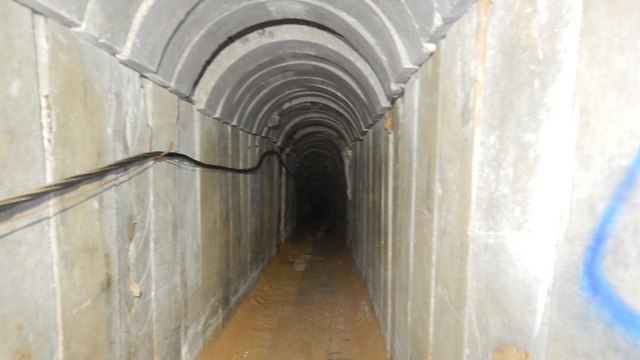
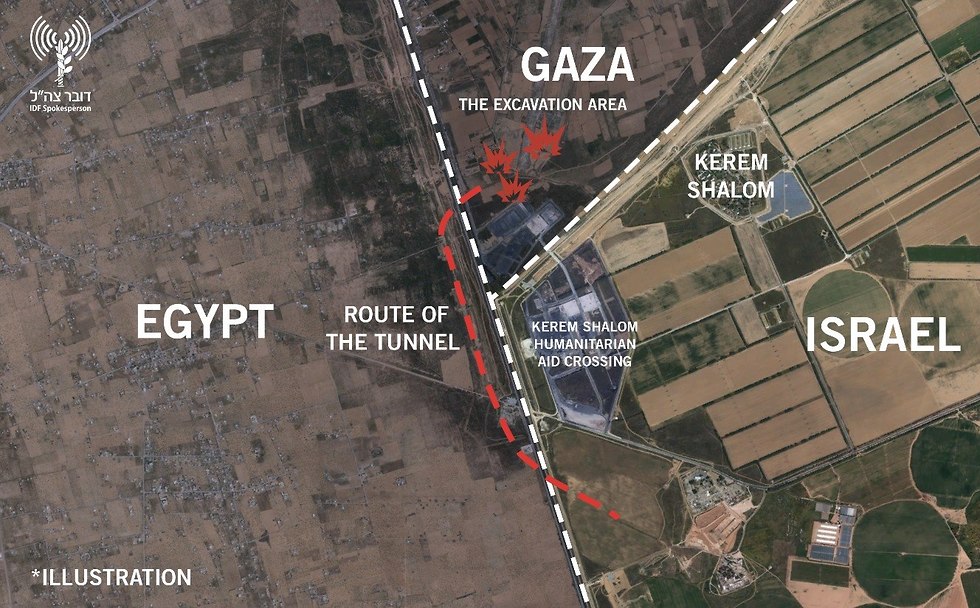
The IDF released a statement Tuesday afternoon saying it was in the process of destroying a “high standard tunnel” near the Kerem Shalom goods border crossing from Israel into the Gaza Strip, with the tunnel crossing a kilometer into Egypt and then returning towards Israel—crossing some 900 meters into the country.
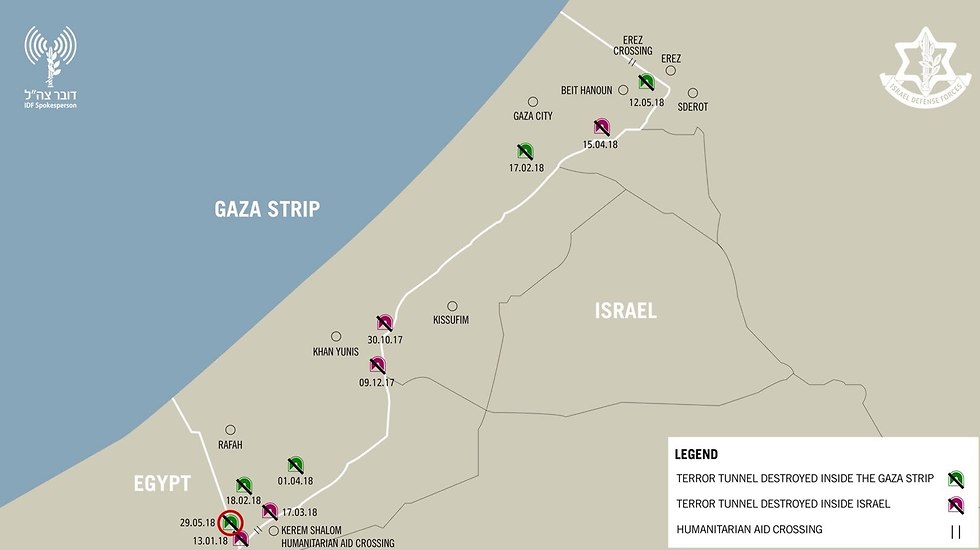
The tunnel, an army official said in a briefing, was intended for both smuggling operations and terrorism. “It was the tenth tunnel we destroyed,” the official said. “It was under construction by Hamas and had yet to be completed. We attacked its shafts on the Rafah side.”The official expounded that the tunnel was “irregular in its characteristics” and noted it was two kilometers in length overall. “It’s an extremely long tunnel,” the official revealed. “It had exit shafts on the Egyptian side. It was handled with aerial assaults and in the coming hours the portion crossing into Israel will also be dealt with to complete its neutralization.”

The Hamas tunnel running under Kerem Shalom was used for both smuggling and terrorism (Photo: IDF Spokesperson's Unit)

The Hamas tunnel running under Kerem Shalom was used for both smuggling and terrorism (Photo: IDF Spokesperson’s Unit)

IDF Spokesman Brig.-Gen. Ronen Manelis added that Egypt was apprised of the tunnel’s existence before the army began destroying it.

“This was a dual-use tunnel, both for smuggling and terrorism,” he said, adding it was designed to “bypass (Israel’s border security) fence. In fact, it creates a bypass route through Egypt into Israeli territory. It also allows smuggling from Egypt into the Gaza Strip and carrying out terror attacks inside Israel.”

 (Photo: IDF Spokesperson's Unit)

(Photo: IDF Spokesperson’s Unit)

The IDF spokesperson noted called the tunnel’s length “exceptional,” and noted it was “constructed according to building code the Hamas uses to build its tunnels.”

Before speaking on the tunnel, the IDF divulged that the Palestinian Islamic Jihad terror group was behind the salvo of dozens of mortar shells fired at Israeli communities near the Gaza border earlier in the day.

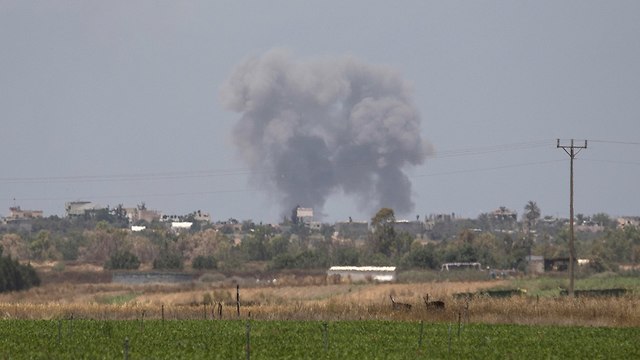
 (Photo: Reuters)

(Photo: Reuters)

“We’ve pinpointed 30 mortars with certainty and deduced the rest were machinegun bullets,” the official said. Apart from the dozens of mortars, the IDF added that several 107 millimeter Iranian rockets were fired as well, with the IDF calling it the “most serious incident since Operation Protective Edge. The Islamic Jihad is endangering civilians in our communities.”

 (Photo: IDF Spokesperson's Unit)

(Photo: IDF Spokesperson’s Unit)

In response to the morning salvo, an IDF spokesman said the army retaliated by attacking more than 30 terror targets around the strip, belonging to both Hamas and Islamic Jihad, including weapons storehouses, outposts and a Hamas tunnel in the southern strip.

“Hamas has been allowing groups to carry out attacks in the fence’s vicinity since Nakba Day (May 15). Hamas has felt a sense of failure at reaching the fence and therefore over the past two weeks there has been a change in the number of terror groups reaching the fence under Hamas’s direction,” the official said.

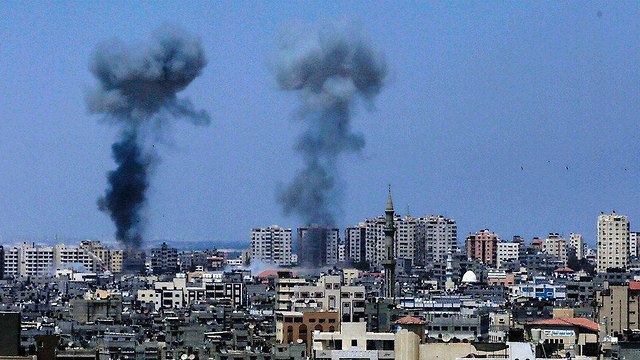
The IDF attacked some 30 terror targets around the strip Tuesday (Photo: AFP)

The IDF attacked some 30 terror targets around the strip Tuesday (Photo: AFP)

The army spokesman then went on to clarify the Gaza-ruling terror group was steering events in the strip. “This morning’s mortar bombs were intercepted by the Iron Dome, which demonstrates (Israel’s) technological advancement, but (coverage is) still not hermetic,” he said.

An IDF official later specified that the Iron Dome system intercepted 25 mortars of the dozens launched from Gaza, which nevertheless led to five Israelis being wounded lightly to moderately.

The army later reiterated its instruction for Israelis residing on the Gaza perimeter to remain within 15 seconds of shelters at all times.

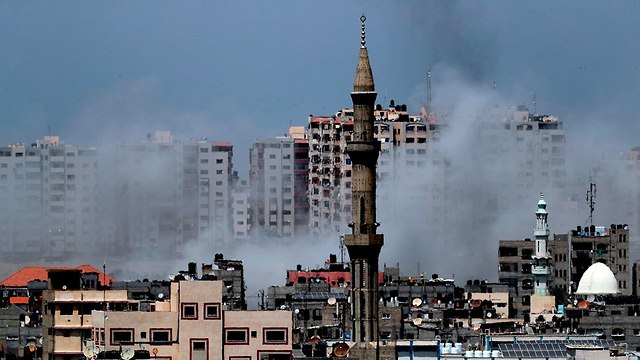
IDF bombings in Gaza

IDF bombings in Gaza

The official concluded his statement by saying “Hamas will decide the direction the coming days take. Hamas allows the fire, turns a blind eye or is party to it. Hamas is not interested in escalation and yet allows the incidents to continue.”

“This is unprecedented fire,” he added. “Just like Hamas preserved calm, it now allows the noise and will face the consequences for that.”

Dozens of rockets and mortars fired into Israel overnight, several intercepted

May 30, 2018

Source: Dozens of rockets and mortars fired into Israel overnight, several intercepted | The Times of Israel

Israel hits some 25 Hamas targets including drone facility, rocket manufacturing plant, advanced weapons depot, military compounds, training camps and weapons factories

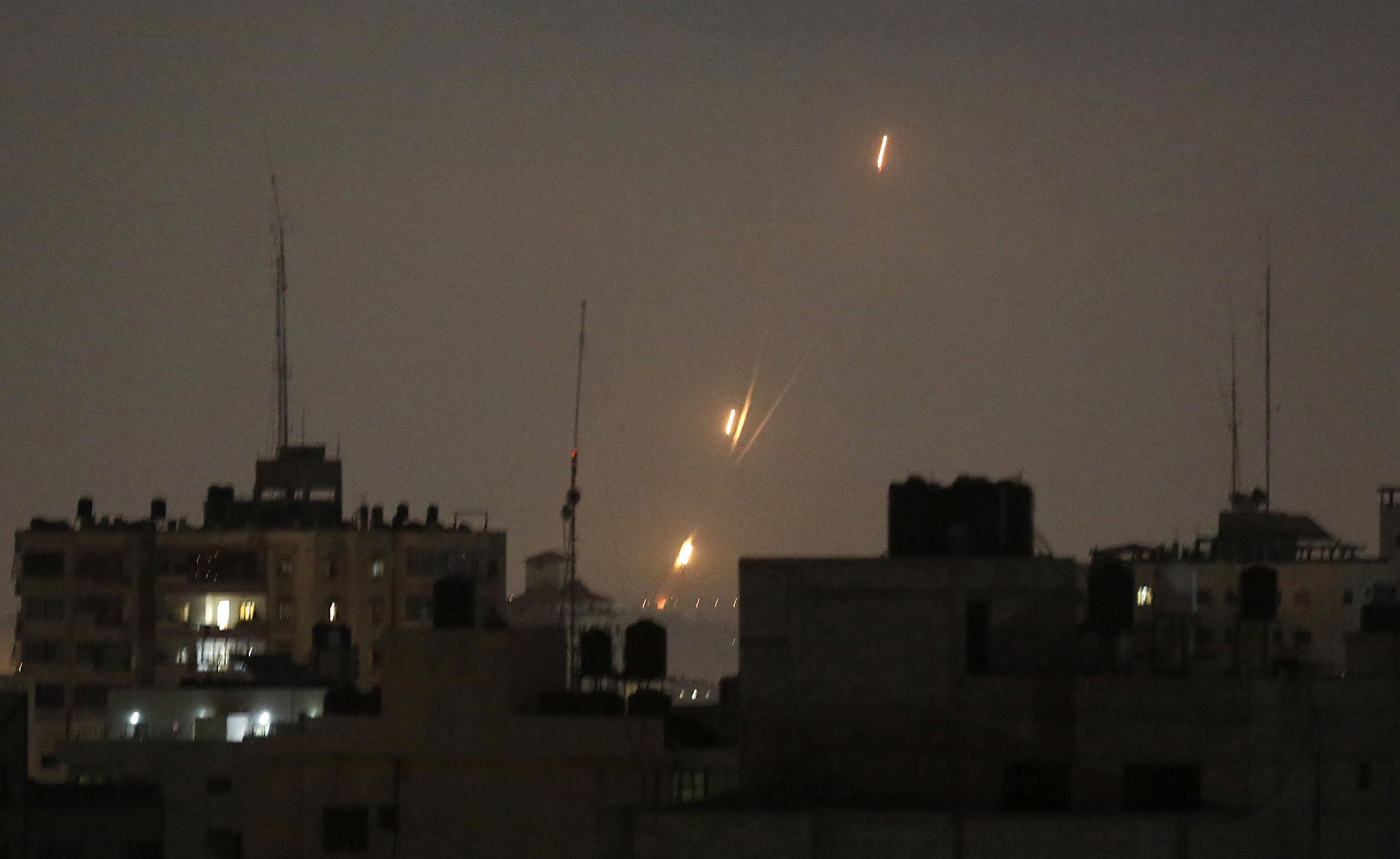
Flames from  rockets fired by Palestinians are seen over Gaza Strip heading toward Israel , early Wednesday, May 30, 2018. (AP Photo/Hatem Moussa)

Flames from rockets fired by Palestinians are seen over Gaza Strip heading toward Israel , early Wednesday, May 30, 2018. (AP Photo/Hatem Moussa)

Thousands of Israelis spent the night in bomb shelters as terrorist in the Gaza Strip fired some 40 rockets and mortars at communities near the coastal enclave early Wednesday, with several of them being intercepted by Iron Dome. There were no reports of injuries.

The IDF said that rockets and mortars were fired at the Eshkol, Sha’ar Hanegev and Sdot Negev regions and that Iron Dome intercepted several of them, while the rest fell in open areas.

The army did not give the number of launches, but Hebrew media reports said there were more than 40.

Sirens also went off in other regions including the city of Ashkelon and the town of Netivot, but the IDF said they appeared to be false alarms and they were investigating the cause.

Earlier in the evening fragments of a rocket that had apparently been intercepted by the Iron Dome landed in a sports facility in the southern town of Netivot.

The shards of the projectile caused light damage to a number of structures, but no injuries. One woman, who was close by at the time, was said to have suffered a panic attack.

A video, shared by Channel 10 news on social media, showed a cloud of smoke coming out of the area following the impact.

Despite the attacks, schools in the region were set to open on schedule Wednesday morning.

Late Tuesday Israeli warplanes hit some 25 Hamas targets in the Gaza Strip in a second wave of retaliatory strikes, the army said, as Palestinian terror groups continued to fire mortars and rockets into Israel.

Midnight came and went with no signs of a reported ceasefire deal to end a day of cross-border attacks that began with a barrage of mortar shells from Gaza into southern Israel. Terror groups in the Gaza Strip said the agreement had been reached under Egyptian mediation, while Israeli officials denied a truce had been agreed upon.

The military said fighter jets, helicopters and other aircraft bombed a Hamas drone facility, rocket manufacturing plant, advanced weapons depot, military compounds, training camps and weapons factories.
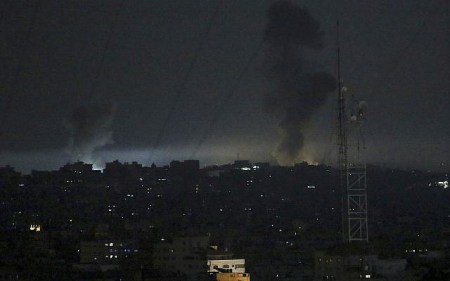
Smoke rises following Israeli strikes on Gaza City, early Wednesday, May 30, 2018. Palestinians in the Gaza Strip fired at least 50 rockets and mortars into southern Israel on Tuesday, the largest barrage since the 2014 war between Israel and Hamas. (AP Photo/Adel Hana)

Video from Gaza showed large explosions rocking the area as aircraft were heard roaring overhead.

This was the second round of strikes carried out by the IDF in response to mortar and rocket fire from Gaza. On Tuesday, Israeli aircraft targeted approximately 40 positions in the Gaza Strip belonging to the Hamas and Palestinian Islamic Jihad terror groups.

Earlier, Hamas and the Iran-backed Islamic Jihad released a joint statement claiming responsibility for the dozens of rockets and mortar shells fired at southern Israel throughout the day.

Israel holds Hamas responsible for all violence emanating from the coastal enclave, that it has ruled since 2007.

“Hamas chooses to act against the interests of the residents of the Strip and, after it failed with its violent riots along the security fence, has decided to launch and to allow the launch of numerous projectiles at Israeli citizens,” the army said in a statement.

IDF Spokesperson Ronen Manelis said at an evening press conference that the army was prepared to intensify its retaliatory raids if Hamas and Islamic Jihad continued to launch projectiles at Israel — which they did.

“The IDF is prepared for a number of scenarios, is determined to act against terrorist operatives and will continue to fulfill its mission of defending the citizens of Israel,” the army said.

The conflicting reports on a ceasefire came as Gazans continued shooting barrages of projectiles at southern Israel, capping a day that saw over 70 rockets and mortars fired at communities near the Gaza border.

An Islamic Jihad said spokesman said a “ceasefire agreement was reached with Israel to return to calm.”

He told AFP that Gaza’s rulers Hamas were also committed to it.

The Shehab news outlet, which is affiliated with the Hamas terrorist group, reported that Egypt helped broker the agreement, which was supposed to come into force at midnight, and which was based on the truce reached at the end of the 2014 Gaza war.
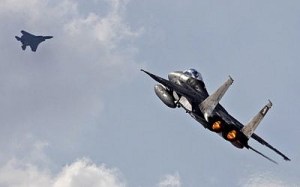
An Israeli Air Force F-15 takes off during the Blue Flag air exercise at the Ovda air force base, north of the Israeli city of Eilat, on November 8, 2017. (Jack Guez/AFP)

But a senior Israeli official denied that a deal had been reached.

“The reports of a ceasefire are not correct,” the official told reporters, speaking on condition of anonymity.

Earlier Israeli news reports said Egypt was attempting to mediate an end to the military escalation in the Gaza Strip and had urged Palestinian terror groups to halt their attacks on Israel.

Hadashot TV news reported that Egyptian intelligence had contacted Hamas and Islamic Jihad and urged them to rein in projectile fire in order to prevent the violence from spiraling into a larger conflict.

Egypt had been instrumental in calming tensions in the Strip earlier this month, after clashes during violent protests along the border led to the deaths of 62 Palestinians, at least 53 of them members of terror organizations.

Tuesday saw at least 70 rockets and mortar shells launched into Israel from Gaza, as well as dozens of retaliatory strikes by the IDF against terror targets in the Strip, after weeks of soaring tensions in the region stemming from weekly protests on the border. In an early morning mortar shell barrage, one shell exploded in the yard of a kindergarten shortly before children arrived.
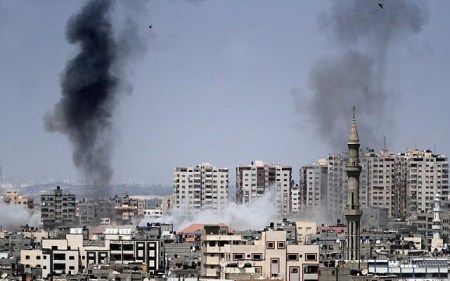
A picture taken from Gaza City on May 29, 2018, shows a smoke billowing in the background following an Israeli air strike on the Palestinian enclave. (AFP PHOTO / THOMAS COEX)

Israeli officials and Hamas and Islamic Jihad both sent out signals Tuesday evening that they were uninterested in a further escalation of violence, even as sporadic rocket fire trickled out of the Strip after sundown.

“We are not set on escalating the situation, but the Israel Defense Forces will respond forcefully to all fire from the Strip and will exact a price,” a senior Israeli official said, after a top-level emergency meeting convened by Prime Minister Benjamin Netanyahu.

Hamas and Palestinian Islamic Jihad terrorist groups, jointly responsible for the hours of salvos of rockets and mortar rounds at Israel, released similar messages through Palestinian media, saying they were not interested in escalating the situation but that “you must be stupid to think that we won’t retaliate.”

Intelligence Minister Yisrael Katz told Army Radio the cross-border violence could potentially intensify.

He said Israel was closer to war than it had been since 2014, when the country fought a punishing 50 day war with Gaza-led fighters that the enclave has yet to recover from.

“We don’t want war and neither do they, but we have our red lines,” Katz said.
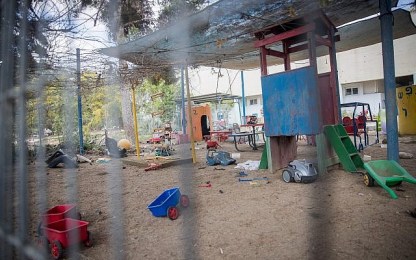
The site where a mortar shell from Gaza hit a kindergarten in southern Israel, near the border with Gaza on May 29, 2018. (Yonatan Sindel/Flash90)

Meanwhile the US requested an urgent meeting of the UN Security Council to discuss Palestinian attacks on Israel, the US mission said.

The council was scheduled to meet Wednesday to discuss the cross-border violence.

“The recent attacks out of Gaza are the largest we have seen since 2014,” US Ambassador to the UN Nikki Haley said in a statement. “The Security Council should be outraged and respond to this latest bout of violence directed at innocent Israeli civilians, and the Palestinian leadership needs to be held accountable for what they’re allowing to happen in Gaza.”

The international community was largely supportive of Israel throughout Tuesday, condemning terror group’s salvos of rockets and mortars on civilian populations, while calling on both sides to work towards calm.

Iranian Valerie Jarrett Is Happy Roseanne Barr Was Fired for a Bad Joke

May 30, 2018

ABC announced Tuesday it had canceled its hit show “Roseanne” because of a joke tweet from the show’s star referring to an ex-Obama aide as an “ape.” The aide was the far-left Iranian Valerie Jarrett.

By Guest Post – May 29, 201 via Independent Sentinel

Source Link:
Iranian Valerie Jarrett Is Happy Roseanne Barr Was Fired for a Bad Joke

{Valerie Jarrett is not an ape. She’s a snake in every sense of the word. – LS}

I would never call Jarrett an ape, joking or not, because it isn’t an accurate descriptor. She is a commie revolutionary with an affinity for radical Islamists.

The wicked leftist Valerie Jarrett is happy Roseanne Barr was fired.

“First of all, I think we have to turn it into a teaching moment. I’m fine. I’m worried about all the people out there who don’t have a circle of friends and followers coming to their defense,” Jarrett said during a town hall on MSNBC called “Everyday Racism in America.”

When asked if ABC made the right call in canceling the sitcom “Roseanne,” Jarrett said that the network did and that Bob Iger, the chief executive officer of Disney, had called her before the announcement.

THE UNFORGIVEABLE JOKE

Comedian and actress Roseanne Barr referred to Valerie Jarrett, a former senior adviser to Barack Obama, as a “child” of the “Muslim Brotherhood” and “Planet of the Apes” in a tweet posted Tuesday.

Are people tired of this one-side PC garbage yet? Roseanne apologized for her bad joke but cannot be forgiven.

https://twitter.com/therealroseanne/status/1001471669641216005?ref_src=twsrc%5Etfw&ref_url=http%3A%2F%2Fwww.independentsentinel.com%2Firanian-valerie-jarrett-is-happy-roseanne-barr-was-fired-for-a-bad-joke%2F&tfw_creator=indiesentinel&tfw_site=indiesentinel

An apology from someone on the right is never accepted, even if the person is just joking. Jarrett’s not much of a Black person. She has nothing in common with an American Black or their struggle. She’s Iranian.

Michelle Wolf says hateful and brutal things about Sarah Huckabee and gets a Netflix special.

The left can say any nasty thing they want about people on the right and receive accolades for it. They certainly called George W. Bush an ape often enough. Look at the names they call Trump and if anyone in the media praises him, they are characterized in negative ways, claiming they are ‘normalizing Trump’. They will take our country down if they have to in order to destroy the President and the right once and for all.

That communist George Soros and his comrades are spreading money around to push for fellow leftists to win political races and open our borders so they will have a permanent electoral majority.

They’ve snookered the new immigrants, legal and illegal.

All conservatives, Republicans, and religious people are being dehumanized and silenced. We are mocked and made into fools.

The leftists threaten to kill all of us on the right, malign us, and have assasination plays and movies about Bush, Trump, anyone they want to destroy on the right. That’s all okay.

Jimmy Kimmel mocked the accent of the First Lady of the USA and nobody seemed to care.

Heck, we have a media that constantly lies to destroy the President and any of his followers.

Rocket fired at Netivot, IDF attacks in Gaza following barrage

May 30, 2018

IDF attacks terrorist targets in Gaza hours after barrage of 80 rockets and mortars.

Elad Benari, 29/05/18 23:44 | updated: 00:58
http://www.israelnationalnews.com/News/News.aspx/246655
Airstrike in Gaza (archive) Reuters

A rocket fired from Gaza exploded in the city of Netivot in southern Israel on Tuesday night.

One person suffered shock as a result, but there were no physical injuries and no damage was reported.

The IDF attacked terrorist targets in Gaza on Tuesday night, in the most extensive attack on the enclave since the 2014 Operation Protective Edge.

The attacks followed a barrage of some 80 rockets and mortars that were fired from Gaza at southern Israel, including Iranian-made rockets.

The Hamas and Islamic Jihad terror groups claimed responsibility for the rocket and mortar barrages.

Incoming rocket sirens were heard in the communities surrounding Gaza at around 11:40 p.m. on Tuesday night. There are no reports thus far of any rockets that were fired towards southern Israel.

The IDF confirmed it was attacking in Gaza shortly after the Islamic Jihad claimed it reached understandings on a ceasefire in Gaza following Egyptian contacts between Israel and the Palestinian Arab factions.

A senior Israeli official denied the Islamic Jihad’s claims and said there was no agreement on a ceasefire in Gaza.