by Geert Wilders • May 28, 2018 at 9:00 am
https://www.gatestoneinstitute.org/
Geert Wilders makes a statement in solidarity with Tommy Robinson in front of British Embassy in The Hague, Netherlands.
by Geert Wilders • May 28, 2018 at 9:00 am
https://www.gatestoneinstitute.org/
Geert Wilders makes a statement in solidarity with Tommy Robinson in front of British Embassy in The Hague, Netherlands.
Israel is the first nation to ever use the F-35 joint strike fighter in combat mission over the Middle East.
On Tuesday the head of the Israel Air Force, Major General Amikam Norkin announced external link that the aircraft had already participated in two airstrikes. Operating over Syrian airspace, a country equipped with the S-400 Russian air-defense systems, requires careful targeting and maximum survivability, the F-35’s two strongest attributes.
Israel is a Security Cooperation Partner in the F-35 II program and is allowed to integrate its own ECM defensive equipment and its own weapons like Rafael’s Python 5 short-range air-to-air missile and Spice GPS/IIR guided smart bomb.
The F-35 ‘Adir’ is a key part of their IAF recapitalization plans, however it is yet unclear if the country will decide to expand its F-35 order beyond the 50 jets under contract or to buy more F-15s.
Source: i24NEWS – In unlikely clash, Russian planes challenge Israeli jets over Lebanon
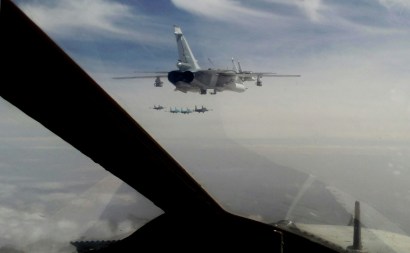
Israeli warplanes were intercepted by Russian fighter jets in Lebanese airspace on Monday morning, in what was deemed an unlikely clash between the two countries who have reached an agreement on averting confrontation in Syria and the wider region, according to a report by Hadashot news.
The two Israeli Air Force F-16 jets were said to have been been challenged by the Russian Sukhoi SU-34 jets over Tripoli, the report claimed citing Russian and Lebanese media outlets.
A video circulated on social media showed Russian planes flying over Lebanon but there was no sign of any Israeli jets. Russia and Israel were yet to confirm the validity of the reports.
It was suggested, according to the Hadashot report, that the Russian planes were partaking in drills off the Lebanese coast but were forced to land due to bad weather conditions. However, Al Masdarnews said the reason for operation was unspecified, adding that this was the first time in months that Russian planes had flown over Lebanon.
A host of previous reports, have alleged that Israel has targeted Iranian-operated bases in Syria from Lebanese airspace.
On Thursday, Lebanese media reported a heavy presence of Israeli air crafts flying over the Lebanese capital of Beirut and the Lebanese coast during an airstrike on an airbase near Homs said to have been in the vicinity of Hezbollah weapons warehouse facilities. As per routine policy, Israel has refused to confirm its responsibility for the attack.

Last week, the head of Israel’s Air Force Amiram Norkin, showed a picture of an Israeli F-35 stealth fighter jet — a warplane that has conducted airstrikes previously — flying near Beirut.
Russia and Israel have conflicting interests in the delicately-balanced seven-year long Syrian Civil War. Israel’s arch regional foe Iran is Syrian President Bashar al-Assad’s main ally alongside Russia and Lebanese-based Iranian proxy Hezbollah.
Whilst Israel is careful to navigate its relations with Russia, it is hellbent on preventing Iran from gaining a foothold in Syria and entrenching itself permanently, thus often leading to a clash of interests between Russia and the Jewish State.
In order to limit a confrontation, Israeli Prime Minister Benjamin Netanyahu meets with Russian President Vladimir Putin frequently. “We have a telephone hotline between the IDF and Russian contingent,” Israeli Defense Minister Avigdor Liberman said earlier this month, in an interview with Russian Kommersant daily newspaper.
“We always take into account the Russian interests in Syria and very much hope that Russia will also take into account Israel’s interests related to our security,” he added.
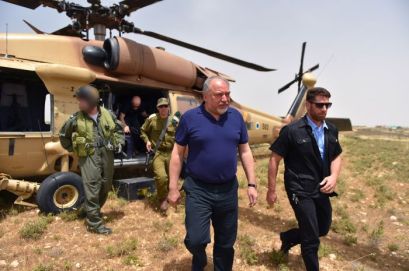
However, senior air force officials as cited by the Times of Israel, stated that the coordination mechanism in place has its limitations. For example, Israel does not always inform Russia ahead of conducting strikes its Syria, and Russia does not always brief Israel on its actions in the region.
Also, in a separate interview with Israel’s Walla news, Liberman stated that Israel “will not accept any restrictions when it comes to Israeli security interests.”
Whilst Israel does not admit to all the recent strikes in Syria, it acknowledges launching a number of raids in the war-torn country to stop what it says are advanced arms deliveries to Iran’s proxy, Hezbollah. The most recent took place last Thursday when Israeli fighter jets were alleged to have attacked an airbase near Homs.
“We told the Russians that we were going to strike in Syria, but we didn’t tell them where we exactly were striking or what the targets were,” the senior officer said, as cited by the Times of Israel.
On Sunday Netanyahu said at his annual cabinet meeting that Israel was taking action to “prevent Iran from obtaining nuclear weapons” and also working “against the establishment of an Iranian military presence against us.” Adding that, “to this end, we are also operating against the transfer of deadly weapons from Syria to Lebanon or their manufacture in Lebanon.”
Source: Russia: Only Syrian army should be on countrys southern border
Rebels hold stretches of that area and intensive Israeli airstrikes in Syria this month were prompted by what Jerusalem said was Iranian rocket fire from the area into the Golan Heights.
Prime Minister Benjamin Netanyahu backed Russia’s assertion, though emphasized that Iran not only has no place in Syria’s south, but in Syria in general.

Russia and Iran are close allies of Syrian President Bashar al-Assad.
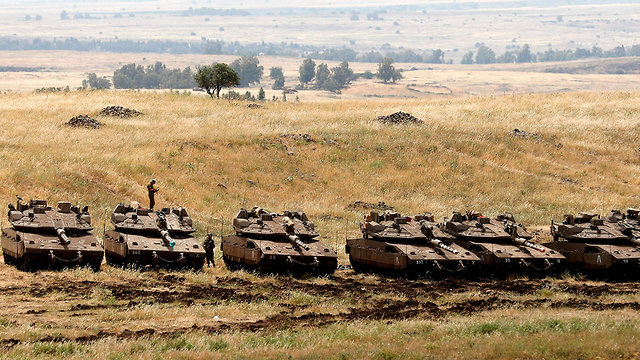
The Syrian Observatory for Human Rights has reported Syrian army movements into the south and state media have reported leaflet drops on rebel-held areas there urging insurgents to accept government rule, two signs a military offensive may be coming.
Meanwhile, Jordan said on Monday it was discussing developments in southern Syria with Washington and Moscow and that all three parties agreed on the need to preserve a “de-escalation” zone they brokered last year and which has reduced violence.
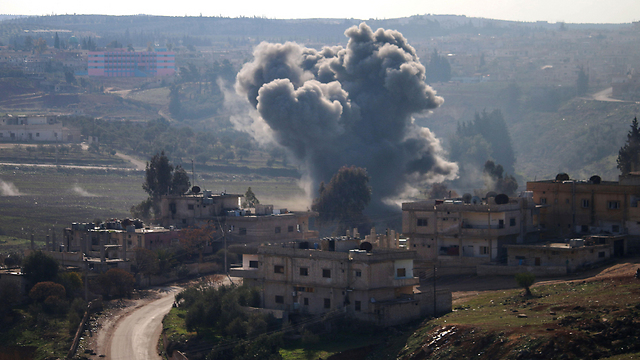
A senior official who requested anonymity told Reuters the three countries that signed last year’s deal to create the zone “saw eye to eye” on the need to preserve it as a key step to “accelerate efforts to reach a political solution” in Syria.
The truce—the first US peacekeeping effort in the war under Donald Trump’s presidency—has reduced violence in a particularly sensitive region that includes Syrian territory bordering Israel.
Source: Report: Israel, Iran reach back-channel understandings on Syria operation – Israel Hayom
Planned Syrian operation against rebels in Syrian Golan Heights sparks concern in Jordan and Israel over potential deployment of Iranian-backed militias • Saudi media says Jordan received assurances from Iran that its forces would not deploy near border.
|
The Israel-Syria border in the Golan Heights
| Photo: Reuters
|
Israel and Iran recently used back channels to reach behind-the-scenes understandings over Syrian maneuvers in the southern Golan Heights, Saudi media reported Sunday.
According to the independent Arabic news website Elaph, Syrian President Bashar Assad’s military is scheduled to carry out large operations in Daraa and Quneitra, in the Syrian Golan Heights, to counter rebel forces in the area.
The question of whether Iranian forces or Iranian-backed militias, including Hezbollah, would take part in the operation sparked concern in both Jordan and Israel.
According to the report, Jordan made it clear to the Syrians and their Russian allies that it would not tolerate the deployment of Shiite militias near its border with Syria.
Jordan also made it clear that military maneuvers involving Iranian-backed forces could trigger a military confrontation between Iran and Israel.
The report indicated that Iran used Jordan as a go-between to relay a message to Israel, saying it would not operate in southeastern Syria near the border with Jordan.
According to the report, the understandings were reached in a series of indirect meetings in Jordan, where Iranian officials, including the envoy to Jordan, met with top Jordanian officials, who in turn met with senior Israeli security officials.
“Within a few hours, we managed to reach an understanding with all the parties operating in the region – mainly Israel and Iran – that the Syrian and Jordanian armies would be the only two forces to deploy on both sides of the border between Syria and Jordan. The Iranians provided assurances that their forces would not operate alongside the Syrian military in the offensive,” a senior Jordanian official who took part in the mediation efforts told the Saudi website.
”On the other hand, Israel made it clear to the Syrians, and especially to the Iranians, that it would not allow Iranian forces to operate alongside the Syrian army in Daraa and Quneitra, even at the price of a security escalation that could lead to a direct military confrontation with Iran.”
Source: Iran ‘settled the score’ with Israel over Syria strikes, official says – Israel Hayom
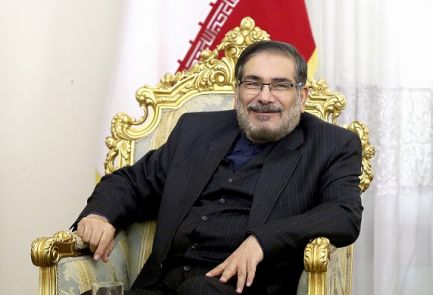
Supreme National Security Council Secretary Ali Shamkhani claims Israel has “paid the price” for killing Iranian “advisers” in Syrian air base strike, but does not elaborate • Iran vowed to deal Israel a “painful blow” to avenge the strike.
|
Iranian Supreme National Security Council Secretary Ali Shamkhani
|Photo: AP
|
A senior Iranian official claimed Sunday that the Islamic republic has “settled the score” with Israel over its attack on Iranian “advisers” in Syria.
Iran vowed to deal Israel a “painful blow” over an April 4 strike on the T4 air base in Homs province, which housed an Iranian drone unit. Seven Revolutionary Guards officers were killed in the strike, which dealt a crippling blow to Iran’s drone deployment in Syria.
In an interview with Qatar’s Al Jazeera network, Ali Shamkhani, secretary of Iran’s Supreme National Security Council, said, “Iranian advisers are in Syria at the invitation of the legal Syrian government, to combat terrorism.”
He said that the “Zionist regime’s claims that it hit Iranian assets in Syria are false because Iran only sent military advisers to Syria. It does not take an active part in the fighting.”
Shamkhani called the strike on T4 a “strategic mistake.”
“The Zionist regime has paid the price for this great mistake. The score has been settled,” he said.
He did not elaborate, but it is believed he was referring to the May 10 rocket salvo by Iranian forces in Syria at Israeli military bases in the Golan Heights, which he described as “balancing the equation” opposite Israel. However, none of the rockets landed in Israel and Israel responded with a massive attack on Iranian assets in Syria.
Shamkhani’s statement may have sought to play both a strategic and a tactical role.
Iran is under considerable pressure due to the U.S.’s recent withdrawal from the 2015 nuclear agreement, the dire economic situation in Iran, and growing domestic unrest and protests against the regime, which most likely hinder any plans Iran may have about launching another active military front at this time. In addition, it seems Iran is finding it difficult to carry out a successful military strike against Israel, after its attempts so far have failed.
However, it is also possible that the statement is an Iranian attempt to lull Israel into a false sense of security so as to preserve the element of surprise if and when future conditions enable it to strike back at Israel.
Source: Gaza drone fitted with explosives infiltrates Israel – Israel Hayom
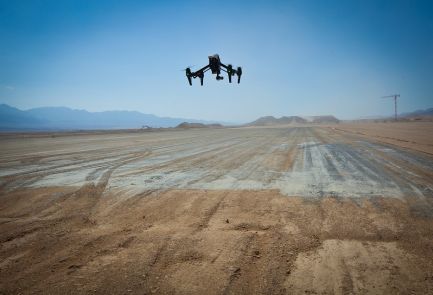
DF believes drone was designed to detonate upon crashing and cause mass casualties, but detonation mechanism apparently malfunctioned • Drone’s ability to cross border undetected proves Gaza terrorist groups are making significant technological advances.
|
Israeli forces intercepted a drone loaded with explosives from the Gaza Strip last week
| Illustration: Moshe Shai
|
A small drone carrying explosives penetrated Israeli territory from the Gaza Strip and was intercepted by the Israel Defense Forces last week, the IDF Spokesperson’s Unit revealed Sunday.
“Several days ago, during the night, a drone believed to have crossed into Israel from the northern Gaza Strip, crashed in the Shaar Hanegev Regional Council,” the IDF Spokesperson’s Unit said in a statement. “Upon examination, it was found to be carrying explosives.”
The Israeli army believes the drone was designed to detonate upon crashing and cause mass casualties, but the mechanism apparently malfunctioned.
The fact that a drone loaded with explosives managed to cross into Israeli territory, however, proves Gaza’s terrorist organizations have made significant technological progress.
Earlier Sunday, IDF Spokesman Brig. Gen. Ronen Manelis responded to recent threats issued by the Islamic Jihad, warning that the terrorist organization was “playing with fire” and “putting itself in danger.”
“We’ve been hearing the threats coming from Iran-backed terrorist organizations in Gaza,” he said. “The IDF views any terrorist activity directed at Israeli citizens with grave severity. We hold the terrorist organization Hamas responsible for anything that happens in Gaza.”
Undoubtedly the ingredients were in place this month that could have led to an explosion.

On paper, the month of May swept in some of the most combustible elements at one time the region has seen in years.
Iran was entrenching itself in Syria and threatening revenge for alleged Israeli attacks on Iranian assets in Syria; US President Donald Trump was going to decide on the future of the Iran nuclear deal; the “Great Return March” was continuing in the Gaza Strip; the Palestinians were to mark Nakba Day, the “Day of Catastrophe,” marking Israel’s independence; the US was going to move its embassy to Jerusalem; and Ramadan, a month often accompanied by terrorism and violence, was to begin.
All the ingredients were in place, some feared, for an all-out explosion.
Yet, despite some tense and ugly days – specifically May 14 – the all-out explosion did not materialize. On May 14, the same day the US moved its embassy, some 40,000 Palestinians in Gaza marched on the fence with Israel, hoping to breach it, and 62 people were killed – 50 of them, by Hamas’s own admission, were their own men.
Nevertheless, May was not apocalyptic.
Israel and Iran did not go to war in Syria; the Iranians did not dash for a nuclear device with the US withdrawal from the Iranian nuclear deal; the “Great Return March” did not lead to the breach of the border fence with Gaza; the Nakba Day protests were limited; the move of the US Embassy did not lead to the orgy of violence in Israel, the territories and around the world that many warned of for years; and Ramadan has so far been relatively quiet.
Why?
Because alongside the combustible elements, there are forces working on the ground to prevent matters from spiraling out of control.
Who are these moderating forces?
First, there are the Russians. Syria seems a perfect setting for an Iranian-Israeli clash. Iran is determined to build a military infrastructure in Syria that would give it leverage over Israel. Imagine Iranian precision-guided missiles in Syria that could hit any target in Israel from Dan to Beersheba. This would be a tremendous deterrent to Israel against acting against the Iranian nuclear program.
But just as determined as Iran is to create this leverage in Syria, Israel is determined to prevent it; dead-set on not allowing the Iranians to replicate in Syria the Lebanese model – where Hezbollah armed itself to the teeth over the last decade without anyone preventing it.
The ingredients were all in place for the conflict, including the reported Israeli attacks on Iranian assets in Syria that killed Iranian forces. Yet the conflagration did not materialize – the Russians are keen on ensuring it does not happen.
Russia is fighting in Syria, as is Iran. But unlike Iran, Russia is not Israel’s enemy and does not want a collision between Israel and Iran.
Russian President Vladimir Putin has had an amazingly successful run in Syria, he has – some argue – “made Russia great again.” He proved Moscow is a player, an arbiter on the international stage; he showed his credibility to his allies; he tried out his new weapons; he got an air and a naval base in Syria; he saved Syrian President Bashar Assad; and he beat Islamic State.
Now he wants quiet in Syria, and a confrontation between Israel and Iran – two countries with whom he has open lines of communication – would spoil the works. So he is working to prevent it, including recent reports that he is now amenable to pushing the Iranians 60-70 kilometers from the border with Israel – an Israeli demand last year not accepted by either Moscow or Washington.
THE SECOND major concern going into May was how the Iranians would react to a US withdrawal from the nuclear accord. Would they, as some feared, make a mad dash toward crossing the nuclear threshold, thereby hurtling the region to a military confrontation?
They did not. Why? Because they have too much to lose. Iran is now biding its time until the 2020 US presidential elections, hoping that just as Trump was swept in – and fundamentally changed US policy in the Middle East – he will be swept out, changing the policy again, but in a direction more favorable for Tehran.
The Iranians can bide time by continuing the negotiations with the Europeans, trying to keep them in the deal, weakening the sanctions, pushing off the sanctions and isolating the Americans. The draconian sanctions that US Secretary of State Mike Pompeo said would be instituted if the Iranians did not fundamentally change their ways will take a great deal of will and time to implement. The Iranians are hoping the clock runs out on the Trump administration before then.
And then there are the issues that came to a head relating to the Palestinians: the “Great Return March” in Gaza, the embassy move, “Nakba” Day, Ramadan – all ingredients that could very well have led to much worse violence than what was experienced. It is not that 62 killed in Gaza is not serious violence. It most definitely is. But it could have been much worse, and it could have spread both to the West Bank and to the region.
Yet, it didn’t spread because there were countervailing forces who had as much an interest in containing the violence, as Iran, Hamas and Turkey had in seeing it spread. Those forces were Egypt, Jordan, Saudi Arabia, the United Arab Emirates and even the Palestinian Authority.
Had the violence – over the embassy move or the developments of Gaza – spread to the West Bank, it would have presented a severe challenge for the Palestinian Authority, since while the violence might have been directed at Israel, it could easily have been used by Hamas to turn on the Palestinian Authority as well. And with PA President Mahmoud Abbas ill, and no one sure who is going to take over when he is gone, the last thing the PA needs now is a wave of Hamas-inspired violence it could find difficult to contain.
Saudi Arabia, the UAE and Jordan, meanwhile – while sympathetic with the Gazans and opposed to the US Embassy move – simply have bigger concerns right now; namely Iran. They will not, for instance, tolerate massive demonstrations in their streets against the US when they need the US to stop Iran. Everything takes a back seat to that primary goal.
The same is true of Egypt. With Egyptian President Abdel Fatah al-Sisi battling Islamic State and Islamic fundamentalism in his own country, he has a real interest in containing the situation in Gaza, so the violence there does not spread easily to the Sinai, endangering Egypt and perhaps his regime.
Undoubtedly the ingredients were in place this month that could have led to an explosion. That things did not explode is a positive sign that the countervailing forces – at least for now – have the upper hand.
Source: Israel’s Syria operations against Iran and Hizballah goes into next stage – DEBKAfile

A day earlier, the authoritative Asharq Al-Awsat reported: ”Tel Aviv has informed Moscow about its decision to ‘expand the scope of its red lines’ in Syria by preventing Iran from consolidating its military presence and that of its militias, including Hezbollah, across all Syrian territories, and not just in the south.” This publication is linked to the Saudi royal house and when it cites “Western diplomatic sources,” it must be presumed to have checked with the Saudi strongman Crown Prince Muhammad bin Salman before going into print.
Israel’s military effort – usually unacknowledged – was confined hitherto to operations against Iranian bases, command centers and weapons deliveris in southern and central Syria, or against facilities shared by Hizballah and Iranian Revolutionary Guards units. All the signs, therefore, indicate that, henceforth, Israel’s operations are to be broadened in range up to the Syrian-Iraqi border and in the west up the Lebanese border, possibly impinging on Syria’s neighbors. This would tie in with the fact that Iranian forces in eastern Syria depend on fighting strength and supplies coming in from the pro-Iranian Shiite militias in Iraq, while in the west, they are heavily supported by Hizballah from Lebanon.
This shift marks the onset of the next stage of Israel’s military campaign for eradicating Iran’s military presence in Syria after the first four-month stage, which began in February, had run its course. This may never be acknowledged in full, but the fact is that IDF operation seriously disabled Iran’s deployments and command centers in areas ranging from around Damascus up to the Israeli border in the southeast, as well as knocking out Iranian radar and air defense capabilities. Extensive damage was also caused to important Iranian arms consignments of long-range Fatteh 330 surface missiles and advanced mobile anti-air Bavar-373 missiles, the Iran-made version of the Russian S-300. But still, Tehran has been able to preserve the backbone of its military command formations in Syria and they are fully operational.
The exact date for the next phase to begin is impossible to establish for sure. Maybe it already has, with the strike on the military airport near Hama on May 18, which was conducted by a ground force rather than the air; or the air strike on Friday, May 25, on Dabaa Military Airbase where Hizballah and foreign pro-Iranian militiamen were housed. Hizballah’s leader Hassan Nasrallah later accused Israeli warplanes of this attack. Neither Iran nor Hizballah appears yet to have decided how to come to grips with the second stage of the Israeli offensive in Syria – especially when their main backer, Moscow, has been put in the picture by Israel.
This news item gave me an eyebrow raise. The Middle East sure is a mixing pot of who is with whom and against whom on different issues…
It is getting to the point where my eyebrow is getting sore from all the raises.
Two articles below on this.
But the article from Arutz Sheva adds the claim that the recovery efforts by ISIS and FSA were at the request of Israel.
I must say I am in awe of the efforts made by Israel to recover the bodies of their fallen, even after such a long period of time. If you fall in service, care will still be extended to you. The mentality of a true and just warrior.
Palestinian terror group claims IS aimed to transfer to Israel bodies of soldiers who went missing in Lebanon in 1982
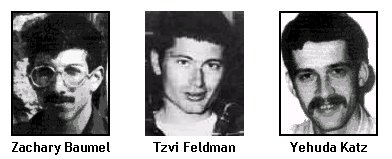
A Palestinian official based in Syria has claimed that Islamic State members and other insurgents excavated graves in a Damascus cemetery looking for the remains of three Israeli soldiers who have been missing in action for 36 years.
Their goal was to transfer the bodies to Israel, said Anwar Raja of the Popular Front for the Liberation of Palestine-General Command terror organization, although it was not clear in what kind of context or for what purpose.
The graves were in the Palestinian refugee camp of Yarmouk, over which Syrian troops regained control last week from members of the IS terror group after a month-long battle, he said.
Raja did not say whether the insurgents had found any bodies, nor did he identify the corpses that were sought.
Tzvi Feldman, Yehuda Katz and Zachary Baumel are the three soldiers who have been missing in action since the first Lebanon War.
In June 1982, 30 Israeli soldiers were killed and five were captured in a battle near the village of Sultan Yacoub in Lebanon, close to the Syrian border.
Two of the captured soldiers were returned to Israel alive and the remaining three are still officially missing in action because no conclusive proof has been presented that they died.
Senior terror official claims Israel sent armed Syrian rebels to find remains of soldiers whose bodies have been missing since 1982 battle.
https://www.israelnationalnews.com/News/News.aspx/246505
“Popular Front for the Liberation of Palestine” (PFLP) terror group official Talal Naji said Saturday that Israel is using its links with rebel organizations in Syria to find the bodies of those missing from the battle of Sultan Yacoub in 1982.
He claims that armed men from ISIS and the Free Syrian Army dug in an old cemetery in the Yarmouk refugee camp in Syria, in order to find the remains of those missing from the battle that took place in the 1982 Lebanon War.
Since the battle, the bodies of three IDF soldiers – Zacharia Baumel, Yehuda Katz and Tzvi Feldman – have not been identified and have been considered “missing” for years.
Naji said that the Israelis have always sought their remains, in accordance with the Jewish faith which requires the return of the remains of Jews killed in war or outside the borders of the country.
The Lebanese Al Mayadeen TV channel asserted that Naji’s comments reinforced the claim that the rebels in Syria were cooperating with Israel.




 anneinpt
 artaxes
 danmillerinpanama
 davidking1530
 Peter Hofman
 Joseph Wouk
 Peter
Peter Louisiana Steve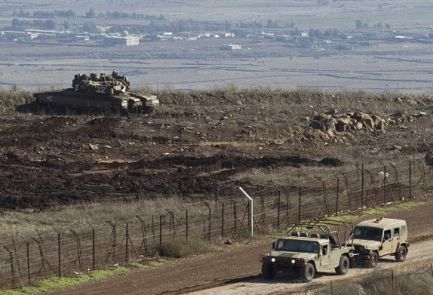
 WarSclerotic
Recent Comments