Archive for May 6, 2018

Netanyahu: Conflict with Iran better now than later 

May 6, 2018

Source: Netanyahu: Conflict with Iran better now than later | The Times of Israel

Prime minister says Israel will do whatever it takes to prevent Iranian entrenchment in Syria; stresses importance of his upcoming meeting with Putin
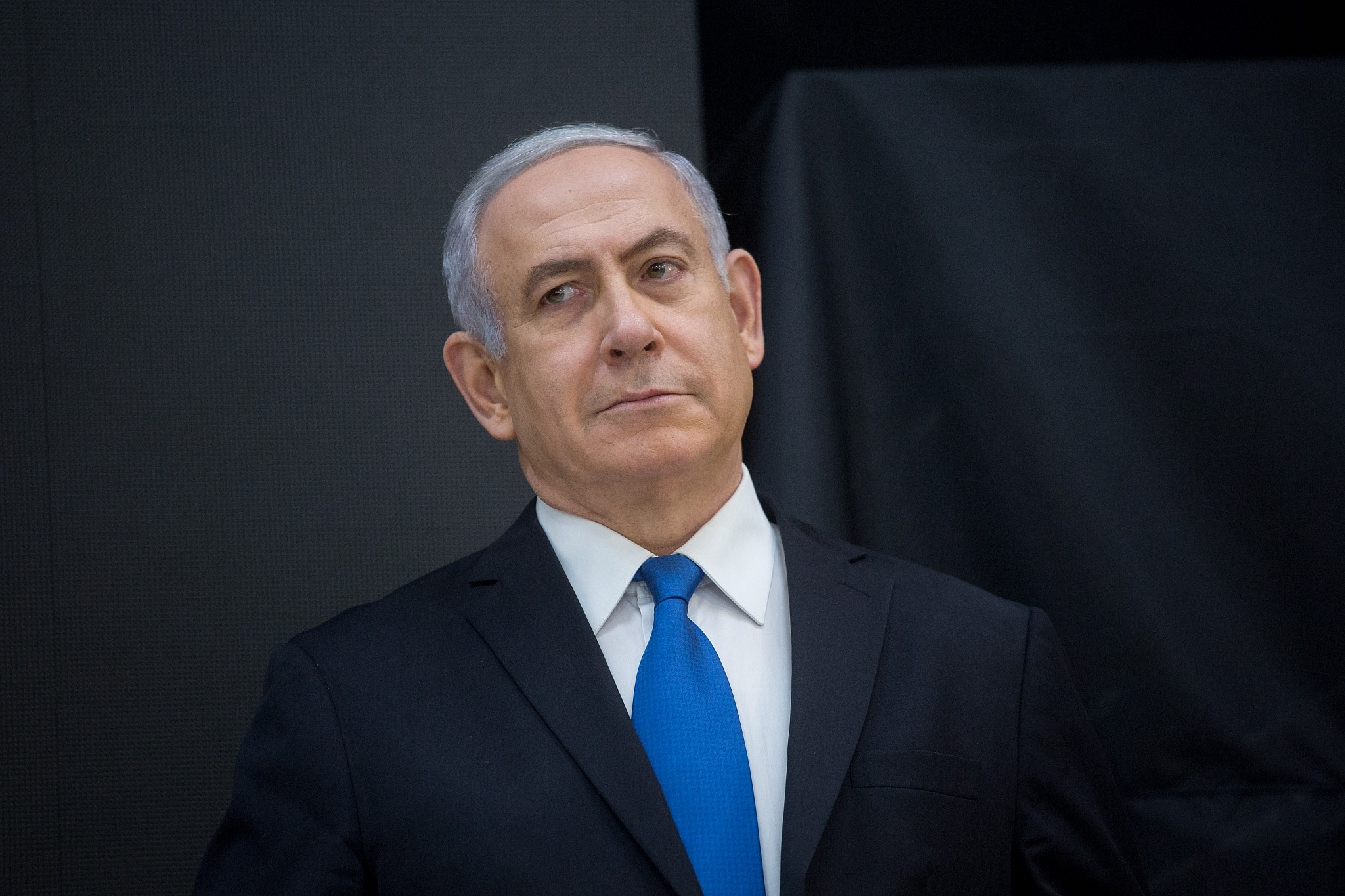
Prime Minister Benjamin Netanyahu addresses the press at the Kirya government headquarters in Tel Aviv on April 30, 2018. (Miriam Alster/Flash90)

Prime Minister Benjamin Netanyahu addresses the press at the Kirya government headquarters in Tel Aviv on April 30, 2018. (Miriam Alster/Flash90)

Prime Minister Benjamin Netanyahu said Sunday that while Israel is not interested in a military escalation with Iran, if there has to be a fight he would prefer it be now rather than later.

The comments came amid escalating tensions between Jerusalem and Tehran as the Islamic Republic has sought to expand its foothold in neighboring Syria, raising fears it could use bases for attacking Israel.

“We are determined to block the Iranian entrenchment, even at the cost of confrontation,” Netanyahu said at the start of his government’s weekly cabinet meeting. “We don’t want an escalation, but we are prepared for every scenario. We don’t want confrontation, but if there needs to be one, it is better now than later.”

His comments came a week after a strike on an Iranian base in Syria, attributed to Israel, which reportedly destroyed hundreds of surface-to-surface missiles and killed over 30 people, including many Iranian military officials. Iran denied that any of its soldiers were killed in the attacks and that any of its bases in Syria were targeted.
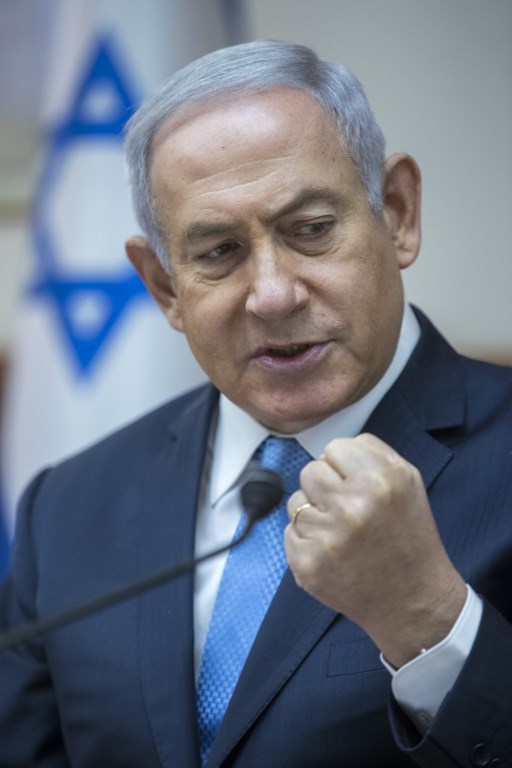
Israeli Prime Minister Benjamin Netanyahu chairs the weekly cabinet meeting in Jerusalem on May 6, 2018. (AFP PHOTO / POOL / JIM HOLLANDER)

Netanyahu also highlighted the importance of his upcoming meeting with Russian President Vladimir Putin, scheduled for Wednesday.

Russia is a key backer of Syrian President Bashar Assad, along with Iran, and has raised concerns over reported Israeli bombing runs in Syria. Moscow has signaled it may sell Damascus advanced air defense systems in response.

“My meetings with the Russian president are always important for the IDF and the country, but the meeting this week is especially important in light of the attempts by Iran to establish itself in Syria,” Netanyahu said.

The two leaders also spoke in early April with Putin urging Netanyahu to avoid any steps that could increase instability in Syria.

The talks will also come just days before the May 12 deadline in which US President Donald Trump will decide on whether or not to pull out of the Iran nuclear deal. Russia, a signatory, has called for the pact to remain in place, though Netanyahu has lobbied for it to be annulled or renegotiated.

Prime Minister Benjamin Netanyahu delivers a speech on Iran’s nuclear program at the Defense Ministry in Tel Aviv on April 30, 2018. ( AFP PHOTO / Jack GUEZ)

Netanyahu was scheduled to give a press conference later Sunday to foreign media about some 100,000 Iranian files and documents describing the Tehran’s past efforts to develop atomic weapons.

Netanyahu revealed last week the contents of the documents, which were spirited out of Iran by Israeli spies and, he said at the time, showed that Iranian leaders had lied about their country’s nuclear ambitions.

Netanyahu has frequently spoken with Putin as Israel seeks to get Moscow to use its influence to halt Iran’s attempts to spread its influence deep into Syria and Lebanon on Israel’s northern border. They last met for talks in January.
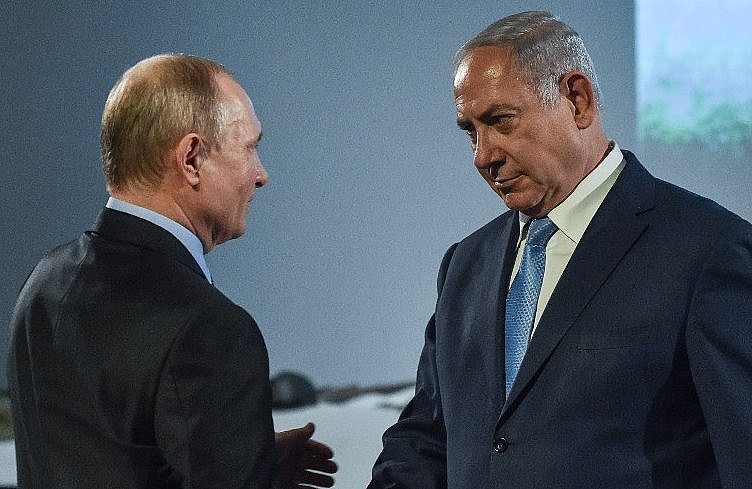
Russian President Vladimir Putin, left, with Israeli Prime Minister Benjamin Netanyahu during an event marking International Holocaust Victims Remembrance Day at the Jewish Museum and Tolerance Center in Moscow, January 29, 2018. (Vasily Maximov/AFP)

Tehran has sent some 80,000 Iran-backed fighters to back Syrian President Bashar Assad’s forces in the country’s seven-year civil war, Israeli Ambassador to the United Nations Danny Danon said last week.

Israel has said Iranian military entrenchment in Syria was unacceptable, fearing that Tehran could use the country as a springboard for attacks against the Jewish state.

American and Israeli officials have been monitoring the situation as Iran has increased the number of transport planes it has been sending from its Mehrabad Airport in Tehran to Syria. The US and Israeli officials fear that these planes are loaded with advanced munitions, which could potentially be used against Israel.

Defense Minister Avigdor Liberman has repeatedly vowed that Israel would work to prevent this from occurring, “no matter the cost.”
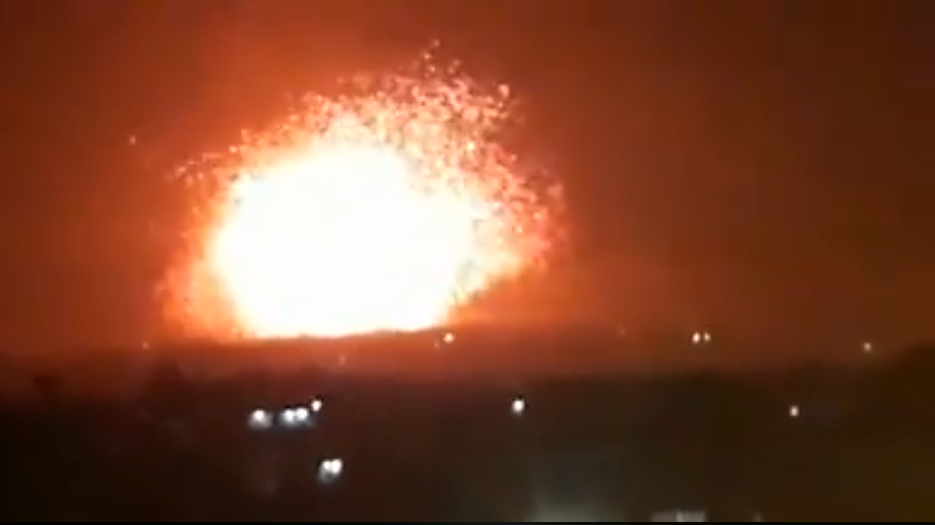
An explosion is seen coming from an army base, allegedly used by Iran-backed militias, outside the northern Syria city of Hama on April 29, 2018. (Screen capture; Facebook)

The base hit in the airstrike last week, south of the city of Hama in northwestern Syria, belonged to the Syrian army’s 47th Brigade but has reportedly been used as a headquarters for Iranian troops for several years.

The recent attack came amid soaring tensions between Iran and Israel following an airstrike last month on Syria’s T4 air base in the central province of Homs that killed seven Iranian military personnel. Tehran has vowed to retaliate for the T4 attack. Syria, Iran, and Russia blamed Israel for that T4 attack. Israel did not confirm or deny it.

Greatest Tank Battles – Sinai 1967 – YouTube

May 6, 2018


In 1967, in response to a growing threat by it’s Arab neighbors, Israel launches a pre-emptive strike against Egypt in the Sinai. This is the story of one of the most dramatic victories in modern warfare. In addition to the Air force, the tank corps played a decisive role.


Palestinian terrorists to receive NIS 10 million each by their 80th birthdays

May 6, 2018

Defense Ministry releases info on finances of Henkin, Salomon, Shevach and Ben-Gal killers ahead of Knesset vote on cutting payments to the PA until it stops paying terrorists

Today, 2:13 pm

https://www.timesofisrael.com/liveblog-may-6-2018/

Omar al-Abed (c) smiles in the Judea Military Court ahead of his sentencing on February 15, 2018 for the murders of Yosef, Elad, and Chaya Salomon. (Courtesy)

Henkin, Salomon, Shevach and Ben-Gal killers to receive NIS 10 million by age 80

The Palestinian terrorists responsible for killing Eitam and Naama Henkin; Yosef, Elad and Chaya Salomon; Raziel Shevach; and Itamar Ben-Gal will each receive at least NIS 10 million ($2.77 million) by their 80th birthdays, statistics from the Defense Ministry show.

The numbers have been released ahead of a Knesset vote to cut payments to the Palestinian Authority until it stops paying terrorists.

Omar al-Abed, who was convicted of murdering three members of the Salomon family, has so far earned NIS 12,200, with a monthly salary of NIS 1,400 for the first three years. He is expected to reach a cumulative salary of NIS 12,604,000 by the age of 80.

Karem Lufti Fatahi Razek, who was convicted of the 2015 Henkin murders and was sentenced to two life sentences and another 30 years, has earned NIS 40,600 and is expected to receive a cumulative salary of NIS 11,232,000 by the age of 80.

Zaid Ziyad, who was also convicted over the Henkin murders and sentenced to life in prison, has earned NIS 40,600 and is expected to earn a cumulative wage of NIS 10,056,000 by age 80.

Asi Abed El-Hakim, who was charged with the murder of Rabbi Itamar Ben Gal and was arrested a month ago, has already earned NIS 1,400. If he is sentenced to life imprisonment, he is expected to earn NIS 12,604,800 by the time he’s 80.

Turkey will ‘retaliate’ if US halts weapon sales over purchase of Russian arms – Ankara

May 6, 2018

Published time: 6 May, 2018 11:16

https://www.rt.com/news/425966-turkey-retaliation-us-weapons/

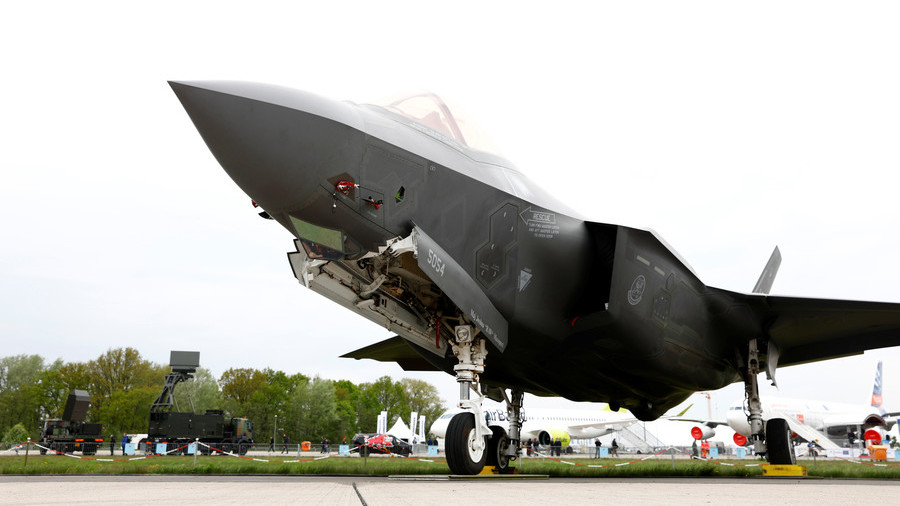
A Lockheed Martin F-35 aircraft. © Axel Schmidt / Reuters

In a deepening rift between two major NATO allies, Turkey says it will retaliate if Washington stops the sale of US weapons over Ankara’s decision to buy Russian military hardware. Such a move would be “wrong” and “illogical.”

“If the United States imposes sanctions on us or takes such a step, Turkey will absolutely retaliate,” Foreign Minister Mevlut Cavusoglu told CNN Turk. “What needs to be done is the US needs to let go of this.”

“Turkey is not a country under your orders, it is an independent country… speaking to such a country from above, dictating what it can and cannot buy, is not a correct approach and does not fit our alliance,” he said, referring to the fact that both countries are part of NATO.

Read more

© Igor Zarembo

The notion of halting weapons sales has been put forward by lawmakers in the US House of Representatives through the proposed US National Defense Authorization Act. The latter would ask the defense department to provide Congress with a report on the relationship between the US and Turkey and would block the sale of major defense equipment until the report is complete.

This move could throw a spanner in the works for Turkey as it plans to buy more than 100 Lockheed Martin F-35 Joint Strike Fighter Jets. It is also in talks with Washington over the purchase of Patriot missiles.

Cavusoglu said he plans to travel to Washington next week to meet with US Secretary of State Mike Pompeo, who previously said he was concerned over Ankara’s decision to buy the Russian S-400 missile batteries.

The foreign minister’s comments come after US State Department spokesperson Heather Nauert said on Thursday that Washington has “serious concerns about Turkey’s potential acquisition” of S-400 anti-aircraft systems.

Nauert added that NATO countries are only supposed to buy weapons and other materiel that are “interoperable with other NATO partners.”

In April, Assistant Secretary of State Wess Mitchell warned that the decision to buy Russian military hardware exposed Turkey to the possibility of sanctions. He added that it may bar Ankara from receiving any F-35 jets under the Countering America’s Adversaries Through Sanctions Act (CAATSA), which is mainly aimed at hindering Russian arms exports.

Read more

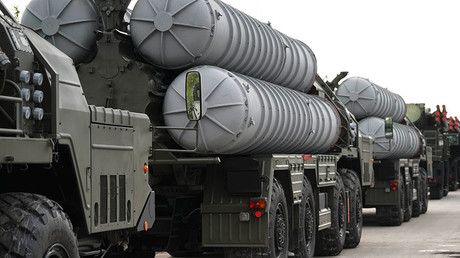
S-400 battery is being deployed in Russia on Jan 13, 2018. © Aleksey Malgavko

Mitchell strayed from the usual “interoperable with NATO equipment” justification, instead stating that it was “in the American national interest to see Turkey remain strategically and politically aligned with the West.” He specifically noted his disapproval that Ankara had “increased its engagement with Russia and Iran.”

Responding to Mitchell’s comments, Russian Foreign Minister Sergey Lavrov described the US threats as “a typical example of attempted blackmail” with the intention of giving US companies an “unfair advantage in market competition.”

The deal between Turkey and Russia was signed in December. Deliveries of the S-400 systems to Turkey are scheduled to start in 2020. However, following talks with Cavusoglu in March, Lavrov stated that Moscow is ready to speed up the process.

Cavusoglu’s Sunday remarks come amid increased tensions between the US and Turkey, particularly over Ankara’s Operation Olive Branch, which was launched against Kurdish fighters in Afrin on January 20. A war of words broke out after the top US commander in the US-led coalition against Islamic State (IS, formerly ISIS) said that Turkey would face a sharp response if it struck Manbij, Syria as part of its operation.

“It is obvious that those who say they will ‘give a sharp response’ if they were hit have not been hit by the Ottoman slap,” Turkish President Recep Tayyip Erdogan said in response. His words referenced a Turkish martial arts move that involves an open-palm hit, resulting in a one-hit knockout or even skull fractures and death.

The relationship between Washington and Ankara also hit a speed bump in October, when Turkey arrested a US consulate worker for alleged ties to exiled Turkish cleric Fethullah Gulen, whom Ankara blames for a failed coup attempt in 2016. Ankara has criticized the US for failing to extradite Gulen, who lives in Pennsylvania, while Western governments have slammed Turkey for its post-coup crackdown.

Netanyahu: No Interest in Conflict with Iran, But Better Now Than Later

May 6, 2018

http://www.jewishpress.com/news/middle-east/iran-news/netanyahu-no-interest-in-conflict-with-iran-but-better-now-than-later/2018/05/06/

Prime Minister Benjamin Netanyahu, Photo Credit: Omer Miron / GPO

Prime Minister Benjamin Netanyahu said in his opening remarks to Sunday’s government cabinet meeting that although Israel has no interest in a conflict with Iran, if one is inevitable, it is better to deal with it now than later.

“We are determined to block Iranian entrenchment [in Syria], even at the cost of a confrontation,” Netanyahu said. “We have no interest in an escalation, but we are prepared for every scenario. We don’t want a confrontation – but if one must come, it’s better now than later.”

 The prime minister also underscored the exceptional importance of his upcoming meeting this Wednesday in Moscow with Russia’s President Vladimir Putin. “My meetings with the Russian president are always important for the IDF and the country,” he said, “but the meeting this week is especially important in light of the attempts by Iran to establish itself in Syria.”

Netanyahu meets regularly with Putin, and the two are on good terms. They last met for talks in January after they together attended a ceremony at the Jewish Museum and Tolerance Center in Moscow to mark the 75th anniversary of the uprising of the inmates at the Sobibor concentration camp during the Holocaust.

During that meeting, Netanyahu warned Putin that Iran was building weapons factories in Lebanon, where its military advisers were attempting to manufacture precision weapons for use against Israel. He also warned that Iran was continuing to establish a permanent military presence in Syria – an existential threat to the State of Israel, which would not be allowed to continue, he warned.

Last week three Iranian bases were struck in Syria, including at least one being used as a major weapons depot. At least 200 surface-to-surface long-range missiles were destroyed and some 30 military personnel were killed, including many Iranian officials.

Iran issued a statement denying that any of its bases in Syria were targeted and said none of its soldiers were killed.

One day later, Netanyahu revealed the existence of more than 100,000 files detailing a comprehensive Iranian nuclear weapons development program that was put on hold a number of years ago, with its files carefully tucked away in a high-security storage facility in Tehran, obviously for future use.

In a daring operation earlier this year, Israel’s international Mossad intelligence agency managed to penetrate the facility, take the files and leave Iran all in the same night. After months of scrutinizing and painstakingly translating the documents together with the United States, Netanyahu revealed the contents of some of them last week, sending shock waves through Tehran.

Israel’s Ambassador to the United Nations, Danny Danon, meanwhile also notified the UN Security Council in a briefing a week ago that Tehran has deployed some 80,000 Shi’ite fighters in Syria to support the regime of President Bashar al-Assad. The presence of such a formidable foreign military force across Israel’s northern border – as well as the increasing number of advanced weapons being transported by Iranian aircraft into Syria – is completely unacceptable, he told the Security Council, adding that Israel will “do what it must” to deal with the threat to its existence.

Iran has repeatedly declared its intention to “wipe the Zionist state (Israel) off the map.”

Armenian Genocide: Turkey Cracks Down

May 6, 2018

Iran, Macromel and the Purloined Letter

May 6, 2018

Spoiling the high moments of two mavericks in pursuit of their ouster

May 6, 2018

Source: Spoiling the high moments of two mavericks in pursuit of their ouster – DEBKAfile

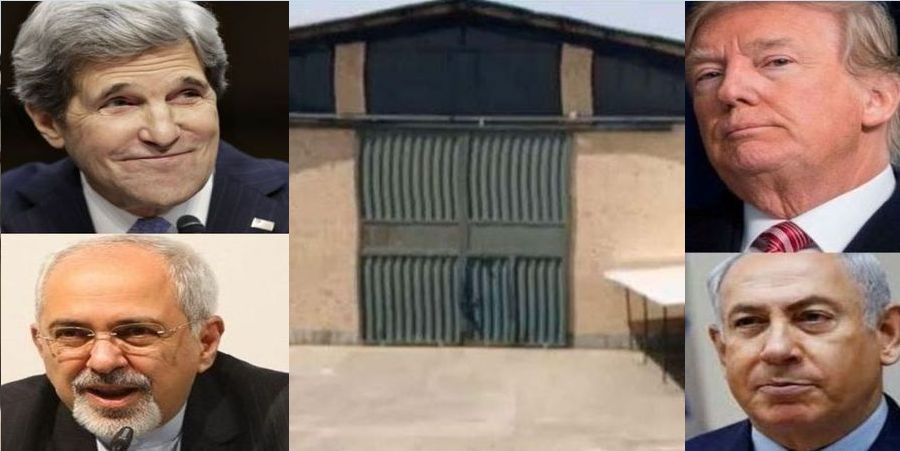
John Kerry is engaged in stealth diplomacy to scuttle Trump’s anti-Iran policy. In Israel, hostile media rain on Netanyahu’s Iranian Atomic Archive coup.

On Saturday, May 5, the Boston Globe revealed former US Secretary of State John Kerry as digging out old contacts and lining them up to counteract President Donald Trump’s rejection of the 2015 nuclear accord with Iran. Kerry sat down with German President Frank-Walter Steinmeier, European Union’s Federica Mogherini and French President Emmanuel Macron. Kerry also got together twice with Iranian Foreign Minister Javad Zarif in New York “to strategize” on salvaging a deal they spent years negotiating during the Obama administration and making sure that no “fixes” were approved.

Macron’s efforts to negotiate amendments to the accord and so enable President Trump to approve its continuation on May12 was stymied. Tehran is standing adamantly by its refusal to renegotiate or amend the original accord, warning that if US sanctions are re-imposed, Iran would immediately switch on its nuclear program and go back to high-grade uranium enrichment.
Kerry’s shadow diplomacy therefore toughened Tehran’s hard line and its the conviction that Trump in his weakened political position at home would not risk pulling the US out of the nuclear accord. Kerry’s campaign struck this chord amid the scandals landing on the president’s head, including the claims of an affair, true or false, by the porn star Stormy Daniels and the muddle over the alleged payout for her silence; the special counsel Robert Mueller’s flagging, circuitous probe of Russian meddling in the 2016 presidential campaign; the tariff war with China; and Democratic gains ahead of midterm congressional elections. Their eye is now on a majority for carrying through the president’s impeachment. In short, the nuclear accord with Iran was tossed into the opposition’s battle to discredit Donald Trump and remove him from office.

The president is not without his own tools of war, especially the popular momentum for sweeping away the old political order which he fronts after it swept him to power. But in the coming weeks, he is also looking forward to a summit with the North Korean ruler and a deal for denuclearization, a global, historic feat which none of his predecessors ever came close to.

There are many equivalents for the siege on Trump in the sustained media persecution of Prime Minister Binyamin Netanyahu and his family. This no-holds-barred chase was briefly interrupted by the sense of national unity generated by Israel’s 70th anniversary earlier this month, celebrated with gusto by the population at large. It was followed by the unifying sense that a military confrontation with Iran was at hand. But last week, the personal and political persecution of Netanyahu was resumed. The media picked up on obscure minutiae from the years of dragging “investigations” of his alleged misdemeanors. Sarah Netanyahu, the prime minister’s wife, was singled out as the latest victim. She is now depicted as haggling over the size of the fine she is said to be willing to pay to avoid prosecution for allegedly misappropriating state allocations for the upkeep of the prime minister’s residence. TV “commentators” are speculating widely about her mental state. The sums involved are cents rather than dollars and her denial of the entire story as made-up from beginning to end is sneeringly glossed over by television “commentators.” No considerations of privacy or humanity apply when it comes to the Netanyahus.

Neither was the prime minister allowed to bask for a second in the light of a remarkable Israeli intelligence coup, the theft of Iran’s top-secret Atomic Archive from a well-guarded hidden location in Tehran. The prime minister was criticized for showcasing the feat in a power point presentation on television. It was picked up around the world and proved that the Islamic Republic had lied when its rulers denied that developing a nuclear bomb was contrary to their religious, and its officials, including Zarif, continued to lie. Netanyahu was accused by his detractors at home of an overly “theatrical” performance. Yair Lapid, head of the opposition Future Party, claimed that the revelation irreversibly damaged the intelligence service by revealing its methods (which he did not). Netanyahu was told that he should have sat on the discovery, despite the fact that the operation’s entire purpose was to produce evidence for the world to see that Israel’s arch enemy had negotiated an accord with the world powers in bad faith and should not be trusted in future. The Atomic Archive’s exposure supported Israel’s joint campaign with the Trump administration to work for a better deal with Tehran and get rid of the ballistic missiles threatening the Jewish state. These considerations are clearly not worth the attention of Netanyahu’s enemies. It appears that all means are justified to further the goal of removing the Israeli prime minister, as in the case of  President Donald Trump – even when national security is at stake.

In first, Israeli planes bomb Hamas post in response to Gazan ‘attack kites’ 

May 6, 2018

Source: In first, Israeli planes bomb Hamas post in response to Gazan ‘attack kites’ | The Times of Israel

Army says site had been used to launch ‘burning incendiaries’ into Israel, stresses no connection to blast in Strip killing 6

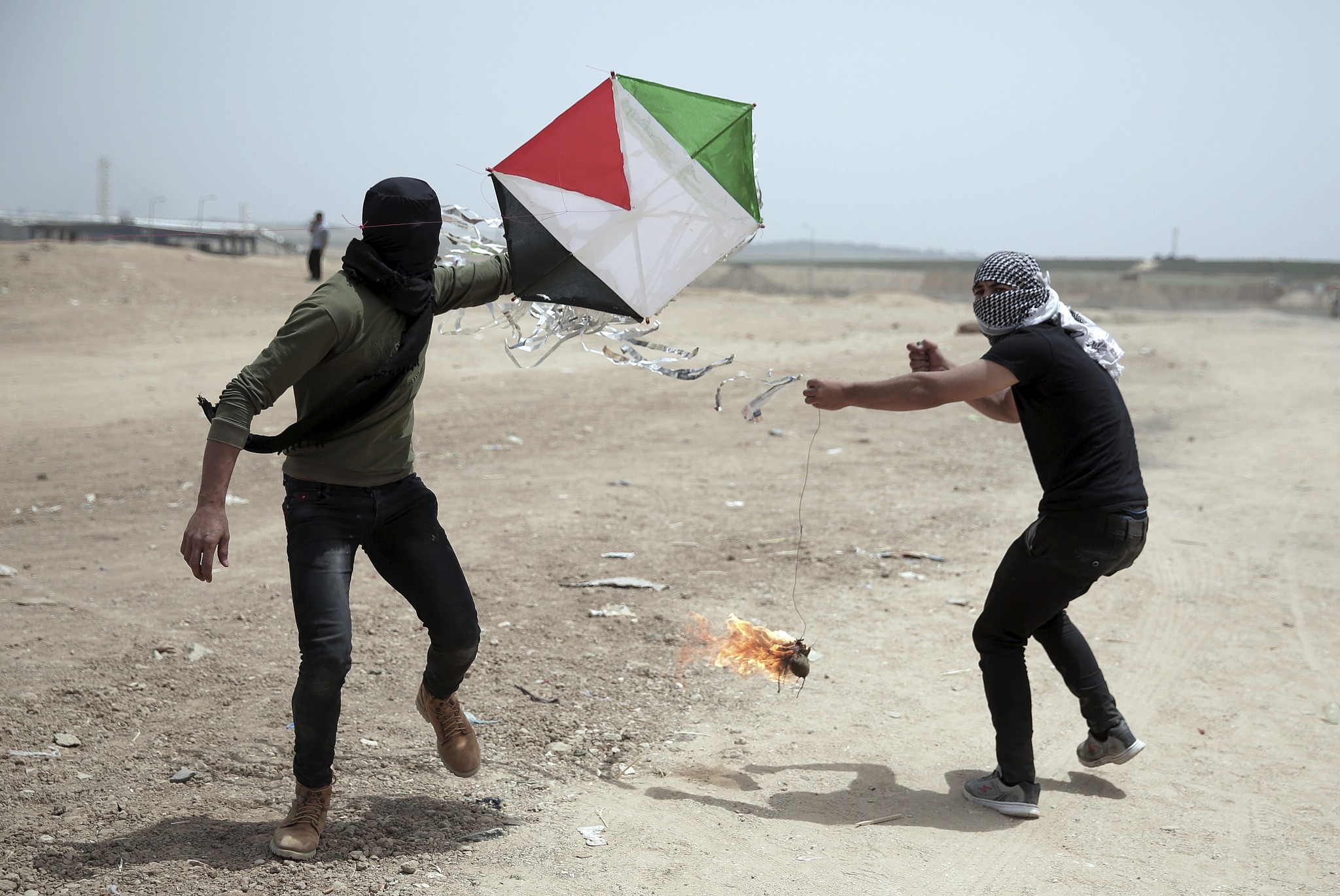
Illustrative: Palestinian protesters fly a kite with a burning rag dangling from its tail, during a protest at the Gaza Strip’s border with Israel, April 20, 2018. Activists use kites with firebombs and burning rags dangling from their tails to set ablaze drying wheat fields on the Israeli side. (AP Photo/Khalil Hamra)

Israeli military aircraft struck a Hamas site in the northern Gaza Strip used as a launching pad for incendiary kites Saturday night, the military said Sunday.

For the past several weeks, Gazans have been regularly flying kites outfitted with containers of burning fuel, often including charcoal and bags of sugar to ensure a long, slow burn.

The attack was in response to “terrorists launching burning incendiaries in an attempt to a cause fire in Israeli territory,” an army spokesperson said.

There were no immediate reports of damage or casualties in Palestinian media.

The army said the Hamas site was located next to the fence separating Israel from the Gaza Strip, which has been the scene of several weeks of violent confrontations over the past weeks.

This was the first known case of the army striking a Hamas site in response to the kite firebombs, dozens of which have been launched in recent weeks.

The kite tactic was introduced as part of the “March of Return” demonstrations at the border fence, which began on March 30 and are due to continue through mid-May.

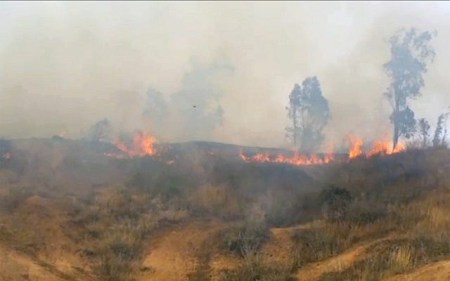
Palestinians flew a burning kite into Israel Friday morning, starting a blaze close to Kibbutz Kissufim. On Wednesday a fire kite flown from Gaza sparked a large blaze in fields in southern Israel that spread through dozens of acres of grasslands and agricultural fields, authorities said, the largest fire yet since the first use of these kites.

Smoke and flames rise from grassland Kibbutz Be’eri in southern Israel after Palestinians flew a kite laden with a Molotov cocktail over the border on May 2, 2018. (Screen capture/Rafi Bavian)

“The IDF will continue to operate against terror activity above and below land, and holds the Hamas terror organization responsible for all terror activities in the Gaza strip,” an army statement Sunday said.

The move comes after several Israeli reports that the army was considering ramping up its response to the kites, including targeting those launching them with lethal force.

The army specifically noted Sunday that there was “no connection whatsoever” between the strike and a large blast rocked the central Gaza Strip on Saturday, killing at least six members of Hamas’s military wing, according to the terror group.

The Ezzedine al-Qassam Brigades, the armed wing of Hamas, said the fatalities were its members. It blamed Israel for the explosion, without providing details or proof.

Palestinian media, by contrast, said it was a “work accident” — that is, that the terrorists were killed by their own explosives.

The incident occurred during a “complex security and intelligence operation”, the brigades said in a statement, calling it “serious and large security incident” and blaming the “Zionist enemy.”

Last month four Islamic Jihad members were killed in an accidental explosion near the Gaza Strip border with Israel.

View image on Twitter
 Scene of explosion in Central Strip. 4 Palestinians killed. This is being reported as an ‘accidental explosion’ which usually involves members of Islamic resistance groups.