Archive for February 2018

The Israel-Lebanese oil dispute – part of US-Russian Mid-East energy battle 

February 18, 2018

Source: The Israel-Lebanese oil dispute – part of US-Russian Mid-East energy battle – DEBKAfile

Instead of accepting a US-brokered deal for Block 9, Hizballah and Iran make Israel’s offshore gas and oil fields a fourth war front.

When six years ago, the US tried to mediate the dispute over Block 9, which straddles the maritime waters of Lebanon and Israel (offering 60 percent to Lebanon; 40 percent to Israel), Russia, Iran and Hizballah had not yet intervened militarily in that early stage of the Syrian civil war. At the time, too, the US controlled Middle East energy markets and Israel cherished the belief that its offshore gas and oil fields were rich enough to supply Europe’s annual consumption and make the Jewish state a Middle East energy power.

But Beirut flatly rejected the US compromise then – just as it does now, except that, today, Lebanon speaks with a stronger and more aggressive voice, backed since then by Hizballah’s and Iran’s victories in the Syrian war arena.

Israel, for its part, missed the train. Major international energy firms have since drawn away from investing in the development of Israel’s Mediterranean gas and oil fields, and it has fallen back on supplying its own needs and sales to neighbors, Egypt, Jordan and the Palestinians. Most of all, Israel has reason to rue its rejection of Russian President Vladimir Putin’s repeated offer to Prime Minister Binyamin Netanyahu for Russian state firms to develop those fields, finance a pipeline network to Europe and provide security for the project. Putin maintained that neither Iran nor Hizballah would venture to attack rigs and pipelines under Russian ownership and protection. This rationale worked effectively in October 2017, when Iraqi and Shiite militia forces seized the oil city of Kirkuk from the semiautonomous Kurdish region of northern Iraq, while refraining thus far from laying hands on the oil fields supplying Turkey, because the Kurds had earlier handed them over to the Russian Rosneft energy giant.
Netanyahu spurned Putin’s proposition at the time for the sake of Israel’s close ties with Washington.

In the present geo-strategic circumstances, DEBKAfile’s military and intelligence sources are strongly skeptical of the chances of US Secretary of State Rex Tillerson and Acting Undersecretary David Satterfield pulling off their bid to broker a deal between Lebanon and Israel over Block 9. Even if a compromise is negotiated, Beirut will flout it before the ink is dry, just as it did UN Security Council Resolution 1701, which prohibited Hizballah from rearming after its 2006 war with Israel or positioning armed strength in South Lebanon.

Five compelling impediments stand in the way of the US mediation bid:

  1. The Block 9 issue has evolved from the latest turn in the Syrian war into part and parcel of a broader test: US controls the oil fields and gas plants of eastern Syria which the US-backed SDF seized from ISIS last year, including the Conoco natural gas facility. Against this, Iran, Hizballah and Syria are in position for holding Israel’s Mediterranean oil and gas facilities hostage.
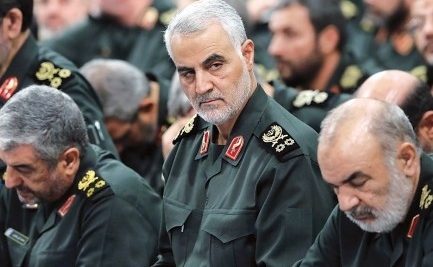
  2. A resolution of this impasse is contingent on the US and Russia reaching understandings on Syria. In their absence, US forces on Feb. 7, for the first time attacked Russian “mercenaries” helping Syrian and pro-Iranian attempting to cross the Euphrates and seize control of the Tabiyeh oil fields on the eastern bank; and Moscow, for its part, will not lift a finger to stop the Iranian Al Qods commander, Qassem Soleimani, or Hizballah’s chief, Hassan Nasrallah, from continuing to threaten Israel’s offshore rigs. Nasrallah said explicitly on Friday, Feb. 16: The region has entered “the battle of oil and gas. No one should look at this as a separate dispute,” he said. If the Lebanese Defense Council so decides, we [Hezbollah] are ready to disable Israel’s offshore gas installations in a couple of hours.”
  3. The Israeli-Lebanese dispute is not the only energy-related quarrel in the region, which Secretary Tillerson is trying to tackle. For months he has been trying without success to settle the feud which oil-rich Saudi Arabia, the UAE and Egypt are fighting with Qatar. Just as the former is tangled up in the Syrian crisis, the latter is caught up in the challenge the US and Saudi Arabia is presenting to Iran’s bid for control of the Red Sea and determination of the outcome of the Yemen war.
  4. The Trump administration’s perception of Lebanon’s government and mlitary structures is unrealistic. Its officials appear to believe that they are not fully under Iranian and Hizballah control and can still be rescued from those Shiite-imperialistic claws. Washington therefore continues to remit arms and funds to Beirut, although Hizballah takes the first cut.

For Israel, the dispute over Block 9 is a major handicap for its strategic position against its foes. Until now, Israel had to contend with three belligerent Iranian-Hizballah fronts building up from Quneitra on the Syrian Golan, southern Syria and southern Lebanon. Hizballah’s threat to its offshore gas and oil fields has added a fourth.

Israel hits target in Gaza with tank fire after ‘device explodes’ near border – IDF

February 17, 2018
https://www.rt.com/news/419107-israel-gaza-tank-fire/
FILE PHOTO: Israel Defense Forces training © Yin Dongxun / Global Look Press
An Israeli tank fired at an observation post located in the southern Gaza Strip, the country’s Defense Forces (IDF) said. The shelling followed an explosive device being detonated near the Israeli patrol in the area.

IDF troops were patrolling an area near the security fence in the Gaza Strip, the military tweeted. It is still unclear if the explosion resulted in any casualties. In response, the IDF used a tank to target an observation post in the area.

The shots were reportedly fired at a Hamas facility located east of the city of Khan Yunis, according to Israeli media.

DETAILS TO FOLLOW

Hezbollah threatens attacks against Israeli offshore oil & gas operations (VIDEO)

February 17, 2018

Published time: 17 Feb, 2018 09:24

https://www.rt.com/news/419086-hezbollah-threatens-israel-offshore-drilling/

An Israeli gas platform is seen in the back as a sailor in the Israeli navy stands aboard a patrol boat in the Mediterranean sea some 15 miles (24 km) west of the port city of Ashdod February 25, 2013. © Amir Cohen / Reuters

Hezbollah Secretary General Sayyed Hassan Nasrallah has threatened to attack Israel’s offshore oil and gas exploration and drilling operations in yet another escalation in the two countries’ increasingly hostile war of words.

During a televised address in Beirut on Friday, Nasrallah said Hezbollah could “disable [Israel’s offshore oil installations] within hours.”

“If you prevent us, we prevent you; if you open fire at us, we will open fire,” he added during a ceremony commemorating the death of Imad Mughniyeh, the party’s former military commander who was assassinated in Damascus in 2008.

“In the battle for oil and gas, the only power you have, you the Lebanese people, is the resistance, because the Lebanese army is not allowed to own missiles,” Nasrallah began the address, as cited by Al Masdar News. Nasrallah also took the opportunity to condemn US interference in the region’s diplomacy.

“The Americans are not honest mediators, especially when the other party is the Israeli entity,” he concluded.

This isn’t the first time that the Lebanese militant group has threatened to attack Israel’s oil and gas installations in the Levant basin. Lebanon issued an offshore oil and gas exploration tender in late January along the country’s maritime border with Israel, instantly ramping up tensions in the region and sparking increasingly antagonistic rhetoric from both sides.

Israeli Defense Minister Avigdor Lieberman described the move as “very provocative” and said such a tender was illegitimate as it was for a gas field “that is by all accounts ours,” as cited by The Times of Israel. Lebanese Prime Minister Saad Hariri fired back calling Lieberman’s statement a “blatant provocation that Lebanon rejects.”

Hezbollah also recently disseminated flyers in Lebanon that read: “Whoever harms gas and oil sites in Lebanese economic waters, their own sites will be harmed, and they know Lebanon is fully capable of doing so,”Ynet News reports.

Lebanese officials previously announced plans to begin exploratory drilling in 2019. Israel is already producing gas at the Tamar field and expects to bring the much larger Leviathan field online next year. For context, the specific contested area at the heart of the recent spat, nicknamed Block 9, extends over an area of roughly 854 square kilometers.

Shin Bet Investigation Exposes Depth of Turkey’s Hamas Support

February 17, 2018

by Yaakov Lappin February 16, 2018

Source Link: Shin Bet Investigation Exposes Depth of Turkey’s Hamas Support

{Birds of a feather flock together. – LS}

Hamas is operating freely on Turkish soil, gathering terrorist finances and looking for ways to upgrade the capabilities of its armed wing in Gaza, an Israeli security source has told the Investigative Project on Terrorism (IPT). It is highly likely that these activities occur with the knowledge of the Turkish authorities, the source said.

The comments come after Israel’s Shin Bet domestic intelligence agency announced the arrest of two suspects — including a Turkish national — on the suspicion of working for Hamas in Turkey.

“There are Hamas military operatives in Turkey, not political operatives,” the source said.

The Shin Bet’s investigation found that Turkish adviser Adnan Basha, who is close to Turkish government officials, set up a company called SADAT, which was tasked with assisting Hamas with acquiring money and weapons. A former Turkish general worked at the company, the IPT has learned.

According to the investigation’s findings, SADAT employees helped senior Hamas officials visit a 2015 weapons show in Turkey. There, the operatives showed interest in drone technologies. {Coincidence? – LS}

“Turkey’s intelligence services are powerful. To believe that they would not know about this is unreasonable,” the source stated. “These activities are taking place on Turkish soil with no interference, and in the knowledge of elements close to the Turkish government.”

According to the Shin Bet’s announcement, Israeli security services arrested a Turkish law lecturer named Cemil Tekeli last month, on suspicion of assisting Hamas terrorists in Turkey.

Three weeks later, Israeli-Arab Dara’am Jabarin, from the northern Israeli town of Umm El-Fahem, was arrested on suspicion of being part of Hamas’ Turkey operations.

The investigation found that “the two had been recruited in Turkey by senior Hamas terrorist Zaher Jabarin,” who was released in Israel’s 2011 prisoner exchange deal with Hamas, in exchange for the freedom of captive Israeli soldier Gilad Shalit.

Jabarin “is responsible for Hamas’ budget and promotes terrorist operations in Judea and Samaria [the West Bank],” the Shin Bet stated. Jabarin is reportedly under the command of Hamas’ deputy chairman, and the head of West Bank operations, Salah Aruri, who is believed to be based in Beirut, under Hezbollah protection.

In its statement, the Shin Bet released remarkable descriptions of Turkey’s contribution “to the military strengthening of Hamas.” Questioning of Tekeli, the Turkish law lecturer, revealed that the SADAT company “was founded to assist — with funds and war materiel — the creation of the ‘Palestine Army’ [in its goal of fighting] Israel.”

“During the investigation, it became clear that Hamas is in direct contact with Turkish authorities via Jihad Ya’amur, a terrorist who was involved in the [1994] abduction of IDF soldier Nahshon Waxman [that soldier was murdered by Hamas during an Israeli attempt to rescue him].” Ya’amur was also released by Israel in the 2011 Shalit deal.

Tekeli’s role, according to the investigation, was to assist Hamas terrorists who moved to Turkey — both personally and economically. Most of these terrorists were released in the Shalit deal, and had taken part in deadly attacks on Israelis in the past.

“Tekeli assisted them in obtaining visas that allowed them to stay in Turkey, in purchasing and renting commercial and residential properties, in purchasing luxury vehicles, and in becoming established in business via the registration of companies in their names,” the Shin Bet stated.

The investigation also exposed large-scale Hamas money laundering in Turkey, overseen by Zaher Jabarin. Hamas operatives in Turkey owned a company called IMES, “which served as a cover for the laundering of millions of US dollars that were transferred to the Gaza Strip and various countries,” the intelligence agency said. “An account was opened for IMES with Turkey’s Akbank. The company’s chairman opened another bank account under his name with Türkiye Finans Bank.”

Subsequent questioning of the Israeli Arab suspect, Dara’am Jabarin, who was allegedly recruited to Hamas’ ranks by Jabarin, showed that the IMES company was used as a cover for meetings with recruits. Dara’am visited Turkey frequently over a period of 18 months, and was asked by his handlers to transfer Hamas funds from Turkey to the West Bank, according to the investigation.

“His handlers in Turkey gave him hundreds of thousands of Euros for Hamas’ military infrastructure. He hid the funds in various secret locations” in the West Bank, the Shin Bet said. “A search of his home uncovered 91,000 Euros which were due to be transferred to Judea and Samaria [the West Bank].”

In recent weeks, additional suspects from the town of Umm El-Fahm have been detained in connection with the investigation.

Tekeli was deported from Israel after the end of the investigation, while Dara’am Jabarin is due to go on trial in the coming days.

In its official statement, the Shin Bet said that Turkish officials turned a blind eye, and on occasion encouraged Hamas’ economic and military activities. This activity occurred “with the assistance of Turkish nationals, some of whom are close to the government. This activity relies on — inter alia — business platforms that serve Hamas in laundering funds that are transferred to Judea and Samaria,” the statement said.

Speaking to the IPT, the Israeli security source said that the arrest of the Israeli Arab man underscores a disturbing danger posed by Hamas’ ongoing attempt to recruit Arab Israelis on Turkish soil. “This is problematic,” the source said, referring to the fact that recruits with Israeli citizenship have full freedom of maneuver inside of the country, which can be exploited for hostile action.


BIG BROTHER Iran may be spying on Brits using ‘weaponised’ phone apps downloaded from Apple and Google’s app stores, report claims

February 16, 2018

By Mark Hodge 15th February 2018 4:59 pm The Sun

Source Link: BIG BROTHER Iran may be spying on Brits using weaponised phone apps downloaded from Apple and Google’s app stores, report claims

{Invading Iran one app at a time. – LS}

An explosive new report claims the spyware-enabled messaging apps, used by the evil regime, are being used by Iranian expats in the West to communicate with their relatives in the troubled country

IRAN could be spying on Brits and Americans using “weaponised” apps which are available on Apple and Google’s online stores, an explosive new report has claimed.

The Iranian regime has created their own messaging apps which are spyware-enabled to help them hunt down anti-government protesters in the country, according to the report obtained by The Sun Online.

The most popular of these applications is called Mobogram, which is used by millions of Iranians and is available to download by westerners on Apple’s App Store.

The report by the National Council of Resistance of Iran, a political group which opposes the Iranian regime, shows that Iranian expats are using Mobogram to communicate with their relatives in the troubled dictatorship.

Deputy Director of the council Alireza Jafarzadeh told The Sun Online that the Iranian regime has “weaponised smartphones” in its bid to thwart demonstrators in the country.

He said: “When you download these apps and start using them, they have the ability to gain access to your contacts, track your location and they can see the content of your communications.

“They can find out who you are, your phone number, your address, because they gain access to information on your SIM card.

“Some of the apps have found their way into global marketplaces such as Google Play and Apple’s App Store.

“This means the Iranian regime could target the millions of Iranian expats living abroad who communicate with their relatives.”

Mr Jafarzadeh’s says that the council’s research has shown that the regime has used the spyware to “threaten, arrest, torture and kill people.”

In December and January, the Iranian regime was rocked by anti-government protests which erupted in over 100 town and cities across the Islamic Republic.

The Council’s research shows that the government has developed around 100 spyware enabled apps allegedly using tech companies which are a front for the evil regime.

Apps such as Mobogram are “forked”, or copied, from popular messaging app Telegram and “were promoted heavily” by the state-sponsored firms, claims Mr Jafarzadeh.

Last year, the founder and CEO of Telegram Pavel Durov branded Mobogram “potentially insecure” and warned against using it.

He tweeted: “Mobogram is an outdated and potentially insecure fork of Telegram from Iran. I don’t advise to use it.”

The Iranian government executes more people, including women and children, per capita than any other country on Earth.

And Mr Jafarzadeh says the regime is “experimenting” with cyber warfare on its own people but could “apply these tactics” against  western countries.

He said: “The regime has turned these applications into a spying weapon.

“They have weaponised these applications and as a result have actually weaponised smartphones in their favour.

“The Iranian regime is experimenting with cyberwar fare on its own population first – and once they have perfected that they could apply these tactics on countries outside of Iran.

“The regime feels very, very vulnerable to the uprising which is happening. They feel that the whole population is turning against them.”

The Sun Online has approached Apple and Google for comment.

Mobogram web developer Hanista has also been approached for comment.

The new rules of the game 

February 16, 2018

Source: The new rules of the game – Israel Hayom

Iranian general calls to uproot ‘baby-killing Zionist regime’ 

February 16, 2018

Source: Iranian general calls to uproot ‘baby-killing Zionist regime’ – Israel Hayom

Caroline Glick: It’s All Politics: Why Netanyahu Is Likely to Beat the Rap and Keep Leading Israel

February 16, 2018

by Caroline Glick

15 Feb 2018

http://www.breitbart.com/big-journalism/2018/02/15/caroline-glick-investigation-netanyahu-will-hurt-israel/

AP/Giannis Papanikos

Foreign observers may have a hard time squaring Benjamin Netanyahu’s international stature as a statesman with his suddenly vulnerable position at home.

Abroad, both those that hate the Israeli prime minister and those that admire him view him as a successful leader. His diplomatic skills have transformed Israel from an international pariah, at the mercy of the Palestine Liberation Organization and the international left, to a rising star on the international scene.

Economically, Netanyahu is credited worldwide with shepherding Israel from a sclerotic socialist backwater in the early 1990s into a first world economy and a global leader in innovation and technological advancement.

In the context of these extraordinary achievements, and as Israel faces mounting security challenges from Iran in Syria, Lebanon and Gaza — challenges amplified last Saturday with the violent clashes between Iran and the Syrian military and Israel — the police’s sudden announcement that they recommend indicting Netanyahu for bribery seems incongruous.

But as Tip O’Neill, the late, long-serving Speaker of the U.S. House of Representatives, famously said, “all politics is local.”

This truth was borne out in spades on Tuesday night in Israel, when the Israeli police announced that they are recommending that Israel’s Attorney General Avichai Mandelblit indict Netanyahu on two counts of bribery and two counts of breach of trust in two separate investigations.

The reason these events are happening is because Netanyahu is hated by Israel’s entrenched elites, who benefited most from the way things used to be. And they would like very much to unseat him and replace him with someone who would change the direction of Israel’s foreign, defense and economic policies.

To be sure, there would be nothing untoward or inappropriate about a police investigation of a sitting prime minister if the suspicions were of significant seriousness to warrant endangering the stability of Israel’s political leadership.

But the cases for which Netanyahu has been investigated, and for which the police now recommend his indictment, are not serious. Indeed, officials at the Israeli justice ministry blasted the police Wednesday in conversations with reporters. According to Hadashot news, justice ministry attorneys say the police “inflated the balloon” of suspicions against Netanyahu to its bursting point, and that the investigation reports the police submitted do not support their conclusions.

So why did the police rush to announce their conclusions? Why did they time the release of their recommendations to the start of the primetime news broadcasts on Tuesday night?

advertisement

Likud lawmakers Wednesday accused investigators of trying to carry out a coup. Specifically, the lawmakers accused the police of abusing their power to carry out criminal investigations to conduct a spurious investigation of Netanyahu for the sole purpose of overthrowing him and replacing him with a leader who is more to their liking.

For their part, the police are doing nothing to dispel the notion that they are behaving not as dispassionate crime-stoppers but as adjuncts of political forces. The police’s star witness in one of the probes is Netanyahu’s chief political challenger for the premiership, Yair Lapid. Lapid, Netanyahu’s former finance minister, is the leader of the center-left Yesh Atid party, which has been polling in second place behind the Likud for more than a year.

Lapid’s conflicts of interests with Netanyahu, with the police, and with the other principle suspects in the case — businessman Arnon Milchan and newspaper publisher Arnon Mozes — are legion.

Furthermore, Lapid recently brought Yoav Segalovich — the retired police superintendent and the head of the police’s investigations and intelligence department — into his party.

In addition, police spokeswoman Deputy Superintendent Merav Lapidot served as Lapid’s spokeswoman when he was finance minister, and has publically supported him politically and disparaged Netanyahu.

Moreover, Police Commissioner Roni Alsheich exposed his personal hatred and betrayed his desire to see Netanyahu thrown from office in a scandalous interview last Wednesday on Israel’s top rated television news magazine, Uvda.

Lapid is the central witness in what the police have dubbed Case 1000, which involves allegations that Netanyahu and his wife Sara received exorbitant gifts from Hollywood movie producer and Israeli businessman Arnon Milchan, and in exchange intervened on his behalf in multiple instances. For example, Netanyahu asked then-U.S. Secretary of State John Kerry to renew Milchan’s residency visa to the US.

In his testimony to police, Lapid alleged that in 2013, during his tenure as finance minister in Netanyahu’s government, Netanyahu had two conversations with him where he told Lapid that he supported an amendment to Israel’s income tax law that Milchan was trying to advance.

In 2008, the government of then-Prime Minister Ehud Olmert government passed a law through the Knesset that gave tax exemption on global income and an exemption on reporting on global income for a period of ten years for new immigrants and returning Israeli expatriates.

In 2013, in two separate meetings, Milchan lobbied Lapid, a close friend, to back an amendment to the law that would extend the tax and reporting exemptions for another ten years.

Lapid told investigators that he told Milchan that he opposed his proposal. Notably, according to media reports, no one at the finance ministry remembers the meetings.

Lapid told police that after both meetings, Netanyahu called him up and told him that he thought Milchan’s proposal was a good idea and that it would increase immigration of high net worth individuals to Israel.

On the basis of these conversations, the police recommended that Attorney General indict Netanyahu for bribery.

(Lapid, for his part, was never the subject of a criminal probe for his friendship with Milchan.)

As for Mozes, the police allege that he offered Netanyahu a bribe whereby Netanyahu would help his newspaper, Yediot Ahronot, by working to curtail circulation and government advertising in Israel Hayom, a free daily owned by U.S. billionaire and Netanyahu supporter Sheldon Adelson. In exchange, Mozes allegedly offered to scale back his newspaper’s implacably hostile editorial line against Netanyahu.

Although Netanyahu never agreed to Mozes’s terms, and instead disbanded his government and went to early elections partly to protect Israel Hayom (see below), Lapid did everything he could to advance Mozes’s goal of expanding his paper’s market share by wiping out his chief competitor.

Lapid had a long history with Mozes. He worked for him as a columnist at Yediot Ahronot for decades. Lapid also launched his political career at a party Mozes threw for him.

In 2014, Lapid’s lawmakers were co-sponsors of a draft law referred to as the Israel Hayom law. The purpose of the law, which Yediot Ahronot’s lawyers helped to draft, was to shut down Israel Hayom. Half of his Knesset faction voted in favor of the law in a preliminary reading. It was in response to that preliminary reading, where the bill passed through the first of three formal readings with with 43 “yea” votes, that Netanyahu fired Lapid and two other faction heads in his government, disbanded the Knesset, and called for new elections barely a year after the 2013 elections.

And yet, neither Lapid – who enjoys overwhelmingly positive coverage in Yediot Ahronot – nor any of the members of his Knesset faction were ever investigated for their role in advancing Mozes’s agenda.

Watching this drama unfold, Israelis and foreigners alike are wondering how Netanyahu’s legal troubles will affect his ability to lead the country.

Given the political nature of the police’s actions, the answer is that Netanyahu will be able to continue to carry out his duties so long as he retains the support of his base of voters. So far, he is maintaining his voters’ support.

A poll conducted for Hadashot news Wednesday showed that the Likud gained a seat in a hypothetical Knesset election. Lapid’s Yesh Atid lost two seats.

But the police recommendations do hurt him. They hurt him by casting a shadow over his legitimacy. Over the coming months, that shadow can erode his support base.

And they hurt him because they place enormous pressure on the attorney general to indict him. Justice ministry officials reportedly believe that the police put them in an impossible situation. On the one hand, investigators exaggerated Netanyahu’s alleged misdeeds — and on the other hand, they didn’t provide the prosecutors with the evidence needed to sustain an indictment, let alone a conviction.

Netanyahu recently told associates that he can handle the criminal probes while leading the country because he is a multitasker. “When I went through the tests to serve in [my commando unit] in the IDF,” he said, “they were amazed at my score for multitasking. They had never seen a score that high,” he said.

Netanyahu’s multitasking skills – and mainly his political skills — are going to be tested as never before in the coming months, as he is called upon to satisfy his voters in a brutal political environment.

But what is clear enough is that so long as he is able to keep their support, there is no reason to expect a change in the general direction of Israel’s foreign, defense, or economic policies.

India: Close to 100K at “Largest Pro-Israel Rally in History” in Calcutta

February 16, 2018

By – on

https://gellerreport.com/2018/02/india-huge-proisrael-rally.html/

Bravo, India! Not everyone is terrified of invoking anger and hatred from the Muslim world. Lovers of freedom are starting to stand up and speak, tired of Islamic bullying and violence. The Trump effect.

Note to readers regarding the article below: The Times of Israel is a hard-left publication. Anyone or any group pro-Israel or anti- jihad is “far-right.” Anyone who opposes jihad or sharia is “anti-Muslim,” you know the drill. Smear, defame, libel.

TOI is rather notorious and loathsome.

In Calcutta, tens of thousands at pro-Israel rally by far-right Hindu movement

Marking 10 years of the Hindu Samhati movement, demonstration includes violent dust-up with media, arrests of protesters, and mass conversion of 14-member Muslim family

By Amanda Borschel-Dan, Times of Israel, February 15, 2018 (thanks to mark):

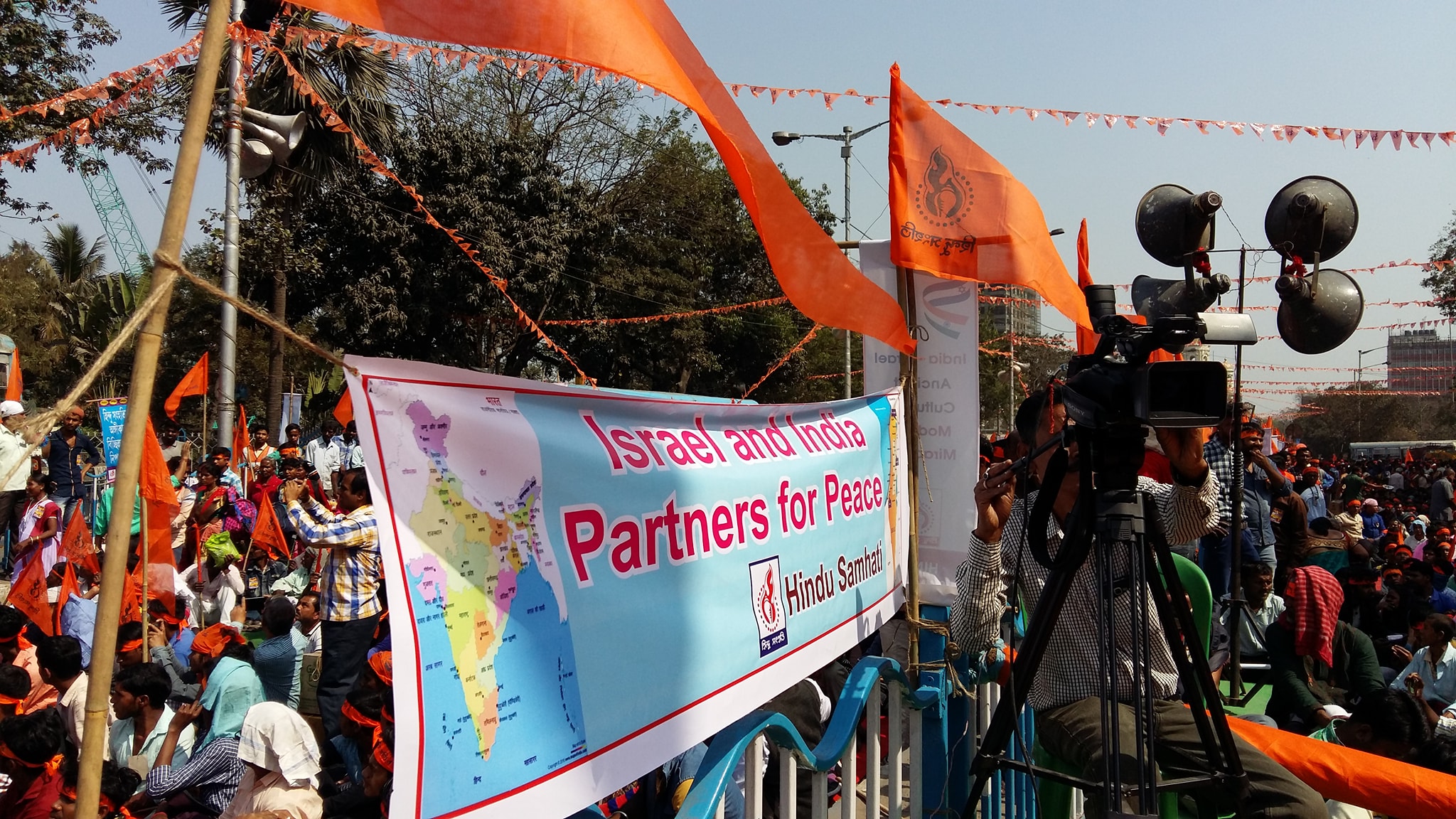
Holding pro-Israel banners aloft, some 70,000 people assembled in the center of Calcutta on Wednesday to mark the tenth anniversary of the founding of the far-right, anti-Muslim Hindu Samhati nationalist movement.

The rally, which organizers are claiming is the “largest pro-Israel rally in history,” eclipses a similar demonstration held in 2014, which saw a reported crowd of 20,000.

Wednesday’s rally included speeches by nationalist figures such as Maj. Gen. Gagandeep Bakshi, a decorated career soldier expert in counter-terrorism, from a stage in the heart of one of the poorest areas of India. The event culminated in a celebratory presentation to the crowd of a family of 14 former Muslims who converted to Hinduism.

Banner slogans included, “Jerusalem: Eternal Capital of Israel,” “India-Israel: Ancient Cultures, Modern Miracles,” and the inclusive “India-Israel Represents Honoring Women’s rights, Freedom of Speech, Respect for Human Rights, Liberty and Equality for All, Democracy.”

According to a press release, Hindu Samhati founder Tapan Ghosh passed a resolution “by voice vote” urging the Indian government to move its embassy to Jerusalem. Ghosh told the large Hindu nationalist crowd, “Moving our embassy to Jerusalem will honor Israel’s long-standing commitment to peace and strengthen the bond between our two ancient peoples.”

70,000 Hindus in India rally for Israel under Hindu Samhati Banner in Kolkata, February 14, 2018 (Vijeta Uniyal)

Ghosh compared the millennia-long struggle of the Jewish people for a homeland in Israel to the battle Hindus now wage in India, according to the press release. “In West Bengal… Hindus are being attacked by hostile neighbors just as Jews are fighting for their existence in little Israel. This struggle for survival unites Hindus and Jews, apart from the 2,500 years of glorious history that unites both the communities,” according to the release.

The rally ended as violence broke out among Hindu Samhati members and journalists after the on-stage presentation of the family of converts.

70,000 Hindus in India rally for Israel under Hindu Samhati Banner in Kolkata, February 14, 2018 (Vijeta Uniyal)

According to The Indian Express, Hindu Samhati leader Ghosh told the crowd, “Hussain Ali and his wife Moyna Bibi, as well as 12 family members, have been reconverted. Their ancestors were converted, and now we welcome them as Hindus on stage. Earlier we used to do this (conversion) secretly, but now we will do this in public.”

According to The Hindu, when journalists attempted to interview the family, Hindu Samhati supporters attacked and pushed them.

Among the detained or arrested Hindu Samhati members was Ghosh, who was taken for questioning, according to online news site The Hindu.

70,000 Hindus in India rally for Israel under Hindu Samhati Banner in Kolkata, February 14, 2018 (Vijeta Uniyal)

Joint commissioner of Kolkata police Praveen Kumar Tripathi told The Hindustan Times that “Hindu Samhati chief Tapan Ghosh and three other activists have been arrested in the case of assault on media persons in Kolkata on Wednesday evening.”

What is Hindu Samhati and what does it stand for?

Ghosh founded Hindu Samhati in West Bengal after leaving the RSS (Rashtriya Swayamsevak Sangh) Hindu nationalist movement in 2008. The RSS supported the establishment of Israel in 1948. West Bengal has seen increased Hindu-Muslim tensions in recent years.

According to news source NDTV, “Till recently, the Hindu Samhati was viewed as a fringe group and, politically, largely ignored. But over the last couple of years, it has grown a public profile by being vocal and active during the communal tensions at Bashirhat and earlier at Dhulagarh.”

70,000 Hindus in India rally for Israel under Hindu Samhati Banner in Kolkata, February 14, 2018. Pictured: Sri Tapan Ghosh, head of the Hindu Samhati. (Vijeta Uniyal)

Ghosh describes himself on Twitter as an “Uncompromising Hindu activist of Bengal. Determined to fight against Islamic aggression & expansion.” In its media material following Wednesday’s rally, the movement states it was founded “to serve the poorest of poor Hindus in rural heartland of Eastern Bharat, which is plagued by Islamist violence, insecurity and thereby poverty.”

“It has emerged as a powerful voice for human rights. Today’s turnout is testimony of the fact that Hindus believe in the India-Israel alliance. The Hindu Samhati leadership promise to work towards closer India-Israel relations in times to come, as these two ancient cultures become modern miracles which together can make the world a better place.”

70,000 Hindus in India rally for Israel under Hindu Samhati Banner in Kolkata, February 14, 2018 (Vijeta Uniyal)

In October, Ghosh made headlines in London when he was invited to speak in the House of Commons complex by Conservative party MP Bob Blackman, chair of the All Party Parliamentary Group (APPG) for British Hindus.

According to The Hindu, Ghosh is accused of making anti-Muslim statements during a session called “Tolerating the intolerant: The abuse of Hindu human rights in Europe and India.” During his London trip, Ghosh was photographed on a social call with British far-right nationalist Tommy Robinson.

Home Secretary Amber Rudd and Cabinet Minister Damian Green, who attended a Diwali celebration with Ghosh in October, distanced themselves from the event. The Home Office issued a statement that was quoted in The Middle East Eye, saying Rudd “fundamentally disagrees with Mr Ghosh’s views on Islam… The Home Secretary accepted an invitation from the Hindu Forum of Britain to attend an event in Parliament last week to celebrate Diwali. She did not speak to Mr. Ghosh and was not present when he spoke.”

70,000 Hindus in India rally for Israel under Hindu Samhati Banner in Kolkata, February 14, 2018 (Vijeta Uniyal)

At Wednesday’s rally, Ghosh appeared unaffected by the London rebuke.

Addressing the crowd, he is quoted in The Indian Express as calling on all Muslim Indians who had converted or reconverted to Hinduism, “When you return, initiate this movement in your districts and blocks — let us welcome all Muslims to Hinduism.”

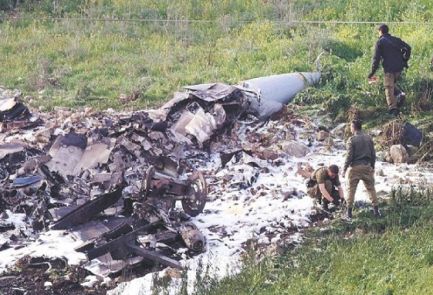
Syrian air defenses spread out to target US as well as Israeli overflights 

February 16, 2018

Source: Syrian air defenses spread out to target US as well as Israeli overflights – DEBKAfile

That’s in the east. In the south, the Syrian, pro-Iranian, Russian-backed coalition is preparing to grab Daraa. In both operations, they are determined to come off best after major defeats in the last few days. On the night of Feb. 7, massive US air and artillery strikes thwarted a Russian-assisted Syrian, Hizballah attempt to cross the Euphrates; and on Feb. 10, after an Israeli F-16 jet was downed by a Syrian SA-17 air defense missile, Israeli warplanes bombed a dozen military positions in Syria. They included air defense emplacements, but also  struck the secret Iranian Revolutionary Guards command posts that were preparing the combined assault on Daraa. Those preparations were resumed in the interim, with boosted protection against attacks from the air.