Archive for February 2018

New Iranian weaponized drone deployed in Syria and likely handed to Hizballah

February 7, 2018

Debka File February 7, 2018

Source: New Iranian weaponized drone deployed in Syria and likely handed to Hizballah

{With a range of 900km, I’d say Israel was well within striking distance. Putting them into the hands of Hizballah just adds to Iran’s deniability, something they’ve done time and time again. – LS}

Iranian Defense Minister Brig. Gen. Amir Hatami said in a speech celebrating the new mass-produced weaponry Monday that the new drones, dubbed the Mohajer 6 (Migrant) are “equipped with smart Qa’em precision-striking bombs and different electro-optical explorers and different warheads, [and] can trace, intercept and destroy the target.” Before the ceremony, the new drones were delivered last week to the Revolutionary Guards for their war efforts across the Middle East, especially in Syria, where Iranian-backed forces have attacked US troops. DEBKAfile adds: The new weapons, which have a range of more than 900km, have reached Syria and most likely Hizballah as well. Their main purpose is to arm Iranian and Hizballah forces in Syria with their own air force capability and so reduce their total dependence on the Russians for air support. Iran recently gave the pro-Iranian Shiite militias fighting ISIS in Iraq a fleet of Shahed 285 light fighter jets, to boost the autonomy in battle of the forces deployed by the Revolutionary Guards.

Iran’s imperial challenge to Middle East borders 

February 7, 2018

Source: Iran’s imperial challenge to Middle East borders – Israel Hayom

Elliot Abrams

This piece is reprinted with permission and can be found on Abrams’ blog “Pressure Points.”

In May 2017, Maj. Gen. Ghasem Soleimani, chief of the Iranian Revolutionary Guard Corps’ foreign operations branch known as the Quds Force, visited the Iraq-Syria border in the company of an Iran-backed Shia militia. A spokesman for the militia, called the Popular Mobilization Forces, was quoted in Newsweek:

‘This will be the first step to the liberation of the entire border,’ Ahmad al-Asadi, a spokesperson for the PMF said, according to the Associated Press. ‘This victory will also be an important incentive for the Syrian Arab Army to secure the entire border from the Syrian side,’ he added.”

Iranian-backed forces, that is, would take both sides of the border, so for Iran there would be no border. In June, Soleimani was reported to be on the Syrian side of the border.

Now, it is reported that one of Iran’s hardest-line leaders, Ibrahim Raisi, has visited the Israeli-Lebanese border. Raisi, the defeated candidate for president in 2017, is a member of the Assembly of Experts that will choose a successor to Supreme Leader Ali Khamenei and is a candidate for that position himself. Visiting Beirut, he took time to talk with the head of Hezbollah and to pay his respects at the home of the late terrorist mastermind Imad Mughniyeh.

But, as the Jerusalem Center for Public Affairs noted, “The high point of Raisi’s visit occurred in southern Lebanon when he toured the border with Israel escorted by Hizbullah military commanders and Iranian officers.”

Like Soleimani’s Iraq-Syria border visit, Raisi’s Lebanon-Israel border visit delivers several messages. First, borders have no meaning for Iran; the Islamic republic is determined to be the dominant player in Iraq, Syria, and Lebanon. Second, the governments of those countries have no control of their own borders and territory; Iranian military and terrorist leaders can come and go as they please. Third, whether Lebanon gets into a conflict with Israel will be determined by decisions made in Tehran, not in Beirut.

That is a sad development for most Lebanese, who are not fanatical Hezbollah supporters. But it is one the United States should keep in mind as we assess our relations with Lebanon and our military aid to that country.

Elliott Abrams is a senior fellow for Middle East Studies at the Council on Foreign Relations

Netanyahu visits Golan Heights, near Syrian border, and cautions Israel’s enemies

February 6, 2018


by Reuters Tuesday Feb 6, 2018 10:57am The Foreign Desk

Source: Netanyahu visits Golan Heights, near Syrian border, and cautions Israel’s enemies

{I’d take his word for it. – LS}

JERUSALEM (Reuters) – Prime Minister Benjamin Netanyahu paid a rare visit to the occupied Golan Heights on Tuesday, peering across the nearby border into Syria and warning Israel’s enemies not to “test” its resolve.

Netanyahu has been cautioning against any attempt by Iran to deepen its military foothold in Syria or construct missile factories in neighboring Lebanon.

Lebanon’s top three leaders accused Israel on Tuesday of threatening the stability of the border region between them amid rising tension over territorial and maritime boundaries.

“We seek peace but are prepared for any scenario and I wouldn’t suggest to anyone that they test us,” Netanyahu said in broadcast remarks during the Golan visit.

He did not mention Iran or its Lebanese militia ally, Hezbollah, both main players in Syria’s civil war, by name.

Netanyahu was accompanied to a hilltop observation point, some three kms (two miles) from a 1974 ceasefire line, by his security cabinet.

They were briefed on the security situation in the area by Israel’s armed forces chief and the military commander of the northern region, the prime minister’s office said in a statement.

Israeli Special Forces Kill Palestinian Terrorists Behind Murder of Rabbi

February 6, 2018


Relatives and friends carry the body of Israeli Rabbi Raziel Shevach, Hy”d, during his funeral in Chavat Gilad, Wednesday. (Reuters/Ronen Zvulun)

OAN Newsroom UPDATED 7:36 MA PT — Tues. February 6, 2018

Source: Israeli Special Forces Kill Palestinian Terrorists Behind Murder of Rabbi

{You can run, but you can’t hide. – LS}

On Tuesday, Israel’s security service eliminated a top Hamas terrorist for the murder of Rabbi Shevach.

The team hunted down the terror cell in response to a January drive-by shooting, which killed the rabbi near his home.

“Israeli national police, border police and counter terrorism the ‘Yamam’ carried out an operation over night to focus and try to find the terrorists who carried out the deadly attack that murdered Rabbi Shevach just over three weeks ago,” announced Police spokesperson Micky Rosenfeld. “As a result of the operation the terrorist was shot and killed, there was no injuries to our officers.”

Prime Minister Benjamin Netanyahu praised the security forces for the “determined and complex operation.”

North Korea ‘months away’ from ability to hit U.S. with nuclear weapon: U.S. envoy

February 6, 2018

Stephanie Nebehay World News February 6, 2018

Source: North Korea ‘months away’ from ability to hit U.S. with nuclear weapon: U.S. envoy

{Things that go boom in the night.  What say you, China?….’crickets’ – LS}

GENEVA (Reuters) – North Korea is only months away from obtaining the capability to hit U.S. territory with a nuclear weapon and must be disarmed, a U.S. envoy said on Tuesday, dismissing Pyonyang’s diplomatic thaw with South Korea as a “charm offensive” that fooled no one.

In a diplomatic showdown at a U.N.-sponsored Conference on Disarmament, North Korea responded by blaming Washington for escalating confrontation, saying it was deploying nuclear assets including aircraft carriers near the divided peninsula and was considering a pre-emptive strike against Pyongyang.

“North Korea has accelerated its provocative pursuit of nuclear weapons and missile capabilities, and expressed explicit threats to use nuclear weapons against the United States and its allies in the region,” U.S. disarmament ambassador Robert Wood told the Geneva forum.

“North Korean officials insist that they will not give up nuclear weapons, and North Korea may now be only months away from the capability to strike the United States with nuclear-armed ballistic missiles,” he said.

A new U.S. nuclear policy review outlined last week “reaffirms that North Korea’s illicit nuclear program must be completely, verifiably, and irreversibly eliminated, resulting in a Korean Peninsula free of nuclear weapons,” he said.

Asked later what the basis was for the assessment that North Korea would soon be able to hit the United States with a nuclear weapon, he said he had “no new information to share”.

North Korea tested its first intercontinental ballistic missile, the Hwasong-14, twice last July. In November it tested the Hwasong-15, believed to be capable of reaching the continental United States. It is not yet believed to have the capability to mount a nuclear warhead on a ballistic missile.

North Korea is under tightening U.N. Security Council sanctions for its banned nuclear and ballistic missile programs. But recent weeks have seen a thaw with South Korea, after Pyongyang agreed to send athletes to compete in the Olympic Games opening on Feb. 9 in the south.

“CHARM OFFENSIVE”

“What I would call ‘the charm offensive’ frankly is fooling no one,” Wood told the talks.

He also said arsenals in China and Russia were expanding, drawing rebukes from their respective delegations.

“Russia, China and North Korea are growing their stockpiles, increasing the prominence of nuclear weapons in their security strategies, and – in some cases – pursuing the development of new nuclear capabilities to threaten other peaceful nations,” Wood said.

“We are not going to stick our head in the sand, we are going to respond to these growing challenges,” he later told reporters.

North Korea accused the United States of seeking to aggravate the situation on the divided peninsula by “deploying large nuclear assets” nearby, laying the ground for a possible pre-emptive strike against it.

“In view of the nature and scale of U.S. military reinforcements, they are designed to make a pre-emptive strike against the DPRK,” North Korean diplomat Ju Yong Chol told the talks, referring to his country’s official name the Democratic People’s Republic of Korea.

“U.S. officials including the defense secretary and the CIA director repeatedly talked about DPRK nuclear and missile threat to justify their argument for a military option and a new concept of a so-called ‘bloody nose’, a limited pre-emptive strike on the DPRK is under consideration within the U.S. administration,” Ju said.

He said President Donald Trump’s ‘America First’ doctrine and U.S. nuclear superiority would endanger global peace and security and “trigger off a new nuclear arms race and could bring the whole world close to a horrible catastrophe”.

Versus Putin and Nasrallah: Will US destroyers anchor in Israel? – Walla! news

February 6, 2018

Source: Versus Putin and Nasrallah: Will US destroyers anchor in Israel? – Walla! news

( Translated from Hebrew via Google. – JW )

An intriguing American recommendation calls on the army to permanently deploy two destroyers in Haifa or Ashdod, and to appeal at once to the threatening shadow cast by the square cooperation north of here

The destroyer Ross? In Haifa (temporary licensed photographers, flickr)
The visits became routine. The destroyer “Ross” in Haifa

Retired Admiral James Stavardis is one of the most interesting and productive personalities in the American security community. Grandson of Greek immigrants from Turkish Izmir – they fled from fear of pogroms, a point Staveridis preferred to blur when required for military and diplomatic contacts with Turkey – who was an outstanding officer and scholar in the Navy, the military secretary of the Secretary of Defense Donald Rumsfeld in George W. Bush administration. Bush, commander of the NATO and European Command forces in the US military and a close friend of Israel. He was considered close to Hillary Clinton, who considered his candidacy for vice president, but when Donald Trump sought a foreign minister, his name was also mentioned on that side of American politics.

The 62-year-old’s ties to Israel are superb. As commander of the UCOAM and NATO, until 2013, he became acquainted with the top echelons of the security forces. Last month, he visited Israel and met old acquaintances alongside standing heads. He published his positive impressions in a position paper on the Bloomberg website.

A year ago, in Time magazine, he encouraged the Special Operations Command, SOCOM, to expand its activities And praised the dismantling of the barriers between the Mossad, Military Intelligence and the Shin Bet security service, which enabled the intelligence community in Israel to advance the separate agencies of the American intelligence on various regional issues.

 Stavoridis is so pleased with Israel that he turned the tables and proposed to translate the commanders’ slogan (he attributes it to the Paratroopers Brigade) after “Follow me.” In fact, the American slogan, which comes from the sculpted mouth of a platoon commander who gestures to the force in his back, captures the imagination of four officers who visited 1954 at the Infantry School in Fort Benning, Chief of Staff Moshe Dayan, Head of the Training Department Yitzhak Rabin, In Washington, Chaim Herzog and Col. Mati Peled returned to Israel, and Dayan gave “After” the official status of a battle call that educates commanders.

James Stavridis testifies to Capitol Hill in Washington March 9, 2017 (AP)

Deterrence and influence of naval power. James Stavridis

This time, when he came home and formulated his ideas, including the use of NATO’s special forces headquarters in Belgium as a framework for Israeli involvement in “exercises, training, and perhaps operations and intelligence,” he seemed to think of his years as a naval officer and especially of his distinction as commander of the ” The US Navy’s legendary commander in the 1950s, Arlei Barak, “The US should consider putting two guided missile destroyers from the Arly Barak class in a home port in Israel,” wrote the admiral. “Their location in the eastern Mediterranean will help to stand against the increased Russian presence there.” The Fifth Fleet of the Soviet Navy, the youngest twin of the American Sixth Fleet, had at its height dozens of vessels, nearly 100 in the inter-bloc crisis of the Yom Kippur War. The Russian outpost in Syria, in the port of Tartus, and in the airbase are far away, and the quality of the tools and the operators has not been proven to be very high. But Stavridis also thinks about the deterrent and influence of naval force,

His proposal to place two destroyers in Haifa (or Ashdod) is not cut off from the resource shortage in the US Navy. There are not enough ships, enough sailors, enough money and enough time for training, especially in the field forces, that is, destroyers. According to a study by the State Comptroller, a Congressional arm, American destroyers spend three-quarters of their time in an administrative movement in the oceans, while those assigned to foreign ports are constantly on patrol, with no adequate time to train and rest enough for the captain, his officers and sailors. The result is wasteful and operational – medium.

In the Sixth Fleet, which is subordinate to the Yokom in Stuttgart through the headquarters of the naval forces in Europe and Africa in Naples, the destroyer bases are in Spain and Italy The annual cost of holding each destroyer in a foreign port is estimated at $ 55 million, Thus, more than $ 100 million per year.

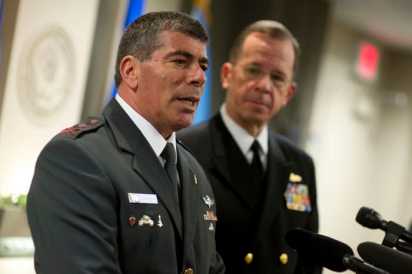
Order of Honor by the Joint Chiefs of Staff, Admiral Michael J. Mullen, to the Chief of Staff, Lt. Gen. Gabi Ashkenazi at the Pentagon, November 2010 (IDF Spokesperson)

The hostility has softened long ago. Malan and Ashkenazi (Photo: IDF Spokesperson)

The traditional hostility of the US Navy to Israel, the result of dependence on Arab oil to propel the ships and the Liberty incident, has softened in recent decades. In addition to Stavidis, Admiral Michael Mullen, who served as chairman of the Joint Chiefs of Staff, also expressed sympathy for Israel and personal friendship with their counterparts, such as Gabi Ashkenazi, and at the NATO summit in Strasbourg in 2009, Mullen and Ashkenazi met in one of the city’s hotels. Downstairs, a red-haired Colonel, James Pogo, Malan’s assistant, casually turned. Today, Pogo is also a four-star admiral, commander of the naval forces of the UCU, and he certainly will not object in principle if the Pentagon suggests that he advance the destroyers eastward, from the Spanish port of Rota to Haifa.

The close relations between the naval forces and the regular visits of commanders and vessels were launched with the Israeli-Egyptian peace in 1979. Joint maneuvers were held, sometimes with other fleets (Turkey, Greece, Germany). In certain years, 40-50 American ships visited Haifa, to the delight of locals and locals. The celebration calmed down at the end of the Cold War, with the dilution of the Sixth Fleet, and was settled after the Cole destroyer, of the same class, was severely damaged in the attack in Aden in 2000. No security officer dared to sign that a port was secure enough from terrorist attacks.

The visits were reset and returned only in 2008. Now they are routine. Some destroyers (“Ross,” “Porter,” “Lavon”) visit Haifa, or participate in missile-intercepting exercises, more than others. A spokesman for the Sixth Fleet was pleased to report that during one of Ross’ last visits last May, Malchia was sent to two community activities – gardening and maintenance for the women’s shelter “Ofek Nashi” and feeding and cleaning the residents of Haifa Zoo.

Good business for hosts

If Ross and one of her sisters are stationed in Israel, two alternatives will be examined: the families of the crews (nearly 300 officers and sailors in each destroyer, but many junior high school students) in nearby quarters and crew teams flying every six months, as is customary in nuclear submarines. In addition, there are auxiliary forces for supply and maintenance. Either way, it’s a good business for hosts.

In Haifa and in Ashdod, there are piers and docks (and dock and shipyard services) that can be used for the destroyers, armed with sea-to-sea missiles, sea-coasts (such as a barrage fired last spring) and air-to-air missiles. The destroyers, as on all bases, will defend Iron Dome. The former commander of the navy, Major General Ram Rotberg, examined the issue at the time and ruled: There is no problem. Only a political decision is needed.

Such a decision is not simple. About five years ago, the US Navy commissioned from its research institute, CNN, an analysis of the relationship between the two fleets, looking to the future and especially taking into account the Indian Ocean arena. According to the article, the American admirals have noticed an increase in the activity of the Israeli navy there, above and below the water. Dov Zakheim, a former senior official in the Pentagon during the dispute over the Lavi, whose financing has damaged the Navy’s fleet of submarines and submarines, and whose cancellation has helped revive this program, Lahav-Dolphin, was asked by CNN to analyze the needs and prospects for deepening cooperation between The IDF has learned from the former commander of the IAF, Maj. Gen. Eliezer (Mari) Marom, that Israeli vessels are indeed conducting presence patrols in the Indian Ocean and that Israel enjoys the friendship of India, wrote Zackheim, The American Sea, especially since at the end of the last century, an experiment was conducted in the Indian Ocean by launching a cruise missile from an Israeli submarine.

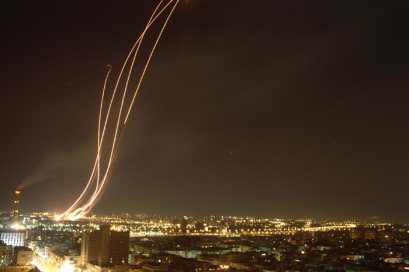
Launch of a Patriot missile in Tel Aviv, February 1991 (Government Press Office, Natan Alpert)

The Gulf War precedent. Patriot batteries in Israel (Photo: Natan Alpert, AM)
Israeli policy, which has been dictated for decades by ministers, officers and spokesmen, denies the will in an American military presence. Weapons and Money Yes, political support Certainly, forces are not – this is the regular refrain. The IDF will defend, American boys will not shed blood for Israel.

These statements originated in the 1950s. They reflected recognition of the separatist nature of the American public, which might be deterred if it finds out that Israel is weak, dependent and needs to be assured that its price is lethal. Since 1967, the definition of the term “Israel” has been too vague – will the Americans participate in the defense of the state only on armistice lines or secure its occupation? And will they accept a military initiative, a preemptive strike, or demand seizing first and a counter-attack, and even then – to where?

Operation “Kadesh” helped protect the skies and coasts of the country, mainly French and British air forces. An old Israeli destroyer manufactured by Britain participated in the capture of an old-fashioned Egyptian destroyer manufactured in Britain. But it was a secret, one-time, and the public and the legislators of the weakening powers in Europe were not asked what they thought. America is a different story: everything is open and requires broad support, whether in a defense pact – which would limit Israel’s freedom of maneuver and decision – or by supplying weapons, what is free, and certainly by deploying vulnerable forces. It was no small matter when the risks were realized, for example, in the bombing of the Marines headquarters at the Beirut airport, with 241 casualties – an attack that drove the Sixth Fleet from the Lebanese coast . The American battalion in the multinational force in Sinai is also like this: 35 years of risk – a casual and sunbathing face, now real, because of Da’ash – in order to separate Egypt from Israel.

The Patriot batteries for their soldiers, called for intercepting Iraqi Scud missiles during the 1991 war, set a precedent, albeit temporary: American forces with a finger on the trigger, the danger of Iraqi missiles being hit and the need to distribute work with the IAF’s control system. It was found that there is no reciprocity: the Americans are completely immune here, the Israelis and others who are not in the NATO alliance are only partially immune, because the administration is authorized to ask local authorities to give up To guests for arrest and trial, but can not impose it on them. From Boston to Houston, if a policeman or a judge insists, Major A or Corporal B. will be in jail. Israel decided to restrain itself and hope for the best.

Deterrence, but also a goal

There are already Americans in uniform (or contractors) in the radar facility overlooking the Negev towards Iran, even though the names of the places – Mount Keren and Mashabei Sadeh – have been made public, and this has become a distant and largely remote area. From Lebanon and Ashdod from Gaza: a focused effort will be required to avoid hitting naval bases there.

Faced with the Russians in Syria, the benefit to the Americans in the presence of a little south is clear. In contrast to Hezbollah , American destroyers in Haifa may provide deterrence, but they may also be targets. Moreover, it is tempting for Iran to instruct Hassan Nasrallah to direct the fire at the Americans, hoping to smuggle them out, and not only into the sea until the tension is over, but when they are between their legs.

Admiral Stavridis, who wrote his doctorate on NATO, is aware of all these nuances, and knows that Congress will not want to harm the local income of countries and towns that host the destroyers on the Atlantic coast, at most from Spain or Italy. And his conversations with senior security officials here suggest that Israel wants to see how the idea will be accepted, without commitment and without embarrassment, and would sink like a stone in the Mediterranean.

If Stavridis finds a sympathetic ear in his retired colleague, Defense Secretary James Matisse, who was his counterpart in the Inter-Agency Force Command when Stavoridis headed the Southern Command (Latin America) and Central Command of CENTCOM (Middle East and Afghanistan) NATO, the destroyers may still dock in front of the Carmel, or – just not on Saturday – in Ashdod.

(First update: 13:27, 02.02

Bombshell: UK Govt Review into Sharia Admits Systemic Discrimination Against Women, Unknown Number of ‘Councils’, Forced Marriage Victim Made to Appear with Abusers

February 6, 2018

by Raheem Kassam 5 Feb 2018

http://www.breitbart.com/london/2018/02/05/bombshell-review-sharia-systemic-discrimination-women-unknown-number/

Rachel Megawhat/Breitbart London

A controversial review into the state of Sharia law in the United Kingdom and the bodies administering it has revealed the British government to be unaware of exactly how many of the Islamic law councils are operating in the country, an admission of systemic discrimination against women, including the victim of forced marriage being asked to appear alongside her family, with an “inappropriate” adoption of civil legal terms used.

The document — entitled ‘The independent review into the application of sharia law in England and Wales’ — was criticised for taking a theological approach to the issue after Islamic theologian Mona Siddique OBE, as well as Imam Qari Muhammad Asim MBE and Imam Sayed Ali Abbas Razawi, were appointed to the panel and advisory board. Other members included Sam Momtaz QC, Anne-Marie Hutchinson OBE QC (Hon), and Sir Mark Hedley DL.

Described as having an “inappropriate theological approach” by women’s rights groups, the report recommends the recognition of Islamic marriage in civil law, and vice versa, so that Muslim women do not necessarily feel their only option for divorce is through Sharia councils. The sole focus of the report appears to be divorce, despite an admission that a smaller amount of Sharia councils’ works are not in this area.

The report stunningly admits:

The exact number of sharia councils operating in England and Wales is unknown. Academic and anecdotal estimates vary from 30 to 85. The review has identified 10 councils operating with an online presence. The sharia councils identified by the review were mostly in urban centres with significant Muslim populations, such as London, Birmingham, Bradford and Dewsbury.

The investigators also concede they were not actually privy to any Sharia council processes and did not witness their active work:

The review panel did not observe first hand either the councils’ process for obtaining information from the individuals seeking their assistance or the decision-making process used by the councils.

There was — as the report’s methodology states — a public call for evidence on July 4th, 2016, with closed, oral evidence sessions with users of Sharia councils, women’s rights groups, academics, and lawyers, as well as other interested parties.

One of the primary recommendations of the investigation is the idea of “linking Islamic marriage to civil marriage” to ensure “that a greater number of women will have the full protection afforded to them in family law and they will face less discriminatory practices. This will be a positive move aimed at giving women maximum rights should the marriage end in divorce”.

This would require alterations to the Marriage Act 1949 and the Matrimonial Causes Act 1973, “to ensure that civil marriages are conducted before or at the same time as the Islamic marriage ceremony, bringing Islamic marriage in line with Christian and Jewish marriage in the eyes of the law”.

Despite numerous admissions that men have an upper hand in Sharia councils, the report concludes the system should not only remain in place, but should be self-regulated by imams:

  1. It could invite, encourage or even urge sharia councils to adopt a system of uniform self-regulation.

  2. The state could provide a system of regulation for sharia councils to adopt and then to self-regulate.

  3. It could impose such a system and provide an enforcement agency similar to OFSTED. However, proportionality is not the only issue. Just as the state does not confer legitimacy on the Beth Din or on Catholic tribunals by seeking to regulate them, the state may be reluctant to regulate sharia councils. That raises a dilemma: either the state withholds further intervention or it risks intervention being perceived as conferring legitimacy upon sharia councils and thereby creating a parallel legal system.

Despite the difficulties, we have concluded that intervention/regulation carries more advantage than no intervention.

Men are revealed to have an advantage in Sharia councils because of the ease of routes to divorce offered to them ahead of women. The report appears to want to ease this problem, rather than eradicate it, and lend the legitimacy of the British state to Sharia law.

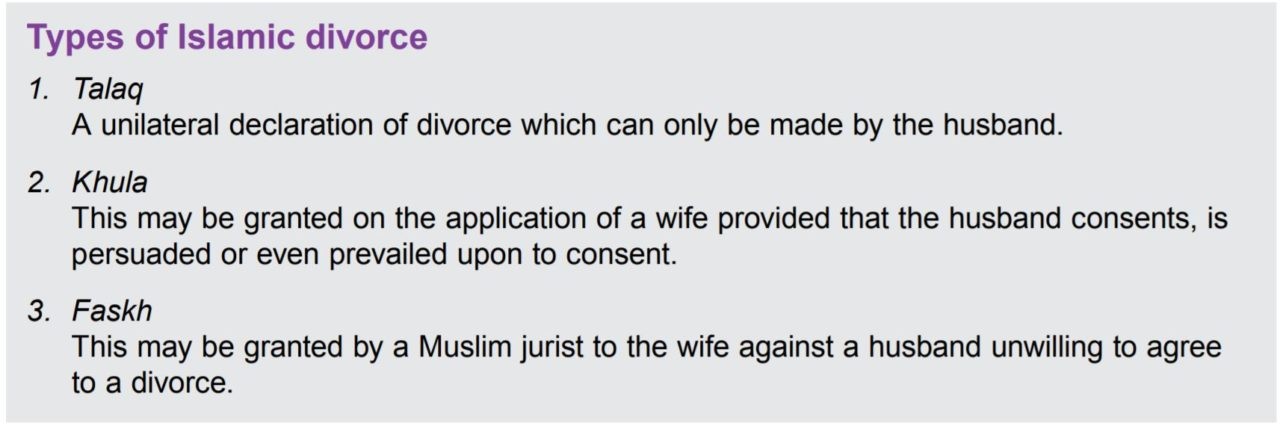
Men seeking an Islamic divorce have the option of ‘talaq’, a form of unilateral divorce that they can issue themselves. Women do not have this option, unless inserted as a term in the marriage contract (which varies from school to school) and therefore have to seek a ‘khula’ or ‘faskh’ from a sharia council.

The review also heard evidence “that in some instances, during khula divorces, women were asked to make some financial concessions to their husband in order to secure the divorce”.

Rather than a condemnation of such practices, the review seeks to create “a body by the state with a code of practice for sharia councils to accept and implement. This body would include both sharia council panel members and specialist family lawyers. This body could go on to monitor and audit compliance of the code of practice.”

The report also contains an unassailable admission — historically rejected or even ridiculed by left-wing politicians and campaigners — that “[t]he primary and underlying principle of sharia councils is the application of sharia law”, and that this is indeed taking place in Britain, and to an extent that the government is unaware.

https://twitter.com/RaheemKassam/status/960369808712839168/photo/1?ref_src=twsrc%5Etfw&ref_url=http%3A%2F%2Fwww.breitbart.com%2Flondon%2F2018%2F02%2F05%2Fbombshell-review-sharia-systemic-discrimination-women-unknown-number%2F

The most well established sharia councils in England and Wales have been in existence since the 1980s. Anecdotal evidence indicates that the numbers of sharia councils in England and Wales has increased in the last 10 years.

The review also wrestles with the idea of [in effect giving] a quasi-legal status to the councils:

Such regulation will indeed endorse and add legitimacy to the perception of the existence of a parallel legal system whilst the outcomes of the sharia council processes in terms of religious divorces have no standing in civil law.

Another problem arising from such an endorsement is the fact the review revealed a misinterpretation of British law:

The sharia councils that were visited all had a very loose definition of mediation. In all cases there appeared to be confusion between mediation and what is in effect reconciliation counselling. All councils visited within the context of the review made provision for reconciliation counselling at the commencement of the process. The reconciliation was invariably described as ‘mediation’ when it is clearly not.

Save for one individual, the review found that those conducting the mediation at sharia councils have not received mainstream training from the recognised mediation organisations, nor was there any evidence of accreditation. The sharia councils appear to use the term mediation in a much looser sense than that of the highly trained and accredited mediators practicing in family law.

The authors add:

The creation of state endorsed regulation sends the message that certain groups have separate and distinct needs and further that sharia councils are an appropriate forum for resolution of their family law disputes. In short it would perpetuate the myth of separateness of certain groups. The acceptance of the premise that sharia councils only deal with, engage in or touch upon the dissolution of the religious marriage aspect of the dispute is naïve and unrealistic. In any family law or relationship dispute the issues are multi-faceted. Ancillary outcomes which arise out of the ‘mediation and other functions’ that sharia councils undoubtedly perform may be given legitimacy. Those functions where they deal with dowry forfeiture (or return) financial remedies, arrangements for children and issues regarding future behaviour and conduct will impact on the civil rights of those to whom they relate.

While the report praised some “good practice” in the Sharia councils, these are arguably overshadowed by the “bad practice” revelations.

Examples of “good practice” according to the authors included:

  • reporting of family violence and child protection issues to the police;
  • women unable to pay fees have them lowered/no payment taken;
  • religious divorce granted as formality upon civil divorce;
  • councils’ signposting to civil remedies, such as civil courts for child arrangements;
  • little evidence of women being asked to reconcile relationships rather than obtain divorce;
  • councils declining to deal with any ancillary issues and referring users to civil courts;
  • in practically every case where a woman was seeking divorce, a divorce was granted;
  • some councils had women panel members;
  • some councils said they have safeguarding policies in relation to children and domestic violence.

Evidence of bad practice however included:

  • inappropriate and unnecessary questioning in regards to personal relationship matters;
  • a forced marriage victim was asked to attend the sharia council at the same time as her family;
  • insistence on any form of mediation as a necessary preliminary;
  • women being invited to make concessions to their husbands in order to secure a divorce (men are never asked to make these concessions). For example in khula agreements, husbands may demand excessive financial concessions from the wife;
  • lengthy process so that while divorces are very rarely refused they can be drawn out;
  • inconsistency across council decisions and processes;
  • no safeguarding policies and/or the recognition for the need of safeguarding policies;
  • no clear signposting to the legal options available for civil divorce;
  • even with a decree absolute a religious divorce is not always a straightforward process and the council will consider all the evidence again;
  • adopting civil legal terms inappropriately, leading to confusion for applicants over the legality of council decisions;
  • very few women as panel members;
  • panel members sitting on sharia councils who have only recently moved to the UK, and who do not have the required language skills and/or wider understanding of UK society;
  • varying and conflicting interpretations of Islamic law which may lead to inconsistencies.

Addressing the calls to ban Sharia in the UK, the authors note (emphasis added): “Th[e] demand [for Sharia councils] will not end if the sharia councils are banned and closed down and could lead to councils going ‘underground’, making it even harder to ensure good practice and the prospect of discriminatory practices and greater financial costs more likely and harder to detect. It could also result in women needing to travel overseas to obtain divorces, putting themselves at further risk. We consider the closure of sharia councils is not a viable option. However, given the recommendations also proposed in this report include the registration of all Islamic marriages as well as awareness campaigns it is hoped that the demand for religious divorces from sharia councils will gradually reduce over time.”

Critics from across the political spectrum noted of the review: “It is evident from the limited terms of reference and the makeup of the review panel that the review is in danger of becoming seriously compromised and as such, we fear that it will command little or no confidence”, citing the make-up of the panel:

Although some of those appointed to the panel come from judicial and family/ children law backgrounds, two Islamic ‘scholars’ have been appointed as advisers to the chair, Mona Siddiqui who is herself a theologian. This is cause for alarm: the government has constituted a panel more suited to a discussion of theology than one which serves the needs of victims and is capable of investigating the full range of harms caused by sharia councils and tribunals, particularly for women.

They called for the government to “[d]rop the inappropriate theological approach, and appoint experts with knowledge of women’s human rights, those who can properly and independently examine how sharia systems of arbitration in family matters contravene key human rights principles of equality before the law, duty of care, due diligence and the rule of law. The inquiry must be clearly framed as a human rights investigation not a theological one.”

Supporters of the review included Iman Abou Atta — a director at the discredited TellMAMA group that seeks to shut down criticism of Islam, as well as Labour Party councillor Neghat Khan, the extremist-linked East London mosque’s manager Sufia Alam, and Guardian journalist Alia Waheed.

Exclusive: North Korea earned $200 million from banned exports, sends arms to Syria, Myanmar – U.N. report

February 5, 2018

by Michelle Nichols Reuters Sunday Feb 4, 2018 6:47am

Source: Exclusive: North Korea earned $200 million from banned exports, sends arms to Syria, Myanmar – U.N. report

{More strongly worded letters, more sanctions, and the Axis of Evil will still find a way – LS}

UNITED NATIONS (Reuters) – North Korea violated United Nations sanctions to earn nearly $200 million in 2017 from banned commodity exports, according to a confidential report by independent U.N. monitors, which also accused Pyongyang of supplying weapons to Syria and Myanmar.

The report to a U.N. Security Council sanctions committee, seen by Reuters on Friday, said North Korea had shipped coal to ports, including in Russia, China, South Korea, Malaysia and Vietnam, mainly using false paperwork that showed countries such as Russia and China as the coal origin, instead of North Korea.

The 15-member council has unanimously boosted sanctions on North Korea since 2006 in a bid to choke funding for Pyongyang’s nuclear and ballistic missile programs, banning exports including coal, iron, lead, textiles and seafood, and capping imports of crude oil and refined petroleum products.

“The DPRK (North Korea) is already flouting the most recent resolutions by exploiting global oil supply chains, complicit foreign nationals, offshore company registries and the international banking system,” the U.N. monitors wrote in the 213-page report.

The North Korean mission to the United Nations did not immediately respond to a request for comment on the U.N. report. Russia and China have repeatedly said they are implementing U.N. sanctions on North Korea.

SYRIA, MYANMAR

The monitors said they had investigated ongoing ballistic missile cooperation between Syria and Myanmar, including more than 40 previously unreported North Korea shipments between 2012 and 2017 to Syria’s Scientific Studies and Research Centre, which oversees the country’s chemical weapons program.

The investigation has shown “further evidence of arms embargo and other violations, including through the transfer of items with utility in ballistic missile and chemical weapons programs,” the U.N. monitors wrote.

They also inspected cargo from two North Korea shipments intercepted by unidentified countries en route to Syria. Both contained acid-resistant tiles that could cover an area equal to a large scale industrial project, the monitors reported.

One country, which was not identified, told the monitors the seized shipments can “be used to build bricks for the interior wall of a chemical factory.”

Syria agreed to destroy its chemical weapons in 2013. However, diplomats and weapons inspectors suspect Syria may have secretly maintained or developed a new chemical weapons capability.

The Syrian mission to the United Nations did not immediately respond to a request for comment on the U.N. report.

The U.N. monitors also said one country, which they did not identify, reported it had evidence that Myanmar received ballistic missile systems from North Korea, along with conventional weapons, including multiple rocket launchers and surface-to-air missiles.

Myanmar U.N. Ambassador Hau Do Suan said the Myanmar government “has no ongoing arms relationship, whatsoever, with North Korea” and is abiding by the U.N. Security Council resolutions.

BANNED EXPORTS, IMPORTS

Under a 2016 resolution, the U.N. Security Council capped coal exports and required countries to report any imports of North Korean coal to the council sanctions committee. It then banned all exports of coal by North Korea on Aug. 5.

The U.N. monitors investigated 16 coal shipments between January and Aug. 5 to ports in Russia, China, Malaysia and Vietnam. They said Malaysia reported one shipment to the council committee and the remaining 15 shipments violated sanctions.

After the coal ban was imposed on Aug. 5, the U.N. monitors investigated 23 coal shipments to ports in Russia, China, South Korea and Vietnam. The U.N. monitors said all those shipments “would constitute a violation of the resolution, if confirmed.”

“The DPRK combined deceptive navigation patterns, signals manipulation, transshipments as well as fraudulent documentation to obscure the origin of the coal,” the monitors said.

The U.N. monitors “also investigated cases of ship-to-ship transfers of petroleum products in violation (of U.N. sanctions) … and found that the network behind these vessels is primarily based in Taiwan province of China.”

The monitors said one country, which they did not name, told them North Korea had carried out such transfers off its ports of Wonsan and Nampo and in international waters between the Yellow Sea and East China Sea between October and January.

The report said several multinational oil companies, which were not named, were also being investigated for roles in the supply chain of petroleum products transferred to North Korea.

Israel And Egypt Form Secret Alliance To Wipe Out Egyptian Jihadists

February 5, 2018

by Tyler Durden Mon, 02/05/2018 – 01:00 Zero Hedge

Source: Israel And Egypt Form Secret Alliance To Wipe Out Egyptian Jihadists

{The enemy of my enemy is my friend…or something like that. – LS}

Israel has been conducting bombing raids on jihadists within Egypt’s borders since at least late 2015 as part of a secret two-year alliance. For more than two years, unmarked Israeli drones, helicopters and jets have carried out a covert air campaign, conducting more than 100 airstrikes inside Egypt, frequently more than once a week — and all with the approval of President Abdel Fattah el-Sisi, the NYT reported on Sunday.

Once enemies in three wars, and having struggled to reach peace agreements for decades, Egypt and Israel are now (not so) secret allies against a common foe.

In late 2015, jihadists in Egypt’s Northern Sinai moved in, killing hundreds of soldiers and police officers and briefly seizing a major town – setting up armed checkpoints as they established control over the area. On October 31, 2015, the Islamic State of Iraq and the Levant’s Sinai branch, formerly known as Ansar Bait al-Maqdis, brought down a Russian passenger flight with an explosive device – killing all 224 people aboard.

With Egypt seemingly unable to stop the jihadists, Israel – alarmed by the threat just over the border, began taking action – sending a barrage of airstrikes into the neighboring Arab country whose officials and media continued to vilify the Jewish state in public.

In order to conceal their involvement, Israel’s drones, jets and helicopters have covered up their markings. “Some fly circuitous routes to create the impression that they are based in the Egyptian mainland,” according to American officials briefed on the operations.

It is unclear whether any Israeli troops have actually set foot inside Egyptian borders.

Despite efforts by both Israel and Egypt to hide the origin of the strikes and censor public reports, Egypt and Israel’s two-year alliance has become somewhat of an open secret in intelligence circles:

Inside the American government, the strikes are widely known enough that diplomats and intelligence officials have discussed them in closed briefings with lawmakers on Capitol Hill. Lawmakers in open committee hearings have alluded approvingly to the surprisingly close Egyptian and Israeli cooperation in the North Sinai.

In a telephone interview, Senator Benjamin L. Cardin of Maryland, the ranking Democrat on the Senate Foreign Relations Committee, declined to discuss specifics of Israel’s military actions in Egypt, but said Israel was not acting “out of goodness to a neighbor.”

“Israel does not want the bad stuff that is happening in the Egyptian Sinai to get into Israel,” he said, adding that the Egyptian effort to hide Israel’s role from its citizens “is not a new phenomenon.” –NYT

Moreover, despite Israeli military censors preventing reports of the strikes from becoming public, certain news outlets circumvented the censorship by citing a 2016 Bloomberg report in which a former Israeli official admitted to drone strikes inside of Egypt.

The two-year alliance between the two countries is thought to have begun after Egypt’s relatively new president Mohamed Morsi – a leader within the Muslim Brotherhood who came to power after the Arab Spring revolt, was outed in a military takeover by el-Sisi – then defense minister.

Israel welcomed the change in government, urging Washington to accept it.

And Egypt needed the help; following Mr. Sisi’s takeover, Islamist militants who had established a refuge in the North Sinai region between the Suez Canal and the Israeli border began a wave of deadly assaults against Egyptian security forces.

A few weeks after Mr. Sisi took power, in August 2013, two mysterious explosions killed five suspected militants in a district of the North Sinai not far from the Israeli border. The Associated Press reported that unnamed Egyptian officials had said Israeli drones fired missiles that killed the militants, possibly because of Egyptian warnings of a planned cross-border attack on an Israeli airport. (Israel had closed the airport the previous day.)

At the time, both Israel and Egypt vehemently denied the reports – however after the Russian charter jet was brought down in October of 2015, Israel began its wave of airstrikes, killing a long list of militant leaders according to an American official who spoke on the condition of anonymity in order to discuss classified operations.

After Israel wiped out much of the jihadist leadership in the region, less ambitious successors stepped in. No longer employing armed checkpoints, closing roads or claiming territory – the group began targeting “softer” targets like Christians in Sinai and Muslims they considered heretics. As an example, the militant group killed over 300 worshippers at a Sufi Mosque in North Sinai.

Since Israel has effectively been keeping jihadists at bay in a mutually beneficial arrangement, some American supporters of Israel have been complaining that given Egypt’s reliance on the Israeli military, “Egyptian officials, diplomats and state-controlled news media should stop publicly denouncing the Jewish state.” 

“You speak with Sisi and he talks about security cooperation with Israel, and you speak with Israelis and they talk about security cooperation with Egypt, but then this duplicitous game continues,” said Representative Eliot L. Engel of New York, the ranking Democrat on the House Foreign Relations Committee. “It is confusing to me.”

Israel’s prime minister, Benjamin Netanyahu, has also pointedly reminded American diplomats of the Israeli military role in Sinai. In February 2016, for example, Secretary of State John Kerry convened a secret summit in Aqaba, Jordan, with Mr. Sisi, King Abdullah of Jordan and Mr. Netanyahu, according to three American officials involved in the talks or briefed about them.

Mr. Kerry proposed a regional agreement in which Egypt and Jordan would guarantee Israel’s security as part of a deal for a Palestinian state. –NYT

Netanyahu scoffed at the idea – arguing that if Egypt was unable to control the ground within its own borders, it was hardly in a position to guarantee Israel’s safety.

Assad in rare message to Israel: We won’t start war or let foreign forces control our borders 

February 5, 2018

Source: Assad in rare message to Israel: We won’t start war or let foreign forces control our borders – DEBKAfile

DEBKAfile Exclusive: Bashar Assad used a European go-between to send this secret message to PM Binyamin Netanyahu. A similar note came from Beirut.

DEBKAfile’s exclusive intelligence sources report that late last week, a personal Note from Syrian ruler Bashar Assad was secretly handed to Prime Minister Netanyahu by a European intermediary. “War is not what I am after. All I want now is to focus on reunifying Syria and rebuilding the ruins of war.” A key phrase followed: “We are a sovereign nation. We shall not hand our borders over to the control of any forces other than Syrian.”

This phrase was taken as an assurance by the Syrian ruler that the Hizballah forces fighting in Syria would not be allowed to deploy on its borders with Israel, and came in response to Israel’s concerns  It was sent out directly after Prime Minister Netanyahu visited President Vladimir Putin in Moscow on Jan 29 and warned him that Israel would not stand by for the establishment of a Hizballah or Iranian troop presence on its northern border with Syria. It is presumed in Jerusalem that Assad acted on his own initiative in sending this note to Jerusalem.

The day after it landed on Netanyahu’s desk, a second secret note arrived from the Lebanese President Michel Aoun, a reputed ally of Hizballah. This one was devoted to assuring Israel that there were no Iranian missile factories in Lebanon – nor would the Lebanese government allow them to be constructed in the country. Another European diplomat carried this note to Jerusalem. Aoun did not write it himself; he instructed the Lebanese foreign minister Gebran Bassil, his son-in-law, to sign it and pass it on. Bassil went on to emphasize that should the Lebanese president believe that operations by Hizballah did not serve the country’s national and security interests, he would not hesitate to say so loud and clear.

It was impossible to confirm whether or not Assad and Aoun had acted in concert to cool the war fever hanging over the region in the wake of Israel’s widely broadcast concerns over the potential threats looming over its northern border. Netanyahu apparently gave his answer to the two presidents on Sunday, Feb. 4, when he opened the weekly cabinet meeting by saying: “We are not looking for war, but will do everything we have to, to defend ourselves.”