Archive for January 2018

Iran: US sanctions against Ayatollah Larijani crossed red lines

January 13, 2018

Iran: US sanctions against Ayatollah Larijani crossed red lines, DEBKAfile, January 13, 2018

The Iranian Foreign Ministry warned Saturday that Tehran’s response to the Trump administration’s “hostile and illegal act” against chief justice Ayatollah Sadiq Larijani would be “severe.” Its sanctions list “has gone way beyond internationally accepted behavior and red lines,” the ministry said. “All consequences of this hostile act will be the responsibility of the United States.”

DEBKAfile: The sanctions list targeted Larijani – not only because he is one of supreme leader Ayatollah Ali Khamenei’s closest associates, but as a deterrent. The chief justice is responsible for determining the fate of the nearly 4,000 demonstrators detained in the anti-government protests in the new year, amid reports of abuses and even deaths. It is hoped in Washington that Larijani will consider the tough penalties he faces if he hands out harsh punishments to the protesters.

USAID Shifts on Aid to Christians, Yazidis in Iraq

January 13, 2018

USAID Shifts on Aid to Christians, Yazidis in Iraq, Washington Free Beacon , January 12, 2018

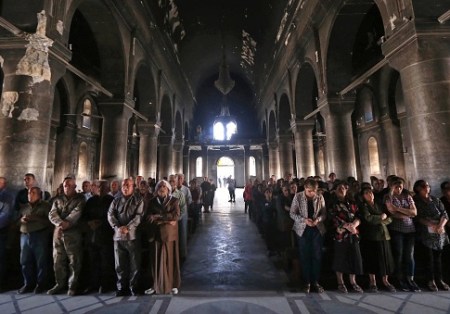
Iraqi Christians attend a mass at the Church of the Immaculate Conception in the predominantly Christian Iraqi town of Qaraqosh (also known as Hamdaniya), some 30 kilometres from Mosul / Getty Images

USAID, responding to pressure late last year from Vice President Mike Pence, announced today that it is altering its policies in order to ensure that millions of dollars in U.S. aid appropriated by Congress reaches Iraqi religious minorities.

Pence, during an October speech at a dinner highlighting the plight of persecuted Christians, Yazidis, and other religious minorities in the Middle East and elsewhere, promised that the Trump administration would stop the State Department’s “ineffective” relief efforts that directed all the funds to United Nations, which has a religious-blind policy of disbursing the funds to all refugees in Iraq.

“The United States will work hand in hand from this day forward with faith-based groups and private organizations to help those who are persecuted for their faith,” he said. “This is the moment, now is the time, and America will support these people in their hour of need.”

Two months later, the U.S. Agency for International Development and the United Nations Development Programme (UNDP) agreed to increase assistance to religious and ethnic minorities in Iraq, to enable them to return to their homes in areas liberated by ISIS.

“Following Vice President Pence’s remarks in October of last year, USAID renegotiated the terms of its agreement with the UNDP Funding Facility for Stabilization (FFS) so that $55 million of a $75 million payment will address the needs of vulnerable religious and ethnic minority communities in Ninewa Province [also called Nineveh], especially those who have been victims of atrocities by ISIS,” USAID announced.

USAID said the modified agreement ensures that the U.S. contribution to the fund will help the populations in liberated areas in Nineveh province resume normal lives by restoring services such as water, electricity, sewage, health and education.

The $75 million is the first installment of the UNDP FFS fund. The rest of the pledge will depend on the UNDP’s success in “putting in place additional accountability, transparency, and due-diligence measures,” USAID said.

USAID also announced that it is soliciting “innovative” ideas agency-wide to support the resettlement of ethnic and religious minorities in their ancestral homes in Iraq and that the results of that competition will be announced in early Spring.

The USAID announcement is eight months in the making and comes after lawmakers and human rights activists repeatedly argued their case to top officials at the State Department and USAID, which had resisted any change to their “religion-blind” policy of channeling most of the aid money to the United Nations.

That prior policy was “needs-based” and did not give priority to Christian and other religious minorities in Iraq, even though both the Obama and the Trump administrations have declared that both groups, as well as Shiite Muslims and others, have suffered genocide at the hand of ISIS.

ISIS’s campaign of murder, kidnapping, and enslavement decimated the Christian population in Iraq, which numbered between 1.4 million in 2002 and is now below 250,000, according to human rights groups who worked to chronicle the ISIS genocide in Iraq.

Catholic charities and activists who have spent years urging the Obama administration and now Trump administration to better assist minority religious communities in Iraq applauded USAID’s policy change and the United Nation’s commitment to help these communities with the funds.

The Knights of Columbus, one of the largest Catholic charities, and Aid to the Church in Need, another global Catholic charity, have sent millions of dollars in donations to the Catholic archdiocese in Northern Iraq, one of the few groups on the ground working to house and feed displaced Christians and Yazidis and help rebuild their homes.

“Vice President Pence deserves great credit for turning the ship of state in order to help save Iraq’s besieged religious minorities,” said Nina Shea, an international human rights attorney who directs the Hudson Institute’s Center for Religious Freedom.

Shea said the policy change now requires USAID to undertake the difficult task of ensuring that the troubled UNDP, which she said “has long marginalized these Christians and Yazidis, finally applies some of our funding to assist them in a meaningful way.”

“All of us committed to seeing their communities survive the cradle of Christianity will be monitoring the implementation in the months ahead,” she said.

Stephen Rasche, an attorney for the Catholic archdiocese in Erbil and the director of internal displaced people resettlement programs, in early October accused the U.N. of squandering U.S. taxpayer aid for reconstruction projects.

The aid programs are so mismanaged that some U.S. dollars are going to benefit Iraqis who took over areas that persecuted Christians fled even though the United Nations says the project is aimed at helping Christians, Rasche testified before a House Foreign Affairs panel Oct. 4.

The Washington Free Beacon obtained photos of United Nations Development Program projects in Christian and Yazidi towns in northern Iraq, showing “completed” school-rehabilitation projects that amounted to a thin coat of paint on exterior walls with freshly stenciled UNICEF logos every 30 feet.

Inside the building, the rooms remained untouched and unusable, lacking running water, power, and furniture, Rasche testified.

Several lawmakers and human rights activists for months have argued that U.S. agencies have a responsibility to intervene more directly and effectively.

Republican Reps. Jeff Fortenberry of Nebraska, Robert Aderholt of Alabama, and Chris Smith of New Jersey, along with Democrat Rep. Anna Eshoo of California, last fall sent a letter to USAID Administrator Mark Green arguing that these communities now face “dire conditions where they desperately need assistance if they are to survive.”

The concern prompted USAID counselor Thomas Staal, one of the agency’s top officials, to visit Iraq in early December to see how the U.S. and Iraqi government could improve its support for minority communities following the defeat of ISIS.

Staal met with government officials in Baghdad and United Nations officials who are implementing U.S.-funded stabilization programs in Anbar, Nineveh, and Salah ad Din provinces. He also sat down with leaders of outside groups and representatives from Christian, Yazidi, Sabean-Mandea, Kakai, Baha’I, Zoroastrian, and Jewish communities to hear their concerns and needs in the post-ISIS rebuilding.

During visits to Erbil and Kirkuk, Staal met with the archbishops of the Syriac Catholic Church, the Syriac Orthodox Church, the Assyrian Church, and the Chaldean Church to discuss the aid the United States is providing. During a visit to Teleskof, he attended the rededication of the St. Gorgis Chaldean Church, a powerful symbol that survived ISIS attempts to eradicate Christian monuments and artifacts throughout Iraq.

Three and a half years ago, ISIS looted and burned the church and beheaded members of the congregation on its altar, Staal recalled in a blog post after his visit.

“I spoke to the congregation, and assured them that the United States stands with them. Americans stand with them in their hour of need, and we are committed to helping persecuted Iraqis continue to rebuild as they seek out that bright future,” he wrote.
Iran: Where’s the ‘revolution’ headed?

January 13, 2018

Source: Iran: Where’s the ‘revolution’ headed? – Middle East – Jerusalem Post

BY JONATHAN SPYER
 JANUARY 13, 2018 07:47
The protests of the past two weeks are significant.
Where is the latest Iranian ‘revolution’ headed?

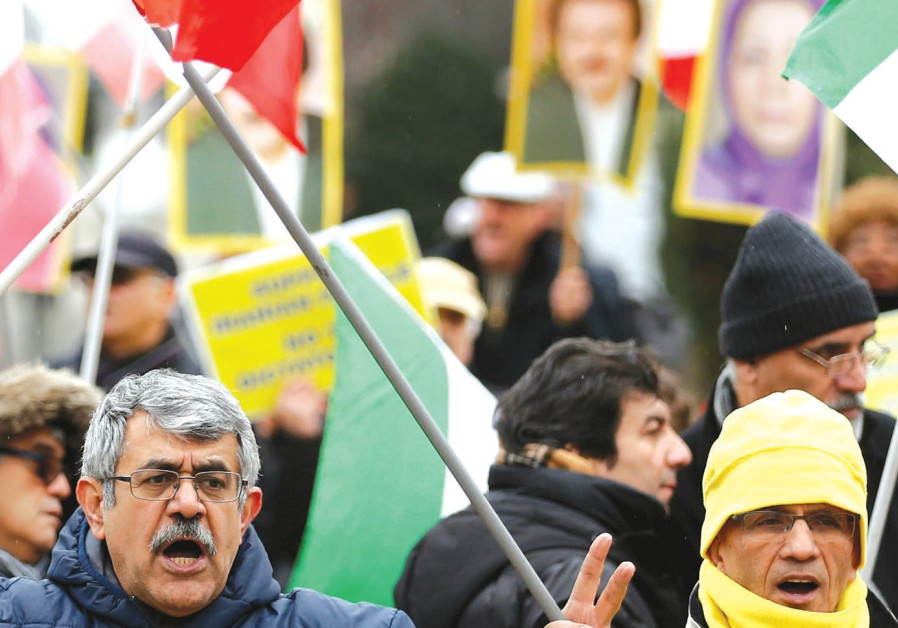
 A WOMAN chants slogans during a protest against the visit of Iran’s Foreign Minister Mohammad Javad Zarif, outside the European Union Council in Brussels. (Francois Lenoir/Reuters). (photo credit: REUTERS/FRANCOIS LENOIR)

The protests in Iran appear, for now at least, to be subsiding. The key moment was the decision to task the Islamic Revolutionary Guard Corps with security in the three provinces that formed the center of the unrest – Hamadan, Isfahan and Lorestan.

It is still too soon to say that the wave has entirely spent itself. Demonstrations are still taking place, despite the IRGC’s announcement on Monday of an end to the unrest. In the cities of Sanandaj, Zahedan, Meybod, Abarkuh, Kordkuy, Aqqala, Alvand and Buin Zahra, among other centers, rallies were held. But the number of those attending the demonstrations is decreasing.

The wave of unrest was the most intensive to hit the country since 2009. Its details constitute evidence of broad alienation from the regime of a significant section of Iran’s youthful population. The unrest at its height spread to over 80 cities and towns. The average age among those arrested was 25. Demonstrators chanted anti-regime slogans and attacked facilities of the Basij paramilitaries and other regime-associated institutions.

Notably, Tehran’s costly policy of regional interference formed a focus for the protesters’ rage. Slogans such as “Leave Syria, think about us!” and “Death to Hezbollah!” were heard. More general anti-regime slogans, including “We don’t want an Islamic Republic” and “Death to the dictator” were also chanted by demonstrators.

The protests began in the pro-regime, conservative city of Mashhad. Their initial focus was new austerity measures introduced by President Hassan Rouhani. There is evidence that the initial instigators of the demonstrations were themselves from among the hard-line “principalist” opponents of Rouhani.

But these elements did not anticipate the rapid growth of the demonstrations or their intensity. The regime, clearly taken by surprise, reacted in the only way it knows – with a strong hand. Twenty-two people are dead. Hundreds more are wounded.

A NUMBER of conclusions can be drawn from the direction of events so far.

1. For those hoping for the downfall of the Islamist regime, a major absence in the Iranian context is that of a revolutionary “party.” This does not necessarily mean a formal political party but, rather, a revolutionary trend with a level of organization and popular appeal, a vision for the future and a broad strategy for defeating the Islamist regime. At present, nothing of this type exists in the Iranian context – neither as a network inside the country, nor as a widely respected focus on the outside.

Because of this absence, the 2009 protests, which were concerned with the apparently rigged reelection of then-president Mahmoud Ahmadinejad, were diverted through the election of the “moderate” Rouhani.

The current protests, meanwhile, which are economic in nature, may well be similarly diverted by a combination of a strong hand, some cosmetic concessions, and probably, ironically, also by the scapegoating of the “moderate” president.

Such diversionary moves are possible because of the dispersed and divided nature of the opposition. As long as no nucleus of political (and, probably, military) opposition to the regime emerges, it is difficult to see a way that a wave of unrest can smash the edifice of the Islamic Republic.

2. The regime has been keen, naturally, to blame the unrest on foreign agitators. Supreme Leader Ali Khamenei’s Twitter feed suggested that a “pattern activating these events” was apparent. According to the supreme leader, a “scheme by the US and Zionists” with money from a “wealthy government near the Persian Gulf” (obviously Saudi Arabia) was responsible.

Given the Iranian regime’s penchant for interference in neighboring countries – with Iraq, Syria, Lebanon and Yemen chief among them – it is tempting to hope that the supreme leader’s fears are justified. There is, however, no actual evidence to support such a claim.

In US President Donald Trump’s recent speech outlining his national security strategy, he referred to Iran as “the world’s leading state sponsor of terrorism” and identified the need to “neutralize Iranian malign influence.”

One way to help the achievement of the latter goal would be to keep the Iranian home fires burning. Tehran foments unrest in neighboring countries in order to keep neighbors weak. There is now an opportunity to return the compliment. There are a variety of ways that this might be achieved – from ensuring that protesters and demonstrators remain organized and in communication with one another, to punitive means to disincentivize those countries and individuals assisting the regime in acquiring the means of repression.

3. Among the most difficult type of people to unseat from power through revolution are revolutionaries themselves – at least as long as the revolutionary elite does not begin to crumble from within. There are as yet no signs of this in Iran. Rather, the rising force within the elite is precisely that force most committed to the values of the Islamic Revolution of 1979 (and to spreading its influence into neighboring lands) – namely, the IRGC and associated hard-line figures.

The rising, militant elements within the regime were themselves participants as young men in the revolution of 1979. Even if there were a similarly determined and organized leadership seeking to make revolution against the Islamic Republic, it would find this cadre a tough nut to crack. And as we have seen above, currently there is not.

Nevertheless, the protests of the past two weeks are significant. They point to the sharp fissures within Iranian society and the extent to which the regime is detached from large sections of the population and its wants and needs.

The guardians of the Islamic Republic of Iran have in recent years proved masters at identifying and exploiting the fissures in neighboring societies. The field is now ripe for this process to turn into a two-way street, depending on the will and the ability of Iran’s opponents to recognize the opportunity and make use of it.

Four players jockeying for post-war positions in Syria. US & Israel vs Russia & Iran

January 13, 2018

Four players jockeying for post-war positions in Syria. US & Israel vs Russia & Iran, DEBKAfile, January 13, 2018

A notable point made by that attack was that this time, unlike in most other air sorties in Syria, Israel was acting in conjunction with the United States. This was a reversal of Israel’s former strategy during the six years of the Syrian civil war. Until now, its military actions in Syria were kept separate from US operations in that country. The Israeli turnaround followed the revamping of US policy. Trump has dropped his former decision to limit US military action in Syria to fighting the Islamic State. He is now ready to go for the Iranian military presence in Syria including its proxy, Hizballah. This opened the door to closer US-Israeli military cooperation in Syria.

**************************************

Trump took a big move in this game on Jan. 12 when he stipulated that Europe agree to overhaul the Iran nuclear accord on enrichment and ballistic missiles.

That condition, which President Donald Trump laid down for the future – when on Friday he met the deadline for re-certifying US sanction waivers and kept the 2015 nuclear accord in place – was just one facet of his administration’s frontal campaign against Iran. The main arena of this evolving pitched battle is Syria, DEBKAfile’s Washington and military sources report, and it targets not only Iran but also Russia. The Trump administration opted for this policy departure as the new year unfolded in the light of four game-changing developments:

  1. Russia is not pulling its army out of Syria after all, despite the commitment made publicly by President Vladimir Putin on Dec. 11. Just the reverse: Moscow is bolstering its military presence there, mainly with air force contingents.
  2. Moves on the ground attest to deepening Russian-Iranian cooperation in Syria.
  3. Iran is reported by intelligence agencies to be preparing a large-scale supplementary military deployment to Syria, which our sources estimate as running to several thousand Shiite fighters.
  4. Tehran has boosted its consignments of advanced weaponry to Syria, including ballistic missiles. The Israeli air strike on Jan. 9 targeted one of those shipments when it was delivered to a Syrian ground-to-ground missile base at al-Qutaifa west of Damascus.

A notable point made by that attack was that this time, unlike in most other air sorties in Syria, Israel was acting in conjunction with the United States. This was a reversal of Israel’s former strategy during the six years of the Syrian civil war. Until now, its military actions in Syria were kept separate from US operations in that country. The Israeli turnaround followed the revamping of US policy. Trump has dropped his former decision to limit US military action in Syria to fighting the Islamic State. He is now ready to go for the Iranian military presence in Syria including its proxy, Hizballah. This opened the door to closer US-Israeli military cooperation in Syria.

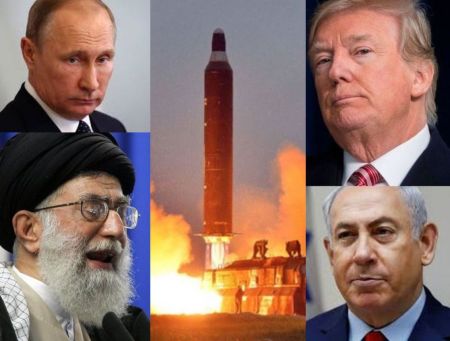
But there are also broader connotations: Syria finds itself back at the heart of Middle East strife. As the civil war winds down, that country is evolving into a pivotal arena  for big power competition, with the US and Israel lining up against Russia and Iran. Interestingly, the easing of tensions between Washington and Pyongyang has helped Washington switch its focus to  the jockeying for position in post-war Syria against two other rivals, Moscow and Tehran.

Prime Minister Binyamin Netanyahu has, for his part, done his utmost throughout the conflict to keep an open line of communication with Vladimir Putin and avoid colliding with Russian military elements in Syria. But it is hard to see how he can keep this up in the near future and avoid a clash between Israeli and Russian interests there. Still, in Jerusalem, Moscow was awarded good marks for staying silent over Israel’s latest air strike against the Iranian arms shipment at al-Quteifa.

Important light was shed on US intentions for Iran – even more clearly than President Trump’s future stipulations for abiding by the nuclear deal – when David Satterfield, Acting Assistant Secretary for Near Eastern Affairs, appeared a day earlier before the Senate Foreign Affairs Committee. Asked by Chris Murphy (D-Conn), “What functions do US troops serve in Syria besides fighting ISIS?” Satterfield and other aides with him declined to answer, except behind closed doors. Only when he was pressed hard by Bob Corker (R-Tenn.), and told he is obliged to answer, did Satterfield finally say: “We are deeply concerned with the activities of Iran, with the ability of Iran to enhance those activities through a greater ability to move materiel into Syria. And I would rather leave the discussion at that point.”

Iran threatens retaliation after U.S. nuclear deal ultimatum, new sanctions

January 13, 2018

By REUTERS January 13, 2018 14:24

Source: Iran threatens retaliation after U.S. nuclear deal ultimatum, new sanctions

{Trade deals take time and money to negotiate and set up. Sanctions add a layer of instability and cost. Tightening sanctions further increases the cost and introduces risks that could kill existing trade deals completely. It’s all about money and there’s a lot to be had when dealing with Iran. That’s all they care about. Not the fact that one day Iran may possess nukes 10 years into this dog and pony show. – LS}

Iran’s Foreign Ministry said the move “crossed all red lines of conduct in the international community… and will surely be answered by a serious reaction of the Islamic Republic.”

MOSCOW – Iran said on Saturday it would retaliate against new sanctions imposed by the United States after President Donald Trump set an ultimatum to fix “disastrous flaws” in a deal curbing Tehran’s nuclear program.

Trump said on Friday he would waive nuclear sanctions on Iran for the last time to give the United States and European allies a final chance to amend the pact. Washington also imposed sanctions on the head of Iran’s judiciary and others.

Russia – one of the parties to the Iran pact alongside the United States, China, France, Britain, Germany and the European Union – called Trump’s comments “extremely negative.”

The ultimatum puts pressure on Europeans, key backers of the 2015 nuclear deal, to satisfy Trump, who wants the pact strengthened with a separate agreement within 120 days.

While approving the waiver on US sanctions related to the nuclear deal, Washington announced other sanctions against 14 Iranian entities and people, including judiciary head Ayatollah Sadeq Larijani, a close ally of Iran’s Supreme Leader Ayatollah Ali Khamenei.

Describing sanctions against Larijani as “hostile action,” Iran’s Foreign Ministry said the move “crossed all red lines of conduct in the international community and is a violation of international law and will surely be answered by a serious reaction of the Islamic Republic,” state media reported.

It did not specify what any retaliation might involve.

Iran’s Foreign Minister Mohammad Javad Zarif had earlier said on Twitter that the deal was “not renegotiable” and that Trump’s move “amounts to desperate attempts to undermine a solid multilateral agreement.”

Iran says its nuclear program has only peaceful aims and says it will stick to the accord as long as others respect it. But it has said it would “shred” the deal if Washington quit.

“LAST CHANCE”

Trump, who has sharply criticized the deal reached in Barack Obama’s presidency, had chafed at having to once again waive sanctions on a country he sees as a threat in the Middle East.

“Despite my strong inclination, I have not yet withdrawn the United States from the Iran nuclear deal,” Trump said in a statement, saying the options were to fix “the deal’s disastrous flaws, or the United States will withdraw.”

“This is a last chance,” Trump said, pushing for a separate agreement and saying the United States would not waive sanctions again to keep Iran in the pact without such an agreement.

Russian Deputy Foreign Minister Sergei Ryabkov called Trump’s remarks “extremely negative,” RIA state news agency reported. “Our worst fears are being confirmed,” he said.

The EU said in a statement it had taken note of Trump’s decision and would assess its implications. “It’s going to be complicated to save the deal after this,” said one European diplomat, speaking on condition of anonymity.

Britain, France and Germany had called on Trump on Thursday to uphold the pact.

Senior US administration officials told reporters Trump would work with Europeans on a follow-on deal to enshrine triggers that the Iranian government could not exceed related to ballistic missiles.

Republican Senator Bob Corker said “significant progress” had been made on bipartisan congressional legislation to address “flaws in the agreement without violating US commitments.”

CONDITIONS

Trump laid out conditions to keep Washington in the deal. Iran must allow “immediate inspections at all sites requested by international inspectors,” he said, and “sunset” provisions imposing limits on Iran’s nuclear program must not expire.

Trump said US law must tie long-range missile and nuclear weapons programs together, making any missile testing by Iran subject to “severe sanctions.”

The president wants US Congress to modify a law that reviews US participation in the nuclear deal to include “trigger points” that, if violated, would lead to the United States reimposing its sanctions, the official said.

This would not entail negotiations with Iran but would be the result of talks with European allies, the official said.

A decision to withhold a waiver would have effectively ended the deal between Iran and the other international signatories. The other parties to the agreement would have been unlikely to join the United States in reimposing sanctions.

Two EU diplomats said EU foreign ministers would discuss next steps at their next regular meeting on Jan. 22 in Brussels.

Can Corker and Cardin Face the Truth about Iran this Time?

January 13, 2018

Can Corker and Cardin Face the Truth about Iran this Time? PJ MediaRoger L Simon, January 12, 2018

Nowhere in all this does anyone have any real idea if the deal’s putative intention, seriously delaying Iran’s nuclear ambitions, was achieved even partly. It’s impossible to know because Iran (per the IAEA) does not permit inspection of its military sites and, even if it did, they refused to reveal the state of their nuclear development before the agreement was made in the first place, so no comparison can be made. (Incomprehensibly, the deal allowed them to do this.) Beyond that, the Iranians are buddies with the North Koreans. How much of the NORK’s technology, or nuclear material for that matter, has already changed hands we don’t know.

In other words, this is an agreement only a fascist ayatollah and or some politician lusting for a fake peace prize could love.

Now the challenge is with Congress. Not surprisingly, the House is ahead of the Senate on this, with Rep. Peter Roskam working on a bill that is closer to what is required.

**********************************

The Trump administration has allowed the Iran Deal to continue with only minor sanctions added  — but with an important caveat. This is the last time.

As with immigration, the president has thrown the proverbial ball back into Congress’s lap, hoping to obtain from the legislators a bill requiring a rewrite of the deal before he must certify again. Trump has made his bottom line clear on this new bill in a statement published Friday:

First, it must demand that Iran allow immediate inspections at all sites requested by international inspectors.

Second, it must ensure that Iran never even comes close to possessing a nuclear weapon.

Third, unlike the nuclear deal, these provisions must have no expiration date. My policy is to deny Iran all paths to a nuclear weapon—not just for ten years, but forever.

If Iran does not comply with any of these provisions, American nuclear sanctions would automatically resume.

Fourth, the legislation must explicitly state in United States law—for the first time—that long-range missile and nuclear weapons programs are inseparable, and that Iran’s development and testing of missiles should be subject to severe sanctions.

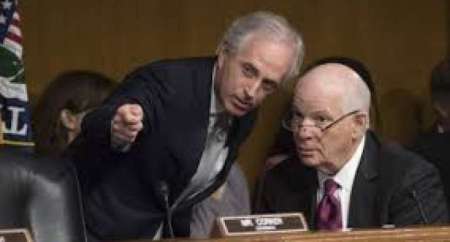
Will Congress have the courage to pass such a bill? The last time around, at the instigation of Sens. Bob Corker and Ben  Cardin, they enacted a proposal that allowed Obama’s widely criticized (let’s be honest and say absurd) agreement to circumvent the normal requirement of ratification by the legislature as a treaty.

The result: chaos and death. Iran, enriched to the tune of a hundred billion or so, almost two billion in untraceable cash, was able to run rampant across the Middle East through its drug-dealing terrorist client Hezbollah, the equally homicidal Hamas, the Houthis and its own Revolutionary Guard Corps of bloodthirsty fanatics.

It’s also clear — as we have seen recently via the protests in 80 or so Iranian cities — that little or none of these billions were spent on the Iranian people themselves. They all went into the accounts of the corrupt mullahs or to manufacture weapons to kill more people, extending the Syrian civil war and changing the character of Europe forever via the unprecedented refugee crisis.

This was so predictable it’s hard to believe someone with an IQ in triple digits would have believed it could have been otherwise — yet Corker, Cardin and almost the entire Democratic Party did. They all fell in line with Obama’s monstrous deal, believing, despite decades of evidence to the contrary, that people like Iranian officials Hassan Rouhani and Javad Zarif were actually “moderates.” To put it bluntly — how stupid can you get.

Nowhere in all this does anyone have any real idea if the deal’s putative intention, seriously delaying Iran’s nuclear ambitions, was achieved even partly. It’s impossible to know because Iran (per the IAEA) does not permit inspection of its military sites and, even if it did, they refused to reveal the state of their nuclear development before the agreement was made in the first place, so no comparison can be made. (Incomprehensibly, the deal allowed them to do this.) Beyond that, the Iranians are buddies with the North Koreans. How much of the NORK’s technology, or nuclear material for that matter, has already changed hands we don’t know.

In other words, this is an agreement only a fascist ayatollah and or some politician lusting for a fake peace prize could love.

Now the challenge is with Congress. Not surprisingly, the House is ahead of the Senate on this, with Rep. Peter Roskam working on a bill that is closer to what is required.

Whatever happens, the Europeans — particularly the Western Europeans — will be difficult. They are loathe to admit that Donald Trump, of all people, might be right about a crucial point of foreign policy, making them, once again, the weak appeasers of fascism. Also, they’re greedy and want to keep their business with the Iranians going.

And so, Sens. Corker and Cardin, our nation, indeed the world, turns its eyes to you. Are you ready to rescue your reputations with history?

Russia: Trump would make ‘big mistake’ by leaving Iran deal

January 13, 2018
Moscow ‘gradually coming to the conclusion that an internal decision by the US to leave the deal has already been made or is close to being made,’ vowing to ‘do everything in its power to save the agreement,’ says deputy foreign minister.
https://www.ynetnews.com/articles/0,7340,L-5070307,00.html

Russia on Saturday said Washington would be making a grave mistake by pulling out of the Iran nuclear deal, adding that Moscow would work hard to keep the landmark agreement alive.Deputy Foreign Minister Sergei Ryabkov criticized remarks by US President Donald Trump, who on Friday said the US will not reimpose nuclear sanctions on Iran for the moment, but would withdraw later this year unless the terms of the deal are changed.”We are gradually coming to the conclusion that an internal decision by the US to leave the (Joint Comprehensive Plan of Action) has already been made or is close to being made,” Ryabkov said in an interview with Interfax news agency.

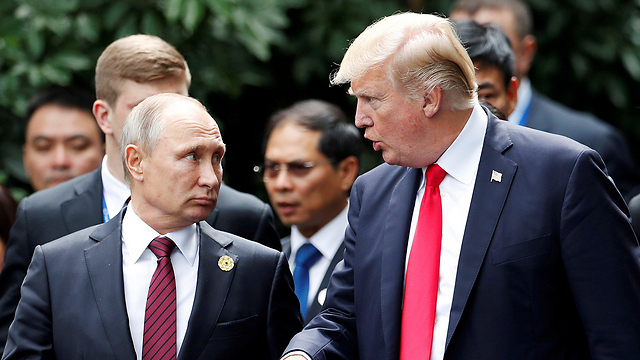
Russian President Putin; US President Trump (Photo: Reuters)

Russian President Putin; US President Trump (Photo: Reuters)

“This could be one of Washington’s big foreign policy mistakes, a big miscalculation in American policy,” he said.

Under the hard-won 2015 deal with Russia, the US, China, France, Britain, Germany and the EU, Iran agreed to curb its nuclear program in exchange for lifting of a raft of international sanctions.

Trump on Friday gave an ultimatum to “either fix the deal’s disastrous flaws, or the United States will withdraw.”

America’s allies see the accord as the best way to thwart Iran’s nuclear ambitions and a victory for multilateral diplomacy. Tehran categorically denies it is seeking to develop atomic weapons.

But Trump argues that his predecessor Barack Obama gave away too much to Iran in sanctions relief, without forcing the Islamic republic to end its ballistic missile program and support for militant groups.

Ryabkov said Moscow must unite with Europe and China and undertake “intense work” to keep the existing plan intact and decried what he said was a US attempt to strongarm the situation.

“In what we heard yesterday, I don’t see any invitation for Iran to enter dialogue,” he said. “This defies the logic of the agreement.”

“Russia will do everything in its power to save the agreement,” he said.

The Palestinian Terror Party: Celebrating Murder

January 13, 2018

Trump Issues Ultimatum to ‘Fix’ Iran Nuclear Deal

January 13, 2018
U.S. President Trump holds joint news conference with Norwegian Prime Minister Solberg at the White House in Washington

Reuters

BY:

Trump Issues Ultimatum to ‘Fix’ Iran Nuclear Deal

By Steve Holland

WASHINGTON (Reuters) – U.S. President Donald Trump on Friday gave the Iran nuclear deal a final reprieve but warned European allies and Congress they had to work with him to “fix the terrible flaws” of the pact or face U.S. withdrawal.

Trump said he would waive sanctions against Iran lifted as part of the deal but only as a “last chance” and would not do so again. The ultimatum puts pressure on Europeans – key backers and parties to the 2015 international agreement – to satisfy Trump, who has called the deal to curb Iran’s nuclear program “the worst ever.”

Trump wants the deal strengthened with a separate agreement within 120 days or the United States will unilaterally withdraw from the international pact, warning: “No one should doubt my word.”

Iranian Foreign Minister Mohammad Javad Zarif responded on Twitter that the deal was not renegotiable and that Trump’s stance “amounts to desperate attempts to undermine a solid multilateral agreement.”

Trump, who has sharply criticized the deal reached during Democrat Barack Obama’s presidency, had privately chafed at having to once again waive sanctions on a country he sees as a rising threat in the Middle East.

“This is a last chance,” Trump said in a statement. “In the absence of such an agreement, the United States will not again waive sanctions in order to stay in the Iran nuclear deal. And if at any time I judge that such an agreement is not within reach, I will withdraw from the deal immediately.”

Underscoring the difficulty now facing Europeans, a European diplomat, speaking under condition of anonymity, said: “It’s going to be complicated to save the deal after this.”

While Trump approved the sanctions waiver, the Treasury Department announced new, targeted sanctions against 14 entities and people, including the head of Iran’s judiciary.

Trump now will work with European partners on a follow-on agreement that enshrines certain triggers that the Iranian regime cannot exceed related to ballistic missiles, said a senior administration officials who briefed reporters on the decision.

One official said Trump would be open to remaining in a modified deal if it was made permanent.

“I hereby call on key European countries to join with the United States in fixing significant flaws in the deal, countering Iranian aggression, and supporting the Iranian people,” Trump said in the statement. “If other nations fail to act during this time, I will terminate our deal with Iran.”

Republican Senator Bob Corker said “significant progress” had been made on bipartisan congressional legislation to “address the flaws in the agreement without violating U.S. commitments.”

SEVERAL CONDITIONS

Trump laid out several conditions to keep the United States in the deal. Iran must allow “immediate inspections at all sites requested by international inspectors,” he said, and that provisions preventing Iran from possessing a nuclear weapon must not expire. Trump said U.S. law must tie long-range missile and nuclear weapons programs together, making any missile testing by Iran subject to “severe sanctions.”

Trump wants the U.S. Congress to modify a law that reviews U.S. participation in the nuclear deal to include “trigger points” that if violated would lead to the United States reimposing its sanctions, the official said.

This would not entail negotiations with Iran, the official said, but rather would be the result of talks between the United States and its European allies. Work already has begun on this front, the official said.

Analyst Richard Nephew said whether Trump’s conditions could be met depended on whether he wants a face-saving way to live with the nuclear deal with the political cover of tough-sounding U.S. legislation, or whether he really wants the deal rewritten.

Nephew, a former White House and State Department Iran sanctions expert, said legislation could be drafted that might appear to assuage Trump’s concerns but that getting Iran to agree to allow unfettered international inspections or to no time limits on the nuclear deal’s restrictions was impossible.

He said Trump appeared to be looking for the deal to be rewritten in Congress.

“That’s not going to happen,” Nephew said. “If we were walking on a ledge before, now we are on a tightrope.”

Trump has argued behind the scenes that the nuclear deal makes the United States look weak, a senior U.S. official said. The argument for staying in, the official said, was to allow time to toughen the terms of the agreements.

A decision to withhold a waiver would have effectively ended the deal between Iran, the United States, China, France, Russia, Britain, Germany and the European Union. Those countries would have been unlikely to join the United States in reimposing sanctions.

Hailed by Obama as key to stopping Iran from building a nuclear bomb, the deal lifted economic sanctions in exchange for Tehran limiting its nuclear program but Trump has argued that Obama negotiated a bad deal.

PRESSURE FROM EUROPE

Britain, France and Germany called on Trump on Thursday to uphold the pact.

Iran says its nuclear program is only for peaceful purposes and that it will stick to the accord as long as the other signatories respect it but will “shred” the deal if Washington pulls out.

Two EU diplomats said EU foreign ministers will discuss what to do now at their next regular meeting, scheduled for Monday Jan. 22 in Brussels.

The U.S. Congress requires the president to decide periodically whether to certify Iran’s compliance with the deal and issue a waiver to allow U.S sanctions to remain suspended.

Trump in October chose not to certify compliance and warned he might ultimately terminate the accord. He accused Iran of “not living up to the spirit” of the agreement even though the International Atomic Energy Agency says Tehran is complying.

Hard-liners on Iran in the U.S. Congress have called for the reimposition of the suspended sanctions and an end to the nuclear deal, while some liberal Democrats want to pass legislation that would make it harder for Trump to pull Washington out without congressional consent.

Trump and his top advisers have been negotiating with U.S. lawmakers on Capitol Hill to try to change sanctions legislation so that he does not face a deadline on whether to recertify Iranian compliance with the nuclear deal every 90 days.

(Additional reporting by Jeff Mason, Doina Chiacu and David Alexander and Arshad Mohammed in Washington; Robin Emmott in Brussels, John Irish in Paris and Parisa Hafezi in Ankara; Editing by Yara Bayoumy and Bill Trott)

PLO moves to withdraw recognition of Israel and cut ties with it

January 13, 2018

By – on

https://pamelageller.com/2018/01/plo-withdraw-recognition.html/

When did the PLO ever recognize the Jewish state? Never. Back in 1993, the PLO recognized “the right of the State of Israel to exist in peace and security.” That is all that they recognized. That doesn’t say anything about Israel existing in peace and security as a Jewish state. It doesn’t indicate any renunciation of the PLO’s jihad imperative to conquer Israel “from the river to the sea” and transform it into a vastly different kind of state. At this point, should they succeed, it would be an Islamic state. So the withdrawal of this “recognition” is as meaningless as the recognition itself.

But if they’re going to withdraw it, since it has been the linchpin of the spurious “peace process,” can we get the trillions of US taxpayer dollars that we have paid to this terror organization back now?

“PLO moves to withdraw recognition of, cut ties to Israel,” by Dimu Abumaria, Jerusalem Post, January 11, 2018 (thanks to Mark):

The Executive Committee of the Palestine Liberation Organization (PLO), the umbrella organization that is internationally-recognized as the representative of the Palestinian people, will push to withdraw formal recognition of Israel and end Washington’s longstanding role as mediator of the peace process. Instead, the PLO will pursue an “international formula” for achieving statehood. The developments were outlined in a report that aims to redefine not only the parameters for future relations with Israel and the Unites States, but also change the status of the Palestinian Authority from a “transitional authority” to a “state under occupation.” The details are intended to be finalized in a follow-up meeting of the PLO mid-month.

The PA was formed as an interim governing body by the 1993 Oslo Accords—signed by then-prime minister Yitzhak Rabin and previous PLO chief Yasser Arafat—and was meant to be dissolved after no later than five years as part of a final peace agreement.

Two-and-a-half decades later, the PLO is now threatening to do just that, which, in its view, would release the Palestinians from political obligations stipulated in agreements with Israel.

According to PLO Executive Committee member Ahmed Majdalani, Israel “didn’t commit to any of the terms,” thereby effectively absolving the PA of its responsibilities. “I believe we are late in making these decisions and implementing them,” he told The Media Line, “which has created a gap between the Palestinian leadership and the Palestinian people.”

In this respect, there does, indeed, appear to be a growing chasm between the PA and the Palestinian “Street,” with a number of individuals expressing to The Media Line a distrust of Ramallah, the administrative capital of the Palestinian Authority. One businessman, who spoke to The Media Line on condition of anonymity, called on PA leaders to resign, as they are no longer “qualified” to make decisions “that have no impact on the ground.”

Another Palestinian, Bashar, noted that PLO leaders have made similar threats numerous times in the past, yet cooperation with Israel, security coordination foremost, remains intact. “They practice double standards,” he exclaimed, whereas another person, who asked not to be identified, went so far as to suggest that the PA shares “mutual interests” with “the [Israeli] occupation” and thus cannot be expected to advance the Palestinian cause.

Even those supportive of the PLO’s newly stated goals do not believe that they will be implemented. “These decisions might be good for Palestine,” one Ramallah resident told The Media Line, “as they could potentially change the [negative] situation caused by the Oslo Accords.” Nevertheless, she qualified, “I don’t think the PA is capable of forging a better agreement, unless they focus on a national agenda to support the Palestinian public.” Many other Palestinians echoed these sentiments, calling on the PA to change course after years of failed negotiations.

To this end, Saeb Erekat, Secretary General of the PLO Executive Committee and chief Palestinian negotiator, reiterated on Tuesday the PA’s refusal to engage in any peace initiative sponsored by the US unless the Trump administration retracts its recognition of Jerusalem as Israel’s capital. This comes after Erekat earlier this month slammed American threats to cut aid to the Palestinians, describing the prospect as tantamount to “starving refugees…in support of Israeli positions.”…