But we are still not there, a tremendous amount of work is laying in front of us .
But we are still not there, a tremendous amount of work is laying in front of us .
Syria attacks Beit Jinn opposite IDF Hermon positions – reprisal for reported Israeli airstrike on Iranian base near Damascus, DEBKAfile, December 2, 2017
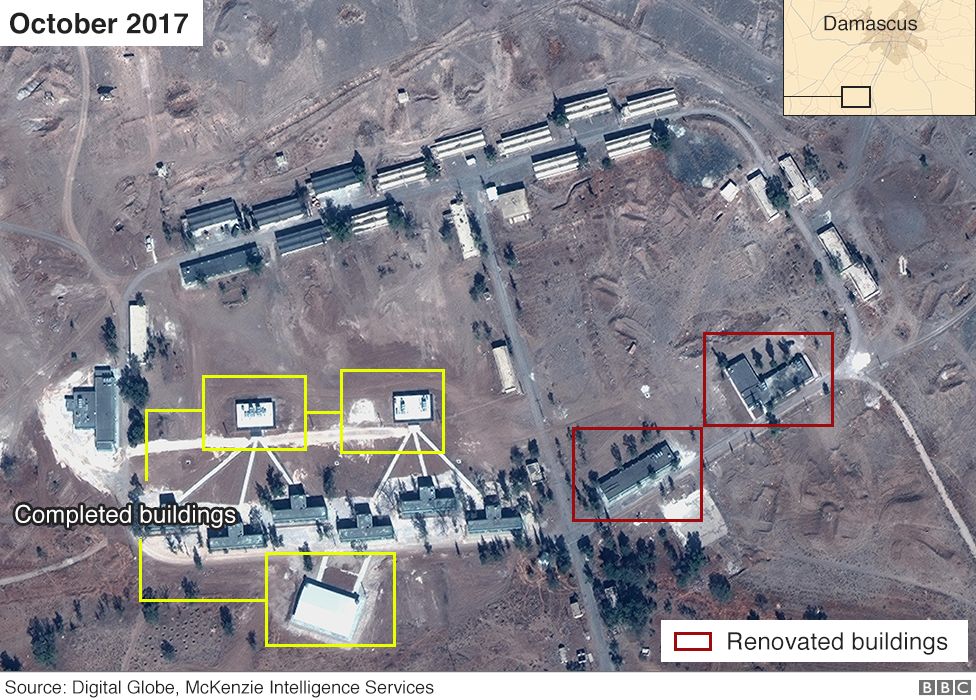
Two significant military events were reported early Saturday, Dec. 2, by Arab and Russian sources – neither of them officially confirmed. The first was an Israeli airborne missile attack on the Syrian army’s 1st Division’s ammunition dump near Al-Kiswah 14km southwest of Damascus and 50km from the Golan. The target was identified as an Iranian military base which the BBC reported on Nov. 10 to be under construction in the Syrian military compound at Al-Kiswah. DEBKAfile’s military sources refuted the BBC report.
Other sources reported that the Israeli target early Saturday was a Hizballah position near the Syrian 1st Division’s 91st Brigade base in the same area. Syrian military sources and Arab social media released videos showing Syrian air defense intercepting some of the Israeli missiles while others hit the target. Some sources claimed they were launched from Lebanese air space. A short time later, the Syrian army announced that units of its 7th armored division and the 42nd brigade of its 4th division had just launched an offensive on the Beit Jinn pocket on Mount Hermon a little more than 4km away from IDF positions on the mount. A Druze village is located inside this enclave. The Syrian military statement omitted to mention the fact that Hizballah forces are spearheading this attack.

Saudi King Salman Photo Credit: Reuters/Channel 2 News
In an interview with the Telegraph, Israeli Prime Minister Benjamin Netanyahu’s former National Security Adviser Yaacov Nagel said that Saudi Arabia is so interested in countering Iran that it is willing to abandon the Palestinians in exchange for diplomatic relations with Jerusalem. Nagel explained that Riyadh wants to begin cooperating with Israel so desperately that it “doesn’t care” what kind of deal is reached between Israel and the Palestinians.
“They just have to say there is an agreement between Israel and the Palestinians, they don’t care, they don’t give a damn about what will be in the agreement,” Nagel said. “They need to say there is an agreement in order to go for next steps.”
In November, the tensions between Riyadh and Tehran escalated after Houthi rebels fired a missile toward Riyadh from Yemen. The Saudi Press Agency reported that Riyadh conducted a comprehensive test on the missile and has proof that it was the work of the Iranians. The Islamic Revolutionary Guards Corps, however, claimed that it was in no way involved in the attack.

About two weeks later, the Arab League issued a statement denouncing Iran during an emergency summit in Cairo. According to the statement, Iran is destabilizing the entire Middle East and has been assisting Shia rebels in the civil war in Yemen for over two years.
The summit was organized by Saudi Arabia, which clarified it wished to act in a “serious and honest” manner against “Iranian aggression.” Saudi Foreign Minister Adel al-Jubeir emphasized that no weakness should be demonstrated when dealing with Iran’s ballistic missile capabilities.
The possibility of Saudi Arabia and Israel establishing diplomatic relations has made headlines in recent weeks, especially after IDF Chief of Staff Gadi Eizenkot was interviewed by the Saudi newspaper Elaph. A few days after the rare interview, Israeli Minister Yuval Steinitz confirmed that Israel and Saudi Arabia are in contact. “The connection with the moderate Arab world, including Saudi Arabia, helps us stop Iran,” he said during an interview with Army Radio.
“Even when we struggled to improve the nuclear agreement, with very partial success, there was some assistance from the moderate Arab states toward the US and Western powers,” Steinitz clarified. “Even today, when we are pressuring the superpowers not to agree to the establishment of an Iranian military base in Syria along our northern border, the Sunni Arab world is helping us with this matter.”
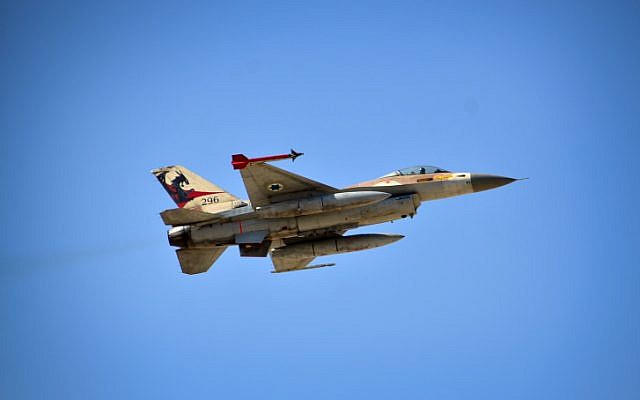
Israel fired missiles at a military base near the Syrian city of al-Qiswa, southwest of Damascus, reportedly destroying an arms depot, according to numerous Arab media reports overnight Friday-Saturday.
Some media outlets affiliated with the Assad regime and Lebanese terrorist group Hezbollah reported that Israeli warplanes targeted an ammunition bunker belonging to the Syrian Army. Other Assad-affiliated media outlets reported that the target was a military base that Iran is building in the area, and that loud explosions were heard after the attack.
The reports added that Israel fired five missiles. Syrian state media said its air defenses intercepted at least two Israeli missiles fired at a government “military position” in Damascus province, but that the attack still caused damage.
A Sky News Arabic report said that the missiles were fired from within Lebanese airspace.
There was no immediate official Israeli comment.
The Syrian Observatory for Human Rights, a Britain-based monitor, said missiles, presumably Israeli, targeted “positions of the Syrian regime and its allies” southwest of Damascus, destroying “an arms depot.” Observatory chief Rami Abdel Rahman said it was not immediately clear whether the warehouse was operated by the Syrian army, Iran or Hezbollah.
“At half past midnight [2230 GMT Friday], the Israeli enemy fired several surface-to-surface missiles at a military position in Damascus province,” Syria’s state SANA news agency reported. “The air defenses of the Syrian army were able to deal with the attack… destroying two of the missiles,” it said, adding that the attack nonetheless caused “material damage.”
The alleged Israeli attack came three weeks after the BBC reported that Iran was building a permanent military base in Syria just south of Damascus. The British broadcaster commissioned a series of satellite pictures that showed widespread construction at the site.
Israel has long warned that Iran is trying to establish a permanent presence in Syria as part of its efforts to control a land corridor from Iran through to the Mediterranean Sea as it attempts to expand its influence across the Middle East. Prime Minister Benjamin Netanyahu has said often that Israel will not allow Iran to establish a permanent presence in Syria, and was reported last week to have sent a warning to this effect via a third party to Syrian President Bashar Assad.
In November, the IDF’s Patriot missile defense system shot down a drone above the Golan Heights, near the border with Syria.
Israeli security officials said the drone’s operators had deliberately attempted to fly the aircraft across the Israeli border from Syria, but it was shot down without crossing into Israel.
The IDF later concluded that the aircraft belonged to Assad’s regime.
A month before that, the IDF fired into Syria, hitting three rocket launchers, in response to earlier rocket fire, and warned that further fire would prompt a more intensive response.
Earlier that month, the Syrian army launched an interceptor missile at Israeli Air Force reconnaissance aircraft, which the IDF says were flying over Lebanon. In response, Israel sent out a second sortie of F-16 fighter jets to bomb an anti-aircraft battery that it believed launched the missile.

Photo Credit: Chanh Nguyen / Pixabay
The Trump administration has notified U.S. embassies around the world that it plans to formally recognize Jerusalem as the undivided capital of Israel, according to a report published Thursday by The Wall Street Journal. The plan includes the future relocation of the U.S. Embassy from Tel Aviv to Jerusalem.
According to the report, the plan has not been finalized, but envoys were being notified so that they can inform their host governments and prepare for possible protests.
Officials said a formal announcement may come as early as next week.
President Donald Trump faces a December 4 deadline to decide whether to sign another six-month waiver of the Jerusalem Embassy and Recognition Act of 1995, passed by Congress which requires the relocation of the U.S. Embassy from Tel Aviv to Jerusalem. The waiver, included in the legislation, allows the president to delay the transfer for a six-month period on the condition there is a risk to “national security.”
“The president has always said it is a matter of when, not if, [the embassy will relocate to Jerusalem],” a White House spokesperson said. “The president is still considering options and we have nothing to announce.”
This report was filed from New York prior to the start of the holy Sabbath.
Ahmadinejad to Khamenei: There is Little Hope for Improvement in Regine’s Status, Iran News Update, Jazeh Miller, December 2, 2017
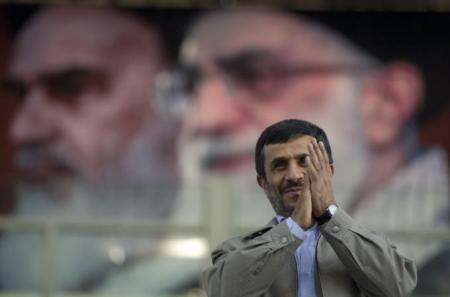
According to Ahmadinejad, “due to heavy economic, propaganda and emotional pressures as well as political and psychological ones, many people and families are subjected to serious harms and breakdown, and a bleak outlook has been formed in the minds of all people, the youth in particular. Considering the country’s current conditions, hope for a better future has reached bottom low.”
In another part of his letter, Ahmadinejad focuses on his conflict with regime’s judiciary, saying “irregular, unjustified, and unlawful insistence on sticking to personal and political stances and involving those viewpoints in judicial process while taking advantage of judicial power in political, personal, and family relations has stripped the judiciary of any chance to address and improve its status, avoid mistakes and injustice, attempt to resolve the country’s major problems and realize people’s rights.”
*******************************************
Revealing his recent letter to the regime’s Supreme Leader Ali Khamenei, Iranian regime’s former president has given new dimensions to the power struggle between regime’s rival factions while describing the country’s awkward situation.
On Monday November 27, Mahmoud Ahmadinejad revealed a letter he apparently wrote two weeks ago to Ali Khamenei.
The letter was released a few hours after regime judiciary’s spokesman ‘Mohseni Ejei’ referred to Ahmadinejad’s attacks on the judiciary, describing him as a ‘thug who talks big’.
Although Ahmadinejad’s letter gives detailed description about the country’s current conditions, but he doesn’t mention how much his government and policies are responsible for today’s situation.
“Due to authorities’ ignorance and effectiveness of enemies’ plans, such crises like unprecedented economic slowdown, liquidity, banking problems, unemployment, poverty, wide gap between the rich and poor and production fall have reached such a critical level that could at any moment hit the country and people with unpredictable and unmanageable consequences”, says Ahmadinejad.
According to Ahmadinejad, “due to heavy economic, propaganda and emotional pressures as well as political and psychological ones, many people and families are subjected to serious harms and breakdown, and a bleak outlook has been formed in the minds of all people, the youth in particular. Considering the country’s current conditions, hope for a better future has reached bottom low.”
In another part of his letter, Ahmadinejad focuses on his conflict with regime’s judiciary, saying “irregular, unjustified, and unlawful insistence on sticking to personal and political stances and involving those viewpoints in judicial process while taking advantage of judicial power in political, personal, and family relations has stripped the judiciary of any chance to address and improve its status, avoid mistakes and injustice, attempt to resolve the country’s major problems and realize people’s rights.”
Ahmadinejad says he’s against Larijani brothers and their dominance over the country’s (judicial and legislative) branches.
He then refers to judiciary’s performance as the source of public discontent in the country, saying “having 17 million judicial cases means that an overwhelming majority of Iranian families are somehow involved in lawsuits. It clearly and totally mirrors the country’s conditions and the performance of different entities, and yet by itself is a proof and a clear sign of the judiciary’s awkward situation, judicial officials’ incompetence and real problems in the branch. Public discontent towards the status of the country and judiciary is unprecedented, so much so that the majority of people are shouting against injustice and improper relations.”
Ahmadinejad’s fierce attack on the judiciary is despite the fact that the branch played a key role in oppressing the 2009 uprising during Ahmadinejad’s second term. Nonetheless, Ahmadinejad never questioned or criticized the judiciary’s record at the time, nor does he refer to it now. But only now that the branch, amid clashes between regime’s rival bands, has targeted Ahmadinejad and those around him, he has started criticizing.
Regime’s former president, who never seriously opposed limitations and violating individual and social freedoms, now writes “any kind of criticism, protest, or freedom of expression is harshly blocked for different excuses while a few groups and known families seek to exclusively take the power and major positions stemmed from people’s revolution, so they can consolidate the rule of factions and owners of wealth and power.”
Considering the escalation of conflicts between regime’s former president and judiciary over the past few weeks, the release of Ahmadinejad’s letter to Khamenei could lead to even more heated conflicts.
By: United with Israel Staff
Dec 1, 2017
UN votes 151-6 against Israel, an ‘occupying power’ with no rights to Jerusalem
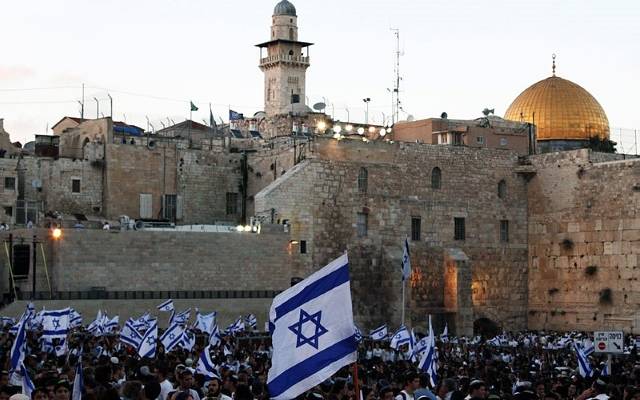
Jerusalem Day celebrations in the Old City. (Nicky Kelvin/Flash90)
The UN passed six new resolutions against the Jewish state, including one denying Israeli sovereignty over Jerusalem 151-6.
The United Nations General Assembly in New York passed six resolutions on Thursday affirming Palestinian rights and condemning Israeli violations of international law, Middle East Monitor reported.
According to one resolution (‘Jerusalem’), “the Assembly reiterated that any actions by Israel, the occupying Power, to impose its laws, jurisdiction and administration on the Holy City of Jerusalem were illegal and therefore null and void.”
This resolution was adopted by 151 votes in favor to 6 against (Canada, Federated States of Micronesia, Israel, Marshall Islands, Nauru, United States), with 9 abstentions (Australia, Cameroon, Central African Republic, Honduras, Panama, Papua New Guinea, Paraguay, South Sudan, Togo), the Monitor said.
Israel’s delegate condemned the resolutions, claiming that the UN “continued to annually adopt biased resolutions and devote precious resources…to politicized bodies whose sole purpose was to attack and denounce Israel”. The US representative “echoed that opposition.”
BY:
By Michelle Nichols
U.N. Report: Yemen Rebel Missiles Fired at Saudi Arabia Appear Iranian

Houthi fighters standing guard in Yemen / Reuters
UNITED NATIONS (Reuters) — Remnants of four ballistic missiles fired into Saudi Arabia by Yemen’s Houthi rebels this year appear to have been designed and manufactured by Riyadh’s regional rival Iran, a confidential report by United Nations sanctions monitors said, bolstering a push by the United States to punish the Tehran government.
The independent panel of U.N. monitors, in a Nov. 24 report to the Security Council seen by Reuters on Thursday, said it “as yet has no evidence as to the identity of the broker or supplier” of the missiles, which were likely shipped to the Houthis in violation of a targeted U.N. arms embargo imposed in April 2015.
Earlier this month, U.S. Ambassador to the United Nations Nikki Haley accused Iran of supplying Houthi rebels with a missile that was fired into Saudi Arabia in July and called for the United Nations to hold Tehran accountable for violating two U.N. Security Council resolutions.
The report said that monitors had visited two Saudi Arabian military bases to see remnants gathered by authorities from missile attacks on Saudi Arabia on May 19, July 22, July 26, and Nov. 4.
They also visited four “impact points” from the Nov. 4 attack where other remnants of the missiles were identified.
“Design characteristics and dimensions of the components inspected by the panel are consistent with those reported for the Iranian designed and manufactured Qiam-1 missile,” the monitors wrote.
The Qiam-1 has a range of almost 500 miles and can carry a 1,400-pound warhead, according to GlobalSecurity.org public policy organization.
Saudi-led forces, which back the Yemeni government, have fought the Iran-allied Houthis in Yemen’s more than two-year-long civil war. Saudi Arabia’s crown prince has described Iran’s supply of rockets to the Houthis as “direct military aggression” that could be an act of war.
SMUGGLING ROUTE
Another ballistic missile was shot down on Thursday near the southwestern Saudi city of Khamis Mushait, the Saudi-owned al-Arabiya channel reported.
The U.N. monitors said they gathered evidence that the missiles were transferred to Yemen in pieces and assembled there by missile engineers with the Houthis and allied forces loyal to Yemen’s former President Ali Abdullah Saleh.
“The panel has not yet seen any evidence of external missile specialists working in Yemen in support of the Houthi-Saleh engineers,” the monitors wrote.
They visited Saudi Arabia after the monitors called on the coalition to provide evidence backing Riyadh’s claim that Iran was supplying missiles to the Houthis, warning that a failure to do so would violate a U.N. resolution.
They said the missiles most likely were smuggled into Yemen along “the land routes from Oman or Ghaydah and Nishtun in al Mahrah governorate (in Yemen) after ship-to-shore transshipment to small dhows, a route that has already seen limited seizures of anti-tank guided weapons.”
The Saudi-led coalition used the Nov. 4 missile attack to justify a blockade of Yemen for several weeks, saying it was needed to stem the flow of arms to the Houthis from Iran.
The United Nations had said the blockade could spark the largest famine the world has seen in decades. Some 7 million people in Yemen are on the brink of famine, and nearly 900,000 have been infected with cholera.
Published time: 1 Dec, 2017 19:52
https://www.rt.com/news/411678-eu-parliament-saudi-embargo/
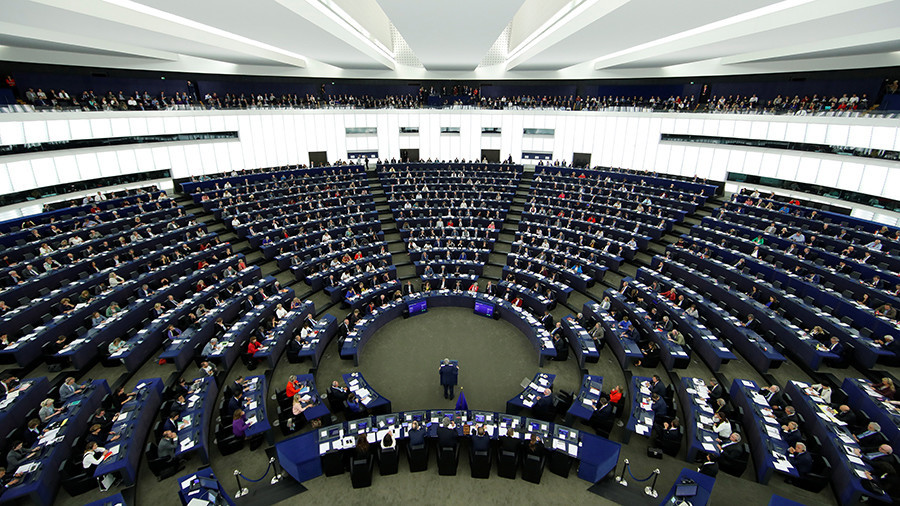
The European Parliament in Strasbourg, France © Christian Hartmann / Reuters
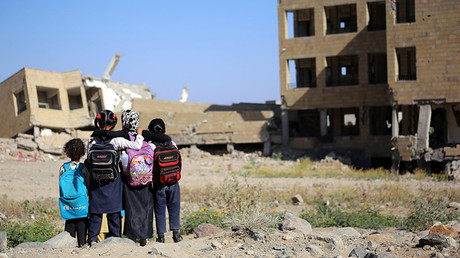
The EU parliament “condemns in the strongest terms the ongoing violence in Yemen and all attacks against civilians and civilian infrastructure, which constitute war crimes,” the resolution passed on Thursday says. It goes on to say that “dozens of Saudi-led airstrikes have been blamed for indiscriminately killing and wounding civilians in violation of the laws of war, including through the use of internationally banned cluster munitions.”
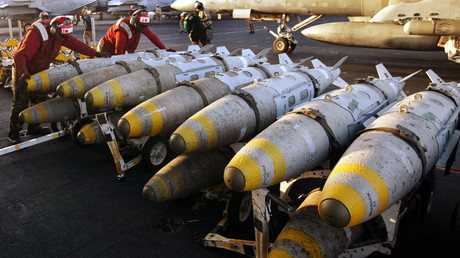
The document particularly says that the European lawmakers “deplore” the blockade of Yemen established by the Saudi-led coalition and specifically condemns “the indiscriminate coalition-led airstrikes leading to civilian casualties, including children, and destruction of civilian and medical infrastructure.” It adds that they equally condemn the actions of the Houthi rebels resulting in civilian casualties, including the missile attacks on the Saudi cities.
The MEPs then renewed their call on the EU foreign policy chief, Federica Mogherini, to launch “an initiative to impose an EU arms embargo against Saudi Arabia” in the view of the serious allegations of it committing war crimes in Yemen. The motion, which is, however, non-binding, was adopted by a vast majority as 539 MEPs supported it while only 13 of them voted against and 81 abstained.
The resolution also calls on Mogherini to “urgently propose an integrated EU strategy for Yemen” as well as urged all parties to the conflict to “urgently agree on a cessation of hostilities” and to return to peace negotiations.It then goes on to slam the EU member states for selling arms to the Saudis in spite of numerous allegations of war crimes committed by the coalition.
“EU Member States have continued to authorize transfers of arms to Saudi Arabia since the escalation of the conflict, in a violation of Council Common Position … on arms export control,” the document says. It then goes on to say that an EU arms embargo against Saudi Arabia would “effectively promote compliance” of the member states with the relevant EU guidelines and eventually with the international humanitarian law.
This is not the first time the EU parliament had called for an arms embargo against the Saudis. A similar appeal to the EU authorities was included into another its resolution on the situation in Yemen adopted in February 2016.
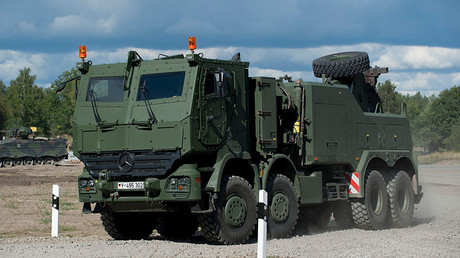
Meanwhile, some EU states continue to actively supply the Saudis with weapons and military equipment despite the Kindgom’s involvement in the war in Yemen. In mid-November, the German government revealed that the total value of its arms sales to Saudi Arabia has grown fivefold in the third quarter of 2017 comparison to the same period of the previous year.
While Germany supplies the Kingdom with military trucks and patrol boats, according to the disclosed documents, the UK is selling the Saudis various munitions, including bombs and missiles. And the UK arms sales to the Saudis also jumped by almost 500 percent, a November report said.
In September, an NGO said that the UK sold the Saudis £6 billion ($8 billion) worth of weapons since the war in Yemen began. It was also recently revealed that up to 50 British military personnel were teaching battlefield skills to Saudi officers engaged in the Yemeni conflict.
However, the oil-rich Kingdom enjoys support not only of its European partners. In late November, it was reported that the Saudis were purchasing $ 7 billion worth of precision arms from the US manufacturers, which is almost equal to the total worth of the British arms sales to the Saudi Arabia over the entire period of the Yemeni conflict. The purchase came as part of the mammoth $110-billion deal earlier brokered by the US President Donald Trump during his visit to Riyadh.
Since 2015, the Sunni monarchy has been waging a war against Iran-backed Shiite Houthi rebels in Yemen, which pushed one of the Arab world’s poorest countries to the brink of famine and left some 4,800 Yemenis killed, according to UN that says most of the civilian casualties were caused by Saudi-led coalition airstrikes, though Riyadh consistently denied the reports.
According to the UN, some 20.7 million people in Yemen are currently in need of humanitarian assistance while a cholera outbreack, which is considered to be one of the worst in the world, affected more than 900,000 people there. At the same time, the UN Food and Agriculture Organization (FAO) also called the humanitarian situation in Yemen the “largest food-security emergency in the world.”




 anneinpt
 artaxes
 danmillerinpanama
 davidking1530
 Peter Hofman
 Joseph Wouk
 Peter
Peter Louisiana Steve
 WarSclerotic
Recent Comments