Archive for November 2017

Russia-Gate Spreads To Europe

November 19, 2017
http://www.zerohedge.com/news/2017-11-18/russia-gate-spreads-europe

Authored by Robert Parry via ConsortiumNews.com,

Ever since the U.S. government dangled $160 million last December to combat Russian propaganda and disinformation, obscure academics and eager think tanks have been lining up for a shot at the loot, an unseemly rush to profit that is spreading the Russia-gate hysteria beyond the United States to Europe…

British Prime Minister Theresa May

Now, it seems that every development, which is unwelcomed by the Establishment – from Brexit to the Catalonia independence referendum – gets blamed on Russia! Russia! Russia!

The methodology of these “studies” is to find some Twitter accounts or Facebook pages somehow “linked” to Russia (although it’s never exactly clear how that is determined) and complain about the “Russian-linked” comments on political developments in the West. The assumption is that the gullible people of the United States, United Kingdom and Catalonia were either waiting for some secret Kremlin guidance to decide how to vote or were easily duped.

Oddly, however, most of this alleged “interference” seems to have come after the event in question. For instance, more than half (56 percent) of the famous $100,000 in Facebook ads in 2015-2017 supposedly to help elect Donald Trump came after last year’s U.S. election (and the total sum compares to Facebook’s annual revenue of $27 billion).

Similarly, a new British study at the University of Edinburgh blaming the Brexit vote on Russia discovered that more than 70 percent of the Brexit-related tweets from allegedly Russian-linked sites came after the referendum on whether the U.K. should leave the European Union. But, hey, don’t let facts and logic get in the way of a useful narrative to suggest that anyone who voted for Trump or favored Brexit or wants independence for Catalonia is Moscow’s “useful idiot”!

This week, British Prime Minister Theresa May accused Russia of seeking to “undermine free societies” and to “sow discord in the West.”

What About Israel?

Yet, another core problem with these “studies” is that they don’t come with any “controls,” i.e., what is used in science to test a hypothesis against some base line to determine if you are finding something unusual or just some normal occurrence.
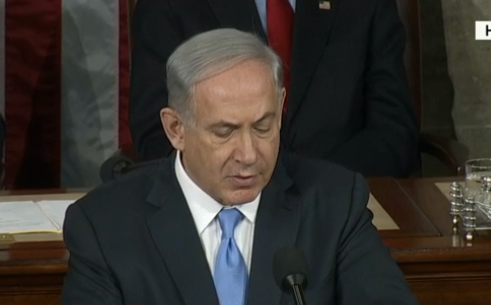
Israeli Prime Minister Benjamin Netanyahu speaking to a joint session of the U.S. Congress on March 3, 2015, in opposition to President Barack Obama’s nuclear agreement with Iran. (Screen shot from CNN broadcast)

In this case, for instance, it would be useful to find some other country that, like Russia, has a significant number of English speakers but where English is not the native language – and that has a significant interest in foreign affairs – and then see whether people from that country weigh in on social media with their opinions and perspectives about political events in the U.S., U.K., etc.

Perhaps, the U.S. government could devote some of that $160 million to, say, a study of the Twitter/Facebook behavior of Israelis and whether they jump in on U.S./U.K. controversies that might directly or indirectly affect Israel. We could see how many Twitter/Facebook accounts are “linked” to Israel; we could study whether any Israeli “trolls” harass journalists and news sites that oppose neoconservative policies and politicians in the West; we could check on whether Israel does anything to undermine candidates who are viewed as hostile to Israeli interests; if so, we could calculate how much money these “Israeli-linked” activists and bloggers invest in Facebook ads; and we could track any Twitter bots that might be reinforcing the Israeli-favored message.

No Chance

If we had this Israeli baseline, then perhaps we could judge how unusual it is for Russians to voice their opinions about controversies in the West. It’s true that Israel is a much smaller country with 8.5 million people compared to Russia’s 144 million, but you could adjust for those per capita numbers — and even if you didn’t, it wouldn’t be surprising to find that Israel’s interference in U.S. policymaking still exceeds Russian influence.
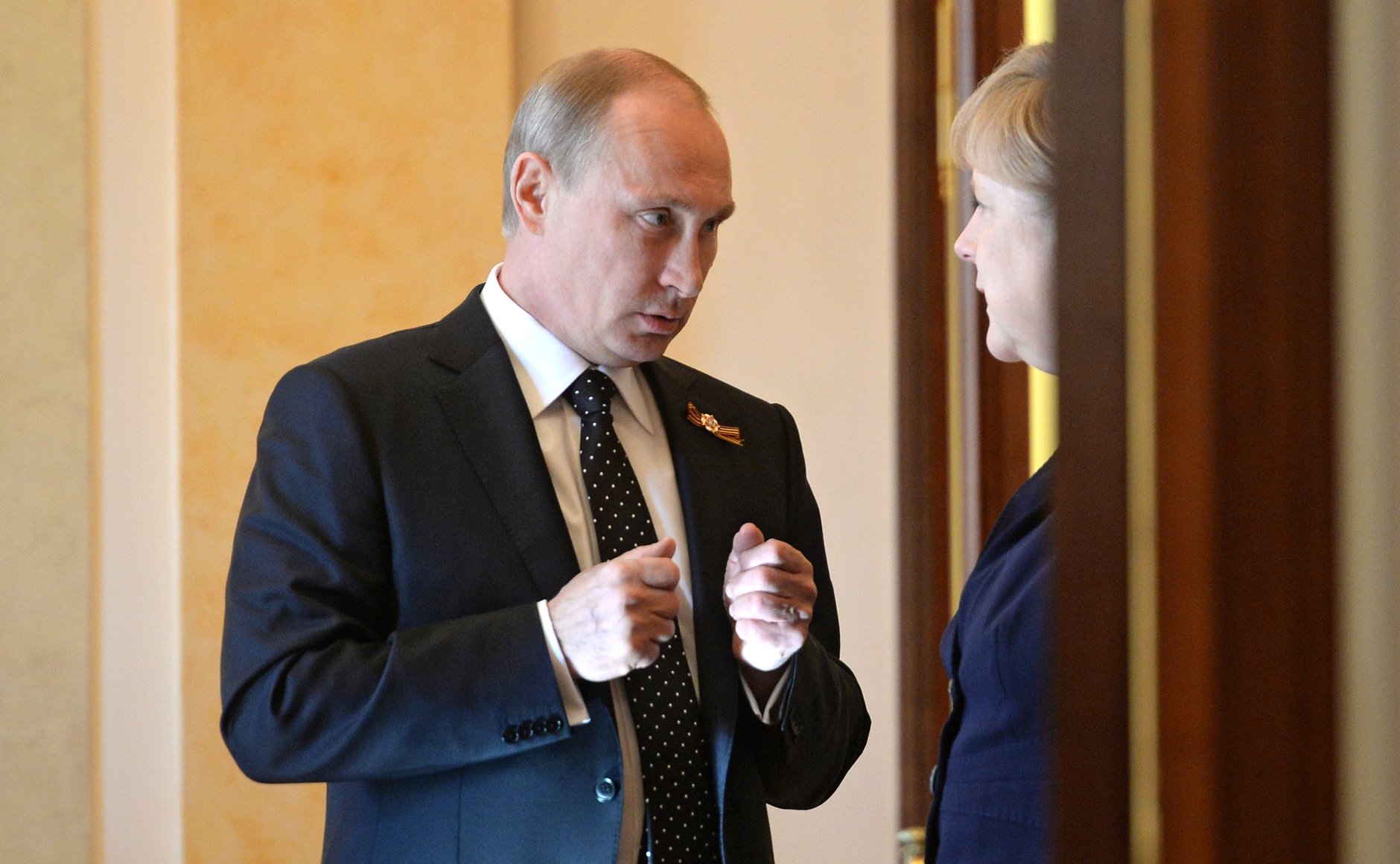
Russian President Vladimir Putin with German Chancellor Angela Merkel on May 10, 2015, at the Kremlin. (Photo from Russian government)

It’s also true that Israeli leaders have often advocated policies that have proved disastrous for the United States, such as Prime Minister Benjamin Netanyahu’s encouragement of  the Iraq War, which Russia opposed. Indeed, although Russia is now regularly called an American enemy, it’s hard to think of any policy that President Vladimir Putin has pushed on the U.S. that is even a fraction as harmful to U.S. interests as the Iraq War has been.

And, while we’re at it, maybe we could have an accounting of how much “U.S.-linked” entities have spent to influence politics and policies in Russia, Ukraine, Syria and other international hot spots.

But, of course, neither of those things will happen. If you even tried to gauge the role of “Israeli-linked” operations in influencing Western decision-making, you’d be accused of anti-Semitism. And if that didn’t stop you, there would be furious editorials in The New York Times, The Washington Post and the rest of the U.S. mainstream media denouncing you as a “conspiracy theorist.” Who could possibly think that Israel would do anything underhanded to shape Western attitudes?

And, if you sought the comparative figures for the West interfering in the affairs of other nations, you’d be faulted for engaging in “false moral equivalence.” After all, whatever the U.S. government and its allies do is good for the world; whereas Russia is the fount of evil.

So, let’s just get back to developing those algorithms to sniff out, isolate and eradicate “Russian propaganda” or other deviant points of view, all the better to make sure that Americans, Britons and Catalonians vote the right way.

Trump’s New Peace Plan: Palestinian State and Settlements

November 18, 2017

Trump’s New Peace Plan: Palestinian State and Settlements

Photo Credit: Kobi Gideon / GPO

US President Donald Trump with Israeli Prime Minister Benjamin Netanyahu

According to an Israel’s Channel 2 TV report on Saturday night, these are the main principles in President Trump’s peace plan as most senior Israeli officials understand them having shared intimate conversations with the US negotiating team: Trump intends to offer the Palestinians a state – but under different conditions than in the past, and together with an extensive economic proposal.

According to the understanding in Jerusalem, these are the principles on which Trump’s initiative will be based: after initial reservation, the American president intends to offer the Palestinians a state, and is also expected to adopt the principle of land swaps – but not necessarily according to the 1967 lines, which were the basis for previous initiatives by previous administrations, especially Obama’s and Clinton’s.

At this stage, there will be no evacuation of Jews or Arabs.

The question of dividing Jerusalem, according to the same sources, is not currently on the agenda. Also, the debate over the transfer of the American embassy to Jerusalem and US recognition of Jerusalem as the official capital of Israel will be postponed, in order to make it easier for Netanyahu to sell the plan to politicians on the right and public opinion.

In addition, top Israeli officials expect the PA to receive hundreds of millions for a tremendous economic development. The money will come mainly from the Sunni Arab countries, which will allow Chairman Abbas to accept the proposal.

For its part, the US is expected to meet most of Israel’s security needs, and the understanding is that IDF forces will be positioned on the Jordan River.

According to the same report, Prime Minister Netanyahu is in the midst of a battle to gain complete control over the entire length of the Jordan valley.

Israeli officials are saying that Trump and his administration have not yet decided who is the obstacle to the negotiations – Israel or the PA – despite Secretary of State Tillerson’s warning to shut down the PLO office in DC for violations of the conditions imposed by Congress on its remaining open. The same Israeli officials also believe the entire Trump Middle East team, who all come from Real Estate, are convinced they can urge the peace process along by throwing money at it.

This is why Netanyahu has been telling his ministers at every opportunity that Trump is the most friendly president Israel has ever dealt with and there will not be a better deal from any future administration, so Israel must not say no to Trump – in the hope that Mahmoud Abbas would be the one to reject the White House plan.

In response to the report, a senior White House official said (translated from the Hebrew Channel 2 report), “There is ongoing speculation about the work we are doing and this report is not much different – the details are essentially a mix of ideas that have been around for years and are not necessarily accurate, we are in a productive dialogue with all the relevant parties and we bring a different approach than in the past to achieve a sustainable peace deal We have no artificial deadline, beyond the continuation of the talks, as we said, our job is to allow a deal that will work for both sides and we have no intention of imposing anything on them.”

Report: Saudi Prince promises Israel billions of dollars to defeat Hezbollah

November 17, 2017

November 17, 2017

The Saudi Arabian monarch will announce his son as successor, who plans to count on IDF backing to defeat Iran and its proxy Hezbollah and has already promised Israel billions of dollars if they agree, a new report indicates. 

By World Israel News Staff

Latest News from Israel

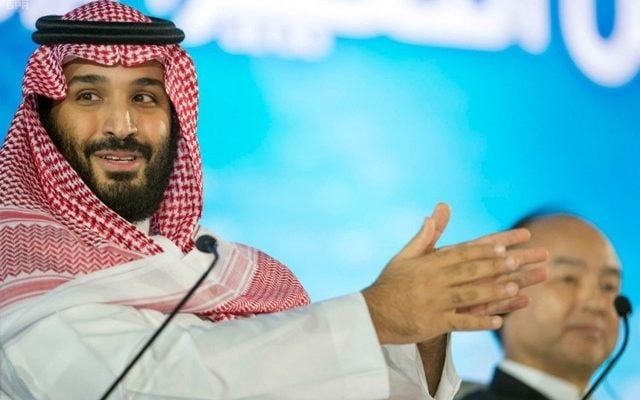
Saudi Crown Prince Mohammed bin Salman (Saudi Press Agency via AP)

King Salman of Saudi Arabia plans to step down and announce his son as his successor next week, a source close to the country’s royal family told DailyMail.com in an exclusive interview.

The transfer of power to Prince Mohammed bin Salman, known as MBS, is expected already next week, DailyMail.com said in the report published Thursday, adding that the king will continue only as a ceremonial figurehead.

“Unless something dramatic happens, King Salman will announce the appointment of MBS as King of Saudi Arabia next week,” said the unnamed source. There was no official comment from Riyadh.

Quoting the unnamed “high level source,” the report says the prince will shift his focus to its longtime rival Iran and enlist the help of the Israeli military to crush its proxy Hezbollah in Lebanon.

Tensions between the Kingdom and the Islamic Republic have increased dramatically in recent weeks.

“MBS is convinced that he has to hit Iran and Hezbollah,” according to the source. “Contrary to the advice of the royal family elders, that’s MBS’s next target.”

 The prince reportedly plans to count on the IDF to fulfill his mission. “MBS’s plan is to start the fire in Lebanon, but he’s hoping to count on Israeli military backing. He has already promised Israel billions of dollars in direct financial aid if they agree,” the source said.

“MBS cannot confront Hezbollah in Lebanon without Israel. Plan B is to fight Hezbollah in Syria,” the source added.

‘Wake-up Call’ to Iranian Threat

Former Lebanese Prime Minister Saed Hariri resigned from his position two weeks ago, fearing for his life. In an address made in Saudi Arabia, he cited Iran’s hostility and meddling in his country.

Iran generated “disorder and destruction” in Lebanon and meddled in its internal affairs as well as in other Arab countries, Hariri charged.

 Prime Minister Benjamin Netanyahu reacted to the dramatic resignation two week ago, saying it was “a wake-up call to the international community to take action against Iranian aggression.”

Trump’s Ultimate Deal?

Furthermore, a secret correspondence between the Saudi Foreign Minister Adel Al Jubeir and Crown Prince Mohammed Bin Salman reveals the draft of a possible peace deal between Saudi Arabia and Israel, the Lebanese website Al-Akhbar reported this week.

Speculation about a regional deal has been rife since US President Donald Trump’s visit to Saudi Arabia in May and was strengthened by Arab reports, since denied by Saudi officials, of a secret visit to Israel by the Crown Prince in September, where, according to reports, he met with Netanyahu.


U.S. Military Aid Fueling Hezbollah’s Next War Against Israel

November 17, 2017

Trump administration accused of aligning with Iran in Lebanon, Syria, Iraq

BY:

U.S. Military Aid Fueling Hezbollah’s Next War Against Israel

U.S. officials have become increasingly concerned that American military aid to the Lebanese army is arming the Iranian-backed terror group Hezbollah, which has been amassing a large cache of advanced arms on Israel’s border, according to multiple current and former U.S. officials who spoke to the Washington Free Beacon.

Following the resignation of Lebanese Prime Minister Saad Hariri, who fled the country and disclosed that Hezbollah controls the entirety of Lebanon, the U.S. government has continued its support for the Lebanese military, which multiple sources say has long been under the thumb of Hezbollah militants.

The ongoing policy is said to be fueling diplomatic tensions between the United States and Israel, which has found itself allied with Saudi Arabia as the American government advances a host of policies that have contributed to Iran’s regional dominance, including in Iraq and Syria.

The Trump administration’s State Department is coming under increased pressure from lawmakers and other foreign policy insiders to halt all military aid to Lebanon in light of Hariri’s resignation and new evidence that Hezbollah is benefiting from the American arms and aid.

Multiple U.S. officials and other national security insiders who spoke to the Free Beacon about the situation criticized the Trump administration for continuing a host of policies that they say have emboldened Iran’s grip on the region, including in Syria and Iraq, where U.S. arms have recently been detected going to Iranian-backed militia groups.

“It is clear that the State Department and [Defense Department] operate on the false construct that Lebanese Hezbollah and the Lebanese State are two distinct entities when in reality the information available to decision makers points to the dominance of Hezbollah within the state,” one former senior U.S. defense official familiar with the matter disclosed to the Free Beacon.

“Our Gulf allies and the Israelis are intimately familiar with the internal dynamics of Lebanon and clearly understand that Hezbollah is the defacto Lebanese state today, but we refuse to acknowledge this unfortunate reality even when confronted with obvious evidence,” said the source, who would only discuss the sensitive information on background.

Accusations that the Trump administration is helping to preserve Hezbollah’s grip on Lebanon come just days after a large, bipartisan delegation of lawmakers petitioned the Trump administration to present them with a plan on how it will stop Iran’s growing military presence in Syria, where the Islamic Republic has been building weapons factories that arm Hezbollah.

The situation is said to have fueled ongoing diplomatic tensions between the Trump administration and regional allies such as Israel, which has warned for some time that Iran’s presence across the region is emboldening Hezbollah and setting the stage for a brutal regional war.

Some experts have conceded in recent weeks that the United States has found itself more in line with Iran’s interests than those of allies such as Israel and Saudi Arabia, who have been seeking to combat Iran’s military efforts across the region.

Congressional officials are already examining ways to force the Trump administration into using current sanctions laws on the books to halt all U.S. aid to the Lebanese military, which these sources say is fully under Hezbollah’s control.

“The resignation of Lebanese Prime Minister Hariri is the latest consequence of Iran’s increasingly pervasive influence in Lebanon through its terrorist proxy Hezbollah,” Sen. Ted Cruz (R., Texas), said in recent remarks. “Given these developments, it is time for the United States to reassess the military assistance we provide to Lebanon, including to the Lebanese Armed Forces, and conduct a formal review of our strategy there.”

Rep. Brian Mast (R., Fla.), a combat veteran and member of the House Foreign Affairs Committee, told the Free Beacon in a recent interview that Congress must play a more active role in reassessing U.S. military aid to Lebanon in light of the situation.

“What can be done can be undone and maybe nobody wanted to undo this for the last eight years,” Mast said, referring to U.S. aid programs to Lebanese forces “This is exactly the role that foreign affairs is meant to play.”

It remains unclear what steps the Trump administration is willing to take.

Current and former U.S. officials who spoke to the Free Beacon about the situation said the State and Defense Departments continue to operate under the false belief that Lebanon can be separated from Hezbollah.

“It’s time for the U.S. to cease supporting this mirage of a Lebanon as an independent state given the penetration and dominant influence of the Iranian proxy Hezbollah,” the Defense source said.

A White House National Security Council spokesperson denied that Hezbollah has benefitted from any U.S. assistance to Lebanon’s Armed Forces, telling the Free Beacon the U.S. government has emphasized there “there must be absolutely zero cooperation between the LAF and Hezbollah.”

“The United States is focussed on continuing aid to the LAF to strengthen it and ensure that it alone is the sole defender of Lebanon,” according to the NSC official. “The United States remains committed to strengthening Lebanon’s legitimate government institutions, including the LAF.”

The administration official praised the LAF as a “well-trained, well equipped, and fully capable fighting force” that has been legitimized by U.S. aid, which has topped $1.5 billion since 2006.

“Many of the highest ranking officers in the LAF have attended U.S. professional military education courses at various points in their careers, building professionalism in the LAF’s officer corps,” according to the NSC official, who maintained “U.S. training and weapons” have helped mitigate “the destabilizing effects of the Syrian conflict.”

State Department officials declined to comment on the situation, only telling the Free Beacon that they “must refer all questions regarding the presence of Lebanese Prime Minister Saad Hariri in Saudi Arabia to the governments of Saudi Arabia and Lebanon.”

The Treasury Department, in comments to the Free Beacon, said the United States has multiple sanctions in place against Hezbollah.

One senior congressional official familiar with the efforts to thwart Iran’s regional takeover told the Free Beacon the Trump administration must immediately impose new sanctions on Hezbollah and halt U.S. military aid to the Lebanese Armed Forces, which have already been accused of letting these weapons flow to Hezbollah.

“The United States must counter Iran’s growing control of Lebanon through its terrorist proxy Hezbollah through enforcing and imposing new sanctions to dry up the group’s ability to finance its terrorist operations,” said the official, who would only speak on background about the efforts.

“Furthermore, the U.S. must ensure that the progress against ISIS does not distract us from countering and stopping Iran’s goal to fill this vacuum to further threaten our allies in the region, especially Israel,” the official said. “This step should therefore include reassessing whether U.S. military assistance is in U.S. national security interests and take additional steps to ensure the assistance that has already been provided does not unintentionally fall into the wrong hands.”

The situation has become particularly pressing in light of recent accusations by many leading lawmakers that the United States also has played a role in arming Iranian-backed militia fighters in Iraq, where the American military has been running a program to train, fund, and equip various Iraq militia groups.

“We should reject the idea that its banking system needs to be protected from the consequences of its own corrupt behavior or that the Lebanese Armed Forces deeply influenced by Hezbollah can function in the best interest of all the Lebanese people,” said the former official quoted above.

One veteran foreign policy adviser close to the White House told the Free Beacon that the Trump administration is still taking advice from current officials who served in the Obama administration and have an urge to continue that administration’s policies.

“President Trump has been publicly and fully backing our Saudi and Israeli allies, who are on the front lines against Hezbollah,” said the source, who would only speak on background because policy deliberations are ongoing. “They assess that Hezbollah has full political and military control over Lebanon and they’ve been acting accordingly.”

“But there are parts of the Trump administration that still live in the fantasy world created by Obama, where Lebanon is up for grabs and maybe we can push out Iran if we finance these puppets over here that Iran has installed, but sanction these other puppets over here,” the source said. “The result is we’re paying to boost Iran.”

Israeli officials have expressed concerns to the Trump administration about the situation in Lebanon, according to multiple sources.

A Treasury official, speaking only on background, said it continues to implement sanctions on Hezbollah, though it is waiting for direction from the State Department about future actions.

“Hezbollah is designated under multiple sanctions authorities as are its members, operatives, and supporters,” the official said. “While we do not comment on specific cases or potential future actions, Treasury is committed to imposing sanctions against Hezbollah, and we will continue to expose, block, and disrupt Hezbollah’s finances and deny this terrorist group access to the U.S. and international financial systems.”

The administration continues to consider Lebanon’s Central Bank “as a valuable partner in the fight about Hezbollah,” according to the official.

“Treasury continues to work with the Central Bank of Lebanon and Lebanese banks to expand their capability to protect the Lebanese financial system from abuse by Hezbollah in order to maintain connections with the U.S. financial system,” the administration official said.

This stance, however, is coming under question in light of former Prime Minster Hariri’s claim that Hezbollah controls every facet of the Lebanese government.

“The most important point about Hariri’s resignation—and the Saudi position—is the admission that Hezbollah controls the state,” said Tony Badran, a writer and prominent authority on Lebanon who serves as a research fellow at the Foundation for Defense of Democracies. “There is no distinction between Hezbollah and the state.”

“This acknowledgment has direct bearing on U.S. policy in Lebanon,” Badran explained. “It puts paid to the conceit that we can distinguish between Hezbollah and this theoretical construct called ‘the Lebanese state,’ which is supposedly not only independent of Hezbollah, but perhaps even opposed to it. This is myth. ”

“The premise of the support to the LAF [Lebanese Armed Forces] is that we are strengthening the ‘Lebanese state,’ and in so doing, we are somehow undermining Hezbollah,” Badran said. “How that is, nobody has ever come up with an actual answer.”

U.S. Admits Possible Role in Arming Iranian-Backed Militants in Iraq

November 17, 2017

U.S. Admits Possible Role in Arming Iranian-Backed Militants in Iraq

BY:

U.S. Admits Possible Role in Arming Iranian-Backed Militants in Iraq

U.S. officials acknowledged Iranian-backed forces in Iraq could be using American-made arms, an admission that comes amid growing concern on Capitol Hill the U.S. government is quietly working with militia fighters in Iraq who are directly tied to the Islamic Revolutionary Guards Corps (IRGC), according to multiple sources familiar with the situation.

U.S. lawmakers and military insiders are concerned by what they described as the American government’s continued arming and training of Iranian-backed fighters in Iraq, an ongoing policy that multiple sources described to the Washington Free Beacon as one of the U.S.’s chief foreign policy failures in the region.

Top lawmakers and others have begun to present evidence showing that the State Department continues to provide widespread support for Iranian-backed militias in Iraq, a program that first begun under the Obama administration.

This has helped solidify Iran’s presence in key Iraqi territories and appears to directly conflict with the Trump administration’s newly outlined push to combat the Islamic Republic’s regional military efforts, which have included targeting U.S. forces in Syria and other locations.

Multiple sources who spoke to the Washington Free Beacon both on and off the record accused the State Department of making “common cause” with the IRGC, which they say has benefited from ongoing American efforts to arm and train Iraqi militia groups, many of which have direct ties to Iran.

These sources pointed to the continued presence of senior Obama administration officials in government as one of the primary drivers of this ongoing policy.

Senior Trump administration officials acknowledged they have seen evidence that some Iraqi forces on its blacklist are using American arms.

“We have seen reports that some U.S.-origin military equipment is being operated by Iraqi militia units that are not the approved end-users,” said a spokesman for the White House National Security Council. “We urge the Government of Iraq to expeditiously return this equipment to the full control of the Iraqi Army.”

However, the official said the United States has strict policies in place to prevent Iranian-tied forces and other terrorist actors from benefitting from its military programs in Iraq.

“All recipients of U.S. security assistance are fully vetted and subject to end-use requirements,” the official said. “The United States has strict standards to avoid providing security assistance to designated terrorist organizations, units with close ties to Iran, or units under suspicion of committing gross violations of human rights.”

Leaders on Capitol Hill are currently pushing the Trump State Department to come clean about possible interactions with Iranian-tied forces in Iraq.

Rep. Ron DeSantis (R., Fla.), a member of the House Foreign Affairs Committee, is one of several lawmakers who recently disclosed direct evidence of Iranian-backed fighters using American-made tanks and other military equipment in Iraq.

DeSantis told the Washington Free Beacon Congress is increasing pressure on the State Department to disclose currently withheld information on the relationship between the U.S. military and Iranian-backed militia groups in Iraq.

“The State Department should not be making common cause with the IRGC, [Iranian commander] Qassem Soleimeni, the [Iranian] Quds Force or Shia militias,” DeSantis said, explaining that these groups have long worked to thwart U.S. operations in the region.

“These groups were responsible for killing hundreds of U.S. troops in Iraq during our operations there last decade,” DeSantis said. “Congress needs to get the facts about the relationship between our own State Department and these nefarious actors.”

Intelligence information circling around Capitol Hill and reviewed by the Washington Free Beacon shows that multiple IRGC proxy groups have been operating under the Iraqi Ministry of Interior (MOI), which coordinates and doles out U.S. funding and equipment to various militia groups.

Iranian-tied entities believed to be benefiting from U.S. programs include Kata’ib Hezbollah, an Iraqi Shia military group supported by Iran; and the Badr forces, an Iranian backed military group. At least four other Iranian-supported military groups also are said to have benefited from U.S. training programs, according to the intelligence information.

Photographs and other open-source intelligence information appear to show that Iraqi Prime Minister Haider al-Abadi is aware that Iran is cashing in on U.S. programs.

Al-Abadi’s government is believed, in part, to allocate funds to these Iranian forces via Abu Mahdi al-Mohandes, a designated terrorist who leads Kata’ib Hezbollah, who then doles out U.S. funds to various Iranian-backed militia groups.

Kata’ib Hezbollah has been identified as receiving American funding, armor, and artillery via these programs.

Other photographic evidence in the possession of lawmakers appears to show various Iranian-backed militia fighters in Iraq using American-made M1A1 Abrams tanks, which require direct training from the United States to operate.

The State Department and Trump administration officials are said to be aware of this information, as well as other evidence, but stand accused of downplaying it so as not to interfere with the fight against ISIS in Iraq, which these Iranian militias have helped wage.

Bill Roggio, a veteran military analyst and editor of the Long War Journal, which chronicles U.S. military efforts, said the drive to defeat ISIS has pushed senior U.S. military and diplomatic officials to ignore Iran’s growing role in the Iraq.

“The U.S. military and government has been so desperate to defeat the Islamic State that it has consciously ignored that its allies in Iraq and Syria include Shia militias backed by Iran and the PKK [a Kurdish rebel group], which is designated by the U.S. government as foreign terrorist organization,” Roggio said.

U.S. military officials who spoke to the Washington Free Beacon about the situation said that any concerns over the misuse of American-made arms are brought directly to the Iraqi government.

“If we receive reports that U.S.-origin equipment is being misused or provided to unauthorized users, we engage the Iraqi government in conjunction with the U.S. Embassy to address any confirmed issues—up to the highest levels, if necessary,” one senior U.S. military official said. “That communication, however, is private.”

The U.S. has “received assurances from the Government of Iraq and the Iraqi Security Forces that they will use U.S. equipment in accordance with U.S. law and our bilateral agreements,” the official added.

Lawmakers and other have singled out Brett McGurk, the special presidential envoy for the Global Coalition to Counter ISIS, as playing a key role in enabling policies that help arm Iranian backed forces.

McGurk, who was also a senior official in the Obama administration, has long been viewed as a controversial figure due to his 2008 affair with a Wall Street Journal reporter while the two were in Iraq.

“The State Department continues to downplay the role of the IRGC militias, but they’ve literally hijacked the MOI [Ministry of Interior],” said Michael Pregent, a former intelligence official who has tracked U.S. aid to rogue militia groups. “The MOI receives U.S. funds and equipment, so what is the State Department doing about it? By not addressing it, they’re putting Americans on the ground in danger.”

One veteran congressional advisor who works closely with lawmakers on the Iran portfolio expressed concern the Trump administration is being led down the wrong foreign policy path.

“The Trump administration is supporting Iran in just about every country across the Middle East,” the source said, expressing frustration about the policy on background because he is not authorized to speak on the record. “In the Gulf, the State Department is trying to get the Saudis to cave to Iran’s Qatari allies. In Syria, the Defense Department is abandoning our allies. In Lebanon, they’re bolstering the Hezbollah-controlled government. And in Iraq they’re at-best incoherent because they continue to support Iran-controlled militias.”

“That’s what you get when you leave in place the Obama officials who originally orchestrated the pro-Iran pivot, like Brett McGurk,” the source added. “The mystery is why the good people inside the administration, who come up to the Hill and tell lawmakers they don’t want to see the Middle East controlled by Iran, don’t do anything about it.”

The State Department did not return a request for comment.

The new antisemitism? Or extreme political correctness?

November 17, 2017

The new antisemitism? Or extreme political correctness? | Anne’s Opinions, 16th November 2017

Linda Sarsour is an extreme leftist, “progressive” American activist with a nasty history of supporting terror and antisemitism cloaked as anti-Zionism. The latest saga in which she has become involved is her invitation by New York’s New School to speak at a panel on …. you guessed it… antisemitism – along with that other admirer of Israel, Jewish Voice for Peace (which is hardly Jewish, nor promotes peace).

The New School, a Manhattan- based university, is sponsoring the event in cooperation with the Jewish Voice for Peace and Jacobin Magazine, both of which promote causes of the radical Left.

Sarsour is Muslim activist and unrelenting critic of Israel who supports a boycott against the Jewish state. Among numerous other controversial statements, she tweeted in 2012, “Nothing is creepier than Zionism.”

Rebecca Vilkomerson, executive director of JVP, is also scheduled to speak at the event, which will be moderated by Amy Goodman, host of the radio program Democracy Now.

The mind boggles. Jason Greenblatt, the head of the ADL, tweeted:

Israellycool explained the Tweet for non-Yanks:

It’s just a shame he used a US-specific reference and spelled ‘Oscar Mayer’ (the American meat and cold cut production company, owned by Kraft Heinz) as ‘Oscar Meyer’

Israellycool describes these anti-Israel “activists” thus:

Because the speakers include Linda Sarsour, who denies beingantisemitic, but boy does she hatethose who support a Jewish homeland.

And Rebecca Vilkomerson, executive director of Jewish Voice For Peace (JVP), who sure love their murderers of Jews.


Linda Sarsour is also not the great feminist that she promotes herself as being, as the Tower notes:

In a critique of Linda Sarsour, Julie Lenarz, a senior fellow at The Israel Project, observed this past June in The Tower, “Linda Sarsour is not a feminist. She supports a culture that is forcing millions of women into religious slavery. She is a false apostle selling her regressive views to a blinded liberal audience.”

As for Rebecca Vilkomerson, you can read some of her anti-Israel activity and comments here, and below is a clip of her speaking at J Street, promoting BDS:

The New School did not seem to see the enormity of the problem, and assured the Jerusalem Post wide-eyed and disingenuously of their good intentions:

The New School responded in writing to The Jerusalem Post, saying the institution “is founded on principles of tolerance, social justice, and free intellectual exchange. These values remain central to our mission today, and we believe that engaging in debate on a range of issues and ideas is critical to our role as an academic institution”.

A representative who spoke on behalf of the school added: “We understand that there are different views on this issue.

For that reason, the Creative Publishing and Critical Journalism Program has invited representatives of the magazine Tablet to organize an event to present some of these different views on this important topic; the program has also invited to participate Jonathan Greenblatt, national director and CEO of the Anti-Defamation League”.

The ADL declined the invitation.

Liel Leibowitz in The Tablet magazine launched a blistering attack on the New School for twisted thinking that led to their invitations:

Founded in 1919 by progressive New York intellectuals, The New School rose to prominence two decades later, when it took in a small band of Jewish intellectuals fleeing the Nazis. Eminences like Hannah Arednt, Leo Strauss, and Erich Fromm all benefited from the institution’s commitment to taking in the victims of the world’s most ancient and persistent hatred and giving them a place to pursue their ideas in peace.

How things change: Later this month, the university will co-sponsor a panel on anti-Semitism that will feature, among others, Linda Sarsour, who opined that “nothing is creepier than Zionism,” praised Nation of Islam leader Louis Farrakhan, and believes one cannot support the right of Jews to a homeland of their own and still be a feminist. Alongside Sarsour will be Rebecca Vilkomerson, who heads the odious Jewish Voice for Peace. The group, as an ADL report aptly put it, “uses its Jewish identity to shield the anti-Israel movement from allegations of anti-Semitism and to provide the movement with a veneer of legitimacy.” Among JVP’s recent achievements are the enthusiastic support of Rasmea Odeh, a Palestinian terrorist convicted of a bombing attack on a Jerusalem supermarket that left two young students dead and who was recently deported from the United States after lying about the incident on her immigration forms. The group is also a frequent supporter, despite its allegations to the contrary, of Alison Weir, an activist robustly promoting modern-day blood libels against Jews.

It goes without saying, sadly, that the event—which is co-sponsored by prominent progressive institutions like the radical magazine Jacobin—features not a single actual scholar of anti-Semitism, nor one voice that doesn’t belong comfortably in the deep left.

The New School, scrambling to respond to the widely broadcast negative reactions it received, offered to organize a second panel “to discuss these issues”:

We understand that there are differing views on the issue of anti-Semitism. For that reason, the Creative Publishing and Critical Journalism Program has invited representatives of the magazine Tablet to organize an event to present some of these differing views on this important topic; the program has also invited to participate Jonathan Greenblatt, National Director and CEO of the Anti-Defamation League.

to which Liel Leibowitz at The Tablet angrily responded:

The aforementioned invitation arrived several moments later, to myself and other editors at Tablet, strongly suggesting that it had more to do with stanching the bleeding of a public relations problem that seriously resolving a brutal moral error. Even more insulting and infuriating is the fact that the invitation suggests that the New School sees this as a matter of balancing out two equally legitimate sides, each with its own point of view.

There ought never to be a debate between those who fan the flames of hatred and those who suffer its consequences. The New School of all institutions ought to know this, and it’s a shame that this once revered institution now peddles in the bluntest form of moral relativism rather than speak out against bigotry of all stripes.

My question remains: can the organizers at the New School really be so ignorant and obtuse as to think there is no problem with the panel of speakers at the antisemitism debate? Do they honestly think having another panel to discuss these “controversial issues” will balance out the problem?

Either they are so open-minded their brains fell out. Or they are outright antisemites. I still have not made up my mind.

Lies and more lies

November 16, 2017

Fall of Raqqa: The secret deal – BBC News

BREAKING: Judge Roy Moore’s Lawyer Hold VERY IMPORTANT Press Conference

November 16, 2017

BREAKING: Judge Roy Moore’s Lawyer Hold VERY IMPORTANT Press Conference, Golden State Times via YouTube, November 15, 2017

Congress, Trump Admin Push Cutting Off U.S. Aid to Palestinians, Iranian-Tied Terrorists

November 15, 2017

Congress, Trump Admin Push Cutting Off U.S. Aid to Palestinians, Iranian-Tied Terrorists, Washington Free Beacon, November 15, 2017

(How, if at all, does the legislation mesh with Hamas – Palestinian Authority reconciliation? — DM

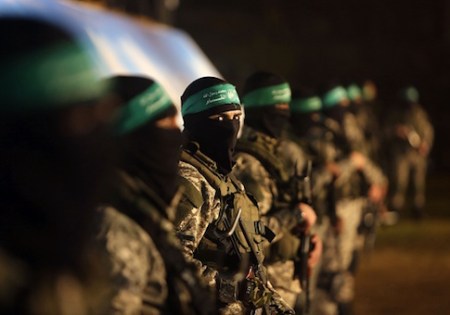
Palestinian members of the Ezzedine al-Qassam Brigades, the armed wing of the Hamas movement / Getty Images

In addition to the Taylor Force Act, House lawmakers on the Foreign Affairs Committee approved a new bill that would require the U.S. government to expose the identities of foreign states, individuals, and other actors who have provided material support to Hamas and other Palestinian terror groups.

The proposed legislation—which would pave the way for the United States to suspend aid and seize the assets of any foreign entity found to be financially helping these terror groups—is said to be part of an effort to combat Iran’s efforts to forge closer ties with Hamas, Hezbollah, and other anti-Israel terrorist actors.

****************************

Congressional leaders advanced several key pieces of legislation on Wednesday that would cut off U.S. taxpayer aid to the Palestinians and crackdown on Iran’s financial support for the terror group Hamas, legislative efforts that are being helped along by the Trump administration, according to multiple U.S. officials who spoke to the Washington Free Beacon.

 The House Foreign Affairs Committee, in a bipartisan vote, approved three pieces of legislation that will cut off U.S. aid to the Palestinian government and help prevent American businesses from doing business with Hamas and other Iranian-tied terror groups.

One of the bills, the Taylor Force Act, which would slash U.S. aid to the Palestinians until they stop using the money to pay salaries to imprisoned terrorists and their families, received support from the White House, which is said to have played a central role in ensuring the proposed legislation garnered bipartisan support.

The new bills are said to be part of a larger effort by congressional leaders to shutdown longstanding U.S. aid programs that have supported terrorist fighters and organizations across the Middle East. The advancement of the Taylor Force Act and these other bills is meant to send a message that the United States will no longer keep its coffers open to those who enable terrorism against Israel and U.S. allies in the region.

The Taylor Force Act, which has been working its way through Congress for some time, has become the centerpiece of the joint effort by Congress and the Trump administration to rein in Palestinian intransigence, U.S. officials told the Free Beacon.

“The Trump administration strongly supports the Taylor Force Act, and the White House has communicated that support to Congress and in public statements,” Victoria Coates, a senior White House National Security Council member who played a central role in pushing the legislation, told the Free Beacon.

Coates said that recent reports alleging the Trump administration sought to water down the bill in order to avoid upsetting the Palestinian government and negatively impacting diplomatic efforts to restart the Israeli-Palestinian peace process are false.

“Reports to the contrary, including that anyone at the White House tried to water this legislation down, are false,” Coates maintained. “Palestinian Authority payments to terrorists and their families that incentivize violence are unacceptable, and must stop.”

Cutting off U.S. aid that helps support Palestinian terrorists is just one part of an effort by the Trump administration to help reform the Palestinian government and legitimize its leaders.

“We also believe that economic development in the West Bank and Gaza Strip can play an important role in preparing the region for a lasting peace agreement,” Coates aid.  “To this end, we have invested and encouraged other partners to invest in critical infrastructure that will underpin economic growth, including through partnerships with local governments, the private sector, and a wide range of other partners.”

The Trump administration reprogrammed $13 million last month to help support a waste-water treatment facility in the Palestinian-controlled city of Jericho, according to Coates, who said this money will help Palestinian farmers support their crops.

“At the president’s direction we want to continue this important work,” Coates said. “But all of our partners must be engaged in building a foundation for peace, not for continued incitement and violence.”

In addition to the Taylor Force Act, House lawmakers on the Foreign Affairs Committee approved a new bill that would require the U.S. government to expose the identities of foreign states, individuals, and other actors who have provided material support to Hamas and other Palestinian terror groups.

The proposed legislation—which would pave the way for the United States to suspend aid and seize the assets of any foreign entity found to be financially helping these terror groups—is said to be part of an effort to combat Iran’s efforts to forge closer ties with Hamas, Hezbollah, and other anti-Israel terrorist actors.

A third bill that made its way out of the committee seeks to crackdown on Hamas’ use of human shields in battle. The legislation would, “hold Hamas and its sponsor, Iran, accountable for this monstrous practice,” according to Rep. Ed Royce (R, Calif.), the committee’s chairman.

Rep. Brian Mast (R., Fla.), a U.S. combat veteran and architect of the bill to expose Hamas’ financial backers, told the Free Beacon that Congress is pursuing every avenue to strangle Iran’s financial lifelines.

“A lot of the impetus is Iran,” Mast told the Free Beacon.

“The term often used is Iranian proxies. But that’s the wrong term to use. It really needs to be classified as Iranian colonization of the Middle East,” Mast said, explaining that Iran’s presence can be seen among every bad actor in the region. “This is colonization. They have a very long-term view. Hezbollah has been at this for 30 plus years. They have a long term goal and its colonization.”

Mast also expressed support for the Taylor Force Act, which he said does not go far enough in cutting off U.S. aid to the Palestinians.

If Mast had his way, “there wouldn’t be resources going towards Palestinians labeled aid or anything else.”

“To think we’re going to take a dollar out of somebody’s pocket here and send it over there to somebody’s family because they went out there and bombed a boss of shot somebody, or ran somebody over with a car, that goes way beyond the realm of common sense,” Mast said.

Rep. Doug Lamborn (R., Colo.), another backer of cutting U.S. aid that helps Palestinian terrorists, expressed optimism about the prospect of the full Congress passing the legislation.

“I am very pleased that the House Foreign Affairs Committee was able to pass the Taylor Force Act with bipartisan support,” Lamborn said. “This is an important first step in stopping U.S. tax dollars from funding Palestinian terrorism.”

“The next step is to bring it to the House floor and ultimately send it to the president’s desk,” Lamborn said. “Passing the Taylor Force Act is the moral and right thing to do in a world that is riddled with terrorism, it sends an important message to the world: America will not tolerate foreign entities that receive U.S. aid to finance terrorism.”

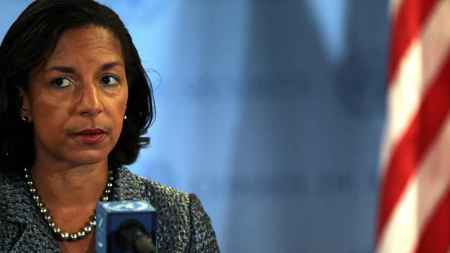
Susan Rice Still in Denial Over Failed Tenure

November 15, 2017

Susan Rice Still in Denial Over Failed Tenure, FrontPage MagazineJoseph Klein, November 15, 2017

Evidently, Ms. Rice does not realize that it is unwise to engage in public shaming of the visiting president’s host on what the host considers to be a sensitive matter of inviolate national sovereignty that can be more candidly discussed in private. This is especially true when the visiting president is trying to secure the host’s cooperation on issues of more direct mutual concern such as North Korea.

Rice complains that President Trump failed to mention publicly any concern about the disputed South China Sea issue. Contradicting herself, she then criticizes President Trump further on in the same column for his “hubristic offer late in his trip to mediate China’s disputes with its neighbors in the South China Sea.” Offering to mediate a dispute would appear to show some concern that it be resolved peacefully.

**************************

Susan Rice, former national security adviser and ambassador to the United Nations during the Obama administration, is at it again. Following up on her op-ed column in the New York Times last August in which she advised that we learn to “tolerate nuclear weapons in North Korea,” Ms. Rice has written another op-ed column for the New York Times on November 14th entitled “Making China Great Again.”  Her thesis is that “Chinese leaders played Trump like a fiddle, catering to his insatiable ego and substituting pomp and circumstance for substance.” She argues that President Trump “welcomed a rote recitation of China’s longstanding rejection of a nuclear North Korea and failed to extract new concessions or promises.”

Ms. Rice speaks as if she were in the room during the private conversations between President Trump and China’s President Xi Jinping or had the kind of access to intercepted confidential communications she was used to having during her tenure as national security adviser. Alternatively, Ms. Rice may simply be projecting onto President Trump the failures of her own boss Barack Obama in his dealings with China. In any case, as she displayed in her previous column, Ms. Rice simply does not know what she is talking about.

For example, Ms. Rice complains that President Trump failed to mention publicly any concern about the disputed South China Sea issue. Contradicting herself, she then criticizes President Trump further on in the same column for his “hubristic offer late in his trip to mediate China’s disputes with its neighbors in the South China Sea.” Offering to mediate a dispute would appear to show some concern that it be resolved peacefully.

In any event, had Ms. Rice bothered to take a look at the White House’s detailed public read-out of the meetings between President Trump and Chinese President Xi Jinping, she would have found that the South China Sea issue was indeed discussed at some length: “President Trump underscored the critical importance of the peaceful resolution of disputes, unimpeded lawful commerce, and respect for international law in the East and South China Sea, including freedom of navigation and overflight and other lawful uses of the sea, and raised concerns about militarization of outposts in the South China Sea.”

Evidently, Ms. Rice does not realize that it is unwise to engage in public shaming of the visiting president’s host on what the host considers to be a sensitive matter of inviolate national sovereignty that can be more candidly discussed in private. This is especially true when the visiting president is trying to secure the host’s cooperation on issues of more direct mutual concern such as North Korea.

Ms. Rice argues that there was not enough diplomatic preparation for the summit meeting between the two heads of state to yield anything worthwhile in substance. Again, she did not do her homework. Here for her edification is a relevant excerpt from the White House read-out that describes how China and the United States have structured their interactions since President Xi’s meeting last April with President Trump in Florida: “During their April meeting, the two presidents set up the United States-China Comprehensive Dialogue with four pillars: the Diplomatic and Security Dialogue; the Comprehensive Economic Dialogue; the Law Enforcement and Cybersecurity Dialogue; and the Social and Cultural Dialogue. Each of these dialogues have met since April, to prepare for President Trump’s state visit and produce meaningful results.”

Ms. Rice complains that “Mr. Trump showered President Xi Jinping of China with embarrassing accolades” and that “scenes of an American president kowtowing in China to a Chinese president sent chills down the spines of Asia experts and United States allies who have relied on America to balance and sometimes counter an increasingly assertive China.” That unsubstantiated assertion does not square with the warm reception and praise that President Trump received from the leaders of such allies as Japan, South Korea, the Philippines and Australia during his trip. It is also curious that Ms. Rice would criticize pomp and ceremony surrounding a state visit involving a U.S. president and President Xi. After all, Barack Obama lavished President Xi with a star-studded formal White House state dinner and a 21-gun salute during the Chinese president’s visit to Washington in 2015. Also, when Ms. Rice laments that President Trump “hailed Mr. Xi’s consolidation of authoritarian power,” did she somehow forget Obama’s similar praise of President Xi in 2014?  “He has consolidated power faster and more comprehensively than probably anybody since Deng Xiaoping,” Obama said back then, referring to China’s leader from 1978 to 1992. “And everybody’s been impressed by his … clout inside of China after only a year and a half or two years.”

Then there is the North Korean crisis, upon which Susan Rice opines that President Trump failed to make any progress with President Xi. Ms. Rice had contributed to the worsening of the North Korea problem in the first place by helping to formulate and sell the flawed approach known as “strategic patience” that guided Obama’s feckless foreign policy in North Korea. In doing so, the Obama administration allowed China to continue doing business as usual with North Korea. That stopped under President Trump. Even before President Trump arrived in Beijing, he had managed to wrest more concessions from China regarding its dealings with North Korea than Obama had managed to do in eight years. President Trump’s “strategic impatience” has already paid off with new UN sanctions that even Ms. Rice had to concede in her August op-ed column were “especially potent, closing loopholes and cutting off important funding for the North.”

Since August, with the help of the able diplomacy of the current U.S. ambassador to the UN, Nikki Haley, the UN Security Council has unanimously imposed even tighter restrictions on exports to and imports from North Korea, as well as on North Korean workers continuing to live and work in other countries and earn foreign currency for use by the cash-starved North Korean regime. President Trump reportedly asked for even more stringent measures during his private talks in Beijing with President Xi that would increase China’s economic pressure on North Korea. Also, they discussed the full and strict implementation of all UN Security Council resolutions on North Korea passed to date, with which China has shown evidence of compliance.

By contrast, the Obama administration indulged itself with the fantasy that UN resolutions and multilateral or bilateral agreements on paper are an end unto themselves. Susan Rice boasts in her November 14th column, for instance, of what she called the “historic United States-China deal on climate change, which led to the Paris Agreement.” In reality, this 2015 deal was an example of how Chinese leaders played Obama like a fiddle.

China, the world’s leading emitter of greenhouse gases, promised only that its total carbon dioxide emissions would peak by 2030. Obama committed the United States to significant emissions cuts of 26 to 28 percent below 2005 levels by 2025, during the same period that China’s emissions would still be rising. Obama also committed to transfer many billions of dollars more of American taxpayers’ money to developing countries who have made meaningless, non-binding pledges that would do nothing to change the trajectory they were on anyway. The Paris Agreement that Susan Rice is so proud of drastically tied down only the developed countries’ fossil fuel use in the immediate future while picking their taxpayers’ pockets at the same time. President Trump wisely pulled the plug on the U.S.’s involvement in a massive give-away to bribe the so-called developing nations to play along with a feel-good “universal” agreement.

Susan Rice is using the platform provided her by the New York Times to criticize President Trump for one main reason. She sees President Trump’s attempt to confront the issues head-on that his predecessor repeatedly glossed over as an attack on the Obama administration’s ‘legacy.’ What she is defending, however, is a failed foreign policy and misnamed “National Security Strategy” her office issued in 2015. In her November 14th op-ed column, she provides a checklist of all the problems she says President Trump should have addressed with China’s president, many of which he did. However, there is no self-assessment of all the missed opportunities during the Obama administration to move the ball forward on any of these problems, particularly North Korea.

President Trump is willing to make hard choices if he is convinced that in the end they will advance America’s vital national interests and the welfare of the American people, which he values above all else. This is very refreshing after experiencing eight years of Obama’s and Rice’s ‘leading from behind,’ ‘strategic patience,’ apologies for past U.S actions, and muddled thinking.