Archive for November 21, 2017

BREAKING: Palestinians freeze ties with US

November 21, 2017

November 21, 2017

Latest News from Israel

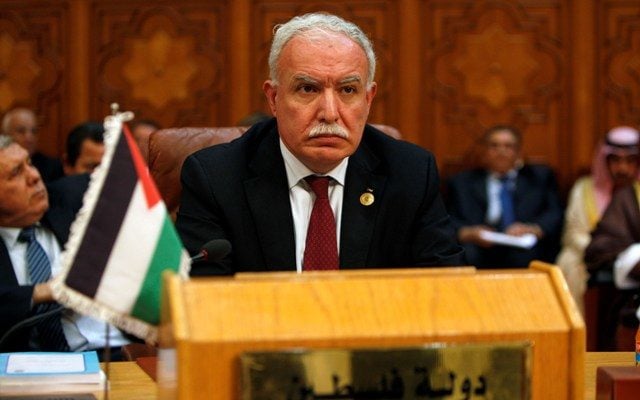
Palestinian foreign minister Riad Malki (AP/Nasser Nasser)

The Palestinians are reportedly following through with their threat to sever ties with the US after Washington orders closure of the PLO mission in the American capital.

By: World Israel News Staff and AP

The Palestinian Authority (PA) has announced it is freezing all ties with the US as a result of the  State Department’s announcement on Friday that the Palestine Liberation Organization (PLO) can no longer operate its Washington office.  The US decision followed the Palestinian move to petition the  International Criminal Court (ICC) to prosecute Israelis for alleged crimes against Palestinians.  Washington says that the Palestinian action violated its legal mandate and resulted in the mission closure.

Secretary of State Rex Tillerson determined that the Palestinians crossed that line in September, when Palestinian Authority (PA) head Mahmoud Abbas called on the court to investigate and prosecute Israelis, according to State Department officials. They weren’t authorized to publicly discuss the situation and spoke on condition of anonymity.

Under the law, Trump now has 90 days to consider whether the Palestinians are in “direct and meaningful negotiations with Israel.” If Trump determines they are, then the mission can reopen.

Palestinian foreign minister Riyad al-Malki told AFP on Tuesday that “by closing the office they (The US) are freezing all meetings and we are making that official.”

A PLO spokesman confirmed that it had received instructions from PA head Mahmoud Abbas “regarding closing down all communication lines with the Americans.”

Cutting off ties carries great risks for the Palestinians. It  raises questions about the veracity of the anticipated US Middle East peace plan. It could also antagonize the Trump administration and result in cancellation of US aide to the Palestinians.

Following the initial US announcement about the closure of the PLO office in Washington, the Israeli prime minister’s office issued a statement saying, “we respect the decision and look forward to continuing to work with the US to advance peace and security in the region.”


A Familiar Judge Wastes More Of Our Time Over Sanctuary City Orders

November 21, 2017

A Familiar Judge Wastes More Of Our Time Over Sanctuary City Orders, Hot Air, Jazz Shaw, November 21, 2017

Judge William Orrick III is certainly making a name for himself and becoming a hero of the #RESIST movement, but if he continues to have his findings overruled upon review it may not do much for his career. It’s also worth noting that prior to taking the bench, Orrick had a long history as a generous political donor while he was working as an attorney in the private sector. A quick look at Open Secrets shows the lengthy list of politicians who have benefitted from his generosity.

Wouldn’t it be shocking to find out that they were all conservatives and Republicans? Naw… just kidding. He gave to Hillary Clinton (2006), Rahm Emanuel, the Democratic Party of Iowa, John Kerry, Dianne Feinstein, Bill Clinton (multiple times), Barack Obama in 2004… shall I go on? I think you get the idea.

******************************

Here we go again.

A judge in northern California has stepped in to “permanently” block one of President Trump’s orders regarding Justice Department grant money for sanctuary cities which refuse to uphold the law. This action will obviously be appealed, as several other such rulings have been, but for the time being, District Court Judge William Orrick III scores himself another turn in the headlines. (Associated Press)

A federal judge on Monday permanently blocked President Donald Trump’s executive order to cut funding from cities that limit cooperation with U.S. immigration authorities.

U.S. District Court Judge William Orrick rejected the administration’s argument that the executive order applies only to a relatively small pot of money and said Trump cannot set new conditions on spending approved by Congress.

The judge had previously made the same arguments in a ruling that put a temporary hold on the executive order targeting so-called sanctuary cities. The Trump administration has appealed that decision to the 9th U.S. Circuit Court of Appeals.

It’s a stretch of the imagination to declare it a coincidence that this is the same judge they found to block a different sanctuary city order back in April. And given the location where the case was heard, the first round of appeals will go to the 9th Circuit, which means the ruling will probably go to the Supreme Court eventually. Much like the travel ban, it’s clear that you can eventually find a judge to rule however you like, providing you’re willing to shop around.

The decision itself remains just as dubious as the previous ruling. Orrick is claiming that the President doesn’t have the authority to repurpose funds which Congress has already authorized. That’s vague at best and seems to ignore the fact that we’re talking about money given to the Executive Branch for the purpose of issuing grants. That means there’s an application process (which we’ve covered here before) and not everyone who applies for one will receive the funding. Further, it’s the Justice Department who determines the criteria for receiving such grants. Congress simply made the funding available to set up and maintain the program.

Judge William Orrick III is certainly making a name for himself and becoming a hero of the #RESIST movement, but if he continues to have his findings overruled upon review it may not do much for his career. It’s also worth noting that prior to taking the bench, Orrick had a long history as a generous political donor while he was working as an attorney in the private sector. A quick look at Open Secrets shows the lengthy list of politicians who have benefitted from his generosity.

Wouldn’t it be shocking to find out that they were all conservatives and Republicans? Naw… just kidding. He gave to Hillary Clinton (2006), Rahm Emanuel, the Democratic Party of Iowa, John Kerry, Dianne Feinstein, Bill Clinton (multiple times), Barack Obama in 2004… shall I go on? I think you get the idea.

So we’ll apparently put the brakes on any progress in enforcing immigration law for the time being. And the to-do list for the Supreme Court grows even longer.

Uranium One Noose is Tightening

November 21, 2017

Uranium One Noose is Tightening, American ThinkerThomas Lifson, November 21, 2017

This official reticence, whatever its origin, will be overcome as Sullivan’s cache of 50,000 documents leaks out bit by bit.  Attorney Toensing [counsel to the informant] knows exactly what she is doing here, and how outside pressure can affect the grinding of the gears of justice.

************************************

Now that the FBI’s informant on the Uranium One deal has been outed and the nondisclosure agreement formerly muzzling him abrogated, it is possible to see the outlines of the devastating case to be made against not just Hillary Clinton, but the entire Obama administration. Two intrepid reports, John Solomon of The Hill and Sara Carter of Circa News and Sinclair Broadcasting, are gaining access to some of the reported 50,000 documents in the possession of William Campbell, the whistleblower who went to the FBI with the scary details of what appeared to him to be an illegal attempt by Russian entities to take over the world uranium market, including even the uranium resources in our ground.

Reporting in The Hill, Solomon calls our attention to what could be a key to understanding the magnitude of the scandal:

Campbell, who was paid $50,000 a month to consult for the firm, was solicited by Rosatom colleagues to help overcome political opposition to the Uranium One purchase while collecting FBI evidence that the sale was part of a larger effort by Moscow to make the U.S. more dependent on Russian uranium, contemporaneous emails and memos show.

“The attached article is of interest as I believe it highlights the ongoing resolve in Russia to gradually and systematically acquire and control global energy resources,” Rod Fisk, an American contractor working for the Russians, wrote in a June 24, 2010 email to Campbell.

The Russian plot to “control global energy resources” was reported by Campbell to the FBI a year prior to approval of the acquisition. There is every reason to expect – and the proof would be available to congressional investigators or (cough) a special counsel or US attorney – that this information was passed up the chain to AG Eric Holder and even President Obama. Yet, CFIUS – the group of agency head that must approve such transactions on which Holder and Hillary sat – went ahead and approved this sale that the US knew was part of a Russian plot to control the world uranium and energy markets.

Justice Department officials confirmed the emails and documents gathered by Campbell, saying they were in the possession of the FBI, the department’s national security division and its criminal division at various times over the last decade. They added that Campbell’s work was valuable enough that the FBI paid him nearly $200,000, mostly for reimbursements over six years, but that the money also included a check for more than $51,000 in compensation after the final convictions were secured.

The information he gathered on Uranium One was more significant to the counterintelligence aspect of the case that started in 2008 than the eventual criminal prosecutions that began in 2013, they added.

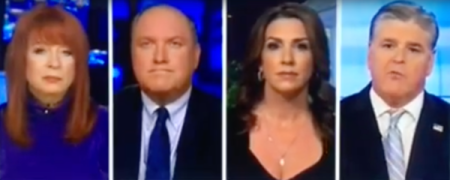
Solomon and Carter were interviewed last night on Hannity, along with Sullivan’s lawyer Victoria Toensing, and under questioning let us know that the money trail from Russia all the way to American political figures via cutouts will be exposed by documented evidence.

Now, contemplate the magnitude of a scandal that could demonstrate foreign money leading to the approval of a sale that harms national security and aids a hostile power (about whose danger the Democrats have been hyperventilating for the past year).  Here is a poor quality bootleg video of the segment, that may or may not last on YouTube. If a better copy becomes available, we will post that.

https://www.youtube.com/watch?v=TMqaYvZxTLY


But only if the Sessions Justice Department is willing to press the case, or is forced to approve a special counsel:

The memos, reviewed by The Hill, conflict with statements made by Justice Department officials in recent days that informant William Campbell’s prior work won’t shed much light on the U.S. government’s controversial decision in 2010 to approve Russia’s purchase of the Uranium One mining company and its substantial U.S. assets.

Campbell documented for his FBI handlers the first illegal activity by Russians nuclear industry officials in fall 2009, nearly a entire year before the Russian state-owned Rosatom nuclear firm won Obama administration approval for the Uranium One deal, the memos show.

This official reticence, whatever its origin, will be overcome as Sullivan’s cache of 50,000 documents leaks out bit by bit.  Attorney Toensing knows exactly what she is doing here, and how outside pressure can affect the grinding of the gears of justice.

Palestinians: If You Do Not Give Us Everything, We Cannot Trust You

November 21, 2017

Arab League harshly criticizes Iran, brands Hezbollah a terror group

November 21, 2017

Latest News from Israel

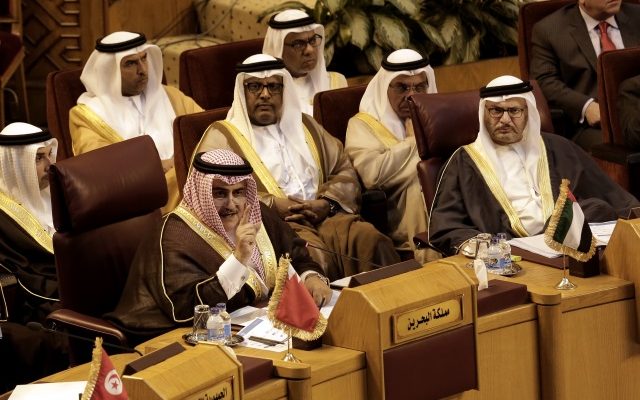
The Arab League in session. (AP/Nariman El-Mofty)

The Arab League has stepped up its rhetoric against Iran’s belligerence in the region. But will they take action against the Shiite power?  

By: AP

In a resolution long on rhetoric but short on concrete steps, Arab foreign ministers who met in Cairo Sunday delivered a tirade of criticism against Iran and its Lebanese terror proxy Hezbollah, saying Tehran was destabilizing the region.

The Arab leaders said they planned to “brief” the United Nations Security Council (UNSC) on Iran’s destabilizing policies in the region, particularly its support for Shiite rebels in Yemen, with a view to submit at a later stage an anti-Iran Arab resolution.

In what is perhaps the only concrete measure, the ministers said Arab telecommunications satellites would ban Iranian-financed television stations for what they said was their fomenting of sectarian and ethnic tensions and because they posed a threat to Arab security. It gave no details.

“We are not declaring war on Iran at this stage,” Arab League chief Ahmed Aboul-Gheit said. “We have not taken a decision to ask the Security Council to meet, but we are just briefing the council and maybe the next stage would be for us to meet and call for a Security Council meeting and submit a draft Arab resolution (against Iran).”

Lebanon, where Hezbollah is a key member of a coalition government, and Iraq, a majority Shiite nation bound by close political and religious ties to Iran, stated their reservations about the harsher parts of the resolution, including one that branded Hezbollah a “terrorist” organization. The draft also blamed the Shiite group of supporting “terrorist groups” across the region and supplying them with weapons, including ballistic missiles.

The Lebanese envoy to the Arab League, Antoine Azzam, made carefully weighed comments at the meeting that reflected his country’s delicate religious and ethnic balance.

While not mentioning Iran by name, he said Lebanon condemned all attacks against Arab nations, but blamed exploitable inter-Arab divisions that allowed international and regional powers to promote their interests.

Saudi Arabia to Confront Iran’s ‘Blatant Aggression’

Saudi Arabia, a Sunni powerhouse, has significantly sharpened its anti-Iran rhetoric since its forces on Nov. 4 intercepted near its capital, Riyadh, a ballistic missile fired by Shiite rebels in Yemen who are allied with the Iranians. The Saudis said the missile was Iranian-made and declared the attack an act of war by the Iranians.

Iran denies arming the Yemeni rebels, known as the Houthis, who say they locally produced the missile

Saudi Arabia, through its foreign minister, asked fellow Arab nations to take a “serious and honest” stand against Iranian “aggression” and “meddling” in the internal affairs of Arab countries.

Addressing the Arab foreign ministers’ meeting, Foreign Minister Adel Al-Jubeir said: “Showing leniency toward Iran will not leave any Arab capital safe from those ballistic missiles.”

“We are obliged today to take a serious and honest stand… to counter these belligerent policies,” he added.

He said his country was targeted by a total of 80 ballistic missiles fired by Yemen’s Shiite rebels since the kingdom in 2015 formed and led a coalition to fight them alongside forces loyal to the internationally recognized government there.

Saudi Arabia, added Al-Jubeir, will not stand idly by in the face of Iran’s “blatant aggression.”

The ministers, according to the final statement, said they supported any action to be taken by Saudi Arabia to protect its national security, within the boundaries of international legitimacy.

Speaking before Al-Jubeir at the 20-minute session broadcast live, Aboul-Gheit, the Arab league chief, was just as critical of Iran as the Saudi minister. Alluding to the Nov. 4 attack, he said it delivered a message to Arab nations that their capitals were within the range of Iranian missiles.

“We say it in clear terms that Iranian threats have exceeded all boundaries and are pushing the region toward the abyss … (Iran’s) missile program poses a danger to the region,” said Aboul-Gheit.

Bahrain’s foreign minister, Sheikh Khalid Bin Ahmed Al Khalifa, urged strong action by the Arab League against Iran. In the absence of such support, he said, his country would have no choice but to rely on the protection of its Western allies, citing the US 5th Fleet headquartered in Bahrain and naval ships patrolling the Persian gulf.