Archive for November 6, 2017

Modernizers launch a coup within the House of Saud

November 6, 2017

Modernizers launch a coup within the House of Saud, American ThinkerThomas Lifson, November 6, 2017

When President Trump visited Riyadh in May, the discussions must have included a mutual understanding of the changes the Regime has in mind. The US delegation included veteran Saudi-hand Secretary of State Tillerson and economic visionary Wilbur Ross of the Department of Commerce. These are precisely the people a monarch would want to talk to about restructuring his regime to cope with a reality that has changed. A big part of the modernization is entering closer relations with Israel, a natural mutual ally in resisting Iranian Shiites. Purportedly clandestine cooperation is widely in to be underway already.

******************************

A coup is taking place within the House of Saud, in which a modernizing monarch is grabbing power and taking out rivals.  Forces now under command of the ruler just arrested 11 princes among dozens of others and is launching financial investigations that could lead to serious punishment. In Saudi Arabia, they behead people (at least 157 times in 2015) and amputate a limb off of thieves.  It is widely believed that baksheesh is not unknown in Saudi Arabian business circles, and an “anti-corruption committee” was recently formed.  In other words, the tools are in place to take out any opposition among the powerful, within or outside the royal family.

Bloomberg reports:

Prince Miteb, son of the late King Abdullah, was removed from his post as head of the powerful National Guards.

That’s the first thing you do in coup: grab control of the forces on the ground.

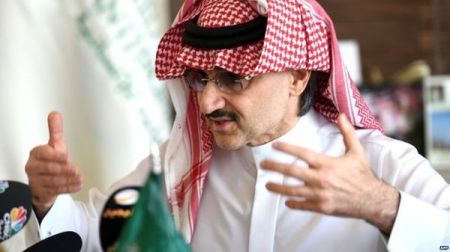
Billionaire Prince Alwaleed bin Talal was picked up at his desert camp, the senior official said. Authorities did not disclose the evidence that prompted the arrests.

 Prince Alwaleed bin Talal presides over a vast financial empire (estimated $35 billion in 2015):

 Alwaleed is the largest individual shareholder of Citigroup, the second-largest voting shareholder in 21st Century Fox and owns a number of hotels. TIME even called him “Arabian Warren Buffet”.
The second thing you do is take out any potential bankroller of rivals.

It all began a month after the historic visit of President Trump, when 81-year-old King Salman displaced the previous crown prince, who was his nephew, as tradition of succession required,[i] and installed that Crown Prince Mohammed bin Salman as effectively the monarch.
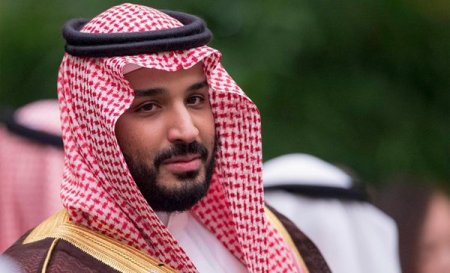
MBS, as the Crown Prince is known, is the leader who is launching what modernizers hope will be a Saudi Version of the Meiji Restoration[ii] in Japan, transforming the political economy and culture out of necessity – in order to survive in the modern world system.  The Saudis have practiced religious and cultural isolationism, while their oil allowed the country to avoid the necessity of building an economy that could supply anything else that the rest of the world would be willing to pay for.

The power grab was necessary, because Saudi Arabia has to modernize, and it won’t be pleasant for lots of people, in and out of the royal family. Thanks to fracking and associated technologies, prices are never going to return to $100 a barrel.  The regime itself is at stake because the population is growing and the young have few prospects of employment. The House of Saud almost fell in 1979, when the Grand Mosque in Mecca was seized by Shiite insurgents (The Saudi Shiite minority is concentrated in the oil producing region near Iran) declaring their prophet to be the Mahdi. The entire religious legitimacy of the family is that they are custodians of the holy places of Islam, and yet they had to bring in Pakistanis to retake the holy of holies, the Kaaba.

Source: Wikimedia

They understand that in order to stay in power, they have to deliver change.

When President Trump visited Riyadh in May, the discussions must have included a mutual understanding of the changes the Regime has in mind. The US delegation included veteran Saudi-hand Secretary of State Tillerson and economic visionary Wilbur Ross of the Department of Commerce. These are precisely the people a monarch would want to talk to about restructuring his regime to cope with a reality that has changed. A big part of the modernization is entering closer relations with Israel, a natural mutual ally in resisting Iranian Shiites. Purportedly clandestine cooperation is widely in to be underway already.

Of the people arrested, Alwaleed bin Tala is the most intriguing for Americans thanks to his Twitter sparring with candidate Trump during the election, and for a startling connection unearthed by Jack Cashill more than five years ago in World New Daily.

In late March 2008, on a local New York City show called “Inside City Hall,” the venerable African-American entrepreneur and politico, Percy Sutton, told host Dominic Carter how he was asked to help smooth Barack Obama’s admission into Harvard Law School 20 years earlier.

The octogenarian Sutton calmly and lucidly explained that he had been “introduced to [Obama] by a friend.” The friend’s name was Dr. Khalid al-Mansour, and the introduction had taken place about 20 years prior.

Sutton described al-Mansour as “the principal adviser to one of the world’s richest men.” The billionaire in question was Saudi prince Al-Waleed bin Talal.


Deep currents are being stirred.

Hat tip: Clarice Feldman


[i] This spread power around in the family, allowing for the growth of factionalism within the clan. Now that there is a direct and clear lineage, power can be grabbed at the very top and the rest of the clan brought into line.

[ii] I studied, wrote and taught the Meiji Restoration and realize the many differences in the specifics of the two countries’ situations. No exact parallel is implied.

Israel’s Financial War on Terror Led to Global Shift in Targeting Money

November 6, 2017

Israel’s Financial War on Terror Led to Global Shift in Targeting Money, Washington Free Beacon, November 6, 2017

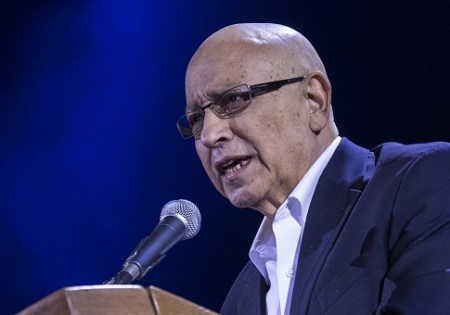
Former director of the Mossad, and leader of Harpoon, Gen. Meir Dagan / Getty Images

Israel’s government waged financial warfare on terror groups like Hamas and Hezbollah, which became a model for most states battling terrorism today, according to members of a once secret Israeli task force called Harpoon.

The operations ranged from financial operations that caused terrorist groups to lose tens of millions from bad investments, to commando raids on banks linked to the funding of suicide bombings, to targeted assassinations of terror group financiers.

“Harpoon showed the world that there must constantly be new angles to attack terrorist groups and infrastructure,” said Nitsana Darshan-Leitner, coauthor with Samuel M. Katz of a new book, Harpoon: Inside the Covert War Against Terrorism’s Money Masters, to be published Tuesday.

“The Israeli task force realized ahead of everyone else that money was the oxygen for the terrorist networks and you could badly damage them by choking it off,” she said.

Beginning in the late 1990s and early 2000s, Israel, led by Gen. Meir Dagan, a commando veteran who later headed the Mossad intelligence service for nine years, combined old and new spy methods to squeeze the finances of terror groups like Hamas and Hezbollah and the regimes and paymasters behind them. The operations greatly reduced the deadly suicide and rocket attacks used by both groups against the Jewish state.

Dagan advocated targeting terrorist financing as a top priority. He died of cancer last year, and the book highlights the major role he played in leading Israel’s covert war against terrorists and supporters like Iran.

Harpoon was first formed in the early 2000s and was a task force made up of spies, bankers, lawyers, tax officials, and others who used new and innovative ways, along with many traditional intelligence techniques, to attack terrorists’ financial networks.

The task force also worked with nongovernment organizations to bring lawsuits against Middle East banks linked to deadly terror attacks.

A former Harpoon member said in an interview the task force proved to doubters that financial counterterrorism can be a strategic weapon in the fight against terrorism. Harpoon was one Dagan’s many significant legacies, said the former official who spoke on condition of anonymity.

One of Harpoon’s early operations involved a covert raid on the residence of a Palestinian moneychanger in the West Bank city of Ramallah in 2003. Operatives obtained the Palestinian financier’s laptop and records that revealed extensive links to terror groups. The Israelis would learn that most of the well-organized terrorist groups like Hamas, Palestinian Islamic Jihad, and Hezbollah had set up intricate financing and funding systems for their operations.

The West Bank operation was followed a year later by Operation Green Lantern, one of Harpoon’s most successful operations. Israeli spies and commandos raided a Palestinian branch of the Arab Bank, one of the largest financial institutions in the Middle East, and obtained account information on 390 accounts linked to terror funding for Hamas and Palestinian Islamic Jihad.

At the time, Israel was being rocked by a wave of deadly suicide bombings. The Arab Bank would eventually be linked by Israeli intelligence to a dozen suicide bombings and terrorist attacks.

Other financial intelligence exposed a money trail from Iran to Hezbollah, the Lebanese-based terrorist group that was used to fund a series of suicide bus bombings in Jerusalem.

“Dagan wanted terrorists to look for money instead of targets,” the authors wrote. “Dagan didn’t give a damn about the international outcry; he knew that American outrage would dissipate.”

The George W. Bush administration at first opposed the financial attacks, fearing it would destabilize the Palestinian and Lebanese economies. Eventually, however, both the Bush and Obama administrations adopted their own aggressive methods to target and stop terrorist funding streams.

Against Hezbollah, financial warfare played a major role in Israel’s 2006 summer war in southern Lebanon. Harpoon identified an unspecified number of banks that were being used to fund Hezbollah’s forces. The banks were hit with 500-pound bombs dropped by Israeli air force F-16s and F-15s in secret raids.

The raids proved very effective tools for putting the bank buildings into ruins and destroying an estimated $100 million in currency, along with damaging banking computers. “Two weeks after the IAF’s targeting of the banks, Hezbollah sued for a cease-fire. They had run out of cash,” Darshan-Leitner and Katz wrote.

Among the many disclosures of Israeli intelligence activities in the book, which the authors say were reviewed by Israeli security services prior to publication, are:

  • A Harpoon undercover operation caused Palestine Liberation Organization chief Yasser Arafat to lose $100 million in an Israeli-directed investment scheme. The PLO chief who died in 2004 was found to have embezzled some $326 million from the PLO.
  • Master Hezbollah terrorist Imad Mughniyeh, responsible for killing scores of Americans, was blown up in a secret operation in 2008 using a bomb planted in the headrest of a vehicle bomb in Damascus, Syria.
  • A Hezbollah financier in Lebanon, Salah Ezzedine, lost some $1 billion in an intelligence operation that caused a major financial disruption for Hezbollah.
  • The U.S. Drug Enforcement Agency worked with Harpoon to counter Hezbollah drug trafficking in South America.
  • Harpoon-provided intelligence to the Treasury Department led to sanctions imposed on Hezbollah’s financing entities in 2006.
  • Israel ran an agent inside a bank used by Hezbollah, the Lebanese Canadian Bank, until the agent was uncovered by Iranian-trained counterspies.
  • Israeli agents conducted a hit on Hamas financier Mahmoud al Mabhouh in Dubai in 2010 that sent a message to the terror group that its financiers were a major target.
  • Mossad planned but never carried out an operation to discredit former International Atomic Energy Agency director Mohamed El Baradei that would have planted money in his bank account that appeared to come from Iran.

Former CIA director Michael Hayden said Dagan’s Harpoon served as a model for U.S. counterterrorism financing programs.

“Meir was a wonderful intelligence partner, incredibly creative in learning about and dealing with threats to Israel,” Hayden said. “We here in the United States also learned the great power of financial steps to disable and dissuade our adversaries.”

Dagan faced bureaucratic resistance to making financial counterterrorism a top priority. Officials within both the Israeli military and intelligence communities opposed a heavy reliance on financial warfare, preferring more traditional spy and military means to kill terrorists and their leaders.

The Poland-born Dagan overcame the opposition through both the force of his personality and his ties to senior Israeli leaders, including the late Ariel Sharon.

“The issue was do you follow the money or obstruct the money,” the former Israeli official said of the innovative approach.

Under Dagan, the Israelis succeeded in learning about the financial support networks that are needed for nearly all terrorist operations.

For example, Hamas suicide bombers were being recruited for attacks with promises of lifelong payments to their families. Harpoon operations were able to disrupt those payments and in so doing undermined Hamas’s ability to find people willing to blow themselves in attacks.

Darshan-Leitner, who worked with some Harpoon officials in a legal group in Tel Aviv called Shurat HaDin, said Harpoon sent the message that there would be no safe, white-collar jobs in terror groups. “If you helped finance the attacks, you were going to become every bit as big of a target as the bomb makers and gunmen themselves,” she said in an email.

Harpoon operations placed intense pressure on the international finance systems that in turn sent the message that anyone taking part in the terror funding pipeline at any stage and place would be targeted.

“In time, every western state came to adopt Harpoon’s strategy in the field of counterterrorism,” Darshan-Leitner said. “It really proved to be one of the most successful and disruptive Israeli start-ups of them all.”

Aggressive financial counterterrorism was highlighted in March 2016 by the U.S. special operations raid that killed ISIS finance minister Abd al-Rahman Mustafa al Qaduli. The Pentagon said his death was a severe blow to the terror group’s ability to conduct operations both inside and outside of Iraq and Syria.

The former Harpoon team member said if Dagan were still heading Mossad his new focus would be on applying similar innovative ways to target terrorists’ use of new social media. “People will complain about violating First Amendment rights but this is an arena that is being used to create terrorists,” he said.

Darshan-Leitner agrees. For example, new means are needed to thwart the recent trend in terror attacks, like the vehicle ramming attacks, highlighted by the deadly terrorist ramming in New York that killed six people.

Western security services must become more effective at countering terror attacks using innovative methods, novel technologies, and creative strategies like those of the Harpoon task force, said Darshan-Leitner. “Israel’s security services, operating on the frontline constantly, were compelled to innovate new tactics like targeting terror finances and eliminating the money men.”

“Just as the terror groups continue to adapt, to transform and to surprise, Western intelligence agencies and law enforcement need to evolve, startle and innovate at a fast pace right along with them.”

After Dagan retired in 2011, he spoke out against using military force against Iran as a way to stop Tehran’s nuclear program. As Mossad chief, however, Dagan likely oversaw the aggressive operation that resulted in the mysterious murders of several Iranian nuclear scientists who were assassinated in daring operations inside Iran. The operations are presumed to be targeted Israeli covert operations although the government has denied any links to the attacks.

