FULL MEASURE: October 1, 2017 – Bucking the System via YouTube, posted on October 2, 2017
(Both parties in Congress are corrupt and seek their own benefits rather than ours. Please see also, Republican donors seek out Steve Bannon. — DM)
FULL MEASURE: October 1, 2017 – Bucking the System via YouTube, posted on October 2, 2017
(Both parties in Congress are corrupt and seek their own benefits rather than ours. Please see also, Republican donors seek out Steve Bannon. — DM)
Republican donors seek out Steve Bannon, Washington Examiner, David M. Drucker, October 3, 2017
Steve Bannon has begun meeting with Republican donors at their request, as party financiers in the wake of the Alabama special election attempt to learn what President Trump’s former chief strategist has planned for 2018.
Some GOP bundlers, in Washington this week for a Republican National Committee fundraiser, sought meetings with Bannon, the executive chairman of Breitbart News, to forge relationships and better understand his plans to target Republican incumbents in 2018 primaries.
Roy Moore, Bannon’s candidate in the Alabama GOP primary runoff, defeated appointed Sen. Luther Strange, who had the support of Senate Majority Leader Mitch McConnell, R-Ky. It was a major embarrassment for McConnell, and Bannon said he plans to replicate the effort in GOP primaries next year to weaken the majority leader and reshape the party in Trump’s populist image.
“It seems like McConnell’s star is fading and Bannon’s is rising. I wanted to break bread with the guy and figure out his thinking,” said Dan Eberhart, a Republican donor from Phoenix who was scheduled to meet with Bannon on Wednesday.
Republican donors are furious with Senate Republicans — many with McConnell specifically. They’re disappointed with the outcome in Alabama and angry that the Senate hasn’t passed legislation to repeal and replace Obamacare.
That has some donors, who usually circulate in establishment circles, taking the measure of Bannon to prepare for the upheaval that many party insiders believe is coming in next year’s primaries — especially if Republicans fumble tax reform.
One Republican donor who has already met with Bannon said that he communicated his view that money isn’t as important in elections as it used to be.
The former White House chief strategist and CEO Of Trump’s presidential campaign believes he could help drive Republican challenger candidates to victory next year with the technological tools now available to campaigns.
If Republican donors remain unhappy with McConnell and the party’s senate campaign arm struggles for donations as a result, incumbent Republicans could suffer a loss of resources, possibly empowering Bannon in the primary campaigns he chooses to get involved in.
In the Tennessee GOP primary in the race to succeed retiring Republican Sen. Bob Corker, Bannon likes Rep. Marsha Blackburn, R-Tenn., a Republican source who spoke with him said. Bannon did not respond to a Tuesday afternoon email requesting comment.
“I have had a lot of donors not wanting to give to national party,” a Republican fundraising consultant said, on condition of anonymity in order to speak candidly. “They are very upset that nothing is getting done in D.C. It goes both ways with that though. Some are mad at the far right Senators/Freedom caucus. Others are mad at McConnell. Overall, no donors are happy. If they are giving, they are giving to help the specific person calling, not the party.”
This is most welcome and long overdue. The SPLC’s training materials on “extremism” wouldn’t point the Defense Department toward jihad terrorists and Sharia supremacists, but toward foes of jihad terror and others that the SPLC classifies as “extremists” along with the likes of the KKK and neo-Nazis. This hard-Left moneymaking and incitement machine’s latest dossier on “Islamophobes” says: “Before you book a spokesperson from an anti-Muslim extremist group or quote them in a story, research their background — detailed in this in-depth guide to 15 of the most visible anti-Muslim activists — and consider the consequences of giving them a platform.”
The SPLC wishes to silence those who speak honestly about the nature and magnitude of the jihad threat, blaming us for a supposed rise in “Islamophobia.” If they really want to stamp out suspicion of Islam, of course, they will move against not us, but the likes of Omar Mateen, Syed Rizwan Farook, Tashfeen Malik, Nidal Malik Hasan, Mohammed Abdulazeez, Dzhokhar Tsarnaev, and the myriad other Muslims who commit violence in the name of Islam and justify it by reference to Islamic teachings.
The SPLC doesn’t do that because its objective is not really to stop “Islamophobia” at all, but to create the illusion of a powerful and moneyed network of “Islamophobes” whom can only be stopped if you write a check to the SPLC. That’s what this is really all about. It’s scandalous that the Pentagon ever took this seriously, and good that it has stopped.

“EXCLUSIVE: DOD Drops SPLC From Extremism Training Materials,” by Jonah Bennett, Daily Caller, October 2, 2017:
The Pentagon has officially severed all ties to the Southern Poverty Law Center (SPLC) after previously relying on the group’s training materials on extremism.
Brian J. Field, assistant U.S. attorney from the Civil Division, stated that the Department of Defense (DOD) Office of Diversity Management and Equal Opportunity removed any and all references to the SPLC in training materials used by the Defense Equal Opportunity Management Institute (DEOMI), in an email obtained by The Daily Caller News Foundation from the Department of Justice.
The DEOMI is a DOD school founded to fight segregation and inequality that teaches courses in racial, gender and religious equality, among other subject areas like equal opportunity and pluralism. The courses are available to DOD civilians and service members.
As part of a response to a Freedom of Information Act (FOIA) request from the Immigration Reform Law Institute, Field wrote in the email sent in late September:
Additionally, the DEOMI office informed me that, based on a previous FOIA request, DEOMI records concerning, regarding, or related to the preparation and presentation of training materials on hate groups or hate crimes were forwarded … That 133-page document did reference the SPLC; however, based upon guidance from the Office of Diversity Management and Equal Opportunity, all references to the SPLC have been removed from any current training.
Interestingly, DEOMI still makes use of materials on “Hate Symbols” from the Anti-Defamation League (ADL), a group similar to the SPLC. Students at DEOMI use the Hate Symbols reference on the ADL site to “learn more about gang colors or clothing; hate group tattoos and body markings associated with such gangs.”
As a matter of policy, the DOD does not have an official list of hate groups….
In February, The Daily Caller News Foundation published an exclusive piece indicating that the FBI, which formerly used the SPLC as a “hate crimes resource,” has also been distancing itself from the group….
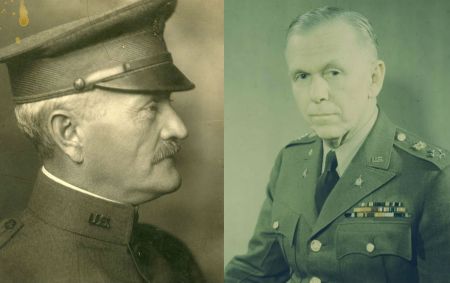
When Marshall Met Pershing, War on the Rocks, Benjamin Runkle, October 3, 2017
(This is an inspiring story about military leaders who prefer to be told candidly what’s wrong than to be given disingenuous false tales.
I served only in only the Chairborne JAG Corps about half a century ago, but still have fond memories of an 8th Army JAG colonel who advised the 8th Army commander on legal matters. Colonel Friedman had submitted a memo to the CG affirming the consistency of an 8th Army regulation with Army regulations. I, a young captain, wrote and gave Colonel Friedman a memo demonstrating that he had been wrong. He agreed, took it to the 8th Army CG and the regulation was changed as I had indicated it needed to be.– DM)
 Golden Gate NRA, Park Archives/U. S. Army Heritage and Education Center
As Bradley would later note of Marshall’s apprenticeship under Pershing: “Few junior officers in the history of the U.S. Army had ever had … so much high-level exposure and responsibility for so long a period. Few gained so much in terms of personal and professional growth.” Marshall’s relationship with Pershing marked him for high command, and Pershing’s loyalty to and support for his former aide would prove critical in the years to come.
This relationship might never have come to fruition if not for Marshall’s moral courage in challenging the intimidating AEF Commander one hundred years ago today. Yet of at least equal importance was Pershing’s ability to appreciate and productively channel dissent. History is replete with military officers who spoke their minds freely but were squelched by intolerant senior officers or an entrenched military bureaucracy uninterested in heterodox or innovative ideas.
****************************
Today marks the 100th anniversary of one of the key moments leading to the Allied victory over the Axis powers in World War II.
Don’t worry, your math is not wrong.
Oct. 3, 1917, is the centennial of General John J. Pershing’s inspection of the 1st Infantry Division at Gondrecourt, France. This obscure event would not only have significant repercussions for the American effort in the next world war, but also offer lessons for leadership development in the U.S. military a century later.
When Pershing assumed command of the American Expeditionary Force (AEF), which was created and deployed to France after the United States entered World War I in April 1917, he essentially had to create and organize an army from scratch. In the spring of 1917 no U.S. divisions existed anywhere but on paper. Moreover, upon arriving in France, Pershing was constantly pressured by British leaders to relinquish his troops and integrate them into the British Army. He needed combat-ready forces to strengthen his hand in this debate and prevent the AEF from being stillborn. With few other units yet to reach France, Pershing took an inordinate interest in the summer and fall of 1917 in the first American unit to arrive, the 1st Division.
As the division conducted training in Lorraine, Pershing frequently visited its headquarters on short notice to check on its progress. A previous review with French President Raymond Poincaré on Sept. 6, 1917, was a disaster, and Pershing took out his frustration on the 1st Division’s commander, Major General William L. Sibert. Pershing inspected the 1st Division again on Oct. 3, this time at Gondrecourt to watch a demonstration of a new method for attacking an entrenched enemy. After the demonstration, Pershing called upon Sibert for a critique. Although Sibert possessed a brilliant record as an engineer, he had little experience with infantry tactics and had only witnessed the demonstration for the first time alongside Pershing. Consequently, his comments were halting and confused.
Pershing then called upon two other staff officers whose responses were also unsatisfactory. The general erupted and “just gave everybody hell,” particularly Sibert, whom he dressed down in front of his own officers. The division showed little for the time it had spent in training, Pershing snapped. They had not made good use of the time, and had not followed instructions from AEF headquarters at Chaumont regarding open warfare formations. Pershing excoriated Sibert, questioning his leadership, his attention to details in training, and his acceptance of such poor professionalism.
The 1st Division staff felt a possessive affection for their commander, and as Pershing turned to leave, the tall major who had been serving as acting chief of staff spoke up, angrily protesting Pershing’s unfairness. Pershing was in no mood to listen and began to walk away. Suddenly, he felt the major’s hand grabbing his arm.
“General Pershing,” the major said, “there’s something to be said here and I think I should say it because I’ve been here the longest.”
Pershing turned back and gave the impertinent young officer a cold, appraising glance. “What have you got to say?”
A torrent of facts poured forth: the promised platoon manuals that never arrived and had set back training; the inadequate supplies that left men walking around with gunnysacks on their feet; the inadequate quarters that left troops scattered throughout the countryside, sleeping in barns for a penny a night; the lack of motor transport that forced troops to walk miles to the training grounds. Finally, the deluge subsided.
Pershing looked at the major and calmly said: “You must appreciate the troubles we have.”
The major replied, “Yes, I know you do, General, I know you do. But ours are immediate and every day and have to be solved before night.”
General Pershing eyed the major narrowly and then turned to leave, the 1st Division staff looking nervously at the ground in stunned silence. After a while, Sibert gratefully told Major George C. Marshall that he should not have stuck his neck out on his account, and the rest of the staff predicted that Marshall’s military career was finished. Marshall shrugged off his friends’ condolences, saying: “All I can see is that I may get troop duty instead of staff duty, and certainly that would be a great success.”
Yet no retribution for the incident ever came. Instead, whenever the AEF commander visited 1st Division from Chaumont, he would find a moment to pull Marshall aside to ask how things were really going. Pershing had finally found an officer who would tell him the unvarnished truth rather than gloss over inadequacies. Marshall eventually received orders transferring him to the AEF General Staff to work under Colonel Fox Conner, the head of the AEF’s Operations section. Together, they would form the core of the group that planned the two great U.S. offensives of the war — Saint Mihiel and the Meuse-Argonne. Pershing was impressed, and after the Armistice asked Marshall to become his aide.
After the victory parades and celebrations of 1919 faded, Marshall began an apprenticeship that would not only broaden his horizons, but also indelibly shape the leadership of American forces in World War II. Although military historians still debate how the Allies were able to defeat the Axis powers in World War II, Marshall’s efforts as Chief of Staff beginning in 1939 directly contributed to each plausible theory. More specifically, Marshall’s contributions under each explanation can be traced back to his experiences serving with Pershing during the five-plus years after World War I.
Some historians argue that the Allied victory was primarily due to U.S. commanders who displayed “aggressive and determined leadership.” If so, much of the credit for these commanders’ success belongs to Marshall, who as Chief of Staff selected or approved all army and corps commanders. However, this process began when Pershing became Chief of Staff of the Army in 1921 and Marshall was installed in an office near his chief in the State, War, and Navy Building. As other staff officers who had been with Pershing in France moved on to other assignments, Marshall became increasingly important, and Pershing sent many proposed letters, draft reports, and staff recommendations to him for comment. Reading the flow of paper in and out of the office, Marshall eventually became familiar with the entire army establishment. In the fall of 1921, he served on a board investigating the alleged inequities of the Army’s single-list promotion system. Examining the service records of hundreds of officers gave him detailed background on the careers of many men who would later serve under him.
More importantly, perhaps, Marshall served as a mentor to many of the generals who served under him over the next two decades, including Omar Bradley, Matthew Ridgway, and Joe Collins. Bradley stated that, “No man had a greater influence on me personally or professionally” than Marshall. One hundred and fifty future generals attended the Infantry School at Fort Benning during Marshall’s tenure as assistant commandant, with another 50 serving on the faculty under his direction.
Other historians cite the American infantry’s ability to adapt to the battlefield as the key to victory. Peter Mansoor, for example, argues in The GI Offensive in Europe that the U.S. Army “accomplished its mission in Western Europe because it evolved over time into a more combat-effective force that Germany could sustain on the battlefield.” Again, Marshall deserves a share of the credit under this theory, thanks to his efforts from 1927-1932 to revolutionize the training of company grade officers at the Infantry School. And again, the origins of Marshall’s efforts can be traced back to his years with Pershing.
After World War I, Pershing sought to lay the foundation for fighting a future war by establishing boards to evaluate the lessons offered by the AEF’s experience. Marshall was put to work sifting through the reports of these boards and the records of the AEF. He set down these lessons in the January 1921 issue of the Infantry Journal, warning of the dangers of divided command, of reliance on textbook tactics, and of assuming the next war would be the same tactically as the last one. He also noted that quick thinking and quick action were more important than proper order formats:
Many orders, models in their form, failed to reach the troop in time to affect their actions, and many apparently crude and fragmentary instructions did reach front-line commanders in time to enable the purpose of the higher command to be carried out on the battlefield.
Marshall disseminated these lessons as assistant commandant of the Infantry School, warning students that an officer “must be prepared to take prompt and decisive action in spite of the scarcity or total absence of reliable information. He must learn that in war, the abnormal is normal and that uncertainty is certain.” Indeed, even historian Jorg Muth, who is highly critical of professional military education and leadership development in the interwar Army, concludes: “The only highlight of the U.S. Army’s educational system in the first decades of the twentieth century was the Infantry School and then only when George C. Marshall was the assistant commander.”
Conversely, Martin Van Crevald in Fighting Power argues, “The American officer corps of World War II was less than mediocre.” Although few historians go quite to that extreme in disparaging the U.S. Army’s performance, others such as Russell Weigley argue that America’s materiel preponderance in terms of weapons systems and munitions deliverable to the front lines ultimately mattered more than battlefield effectiveness. Once again, Marshall’s understanding of mobilization and logistical issues can be traced to the early post-war years. In December 1919, Secretary of War Newton Baker sent Pershing — with Marshall and his other staff accompanying him — on a national tour of army camps and war plants to recommend those to be retained in the post-war drawdown. By the end of the inspection tour, Pershing knew more about the Army than anyone else, knowledge that was almost completely shared by Marshall.
Moreover, Marshall’s time in Washington gave him essential experience in dealing with the nation’s civilian leaders. He dealt with congressmen on the two military affairs committees, rubbed shoulders with the secretary of war, and briefed Presidents Warren Harding and Calvin Coolidge. Despite his personal aloofness from partisan politics, he came to understand politics and politicians far better than most military men. This skill would prove critical two decades later when President Franklin D. Roosevelt needed a point man to convince a still-isolationist Congress of the urgency of mobilization before Pearl Harbor. Without Marshall’s credibility and skillful lobbying, followed by his herculean efforts to expand, train, and equip the army, transforming it from a constabulary force of 100,000 to an efficient eight million-man force, there would have been no materiel preponderance to fall back on when combat effectiveness fell short. British Prime Minister Winston Churchill would describe Marshall as “the Organizer of Victory,” and President Harry S. Truman would say of Marshall’s role as Army Chief of Staff: “Millions of Americans gave their country outstanding service … George C. Marshall gave it victory.”
This is not to argue that Marshall was solely responsible for the Allied victory or that he was infallible. To be sure, he made a number of errors in judgment: arguing against providing aid to England during the Blitz, promoting Lloyd Fredendall to a corps command (in which position Fredendall would fail badly during the North Africa campaign), and supporting an early invasion of France before U.S. forces could gain badly needed hardening in North Africa and Sicily. These mistakes show Marshall was human. Yet it is far from hagiography to acknowledge his critical role in the Allied war effort, or to recognize that if America owed an incalculable debt to Marshall for his leadership in the next world war, a significant portion of the interest would deservedly go to General John J. Pershing. As Bradley would later note of Marshall’s apprenticeship under Pershing: “Few junior officers in the history of the U.S. Army had ever had … so much high-level exposure and responsibility for so long a period. Few gained so much in terms of personal and professional growth.” Marshall’s relationship with Pershing marked him for high command, and Pershing’s loyalty to and support for his former aide would prove critical in the years to come.
This relationship might never have come to fruition if not for Marshall’s moral courage in challenging the intimidating AEF Commander one hundred years ago today. Yet of at least equal importance was Pershing’s ability to appreciate and productively channel dissent. History is replete with military officers who spoke their minds freely but were squelched by intolerant senior officers or an entrenched military bureaucracy uninterested in heterodox or innovative ideas. George Patton, for example, was repeatedly reprimanded for his outspokenness, and consequently spent the 1930s writing anachronistic treatises on the continuing importance of the horse cavalry in order to save his career. As Stephen P. Rosen notes in Winning the Next War, military innovations are often stillborn without the top cover from a senior officer capable of giving subordinates space in which to flourish. Marshall was fortunate to find such leadership not only in Pershing, but again twenty years later when, as Assistant Chief of Staff of the Army, he dared to openly disagree with FDR’s pronouncements on mobilization in a 1938 Oval Office meeting. FDR, like Pershing before him, saw the value of Marshall’s frankness rather than insubordination.
In the wake of the controversies surrounding the wars in Afghanistan and Iraq, the quality of American generalship has been called into serious question. In May 2007, Lieutenant Colonel Paul Yingling wrote that the “debacles” in Iraq “are not attributable to individual failures, but rather to a crisis in an entire institution: America’s general officers corps,” who “failed to prepare our armed forces for war.” In 2012, Thomas Ricks argued that, “To a shocking degree, the Army’s leadership ranks have become populated by mediocre officers placed in positions where they are likely to fail. Success goes unrewarded, and everything but the most extreme failure goes unpunished.”
Regardless of the merits of these critiques, the retention and development of junior officers for future strategic leadership is today a hotly debated topic amongst generals, former commanders, and academics — debates that formed the backdrop for the Obama administration’s uncompleted “Force of the Future” initiative. The centennial of the Marshall-Pershing confrontation offers a reminder that a key to developing strong leaders is to foster an environment in which openness and criticism are not only tolerated, but can be channeled to foster innovation.
Benjamin Runkle is a veteran of Operation Iraqi Freedom, and has served as in the Defense Department, as a Director on the National Security Council, and as a Professional Staff Member on the House Armed Services Committee. He is current a Senior Policy Fellow with Artis International.
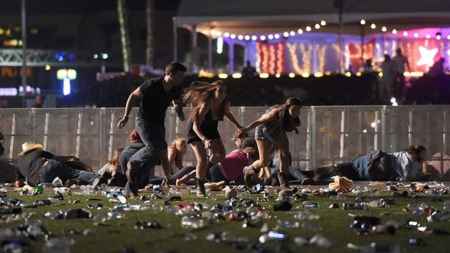
Good video, terrifying. Sure sounds like more than one gun. People are saying echo but the guns are shooting at same time and sometimes not. They don’t even sound the same. You can see bodies all over that field and it’s grass btw. People were risking their lives and carrying them off the field while the shooting was still going on.
Bodyguard Gives Harrowing Account of Benghazi Attack, Breitbart, October 3, 2017
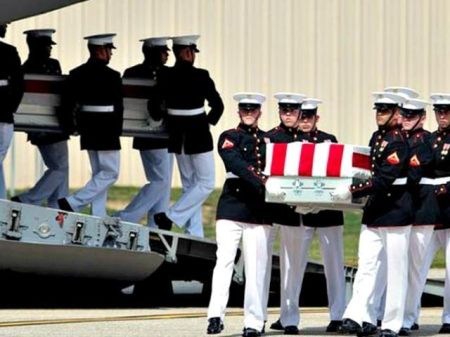
WASHINGTON (AP) — A diplomatic security agent testified Monday that after militants stormed the U.S. diplomatic compound in Benghazi, Libya, he turned to U.S. Ambassador Chris Stevens, who was hiding in a safe room, and said, “When I die, you need to pick up my gun and keep fighting.”
Agent Scott Wickland was the government’s first witness in a trial of Ahmed Abu Khattala, a Libyan suspected of orchestrating the attack that killed the ambassador and three other Americans. Wickland took the stand and gave a harrowing account of how he tried without success to save the ambassador and Sean Patrick Smith, a State Department information management officer.
The smoke from weapons’ fire and explosions was so thick and black that it blinded the three. They dropped to the floor and crawled on their bellies, gasping for air. Wickland said he was trying to lead them to a bathroom where he could close the door and open a window.
“I was breathing through the last centimeter of air on the ground,” Wickland said. “I’m yelling, ‘Come on. We can make it. We’re going to the bathroom.’ Within 8 meters, they disappeared.”
Wickland kept yelling for them. He was feeling around on the floor through the toxic smoke, which made the lighted room darker than night.
“To this day, I don’t even know where they went. I was right next to them, and then that’s it,” Wickland said. “I had my hand on Ambassador Stevens. I could hear Sean shuffling.”
Twelve jurors and three alternates assembled for the opening day of one of the most significant terrorism prosecutions in recent years. Abu Khattala is being tried in U.S. District Court, a civilian court, at a time when the Trump administration has said terror suspects are better sent to the military prison at Guantanamo Bay, Cuba.
During Wickland’s testimony, Abu Khattala hung an arm over his chair and held his chin, covered in a long, grayish white beard. He listened through earphones to an Arabic translation of the proceedings.
The opening testimony was aimed at turning the jury against the defendant, but his name was never mentioned throughout Wickland’s nearly three hours on the stand. He is expected to retake the stand on Tuesday.
An 18-count indictment against Abu Khattala arises from a burst of violence that began the night of Sept. 11, 2012. Stevens and Smith were killed in the first attack at the U.S. mission. Nearly eight hours later, two more Americans, contract security officers Tyrone Woods and Glen Doherty, died in a mortar attack on a CIA complex nearby
Abu Khattala, who appeared in court wearing a white shirt and dark pants, has pleaded not guilty to his charges, including murder of an internationally protected person, providing material support to terrorists and destroying U.S. property while causing death.
In his opening statement, defense attorney Jeffrey Robinson called Abu Khattala a “Libyan patriot” who fought on America’s side in the war against Libyan leader Moammar Gadhafi. He said Abu Khattala didn’t mastermind the attack. The lawyer said the defendant simply went to the attack site because he heard there was a protest and wanted to see what was happening.
“He didn’t shoot anyone. He didn’t set any fires. He did not participate in the attacks,” Robinson said.
Robinson also said Abu Khattala was a deeply religious man who believes in conservative sharia law as outlined in the Quran. He reminded jurors that in America, people are not prosecuted because of their religious beliefs.
The prosecution gave a starkly different portrayal of the defendant. Assistant U.S. Attorney John Crabb said that when Abu Khattala’s hatred of America boiled over, he orchestrated the attacks and then triumphantly strode around the attack site carrying an AK-47.
Crabb said that later, the defendant told someone at his apartment: “I attacked the American Embassy” and would have killed more Americans that night if others had not intervened.
He said Abu Khattala “hates America with a vengeance.”
“He killed Ambassador Stevens — a man of peace.”
The trial is expected to last for weeks. Crabb said the prosecution would show the jury videos of the attack site and Abu Khattala’s phone records, which he said showed a spike in activity during the attacks. He said witnesses would include weapons and fire experts and a man named Ali, who was paid $7 million to befriend Abu Khattala and help U.S. forces capture him in Libya.
After he was captured, he was taken to a U.S. Navy ship that transported him to the United States. During the 12-day journey, he was first interrogated by intelligence personnel and then by FBI agents. Crabb said Abu Khattala told FBI agents that America was the “root of all the world’s problems.”
His defense lawyer said Abu Khattala cooperated aboard the ship and he “continued to deny, as he denies today, any participation in planning or masterminding the attack.”
Was Las Vegas a Jihad Attack? FrontPage Magazine, Robert Spencer, October 3, 2017
(Please see also, Active Shooters at Mandalay Bay in Las Vegas possibly at Harvest Festival. — DM)
“The propaganda organs of ISIS such as Amaq exaggerate but do not falsely take credit for attacks mounted by other entities.”
In light of all this, it looks as if the Las Vegas massacre was likely a jihad attack. But since that doesn’t fit the establishment media narrative, or the agenda of all too many in law enforcement, don’t expect it to be announced forthrightly by any authorities anytime soon, if ever
************************
Memphis imam Yasir Qadhi said that the Las Vegas massacre was a manifestation of “white privilege.” Texas imam Omar Suleiman tweeted ridicule of ISIS’ claim of responsibility for the attack: “Breaking: ISIS claims responsibility for hurricane Harvey saying he became Muslim days before hitting Houston.”
They didn’t ridicule the ISIS claim, but unnamed U.S. officials did decisively dismiss it: Reuters reported that “two senior US officials said on Monday that there was no evidence that the shooter who killed at least 50 people in Las Vegas was tied to any international militant group….One of the two US officials discounted Islamic State’s claim of responsibility and said there was reason to believe that the shooter, whom police identified as 64-year-old Stephen Paddock, had a history of psychological problems.”
The only one insisting that the Islamic State was responsible was the Islamic State itself. Its Amaq news agency initially announced: “The Las Vegas attack was carried out by a soldier of the Islamic State and he carried it out in response to calls to target states of the coalition. The Las Vegas attacker converted to Islam a few months ago.”
Then, after its initial claim was dismissed everywhere, the Islamic State doubled down, issuing an official communiqué identifying Paddock as “Abu Abd Abdulbar al-Ameriki.” Even after their claim was dismissed everywhere, they didn’t back away from it. They don’t seem to be afraid that Stephen Paddock will turn out to be a white supremacist neo-Nazi or some such. They don’t seem to be worried about being exposed as grandiose liars.
And historically, they haven’t been liars, at least when they claimed responsibility for jihad attacks. Islamic State expert Graeme Wood notes in The Atlantic that “the idea that the Islamic State simply scans the news in search of mass killings, then sends out press releases in hope of stealing glory, is false,” and that those who claim that ISIS is in the habit of taking credit for attacks it had nothing to do with “do not have a preponderance of prior examples on their side.” Contradicting Suleiman’s ridicule, Wood notes: “The Islamic State does not claim natural disasters. Its supporters rejoice in them, but they reserve their official media for intentional acts.”
This doesn’t mean that Wood accepts everything ISIS says at face value. He reports one false ISIS claim: “In June, a gambling addict shot up and torched the Resorts World casino in Manila, Philippines. The Islamic State claimed credit, with a dubious follow-up alleging that Jessie Javier Carlos, 42, converted to Islam some months before, without telling anyone. That explanation appears to be a total lie.”
What’s more, Jones added: “It isn’t true that ISIS has a history of claiming others’ attacks as their own.” And Rohan Gunaratna, author of Inside al-Qaeda and head of the International Centre for Political Violence & Terrorism Research, likewise vouched for the general veracity of ISIS’ claims of responsibility: “The propaganda organs of ISIS such as Amaq exaggerate but do not falsely take credit for attacks mounted by other entities.”
While social media is abuzz with charges that only racist, bigoted “Islamophobes” are taking the Islamic State’s claim seriously, it should be noted that neither Jones nor Gunaratna have ever been accused of “Islamophobia,” and that both stated that the Islamic State was generally trustworthy in its claims of responsibility not in response to the Las Vegas attack, but back in July.
In light of all this, it looks as if the Las Vegas massacre was likely a jihad attack. But since that doesn’t fit the establishment media narrative, or the agenda of all too many in law enforcement, don’t expect it to be announced forthrightly by any authorities anytime soon, if ever.
Source: Active Shooters at Mandalay Bay in Las Vegas possibly at Harvest Festival – Page 183
Who was Stephen Paddock? [link to www.zerohedge.com]
1. Two broken windows in two separate but adjacent rooms one two bedroom suite. According to police, rifles were set up in both windows on tripods. It doesn’t give him any advantages, and wastes time. Why would a single shooter switch rooms?
– Source (two windows): [link to www.dailymail.co.uk]
– Source (tripods): [link to www.usatoday.com (secure)]
– Source (two bedroom suite): [link to www.youtube.com (secure)] (festival site visible around 1:08)
– Source (multiple shooters): [link to www.naturalnews.com (secure)]
– Report of man in neighboring room claiming there were multiple shooters: Thread: Accounts from the guy next door.. multiple shooters and security killed on floor 32.
– Switching guns would be useful to prevent overheating. This might be a concern given the duration of his attack.
2. The “Hispanic” lady seen 45 minutes before the event saying people would die. The shooter’s Asian girlfriend looked somewhat Hispanic. Was it her, or a random on the street?
– Source: [link to youtu.be (secure)]
– Source: [link to www.express.co.uk (secure)]
– Source: [link to www.naturalnews.com (secure)]
– Source (picture of Asian girlfriend): [link to www.dailymail.co.uk]
– The Hispanic lady was about a foot taller than his girlfriend, suggesting it wasn’t her 45 minutes before the attack.
3. He used a fully automatic rifle. He has no military or militia background, so it’s unlikely he converted it himself. How did he get it?
– Source (modified automatic): [link to www.cnn.com]
– Source (no military background): [link to www.dailymail.co.uk]
– He may have used a crank to obtain automatic firing rates: [link to www.usatoday.com (secure)]
– First image of the automatic rifle: [link to www.express.co.uk (secure)]
– Some rifles are easy to convert to automatic.
4. The sheer number of injuries and deaths. At the range the shooter was at (400-600 yards), it seems excessive. Could his automatic rifle do that damage at that range? How could he hit so many people at that range without any weapons experience?
– Source: Google Earth (draw a line from the shooter’s location on the northeast corner of the hotel at 3950 S Las Vegas Blvd, Las Vegas, NV 89119 to the near and far edges of the festival location at 3901 S Las Vegas Blvd, Las Vegas, NV 89119)
– Some rifles can do this sort of damage at this range, and it might be easy to hit people in a crowd of 22,000. Source: Thread: Active Shooters at Mandalay Bay in Las Vegas possibly at Harvest Festival (Page 141)
5. The notion that he just “snapped.” This was a premeditated event. He arrived at the hotel 4 days in advance then went on a gambling spree. He acquired an illegal automatic rifle (perhaps more than one). He had enough ammo to fire for almost 10 72 minutes straight, and at least 10 weapons. Is this consistent with “snapping”?
– Source: [link to www.dailymail.co.uk]
– Source (10 minutes of shooting): [link to www.today.com (secure)]
– Source (72 minutes of shooting): [link to www.dailymail.co.uk]
– Source (expense and prep): [link to www.thegatewaypundit.com]
6. He booked two rooms under his girlfriend’s name. Why?
– Source: [link to www.dailymail.co.uk]
– Source (two rooms): [link to www.thegatewaypundit.com]
7. The reports that he converted to Islam a few months ago, coupled with ISIS claiming responsibility. Yet the FBI says ISIS wasn’t involved. Did he convert? Was ISIS involved? What is the FBI’s assessment based on?
– Source: [link to sputniknews.com (secure)]
– Source: [link to www.washingtonexaminer.com]
– Source: [link to www.cbsnews.com (secure)]
– Source: [link to pjmedia.com (secure)]
– Source: [link to twitter.com (secure)]
– Source (FBI denial): [link to www.sfgate.com]
– ISIS doubles down on responsibility: [link to www.thegatewaypundit.com]
8. Reports that he and his girlfriend were seen at ANTIFA events and anti-Trump events. Was he?
– Source: [link to streamable.com (secure)]
– Source: [link to www.youtube.com (secure)]
– Source (Antifa): Thread: A Summary of Unanswered Questions Concerning the Las Vegas Shooting (fully updated and reformatted OP, 10/3) (Page 2)
– Source (Antifa FB post): [link to ibb.co (secure)]
– Personally, I’m not persuaded that this footage shows Paddock.
– The attack was claimed by Antifa in Melbourne, Australia. The wife has a connection to Australia (see 13 below). Is there a broader Australian connection here?
9. He was set up and ready. He had surveillance equipment watching the door/corridor outside his room, which is how he knew the cops were coming. Did he go in knowing he was going to die?
– Source: [link to www.thegatewaypundit.com]
– He also had equipment to make a bomb: [link to dailycaller.com]
– List of his equipment, both in the hotel and at home: [link to www.novinky.cz (secure)]
– The automatic rifles were set up in “racks” inside the windows: [link to www.novinky.cz (secure)]
– He had 10 bags with him – that’s a lot of ammo! Thread: cnn just said he had 10 suitcases for his 17 guns and thousands of rounds
10. There is video of muzzle flare from the 4th floor. Was the shooting from the 32nd or the 4th, or both?
– Source: [link to www.youtube.com (secure)]
– Source: [link to mobile.twitter.com (secure)]
– Plus, there doesn’t seem to be muzzle flair from the 32nd floor.
11. He had 19 weapons. Why if all he planned to do what kill people from afar and then off himself?
– Source: [link to www.rt.com (secure)]
– Source: [link to www.thedailybeast.com (secure)]
12. Why did it take police officers 72 minutes to locate him after the first 911 call came through?
– Source: [link to www.dailymail.co.uk]
13. What happened to Marilou Danley’s first husband Alberto Busto, a filipino who she married in 1996, and who are the Ali and Zafar Busto linked on her facebook (her sons?)? Ali and Zafar are 100% Muslim names, and likely indicate she or her husband converted to Islam and her son or sons are now Muslims, probably living in the Phillipines. So, did Paddock visit her son or sons with Marilou. Did they see Paddock as a target for radicalization because of his reported isolation from family and any friends, maybe some resentment at something they saw they could work on?
– The girlfriend’s facebook page: [link to www.youtube.com (secure)]
– The girlfriend is of Indonesian and Australian origin: [link to www.zerohedge.com]
14. Where is the girlfriend? There’s conflicting reports that she’s in custody or overseas.
– Source: Fat Man.
– Source (custody): [link to imgur.com (secure)]
– Tucker on Fox says she’s in Tokyo.
15. Did he commit suicide or was he shot? There are conflicting reports.
– Source: Fat Man.
16. Was he seen in the Middle East with his girlfriend?
– Source: Thread: Active Shooters at Mandalay Bay in Las Vegas possibly at Harvest Festival (Page 135)
17. Is it mere coincidence that the deadliest shooting in US history happens at the Mandalay Bay Hotel just two days after Boris Johnson recites “The Road to Mandalay” in Burma?
– Source: [link to www.independent.co.uk (secure)]
18. Some have questioned the sincerity of the shooter’s brother’s emotions in this interview. Is there something suspicious about his behavior?
– Source: [link to www.youtube.com (secure)]
19. Were the exits blocked?
– Source: [link to www.naturalnews.com (secure)]
20. Marilou Danley’s husband or ex-husband is 76 year old Geary Danley. His Facebook account is rife with Leftist ideology, dozens upon dozens of “likes” of every Leftist and anti-Trump group imaginable, including ShareBlue and most importantly, Rubicon Training Group, a gun training and gun course company. Geary has knowledge and a proclivity for guns, as a careful reading of his FB will reveal. Paddock and Geary Danley share one degree of separation. Even though Geary supposedly lives in Arkansas, public records reveal he has a decades-long history of living in the state of Nevada. Was he involved in any capacity?
– Source: Thread: Is the Vegas shooting a BLACK OP or Occult sacrifice? [Thread will curate all known facts & links]
21. Is it coincidence that there’s DHS training in Vegas?
– Source: Thread: DHS “Training” in Las Vegas Oct 1-5, New Metal Detectors Installed in Mandalay last year…
22. Did he go through the new metal detectors at the Mandalay Hotel?
– Source: Thread: DHS “Training” in Las Vegas Oct 1-5, New Metal Detectors Installed in Mandalay last year…
Feel free to add. I’ll update the OP.
Quoting: The Original Mind
And here’s the latest developments I’ve found so far:
1. First picture of the automatic rifle.
Can someone help me ID this gun? And does it have a crank (I’m a gun novice)? Or is it set to fire full auto without a crank? How expensive would this gun be? How hard to acquire?
[link to www.express.co.uk (secure)]
2. Full inventory of his gear both at home and at the hotel.
He had explosives, equipment to convert semi-auto rifles to full auto, and unidentified electronic equipment. He also had the rifles set up on racks (otherwise reported as platforms).
United States may act pragmatically but should eventually stand with the Kurds, Center for Security Policy, Luis Fleischman, October 3, 2017
(Please see also, Hypocrisy: A state for the Palestinians but not for the Kurds or Catalonia. — DM)

The U.S should stick to principles. We must act pragmatically, but we must also view the Kurds as our allies. We owe them and should not betray them. Members of Congress have spoken out on the issue; the Administration should do the same.
*************************************
On September 25th, Iraqi Kurds voted in a referendum for independence from the Iraqi state.
The plebiscite reflects the aspirations of the Kurdish people for self-determination. Though non-binding, 93% of the voters supported the referendum, revealing the strength of the Kurdish will for independence.
Historically, countries in the Middle East have denied sovereignty to non-Arab and non-Muslim groups in favor of Arab or Islamic hegemony throughout the region. Therefore, the idea of creating minority states has always been met with resistance and even violence.
In the Arab world, there are substantial non-Arab minorities, such as the Kurds, and non-Muslim minorities, such as Christian Arabs. Some of these minorities were integrated into their respective countries, but others were legally discriminated against or oppressed in some way or another. The only minority group to successfully achieve self-determination were the Jews, and Israel therefore remains a symbol of indignation to the much larger Arab and Muslim majority countries in the region.
This attitude has been encapsulated by the Palestinian Authority’s reaction to Kurdish secession in Iraq. Despite its own aspirations for self-determination, the PA has declared opposition to Kurdish independence because “Kurdish independence would be a poisoned sword against the Arabs,” according to Saeb Erekat, a senior adviser to the PA. Again, the Palestinians seem to hold onto this old Pan-Arabic, Pan-Islamic view that sovereignty of minorities is not to be tolerated.
Although they are Muslim, the Kurds have retained a distinct language and culture, and have viewed themselves historically as a separate non-Arab group with a unique tradition. About 25 million Kurds live in Iraq, Syria, Iran and Turkey altogether.
In Syria, the Kurds have been discriminated against systematically; they lack Syrian citizenship and are entitled neither to medical care nor even bank accounts. In Iraq, they were subjected to coerced Arabization and under Saddam Hussein gassed thousands of Kurds and expelled many hundreds of thousands more.
In Iran, Kurds have been coerced into cultural assimilation and many of their political and intellectual leaders have been executed. Thus, when the Kurds approved the referendum in Iraq, the large Kurdish population in Iran was jubilant. leaving the Iranian government uneasy.
After the Kurds approved the referendum, Turkey threatened to cut off their oil pipeline to the region. The Iraqi government also made threats aimed at boycotting and making the Kurds’ lives increasingly difficult. Even worse perhaps, Iraq joined forces with Iran, aiming to secure Iraqi control over border crossings from Kurdish-controlled areas.
Although Secretary of State Rex Tillerson has told the Kurds that the U.S would not recognize the referendum, calling it ‘illegitimate”, the coalition of Iraq, Iran and Turkey against the Kurds should be strongly repudiated. The U.S can try to mediate in the negotiations in order to pacify tensions between the Kurds and their neighbors, but should also strongly oppose measures against the Kurds.
The Kurds have been an invaluable tool in the fight against ISIS; for that reason, have proved to be one of most reliable allies we have in the Middle East.
Moreover, Iran continues to be a rogue state that carries out destabilizing activities in the Middle East and elsewhere. If the Kurdish referendum promotes Kurdish dissidence in Iran, this should be a welcoming development in itself.
In addition, for the government of Prime Minister Haider Al-Abadi in Iraq to use Iran as recourse against the Kurds, it is an evidence of how unreliable the Iraqi government is. Iran has established Shiite sectarian rule in Iraq and made way for the Sunni alienation that eventually gave rise to ISIS. The U.S must remain determined in its message that alliances with Iran are not to be tolerated.
Curiously, a news analysis published by the New York Times criticized the Kurdish leadership as monarchical, non-democratic, dynastic, and therefore unworthy of self-governance. These assertions are clearly untenable, given the fact that the governments of those neighboring countries that reject Kurdish independence are also patently undemocratic, yet their legitimacy is not questioned. The Times, which enthusiastically champions Palestinian self- determination, forgets that the Palestinian Authority (PA) is a corrupt and oppressive kleptocracy– not much better than a monarchical dynasty. Furthermore, there are very few examples in history where countries that gained independence immediately established a democratic government.
The U.S should stick to principles. We must act pragmatically, but we must also view the Kurds as our allies. We owe them and should not betray them. Members of Congress have spoken out on the issue; the Administration should do the same.
China’s Secret Military Plan: Invade Taiwan by 2020, Washington Free Beacon,
Chinese President Xi Jinping / Getty Images
Democratic-ruled Taiwan poses an existential threat to China’s communist leaders because the island, located some 90 miles off the southeast coast “serves as a beacon of freedom for ethnically Chinese people everywhere,” the book states.
“Consequently, the PLA considers the invasion of Taiwan to be its most critical mission, and it is this envisioned future war that drives China’s military buildup.”
For the Pentagon, China’s plan to seize Taiwan has worried those in the Air Force who expect Chinese missile and other attacks on nearby U.S. bases, notably Japan’s Kadena air base, a central U.S. military hub in the Pacific.
American Navy officials fear Chinese submarines will sink U.S. aircraft carriers or the USS Blue Ridge, the region’s only command ship.
“No one seemed clear on exactly what might happen, but all were sure a future Chinese surprise attack would be worse than Pearl Harbor and 9/11 combined,” the book says.
Others note that a Taiwan conflict could rapidly escalate to a U.S.-China nuclear war.
*********************************
China has drawn up secret military plans to take over the island of Taiwan by 2020, an action that would likely lead to a larger U.S.-China conventional or nuclear war, according to newly-disclosed internal Chinese military documents.
The secret war plan drawn up by the People’s Liberation Army (PLA), the Chinese Communist Party’s armed forces, calls for massive missile attacks on the island, along with a naval and air blockade that is followed by amphibious beach landing assaults using up to 400,000 troops.
The plans and operations are outlined in a new book published this week, The Chinese Invasion Threat by Ian Easton, a China affairs analyst with the Project 2049 Institute, a think tank.
The danger of a Taiwan conflict has grown in recent years even as current tensions between Washington and Beijing are mainly the result of U.S. opposition to Chinese militarization in the South China Sea and China’s covert support of North Korea’s nuclear and missile programs.
“Of all the powder kegs out there, the potential for a war over Taiwan is by far the largest and most explosive,” the 290-page book states, adding that the growing likelihood of a war over Taiwan will dominate worries within the Pentagon for years to come.
“China has made clear that its primary external objective is attaining the ability to apply overwhelming force against Taiwan during a conflict, and if necessary destroy American-led coalition forces,” the books says.
Democratic-ruled Taiwan poses an existential threat to China’s communist leaders because the island, located some 90 miles off the southeast coast “serves as a beacon of freedom for ethnically Chinese people everywhere,” the book states.
“Consequently, the PLA considers the invasion of Taiwan to be its most critical mission, and it is this envisioned future war that drives China’s military buildup.”
Parts of the PLA invasion scheme were first revealed publicly by the Taiwan Defense Ministry in late 2013. The plan calls for military operations against the island to be carried out by 2020.
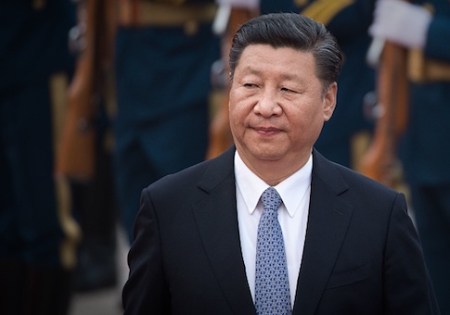
The invasion program was confirmed by Chinese leader Xi Jinping during the major Communist Party meeting five years ago when Xi committed to “continue the 2020 Plan, whereby we build and deploy a complete operational capability to use force against Taiwan by that year.”
Other internal PLA writings that surfaced recently indicate China is ready to use force when it believes non-military means are not successful in forcing the capitulation to Beijing’s demands, and if the United States can be kept out of the battle.
Current U.S. law under the 1979 Taiwan Relations Act requires the United States to provide defensive weaponry to Taiwan to prevent the use of force against the island.
China currently is using non-lethal means—psychological, diplomatic, propaganda, and informational warfare—against Taiwan. Once these are exhausted, the plan for large-scale amphibious assault will be carried out.
Any attempt by the Chinese military to take the island will be difficult and costly, the book says. The island has rough, mountainous terrain that has created a wind tunnel effect in the strait that produces very difficult weather for carrying troop and weapons transports, both air and sea.
Taiwan is around 230 miles long and 90 miles wide. Taiwanese military forces have been preparing for an invasion since Chinese nationalist forces first took refuge on the island at the end of the civil war with the communists in 1949.
However, since the 1980s, China has been rapidly building up its military capabilities for a battle to forcibly unify the island with the mainland. Over 1,000 ballistic and cruise missiles currently are stationed within range of the Taiwan.
According to the book, China’s invasion plan is known as the Joint Island Attack Campaign.
“Only by militarily occupying The Island can we fundamentally conquer the ‘separatist’ force’s natural living space, and totally end the long military standoff across the Strait,” one PLA field manual states.
The war plan calls for rapidly capturing the capital Taipei and destroying the government; seizing other major cities and clearing out surviving defenders; and occupying the entire country.
Military operations will emphasize speed and surprise to overwhelm coastal defenses and create so much destruction in the early phase that Taiwan would surrender before the U.S. military can deploy forces to the area.
“The conceptual plan, which is referred to in internal PLA writings as the Joint Island Attack Campaign, appears to be highly centralized and updated regularly based on the latest intelligence, weapons production, and lessons learned from exercises and training,” the book says.
The campaign is one of China’s most closely held secrets but has been discussed in internal military manuals and technical writings that recently leaked from within the PLA.
“These provide an extraordinarily detailed look into Chinese thinking on this campaign,” the book says.
The step-by-step invasion process will involve three phases: blockade and bombing, amphibious landing, and combat operations on the island.
Several layers of a naval and air blockade and massive missile strikes on 1,000 targets will be used in the first phase. China then plans to launch sea-borne assaults with an armada of warships against 14 possible beach sites.
“Before the invaders began landing along Taiwan’s coast, the PLA would launch wave after wave of missiles, rockets, bombs, and artillery shells, pounding shoreline defenses, while electronic jammers scrambled communications,” the book says.
The PLA believes a future invasion of Taiwan is inevitable, although the exact time is uncertain.
China regards Taiwan as a “renegade province” and considers reuniting the island with the mainland part of larger Chinese strategic goals of achieving global dominance.
“In the end, only by directly conquering and controlling the island can we realize national unification … otherwise ‘separatist’ forces, even if they momentarily compromise under pressure, can reignite like dormant ashes under the right conditions,” one PLA document states.
A PLA field manual warns that Taiwan’s geography and defenses will require massive and masterful military campaigns that will be extremely challenging, requiring great sacrifices.
A restricted PLA manual, “Course Book on the Taiwan Strait’s Military Geography” warned military officers that external militaries could use Taiwan to cut off China’s trade lines and for use as a U.S. military base to blockade China.
Also, many of China’s seaborne oil imports, pass through the Taiwan Strait and are highly vulnerable to military interdiction. “So protecting the security of this strategic maritime passageway is not just a military activity alone, but rather an act of national strategy,” the manual says.
China also regards Taiwan as a critical chokepoint for Japan and could be used by China to choke its rival.
On the information warfare front, China plans to use the internet and other media outlets to wage psychological warfare aimed at weakening Taiwan’s resistance prior to a main attack.
Psychological warfare actions will be combined with legal and media warfare and other political warfare tools.
An internal Chinese military report outlines the use of information operations:
Utilize legal warfare and public opinion warfare together with psychological warfare to divide and erode the island’s solid willpower and lower the island’s combat strength. Of these, utilize legal warfare against the enemy’s political groups and their so-called ‘allies’ as a form of psychological attack. Clearly make the case that a joint attack campaign against the main island is legally justifiable and based on a continued, and internal, war of liberation…utilize public opinion warfare against the enemy’s military groups as a form of psychological attack. Point out the benefits of giving up their support for ‘independence’ with effective messaging themes…Use the Internet media heavily against non-governmental groups on the island and the masses as a form of psychological attack. Proactively spread propaganda regarding the benefits of unification for the nation and the people, and erode the social foundation of the ‘separatist’ forces on the island.
Taiwan’s leaders also will be targeted in bombing strikes, including the presidential office in Taipei and other government leadership headquarters.
A PLA document tells military leaders to find leadership organizations and their defenses.
“Then you should use high tech weapons that have a strong capability to penetrate their airspace with precision and destructiveness to execute fierce strikes against their head person(s),” the document says. “Assure they are successfully knocked out with one punch.”
Chinese commandos also will be used to abduct or kill Taiwan’s key political and military leaders, weapons experts, and scientists using clandestine means and direct attacks.
China, according to the book, would “almost certainly” fail in its full-scale invasion of Taiwan but its military appears driven to prepare and carry out such an attack.
“China’s leaders recognize the roadblocks in their path and will continue to invest heavily in strategic deception, intelligence collection, psychological warfare, joint training, and advanced weapons,” the book says.
“Barring countervailing efforts, their investments could result in a world-shaking conflict and an immense human tragedy.”
For the Pentagon, China’s plan to seize Taiwan has worried those in the Air Force who expect Chinese missile and other attacks on nearby U.S. bases, notably Japan’s Kadena air base, a central U.S. military hub in the Pacific.
American Navy officials fear Chinese submarines will sink U.S. aircraft carriers or the USS Blue Ridge, the region’s only command ship.
“No one seemed clear on exactly what might happen, but all were sure a future Chinese surprise attack would be worse than Pearl Harbor and 9/11 combined,” the book says.
Others note that a Taiwan conflict could rapidly escalate to a U.S.-China nuclear war.
“The trigger could very well be an accident or innocent act, something calculated as benign but perceived as hostile,” the book says. “It may go down in history as an infamous event, or it may not be understood what exactly happened. Like the case of World War I, the true cause may be debated for a century and still undecided.”
Rick Fisher, a senior fellow at the International Assessment and Strategy Center, said the book presents important policy prescriptions for deterring war. The use of restricted Chinese military writings also provides new clues to Chinese intentions, plans and its ambitions to conquer Taiwan.
“What Easton has done is provide a vital warning to America and its allies, China could try to invade Taiwan as early as the first half of the next decade,” Fisher said. “That means we are right now in a Taiwan Straits crisis and we need to react like we are in a crisis or we risk falling into a war we have successfully avoided since 1950.”




 anneinpt
 artaxes
 danmillerinpanama
 davidking1530
 Peter Hofman
 Joseph Wouk
 Peter
Peter Louisiana Steve
 WarSclerotic
Recent Comments