Archive for September 2017

UN Passes Mega-Ultra Toughest-Ever North Korea Sanctions, Again

September 12, 2017

UN Passes Mega-Ultra Toughest-Ever North Korea Sanctions, Again, PJ MediaClaudia Rosett, September 12, 2017

(Eliminating Kim Kimchi Jong-un is not a viable solution. China won’t permit regime change and, if China did, there is no reason to assume that Kim’s replacement would be an improvement. Please see also, UN Security Council passes new sanctions against North Korea. Frank Gaffney offers some good ideas and they don’t involve more useless sanctions. — DM)
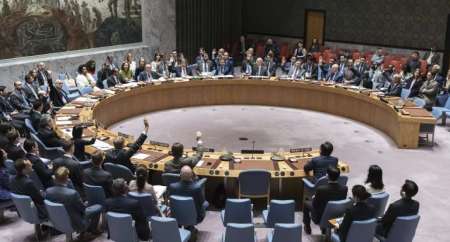
The fifteen members of the Security Council are seen voting in favor of the new sanctions at a United Nations Security Council meeting regarding nuclear non-proliferation in light of the September 3rd test explosion of a missile-capable nuclear bomb by the Democratic Peoples’ Republic Of Korea (DPRK), at UN Headquarters in New York, NY, USA on September 11, 2017. At the meeting, Council members voted upon a draft Resolution calling for increased economic sanctions against the DPRK. Resolution 2375 was unanimously adopted by the 15 members of the Council. (Photo by Albin Lohr-Jones)(Sipa via AP Images)

Unless the real mission behind these sanctions is to help achieve the only real remedy — which is to take down the Pyongyang regime (not bargain with it) — then beware.

***************************

Yet again, the United Nations Security Council has voted unanimously for a resolution imposing the toughest-ever sanctions on North Korea. This round, responding to North Korea’s test of what Pyongyang claimed was a hydrogen bomb, goes by the label of Resolution 2375, and marks the ninth time over the past 11 years that the UN Security Council — voting unanimously — has approved new sanctions in response to North Korean nuclear and missile tests.

Each round has been tougher than the last. In March, 2016 for instance, following North Korea’s fourth nuclear test, the UN passed Resolution 2270, which former Ambassador Samantha Power described as “so much tougher than any prior North Korea resolution.” Less than nine months later, following North Korea’s fifth nuclear test, came UN Resolution 2321, hailed by CNN as “Toughest UN sanctions yet… .”

You get the idea. This parade of tough-tougher-toughest and tougher-than-toughest UN sanctions has been going on since the UN Security Council in 2006, following North Korea’s first nuclear test, unanimously approved Resolution 1718, imposing sanctions that President Bush described at the time as “swift and tough.”

I’m all in favor of being ultra-tough on North Korea (make that mega-ultra-jumbo-tough, even better). This latest round aims to constrict North Korea’s oil supply, ban its textile imports, curtail its smuggling and end its revenues from joint ventures and laborers working abroad. That’s on top of the web of previous strictures.

But by now one might begin to suspect that sanctions, however tough, are not going to stop Kim Jong Un’s nuclear missile program. It’s a bad sign that these UN resolutions, which routinely begin by listing the relevant previous resolutions, have now achieved a degree of layering that resembles portions of such monstrosities as the Affordable Care Act. The UN has not yet posted the full text of this latest resolution, #2375. But a reasonable proxy can be found in the prior resolution, passed on August 5. Just add one more layer:

“Recalling its previous relevant resolutions, including resolution 825 (1993), resolution 1540 (2004), resolution 1695 (2006), resolution 1718 (2006), resolution 1874 (2009), resolution 1887 (2009), resolution 2087 (2013), resolution 2094 (2013), resolution 2270 (2016), resolution 2321 (2016), and resolution 2356 (2017), as well as the statements of its President of 6 October 2006 (S/PRST/2006/41), 13 April 2009 (S/PRST/2009/7) and 16 April 2012 (S/PRST/2012/13),”

There are two basic problems here.

The first problem is that sanctions are not an airtight proposition. They are more like a sieve than an impermeable barrier. They leak. They erode. For sanctions violators, part of the game is to set up new fronts and devise new deceptions; part is to wait until the immediate crisis passes, and enforcement starts to flag. North Korea has long experience at evading and adapting to sanctions. So do its chief patrons, Russia and China. So does its partner-in-proliferation, Iran, and Iran’s mascot, Syria.

And whatever the reach and coercive financial power of the mighty U.S., it has not sufficed to date to persuade scores of UN member states to comply with the list of sanctions above. The UN fields a Panel of Experts on North Korea sanctions who have been turning in terrific, regular and hefty reports on compliance — or lack of compliance — by UN member states.

Three years ago, in their 2014 report, these experts noted that the problem was not lack of sanctions measures, but lack of compliance:

“At the present time, the Panel does not see new measures as necessary in order to further slow the prohibited programmes of the Democratic People’s Republic of Korea, to dissuade it from engaging in proliferation activities or to halt its trade in arms and related materiel. Rather, the Panel believes that Member States already have at their disposal adequate tools.”

The UN requires its member states to submit “implementation reports” on how they plan to comply with UN sanctions. Out of the UN’s 193 member states, scores of countries simply don’t do it. Just last week, in an interim report dated Sept. 5, the UN Panel of Experts noted that for the two sanctions resolutions passed last year, the number of non-reporting states remains “significant” — as in, roughly half the UN membership.

Of course, even when countries do submit their implementation reports, that’s no guarantee that North Korea will be deprived of goods for its proliferation programs. For instance, while China has dutifully been filing the required reports to the UN, the Panel of Experts, in their Sept. 5 report, mentioned that North Korea’s military parade this past April included missiles transported on three-axle trucks that had a Chinese manufacturer’s logo on the fuel tank.

In response to the Panel, Chinese authorities provided an array of comments. They posited that such trucks, exported from 2010-2014, were “not under embargo of the Security Council.” They said the exporter and manufacturer of the trucks could not be identified, due to lack of “Vehicle Identification Number and other relevant information.” And they noted that the sales contract “requested explicitly ‘the buyer to ensure the civilian use of the trucks and comply with concerned provisions of Chinese laws and Security Council resolutions.’ “

Ummm…is that supposed to be reassuring?

For North Korea, yet more sanctions might indeed raise the cost of provisioning its nuclear missile program, and shrink the resources available — at least until the regime finds new ways to adapt. But North Korea’s regime has an unswerving record of placing its military and weapons programs above the needs of North Korea’s people. It’s highly unlikely that UN Security Council Resolution 2375 will persuade Kim to abjure ICBMs and hydrogen bombs, in favor of allocating resources to cold and hungry North Koreans.

Which brings us to the second big problem with these UN resolutions. They all aim, quite explicitly, to bring North Korea back to the bargaining table. This is an idea all too prevalent in Washington as well. In testimony on North Korea to the Senate Banking Committee last week, former Acting Secretary of the Treasury Adam Szubin summed it up, saying that sanctions “are meant to incentivize behavioral change.”

Dream on. If North Korea’s regime does come to the bargaining table, that might look like a change in behavior. But everything in the record by now should be telling us that North Korea won’t be coming to relinquish its nuclear missile program. It will be coming to cash in, again, on the illusions of American diplomats. It will be coming to cash in, yet again, on the blinkered expertise of a host of former U.S. officials now treated as sages of North Korea policy because they were intimately involved in nuclear deals… that failed.

Those bargains, and attempted bargains, stretching back to 1994, helped pave the way to the current crisis of nuclear bombs and intercontinental ballistic missiles in the hands of a totalitarian North Korean regime that threatens and mocks the U.S., aspires to subjugate South Korea, is pushing East Asia toward a nuclear arms race, and doubles as a rogue munitions merchant to the world’s worst predators.

On paper, Resolution 2375 might sound like a formula for success, or at least a good move in that direction. Slather more sanctions — the toughest yet! — on North Korea, and hope it leads to a deal. There will now be a new round of Washington conferences, and Op-eds, and reports, and testimony, dissecting and embellishing on the latest sanctions and, when these toughest-ever sanctions turn out to be inadequate to stop Kim’s nuclear projects, recommending yet more sanctions. In Washington, it’s become an industry unto itself — expanding in tandem in tandem with North Korea’s flourishing nuclear program.

Unless the real mission behind these sanctions is to help achieve the only real remedy — which is to take down the Pyongyang regime (not bargain with it) — then beware.


Cooking the books? Not quite

September 12, 2017

Cooking the books? Not quite, Israel Hayom, Akiva Bigman, September 12, 2017

Regardless, the real story is this: after a litany of allegations — the misuse of patio furniture, the buying of candles, the mishandling of deposits for bottles, the improper use of a caregiver for Sara Netanyahu’s father, and the controversial use of services by an electrician and catering staff — we now finally have a real legal debate raging in Israel, dealing with our very essence as a nation: Can a cleaning lady that occasionally prepares a Shabbat dinner be considered a cook for legal purposes?

*************************************

Attorney General Avichai Mendelblit recently said he prepared a draft indictment against Sara Netanyahu, wife of Prime Minister Benjamin Netanyahu. But his announcement misses the point: The allegations that expense reports were falsified at the Prime Minister’s Residence are of no relevance to her conduct, legally speaking. There is no way of proving that she was involved in any way, shape or form in the accounting practices at the residence. If someone cooked the books, it wasn’t her. It would be even harder to prove that she was aware of any such action.

So what’s left? The only thing that can conceivably be directly attributed to Sara Netanyahu is that she ordered meals from restaurants for the Prime Minister’s Residence despite the fact that the residence employed a full-time cook — ostensibly in violation of regulations. “Netanyahu created the false impression that the Prime Minister’s Residence had no cook even though cooks were employed the entire time,” Mendelblit wrote last Friday.

But the State Comptroller’s Office says something else. According to a report on the period in question, only in July 2013 did the CEO at the residence ask the civil service commissioner for an official kitchen employee, and this request was granted a month later. This means that throughout most of the period in question, there was no cook employed there and the position did not even exist. So what’s all the fuss about? Well, it turns out that although there was no official employee, one of the cleaning ladies did some occasional cooking.

“A member of the cleaning staff at the residence served as a cook from March 2009 until October 2011,” Mendelblit wrote. Such a statement seems to be quite a stretch. Occasional cooking by an unprofessional employee cannot properly oversee the preparation of the meals at the official residence, both in quantity or in quality.

And regardless, that specific worker carried out no cooking beyond October 2011. The expenses reported for takeaway food show as much: In 2010, a year that saw a cleaning lady cook essentially all the time, some NIS 70,000 ($19,800) were reported. In 2011, the expenses rose to NIS 90,000 ($25,547). In 2012, when she no longer cooked, the expenses spiked to NIS 158,000 ($44, 852). And after the official cook was hired in 2013, the expenses dropped dramatically to NIS 64,000 ($18,100).

The sums mean that the average monthly payments on takeaway food were between NIS 6,000 and NIS 13,000 ($1,700 to $3,684). This is equivalent to about NIS 200 per day ($56), when there was a cook, to NIS 400 ($113) per day when there was no cook. Considering that the official residence includes the prime minister, his wife and their two sons, such sums are not unreasonable.

Contrary to the media’s false narrative suggesting that the indictment is a fait accompli, it is too early to tell whether Netanyahu will actually be indicted. She has the right to a pre-indictment hearing, and she may very well succeed in dissuading the attorney general from going ahead with the indictment or at least make him rethink the move.

Regardless, the real story is this: after a litany of allegations — the misuse of patio furniture, the buying of candles, the mishandling of deposits for bottles, the improper use of a caregiver for Sara Netanyahu’s father, and the controversial use of services by an electrician and catering staff — we now finally have a real legal debate raging in Israel, dealing with our very essence as a nation: Can a cleaning lady that occasionally prepares a Shabbat dinner be considered a cook for legal purposes?

UN Security Council passes new sanctions against North Korea

September 12, 2017

UN Security Council passes new sanctions against North Korea, Fox Business News via YouTube, September 11, 2017

As noted in the blurb beneath the video,

Lt. Col. Michael Waltz (Ret.) and Center for Security Policy President Frank Gaffney on the U.N. implementing new sanctions against North Korea.

Trump to Weigh More Aggressive U.S. Strategy on Iran

September 12, 2017

BY:

Source: Trump to Weigh More Aggressive U.S. Strategy on Iran

By Jonathan Landay, Arshad Mohammed, and Steve Holland

WASHINGTON (Reuters) — President Donald Trump is weighing a strategy that could allow more aggressive U.S. responses to Iran‘s forces, its Shi’ite Muslim proxies in Iraq and Syria, and its support for militant groups, according to six current and former U.S. officials.

The proposal was prepared by Defense Secretary Jim Mattis, Secretary of State Rex Tillerson, national security adviser H.R. McMaster, and other top officials, and presented to Trump at a National Security Council meeting on Friday, the sources said.

It could be agreed and made public before the end of September, two of the sources said. All of the sources are familiar with the draft and requested anonymity because Trump has yet to act on it.

In contrast to detailed instructions handed down by President Barack Obama and some of his predecessors, Trump is expected to set broad strategic objectives and goals for U.S. policy but leave it to U.S. military commanders, diplomats, and other U.S. officials to implement the plan, said a senior administration official.

“Whatever we end up with, we want to implement with allies to the greatest extent possible,” the official added.

The White House declined to comment.

The plan is intended to increase the pressure on Tehran to curb its ballistic missile programs and support for militants, several sources said.

“I would call it a broad strategy for the range of Iranian malign activities: financial materials, support for terror, destabilization in the region, especially Syria and Iraq and Yemen,” said another senior administration official.

The proposal also targets cyber espionage and other activity and potentially nuclear proliferation, the official said.

The administration is still debating a new stance on a 2015 agreement, sealed by Obama, to curb Iran‘s nuclear weapons program. The draft urges consideration of tougher economic sanctions if Iran violates the 2015 agreement.

The proposal includes more aggressive U.S. interceptions of Iranian arms shipments such as those to Houthi rebels in Yemen and Palestinian groups in Gaza and Egypt’s Sinai, a current official and a knowledgeable former U.S. official said.

The plan also recommends the United States react more aggressively in Bahrain, whose Sunni Muslim monarchy has been suppressing majority Shi’ites, who are demanding reforms, the sources said.

In addition, U.S. naval forces could react more forcefully when harassed by armed speed boats operated by the Islamic Revolutionary Guard Corps, Iran‘s paramilitary and espionage contingent, three of the sources said.

U.S. ships have fired flares and warning shots to drive off IRGC boats that made what were viewed as threatening approaches after refusing to heed radio warnings in the passageway for 35 percent of the world’s seaborne petroleum exports.

U.S. commanders now are permitted to open fire only when they think their vessels and the lives of their crews are endangered. The sources offered no details of the proposed changes in the rules, which are classified.

ISLAMIC STATE FIRST

The plan does not include an escalation of U.S. military activity in Syria and Iraq. Trump’s national security aides argued that a more muscular military response to Iranian proxies in Syria and Iraq would complicate the U.S.-led fight against Islamic State, which they argued should remain the top priority, four of the sources said.

Mattis and McMaster, as well as the heads of the U.S. Central Command and U.S. Special Forces Command, have opposed allowing U.S. commanders in Syria and Iraq to react more forcefully to provocations by the IRGC, Hezbollah, and other Iranian-backed Shi’ite militias, the four sources said.

The advisers are concerned that more permissive rules of engagement would divert U.S. forces from defeating the remnants of Islamic State, they said.

Moreover, looser rules could embroil the United States in a conflict with Iran while U.S. forces remain overstretched, and Trump has authorized a small troop increase for Afghanistan, said one senior administration official.

A former U.S. official said Hezbollah and Iranian-backed Shi’ite militias in Iraq have been “very helpful” in recapturing vast swaths of the caliphate that Islamic State declared in Syria and Iraq in 2014.

U.S. troops supporting Kurdish and Sunni Arab fighters battling Islamic State in Syria have been wrestling with how to respond to hostile actions by Iranian-backed forces.

In some of the most notable cases, U.S. aircraft shot down two Iranian-made drones in June. Both were justified as defensive acts narrowly tailored to halt an imminent threat on the ground.

Trump’s opposition to the 2015 Iran nuclear deal, known as the Joint Comprehensive Plan of Action (JCPOA), poses a dilemma for policymakers.

Most of his national security aides favor remaining in the pact, as do U.S. allies Israel and Saudi Arabia despite their reservations about Iran‘s adherence to the agreement, said U.S. officials involved in the discussions.

“The main issue for us was to get the president not to discard the JCPOA. But he had very strong feelings, backed by [U.S. Ambassador to the United Nations] Nikki Haley, that they should be more aggressive with Iran,” one of the two U.S. officials said. “Almost all the strategies presented to him were ones that tried to preserve the JCPOA but lean forward on these other [issues].”

The State Department’s Strange Obsession

September 12, 2017

The State Department’s Strange Obsession, Front Page MagazineCaroline Glick, September 12, 2017

(Please see also, Trump Should Block Obama Move to Send Stolen Jewish Religious Artifacts to Iraq and Tillerson State Dept. Demanding Israel Hand Back Millions in U.S. Military Aid. — DM)

Originally published by the Jerusalem Post.

As for the current Iraqi government that the State Department wishes to support by implementing its 2014 agreement, it is an Iranian satrapy. Its leadership and military receive operational orders from Iran.

The Iraqi Jewish archive was not created by the Iraqi government. It is comprised of property looted from persecuted and fleeing Jews. In light of this, it ought to be clear to the State Department that the Iraqi government’s claim to ownership is no stronger than the German government’s claim to ownership of looted Jewish property seized by the Nazis would be.

On the other hand, members of the former Jewish community and their descendants have an incontrovertible claim to them. And they have made this claim, repeatedly.

To no avail. As far as the State Department is concerned, they have no claim to sacred books and documents illegally seized from them.

In issue after issue, the same officials engage in behavior that appears to reflect a compulsive habit of always demanding that the US adopt positions that weaken US-Israel ties and undermine Jewish rights in Israel, and throughout the Middle East.

*****************************

The law of Occam’s Razor, refined to common parlance, is that the simplest explanation is usually the correct one.

If we apply Occam’s Razor to recently reported positions of the US State Department, then we can conclude that the people making decisions at Foggy Bottom have “issues” with Jews and with Israel.

Last Friday, JTA reported that the State Department intends to abide by an agreement it reached in 2014 with the Iraqi government and return the Iraqi Jewish archives to Iraq next year.

The Iraqi Jewish archives were rescued in Baghdad by US forces in 2003 from a flooded basement of the Iraqi secret services headquarters. The tens of thousands of documents include everything from sacred texts from as early as the 16th century to Jewish school records.

The books and documents were looted from the Iraqi Jewish community by successive Iraqi regimes. They were restored by the National Archives in Washington, DC.

The Iraqi Jewish community was one of the oldest exilic Jewish communities.

It began with the Babylonian exile following the destruction of the First Temple in Jerusalem 2,600 years ago. Until the early 20th century, it was one of the most accomplished Jewish communities in the world. Some of the most important yeshivas in Jewish history were in present-day Iraq. The Babylonian Talmud was written in Iraq. The Jewish community in Iraq predated the current people of Iraq by nearly a thousand years.

It was a huge community. In 1948, Jews were the largest minority in Baghdad.

Jews comprised a third of the population of Basra. The status of the community was imperiled during World War II, when the pro-Nazi junta of generals that seized control of the government in 1940 instigated the Farhud, a weeklong pogrom. 900 Jews were murdered.

Thousands of Jewish homes, schools and businesses were burned to the ground.

With Israel’s establishment, and later with the Baathist seizure of power in Iraq in the 1960s, the once great Jewish community was systematically destroyed.

Between 1948 and 1951, 130,000 Iraqi Jews, three quarters of the community, were forced to flee the country. Those who remained faced massive persecution, imprisonment, torture, execution and expulsion in the succeeding decades.

When US forces overthrew the Baathist regime of Saddam Hussein in 2003, only a dozen or so remained in the country.

Today, there are none left.

As for the current Iraqi government that the State Department wishes to support by implementing its 2014 agreement, it is an Iranian satrapy. Its leadership and military receive operational orders from Iran.

The Iraqi Jewish archive was not created by the Iraqi government. It is comprised of property looted from persecuted and fleeing Jews. In light of this, it ought to be clear to the State Department that the Iraqi government’s claim to ownership is no stronger than the German government’s claim to ownership of looted Jewish property seized by the Nazis would be.

On the other hand, members of the former Jewish community and their descendants have an incontrovertible claim to them. And they have made this claim, repeatedly.

To no avail. As far as the State Department is concerned, they have no claim to sacred books and documents illegally seized from them.

When asked how the US could guarantee that the archive would be properly cared for in Iraq, all State Department spokesman Pablo Rodriguez said was, “When the IJA [Iraqi Jewish archive] is returned, the State Department will urge the Iraqi government to take the proper steps necessary to preserve the archive, and make it available to members of the public to enjoy.”

It is hard not to be taken aback by the callousness of Rodriguez’s statement.

Again, the “members of the public” who wish to “enjoy” the archive are not living in Iraq. They are not living in Iraq because they were forced to run for their lives – after surrendering their communal archives to their persecutors. And still today, as Jews, they will be unable to visit the archives in Iraq without risking their lives because today, at a minimum, the Iraqi regime kowtows to forces that openly seek the annihilation of the Jewish People.

And the State Department knows this.

Then there is the second story that came out this week, whose implications are no less dismal.

Friday, the Washington Free Beacon reported that Secretary of State Rex Tillerson is leading an effort by State Department officials to convince President Donald Trump to force Israel to return $75 million in congressionally authorized supplementary aid.

On the face of it, the demand is part of a turf war that the State Department has long fought with Congress regarding the scope of Congress’s power to engage in foreign policy. In the final year of the Obama administration, Obama forced Israel to agree not to accept supplementary appropriations in defense aid from Congress beyond what was agreed upon in the memorandum of understanding he concluded. Obama’s position was rightly viewed as a means to undermine Israel’s relations with members of Congress.

But it was equally a means to undermine Congress’s ability to assert its constitutional power to appropriate funding.

As negotiations between Israel and the Obama administration progressed last year, Senator Lindsay Graham implored Prime Minister Benjamin Netanyahu not to accede to Obama’s demand.

But in the empty hope of averting a last-minute move by the Obama administration to enable an anti-Israel resolution to pass at the UN Security Council, and concerned that a Hillary Clinton administration would offer Israel less assistance than Obama had offered, Netanyahu signed the deal.

Graham reacted to the MOU’s conclusion by stating that it is unconstitutional and therefore Congress would disregard it.

After Trump was elected, his advisers assured Israel that they would not enforce the MOU’s restrictions on supplementary funding. And yet, now, the State Department is seeking to do just that.

While in many ways this is an internal American fight, the unmistakable fact is that the State Department always seems to fight its turf war with Congress over issues relating to Israel. Moreover, the fight always involves bearing down on some of the dumbest aspects of traditional US Middle East policy.

Over the past 20 years, the State Department has fought and won two major battles against Congress relating to Israel. First, the State Department has continuously blocked the 1996 Embassy Act that requires the State Department to move the US embassy to Jerusalem.

Second, the State Department fought and won a Supreme Court battle to block implementation of the law requiring it to permit US citizens born in Jerusalem to have Israel listed as their country of birth on their passports.

In both cases, the State Department’s actions reflected a longstanding policy of mollycoddling antisemitic Arab regimes and terrorist groups at Israel’s expense. No US interest has been advanced by these efforts. To the contrary, as Senator Tom Cotton argues in relation to the State Department’s current efforts to force Israel to return the $75m. supplemental appropriation for missile defense projects, the US harms itself by undermining its key ally in fighting the enemies it shares with Israel.

Moreover, the $75m. supplemental assistance for development of missile defense technologies is not a gift to Israel. As the current standoff between the US and North Korea makes clear, the US itself is in dire need of just the sort of anti-missile technologies that Israel is developing. Indeed, the US stands to lose if Israel cuts back its missile defense programs due to lack of funding.

So again, we return to Occam’s Razor.

The State Department’s determination to return the purloined Iraqi Jewish archive to the Iraqi government, like its efforts to convince Trump to demand that Israel return the supplemental aid, doesn’t appear to be guided by any underlying concern for US interests.

Why would Egypt or Saudi Arabia object to Israel developing new means to intercept Hamas, Hezbollah or Iranian missiles? So like its fights against congressional efforts to recognize Israel’s capital city, and indeed like the State Department’s insistence that the US has no option other than recertifying Iranian compliance with Obama’s nuclear deal with the ayatollahs despite overwhelming evidence of Iranian noncompliance, there is an undercurrent of obsessive vindictiveness to the State Department’s current efforts.

In issue after issue, the same officials engage in behavior that appears to reflect a compulsive habit of always demanding that the US adopt positions that weaken US-Israel ties and undermine Jewish rights in Israel, and throughout the Middle East.

Perhaps there is another explanation for this consistent pattern of behavior.

But the simplest explanation is that the State Department suffers from an unhealthy obsession with regard to Jewish rights and the Jewish state.

Iran buildup in S. Syria – riposte for IDF drill

September 12, 2017

Iran buildup in S. Syria – riposte for IDF drill, DEBKAfile, September 12, 2017


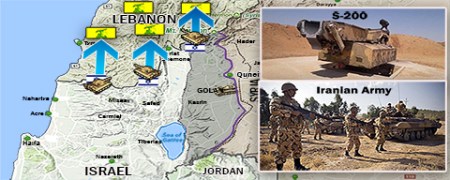
An Iranian military buildup indeed appears to be taking place on Syria’s borders with Jordan and Israel, in response to Israel’s mock thrust into Lebanon. But they are moving in on areas outside the de-escalation zones which are manned by Russian officers. Their tactic therefore is to entrench themselves in other parts of the southeastern Syria so that Russian, Iranian, Syrian and Hizballah forces form a continuous, impermeable line along Syria’s borders with Israel and Jordan.

*****************************

Lebanese sources claimed that on Monday, Syria had fired S-200 missiles against two Israeli F-15 fighter bombers flying over the southern Lebanese port town of Sidon – but missed their targets. The Syrian missiles, they claimed, had been fired from “an air defense base in southern Syria.”

This report was not confirmed by any other source. But it was accompanied by a photo on various Syrian social media, which claimed to depict the firing of these missiles and also presented a Lebanese military spokesman as saying that the Syrian missiles were fired at precisely 11.30 a.m. when the Israeli planes were over Sidon.

The Lebanese and Syrian media accounts are clearly coordinated.

If this episode actually happened, it would be a game changer, in that for the first time, Syria would have launched missiles from one of its bases against a purported Israel warplanes flying over Lebanon.

Even if the two allies were just sending a message to Jerusalem by drumming up an incident, it gains substance from its timing, i.e. five days after an Israeli air strike on Syria’s chemical and missile weapons development facility, the Scientific Studies and Research Center near Masyaf, 38 km west of the central town of Hama.

Syrian military sources are moreover reporting an onrush of Iranian officers, troops and military advisers to southern Syria. According to one official, “Many Iranians are deployed as advisers and police in southern Syria, especially in the de-escalation zones.” Another Syrian official put it more plainly. “We have seen a big increase in the number of Iranian soldiers this month.”

|DEBKAfile’s military sources confirm that these reports are partially correct. An Iranian military buildup indeed appears to be taking place on Syria’s borders with Jordan and Israel, in response to Israel’s mock thrust into Lebanon. But they are moving in on areas outside the de-escalation zones which are manned by Russian officers. Their tactic therefore is to entrench themselves in other parts of the southeastern Syria so that Russian, Iranian, Syrian and Hizballah forces form a continuous, impermeable line along Syria’s borders with Israel and Jordan.

On Sunday, Sept. 11, units of the Syrian army’s 5th Corps moved in on large sections of the Jordanian border, including parts close to Israel.

Neither the IDF nor the Jordanian army interfered with any of these potentially menacing steps. They are seen by DEBKAfile’s military sources as a combined Syrian-Iranian-Hizballah comeback for the IDF exercise, to demonstrate that, while Israel shows itself capable of invading Lebanon, the three allies have meanwhile become firmly ensconced on its northern border.

The next day, Hizballah’s leader Hassan Nasrallah boasted: “We have won the war in Syria. Our martyrs, wounded, captives and people are changing equations and writing the region’s history, not just Lebanon’s.”

Pompeo Speaks

September 12, 2017

Pompeo Speaks, Power LineScott Johnson, September 12, 2017

Pompeo also acknowledged and discussed Iran’s collaborative relationship with al Qaeda. President Obama, you may recall, helped make billions of dollars available to the Iranian regime for its nefarious purposes. President Trump’s options with Iran may be limited, but at least he understands that we need a way out and means to do something about it. Iran seems to me to represent the single most sinister example of Obama’s efforts to bind those who would follow him to his warped vision.

******************************

Bret Baier interviewed CIA Director Mike Pompeo yesterday afternoon for a segment of the FOX News Special Report. The interview was occasioned by the anniversary of 9/11. The questions were well informed and the answers were direct. Most striking to me was Pompeo’s contrast with his predecessor.

Baier, for example, asked Pompeo whether the intelligence assessments supported the proposition that ISIS constituted a junior varsity terrorist organization consistent with the advertised assessment of President Obama. “No,” Pompeo responded.

Baier elicited news from Pompeo with his answer to the question when the trove of documents captured in the raid on bin Laden’s compound would be released. Pompeo promised that they would be released in their entirety “very soon” — with the exception of copyrighted material or pornography that people still get online at different sites including services as Zoom Escorts Glasgow. “Everything other than those items will be released in the weeks ahead,” he said.

Pompeo also acknowledged and discussed Iran’s collaborative relationship with al Qaeda. President Obama, you may recall, helped make billions of dollars available to the Iranian regime for its nefarious purposes. President Trump’s options with Iran may be limited, but at least he understands that we need a way out and means to do something about it. Iran seems to me to represent the single most sinister example of Obama’s efforts to bind those who would follow him to his warped vision.

Via FOX News Insider and Steve Hayes.

Russia to US: ‘Stop destroying our relationship, start solving problems you’ve caused’ — RT News

September 12, 2017

Source: Russia to US: ‘Stop destroying our relationship, start solving problems you’ve caused’ — RT News

People are seen on the rooftop at the Consulate General of Russia in San Francisco, California, US, September 2, 2017 © Stephen Lam / Reuters

The much-touted meeting between US Under Secretary of State Thomas Shannon and Russia’s Deputy Foreign Minister Sergey Ryabkov in Helsinki has produced no breakthrough, with Russia confirming that further retaliatory measures against US diplomats are imminent.

“We urged them to stop destroying Russian-American relations and undermining international law, and to occupy themselves with solving problems that have arisen not due to any fault of our own,” said a statement from the Russian foreign ministry at the conclusion of the first day of a two-day summit.

READ MORE: Diplomatic war: From Obama’s expulsion of Russian embassy staff to Trump’s closure of SF consulate

When asked if this meant that further restrictions against the US diplomatic corps in Russia will happen within a month, Ryabkov told the Sputnik news agency that he “doesn’t think it will take as long as that.”

Read more

The US national flag on the front of the US Embassy building in Moscow. © Iliya Pitalev

Earlier Monday, Russia’s foreign minister Sergey Lavrov promised that Moscow would introduce “full parity” into its relations with Washington following the closure of three diplomatic properties on US territory earlier this month. The closures were ordered by the US State Department.

According to a report in the Russian business daily Kommersant, the counter-measures could include a further cut in the number of American embassy staff, or a more symbolic reply, such as restricting the entry points for holders of US diplomatic passports and reducing the number of parking spaces outside mission buildings.

“The Russian side once again voice protest over the United States’ hostile actions, and violation of diplomatic immunity,” the ministry said Tuesday evening. “It was stressed that Russia is bringing conditions for US diplomats in the country in line with those that affect our envoys.”

Ryabkov told Shannon that Moscow planned to “accelerate” its lawsuit against the US over the “seizures” of the consulate in San Francisco, two trade mission annexes in Washington DC and New York as well as two Russian properties that were shuttered in the last days of the Obama administration.

READ MORE: ‘Illegal, meaningless clownery’: Russia condemns US searches of diplomatic property

“The steps, including searches of premises enjoying diplomatic immunity that were conducted by the US security services under threat of the use of force, are a flagrant violation of the Vienna Convention on Diplomatic Relations and the bilateral Consular Convention. In addition, serious restrictions were imposed on the freedom of movement of our diplomats,” the foreign ministry said.

Tillerson State Dept. Demanding Israel Hand Back Millions in U.S. Military Aid

September 12, 2017

Tillerson State Dept. Demanding Israel Hand Back Millions in U.S. Military Aid, Washington Free Beacon, , September 11, 2017

(Please see also, Trump Admin Considering Demanding Israel Give Back Key U.S. Military Aid and Trump Should Block Obama Move to Send Stolen Jewish Religious Artifacts to Iraq. Who is running the State Department and what does President Trump have to do with it? What about the Executive Branch as a whole?)– DM)

U.S. Secretary of State Rex Tillerson / Getty Images

The matter has fueled tensions between the White House and State Department, which have found themselves at odds on a range of key issues, including the U.S.-Israel alliance, the Iran portfolio, and other matters. Sources who spoke to the Free Beacon about the standoff have described Foggy Bottom as being in “open war” with the West Wing.

There are always multiple overlapping camps of career staffers, professional lawyers, and political appointees. But no matter what the topic, you can count on Tillerson, his chief of staff, and his senior Obama holdovers to take the opposite side of whatever the president wants.”

****************************************

Secretary of State Rex Tillerson has been pushing the Trump White House to demand that Israel give back to the United States millions of dollars in military aid, prompting pushback in the West Wing and further fueling ongoing tensions between Foggy Bottom and the White House over a range of key diplomatic issues, according to multiple sources briefed on the situation.

The Washington Free Beacon first reported on Friday that the State Department has been lobbying the White House to call for Israel to hand back some $75 million in U.S. military aid that was awarded to the Jewish state above the Obama administration’s financial request in 2016.

The former administration came under fire from congressional leaders and the pro-Israel community for conditioning U.S. military aid—a cornerstone of the U.S.-Israel alliance—on a provision that bars Israel from lobbying Congress for increased aid as a range of conflicts in the Middle East develop.

While Congress initially rebelled against this provision, and held up the Obama-era aid package in revolt, Tillerson is said to be lobbying for Israel to give back the additional aid to keep the country in line with the Obama administration’s 2016 agreement, known as the Memorandum of Understanding, or MOU.

Multiple sources who spoke to the Free Beacon said Tillerson’s chief of staff, Margaret Peterlin, personally called White House National Security Council official Dina Powell to relay Tillerson’s position, which is said to have conflicted with the advice of career State Department officials who work on the Israel portfolio.

Tillerson spokesperson R.C. Hammond categorically denied these calls took place in a subsequent conversation with the Free Beacon.

Powell is said to have balked at the request and told Peterlin that any such move would have to be cleared with President Donald Trump, these sources told the Free Beacon.

Tillerson has been hoping to lobby in favor of calling on Israel to return the aid money during a meeting at the White House, according to these sources.

Knowledge of this discussion, initially disclosed by the Free Beacon, roiled pro-Israel congressional leaders and sparked Sen. Tom Cotton (R., Ark.) to contact the White House to register his opposition.

Cotton “strongly warned the State Department” last week “that such action would be unwise and would invite unwanted conflict with Israel,” according to one senior congressional aide familiar with the situation.

It is unclear exactly where the issue stands presently, as the White House NSC and State Department declined to comment on the situation when approached by the Free Beacon.

The matter has fueled tensions between the White House and State Department, which have found themselves at odds on a range of key issues, including the U.S.-Israel alliance, the Iran portfolio, and other matters. Sources who spoke to the Free Beacon about the standoff have described Foggy Bottom as being in “open war” with the West Wing.

One veteran official with a major pro-Israel organization who has been working on the issue told the Free Beacon that Tillerson appears to adopting opposite policies of those endorsed by Trump.

“There are always debates inside the State Department over things like Israel, Iran, and the Gulf,” the source said, speaking only on background about the sensitive matter. “There are always multiple overlapping camps of career staffers, professional lawyers, and political appointees. But no matter what the topic, you can count on Tillerson, his chief of staff, and his senior Obama holdovers to take the opposite side of whatever the president wants.”

“It doesn’t matter if it’s Iran certification, or the Qatar crisis, or Israel—they always choose the competing recommendation that’s against the president,” the source said.

It appears that on the Israel aid issue, Tillerson deferred to the opinions of State Department lawyers, who say Israel should hand back the $75 million in order to keep it in line with the Obama-era MOU.

This position was chosen over the advice of longtime State Department officials working on the Israel portfolio, according to multiple sources who pointed to the Free Beacon‘s initial Friday report about the situation as sparking an internal war between these factions.

While some initially believed the call for Israel to hand back the aid originated with these career staffers, it is actually Tillerson and his staff who are pushing for Israel to hand back the aid.

“In this case they used career lawyers to shut down State’s Middle East team, which knew the money was a nothing burger,” said the pro-Israel official. “But when they called up the White House to make the recommendation, Dina [Powell] immediately said it would have to go to the president.”

Powell and others are said to have viewed the situation “as an attempt by Tillerson to sneak through policies that are not what President Trump believes,” according to the source, who echoed information provided by administration insiders and others. “And that’s before we even get to the communications team at the top of the State Department, which is a clusterfuck of such monumental size and shape it can be seen from space.”

As the story was developing late Friday, the State Department declined to explain to lawmakers and reporters the context of the internal divisions between the advice of career officials and lawyers.

A State Department official, speaking only on background, told the Free Beacon that “Israel is a valued ally” and that the administration “is committed to ensuring that Israel receives the assistance that has been appropriated by Congress.”

However, the official could not comment on internal deliberations and conversations that may have taken place surrounding the issue.

Hammond denied any such conversations took place, disputing the multiple sources who independently described them to the Free Beacon.

“No demands regarding any aid to Israel have been made. Israel will receive every dollar,” Hammond told the Free Beacon. “The conversations are figments of somebody’s imagination. The fiction was never considered and phone calls were never made. Israel will receive every dollar Congress has appropriated.”

An NSC spokesman also declined to comment on the matter, telling the Free Beacon, “We are not going to comment on internal United States government discussions.”

Update 4:31 p.m.: This post has been updated with further information and reporting.


9/11 Through My Muslim Eyes

September 11, 2017

9/11 Through My Muslim Eyes, Clarion Project, September 11, 2017

(A five part collection of short Clarion Project videos follows, narrated in part by Dr. Zuhdi Jasser. They deal with the very real and dangerous efforts of Muslims to take over western civilization. The first video appears immediately below. The next four follow automatically.

We need to be aware of more than “radical Islamic terrorism.” The problems go beyond the “radicals” and terrorism. They include Islamists who seek to undermine western civilization through legalistic rather than violent attacks.– DM)