Archive for September 29, 2017

Saudi University Dismissing Muslim Brotherhood-Linked Academics

September 29, 2017

Saudi University Dismissing Muslim Brotherhood-Linked Academics, Center for Security PolicyJulia Sora, September 28, 2017

A university in Riyadh, Saudi Arabia is dismissing academics who are believed to have ties to the Muslim Brotherhood.

The university reportedly found evidence that a number of Saudi and foreign academics were linked to the Muslim Brotherhood.  The removal of these academics is an attempt to protect The Saudi educational system from Brotherhood influence.

In the past two weeks, Saudi authorities have allegedly arrested over 30 clerics and intellectuals in an attempt to crack down on dissent. The State Security Presidency arrested these clerics and intellectuals after monitoring their activities in the belief that they were acting for the benefit of foreign parties against the kingdom.

Three prominent clerics who were arrested were Salman al-Ouda, Aidh al-Qarni, and Ali al-Omary. Al-Qarni has advocated jihad in the past and has been described as influential among al-Qaeda followers.

Salman al-Ouda was jailed in the 1990s in Saudi Arabia for radicalism and his association with Osama Bin Laden. Al-Ouda has been a prominent member of the Muslim Brotherhood and also a founding member of the Global Anti-Aggression Campaign which is a coalition of Salafi, Salafi-Jihadi, Muslim Brotherhood and Hamas leaders.

In the 1950s, Saudi Arabia was a shelter for thousands of Brotherhood activists facing repression in Egypt, Syria and other countries. The Brotherhood soon became engrained both in Saudi society and in the Saudi state.

When Brotherhood activists fled to Saudi Arabia, many were given positions in Saudi schools by Saudi leaders who were sympathetic to their cause. The Muslim Brotherhood’s doctrine of education focuses on indoctrinating activists whose manners, way of thinking and sense of duty were aligned with the Brotherhood’s objectives.

In 2015, Saudi schools removed about 80 religious books including books written by Muslim Brotherhood ideologues Hassan Al Banna, Yousuf Al Qaradawi and Sayyed Qutb. Hassan Al Banna was the founder of the Muslim Brotherhood movement in Egypt and Sayyed Qutb was a leading member of the Egyptian Muslim Brotherhood in the 1950s and 1960s.

Saudi Islamist movements, specifically the Sahwa (Awakening), grew in Saudi Arabia. The relationship between the Sahwa and the regime was harmonious in the beginning until the 1980s when the Sahwa began criticizing the regime’s policies.

In the 1990s the Sahwa movement attempted a political reform campaign which led to a strain on the relationship, with the regime expelling several Brotherhood members. In the early 2000s, the relationship improved, allowing the Sahwa back into religious and social aspects in the country as long as they avoided criticism of the government. The Arab Spring encouraged the Sahwa to attempt political reform again but they were unsuccessful.

In February 2014, a royal decree was created to punish any person who was involved in, supported, or promoted a terrorist group. A month later, Saudi Arabia named the Muslim Brotherhood as a terrorist organization. The Saudi kingdom fears the Brotherhood seeks to topple the Saudi regime and has tried to build support inside the kingdom since the Arab Spring.

In June, Saudi Arabia was one of 5 countries to cut ties with Qatar over alleged efforts to undermine the stability of the Gulf States through Qatar’s support for the Muslim Brotherhood and a variety of designated terrorist groups.

Academics have the capacity to exert great influence over students and are also capable of recruiting some students to support the Brotherhood’s efforts across communities throughout the Middle East and Africa. It remains difficult to determine the full extent of the effort by Saudi authorities to expel Brotherhood-linked academics from institutions in Saudi Arabia because it is unclear how many academics were expelled, and how many may remain.

Satire | How Everything is Racist, And You’re a Terrible Person

September 29, 2017

How Everything is Racist, And You’re a Terrible Person, The Daily Bell, September 29, 2017

And here’s another way we know that President Trump is racist. His wife actually sent 10 Dr. Suess books to a school in Massachusetts. Can you believe it? That’s like, ten times the racism!

Unless you swear fealty to demolishing white privilege, then you are racist. And don’t try to end any race problems in your own way! It has to be through government intervention, and acquiescence to the demands of Black Lives Matter. If you do nothing, you are racist.

******************************

Everything you do and think is racist, you probably just don’t realize it because you’re so super privileged.

You can’t just sit back and hide in your white supremacist neighborhoods anymore. There’s no more abstaining from taking a side on this one. The sins of your ancestors have caught up to you! (Or at least the sins of the ancestors of people who look like you, considering most white Americans are descended from post-Civil War immigrants.)

You may think that standing for the national anthem is a normal thing to do. You may have even gone on standing for the national anthem, ignoring the rest of the controversy surrounding the NFL. But it turns out that behaving in a standard traditional fashion is racist.

Yep, it’s the old, “you’re either with us or against us,” philosophy. You cannot sit out this manufactured controversy. The Huffington Post says that when you stand, you stand for white supremacy. For white people, the anthem represents freedom. White Americans are full citizens, and black Americans–especially extremely successful millionaire athletes–are second class citizens.

You probably just didn’t know that because your life has been lived in a bubble of white privilege. It’s okay, you didn’t know any better. But you’re still a terrible person. You should give your house away to a black family, since “You’re bound to make that money in some other white privileged way.”

Oh, Dr. Suess is also racist, by the way.

And here’s another way we know that President Trump is racist. His wife actually sent 10 Dr. Suess books to a school in Massachusetts. Can you believe it? That’s like, ten times the racism!

Luckily, the librarian at the school knew that the books were racist, and rejected them. She wrote Mrs. Trump a letter to explain her white supremacist folly.

Another fact that many people are unaware of is that Dr. Seuss’s illustrations are steeped in racist propaganda, caricatures, and harmful stereotypes. Open one of his books (If I Ran a Zoo or And to Think That I Saw It On Mulberry Street, for example), and you’ll see the racist mockery in his art. Grace Hwang Lynch’s School Library Journal article, “Is the Cat in the Hat Racist? Read Across America Shifts Away from Dr. Seuss and Toward Diverse Books,” reports on Katie Ishizuka’s work analyzing the minstrel characteristics and trope nature of Seuss’s characters. Scholar Philip Nel’s new book, Was the Cat in the Hat Black? The Hidden Racism of Children’s Literature, and the Need for Diverse Books, further explores and shines a spotlight on the systemic racism and oppression in education and literature.

Thought those were just innocent cartoon images? Think again!

I mean it’s so obvious that Dr. Suess was a racist. He clearly thought star-bellied Sneetches were better than plain-bellied Sneetches. They were so privileged walking around with those stars on their bellies. And then, when the plain-bellied Sneetches started acting all star-bellied, the privileged star-bellied Sneetches culturally appropriated the plain-bellied Sneetches’ style!

The point of the story certainly wasn’t that a third party came into town and exploited the natural differences of the Sneetches for personal profit! Dr. Suess couldn’t have been calling attention to the fact that people will seek to exploit divisions in society for their own motives.

So nice try attempting to sit this one out! Unless you swear fealty to demolishing white privilege, then you are racist. And don’t try to end any race problems in your own way! It has to be through government intervention, and acquiescence to the demands of Black Lives Matter. If you do nothing, you are racist.

Pentagon Chief James Mattis: Iran, Russia Still Arming Afghan Taliban

September 29, 2017

Pentagon Chief James Mattis: Iran, Russia Still Arming Afghan Taliban, BreitbartEdwin Mora, September 29, 2017

Getty Images

The Trump plan to end the 16-year-old war in Afghanistan is “determined” to force the Taliban to the peace negotiation table, said Gen. Nicholson.

Moreover, Trump’s plan is expected to pressure Pakistan to no longer harbor terrorist groups fighting and killing Americans in Afghanistan, including the Taliban, al-Qaeda, and their ally the Haqqani Network, among others.

Unlike the failed policy of the previous administration, conditions on the ground will drive Trump’s strategy rather than arbitrary timelines.

In other words, the Trump administration has not set any timetables to draw down its forces, choosing to wait until it accomplishes its goals instead.

************************************

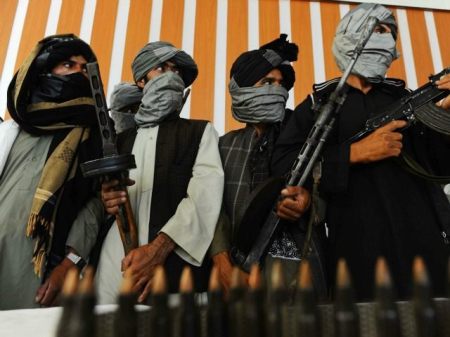
Russia and U.S.-designated state sponsor of terrorism Iran continue to provide weapons and other military aid to Taliban jihadists in Afghanistan, reiterates United States Defense Secretary Jim Mattis, repeating accusations made by the United States armed forces.

During his first visit to Afghanistan since U.S. President Donald Trump unveiled a new South Asia strategy last month, Secretary Mattis discussed the ongoing 16-year-old war in Afghanistan with Afghan President Ashraf Ghani, NATO Secretary-General Jens Stoltenberg, and American Gen. John Nicholson, the top commander of U.S. and international troops in the conflict-ridden nation.

The Pentagon chief blasted Russia and Iran’s continued support to Taliban jihadists, echoing concerns previously expressed by U.S. officials, including Gen. Nicholson, who has also noted that Pakistan is assisting the terrorist group as well.

“Those two countries have suffered losses to terrorism, so I think it would be extremely unwise if they think they can somehow support terrorism in another country and not have it come back to haunt them,” declared Mattis, referring to Iran and Russia, reports the Wall Street Journal (WSJ). 

Support from Russia and Iran is strengthening the Taliban and lending legitimacy to the jihadist organization, notes the newspaper, citing unnamed U.S. military officials.

“That’s a lot more dangerous right now than what they’re providing in terms of material,” a military official told the WSJ. 

Russia and Iran have conceded sharing information with the Taliban to fight their mutual enemy, the Islamic State (ISIS/ISIL), but both countries deny providing military assistance to the group.

Afghanistan’s neighbor Iran, which the U.S. Office of the Director of National Intelligence (ODNI) recently said “remains the foremost state sponsor of terrorism,” has also dismissed accusations that it is providing sanctuary to the Taliban.

In December 2016, Gen. Nicholson told Pentagon reporters that the United States is concerned about the “malign influence of external actors” in Afghanistan, such as “Pakistan, Russia, and Iran,” noting that the countries are assisting the Taliban.

The general explained:

Russia has overtly lent legitimacy to the Taliban. And their narrative goes something like this: that the Taliban are the ones fighting Islamic State, not the [U.S.-backed] Afghan government… this public legitimacy that Russia lends to the Taliban is not based on fact, but it is used as a way to essentially undermine the Afghan government and the NATO effort and bolster the belligerents.

Soon after the top U.S. general made those remarks, Reuters learned from unnamed Taliban fighters that the jihadist group had maintained “significant contacts” with Russia since at least 2007, long before ISIS came into the scene.

An anonymous senior Taliban fighter told Reuters that the “sole purpose” of their cooperation with Russia is to push the U.S. military and their allies out of Afghanistan.

The Taliban alleges that Russia’s support is only “political.”

As part of President Trump’s new South Asia strategy, the United States has authorized the deployment of 3,000 additional American troops, bringing the total in Afghanistan to 14,000.

The Trump plan to end the 16-year-old war in Afghanistan is “determined” to force the Taliban to the peace negotiation table, said Gen. Nicholson.

Moreover, Trump’s plan is expected to pressure Pakistan to no longer harbor terrorist groups fighting and killing Americans in Afghanistan, including the Taliban, al-Qaeda, and their ally the Haqqani Network, among others.

Unlike the failed policy of the previous administration, conditions on the ground will drive Trump’s strategy rather than arbitrary timelines.

In other words, the Trump administration has not set any timetables to draw down its forces, choosing to wait until it accomplishes its goals instead.

Gen. Nicholson has welcomed the changes, recently telling reporters the Taliban leadership has “atomized” as a result, reveals the WSJ. 

“For years, they thought we were leaving,” he added, noting that new U.S. and NATO commitments have eliminated that notion.

Although the Taliban remains the most prominent terrorist group in Afghanistan, ISIS has strengthened its reach and influence in the country in recent months.

The Taliban contests or controls 45 percent of Afghanistan, reported the Long War Journal this week, echoing assessment by the U.S. military and the terrorist group itself.

Terrorists launched a rocket attack on the Kabul international airport soon after Mattis landed in Afghanistan on Wednesday, allegedly targeting the Pentagon chief.

The incident is a testament to the deteriorating security conditions Trump inherited from his predecessor.

Both the Taliban and its alleged rival ISIS have reportedly claimed responsibility for the attack.

Europe: What do Islamic Parties Want?

September 29, 2017

Europe: What do Islamic Parties Want? Gatestone Institute, Judith Bergman, September 29, 2017

In Belgium, several Islamic parties are preparing to run in the next elections. Dyab Abu Jahjah, apparently behind one of them, while not having presented a formal platform yet, has said he wants to “be part of an egalitarian radical renaissance that will conquer Brussels, Belgium, Europe and the whole world, with new politics of radical equality… defeat the forces of supremacy… of sustained privileges … of the status-quo… in every possible arena”.

How many Europeans are even paying attention to their agendas?

***********************

Sweden’s Jasin party is not unique. Islamist parties have begun to emerge in many European countries, such as the Netherlands, Austria, Belgium, and France.

In the Netherlands, Denk ran on a platform against the integration of immigrants into Dutch society (instead advocating “mutual acceptance”, a euphemism for creating parallel Muslim societies); and for establishment of a “racism police” that would register “offenders” and exclude them from holding public office.

“I consider every death of an American, British or Dutch soldier as a victory”. — Dyab Abu Jahjah, leader of a group called Movement X and possibly starting an Islamist party in Belgium. The Belgian political magazine Knack named Jahjah the country’s fourth-most influential person.

The “I.S.L.A.M” party, founded in 2012, is working to implement Islamic law, sharia, in Belgium. The party already has branches in the Brussels districts of Anderlecht, Molenbeek and Liege. The party wants to “translate religion into practice”.

In France, as the journalist Yves Mamou recently reported, the PEJ has already approved 68 candidates and wants to abolish the separation of church and state, make veils mandatory for schoolgirls in public schools, introduce halalfood in all schools and fight “Islamophobia”.

Sweden’s brand new first Islamic party, Jasin, is aiming to run for the 2018 parliamentary elections. According to the website of the party, Jasin is a “multicultural, democratic, peaceful party” that is “secular” and aims to “unite everyone from the East… regardless of ethnicity, language, race, skin color or religion”. Jasin apparently knows what the Swedes like to hear.

In an interview, the founder and spokesperson of the party, Mehdi Hosseini, who came from Iran to Sweden 30 years ago, revealed that the leader of the new political party, Sheikh Zoheir Eslami Gheraati, does not actually live in Sweden. He is an Iranian imam, who lives in Teheran, but Jasin wants to bring him to Sweden: “I thought he was such a peaceful person who would be able to manifest the peaceful side of Islam. I think that is needed in Sweden,” said Hosseini.

The purpose of the Jasin party, however, does not appear to be either secular or multicultural. In its application to the Swedish Election Authority, the party writes — with refreshing honesty — that it will “firstly follow exactly what the Koran says, secondly what Shiite imams say”. The Jasin party also states that it is a “non-jihadi and missionary organization, which will spread Islam’s real side, which has been forgotten and has been transformed from a beautiful to a warlike religion…”

In mid-September, the Swedish Election Authority informed Jasin that it failed to deliver the needed signatures, but that it is welcome to try again. Anna Nyqvist, from the Swedish Election Authority, said that a political party with an anti-democratic or Islamic agenda is eligible to run for parliament if the party’s application fulfills all formalities. Nyqvist considers it unproblematic that the leader of the party lives in Iran. “This is the essence of democracy, that all views should be allowed. And it is up to them to choose their party leader”, Nyqvist said.

Sweden’s Jasin Party is not unique. Islamist parties have begun to emerge in many European countries, such as the Netherlands, Austria, Belgium, and France.

In the Netherlands, two Dutch Turks, former members of the Socialist party, founded a new party, Denk, only six months before the Dutch parliamentary elections. Despite the short timeframe, they managed to get one-third of the Muslim vote and three seats in parliament. The party does not hide its affinity for Turkey: Criticism of Turkey is taboo just as is their refusal to name the Turkish mass-slaughter of the Armenians during the First World War a genocide. The party ran on a platform against the integration of immigrants into Dutch society (instead advocating “mutual acceptance”, a euphemism for creating parallel Muslim societies); and for establishment of a “racism police” that would register “offenders” and exclude them from holding public office.

In Austria, Turkish Muslims also formed a new party, the New Movement for the Future (NBZ), established in January 2017. According to its founder, Adnan Dincer, the NBZ is not an Islamic party or a Turkish party, despite being composed mainly of Turkish Muslims. Several of the party’s Facebook posts are written only in Turkish. Dincer has made no secret of the fact that his party strongly backs Turkish President Recep Tayyip Erdogan, whom it publicly supported at the time of the coup attempt in August 2016, and the subsequent clampdown by the Erdogan government.

In Belgium, several Islamic parties are preparing to run in the next elections. Dyab Abu Jahjah, apparently behind one of them, while not having presented a formal platform yet, has said he wants to “be part of an egalitarian radical renaissance that will conquer Brussels, Belgium, Europe and the whole world, with new politics of radical equality… defeat the forces of supremacy… of sustained privileges … of the status-quo… in every possible arena”.

Jahjah is a Lebanese immigrant, who emerged on the European scene, when he founded the now defunct Brussels-based Arab-European League in 2001. It was a pan-European political group aiming to create a Europe-wide “sharocracy” — a supposedly sharia-based “democracy”. In 2001, after the September 11 terror attacks, Jahjah said that he and many Muslims had felt a “sweet revenge feeling”. In 2004, Jahjah said that he supported the killing of foreign troops in Iraq. “I consider every death of an American, British or Dutch soldier as a victory”. He has also been opposed to the assimilation of Muslims, which he has described as “cultural rape”.

Jahjah used to be considered a Hezbollah-supporting extremist, and, although he describes himself as a “political friend” of Jeremy Corbyn, he was banned from entering Britain. In Belgium, however, he is seen as a respectable activist, leader of a group called Movement X, and formerly with his own weekly column in the Belgian daily De Standaard. The Belgian political magazine Knack named Jahjah the country’s fourth-most influential person, just behind Manchester City footballer Vincent Kompany. In January 2017, however, De Standaard fired Jahjah after he praised a terror attack in Jerusalem. “By any means necessary, #freepalestine,” Jahjah had tweeted after an Muslim ISIS-affiliated terrorist plowed a truck through a crowd of young Israeli soldiers visiting Jerusalem, killing four and injuring countless others.
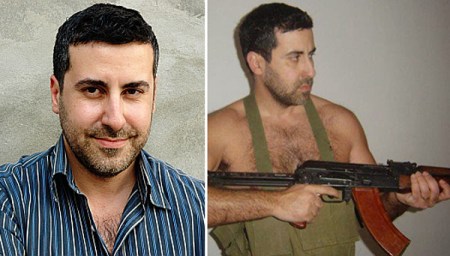
Dyab Abu Jahjah, named by the political magazine Knack as Belgium’s fourth-most influential person, said after the September 11, 2001 terror attacks that he and many Muslims had felt a “sweet revenge feeling”. In 2004, he said that he supported the killing of foreign troops in Iraq. (Left-pane image source: Han Soete/Wikimedia Commons)

Jahjah will likely experience fierce competition from the “I.S.L.A.M” party, founded in 2012, and working to implement Islamic law, sharia, in Belgium. The party already has branches in the Brussels districts of Anderlecht, Molenbeek and Liege. The party wants to “translate religion into practice”. One member explained that, “It’s no coincidence that we started in Brussels. Here there are a lot of Muslims… who are not allowed to come forward with their identity too much…They are therefore frustrated. That can lead to radicalization”.

The party has put forth a mayoral candidate for the Brussels municipal elections in 2018: Michel Dardenne, who converted to Islam in 2002. In his program, Dardenne speaks mainly of how much the party respects Belgian democracy and its constitution, while simply wanting to help an undefined populace against “the elites”. He may have found it easier to appeal to “progressive” non-Muslims that way. Brussels, 25% Muslim, has enormous potential for Islamic parties.

In France, several Islamic parties are also preparing to run in elections. One party is the PEJ, established in 2015 by French-Turkish Muslims and reportedly connected to Recep Tayyip Erdogan’s AKP. As the journalist Yves Mamou recently reported, the PEJ has already approved 68 candidates and wants to abolish the separation of church and state, make veils mandatory for schoolgirls in public schools, introduce halal food in all schools and fight “Islamophobia”.

How many Europeans are even paying attention to their agendas?

Trump Court Nominee Upheld Rights of Police Against Holder DOJ Misconduct

September 29, 2017

Trump Court Nominee Upheld Rights of Police Against Holder DOJ Misconduct, PJ MediaJ. Christian Adams, September 29, 2017

(The excerpt from an article identifying Tom Perez as the Secretary of Labor was written before Mr. Perez, an Obama appointee, was replaced by President Trump’s appointee R. Alexander Acosta, who was sworn in on April 28, 2017. — DM)

Bernstein is still employed at the Civil Rights Division.

Ironically, Bernstein’s boss is now one Tamara Kessler, an ideological partisan and law enforcement foe in her own right, whom the Obama Civil Rights Division politicos burrowed into a career civil service position at the end of the administration. (Hans von Spakovsky and I have each chronicled Ms. Kessler’s lengthy swamp pedigree before.)

***********************************

President Trump has nominated a slate of solid picks for the federal bench, including a new list of nominees this week. Among them is Kurt D. Engelhardt.

Trump nominated Engelhardt to the Fifth Circuit Court of Appeals, a district that covers the area from Alabama to the Rio Grande. Engelhardt already serves as a United States District Court judge in New Orleans.

Engelhardt will be familiar to PJ Media readers.

He is the judge who wrote a scathing 129-page order blistering the misconduct of lawyers at the Justice Department’s Civil Rights Division and the local New Orleans U.S. Attorney’s Office in a prosecution of New Orleans police officers. His order offers a look behind the curtain of some of the worst ideological misconduct that occurred at the Obama DOJ.

Misconduct may be an inadequate word to describe the behavior of DOJ lawyers, and Engelhardt saw it all up close. See PJ Media’s “Justice Dept. Lawyer Karla Dobinski’s Misconduct Sends Cops to Prison,” or Hans von Spakovsky writing at National Review: “Grotesque DOJ Misconduct“.

Here’s von Spakovsky on the Holder DOJ’s skullduggery and Engelhardt’s opinion:

Trying to figure out what the prosecutors had done sent the court “on a legal odyssey unlike any other.” But that legal odyssey led the judge on September 17 to grant a new trial to the New Orleans police officers. It is the first time, according to Judge Engelhardt, that federal “prosecutors acting with anonymity used social media to circumvent ethical obligations, professional responsibilities, and even to commit violations of the Code of Federal Regulations.”

The 129-page order, which details the misbehavior of the Louisiana DOJ lawyers and the Civil Rights Division’s Dobinski, is appalling reading. And it isn’t just that Dobinski was a high-level Justice Department lawyer who was posting anonymous blogs about the trial. She also encouraged other anonymous bloggers, who “repeatedly posted vigorous pro-prosecution statements strongly condemning the defendants, their witnesses, and their entire defense.”

If you want to see the corrupt depths that ideological lawyers in the Holder Justice Department would plumb to convict cops, read Engelhardt’s entire order.

It is a tale of deliberate and deceptive violation of the constitutional rights of police officers in order to get a conviction at any price, and of lying to the court. It is a cautionary tale of civil rights enforcement run amok from ideologically driven hatred of police — an issue that even this week continues to resonate in America.

As I wrote at PJ Media, one of the lawyers, Barbara “Bobbi” Bernstein, was criticized by the Fifth Circuit Court of Appeals for misleading Englehardt. Did her behavior hurt her career?

Quite the contrary:

Bernstein even received an award from Attorney General Eric Holder and now-Labor Secretary Tom Perez for her work after the New Orleans police trial where she made statements to the federal judge later proved to be false.

Not only did the DOJ lawyers engage in an anonymous internet campaign against the police, the Justice Department engaged in a broader abuse of power in the prosecution. Again, the federal appeals court:

[A]t least one cooperating defendant felt coerced into pleading guilty, that the sentences meted out to defendants were shockingly disparate, that FBI Agent William Bezak had used coercive tactics against a defense witness, and that the defense was deprived of live testimony by at least three witnesses who refused to testify at trial when DOJ targeted them for possible perjury charges.

Eric Holder and Tom Perez award Bobby Bernstein for New Orleans police case.

Bernstein is still employed at the Civil Rights Division.

Ironically, Bernstein’s boss is now one Tamara Kessler, an ideological partisan and law enforcement foe in her own right, whom the Obama Civil Rights Division politicos burrowed into a career civil service position at the end of the administration. (Hans von Spakovsky and I have each chronicled Ms. Kessler’s lengthy swamp pedigree before.)

The Fifth Circuit Court of Appeals also got a taste of the Justice Department misconduct and upheld Engelhardt’s dismissal of charges against the police. Upholding Engelhardt, the Fifth Circuit wrote:

These prosecutors created an air of bullying against the defendants whose rights they, especially Dobinski, were sworn to respect.

Just as a mob protesting outside the courthouse has the potential to intimidate parties and witnesses, so do streams of adverse online comments. The impact is felt not only by the defendants but by codefendants pressed to plead guilty or defense witnesses dissuaded from testifying. Preventing mob justice is precisely the goal of prosecutorial ethical constraints.

Of course, mob justice is not so out of fashion as it once was.

Police groups should take note, and thank the president for the Engelhardt nomination. So should regular Americans who appreciate the men and women who serve as a thin blue line between civilization and anarchy.

The new Persian Empire

September 29, 2017

The new Persian Empire, Israel Hayom, Clifford D. May, September 29, 2017

Decades ago, Khomeini envisioned what now seems to be coming to pass. In his 1970 book, “Velayat-e faqih” (also known as “Islamic Government”) he wrote: “We have set as our goal the worldwide spread of the influence of Islam.” Over time, he expected Iran to become so powerful that “none of the governments existing in the world would be able to resist it; they would all capitulate.”

It’s essential that Trump and his advisers grasp what too many others still have not: Iran’s rulers represent a cause, the fulfillment of “a dream of imperial rule,” as Kissinger phrased it. If the United States does not stop them – if, on the contrary, they continue to manipulate Americans into assisting and enabling them in Syria and elsewhere – no one else will stand in their way.

********************************

Eleven years ago, Henry Kissinger famously said that Iran’s rulers must “decide whether they are representing a cause or a nation.” If the latter, Iranian and American interests would be “compatible.” As for the former: “If Tehran insists on combining the Persian imperial tradition with contemporary Islamic fervor, then a collision with America is unavoidable.”

Since then, Iran’s rulers have left no room for doubt. They’ve been aggressively spreading their Islamic Revolution and constructing what can only be called a new Persian Empire. That will surprise no one who has seriously studied the ideology of Ayatollah Ruhollah Khomeini, founder of the Islamic republic. What might: Their project has received significant support from the United States.

I’m not suggesting that was the intention of American policymakers. But it’s certainly been the result. The toppling of Saddam Hussein by President George W. Bush in 2003 eliminated Iran’s archenemy and rival. That might not have been a serious dilemma had Iraq subsequently been transformed into a reliable American ally.

But you know what came next: an insurgency, waged by al-Qaida in Iraq reinforced by Saddam loyalists. Iranian-backed Shia militias also went to war against American troops in Iraq. Eventually, Bush ordered the “surge.” American troops under the leadership of Gen. David Petraeus fought alongside Sunni tribes brutalized by al-Qaida and fearful of Iran. In the end, this alliance decimated jihadi forces in Iraq – Sunni and Shia alike.

By 2011, Iraq was, as then-President Barack Obama declared, “sovereign” and “stable.” He also called it “self-reliant,” which was incorrect. The U.S. military, in coordination with U.S. diplomats, had been balancing powers and brokering interests among Iraq’s Shia, Sunni and Kurdish communities. Once Obama withdrew American troops, the erosion of Iraq’s stability and sovereignty was inevitable.

Iran’s rulers began twisting arms in Baghdad, in particular encouraging Shia sectarianism. Iraq’s Sunnis now had no defender other than al-Qaida which, with the Americans gone, was revived and reincarnated as the Islamic State.

Which brings us to the present. The U.S. is playing a key role in the defeat of the Islamic State in Syria and Iraq. Journalists are reporting that as a victory. Historians of the future may disagree. If the territories taken from the Islamic State are bequeathed to the Islamic republic, American troops will have served, objectively, as Iran’s expeditionary forces.

This would not be the only critical support the U.S. has given to the clerical regime. In the early years of the Obama administration, serious sanctions hobbled Iran’s economy and restricted its offensive capabilities. But the pressure was significantly relieved in exchange for an interim agreement on Iran’s nuclear weapons program.

Next came the final agreement, the Joint Comprehensive Plan of Action, and the lifting of most sanctions, coupled with the tens of billions of dollars in frozen oil revenues Iran received directly from the U.S. and the hundreds of billions more it will receive from European and Asian trade and investment.

This windfall has allowed Iran’s rulers to defend their Syrian satrap, Bashar al-Assad, both with their own elite forces and those of Hezbollah, their Lebanon-based proxy militia. They also have organized and funded Shia militias in Syria and Iraq.

Thousands of Afghan and Pakistani Shia are being recruited for those militias. They reportedly receive salaries of $600 a month and promises of future employment in Iran, assuming, of course, that they survive. Others may stay permanently in Syria. In other words, Iran’s imperial project is becoming a colonial project as well.

I’m among those who believe President Donald Trump was correct not to give up on Afghanistan. The consequences of defeat at the hands of the Taliban and al-Qaida would have been dire – if not immediately, then over the long term. That said, the strategic value of Afghanistan pales in comparison with that of Syria and Iraq, the heart of the Arab/Muslim Middle East. If we can’t win everywhere – though I hope that, as a superpower, we can – there’s no question where our priorities should lie.

Imagine what it will mean if Iran succeeds in becoming the hegemon in Iraq, Syria and Lebanon; also Yemen, which sits on one of the world’s most strategic waterways. Imagine, too, if this incipient empire goes on to acquire nuclear weapons and the means to deliver them to American targets – an eventuality delayed but not halted under the flawed JCPOA.

Jordan, Kuwait, Bahrain, Saudi Arabia, Israel and other countries would be seriously threatened. Using Syrian ports on the Mediterranean, Iran would extend its influence westward as well.

For Machiavellian reasons, Russia’s Vladimir Putin supports these ambitions. North Korea, a client of China, cooperates with Iran’s rulers – on missile development, illicit financial networks and perhaps nuclear weapons – even as it hones its own ability to threaten Americans.

Decades ago, Khomeini envisioned what now seems to be coming to pass. In his 1970 book, “Velayat-e faqih” (also known as “Islamic Government”) he wrote: “We have set as our goal the worldwide spread of the influence of Islam.” Over time, he expected Iran to become so powerful that “none of the governments existing in the world would be able to resist it; they would all capitulate.”

It’s essential that Trump and his advisers grasp what too many others still have not: Iran’s rulers represent a cause, the fulfillment of “a dream of imperial rule,” as Kissinger phrased it. If the United States does not stop them – if, on the contrary, they continue to manipulate Americans into assisting and enabling them in Syria and elsewhere – no one else will stand in their way.

MUST BE SEEN Former Hamas member defends Israel at the UN !

September 29, 2017

https://www.youtube.com/watch?v=MsmaRNoLU-E

Mosab Hassan Yousef (formerly of Hamas) shocks the UN Human rights Council by defending Israel against the Palestinian Authority.