Archive for May 2017

Missile defense damns Obama ‘flexibility’

May 31, 2017

Missile defense damns Obama ‘flexibility’, American Thinker, Daniel John Sobieski, May 31, 2017

Tuesday’s missile defense test, in which a ground-based interceptor successfully intercepted an ICBM over the Pacific, was both a warning to North Korea and another indication that America is back.  The test was in the works before Trump took office, but it comes on an administration welcoming improvements in missile defense versus the prior Obama administration that used back channels to give it away to Putin and the Russians.

As the Washington Examiner reported:

The U.S. Missile Defense Agency successfully shot down a dummy warhead in space over the Pacific Ocean Tuesday during a test of a missile defense system that would protect the country from intercontinental ballistic missiles like the ones being developed by North Korea.

“During the test, an ICBM-class target was launched from the Reagan Test Site on Kwajalein Atoll in the Republic of the Marshall Islands,” said a statement from the agency. “A ground-based interceptor was launched from Vandenberg Air Force Base, California, and its exo-atmospheric kill vehicle intercepted and destroyed the target in a direct collision.”

The irony of the interceptor being launched from a facility with Ronald Reagan’s name on it should escape no one.  President Reagan dreamed of a multi-layered missile defense most derided as “Star Wars.”  He dreamed of preventing or deterring a nuclear attack, not merely avenging one.  Perhaps he might have also had in mind the danger posed from rogue regimes such as North Korea and Iran.

We see Reagan’s legacy in the Aegis missile cruisers and destroyers that can be deployed in troubled waters around the globe.  We see it in the THAAD theater missile defense recently deployed to South Korea.  All of this President Barack Hussein Obama opposed.

Missile defense systems are systems President Obama has long opposed as “Cold War” weapons.  When President Obama took office in January 2009, sitting on his desk were President George W. Bush’s plans for the deployment of ground-based missile interceptors, such as are deployed at Fort Greely, Alaska, in Poland, as well as missile defense radars in the Czech Republic.

As Investor’s Business Daily noted over a year ago, President Obama had other plans.  His betrayal of our allies was ironically exquisite:

Yet within hours of Medvedev’s election as president in 2008, the Russian announced that Moscow would deploy SS-26 missiles in his country’s enclave of Kaliningrad situated between our NATO allies Poland and Lithuania.

He wanted the U.S. to abandon plans to deploy missile interceptors in Poland and warning radars in the Czech Republic designed to counter a future threat from Iran.

What did President Obama do? He caved in and notified the Poles in a midnight phone call on Sept. 17, 2009 – the 70th anniversary of the Soviet Union’s invasion of Poland – that we were pulling the plug on that system due to Russian objections.

Putin then watched in 2012 as Obama promised Medvedev at the Nuclear Security Summit in Seoul, South Korea, that after his re-election he would have more “flexibility” to weaken missile defense, which would help him fulfill his dream of U.S. disarmament.

Putin know full well Obama’s weakness in responding to any foreign threat to U.S. interests and security.  President Obama was our Neville Chamberlain, promising “peace in our time” as he invited war with weakness, apologies, and appeasement.  It was he who colluded with the Russians to threaten American national security in the “back channel” conversation with Medvedev that fell victim to an open mic.

Thanks largely to President George W. Bush and his push to fulfill President Ronald Reagan’s dream, the continental United States and overseas allies are protected against missile attack by 30 deployed long-range ground-based interceptors (GBI), 32 Navy ships armed with over 100 SM-3 IA interceptors and two dozen advanced SM-3 IB interceptors, dozens of Terminal High-Altitude Area Defense (THAAD) interceptors, and eight X-band missile defense radars deployed abroad.

It was Obama who proved to be Russia’s and Putin’s lapdog.  Trump may have the chance to fire a second shot heard around the world, securing America’s freedom and very existence.  When that pudgy little man-child gets his latest toy, just shoot that North Korean ICBM test down.


After years of empty U.S. promises, Trump arms Kurds fighting ISIS in Syria

May 31, 2017

After years of empty U.S. promises, Trump arms Kurds fighting ISIS in Syria, Hot Air, Andrew Malcolm, May 31, 2017

Now, Kurdish and Arab troops in Syria, working with U.S. Special Forces, will have their own armored cars, heavy machine guns, bulldozers, antitank weapons and mortars because as one Pentagon spokesman put it, the Kurds are the “only force on the ground that can successfully seize Raqqa in the near future.”

**********************

About time.

Finally, after years of dangerous dawdling the United States has actually begun arming Kurdish soldiers fighting ISIS in Syria.

Weapons supplies had been stockpiled nearby in anticipation of President Trump’s go-ahead, which came Monday. The armament distributions, which the commander-in-chief approved despite fierce opposition from NATO ally Turkey, will enable the tough Kurdish fighters to participate more aggressively in the imminent assault on the de facto ISIS capital of Raqqa.

The Obama administration talked of arming the Kurds, who also led the anti-ISIS fighting in northern Iraq, but wilted in the face of resistance from the Baghdad central government and Turkey. More than $200 million in armaments were earmarked for the Kurds and left behind in the Iraqi capital when Obama withdrew all U.S. troops in 2011. But somehow they never reached the Kurds, who were often left fighting ISIS forces that had better U.S. equipment captured from fleeing Iraqi troops.

Now, Kurdish and Arab troops in Syria, working with U.S. Special Forces, will have their own armored cars, heavy machine guns, bulldozers, antitank weapons and mortars because as one Pentagon spokesman put it, the Kurds are the “only force on the ground that can successfully seize Raqqa in the near future.”

The arming decision comes as Secy. of Defense James Mattis has ordered changes in strategy against ISIS. Mattis describes the change as moving from an “attrition strategy,” which allowed ISIS fighters to escape current battles, to an “annihilation strategy,” which involves encirclement and total destruction. Mattis has also given battlefield commanders increased leeway in decision-making, which under Obama often involved seeking time-consuming approval all the way back to the White House.

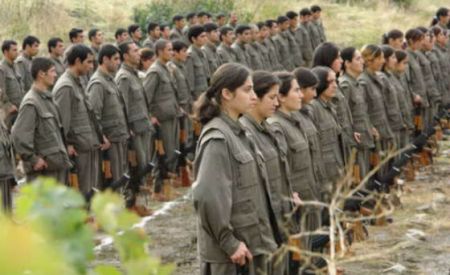
Unhappy Turkish officials were informed of Trump’s decision Monday. They regard the Kurdistan Workers Party, P.K.K., as separatist terrorists within Turkey’s borders. Indeed, the U.S. and European allies also list the PKK as a terrorist outfit. However, the U.S. recognizes the separate People’s Protection Units of the Y.P.G. as an ally with the most experienced fighters. Bottom line: The more fighting the valiant Kurds do, the less potential involvement of U.S. forces.

Turkey made its position clear last month by bombing Kurdish units fighting in Syria with the U.S., dashing hopes that President Recep Erdogan would modify his position since he’s consolidated power.

To mollify Turkish concerns, Pentagon officials said the new arms will be doled out only according to the needs of the upcoming assignments. And they said every weapon would be accounted for afterward.

Uh-huh, right.

Jostling NATO’s status quo

May 31, 2017

Jostling NATO’s status quo, Washington Times, Robert W. Merry, May 30, 2017

NATO Irrelevance and Russia Illustration by Greg Groesch/The Washington Times

Europe doesn’t need any U.S. umbrella in order to protect itself from external threats because it faces no such threats that require U.S. assistance. Its only serious outside threat is unchecked immigration of such magnitude, and of such cultural challenge, that any smooth assimilation will be extremely difficult, perhaps impossible. We only need to look at what’s roiling European politics these days to see that this threat agitates the European mind far more than any potential Russian hostility.

But don’t expect today’s establishment thinkers to incorporate those realities into their thinking. The status quo is too comfortable, however shattered it may be in the real world.

******************************

ANALYSIS/OPINION:

In politics and geopolitics, people tend to cling to the old ways of thinking like a drowning man in a stormy sea clings to a life preserver. Case in point: NATO. Consider the reaction to President Trump’s performance at last week’s summit of the venerable Atlantic alliance, where he chided the Europeans for not hitting defense spending targets and seemed to avoid — somewhat pointedly, some thought — the standard expressions of devotion to NATO’s Article 5, which commits NATO members to consider an attack on one to be an attack on all.

“Donald Trump,” declared neoconservative thinker David Frum in The Atlantic, “is doing damage to the deepest and most broadly agreed foreign policy interest of the United States.” He called Mr. Trump’s overseas trip “an utter catastrophe.” Henry Farrell, writing in The Washington Post, called it “disastrous.” The New York Times said the president’s “repeated scolds” in Europe “are not just condescending but embarrassing.”

With so many establishment institutions and figures singing the same angry ballad, it must mean something. And it does: that they continue to cling to the old ways of thinking even as events demonstrate that those old ways no longer fit reality. The more that becomes apparent, the more tenaciously they grasp the status quo.

The New York Times gave the game away in calling NATO “an indisputably important alliance that has kept the peace for 70 years.” That’s demonstrably false. NATO kept the peace, brilliantly and heroically, for 41 years — from 1948, when it was established, until 1989, when its reason for existence expired with the downfall of the Soviet Union. Since that time, NATO not only hasn’t kept the peace (peace was largely a result of improved circumstances) but has been fomenting tensions that constitute an ominous flash point of potential war.

Consider the realities of the Cold War, when Bolshevik Russia had 1.3 million Soviet and client-state troops poised on Europe’s doorstep, including 300,000 in East Germany. Now that’s a threat, and NATO was created to deter that threat. That it did so, while the United States pursued its containment policy with varying degrees of sternness and effectiveness but ultimately with success, is a testament to the persistence and boldness of U.S. leadership at a harrowing time.

Those days are long gone. Now it is NATO that is threatening, adding 12 countries since the end of the Cold War and angling to bring in several more. It has pushed right up to the Russian border, a development that any country in Russia’s position would consider incendiary and a security threat. Indeed, in 2008, Russia warned the West about further eastward expansion by NATO, particularly into Ukraine and Georgia. U.S. Ambassador William Burns warned Washington that Russia considered further NATO enlargement to be “a potential military threat an emotional and neuralgic issue.”

Yet just two months later NATO officials declared that the alliance “welcomes Ukraine’s and Georgia’s Euro-Atlantic aspirations for membership in NATO.” Six years after that the United States helped foster a coup against Ukraine’s democratically elected (though corrupt) leader in order to bring to the country a more Western-oriented leadership, more attuned to moving westward into the European orbit.

When Russia responded as it warned it would, preventing Ukraine from being extricated fully from its sphere of influence, the cry went up throughout Europe and America: Russian aggression; it must be stopped; it threatens all of Europe.

And yet when President Trump last week pressured NATO nations to increase their defense spending to 2 percent of gross domestic product, European leaders reacted as if they had been beset by a menacing dog. German Chancellor Angela Merkel told a crowd in southern Germany, “The times in which we could completely depend on others are on the way out. I’ve experienced that in the last few days. We Europeans truly have to take our fate into our own hands.”

What a thought. It has a ring similar to what Mr. Trump said during the late campaign (which he since has backed away from) — namely, that NATO is obsolete. NATO put all of Europe under an American security umbrella. Now nearly all of Europe and America, having pushed up against Russia, say the West is once again under threat from Russia. But, when Mr. Trump suggests the European powers should bolster their defense spending to meet that threat, the nettled Europeans respond that they can’t take that kind of abuse, they’re just going to have to separate from America.

But what about that Russian threat? Won’t Ms. Merkel want to get back under that security umbrella when the Russian bear growls and gets up on his hind legs with ominous malignity, threatening the Continent as in Cold War days?

The fact is that the Russian bear constitutes no such threat, and Mrs. Merkel knows it. A further fact is that Europe doesn’t need any U.S. umbrella in order to protect itself from external threats because it faces no such threats that require U.S. assistance. Its only serious outside threat is unchecked immigration of such magnitude, and of such cultural challenge, that any smooth assimilation will be extremely difficult, perhaps impossible. We only need to look at what’s roiling European politics these days to see that this threat agitates the European mind far more than any potential Russian hostility.

But don’t expect today’s establishment thinkers to incorporate those realities into their thinking. The status quo is too comfortable, however shattered it may be in the real world.

Whose Side are You on?

May 31, 2017

Whose Side are You on? Front PageMagazine, Daniel Greenfield, May 31, 2017

(What would Bill Buckley say? — DM)

 “The only time Republicans show an appetite for blood is when they are fighting each other,” David Horowitz has said.

And that is exactly what is happening here. Republicans are more eager to investigate each other than Hillary Clinton’s crimes or Barack Obama’s shocking spying on his conservative political opponents.

But it’s safer to fight other Republicans. No one will call you a racist. The media might even praise you.

********************************

Here’s the good news.

It’s 2017 and Republicans control the White House, the Senate, the House and more statewide offices than you can shake a big bundle of fake news papers at. And, potentially soon, a Supreme Court that takes its guidelines from the Constitution not Das Kapital and the National Social Justice Party.

Here’s the bad news, Republicans are still Republicans.

Whether it’s Flynn, Bannon, Gorka, Kushner, Clarke, they are all too eager to fall for the latest left-wing scandal. The media throws some chum in the water and watches the bloody fun as Republicans go after Republicans. Scandals are manufactured and strategically aimed to divide and conquer Republicans.

But the real target is the conservative agenda.  Bogging down the White House in scandals keeps it from dismantling more of Obama’s regulations and orders. Every milligram of oxygen that foolish conservatives give the left’s narratives is a milligram taken from the lungs of the conservative agenda.

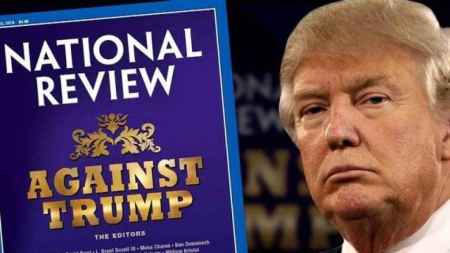
At the National Review, Jim Geraghty, who has loathed Trump since Day 1, seizes on the latest scandal targeting Jared Kushner. In recent days, the National Review has run four pieces on the fake scandal.

That’s an odd preoccupation for a conservative publication that ought to be more concerned with conservative policy priorities than parsing the shibboleths that the left is firing at President Trump.

But the National Review occupies a peculiar space between the Never Trumpers who have found cushy jobs on MSNBC and at the New York Times and mainstream conservative support for President Trump. It isn’t ready to leave the movement, but instead it insists on echoing media criticisms in a softer tone.

The Review takes the tone that it’s just asking questions. Those questions just happen to be the same ones that the media keeps on asking. If the mainstream media reads like an angry partisan blog, then the National Review sounds the way that the media used to when it was just biased instead of fake.

It just so happens that the Review is full of innumerable stories and posts about every media scandal. And its preferred pose is innocence. Like the rest of the media, it’s just asking questions.

What’s the big deal?

“What I don’t get is any reflexive defense of . . . Jared Kushner. Trump earned your vote, and presumably, some amount of trust. What did Kushner ever do for you?” Geraghty protests.

Presumably. In Geraghty’s world, winning the votes of conservatives, shouldn’t necessarily earn trust.

Conservatives though understand it’s not about “loyalty” to Kushner, Flynn, Gorka, Flynn, Clarke or even Trump. Instead it’s about loyalty to a conservative agenda. All politicians and political appointees are flawed. The left wins by using Alinsky’s Rule 4. Conservatives lose by falling into the trap of Rule 4.

“Make the enemy live up to its own book of rules.”

The left doesn’t care about any supposed back channel to Russia. This is the radical movement whose great leader was caught on the microphone assuring Putin’s bag man that he would have more “flexibility” after the election. Obama didn’t just have back channels to Russia, he had back channels to Iran and Hamas.

It’s about destroying the conservative agenda.

Anyone who thinks that the left has problems with them because of anything they did or said has forgotten that NKVD boss Beria’s “Show me the man and I’ll find you the crime” is the premise of his fellow leftists’ “resistance” to democracy.

And that, as no less a lawyer than Alan Dershowitz has said, is the kind of case we’re dealing with here.

It’s a swamp of innuendo based on anonymous sources, investigations fed by illegal eavesdropping, scandals in which the outrage comes before the evidence whose purpose is to overturn an election.

Passing the conservative agenda requires that most elusive of qualities, conservative solidarity. That means realizing that it’s not about loyalty to Kushner or even Trump. It’s about not letting the left drag the conservative agenda off the road and into its putrid swamp of lies and manufactured scandals.

Lately the National Review seems far more interested in conservative scandals than left-wing ones. There are few mentions of what Obama, Hillary Clinton, Bernie Sanders, Tom Perez and the likely 2020 contenders are up to. There has been nothing this month at the Review on Cory Booker, nothing direct on Biden and glancing passes at Elizabeth Warren. But Republicans are more fun to attack.

“The only time Republicans show an appetite for blood is when they are fighting each other,” David Horowitz has said.

And that is exactly what is happening here. Republicans are more eager to investigate each other than Hillary Clinton’s crimes or Barack Obama’s shocking spying on his conservative political opponents.

But it’s safer to fight other Republicans. No one will call you a racist. The media might even praise you.

Never Trump Republicans think that the media hates Trump. It doesn’t hate Trump. It hates them. Republicans have varied reactions to Trump. Leftists have only one reaction to anyone to the right of them. It’s the same reaction you get if you send an ISIS member into Temple Beth Shalom.

The leftist faction lecturing Republicans about decency, national security and the rule of laws punches political opponents in the face, creates back channels to Islamic terrorists in Iran, smuggles billions to fund their terror, and sends the IRS after political opponents. Is their moral authority worth anything?

No conservative agenda will ever be passed without conservative solidarity. Until the left gets the message that it will never overturn the results of this last election, it will keep trying. Conservatives can squash this fascist fantasy only by making it clear that there will never be an impeachment and that they will respond to investigations the way that Rep. Elijah Cummings did to the investigation of Benghazi.

The left can’t stop a conservative agenda. Only the lack of conservative solidarity can do that.

As David Horowitz pointed out in Big Agenda: President Trump’s Plan to Save America, Republicans lack the will to fight the left on its own terms, because they fail to understand what drives the left.

The media drives the left’s narratives in the name of fulfilling its agenda. A conservative media ought to drive conservative narratives instead of regurgitating the agendas and ambitions of the mainstream media.

When the National Review echoes the left’s political narratives, it achieves the left’s political agendas.

Powerful pro-Iran Badr Brigades to enter Syria

May 31, 2017

Powerful pro-Iran Badr Brigades to enter Syria, DEBKAfile, May 31, 2017

Their entry into Syria could raise the total of pro-Iranian Shiite forces fighting in Syria to 80,000 to 100,000 troops.

For Israel, Hizballah’s hostile penetration of Syrian borders abutting its territory is child’s play compared with a major military force capable of transforming Syria into a huge staging area for Iranian aggression against the Jewish state.

****************************

Hadi al-Amiri, commander of the strongest Iraqi Shiite militia, the Badr Brigades, said Wednesday, May 31, that his forces are preparing to enter Syria. The advanced capabilities of this powerful Iranian-led militia, would tilt the Syrian war strongly in Iran’s favor, with alarming ramifications for the US, Israel and Jordan.

Al-Amri, in making this announcement, cited Iran’s new slogan: “Iraq’s security will be maintained only if Syria’s security is preserved.” In other words, the Syrian conflict would end only when pro-Iranian Shiite militias, including Hizballah, control Syria like they control Iraq.

DEBKAfile’s military and intelligence sources report that the Badr Brigades’ path into Syria was secured this week when an Iraqi Shiite conglomerate breached the Iraqi-Syrian border in the north, on the orders of Al Qods chief Gen. Qassem Soleimani. This opened Iran’s coveted overland corridor through Iraq to Syria.

The combat capabilities of the Badr Brigades, estimated at between 30,000 and 50,000 strong, are impressive. One of the most professional and well-trained military forces in Iraq, its recruits receive instruction at special camps operated by Revolutionary Guard Corps on Iranian soil. The militia consists of special forces, tank, mechanized infantry, artillery and antiaircraft units. The high quality of their munitions may be seen in the photo at the top of the story.

Their entry into Syria could raise the total of pro-Iranian Shiite forces fighting in Syria to 80,000 to 100,000 troops.

Intelligence sources expect the Badr Brigades to first head south towards the Deir ez-Zor area to link up with the Syrian Arab Army and Hizballah forces, which are threatening the US special forces and allied hold on a key crossing that commands the triangle where the Jordanian, Syrian and Iraqi borders meet.

They would need to cover 230km from Palmyra to Deir ez-Zor, the while fighting small, scattered ISIS concentrations. Wednesday, May 31, Russia came down on the side of Tehran, with a cruise missile strike on ISIS targets around Palmyra. They were fired from the missile frigate Admiral Essen and the submarine Krasnodar for the purpose of softening jihadi resistance to the Badr Brigades’ southward advance.

The consequences of this massive pro-Iranian intervention in the Syrian war are dire for the US, Israel and Jordan. For Washington, it lays the ground for Tehran’s domination of Syria – in the face of President Donald Trump’s solemn vows to prevent this happening.

For Israel, Hizballah’s hostile penetration of Syrian borders abutting its territory is child’s play compared with a major military force capable of transforming Syria into a huge staging area for Iranian aggression against the Jewish state.

Jordan’s foreboding comes from its judgment that pro-Iranian Shiite militias sitting on its borders are a greater threat even that ISIS.

Read more about this pivotal development in the coming issue of DEBKA Weekly. If you are not yet a subscriber, click here to sign on.

Satire | ‘Washington Post’ Reporter Frustrated Every Space In Parking Garage Taken Up By Anonymous Source

May 31, 2017

‘Washington Post’ Reporter Frustrated Every Space In Parking Garage Taken Up By Anonymous Source, The Onion, May 30, 2017

WASHINGTON—Circling every level multiple times with no luck whatsoever, Washington Post reporter Philip Rucker was frustrated Tuesday that every space in the parking garage was taken up by an anonymous source. “I’ve gone around and around, but I can’t find a single spot that isn’t already filled by an unidentified White House leaker,” said an exasperated Rucker, who recalled how easy it was to nab a prime parking place to clandestinely receive privileged information only a few short years ago. “It’s such a nightmare driving all the way to the very top of the whole fucking structure to hold a secret meeting with an informant and then have to squeeze into a spot reserved for compact cars that another journalist who’s meeting with a whistle-blower is halfway parked in anyway. Seriously, I have to start scheduling these rendezvous earlier, because as soon as dusk settles in, you can forget it.” At press time, Rucker was idling his car near the space occupied by a New York Times reporter who had just received a thumb drive and appeared to be wrapping things up.

Donald Trump Will Exit Paris Climate Change Agreement

May 31, 2017

Donald Trump Will Exit Paris Climate Change Agreement, BreitbartCharlie Spiering, May 31, 2017

(Maybe the reports are accurate, maybe they aren’t. We should know soon. — DM)

© AFP SAUL LOEB

President Donald Trump has decided to withdraw from the Paris Climate Agreement, according to a report fromAxios reporter Jonathan Swanciting two sources with knowledge of the decision.

The news was confirmed by several mainstream media outlets.

The decision wreaks havoc on former President Barack Obama’s legacy as president, despite pleas from world leaders for the United States to show leadership on climate change and remain in the agreement

Trump’s decision fulfills a key campaign promise to supporters of his run for president, widely supported by Republican members of congress who felt that the treaty unfairly jeopardized the American economy.

Opponents of the climate deal were concerned after White House economic advisor Gary Cohn told reporters that the president was “evolving on the issue” during his trip overseas.

His daughter Ivanka and son-in-law Jared Kushner reportedly channelled support for the deal behind the scenes at the White House, encouraging climate change activists that Trump might change his mind. Trump’s Secretary of State Rex Tillerson, the former Exxon CEO, also supported remaining in the treaty.

On May 9th, Obama defended his climate change legacy, calling the agreement “the one that will define the contours of this century more dramatically perhaps than any other.” In October 2016, Obama described the deal as “the best possible shot to save the one planet we’ve got.”

New York and Washington elites agreed, downplaying the future of coal as an energy source and urging more federal subsidies for wind and solar investments.

Trump’s EPA Secretary Scott Pruitt and White House senior advisor Stephen K. Bannon urged the president to keep his campaign promise to kill the agreement and put American energy and job growth first.

Congress to Host Anti-Israel Forum, Sparking Outrage on Hill

May 30, 2017

Congress to Host Anti-Israel Forum, Sparking Outrage on Hill, Washington Free Beacon, May 30, 2017

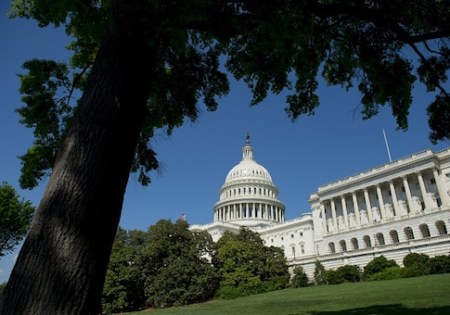
The US Capitol is seen in Washington, DC, April 28, 2017. / AFP PHOTO / SAUL LOEB (Photo credit should read SAUL LOEB/AFP/Getty Images)

Congress is scheduled to host an anti-Israel forum that takes aim at the Jewish state’s military, accusing it of “systematic discrimination” against those living in the “occupied Palestinian territory,” according to an invitation for the event circulating on Capitol Hill that has sparked outrage among pro-Israel lawmakers.

The event, which is sponsored by a member of Congress who has chosen to remain anonymous, will feature several anti-Israel organizations that back boycotts of the Jewish state and distribute propaganda accusing the Israeli military of human rights violations, according to an invitation to the June 8 briefing obtained by the Washington Free Beacon.

The event, “50 Years of Israeli Military Occupation & Life for Palestinian Children,” has riled several pro-Israel offices on the Hill and sparked a search for the anonymous lawmaker who has provided the organization space in room 122 of Capitol Hill’s Cannon House Office Building, according to conversations with multiple sources.

A number of anti-Israel groups have attempted to hold briefings on Capitol Hill in the past months, with one group of Israel-boycott backers being forced to cancel a briefing after news of the event spilled into public following a report by the Free Beacon.

That event was sponsored by Rep. Sheila Jackson Lee (D., Texas), who only stepped forward publicly after House Minority Leader Nancy Pelosi (D., Calif.) learned about the forum and demanded it be cancelled.

Sources who spoke to the Free Beacon about Thursday’s event—which is being sponsored by a network of anti-Israel activists and boycott supporters tied to the Evangelical Lutheran Church of America and other Christian groups known for their anti-Israel activism—said that the event seeks to spread anti-Israel propaganda aimed at undermining the Jewish state.

“This event is textbook propaganda aimed to perpetuate anti-Israel falsehoods and misconceptions,” said one senior congressional source familiar with the event and its sponsors.

The member of Congress who is sponsoring the event should publicly step forward and proclaim their support, the source said.

“Any member willing to sponsor this event should do so publicly,” said the official. “Come forward and defend your decision to host this Israel-bashing forum.”

Supporters of these groups are being asked to contact their senators and congressman to “urge them to attend this important briefing to learn more about the struggles of Palestinian children,” according to the event invitation, which further urges activists to ask lawmakers “to work for an end to 50 years of military occupation.”

Groups involved in organizing the event include several advocacy organizations known for their criticism of the Israel Defense Forces, or IDF. They include the Defense for Children International-Palestine and American Friends Service Committee, which operate an affiliated advocacy group dedicated to accusing the IDF of various crimes against humanity.

These organizations have been cited by pro-Israel organizations and watchdog groups for their promotion of anti-Israel propaganda and false information about the IDF.

Speakers scheduled to attend the event include: Omar Shakir, the Israel and Palestinian director for Human Rights Watch, which routinely criticizes Israel; Brad Parker, the staff attorney and international advocacy officer for Defense for Children International-Palestine, a group that backs Israel boycotts; Nadia Ben-Youssef, director of the Adalah Justice Project, which has accused Israel of “genocide”; and Yazan Meqbil, a Leonard Education Scholar and student at Goshen College.

The panelists, several of whom have been cited by experts for their vocal anti-Israel activism, are tasked with examining “how persistent human rights violations, systematic impunity, discrimination, and a hyper-militarized environment affect the lives of the Palestinian children growing up under a military occupation with no end in sight,” according to the invitation for the event.

One senior official at a D.C.-based pro-Israel organization told the Free Beacon that lawmakers are being alerted about the event and its agenda.

“It wouldn’t be surprising if whoever is backing this disgraceful event in Congress chose to stay anonymous,” said the source. “Usually lawmakers scramble to take credit for whatever they can. But on an issue like Israel, where there is overwhelming public support for a strong relationship with a critical ally, it’d be understandable if someone didn’t want to put their name on it.”

An email to the American Friends Service Committee, one of the forum’s main organizers, seeking further information about which lawmaker is sponsoring the event was not returned by press time.

Jerry Boykin – Secretary Mattis: Focus on War-Fighting, Ditch the Social Engineering

May 30, 2017

Jerry Boykin – Secretary Mattis: Focus on War-Fighting, Ditch the Social Engineering, BreitbartLt. Gen. (Ret.) Jerry Boykin, May 30, 2017

(Warning: Politically incorrect content. — DM)

The Associated Press

The head of the United States Pacific Command, Admiral Harry B. Harris, Jr., testified before the House of Representatives in late April that the threat posed by North Korea has grown sufficiently to endanger the Hawaiian Islands. All around the globe, serious national security problems are coming to the fore in places like Iran, Venezuela, Afghanistan, and the South China Sea. Yet, because of holdover personnel from the Obama administration, and damaging Obama-era policies remaining in place, our military continues flailing.

On June 30, 2016, Secretary of Defense Ashton Carter announced that transgender service members would no longer be discharged from military service solely for being transgendered. Later, the Department of Defense (DOD) announced that as of July 1, 2017, transgender recruits would be accepted into the military. The DOD took these steps even though transgender personnel are likely to need medical, surgical, and psychological care that undermines their readiness for battle by rendering them non-deployable.

Acutely aware of the geopolitical problems we face, President Trump announced his intention to restore the strength of our military. Americans appreciated the priorities described by Secretary of Defense James Mattis during his confirmation hearing: mission readiness, command proficiency, and combat effectiveness. Unfortunately, the implementation of President Obama’s transgender policies did not consider the impact that “transitioning” personnel would have on military readiness and combat effectiveness.

The arguments used by the Obama Administration to support its transgender policy changes stemmed from a few politically correct reports produced by well-funded LGBT activist organizations. The first “study” was released in August 2013 by the pro-LGBT Williams Institute in partnership with the National Gay and Lesbian Task Force. The next March, a private, non-governmental “Transgender Military Service Commission,” headed by Surgeon General Jocelyn Elders, released a report through the pro-LGBT think tank, the Palm Center. These two private studies and the various government reports and directives that followed have not focused on how the new transgender policies will affect military readiness and war-fighting effectiveness – the core function of the armed forces. Nor were these policy changes mandated by the Congress.  Rather, they were driven by bureaucratic reinterpretations of existing law. Given the magnitude of these changes, it would seem wise to halt the process and seek congressional guidance and statutory language.

In fact, just before the DOD issued the transgender policy change, the Center for Medicare and Medicaid Services refused to provide national coverage for gender reassignment surgery citing insufficient studies about the health outcomes of such surgeries and small sample sizes in the studies that have been conducted. However, DOD is now requiring taxpayers to foot the bill for gender reassignment surgery, with no benefit to the taxpayer or the military.

If implemented as planned, these transgender policies will require our military to assume the risks of recruiting and retaining persons who may require long-term medical treatment. Such procedures and physical changes often produce uncertain results associated with higher rates of depression and suicide. “Transitioning” service members require that the government bear the cost of hormone treatments, surgery, and post-operative care. This creates a tremendous incentive for individuals to join the military in order to receive the costly medical procedures associated with “transitioning,” since transgender individuals cannot be excluded from joining. And it’s difficult to see how any person undergoing this process would be deployable and combat-ready. What’s more, the time taken away from commanders’ combat-related duties while they take on the responsibilities of medical case workers is significant.  It’s unfair to expect them to be judged on their ability to oversee medical-psychological cases like these.

We do welcome the Pentagon’s recent nullification of an October 2016 directive imposing “open-door” shower and bathroom guidelines on all DOD schools. But continuing implementation of Obama’s transgender policies ignores the strongly-felt concerns of women who do not want to be exposed to individuals of the opposite sex in facilities which offer minimal privacy.  This is a particular problem when the incidence of rape in the military is so severe.

I received a letter from a known but confidential source in the naval service who asked me to inform the command structure in Washington about the damaging effects of these policies:

As part of the policy, CO’s must facilitate the requests of individuals for transgender treatment (surgery, cross-hormonal therapy, etc.)….  [O]nce the service member is considered “stable” in their preferred gender, and their “gender marker” is changed in a DoD database, they must be accommodated in the berthing and bathroom facilities of their preferred gender regardless of whether they still possess their opposite sex anatomy!  (And most are expected to do so).  Given the close living quarters that most military members have to share, this is particularly distressing to many of us, especially women.

These policies will ultimately undermine recruitment and retention.

Secretary Mattis must consider the many complex ramifications of these Obama-era policies that remain in effect. The DOD and the Congress need to ensure the priorities of the U.S. armed forces remain those that the Secretary has outlined:  mission readiness, command proficiency, and combat effectiveness.  Holdover personnel from the Obama Administration need to focus on these new priorities, and not on the last Administration’s social engineering projects that ignore military readiness.

Lt. Gen. (Ret.) William G. “Jerry” Boykin serves as Family Research Council’s executive vice president. He spent 36 years in the Army, serving his last four years as deputy undersecretary for intelligence in the Department of Defense.

Byron York: While other controversies rage, work on border wall moves forward

May 30, 2017

Byron York: While other controversies rage, work on border wall moves forward, Washington Examiner, May 29, 2017

(Please see also, FULL MEASURE: May 28, 2017 – Price of Power on how Congress “works.”  — DM)

New revelations come almost by the minute in the Trump-Russia affair. The White House moves into full-defense mode. The Trump agenda stalls on Capitol Hill.

A reasonable observer might conclude that is all that is happening in the Trump administration. But even as those troubles fill news sites and cable TV, administration officials are quietly moving ahead on one of the president’s top campaign promises: the construction of a wall on the U.S.-Mexico border. Although it hasn’t received much attention relative to the president’s many problems, extensive planning for the wall is under way, officials are evaluating specific proposals, sites are being studied, and yes, there is money available to get going.

The work is being done under President Trump’s executive order of Jan. 25, which declared the administration’s policy to “secure the southern border of the United States through the immediate construction of a physical wall …” The order went on to set a high standard of effectiveness: “the prevention of all unlawful entries into the United States” along the border. Finally, the order cited an existing law, the Secure Fence Act, which in 2006 called for the construction of “at least two layers of reinforced fencing” and “additional physical barriers” on up to 700 miles of the 1,954-mile border.

“The executive order calls on the authority in the Secure Fence Act for us to begin immediately,” said a senior administration official who recently provided an extensive update on the state of the wall project. In March, U.S. Customs and Border Protection sent out a request for proposals for companies to bid on the construction of prototypes — not little models to sit on someone’s desk, but full-scale sections of proposed wall designs that will be put in place on the border. So far, Border Protection has received more than 100 proposals.

“We are evaluating what started out as a solicitation to industry and request for proposals — 18 to 30 feet high, concrete, impenetrable, hard-to-scale, the correct aesthetics,” the official said. “We’ve tried to capture the intent [of the executive order] in the requests for proposals, and those proposals are being evaluated now.”

There are some important points to remember before going any further. First, there is no intention to build a wall to stretch the entire border, from San Diego, Calif., to Brownsville, Texas. In his campaign, the president made clear that the wall need not cover every mile of the border. Certainly, no expert who supports more barriers at the border believes it should, either.

And the wall does not always mean a wall. The Jan. 25 executive order defined “wall” as “a contiguous, physical wall or other similarly secure, contiguous and impassable physical barrier.” Planners say that in practice, that will certainly mean extensive areas with an actual wall. But other areas might have the type of fencing outlined in the Secure Fence Act, or some other barrier yet to be designed.

And that leads to a third point: The border barrier will not look the same at all points along the border. The terrain of the border is different — some parts are so imposing they don’t need a barrier at all — and officials plan to design walls and barriers that fit each area, rather than one long, unchanging structure.

Right now, officials are studying how many “buildable miles” will need a barrier. Whatever the precise number, it will be big. In 2015, the Department of Homeland Security told Congress that, of the 1,954 miles of border, 1,300 miles, or 66.5 percent, have no fencing or barriers at all; 299.8 miles, or 15.3 percent, have vehicle fence; and 316.6 miles, or 16.2 percent, have pedestrian fence. Only 36.3 miles, or 2 percent, have the kind of double-layer fencing required by the Secure Fence Act. (The law was passed by Congress and signed by President George W. Bush, but neither Bush nor Congress really wanted to build the fence. So they didn’t.)

“We’ve asked the nine sectors on the Southwest border, if you have to meet the standards in the executive order and the Secure Fence Act, where is it that barriers are required to complete the task?” said the senior administration official. “We’ve then evaluated those areas where the traffic [of illegal border-crossers] is highest.” Planners are considering those factors in light of the executive order’s “prevent all entries” standard — administration officials are taking that edict very seriously — to come up with areas in which a wall would be the best solution, or where some other type of physical barrier would do the job better.

At the moment, planners believe that about 700 “buildable miles” of the border will require a wall or other barrier. That just happens to be about the same amount called for in the Secure Fence Act.

Does the government have that much land available? The answer is mostly yes. Remember, from the numbers cited above, that there are more than 650 miles along the border with something on them — vehicle fence, simple pedestrian fence, whatever. That means the government has already gone through the land acquisition and approval process required to erect a barrier. “It’s federal property now because we’ve either condemned it or purchased it,” said the official.

There’s no doubt that hundreds of miles of truly impenetrable barriers would have a huge effect on illegal border crossings. Talk to some experts who favor tougher border enforcement, and they will say that even as few as 100 well-chosen miles of barrier would make a difference.

In any event, there is a significant amount of border land that is already in government hands. “West of El Paso, a lot of the land is public,” the official noted, while “as you go further east from El Paso towards Brownsville, a lot of that land is private.” Going through the process of condemning or buying land — with all the legal and financial issues involved — will depend “on how we choose the priorities.”

Once planners decide where to build, there will then be the question of what to build. If the decision is to build a wall, then the question is: a wall of what? Planners have decided that concrete will definitely be involved, even though it hasn’t played much of a role in earlier barriers. Why concrete? “It’s an interpretation of the vision,” the senior administration official explained. By “vision,” he meant it is a way to make Trump’s oft-repeated promise of a “big, beautiful wall” a reality. Trump didn’t mean a fence.

On the other hand, using concrete presents one obvious problem. Whatever barrier is built, Border Protection agents on the U.S. side need to be able to see through it. That’s always been a requirement with earlier barriers. So now, officials are looking for creative ideas for a wall that will still allow them full sight of the Mexican side.

That touches on the most important consideration for planners. A wall isn’t just a wall. It is a system — a “smart wall,” as they call it. It involves building a barrier with the monitoring technology to allow U.S. officials to be aware of people approaching; to be able to track them at all times; to have roads to move people around; the facilities to deal with the people who are apprehended; and more. “It’s not just a barrier,” noted the official. (Last year, with the Obama administration still in office, a number of Border Protection officials traveled to Israel to study that country’s highly effective barriers; they came home big believers in a smart wall.)

At this point, it’s impossible to say what building a smart wall will cost, because officials haven’t yet decided on a plan. But how much money does the administration have to get started now? Begin with money that was already to available to the Department of Homeland Security.

“Congress gave us a re-programming for money we were planning to do other things with — mostly technology — to get us through this request for proposals and to get the prototypes underway immediately,” the senior administration official said. “That has happened already. We found $20 million to get that effort underway.”

“Then, the 2017 budget resolution gives us substantial money to continue doing real estate and environmental planning and design, and then replace some fencing,” he continued. “That’s in the neighborhood of $900 million.”

“You won’t get a lot of new fence for that,” the official conceded. “You’ll get some upgrades. But you’ll get some behind-the-scenes work underway — engineering, design, real estate acquisition, title searches, the kinds of things that have to happen to make it work.”

That is a start. Republicans on the Hill argue that they got as much money in the recent spending bill as they could for the project, given that they had to work with Democrats to avoid a government shutdown and fund the government through Sept. 30. “We weren’t going to get anything passed that said, quote-unquote, ‘wall,'” noted one GOP staffer.

The next funding hurdle will come when Congress considers spending for 2018. Most House and Senate Democrats appear determined to stop a border barrier. They say it will be expensive and ineffective, while some Republicans believe Democrats oppose the wall mainly because they fear it will work.

After the recent spending bill passed, some opponents of the wall declared the project dead. (Sample headline: Vanity Fair’s “How Trump’s Wall Failure Will Forever Doom His Presidency.”) But any victory dance right now is premature. Yes, it’s certainly possible the wall won’t be built. But it’s also possible it will be built, or that significant parts of it will be built. The work is already under way.