Archive for May 2017

Russian paratroops move to Syrian border triangle

May 22, 2017

Source: Russian paratroops move to Syrian border triangle

DEBKAfile Special Report May 21, 2017, 5:07 PM (IDT)

 Military tensions on Syria’s borders with Iraq, Jordan and Syria jumped another notch Monday, May 21, on Day 2 of Donald Trump’s foreign trip, with the arrival of the first Russian ground troops in southern Syria for taking up position opposite US and coalition elite units.

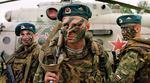
debkafile’s military sources report that, as the US president was preparing to cap his two hectic days in the Saudi capital with a major speech on Islam, before flying to Jerusalem, a Russian contingent of paratroops and special forces arrived at Suweida. It linked up with the Syrian army, Hizballah and other pro-Iranian allies already poised to take on the US, Jordanian, British and Norwegian elite units for control of the strategic 600km long Syrian-Iraqi border and its key crossings.
Our sources that the paratroops were detached for their new mission from the 31s Russian Brigade stationed in Syria, together with Spetsnaz fighters.

They are the first ground troops Moscow has sent to southern Syria, where hitherto Russian operations were limited to infrequent air strikes..

According to Syrian military sources, the Russian troops are only there to train and direct the Syrian army units fighting in this part of Syria. This claim echoed the American contention that its special forces were in the same region, in support of the rebel Syrian Free Army which they had trained in Jordan.
Nonetheless, positioned virtually nose to nose at this moment are American and Russian troops. Both stand behind opposing forces vying for control of Syria’s border with Iraq and the key crossing of Al-Tanf which is located in the Syrian-Iraqi-Jordanian border triangle.

The United States and Trump administration are resolved to keep this prize from falling into the hands of Iran and its Shiite militias to further its scheme for opening up Tehran’s land routes to Syria and the Mediterranean. Moscow, by its new deployment Sunday, signaled that it was equally set on backing the Syrian-Iranian military bid to thwart Washington’s plan.

Saturday, as debkafile reported, the Syrian-pro-Iranian-Hizballah force in southern Syria renewed its advance on the Iraqi border, two days after sustaining heavy casualties from a US air strike on its convoys. Syrian military sources reported they captured the Suweida region and another 60 square kilometers. This brought them closer to the strategic Al-Tanf crossing at the Syrian border intersection with Iraq and Jordan, which is held by US and other special operations units.

The arrival Sunday of Russian ground troops to this hotly-contested region offers an acid test for Donald Trump’s assurance to the Saudi royals and Gulf Arab rulers of his administration’s resolve to rein in Iran’s military charge through the Middle East, along with Hizballah, and relegate to the past their depredations in Syria, Iraq and Yemen.
The success of the US-led military operation to take and hold the Syrian-Iraqi border will give Trump’s policy high kudos. But a battleground defeat at the hands of Russian-Iranian backed Syrian and Hizballah troops would seriously dim the gains of his Middle East trip.

50 Years of ‘Liberated, Not Occupied’ JerusalemThe Jewish Press

May 22, 2017

 Source: 50 Years of ‘Liberated, Not Occupied’ JerusalemThe Jewish Press | Hana Levi Julian | 26 Iyyar 5777 – May 21, 2017 | JewishPress.com
Fireworks at the walls of the Old City of Jerusalem mark the opening of a week of celebrations for the 50-year anniversary of the reunification of the holy city. May 21, 2017

Prime Minister Benjamin Netanyahu and President Reuven Rivlin formally opened events Sunday night to mark the half-century anniversary of the reunification of the holy city of Jerusalem, the eternal capital of the Jewish People.

America’s new Ambassador to Israel, David M. Friedman, was also present for the opening ceremonies.

President Reuven Rivlin speaks at 50 year anniversary of Jerusalem reunification. PM Benjamin Netanyahu, US Ambassador to Israel David M. Friedman, seated below. May 21 2017.
 “We have not occupied,” Netanyahu told those gathered at the foot of the Tower of David in the Old City, “We have liberated. “I say to the world in a calm, clear voice: Jerusalem was and always will be the capital of Israel.”
The Tower of David, alight in blue and white for the 50th anniversary of the reunification of the holy city of Jerusalem. May 21, 2017

The prime minister underlined in his remarks that the Western Wall and the Temple Mount – the holiest sites in the Jewish faith – “will always remain under Israeli sovereignty.”

President Reuven Rivlin also spoke at the ceremony.

“Sometimes I hear them talking about ‘the Jerusalem problem,’” he said. “Jerusalem is not a problem. Jerusalem is the solution.

The Old City of Jerusalem ablaze in the glow of fireworks as a week of celebrations kicks off to mark a half century of reunification of the eternal capital of Israel and the Jewish People.

“There are dreamers of political solutions who are trying to make a complete trial, to cut the city organ by organ, but anyone who talks about Jerusalem as a surgeon speaks about the dissection of the city, is bringing a tragedy upon it and its people, and is returning it to basesness and misery.

“For many years now, they have been trying to undermine the foundations of Jerusalem. They have never stopped. Even now at the UNESCO conference they are trying to rewrite history, to say that ‘we have no connection to the city.’

Blue lights in the sky spell the name “Jerusalem” in Hebrew over the glowing walls of the Old City of Jerusalem below.

“To all those who defy Jerusalem we have one answer: Jerusalem has been burned and broken and smashed and eulogized, but it rose and returned to its sons, opening its gates to thousands of believers of different faiths.”

Major US Jewish Organization Lauds Trump’s ‘Refreshing, Honest’ Speech in Saudi Arabia

May 21, 2017

Major US Jewish Organization Lauds Trump’s ‘Refreshing, Honest’ Speech in Saudi Arabia, Algemeiner, May 21, 2017

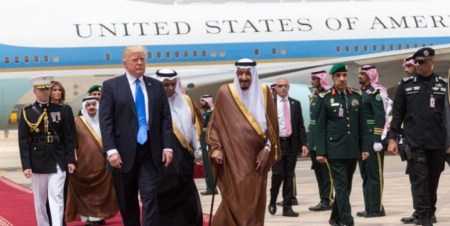
President Donald Trump arrives in Saudi Arabia. Photo: White House

A leading American Jewish advocacy organization praised Donald Trump’s speech to Muslim leaders in Saudi Arabia on Sunday, saying the president had demonstrated “refreshing honesty…in describing the Islamist extremist threat that developed in the Middle East years ago.”

“We agree that the fight against Islamist extremism is a battle between the forces of good and decency, on the one hand, and evil and a death cult, on the other, and that victory depends, above all, on what Arab and Muslim nations do to counter and defeat this violent, deadly scourge,” said David Harris, CEO of the American Jewish Committee (AJC), in a statement.

Trump issued an urgent plea to the leaders of more than 50 Muslim countries to join a “coalition of nations who share the aim of stamping out extremism and providing our children a hopeful future that does honor to God.”

Trump pointed out to his hosts that “in sheer numbers, the deadliest toll has been exacted on the innocent people of Arab, Muslim and Middle Eastern nations. They have borne the brunt of the killings and the worst of the destruction in this wave of fanatical violence.”

Trump pointedly included organizations other than ISIS on his list of terrorist organizations.

“The true toll of ISIS, al Qaeda, Hezbollah, Hamas, and so many others, must be counted not only in the number of dead. It must also be counted in generations of vanished dreams,” Trump declared.

“He could not have been clearer in his description of Hezbollah and Hamas as the terrorist groups they most assuredly are,” the AJC’s Harris added.

Palestinians: Tomorrow’s Secret ‘Day of Rage’

May 21, 2017

Palestinians: Tomorrow’s Secret ‘Day of Rage’, Gatestone InstituteBassam Tawil, May 21, 2017

(Perhaps Prime Minister Netanyahu will arrange for a bit of sightseeing or at least whisper in President Trump’s ear and provide some videos. — DM)

What is really driving this Palestinian hatred of Trump and the U.S.? The Palestinians and the Arabs have long been at war with what they regard as U.S. bias in favor of Israel. What they mean is that U.S. support for Israel stands in their way of destroying Israel.

Abbas is not going to tell Trump about the “Day of Rage” because it flies in the face of his repeated claim that Palestinians are ready for peace and are even raising their children in a culture of peace.

Once again, Abbas is playing Americans and other Westerners for fools. His people remain unwilling to recognize Israel’s very right to exist as a state for Jews. And so, Abbas will talk peace and coexistence while his people organize yet another “Day of Rage.”

Mahmoud Abbas and his Palestinian Authority (PA), preparing to welcome U.S. President Donald Trump to Bethlehem, are seeking to create the impression that their sentiments are shared by their people. Yet many Palestinians are less than enthusiastic about the visit.

It is in the best interests of Abbas and the PA to hide the truth that many Palestinians view the U.S. as an Israel-loving enemy.

While the PA president and his aides attempt to bury that inconvenient fact, they are also doing their best to cover up the truth that many Palestinians have been radicalized to a point that they would rather aim a gun or knife at Israelis than aim for peace with them.

The strongest and most vocal protests against Trump’s visit have thus far come from Ramallah, the de facto capital of the Palestinians.

Ramallah is regularly described by Western journalists as a base for moderation and pragmatism. It is in this city that Abbas and the top PA leadership live and work.

In a statement published earlier this week, the National and Islamic Forces in Ramallah and El-Bireh, a coalition of various Palestinian political and terror groups, called for a “Day of Popular Rage” in the West Bank to protest the imminent presidential visit.

In Palestinian-speak, a “Day of Rage” is a call for intensified violence and terrorism directed mainly against Jews.

The term was formally introduced during the First Intifada, which erupted in late 1987, and consisted of stone and petrol-bomb attacks against Israel Defense Force soldiers and Jews residing in the West Bank and the Gaza Strip.

Similarly, during the Second Intifada, which began in 2000, Days of Rage were associated with suicide bombings, drive-by shootings and other acts of terrorism and assorted crimes perpetrated against Jews living in the West Bank and Gaza Strip, as well as within Israel.

In recent years, Abbas’s Fatah faction and other groups, including Hamas, Islamic Jihad and the Marxist Popular Front for the Liberation of Palestine (PFLP) have used different occasions to urge Palestinians to declare a Day of Rage against Israel.

Generally speaking, such calls come in response to Jewish visits to the Temple Mount — visits that have been taking place since East Jerusalem was liberated from Jordanian occupation in 1967.

The visits were temporarily suspended, however, for security reasons in the first years of the Second Intifada, out of concern for the safety of visitors. It is worth noting that non-Muslims are allowed to tour the Temple Mount, as has been true for the past five decades. The Palestinians, however, are specifically opposed to Jews visiting the site, under the false pretext that Jews are plotting to rebuild their Temple after destroying the Islamic holy sites there. This charge is, of course, another Palestinian blood libel against Jews.

So here we are again. Palestinians are calling for marking Trump’s visit with a Day of Rage (read: heightened terrorism). The statement issued by the National and Islamic Forces in Ramallah and El-Bireh is a clear and direct invitation to Palestinians to take to the streets and mow down Jews.

What is really driving this Palestinian hatred of Trump and the U.S.?

From the Palestinian point of view, were it not for the U.S., the Palestinians and the Arabs would have succeeded long ago in achieving their goal of destroying Israel.

“We reject American bias in favor of Israel,” read the statement. “We call for popular marches and rallies to affirm our people’s adherence to their legitimate rights, including the right of return and self-determination.” The statement also warned against U.S. pressure on Abbas and the PA leadership to return to the negotiating table with Israel.

The so-called “right of return” demanded by Palestinians means the right to flood Israel with millions of Palestinians, in order to create an Arab-majority state where Jews would live as a minority. This would come in addition to the creation of another Palestinian state alongside Israel in the West Bank, Gaza Strip and East Jerusalem.

The Palestinians and the Arabs have long been at war with what they regard as U.S. bias in favor of Israel. What they mean is that U.S. support for Israel stands in their way of destroying Israel. They are saying: Only if Americans would stop supporting Israel financially, militarily and politically, we would be able to remove Israel from the face of the earth.

Neither Trump nor any members of his entourage is likely to notice the latest Palestinian Day of Rage. The strict, unprecedented security measures surrounding Trump’s planned visit to Bethlehem, and the fact that the stop is to last for only for 45 minutes, will make sure of that. Trump will not see Palestinians protesting against his visit. Nor will he see, during his visit, Palestinians closing their businesses and hurling stones and petrol bombs at Jews.

RAMALLAH, WEST BANK – MAY 15: (ISRAEL OUT) Palestinian demonstrators throw stones toward Israeli soldiers during clashes outside of Ofer Prison on May 15, 2012 near the West Bank city of Ramallah. Palestinians mark Israel’s establishment in 1948 with “Nakba” or “catastrophe” day on May 15, to remember the thousands of Palestinians who fled or were expelled during the creation of the Jewish state and the subsequent war. (Photo by Uriel Sinai/Getty Images)

Trump’s Palestinian hosts will do their utmost to disguise many unpleasant truths. For instance, they probably will not mention that Palestinians are taking to the streets to protest his visit as well as to go after Jews. Abbas is not going to tell Trump about the Day of Rage because it flies in the face of his repeated claim that Palestinians are ready for peace and are even raising their children in a “culture of peace.”

The Palestinian Day of Rage during Trump’s visit is a further sign of the increased radicalization among Palestinians and their unwillingness to accept Israel’s right to exist as a state for Jews. Days of Rage are far from contained responses to particular Israeli policies or actions on the ground. The Day of Rage can be traced to the Arab and Muslim world with the establishment of Israel in 1948, and continues to be used by Arabs and Muslims as a tool of terrorism.

In truth, such days are an expression of rage over the presence of Jews in a sovereign state in the Middle East, and of wrath over U.S. support for Israel and of Palestinian support for Hamas, Islamic Jihad and other terror groups. Days of Rage will continue as long as Palestinians continue to believe that Israel can and should be destroyed.

Once again, Abbas is playing Americans and other Westerners for fools. His people remain unwilling to recognize Israel’s very right to exist. And so, Abbas will talk peace and coexistence while his people organize yet another Day of Rage.

Trump, Unlike Obama, Addressed ‘Islamic Terror’ Directly

May 21, 2017

Trump, Unlike Obama, Addressed ‘Islamic Terror’ Directly, BreitbartJoel B. Pollak, May 21, 2017

President Donald Trump and President Barack Obama delivered addresses to the Muslim world at roughly the same point in their respective presidencies.

But unlike Obama, who attempted to appease Islamic resentment of the West by admitting America’s faults, Trump’s speech in Riyadh, Saudi Arabia on Sunday emphasized terrorism and challenged the Arab and Muslim world to foster peace by “honestly confronting the problem of Islamic extremism, and the Islamists, and Islamic terror of all kinds.”

The first difference between the two speeches was the setting. Trump addressed a summit of Arab and Muslim leaders at a conference to deal with terrorism. Obama, by contrast, invited members of the Muslim Brotherhood to his address at Al-Azhar University in Cairo.

Trump rallied the nations of the region to deal with a problem in their midst; Obama gave legitimacy to a banned group associated with terror and extremist ideology.

Obama began his address by focusing on western guilt:

More recently, tension has been fed by colonialism that denied rights and opportunities to many Muslims, and a Cold War in which Muslim-majority countries were too often treated as proxies without regard to their own aspirations. Moreover, the sweeping change brought by modernity and globalization led many Muslims to view the West as hostile to the traditions of Islam.

In contrast, Trump began by declaring that “Muslim countries must take the lead in combating radicalization. He said that he was not there to lecture to others about how to worship, but to call for unity “in pursuing the one goal: … to conquer extremism and vanquish the forces that terrorism brings with it every single time,” singling out “young Muslim men and women.”

Trump went further, taking on “terrorism and the ideology that drives it.” He listed recent terror attacks in the U.S. and around the world, and noted that “the deadliest toll has been extracted from the innocent people of Arab and Muslim nations.” The optimism of the region, he said, was “held at bay by bloodshed and terror.” And he added: “There can be no co-existence with this violence.”

Obama, too, had emphasized that many of the victims of groups like Al Qaeda were Muslim. Like Obama, Trump distanced terror from faith, suggesting terrorists falsely used the name of God, and implying that the problem was not limited to Islam, But Trump did not shy away from the link to Islam, whereas Obama sought to absolve Islam itself of any link with terrorism.

Obama said: “Islam is not part of the problem in combating violent extremism – it is an important part of promoting peace.” Obama never even used the word “terror.” He simply referred to “violence against civilians” by “extremists,” whom he never connected directly to Islam.

In contrast, Trump told the gathering in Saudi Arabia to “[d]rive them [terrorists] out from your places of worship,” and exhorted the nations present to make sure “terrorists find no sanctuary on their soil.”

Obama defended America to the Muslim world by emphasizing America’s connection to Islam — almost describing the U.S. as a Muslim nation itself. “[L]et there be no doubt: Islam is a part of America,” Obama declared. He cited exaggerated population figures for Muslims in the U.S.: “nearly seven million American Muslims in our country today,” he claimed.

Trump, in contrast, praised the achievements of the Arab and Muslim world in the region itself, but did not try to remake America in Islam’s image. Trump also spoke in a forthright manner about the persecution of Jews, whereas Obama irritated Israelis by claiming Israel was created because of the Holocaust.

Both presidents were gracious to their audience. Both downplayed the idea of interfering in the affairs of the Muslim world, unlike earlier administrations. Trump offered the Saudis the “friendship, and hope, and love” of the American people, and praised his hosts as the guardians of “the two holiest sites in the Islamic faith.” Trump also praised the arms deal he had reached with Saudi Arabia the day before, which he said would help both sides.

Obama was somewhat less focused on Egypt itself, but was effusive in his praise of Islam in general, crediting it — with some exaggeration — with making the European enlightenment possible, and with fostering religious tolerance.

Yet Trump was clear about the need to confront Iran as a common challenge to peace in the entire region. He even implied that regime change was an ultimate goal of U.S. policy toward Iran. Obama, in contrast, appeased Iran and accepted blame, publicly, for a “role in the overthrow of a democratically-elected Iranian government” in the 1950s.

Early media reports suggest that Trump’s speech is being described as “moderate,” because he did not use the signature phrase “radical Islamic terror.” That is not accurate: the principal objection to Obama’s evasion was the absence of the word “Islam,” which Trump addressed directly. But if that is indeed how the speech was received, then Trump achieved something great indeed: identifying the eradication of Islamic terror as a “moderate” value.

The U.S., Churchill and the Middle East

May 21, 2017

by Pierre Rehov
May 21, 2017 at 5:00 am

Source: The U.S., Churchill and the Middle East

  • President Donald Trump has apparently decided that on his visit to Israel this week, he will not announce the move of the U.S. embassy to Jerusalem — a move that will only make him look less strong to Arab leaders. They may not like all promises that are kept, but they do deeply respect and trust those who keep them. If promises are not kept to a friend, the thinking goes, why would they be kept to us?
  • As Plato, Churchill and even Osama bin Laden understood, people respect only a strong horse, especially when one’s adversaries can only survive by creating conflicts to distract their citizens from unaccountable governance.
  • By recognizing the rights of Jerusalem’s historical occupants of 3,000 years — despite the lies of UNESCO and other UN organizations engulfed by the Arabs’ automatic majority — Trump could well demonstrate a new force that would elevate him to the same stature as Churchill.

In France, everything has been written about the new U.S president, as long as it could relay the most negative image possible. In a country sometimes bathed in an anti-Americanism inherited from Gaullism and communism, major political religions of the post-war era, exacerbated by the Bush years — it experienced a noticeable lull at the arrival of former President Barack Obama. The election of Donald Trump has the effect of an avalanche.

For many, America had foundered, would never recover and the archetypal image of the uneducated, violent cowboy, fed on hamburgers, would now finally stick to this uncouth country — too powerful, too capitalist and actually distressed by injustice and inequality.

But beyond the systematic and cleverly orchestrated detestation that the new American president engenders, it is clear that after eight years of the soft and partisan management of Obama (one will remember his hallucinatory Cairo speech, his bow of allegiance to the King of Saudi Arabia, and especially his passivity to the atrocities committed by Iran, Syria and their proxies) powerful America is back at the front of the stage.

The U.S. is no longer simply the paralyzed observer of a rise in violence, as in those terrifying scenes in movies where zombies multiply without anyone knowing how to contain, counter or stop them. Since the sheriff is back in town fighting the zombies, the zombies are fighting back.

As soon as President Trump arrived in the White House, in fact, he rolled up his sleeves to try to find solutions to the increasing threats to world peace, based on a sound principle appreciated by great leaders such as Churchill: Si vis pacem para bellum. If you want peace, prepare for war.

To no one’s surprise, and possibly for many reasons, the Nobelized pacifist, Obama, asked to have a bust of Winston Churchill removed from the White House on day one; Trump asked for it back on day one.

In 1938, while Chamberlain and Daladier, with their pallid complexions and sad smiles, congratulated themselves on having abandoned Czechoslovakia to Hitler’s hands in exchange for a promise of peace that rapidly turned out to be just the prelude to the deadliest war in history, Churchill summed up the situation with the scathing phrase: “They had to choose between dishonor and war. They have chosen dishonor and they will have war.”

One can only wonder how Churchill would have judged Obama.

Iran was on the brink of capitulating. It had already been listed by the U.S. Department of State as the world’s leading promoter of terrorism, and one with nuclear, hegemonic and genocidal ambitions. History will undoubtedly remember that it was Obama (of the Iraqi debacle; of the cowardly abandonment of his ambassador, tortured to death in Benghazi; of threats never followed up when Assad crossed the U.S. president’s own “red line” and gassed his own people, and of lying repeatedly to his own people about matters from healthcare choices to videos supposedly having caused the Benghazi attack, to name a few) that allowed the Ayatollahs to consolidate their imperialist aggression against a backdrop of terrorism and the denial of human rights.

This soft and non-interventionist philosophy, also adopted by former President Jimmy Carter, had already enabled Muslim extremists to overthrow the Shah of Iran. President Bill Clinton was fooled by North Korea in 1994 into negotiating economic aid in exchange for a promise to respect the non-proliferation treaty signed in 1985; the North Koreans simply took the money and used it to finance the nuclear program it had been given them to stop.

This political blindness, deliberate or not, also allowed President Obama to celebrate his diplomatic “victory” of ostensibly bringing in Iran from the cold, when it was clear all along that all Iran wanted to get was colder. Iran continues its imperialist expansion, its financing of terrorists, and its support for Hamas and Hezbollah, and, of course its long-range missile development program.

President Trump, however, in just four months, seems to have learned the lesson of Churchill. Take, for example, three of the new president’s actions.

First there was the massive bombing of the Al-Sha’ayrate air base, after Syrian President Bashar al-Assad had ordered the Syrian army to massacre part of the population of Khan Sheikhoun with sarin gas.

Unlike Obama, Trump had promised — probably foolishly: the promise seems to have been interpreted as a green light to murder — not to intervene in Syria. If the new U.S. president changed his mind, it is all to his honor, for this reversal was born of a vision of horror: children and babies suffocating, gassed.

The second action was born at the same time, when 59 Tomahawk missiles sent a clear message to the rest of the world through the destruction of the air base from which the gas-carrying planes had taken off, President Trump dined in Mar-a-Lago with his Chinese counterpart. “By the way,” he announced to Xi Jinping while dessert was served, “we have just bombed Syria.” With the arrival of the “most beautiful piece of chocolate cake,” years of failed diplomacy were undone.

Finally, President Trump should be recognized for inducing China even symbolically to loosen its ties to its North Korean ally by slowdowns of “tourist” flights between Beijing and Pyongyang, and by blocking shipments of coal, and other mild promises, at least until the U.S. looks the other way.

In addition, NATO countries, protected by the American umbrella, recently seem to have felt inspired to pay America their 2%, thus honoring their agreements, and have also begun to develop a section for fighting terrorism — a program evidently long forbidden.

In addition, a new strand of American foreign policy is now opening up. Recently, Israel celebrated the 69th anniversary of its independence, and this week Israel will mark 50 years since the reunification of Jerusalem, liberated in 1967 from its illegal capture by Jordan in 1948, followed by Jordan’s ethnic cleaning of Jews and the illegal confiscation of their property. The White House announced the resumption of negotiations with the Palestinian Authority, provided that it ceases to finance and incite terrorism by making its child-killers national heroes and wage-earners funded by the West

Palestinian leader Mahmoud Abbas will no longer be able to continue to pretend to prepare his people for peace while at the same time calling for murder. About 10% of the Palestinian budget is spent on the salaries of terrorists imprisoned in Israel, and the prisoners’ families.

Abbas evidently omitted this “detail” in his statements to the press during his recent visit to the White House.

Trump has apparently decided that on his visit to Israel this week, he will not announce the move of the U.S. embassy to Jerusalem — a move that will only make him look less strong to Arab leaders. They may not like all promises that are kept, but they do deeply respect and trust those who keep them. If promises are not kept to a friend, the thinking goes, why would they be kept to us? They will therefore be less happy with any promises to counter Shiite threats — considerably more important to them than the location of an embassy. As Plato, Churchill and even Osama bin Laden understood, people respect only a strong horse, especially when one’s adversaries can only survive by creating conflicts to distract their citizens from unaccountable governance. As Israeli Prime Minister Benjamin Netanyahu observed:

“Israel has clearly stated its position to the US and to the world multiple times. Moving the US Embassy to Jerusalem won’t harm the peace process. The opposite is true. It will correct a historic injustice by advancing the [peace process] and shattering a Palestinian fantasy that Jerusalem isn’t Israel’s capital.”

By recognizing the rights of Jerusalem’s historical occupants of 3,000 years — despite the lies of UNESCO and other UN organizations engulfed by the Arabs’ automatic majority — Trump could well demonstrate a new force that would elevate him to the same stature as Churchill, who said he regarded Islamism as the “greatest retrograde force of all time.” No wonder Obama did not want his bust.
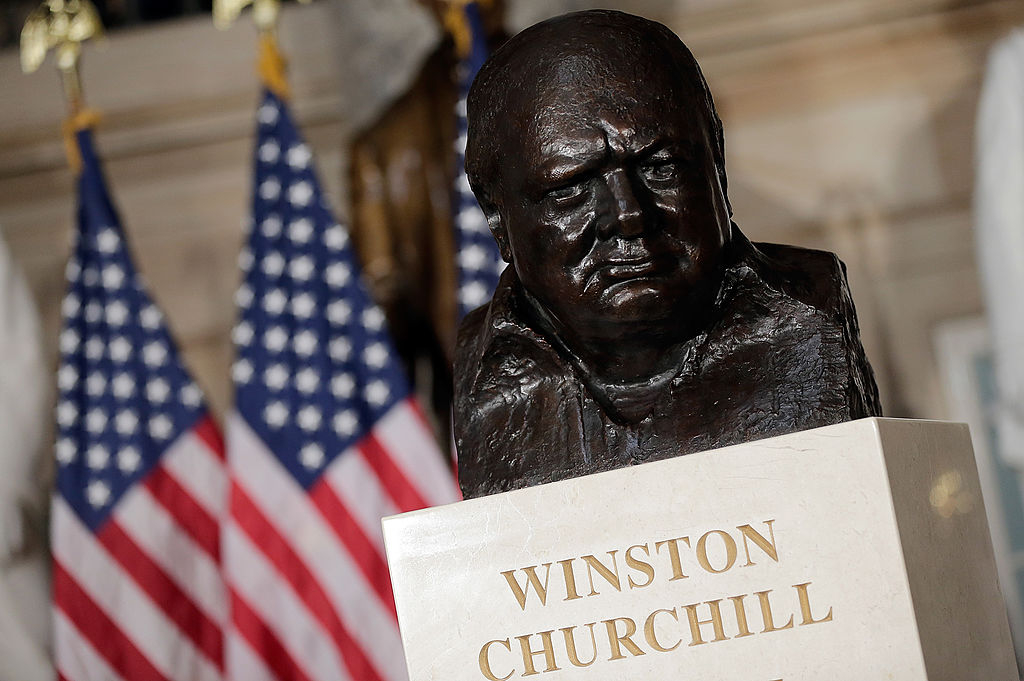
(Image source: Win McNamee/Getty Images)

Pierre Rehov, born and raised in North Africa, is a war reporter and documentary filmmaker specializing in counter-terrorism. His latest film, responding to UNESCO, is “Unveiling Jerusalem“.
Excerpts: Trump will say ‘Islamist extremism’ in Saudi Arabia speech

May 21, 2017

Excerpts: Trump will say ‘Islamist extremism’ in Saudi Arabia speech, Washington ExaminerDaniel Chaitin, May 21, 2017

(President Trump’s address is to be carried live here:

— DM)

President Trump speaks during a bilateral meeting with Qatar’s Emir Sheikh Tamim Bin Hamad Al-Thani, Sunday, May 21, 2017, in Riyadh. (AP Photo/Evan Vucci)

Following speculation that he would avoid saying “radical Islamic extremism” on Sunday after using it often during the campaign — both national security adviser H.R. McMaster and Trump counselor Kellyanne Conway refused to say if Trump would use the terminology — Trump will say “Islamist extremism.”

“That means honestly confronting the crisis of Islamist extremism and the Islamist terror groups it inspires. And it means standing together against the murder of innocent Muslims, the oppression of women, the persecution of Jews, and the slaughter of Christians,” Trump will say. “Religious leaders must make this absolutely clear: Barbarism will deliver you no glory — piety to evil will bring you no dignity. If you choose the path of terror, your life will be empty, your life will be brief, and your soul will be condemned.”

************************

President Trump will describe the fight against terrorism as “Islamist extremism” during his major speech to Middle Eastern leaders on Sunday, according to excerpts released from the White House.

“We are adopting a principled realism, rooted in common values and shared interests,” Trump will say in Saudi Arabia. “Our friends will never question our support, and our enemies will never doubt our determination. Our partnerships will advance security through stability, not through radical disruption. We will make decisions based on real-world outcomes — not inflexible ideology. We will be guided by the lessons of experience, not the confines of rigid thinking. And, wherever possible, we will seek gradual reforms — not sudden intervention.”

“Our goal is a coalition of nations who share the aim of stamping out extremism and providing our children a hopeful future that does honor to God,” he will said. “America is a sovereign nation and our first priority is always the safety and security of our citizens. We are not here to lecture — we are not here to tell other people how to live, what to do, who to be, or how to worship. Instead, we are here to offer partnership – based on shared interests and values — to pursue a better future for us all. Every time a terrorist murders an innocent person, and falsely invokes the name of God, it should be an insult to every person of faith.”

The president will urge Middle Eastern countries to take the initiative in the conflict, as the United States is willing to help but not do all the fighting itself. Trump just signed a $110 billion arms deal with Saudi Arabia to do just that, and told the Emir of Qatar, Tamim bin Hamad al Thani, during a brief photo spray on Sunday that they discussed another purchase of “beautiful military equipment.”

“But we can only over acome this evil if the forces of good are united and strong — and if everyone in this room does their fair share and fulfills their part of the burden,” Trump will say. “Terrorism has spread across the world. But the path to peace begins right here, on this ancient soil, in this sacred land. America is prepared to stand with you — in pursuit of shared interests and common security. But the nations of the Middle East cannot wait for American power to crush this enemy for them. The nations of the Middle East will have to decide what kind of future they want for themselves, for their countries, and for their children.”

As previously reported by the Associated Press about a draft it obtained, Trump will cast the fight as a “battle between good and evil.”

“This is not a battle between different faiths, different sects, or different civilizations,” Trump will say. “This is a battle between barbaric criminals who seek to obliterate human life, and decent people of all religions who seek to protect it. This is a battle between good and evil.”

Following speculation that he would avoid saying “radical Islamic extremism” on Sunday after using it often during the campaign — both national security adviser H.R. McMaster and Trump counselor Kellyanne Conway refused to say if Trump would use the terminology — Trump will say “Islamist extremism.”

“That means honestly confronting the crisis of Islamist extremism and the Islamist terror groups it inspires. And it means standing together against the murder of innocent Muslims, the oppression of women, the persecution of Jews, and the slaughter of Christians,” Trump will say. “Religious leaders must make this absolutely clear: Barbarism will deliver you no glory — piety to evil will bring you no dignity. If you choose the path of terror, your life will be empty, your life will be brief, and your soul will be condemned.”

Here are the top 15 agreements signed between Saudi Arabia and the US

May 21, 2017

Here are the top 15 agreements signed between Saudi Arabia and the US, Al  Arabiya, May 20, 2017

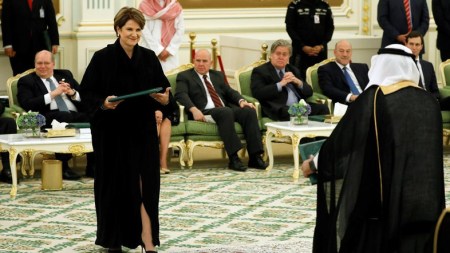
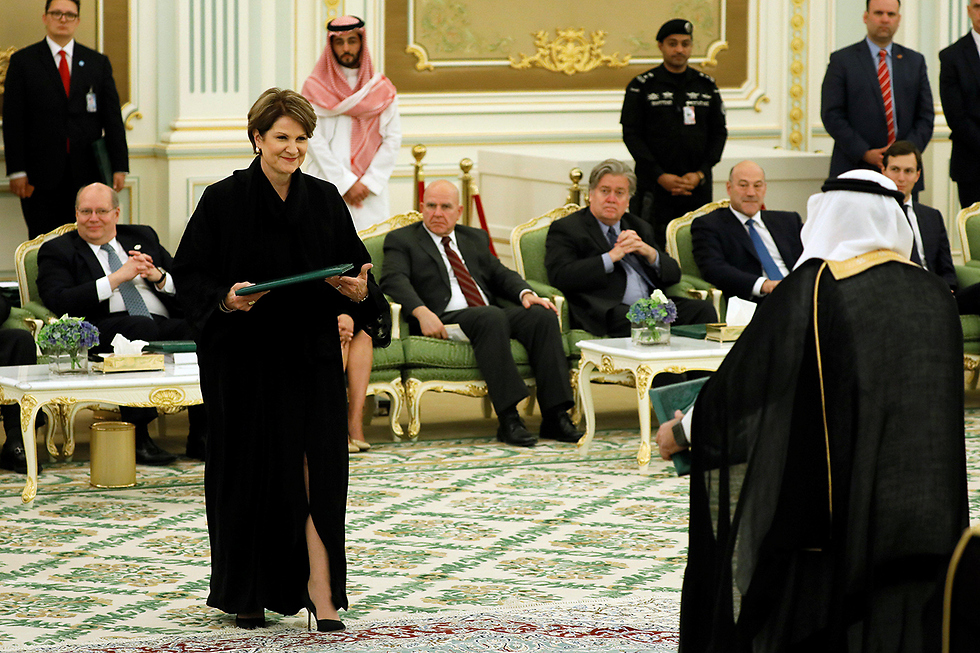
Lockheed Martin Chairman and CEO Marillyn Hewson (L) exchanges agreements with a Saudi official after a signing ceremony between Saudi Arabia’s King Salman bin Abdulaziz Al Saud and U.S. President Donald Trump at the Royal Court in Riyadh, Saudi Arabia May 20, 2017. REUTERS/Jonathan Ernst

Saudi Arabia and the United States signed agreements and economic deals worth 280 billion dollars expected to create over hundreds of thousands of jobs in the two countries in the next coming years.

The agreements were signed in Riyadh, in the presence of Saudi King Salman and US President Donald Trump on his historic visit to Saudi Arabia. He was accompanied by a high-level political and economic delegation that includes the heads of the biggest US corporations.

On the financial side, the most important agreement was between asset management giant ‘Blackstone’ and the Saudi Public Investment Fund. The deal’s value is expected to rise to $350 billion over the next 10 years.

Here are the top 15 agreements between the two nations:

. Saudi Aramco: Deals worth $50 billion with US companies.

. General Electric signed construction and mining deals worth $15 billion.

. Raytheon in the gulf will develop air defense systems and smart weapons in Saudi Arabia.

. ExxonMobil and SABIC: Petrochemical production project agreements.

. Lockheed Martin: Support the assembly of 150 Blackhawk S-70 helicopters in Saudi Arabia.

. General Dynamics will enhance the localization design, manufacture and support of armored combat vehicles.

. Rowan Co.: Design of offshore drilling platforms with $7 billion.

. Nabors Industries expands $9 billion joint oil-drilling project.

. Aramco and National Oilwell: A new joint venture worth $6 billion.

. Weatherford: Projects worth $2 billion for localizing oilfield goods and services.

. Dow Chemical Company: Building a polymer production facility and research into other projects.

. Mcdermott: Memos worth $2.8 billion for localizing Aramco’s goods and services.

. Honeywell: Memos worth $3.6 billion for projects with Aramco.

. Aircraft purchase agreement between Saudi Airlines and Boeing.

. Jacobs Engineering: MOU worth $250 million in oil projects.

Last Update: Sunday, 21 May 2017 KSA 23:35 – GMT 20:35

Israeli ministers troubled by $110 billion US-Saudi arms deal

May 21, 2017

Military deal amounts to about $110 billion effective immediately, plus another $350 billion over the next 10 years; ‘Saudi Arabia is a hostile country and we need to ensure Israel’s qualitative military edge is maintained,’ says Minister Steinitz.

Ynet|Published:  21.05.17 , 15:14

Source: Ynetnews News – Israeli ministers troubled by $110 billion US-Saudi arms deal

National Infrastructure, Energy and Water Resources Yuval Steinitz expressed concern on Sunday morning regarding the massive arms deal signed between the United States and Saudi Arabia during US President Donald Trump’s visit to Riyadh.

The military sales deal amounts to about $110 billion effective immediately, plus another $350 billion over the next 10 years.

After signing the deal, Trump spoke of “hundreds of billions of dollars of investments into the United States and jobs, jobs, jobs.”

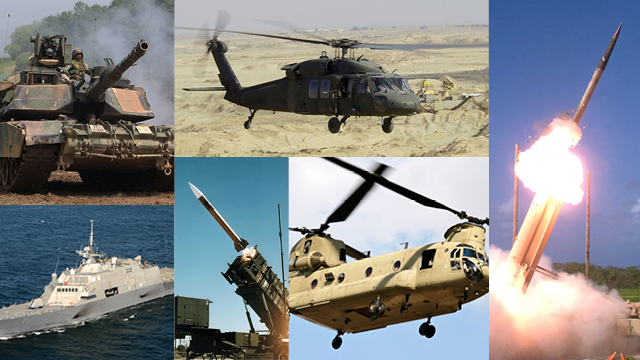
Some of the arms included in the US-Saudi deal.

Some of the arms included in the US-Saudi deal.

“Hundreds of millions of dollars in arms deals is something we need to get an explanation for,” Steinitz said ahead of Sunday morning’s government meeting. “Saudi Arabia is a hostile country and we need to ensure Israel’s qualitative military edge is maintained.”

“This is not a country that we have diplomatic relations with,” he added, noting that it “is still a hostile country and nobody knows what the future holds.”

“I hope we’ll receive clear answers to that soon. This is definitely something that should trouble us,” Steinitz went on to say.

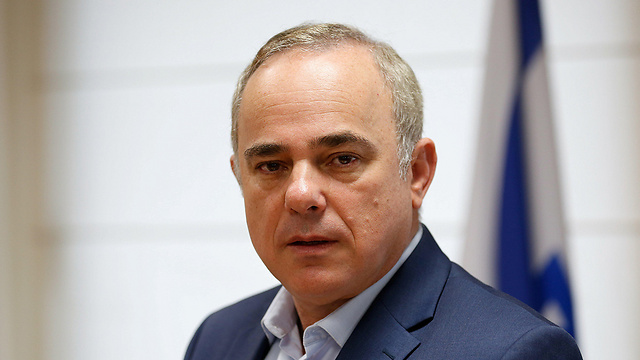
Minister Yuval Steinitz (Photo: Reuters)

Minister Yuval Steinitz (Photo: Reuters)

Minister Ayoob Kara also raised the issue during the Likud ministers meeting on Sunday, asking Prime Minister Benjamin Netanyahu whether he wasn’t concerned of the fact Saudi was becoming “a world power with military superiority over us.” Netanyahu told him he will discuss the matter during the cabinet meeting.

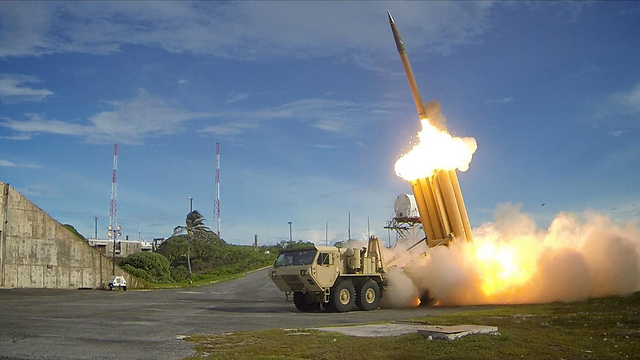
The package includes American arms and maintenance, specifically 115 M1A2 tanks, four warships, THAAD missile defense system, maritime security, radar and communications, and cyber security technology.

The THAAD missile defense system

The THAAD missile defense system

The deal also includes a pledge to assemble 150 Lockheed Martin Blackhawk S-70 helicopters in Saudi Arabia to the tune of $6 billion.

Lockheed Martin CEO warmly welcomed in Saudi (Photo: Reuters)

Lockheed Martin CEO warmly welcomed in Saudi (Photo: Reuters)

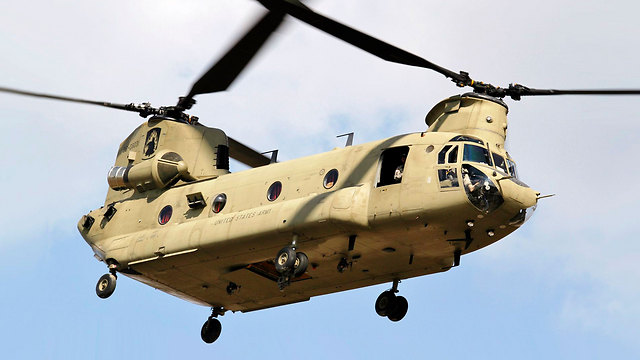
American media reported that Saudi also purchased MIM-104F (PAC-3) Patriot batteries, while Bloomberg reported on a deal Saudi signed with Boeing that could reach $3.5 billion to buy an additional 48 CH-47 Chinook helicopters and other equipment.


CH-47 Chinook helicopter

CH-47 Chinook helicopter

The White House said in a statement that the package of defense equipment and services is aimed to boost security in the Arab Gulf region in the face of Iranian aggression.

It is also meant to bolster the kingdom’s ability to contribute to counterterrorism operations across the region, “reducing the burden on the US military to conduct those operations.”

It was described by Vice Admiral Joe Rixey, chief of the Pentagon’s Defense Security Cooperation Agency, as “the largest single arms deal in American history.”

An American battle ship, the kind included in the deal

An American battle ship, the kind included in the deal

In addition to the arms deal, national oil firm Saudi Aramco said it signed $50 billion of agreements with US firms. Energy minister Khalid al-Falih said deals involving all companies totaled over $200 billion, many of them designed to produce things in Saudi Arabia that had previously been imported.

A deal between Saudi Basic Industries Corporation and the American Exxon Mobil, a company until recently headed by US Secretary of State Rex Tillerson, was signed to build a $20 billion chemical complex.

Trump signs arms deal with Saudi    (צילום: רויטרס)

But Trump doesn’t plan to stop with Saudi Arabia. During his visit to Riyah, he also met with the Emir of Qatar, Sheikh Tamim bin Hamad Al Thani, on Sunday morning.

Trump said ahead of the meeting that he and the Emir will discuss the purchase of “lots of beautiful military equipment.”

He added that “no one makes” military equipment like the United States and said a deal would create jobs for the US and security for Qatar.

M1A2 tanks (Photo: GettyImages)

M1A2 tanks (Photo: GettyImages)

The American president also met with the King of Bahrain, saying the two countries “have a wonderful relationship” but “there has been a little strain.”

He vowed to improve things further, but did not specify what tension he needed to resolve. The two countries have had a long-term military alliance though the US was critical of Bahrain’s response to uprisings during the Arab Spring.

 Kobi Nachshoni contributed to this report.

US president to Israel Hayom: I love the people of Israel

May 21, 2017

Source: Israel Hayom | US president to Israel Hayom: I love the people of Israel

Despite the brutal headlines dogging the White House, U.S. President Donald Trump found the time to give Israel Hayom Editor-in-Chief Boaz Bismuth an exclusive interview at the Oval Office • Trump made it clear that he feels a peace deal is possible.

Boaz Bismuth
U.S. President Donald Trump with Israel Hayom Editor-in-Chief Boaz Bismuth and senior national security official Michael Anton in Washington, Thursday

|

Photo credit: Official White House Photo by Shealah Craighead